
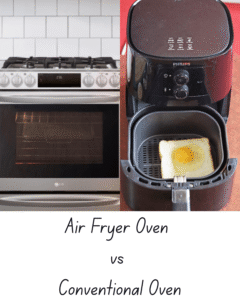
An air fryer oven cooks faster and crisps better than a conventional oven for small batches because it circulates hot air intensely in a smaller space. A conventional oven wins for large trays, baking consistency, and big roasts. Choose the air fryer oven for quick, crispy meals, and the oven for capacity and even baking.
Table of Contents
-
Air fryer oven vs conventional oven: the real difference
-
Quick comparison table
-
Crispiness, speed, and preheating
-
Energy use and cost to run (with practical rules)
-
Capacity and batch cooking: where ovens dominate
-
Best foods for each appliance (with examples)
-
Baking: cookies, cakes, bread, and casseroles
-
How to convert oven recipes to air fryer oven settings
-
Common mistakes to avoid
-
Key takeaways
-
FAQs
-
Soft conversion and next steps
Air fryer oven vs conventional oven: the real difference
An air fryer oven is a countertop appliance that uses a fan-driven blast of hot air (convection) in a compact cavity. That small space heats quickly, and the strong airflow helps evaporate surface moisture faster, which supports browning and crisping.
A conventional oven (traditional bake) relies more on radiant heat from heating elements and the hot walls of a larger cavity. It’s designed for thermal stability and capacity: big pans, multiple racks, large roasts, and baking where gentle, even heat matters.
If you remember one line:
Air fryer ovens optimize speed and crispiness for smaller portions. Conventional ovens optimize volume and baking control.
Quick comparison table
| Feature | Air Fryer Oven | Conventional Oven |
|---|---|---|
| Best for | Small batches, crisping, quick meals | Large trays, multi-dish meals, baking |
| Preheat time | Usually short (small cavity) | Longer (large cavity) |
| Crispiness | Excellent, strong airflow | Good, but often less “fried-like” |
| Capacity | Limited by basket/trays | Large pans, multiple racks |
| Energy use | Often lower for small meals | Can be efficient for big batches |
| Evenness | Great if not crowded | Great for big bakes and roasts |
| Cleanup | Smaller parts, frequent grease handling | Larger cavity, but fewer small parts |
| Noise | Fan noise is noticeable | Usually quieter |
Crispiness, speed, and preheating
Why air fryer ovens feel “faster”
-
Less air to heat means quicker warm-up.
-
Aggressive airflow speeds heat transfer to the food surface.
-
Many foods crisp sooner because surface moisture is driven off faster, helping browning reactions.
Where a conventional oven catches up
If you’re cooking a full tray meal (vegetables + chicken thighs + bread) the conventional oven’s size can win because you’re cooking everything at once. Air fryer ovens often require multiple batches, which can erase speed gains.
Energy use and cost to run (with practical rules)
A lot of articles say “air fryers are cheaper to run.” Often true, but only in the right context.
-
Energy Saving Trust notes air fryers are like small fan ovens and can be cheaper for the same meal because they’re smaller.
-
Some analyses also point out a nuance: a larger oven can be better insulated, so efficiency is not automatically guaranteed.
-
Sust-it’s comparisons show energy and time vary by appliance and scenario, not just appliance type.
Practical rule of thumb
Use an air fryer oven when:
-
You’re cooking 1–3 portions
-
The cook time is under ~25 minutes
-
You’d otherwise heat a full-size oven just for a small pan
Use a conventional oven when:
-
You’re filling most of a sheet pan
-
You’re baking multiple racks
-
You’re cooking a large roast or casserole where batching matters
Actionable tip: If you routinely cook for 3–5+ people, track whether your air fryer oven forces second batches. Two batches can cost more time and energy than one oven run.
Capacity and batch cooking: where ovens dominate
Capacity is the single biggest reason conventional ovens still rule many kitchens.
Air fryer oven constraints
-
Food needs airflow space. Crowding reduces crispiness and makes cooking uneven.
-
Large, flat items (big pizzas, full-size sheet pans, long baguettes) often do not fit.
-
“Family-size” air fryer ovens exist, but you still must respect airflow clearance.
Conventional oven advantages
-
Full-size sheet pans, roasting pans, Dutch ovens
-
Multiple racks for batch baking
-
Better for entertaining, meal prep days, and holiday cooking
Best foods for each appliance (real-world examples)
Choose an air fryer oven for:
1) Frozen foods and snacks
-
Fries, nuggets, spring rolls, mozzarella sticks
They crisp fast because airflow dries the surface quickly.
2) Reheating “crispy foods”
-
Pizza slices, fried chicken, pastries that went soft
You get better texture than microwaving.
3) Small proteins
-
Salmon portions, chicken wings, drumsticks, pork chops
Tip: flip halfway for even browning.
4) Vegetables that benefit from blistering
-
Brussels sprouts, broccoli florets, green beans
Use a light oil coat, salt after cooking for best crunch.
Choose a conventional oven for:
1) Big roasts and whole birds
-
Whole chicken, turkey, large prime rib
More space, more predictable roasting environment.
2) Large casseroles and lasagna
-
The center heats more reliably in a large oven cavity.
3) Baking where rise and moisture matter
-
Cakes, quick breads, cheesecakes
Conventional ovens tend to be steadier.
4) Batch cooking
-
Two trays of cookies, multiple sheet pans of vegetables
Baking: cookies, cakes, bread, and casseroles
This is where a lot of “air fryer vs oven” content gets fuzzy. Here’s the clearer truth:
Cookies and pastries
-
Air fryer ovens can do cookies well in small batches, but airflow can brown edges faster.
-
Use a lower rack position and consider reducing temperature slightly.
Cakes and delicate bakes
-
The aggressive fan can dry surfaces and create uneven doming.
-
You can still bake, but choose recipes that tolerate convection and use the right pan (often metal performs more predictably than glass in small appliances).
Bread
-
Air fryer ovens are great for small rolls and reheating bread.
-
For artisan loaves, conventional ovens usually win because you can better manage steam and space.
Casseroles
-
If it’s thick and dense, a conventional oven is usually more reliable.
-
Air fryer ovens may brown the top early while the center lags.
How to convert oven recipes to an air fryer oven setting
Use this as your starting point, then adjust based on thickness and your model.
Quick conversion checklist
-
Reduce temperature: start at 10–20°C (25–50°F) lower
-
Reduce time: check at 15–25% earlier
-
Use a rack and airflow space: avoid tight-fitting pans that block circulation
-
Flip or rotate when the appliance has known hot spots
-
Use a thermometer for meats (best accuracy tool you own)
Step-by-step: converting a typical recipe
Example: oven-baked chicken thighs at 200°C / 400°F for 35 minutes
-
Set air fryer oven to 190°C / 375°F
-
Cook 25–30 minutes
-
Flip at halfway
-
Confirm doneness with thermometer, then rest 5 minutes
Internal link opportunity (natural): If you have a “kitchen thermometer guide” or “chicken thigh internal temperature chart” on your site, link it here.
Common mistakes to avoid
-
Crowding the basket or trays
Airflow is the whole point. Overcrowding equals steaming, not crisping. -
Using oven times without adjustment
Many air fryer ovens cook faster, but not always. Start checking early. -
Skipping preheat when it matters
For crisp foods, a short preheat helps set the exterior quickly. -
Wrong cookware
Big deep glass dishes can block airflow. Use shallow metal pans, racks, and perforated trays when appropriate. -
Too much oil or sugary sauces too early
Excess oil can smoke. Sugary glazes can burn fast under strong convection. -
Not rotating food
Countertop units can have hot zones. Rotate trays for even browning. -
Expecting “air fry” mode on a big oven to match an air fryer
It can be great, but the bigger cavity changes airflow intensity and preheat behavior.
Key Takeaways
Key Takeaways
-
Air fryer ovens excel at fast, crispy cooking for small to medium portions.
-
Conventional ovens excel at capacity, baking stability, and big-batch meals.
-
For energy and cost, meal size and batching matter as much as the appliance.
-
Convert recipes by lowering temp 10–20°C (25–50°F) and checking 15–25% earlier.
-
Avoid crowding, use the right cookware, and verify meats with a thermometer.
FAQs
1) Is an air fryer oven the same as a convection oven?
An air fryer oven is a type of convection oven. It uses a fan to circulate hot air, but typically in a smaller cavity with stronger airflow for faster crisping.
2) Does an air fryer oven use less electricity than a conventional oven?
Often, yes for small meals because it heats a smaller space quickly, but results depend on cook time, batch size, and oven efficiency.
3) Can an air fryer oven replace a conventional oven?
For many daily tasks, yes. But for large roasts, multiple racks of baking, big casseroles, and entertaining, a conventional oven is still more practical.
4) What foods are best in an air fryer oven?
Frozen snacks, fries, wings, small roasted vegetables, and reheating crispy leftovers perform especially well because strong airflow improves browning and crunch.
5) Why is my air fryer oven drying out food?
Common causes are cooking too long, temperature too high, food cut too small, or overpowered airflow. Lower the temp slightly, shorten time, and use a light oil coat.
6) How do I convert oven temperature to air fryer oven temperature?
Start by reducing temperature by 10–20°C (25–50°F) and check doneness 15–25% earlier, then adjust based on thickness and your appliance.
7) Is “air fry” mode on a conventional oven as good as a countertop air fryer oven?
It can be excellent, but countertop units usually crisp faster for small portions due to the smaller cavity and more concentrated airflow.

Leave a Reply