

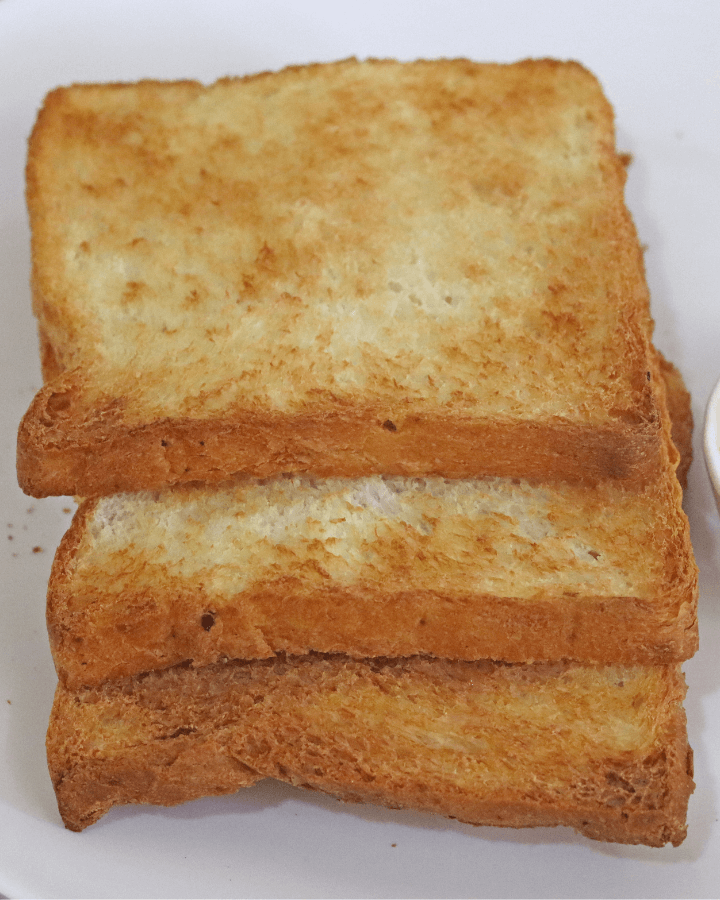
The first time I made toast in my air fryer, I opened the drawer at the two minute mark to find one slice exactly where I had left it and the other standing upright against the back wall, pressed flat against the element housing, with a scorched stripe across its face like a badly ironed shirt. The fan had picked it up within the first thirty seconds. Dry sandwich bread weighs about an ounce, and a modern basket air fryer moves a lot of air.
That is the entire challenge of air fryer toast, and it is why "just put bread in the basket" advice produces such mixed results. Solve the weight problem and the air fryer turns out toast a slot toaster genuinely cannot: evenly browned across the whole face instead of striped, crisp on both sides at once, and in any format you like, buttered before it goes in, thick-cut, oddly shaped, or straight from the freezer. I have not plugged in my toaster since figuring this out, and the counter space situation has improved noticeably.
Quick answer: Butter one side of the bread, place it butter side up in the basket, and air fry at 380°F (193°C) for 3 to 4 minutes. No flipping needed for buttered toast. For dry toast, weigh the slices down with a small wire rack for the first minute, or flip at the 2 minute mark for even color. Thick-cut bread takes 5 to 6 minutes.
Why the slice flies, and what actually holds it down
An air fryer browns food with fast-moving hot air, and fast-moving air pushes things. A slice of dry bread is the lightest, flattest, most aerodynamic thing most people ever put in the basket, which makes it the single most likely food to end up stuck to the element. Once it is up there it scorches within a minute, and at worst it smokes.
Three fixes, in the order I recommend them:
- Butter the top face. Half a tablespoon of softened butter adds enough weight to keep a standard slice down in almost every model, and it happens to make far better toast at the same time. This is the default for a reason.
- Rest a small wire rack or trivet on the slices. The standard fix for dry toast. It only needs to be there for the first minute; once the surface dries and stiffens, the bread stops behaving like a sail.
- Wedge slices against each other. Two or more slices leaned into a single layer brace each other in a way one loose slice cannot. The lone slice in an empty basket is always the one that flies.
If a slice does get away from you: stop the machine, retrieve it with tongs, and check the element for stuck crumbs before restarting. A crumb on the element is where the burnt smell in every subsequent batch comes from.
Butter before, not after. Here is the case.
Every toaster in the world forces you to butter after, so nobody questions the order. The air fryer removes the constraint, and buttering first is better on all three counts that matter:
- Browning. Butter's milk solids caramelize as the toast cooks, giving the surface the deep, spotty gold of restaurant toast instead of dry-toasted pallor. This is the same reason diner toast tastes better than home toast; the flat-top does exactly this.
- Texture. Butter melting into cold toast makes the surface damp. Butter cooked onto toast crisps into it. The difference is bigger than it sounds.
- Ballast. The practical one: a buttered slice stays in the basket without any rack or babysitting.
The one argument for buttering after is a lower-fat slice, and it is legitimate; the dry-toast method with a rack works fine. But if you are eating buttered toast either way, butter it first.

How to make air fryer toast
- Skip the preheat. Toast is one of the few air fryer jobs where preheating buys you nothing; the surface browning happens in the last minute either way. Cold basket, bread in, go.
- Butter one side, edge to edge. Softened butter, about half a tablespoon per slice, spread all the way to the crust. Bare corners toast paler and dry out first.
- Lay the slices flat, butter side up, single layer. Touching is fine, overlapping is not. An overlapped corner stays white while everything around it browns.
- Air fry at 380°F for 3 to 4 minutes. Check at 3. The butter side will be golden and spotted; the underside, pressed against the hot basket, browns at nearly the same rate. No flip needed.
- For dry toast: rack on top, flip at 2. Unbuttered slices need the wire rack for the first minute and benefit from a flip at the 2 minute mark, since without butter the top face browns slower than the basket side.
- Go by color, not the clock. Every air fryer's first batch is a calibration run. 3 minutes in my 5.5 quart basket is medium gold; your machine will land somewhere within a minute of that, and the second batch runs faster because the basket is hot.
Time and temperature by bread type
All times for a 5 to 6 quart basket, no preheat, buttered unless noted. The second batch in a hot basket runs about 30 seconds faster.
| Bread | Temp | Time | Notes |
|---|---|---|---|
| White or wheat sandwich bread | 380°F | 3 to 4 min | The default. No flip if buttered. |
| Sourdough, bakery slices | 380°F | 4 to 5 min | Dense crumb takes the extra minute. |
| Texas toast / thick cut | 380°F | 5 to 6 min | Flip at 3 for even faces. |
| Brioche, challah | 350°F | 3 to 4 min | Sugar browns fast. Watch it. |
| Rye, pumpernickel | 380°F | 4 to 5 min | Color cues are harder; go by smell and crispness. |
| Gluten free | 370°F | 3 to 4 min | Dries fast. Butter generously. |
| Frozen sliced bread | 380°F | 5 to 6 min | Straight from the freezer, no thawing. |
| Bagel halves | 370°F | 4 to 5 min | Cut side up, always. Never flip. |
| English muffin halves | 370°F | 4 to 5 min | Cut side up. Fork-split beats knife-cut. |
| Reheating cold toast | 350°F | 1 to 2 min | Better than it has any right to be. |
Toasting frozen bread
This is where the air fryer flatly beats the toaster. Frozen slices go straight into the basket, no thawing, at 380°F for 5 to 6 minutes. The first two minutes thaw the slice, the rest toast it, and the result is indistinguishable from fresh-bread toast. Two notes:
- Butter will not spread on frozen bread, obviously. Run the slices dry with the rack trick for 2 minutes, then pull the basket, butter the now-thawed surface, and finish. Or just toast dry and butter after; frozen bread is the one case where after makes sense.
- Separate the slices before they go in. Two frozen slices fused together thaw into one soggy seam where they touch.
If you keep a loaf of homemade bread sliced in the freezer, this method is the whole reason to. Bake once, toast from frozen for two weeks.
Never overcook again
Get our one-page times & temps cheat sheet, plus a new tested recipe each week.
No spam · unsubscribe anytime
Garlic butter and cinnamon toast, the two upgrades that earn the machine
Anything spread on before toasting rules out a slot toaster, which is exactly why these two belong to the air fryer:
Garlic butter toast
Mash a tablespoon of soft butter with a quarter teaspoon of garlic powder and a pinch of salt per two slices. Spread, then air fry at 370°F for 4 minutes. This is functionally garlic bread in four minutes with no oven, and it converts a soup or pasta night without any planning. Fresh garlic burns and turns bitter at these temperatures; garlic powder is not the compromise here, it is the correct choice.
Cinnamon sugar toast
Butter the bread, then sprinkle with a mix of 1 tablespoon sugar and half a teaspoon of cinnamon per two slices. Air fry at 350°F for 3 to 4 minutes; the lower temperature matters because sugar scorches ahead of bread. The sugar melts into the butter and sets into a thin, crackly candy layer that the broiler version of cinnamon toast never quite achieves.
Fixing the four problems people actually hit
The bread flew into the element
Covered above, but as a checklist: butter the top face, or rest a wire rack on dry slices for the first minute, or pack slices snugly so they brace each other. And clear any crumbs off the element after a flyaway, or every batch after it will smell singed.
The top browned but the bottom stayed pale
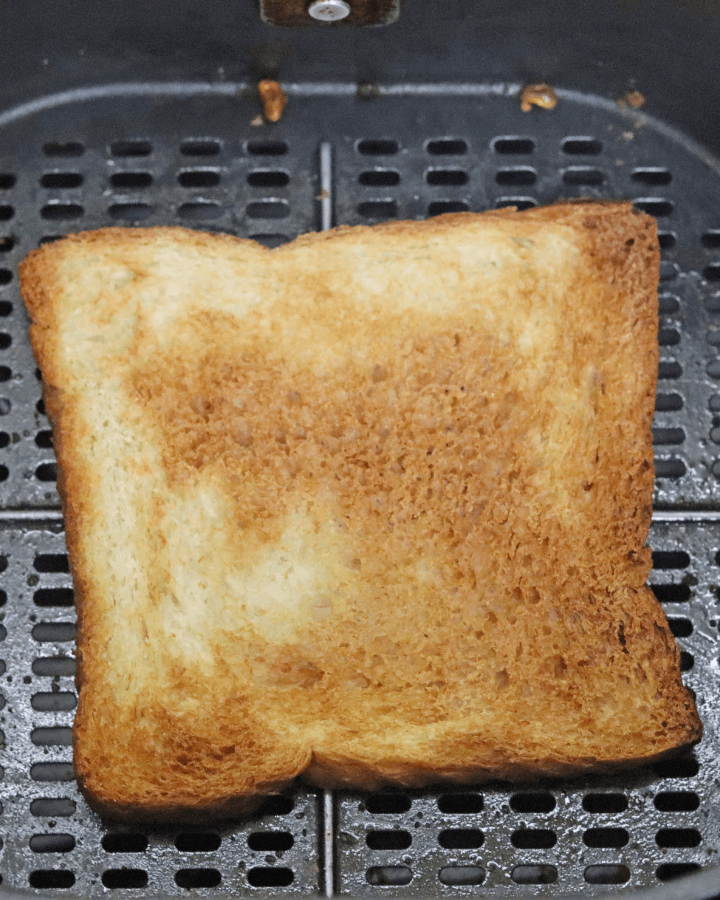
Normal physics for unbuttered toast: the top face gets the direct fan air, the bottom only gets basket contact. Either flip at the 2 minute mark, or cook on the bare basket rather than on a liner. Parchment or a silicone mat under toast blocks the only heat source the underside has, and produces exactly this complaint.
The toast came out dry and hard instead of crisp
Overcooked at too low a temperature, usually from a cautious 320 to 340°F run long. Low and slow dehydrates the whole slice into melba territory before the surface browns. Toast wants the opposite: hot and short, 380°F, out the moment the color is right. Butter helps here too, since the fat keeps the interior tender while the surface crisps. Our guide on avoiding dry bakes covers the same principle for everything else.
The edges burned before the middle colored
Your model runs hot at the basket edges, which is common in smaller baskets where the slices sit close to the walls. Drop to 360°F, keep the slices centered with a finger's width from the walls, and add 30 seconds. If it is one specific corner every time, that is a hot spot; rotate the slices once mid-cook and the problem disappears.
Air fryer vs toaster, honestly
The air fryer wins on evenness, on anything pre-topped, on thick and odd-shaped slices, on frozen bread, and on not owning a second appliance. The toaster wins on exactly two things: it is faster by about a minute, and it needs zero attention. If you make two dry slices of standard bread every morning and nothing else, keep the toaster. If your toast habit includes butter, bagels, thick bread, or a freezer loaf, the air fryer covers all of it and the toaster becomes a drawer item.
What to put on it
Beyond butter and jam: this is the base for avocado toast (mash goes on after toasting, always; avocado in the fan browns and bitters), and for egg toast if you want the whole breakfast out of one basket. A toasted-first slice is also the correct foundation for a hot PB&J. And stale bread that is past even toasting has one more life as croutons, which take six minutes in the same machine.

Frequently asked questions
QWhat temperature do you toast bread in an air fryer?
380°F (193°C) for 3 to 4 minutes for standard sliced bread. Toast wants hot and short; lower temperatures run long and dehydrate the slice into something hard rather than crisp. Drop to 350°F only for sweet breads like brioche and for cinnamon sugar toast, where sugar would scorch at 380.
QHow do you keep bread from flying around in an air fryer?
Give the slice weight or an anchor:
- Butter the top face; half a tablespoon is enough ballast in almost every model.
- For dry toast, rest a small wire rack or trivet on the slices for the first minute, until the surface stiffens.
- Toast multiple slices in a snug single layer so they brace each other.
A single dry slice alone in the basket is the most likely to fly.
QDo you need to flip toast in an air fryer?
Not if the bread is buttered; the top browns under the fan while the underside browns against the hot basket, and they finish together. Unbuttered toast browns slower on top, so flip it at the 2 minute mark for even faces. Never flip bagels or English muffins; those toast cut side up the whole time.
QShould you butter bread before or after air frying?
Before. The milk solids in butter caramelize during toasting, which is where diner-style toast gets its deep gold color and flavor, and the butter's weight keeps the slice from blowing into the element. Butter after only if you specifically want a drier, lower-fat slice, and use the wire rack trick in that case.
QCan you toast frozen bread in an air fryer?
Yes, straight from the freezer with no thawing: 380°F for 5 to 6 minutes. Separate fused slices before they go in. Since butter will not spread on frozen bread, either toast dry and butter after, or pause at 2 minutes and butter the thawed surface before finishing.
QCan I toast a bagel in the air fryer?
Yes: halved, cut side up, at 370°F for 4 to 5 minutes, and do not flip it. The cut face toasts under the fan while the domed side stays soft, which is the correct bagel outcome. English muffins work identically, and a fork-split muffin toasts better than a knife-cut one because the rough surface catches more color.
QDo I need to preheat the air fryer for toast?
No. Toast is a surface job that happens in the final minute of cooking, so the cold-start ramp costs you nothing but a few extra seconds. This is one of the few air fryer tasks where preheating genuinely does not matter. Expect the second batch to run about 30 seconds faster in the already-hot basket.
QWhy is my air fryer toast dry and hard?
Too low a temperature for too long. A cautious 320 to 340°F run until brown dehydrates the whole slice before the surface colors. Cook hot and short at 380°F and pull it the moment the color is right. Buttering before toasting also protects the interior; the fat crisps the surface while keeping the crumb tender.
QHow many slices can I toast at once?
However many fit flat in a single layer: usually 2 slices in a 4 quart basket, 3 to 4 in a 6 quart, and 4 to 6 on an oven-style rack. Touching is fine and actually helps hold the slices down; overlapping leaves white patches. For a crowd, run batches; at 3 to 4 minutes each, the air fryer keeps pace with a two-slot toaster.
QDoes air fryer toast taste different from toaster toast?
Noticeably. A slot toaster browns in stripes where the wires face the bread; the air fryer browns the entire face evenly and crisps both sides at once, so the texture is closer to oven or grill toast. Buttered before toasting, it lands closer to what restaurants serve than anything a toaster produces.
QCan I use parchment paper under toast in the air fryer?
You can, but you should not. The underside of the slice browns through contact with the hot basket, and a liner blocks exactly that, giving you toast with one pale, soft face. Toast needs no liner; there is nothing to stick and nothing to drip. Save the parchment for batters and marinades.
QCan I make French toast in the air fryer?
Yes; it is a different job than plain toast but the machine handles it. Dip thick slices in a beaten mix of egg, milk, and cinnamon, let the excess drip off well, and air fry on a perforated parchment round at 375°F for 7 to 8 minutes, flipping halfway. The custard face sets and browns; the parchment is justified here because of the wet batter.
If you try this, report back on one thing: whether buttering before, instead of after, changed your mind the way it changed mine. That swap is the entire thesis of this page. For where toast goes next, try our avocado toast, egg toast, or croutons for the stale end of the loaf. The rest of the loaves and toasting breads live in the breads and doughs collection. New to the machine? Start with how to bake in an air fryer and the other baking guides, keep the times and temps chart handy, and use the air fryer calculator and the rest of the free tools to convert any oven recipe.
You can also follow me on Instagram and Pinterest for more easy air fryer recipes.
Made this? Rate the recipe