

Forgot to thaw the salmon? You do not need to. Cooking salmon straight from frozen in the air fryer is one of the easiest ways to get a tender, flaky fillet with lightly crisp edges, and it takes under 20 minutes. No thawing, no pan to scrub, and the moving hot air cooks it evenly from edge to centre.
There is one simple trick that makes all the difference, and most quick recipes skip it: cook the fillet plain for the first few minutes, then add the oil and seasoning. More on why below. New to the basket? See how to bake in an air fryer.
Quick answer: Air fry frozen salmon at 390°F (200°C) in two stages. Cook the plain fillets for 7 minutes to thaw the surface, then brush with oil, season, and cook another 6 to 9 minutes until the centre reaches 145°F (63°C), or 125 to 130°F for a more tender medium. Cook from frozen, skin side down, no thawing.
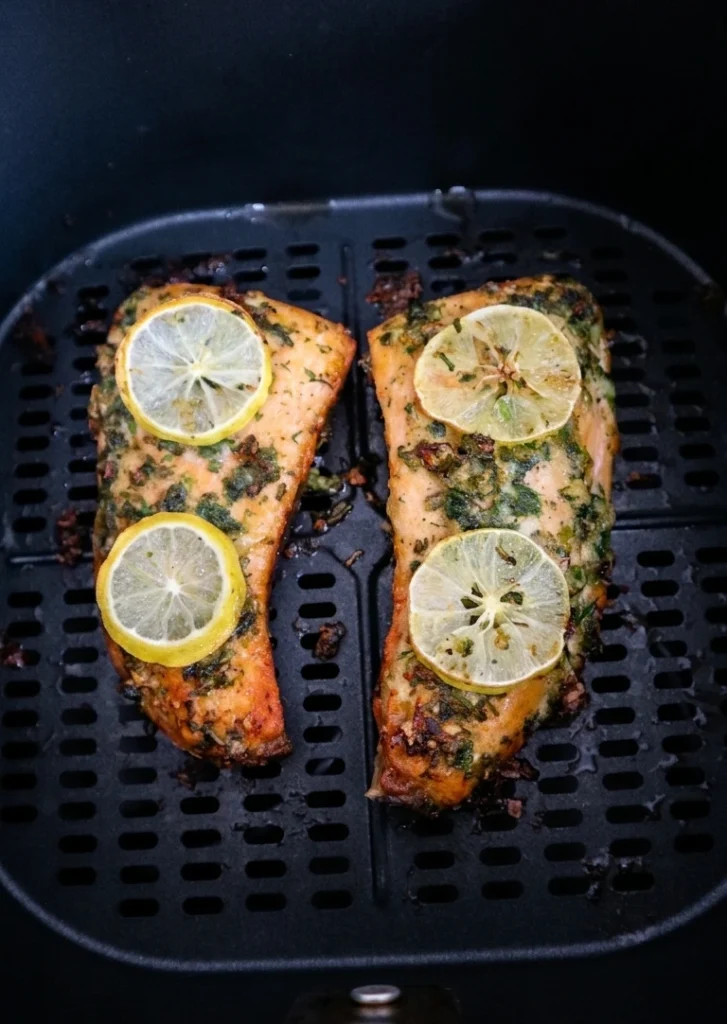
Why frozen salmon works so well in the air fryer
Most people think salmon has to be thawed first, and that one step is what stops them cooking it on a busy night. The air fryer removes it. The circulating heat thaws and cooks the fillet at the same time, evenly, so you avoid the mushy texture you get from rushed microwave thawing. The outside picks up a light crisp while the inside stays moist and flaky. It is fast, healthy, and about as hands-off as dinner gets.
What you will need
- 2 frozen salmon fillets (skin-on or skinless)
- 1 tablespoon olive oil or avocado oil
- Salt and black pepper
- Garlic powder
- Paprika (optional, for colour)
- Lemon wedges or slices, to serve
You will also want an air fryer, a brush or oil spray, tongs, and a meat thermometer, which is the most reliable way to nail doneness on fish.
The trick: cook it plain first, then season
Oil and seasoning will not stick to a frozen, icy fillet, and any glaze just slides off. So cook the salmon plain for the first 7 minutes. That thaws the surface and lets any ice glaze release. Then brush on the oil, add your seasoning, and finish cooking. Now everything sticks, the seasoning actually flavours the fish, and the surface can brown. This two-step method is the difference between bland, wet salmon and a properly seasoned, lightly crisp fillet.
How to cook frozen salmon in the air fryer
- Preheat the air fryer to 390°F (200°C) for a few minutes. Pat any ice glaze off the fillets with paper towel.
- Place the frozen fillets skin side down in a single layer, not touching. Cook plain for 7 minutes.
- Open the basket. If the fillets were frozen together, separate them now. Brush the tops with oil and season with salt, pepper, garlic powder, and paprika.
- Return to the air fryer and cook another 6 to 9 minutes, depending on thickness, until the salmon flakes easily and is opaque through the centre.
- Check doneness with a thermometer at the thickest part: 145°F (63°C) is the safe target, or pull at 125 to 130°F for a more tender medium.
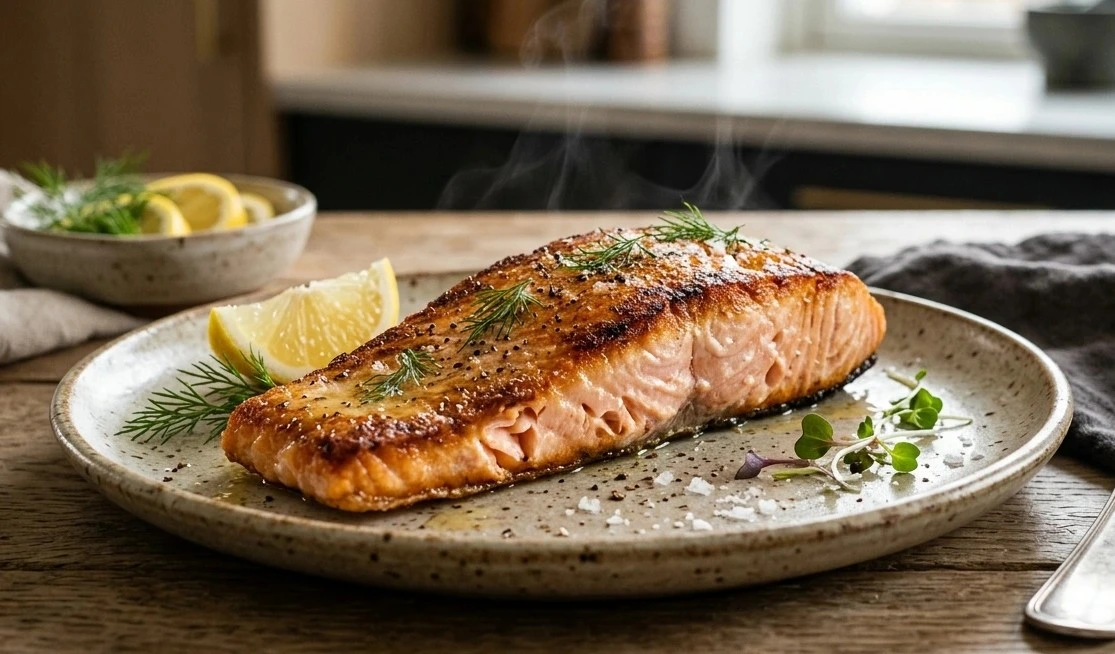
- Rest for 2 to 3 minutes so the juices settle, then serve with a squeeze of lemon.
You can find the full printable recipe in the card below.
Cooking time guide by thickness
Fillet thickness drives the time far more than the air fryer model. These are total times for the two-step method.
| Fillet thickness | Temperature | Total time |
|---|---|---|
| Thin (under 1 inch) | 390°F (200°C) | 11 to 13 min |
| Medium (1 to 1.5 inch) | 390°F (200°C) | 13 to 16 min |
| Thick (over 1.5 inch) | 390°F (200°C) | 16 to 18 min |
Skin-on fillets crisp a little on the bottom, while skinless cook a touch more evenly. Always go by internal temperature rather than the clock.
What temperature should salmon be?
145°F (63°C) is the safe internal temperature recommended by food safety guidelines, and it gives a firm, fully flaky fillet. Many cooks prefer salmon a little more tender and pull it at 125 to 130°F for medium, letting carryover heat finish it during the rest. Either is fine. Use a thermometer at the thickest part, and remember the temperature keeps climbing a few degrees after the salmon leaves the basket.
Never overbake again
Get our one-page times & temps cheat sheet, plus a new tested recipe each week.
No spam · unsubscribe anytime
How to get crispy salmon
- Single layer, no overlap. Crowded fillets trap steam and turn soft.
- Add the oil after the thaw stage. A light coating browns the surface without making it greasy.
- Stick to 390°F. Too low stays soft, too high dries the edges before the centre is done.
- Skin side down. Skin-on fillets crisp nicely on the bottom and lift off cleanly.
Flavour variations
Once you have the base method, add any of these at the seasoning stage or right at the end:
- Lemon garlic butter: after cooking, drizzle with melted butter, garlic, and lemon juice.
- Honey soy glaze: brush on in the last 2 to 3 minutes for a caramelised finish.
- Cajun: add Cajun seasoning at the season stage for a smoky, spicy kick.
- Herb crusted: mix parsley, dill, and thyme into the oil before brushing.
Common mistakes to avoid
- Seasoning the frozen fillet. It will not stick, so wait for the thaw stage.
- Cooking without oil. The surface dries out and will not brown.
- Overcooking. Salmon goes from moist to dry fast, so start checking early.
- Skipping the thermometer. Thickness varies, and a couple of degrees is the difference between tender and dry. Our guide on avoiding dry results helps here too.
What to serve with air fryer salmon
Salmon pairs with simple, fresh sides. A few easy options:
- Steamed broccoli, green beans, or asparagus
- Rice, quinoa, or roasted potatoes
- A crisp green salad
- Air fryer corn on the cob or crispy accordion potatoes
- Air fryer frozen Brussels sprouts, which go in straight from the freezer just like the salmon
For a heartier plate, serve it with our air fryer sweet potato fries.
Storage and reheating
Storage: keep leftovers in an airtight container in the fridge for 2 to 3 days.
Reheating: warm in the air fryer at 320°F (160°C) for 3 to 5 minutes, just until heated through. Avoid the microwave, which tends to dry salmon out.
Frequently asked questions
QCan you cook salmon straight from frozen?
Yes. The air fryer thaws and cooks the fillet at the same time, evenly, so there is no need to defrost first. Cooking it from frozen actually helps keep the texture from turning mushy.
QHow long does frozen salmon take in the air fryer?
About 13 to 16 minutes total at 390°F for a medium fillet, using the two-step method. Thin fillets need 11 to 13 minutes and thick ones 16 to 18. Always confirm with a thermometer.
QDo you need to thaw salmon before air frying?
No. Thawing is not required. If you do have time to thaw, the fillet will cook a few minutes faster and the texture is very slightly more tender, but frozen works beautifully.
QFrozen or fresh salmon, is there a difference?
Fresh is a touch more tender and cooks faster, which is nice for presentation. Frozen is far more convenient and, cooked properly, tastes nearly identical. For a busy weeknight, frozen wins.
QHow do you keep salmon from drying out?
Do not overcook it, brush it with a little oil, and use a thermometer. Pulling it at 125 to 130°F for medium, then resting, keeps it moist and tender.
QIs air fryer salmon healthy?
Yes. Salmon is high in protein and rich in omega-3 fatty acids, and the air fryer needs only a light coating of oil, so it is a lighter way to cook it than pan-frying.
If you make this, let me know how it turned out in the comments. Building a full plate? Add our sweet potato fries or crispy potato chips, or browse all of our air fryer dinner recipes.
You can also follow me on Instagram and Pinterest for more easy air fryer recipes.
Made this? Rate the recipe