
Air Fryer Toaster Strudel: Crispier Than the Toaster
The product is named after the wrong appliance. A toaster blasts two flat faces with radiant heat, leaves the edges pale, launches the pastry when it feels like it, and routinely hands you a crackling shell around a still-cold heart of filling. The basket fixes every one of those: moving hot air wraps all six sides, the perforated floor crisps the underside the toaster never touches, and the filling comes up to temperature with the pastry instead of two minutes behind it. Seven to nine minutes at 330°F, straight from frozen, no thawing, no flipping, and then the part everyone rushes: the icing waits for the two minute rest, because that little packet has physics of its own.
What’s on this page
- Auditing the title: why crispier
- The numbers, and why they differ
- The icing packet, handled right
- What done looks like
- Flavors, and whether timing changes
- Batches and crowding
- Ingredients
- How to make them
- Three small upgrades
- The freezer shelf around them
- Fixing what goes wrong
- Frequently asked questions
Auditing the title: why crispier
This site audits its own headlines, so here is the mechanism behind this one. A toaster cooks by radiation from two glowing walls: the flat faces of the strudel get the full treatment while the four edges see almost nothing, and the frozen filling in the middle warms only by conduction from the outside in, which is why the classic toaster strudel experience is hot flakes, cold jam. An air fryer cooks by convection: a fan drives hot air across every surface at once, including the underside through the perforated floor, so the edges crisp, the corners crisp, and the filling has seven steady minutes to come up to temperature instead of two frantic ones. The same pastry comes out of the basket crisp on all six sides with a filling that is actually hot. It is not a hack or a trend. It is the right appliance finally meeting the product, and the toaster keeps the naming rights as a consolation prize.
The numbers, and why they differ
330°F for 7 to 9 minutes, straight from frozen, no thawing, no preheating, no flipping. That is cooler and slightly longer than the 350-for-6 the rest of the internet copied from itself, and the difference is deliberate. Toaster strudel pastry is laminated, and laminated dough carries its butter at the surface, where it browns ahead of everything else; at 350°F the corners are toasted by minute 5 while the center of the filling is still shrugging off the freezer. Ten degrees down and two minutes longer flips that: the pastry reaches the same deep gold and the filling arrives hot at the same moment. The box's own oven instructions run around 375°F, and stepping that down for a basket is the standard conversion our air fryer calculator runs for any package, with the extra step down this site gives every laminated pastry, the same reasoning that runs our frozen croissants at 320°F.
Two doctrines from the freezer shelf apply here and one does not. Like our frozen biscuits, these bake from frozen with no preheat, because a long-enough bake from a cold start evens itself out. Unlike the biscuits, they never get flipped: a biscuit is a sturdy puck of dough that shrugs off handling, but a half-baked laminated pocket is structural pastry, and turning it mid-bake cracks the shell and stresses the seams while the bare floor was already browning the underside without help. The recipes that flip at minute 3 are toaster habits wearing an apron. The when-preheating-matters argument gets its full hearing in do you need to preheat an air fryer for baking, and these numbers join the rest of the site's tested settings on the baking chart.
The icing packet, handled right
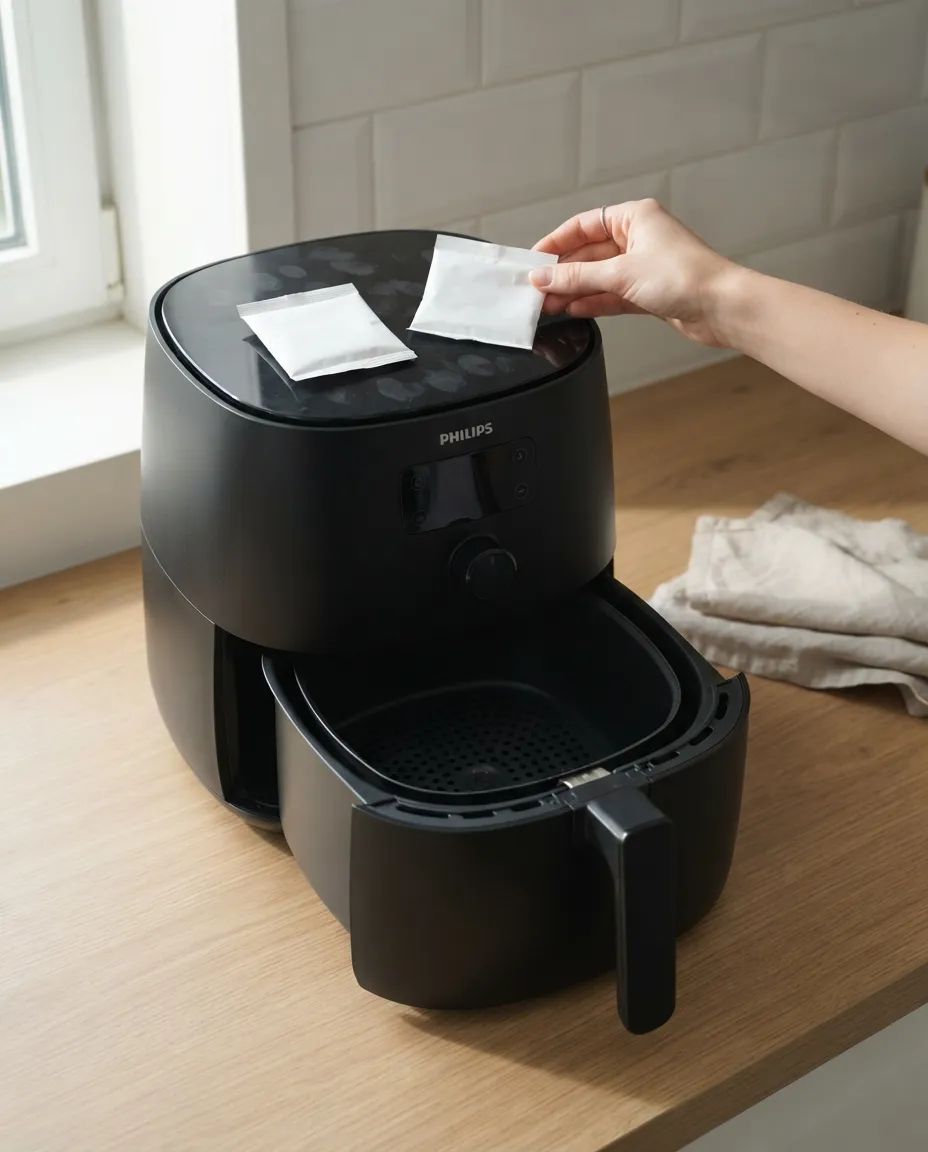
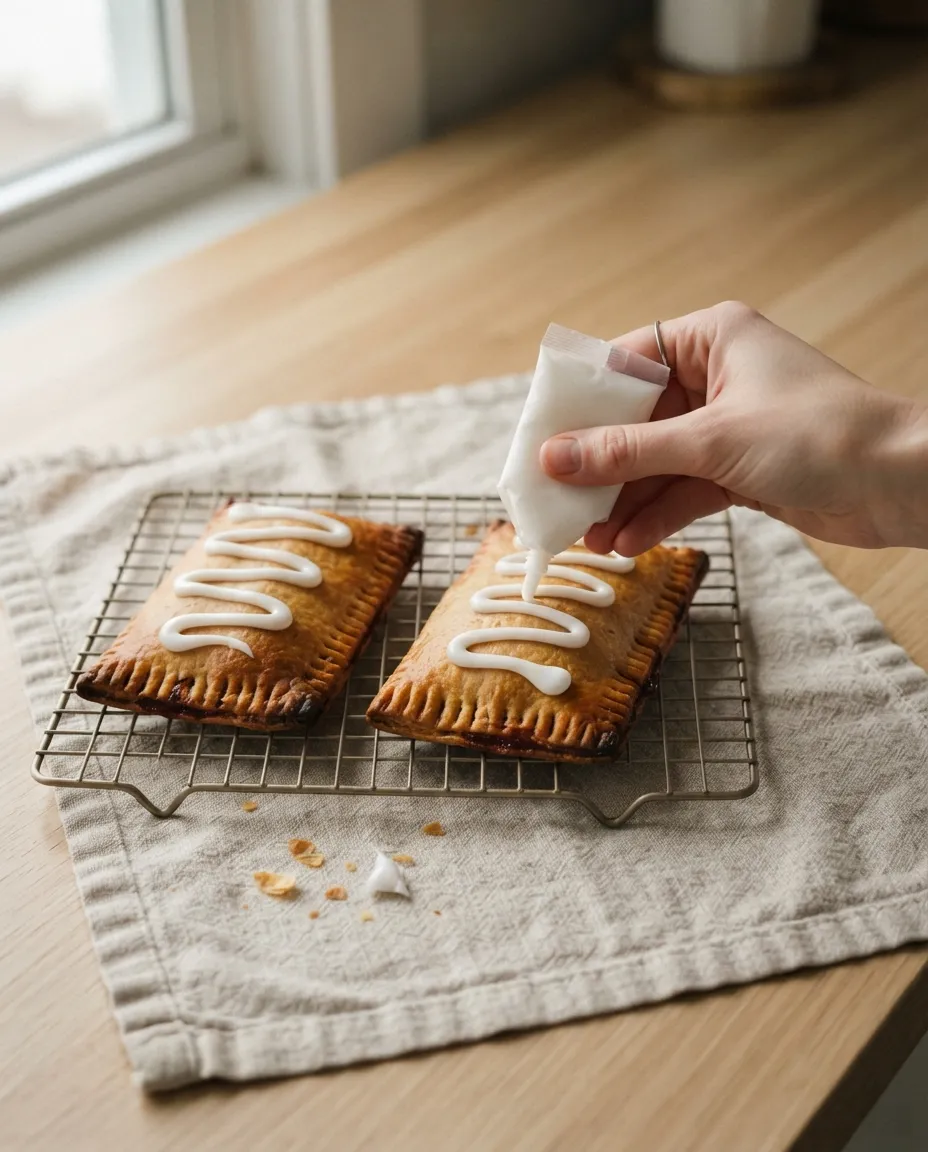
The packet is the ritual and everyone fumbles it in one of two directions. Squeezed onto a strudel straight out of the basket, the icing hits a surface hot enough to melt it outright; it thins, turns translucent, and runs off the edges, taking the squiggle with it. Squeezed cold from the freezer-adjacent box, it comes out reluctant and ropy and tears the pastry as you drag it. The fix costs nothing: set the packet on top of the air fryer while the strudels cook, where the machine's waste heat softens it to pipeable, and knead it once between your fingers before you snip the corner. Then give the strudels their 2 minute rest on a rack, the point where the surface has dropped from scorching to merely hot, and pipe. The icing softens against the warm pastry, keeps its opacity, and holds the squiggle. This is the same warm-not-hot logic that governs every glaze on this site, from the glazed donuts down, scaled down to a packet the size of a matchbook.
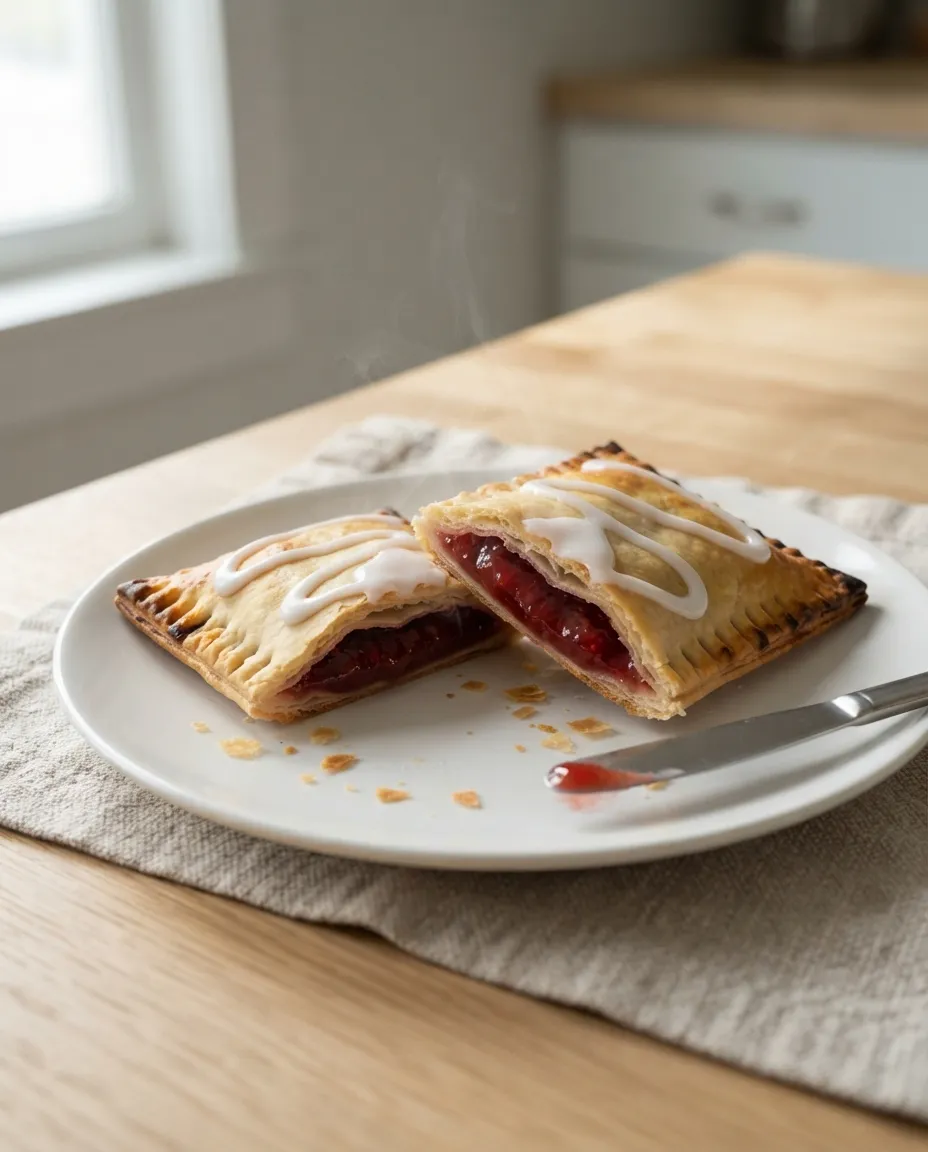
One safety line that belongs in bold because a child is often the customer: the filling holds heat far longer than the pastry. A strudel that feels friendly to fingers at minute 2 is still holding jam near boiling in the middle. For small kids, cut it in half at the rest and let the steam out; the cut also gives the icing a canyon to pool in, which no one has ever complained about.
What done looks like
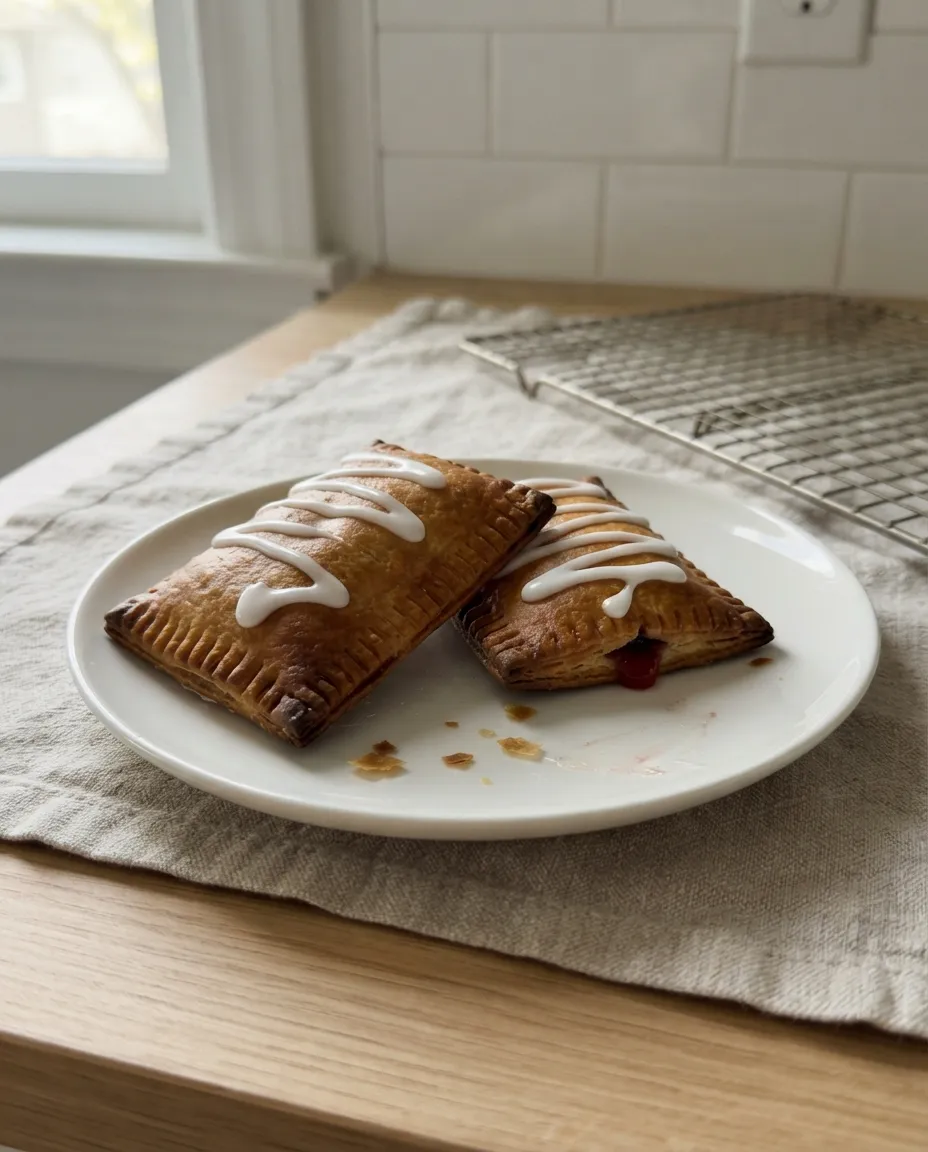
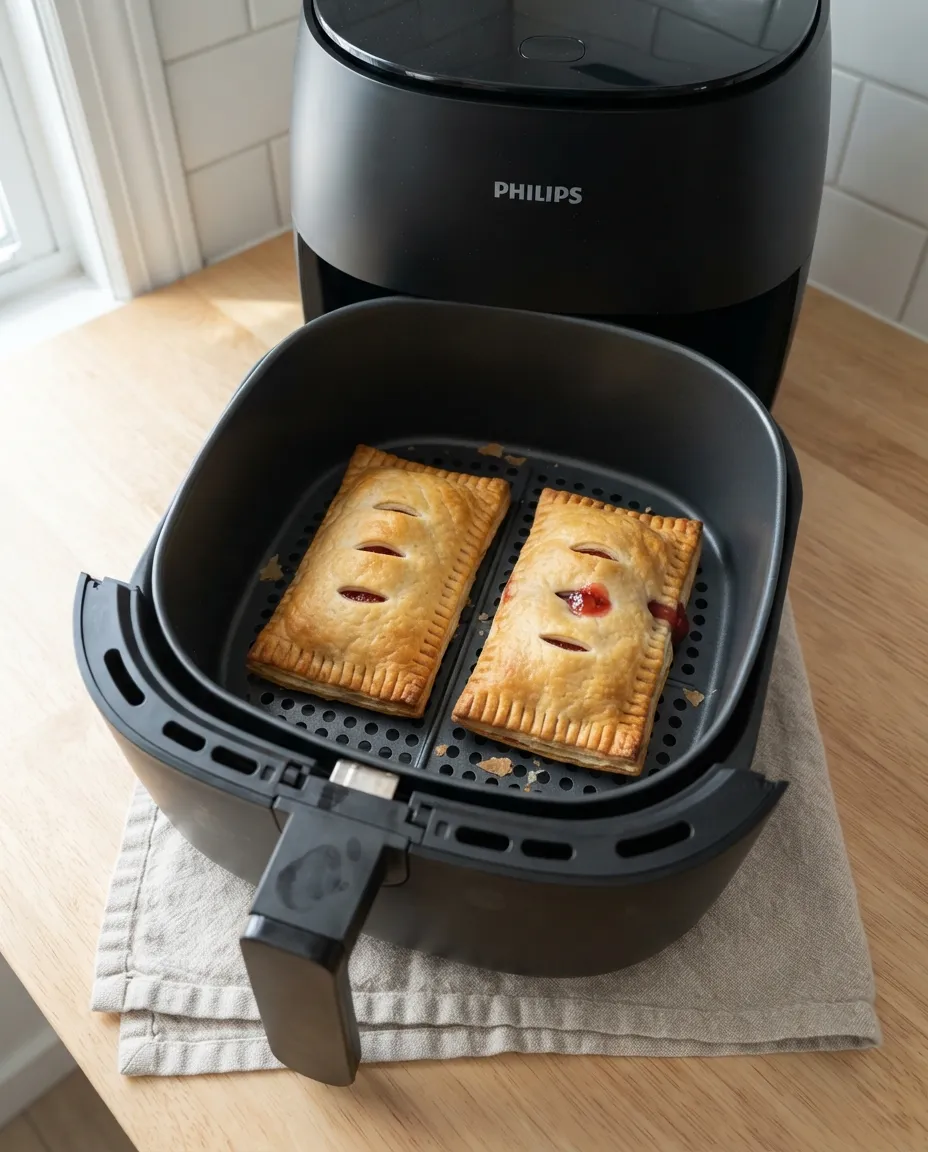
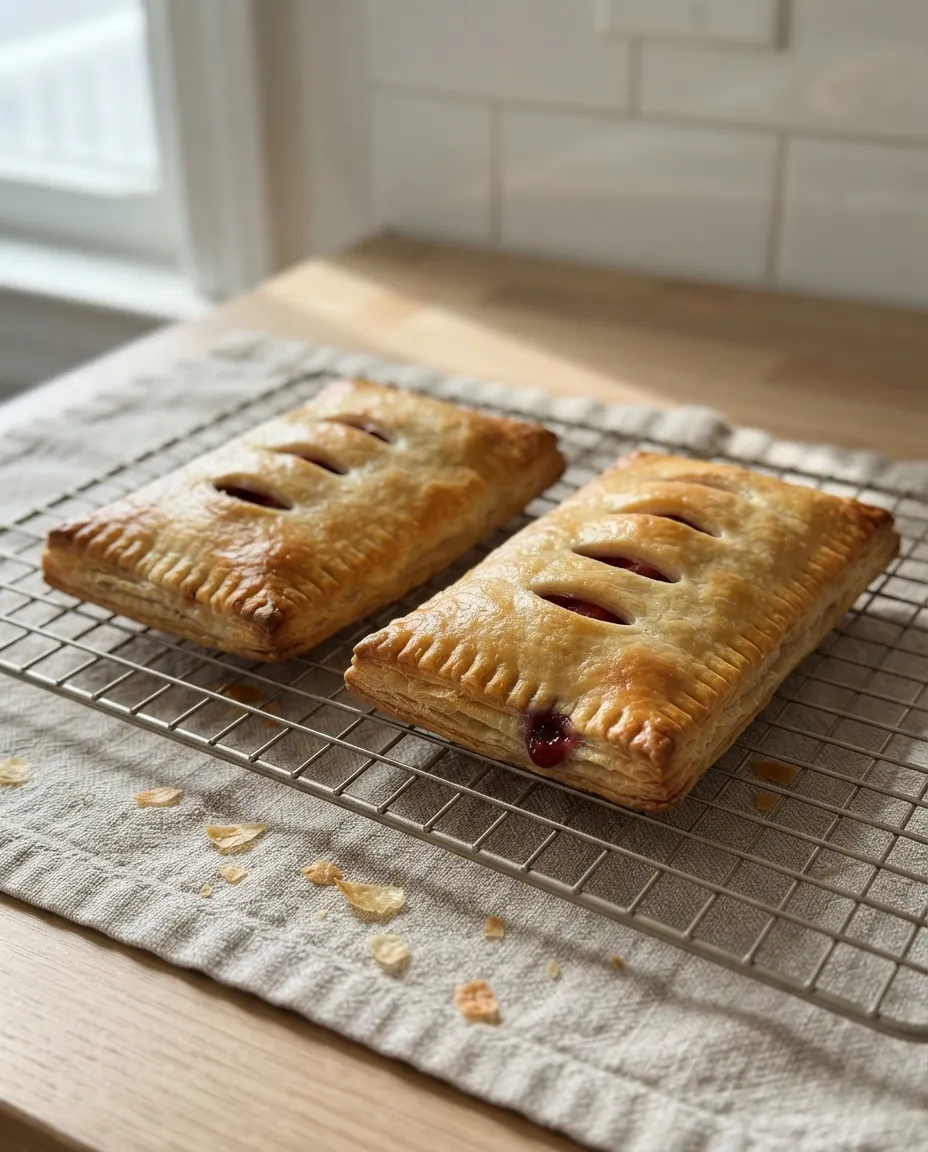
- Color: even gold across the face, shading deeper at the crimped edges, with no pale border. The pale frame is the toaster's signature; its absence is the whole point.
- The corners: crisp enough to click against a plate. Toaster corners bend; basket corners snap.
- The seam: intact, with maybe a lazy bubble of filling at one edge. A burst seam means the machine ran hot; drop 10 degrees for the next pair.
- The shake test: pick one up with tongs and tip it gently. Done filling shifts as one slow mass; a dry rattle means it went too long and the filling reduced to jam cement.
Flavors, and whether timing changes
It mostly does not, which is the convenient truth the flavor-by-flavor listicles stretch into paragraphs. Strawberry, apple, blueberry, raspberry, cherry: identical, 330°F for 7 to 9. The two that earn a note are cream cheese varieties, which run a touch heavier in the middle and like the ninth minute, and chocolate, whose filling scorches bitter faster than fruit if your machine runs hot, so start checking it at minute 7. The boxed danish-style strudels with more filling than pastry take the full 9 and one extra minute of rest, because more filling means more stored lava. If cream cheese is the flavor you keep buying, our from-scratch cheese danish is the same idea built on a sheet of puff pastry.
Batches and crowding
Two strudels side by side with a finger of space is the honest capacity of most 5 to 6 quart baskets; four fit in an XL or an oven-style tray model. Resist the urge to shingle them. Overlapped pastries steam each other where they touch, and steam is the enemy of the crisp you switched appliances for. A second batch in the already-hot machine runs about a minute faster, which the toaster, ejecting on its own schedule to its own applause, never offered. If you are feeding a crowd, batches of two every 8 minutes still beats the toaster's two-at-a-time with a cold-middle do-over.
Ingredients
For one basket
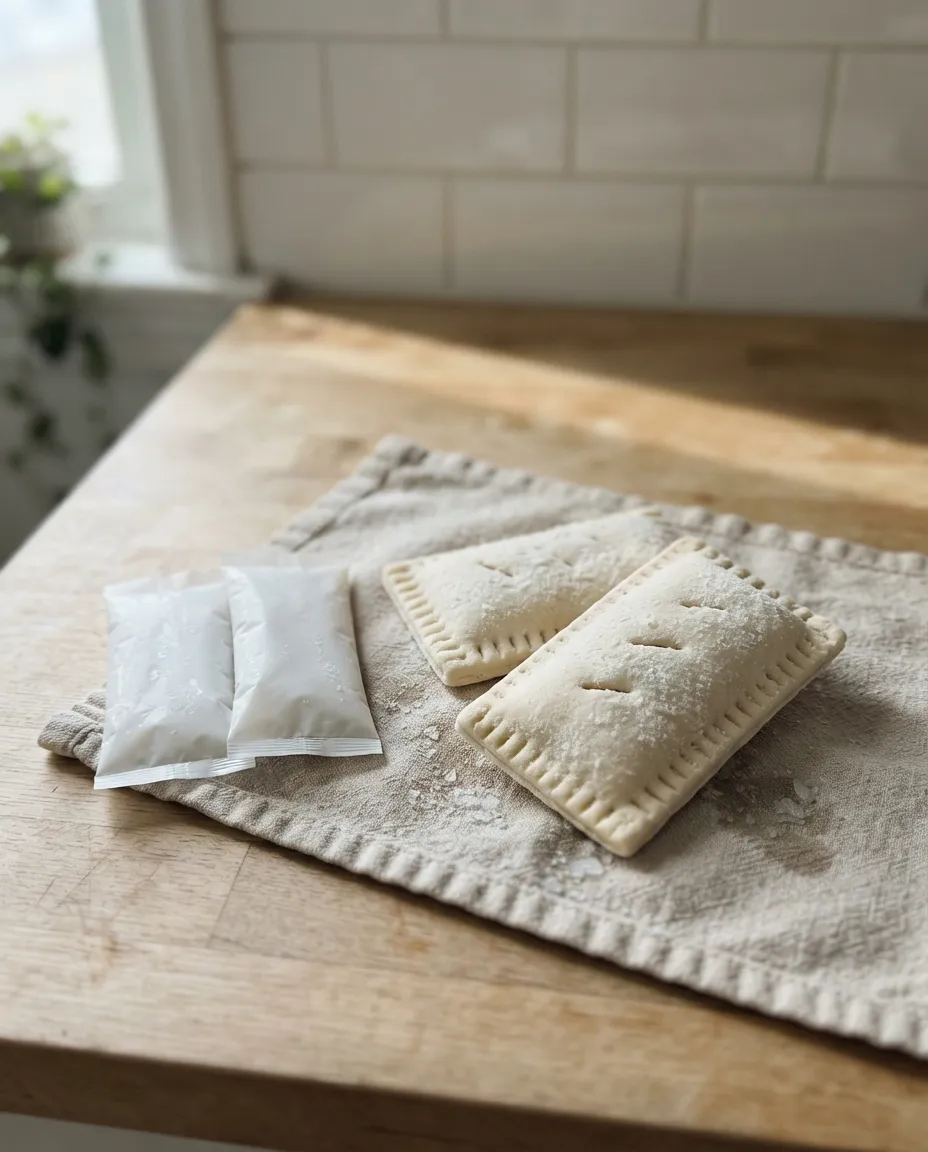
- 2 frozen toaster strudels, any flavor, straight from the box
- The icing packets that came with them
- Nothing else, and no oil on the floor this time; the pastry surface is already fat-rich and releases on its own
Keep the box in the freezer until the machine-side moment. A thawed strudel bakes flatter and leaks sooner, because the filling loosens before the pastry can set around it.
How to make them
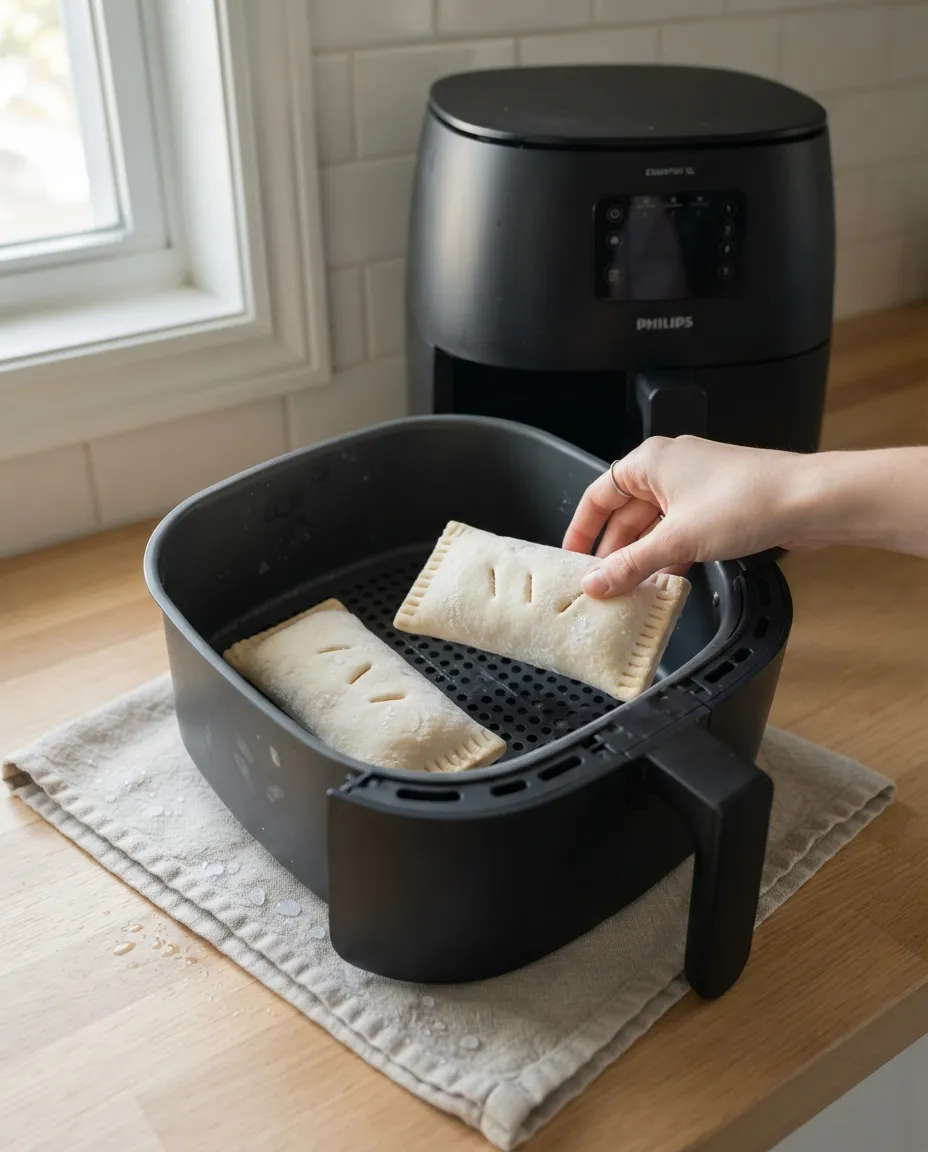
- Take the strudels straight from the freezer and lay them flat in the basket, seam side up, with a finger of space between them.
- Set the icing packets on top of the air fryer, where the machine's warmth will soften them while it works.
- Air fry at 330F for 7 to 9 minutes from frozen, with no preheat and no flipping, until the face is even gold and the corners are crisp.
- Check at minute 7 for chocolate varieties or hot-running machines; the last minute does the corners.
- Move the strudels to a rack and rest them 2 minutes; the surface cools from scorching to merely hot, and the filling stays lava either way.
- Knead the softened icing packet once, snip a small corner, and pipe the squiggle onto the warm, not hot, pastry.
- For kids, cut each strudel in half at the rest to let the steam out of the filling before it reaches anyone's mouth.
- Bake any second batch about a minute shorter in the already-hot machine.
Three small upgrades
- The bakery dust. Brush the hot strudel with a whisper of melted butter and dust with cinnamon sugar before the rest, then ice as usual. It reads as effort and costs 20 seconds.
- The double-crisp. One extra minute, 10 total, produces a strudel with an almost croissant-like shatter, at the cost of a deeper tan. Best on fruit flavors; skip it for chocolate.
- The dessert conversion. Rest a fruit strudel 5 full minutes, split it, and lay a small scoop of vanilla ice cream in the middle. The hot-jam-cold-cream contrast belongs to the same food group as our air fried Oreos and funnel cake, which is to say the county fair, visiting on a weeknight.
The freezer shelf around them
The strudel is the flag-bearer of a whole category this site keeps testing: freezer products that were always one appliance away from their best selves. The frozen biscuits run the same no-thaw doctrine at nearly the same temperature, frozen garlic bread makes the savory case, and the lunchbox-nostalgia wing continues at rice krispie treats. When a slow weekend replaces the fast weekday, the homemade end of this energy is the scratch version on our pop tarts page and the hand pies, which take any filling you like, while the canned cinnamon rolls cover the refrigerator case. Everything tested lives in the recipe index, with the technique pages under guides.
Leftovers are a strange concept for a food with a 9 minute lead time, but if it happens: refrigerate iced leftovers and accept the icing's fate, or better, bake only what the table will eat, since the box goes back in the freezer and the next pair is 9 minutes from existing. A baked, un-iced strudel revives at 300°F for 2 to 3 minutes and takes fresh icing like nothing happened.
Fixing what goes wrong
| Problem | Cause | Fix |
|---|---|---|
| Crisp shell, cold middle | Toaster timing at air fryer temperature | The full 7 to 9 minutes at 330°F; the filling needs the clock, not more heat |
| Scorched corners by minute 5 | 350°F or above on laminated pastry | 330°F; darker faster is not done sooner. More rescues in the burning guide |
| Burst seam, leaked filling | Thawed strudel, or a hot machine | Frozen straight from the box, and 10 degrees down next time; wipe the floor between batches |
| Cracked shell | Flipped mid-bake | No flipping; the perforated floor browns the underside on its own |
| Icing ran off the pastry | Piped straight from the basket | The 2 minute rest, packet warmed on the machine and kneaded first |
| Pale, bendy edges | Strudels touching or shingled | A finger of space; two per batch beats four per steam bath |
Frequently asked questions
QHow long do you cook toaster strudel in the air fryer?
Seven to 9 minutes at 330F, straight from frozen, with no thawing, no preheating and no flipping. Most recipes say 350F for 5 to 6 minutes with a flip, and that combination browns the laminated corners before the frozen filling heats through, which recreates the toaster's hot-flakes-cold-jam problem in a new appliance. Ten degrees cooler and two minutes longer lands the deep gold pastry and the hot filling at the same moment. A second batch in the warm machine runs about a minute faster.
QDo you flip toaster strudel in an air fryer?
No. The perforated basket floor lets hot air reach the underside for the entire bake, so the bottom browns without help, and flipping a half-baked laminated pocket stresses the seams and can crack the shell. The flip instruction in most recipes is a habit imported from appliances with solid floors, where the bottom really did need a turn to see any heat. In a basket it adds risk and removes nothing. Lay the strudels seam side up, close the drawer, and open it again when the timer says so.
QWhen do you put the icing on a toaster strudel?
After a 2 minute rest on a rack, never straight out of the basket. Icing piped onto scorching pastry melts thin, turns translucent, and slides off the edges; icing on a warm surface softens just enough to bond and holds its squiggle opaque. The packet itself pipes best warmed and kneaded: set it on top of the air fryer while the strudels cook and the machine's waste heat softens it, then knead it once and snip a small corner. Cold packets pipe ropy and tear the pastry as you drag them.
QWhy is my toaster strudel still cold in the middle?
Because pastry browns faster than a frozen filling thaws, and the timing was written for the pastry. At high temperatures or short toaster-style timings the shell finishes first and the middle never catches up. The fix is the full 7 to 9 minutes at 330F, which gives the filling the clock it needs while the lower temperature keeps the laminated corners from scorching in the meantime. Cream cheese varieties run heaviest in the middle and like the ninth minute. If the middle is cold, the answer is always more minutes, never more degrees.
QIs toaster strudel better in the air fryer or the toaster?
The air fryer, and it is not close. A toaster heats only the two flat faces by radiation, leaving the edges pale and the frozen middle warming by slow conduction, which is where the crackling-shell-cold-jam experience comes from. The basket's moving air crisps all six surfaces at once, including the underside through the perforated floor, and its longer, steadier bake brings the filling fully up to temperature. The trade is time: about 8 minutes against the toaster's 4. The strudel repays the difference with interest.
QCan you cook a whole box of toaster strudels at once?
Not in a standard basket. Two strudels with a finger of space between them is the honest capacity of a 5 to 6 quart machine, four in an XL or oven-style model, and stacking or shingling them makes the pastries steam each other soft where they touch. For a crowd, run batches: the second and later rounds finish about a minute faster in the hot machine, so a family of six eats in under 20 minutes with every strudel crisp. Bake only what gets eaten; the box stores itself, and round two is always 8 minutes away.
Made it? Rate it.
It helps more people retire the toaster from strudel duty.
Air Fryer Toaster Strudel
Frozen toaster strudels at 330°F for 7 to 9 minutes, no thawing and no flipping, rested 2 minutes and iced with the packet warmed on top of the machine.
Ingredients
- 2 frozen toaster strudels, any flavor, straight from the box
- The icing packets that came with them
- Nothing else, and no oil on the floor this time; the pastry surface is already fat-rich and releases on its own
Instructions
- Take the strudels straight from the freezer and lay them flat in the basket, seam side up, with a finger of space between them.
- Set the icing packets on top of the air fryer, where the machine's warmth will soften them while it works.
- Air fry at 330F for 7 to 9 minutes from frozen, with no preheat and no flipping, until the face is even gold and the corners are crisp.
- Check at minute 7 for chocolate varieties or hot-running machines; the last minute does the corners.
- Move the strudels to a rack and rest them 2 minutes; the surface cools from scorching to merely hot, and the filling stays lava either way.
- Knead the softened icing packet once, snip a small corner, and pipe the squiggle onto the warm, not hot, pastry.
- For kids, cut each strudel in half at the rest to let the steam out of the filling before it reaches anyone's mouth.
- Bake any second batch about a minute shorter in the already-hot machine.

Sujata Thapa
Sujata bakes everything on this site in a 5.5 quart basket air fryer on a Kathmandu counter, then re-tests the keepers until the timings hold for anyone. The icing-packet-on-the-machine trick was born of one ropy cold packet that tore a strudel's face off, an injustice this page exists to prevent.