

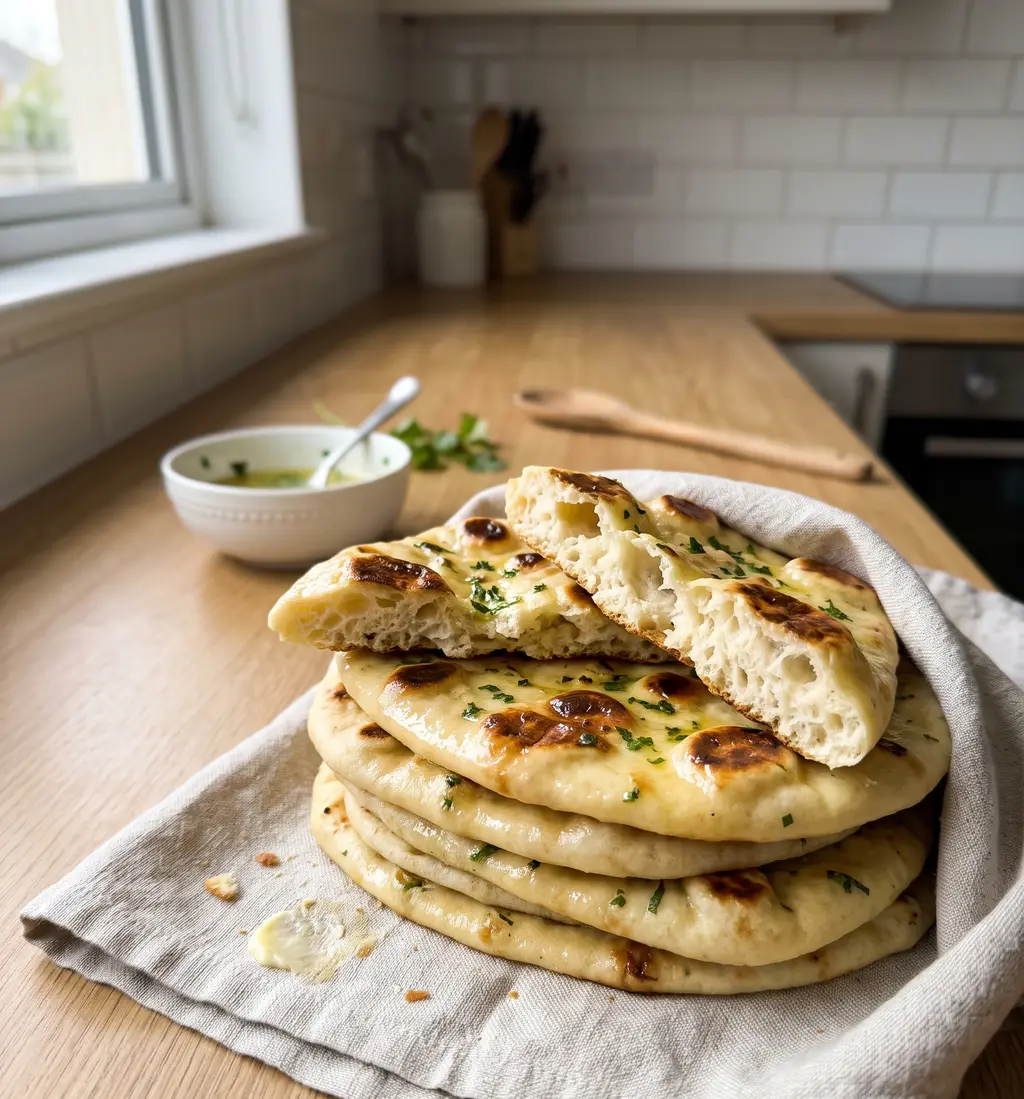
The naan of my childhood came off the wall of a clay oven, puffed like a pillow and spotted black, and the man who made it slapped raw dough onto that wall barehanded a hundred times a night. I am not building a tandoor on my counter, and neither are you.
What we both have is a machine that gets closer than it has any right to, once you stop treating naan like a bread you bake and start treating it like a bread you sear. My first attempts came out pale, stiff and sad, because I baked them gently on parchment like everything else on this site. Naan does not want gentle. It is one of the very few recipes in this collection, alongside the pita bread, that wants the machine as hot as it goes, the basket preheated until it hisses, and no paper anywhere in sight.
Quick answer: Preheat the empty basket at 400°F for 5 full minutes. Stretch the dough into a teardrop, oil the bottom face, wet the top face with damp fingers, and lay it straight onto the hot basket. Cook 3 to 4 minutes with no flipping, until brown blisters form, then brush with garlic butter and wrap in a towel. One naan at a time, and the second one cooks faster.
What a tandoor actually does
Understanding the clay oven is not trivia here. It is the recipe, because every technique below imitates one of its two jobs.
The wall
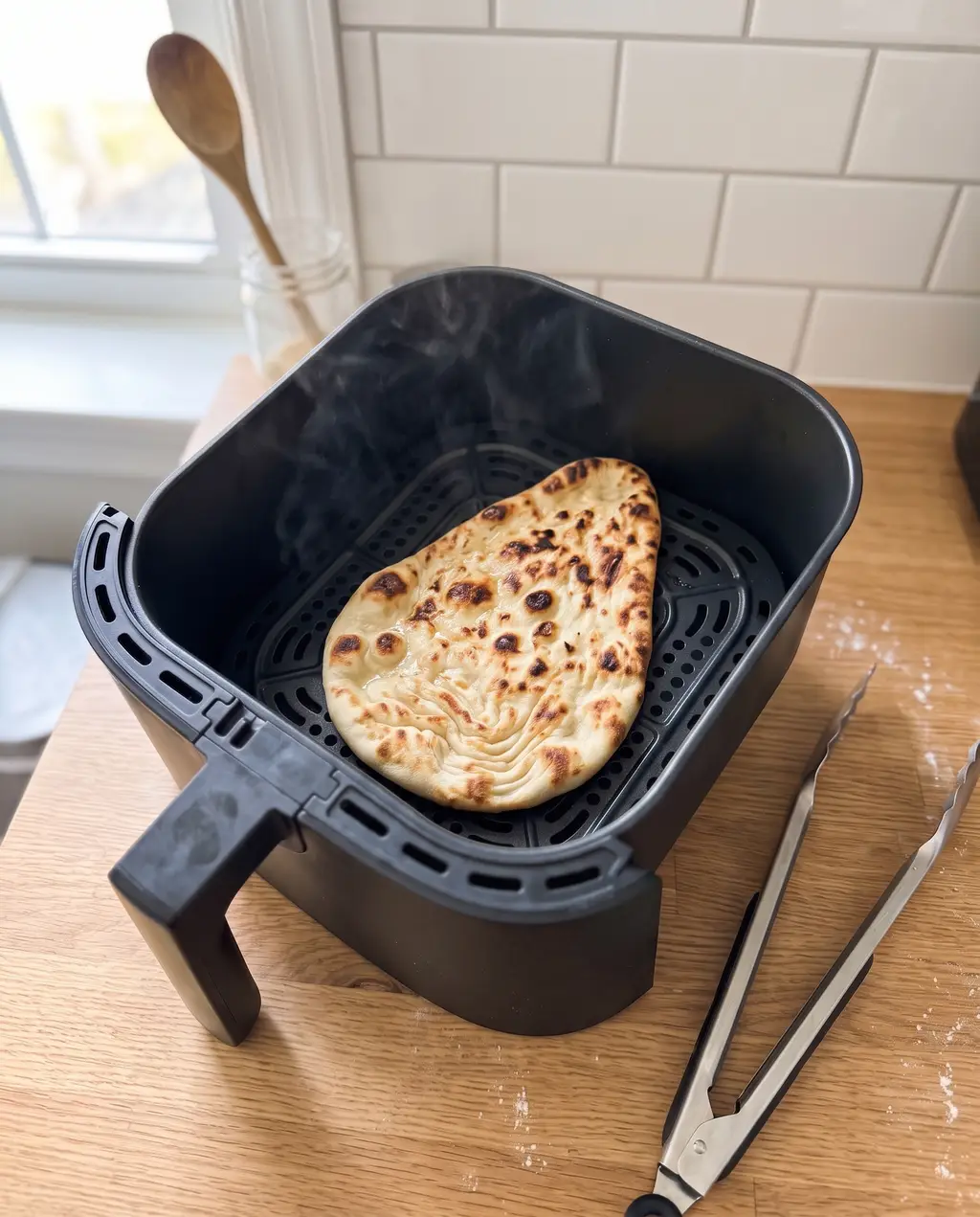
Wet dough slaps onto clay at around 900°F. The contact side sears instantly, charring in spots where it touches, and that violent conduction is where the dark leopard spots come from.
The ceiling
The open fire radiates down onto the exposed face, flashing its surface moisture into steam. The steam inflates bubbles faster than the dough can set, and those frozen bubbles are the blisters.
Ninety seconds
Because both jobs happen at once and fast, the naan is done before its interior can dry. Speed is the softness. Every slow method makes stiff naan, no matter the dough.
Now map it onto the machine: the preheated basket plays the wall, searing the bottom by conduction, and the element plays the ceiling, sending radiant heat down onto the top face. The air fryer cannot reach 900°F, so we compensate on the other side of the equation: maximum temperature, a long hard preheat so the basket metal has real heat banked in it, and a wet top surface to give the ceiling something to blister. It is not a tandoor. It is a surprisingly honest impression of one.
The rare recipe that wants a screaming hot machine
Regular readers will notice this page contradicting half the site. The cookies here bake at 300°F. The cakes get foil tents to slow the top down. Almost everything skips the preheat. Naan inverts every one of those rules, as does its puffed cousin the pita, which runs the identical 400°F, 5 minute preheat, no-flip method, and the reason is the speed-is-softness principle above: at 330°F a naan takes 8 minutes and exits as a cracker, because the interior moisture that keeps it floppy has all baked away by the time the surface colors.
So: 400°F, or whatever your machine's true maximum is, and a 5 minute empty preheat. Not the 3 minute courtesy preheat from the cake pages, a real one, long enough that the basket itself is a cooking surface. This is also the rare page where the air fryer calculator gets overridden rather than followed: it would convert a 500°F oven naan recipe down to around 475°F, your machine cannot go there, so you run the ceiling you have and keep the time brutally short instead. The calculator's drop-and-trim logic still runs everything else in the machine, and the air fryer baking chart shows how much of an outlier this page is. The preheat rules for everything gentler live in do you need to preheat an air fryer for baking.
One naan, two doughs
The ranking recipes split into a yeast camp and a yogurt-only camp and each pretends the other does not exist. Both are real naan traditions, and the honest move is to give you both with their price tags:
| The better naan | The tonight naan | |
|---|---|---|
| Dough | Yeast plus yogurt, kneaded soft | Self-rising flour plus Greek yogurt, two ingredients, the same dough as our flatbread |
| Time | 1 hour rise | 10 minutes, no rise |
| Texture | Puffy, chewy, big irregular blisters | Softer, flatter, smaller spots |
| Verdict | Make this when the curry is simmering anyway | Make this when dinner is in 20 minutes |
The yogurt is in both for the same two reasons: its acidity tenderizes the gluten so the naan tears soft instead of chewing tough, and its milk sugars brown faster than flour alone, which is where the deep spotting comes from at a mere 400°F. Skim it from neither.
The wet top, and the flip question
Two techniques separate naan that blisters from naan that just tans, and one popular instruction actively ruins it.
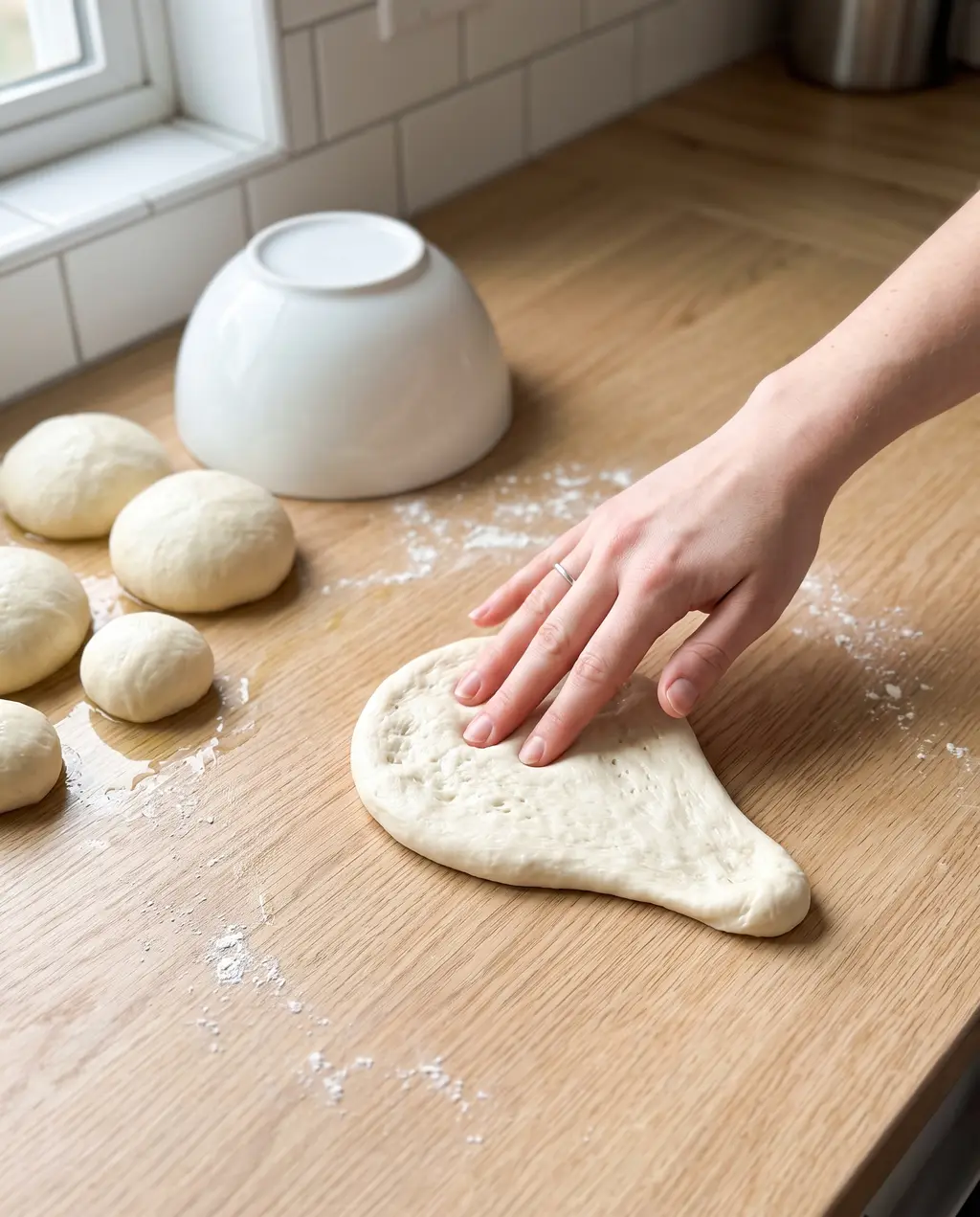
Wet the top face. Before the dough goes in, run damp fingers over the upward-facing side, a visible sheen of water. Under the element, that water flashes to steam at the surface and inflates the skin into bubbles before it sets, which is the tandoor ceiling's trick borrowed wholesale. Restaurants do exactly this on the wall side. A dry-topped naan browns evenly and politely, and polite is not what naan is for.
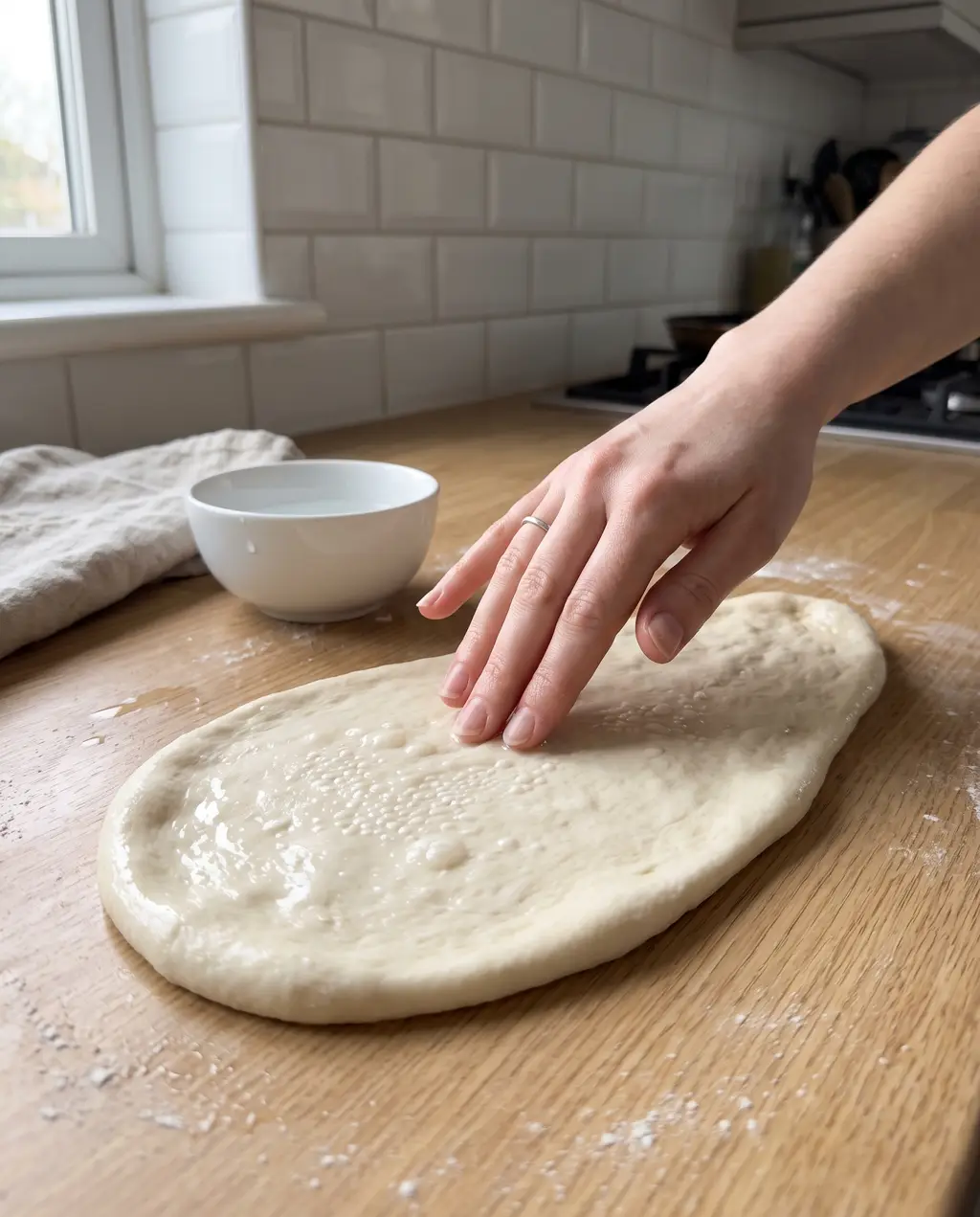
Do not flip, and here is the reason nobody gives. Half the recipes for this say flip halfway, and one correctly warns that flipping makes naan hard without explaining why. The mechanism: the blisters are steam-inflated bubbles, and they stay puffed because the set top crust holds them. Flip the naan and you press that delicate blistered face onto hot metal, which flattens the bubbles, sears the moisture out of both faces, and cooks the naan from two sides at once, finishing the drying job twice as fast. One face on the wall, one face to the ceiling, exactly like the clay oven, start to finish. The basket handles the bottom without your help.
No parchment, ever, on this one. Paper insulates the bottom from the seared-wall effect, and a loose sheet under a light flatbread at maximum fan speed is airborne in seconds. The dough itself, pressed onto hot metal, grips instantly and releases when cooked, the same physics as the clay. The liner rules for gentler bakes are in can you use foil or parchment paper in an air fryer.
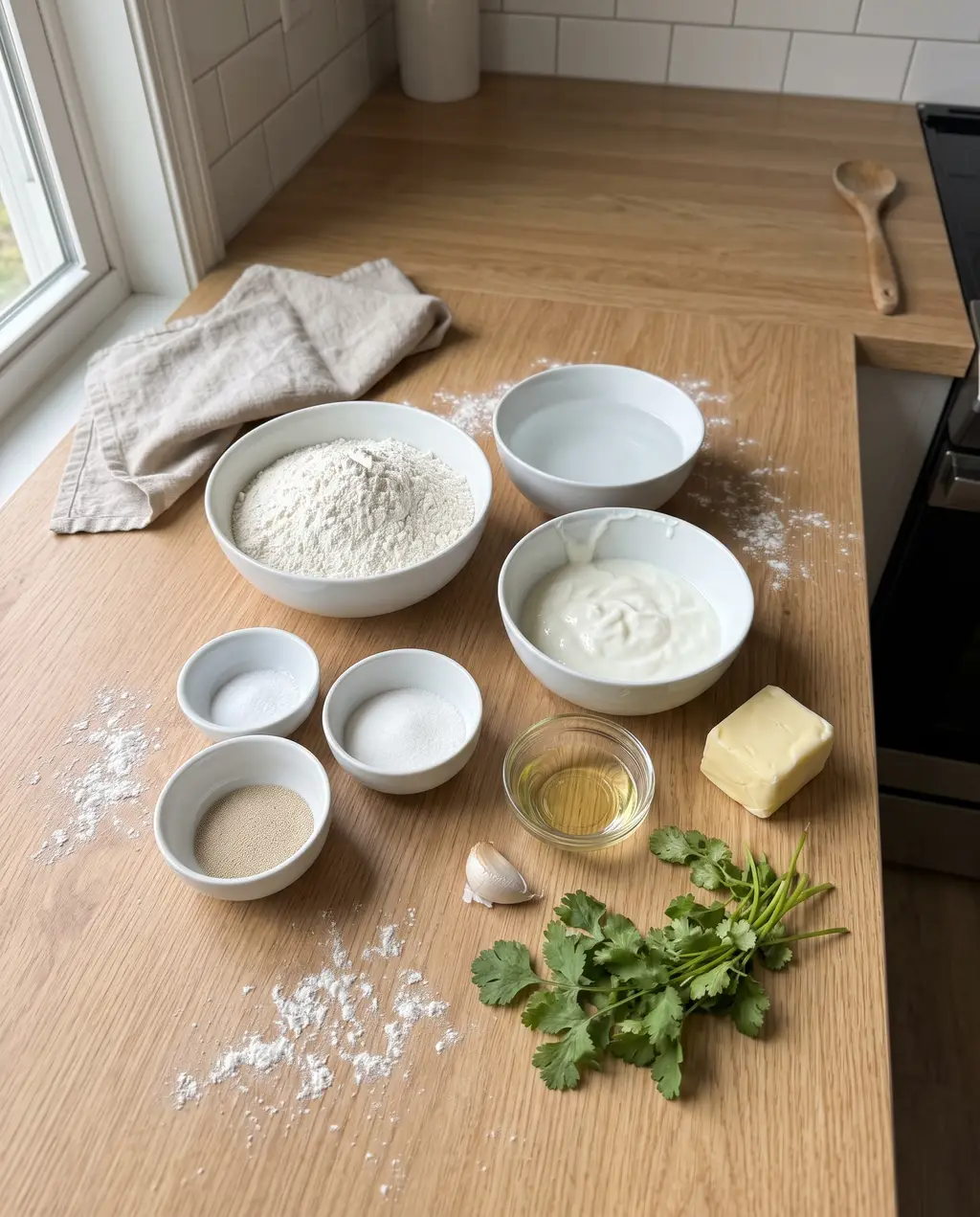
Ingredients
The better naan (6 pieces)
- 2 cups (250g) all-purpose flour
- 1 teaspoon instant yeast
- 1 teaspoon sugar
- 3/4 teaspoon fine salt
- 1/2 cup (120g) plain yogurt, room temperature
- 1/3 cup (80ml) warm water
- 1 tablespoon neutral oil, plus more for shaping
The tonight naan (4 pieces)
- 1 1/2 cups (188g) self-rising flour
- 1 cup (245g) Greek yogurt
- 1/4 teaspoon fine salt
The garlic butter finish
- 3 tablespoons (42g) butter, melted, or ghee
- 1 clove garlic, grated to a paste
- 1 tablespoon chopped cilantro
- Optional: 1/2 teaspoon nigella seeds pressed into the dough before cooking
The garlic goes in grated, never minced, for the same reason as the air fryer garlic bread: minced pieces on a hot surface turn bitter, paste in butter turns sweet. And it is brushed on after cooking, not before, because butter on raw dough fries the surface and kills the blisters. Doubling the dough for a crowd is a job for the recipe scaler, though the cooking stays one naan at a time regardless.
How to make it
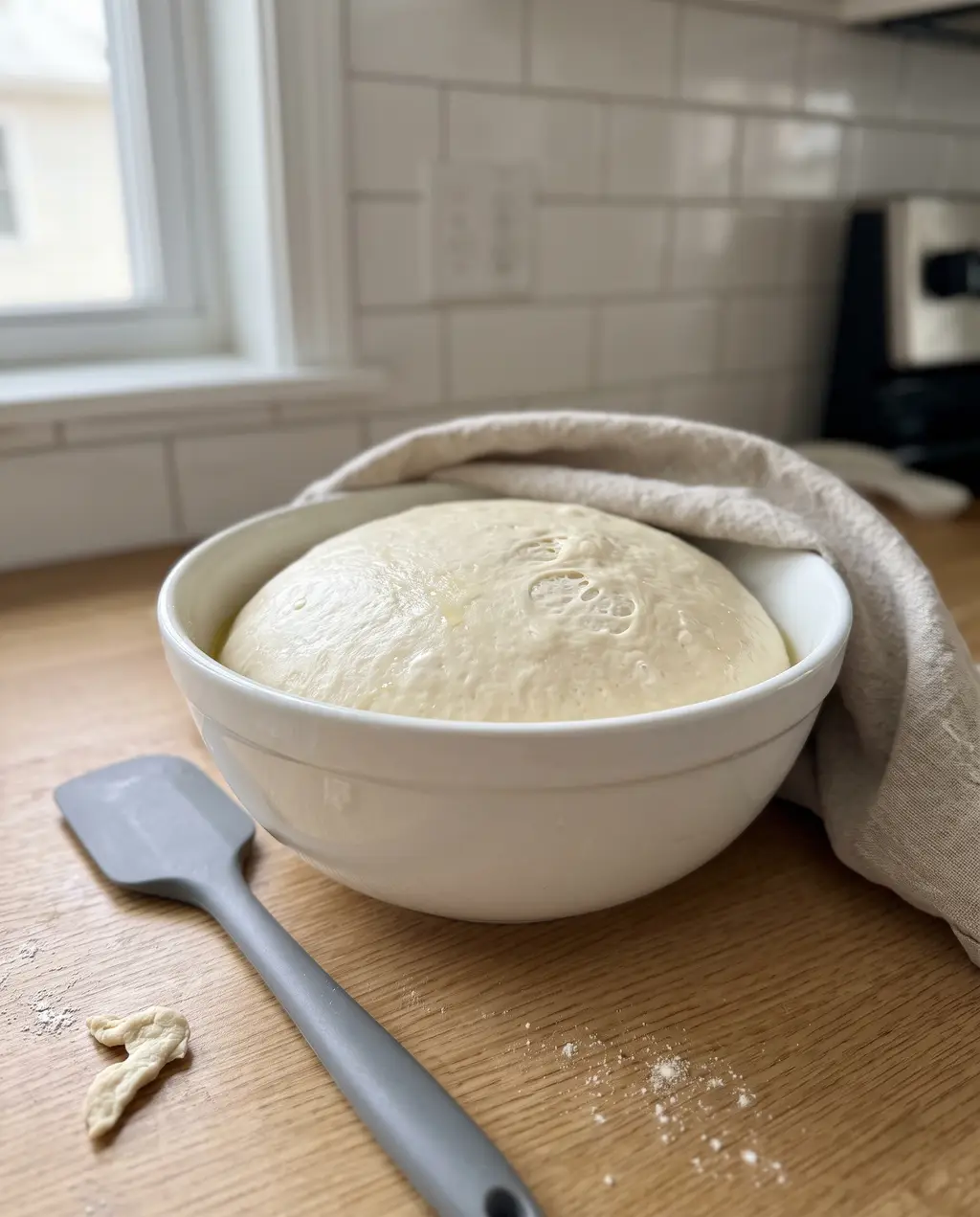
- Make the dough. Better version: stir the flour, yeast, sugar and salt, add the yogurt, water and oil, and knead 5 minutes to a soft, slightly tacky dough. Cover and rise 1 hour until puffy. Tonight version: stir everything into a shaggy ball, knead 1 minute, rest 10 minutes while the machine preheats.
- Divide into 6 balls (4 for the tonight dough) and rest them 10 minutes under the bowl. Rested gluten stretches instead of springing back.
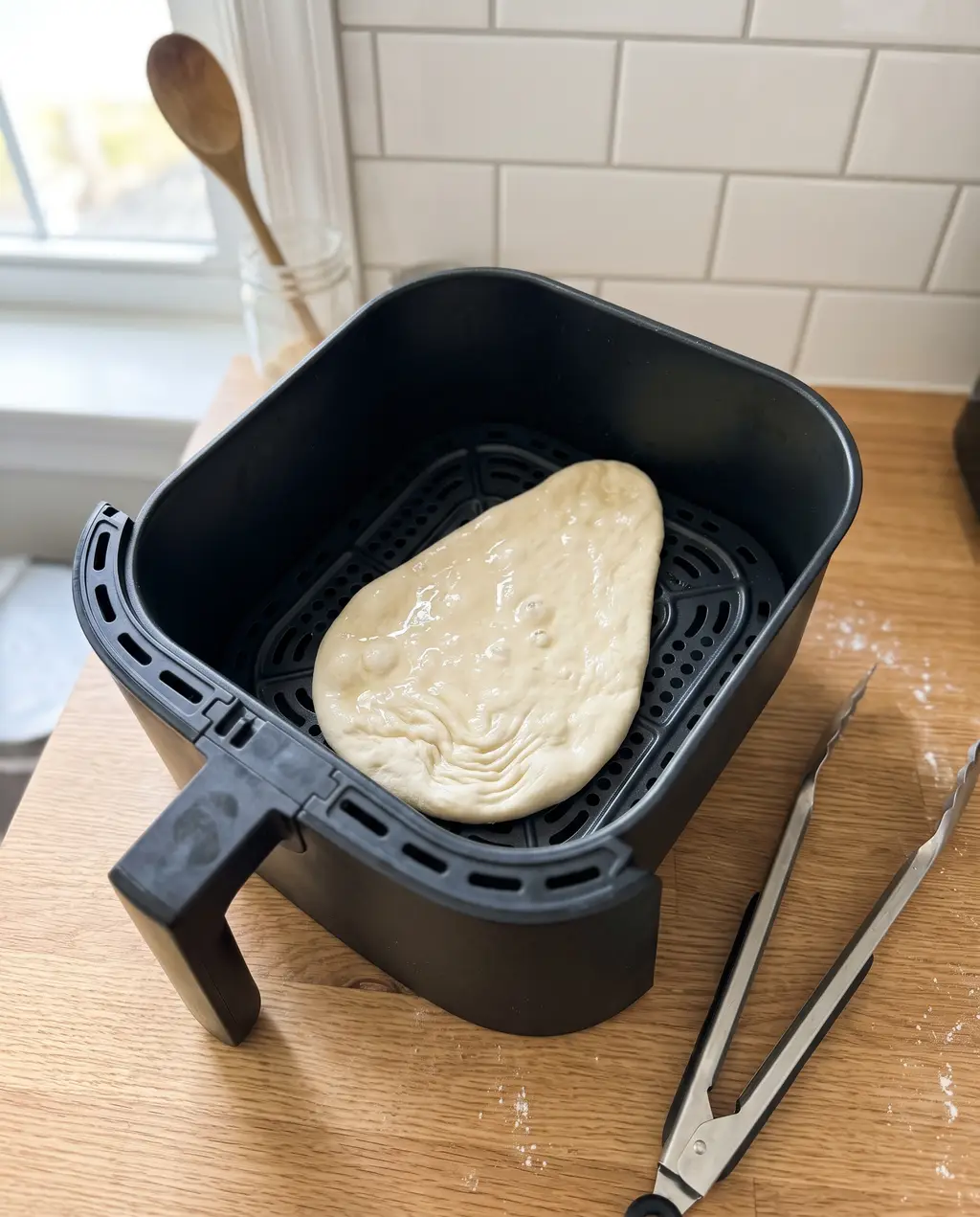
- Preheat the empty basket at 400°F for 5 minutes. The full five. The basket is the tandoor wall and a lukewarm wall chars nothing.
- Stretch one ball into a teardrop or oval, about 1/4 inch thick, with oiled hands on the counter, not a rolling pin if you can help it. Hand-stretching leaves the gas bubbles from the rise intact, and those become blisters. Press nigella seeds in now if using.
- Oil the bottom face lightly, wet the top face with damp fingers until it sheens.
- Lay it on the hot basket and cook 3 to 4 minutes, no flipping. Watch through the window if you have one: it puffs in the first minute, blisters in the second, and the spots brown in the third. Out when the high points are deep brown and the surface is set.
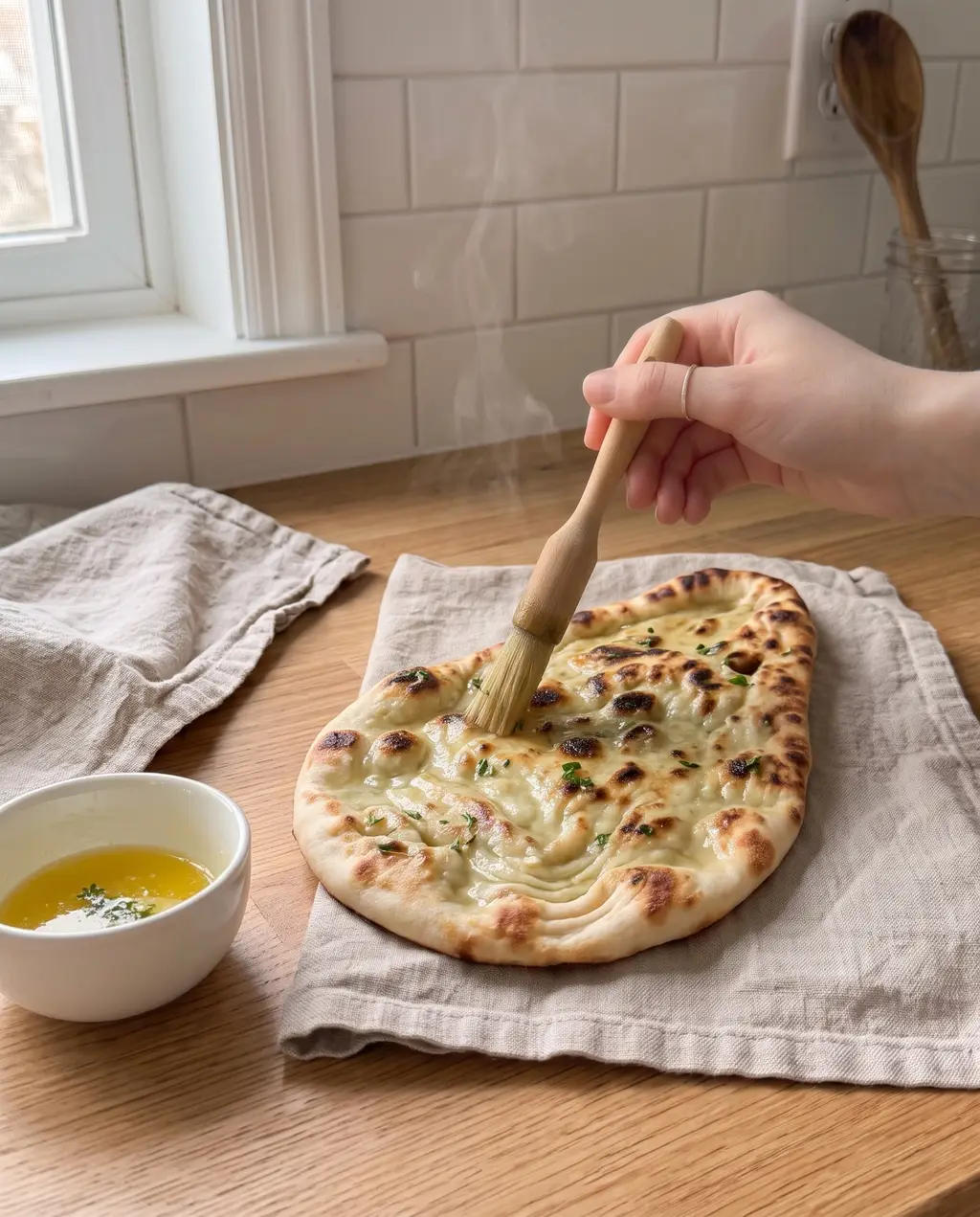
- Brush immediately with the garlic butter and drop it into a clean towel, folded over. Repeat with the rest, knocking 30 seconds off from the second naan on, since the basket keeps banking heat.
- Serve from the towel, warm and stacked, the way naan wants to arrive.
Keeping a stack soft
Naan is a batch bread cooked one at a time, so the holding method matters as much as the cooking. The towel is not a garnish: a folded clean kitchen towel traps each naan's own steam, and the stack softens itself as it sits, each new naan warming the ones below. Fifteen minutes in the towel and the first naan is indistinguishable from the last.
What kills a stack is a plate in open air, where each naan stiffens as it cools, or a sealed container while hot, where trapped steam turns the crisp spots to damp leather. Towel, folded, on the counter. If dinner is delayed, the wrapped stack holds 30 minutes, and a 90 second refresh in the basket at 350°F brings any naan back from the dead.
Store-bought and frozen naan
The other half of this search is the packet from the store, and the air fryer is the best reheat it will ever get:
| Product | Temp | Time | Note |
|---|---|---|---|
| Shelf-stable naan, refreshed | 350°F | 2 to 3 min | Damp fingers over the top first, it revives the crumb |
| Frozen naan, straight from the bag | 350°F | 3 to 4 min | No thawing, flip nothing |
| Mini or snack naan | 350°F | 2 min | They dry fast, check early |
| Naan pizza, any base | 370°F | 4 to 5 min | Toppings on cold naan, straight in |
The wet-fingers trick works on store-bought too, and it is the difference between reheated bread and revived bread. For the freezer-aisle dinner it usually accompanies, the frozen garlic bread page runs the same no-thaw logic on its own aisle.
Troubleshooting
| What you got | Why | Fix |
|---|---|---|
| Pale, no blisters | Basket not truly preheated, top not wetted, or temperature below max. | Five full minutes empty at 400°F, and the damp-fingers sheen every time. |
| Stiff, crackery naan | Cooked too long at too low a temperature. Speed is the softness. | Max heat, 3 to 4 minutes, out at brown spots even if it feels soft. It sets in the towel. |
| Flat, dense, no puff | Rolled flat with a pin, or the rise was skipped on the yeast dough. | Hand-stretch to keep the gas in, and give the hour. |
| Blisters deflated | Flipped it. | One face to the wall, one to the ceiling, no exceptions. |
| Naan flew into the element | Parchment under it, or dough laid on a cold basket that never gripped. | Bare hot basket only. Pressed onto real heat, dough anchors itself. |
| Stuck to the basket | Basket underheated, or bottom face not oiled. | Full preheat plus the light oil. A cooked naan releases on its own. |
| Bitter garlic butter | Minced garlic, or butter brushed on before cooking. | Grated to paste, brushed after. The burning guide covers the machine-side causes. |
| First naan perfect, third one scorched | The basket keeps banking heat batch to batch. | Knock 30 seconds off each naan after the first, and trust the spots over the clock. |
| One side of every naan darker | A hot spot. | Lay each naan in a different orientation. Recurring problems across recipes belong to the troubleshooting guide. |
Variations
- Garlic naan. Already the default here via the butter. For the restaurant version, press thin slices of raw garlic into the wet top before cooking, where they roast in place.
- Butter naan. Skip the garlic, double the ghee, flaky salt. The purist order.
- Cheese naan. A tablespoon of shredded mozzarella sealed inside the ball before stretching, stretched gently so it does not tear. Add 1 minute.
- Peshwari-style. A spoonful of ground almonds, coconut and raisins sealed inside. Sweet, and the first one gone every time.
- Naan pizza. Yesterday's naan, sauce, cheese, 370°F for 4 to 5 minutes. The weeknight ladder between the frozen pizza and real pizza dough.
- Naan chips. Stale naan cut into wedges, 4 minutes at 350°F, and it joins the tortilla chips in the dip rotation.
What naan is actually for: dragging through something. The air fryer baingan bharta is the pairing this page was written next to, smoky mashed eggplant that needs exactly this bread, and the two recipes share a machine happily, bharta first, naan while it rests, and aloo gobi makes the plate a full dinner. For the rest of the bread shelf, the yeast loaf and soft pretzels cover the days when shaping dough is the entertainment.
Frequently asked questions
QHow long does naan take in an air fryer?
3 to 4 minutes per naan at 400°F, cooked one at a time on a basket preheated empty for 5 full minutes, with no flipping. Published times run anywhere from 5 to 9 minutes at lower temperatures, and the longer schedules are why so much air fryer naan comes out stiff: naan stays soft by cooking fast, and every extra minute bakes away the interior moisture that keeps it floppy.
QDo you flip naan in the air fryer?
No, and this is the most contradicted instruction in air fryer naan recipes. The blisters are steam-inflated bubbles held up by the set top crust. Flipping presses that face onto hot metal, flattens the bubbles, and dries the naan from both sides at once, which is why flipped naan comes out hard. In a tandoor one face touches the wall and one faces the fire, start to finish. Same here: the basket does the bottom, the element does the top.
QWhy is my air fryer naan not blistering?
Three usual causes: the basket was not truly preheated, so there was no seared-wall effect on the bottom; the top face went in dry, so the element had no surface moisture to flash into bubbles; or the dough was rolled flat with a pin, which pressed out the gas that becomes blisters. Five minute empty preheat at 400°F, a sheen of water from damp fingers, and hand-stretching fix all three.
QCan I make naan without yeast?
Yes: self-rising flour and Greek yogurt, roughly 1 1/2 cups to 1 cup with a pinch of salt, kneaded a minute and rested ten. It cooks identically and makes a softer, flatter naan with smaller spots, ready in 20 minutes total. The yeast-and-yogurt dough with its hour rise puffs bigger and chews better, so the honest rule is: yeast dough when the curry is simmering anyway, yogurt dough when dinner is close.
QWhy do you wet the top of naan before cooking?
Because that is the tandoor ceiling's trick. Water on the surface flashes into steam under the radiant element and inflates the skin into bubbles before it sets, which is what blistering is. A dry top just browns evenly like toast. Damp fingers smeared across the upward face until it sheens, immediately before the basket, is the whole technique, and it revives store-bought naan on reheat too.
QWhy did my naan come out hard?
Too long at too low a temperature, or it was flipped, or it cooled unwrapped in open air. Naan softness is interior moisture, and slow cooking, double-sided cooking, and open-air cooling all drain it. Maximum heat for 3 to 4 minutes, no flip, straight into a folded towel where the trapped steam keeps the stack supple. A stiff naan revives with damp fingers and 90 seconds at 350°F.
QCan you cook frozen naan in the air fryer?
Yes, straight from the bag with no thawing: 350°F for 3 to 4 minutes. Shelf-stable packet naan refreshes at the same temperature in 2 to 3 minutes, and running wet fingers over the top first makes the difference between reheated and revived. The air fryer beats the toaster, oven and skillet at this job because the circulating heat softens the middle while the surfaces re-crisp.
QWhy does naan stick to the air fryer basket?
The basket was not hot enough, or the bottom face went in unoiled. Dough pressed onto properly preheated metal sears on contact and releases itself once the surface cooks, exactly like the clay wall. Dough laid on lukewarm metal glues itself into the perforations instead. The full five minute preheat plus a light film of oil on the bottom face prevents it entirely.
QWhat do you eat naan with?
Anything it can drag through. Smoky baingan bharta is the classic vegetarian pairing and shares the machine well, dal, butter chicken, or any curry with gravy. Beyond the thali, fresh naan makes the best flatbread pizza base in the house, folds around eggs at breakfast, and cuts into wedges for chips when it goes stale, at which point it has earned its retirement.
Never overbake again
Get our one-page times & temps cheat sheet, plus a new tested recipe each week.
No spam · unsubscribe anytime