

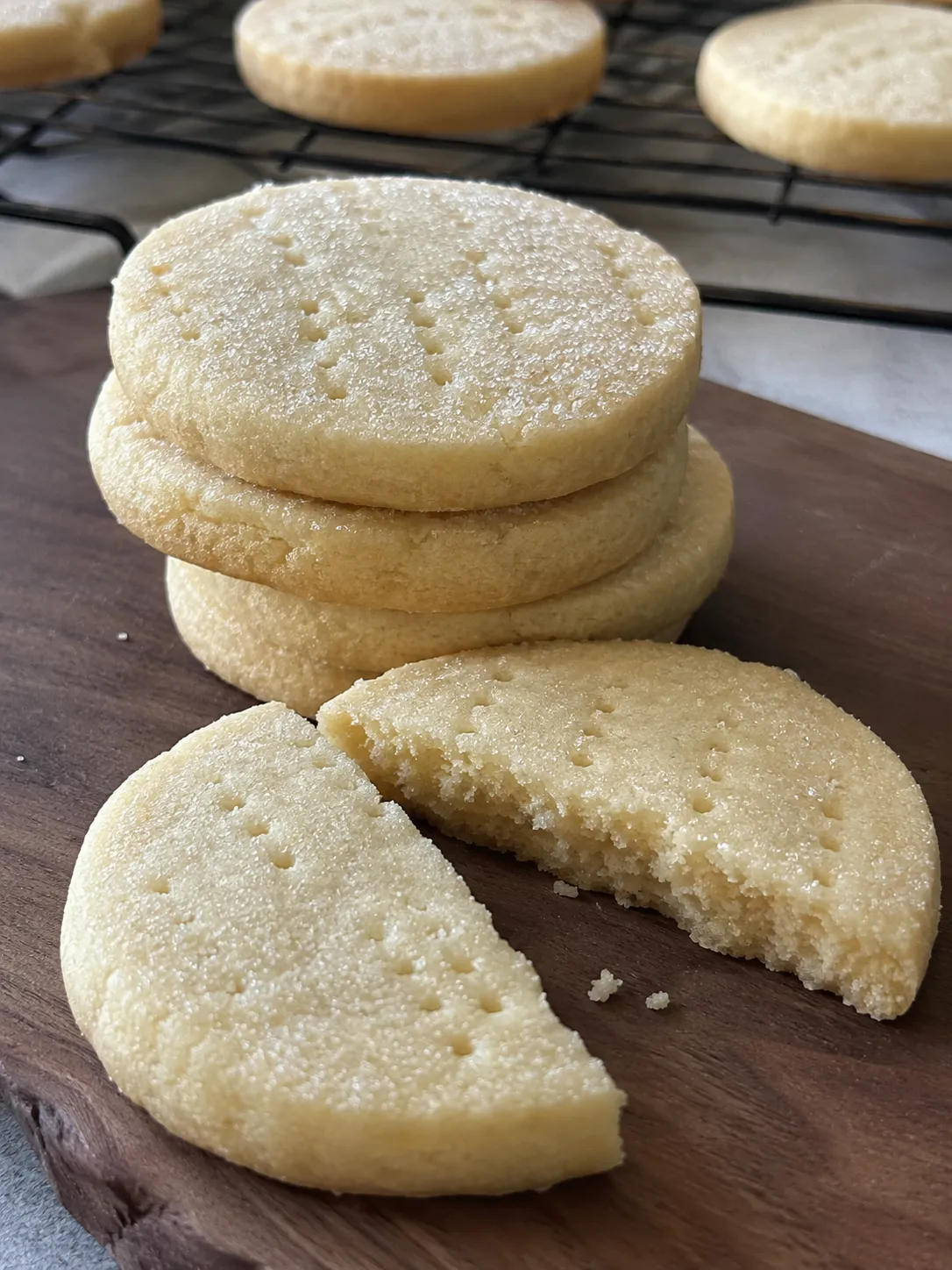
My first batch of air fryer shortbread came out looking like gingersnaps. Deep golden brown, crisp all the way through, and tasting mostly of toasted flour instead of butter. My second batch spread into one single sad cookie puddle with holes where the fan had rippled it.
Both failures taught me the same lesson from opposite directions: shortbread and air fryers want different things, and the recipe has to referee. The machine wants to brown and crisp. Shortbread wants to stay pale and tender. Get the temperature and the chill right and you can have the old-fashioned, melt-into-sand texture out of a basket in twelve minutes.
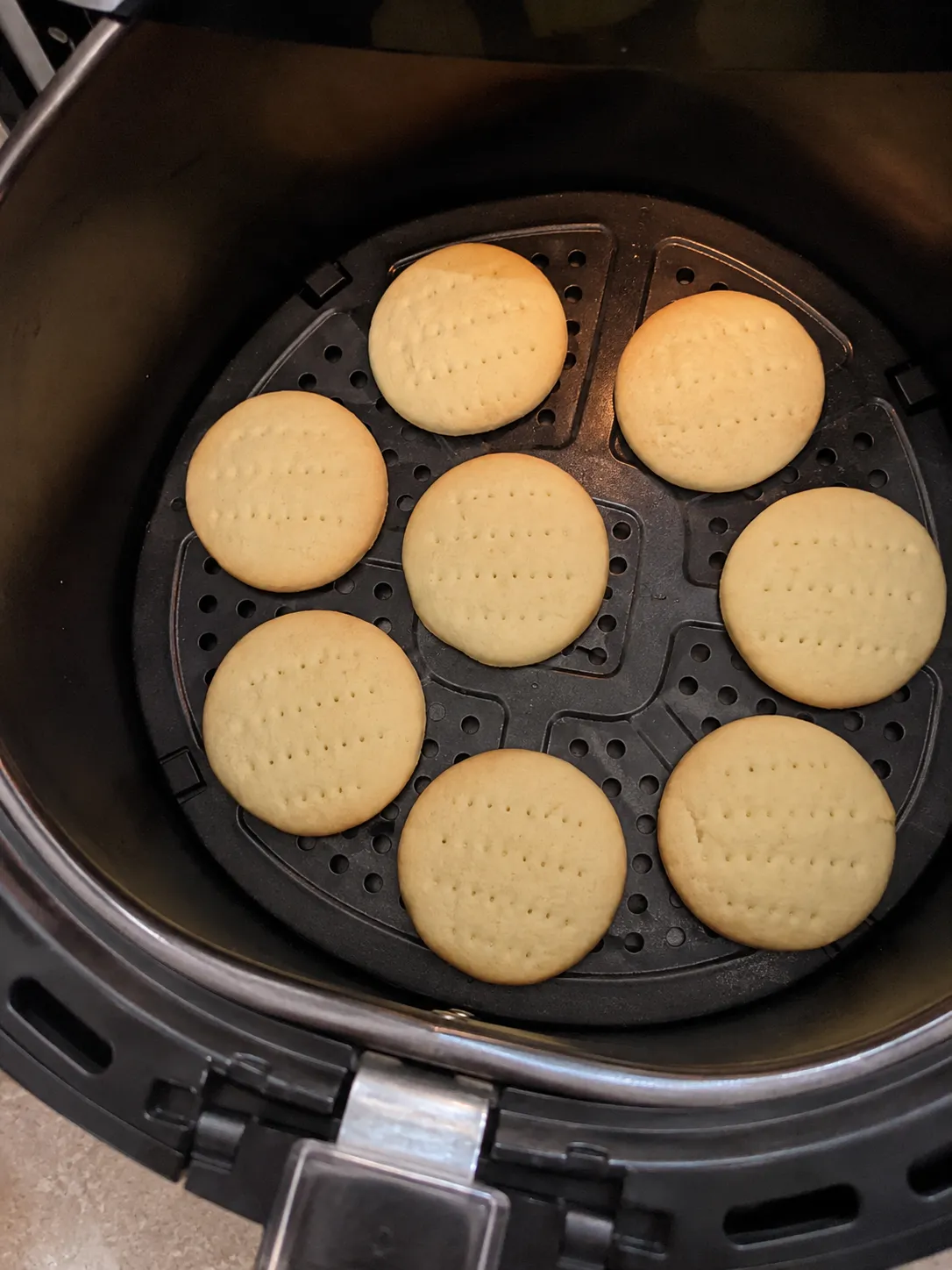
Quick answer: Mix 1 part sugar, 2 parts butter, 3 parts flour by weight, chill the shaped cookies for 20 minutes, and air fry at 300°F for 10 to 12 minutes. They are done when the centers look set but the tops are still pale, with only the faintest gold at the edges. They firm up completely as they cool, so do not wait for them to look finished in the basket.
The 1:2:3 ratio
Every 3-ingredient shortbread recipe online gives you cups and hopes for the best. What none of them mention is that shortbread is not really a recipe at all. It is a ratio, and the ratio is centuries older than the measuring cup.
Traditional Scottish shortbread is one part sugar, two parts butter, three parts flour, by weight. That is the whole institution. This batch uses 56g sugar, 113g butter and 170g flour because 113g happens to be exactly one US stick of butter, which makes the weighing painless. But the ratio is the thing worth memorizing, because once you have it you can scale shortbread to any amount of butter you have without a recipe at all.
It also explains the name. Nearly 40 percent of this dough is butter, and all that fat coats the flour proteins so gluten never gets organized. Bakers have called that tenderizing effect shortening since long before the product of the same name existed. Short means crumbly, and the ratio is what delivers it.
Want to make more or less? Run the quantities through the recipe scaler, or just multiply the ratio. Half a stick of butter means 28g sugar and 85g flour. That is the entire math.
Pale is perfect, and why the fan fights you
Here is the thing that makes shortbread different from every other cookie you will bake in an air fryer: browning is a defect.
Most cookies want the Maillard reaction. A chocolate chip cookie without browned edges tastes flat. Shortbread is the opposite case. Its entire personality is clean butter flavor, and Maillard browning plus caramelizing sugar replaces that with toast. A browned shortbread is not more done, it is a different and worse cookie.
Now put that cookie in an air fryer, which is a machine specifically engineered to brown surfaces fast. The fan drives hot air straight down onto the tops, which is wonderful for wings and a menace here. So the fix is structural, not stylistic:
- 300°F, not the 320°F to 330°F most air fryer cookie recipes use. Recipes for this exact cookie range from 265°F for 25 minutes to 330°F for 8, which tells you nobody agrees. 300°F is the point where the centers set before the tops color, without stretching the bake so long the butter oils out.
- Middle distance from the element. In a basket machine, do not use a rack that lifts the cookies closer to the top. In an oven style machine, use the middle shelf.
- Pull them pale. The doneness section below covers what that looks like, because it is genuinely counterintuitive the first time.
If your machine runs hot and browns everything regardless, how to prevent burning in an air fryer covers the diagnostics. Machines vary, and the air fryer calculator will convert an oven shortbread recipe of your own if you would rather start from your grandmother's card than mine.
Why the chill is not optional here
Some air fryer cookie recipes let you skip chilling. This one does not, and it is worth understanding why, because it is the single most common failure with this cookie.
This dough is 40 percent butter and contains no egg and no leavening. Nothing holds it together except that butter staying solid long enough for the flour to set around it. Put room temperature dough into a preheated air fryer and the butter melts in the first two minutes, before the structure exists. The cookies slump, spread into each other, and fry at the edges in their own escaping butter.
Twenty minutes in the fridge after shaping firms the butter so the cookies hold their shape while the outside sets. Cold dough into a hot machine is the whole game. If your kitchen is warm, chill the shaped cookies on their parchment so you are not handling them again afterward.
The butter decides everything
Three ingredients means nowhere to hide. The flour is 30 seconds of pantry decision and the sugar is covered below, but the butter is the flavor of the finished cookie, full stop.
- Use unsalted butter and add your own salt. Salted butter varies wildly between brands, and in a dough this buttery the difference is loud. A quarter teaspoon of fine salt added by hand gives you the same result every time, and shortbread genuinely needs that salt to keep all the butter from tasting flat.
- This is the recipe for the good butter. A European style butter with higher butterfat, anything 82 percent and up, makes a noticeable difference here in a way it does not in a chocolate chip cookie where brown sugar and chocolate shout over it.
- Softened, not melted, not cold. You want it pliable enough to work into the flour with your fingertips, around 65°F. Melted butter makes a greasy, dense cookie because the water in it hydrates the flour and starts gluten. Fridge-cold butter just refuses to combine into a 3-ingredient dough at all.
Which sugar, and what each one does
The recipes ranking for this cookie quietly disagree about sugar, and it is not pedantry. In a 3-ingredient dough the sugar sets the texture.
Granulated
The classic. Coarser crystals stay partly intact and give the sandy, faintly crunchy bite of bakery shortbread. This is what the recipe below uses.
Superfine or caster
Dissolves more completely for a smoother, more delicate crumb. The UK standard. Blitz granulated in a blender for 10 seconds and you have it.
Powdered
Makes the most tender, melt-away cookie because there are no crystals left at all, and its cornstarch tenderizes further. Trade: the surface loses its sparkle and the bite loses its sand.
The old bakery upgrade: swap 2 tablespoons of the flour for cornstarch. Cornstarch has no gluten-forming protein at all, so the crumb goes even more delicate. Optional, and lovely.
Ingredients
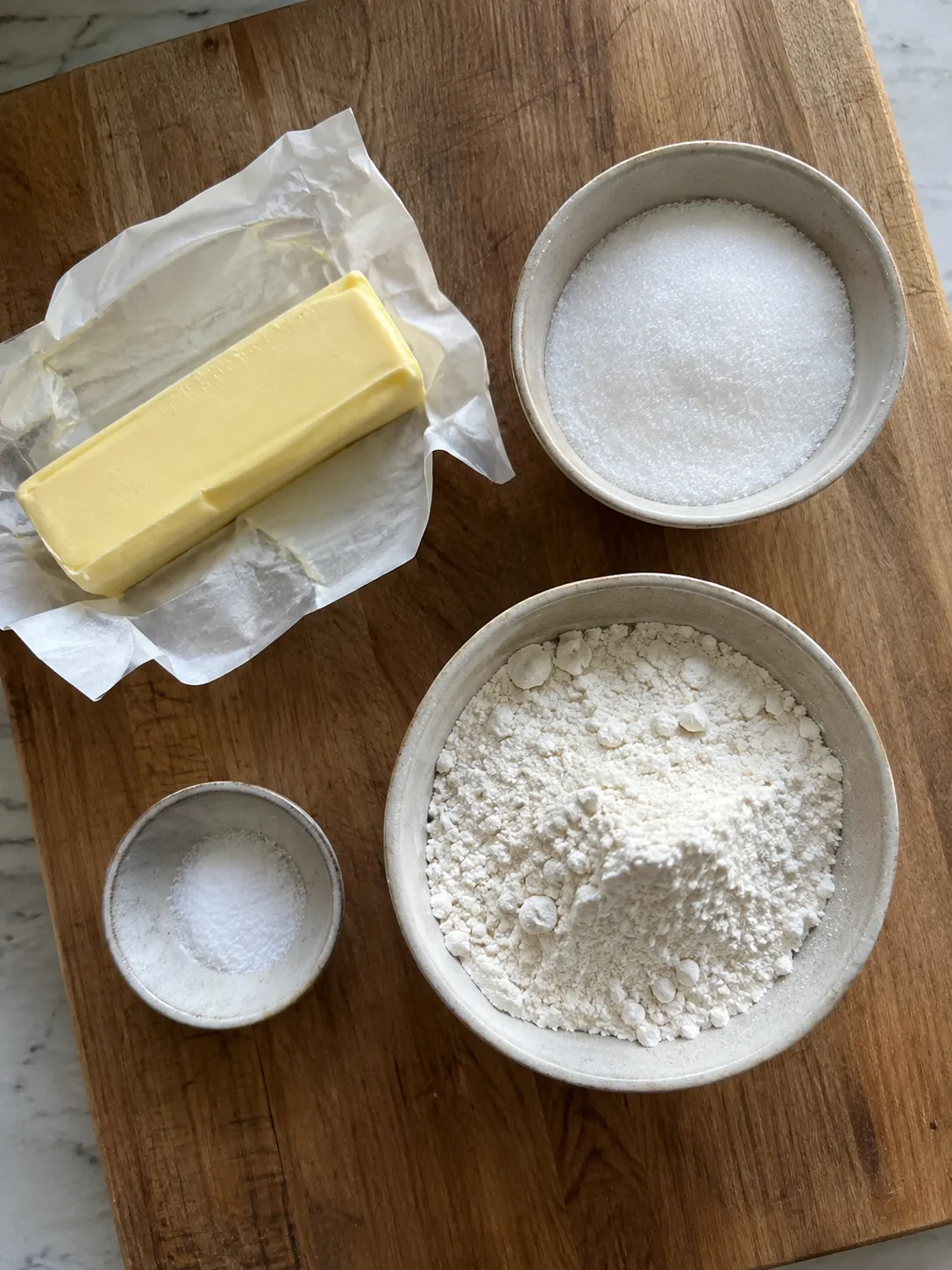
The three, plus salt
- 1/2 cup (113g, 1 stick) unsalted butter, softened
- 1/4 cup (56g) granulated sugar, plus 2 teaspoons for sprinkling
- 1 1/3 cups (170g) all-purpose flour
- 1/4 teaspoon fine salt
Optional upgrades
- 1 teaspoon vanilla extract
- Swap 2 tablespoons of the flour for cornstarch, for a more delicate crumb
Purists will note salt makes it four ingredients. Purists are welcome to skip it and eat flatter cookies. The ratio is 1:2:3 by weight, sugar to butter to flour, and it scales in either direction.
How to make them
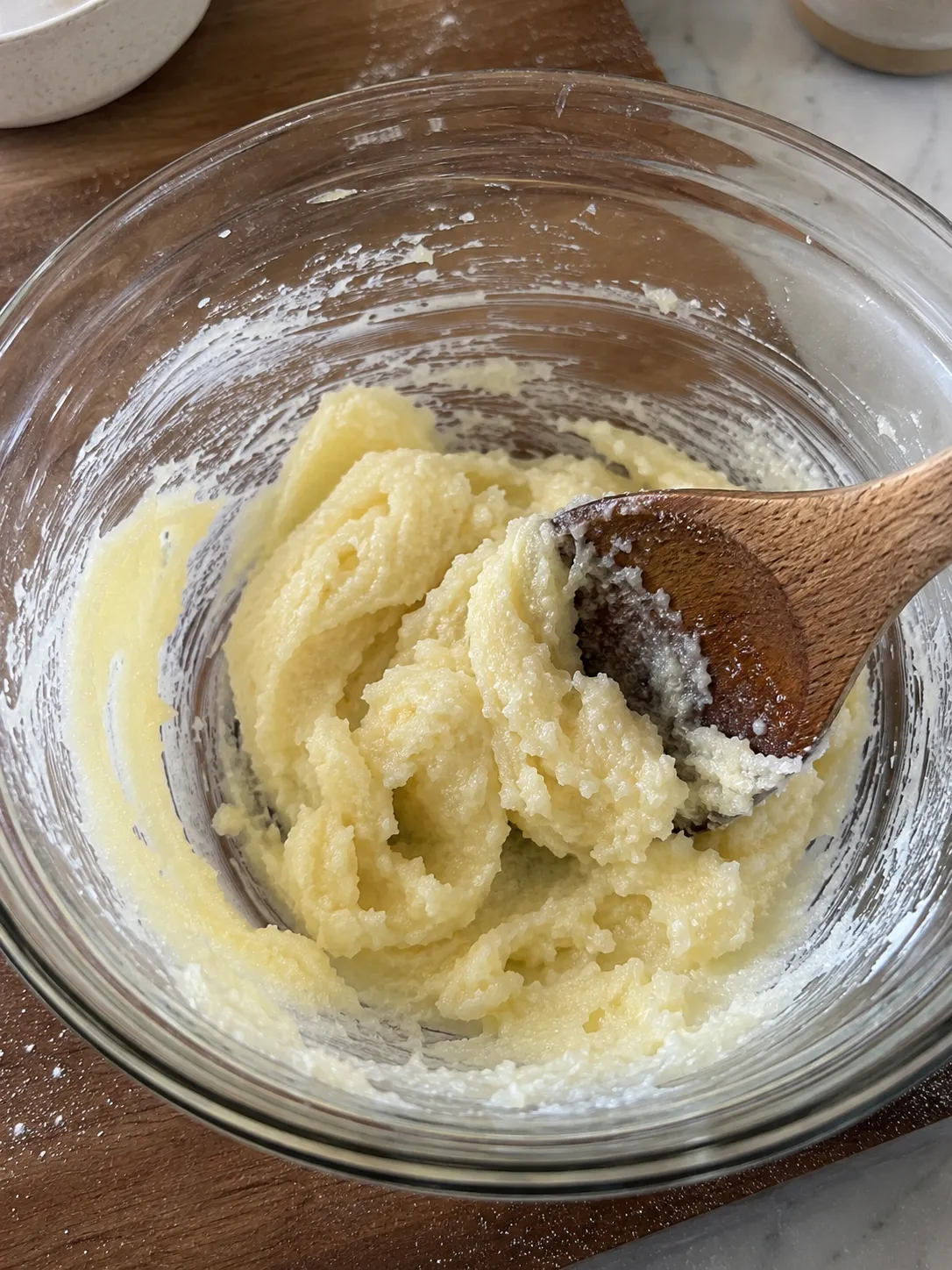
- Cream the butter, sugar and salt together for about a minute, until smooth and creamy but not fluffy. This is creaming on a leash: whipping lots of air in makes shortbread puff and then crack, and it has no egg to hold the puff. Add the vanilla here if using.
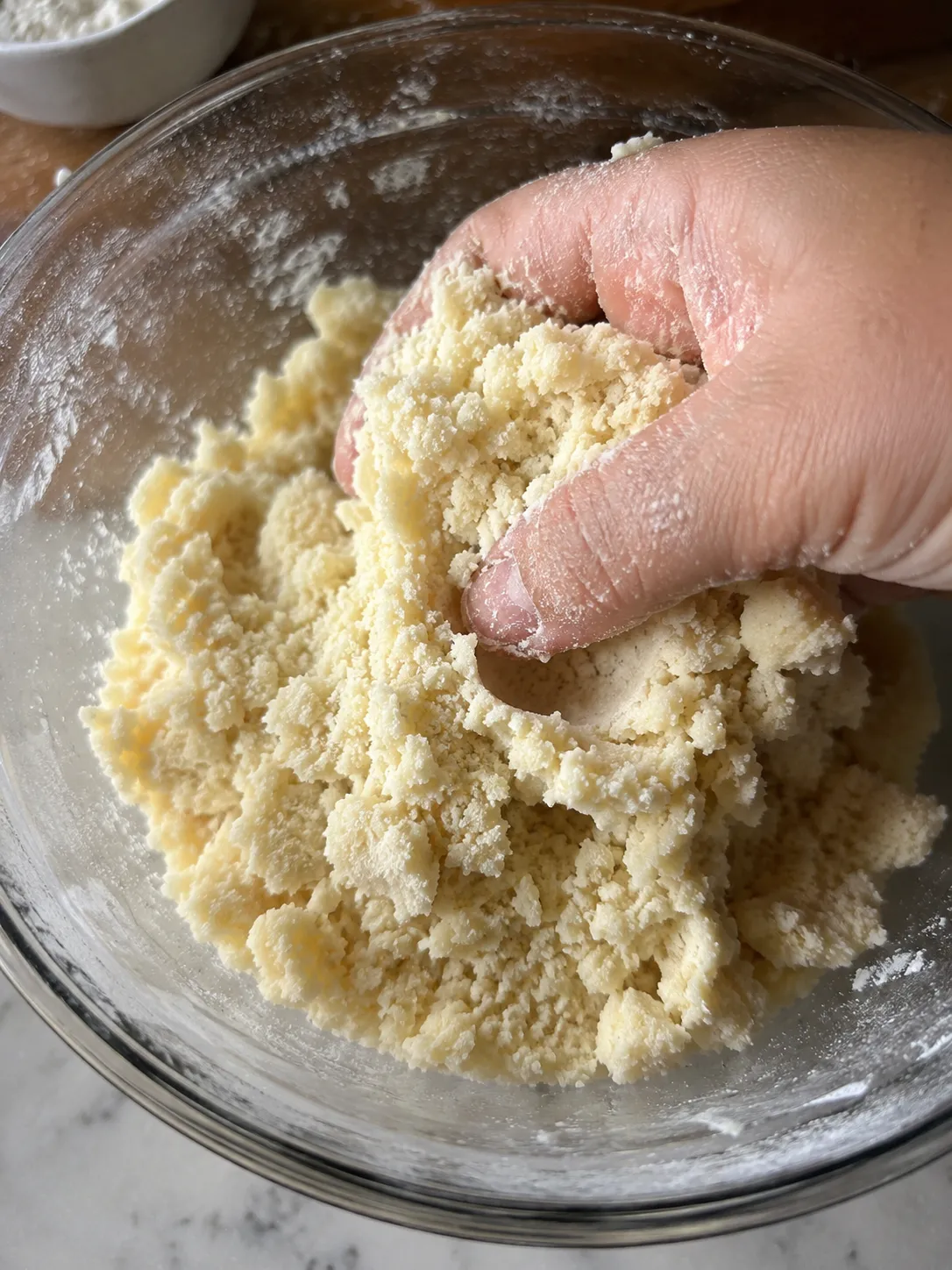
- Add the flour all at once and mix on low, or with a wooden spoon, just until it looks like damp sand and starts clumping. It will seem too dry. It is not.
- Bring it together by hand. Press the crumbs into a ball with your hands, kneading once or twice at most. The warmth of your palms finishes what the spoon cannot. If it truly will not cohere after a minute of pressing, your butter was too cold. Let the bowl sit for ten minutes and try again.
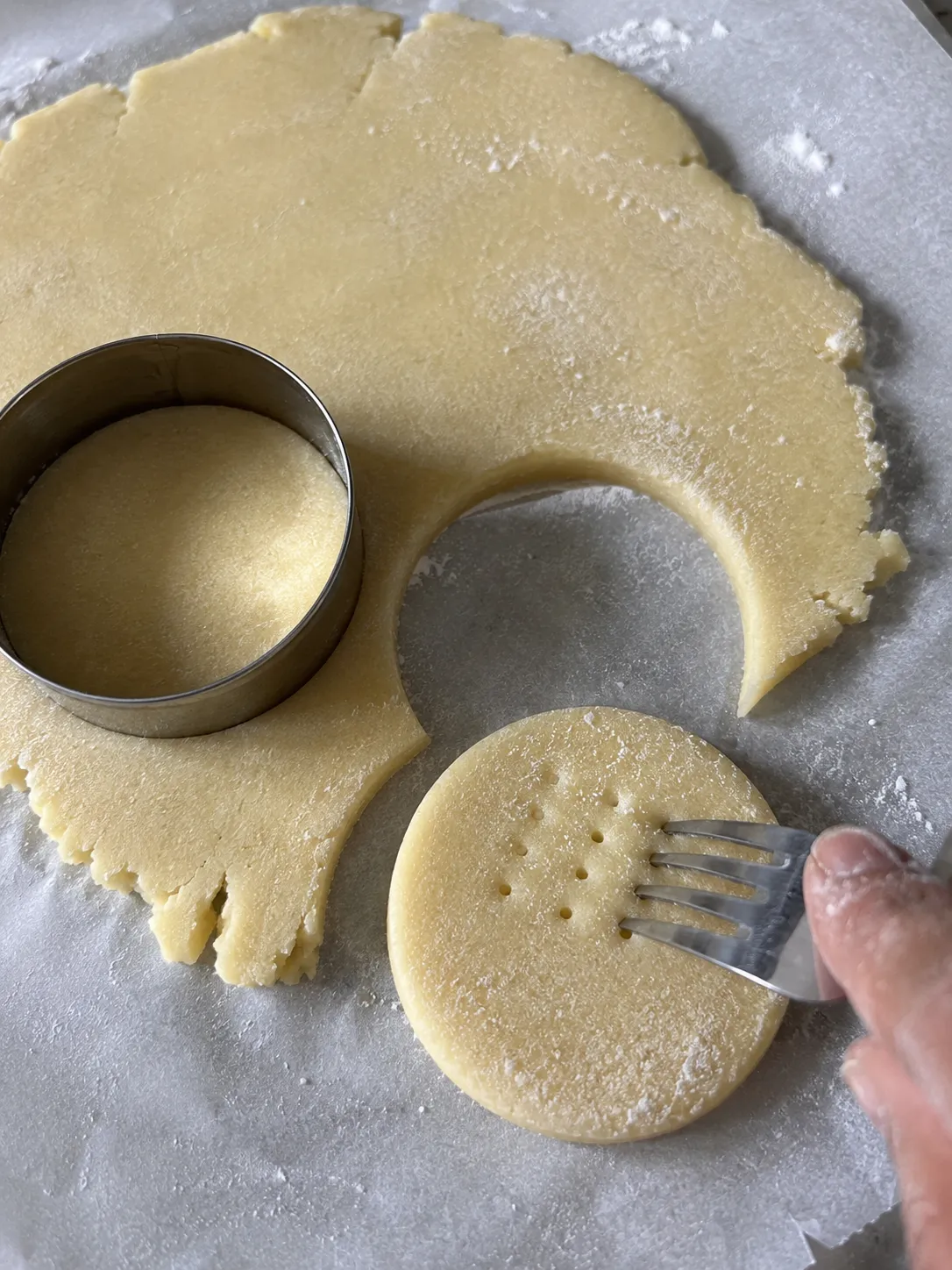
- Roll and cut. Pat or roll the dough to about 1/3 inch thick on parchment and cut rounds with a 2 inch cutter, or shape a log and slice. Rerolls are fine once. After that the dough toughens.
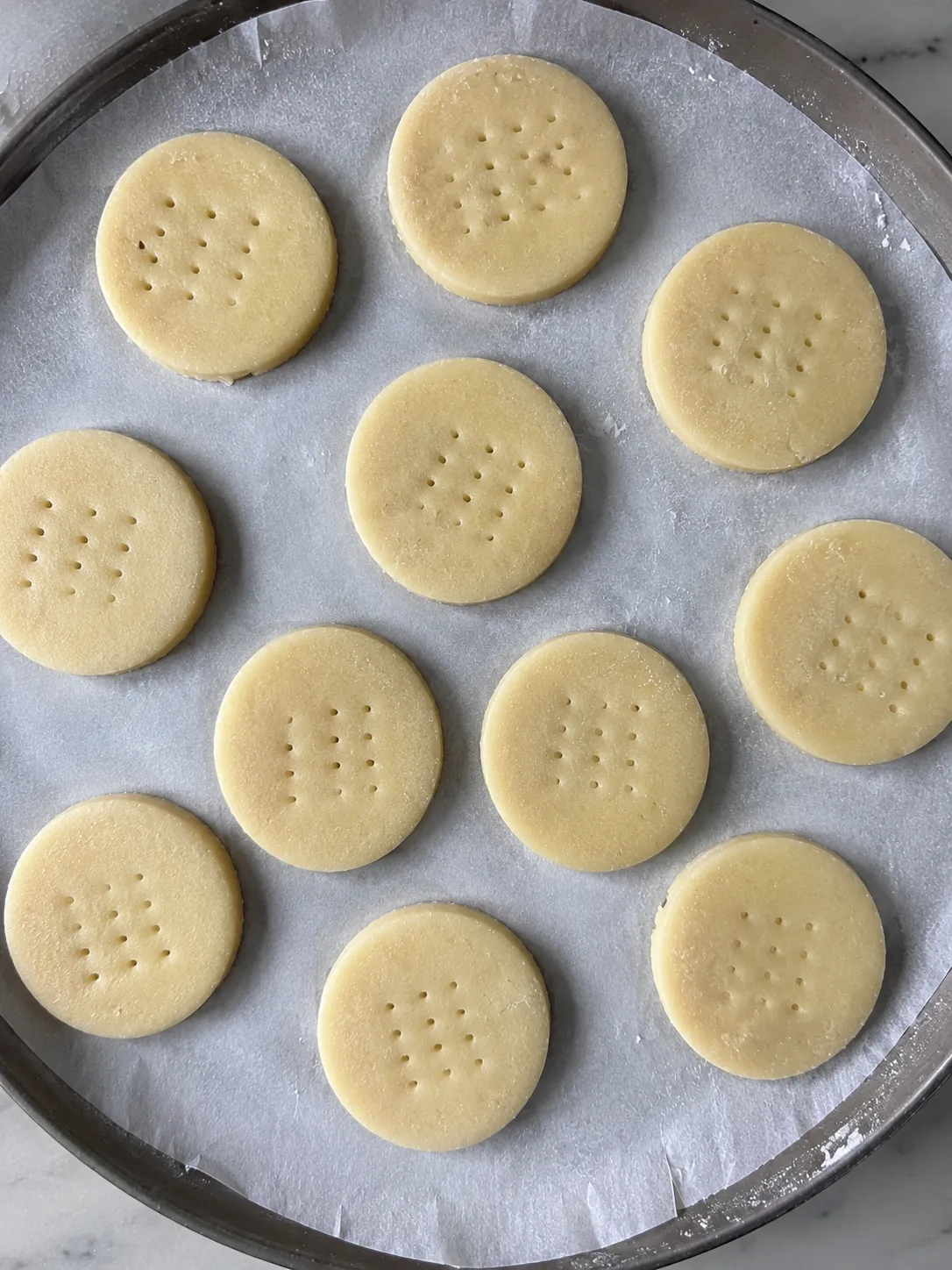
- Dock each cookie. Prick the tops two or three times with a fork. Shortbread is dense, and the holes let steam escape so the cookies bake flat instead of blistering. It is also how they have looked in Scotland for a few hundred years.
- Chill for 20 minutes, shaped, on their parchment. Not optional, for the reasons above.
- Preheat the air fryer to 300°F for 3 minutes. This is a short bake and a cold start means the butter melts while the machine catches up, exactly what the chill was preventing. Whether to preheat covers the general rule.
- Air fry at 300°F for 10 to 12 minutes, in batches of 5 or 6 on a parchment round that fits your basket with a margin. Leave an inch between cookies and do not let the parchment ride up the sides. The rules for paper in a basket are in can you use foil or parchment paper in an air fryer.
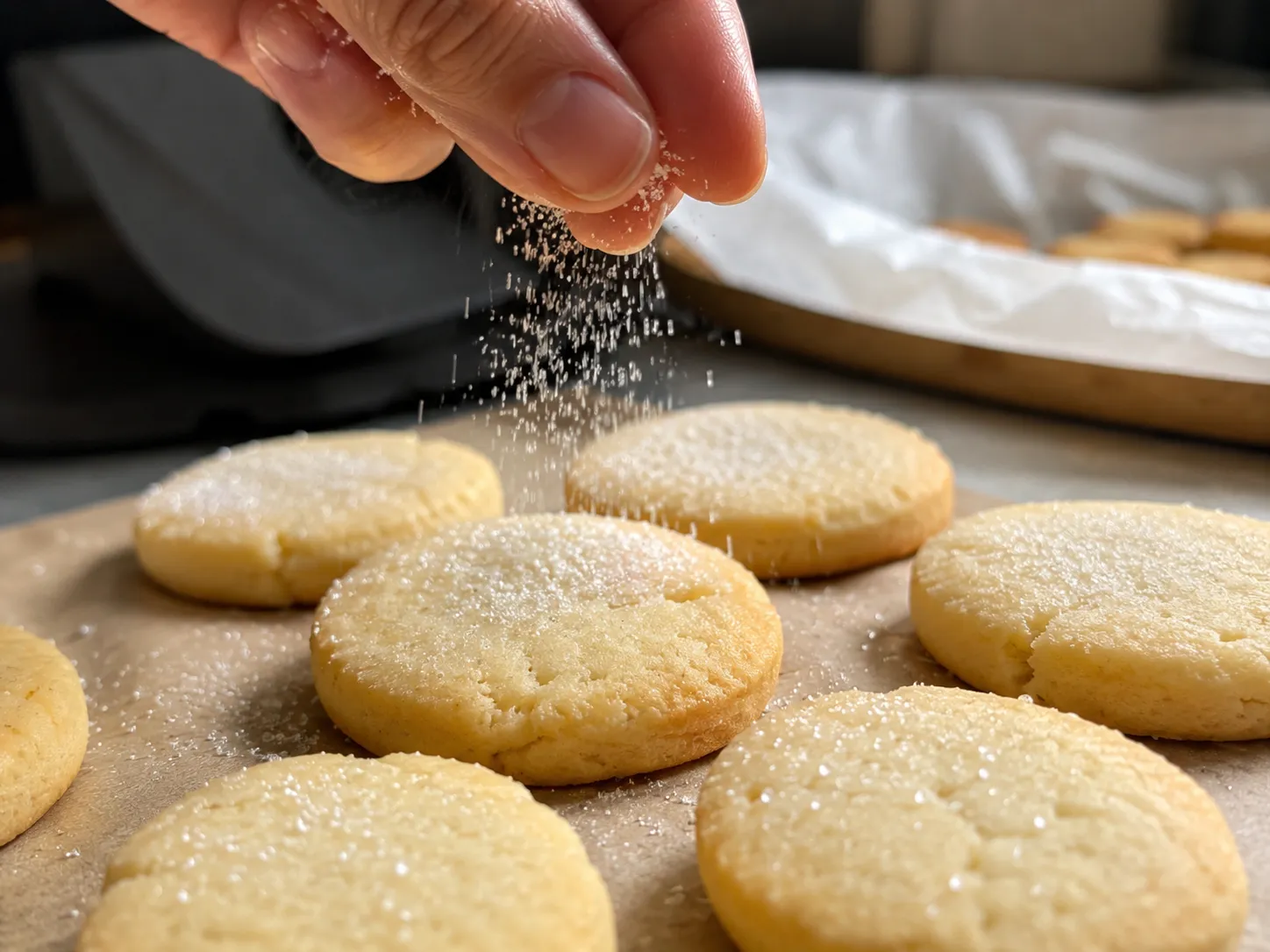
- Sprinkle with sugar the moment they come out, while the surface is still tacky enough to hold it.
- Leave them on the parchment for 5 minutes before moving. They come out of the basket genuinely fragile and finish setting as they cool. Then onto a rack until fully cool, when the texture arrives.
How to tell they are done when done looks raw
This is the hardest part of the recipe, because every instinct from every other cookie says leave them in.
| What you see at the top of the basket | What it means |
|---|---|
| Wet-looking, shiny centers | Not yet. 2 more minutes. |
| Matte, dry-looking tops, still fully pale, faintest gold at the very edge | Done. Out now. |
| Light golden tops | Slightly over. Still good, more toasty than buttery. |
| Golden brown like a normal cookie | Overbaked. You made a different, sadder biscuit. |
They will feel soft when they come out, almost underbaked, and firm up completely within ten minutes. That is carryover doing the last of the work. Judge shortbread by color and surface, never by feel in the basket.
Troubleshooting
| What you got | Why | Fix |
|---|---|---|
| They spread into each other | Skipped or shortened the chill, or the dough sat in a warm kitchen. | 20 minutes in the fridge, shaped, every time. Cold dough into a preheated machine. |
| Browned tops | Too hot, or too close to the element. | 300°F, middle position, and pull them pale. Drop to 290°F if your machine runs hot. |
| Tough, hard cookies | Overworked dough. Gluten got organized. | Mix to damp sand, press together, stop. One reroll maximum. |
| Greasy, dense, oily | Butter was melted or very soft going in. | Softened means pliable at cool room temperature, not shiny. |
| Dough will not come together | Butter too cold, or flour measured heavy. | Rest the bowl 10 minutes and press again with warm hands. Weigh the flour next time: 170g. |
| Blistered, bubbled tops | Skipped the docking. | Three fork pricks per cookie lets the steam out. |
| Pale but raw and floury inside | Pulled too early, or rolled too thick. | 1/3 inch thick, and the tops must look matte and dry before they come out. |
| Bottoms too dark | Basket base holds heat, especially on back to back batches. | Let the machine sit 2 minutes between batches, and always bake on parchment. |
If every bake browns too fast regardless of recipe, the problem is the machine, not you: the air fryer baking troubleshooting guide starts there. And if you are unsure what your machine should and should not attempt, what you can and cannot bake in an air fryer is the map.
Variations
- Shortbread fingers. Pat the dough into a 1/2 inch thick rectangle, cut into bars, dock deeply, and add 2 to 3 minutes. Classic tin shape, sturdier for dunking.
- Chocolate dipped. Half-dip cooled cookies in melted dark chocolate and let them set on parchment. The bitter edge is very good against all that butter.
- Lemon or orange. A teaspoon of zest creamed in with the butter. Zest survives the bake far better than juice, which just softens the dough.
- Vanilla bean. Seeds of half a pod, or a teaspoon of paste, for speckled bakery-window shortbread.
- Toasted nut. A quarter cup of finely chopped candied walnuts kneaded in at the end, chopped small so the rounds still cut clean.
- Brown sugar. Swap half the granulated for packed light brown sugar. Softer, warmer, a little chewy, and it will brown faster, so watch the edges from minute 8.
- Holiday cutouts. The dough takes simple cutter shapes well. Thin points burn first at any temperature, so stick to rounds, scallops and stars with fat arms.
If you are building a cookie plate from the basket, the chocolate chip cookies, sugar cookies, peanut butter cookies and oatmeal cookies all use the same parchment-batch technique, and the air fryer baking chart has every temperature on one page.
Shortbread sits at the lean end of the cookie shelf, and it is worth knowing what the other end looks like. Add an egg and brown sugar and you are at snickerdoodles; press a buttery dough into a pan instead of cutting rounds and you get blondies; bake this dough twice and it turns into biscotti. Shortbread also makes the best pressed base on the site, which is exactly the job it does under lemon bars and magic bars. The whole family lives in the cookies and bars collection.
Storage
- Airtight at room temperature: 1 week, and this is the rare cookie that gets better on day two as the butter settles and the crumb tightens.
- Freeze baked: 3 months in a sealed bag. Thaw at room temperature, still excellent.
- Freeze the dough: shape and dock the rounds, freeze flat, then bag. Bake from frozen at 300°F and add 2 to 3 minutes. Warm shortbread on demand is a dangerous thing to know about.
- Do not store them warm. Sealing them with any heat left turns the sugar topping damp and the crumb soft.
Freezing shaped dough is the same trick that makes frozen cookie dough work straight from the freezer, and if you would rather skip the rolling entirely, refrigerated cookie dough has the times for the tube. More basket baking is in the recipe index, and the technique pages are collected under guides.
Frequently asked questions
QHow long do you cook shortbread cookies in an air fryer?
10 to 12 minutes at 300°F for 1/3 inch rounds, after 20 minutes of chilling the shaped dough. Thicker fingers take 13 to 15 minutes. Published recipes range from 265°F for 25 minutes to 330°F for 8, and the disagreement is the tell: hotter browns the tops before the centers set, and shortbread is not supposed to brown. 300°F is the compromise that keeps them pale and cooks them through.
QWhat is the ratio for 3 ingredient shortbread?
One part sugar, two parts butter, three parts flour, by weight. It is the traditional Scottish formula and it scales to any batch size: this recipe is 56g sugar, 113g butter and 170g flour because 113g is exactly one US stick. A pinch of salt is technically a fourth ingredient and worth it.
QDo I have to chill shortbread dough before air frying?
For this cookie, yes. Shortbread is 40 percent butter with no egg and no leavening, so nothing holds its shape except solid butter. Room temperature dough slumps and spreads in the first two minutes under the fan, before the structure sets. Twenty minutes in the fridge after shaping is enough, and chilling them on their parchment means no handling afterward.
QWhy did my shortbread turn brown?
The temperature was too high or they stayed in too long. Air fryers brown surfaces aggressively because the fan drives hot air straight onto the tops, and shortbread shows every degree of it. Browned shortbread tastes of toasted flour instead of butter. Bake at 300°F, keep the cookies away from the element, and pull them while the tops are still pale and matte with the faintest gold at the edges.
QSalted or unsalted butter for shortbread?
Unsalted, plus a quarter teaspoon of fine salt you control. Salt levels in salted butter vary so much between brands that a dough this buttery comes out noticeably different each time. And because butter is essentially the only flavor here, this is the recipe where a European style, higher butterfat butter genuinely earns its price.
QGranulated, caster, or powdered sugar for shortbread?
All three work and each gives a different cookie. Granulated keeps some crystal intact for the classic sandy bite. Superfine or caster dissolves further for a finer, more delicate crumb. Powdered sugar makes the most tender, melt-away version because its cornstarch tenderizes the dough, but you lose the sparkle and the sand. This recipe uses granulated, and blitzing it 10 seconds in a blender gets you caster if you want the middle path.
QCan I use self-rising flour for shortbread?
No. Self-rising flour carries baking powder and salt, and the leavening makes shortbread puff, dome and crack instead of staying dense and flat. Shortbread has survived several centuries without a raising agent. Plain all-purpose flour, and if you want a more delicate crumb, swap 2 tablespoons of it for cornstarch.
QWhy do you poke holes in shortbread?
Docking lets steam escape from a dense, low-moisture dough so the cookies bake flat instead of blistering and bubbling on top. Two or three fork pricks per cookie does it. It is also simply what shortbread looks like, and has since long before anyone owned an air fryer.
QCan I bake shortbread from frozen in the air fryer?
Yes, and it is the best make-ahead trick this cookie has. Shape and dock the rounds, freeze them flat on a tray, then bag them. Bake straight from frozen at 300°F and add 2 to 3 minutes. No thawing, no extra chill, and the colder dough actually holds its shape even better under the fan.
Never overbake again
Get our one-page times & temps cheat sheet, plus a new tested recipe each week.
No spam · unsubscribe anytime