

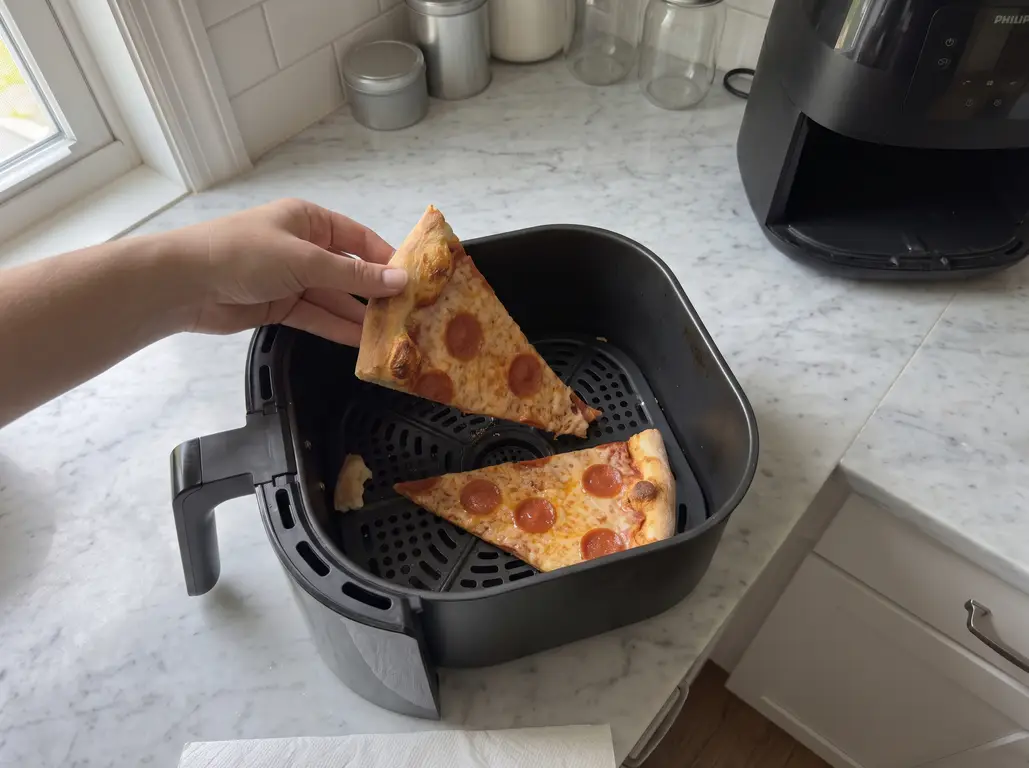
Half my lunches are yesterday's dinner, so I take reheating personally. For years that meant the microwave lottery: hot edges, cold center, and everything that used to be crispy turned to sponge. The air fryer ended it. Same leftovers, three or four minutes, and the crust on last night's fried chicken shatters like it just left the pot.
The reason is physics, not magic, and understanding it makes you better at every reheat: a microwave heats the water inside food, which turns to steam and soaks every surface on the way out. Sogginess is not a side effect, it is the mechanism. An air fryer works in the opposite direction, drying and re-crisping the surface while gentle heat works inward. One machine steams your leftovers, the other un-steams them.
Quick answer: reheat almost everything at 350°F for 3 to 6 minutes in a single layer, flipping once. Go 375°F for fries and potato things that need extra crisp, 325°F for dense or saucy items so the middle warms before the outside overdoes. Anything thick should hit 165°F inside. Soups, stews and anything mostly liquid stay in the microwave, where they belong.
Why the air fryer beats the microwave
Beyond the steam problem, the basket has two structural advantages: the perforated floor lets air reach the underside, so bottoms re-crisp instead of sweating in a puddle, and the small chamber means no real preheat penalty, so a 4 minute reheat is genuinely 4 minutes, maybe 7 with a quick preheat. The microwave still wins on raw speed and on anything liquid; this is a division of labor, not a funeral. The electricity math barely differs at these durations, a couple of cents either way per the electricity guide.
The 350 degree default rule
If you memorize one number from this page: 350°F. It is hot enough to drive moisture off a surface and restore crunch, and cool enough not to overcook food that is already cooked. When something needs different treatment, it is usually one step away: up to 375°F when the whole point is crisp (fries, hash browns), down to 325°F when the middle needs time (thick chicken pieces, casserole slices). That three-number system covers everything in the chart below.
The reheating chart: times and temps
All times assume fridge-cold leftovers in a single layer. Add 2 to 4 minutes from frozen, and for anything thick, confirm 165°F inside.
| Leftover | Temp | Time | Note |
|---|---|---|---|
| Pizza slices | 350°F | 3-5 min | Crust crisps, cheese re-melts; the pizza guide has the full method |
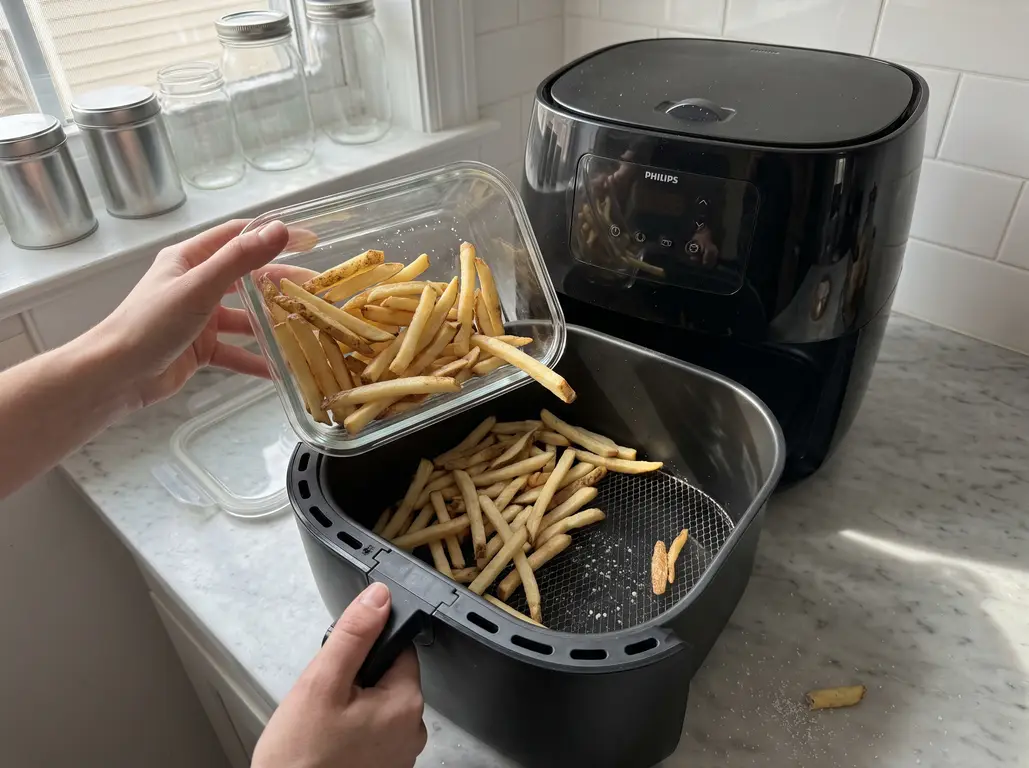
| French fries | 375°F | 3-5 min | Shake once; the fries guide covers thick vs thin cuts |
| Fried chicken | 350°F | 6-9 min | Flip once, verify 165°F in the thickest piece |
| Chicken wings | 360°F | 5-7 min | Sauced wings go 325°F so the glaze does not scorch |
| Burgers | 350°F | 3-4 min | Patty alone; add the bun cut side up for the last minute |
| Chicken tenders and nuggets | 360°F | 4-6 min | Better than fresh from some drive-thrus |
| Egg rolls and taquitos | 350°F | 3-5 min | Wrappers shatter again; no added oil needed |
| Steak slices | 325°F | 3-4 min | Low and short protects doneness; slice first |
| Pork chops | 325°F | 4-6 min | A splash of broth in a small pan keeps them juicy |
| Salmon and fish fillets | 325°F | 3-5 min | Gentle heat; fish overcooks in a blink |
| Roasted vegetables | 375°F | 3-5 min | Edges re-caramelize; better than round one sometimes |
| Casserole slice | 325°F | 8-12 min | In a small oven-safe dish, covered for the first half |
| Rice and grain bowls | Microwave | The basket dries them out; steam is the friend here | |
| Quesadillas | 350°F | 3-4 min | Weigh down with a small rack so tortillas stay flat |
| Garlic bread | 340°F | 2-4 min | Watch it; buttered surfaces brown fast |
Reviving fried and crispy food
Fried food is where the basket shows off, and two small moves make it perfect. First, let refrigerated fried chicken or similar sit out 10 minutes before reheating; a less-cold center means the crust does not overbrown while the middle catches up. Second, if a coating has gone truly soft overnight, a whisper of oil from a pump sprayer restores it; the rules for that are in the oil guide. Breading that was limp at minute zero comes out of a 350°F basket audibly crisp by minute six.
Pizza deserves its own section
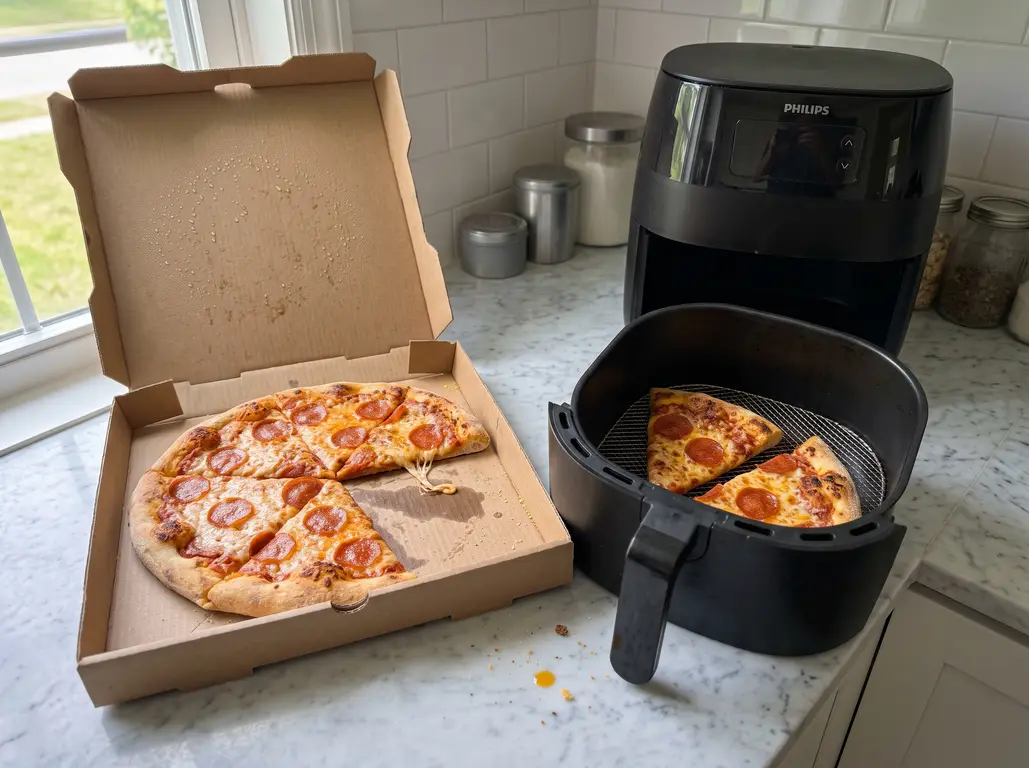
Because it is the most reheated food in America and the microwave commits crimes against it. The basket method: 350°F, slices in a single layer straight on the basket floor, 3 to 5 minutes until the cheese shines and the bottom crisps. Thick Sicilian and deep dish drop to 325°F and take 5 to 7 so the middle warms through. The complete method, including the frozen-slice case, is in the reheat pizza guide, and its sibling guide the reheat fries guide does the same for fries.
Reheating baked goods (the part nobody covers)
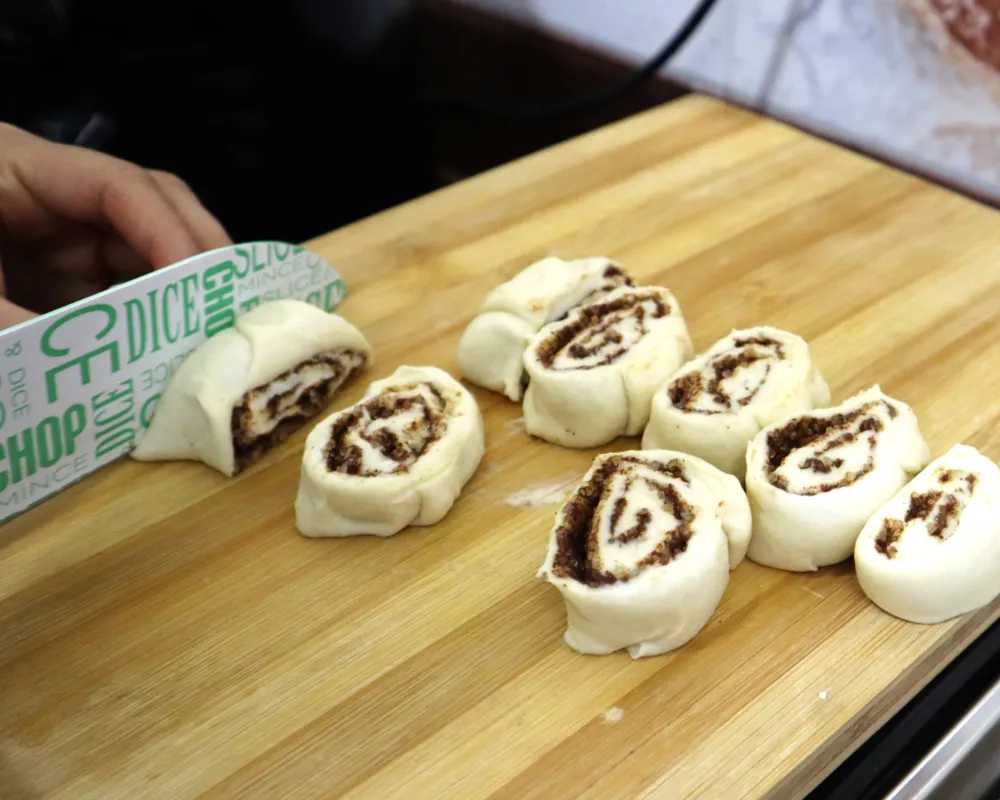
Reheating charts always stop at savory, but this is a baking site, so: cinnamon rolls come back at 320°F for 3 to 4 minutes, tasting fresh-baked, especially homemade ones. Muffins and scones: 320°F, 3 minutes, restores the crisp top the fridge stole. Donuts: 315°F for 2 minutes, glazed ones for less, and watch glaze drips. Biscuits: 330°F, 4 minutes, split-side up. Croissants and pastry: 320°F, 3 to 4 minutes, and the lamination re-crisps like day one. The one rule across all of them: lower and shorter than you think; sugar browns fast in moving air, the same reason baking runs cooler in the baking guide.
The microwave-then-basket trick
For thick foods, the two machines together beat either alone: 60 to 90 seconds of microwave to warm the center, then 2 to 3 minutes at 375°F in the basket to build the crust back. Fried chicken thighs, burritos, stuffed anything: center hot, surface crisp, four minutes total. This is the only context in which I will praise the microwave in writing.
What not to reheat in there
Soups, stews, saucy pasta and anything that pours: the basket is perforated and the cleanup is a grief. Plain rice dries to gravel; steam it instead. Delicate fish pushes its luck the second time regardless of method. And leftovers on the fence food-safety-wise do not get saved by any appliance: when in doubt, out. Everything else in the fridge is fair game, and most of it comes back better than the microwave ever managed.
Frequently asked questions
QWhat temperature do you reheat food in an air fryer?
350 degrees F is the default that covers most leftovers: hot enough to re-crisp the surface, gentle enough not to overcook food that is already cooked. Step up to 375 for fries and potato items that need maximum crunch, and down to 325 for thick, dense or sauced foods so the middle warms before the outside overbrowns. Most reheats take 3 to 6 minutes.
QHow long does it take to reheat food in an air fryer?
Three to six minutes for most fridge-cold leftovers in a single layer: pizza 3 to 5, fries 3 to 5, fried chicken 6 to 9, vegetables 3 to 5. Thick or dense items like casserole slices run 8 to 12 minutes at a lower temperature. Add 2 to 4 minutes for anything going in frozen, and check thick foods reach 165 degrees F inside.
QIs reheating in an air fryer better than a microwave?
For anything with a texture worth keeping, yes. A microwave heats the water inside food into steam, which soaks surfaces soggy; the air fryer dries and re-crisps surfaces while warming gently inward. Pizza, fries, fried chicken and breaded foods come back close to fresh. The microwave still wins for soups, rice and anything liquid, and for raw speed.
QDo you need to preheat an air fryer to reheat food?
Helpful but not critical. A 2 to 3 minute preheat means crisping starts immediately instead of the food spending its first minute in warming air, which matters most for fries and breaded items. For pizza and general leftovers, starting cold and adding a minute to the time gives nearly identical results. Reheating is forgiving; crisping rewards the hot start.
QHow do you reheat pizza in an air fryer without drying it out?
350 degrees F for 3 to 5 minutes, slices in a single layer directly on the basket floor, no foil underneath so the bottom crisps. Pull it as soon as the cheese glosses over. Thick styles like deep dish drop to 325 for 5 to 7 minutes. Drying out usually means too long or too hot; the cheese going shiny is the done signal.
QCan you reheat fried chicken in an air fryer?
It is the machine's signature trick: 350 degrees F for 6 to 9 minutes, flipped once, until the crust re-shatters and the thickest piece reads 165 degrees F. Letting the chicken sit out 10 minutes first keeps the coating from overbrowning while the center catches up, and a light oil mist revives any coating that went truly soft overnight.
QCan you reheat rice in an air fryer?
Not well. Rice needs steam to return to tenderness, and the basket's moving dry air does the opposite, turning it to gravel. Microwave rice covered with a damp paper towel or a splash of water instead. The same logic applies to plain pasta and grain bowls: liquid-loving leftovers belong with steam, crisp-loving leftovers belong in the basket.
QHow do you reheat baked goods in an air fryer?
Lower and shorter than savory food: cinnamon rolls and muffins at 320 degrees F for about 3 minutes, biscuits at 330 for 4, donuts at 315 for 2, croissants at 320 for 3 to 4. Sugar browns quickly in moving air, so watch the first attempt. Done right, pastries come back with crisp exteriors and warm middles that taste same-day fresh.
QWhat can you not reheat in an air fryer?
Anything that pours: soups, stews, sauces and saucy pasta, since the basket is perforated and cannot hold liquid. Plain rice and grains dry out. Foods in microwave-only containers must be transferred first, and anything food-safety questionable should be tossed, not reheated. Everything else in the average fridge reheats in the basket, usually better than any alternative.
QIs it safe to reheat food twice?
Food safety guidance is to reheat leftovers only once: each trip through the warm zone between 40 and 140 degrees F gives bacteria another window. Portion large leftovers so you only reheat what you will eat, get everything to 165 degrees F inside, and refrigerate leftovers within two hours of the original cooking. The air fryer changes the texture, not the rules.
Never overbake again
Get our one-page times & temps cheat sheet, plus a new tested recipe each week.
No spam · unsubscribe anytime
Leftovers stopped being a consolation prize at my house, and the chart above is why. The deep-dive companions: Reheat pizza and reheat fries for the two most-revived foods, the frozen food guide for cooking from frozen in the first place, and the beginner guide if the machine is new to you. When you want to cook something worth having leftovers of, the recipe index is waiting, with all the tools alongside.
You can also follow me on Instagram and Pinterest for more easy air fryer recipes.