

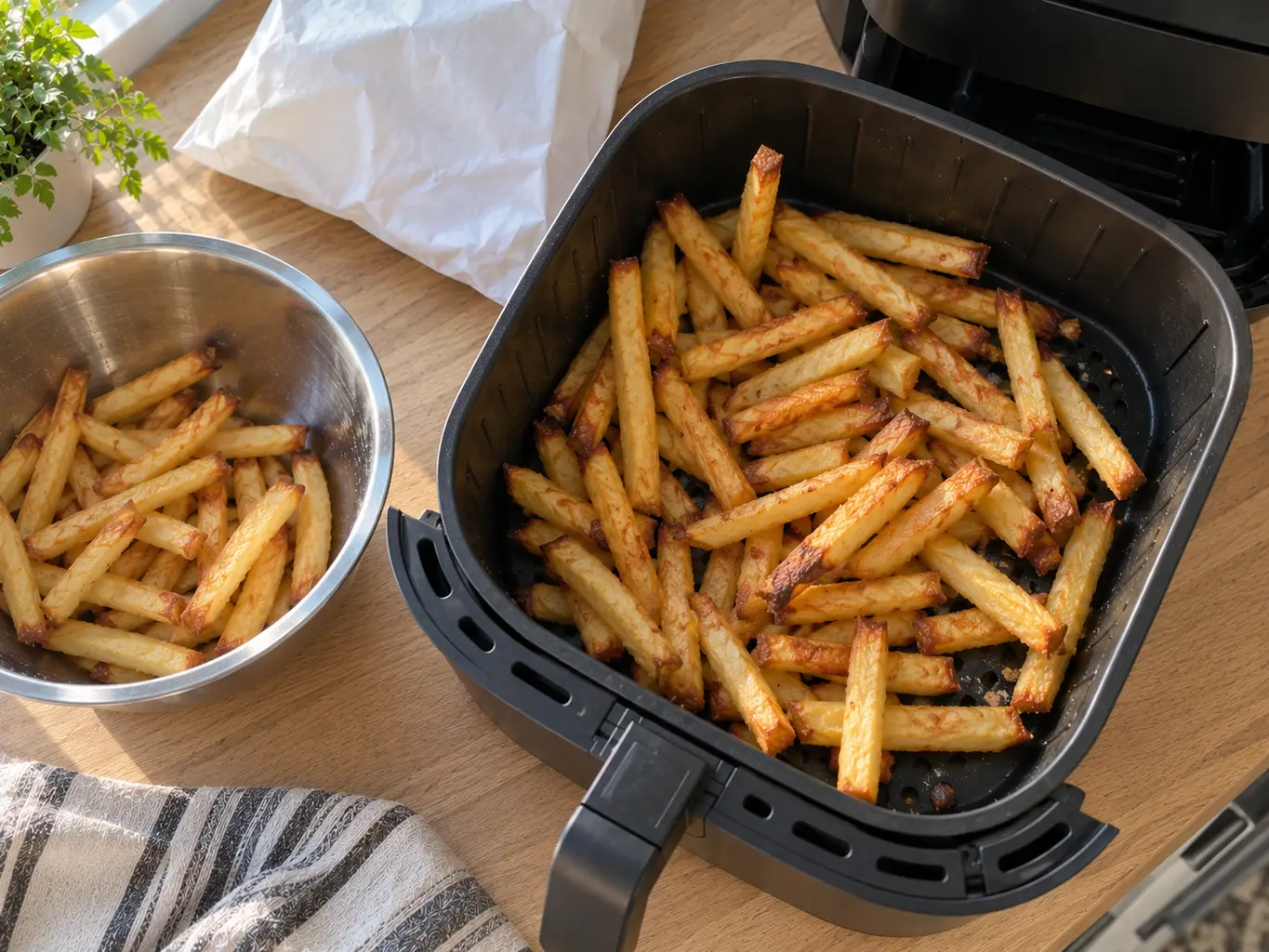
When my first air fryer arrived, a relative asked if it was one of those machines that fries with lasers. Reasonable guess, honestly, given how the boxes talk. The truth is less dramatic and more useful: there is no new technology inside an air fryer at all. Restaurants have cooked with the same method for decades. What is new is the size, and the size changes everything.
Most explainers stop at "it circulates hot air." True, and useless, because so does every convection oven. This page goes one level deeper: what is physically in the machine, why the results taste fried when nothing was fried, and where it honestly beats and loses to the other machines in your kitchen.
Quick answer: an air fryer is a small, powerful convection oven. A heating element and a strong fan sit above a perforated basket, and the fan drives hot air across the food fast enough to dry and brown the surface, which is the same thing deep frying does with hot oil. Because the chamber is tiny, it preheats in about 3 minutes and cooks 30 to 40 percent faster than a full oven. "Fryer" is marketing; "small fierce oven" is the truth, and it is a compliment.
What an air fryer actually is
Convection cooking, the real name for what the machine does, means moving hot air instead of letting it sit still. A regular oven mostly bakes with still air; food heats slowly from all directions. A convection oven adds a fan. An air fryer takes that fan, makes it stronger, shrinks the box around it to a few quarts, and points the whole system at a basket with holes in it.
That shrinking is the actual invention. A small chamber means the machine reaches temperature in about 3 minutes, the heat concentrates on the food instead of warming a big metal box, and the air has nowhere to go except across every surface of your fries. The marketing named it an air fryer because "compact high-velocity convection oven" does not sell in December.
What's inside the machine
- The heating element: a coiled metal loop, almost always mounted in the ceiling of the chamber, inches above the food. Same part as in your toaster.
- The fan: directly behind or above the element, and stronger than an oven's. It grabs the element's heat and slams it downward and around the chamber.
- The perforated basket: the quiet hero. Holes let the moving air reach the underside of the food, which is why a basket crisps bottoms without any bottom element.
- The drawer: catches drips and crumbs below the basket. Fat falls away from the food instead of pooling around it, another thing deep frying cannot say.
- The thermostat: cycles the element on and off to hold your set temperature, which is why the machine clicks and hums in phases rather than roaring constantly.
That is the whole parts list. No pressure, no radiation tricks, no oil reservoir. If you have ever wondered why the top of your food browns first, look at that parts list again: the element is up there, which is why the beginner guide tells you to flip.
Why food tastes fried without frying
"Fried taste" is really two effects, and hot air can produce both:
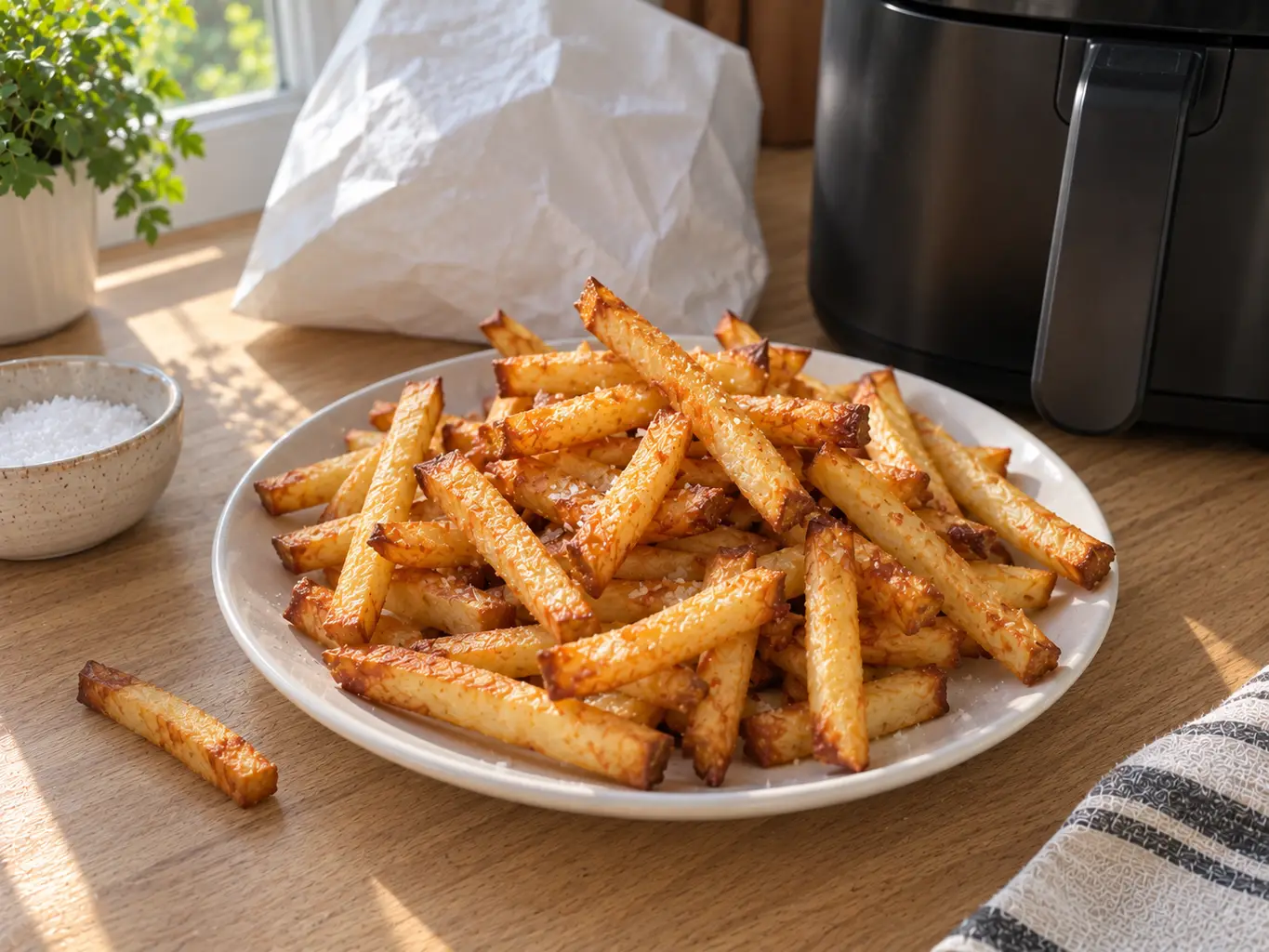
- A dry, crisp surface. Crispness is simply the absence of surface moisture. Deep frying dries a surface by boiling its water off into the oil. An air fryer dries it by moving hot air past it fast, the way wind dries laundry, just at 400°F.
- Browning. The golden color and roasted flavor come from the Maillard reaction, which needs heat above roughly 300°F and a dry surface. The fan delivers both. A teaspoon of oil helps by conducting heat into the surface evenly, which is why lightly oiled food browns prettier than naked food.
What you do not get is the flavor of the frying oil itself soaking into the crust. Air fried food is a very good imitation of fried, not a clone. In exchange, it carries a fraction of the oil, which is the entire trade and the reason the health question is mostly a happy story.
How it differs from 5 other machines
| Machine | How it cooks | The real difference |
|---|---|---|
| Deep fryer | Immerses food in 350°F oil | Oil transfers heat faster, so it is crispier still, but food absorbs oil and cleanup is a project. The air fryer gets 90 percent of the result with 5 percent of the oil. |
| Convection oven | Same moving-air principle, big box | Identical physics, gentler execution. The oven wins on capacity; the air fryer wins on speed, intensity and not heating the kitchen. |
| Toaster oven | Elements above and below, little air movement | Better at toast, big pans and delicate bakes; worse at crisping. The full head-to-head lives in the air fryer vs toaster oven guide. |
| Microwave | Waves excite water inside the food | The opposite machine: it heats the inside and steams the surface soggy. The air fryer dries the surface crisp. This is why leftovers revive in one and die in the other. |
| Dehydrator | Very low heat, gentle fan, hours | The air fryer's sleepy cousin: same drying principle at 130°F instead of 400°F. Many air fryers include a dehydrate mode that does a decent impression. |
Basket vs oven style
Two body types share the name. The drawer-and-basket style is the classic: compact, fastest to preheat, best crisping per square inch, and the type most recipes on this site assume. The oven style looks like a small toaster oven with racks and a window, trades some crisping intensity for capacity and visibility, and blurs into toaster oven territory. If you are choosing between them, that toaster oven comparison above is really the decision you are making.
What it's genuinely good at
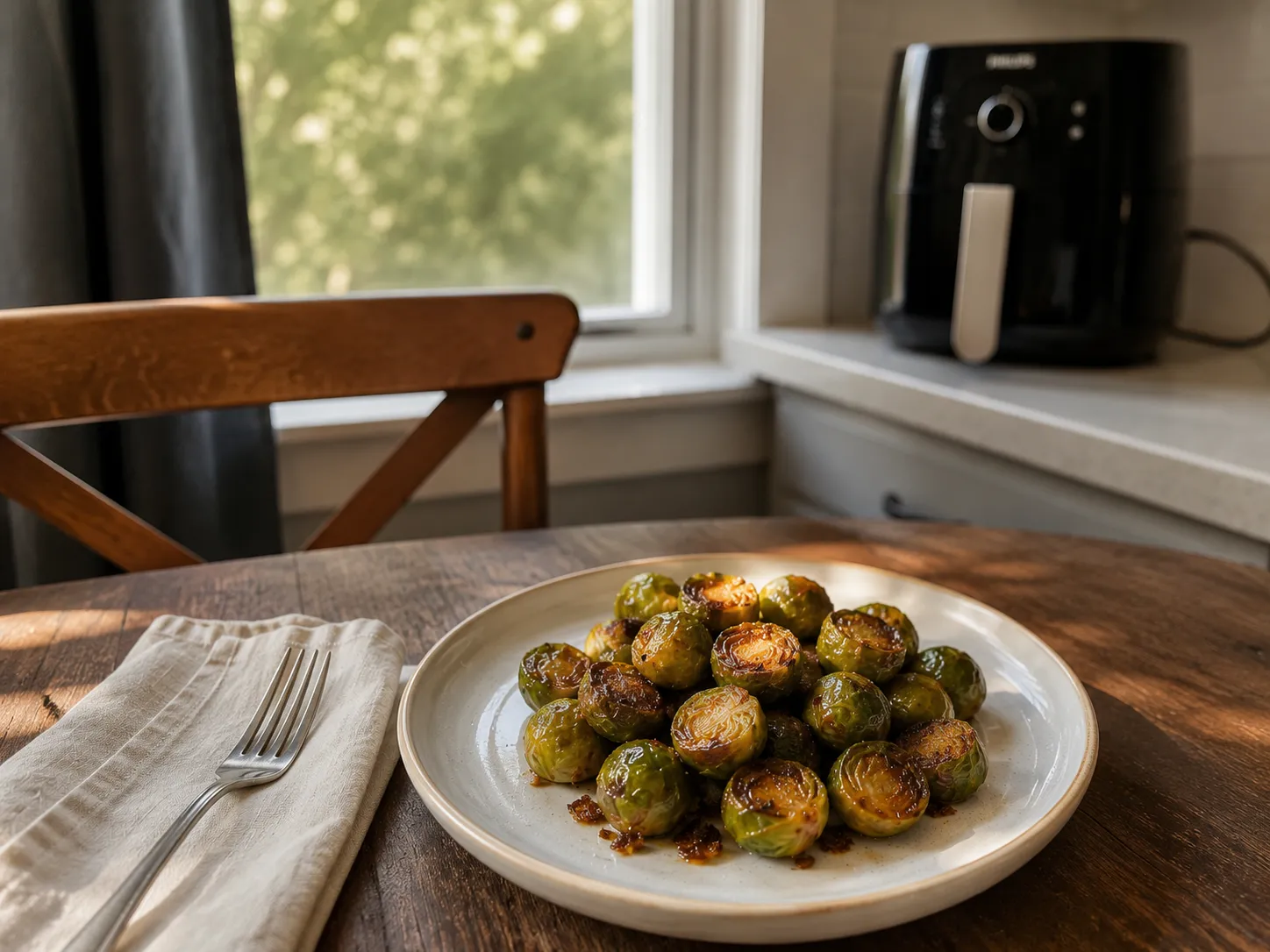
- Crisping: fries, wings, breaded anything, roasted vegetables with real browned edges. Its home turf.
- Frozen food: engineered for exactly this heat. frozen fries and frozen pizza are the proof.
- Reheating: revives pizza and fries that a microwave would turn to sponge.
- Weeknight meats: chops, cutlets and chicken pieces with a crust, inside 20 minutes.
- Small-batch baking: the surprise fifth talent and this site's whole reason to exist. Cookies, muffins, even cheesecake work beautifully once you know the temperature rules in how to bake in an air fryer.
What it does badly
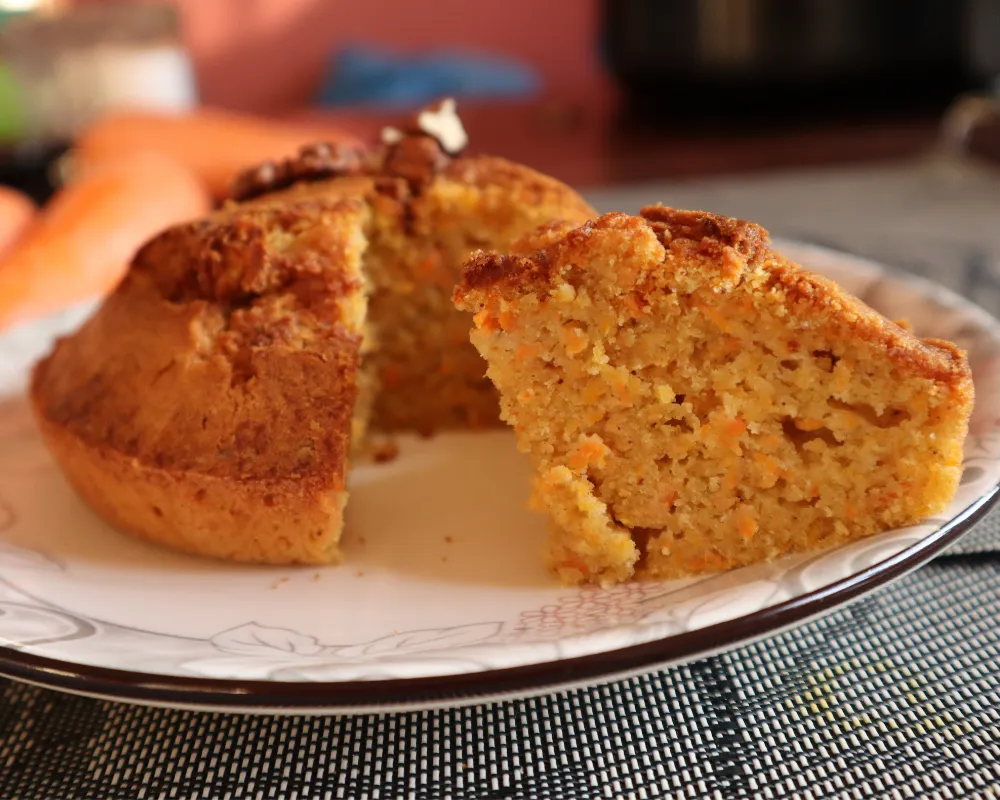
Honesty section. It cannot take a pan bigger than about 7 or 8 inches, so 9x13 casseroles and full sheet cakes are out. Wet batters drip through the basket. The fan can dry delicate cakes if you use oven temperatures, which is fixable but real; the dry bakes guide exists because of it. Toast is merely okay. And feeding six people means batches. The complete honest list, food by food, is in what you can and can't bake.
If you're picking one out
- Size: 2 to 4 quarts for one or two people, 5 to 6 quarts for a family of four, dual-basket models if you cook mains and sides at once.
- Wattage: most run 1,400 to 1,700 watts on a normal outlet. Higher wattage recovers heat faster when you open the basket; it does not raise your bill much because cooks are short, and the electricity guide has the actual numbers.
- The features that matter: a dishwasher-safe basket and knobs or buttons you understand. The features that do not: 47 presets and an app.
I deliberately do not push models here; machines change yearly and the technique transfers to all of them. Whatever you buy, how to use an air fryer is the first-week manual the box should have included.
Frequently asked questions
QIs an air fryer just a convection oven?
Essentially yes: a small convection oven with a stronger fan and a perforated basket. The differences that matter are practical, not technological. The tiny chamber preheats in 3 minutes, concentrates heat on the food, and crisps noticeably better per square inch. Calling it just a convection oven is like calling an espresso machine just a kettle: same physics, very different result.
QDoes an air fryer actually fry food?
No. Frying means cooking in hot fat, and there is no fat bath in the machine. It cooks with fast-moving hot air that dries and browns the surface, which reproduces most of what we love about fried texture. The name is marketing. The results are a very convincing imitation with a small fraction of the oil.
QDo air fryers need oil?
They run fine with zero oil, and frozen pre-fried food needs none added. For fresh food, 1 to 2 teaspoons tossed on before cooking makes the surface brown evenly instead of just drying out. That teaspoon replaces the cups a deep fryer uses, which is the machine's whole health argument.
QIs an air fryer the same as a toaster oven?
No. A toaster oven heats from above and below with gentle or no air movement, which makes it better at toast, big pans and delicate baking. An air fryer heats from above with a strong fan, which makes it better at crisping and speed. Combo units exist that do both jobs at about 80 percent strength each.
QCan an air fryer replace an oven?
For one to three people, it replaces most of what an oven does, faster and cheaper: roasting, crisping, reheating and small bakes. It cannot take pans over about 8 inches, so holiday cooking, big casseroles and sheet cakes still need the oven. Most owners find the oven goes cold for weeks at a time.
QWhy does an air fryer cook faster than an oven?
Three reasons stacked together: the chamber is a fraction of the size, so it preheats in about 3 minutes instead of 15; the food sits inches from the element instead of a foot away; and the fast-moving air transfers heat into the surface more efficiently than still air. Combined, most foods finish 30 to 40 percent sooner than the oven version.
QIs air fried food healthy?
Healthier than deep fried, by a wide margin, because you skip nearly all the added oil. It does not make food inherently healthy: air fried processed snacks are still processed snacks. Cooked with a light hand and decent ingredients, it is one of the easier tools for eating better without giving up crispy food. There is a full honest breakdown on this site under are air fryers healthy.
QDoes an air fryer use radiation like a microwave?
No. A microwave heats food with electromagnetic waves that excite water molecules. An air fryer has no wave-emitting parts at all, just a heating element and a fan, the same hardware as a toaster and a hair dryer. The only radiation involved is ordinary heat, identical to any oven.
QWhat size air fryer should I get?
Match it to your table: 2 to 4 quarts feeds one or two people, 5 to 6 quarts handles a family of four, and dual-basket models cook a main and a side at once for bigger households. Bigger is not automatically better; an oversized basket wastes counter space and heats more air than food.
QWhat should I cook first in a new air fryer?
Frozen french fries at 400 degrees F for 12 to 15 minutes with a shake halfway. They are cheap, nearly impossible to ruin, and teach the machine's two core habits: single layer and shaking. From there work up through vegetables and wings to your first batch of cookies. The complete first-week ladder is in the how to use an air fryer guide on this site.
Never overbake again
Get our one-page times & temps cheat sheet, plus a new tested recipe each week.
No spam · unsubscribe anytime
Now that you know what the machine is, the useful next steps: the beginner guide walks you from unboxing to your first bake, the air fryer calculator converts any oven recipe to basket settings in two fields, and are air fryers healthy settles the health question without scare stories. When you are ready to actually cook, everything tested in this kitchen is in the recipe index.
You can also follow me on Instagram and Pinterest for more easy air fryer recipes.