

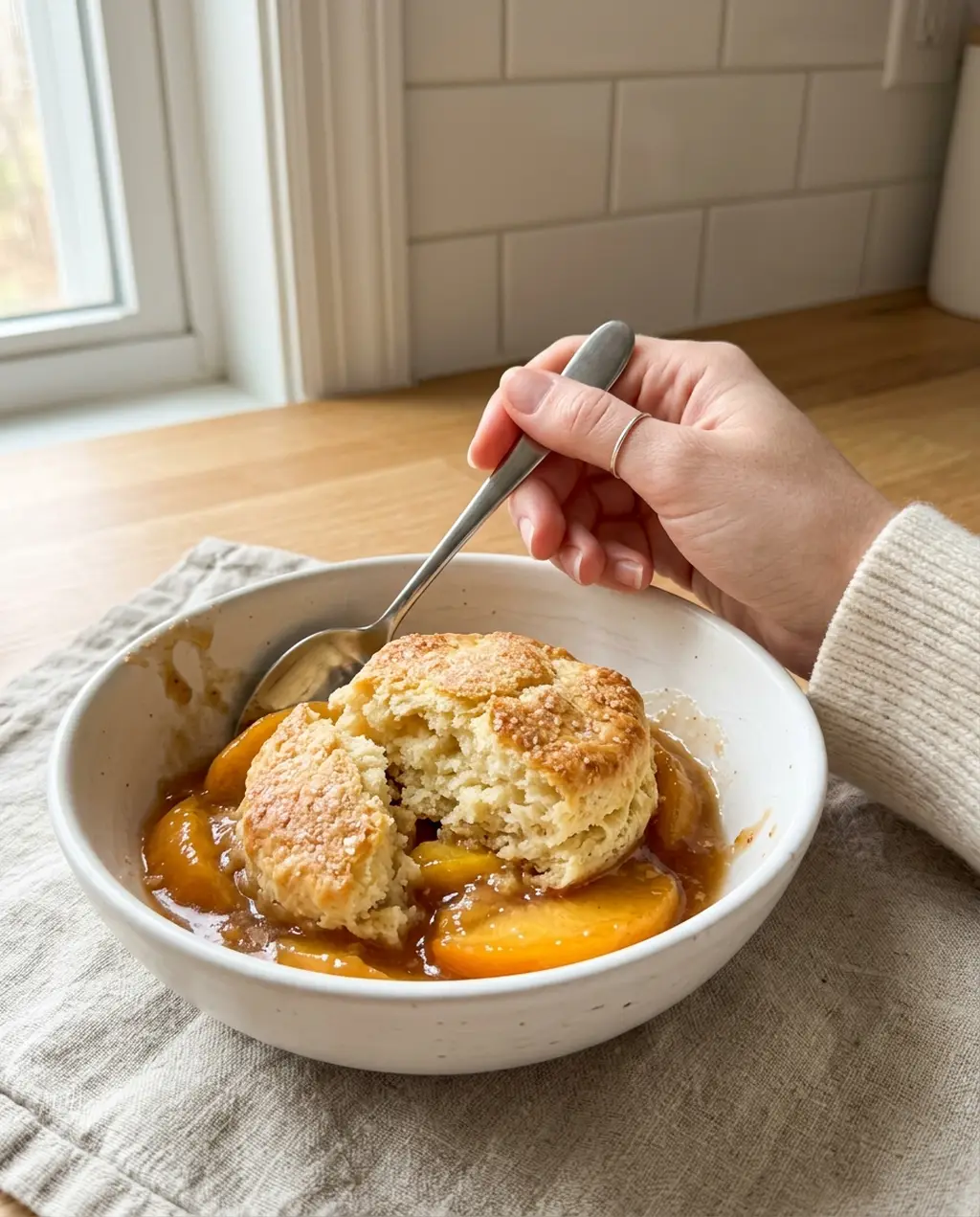
Peach cobbler is the dessert of not overthinking it, which is why it stings that the air fryer versions overthink themselves into failure. One popular approach bakes a batter-style cobbler for a full hour, covered in foil most of the way, which is longer than the same dessert takes in an oven and a strange way to use a machine whose whole personality is speed. The other camp bakes everything in one shot and serves biscuits that are golden hats over raw dough.
Both problems come from ignoring what a basket is good at. It is bad at deep, wet batters and it is brilliant at small doughs, and a drop-biscuit cobbler is small doughs sitting on fruit. Build the recipe around that, and the machine that supposedly cannot do cobbler turns out a better one than my oven does, in half the time, without heating the kitchen in peach season.
Quick answer: Toss 4 cups of peaches with sugar and cornstarch scaled to their state, then bake the fruit alone, uncovered, at 330°F until bubbling: 8 minutes fresh, 5 canned, 12 to 14 frozen. Drop six 2-tablespoon biscuits onto the hot fruit, brush with buttermilk, and bake 12 to 14 minutes more until deep golden and 200°F inside a biscuit. Rest 10 minutes. A 7 inch pan serves 6; ramekins make it a dessert for four.
Which cobbler this is, and why
Cobbler is a word with two traditions inside it. The Southern batter style pours a thin cake batter into melted butter and lets the fruit sink in; the drop-biscuit style, sometimes called a shortcake cobbler, lays shaggy dough over the filling like cobblestones, which is where the name comes from. In an oven, both work. In a basket, only one does, and it is not close.
A batter cobbler is a deep, wet bake, and the element a few inches overhead sets its surface while the interior is still liquid, which is exactly why the batter-style air fryer recipes resort to 45 minutes under foil. A biscuit is the opposite kind of object: small, self-contained, mostly surface, the same reason canned biscuits and scones are two of the easiest wins on this site. This page is drop-biscuit cobbler because the machine votes, and it votes loudly.
The doughy-middle fix
The golden-top, raw-middle biscuit is cobbler's signature disappointment, and it is two mistakes stacked:
The biscuits were too big
A mound past about 2 tablespoons cannot bake through before its top is done. Six small biscuits beat four generous ones every time, and the extra edges crisp besides.
The fruit was cold
Dough dropped on room-temperature filling bakes from above and steams from below. Dropped on already-bubbling fruit, it bakes from both directions at once.
Color called it early
Biscuit tops brown minutes before their centers finish. The middle of the biggest biscuit at 200°F is the only verdict that holds up.
That is the whole architecture: fruit first until it bubbles, small biscuits onto hot filling, thermometer before serving. Everything else on this page is detail.
Fresh, canned or frozen: the table
The three peach states are not interchangeable, and the differences are water and sugar. Fresh peaches carry moderate juice and need the full sugar. Canned peaches arrive pre-cooked and pre-sweetened, so they need less of everything, including time. Frozen peaches are the wettest of all, because freezing ruptures their cells and the thaw releases everything at once. One recipe, three columns:
| Peaches | Prep | Sugar | Cornstarch | Fruit phase |
|---|---|---|---|---|
| Fresh (4 medium, sliced) | Peel if you like; skins soften fine | 1/3 cup | 1 tbsp | 8 min |
| Canned in juice (two 15 oz cans) | Drain well | 2 tbsp | 2 tsp | 5 min |
| Canned in syrup | Drain thoroughly | 1 tbsp | 2 tsp | 5 min |
| Frozen, straight from the bag | No thawing | 1/3 cup | 4 tsp | 12-14 min |
| Frozen, thawed | Drain; keep 2 tbsp of the juice | 1/3 cup | 1 tbsp | 8 min |
Every column ends at the same place: juices bubbling thick before any dough lands. The fruit phase is not a formality; it is where each peach state pays its own water bill so the biscuits do not have to.
Biscuit rules
- Cold butter, cut in, left coarse. Pea-sized butter bits steam into flaky pockets. Melted butter makes a denser, cookie-ish biscuit; fine for a shortcut, not what this page is chasing.
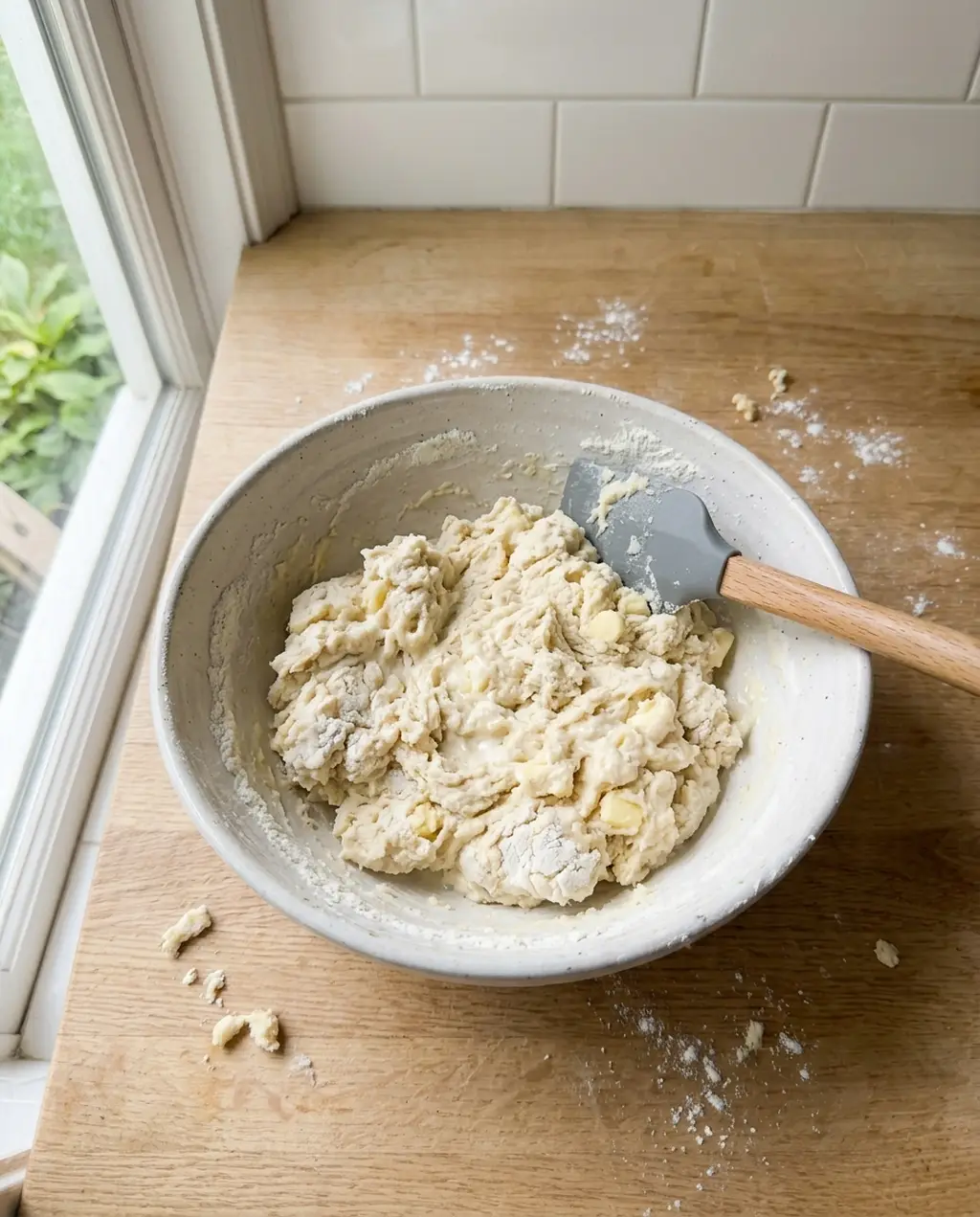
- Stir to shaggy and stop. Overworked biscuit dough is bread. Ten strokes after the buttermilk goes in, lumps and all.
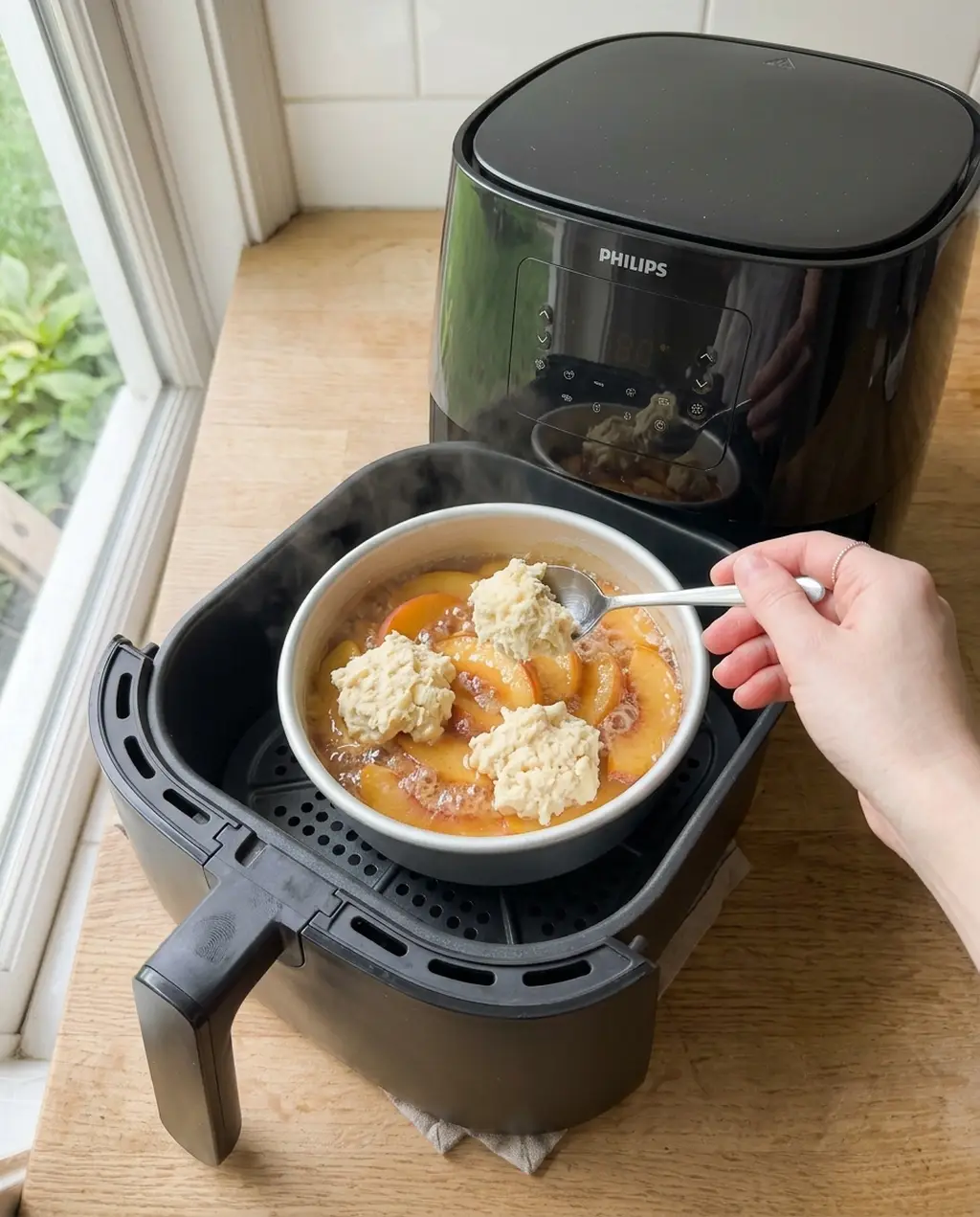
- Two tablespoons per biscuit, six biscuits, gaps between. The gaps are functional: they are where you read the fruit's bubble, and they let the fan crisp biscuit edges instead of steaming a solid lid.
- Buttermilk brush, coarse sugar sprinkle. The brush browns, the sugar crunches, and the tops stop looking homemade in the apologetic sense.
Ingredients
The fruit
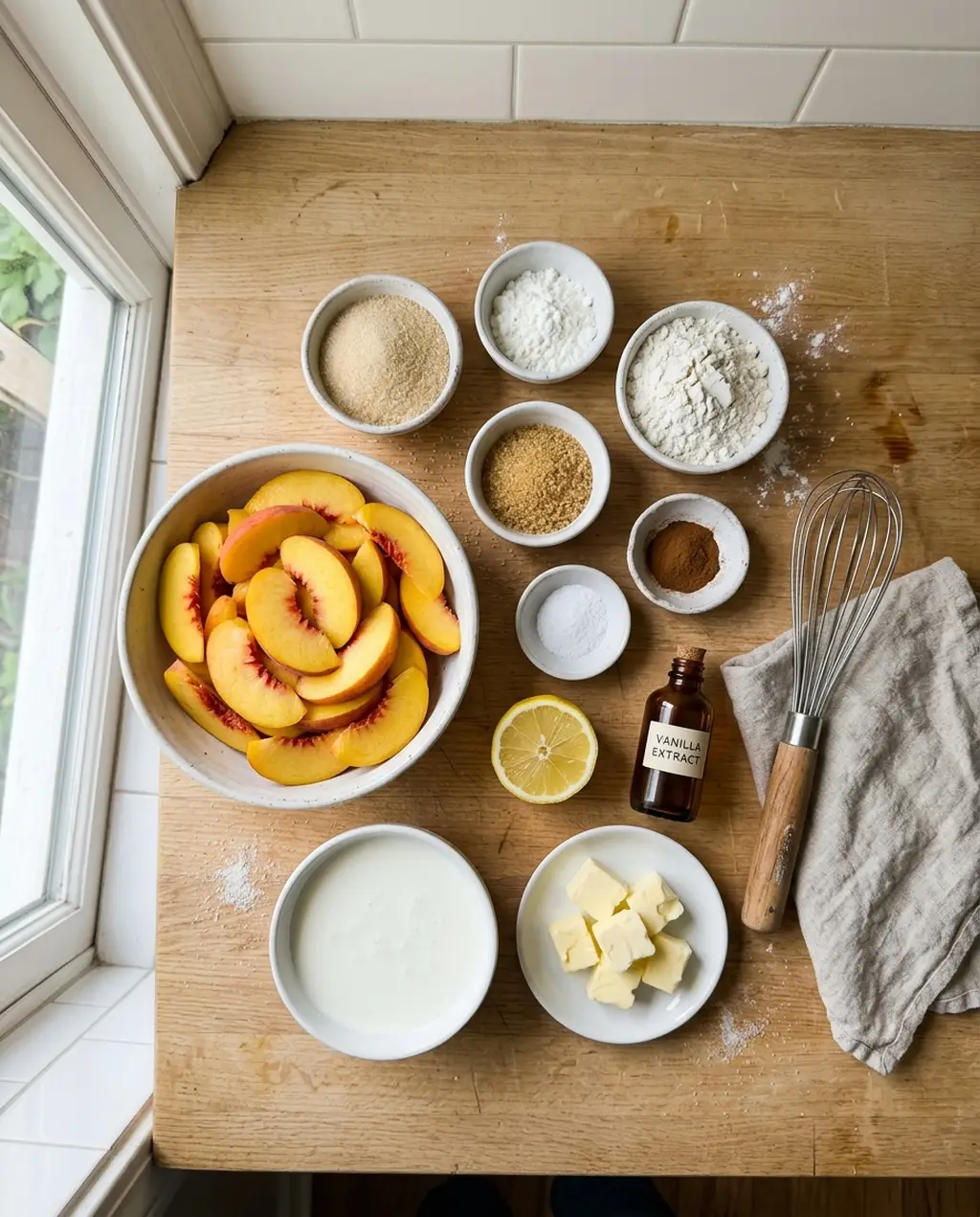
- 4 cups sliced peaches, any state from the table
- Sugar and cornstarch per your peach column
- 1 tablespoon lemon juice, 1 teaspoon vanilla
- 1/2 teaspoon cinnamon, pinch of salt
The biscuits
- 1 cup (125g) all-purpose flour
- 3 tablespoons (38g) sugar
- 1 1/2 teaspoons baking powder, 1/4 teaspoon fine salt
- 4 tablespoons (57g) cold butter, cubed
- 1/2 cup (120ml) buttermilk, plus more for brushing
- Coarse sugar for the tops
No buttermilk? A tablespoon of lemon juice stirred into a half cup of milk, rested 5 minutes, does the job. Nectarines, plums or a peach-berry mix ride the fresh column unchanged; berries push the juice up, so lean toward the frozen column's cornstarch if more than a cup of them joins. Going all berry? The berry cobbler uses these same biscuits and has its own sugar and cornstarch amounts for each berry.
How to make it
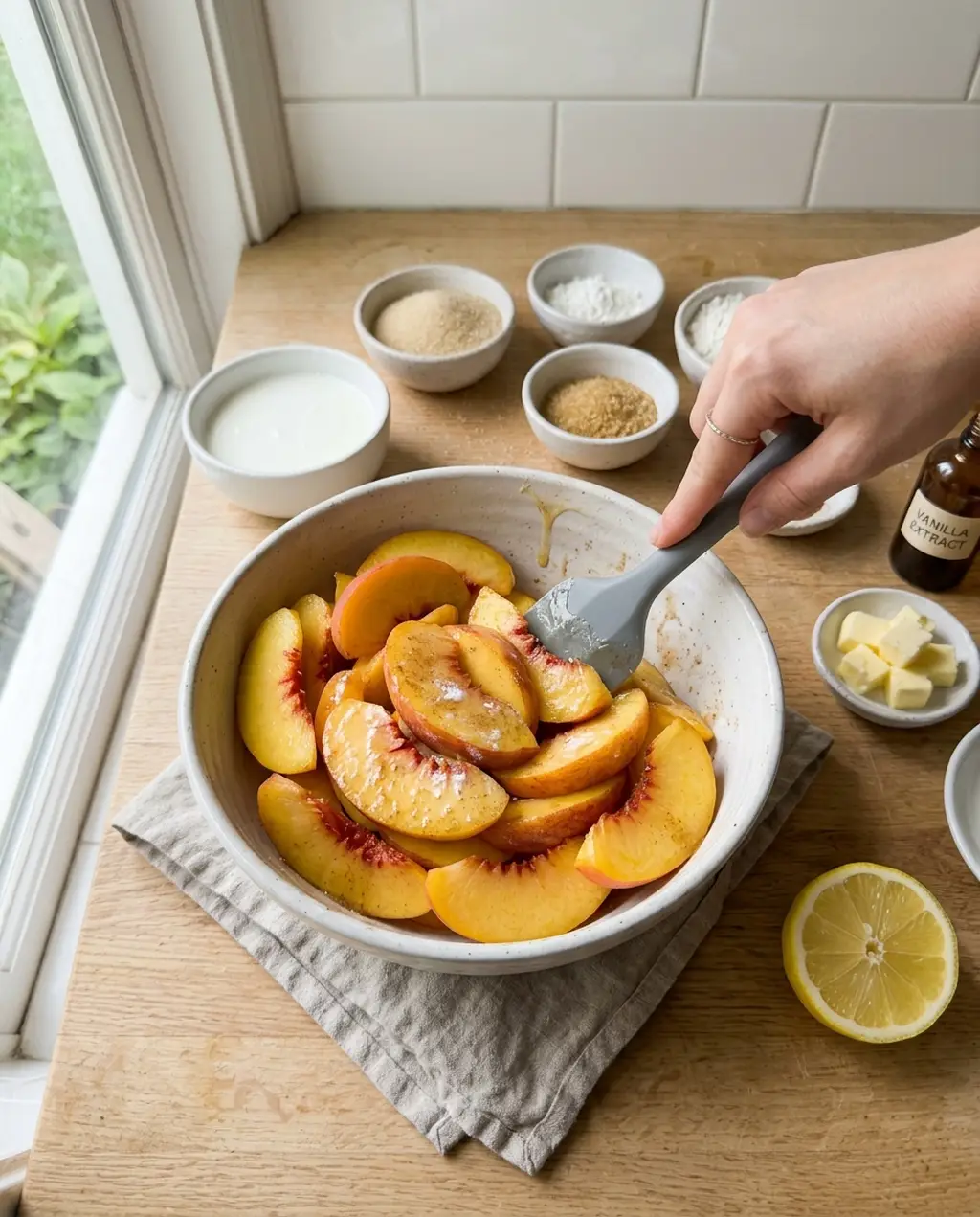
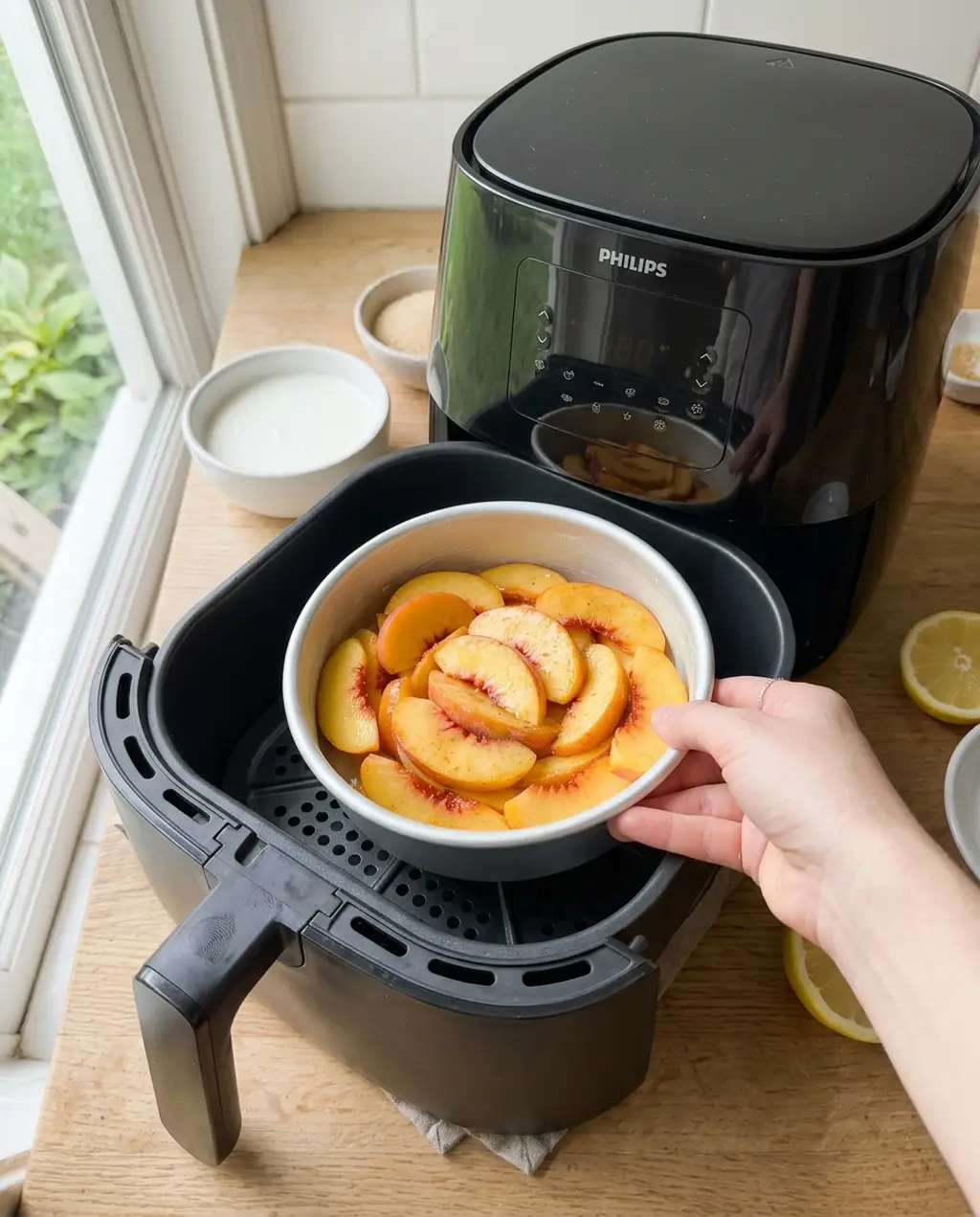
- Season the fruit with its column's sugar and cornstarch, tossed together first so the starch cannot clump, then the lemon, vanilla, cinnamon and salt. Into the buttered 7 inch pan; if you are unsure what pan your basket takes, the pan size calculator settles it in ten seconds.
- Bake the fruit alone, uncovered, at 330°F for its column's time, until the juices bubble at the edges. No preheat; the fruit warms with the machine, per the preheat guide. Note the contrast with an apple crisp filling, which bakes covered: peaches have the opposite problem, too much juice rather than too much firmness, and an open pan lets the extra boil off.
- Make the dough while that runs: whisk the dry, cut in the cold butter to peas, stir in the buttermilk to shaggy.
- Drop six mounds onto the bubbling fruit, 2 tablespoons each, gaps between. Brush with buttermilk, sprinkle with coarse sugar.
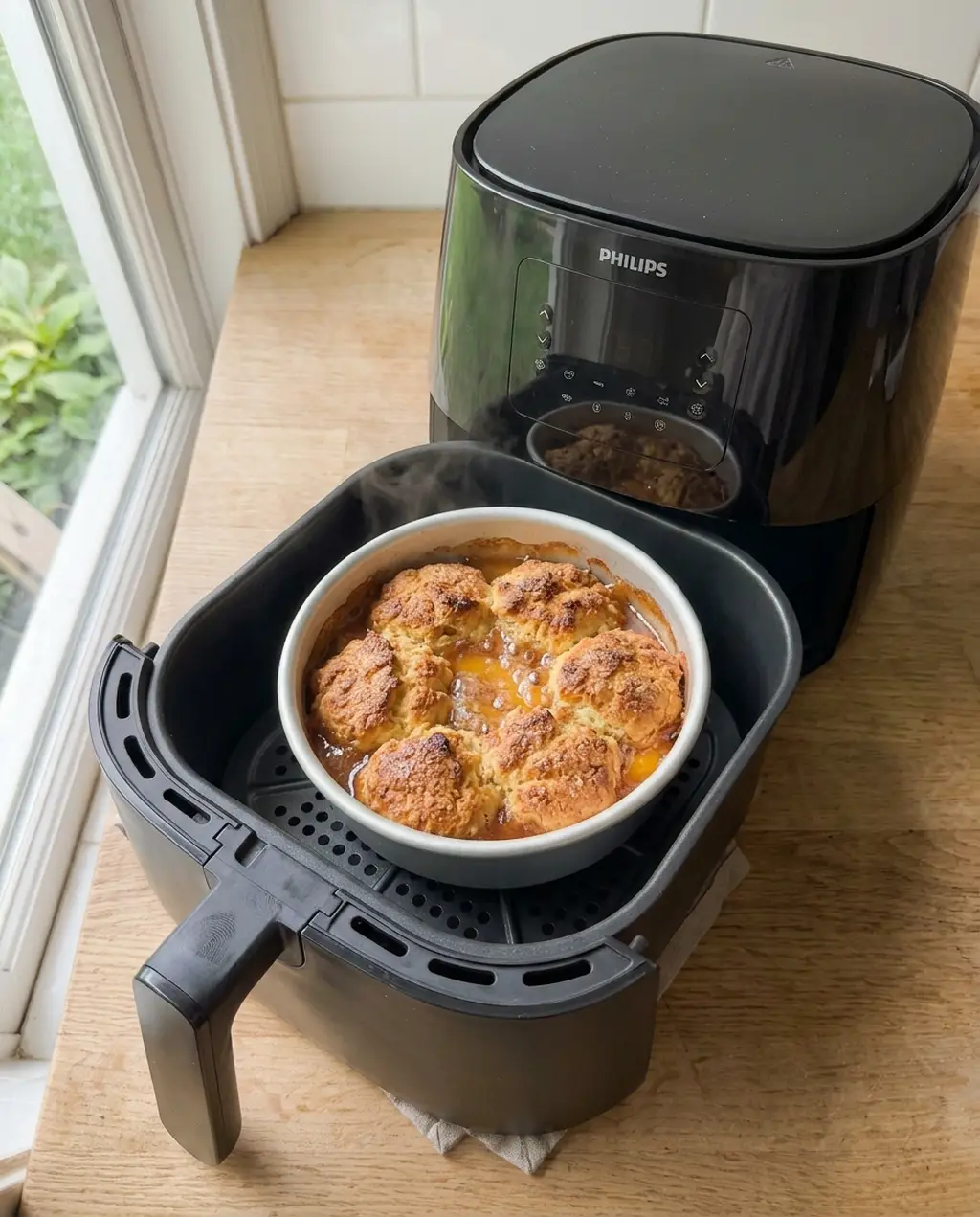
- Bake at 330°F for 12 to 14 minutes, until deep golden with thick bubbles in the gaps.
- Probe the biggest biscuit: 200°F at its center on an instant-read thermometer. Short of that, 2 more minutes; if the tops are racing ahead, a loose foil sheet over the pan for the last minutes is legal per the foil rules, weighted by the pan it rests on.
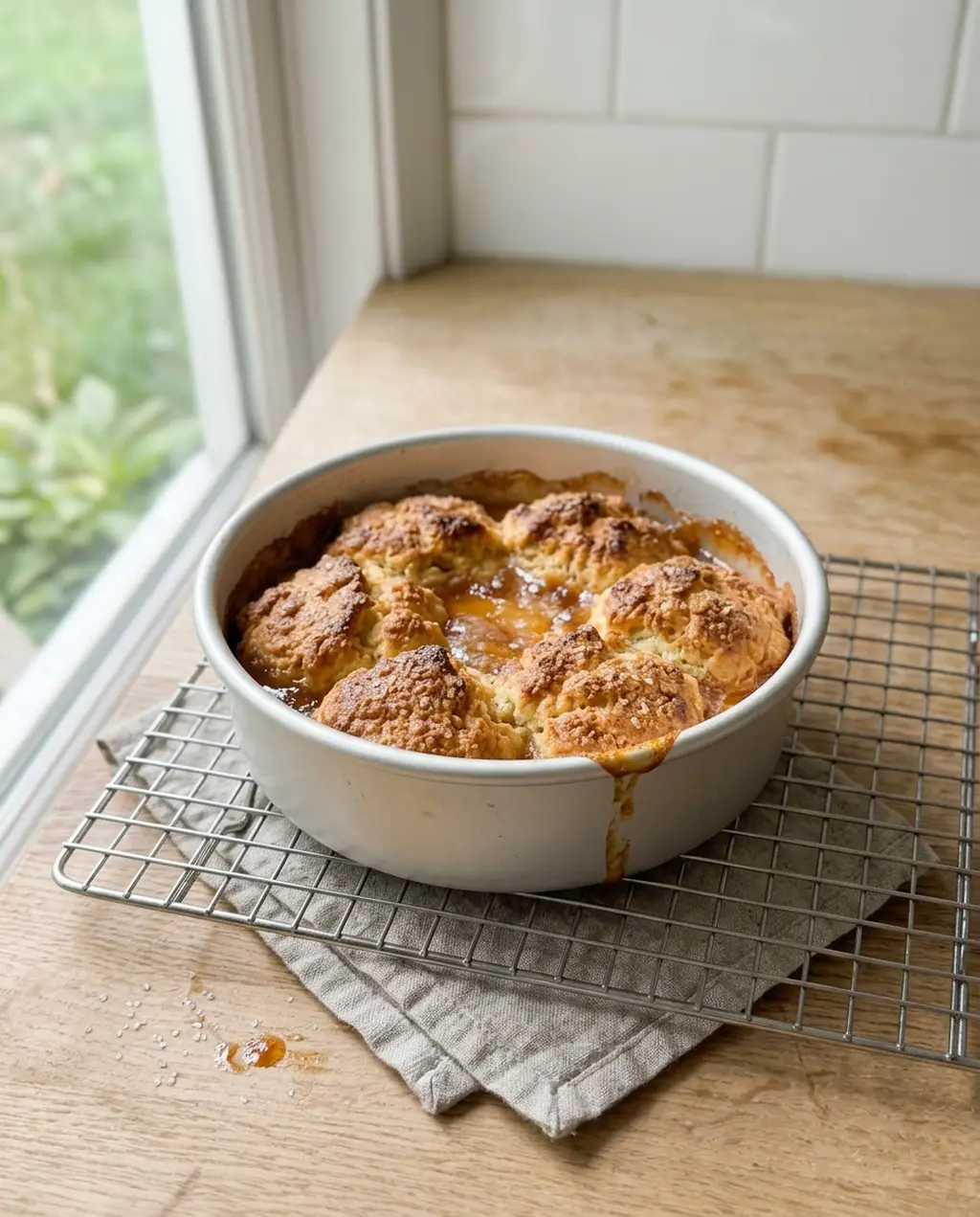
- Rest 10 minutes. The bubbling filling sets into sauce; the biscuits finish their steam. Pure carryover, working for you.
- Scaling down or up: the ramekin lane lives in the card, and the recipe scaler resizes both layers without the fraction headache. The clock stays put either way; biscuits time by their size, not the batch.
Converting a family oven cobbler instead? Its 375°F goes through the air fryer calculator to about 350°F, and then this page walks it down another 20 for the sugar-and-element problem, the same two-step every sweet-topped bake on the baking chart follows.
Doneness: two checks
| Layer | The check | Why |
|---|---|---|
| Fruit | Thick, slow bubbles in the gaps for 2 full minutes | Cornstarch only thickens at a boil; the bubble is the sauce being born |
| Biscuits | Deep golden tops and 200°F in the center of the biggest one | Tops brown early over wet fruit; the number is the only honest witness |
Both checks pass before anything leaves the basket. One without the other is half a dessert: set fruit under raw dough, or baked biscuits floating on peach water.
Troubleshooting
| What you got | Why | Fix |
|---|---|---|
| Doughy biscuit middles | Biscuits too big, or dropped on cold fruit. | 2 tablespoon mounds onto bubbling filling, and the 200°F check. This row is the page |
| Watery filling | Wrong cornstarch column, or pulled at the first bubble. | Match the table to your peaches and give the bubble its 2 minutes |
| Cloying, syrup-sweet result | Full sugar on canned peaches. | 2 tablespoons for juice-packed, 1 for syrup. The can already did the sweetening |
| Biscuits browned before the fruit thickened | Frozen peaches skipped their long fruit phase. | 12 to 14 minutes alone from frozen, and the dough waits for the bubble |
| Flat, dense biscuits | Butter melted in warm hands, or dough stirred smooth. | Cold cubes, coarse crumbs, ten strokes. Shaggy is correct |
| Tops dark, middles lagging | Machine runs hot up top. | Loose foil sheet for the last minutes, or 320°F next round; chronic cases live in the burning guide |
| One side baked harder | A machine hot spot. | Rotate the pan a half turn when the biscuits go on |
| Pan welded shut with syrup | Unbuttered pan. | Butter it, and soak warm after; boiled peach sugar is glue with ambitions |
Mysteries that repeat across desserts belong to the troubleshooting guide, and if the machine itself is new to you, start at how to bake in an air fryer.
Serving it
- Warm, ice cream melting into the gaps. The 10 minute rest lands the filling exactly hot enough to soften a scoop without liquefying it.
- The fruit-dessert shelf, for other moods: pastry-wrapped means the apple pie, whole-fruit means baked apples, and this cobbler is the one that never asks you to roll anything.
- Same fruit, less work: baked peaches skip the dough entirely, halves with a brown sugar butter filling in about 12 minutes. For an oat topping instead of biscuits, the apple crisp is the model, and the galette takes sliced peaches beautifully with no pie plate needed.
- Peach season postscript: in August, fresh column, skins on, and eat it outside. In February, the frozen column exists so you do not have to wait.
Storage and reheating
- Counter, day of: loosely covered once cool. Biscuits are proudest on day one.
- Fridge: 3 days covered. The tops soften; the reheat below brings most of it back.
- Reheat: 300°F uncovered, 3 to 4 minutes a portion or 5 to 6 for the pan. The microwave trades the crisp tops for speed; sometimes that is the right trade at 10 pm, and I am not here to judge it.
- Parts-ahead: seasoned fruit holds a day in its pan; portioned dough mounds hold 2 days chilled or a month frozen and bake from cold with an extra minute or two.
- Do not freeze the baked thing. Thawed biscuits over thawed fruit is bread pudding by accident. Freeze the parts and bake it fresh in 25 minutes instead.
Frequently asked questions
QHow long does peach cobbler take in an air fryer?
About 20 to 28 minutes of baking at 330°F, depending on the peaches: the fruit bakes alone first, 8 minutes for fresh, 5 for canned, 12 to 14 for frozen, and then the biscuit topping bakes on the hot fruit for 12 to 14 more. Add a 10 minute rest and dessert lands inside 45 minutes. Published versions running a full hour are baking a deep batter style the basket is wrong for.
QCan you use canned peaches for air fryer cobbler?
Yes, and they are the best weeknight option because they are already cooked and already sweet. Drain them well, cut the sugar to 2 tablespoons, use 2 teaspoons of cornstarch, and give them just 5 minutes alone before the biscuits go on. Peaches canned in juice beat peaches in heavy syrup; if syrup is what you have, drain thoroughly and drop the added sugar to 1 tablespoon.
QCan you use frozen peaches without thawing?
Yes, with two adjustments: double the cornstarch to 4 teaspoons, because frozen peaches release the most water of any option, and stretch the fruit-only phase to 12 to 14 minutes so that water can boil off and thicken before any dough lands. Thawing and draining first works too and shortens the fruit phase to about 8 minutes; keep 2 tablespoons of the thawed juice and discard the rest.
QWhy is my cobbler topping doughy in the middle?
The classic cobbler failure, and it has two causes that stack. Big biscuits, because a mound bigger than about 2 tablespoons cannot bake through before its top is done. And cold fruit, because dough dropped on room-temperature filling steams from below instead of baking. Small biscuits dropped onto already-bubbling fruit, then a 200°F check in a biscuit's center, ends it permanently.
QWhat temperature do you cook peach cobbler in an air fryer?
330°F for both phases. The biscuit topping carries sugar and butter, and the heating element sits inches above it, so oven settings of 375°F and up brown the tops long before the middles bake. At 330°F the biscuits cook through in 12 to 14 minutes arriving at deep golden and an internal 200°F at the same time, which is the whole point of the number.
QHow do you know when peach cobbler is done?
Two checks, one per layer. The fruit is done when thick juices bubble in the gaps between biscuits, because the cornstarch only thickens once it boils. The biscuits are done at about 200°F in the center of the biggest one, probed with an instant-read thermometer. Golden color alone is not a verdict; a biscuit browns on top minutes before its middle finishes.
QIs cobbler topping biscuit dough or batter?
Both traditions exist. Southern batter-style pours a thin cake batter under the fruit; drop-biscuit style lays shaggy dough on top. This page is drop-biscuit on purpose, because a basket bakes small doughs brilliantly and deep batters poorly: the close element sets a batter's surface while the middle stays wet, which is why batter-style air fryer versions run an hour. Biscuits finish in 14 minutes.
QCan you make peach cobbler ahead?
In parts. The seasoned fruit holds a day covered in its pan in the fridge, and the biscuit dough holds 2 days refrigerated or freezes for a month as portioned mounds, baking from cold with an extra minute or two. Assembled-and-baked cobbler keeps 3 days refrigerated, but biscuits are best the day they bake, so parts-ahead beats baked-ahead every time it is an option.
QHow do you reheat peach cobbler so the topping is not soggy?
In the basket, uncovered: 300°F for 3 to 4 minutes for a portion, 5 to 6 for the whole pan, and the biscuit tops re-crisp while the fruit warms through. The microwave heats it fastest and softens the topping completely, which is a fair trade only when speed is the entire goal. Cold cobbler with cream at breakfast is also a legitimate tradition in this house.
Never overbake again
Get our one-page times & temps cheat sheet, plus a new tested recipe each week.
No spam · unsubscribe anytime