

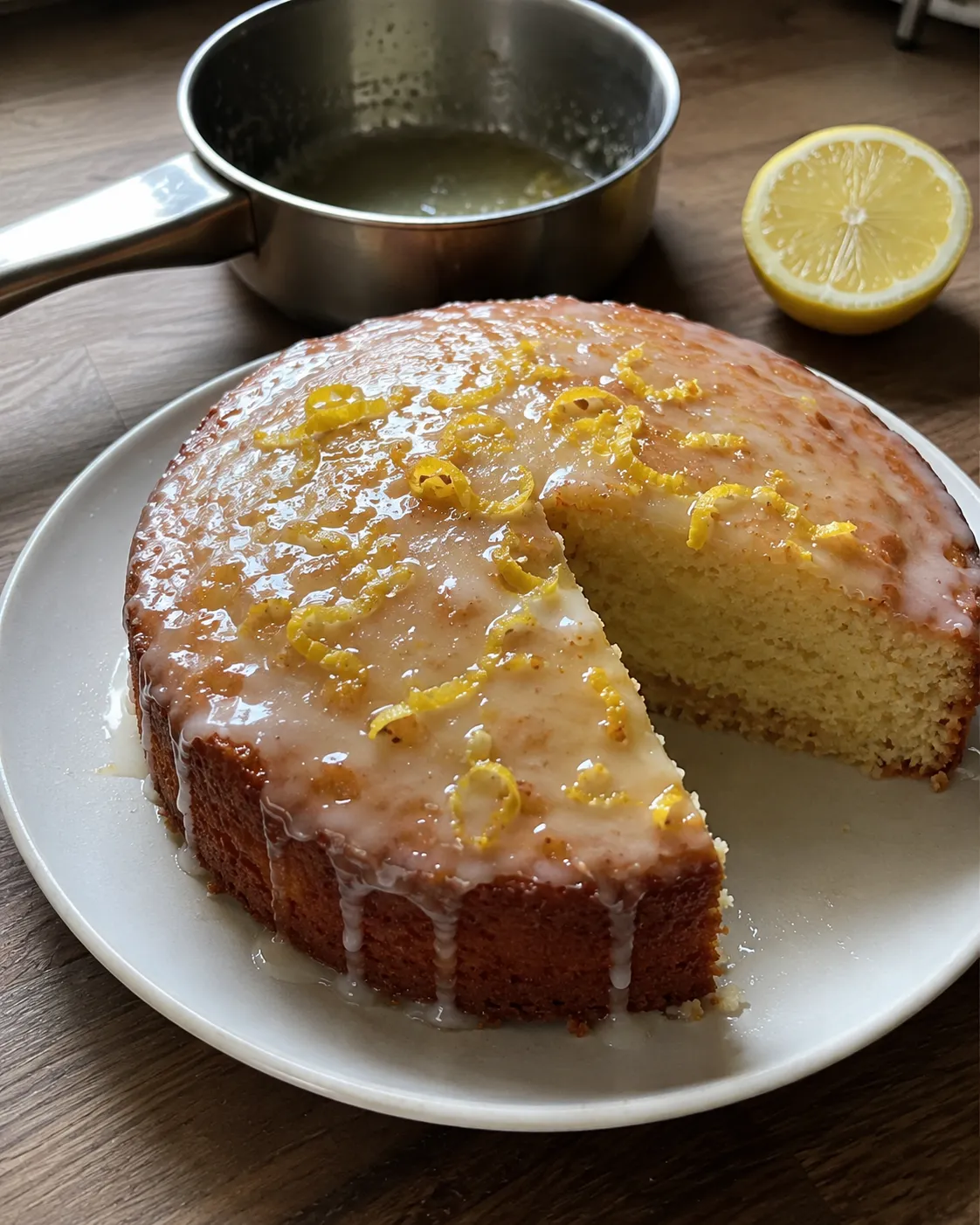
My first air fryer lemon cake was a perfectly good cake. Risen, tender, golden, done in twenty six minutes. It just did not taste of very much lemon, and I had put the zest of two whole lemons into it.
I assumed I had been stingy, so the next one got three lemons. Slightly more lemony. Not three lemons more lemony. Somewhere between the bowl and the plate most of it was going missing, and I wanted to know where.
Quick answer: Rub the zest into the sugar with your fingers before you cream anything, keep the lemon juice out of the batter entirely, and pour a warm lemon syrup over the cake the moment it comes out. Bake at 320°F for 24 to 28 minutes in a 6-inch round pan and pull it at 205°F. Under thirty minutes only works in a round pan. In a loaf tin the same batter takes forty five.
Why air fryer lemon cakes come out tasting flat
Here is the thing I did not expect, and it is worth two minutes because it changes how you build the recipe.
Lemon flavor is not in the juice. Juice is water, citric acid and a little sugar, and what it contributes is sourness. The smell and taste we actually call lemon lives in the oil in the peel, and that oil is made of volatile aromatic compounds. Volatile is not a figure of speech here. It is the technical description: these are molecules that leave a surface and enter the air readily, which is exactly why a lemon smells like a lemon from across the room.
Now consider what an air fryer is. It is a small chamber with a fan driving hot air across the surface of your food at speed. That is forced convection, and the whole reason it dries and crisps better than a still oven is that moving air carries molecules away from a surface far faster than still air does.
Still air, slow loss
Aromatic molecules leave the cake surface and then mostly sit there in a saturated layer of air just above it. Some drift off. Plenty stays.
Moving air, fast loss
The fan strips that saturated layer away continuously and replaces it with fresh dry air, so the surface keeps losing volatiles for the whole bake.
The same batter tastes flatter
It is the same mechanism that makes an air fryer good at crisping. It just happens to be actively bad at keeping delicate aromatics in a cake.
This is not a theory I am putting forward on my own. One of the most-shared air fryer lemon cake recipes tells its own readers, in the recipe notes, that it does not have an overpowering lemon taste, and suggests adding more juice and zest if you want more. That is the right observation with no diagnosis behind it. More juice adds sourness and water, not aroma. More zest stirred into the batter still loses its oil to the fan.
This problem is specific to volatile flavors. The air fryer chocolate cake next door does not need any of these tricks, because cocoa's flavor compounds are heat stable rather than fleeing into the moving air the moment things warm up.
The fix is not more lemon. It is putting the lemon somewhere the fan cannot get at it, and then adding some back after the fan has stopped.
Put the lemon in three times
Three placements, three different jobs, and only one of them survives the bake by itself.
| Where | What it does | Survives the bake? |
|---|---|---|
| Zest rubbed into the sugar | Puts the oil into the crumb, bound to sugar crystals, buried below the surface | Mostly. This is the base note |
| Zest scattered on top | Sits on the hottest, driest, most exposed surface in the machine | No. It scorches and goes bitter |
| Juice in the batter | Adds sourness and water. Contributes almost no aroma | Not relevant. There was nothing to survive |
| Warm syrup after baking | Puts fresh, unheated lemon oil and acid straight into a warm crumb | Yes, because it never gets heated |
| Glaze once cold | The top note you smell before you taste anything | Yes |
The middle two rows are what most recipes do, and they are the two that do not work. The first, fourth and fifth are the ones this recipe uses.
Zest into the sugar, and never on top
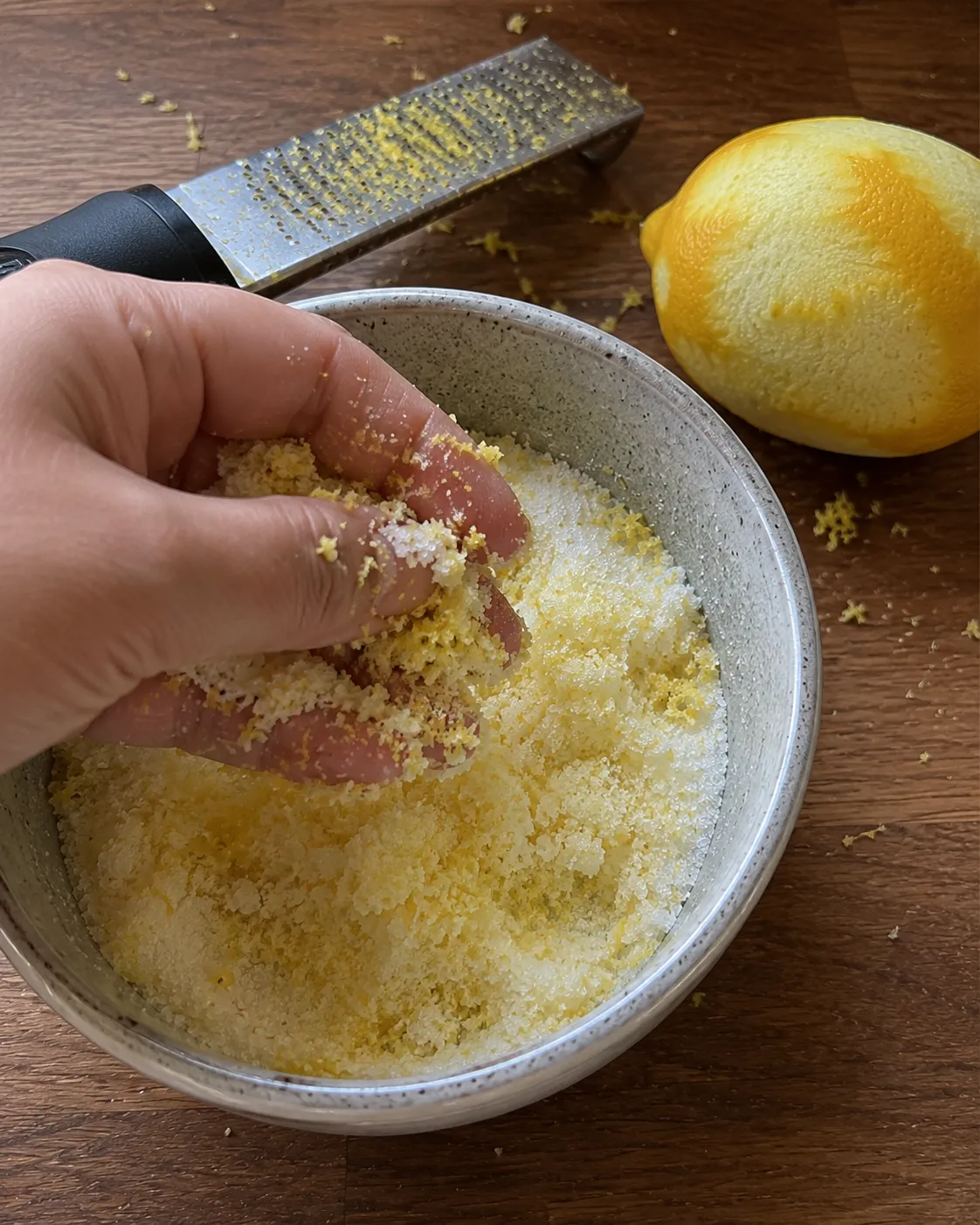
Rubbing zest into sugar with your fingertips takes about thirty seconds and it is the single highest return thing on this page.
Lemon oil sits in tiny sacs in the colored part of the peel. Stirred into flour, most of those sacs are still intact and the oil never really gets out. Rub the zest into granulated sugar and the crystals act as an abrasive, tearing the sacs open, while the sugar itself soaks up the oil that comes out. You can see it happen: the sugar turns pale yellow and damp and it smells like a lemon grove. That sugar then goes into the butter and ends up distributed through the entire crumb.
Zest only the yellow. The white pith underneath is bitter and contains none of the oil. A microplane takes the yellow off cleanly. If your zest looks white on the underside you have gone too deep, and in a small cake that bitterness is noticeable.
What not to do is scatter zest over the top of the batter before it goes in, which several recipes suggest for looks. The top of a cake in a basket is the closest surface to the element and the driest place in the machine. Fine shreds of peel up there will darken and turn bitter well before the cake is done. If you want zest visible on the finished cake, put it on the glaze after everything is cold.
What the juice is actually for
Lemon juice does two useful things in a cake and neither of them is flavor in the way people assume.
- It is an acid, so it tenderizes. Acid interferes with gluten forming, which is part of why lemon cakes have that soft, fine crumb.
- It reacts with baking soda, which is where a lot of recipes get their lift from.
That second one is a trap in a small cake, and it is worth knowing about. Acid and baking soda react on contact, in the bowl, not in the heat. The carbon dioxide starts coming off the moment they meet, so if the batter then sits while you find the pan and line it, a meaningful share of the lift has already escaped into your kitchen. On a big cake there is enough slack that it barely shows. On a 6-inch cake it shows.
This recipe uses baking powder only, and no juice in the batter at all. Baking powder brings its own acid in a form that mostly waits for heat, so nothing is racing you. The tenderness comes from the sour cream instead, which brings acidity without the volatile-free water of straight juice. Baking soda versus baking powder has the longer version.
All the juice goes into the syrup and the glaze, where it is never heated for twenty six minutes and keeps everything it came with.
The drizzle is not decoration
Lemon drizzle cake exists as a category, and I had always assumed the drizzle was a sweet finish somebody added because it was nice. It is not. It is a repair, and in an air fryer it is a more necessary repair than it is in an oven.
A warm lemon syrup poured over a cake straight out of the basket puts fresh lemon oil and fresh acid directly into the crumb, without either of them ever being exposed to thirty minutes of moving hot air. It replaces what the fan removed. That is the entire point.
This is not the only cake on the site where a liquid's timing matters more than its ingredients. The air fryer pineapple upside down cake runs the same logic in reverse, its caramel goes on before baking, under the fruit, so it has time to bond with the pan instead of just sitting on top.
The mechanics that make it soak rather than sit:
- Cake hot, syrup warm. A hot cake is full of steam pockets that are actively contracting as it cools, which pulls liquid in. Wait until it is cold and the syrup just puddles on top.
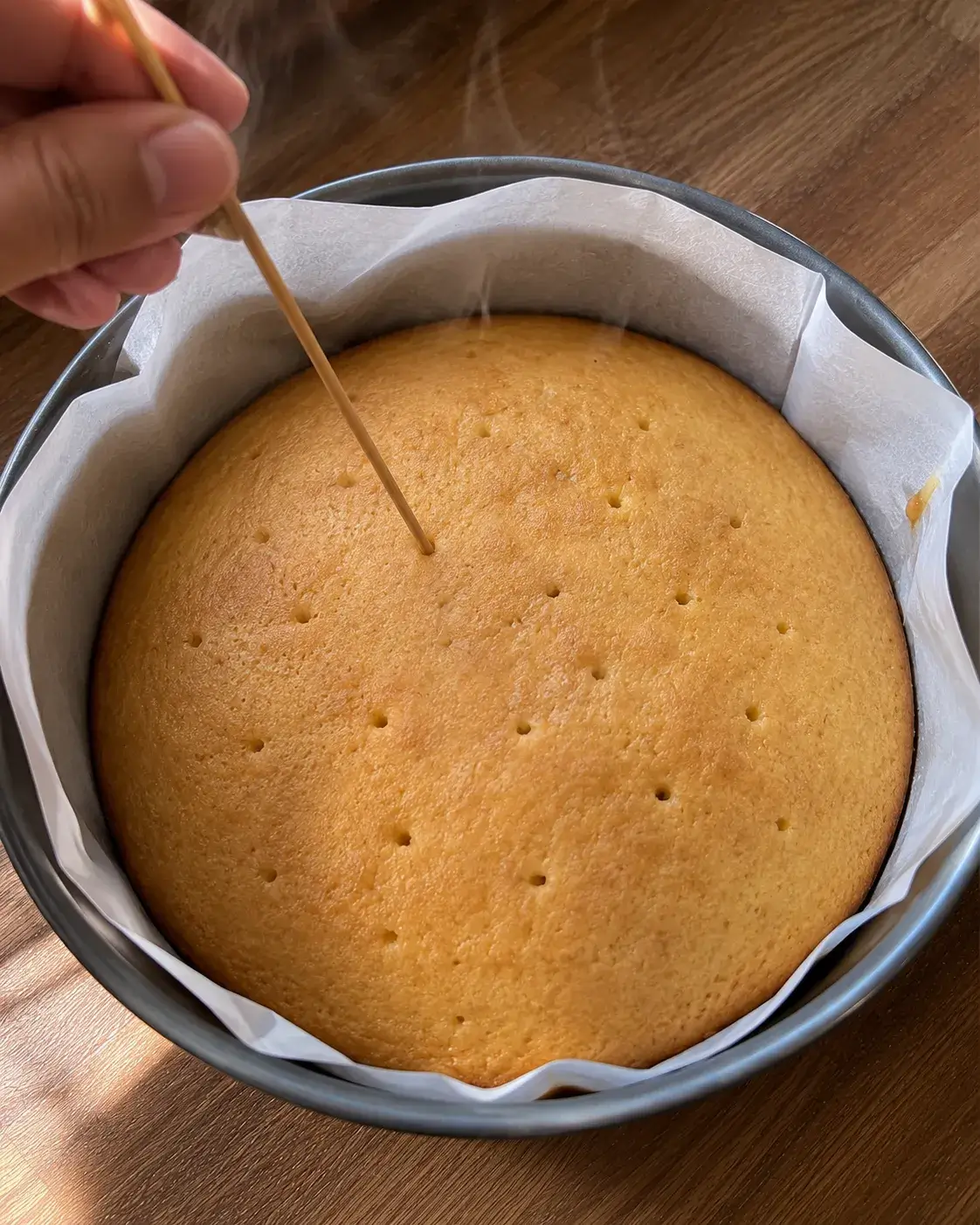
- Poke it first. Thirty or so holes with a thin skewer, right down to the base. You are making channels, not stabbing it.
- Leave it in the pan. The pan walls hold the syrup against the cake while it goes in. Turn it out first and most of it runs onto the rack.
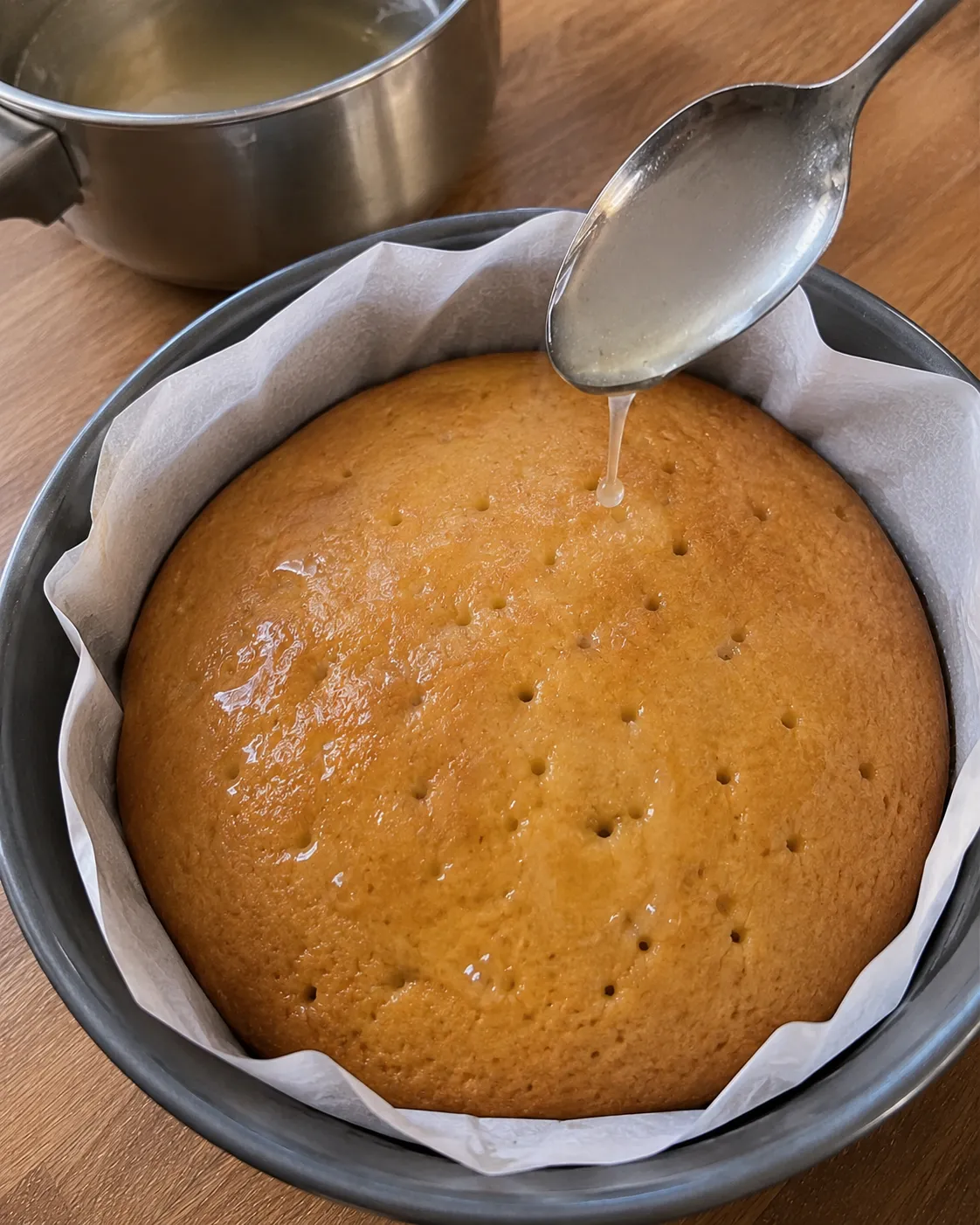
- Go slowly. A spoonful at a time over two or three minutes. Pour it all at once and it runs off the dome and down the sides.
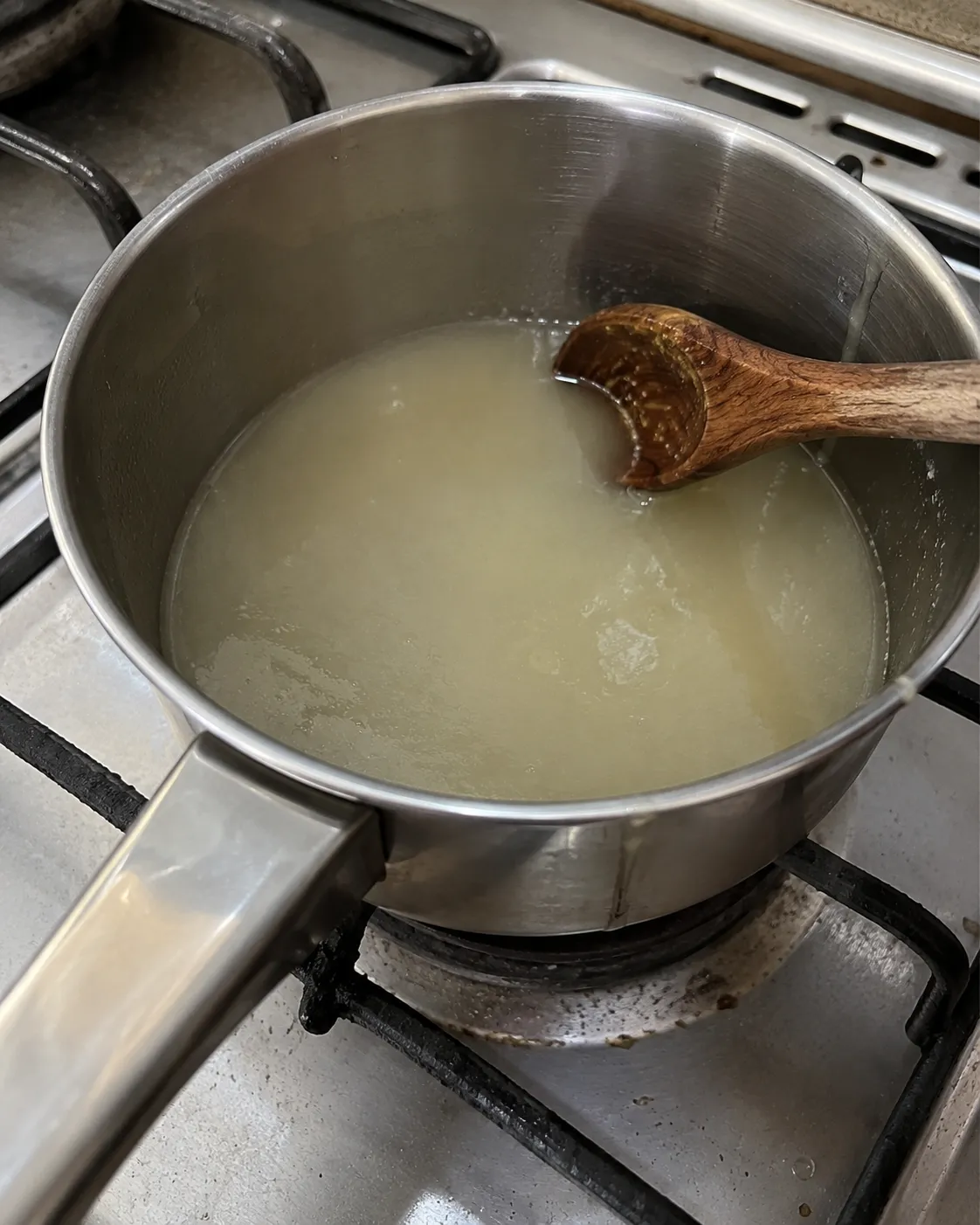
The syrup here is three tablespoons of juice and a quarter cup of sugar, warmed just until the sugar dissolves and no further. Boil it and you are making candy, and you will also cook off the very compounds you are adding it for.
Under 30 minutes is real, in a round pan
The published times for this run from about 20 minutes to 55, which looks like chaos until you sort the recipes by what they baked in.
| Pan | Batter depth | 320°F | Under 30? |
|---|---|---|---|
| 6-inch round | About 1 inch | 24 to 28 min | Yes. The recipe as written |
| 7-inch round | About 3/4 inch | 20 to 25 min | Yes, with a thinner cake |
| 1 lb loaf tin | 2 inches or more | 40 to 50 min | No, and this is where the 45 minute recipes come from |
| 6-cup bundt | About 1 1/2 inches, ring shaped | 30 to 38 min | Not quite, but close |
A loaf tin is the traditional shape for lemon drizzle and it is the slowest thing you can choose in a basket, because the batter sits twice as deep and heat has to travel twice as far to the middle. A round pan spreads the same batter thin and finishes in about half the time. Our air fryer banana bread and air fryer pumpkin bread both live in loaf tins and both take much longer than a cake of the same volume, for exactly this reason. If you already own the ring pan, the air fryer bundt cake is built around that same middle-ground depth from the table above.
So the under thirty minutes in the title is honest, and it is a decision about shape rather than a trick. If you want the classic loaf, make it, just budget forty five minutes and expect to tent it with foil partway. If you want it fast, use the round pan.
If you are unsure what your basket takes, the pan size calculator gives you the largest round pan that fits with airflow around it, and the recipe scaler converts the batter if you go up a size. Converting somebody else's oven recipe instead? The air fryer calculator handles the temperature, then ignore its time and go by the internal reading below.
Ingredients
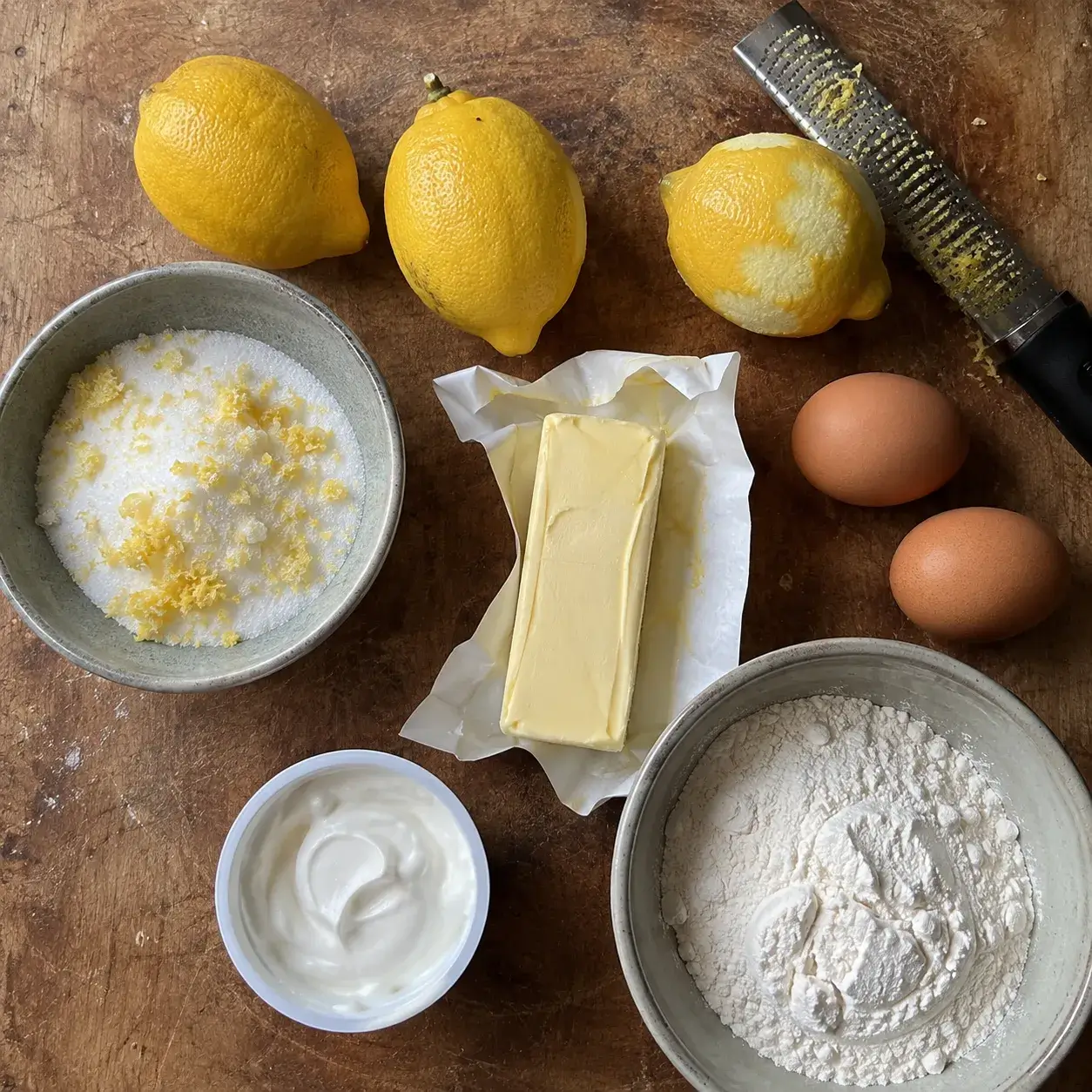
One 6-inch cake, six slices. Everything at room temperature. Cold sour cream dropped into creamed butter splits it into lumps that never smooth out, which the glossary covers under curdling.
For the cake
- 3/4 cup (150g) granulated sugar
- Zest of 2 lemons, yellow only
- 1 cup (125g) all-purpose flour
- 1 teaspoon baking powder
- 1/4 teaspoon salt
- 1/2 cup (113g) unsalted butter, softened
- 2 large eggs, room temperature
- 1/3 cup (80g) full-fat sour cream, room temperature
- 1 teaspoon vanilla extract
For the syrup
- 3 tablespoons (45ml) fresh lemon juice
- 1/4 cup (50g) granulated sugar
For the glaze, optional
- 1/2 cup (60g) powdered sugar
- 2 to 3 teaspoons fresh lemon juice
Three notes
- Fresh lemons, not bottled juice. Bottled juice is pasteurized, which means it has been heated, which means it has already lost the aromatics this whole page is about. It also usually carries preservatives that taste faintly of nothing good. You need the zest anyway, so you are buying lemons regardless.
- No juice in the batter. This is deliberate and it is covered above. All of it goes into the syrup and glaze where it stays cold enough to keep its flavor.
- Full-fat sour cream. Light sour cream is mostly water with gums in it. Full-fat Greek yogurt is a fair swap and buttermilk works too, with a slightly lighter crumb. The same reasoning as our air fryer vanilla cake, which is this cake with the lemon taken out. The air fryer pound cake goes the other direction entirely, all butter and no sour cream, for a denser crumb than this one is aiming for.
How to make it
- Rub the zest into the sugar. Both in a bowl, fingertips, about 30 seconds, until the sugar is damp and pale yellow and smells strongly of lemon. Do not skip this and do not just stir it.
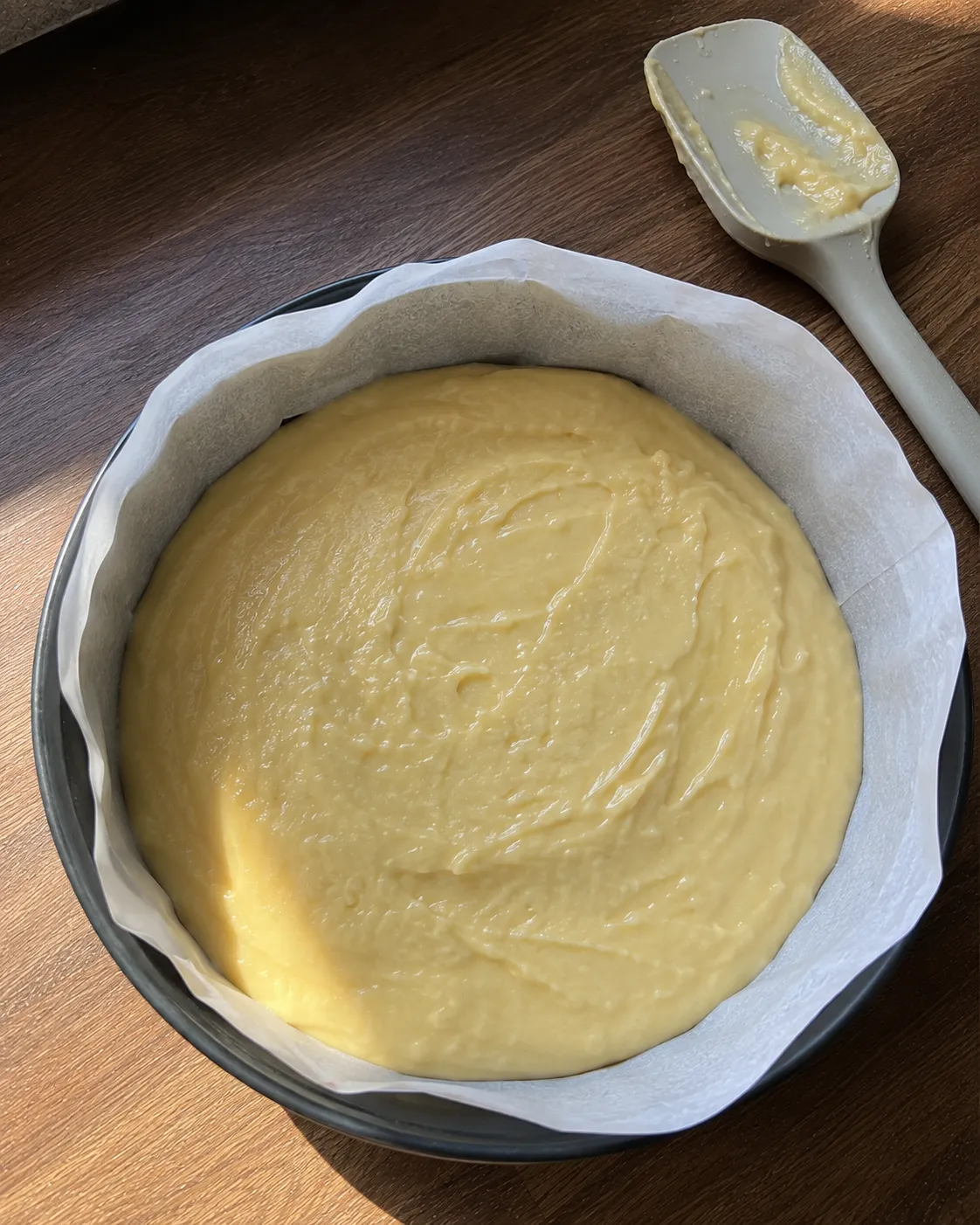
- Line the pan. Parchment circle in the base of a 6-inch round pan, and grease the sides.
- Preheat to 320°F (160°C) for 3 minutes. Whether you need to preheat covers why a leavened batter cares more than most things do.
- Whisk the flour, baking powder and salt together and set aside.
- Cream the butter with the lemon sugar for about 3 minutes, until pale and fluffy rather than grainy. See creaming.
- Beat in the eggs one at a time, just until each disappears, scraping the bowl between them.
- Add the sour cream and vanilla, then the flour mixture, on low speed. Stop the moment the last streak of flour goes.
- Into the pan, level the top. It should sit about halfway up. See fill level.
- Bake 24 to 28 minutes at 320°F. Leave it alone for the first 18. If your machine has a hot spot, turn the pan 180 degrees at 18 minutes.
- Make the syrup while it bakes. Juice and sugar in a small pan over low heat, stirring, until the sugar has just dissolved. Take it off. Do not let it boil.
- Check at 24 minutes. You want 205°F in the middle. The next section is why the toothpick is awkward on this one.
- Poke and soak, immediately. Leave the cake in its pan, poke about 30 holes right through with a thin skewer, and spoon the warm syrup over slowly, over two or three minutes. Hot cake, warm syrup, in the pan.
- Cool completely in the pan, at least an hour. It will look wet on top at first and it will not stay that way.
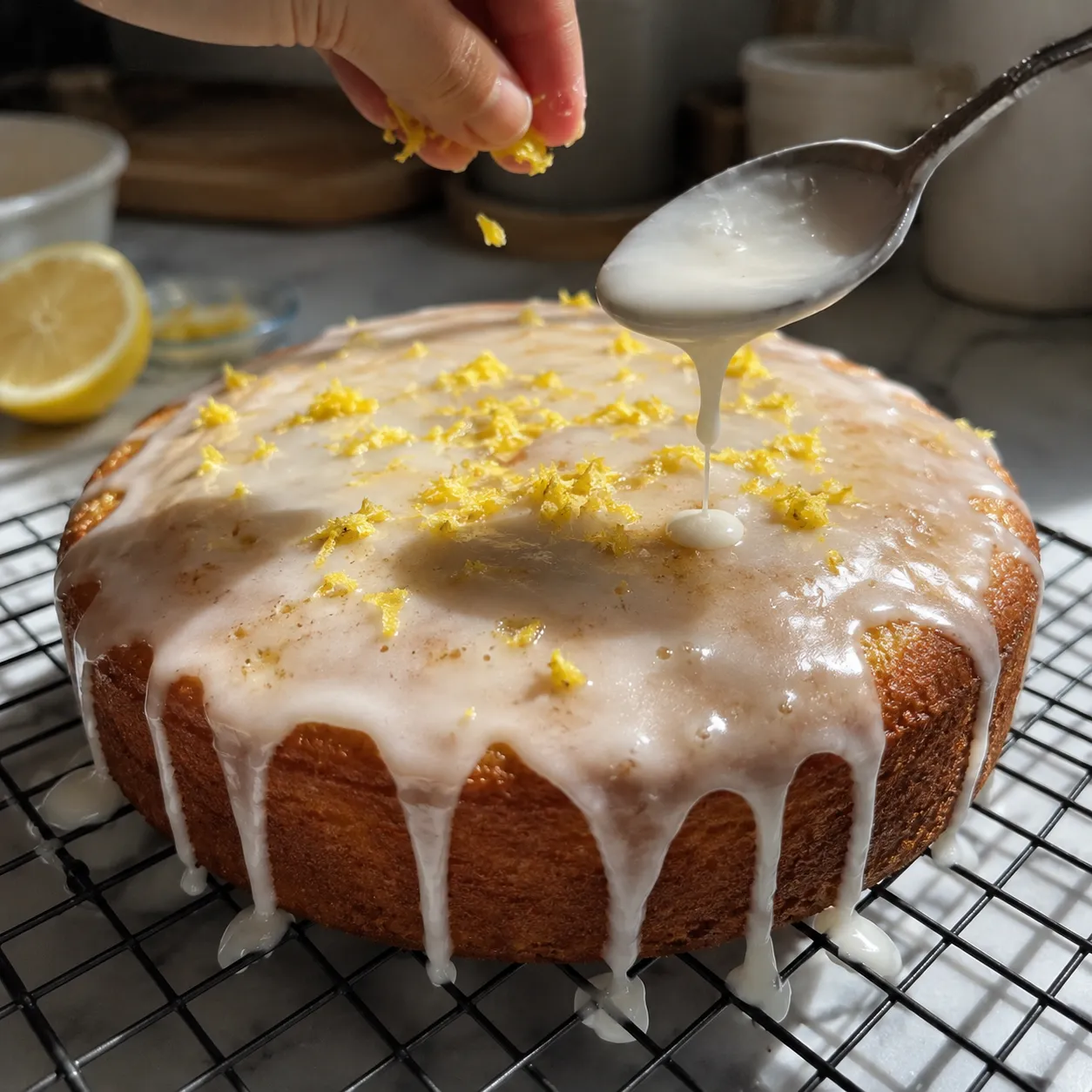
- Glaze once cold, if you want it. Powdered sugar and just enough juice to make a thick ribbon. Zest on top now, if you want it visible.
Why 320°F and not 350. The instinct with a fast bake is to turn the heat up, and here it works against you twice over. The element sits a few inches above the batter, so a higher temperature widens the gap between a browned top and a set middle, which is the usual problem with cakes in a basket. And a hotter, drier surface loses aromatics faster, so you would be paying for those minutes in flavor as well as texture. 320°F is where the top and the middle finish at roughly the same time on a 1 inch deep cake. The air fryer red velvet cake fights the same fan at the same distance, just for color instead of flavor, and lands on an even lower number for it.
205°F, and the toothpick problem here
A lemon cake is a butter cake and it finishes at 205°F in the middle, the same as the rest of the cakes on this site, because that number is a property of the starch and the egg rather than of the flavoring.
The toothpick is more awkward here than usual for a specific reason: this cake is about to have three tablespoons of syrup poured into it. If you overbake by two or three minutes chasing a clean stick, you have dried the crumb, and a dry crumb takes syrup badly. It floods rather than absorbing evenly, so you end up with a soggy base and a dry top instead of a cake that is moist all the way through.
| Reading | What you have |
|---|---|
| Under 195°F | Not set. Another 3 minutes. |
| 200°F | Nearly. Two more minutes. |
| 205°F | Done. Out, and syrup on straight away. |
| Past 210°F | Dry. It will still be edible after the syrup, just unevenly so. |
Push the probe in at an angle from near the edge so the hole ends up somewhere the glaze covers, take one reading and pull it out. You are about to poke thirty more holes in it anyway, so the cosmetics matter less than usual. An instant-read thermometer settles this in three seconds, and internal targets for everything else are in the air fryer baking chart.
If you would rather use a toothpick, aim for a few moist crumbs clinging to it rather than a completely clean stick. Clean is about five degrees too late for this particular cake.
Fixing what goes wrong
| What you got | Why | Fix |
|---|---|---|
| Barely tastes of lemon | Zest stirred in rather than rubbed into the sugar, and no syrup after. | Rub the zest in, and syrup the cake hot. This is the whole page. |
| Sour but not lemony | The lemon came from juice, which is acid and water with almost no aroma. | Zest is where the flavor is. Juice is for the syrup. |
| Bitter | Pith in the zest, or zest scattered on top where it scorched. | Yellow only, and nothing on the surface before baking. |
| Syrup sat on top and never soaked in | Cake had cooled, or it was turned out of the pan first, or you poured too fast. | Hot cake, in the pan, poked, a spoonful at a time. |
| Soggy bottom, dry top | Overbaked, so the crumb could not absorb evenly and the syrup ran through. | 205°F. See avoiding dry bakes. |
| Dark top before the middle set | Temperature too high, or the pan sits close to the element. | 320°F, and tent with foil pressed over the rim if it colors early. |
| Sank in the middle | Opened it early, or pulled it before the structure set. | Nothing before 18 minutes, and 205°F. See why cakes sink. |
| Flat, dense, poor rise | A recipe using lemon juice with baking soda, then left sitting before baking. | Baking powder and no juice in the batter, as here. |
| Curdled, lumpy batter | Cold sour cream or cold eggs into creamed butter. | Room temperature. A tablespoon of the flour will bring it back. |
| Glaze slid off | Cake was still warm. | Completely cold, and make the glaze thick enough to ribbon. |
If problems repeat across different bakes rather than just this one, the air fryer baking troubleshooting guide works through the usual causes, and basket versus oven-style matters here because an oven-style unit puts the element further away and moves less air across the surface, which costs you fewer aromatics.
Variations
- Crunchy top instead of soaked. Skip the warmed syrup and mix the juice with granulated sugar without dissolving it, then spoon that over the hot cake. It sets into a crackly lemon crust. You lose the moisture in the crumb and gain texture on top, so it is a genuine trade rather than an upgrade.
- Lemon and poppy seed. Two tablespoons of poppy seeds with the flour. No other change.
- Lemon and blueberry. A scant cup, tossed in a teaspoon of the flour first so they do not sink. Add 2 to 3 minutes and still go to 205°F.
- Lemon and thyme. A teaspoon of leaves rubbed into the sugar along with the zest. Sounds fussy, tastes excellent, costs nothing.
- Lime or orange. The whole argument transfers unchanged, since the aromatics live in the peel for all citrus. Orange zest is milder so use three oranges worth, and cut the syrup sugar slightly because orange juice is sweeter.
- A single serving. The same flavor logic works in a mug, and our air fryer mug cake covers the timing for a small vessel. Rub the zest into the sugar there too.
- From a box mix. A yellow cake mix takes zest rubbed into a few tablespoons of the sugar you add, and the syrup step works exactly the same. Our boxed cake mix guide has the times and temperatures by format.
For other things worth baking in a 6-inch pan, air fryer carrot cake and air fryer apple cake both use the same pan and a similar bake, air fryer cheesecake takes a lemon variation well, and air fryer lava cake is the ten minute version of dessert when you have not planned ahead. If you want the crumb-topped version of a fast weekday cake, air fryer coffee cake has its own precise-minute moment, just with streusel instead of syrup.
Storage and freezing
- Room temperature: 4 days in an airtight container. This one genuinely improves overnight, because the syrup keeps moving through the crumb for several hours after you pour it.
- Wait until it is completely cold to cover it. A syrup-soaked cake put away warm sweats, and the top goes tacky.
- Do not refrigerate. Cold speeds up starch retrogradation, which is the technical name for cake going stale. The counter is better, and the sugar in the syrup is doing preservative work anyway.
- Frozen, unglazed: 3 months, wrapped in plastic then foil. Syrup it before freezing, glaze after thawing.
- Reviving a slice: 90 seconds at 320°F. Short, because there is not much left to lose.
Half an hour of air fryer time for a cake this size is very cheap next to heating a full oven, and the running cost calculator gives you the figure for your own electricity rate. All four air fryer baking tools are in one place, how to bake in an air fryer covers the method end to end if a basket is new to you, and the accessories guide covers pans that actually fit. The full recipe index has everything else.
Frequently asked questions
QWhy does my air fryer lemon cake not taste very lemony?
Because lemon flavor is a volatile compound and an air fryer is very good at removing volatile compounds. The aroma we call lemon lives in the oil in the peel, and those molecules leave a surface readily, which is why a lemon smells like a lemon from across the room. A fan driving hot air across your cake for half an hour strips that away far faster than the still air of an oven does. Adding more juice does not fix it, because juice is water and acid with almost no aroma in it. The fix is to rub the zest into the sugar so the oil ends up bound inside the crumb, and then to pour a lemon syrup over the cake after baking, which puts fresh unheated aromatics back in.
QShould I use lemon zest or lemon juice in the cake?
Zest in the cake, juice in the syrup and glaze. Almost all of the flavor you think of as lemon is oil in the peel, while juice is water, citric acid and a little sugar, so juice contributes sourness rather than aroma. Zest also needs to be handled properly to give up its oil: rub it into the granulated sugar with your fingertips for about thirty seconds until the sugar turns damp and pale yellow. The crystals tear open the oil sacs and the sugar absorbs what comes out. Stirred into flour instead, most of those sacs stay intact and the oil never really gets into the cake.
QHow long does lemon cake take in an air fryer?
24 to 28 minutes at 320F in a 6-inch round pan, pulled at 205F internal. Published recipes for this range from about 20 minutes to 55, and the spread is pan shape rather than machine variation. A loaf tin, which is the traditional shape for lemon drizzle, holds the batter about twice as deep, and heat has to travel twice as far to reach the middle, so the same mixture takes 40 to 50 minutes. A round pan spreads it thin and finishes in roughly half the time. If you want this in under thirty minutes, use a round pan.
QCan I put lemon zest on top of the cake before baking?
No, and it is one of the more common reasons these come out bitter. The top of a cake in a basket is the closest surface to the heating element and the driest place in the machine, and fine shreds of peel sitting up there will darken and turn bitter long before the cake is done. Some recipes suggest it for appearance. If you want visible zest on the finished cake, scatter it over the glaze once everything is completely cold, where it will look better anyway because it has not shriveled.
QHow do I get the lemon syrup to soak in instead of sitting on top?
Four things, and all of them matter. The cake has to be hot, because a cooling cake is contracting and that pulls liquid inward, while a cold one just lets syrup puddle. Poke about thirty holes right through with a thin skewer first, so there are channels rather than a sealed surface. Leave the cake in its pan, because the pan walls hold the syrup against it while it goes in. And pour slowly, a spoonful at a time over two or three minutes, or it runs off the dome and down the sides. Warm the syrup only until the sugar dissolves and never let it boil.
QCan I use lemon juice and baking soda instead of baking powder?
You can, but it is a trap in a cake this small. Acid and baking soda react on contact in the bowl rather than waiting for heat, so the carbon dioxide starts escaping the moment they meet. If the batter then sits while you line the pan and preheat, a real share of the lift has already gone. On a large cake there is enough slack that it hardly shows. On a 6-inch cake it shows as a flat, dense result. This recipe uses baking powder, which brings its own acid in a form that mostly waits for the heat, and gets its tenderness from sour cream instead.
QWhat temperature should an air fryer lemon cake be inside?
205F in the middle. That is the same number as the other butter cakes on this site, because it is a property of the starch and the egg rather than of the flavoring. It matters a little more here than usual because this cake is about to have three tablespoons of syrup poured into it, and a crumb that has been dried out by two or three extra minutes takes syrup badly. Instead of absorbing evenly it floods, and you get a soggy base under a dry top. If you are using a toothpick rather than a thermometer, aim for a few moist crumbs clinging to it rather than a completely clean stick.
QCan I make this in a loaf tin instead?
Yes, and it is the traditional shape for lemon drizzle, it is just the slowest option in a basket. The same batter in a 1 pound loaf tin sits about twice as deep and takes 40 to 50 minutes at 320F rather than 24 to 28. You will also want to tent it with foil pressed firmly down over the rim after about 20 minutes, because the top will be done browning long before the middle is set. Press the foil rather than draping it, since the fan will lift a loose sheet into the element. Everything else on this page, including the zest technique and the syrup, is unchanged.
QCan I use bottled lemon juice?
For the syrup it will work and nobody will die, but it is genuinely worse here than in most recipes, for the same reason this whole page exists. Bottled juice has been pasteurized, which means heated, which means the volatile aromatics have already been driven off before you bought it. What is left is the acid. Since the syrup is your one chance to put fresh unheated lemon back into the cake, using pre-heated juice for it rather defeats the point. You also need the zest of two lemons for the cake, so you are buying whole lemons regardless.
QWhy is my lemon cake bitter?
Almost always pith. The white layer under the yellow peel is bitter and contains none of the aromatic oil, so if your zest looks white on the underside you have gone too deep. A microplane takes off the yellow cleanly where a box grater tends to dig in. The other cause is zest scattered on top of the batter before baking, which scorches under the element. In a cake this small there is not much volume to dilute either problem, so a little bitterness goes a long way. Zest only the yellow, and keep it inside the crumb.
QDo I have to add the glaze as well as the syrup?
No, they do different jobs and either alone is fine. The syrup goes into the crumb while the cake is hot and is doing the real work of replacing the aromatics lost during baking. The glaze sits on top, sets firm, and gives you the sharp hit of lemon you smell before you taste anything. If I had to pick one I would keep the syrup every time. If you want both, the syrup goes on hot and in the pan, and the glaze goes on once the cake is completely cold, or it will slide straight off.
QDoes this work in an oven-style air fryer?
Yes, and slightly better, which is worth knowing. An oven-style unit puts the heating element further from the cake and moves less air across the surface than a basket does, so it strips fewer aromatics out of the crumb and browns the top less aggressively. Use the same 320F and expect to add two or three minutes, since the air is moving less energetically. Everything else is unchanged. A basket is not a bad tool for this, it just makes the zest technique and the syrup more necessary rather than optional.
Never overbake again
Get our one-page times & temps cheat sheet, plus a new tested recipe each week.
No spam · unsubscribe anytime