

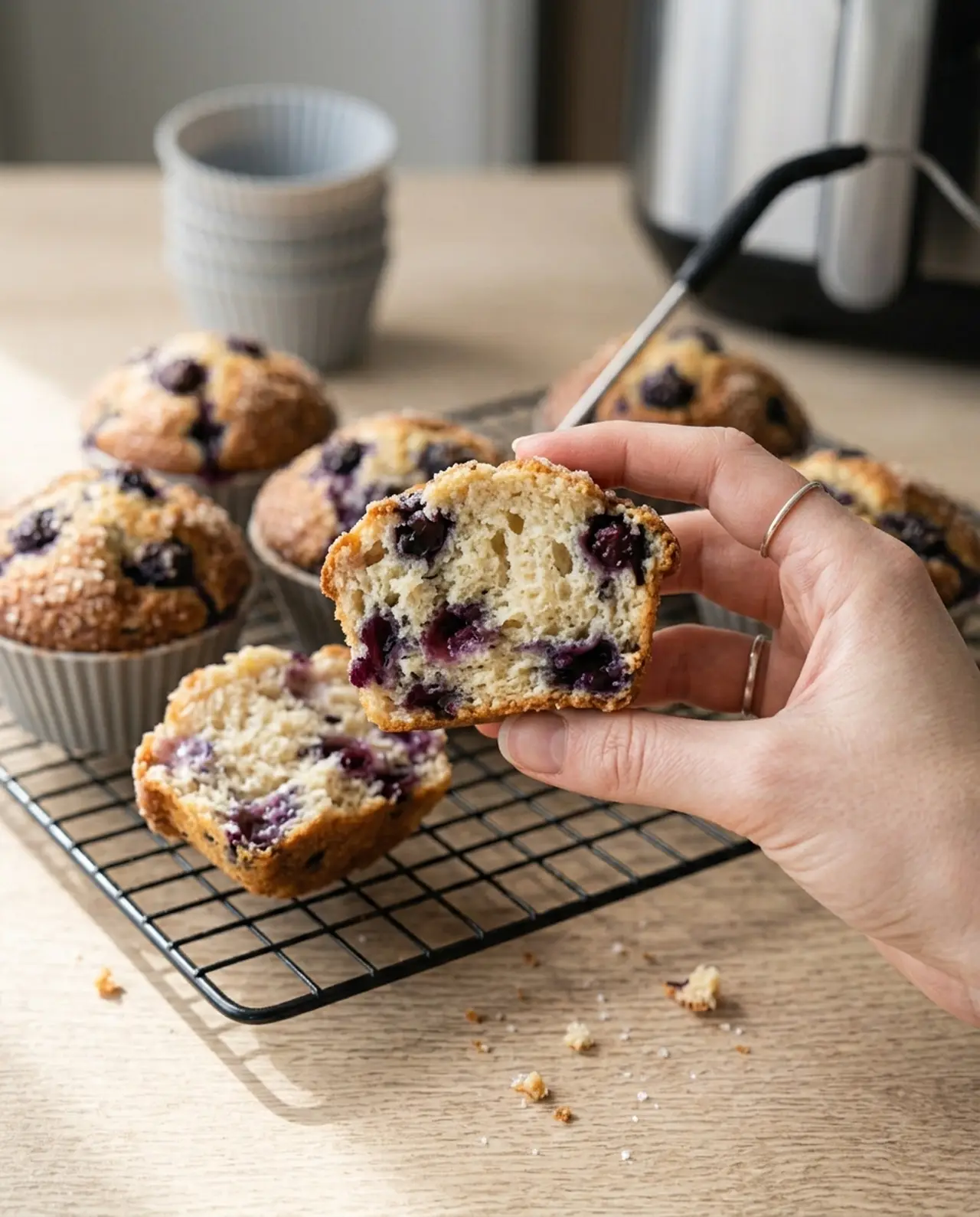
The flat-topped muffin is the most quietly accepted failure in home baking. People bake batch after batch of level, slightly dipped muffins, eat them happily, and assume domes are something bakeries buy along with their signage. Meanwhile every dome in that bakery case was made by the same trick, and it is a scheduling trick, not an equipment one.
The air fryer, it turns out, is nearly ideal for it. A small chamber changes temperature fast, which is exactly what the dome trick requires, and six muffins is an honest basket batch. What the machine will not tolerate is flimsy paper cups in a windstorm, or batter carrying a load of thawed-berry juice, so those get rules of their own below.
Quick answer: Make a deliberately thick batter, rest it 15 minutes, and fill sturdy silicone cups nearly to the top. Bake on a schedule, not a temperature: 370°F for the first 4 minutes, which flings the tops into a dome, then 310°F for 9 to 11 more, which sets the middle underneath it, to 205°F at the center. Toss the blueberries, frozen and unthawed, in a tablespoon of flour so they neither sink nor bleed.
How a dome actually happens
A muffin rises on two engines: baking powder making gas, and moisture flashing to steam. Both engines run hardest in the first minutes, and what the top looks like at the end depends entirely on what the heat was doing at the start:
- High early heat = dome. A blast of heat in minutes one through four makes the outer batter climb fast while the center is still liquid, and the top sets mid-climb, holding the arch.
- Moderate steady heat = flat. The rise happens slowly and evenly, the top sets level, and the muffin looks like it apologizes for itself.
- Thick batter holds the arch; thin batter cannot. A batter that pours like cream levels itself before it sets. This recipe's batter drops from the spoon in reluctant blobs, which is correct and, per the next section, gets thicker on purpose.
- The sunken middle is the same story's ending gone wrong: a dome whose interior never finished setting collapses inward as it cools. The schedule's gentle second act exists precisely to fill the dome in, and the sunken middle guide runs the full physics for every bake on this site.
The two-temperature schedule
This is the page's engine, and it is worth being explicit because it looks like a typo to people raised on single-temperature recipes: 370°F for 4 minutes, then drop the dial to 310°F for 9 to 11 minutes, muffins in from the start, no preheat.
The hot act is the dome-maker; the gentle act is the interior's turn, long and mild enough for the center to set without the tops, which sit close to the element, overbrowning. Bakers have run this play in ovens for generations, starting muffins at 425°F and dropping to 350°F, and it is why the air fryer calculator alone cannot deliver a bakery muffin: the calculator converts a temperature faithfully, but this is a schedule, two temperatures in sequence, and no single converted number reproduces it. The air fryer actually runs the play better than an oven, because a small chamber drops 60 degrees in moments while an oven coasts. Both acts live in the air fryer baking chart, and the pizza dough page runs the same two-act logic in its own key: hot for structure, gentler for the finish.
The 15 minute batter rest
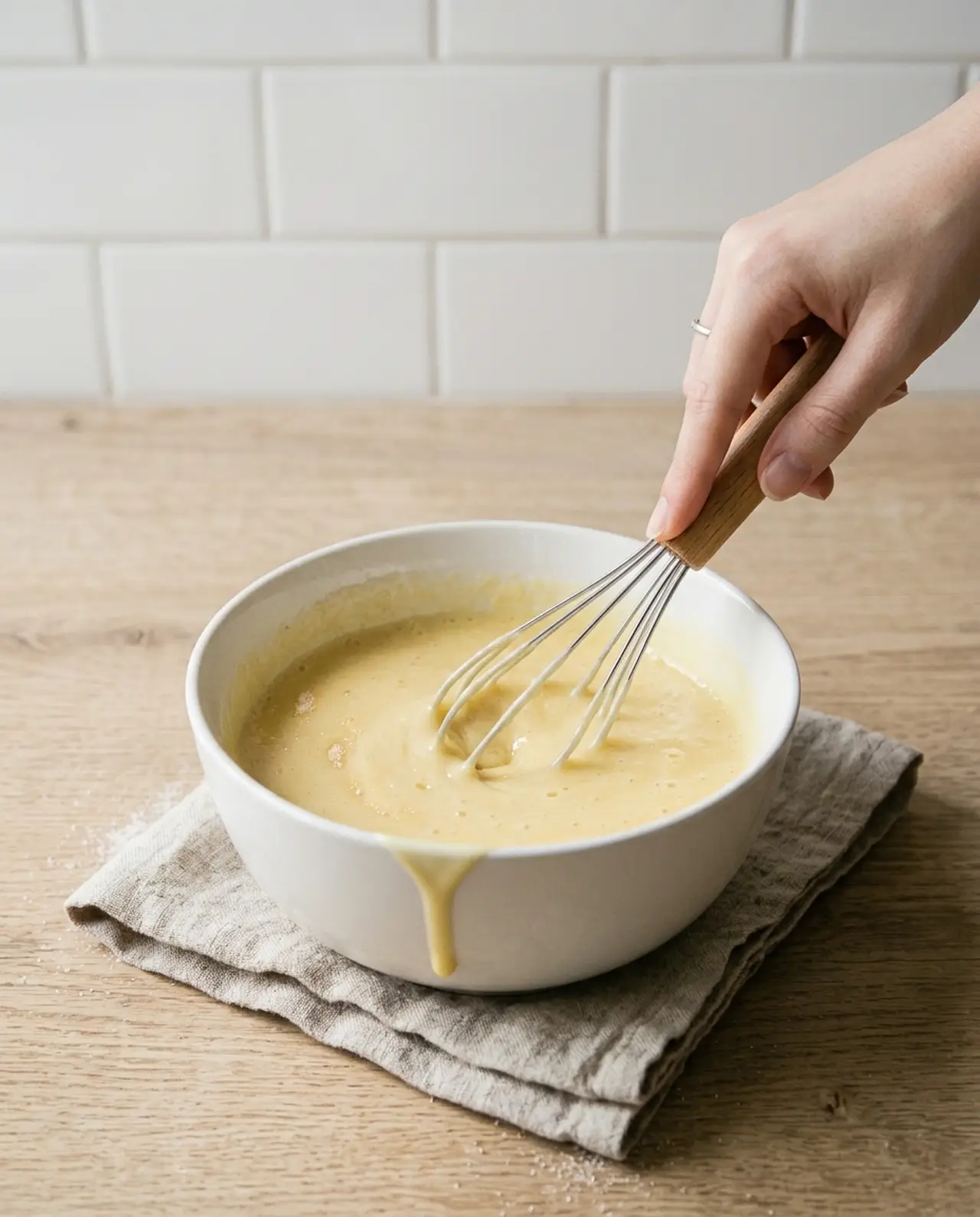
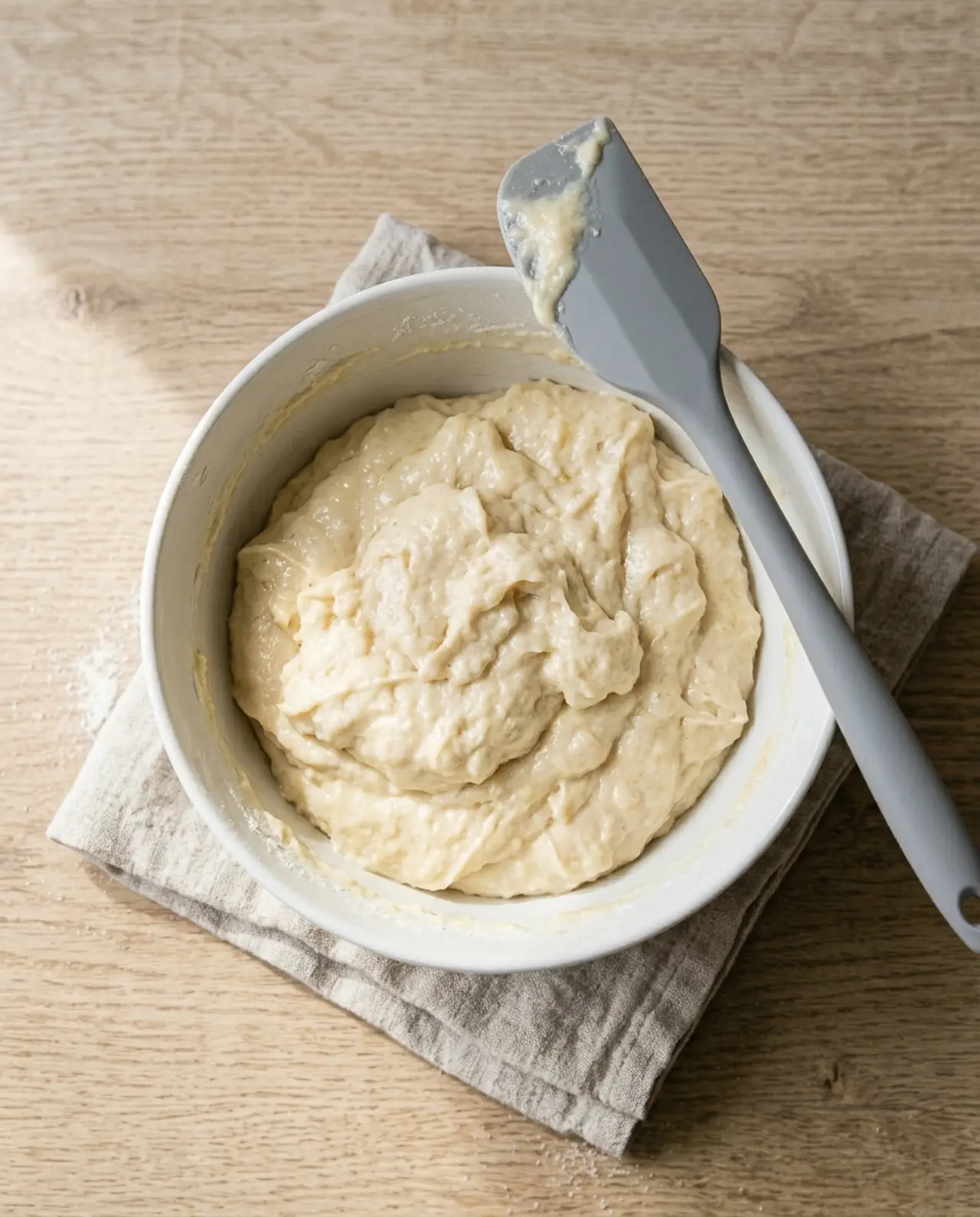
The quiet bakery habit nobody's recipe card mentions: mixed muffin batter sits before it bakes. Fifteen minutes on the counter lets the flour finish absorbing the liquid, which visibly thickens the batter, and a thicker batter climbs higher and holds its arch better. The rest also relaxes any gluten the folding built, trading a touch of toughness for tenderness. Overnight in the fridge works even better and turns this into a bake-while-the-coffee-brews morning recipe. The rest costs nothing; it is the cheapest dome insurance in this post.
Cups: what stands up to a fan
| Vessel | Verdict |
|---|---|
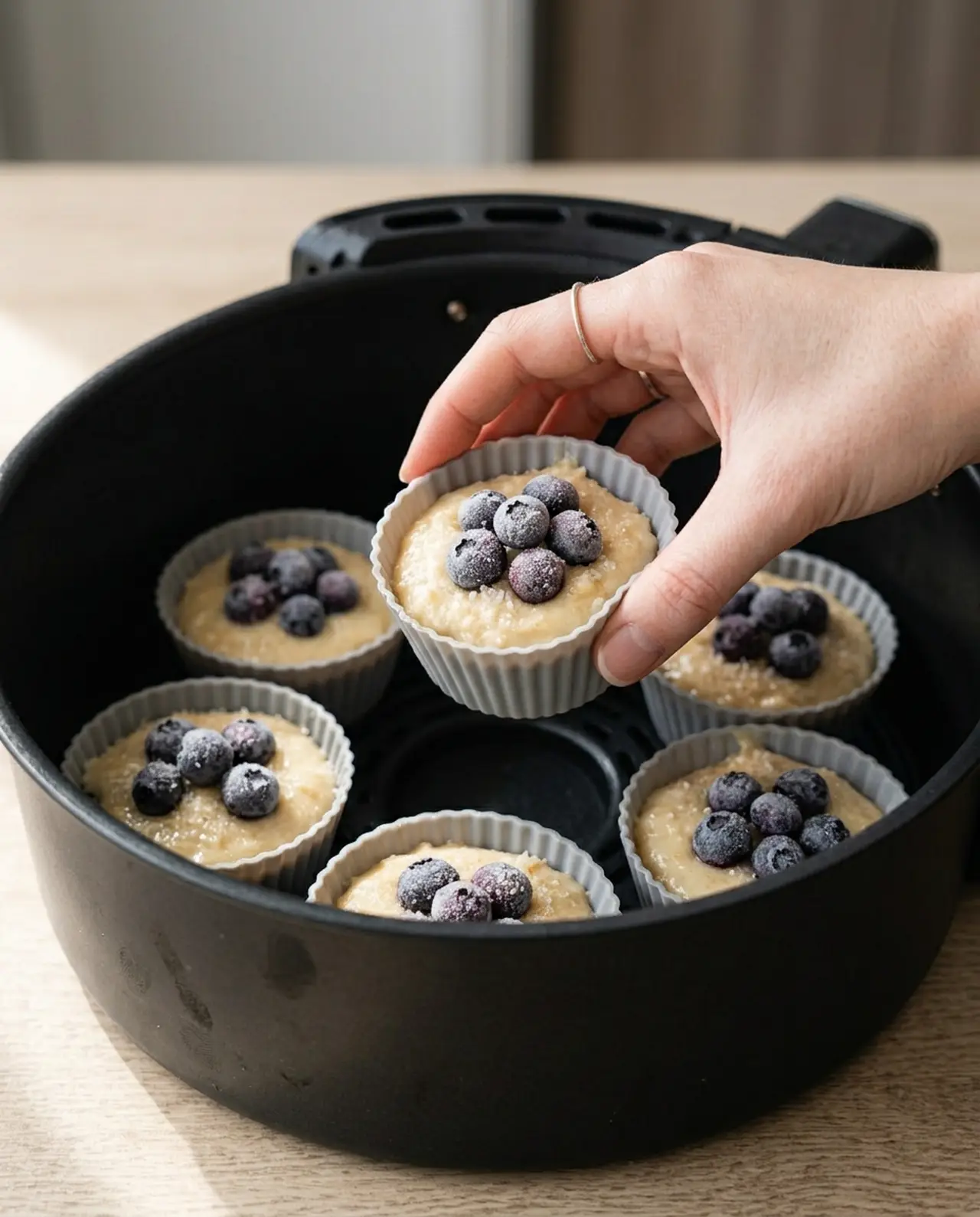
| Freestanding silicone baking cups | The winner. Rigid enough to hold thick batter upright, reusable, and they pop muffins out with a push from below |
| Paper liners inside silicone cups | Fine, and the bakery look for gifting; the silicone does the structural work |
| Paper liners alone | No. The fan shoves them, the batter slumps sideways, and the result is abstract art |
| Ramekins with jumbo papers | Works for oversized cafe-style muffins, two or three per batch, plus 3 to 4 minutes |
Fill the cups to a quarter inch below the rim, fuller than oven instinct allows. Muffins that are meant to dome need the running start, and the thick, rested batter will not overflow the way a thin batter would. Six cups spaced evenly around the basket bake evenly; swap positions at the temperature drop if your machine plays favorites through a hot spot.
The blueberry rules
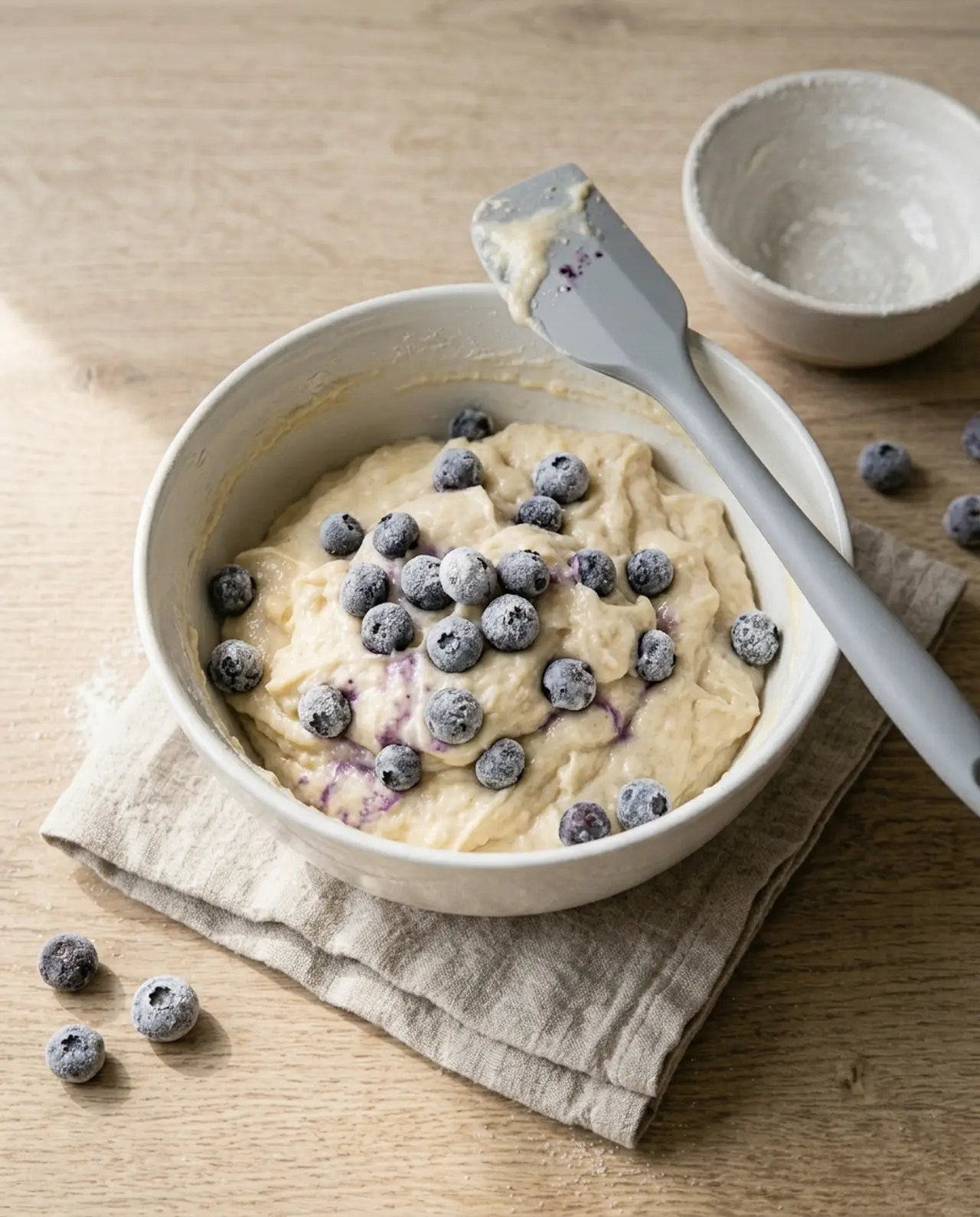
- Frozen berries, straight from the bag, are the default, not the compromise: they hold their shape through folding instead of smearing, and they go in unthawed, per the standing no-thaw law. Thawed berries bring a flood of purple juice the batter cannot absorb, and that water is a sunken-middle ingredient.
- The flour toss is mandatory either way: a tablespoon of the measured flour, tossed with the berries just before folding. The dusty coat grips the batter so the fruit hangs in the crumb instead of sinking into a soggy purple floor, the same trick the lemon bread and the scones use, doing its flagship work here.
- Small berries beat big ones. Wild or petite blueberries distribute through six muffins evenly; jumbo berries leave craters and steam pockets. If the store only had giants, halve a handful of them.
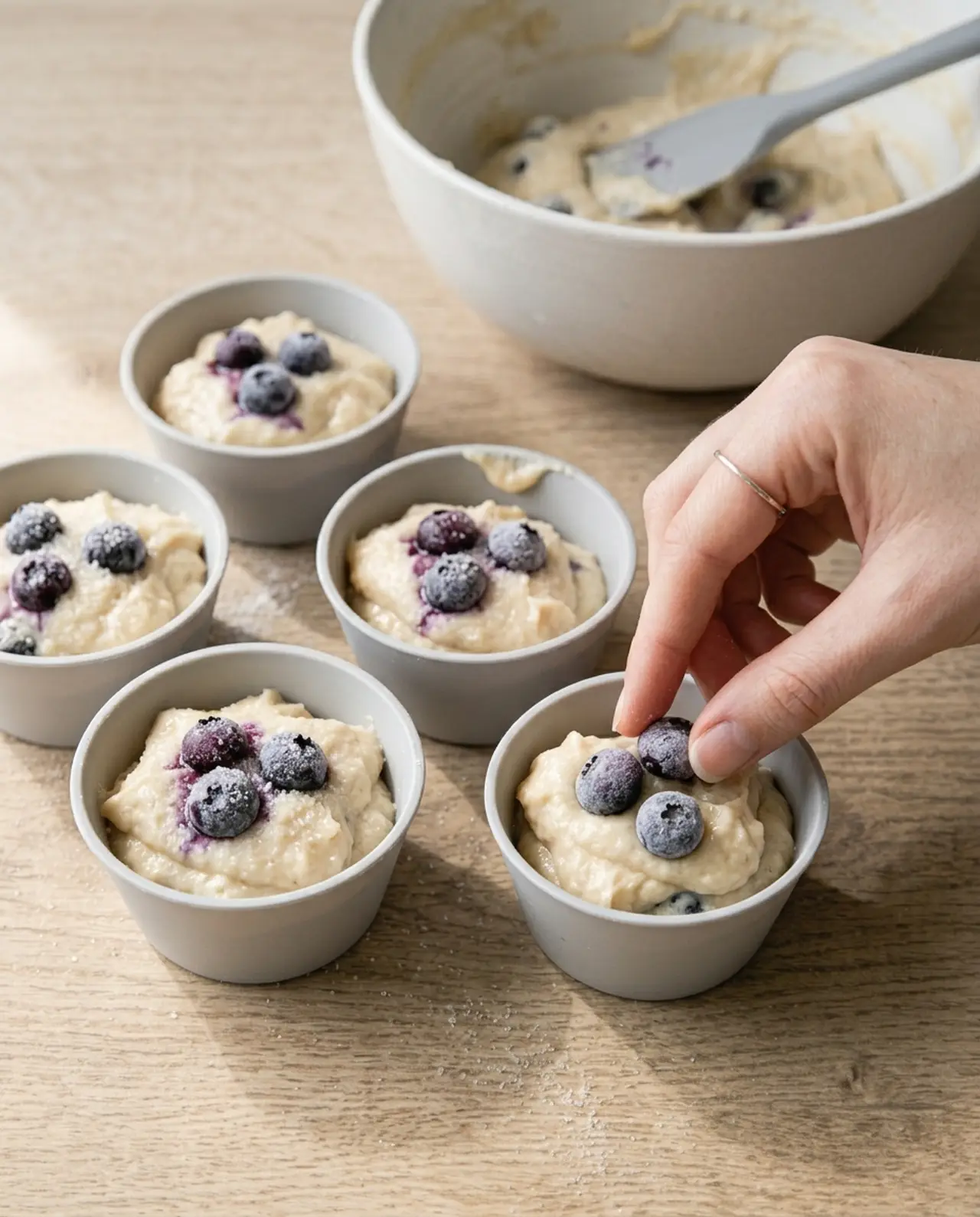
- The bursting-berry finish: press 3 extra berries into the top of each filled cup, and they bake into the open, jammy pockets that make bakery muffins photogenic. A pinch of coarse sugar over each top does double duty: sparkle, and a slower-setting crust that buys the dome a few more seconds of climb.
How to make them
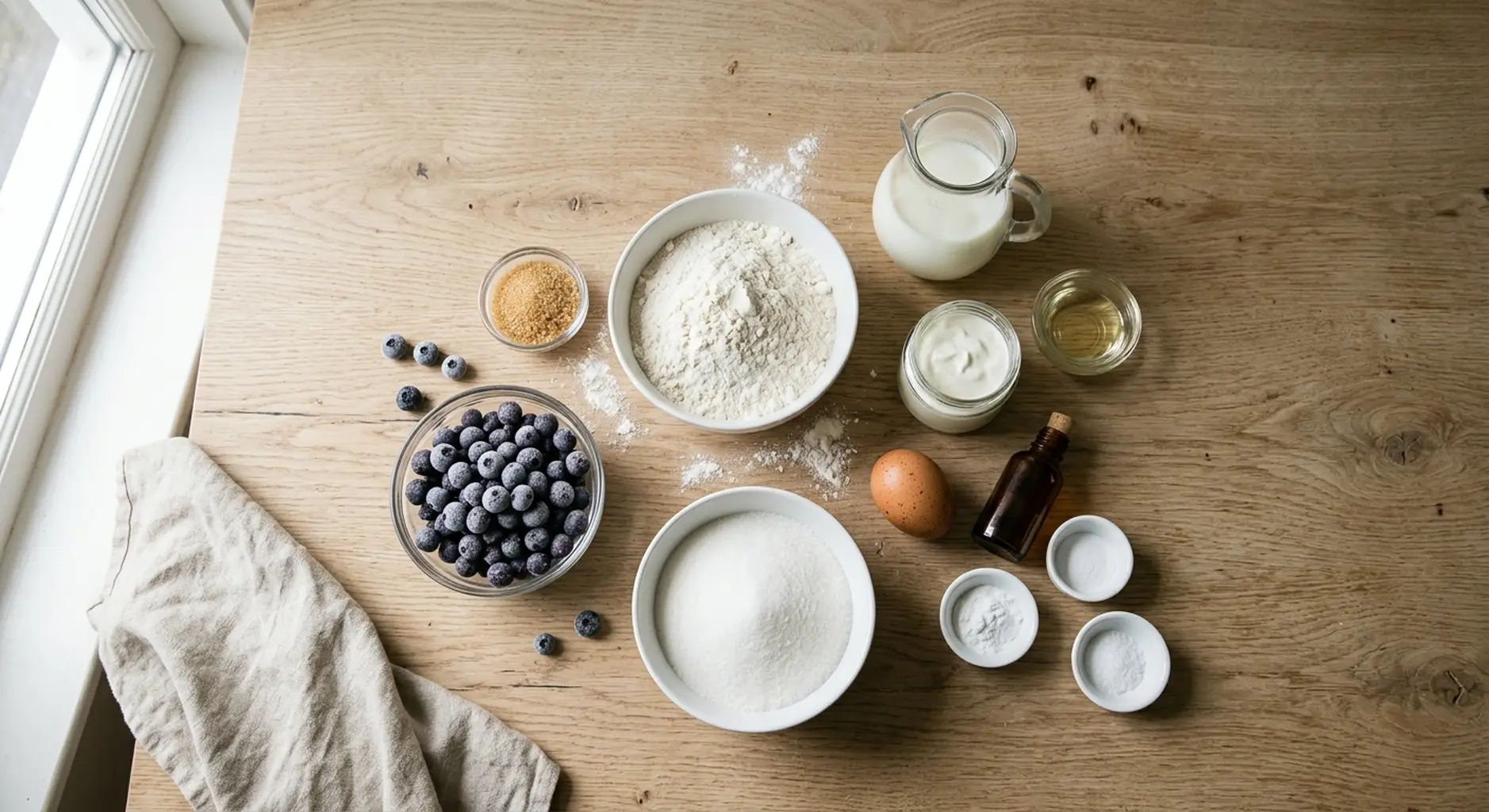
- Whisk the dry: 1.5 cups flour (minus the toss spoonful), 2 teaspoons baking powder, 1/4 teaspoon baking soda, 1/2 teaspoon salt.
- Whisk the wet: 1 egg, 2/3 cup sugar, 1/2 cup sour cream, 1/4 cup milk, 1/3 cup oil, 1 teaspoon vanilla, until glossy.
- Fold wet into dry just until the flour disappears. The quick bread law holds: lumps forgiven, enthusiasm punished.
- Toss 1 1/4 cups frozen blueberries with the reserved tablespoon of flour and fold them in with three strokes.
- Rest the batter 15 minutes while the cups get set out. It will visibly thicken.
- Fill 6 silicone cups to a quarter inch below the rim, press 3 berries into each top, and sprinkle with coarse sugar.
- Bake: 370°F for 4 minutes, then 310°F for 9 to 11 minutes, muffins in from the start, no preheat, swapping cup positions at the drop.
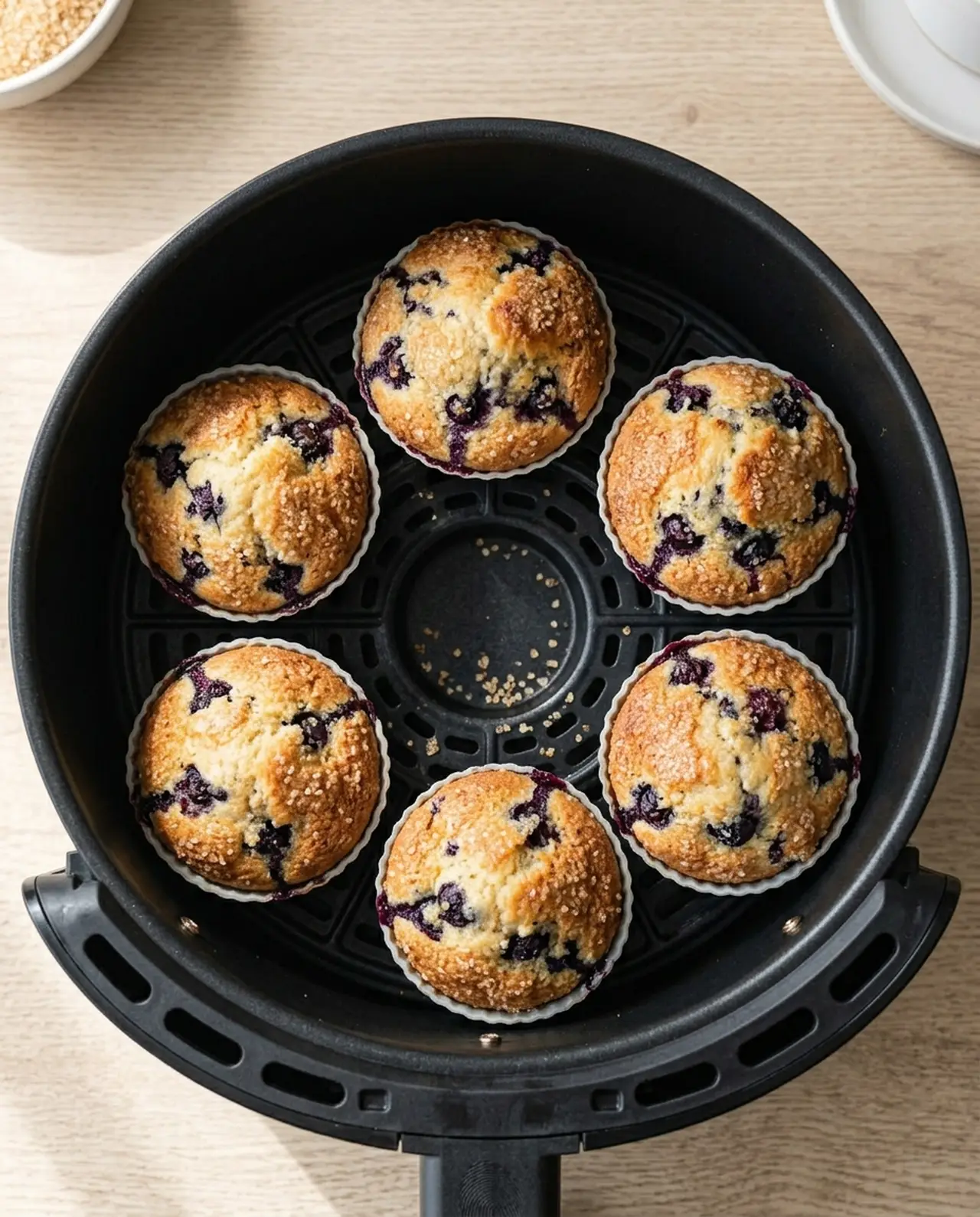
- Pull at domed, golden, and 205°F in the center of the middle muffin. Cool 5 minutes in the cups, then push each muffin up from the silicone base onto a rack.
Doneness, and why the toothpick lies near a berry
Muffins inherit the quick bread family's doneness problem with a berry-shaped twist: a toothpick that exits through a molten blueberry reports wet crumb from a fully baked muffin, and a pick that threads between berries can read clean over an underset center. The number resolves both: 205°F on an instant-read thermometer at the center of the middle muffin, the same figure as the loaves this batter is cousin to. The eye's cues support it: a proud dome, gold edges pulling slightly from the cup, and tops that spring back from a fingertip. And remember the collapse mechanism: a muffin pulled early does not merely eat gummy, its dome falls as it cools, which is how underbaking masquerades as a mysterious sinking problem.
Troubleshooting
| What you got | Why | Fix |
|---|---|---|
| Flat tops | One moderate temperature the whole bake, or thin batter. | The schedule: 370°F hot act, 310°F finish, and the 15 minute rest that thickens the batter. |
| Domes that sank on cooling | Center never set; the arch had no support. | 205°F before pulling, and resist judging by top color alone, which arrives early under an element. |
| Purple-gray batter | Thawed or overworked berries bled. | Frozen, unthawed, flour-tossed, three folding strokes. |
| All the berries on the floor | No flour toss, or oversized berries. | The tablespoon toss, and small berries. |
| Slumped, sideways muffins | Paper liners alone in the fan. | Freestanding silicone cups, always. |
| Burnt tops, wet middles | The hot act ran the whole bake. | Four minutes of 370°F is the ration; the dial drop is the recipe. The burning guide covers machines that scorch regardless. |
| Tough, tunneled crumb | Overmixed batter. | Fold until the flour disappears, then the spatula rests. |
| One muffin always behind | Hot spot favoritism. | Swap positions at the temperature drop, and probe the laggard before pulling the batch. |
This bake needs no preheat, the hot act does its own warming with the muffins aboard, and the preheat guide keeps the site-wide roster. Recurring mysteries live in the troubleshooting guide.
Variations
- Lemon blueberry: rub a lemon's zest into the sugar before whisking the wet, the sugar-rub doctrine from the lemon pages, which is the single best upgrade this muffin takes.
- Streusel-topped: rub 2 tablespoons each of flour, brown sugar and cold butter into crumbs and cap the muffins instead of the coarse sugar. The crumbs also delay the crust, so streusel muffins dome slightly taller, a happy accident of physics.
- Mixed berry: raspberries and chopped blackberries follow the same frozen, flour-tossed rules.
- Chocolate chip: swap the berries for 3/4 cup chips, skip the toss, and the same schedule delivers the coffee shop's other muffin, worked out in full on the chocolate chip muffins page.
- Jumbo cafe muffins: the ramekin route, three at a time, plus 3 to 4 minutes, still to 205°F.
- Doubling: the recipe scaler resizes the batter for twelve; bake in two rounds of six, and the resting batter waits happily, thickening all the while, with round two a minute shorter.
In the quick bread family this is the portable child: the banana bread and zucchini bread rescue overripe counters, and the muffin rescues weekday mornings, one domed handful at a time. The savory seat at this table belongs to the corn muffins, and the banana muffins handle the fruit-bowl end of the week.
Storage and freezing
- Room temperature, 3 days, in a container with a paper towel under and over the muffins; the paper absorbs the moisture that would otherwise turn the tops sticky overnight.
- Skip the fridge, the quick bread family's standing rule; it staling-races the crumb.
- Freeze baked muffins 3 months, individually wrapped. Thaw on the counter in an hour, or 90 seconds in the microwave for the warm-from-the-bakery illusion, then 2 minutes at 320°F if the top deserves its crispness back.
- The batter keeps overnight in the fridge, which improves the dome and turns the morning bake into a 15 minute affair. Portion into the cups cold and add 1 minute to the gentle act.
Frequently asked questions
QHow long do blueberry muffins take in an air fryer?
13 to 15 minutes on a two-temperature schedule: 370°F for the first 4 minutes to raise the dome, then 310°F for 9 to 11 minutes to set the center, done at 205°F inside. Six muffins in silicone cups is the standard batch, with no preheat because the hot opening act does its own warming. Add the 15 minute batter rest and the whole project runs about 40 minutes.
QWhy do you bake muffins at two temperatures?
Because the dome and the interior want opposite things. High early heat makes the batter climb fast and sets the top mid-climb, which is the dome; but run hot the whole way and the top burns before the middle bakes. Dropping to gentle heat after 4 minutes lets the center set underneath the arch. Bakeries run the same play in ovens at 425°F down to 350°F, and a small air fryer chamber changes temperature faster than any oven, so the trick actually works better here.
QWhy did my muffins sink in the middle?
The center never finished setting, so the dome collapsed inward as it cooled. The usual causes stack: pulled early because the top looked done, which happens fast under an air fryer's element; extra water aboard from thawed berries; or a batter thinned past holding strength. Bake to 205°F at the center rather than to a color, use frozen unthawed berries, and rest the batter so it bakes thick.
QCan you use paper muffin liners in an air fryer?
Not alone. An empty-ish paper liner is a sail, and the fan shoves it sideways so the batter slumps into abstract shapes. Freestanding silicone baking cups are the answer: rigid, reusable, and muffins pop out with a push from below. Paper liners work fine tucked inside silicone cups, which is the move when the muffins are traveling somewhere and want the bakery look.
QAre frozen or fresh blueberries better for muffins?
Frozen, unthawed, and this is a preference with reasons rather than a compromise. Frozen berries survive folding without smearing, they hold their juice until the crumb is setting around them, and they are consistent year round. Thawed berries are the mistake: they arrive with a flood of purple water that thins the batter and feeds the sunken middle. Either kind gets tossed in a tablespoon of flour so it hangs in the crumb instead of sinking.
QWhy rest muffin batter before baking?
Fifteen minutes lets the flour finish absorbing the liquid, which visibly thickens the batter, and thick batter is dome fuel: it climbs high and holds the arch instead of leveling out. The rest also relaxes the gluten the folding built, so the crumb bakes more tender. Overnight in the fridge works even better, and cold rested batter portioned straight into cups makes a 15 minute morning bake.
QHow full do you fill muffin cups in an air fryer?
To a quarter inch below the rim, noticeably fuller than the two-thirds rule oven recipes teach. A muffin that is meant to dome needs the running start, and this batter is thick and rested enough not to overflow. Fill shy and the muffin spends its rise reaching the rim instead of arching above it, which is how correct recipes still produce flat, modest muffins.
QHow do you know when blueberry muffins are done?
205°F on an instant-read thermometer at the center of the middle muffin. The toothpick is uniquely unreliable in berry muffins: a pick through a molten blueberry reads wet from a finished muffin, and a pick that threads between berries can read clean over an underset center. Supporting cues are a proud dome, golden edges pulling from the cup, and a top that springs back from a fingertip.
QHow do you store blueberry muffins?
Three days at room temperature in a container lined above and below with paper towels, which absorb the moisture that otherwise turns muffin tops sticky by morning. Skip the fridge, which stales the crumb. Frozen, individually wrapped, they keep 3 months and revive with an hour on the counter or 90 seconds in the microwave, plus 2 minutes at 320°F if the top wants its crispness back.
Never overbake again
Get our one-page times & temps cheat sheet, plus a new tested recipe each week.
No spam · unsubscribe anytime