
Free Tool · Pan Sizing
Air Fryer Pan Size Calculator: What Actually Fits
Quarts on the box tell you nothing useful. Measure the flat floor of your basket and the height to the rim, and this works out the largest pan that still leaves room for air to move, plus how much batter it holds. Second tab converts a recipe from one pan size to another.
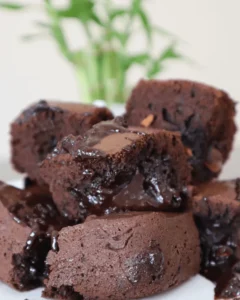
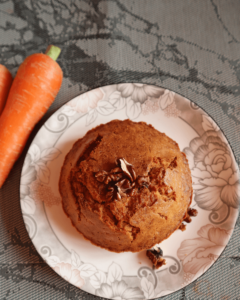
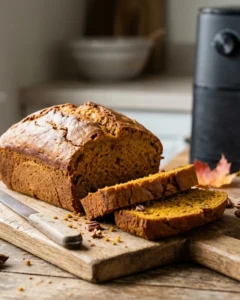
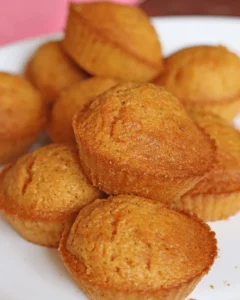
Measure yours to be sure. Two units with the same capacity on the box can differ inside by half an inch. Drop a ruler into the empty basket, measure the flat floor and the height to the rim, and enter those numbers above.
Batter scaling is based on pan volume, so it works for cakes, brownies and quick breads. It is not reliable for anything that rises on structure alone, like angel food or a laminated dough.
Model dimensions are nominal starting points. Measure your own basket for an exact answer, since two units with the same quart rating can differ by half an inch inside.
Start here
Three measurements, and only one of them is on the box
Capacity in quarts tells you almost nothing about what will fit. A 5.8 quart square basket and a 6 quart round one hold the same volume on paper and take completely different pans, because volume counts the tapered walls and the corners you cannot put a cake tin into.
What matters is the flat floor your pan actually sits on, and the height to the rim. Two minutes with a ruler beats any spec sheet.
Width and depth of the floor
Measure the flat base, not the rim. Baskets flare outward, so the opening is often an inch wider than the part your pan has to stand on.
Height to the rim
From the floor straight up to the lip. This is what decides whether a springform or a loaf tin clears the element, and it is the number people forget.
Round or square
A square basket wastes less space on a square pan. A round basket will not take the corners of a loaf tin no matter what the diagonal measurement says.
Enter those three numbers in the tool above and it will tell you the largest round pan that fits, the tallest pan that clears, and roughly how much batter that adds up to.
The rule behind the tool
Why half an inch of air on every side is not optional
An air fryer cooks by moving hot air around the food. Push a pan up against the basket wall and you have blocked that path on one side. The air still has to go somewhere, so it speeds up through the remaining gap, and you get a bake that is scorched on the tight side and pale on the open one.
The tool leaves a half inch clear on every side and 1¼ inches of headroom above the pan rim. That is why it will call a pan “tight” even when the numbers say it physically goes in. Physically fitting and baking evenly are two different tests, and the second one is the one you care about.
Headroom matters for a separate reason. Batter rises, and the top of your bake needs to stay away from the heating element or it sets into a crust while the middle is still liquid. That is the single most common cause of a raw-centred air fryer cake, and it is covered in more detail in our guide to avoiding dry air fryer bakes. Once the pan is settled, the oven to air fryer conversion calculator gives you the temperature and time to go with it.
Quick reference
What fits, by air fryer size
A starting point if you have not measured yet. Check it against your own basket before you buy anything.
| Air fryer | Largest round | Largest square | Loaf tin | Batter |
|---|---|---|---|---|
| 2 to 3 qt basket | 5 in | 5 in | No | ~2 cups |
| 4 qt basket | 6 in | 6 in | 7.5 x 3.5 in, tight | ~3 cups |
| 5 to 6 qt basket | 7 in | 7 in | 8.5 x 4.5 in | ~4 cups |
| 8 qt basket | 8 in | 8 in | 9 x 5 in | ~6 cups |
| Dual zone, per drawer | 6 in | 5.5 in | 7.5 x 3.5 in | ~2.5 cups |
| Oven style | 9 in | 8 in | 9 x 5 in | ~9 cups |
Dual zone units are the ones that surprise people. Ten quarts sounds enormous, but it is two narrow drawers, and each one takes a smaller pan than a single 6 quart basket does. If you are weighing up a machine on what you can actually bake in it, our comparison of basket versus oven-style air fryers goes through the trade properly.
Second tab
Changing pan size changes the recipe, not just the tin
Most recipes are written for a 9 x 13 or an 8 inch square. Neither goes in a basket. So you are not just swapping a tin, you are changing how much batter you need and how deep it sits, and depth is what sets the bake time.
The second tab of the tool handles the volume side: pick the pan the recipe was written for, pick the pan you actually own, and it gives you the factor to multiply every ingredient by. What it also tells you is whether the batter ends up deeper or shallower than the original, which is the part that catches people out.
Deeper batter needs a lower temperature and more time, because heat has to travel further to reach the middle. Conduction time rises with roughly the square of the thickness, so a batter that sits twice as deep takes around four times as long to heat through the centre. Shallower batter is the reverse: same temperature, start checking early.
Once you know the new pan and the new depth, run the original oven temperature and time through our air fryer time and temperature calculator to get the basket settings, then apply the depth adjustment on top. Those are two separate corrections and most people only make one of them. Our air fryer brownies recipe works through exactly this, because brownies are the bake where pan depth matters most.
Choosing a tin
Which pan for which bake
| Bake | Best pan | Why |
|---|---|---|
| Brownies | 6 in round or square | Deep batter is the point. A wide shallow pan gives you all edge and no fudgy middle. |
| Layer cake | 6 in round, two batches | One thin layer at a time bakes evenly. Stacking pans blocks the airflow completely. |
| Banana bread | 7.5 x 3.5 in loaf | A full size 9 x 5 loaf is too long for most baskets and too deep for the middle to set. |
| Muffins | Silicone cups, no tray | Individual cups let air circulate between them, which a rigid tray blocks. |
| Cookies | No pan, perforated liner | Cookies want air underneath. A solid pan turns the base pale and soft. |
| Lava cake | 4 in ramekins | Small and deep is the whole trick. Four fit a 6 quart basket. |
Silicone is worth knowing about here, because it behaves differently from metal. It insulates rather than conducting, so it slows the edges down and gives the centre a chance to catch up, at the cost of about ten degrees and a few extra minutes. Our guide to using silicone molds in an air fryer covers when that helps and when it does not.
For a full list of what the site has tested and at what settings, the air fryer baking chart collects every temperature and time in one place, and the air fryer accessories guide covers which tins are actually worth owning.
Questions
Air Fryer Pan Size Calculator questions, answered
QWhat size pan fits in an air fryer?
Most 5 to 6 quart baskets take a 7 inch round or 7 inch square pan with a proper airflow gap, and a 4 quart basket takes a 6 inch. An 8 quart basket goes up to about 8 inches, and an oven-style unit will take a 9 inch round or a standard 9 x 5 loaf tin. Capacity in quarts is a poor guide on its own, because it counts the tapered walls, so measure the flat floor of your basket and the height to the rim instead.
QHow do I measure my air fryer basket?
Take three measurements with the basket empty: the width and the depth of the flat floor, not the rim, and the height from that floor straight up to the lip. Baskets flare outward, so the opening is often a full inch wider than the surface your pan actually has to stand on. Enter those three numbers into the tool above and it will work out the largest pan that fits.
QDoes an 8x8 pan fit in an air fryer?
Not in a basket air fryer. A standard 8 x 8 inch pan is too wide for even an 8 quart basket once you allow the airflow gap, and it will not clear the walls of a 5 or 6 quart at all. You need an oven-style air fryer for an 8 x 8. In a basket, use a 6 or 7 inch pan and scale the recipe down, which is what the second tab of the tool is for.
QWhy does the pan need a gap around it?
Because an air fryer cooks by moving hot air around the food. A pan pressed against the basket wall blocks that path, so the air speeds up through whatever gap is left and you get one scorched side and one pale side. Half an inch clear on every side is enough to keep the flow even. The tool builds that gap in, which is why it flags some pans as tight even though they physically fit.
QHow much headroom does a pan need above it?
About an inch and a quarter between the rim of the pan and the heating element. Batter rises, and if the top of your bake gets too close to the element it sets into a crust while the middle is still liquid, which is the most common cause of a raw centred air fryer cake. This is why pan height matters as much as pan width, and why a tall springform can fail in a basket that takes a shallow tin of the same diameter fine.
QHow do I convert a recipe to a smaller pan?
Scale by volume. Work out the capacity of the pan the recipe was written for and the capacity of the pan you own, and multiply every ingredient by the ratio. The second tab of the tool does this for you. Then check whether the batter sits deeper or shallower than the original, because that changes the bake: deeper needs a lower temperature and more time, shallower needs the same temperature and an earlier check.
QCan I use a regular cake tin in an air fryer?
Yes, as long as it is oven safe and it fits with an airflow gap. Metal, ceramic, glass and silicone all work. Avoid anything with a plastic handle or a non-oven-safe coating, and be careful with thin dark metal, which absorbs radiant heat and can crisp the sides before the middle sets. Light coloured metal and silicone are gentler on the edges.
QHow much batter fits in my air fryer?
Roughly two cups in a small 2 to 3 quart basket, three in a 4 quart, four in a 5 to 6 quart and about six in an 8 quart, filling the pan to two thirds. The tool calculates this from your own basket measurements. Never fill a pan more than two thirds, because batter that rises to the rim will touch the element and burn on top before the centre is done.
QDo dual zone air fryers fit bigger pans?
No, usually smaller ones. A 10 quart dual zone is two narrow drawers rather than one large basket, and each drawer typically takes a 6 inch round at most, which is less than a single 6 quart basket. The advantage of a dual zone is running two things at once, not baking anything bigger. Check the per-drawer measurement rather than the total capacity on the box.
QWhat pan should I use for air fryer brownies?
A 6 inch round or square. Brownies are supposed to be deep, and a wide shallow pan gives you a tray of crisp edges with no fudgy middle. A 6 inch pan in a 5 to 6 quart basket puts the batter at about an inch and a quarter deep, which needs roughly 20 to 24 minutes at 320F. Our air fryer brownies recipe works through the pan depth maths in full.
Was this tool helpful?

Sujata Thapa
Sujata shares healthy, easy and delicious air fryer recipes, learned through years of hands-on cooking. Every guide here is tested in her own kitchen, so the numbers behind this tool come from real bakes in a standard basket rather than from a spec sheet.