

Protein was already in the pantry
The protein dessert industry would like you to believe protein arrives in a tub with a flavor called "birthday cake." Meanwhile cheesecake sits there, a dessert whose main ingredients are cream cheese and eggs, quietly being the most protein-dense thing most bakeries sell. The honest version of high-protein baking starts by picking desserts where protein-rich ingredients are already doing the structural work: eggs setting custards and macaroons, dairy carrying cheesecakes, peanut butter binding cookies with barely any flour, oats and bran bulking muffins. Bake those well and you get desserts that genuinely sit with you, no powder involved.
Every bake on this page runs in the same 5.5 quart basket as the rest of the recipe index, using the fundamentals from how to bake in an air fryer. One honesty note up front: this page names protein numbers only where the recipe pages state them, and describes the rest by ingredient, because invented gram counts help nobody. For calorie-side honesty, the healthy recipes list is this page's blunt older cousin.
Three rules for protein powder
Sometimes you do want the scoop. Powder can work in a basket, but it breaks bakes in two predictable ways: it drinks moisture, and it browns early. Three rules keep it in line.
One: replace no more than a third of the flour. Protein powder has no gluten and no starch, so it cannot build structure, only ride along. Swap up to one third of the flour by weight and the crumb survives; go half and you are baking a coaster. Whey makes bakes softer and browns fastest, casein and plant blends drink the most liquid.
Two: add moisture back and drop 10 to 15 degrees. For every scoop that goes in, the batter wants an extra splash of milk or yogurt, and the temperature comes down because powder-fed crusts darken ahead of schedule. Dry, seized protein bakes are the signature failure, and the rescue thinking lives in the dry bakes guide.
Three: pull by thermometer and expect less browning to mean nothing. Like sugar swaps, powder changes the color signals, so the instant-read is the referee: about 200°F in the center for cakes and muffins. Converting an oven-based protein recipe to the basket is what the air fryer calculator is for, and halving an experiment so a failure costs one egg is small batch thinking.
The high-protein chart
Every number comes from its linked recipe, tested in the same basket. The last column names where the protein actually comes from.
| Bake | Temp | Time | Protein from |
|---|---|---|---|
| Cheesecake | 300°F | 28-34 min | Cream cheese and eggs |
| Mini cheesecakes | 300°F | 12-15 min | Same team, portion controlled |
| Peanut butter cookies | 325°F | 7 min | Peanut butter and egg |
| Monster cookies | 320°F | 7-8 min | Peanut butter, oats, eggs; no flour |
| Oatmeal cookies | 360°F | 12 min | Oats, egg, butter |
| Coconut macaroons | 300°F | 10-12 min | Egg whites doing everything |
| Bagels | 330°F | 11-13 min | Bread flour; about 9g each |
| Bran muffins | 320°F | 12-14 min | Bran and buttermilk; 4g and 3g fiber |
| Carrot muffins | 320°F | 10 min | Eggs; about 245 calories each |
| Egg toast | 330°F | 8 min | A whole egg per slice |
The one-line version: dairy and egg desserts bake low at 300°F, nut butter cookies run the standard 320 to 325°F band, and sturdy oat doughs take real heat. Every tested setting on the site lives on the baking chart.
The dairy shelf, the nut shelf, the oat shelf
The dairy and egg shelf
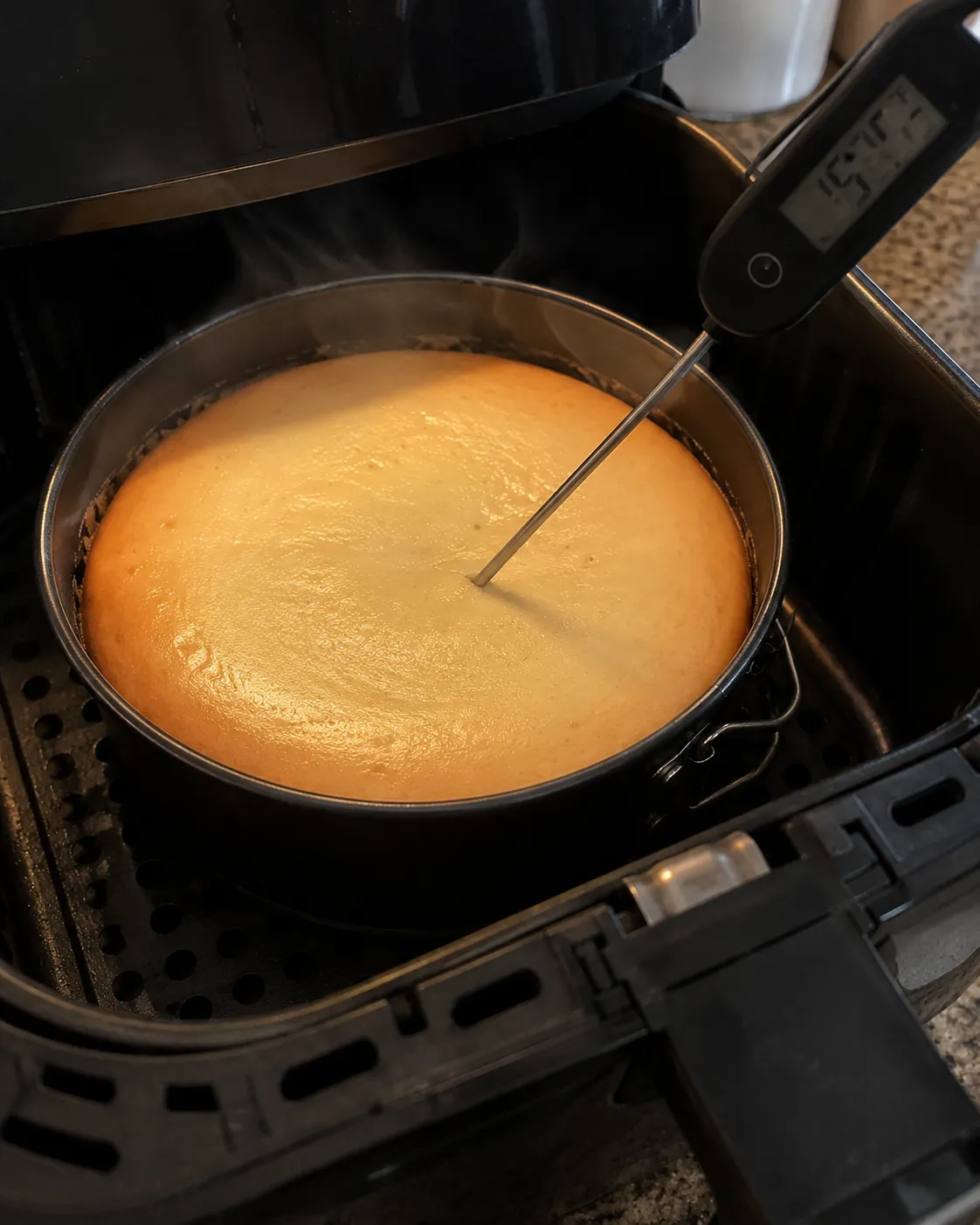
The 6 inch cheesecake is the anchor: a filling that is mostly cream cheese and eggs, baked at 300°F and pulled at 150°F in the center, then chilled at least 6 hours. The minis deliver the same dessert with portion control built in, which matters when the goal is a dessert that satisfies instead of a dessert that continues. Coconut macaroons are the sleeper here, a cookie whose entire structure is whipped egg white, golden outside and chewy inside at 300°F.
The nut butter shelf
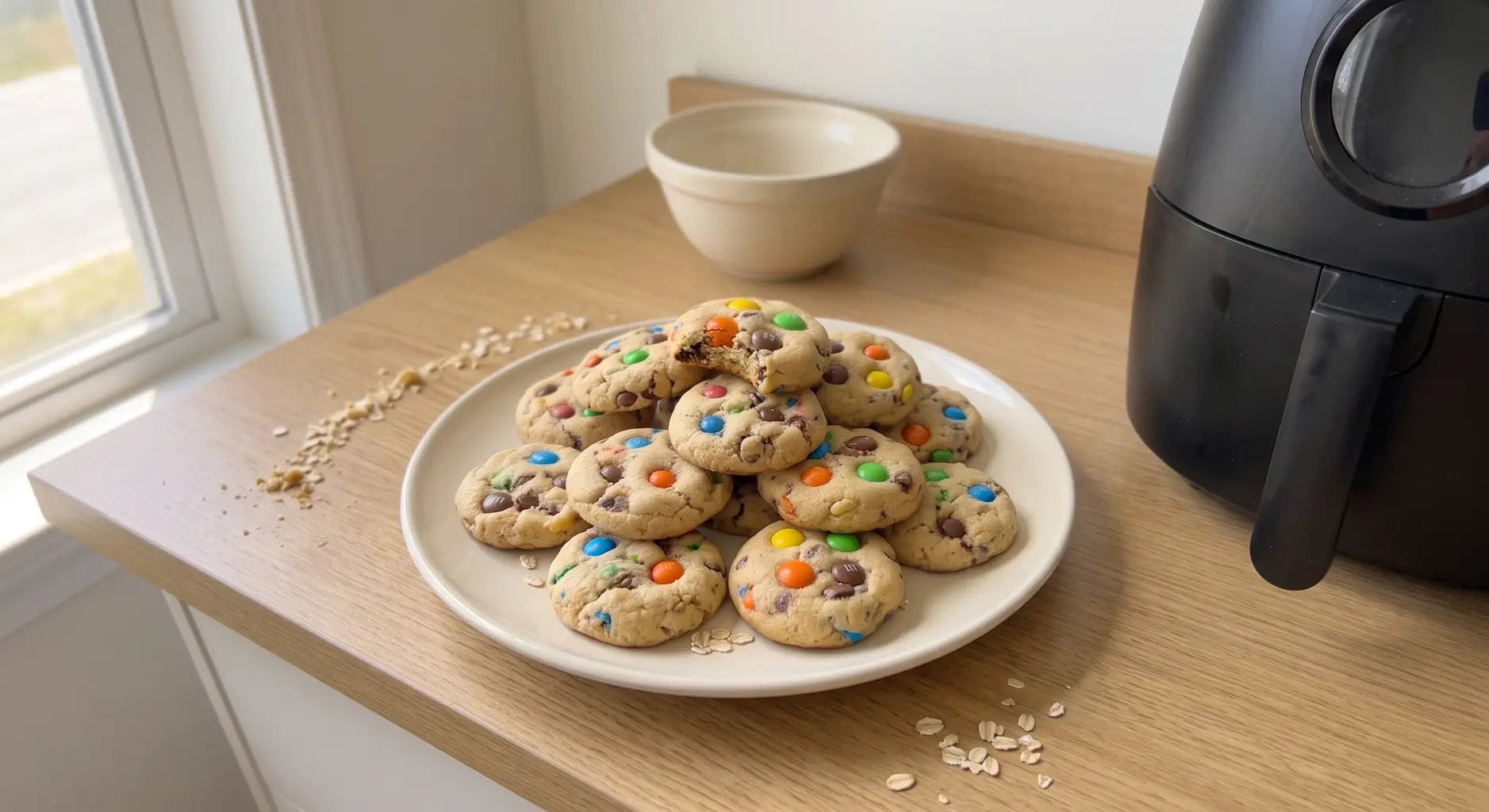
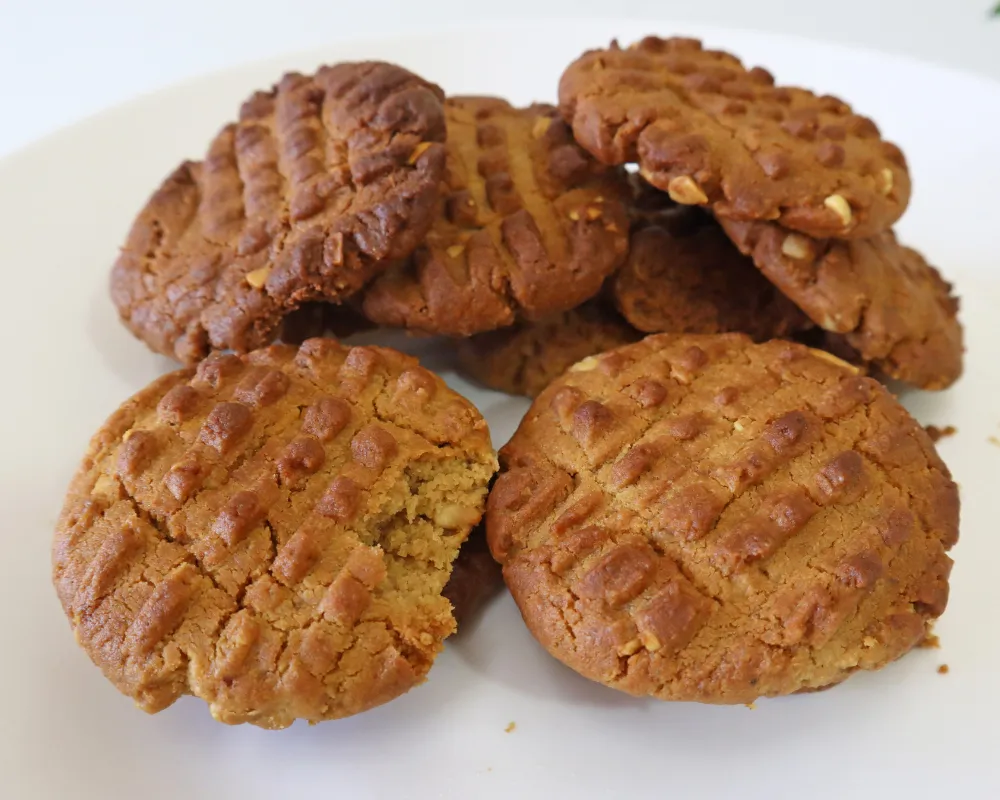
Peanut butter is dessert's most cooperative protein source, and the peanut butter cookies prove it in 7 minutes at 325°F with a 5 minute dough. The monster cookies go further: no flour at all, just peanut butter, oats and eggs carrying the whole cookie, one bowl, fully loaded. They are the closest thing on this site to a protein bar that tastes like it came from a bakery instead of a wrapper.
The oat and bran shelf
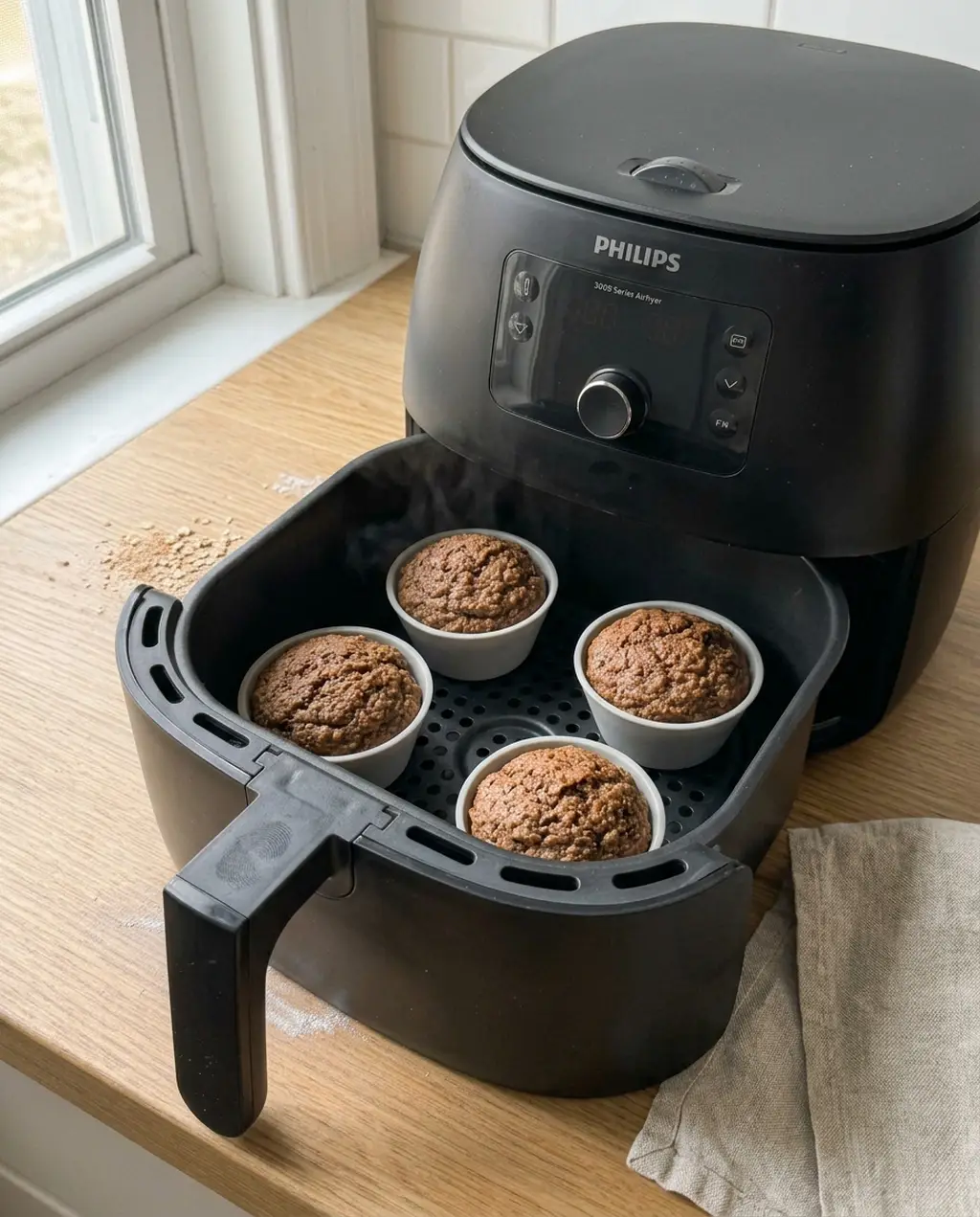
Oatmeal cookies are the sturdy dough of the site, happy at 360°F where daintier cookies scorch. Bran muffins bring 4 grams of protein and 3 of fiber per muffin at about 175 calories, and their batter keeps 5 days in the fridge, which turns one mixing session into a week of warm single muffins baked to order. Oatmeal muffins and carrot muffins round out the tray, and scaling any of them for a bigger meal-prep week is a recipe scaler job.
The breakfast loophole
The easiest high-protein "dessert" is the one you file under breakfast. Egg toast bakes a whole egg into a slice of bread at 330°F in 8 minutes and eats like a treat at 160 calories. Fresh bagels at about 9 grams each with cream cheese on top land in double digits before the coffee is done. And the bran muffin batter jar waiting in the fridge is the whole strategy in one container: one fresh, warm, honest muffin every morning, one extra minute of bake time from cold batter, no willpower required.
High-protein is one shelf in the dietary wing. The others: keto, sugar-free, gluten-free, vegan, dairy-free, and the honest-numbers healthy recipes list. All four air fryer tools live in one place.
Frequently asked questions
QWhich air fryer desserts are naturally high in protein?
The ones built on eggs, dairy, nut butter and oats. Cheesecake leads, since its filling is mostly cream cheese and eggs; mini cheesecakes deliver the same in single portions. Peanut butter cookies and flourless monster cookies get their structure from nut butter and egg, coconut macaroons are held together entirely by egg whites, and oat or bran muffins add grain protein and fiber. None of these need protein powder, they were protein desserts before the word existed, and all bake in the standard 300 to 360°F basket band.
QCan you add protein powder to air fryer baking recipes?
Yes, within limits. Replace no more than a third of the flour by weight, because powder has no gluten or starch and cannot build structure. Add a splash of extra milk or yogurt per scoop, since powder drinks moisture, and drop the temperature 10 to 15 degrees, because protein-enriched crusts brown ahead of the crumb. Then judge doneness with an instant-read thermometer, around 200°F in the center, instead of color. Break any of the three rules and you get the classic dry, rubbery protein bake.
QWhy do protein desserts come out dry and rubbery?
Two reasons stack. Protein powder absorbs far more liquid than the flour it replaced, so an unadjusted batter starts the bake already short on moisture. Then the enriched surface browns early, which convinces bakers the middle needs longer, and the extra minutes finish the job. The fixes are mechanical: cap powder at a third of the flour, add liquid back, run 10 to 15 degrees cooler, pull by thermometer rather than color, and rest the bake a few minutes. Whey is the softest-baking powder; casein and plant blends need the most added liquid.
QIs cheesecake actually a high-protein dessert?
Compared with nearly any other dessert, yes. A cheesecake filling is primarily cream cheese and whole eggs, both protein-dense ingredients, with sugar and a little cream alongside; there is no flour diluting it. That is why it satisfies in a way a slice of sponge cake does not. In the air fryer it bakes in a 6 inch springform at 300°F for 28 to 34 minutes, pulled at 150°F in the center, and the mini version bakes in 12 to 15 minutes for built-in portion control. It is dessert first and protein second, which is exactly why it works.
QWhat is the easiest high-protein bake for meal prep?
Bran muffins, on one specific feature: the batter keeps up to 5 days refrigerated. Mix once on Sunday, then bake one or two fresh muffins each morning at 320°F in 12 to 14 minutes, adding about a minute for cold batter. Each muffin carries roughly 4 grams of protein and 3 of fiber at about 175 calories, and warm beats any grab-and-go bar. Flourless monster cookies are the portable alternative, peanut butter, oats and eggs in one bowl, baking in 7 to 8 minutes at 320°F.
QDo high-protein bakes need different air fryer temperatures?
Recipes already built on eggs, dairy and nut butter use normal settings: 300°F for cheesecakes and macaroons, 320 to 325°F for nut butter cookies, up to 360°F for sturdy oat doughs. The adjustment only appears when you add protein powder to a recipe, which asks for 10 to 15 degrees less than the original because enriched surfaces brown early. In both cases the reliable finish line is internal temperature, 150°F for cheesecake centers and about 200°F for cakes and muffins, read with an instant-read thermometer.
Baked from this guide? Rate it.
Never overbake again
Get our one-page times & temps cheat sheet, plus a new tested recipe each week.
No spam · unsubscribe anytime