

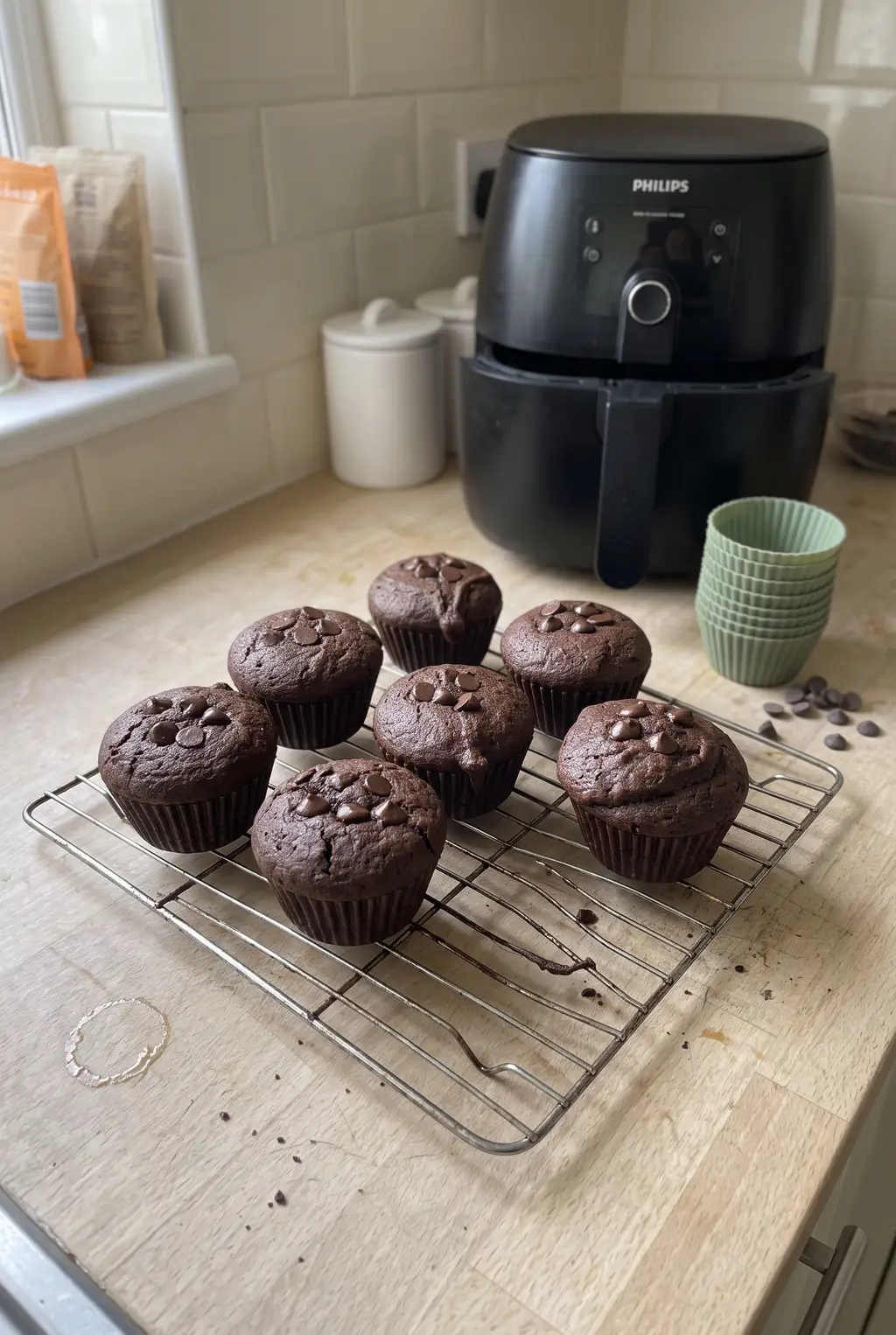
A dark crumb hides everything
Every doneness cue a baker leans on is a visual cue, and a double chocolate muffin revokes all of them at once. The crumb starts dark, so there is no golden turn to watch for. The top is studded with chocolate that melts and glistens whether the middle is done or not. And the toothpick, the last honest tool in most kitchens, fails here twice: pushed through a dark crumb it shows nothing readable, and sooner or later it spears a molten chocolate pocket and comes out smeared on a perfectly baked muffin. This is why the internet's chocolate muffins run the full range from raw to sawdust; everyone is baking blind and guessing differently.
The answer is the one this site gives for every batter you cannot read: a thermometer, 200 to 205°F in the center of the middle muffin. It is the same number the banana muffins and the rest of the wet-batter shelf finish at, and the same rule our boxed muffin mix page applies to chocolate mixes for exactly this reason. Corroborate with the spring test, a dome that refills after a gentle press, and with your nose: a done muffin smells like chocolate, an underdone one still smells like batter. The thermometer costs ten dollars and ends the guessing for every dark bake you will ever make.
The cocoa, and the hot coffee bloom
Cocoa powder is the sole source of chocolate in the crumb itself, and most recipes treat it like flour: sift it in dry and hope. Dry cocoa keeps its best flavor locked up. The fix is a technique cake bakers have used forever and muffin pages skip: bloom it. Whisk the cocoa into an equal volume of hot coffee until it turns into a glossy paste, let it cool 5 minutes, and the hot liquid opens up the flavor compounds that would otherwise ride through the bake unexpressed. The difference is not subtle; it is the gap between a muffin that is brown and a muffin that is chocolate.
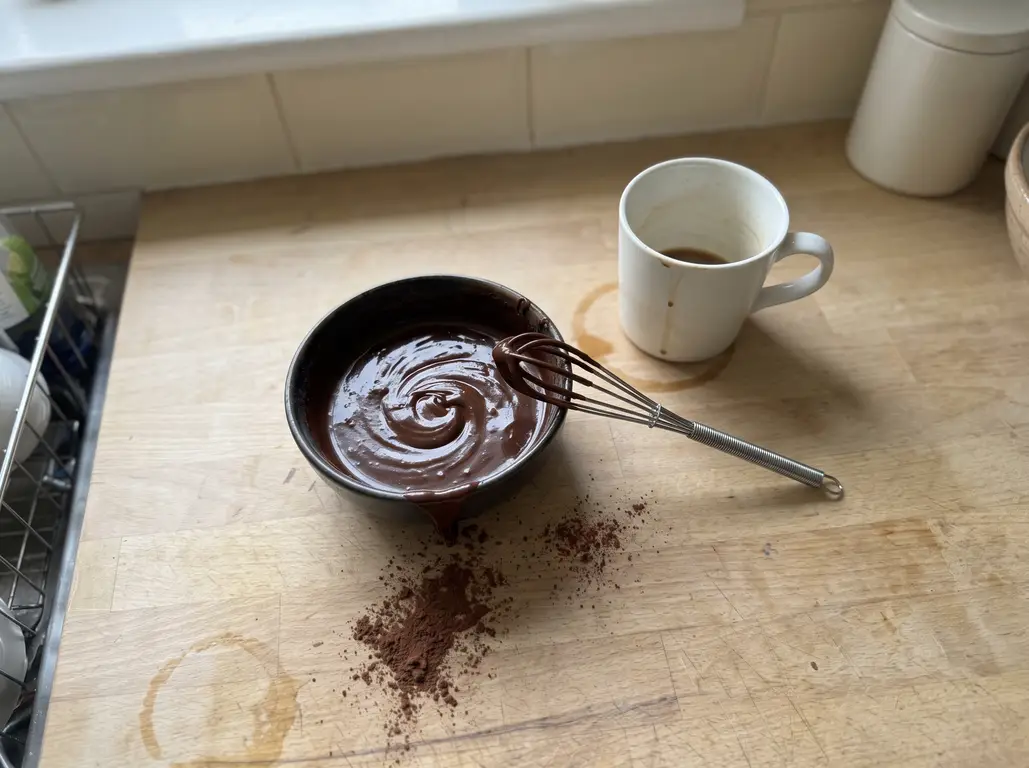
Coffee, not water, because coffee amplifies chocolate the way salt amplifies caramel, and no, the muffins do not taste like coffee; a teaspoon of espresso powder in the bloom pushes the same direction. Hot water works if you would rather skip it. As for the tin: this recipe is written for natural cocoa, whose acidity is part of the leavening math with the baking soda, but Dutch-process bakes up fine here too, darker and rounder, because the sour cream and brown sugar carry acid of their own. The full chemistry answer lives in the FAQs; the short version is that freshness matters more than style.
Double means two chocolates
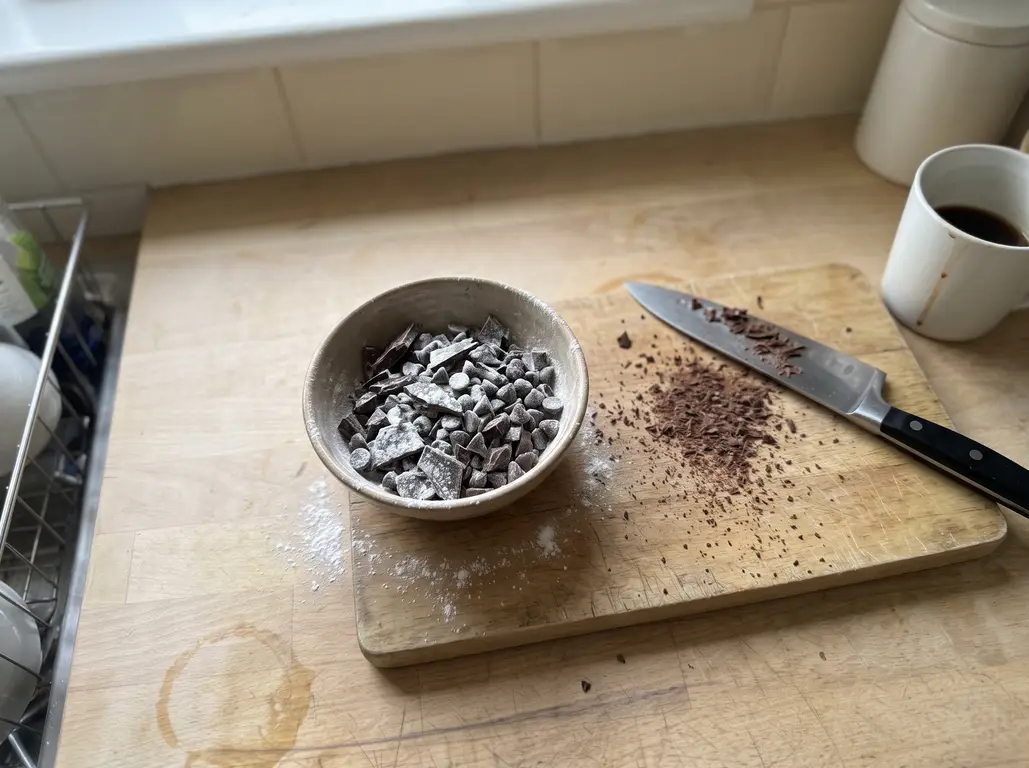
Most double chocolate recipes read the name as cocoa plus chips and stop. Chips alone are a half measure: they are engineered with stabilizers to survive baking with their shape intact, which is exactly what you want for structure and exactly what you do not want for the gooey forkful the bakery case promised. So the second chocolate goes in twice, the same two-chocolate rule our chocolate chip muffins are built on: a chopped dark bar for molten pockets, chips for structure. The bar shards melt into irregular pools that stay soft, the chips hold their posts, and the rough chop means every bite lands on chocolate in some form. Toss both in a spoonful of the dry mix first so the batter can grip them, and hold a few chips back to press onto the tops, where they melt into the glossy studs that make the muffin photograph like it came from a case. A pinch of flaky salt up there is optional and correct.
370 for the dome, 310 for the chocolate
The ranking recipes disagree about temperature more than anything else: one starts at 400°F chasing a crisp top, another cruises at 340°F for 24 minutes, a third does 375 into 325. Run an oven chocolate muffin recipe through the air fryer calculator and you can see where the hot numbers come from, 375 to 400 in an oven converts to around 350 in a basket. But cocoa is the ingredient the conversion cannot see: it is dry, fine and quick to scorch, and scorched cocoa reads as bitter, not burnt, so nobody diagnoses it. On a batter this dark, the scorching happens invisibly.
The schedule that threads it is the house two-temperature bake, the one the blueberry muffins built their domes on: 370°F for 4 minutes, then down to 310°F for 10 to 12 more. The short hot start sets the dome while the batter is still climbing; the low cruise, 15 to 40 degrees below what the competition runs, bakes the center through without ever giving the cocoa or the sugared top a chance to turn. The mechanics around it are the standard muffin method here: six silicone cups on the bare basket floor, never a tin that blocks the airflow, the cup rules living in the silicone molds guide; fold to the last streak and stop; and rest the batter 15 minutes while the machine preheats, which thickens it enough to hold the chocolate up and the dome high. Every setting on this page also lives in the baking chart with the rest of the tested numbers.
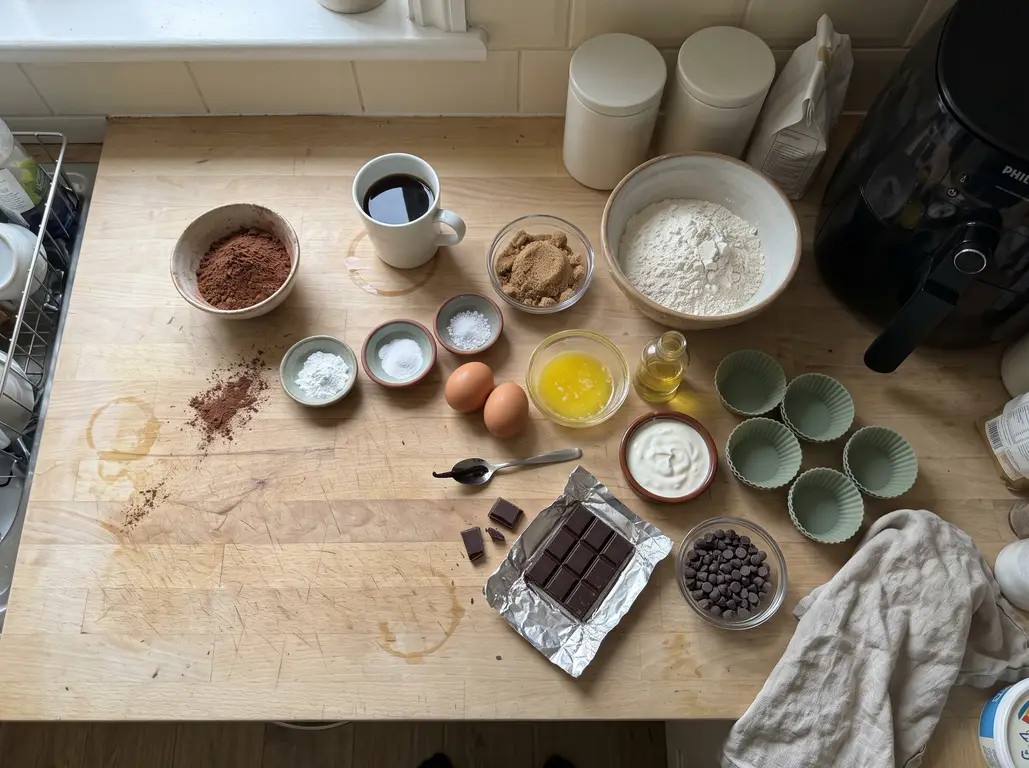
Ingredients
For 6 bakery-size muffins
- 1/3 cup (28g) natural cocoa powder, bloomed in 1/3 cup (80ml) hot coffee (see step 1)
- 1 teaspoon espresso powder, optional but recommended
- 1 1/2 cups (188g) all-purpose flour
- 2 teaspoons baking powder and 1/4 teaspoon baking soda
- 1/2 teaspoon fine salt
- 2 large eggs
- 3/4 cup (150g) packed brown sugar
- 3 tablespoons (43g) butter, melted, plus 3 tablespoons (45ml) neutral oil
- 2 teaspoons vanilla extract
- 1/2 cup (120g) sour cream, full fat
- 3 ounces (85g) dark chocolate bar, chopped, plus 1/2 cup (85g) semisweet chips, a spoonful of chips reserved for the tops
- Flaky salt for the tops, optional
- 6 silicone baking cups
One batch fills one basket, no round two. The bar matters more than its price tag: anything 50 to 70 percent labeled dark or bittersweet chops into better molten pockets than premium chips ever will.
How to make them
- Whisk the cocoa powder and espresso powder into the hot coffee until it forms a smooth, glossy paste, and let it cool 5 minutes. This one step is most of the difference between chocolate-flavored and chocolate.
- Whisk the flour, baking powder, baking soda and salt in a large bowl.
- In a second bowl, whisk the eggs, brown sugar, melted butter, oil and vanilla until smooth and glossy, then whisk in the sour cream and the cooled cocoa paste.
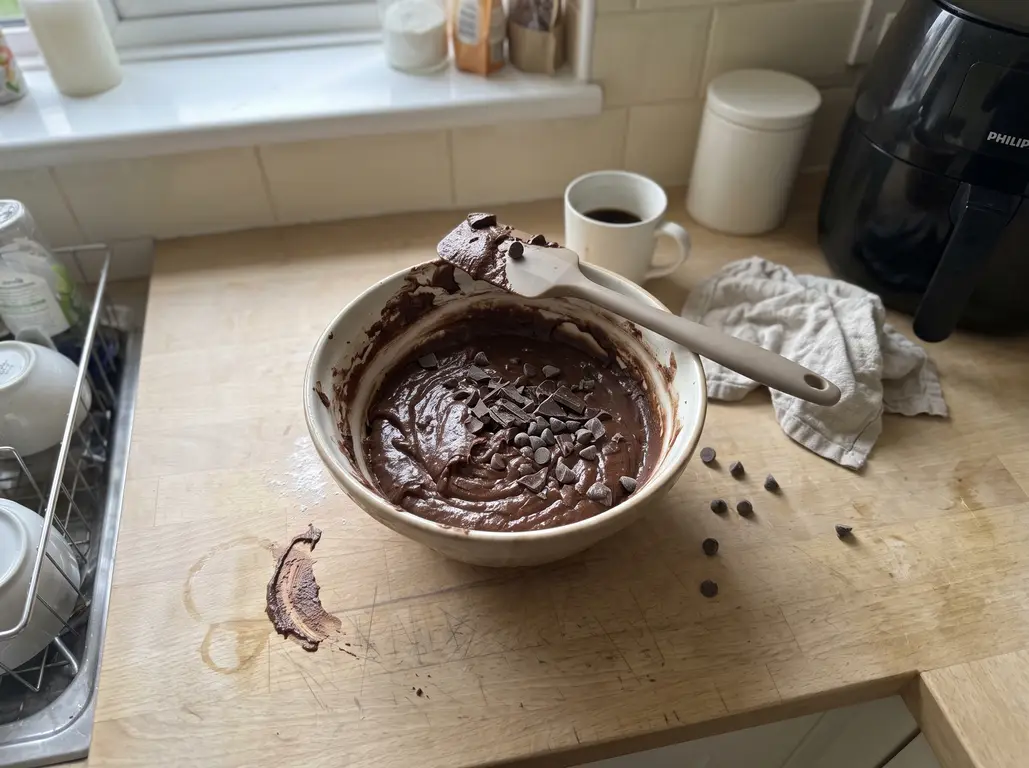
- Chop the dark bar into rough shards, keep the biggest pieces, and toss the shards and chips with a tablespoon of the dry mix so they grip the batter instead of sinking.
- Fold the dry into the wet just until the last streak of flour disappears, add the chocolate with the final three or four strokes, and rest the batter 15 minutes. Preheat the air fryer at 370F for 3 minutes near the end of the rest.
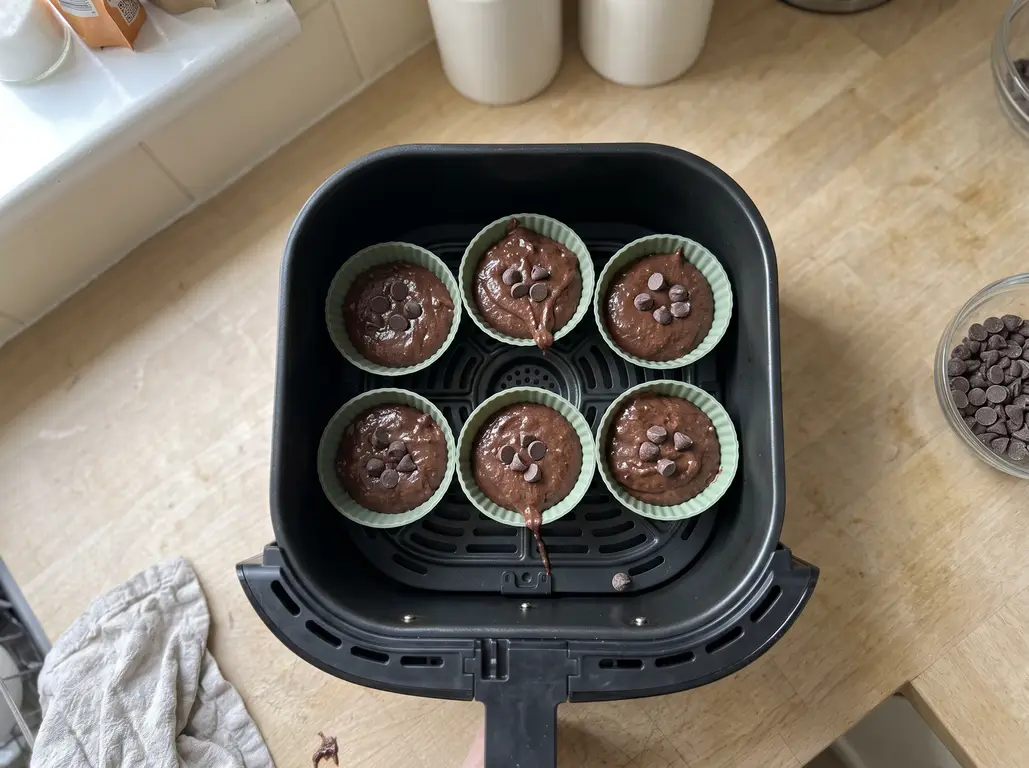
- Fill the 6 silicone cups nearly to the rim, set them on the basket floor with air between them, and press the reserved chips and a pinch of flaky salt onto each top.
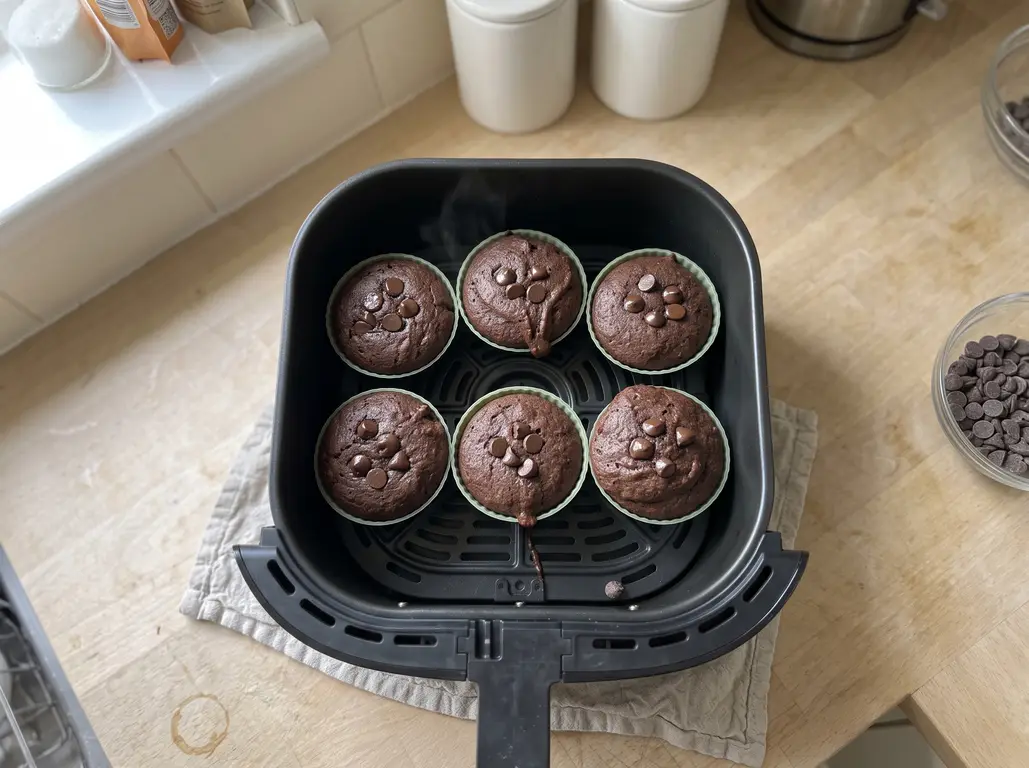
- Air fry at 370F for 4 minutes to set the domes, then drop to 310F for 10 to 12 minutes more, until the domes spring back from a gentle press.
- Confirm 200 to 205F on a thermometer in the center of the middle muffin, cool the cups 5 minutes, and push the muffins out from underneath. On this crumb the toothpick and your eyes are both unreliable witnesses.
Variations
- Triple chocolate: swap the reserved topping chips for white chocolate chips. They toast faintly at 310°F and the contrast against the dark crumb does half the marketing.
- Mocha: double the espresso powder to 2 teaspoons and the coffee steps forward from amplifier to flavor. Adult breakfast, no apologies.
- Peppermint, for December: 1/4 teaspoon peppermint extract in the wet bowl and crushed candy cane pressed on after baking, not before; sugar shards scorch in the fan.
- The Costco-style jumbo: this batter in jumbo cups at 300°F for 19 to 23 minutes, per the size rules in mini vs jumbo muffins, same 200°F finish. Minis for a lunchbox run 310°F for 7 to 9.
- Cream cheese swirl: a scant teaspoon of sweetened cream cheese swirled into each cup before baking, the shortcut cousin of the filling in the cheese danish, and black-and-white in the best diner sense.
- Cookie-topped: press a spoonful of cookie dough onto each crown before baking for a brookie hybrid, the same collision our air fryer brookies are built on.
- Gluten-free: a 1:1 blend swaps in cleanly; cocoa already softens the flour's job here, so the texture penalty is smaller than most GF bakes pay.
- Doubling: the recipe scaler does the math, and the second six bake in the warm machine about a minute faster.
Fixing what goes wrong
| Problem | Cause | Fix |
|---|---|---|
| Bitter edge nobody can name | Cocoa scorched by a 350°F-plus cruise, or 2 year old cocoa | The 310°F cruise, and a tin younger than a year; hot-running machines live in the burning guide |
| Dry, crumbly by evening | Overbaked while chasing a visual cue that never came | Pull at 200 to 205°F on the thermometer; the wider rules are in the dry bakes guide |
| Toothpick never comes out clean | It keeps finding melted chocolate pockets | That is the muffin working. Trust the number, not the pick |
| Sunken centers | Pulled early on looks, or cups filled past the rim | 200°F before anything leaves the basket; to the rim, not over it |
| All the chocolate at the bottom | Untossed chocolate in a thin, unrested batter | The flour toss and the 15 minute rest; thick batter holds its cargo |
| Flat tops | Skipped the 370°F start or the rest | Both are dome fuel; the schedule is not decorative |
| Gray streaks on day 3 tops | Chocolate bloom from temperature swings in storage | Cosmetic, not spoilage. Steady room temperature, and eat them sooner; deeper mysteries live in the troubleshooting guide |
Storage and freezing
Airtight at room temperature for 3 days, with a paper towel under and over the muffins, and know that day two is quietly the best day: the crumb settles, the molten pockets firm into something like truffle centers, and the chocolate flavor reads deeper than it did warm. Frozen, wrapped individually, they hold 3 months and revive at 300°F for 2 to 3 minutes in the basket, which re-melts the chips in a way no microwave manages politely. When the craving outgrows a muffin, the chocolate shelf continues: the brownies are the fudgier 320°F cousin with their own internal-temp rule, the chocolate cake scales the same bake-to-200°F logic up to a 6 inch layer, the chocolate mug cake covers the single-serving emergency, and the whole muffin and pastry lineup lives on the pastries and morning bakes page.
Frequently asked questions
QWhat temperature do you bake chocolate muffins in an air fryer?
Two temperatures: 370°F for the first 4 minutes to set the dome, then down to 310°F for 10 to 12 more, until a thermometer reads 200 to 205°F in the center muffin. The recipes ranking for this keyword blast at 375 to 400°F and then cruise at 325 to 350°F, and that cruise is the mistake: cocoa scorches quietly at those temperatures, and on a batter this dark you cannot see it happening. The short high start does the dome work; the low finish protects the chocolate.
QHow do you know when chocolate muffins are done?
Not by looking, and not really by toothpick either. A dark cocoa crumb shows no color change, and a pick pushed into this muffin will eventually hit a molten chocolate pocket and come out smeared on a fully baked crumb. The reliable verdict is 200 to 205°F on an instant-read thermometer in the center of the middle muffin, the same number the whole wet-batter muffin shelf on this site finishes at. Back it up with the spring test, a dome that refills after a gentle press, and your nose: done muffins smell like chocolate, underdone ones smell like batter.
QShould I use natural or Dutch-process cocoa?
This recipe is written for natural cocoa, the standard grocery store kind, and its acidity is part of the leavening math with the baking soda. Dutch-process works here too, because the sour cream and brown sugar carry enough acid to keep the soda busy: expect a darker, more midnight-colored muffin with a rounder, less sharp chocolate flavor. What matters more than the style is freshness; cocoa is a dried fruit product, and a tin that has been open for two years bakes flat and dusty no matter what the label says.
QWhy is there coffee in chocolate muffins, and will they taste like it?
The coffee is there for the cocoa, not for you, and no, they do not taste like coffee. Cocoa powder is full of flavor compounds that only release when they meet hot liquid, which is why blooming, whisking the cocoa into hot coffee until it forms a paste, produces a noticeably deeper chocolate flavor than stirring dry cocoa into batter. Coffee simply amplifies chocolate better than water does. Swap in hot water and keep the espresso powder if coffee is a concern, or use plain hot water and the muffins are still very good, just one notch quieter.
QCan I use only chocolate chips instead of a chopped bar?
Yes, and the muffins will still disappear, but you give up the best bites. Chips are engineered with stabilizers to hold their shape through a bake, so an all-chip muffin is studded but never gooey. A chopped bar melts into irregular molten pockets, and the mixed sizes mean chocolate in every single bite instead of chocolate at intervals. The bar plus chips split is the same two-chocolate rule our chocolate chip muffins run, and it is the difference between double chocolate as a name and double chocolate as an experience.
QCan I bake these in paper liners or a muffin tin?
Paper cases alone slump sideways under a heavy batter in the fan, and a metal muffin tin blocks the under-basket airflow the machine cooks with, which bakes pale, gummy bottoms. Freestanding silicone cups, six at a time directly on the basket floor, are the whole infrastructure: they stand up to the batter, survive the airflow, and release with one push from underneath after a 5 minute cool. If you want the bakery paper look, seat a paper liner inside each silicone cup and it rides along safely.
QHow do you store double chocolate muffins, and do they freeze?
Airtight at room temperature for 3 days with a paper towel under and over them, and like most rich muffins they are actually better on day two, once the crumb settles and the chocolate pockets firm to truffle texture. They freeze beautifully for 3 months wrapped individually; revive at 300°F for 2 to 3 minutes in the basket and the chips go molten again, which is the closest a day-30 muffin gets to minute-one. If the tops develop gray streaks in storage, that is chocolate bloom from temperature swings, cosmetic and still delicious.
Made it? Rate it.
Never overbake again
Get our one-page times & temps cheat sheet, plus a new tested recipe each week.
No spam · unsubscribe anytime