

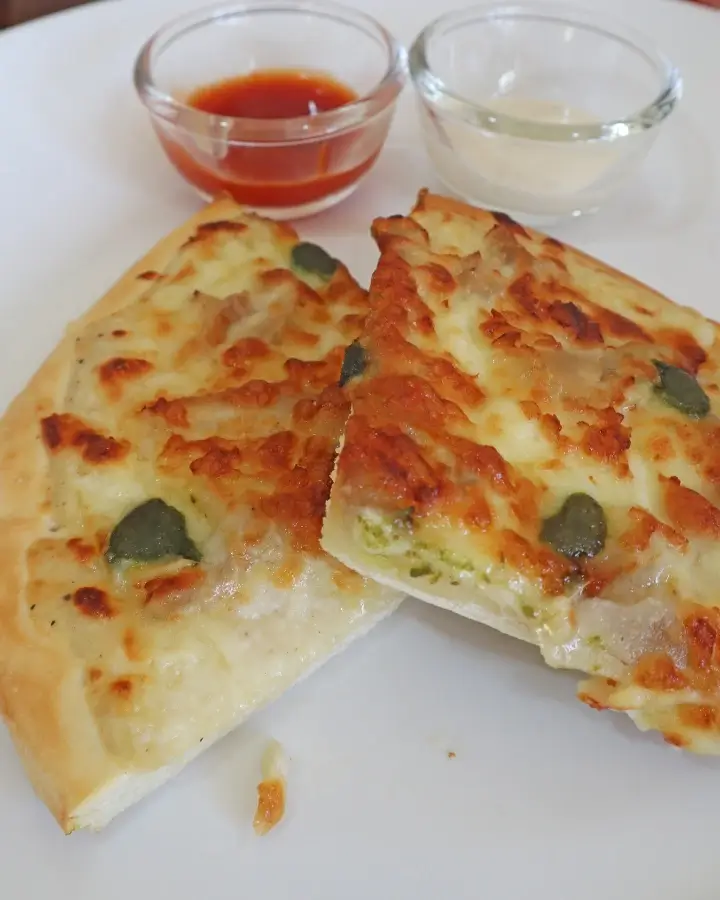
The first frozen pizza I put in my air fryer was a DiGiorno rising crust, and I cooked it at 400°F because that is what almost every page I found told me to do. Eleven minutes later the pepperoni had gone black at the edges, the cheese had seized into a brown skin, and the middle of the crust was still cold enough that I could feel the frost with my thumb. I ate the outer ring and threw the middle away.
The problem was never the pizza. It was the distance. In a basket air fryer the heating element sits three to four inches above your food. In a conventional oven it is a foot or more away, which is why the box can call for 400°F and get away with it. Move that same element to four inches and 400°F stops being an oven temperature and starts being a broiler. Once I dropped to 360°F and gave it a couple more minutes, the same pizza came out with a bottom that snapped when I bent a slice and cheese that was melted all the way to the center.
Quick answer: Cook frozen pizza in the air fryer at 360°F (180°C) for 8 to 12 minutes, straight from the freezer, sitting directly on the basket with no parchment underneath. Thin crust can go to 375°F. Thick and rising crust should drop to 340°F and run 14 to 18 minutes with a loose foil tent over the top. It is done when the cheese is bubbling in the center, not just the edges, and the bottom is browned and stiff.
Why the cheese burns before the middle thaws
A frozen pizza is two cooking jobs stacked on top of each other. The toppings only need to melt, which happens fast. The crust needs to thaw, then release its water, then brown, which takes much longer. An oven handles this by cooking gently from all sides at once. An air fryer does not: it drives a lot of very hot air down from a close element, so the top of your pizza gets roughly twice the heat exposure that the bottom does.
That gap is the whole story behind every bad air fryer pizza. Three things close it:
- Drop the temperature. Lower heat gives the middle of the crust time to catch up before the cheese passes melted and goes to burnt. This is the opposite of the advice you will read almost everywhere, and it is the single change that fixed it for me.
- Skip the liner. Parchment, silicone rounds, and paper liners all insulate the bottom of the pizza from the basket, which is exactly the surface you need for a crisp base. Put the pizza on the bare basket or rack.
- Preheat anything thicker than thin crust. A hot basket starts browning the underside on contact instead of spending the first three minutes warming up while the top races ahead.
One honest limitation: an air fryer bakes a smaller pizza better than a big one. Airflow needs room around the food, and a 12 inch family pizza jammed edge to edge in a basket blocks that. If your pizza is bigger than your basket floor, cutting it and cooking in two rounds beats cramming it in, every time.
What you need
This is a one-ingredient recipe. Everything else is optional and goes on at the end.
- 1 frozen pizza, any size or crust
- Olive oil, for brushing the rim
- Grated parmesan
- Red pepper flakes
- Dried oregano or fresh basil
- Flaky salt
A note on the pizza itself: thin crust and standard crust are the easiest wins in an air fryer. Rising crust and stuffed crust are the hardest, because the dough has the most thawing to do while the cheese sits closest to the element. If you are cooking your first one, start with a thin crust personal pizza and you will get a good result on the first try.
How to cook frozen pizza in an air fryer
- Strip the packaging completely. Off comes the box, the plastic film, and the silver cardboard disc that some brands freeze underneath the pizza. That disc is not oven safe in an air fryer and it blocks the bottom heat besides. Check the underside with your fingers, because on rising crust pizzas the disc is stuck on with ice and easy to miss.
- Preheat to 360°F for 3 minutes. Skip this only for thin crust and mini pizzas, which cook fast enough that the ramp-up time does not hurt them. For everything thicker, a cold basket is the reason bottoms come out pale.
- Check the fit before it goes in. The pizza should sit flat with a little air gap around the edge. If it curls up the basket wall, take it out and cut it into halves or quarters instead. A pizza folded against the side cooks into a burnt crease.
- Lay it directly on the basket and cook 8 to 12 minutes. No oil, no spray, nothing underneath. For a standard personal pizza start checking at 8 minutes. Set the timer short on purpose; you can always add two minutes, and you cannot take back burnt cheese.
- Tent it if the top is running ahead. If the cheese is browning hard but the crust still feels soft, lay a piece of foil loosely over the top and tuck the corners under the pizza so the fan cannot lift it. Give it another 3 to 5 minutes. This is the fix that makes thick crust and rising crust work.
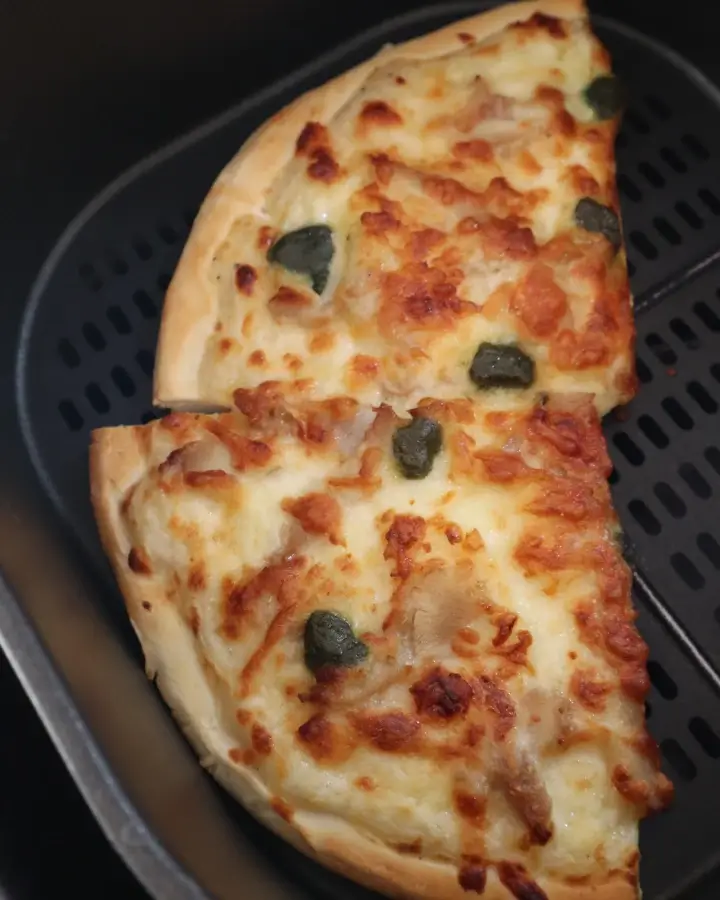
- Judge doneness by the center, not the edges. The cheese should be bubbling in the middle of the pizza and the underside should be browned and firm enough that a slice holds its shape when you lift it. Lift the edge with a spatula and look. If the bottom is pale and bendy, it needs more time no matter how good the top looks.
- Rest two minutes, then cut. Cutting straight out of the basket drags the molten cheese off the crust. Two minutes on a board lets it set. Add parmesan, chili flakes, or a drizzle of oil now.
Air fryer frozen pizza time and temperature chart
Times below are for a 5 to 6 quart basket air fryer cooking one pizza from frozen. Check at the low number every time. Oven-style models need a few minutes longer, which is covered further down.
| Pizza type | Temp | Time | Notes |
|---|---|---|---|
| Mini / snack pizza (5 to 6 in) | 370°F | 5 to 7 min | No preheat needed. |
| Pizza bagels & bites | 380°F | 6 to 8 min | Shake or turn at 4 min. |
| Thin crust personal (6 to 8 in) | 375°F | 7 to 9 min | The one type that likes high heat. |
| Thin crust full size (10 to 12 in) | 360°F | 9 to 12 min | Cut to fit, cook in two rounds. |
| Standard / classic crust | 360°F | 9 to 11 min | The default this recipe is written for. |
| Cauliflower & gluten free thin | 370°F | 6 to 8 min | Burns fast. Check at 5 min. |
| French bread pizza | 350°F | 9 to 12 min | Bread side down, never flip it. |
| Deep dish single | 350°F | 10 to 13 min | Foil tent for the last 3 min. |
| Rising crust | 340°F | 14 to 18 min | Tent after 6 min. Hardest type. |
| Stuffed crust | 340°F | 14 to 18 min | Check the center reaches 165°F. |
Time and temp by brand
Same conditions as above: a 5 to 6 quart basket, one pizza, straight from frozen. Brands reformulate and basket sizes vary, so treat these as a starting point and look at the pizza rather than the clock.
| Brand | Temp | Time | Fit |
|---|---|---|---|
| Totino's Party Pizza | 360°F | 8 to 10 min | Tight in most baskets. Halve it if the edge lifts. |
| Red Baron Deep Dish Singles | 350°F | 9 to 11 min | Two fit side by side in a 6 qt basket. |
| Red Baron Classic Crust (full size) | 355°F | 11 to 14 min | Cut into halves or quarters. |
| DiGiorno Rising Crust | 340°F | 14 to 18 min | Worst fit of the group. Quarter it and tent. |
| DiGiorno personal & croissant crust | 350°F | 9 to 12 min | Fits a 6 qt basket whole. |
| Tombstone Original | 360°F | 10 to 13 min | Cut to fit most baskets. |
| Newman's Own Thin & Crispy | 375°F | 8 to 10 min | Cut in half. Crisps beautifully. |
| Amy's Cheese Pizza | 360°F | 9 to 11 min | Single size fits whole. |
| California Pizza Kitchen Crispy Thin | 370°F | 8 to 10 min | Quarter it. Watch the last 2 min. |
| Stouffer's French Bread Pizza | 350°F | 9 to 12 min | Both halves fit in a 6 qt basket. |
| Caulipower & cauliflower crusts | 370°F | 6 to 8 min | Thin and quick. Check early. |
| Screamin' Sicilian, Home Run Inn | 340°F | 13 to 16 min | Thick. Tent it and give it time. |
Will it actually fit? Do the math first
This is the question that sends most people back to the oven, and none of the charts online answer it usefully. Here is the measurement that matters: the flat floor of your basket, not the quart rating on the box. Measure it corner to corner if the basket is square, then subtract half an inch so air can move around the crust.
- 3 to 4 quart basket: roughly 6.5 to 7 inches of usable floor. Mini and personal pizzas only.
- 5 to 6 quart basket: roughly 7.5 to 8.5 inches. A square basket takes about 9 inches on the diagonal.
- 8 quart and up, or one zone of a dual basket: roughly 9 inches.
- Oven-style or toaster oven air fryer: 10 to 12 inches on the rack. This is the only style that takes a family size pizza whole.
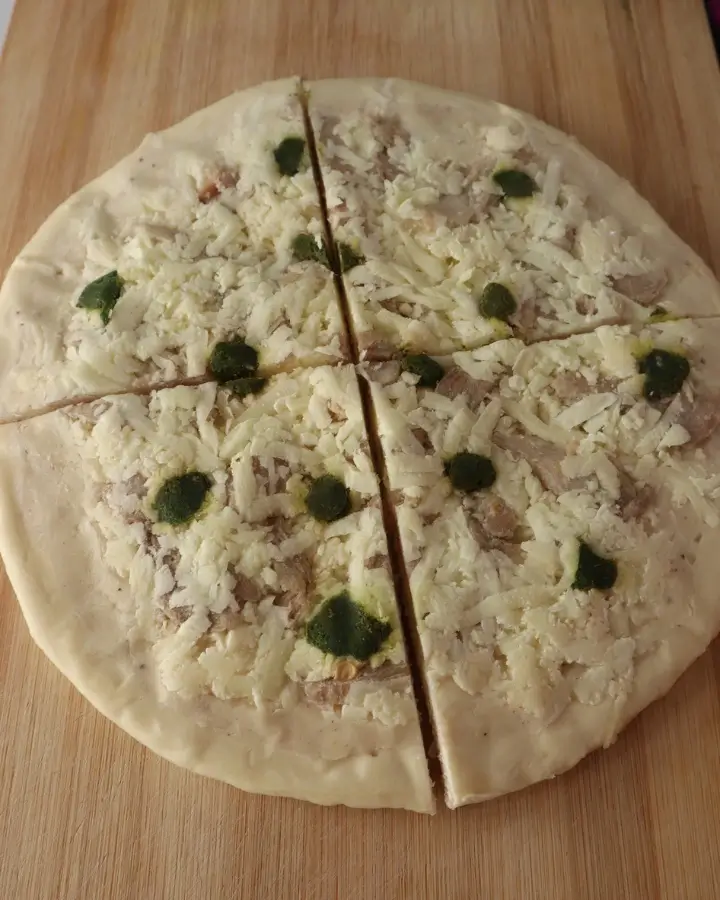
When the pizza is too big, cut it while it is still frozen. Press straight down with a heavy chef's knife, or saw gently with a serrated bread knife. A pizza wheel will not go through frozen crust and you will end up bending the pizza. Cut it on the counter before it goes anywhere near the hot basket, and arrange the pieces with the straight cut edges facing outward so the fan can reach the rounded crust.
Two half moons in a 6 quart basket cook in about the same time as one whole small pizza. Two rounds of a quartered family pizza cost you an extra 10 minutes total, which is still faster than preheating an oven.
Never overcook again
Get our one-page times & temps cheat sheet, plus a new tested recipe each week.
No spam · unsubscribe anytime
Converting the box instructions to air fryer settings
Every frozen pizza box gives you oven instructions, and you can turn those into air fryer settings with two adjustments. This works for any brand, including ones not on my chart.
The formula: subtract 40°F from the box temperature, then cut the box time by about 40 percent. Check at the low end.
A box that says 400°F for 18 to 21 minutes becomes 360°F for about 11 minutes, checked at 9. A box that says 425°F for 15 minutes becomes 385°F for about 9 minutes, checked at 7.
The temperature drop accounts for the element being close to the food. The time cut accounts for the fan, which moves heat into the crust far faster than the still air in an oven does. If you only remember one of the two, remember the temperature drop; that is the one that saves the cheese.
Basket vs oven-style air fryers
The two designs behave differently enough on pizza that using one chart for both is how people end up with pale crusts. Here is the practical adjustment.
| Type | What to expect | Adjustment |
|---|---|---|
| Basket (Ninja, Cosori, Instant) | Close element, strong fan. Fast browning on top, excellent crisp underneath. | Use the chart as written. Tent thick crusts. |
| Oven-style / toaster oven | More room, gentler airflow, slower browning. Takes a full size pizza. | Add 3 to 5 minutes. Use the middle rack, and the lowest rack for the last 2 minutes to crisp the base. |
| Dual-basket models | Two smaller zones. Perfect for a halved pizza or two singles. | Same times, same settings in both zones. Use the sync finish if you have it. |
| Models with a crisper plate | The raised plate lets air under the crust, which is ideal here. | Leave the plate in. Do not put anything on top of it. |
Fixing the five problems people actually hit
The cheese burned and the middle was still cold
The temperature was too high for the thickness of the crust. Drop 20°F, add 3 to 4 minutes, and tent the top with foil once the cheese has fully melted. If it already happened, put the pizza back at 320°F with foil over it for another 4 minutes; the burnt bits will not come back but the middle will at least be edible. For rising crust and stuffed crust, start at 340°F and plan on the tent from the beginning rather than as a rescue.
The toppings flew off and stuck to the element
Air fryer fans are strong enough to lift loose pepperoni, sliced onion, and anything leafy. It is annoying, and it can smoke if a topping lands on the heating coil. Two fixes, and the first is better: press your toppings down into the surface of the frozen cheese before the pizza goes in, and scatter a small pinch of shredded mozzarella over the loose pieces so they get pinned down as it melts. If your fan is unusually aggressive, set a small metal cooling rack on top of the pizza for the first three minutes, then take it off once the cheese has set.
The bottom was soggy or pale
Nine times out of ten this is parchment paper. A liner traps the moisture that comes off the crust and blocks the hot basket surface, which is the main thing giving you a crisp base. Cook directly on the basket or crisper plate. The other two causes are skipping the preheat and crowding the pizza against the basket wall so air cannot circulate underneath.
The crust turned into a cracker
Overcooked, and thin crust is the usual victim because it goes from crisp to brittle in about 90 seconds. Pull it as soon as the cheese stops looking wet in the center. Thin crust pizzas also keep cooking on the hot basket after the timer stops, so get them out onto a board right away instead of leaving them in the basket while you find a plate.
The rising crust never rose
Self-rising frozen pizzas need slow, even heat for the dough to expand before the outside sets. Fast top heat seals the surface first and the dough has nowhere to go, which is why so many people conclude their air fryer cannot handle DiGiorno. It can, but it needs 340°F, 14 to 18 minutes, and a foil tent from about minute 6. Quarter the pizza first so heat can reach the cut edges. If your model runs hot, go to 330°F and add 2 minutes.
What can and cannot go in the basket
- Cardboard: no. Not the box, and not the silver-backed disc that comes frozen to the underside of some pizzas. Cardboard is a fire risk that close to an exposed element, and the foil backing does not make it safe. Peel it off while the pizza is still frozen and it comes away cleanly.
- Plastic film and shrink wrap: no. Obvious, but the film on a rising crust pizza is clear and clings tight. Look twice.
- Parchment paper: allowed, but it costs you the crisp bottom. If you use it, only under a pizza heavy enough to hold it down, never during the preheat, and use perforated rounds cut smaller than the basket floor. Loose parchment lifts into the element and burns.
- Aluminum foil: fine, and useful. Foil is what you tent the top with. If you put foil underneath, tuck the edges under the pizza so nothing can lift, and expect a softer base.
- Cooking spray: skip it. Frozen pizza has plenty of fat in the cheese and does not stick to a hot basket. Aerosol sprays also pit the nonstick coating over time.
- Cooling racks and metal trivets: yes. Oven-safe metal is fine and useful for holding toppings down or lifting a second pizza into a stacked position.
Upgrades worth the extra two minutes
- Garlic butter rim: brush the outer crust with melted butter mixed with garlic powder in the last 2 minutes. It is the single change that makes a cheap pizza taste like it came from somewhere.
- Torn fresh mozzarella: add a few pieces at the halfway point. It browns in blisters instead of the even sheet you get from the shredded cheese on the box.
- Pepperoni cups: lay cupping pepperoni on top of the frozen pizza before it goes in. The air fryer curls them properly, which an oven struggles to do.
- Vegetables: slice thin and add at the start. Anything thick goes in raw and stays raw. Mushrooms and peppers work, raw onion needs to be sliced paper thin.
- Meat: add it already cooked. Raw sausage will not reach a safe temperature in 10 minutes on top of a frozen pizza.
- After it comes out: flaky salt, chili flakes, grated parmesan, a drizzle of hot honey, or a handful of arugula dressed with lemon. Anything green or delicate goes on after cooking, never before.
Storage and reheating
- Refrigerator: 3 to 4 days in an airtight container. Stack slices with a square of parchment between them so the cheese does not weld together.
- Reheating a cold slice: 350°F for 3 to 4 minutes, directly on the basket. This is the best reheat method there is for pizza, better than an oven and not comparable to a microwave.
- Freezing cooked slices: up to 1 month, wrapped individually. Reheat from frozen at 350°F for 5 to 6 minutes.
- What not to do: do not thaw a frozen pizza before cooking it, and do not refreeze a pizza that has thawed on the counter. Both end in a wet crust.
What to serve with it
A frozen pizza turns into an actual dinner with one thing next to it. A sharp caesar or a bowl of arugula with lemon cuts the salt. If you want to keep everything in one machine, run frozen chicken wings or sweet potato fries first, hold them in a warm oven, and cook the pizza last so it hits the table hot. Ranch, marinara, or a garlic dip for the crusts is not optional in my house.
Frequently asked questions
QWhat temperature should I cook frozen pizza in an air fryer?
360°F (180°C) for most frozen pizzas. Thin crust and mini pizzas can handle 370 to 375°F. Thick, deep dish, and rising crust pizzas should come down to 340°F. That is lower than most advice online, and it is deliberate: the element in an air fryer sits only a few inches above the toppings, so 400°F behaves more like a broiler and burns the cheese before the crust thaws.
QHow long does frozen pizza take in an air fryer?
8 to 12 minutes for a standard personal or thin crust pizza at 360°F. Mini pizzas take 5 to 7 minutes, deep dish takes 10 to 13, and rising or stuffed crust needs 14 to 18 minutes at a lower 340°F. Always check at the low end, since air fryer wattage varies a lot between models.
QDo you need to thaw frozen pizza before air frying?
No, and you should not. A thawed crust releases its water before it hits the heat, and you get a soft, damp base instead of a crisp one. Go straight from the freezer to the basket.
QDo I need to preheat the air fryer for frozen pizza?
For anything thicker than thin crust, yes. Three minutes at your cooking temperature is enough. A hot basket starts browning the underside on contact, which is what keeps the bottom from going pale while the top races ahead. Thin crust and mini pizzas cook fast enough that you can skip it.
QCan you put the cardboard from a frozen pizza in an air fryer?
No. Never put cardboard in an air fryer, including the silver-backed disc frozen to the bottom of some pizzas. It sits inches from an exposed heating element and is a genuine fire risk, and the foil coating does not change that. Peel the disc off while the pizza is still frozen, when it comes away cleanly.
QShould I use parchment paper under frozen pizza?
Only if you are willing to trade away the crisp bottom, which is the main reason to use an air fryer for pizza in the first place. If you do use it:
- Use perforated rounds cut smaller than the basket floor.
- Never put parchment in during the preheat with nothing on top; the fan lifts it into the element.
- Never use wax paper or freezer paper, which melt and can ignite.
Foil tucked under the pizza is a safer alternative if you are worried about cheese drips.
QWhat if the frozen pizza is too big for my air fryer?
Cut it while it is frozen. Press straight down with a heavy chef's knife or saw with a serrated bread knife, then cook the halves or quarters in rounds with the cut edges facing outward. A pizza forced in so the edge curls up the basket wall burns at the fold and stays raw in the middle. Measure your basket floor once and you will know instantly which pizzas need cutting.
QWhy did my cheese burn but the crust stay frozen?
The temperature was too high for the thickness of that crust. In an air fryer the top of the pizza gets roughly twice the heat exposure the bottom does. Drop 20°F, add a few minutes, and lay a loose sheet of foil over the top once the cheese has melted, tucking the corners under so the fan cannot lift it.
QHow do I convert the oven instructions on the box to air fryer settings?
Subtract 40°F from the box temperature and cut the time by about 40 percent, then check at the low end. A box calling for 400°F and 18 minutes becomes roughly 360°F for 11 minutes. If you only apply one of the two changes, apply the temperature drop.
QCan I cook two frozen pizzas at once?
Not stacked, and not overlapping. Air has to reach both surfaces, so two pizzas on top of each other steam instead of crisping. A dual basket model can run one in each zone at the same settings. Otherwise cook them one after the other; the second takes about a minute less because the basket is already hot.
QIs frozen pizza better in an air fryer or the oven?
The air fryer wins on crust and on time for anything up to about 9 inches: no preheat wait, a crisper bottom, and 8 to 12 minutes instead of 20 to 25. The oven wins on size and on thick crusts, since it cooks rising crust and stuffed crust evenly without any foil tricks. For one or two people, the air fryer is the better tool almost every time.
QHow do I reheat leftover pizza in the air fryer?
350°F for 3 to 4 minutes, straight on the basket with nothing underneath. The base re-crisps and the cheese melts again without going rubbery, which is more than a microwave or a toaster oven manages. From frozen, give it 5 to 6 minutes.
If you make this, tell me two things: which pizza you cooked and whether dropping the temperature fixed the burnt cheese problem for you. That comparison is the entire reason this page exists, and brand-specific results from readers are how the chart above keeps getting more accurate. For more easy air fryer cooking, try our frozen Brussels sprouts, frozen chicken wings, or banana bread. New to the machine? Start with how to bake in an air fryer, keep the times and temps chart handy, and use the air fryer calculator to convert any oven recipe.
You can also follow me on Instagram and Pinterest for more easy air fryer recipes.
Made this? Rate the recipe