

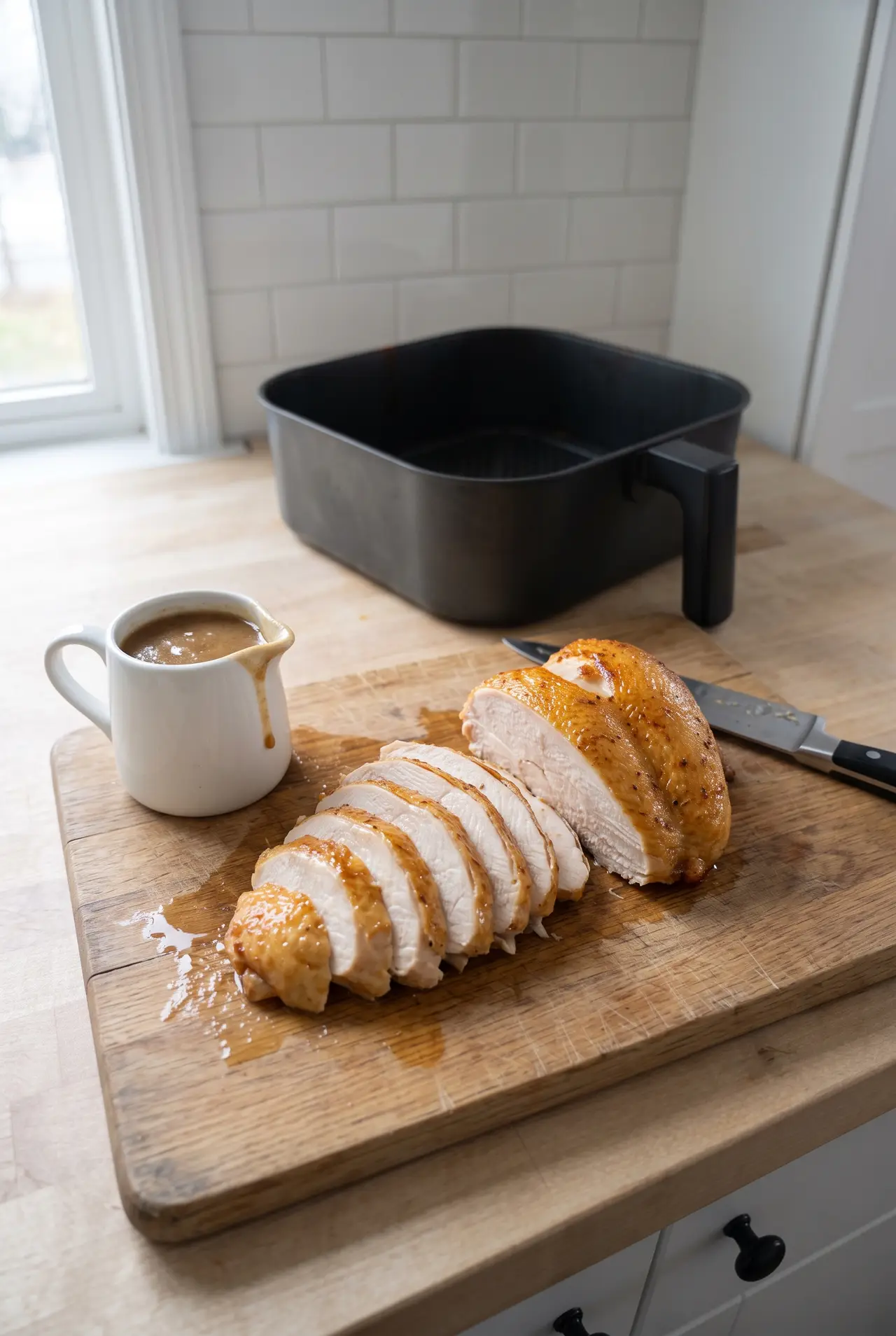
The year I hosted eight people with one oven, the turkey and the pies were booked into the same four hours and something had to give. So the turkey breast went into the air fryer, mostly out of desperation, and it came out better than the whole birds I had been wrestling for years. Browner skin. Juicier meat. Done in under an hour. Nobody at that table has let me roast a whole turkey since, and honestly, I have not wanted to.
Here is the part most recipes skip: the air fryer is not why the turkey is juicy. Salt the night before and pull it off the heat at 160°F instead of cooking it to death, and almost any method gives you juicy turkey. What the basket adds is speed, skin that crisps on schedule, and a free oven on the one day of the year the oven is worth more than the stove. While the turkey rests, the holiday bakes go in behind it.
Quick answer: Salt a 2 1/2 to 3 pound boneless, skin-on turkey breast the night before. Rub herb butter under the skin and air fry at 350°F, skin side down for 20 minutes, then skin side up for 25 to 35 more, until a thermometer reads 160°F in the thickest part. Rest 10 minutes under foil; it climbs to 165°F on its own. Figure roughly 15 minutes per pound and trust the thermometer over the clock.
Why cook turkey breast in the air fryer?
A whole turkey is mostly a storage problem with wings. If your table seats 4 to 6, a single breast is the better bird, and the basket is the better oven for it:
- Done in 45 to 55 minutes instead of a 3 hour oven project
- The fan crisps the skin evenly, no basting, no broiler gamble at the end
- The oven stays free for stuffing, sides and the pies
- White meat only, which is what actually disappears at my table
- Small enough to make on a random Sunday in February, not just in November
The overnight salt, and why you should not skip it
Dry brining is a fancy name for salting the turkey the night before, and it is the single biggest difference between turkey people rave about and turkey people politely chew. Rub a tablespoon of kosher salt over the breast and under the skin, set it uncovered on a rack in the fridge, and walk away. Overnight, the salt pulls moisture out, dissolves into it, and gets drawn back in, seasoning the meat all the way through instead of just the surface. The uncovered part matters too: fridge air dries the skin, and dry skin is the skin that crisps.
Short on time? Even 2 hours helps. Buying a pre-brined or kosher turkey breast, or a netted roast with a salt solution already injected? Skip the added salt entirely and just do the herb butter, or you will double-season it.
How long to cook turkey breast in the air fryer
Every timing below assumes 350°F and a flip at the 20 minute mark. The spread covers machine differences, so treat the low end as your first thermometer check, not a promise:
| Cut | Weight | At 350°F |
|---|---|---|
| Boneless, skin on | 2 lb | 30 to 40 minutes |
| Boneless, skin on | 2 1/2 to 3 lb | 45 to 55 minutes |
| Bone-in half breast | 4 to 5 lb | 55 to 70 minutes |
| Netted turkey roast (Butterball style) | 3 lb | 55 to 65 minutes, net on |
The per-pound math works out to roughly 15 minutes per pound boneless and 13 to 14 per pound bone-in, but the thermometer outranks all of it. Converting an oven turkey recipe instead? The air fryer calculator turns any oven temperature and time into basket settings.
One number to burn in: pull at 160°F, not 165°F. A rested turkey breast keeps cooking under its foil and climbs about 5 degrees on its own, which lands it exactly at the safe 165°F without the extra ten minutes of drying that cooking to 165 in the machine costs you. That carryover climb is the whole secret to juicy white meat, and it is why a $15 thermometer beats every timing chart ever written, including mine.
Will a turkey breast fit your air fryer?
The question nobody answers until you are standing in the kitchen with a turkey that will not go in. A 2 1/2 to 3 pound boneless breast fits any 5 to 6 quart basket with room for air to move. A 4 to 5 pound bone-in half breast needs a 6 quart basket or bigger, and even then you may need to press it down gently; it should clear the heating element by at least an inch once seated. Dual-zone machines are the one bad fit, since neither drawer is tall enough for bone-in.
No pan needed, the breast sits right in the basket. If lifting it out worries you, fold a long strip of foil into a sling under the bird with the ends tucked in during cooking. Still shopping for the machine, or wondering what your quarts really hold? The size guide covers exactly this.
Ingredients for air fryer turkey breast
- 1 boneless, skin-on turkey breast (2 1/2 to 3 lb)
- 1 tablespoon kosher salt, for the overnight brine
- 4 tablespoons butter, softened
- 1 teaspoon garlic powder
- 1 teaspoon smoked paprika
- 1 teaspoon dried thyme (or 1 tablespoon fresh, chopped)
- 1/2 teaspoon dried sage
- 1/2 teaspoon black pepper
- 1 teaspoon olive oil, for the skin
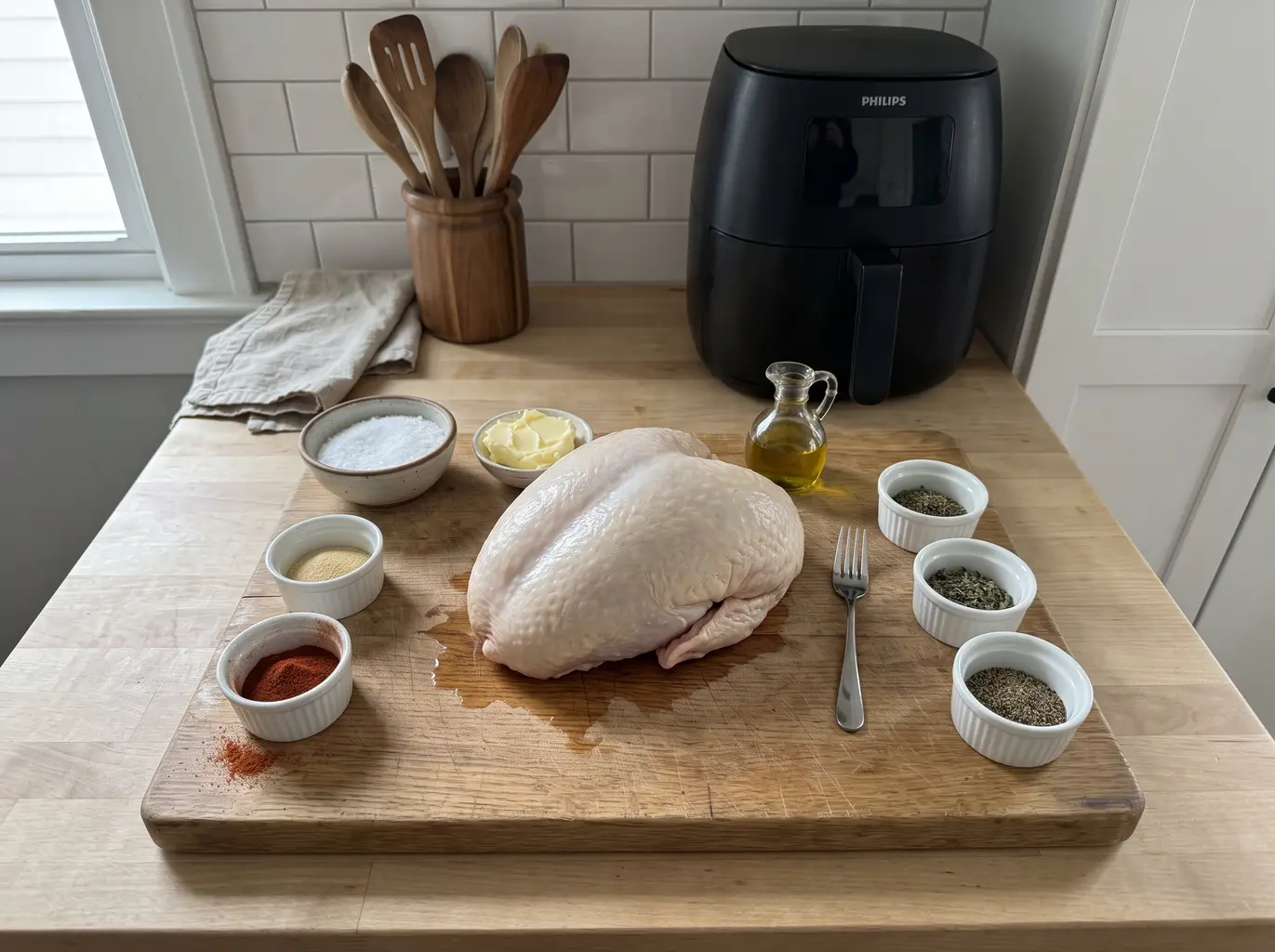
Bone-in half breast works with the same rub; just use the bone-in timing from the chart. For a netted roast, leave the net on and skip the under-skin butter, rubbing it over the surface instead.
How to make air fryer turkey breast, step by step
- The night before, pat the turkey dry and rub the kosher salt over the skin and underneath it where you can reach. Set it on a plate or rack, uncovered, in the fridge overnight, up to 24 hours.
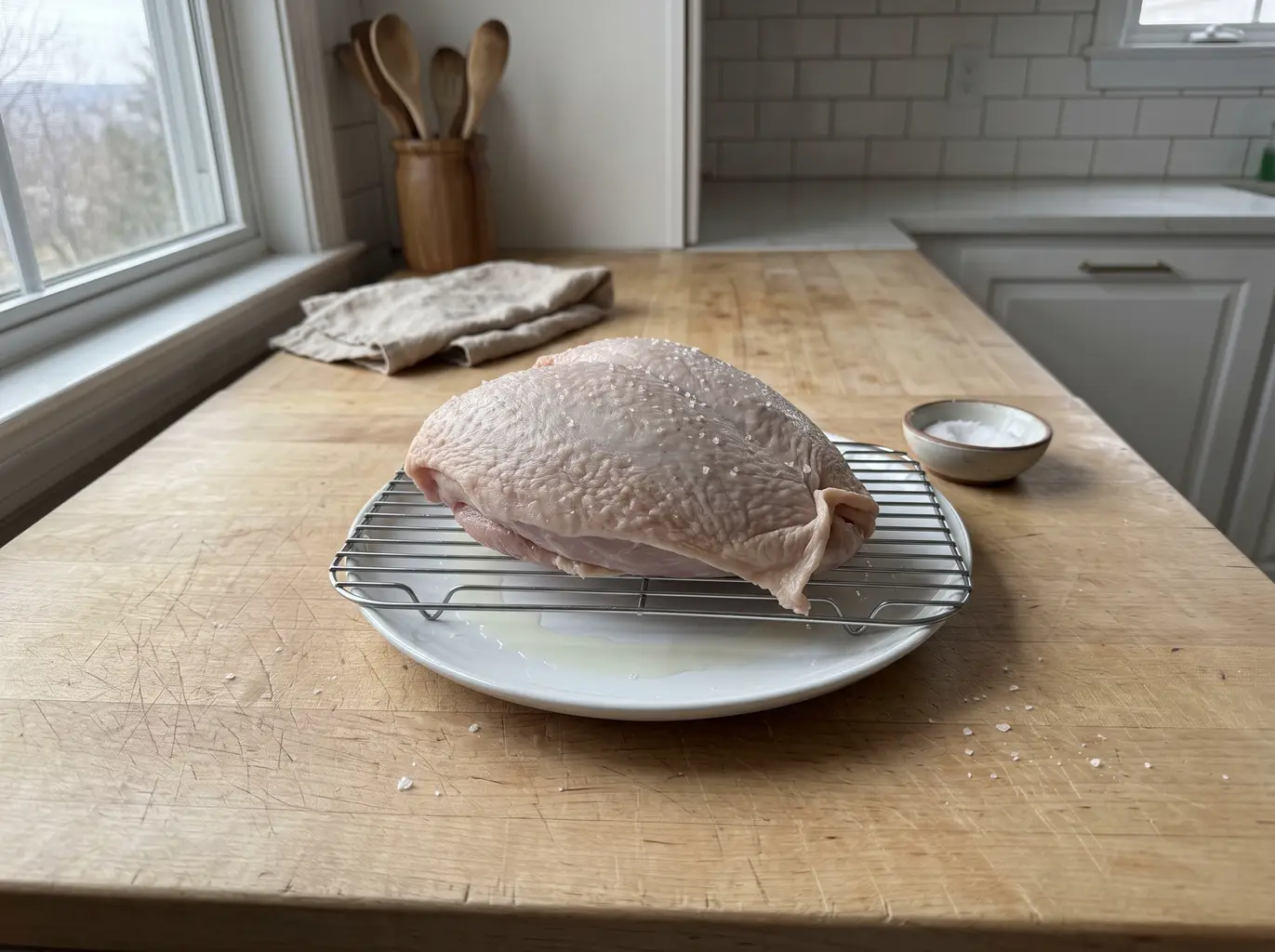
- Take it out 30 minutes before cooking so the center is not fridge-cold, and preheat the air fryer at 350°F for 3 to 5 minutes.
- Mix the herb butter: softened butter, garlic powder, paprika, thyme, sage and pepper, mashed into a paste.
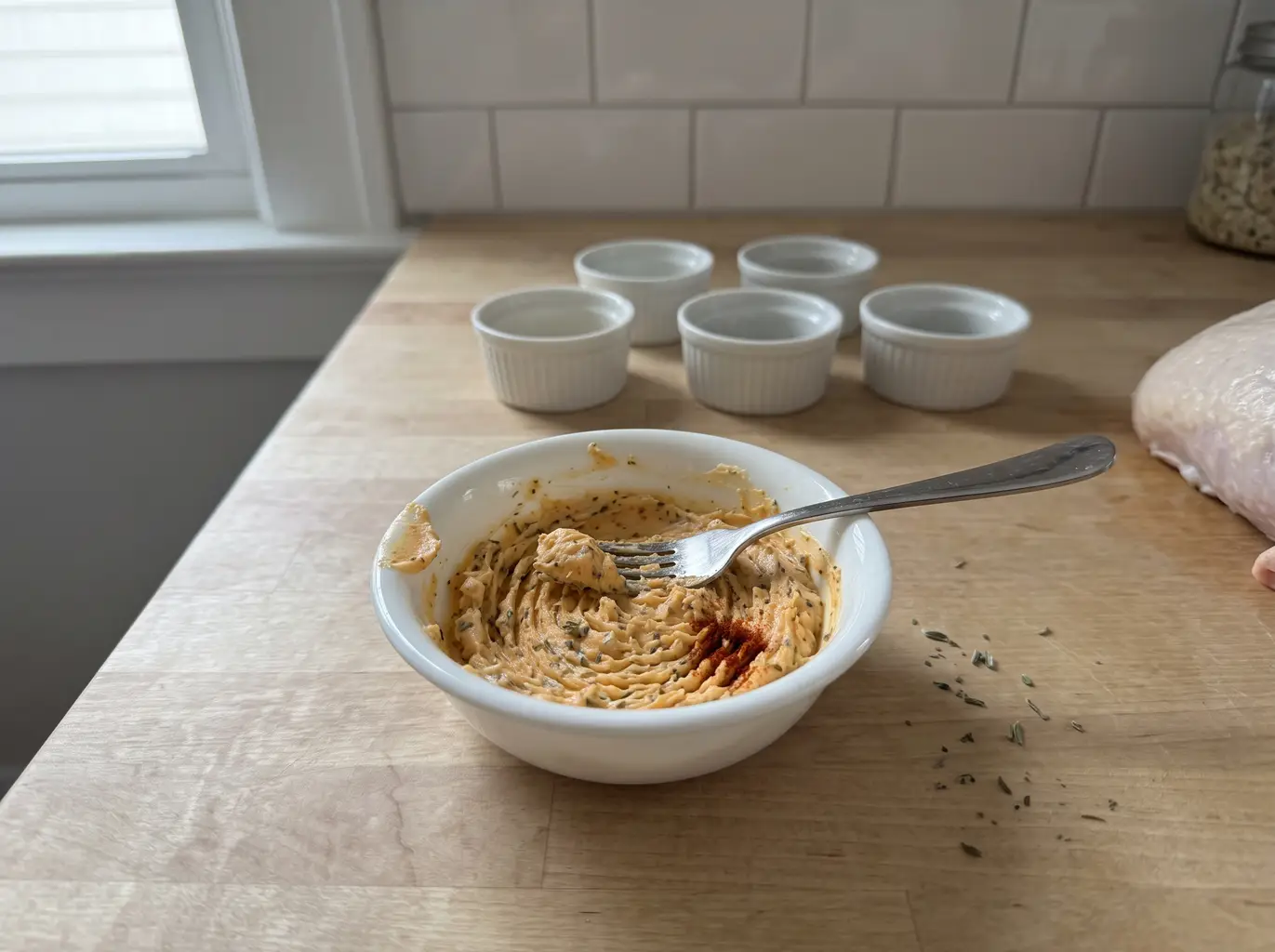
- Work your fingers under the skin from the wide end, loosening it without tearing, and spread about two thirds of the butter directly on the meat. Smear the rest over the skin, then rub the olive oil on top. Do not add more salt; the brine already did that job.
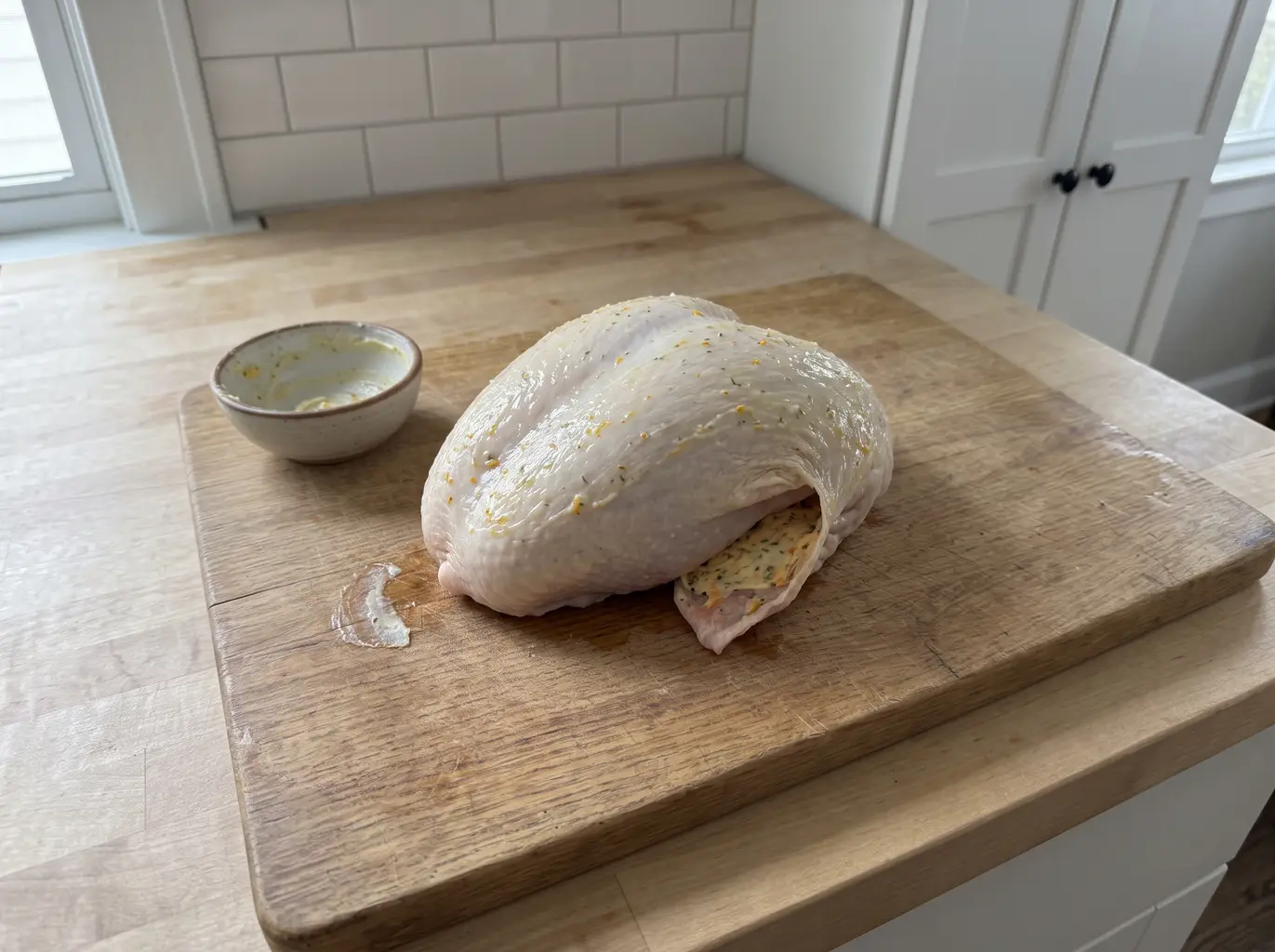
- Start skin side DOWN in the basket for 20 minutes. The element sits above the food in a basket machine, so this protects the skin early while the underside gets a head start.
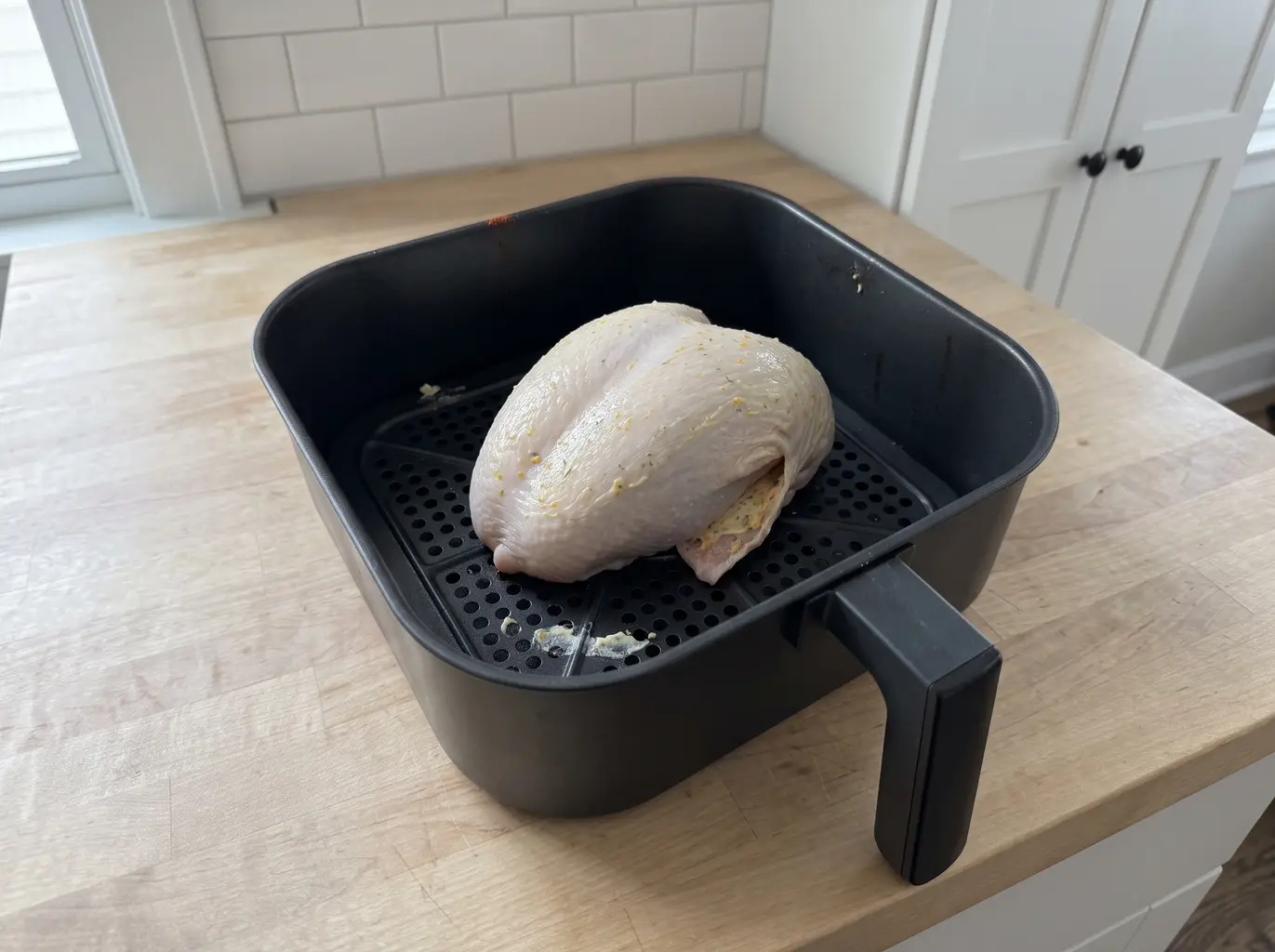
- Flip skin side up and cook 25 to 35 minutes more, until a thermometer in the thickest part reads 160°F. Start checking at the 40 minute total mark; machines drift.
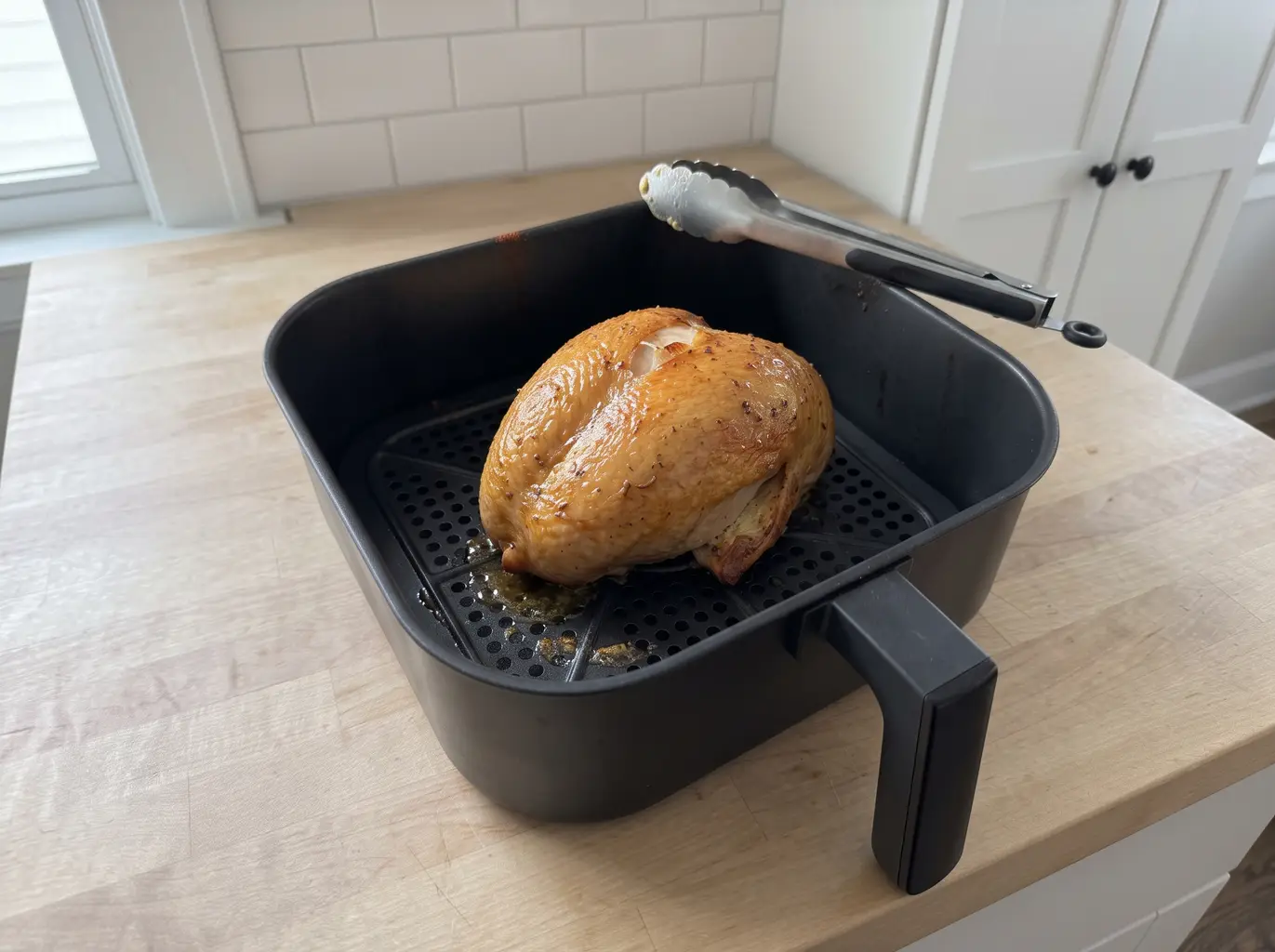
- If the skin is deep brown before the inside is done, lay a loose piece of foil over the top and keep going. Color is not doneness; only the number is.
- Rest 10 minutes under foil on a cutting board. The temperature climbs to 165°F and the juices settle back into the meat. Slice against the grain, about 1/2 inch thick.
Never overbake again
Get our one-page times & temps cheat sheet, plus a new tested recipe each week.
No spam · unsubscribe anytime
The drippings, the gravy, and what to serve
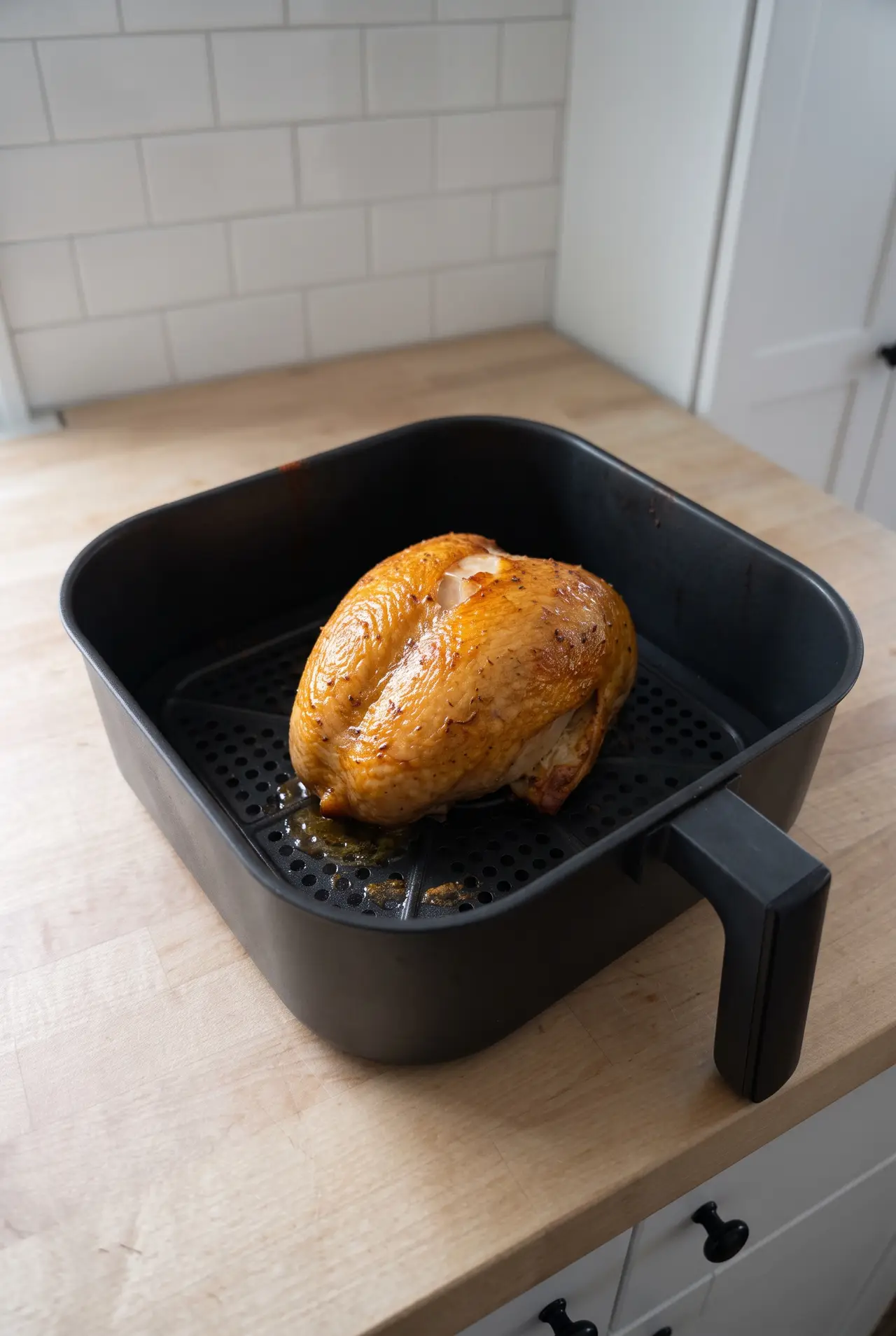
Check the drawer under the basket when you are done. There will be a few tablespoons of butter and turkey drippings down there, and they are liquid gold: whisk them into a quick pan gravy with a tablespoon of flour and a cup of warm broth, simmered 3 or 4 minutes. That little bit of gravy makes the whole plate taste like the holiday version.
The timing works out neatly for the rest of the meal. The turkey rests 10 minutes anyway, which is exactly enough to run a batch of wings for the grazers or crisp a side straight from the freezer chart, and the oven you did not use is already baking dessert. This recipe is the anchor of the holiday collection for a reason.
Leftovers, reheating, and the sandwich argument
Sliced turkey keeps 4 days in the fridge, and the slices reheat without drying if you do one thing: 325°F for 3 to 4 minutes in a covered dish with a splash of broth, not naked in the basket. The reheating guide covers the full logic, but the short version is that lean meat needs gentle heat and a little steam the second time around.
For longer storage, freeze slices flat in a bag with a few spoonfuls of broth for up to 2 months; the broth shields them from freezer burn. And save at least two slices for the day-after sandwich on soft bread with cranberry sauce, which several people in my house consider the actual point of the entire recipe.
Frequently asked questions
QHow long does turkey breast take in the air fryer?
At 350°F, a boneless 2 1/2 to 3 pound breast takes 45 to 55 minutes, a 4 to 5 pound bone-in half takes 55 to 70, and a 3 pound netted roast takes 55 to 65. The working math is about 15 minutes per pound boneless. Start checking with a thermometer at the 40 minute mark and pull at 160°F, because machines vary more than charts admit.
QIs it safe to pull turkey at 160 degrees instead of 165?
Yes, because it does not stay at 160. Rested under foil, a turkey breast climbs about 5 degrees from carryover cooking and reaches the USDA-safe 165°F within a few minutes, while the juices settle instead of running out. Cooking it to 165 in the machine means it rests up to 170, which is where white meat turns dry. Check it after resting if you want to see the number for yourself.
QDo I leave the netting on a turkey roast in the air fryer?
Leave it on while it cooks. The net holds the rolled roast in shape so it cooks evenly, and it is heat-safe. Rub the seasoned butter over the net rather than under it, cook to 160°F, rest, and then snip the net off with scissors before slicing. Cut it off too early and the roast unrolls into uneven pieces.
QCan I cook a frozen turkey breast in the air fryer?
Thaw it first. A frozen breast cooks so unevenly in a basket that the outside dries long before the center is safe, and the under-skin butter and brine are impossible on frozen meat. Thaw in the fridge, allowing about 24 hours per 4 pounds, or in cold water for a faster same-day thaw. The one freezer shortcut that does work is reheating already-cooked frozen slices.
QWhy did my turkey breast come out dry?
Almost always one of three things: it cooked past 165°F because there was no thermometer in the room, it never got salted ahead, or it was sliced straight out of the basket with no rest. The fixes are the recipe: salt overnight, pull at 160°F, rest 10 minutes under foil. Of the three, the thermometer matters most; even an unbrined breast pulled at 160 beats a brined one cooked to 175.
QWhat size air fryer do I need for a turkey breast?
A 5 to 6 quart basket handles a boneless breast up to 3 pounds. Bone-in half breasts need 6 quarts or more, with at least an inch of clearance under the heating element. Dual-zone drawers are usually too shallow for bone-in cuts. If the breast touches the element, it will scorch at that spot, so measure the height of your basket before buying the bird.
If this one makes your holiday table, tell me the weight of your bird and the minutes your machine needed, and leave a rating below; the per-pound chart gets smarter with every report. The rest of the menu is waiting in the holiday baking collection, the party snacks are covered by the frozen wings, and the day-after leftovers live or die by the reheating guide.
Feeding a bigger table from one basket? Pair this with the chicken cutlets and bone-in pork chops, and see the full plan in our air fryer Thanksgiving menu.
Everything else the basket makes is indexed at the recipe index, and all four air fryer tools live in one place.
You can also follow me on Instagram and Pinterest for more easy air fryer recipes.
Made this? Rate the recipe