

The question sounds simple and the internet answers it badly in both directions. Appliance boxes shout "no oil needed," then the recipe booklet inside tells you to toss everything in a tablespoon of it. A relative gave up on her machine because "it lied about the oil." It did not lie, exactly. It just never explained the difference between what the machine needs and what the food wants.
So here is the complete answer, the one I give at my own kitchen counter: the machine needs zero oil to work. Some foods need zero too. Most fresh food wants a teaspoon or two, not to cook, but to brown. And one popular way of adding oil slowly destroys the basket, which deserves its own warning label.
The honest answer: no, an air fryer does not need oil to function; it cooks with hot air, and frozen pre-fried food crisps with nothing added. But 1 to 2 teaspoons tossed onto fresh food is the difference between browned-and-crispy and merely dried-out. Think of oil in an air fryer as a finish, like salt, not a cooking medium, like a deep fryer's bath.
What oil actually does in there
Three jobs, none of which is "frying":
- It evens out browning. A thin oil film conducts heat into every dip and corner of a rough surface, so the whole floret or fry browns instead of just the high points. Browning is flavor: the Maillard reaction that makes roasted things taste roasted works faster and more evenly on a lightly oiled surface.
- It carries seasoning. Salt, paprika and garlic powder stick to oil. On a dry surface they fall off into the drawer.
- It stops sticking. Lean proteins and eggs weld themselves to even nonstick surfaces without a little fat.
What it does not do in a basket is transfer the bulk of the heat. In a deep fryer, oil IS the oven. In an air fryer the moving air is the oven, which is why the dose drops from cups to teaspoons, roughly an 80 percent cut in added fat that is the machine's entire health case, laid out honestly in are air fryers healthy.
Food by food: how much oil
| Food | Oil needed | Why |
|---|---|---|
| Frozen fries, nuggets, fish sticks | None | Factory pre-fried; oil is already in the coating. the frozen fries guide proves it |
| Frozen dumplings, some egg rolls | Light spray | These ship un-fried; a mist makes wrappers shatter |
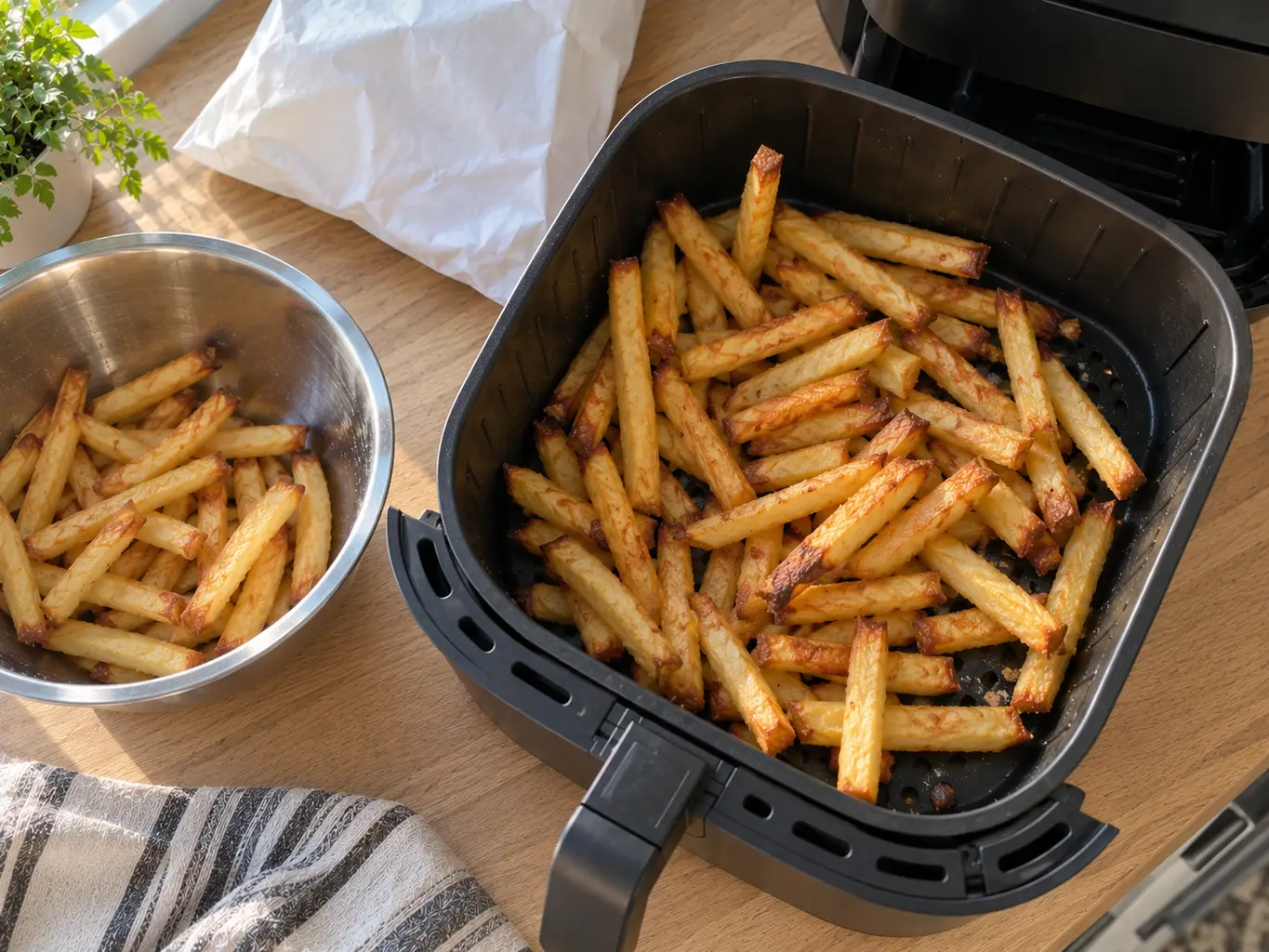
| Fresh-cut potatoes and fries | 2 tsp per lb | Toss after rinsing and drying; dry surface first, then oil |
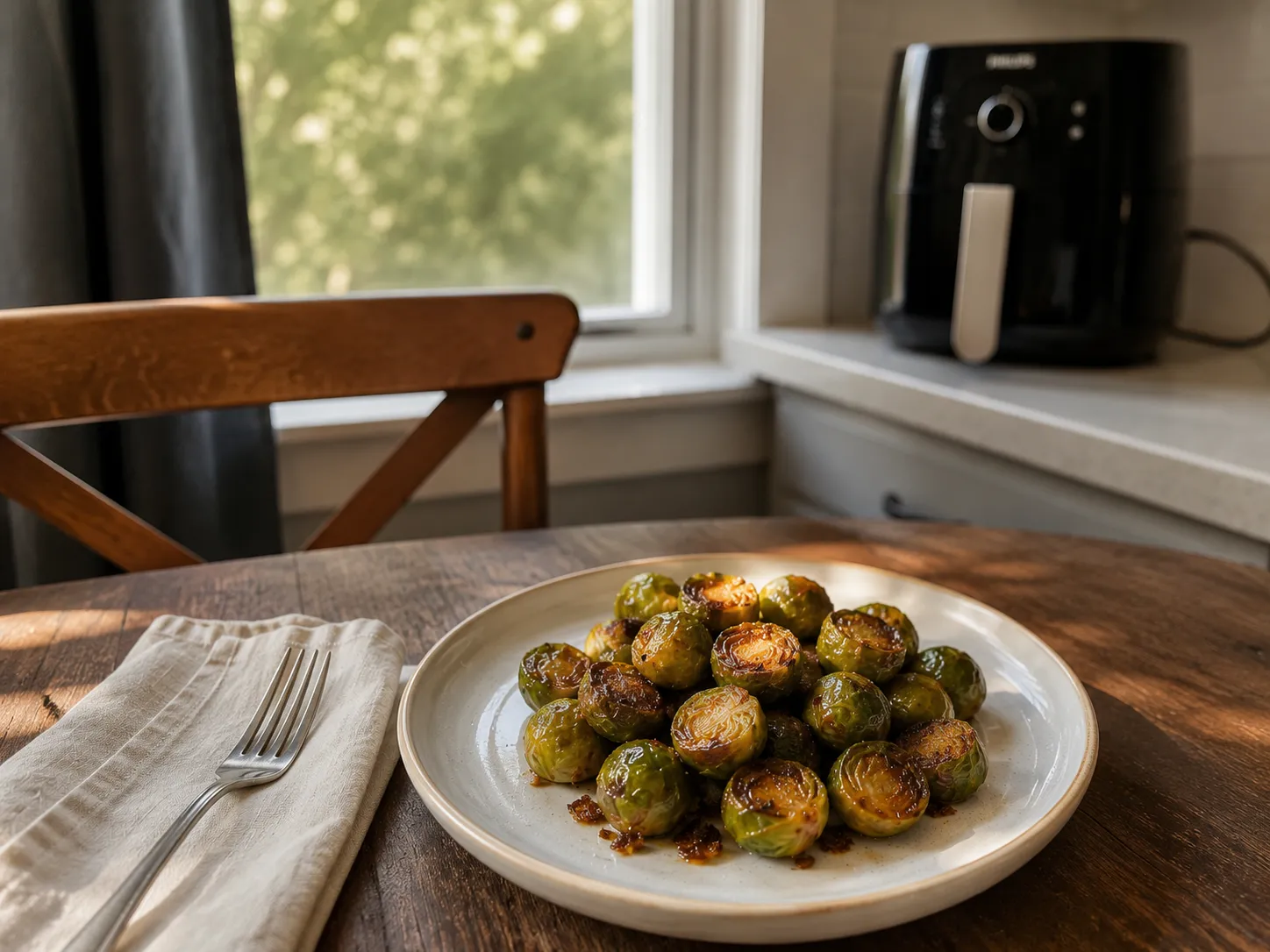
| Fresh vegetables | 1-2 tsp per basket | The difference between roasted and dehydrated; the Brussels sprouts recipe shows it |
| Chicken skin-on | 1 tsp, rubbed | Helps skin render and crisp; the fat below does the rest |
| Chicken breast, lean cuts | 1-2 tsp | Anti-stick plus browning on a lean surface |
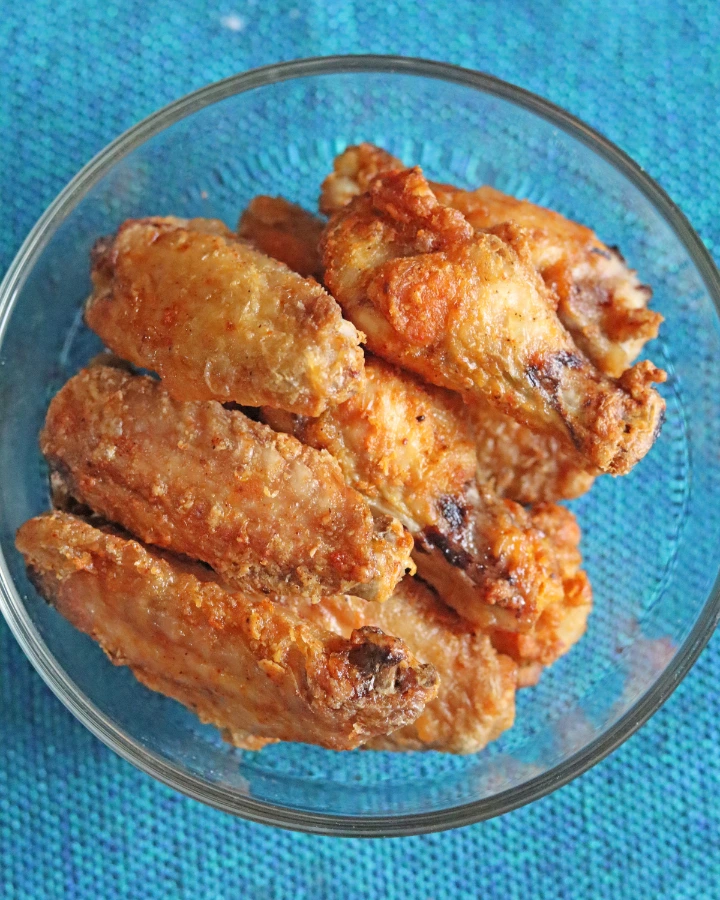
| Fatty meats: wings, bacon, sausage | None | They baste themselves; added oil just fills the drawer. the smoke guide explains the drawer smoke |
| Breaded-at-home food | Spray the breading | Dry flour and crumbs burn pale without a mist; oil turns them golden |
| Baked goods | In the batter, plus greased pan | The recipe's fat does the work; grease pans and bake normally |
| Reheating leftovers | Usually none | The food carries yesterday's oil; a mist only for tired breading |
How to add it (and the spray warning)
The method matters as much as the amount:
- Toss in a bowl. The best default: food, oil, seasoning, thirty seconds of tossing. Every surface gets a thin, even film and your basket stays dry.
- Brush. For flat things: cutlets, bread, pastry tops. A silicone brush and a teaspoon go far.
- Pump sprayer. For breaded food and mid-cook touch-ups. Buy a plain pump bottle, fill it with your own oil, mist and done.
The spray warning: aerosol cans like Pam do not belong anywhere near a nonstick basket. Their propellants and emulsifiers bake onto the coating at air fryer temperatures and build a gummy film that eventually flakes the nonstick off entirely. It is the number one slow killer of baskets. Pump sprayer with plain oil: yes. Aerosol can: never. And spray the food, not the basket walls.
Which oils handle the heat
At 400°F, oil choice stops being a taste question and becomes a smoke question. Oils past their smoke point break down, taste acrid and set off the very smoke alarm situation described in the smoke guide. The short version: avocado oil handles anything the machine can do; light or refined olive oil covers everyday cooking; extra virgin olive oil is happiest at 350°F and below; butter burns fast and belongs on food after cooking, not in the basket at 400°F. The full rankings, smoke points and price talk live in the best oils for an air fryer, which is the companion piece to this page.
What happens with zero oil
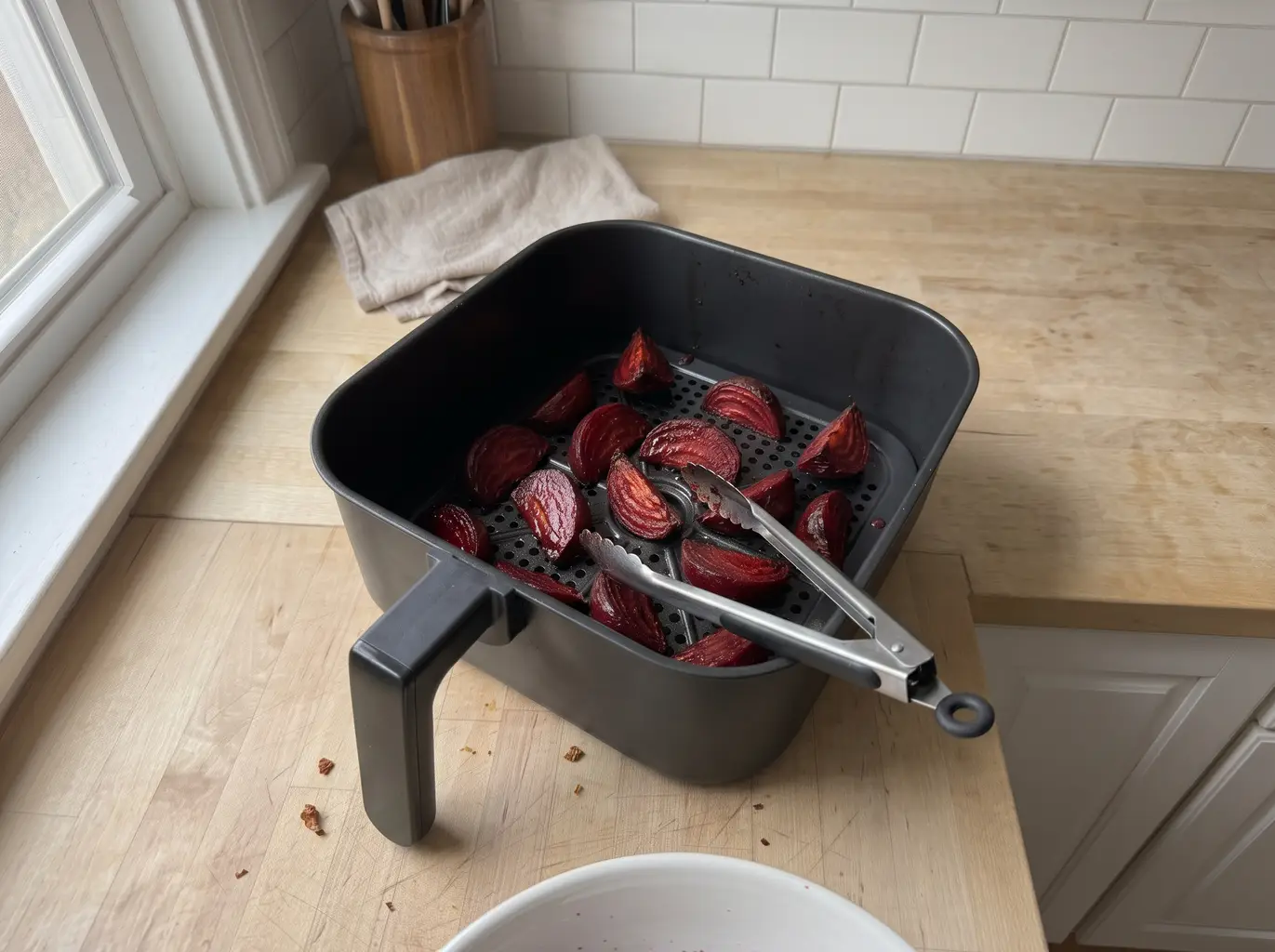
Nothing dangerous, just duller. Zero-oil fresh vegetables come out shriveled and pale rather than caramelized, lean meat cooks through but grays instead of browning, and homemade breading stays the color of raw flour. Frozen pre-fried food is the exception where zero added oil gives a full result. If you are cutting oil entirely for medical reasons, the machine still serves you better than most: use parchment to prevent sticking and expect roasted-not-fried textures. For everyone else, the teaspoon earns its place.
What happens with too much
The opposite failure is more common than people admit. Excess oil drips through the basket, pools in the drawer, and smokes on the next preheat; soaked breading goes leathery instead of crisp; and fries end up greasy in a way the machine was bought to avoid. If food glistens before cooking, you used too much. A properly oiled basket of vegetables looks barely damp, and the drawer below stays nearly dry, which also keeps the 5 minute routine in the cleaning guide at 5 minutes.
Frequently asked questions
QDo you need to put oil in an air fryer?
No, the machine cooks with hot air and works fine with none, and frozen pre-fried foods like fries and nuggets need no added oil at all. For fresh food, 1 to 2 teaspoons tossed on before cooking makes the surface brown evenly and hold seasoning instead of just drying out. Oil in an air fryer is a finishing touch for flavor and color, not a requirement.
QWhat happens if you use no oil at all in an air fryer?
The food still cooks safely, it just looks and tastes flatter: vegetables shrivel rather than caramelize, lean meats gray instead of browning, and homemade breading stays pale. Frozen pre-fried food is the exception and comes out fully crisp with nothing added. Zero-oil air frying is completely workable if you want it; the teaspoon is about flavor, not function.
QCan you use cooking spray like Pam in an air fryer?
Not on a nonstick basket. Aerosol sprays contain propellants and emulsifiers that bake into a gummy film at air fryer temperatures and gradually destroy the coating. Use a refillable pump sprayer filled with plain oil, brush oil on, or toss food with oil in a bowl. If you do use an aerosol, spray the food outside the basket, never the basket itself.
QHow much oil should I put on fries in an air fryer?
Frozen fries: none, they were fried at the factory. Fresh-cut fries: about 2 teaspoons per pound, tossed on after the cut potatoes have been rinsed and thoroughly dried. More oil does not mean crispier; excess just drips into the drawer and smokes. Dry surface first, thin film second, hot basket third is the whole formula.
QWhat is the best oil to use in an air fryer?
High smoke point oils that stay stable at 400 degrees F: avocado oil is the most heat-proof, with light or refined olive oil and expeller-pressed canola as everyday picks. Extra virgin olive oil is fine at 350 and below but smokes at fry temperatures. Butter burns quickly in the basket and is better added after cooking. There is a full ranking with smoke points on this site.
QDo you need oil for chicken in the air fryer?
Depends on the cut. Skin-on pieces and wings carry their own fat and need at most a light rub. Lean cuts like boneless breast want 1 to 2 teaspoons to brown properly and not stick. Breaded chicken benefits most from a light oil mist on the coating, which turns it golden instead of floury. In every case the internal target is 165 degrees F.
QWhy is my air fryer food not crispy without oil?
Crispness comes from a dry, hot, browned surface. Without oil, rough surfaces brown unevenly and seasonings fall off, but the bigger culprits are usually moisture and crowding: wet food steams, and piled food never meets the air. Pat food dry, cook in a single layer, use a hot basket, and then a teaspoon of oil takes the result the final step from dry to crispy.
QDoes using oil in an air fryer make it unhealthy?
No. The typical dose is 1 to 2 teaspoons for an entire basket, around 40 to 80 calories spread across several servings, versus the several tablespoons the same food would absorb in a deep fryer. That cut of roughly 80 percent in added oil is precisely why air frying earns its healthier reputation. The oil type matters more than the amount at these doses; pick a heat-stable one.
QShould I oil the basket or the food?
The food. Oiling the basket does little for browning, drips into the drawer and burns during preheating. Toss or spray the food itself so the film is on the surface that needs to brown. The one exception is delicate items like eggs or fish where a quick wipe of oil on the basket floor prevents sticking; even then, a square of perforated parchment does the job with less mess.
QDo you need oil to reheat food in an air fryer?
Usually not; leftovers carry the oil they were originally cooked with, and reheating is about drying the surface back to crisp, which the hot air handles alone. The exception is breaded food whose coating has gone soft in the fridge: a light mist before reheating brings the crunch back convincingly. Pizza, fries and roasted food need nothing at all.
Never overbake again
Get our one-page times & temps cheat sheet, plus a new tested recipe each week.
No spam · unsubscribe anytime
So keep a teaspoon and a pump sprayer near the machine and ignore both extremes of the argument. The companion pages fill out the picture: The best oils guide ranks every bottle in the pantry, are air fryers healthy answers the health question the oil debate feeds into, and the beginner guide covers the other beginner questions in one place. Recipes to pour that teaspoon over live in the recipe index, and the tools, including the air fryer calculator, are collected in the tools page.
You can also follow me on Instagram and Pinterest for more easy air fryer recipes.