

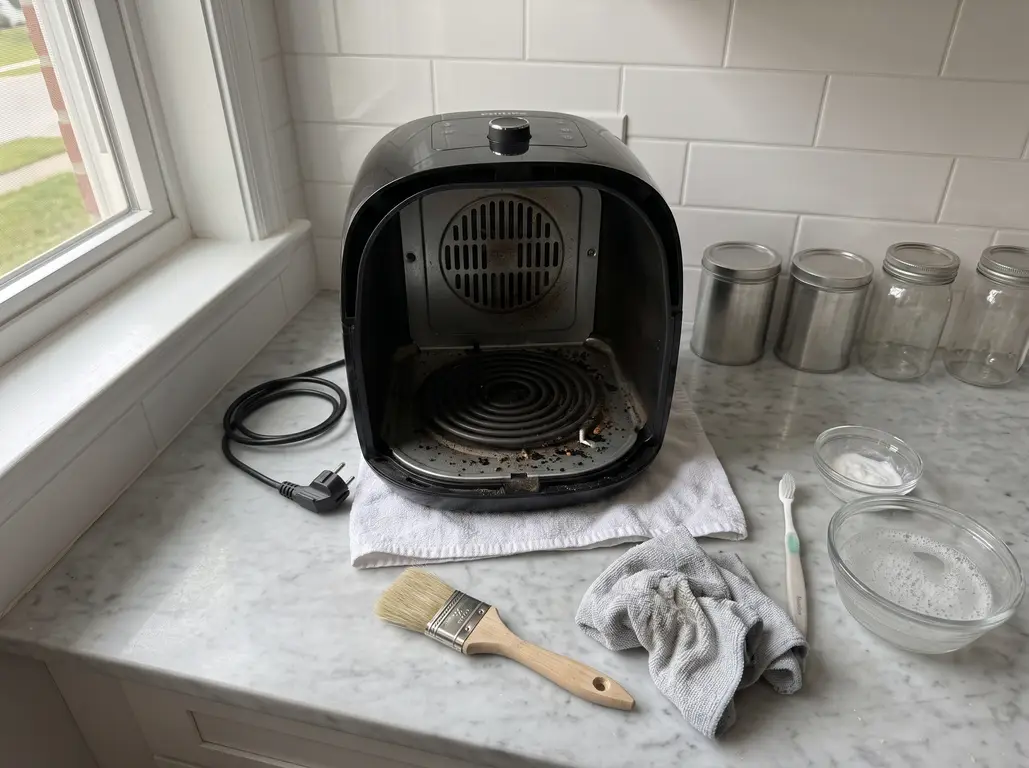
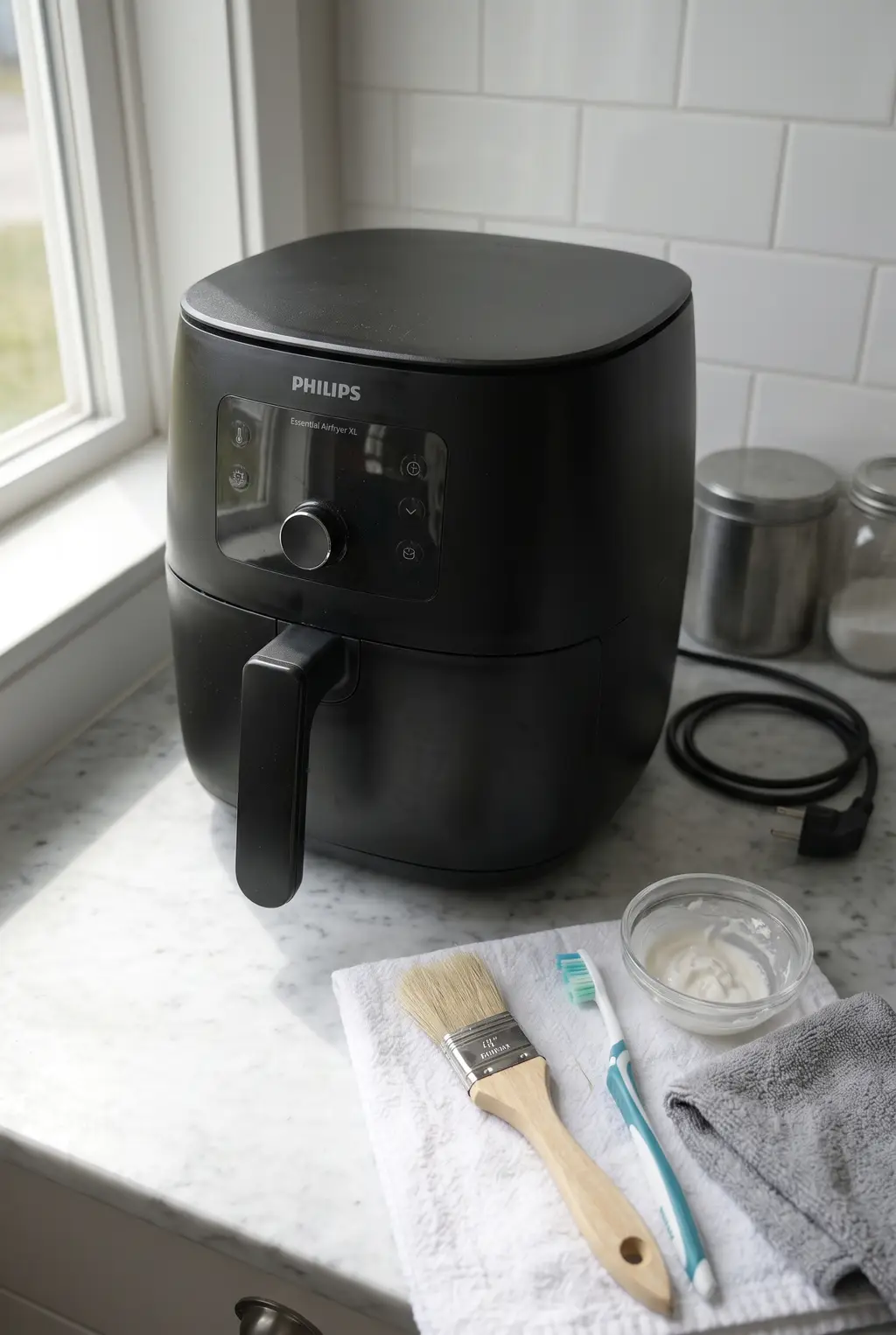
The machine in five zones
An air fryer is five cleaning jobs wearing one shell, and they want different tools, different schedules, and different amounts of respect for the electronics. Sorting the machine into zones first is what keeps you from scrubbing the wrong thing with the wrong chemical, which is where most cleaning damage comes from.
Everything that lifts out
Basket, crisper plate, pans, molds. Water-safe, sink-friendly, and already covered wall to wall by the bakeware cleaning guide. This page is about the rest.
The drawer cavity
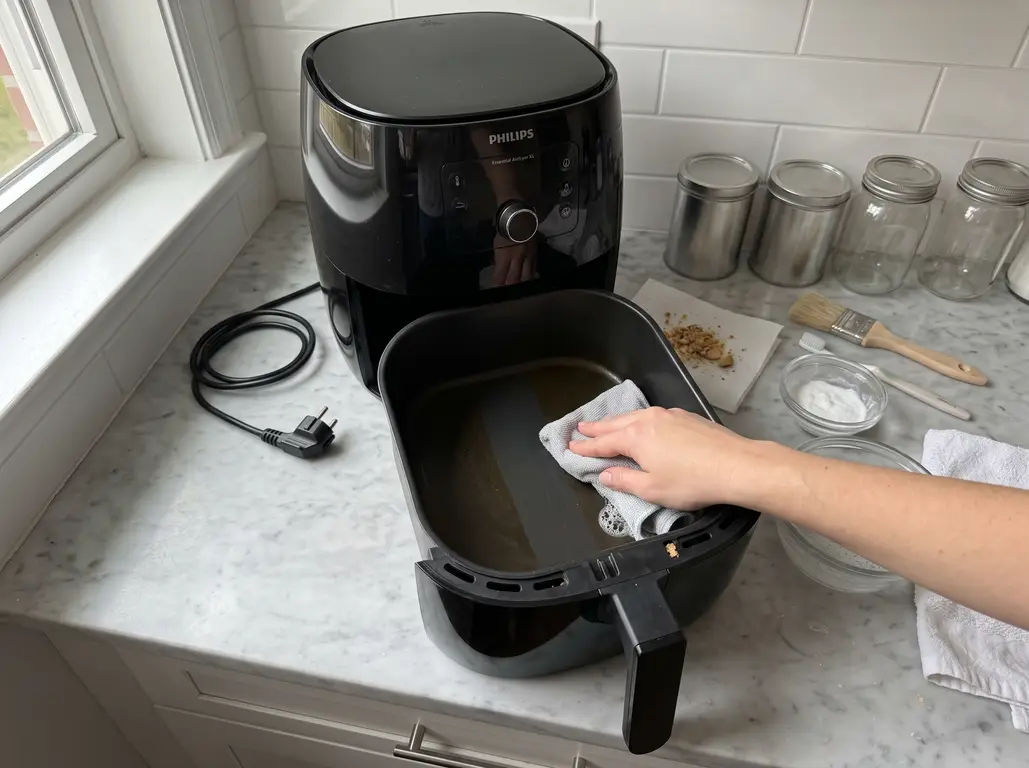
The walls and floor the basket slides into. Grease drips here and cooks on with every run. Damp cloth territory: water-tolerant but never water-flooded.
The roof and element
The coil and the metal above your food. Catches every rising spatter, runs hotter than anything else, and is the source of most smoke and most smells.
The fan, behind its guard
Mostly sealed away, mostly not your job, and worth an honest section of its own below, because the internet pretends otherwise.
Vents, shell and cord
Intake and exhaust vents clog with kitchen dust and aerosolized grease. A dry brush and a barely damp cloth, seasonally. The shell wants nothing stronger than dish soap.
Know what you are scrubbing
Half the bad cleaning advice online exists because people treat grease as one substance. It is at least five, they respond to different things, and one of them should not be removed at all.
| What you have | What it is | What removes it |
|---|---|---|
| Soft, wipeable grease | This week's fat, not yet cooked on | Warm water, dish soap, a soft sponge, sixty seconds |
| Sticky brown film | Usually aerosol cooking spray; the lecithin in it gums at basket temperatures | Baking soda paste, 3 to 1 with water, left 15 to 30 minutes. Then stop buying spray |
| Hard, smooth lacquer | Polymerized oil, chemically a varnish. On cookware this is called seasoning | Nothing safe, and it does not need removing. Leave it |
| Black flakes and specks | Carbonized drips, burnt crumbs | A dry brush once cool; they release. On the element, what survives a gentle wipe can stay |
| Sugar drips | A baking machine's specialty: the butter and sugar that bubble out of cinnamon rolls and monkey bread, plus batter overflow | Hot water dissolves burnt sugar, unlike burnt oil. A soaked cloth laid on the spot for ten minutes, then a wipe |
The lacquer row is the one that saves machines. That darkened, glassy film is the same polymer people deliberately build on cast iron, and attacking it with caustic cleaners takes the surface with it; the bakeware guide makes the full case. Sugar being water-soluble when oil is not is the one genuine advantage bakers get in this whole chore.
The two minute habit that replaces deep cleans
Grease has a schedule of its own: fresh, it wipes off with soap; a week later it is sticky; a month later it is film. Every cleaning job on this page gets harder by the day, which is why the two minutes after each cook do more than any monthly heroics. Once the machine has cooled to barely warm, tip the crumbs out, wipe the drawer cavity with a damp soapy cloth while any drips are still soft, wash the basket in the sink, and leave the drawer open to dry. That is the entire routine, and a machine that gets it never develops the problems the rest of this page solves. It is also the difference between a machine that smokes and one that does not, because the smoke from a dirty machine is last week's fat reaching its smoke point before your food gets warm.
The tell worth memorizing: smoke in the first three minutes of a run is old residue somewhere you have not wiped, and smoke near the end of a run is the current food rendering. The clock tells you whether to clean the machine or just add a spoonful of water to the drawer under greasy cooks.
The heating element, properly
The element is where cleaning guides go vague, because it is the one zone where water and enthusiasm are both dangerous. Here is the whole job, and it takes ten minutes a month.
- Unplug, and wait 30 minutes. Not a formality. The coil holds heat long after the shell feels cool, and every other step happens with your hand inches from it.
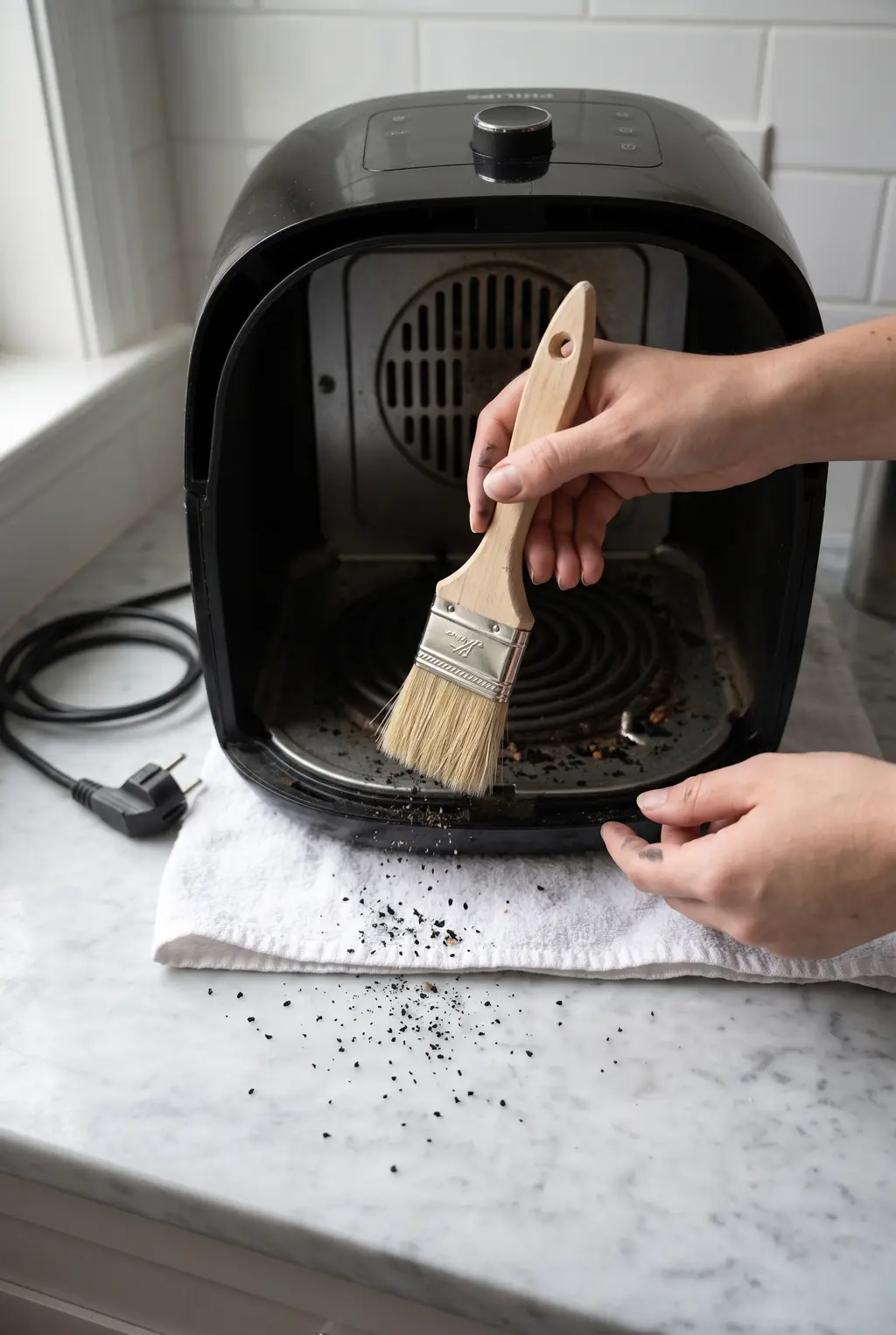
- Turn the machine upside down on a towel. The single most useful move in air fryer cleaning, and almost nobody prints it. The element now faces you in full view, and gravity pulls crumbs, flakes and drips away from the electronics above instead of into them.
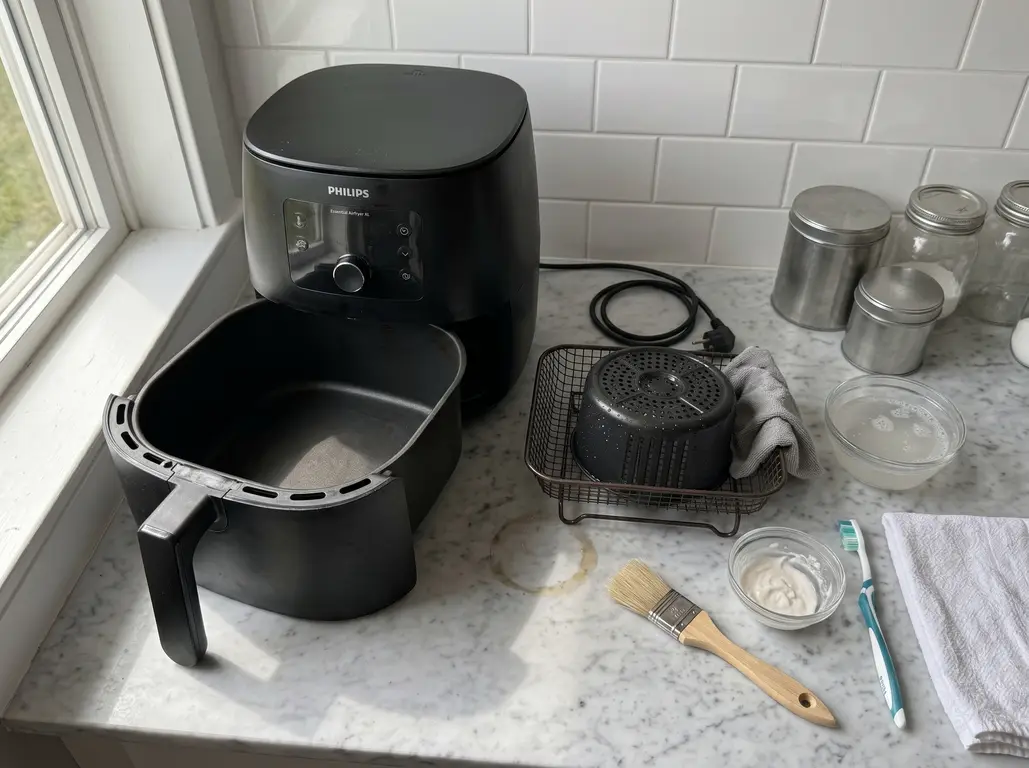
- Dry brush first. A clean paintbrush or soft toothbrush over the coil and the roof around it. Most of what is there is carbon flake and crumb, and it falls out onto the towel. Brushing before wetting matters; wet crumbs become paste.
- Then a damp cloth, wrung hard. One drop of dish soap in warm water, wring the cloth until it stops dripping, and wipe the roof and the coil gently. Follow with a plain-water wipe the same way. The cloth carries the water; nothing is ever sprayed or poured at the element.
- For film on the roof, soda paste. Three parts baking soda to one part water, spread on the metal around the element, never packed onto the coil itself, 15 minutes, then wipe out with the damp cloth.
- Air dry completely. Upright, drawer out, door open, an hour minimum. Then a five minute empty run at 400°F, which burns off soap traces and tells you immediately, by nose, how much better things are.
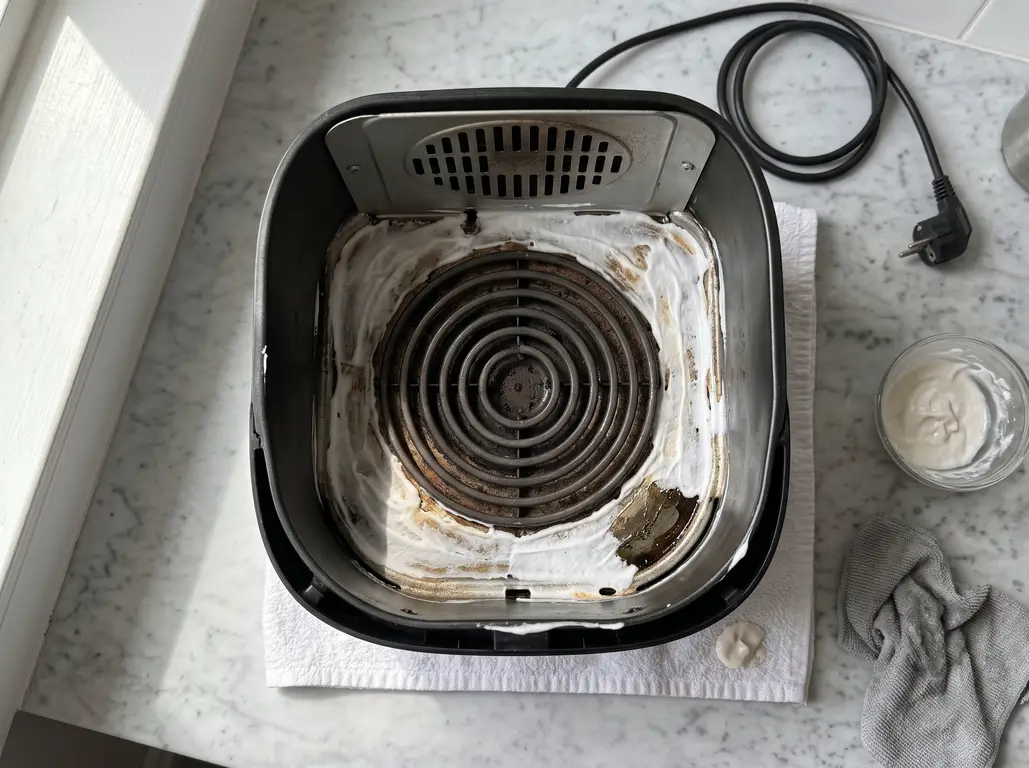
Three permanent rules up here. Nothing is sprayed at the coil, ever; droplets find the terminals where the coil enters the wall. The coil is never scraped or scoured; a scratched element develops hot spots and fails early. And the thin blackened coating a gentle clean leaves behind is carbon, it is bonded, it is not going anywhere, and it does no harm. Chasing a factory-shiny coil is how people end up in the oven-cleaner aisle, and that story ends badly below.
The fan, honestly
Now the section the ranking guides skip, because the honest answer is unglamorous: on almost every basket air fryer, you cannot clean the fan, and you are not supposed to. It sits behind the element and a guard panel held by screws, opening it usually voids the warranty, and the manufacturers sealed it precisely because a fan blade meeting a cleaning cloth, or a wet fan bearing, ends the machine faster than any grease would.
What you can genuinely do about the fan side is three things. Brush the guard with a dry soft brush during the monthly element clean, while the machine is upside down. Vacuum the external intake vents, because a dusty intake makes the fan work harder and move less air, and airflow is the entire appliance; a machine that has lost airflow bakes like a machine with a hot spot everywhere. And after any interior clean, run the machine empty at 400°F for five minutes, which burns residue off the surfaces behind the guard that no cloth will ever visit. A fan that rattles, grinds, or smells burnt after all three is asking for a technician or a replacement, not a deeper scrub.
Internet advice to ignore
Cleaning is the corner of the air fryer internet with the most confident bad advice, including some from very large sites. The specific claims, and why they fail:
| The advice | Where you will see it | Why to skip it |
|---|---|---|
| Oven cleaner or heavy degreaser inside | Recommended by name on major roundups | Lye traces survive rinsing, and the first hot run releases them as fumes into air that gets blown at food. It also strips nonstick and pits aluminum |
| The steam-clean run: water and vinegar in the drawer, machine on | Everywhere, as a hack | The fan atomizes the liquid and throws it at the element and the vents toward the electronics. It scrubs nothing. A damp cloth does the actual work with zero risk |
| Dunking or hosing the main unit | Less common, still seen | The shell is full of electronics and an uncovered motor. Submerging it ends the appliance, immediately or a week later |
| Chasing a spotless element | Implied by every gleaming photo | Bonded carbon is inert. The scraping and caustics people use to remove it cause the failures they were trying to prevent |
| Dishwasher every time for the basket | The label technically allows it | Survives is not the same as thrives: detergent alkalinity dulls coatings run by run. The bakeware guide has the part-by-part verdicts |
| Bleach for smells | Old forum advice | Pits metal, and residue anywhere near food is a genuine hazard. Smells are a fat film problem, and vinegar plus a real clean solves them |
A baker's prevention list
A baking machine gets dirty differently from a wings machine, and most of its mess is preventable at the recipe stage rather than the sink.
- Stop the overflow before it drips. Most baked-on cavity mess in a baker's machine is batter or glaze that went over a pan lip, because the recipe was written for a bigger pan. The recipe scaler resizes any recipe on this site to the pan you own, the pan size calculator tells you which pans actually fit your basket with airflow to spare, and for oven recipes you are adapting yourself, the air fryer calculator gives the converted temperature at which a sugar top browns instead of carbonizing onto the roof.
- Retire the aerosol spray. The sticky film that defeats sponges is mostly lecithin from spray cans, not oil. Brush oil from a bottle instead; the oils guide covers which bottle and why its smoke point matters less than people think.
- Use liners where they earn it, not everywhere. A parchment liner under a drippy bake saves a scrub, and a liner under everything costs you the crisp that made you buy the machine. The foil and parchment guide draws that line honestly.
- Water under the greasy jobs. A spoonful in the drawer beneath bacon or frozen wings keeps drips below their smoke point. It is the single best trick in the smoke guide, and it means less polymerized film to fight later.
- Keep the floor clear. Foil laid across the drawer floor blocks the airflow that carries spatter up and out on schedule, and redirects it to surfaces you cannot reach. If burning is the recurring problem rather than grease, the burning guide is the companion read.
The whole schedule, one table
| When | What | How long |
|---|---|---|
| After every cook | Crumbs out, drawer cavity wiped warm, basket washed, left open to dry | 2 min |
| Weekly, baking-heavy use | Soapy wipe of cavity walls and door interior; check the drawer join where grease hides | 5 min |
| Monthly | The element routine above: upside down, dry brush, damp cloth, soda paste on the roof if needed, empty burn-off run | 10 min + drying |
| Seasonally | Fan guard brushed, intake vents vacuumed, shell and cord wiped | 10 min |
| Never | Submerging the unit, spraying the element, oven cleaner, bleach, the steam-clean run | - |
Kept on this schedule, the machine also stays honest in its numbers: a clean element and clear vents are part of why the times on the baking chart stay repeatable month after month. All four calculators and tools live on one page.
Frequently asked questions
QHow do you clean the heating element on an air fryer?
Unplug the machine and let it cool for 30 minutes, then turn it upside down on a towel so the element faces you and gravity carries debris away from the electronics. Brush the coil and the roof around it with a dry soft brush first, then wipe with a well-wrung cloth carrying a drop of dish soap, then once more with plain water. Never spray anything at the coil, never soak it, and never scrape it with metal. Air dry completely, door open, before it goes back on the counter plugged in.
QHow do I get baked-on grease off if scrubbing does nothing?
Stop scrubbing and identify what you are fighting. Soft or sticky grease gives up to hot water, dish soap and patience. A hard, smooth, brown lacquer is polymerized oil, which is chemically a varnish, and no safe cleaner dissolves it; on a basket it is harmless seasoning, and on the element the thin dark coating that survives a gentle clean is carbon and can stay. The dangerous move is escalating to caustic products to chase a film that was never going to hurt anything.
QCan I use oven cleaner or a heavy-duty degreaser in an air fryer?
No. Oven cleaner is lye-based and stays effective in residue traces, so the first hot run afterward releases fumes inside a machine that blows air at your food. It also attacks nonstick coatings and pits aluminum. The strongest thing that belongs inside an air fryer is a baking soda paste, and the strongest thing that belongs on the removable parts is a dishwasher tablet dissolved in hot water for a soak, not a spray of anything from the oven-cleaning aisle.
QIs the steam-clean trick safe, where you run the air fryer with water and vinegar inside?
Skip it. An air fryer is not a sealed steamer: the fan turns that water into droplets and flings them at the element and through the vents toward the electronics, which is exactly what every manual tells you to keep water away from. The trick circulates dirty steam without scrubbing anything. A wrung-out damp cloth on a cool machine does everything the steam run claims to do, with none of the risk.
QHow often should you clean an air fryer?
The drawer and basket get a two minute wash after every cook, while the machine is still barely warm, because fresh grease wipes off and week-old grease has to be fought. The cavity roof and element want a monthly once-over if you bake, sooner if you run bacon, wings or anything that spatters upward. The fan guard and the intake vents are a seasonal job. A machine kept on that schedule never needs a heroic deep clean, which is the entire point of the schedule.
QWhy does my air fryer smoke even after I cleaned it?
Check where the smoke starts. Smoke in the first two or three minutes of a run is old fat somewhere the clean missed, usually the roof around the element or the join where the drawer slides in, reaching its smoke point before your food warms up. Smoke late in a cook is the current food's fat rendering onto a hot surface, which is normal for greasy loads and is managed with a spoonful of water in the drawer. If white acrid smoke appears instantly at switch-on, unplug and look for a crumb or a lifted liner touching the element.
QHow do you clean an air fryer fan?
You mostly do not, and honesty beats pretending otherwise. On nearly every basket machine the fan sits behind the element and a guard panel that is not user-serviceable; opening it means screws, and usually the end of the warranty. What you can do: brush the guard with a dry soft brush during the monthly clean, vacuum the external intake vents, and run the empty machine at 400 degrees for five minutes afterward to burn residue off the parts you cannot reach. A fan that rattles or smells burnt after all that is a service call, not a cleaning project.
QWhy does my air fryer smell like old grease, and how do I fix it?
The smell is volatile compounds evaporating out of a thin fat film every time the machine heats, so the fix is removing the film, not masking it. Do the full monthly clean including the element and roof, wipe the cavity with a half-and-half white vinegar and water cloth, leave the drawer open overnight, then run it empty at 400 degrees for five minutes. If a fishy or burnt smell survives all of that, the film is on the fan side of the guard where cloths cannot go, and it will fade over several empty runs or not at all.
QCan the air fryer basket go in the dishwasher?
Most are labeled dishwasher safe, and the label only promises survival, not health. Dishwasher detergent is far more alkaline than dish soap and, run after run, it dulls nonstick coatings and anodized finishes. An occasional cycle is fine; as a routine, sixty seconds with warm water and a soft sponge is gentler and honestly faster than loading it. The main unit, with the element and electronics, never goes near the dishwasher or the sink.
Made it? Rate it.
Never overbake again
Get our one-page times & temps cheat sheet, plus a new tested recipe each week.
No spam · unsubscribe anytime