

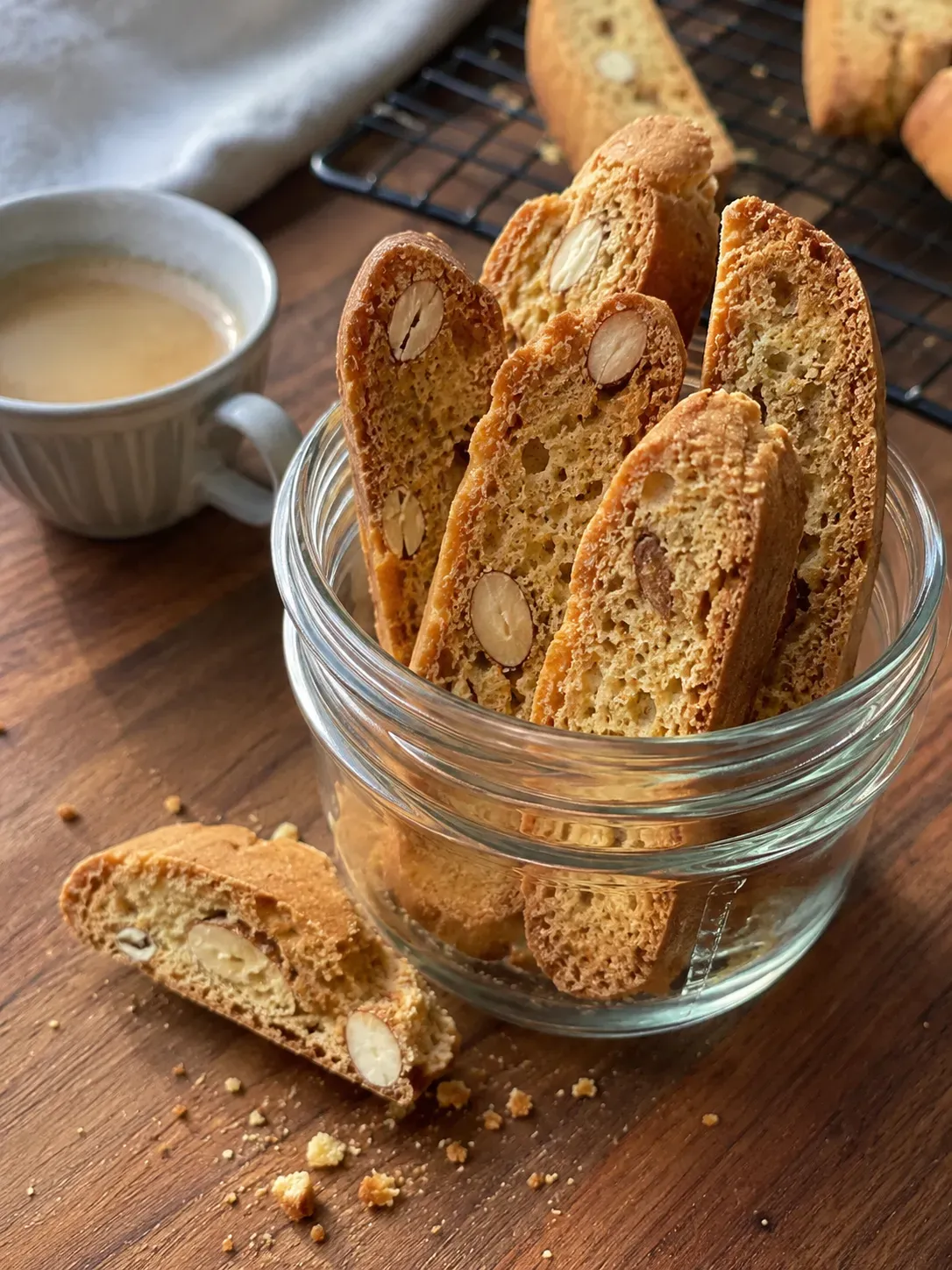
My first air fryer biscotti loaf sliced like a dream and dried into perfect crescents. My second, same recipe, exploded into rubble under the knife. The difference was not skill and it was not luck. The first loaf had rested fifteen minutes and the second had cooled for an hour while I answered the door, and it turns out biscotti punishes both impatience and patience.
That is the thing no ranking recipe tells you: the double bake is easy, and everything that goes wrong happens in the gap between the bakes. Get the gap right and an air fryer makes better biscotti than most ovens, because the second bake is a drying job and a fan in a small box is a drying machine.
Quick answer: Shape two short logs sized to your basket, bake at 320°F for 14 to 16 minutes until golden and 195°F inside, then rest exactly 15 minutes. Slice on the diagonal with a serrated knife, stand the slices upright like dominoes, and dry them at 300°F for 6 to 9 minutes with no flipping. They finish crisping as they cool, so pull them while they still give slightly.
Two bakes, two different jobs
Biscotti means twice baked, but the two bakes have almost nothing in common, and treating them as one process at one temperature is where most air fryer versions go sideways.
Bake the loaf
A real bake: set the crumb, brown the outside, cook the egg structure through. 320°F, and doneness is internal temperature, not the clock.
Rest 15 minutes
Not a pause, a stage. The loaf goes from unsliceable to sliceable to shatter-prone as it cools, and the window in the middle is where the knife goes in.
Dry the slices
Not baking at all. It is dehydration: driving moisture out of the cut faces at 300°F so the cookie snaps and keeps for weeks. Browning here is a side effect to limit, not a goal.
Understanding that second point changes how you use the machine. An air fryer struggles slightly with the loaf, because the top browns before the middle sets, which is why the loaf runs at 320°F rather than an oven's 350°F. But for the drying pass, the fan is an advantage no oven has: moving air strips moisture off both cut faces at once. The machine that fights your cakes is built for this exact job.
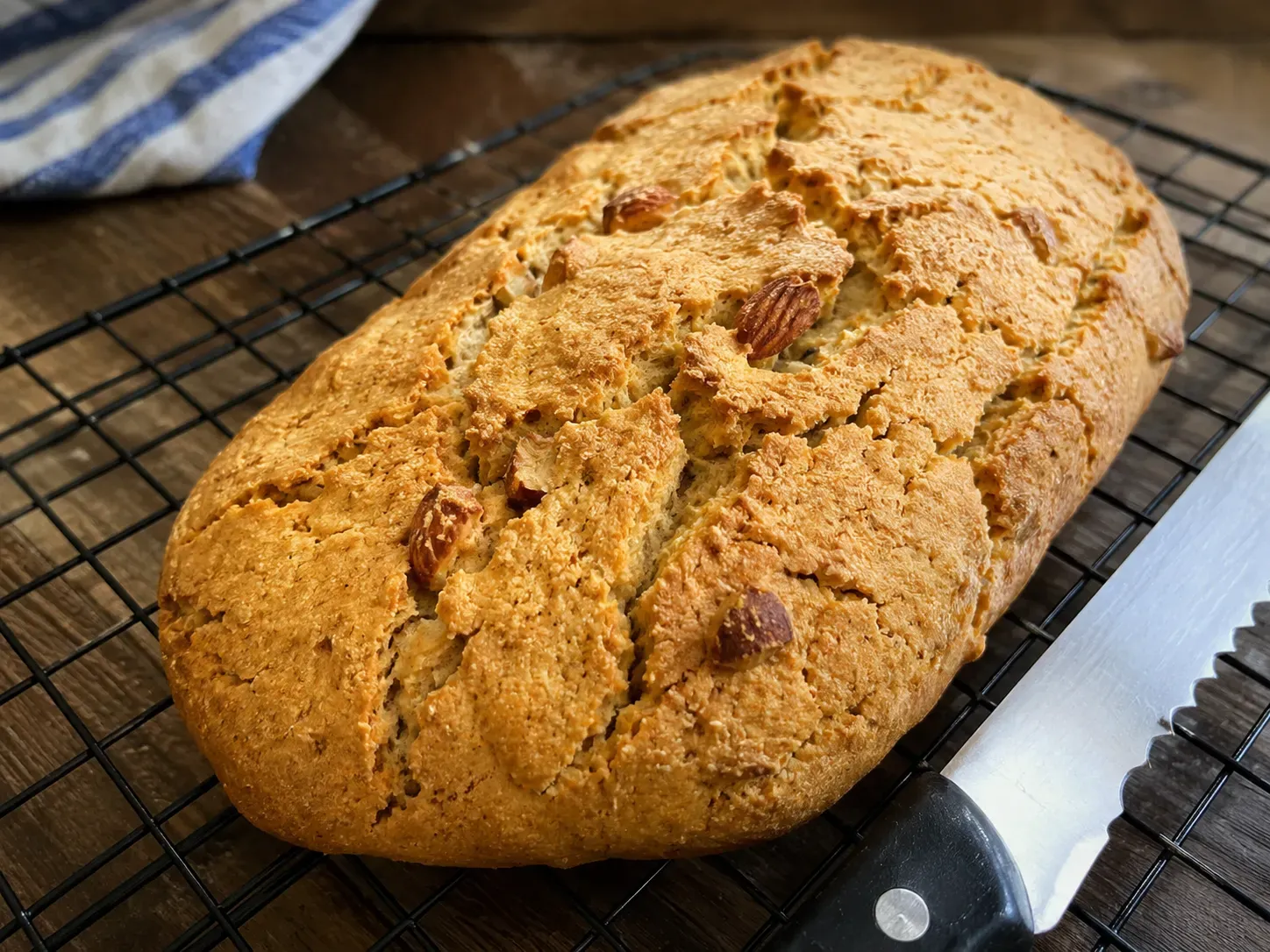
One honest constraint before you start: a standard biscotti log does not fit. Oven recipes shape one 12 to 14 inch log, and most baskets are 8 or 9 inches across. Shape two short logs instead, about 6 to 7 inches by 2.5 wide, and bake them one at a time or side by side with a gap if your basket allows. Slightly shorter biscotti, same cookie.
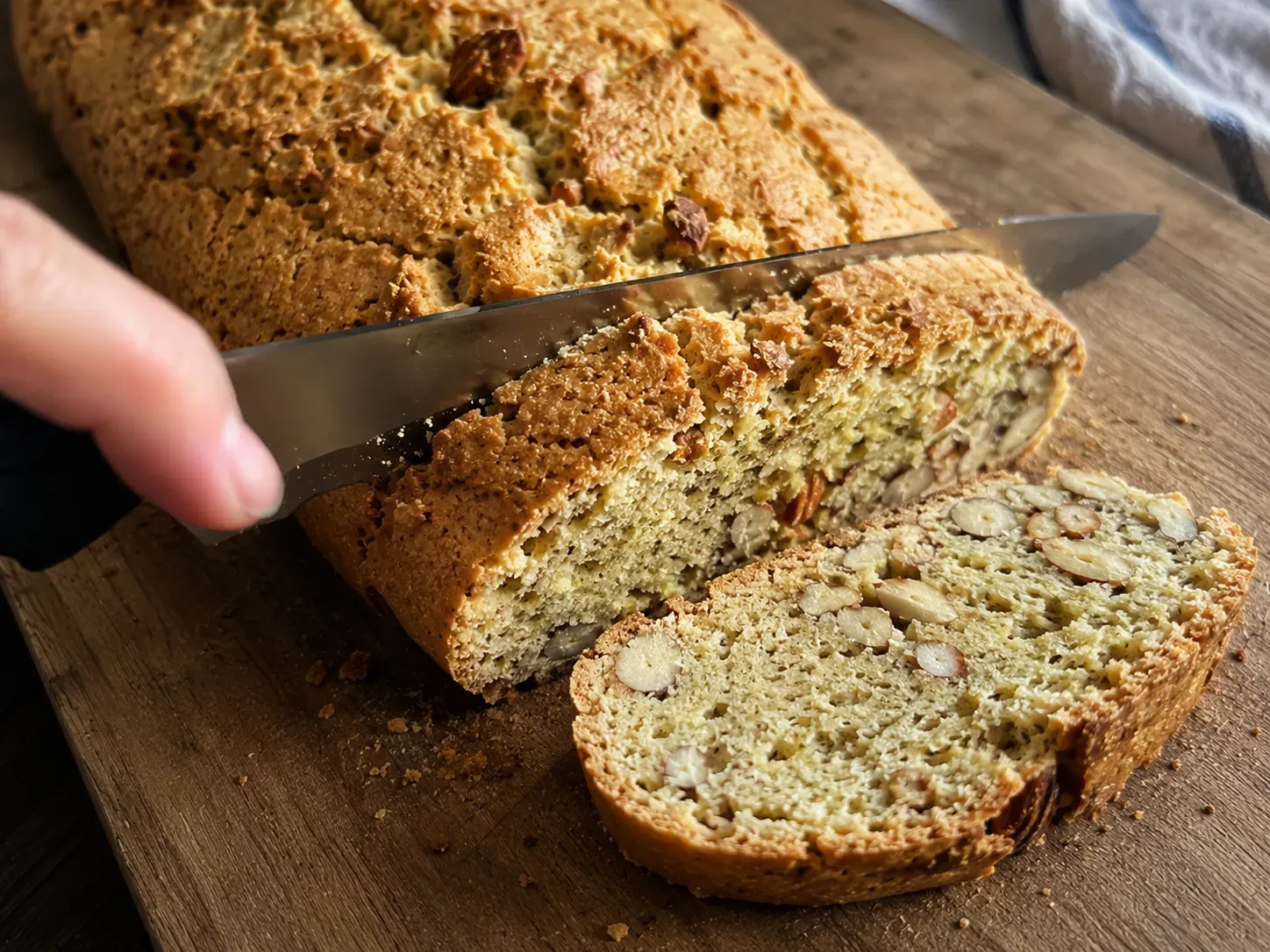
The fifteen minute slicing window
This is the step that decides whether you get eighteen biscotti or a bowl of expensive granola, and the ranking recipes wave at it with a vague cool before slicing.
Cooling is not a formality here, it is a moving target:
| When you slice | What happens |
|---|---|
| Under 10 minutes, loaf hot | The crumb is still steamy and soft. Slices compress, drag and tear under the knife. |
| 15 minutes, loaf warm | The crumb has set but the loaf is still slightly flexible. Clean slices, intact edges. This is the window. |
| 45 minutes and beyond, loaf cool | The crust has hardened and gone brittle. The knife cracks through instead of cutting, and slices shatter at the edges, taking your almonds with them. |
Set a timer when the loaf comes out. Fifteen minutes is long enough to matter and short enough to forget, and both of my rubble batches came from answering something else during the gap.
Three knife rules that finish the job:
- Serrated knife, always. A chef's knife wedges and cracks the loaf. Serrations saw through the crust and the nuts.
- One long stroke per slice, gentle sawing, no downward pressing. Pressure is what breaks loaves.
- Cut on the diagonal, 1/2 inch thick. The diagonal is not just tradition, it makes each biscotto longer than the loaf is wide, which is how short air fryer logs still produce full length cookies. Thinner than 1/2 inch snaps in the second bake, thicker never dries through.
Second bake: stand them up like dominoes
In an oven, sliced biscotti lie flat on a sheet and you flip every one of them at halfway so both faces dry. Almost every air fryer recipe copies that flat-and-flip method into the basket without noticing the machine offers something better.
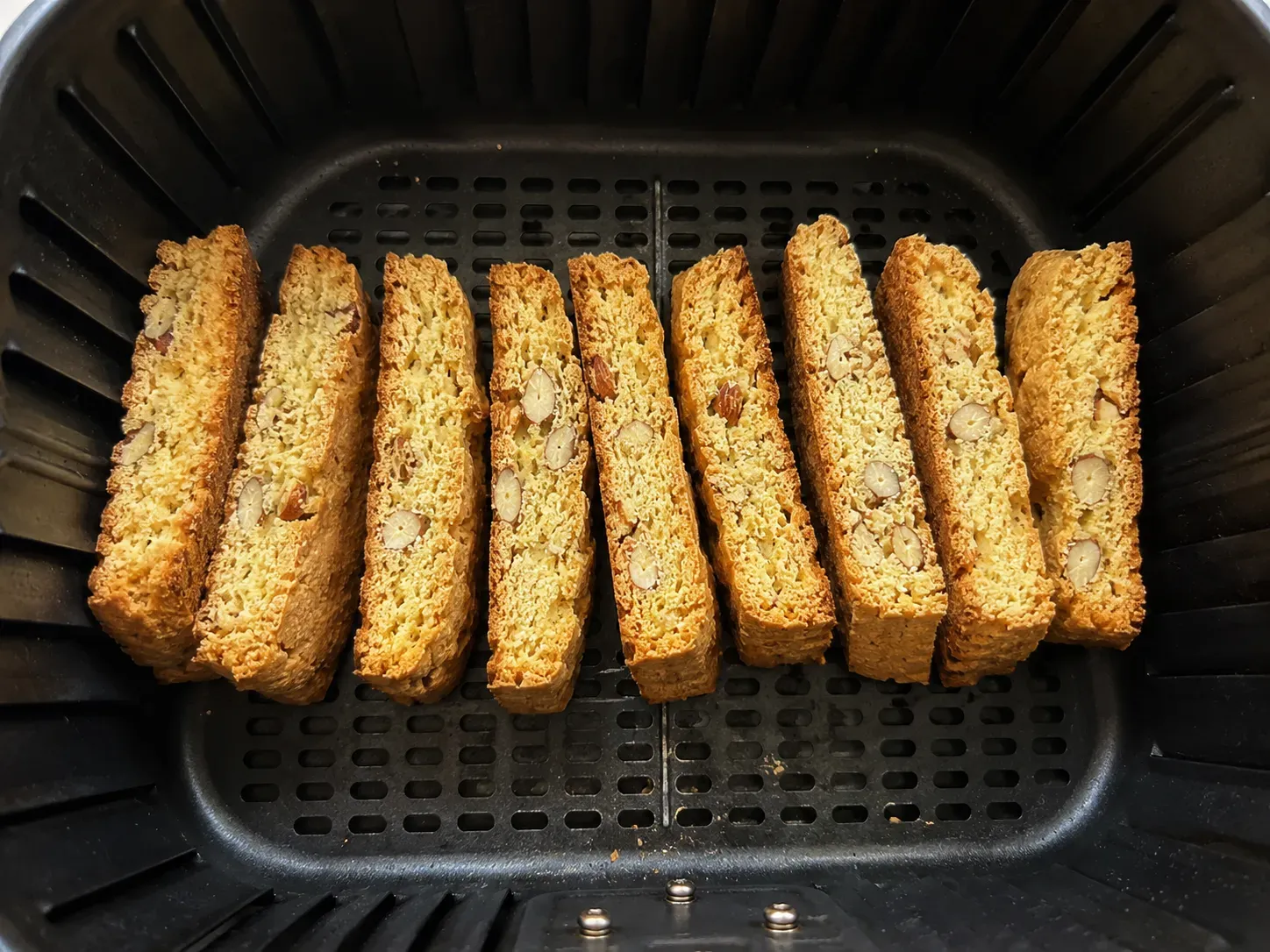
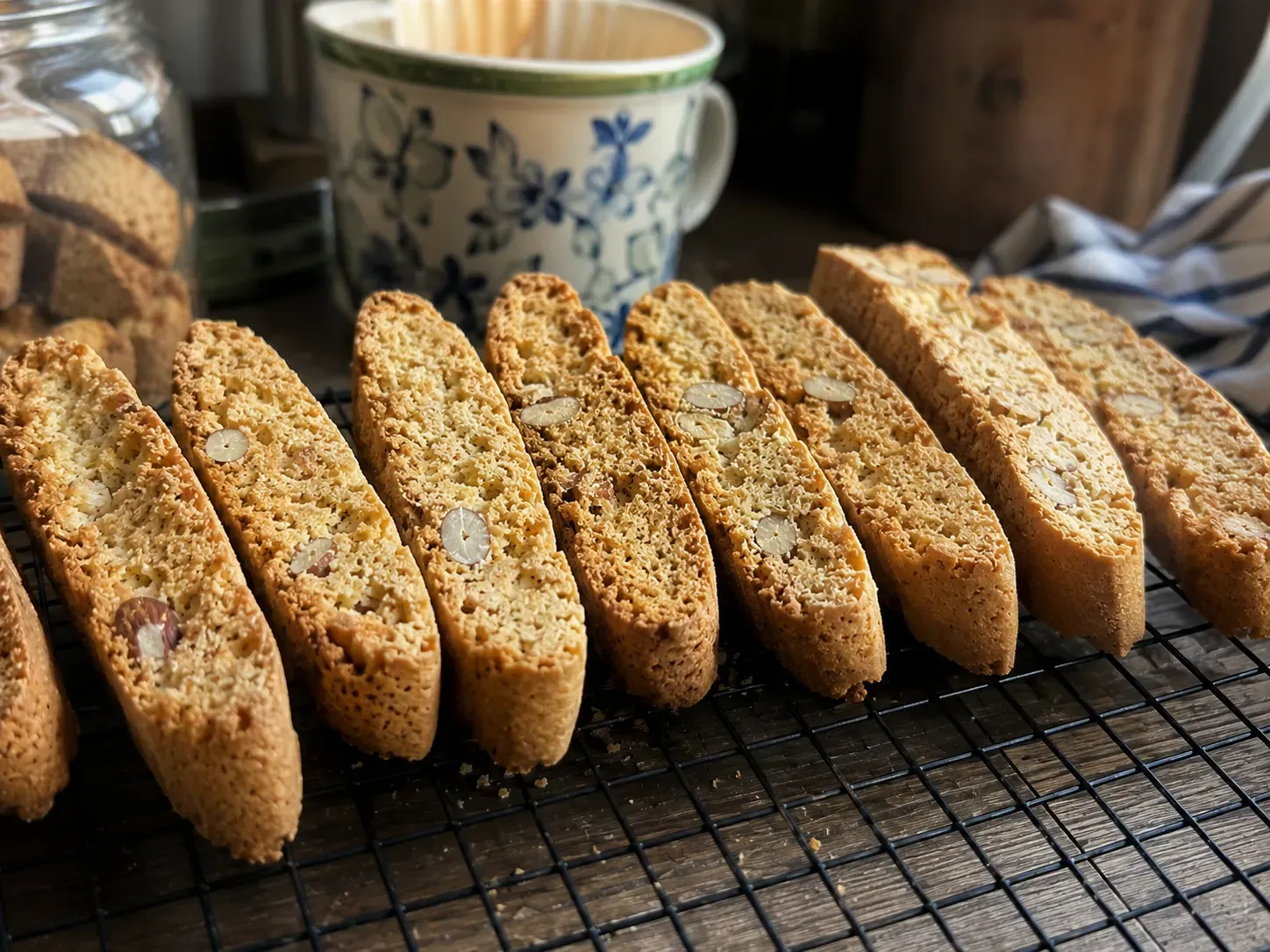
Stand the slices upright, on their bottom edges, spaced a finger width apart, like a marching line of dominoes. The fan drives air over both cut faces simultaneously, so both sides dry at once, there is no flipping, no tong juggling, and no hot slice snapping in half mid-flip, which is how biscotti actually break. The fan that fights delicate bakes is doing all the work for you here.
The slices are stable standing up because the diagonal cut gives each one a long flat base. If one falls in the airflow, it was cut thinner than its neighbors: lay that one flat and flip it halfway, and cut more evenly next time. In an oven style air fryer, standing them on the middle rack works identically. The differences between the two machine formats are in basket versus oven-style air fryers.
No butter, and why that is the point
This dough has no butter and no oil, and that is not an omission. It is the oldest argument in biscotti.
Traditional Italian biscotti are lean: flour, sugar, eggs, nuts. No fat beyond the yolks. Lean dough dries hard and stays hard, which is why real biscotti keep for weeks in a jar and why they were shipped as travel rations centuries before anyone dunked one in an espresso. The crunch is the food preservation, and the dunk exists because the cookie is built to withstand it.
American style biscotti add butter, which makes a tenderer, more crumbly cookie that is pleasant to eat dry and goes stale in days. Neither is wrong, but they are different cookies, and you should pick on purpose:
- Dunkers and gift jars: no butter, as written below. Rock solid, espresso proof, keeps three weeks.
- Eating them plain with tea: add 3 tablespoons of softened butter when you beat the eggs and sugar. Tenderer bite, one week of shelf life, and it will brown faster in both bakes, so watch the color.
Ingredients
The dough
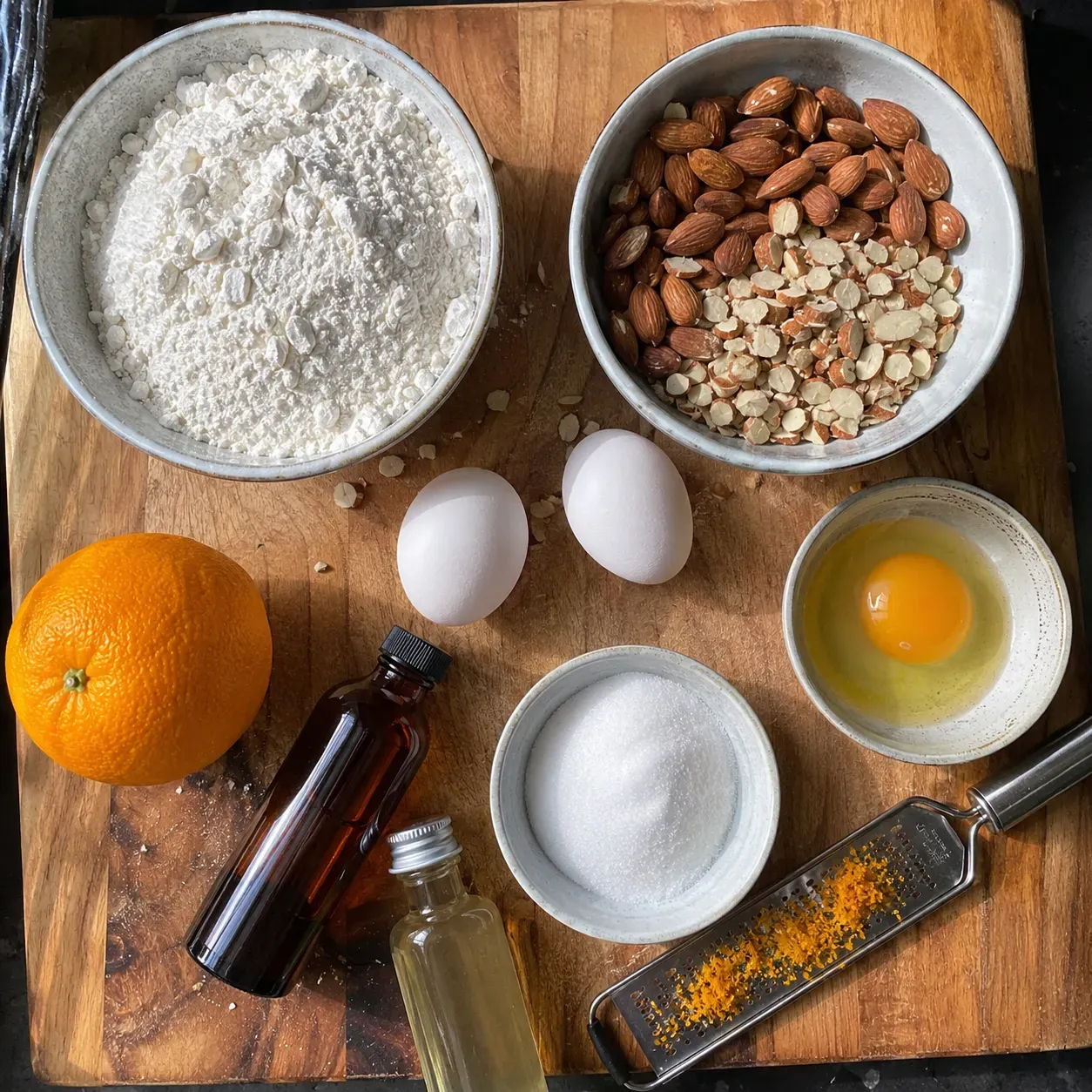
- 1 1/2 cups (188g) all-purpose flour
- 1/2 cup (100g) granulated sugar
- 3/4 teaspoon baking powder
- 1/4 teaspoon fine salt
- 2 large eggs
- 1 teaspoon vanilla extract
- 1/2 teaspoon almond extract
- 3/4 cup (105g) whole almonds, toasted and roughly chopped
- Optional: zest of 1 orange
For finishing
- 1 egg white, beaten, for brushing the logs
- Optional: coarse sugar for the tops
Toast the almonds first, 4 minutes at 300°F in the basket you are about to use. Raw nuts inside a biscotti never fully toast, because the dough insulates them through both bakes. Whole almonds chopped rough beat sliced almonds, which vanish. The egg white wash is what gives bakery biscotti their sheen, and the dough itself needs no mixer, just a bowl and a spoon.
How to make them
- Toast the almonds: 4 minutes at 300°F, shaking once. Chop rough and cool.
- Whisk the flour, sugar, baking powder and salt in one bowl.
- Beat the eggs with both extracts and the zest if using, then stir into the dry mixture until a sticky dough forms. It will feel too wet for shaping. That is correct, and flour on your hands fixes it.
- Fold in the almonds.
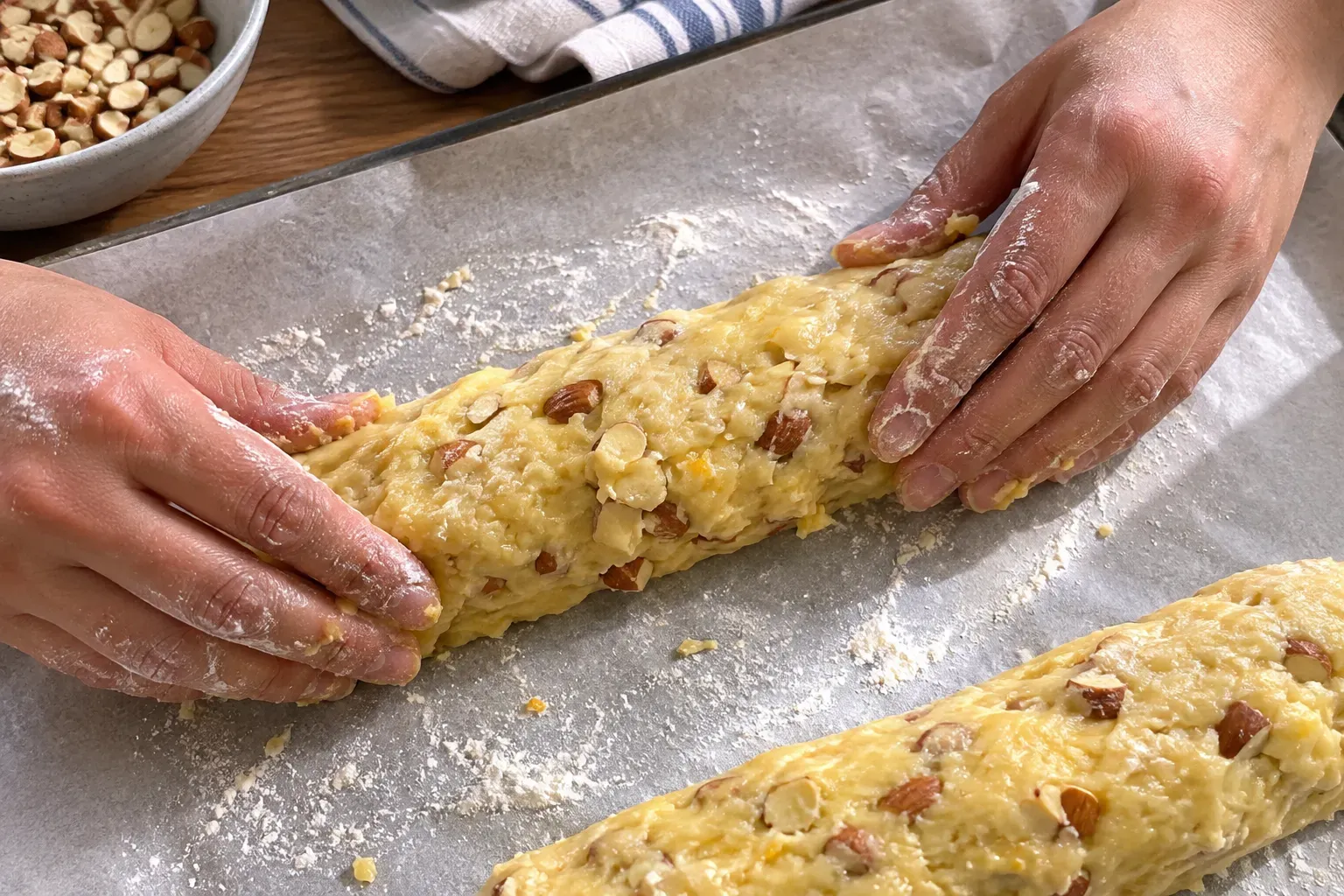
- Shape two logs sized to your basket, about 6 to 7 inches long, 2.5 inches wide, 1 inch tall, on parchment cut smaller than the basket floor. Wet or floured hands stop the sticking. Leave 2 inches between logs, or bake them one at a time: they widen by half as they bake. The parchment rules are in can you use foil or parchment paper in an air fryer.
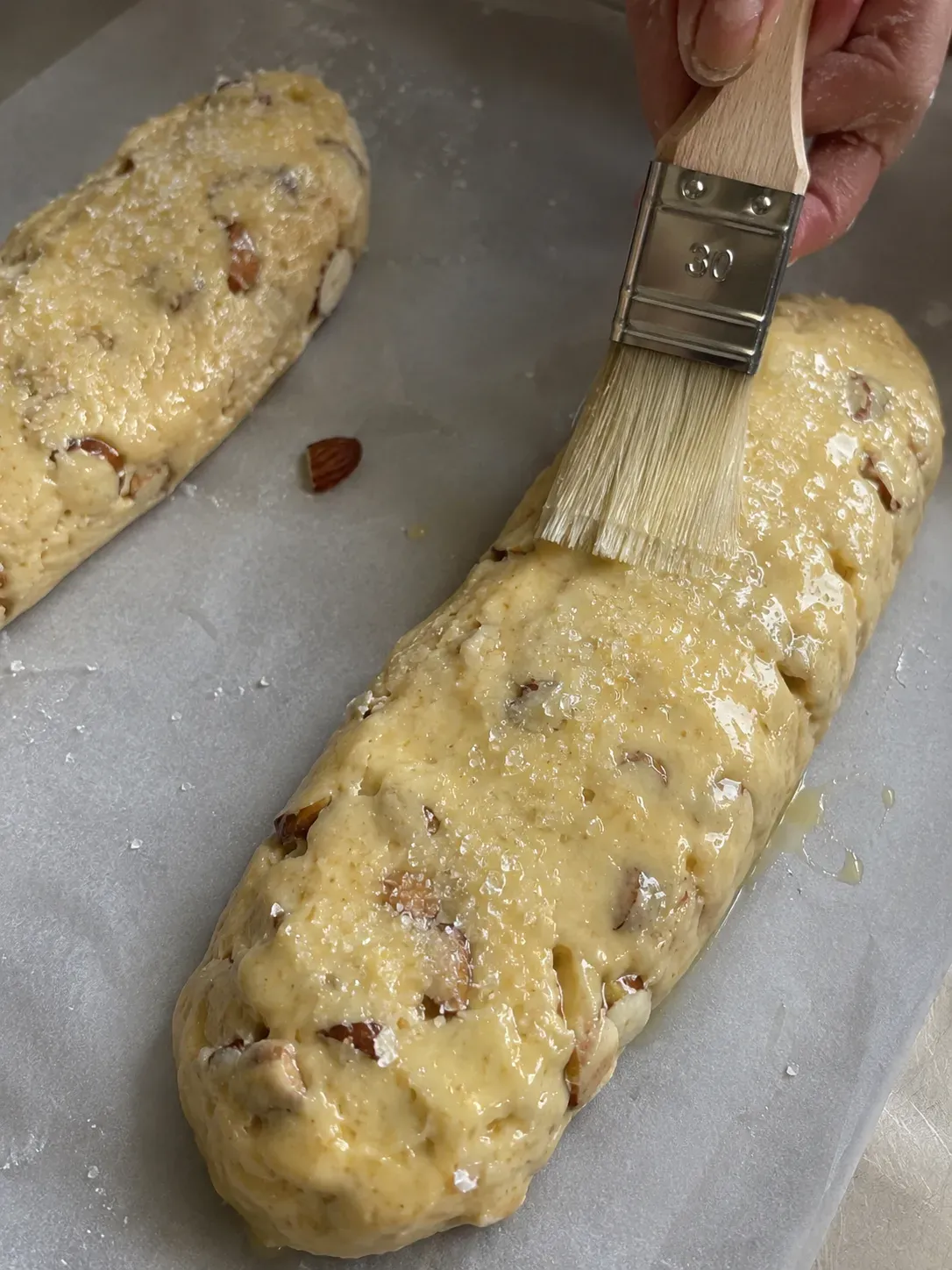
- Brush with egg white and sprinkle with coarse sugar if using.
- Preheat to 320°F for 3 minutes, then bake the logs 14 to 16 minutes, until golden, cracked on top, and 195°F in the center on an instant-read thermometer. Cracks along the top are correct, not a defect. Whether preheating matters per bake is covered in do you need to preheat an air fryer for baking.
- Rest exactly 15 minutes on a rack. Set the timer the moment the loaf comes out.
- Slice on the diagonal, 1/2 inch thick, serrated knife, long gentle strokes, no pressing. Each log gives 8 to 10 slices.
- Stand the slices upright in the basket, a finger width apart, and dry at 300°F for 6 to 9 minutes depending on how hard you want them. No flipping.
- Cool completely on a rack. They come out of the second bake still slightly tender and finish hardening as the last moisture leaves. That is carryover in reverse gear: judge tomorrow's crunch by cooled cookies, never hot ones.
The crunch dial
The second bake is a dial, not a duty. All at 300°F, slices standing:
| Second bake | Result | Best for |
|---|---|---|
| 5 to 6 min | Golden edges, tender middle, snaps softly | Eating plain, kids, tea |
| 7 to 8 min | Crisp through, firm snap | The all-purpose setting |
| 9 to 10 min | Hard, dry, rings when tapped | Espresso dunking, gift jars, three week storage |
Remember they harden further as they cool. The wider principle, that drying and crisping are the same job done slowly, is in how to make bakes crispy in an air fryer. If a cooled biscotto is softer than you wanted, stand the whole batch back in the basket for 2 minutes at 300°F. Drying is repeatable, which is the luxury of a cookie that cannot really overbake, only overbrown.
Troubleshooting
| What you got | Why | Fix |
|---|---|---|
| Loaf shattered when sliced | Cooled too long, so the crust went brittle. | Fifteen minutes, timed. Past 45, the window has closed. |
| Slices squashed and tore | Sliced too hot, or a straight edged knife. | Wait the full 15, and use a serrated blade with no downward pressure. |
| Not crunchy | Second bake too short, or slices cut over 1/2 inch thick. | Back into the basket, standing, 2 to 3 more minutes at 300°F. Drying is repeatable. |
| Browned before they dried | Second bake run at first bake temperature. | 300°F is a drying pass, not a bake. Hotter just toasts the faces and traps the middle. |
| Loaf raw in the middle, dark on top | Element too close, or temperature too high for the loaf stage. | 320°F, and verify 195°F internal before it comes out. Persistent top scorching: how to prevent burning in an air fryer. |
| Logs spread into each other | Two logs too close in one basket. | Two inches minimum between them, or one log at a time. They widen by half. |
| Slices fell over in the second bake | Cut thinner than their neighbors, so no stable base. | Lay the thin ones flat and flip at halfway. Aim for an even 1/2 inch next loaf. |
| Almonds fell out of the slices | Nuts left whole, or raw nuts that never bonded to the crumb. | Chop rough and toast first. Whole nuts are boulders the knife has to go around. |
| One end of the basket always darker | A hot spot. | Rotate the parchment at halfway on the loaf, and reverse the domino line for the dry. |
If bakes misbehave across every recipe, work through the air fryer baking troubleshooting guide. Converting your own oven biscotti recipe? The air fryer calculator handles the loaf stage numbers, then keep this page's 300°F drying pass and the 15 minute window, because the calculator converts bakes and the second stage is not really a bake. Every temperature on the site is in the air fryer baking chart.
Variations
- Cranberry pistachio. Swap the almonds for 1/2 cup pistachios and 1/3 cup dried cranberries. The Christmas jar cookie, red and green in every slice.
- Chocolate dipped. Dip one long edge of fully cooled biscotti in melted dark chocolate and set on parchment. Dip after drying, never before.
- Anise. Swap the almond extract for 1 teaspoon anise extract and add a tablespoon of fennel seeds. The old country version.
- Double chocolate. Replace 1/4 cup of the flour with cocoa powder and fold in 1/3 cup chocolate chips. Runs softer, so give it the full 9 minute dry.
- Lemon walnut. Lemon zest and toasted walnuts, and candied walnuts if the jar is a gift.
- Gingerbread biscotti. Add 2 teaspoons of the spice mix from the gingerbread cookies and a tablespoon of molasses. December in a dunkable.
Biscotti are the keeper of the cookie shelf, and they share the parchment-batch technique with everything else here: chocolate chip, sugar, peanut butter, oatmeal, the shortbread that sits beside them in every gift box, and snickerdoodles for the tin that has to please everyone. If you are scaling a batch up for gifting season, the recipe scaler converts the quantities, and the logs stay basket sized no matter what the batch does. If you have never measured yours, the pan size calculator tells you how long a log your basket will actually take.
Storage, measured in weeks
You will read that biscotti keep for two days. That is true only of buttered, under-dried biscotti, and it misses the entire point of the cookie. A lean, properly dried biscotto is one of the longest keeping baked goods there is.
- Airtight jar at room temperature: 3 weeks, for the no-butter version dried to the hard setting. This is the cookie functioning as designed.
- With butter in the dough: about 1 week. Fat goes stale, lean does not.
- Chocolate dipped: 1 week, layered with parchment, somewhere cool.
- Freezer: 3 months, though a cookie that keeps three weeks on the counter rarely needs it. Thaw uncovered.
- Gone soft in the jar? Two minutes standing in the basket at 300°F brings the snap back completely. Humidity is reversible.
- Baked loaf, dried later: the sliced, undried slices keep overnight wrapped. Run the second bake fresh the next day, and the espresso hour has warm biscotti.
Two short bakes in a basket against an hour of full oven for a single tray is the kind of arithmetic that adds up over a gifting season, and the running cost calculator will price it against your own rate. If you are converting an oven biscotti recipe of your own, the conversion guide explains the drop this page applies. All four air fryer tools live in one place, and the guides index covers the technique behind every number here.
Frequently asked questions
QHow long do you cook biscotti in an air fryer?
Two stages: the loaf bakes at 320°F for 14 to 16 minutes until golden and 195°F in the center, then after a 15 minute rest and slicing, the slices dry at 300°F for 6 to 9 minutes standing upright. Total hands-on-to-jar time is about 45 minutes. The two temperatures are doing different jobs, so do not average them into one.
QWhy did my biscotti crumble when I sliced it?
You sliced outside the window. A hot loaf compresses and tears because the crumb is still steamy, and a fully cooled loaf shatters because the crust has gone brittle. Slice at 15 minutes, when the loaf is warm but set, with a serrated knife in long gentle strokes and no downward pressure. Whole nuts also break slices, so chop the almonds rough before they go in.
QDo you really have to bake biscotti twice?
Yes, if you want biscotti. The first bake makes a soft almond loaf, and stopping there gives you exactly that, a pleasant loaf cake. The second bake is what dries the slices into the hard, snapping, dunkable cookie that keeps for weeks. It costs 8 minutes and it is the difference between biscotti and bread.
QDo you flip biscotti in the air fryer?
Not if you stand them up. Oven recipes lay slices flat and flip at halfway because a sheet pan only heats one face. In an air fryer, stand the slices upright on their bases a finger width apart and the fan dries both cut faces at once, no flipping, no tongs, no snapped cookies. Only a slice cut too thin to stand needs the flat-and-flip treatment.
QWhy are my biscotti not crunchy?
The second bake was too short, or the slices were cut thicker than 1/2 inch, or there is butter in the dough making a permanently tenderer cookie. The fix is cheap: stand them back in the basket at 300°F for 2 to 3 more minutes. Drying is repeatable any number of times, which makes biscotti one of the most forgiving cookies in the machine, and they also harden noticeably as they cool, so judge cooled, not warm.
QHow long do homemade biscotti last?
Properly dried, no-butter biscotti keep 3 weeks in an airtight jar at room temperature, which is the entire historical point of the cookie: it was built as a keeping food. Versions with butter in the dough last about a week, and chocolate dipped ones a week in a cool spot. If they soften in humid weather, 2 minutes at 300°F in the basket restores the snap.
QButter or no butter in biscotti?
Traditional Italian biscotti use no butter and no oil, which is why they dry glass-hard, survive espresso dunking, and keep for weeks. American style adds butter for a tenderer, more crumbly cookie that stales in days. This recipe is written lean; add 3 tablespoons of softened butter with the eggs if you prefer the softer style, and expect faster browning in both bakes.
QWhy do you cut biscotti on the diagonal?
Geometry, not fashion. A diagonal slice is longer than the loaf is wide, which matters doubly in an air fryer where the logs are already short to fit the basket. A 2.5 inch wide log cut on a steep diagonal yields slices 4 inches long. The diagonal also gives each slice a long flat base, which is what lets them stand upright for the flip-free second bake.
QCan I convert my oven biscotti recipe for the air fryer?
Yes, with two changes beyond the usual conversion. Split the single long log into two basket-sized ones, and treat the two bakes separately: convert the loaf bake down about 25 to 30 degrees from the oven number, then ignore the oven's second bake instructions entirely and use 300°F with the slices standing. The second stage is drying, and the air fryer needs less time at it than any oven recipe assumes.
Never overbake again
Get our one-page times & temps cheat sheet, plus a new tested recipe each week.
No spam · unsubscribe anytime