

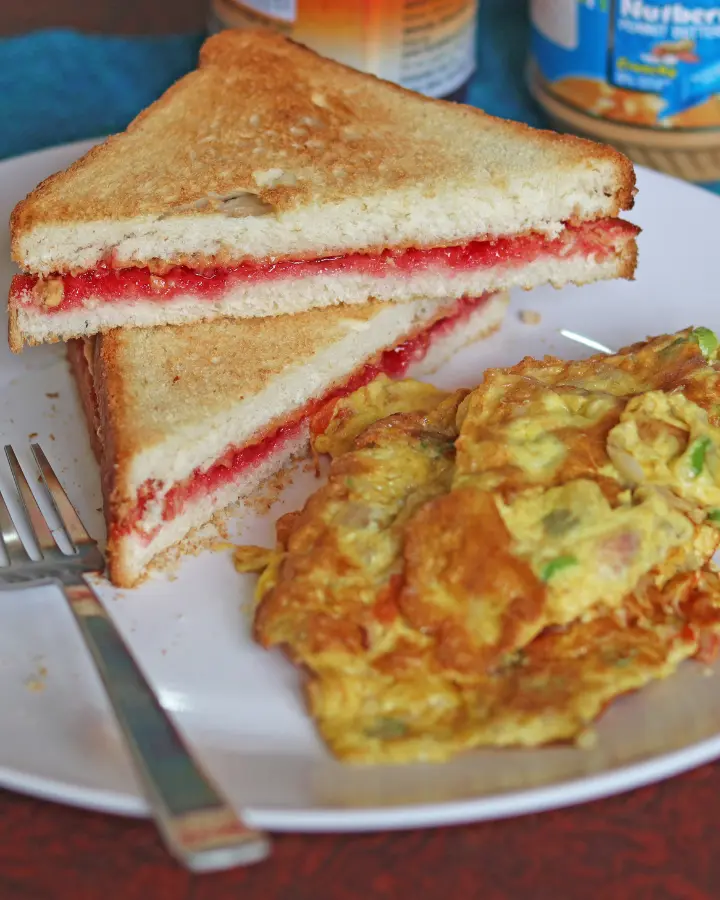
The first time I put a peanut butter and jelly sandwich in my air fryer, two things happened in the span of ninety seconds. The fan lifted the top slice of bread clean off the sandwich and pinned it against the heating element, where it started to scorch. And the jelly, which I had spread edge to edge like a normal person, boiled out of the open side and dripped through the basket holes onto the drawer below, where it turned to grape-flavored cement.
I almost filed the whole idea under internet nonsense. But a griddled PB&J is genuinely one of the best cheap sandwiches there is, and the air fryer version turned out to be better than the pan version once I fixed those two failures. The fix for the flying bread is weight and butter: a properly buttered sandwich is heavy enough to stay put, and a toothpick through the middle ends the argument entirely. The fix for the leaking jelly is smarter assembly: peanut butter on both slices, jelly sealed in the middle, and a bare half-inch border all the way around. Peanut butter does not boil. It becomes the gasket that keeps the jelly in.
Quick answer: Butter the outside of the sandwich, then air fry at 370°F (188°C) for 5 minutes, flip, and cook 2 to 3 minutes more. Spread peanut butter on both slices of bread with the jelly in the middle, leave a half-inch empty border at the edges, and it will not leak. It is done when both sides are deep golden and the center feels soft when you press it.
Why bother air frying a PB&J
Because heat changes this sandwich more than it changes almost any other. Toasting the outside gets you the crunch, but the real event is inside: warm peanut butter loosens into something close to a sauce, and jelly heats into a jammy syrup that soaks into the crumb instead of sitting on it. It stops being a lunchbox sandwich and starts being closer to a filled French toast.
A skillet can do this too, and I made them that way for years. The air fryer wins on three counts:
- Both sides at once after the flip. The circulating air browns the top while the basket crisps the bottom, so you get an evenly toasted crust without babysitting a pan.
- No standing at the stove. Eight minutes, one flip, and you can make lunch for a kid while doing something else. This matters more than it sounds like it should.
- Less butter than a griddle. A pan-fried PB&J swims in butter. Here, a thin spread on each face is enough, because the hot air does the crisping instead of the fat.
One honest note: this is a hot, molten sandwich when it comes out. If you are making it for a small child, cut it and let it sit for a couple of minutes. Heated jelly holds heat like jam fresh off the stove, because that is what it briefly is.
Ingredients
Four things, and the ratios matter more than the brands.
- 2 slices sandwich bread
- 2 tablespoons creamy peanut butter
- 1 tablespoon jelly or jam
- 1 tablespoon butter, softened
Ratio rule: twice as much peanut butter as jelly, always. The peanut butter has to cover two slices and form the seal; the jelly only has to flavor the middle. Flip the ratio and the sandwich leaks.
Bread: plain white sandwich bread is genuinely the best here, which is not something I say often. It compresses slightly, seals well at the edges, and crisps evenly. Sourdough and brioche both work with adjustments covered in the chart below. Skip anything with large air holes, because holes are escape routes for jelly.
Peanut butter: creamy, and a standard shelf-stable one like Jif or Skippy behaves better than natural peanut butter, which loosens dramatically when hot and can thin past the point of sealing. If natural is what you have, use a little less and keep the border generous.
Jelly: anything thick. Grape jelly and strawberry jam are the classics for a reason. Runny preserves and honey thin out even further with heat, so treat them as a drizzle for after, not a filling.
Butter: softened, spread edge to edge on both outside faces. It carries the browning and adds enough weight to help the top slice stay down. Mayonnaise works exactly the way it does on grilled cheese, browning deeper and more evenly, if the idea does not put you off.
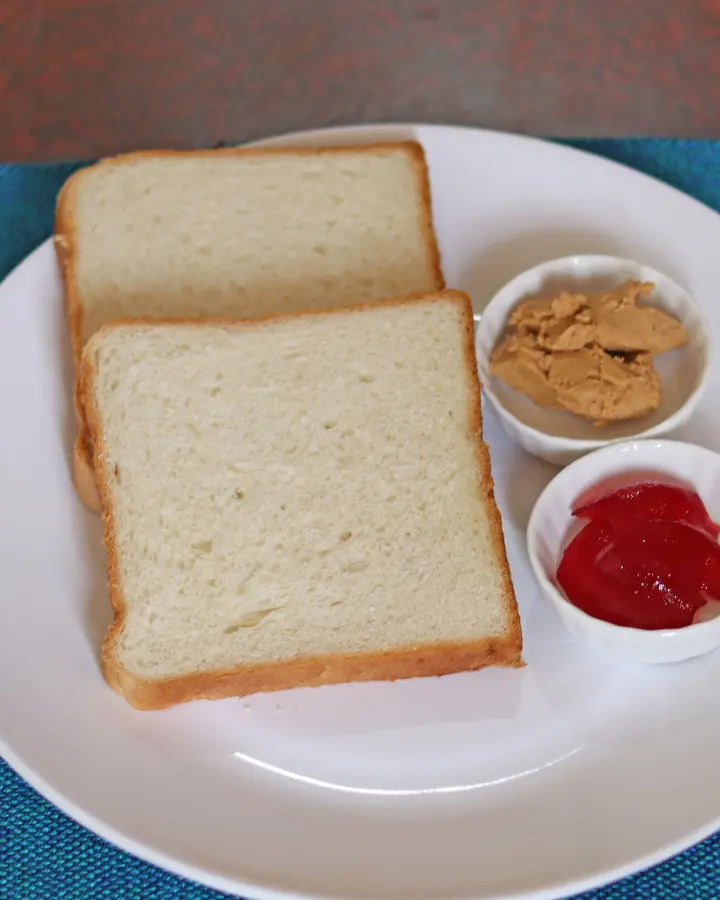
Build it so nothing can leak
Every soggy basket and every scorched jelly drip comes from assembly, not from the cooking. The build takes thirty seconds:
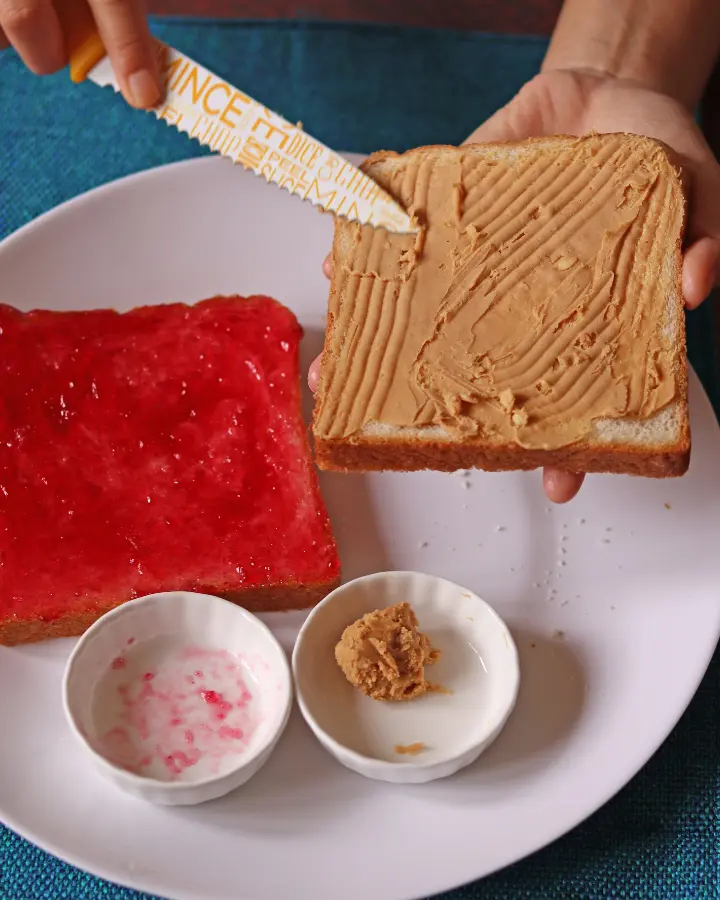
- Peanut butter on both slices. A tablespoon on each, spread to within a half inch of the crust. The two peanut butter faces meet the jelly in the middle and box it in on both sides, and the fat in the peanut butter waterproofs the bread so hot jelly cannot soak through.
- Jelly only in the center. One tablespoon in the middle of one slice, spread to a circle that stops an inch from the edge. When you press the sandwich together the jelly spreads outward and stops right where the peanut butter border begins.
- Press the edges. A firm press around the perimeter with your fingers. For a kid-proof sandwich, crimp the edges closed with a fork, which turns it into a homemade Uncrustable.
- Butter the outside last, so you are not fighting slippery hands during assembly.
How to make air fryer peanut butter and jelly
- Preheat to 370°F for 2 minutes. A hot basket sets the buttered underside on contact, which matters for a light sandwich that the fan would love to shove around.
- Assemble as above. Peanut butter on both slices, jelly centered, edges pressed, outside buttered edge to edge.
- Anchor it. Set the sandwich in the middle of the basket. If your air fryer has a strong fan, push a toothpick straight down through the center, or lay a small oven-safe rack across the top for the first 2 minutes. Once the surface butter melts into the bread and the crust sets, the sandwich is heavy enough to hold itself.
- Air fry 5 minutes. The top should be golden and dry to the touch. If it is still pale at 5 minutes, your model runs cool; give it 1 more.
- Flip with a spatula, not fingers. Slide the spatula fully under the sandwich and support the top with a finger as you turn it. The inside is molten now and the layers will slide if you flip it fast. Remove the toothpick if the crust has set, or leave it in if things still feel loose.
- Cook 2 to 3 minutes more. The second side goes faster because the sandwich is already hot through. Pull it when both faces are a deep, even gold.
- Rest 2 minutes before cutting. Straight out of the basket, the jelly is dangerously hot and fully liquid. Two minutes on a board thickens it back to jam and saves the roof of your mouth. Cut diagonally, because a hot PB&J is officially a diagonal sandwich.
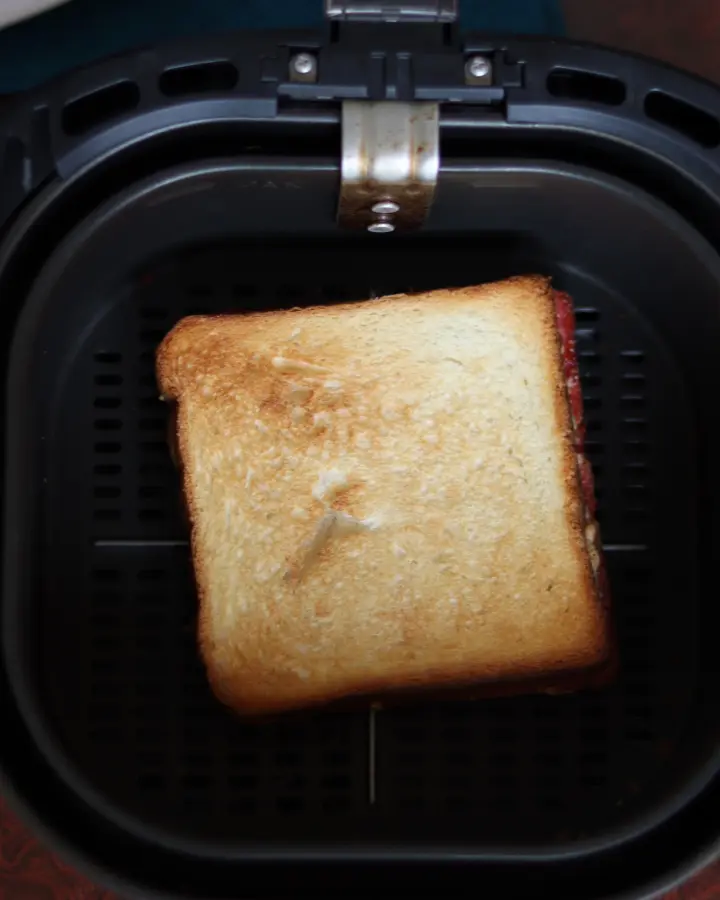
Time and temperature by bread type
All times assume a preheated 5 to 6 quart basket air fryer and one sandwich. Thicker and richer breads want lower heat, because sugar and butter in the dough brown faster than plain white bread does.
| Bread | Temp | First side | After flip | Notes |
|---|---|---|---|---|
| White sandwich bread | 370°F | 5 min | 2 to 3 min | The default. Seals and crisps best. |
| Wheat / multigrain | 370°F | 5 min | 3 min | Denser crumb, needs the full time. |
| Sourdough | 370°F | 5 to 6 min | 3 min | Great crust. Avoid holey slices. |
| Brioche / challah | 350°F | 4 min | 2 min | Sugar and butter brown fast. Watch it. |
| Texas toast (thick cut) | 360°F | 6 min | 3 min | The best-case version. Sturdy and plush. |
| Gluten free | 360°F | 4 to 5 min | 2 min | Dries out quickly. Butter generously. |
Frozen Uncrustables in the air fryer
The store-bought sealed kind takes to the air fryer beautifully, and straight from the freezer is the right way to cook them. Do not thaw first; a thawed Uncrustable goes limp before the crust can set.
- From frozen: brush or spray both sides lightly with butter or oil, then air fry at 350°F for 6 to 8 minutes, flipping at the halfway point. The outside turns golden and crisp while the middle warms to just-melted.
- Thawed: 350°F for 4 to 5 minutes, flipping once.
- The upgrade: brush with melted butter and roll in cinnamon sugar before cooking. It comes out somewhere between a PB&J and a churro, and it is the single most requested snack in my house.
Cook them sealed exactly as they come. Do not cut a vent, which just gives the filling a way out.
The sealed crustless version, for lunchbox loyalists
You can build a homemade sealed version that survives the air fryer with zero leaks, and it is worth the extra minute if you are feeding kids:
- Flatten each slice of bread slightly with a rolling pin. Compressed crumb seals better.
- Fill as usual: peanut butter both sides, jelly centered.
- Press a large biscuit cutter or an inverted bowl through the sandwich to cut off the crusts in one ring.
- Crimp the cut edge firmly all the way around with a fork.
- Air fry at 370°F for 4 minutes, flip, then 2 more. Sealed sandwiches cook a touch faster because they are smaller.
Never overcook again
Get our one-page times & temps cheat sheet, plus a new tested recipe each week.
No spam · unsubscribe anytime
Fixing the four problems people actually hit
The top slice of bread flew off
The classic air fryer sandwich failure, and the reason a lot of people give up after one try. An unbuttered slice of sandwich bread weighs almost nothing, and the fan in a modern basket unit is strong enough to lift it into the element. Three fixes, in order of effort: butter the top face edge to edge, which adds weight and glues the slice down as it melts into the crumb; push a toothpick through the center; or rest a small oven-safe rack on top for the first 2 minutes. After that the crust sets and the sandwich holds itself together.
Jelly leaked out and burned in the basket
Assembly problem, not a cooking problem. Jelly spread to the edge has nowhere to go but out when it boils. Rebuild with the peanut butter on both slices and the jelly stopped an inch short of the edge, and press the perimeter closed. If it already happened: hot jelly wipes out of a warm basket with a damp cloth in seconds, but turns to lacquer if you let it cool. Deal with it right after you pull the sandwich, or soak the basket.
The outside browned but the middle stayed cold
Your temperature was too high, which on this sandwich usually means you followed the 400°F advice that most recipes give. At 400°F the surface of the bread toasts in 3 minutes, before the heat has had time to travel through two layers of peanut butter. Drop to 370°F and give it the full time. The center of the sandwich should feel soft and give slightly when you press the toasted top; if it feels firm and cool, the peanut butter has not melted yet.
The sandwich came out greasy and soggy
Too much butter, or butter applied cold in lumps that melted into puddles instead of a film. You want a thin, even layer of genuinely soft butter, about half a tablespoon per face. The other culprit is over-filling: more than 2 tablespoons of peanut butter and 1 of jelly turns the middle into soup that soaks the bread from the inside faster than the crust can set from the outside.
Variations worth trying
- PB, banana, and honey: thin banana slices in place of jelly, honey drizzled after cooking. Banana caramelizes slightly and holds its place better than jelly does.
- The Elvis: peanut butter, banana, and two strips of cooked bacon. Ridiculous and correct.
- Cinnamon sugar crust: butter the outside, then sprinkle with cinnamon sugar before cooking. The sugar caramelizes into a crackly shell. Watch the last minute, since sugar goes from golden to burnt fast.
- PB and marshmallow fluff: a fluffernutter, toasted. Use half the fluff you think you need; it expands.
- Nutella and strawberry jam: technically no longer a PB&J, still cooked exactly the same way.
- Grape jelly and sharp cheddar: before you scroll past, salty cheese and grape jelly is the same logic as a cheeseboard. Add a thin slice against the peanut butter.
What to serve with it
Cold milk is not optional, but you knew that. For lunch, a handful of homemade potato chips from the same machine makes it a proper plate; cook the chips first, since they hold better than the sandwich does. For breakfast, this slots alongside egg toast for a sweet-and-savory pair. And if you are cooking for dessert instead of lunch, follow it with air fried Oreos and accept what the afternoon has become.
Storage and reheating
- Best case: eat it within 10 minutes. This sandwich is at its peak hot, and it is cheap and fast enough that making a fresh one beats storing one, every time.
- Refrigerator: up to a day, wrapped. The bread softens as the filling moisture migrates; that is physics and no container prevents it.
- Reheating: 350°F for 2 to 3 minutes in the air fryer, no flip needed. This brings back most of the crunch. A microwave makes it hot and rubbery; skip it.
- Make ahead: assemble and refrigerate up to a day before cooking, unbuttered. Butter the outside just before it goes in, and add 1 minute to the first side since the sandwich starts cold.
Frequently asked questions
QWhat temperature do you air fry a peanut butter and jelly sandwich?
370°F (188°C). Most recipes say 400°F, and at 400°F the bread toasts before the heat reaches the middle, so you get a browned sandwich with cold peanut butter inside. At 370°F the surface and the center finish together. Drop to 350°F for sweet breads like brioche, which brown faster.
QHow long does a PB&J take in the air fryer?
7 to 8 minutes total: 5 minutes on the first side, then 2 to 3 minutes after flipping. The second side goes faster because the sandwich is already hot through. It is done when both faces are deep golden and the center feels soft when pressed.
QHow do you keep the bread from flying around in the air fryer?
Weight and anchoring. Butter the top face edge to edge, which adds weight and bonds the slice down as it melts in. If your fan still lifts it, push a toothpick through the center of the sandwich or rest a small oven-safe rack on top for the first 2 minutes. Once the crust sets, the sandwich stays put on its own.
QHow do you keep the jelly from leaking out?
Build the sandwich so the jelly is boxed in:
- Spread peanut butter on both slices, not just one. It does not boil, and it waterproofs the bread.
- Keep the jelly in the center, stopping an inch from the edge.
- Use twice as much peanut butter as jelly, and press the edges closed.
For a guaranteed seal, crimp the edges shut with a fork like a homemade Uncrustable.
QDo you need to butter the bread?
Yes, for two reasons. Butter is what turns the surface deep golden and crisp instead of dry and toasted, and its weight helps hold the top slice down against the fan. Softened butter spread thin to the edges is the goal. Mayonnaise browns even more evenly if you are open to it, and cooking spray works in a pinch with a paler, less rich result.
QCan you put a frozen Uncrustable in the air fryer?
Yes, straight from frozen: 350°F for 6 to 8 minutes, flipped halfway, with a light brush of butter or oil on both sides. Do not thaw it first and do not cut a vent in it. Thawed ones need only 4 to 5 minutes. Rolled in cinnamon sugar before cooking, it is closer to a dessert than a sandwich.
QIs it safe to heat peanut butter in the air fryer?
Inside a sandwich, completely. The bread shields it and it simply melts. What you should not do is air fry exposed peanut butter on an open face, since it can thin, drip through the basket, and smoke on the drawer below. Keep it between the slices and there is nothing to worry about beyond the temperature of the filling when you bite in. Give it 2 minutes of rest.
QCan I cook two sandwiches at once?
Yes, if they fit side by side with an inch of air between them; most 5 to 6 quart baskets take two. Do not stack or overlap them. Times stay the same, though the flip is easier if you do one at a time with a wide spatula. A second batch cooks about a minute faster because the basket is already hot.
QWhat is the best bread for an air fryer PB&J?
Plain white sandwich bread, honestly. It compresses, seals at the edges, and crisps evenly. Texas toast is the upgrade pick if you want a thicker, plusher middle. Brioche works at a lower 350°F, and anything with big open holes, like a rustic sourdough, will let jelly escape through them.
QWhy is my sandwich brown outside but cold in the middle?
The temperature was too high, almost always 400°F from an older recipe. Heat needs time to travel through the bread and both layers of peanut butter, and high heat finishes the surface before that happens. Cook at 370°F for the full 7 to 8 minutes and the center will be molten when the outside is golden.
QCan I make this without butter?
Yes. Use a light coat of cooking spray or a brush of neutral oil on both faces. The crust comes out crisper than dry bread but paler and less rich than the buttered version. Plant butter works exactly like dairy butter here if you need it dairy free.
QHow do I reheat a leftover PB&J in the air fryer?
350°F for 2 to 3 minutes, straight in the basket, no flip needed. That restores most of the crunch. The microwave heats it but turns the crust rubbery, so use it only if you have no other option.
If you make this one, I want to know exactly one thing: did the peanut-butter-on-both-slices build keep the jelly in? That trick is the reason this page exists, and it has held through every bread I have tested it on. For more quick air fryer breakfasts, try our air fryer toast, avocado toast, or cinnamon rolls. If the peanut butter jar is still out, the peanut butter cookies are the logical next move. New to the machine? Start with how to bake in an air fryer, keep the times and temps chart handy, and use the air fryer calculator to convert any oven recipe.
You can also follow me on Instagram and Pinterest for more easy air fryer recipes.
Made this? Rate the recipe