

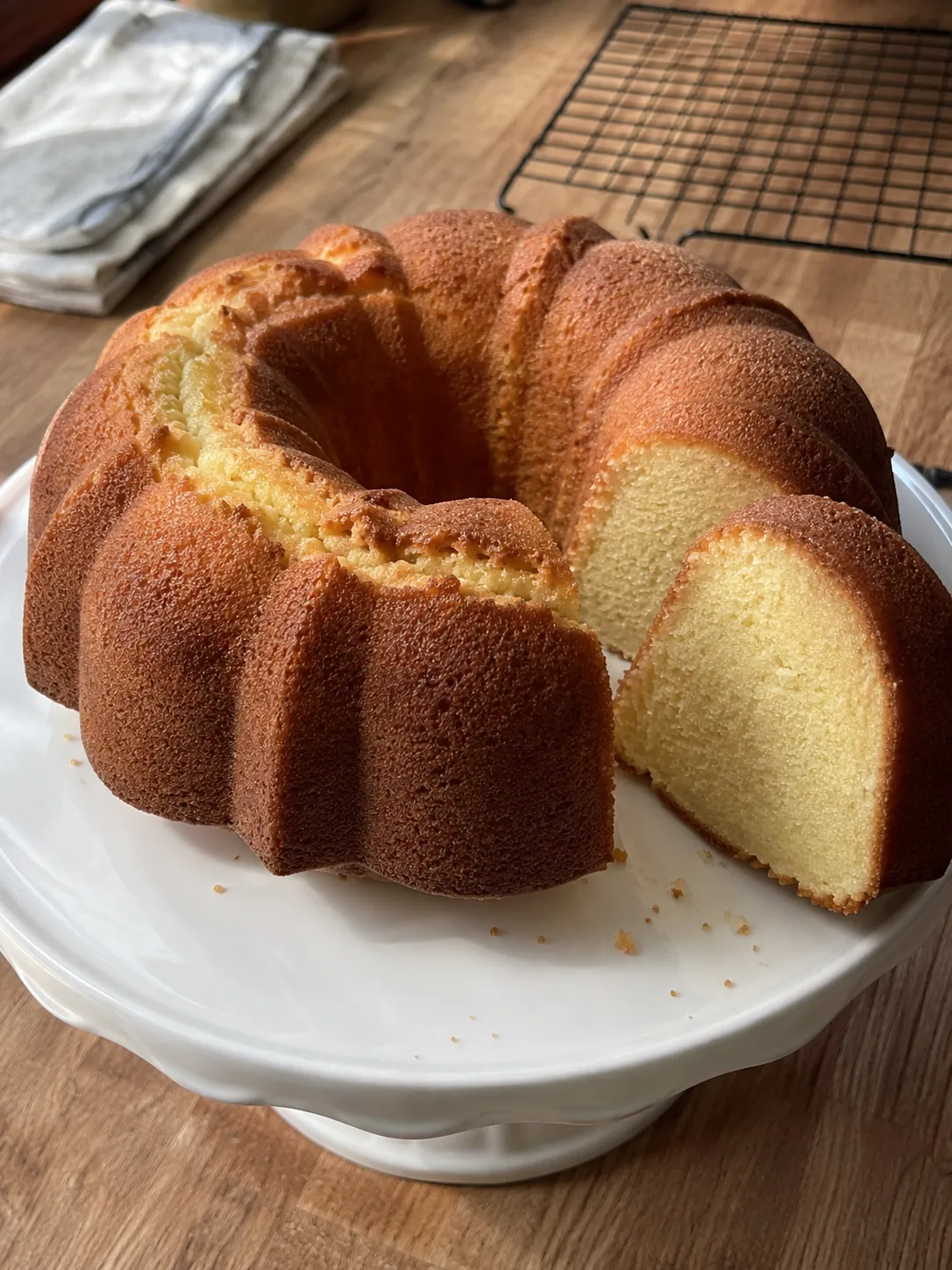
I want to be straight about something before the recipe, because it is the reason this page exists.
A pound cake is the single most awkward thing I have baked in an air fryer. Equal weights of butter, sugar, eggs and flour makes a batter that is heavy, close-textured and low in water, which is exactly the combination that moves heat slowly. It has almost no chemical leavening, so there is no open crumb to help. And it needs to be deep, or it is not a pound cake. Every one of those is a strike against a machine whose heating element sits three inches above the food.
It works. I make it regularly now. But it works because of two decisions made before the batter is mixed, and neither of them is in any recipe I could find.
Quick answer: Bake it in a 6-inch tube or bundt pan, not a loaf pan. The hole in the middle deletes the deep center that raw pound cakes are made of. 300°F for 35 to 42 minutes, wrapped in a soaked cake strip, tented with foil from minute 20, and pulled at 205°F in the thickest part. If a recipe tells you twenty minutes, check how much batter it made.
The pan shape decides whether the middle cooks
Two of the better recipes for this get halfway there. They say to use mini loaf pans rather than a full-size loaf because the middle bakes more evenly. That is correct and it is good advice as far as it goes. But it treats the problem as one of size, and it is really one of shape.
What matters is not how much batter is in the pan. It is how far the deepest point of the batter is from the nearest hot surface. Heat has to physically travel that distance by conduction, and in a dense low-moisture batter like this one it travels slowly.
So walk through the shapes with that one question in mind.
The loaf
Tall, narrow and closed. The deepest point sits in the middle of the block, far from the sides and a long way under the top. It is the furthest-from-anywhere shape in baking.
The round
Wider and shallower for the same volume, so the deepest point is closer to the top. Works, but there is still a genuine center that nothing is near.
The ring
A tube pan puts a hot metal column right where the deep center used to be. There is no point in the cake more than about an inch from a surface, and most of it is heated from two sides at once.
That is the whole argument. A tube pan does not make the cake bake faster in any dramatic way. It makes the middle finish at the same time as the outside, which on a forty minute bake with a close element is the only thing that actually matters.
| Pan | At 300°F | What happens |
|---|---|---|
| 6-inch tube or bundt | 35 to 42 min | Even all the way through. The recipe as written |
| 6-inch round, 2 inches deep | 40 to 48 min | Good. Slight risk of a soft center if you rush it |
| Mini loaf, about 5.75 by 3 inches | 45 to 55 min | Works, but this is where raw middles come from |
| Full-size loaf pan | Do not | Will not fit most baskets, and would not bake through if it did |
A 6-inch bundt pan is cheap, fits nearly every basket, and is the single most useful pan to own if you like this kind of cake. Measure your basket first: the pan size calculator will tell you what fits, and the accessories guide covers what is worth buying. If you are stuck with a loaf pan, use it and give it the full fifty minutes, and read the doneness section twice.
This is also why our air fryer banana bread and pumpkin bread get away with loaf pans while a pound cake does not. Those batters are much wetter and much more loosely leavened, so heat moves through them far more readily. Pound cake has neither advantage.
Why the published times cannot be right
This one bothered me enough to sit down and do the arithmetic, and I think it is worth showing you rather than just asserting it.
One of the top results for air fryer pound cake gives a genuinely traditional recipe: 2 cups of butter, 3 and a half cups of sugar, 6 eggs, 6 extra yolks and 3 and a half cups of flour. That is roughly four and a half pounds of batter and it serves 24. It is a full-size tube pan cake and in a conventional oven it would take somewhere between an hour and an hour and a half at 325°F.
The instruction is 320°F for 20 to 25 minutes.
That is not a recipe that has been tested in an air fryer. It is an oven pound cake with an air fryer time attached to it, and if you follow it you will pull out something with a dark crust and a core of warm batter. Even split into the three mini loaves the same page suggests, each one is still well over a pound of dense batter and needs closer to forty minutes.
| What is published | Batter | Stated time | Plausible? |
|---|---|---|---|
| Traditional 1:1:1:1, 24 servings | About 4.5 lb | 20 to 25 min at 320°F | No. Not close |
| Lemon and sour cream loaf, 8 servings | About 1.7 lb | 20 min at 325°F in minis | Only as small minis, and it is tight |
| Small loaf, various | About 1.5 lb | 50 min at 302°F | Yes. This one is honest |
| This recipe | About 1.5 lb | 35 to 42 min at 300°F in a tube pan | Tested, and it is why the pan has a hole in it |
The published times for this run from 20 minutes to 50 for cakes that are not remotely the same size, which is why following a time rather than a temperature is such a bad idea here. If you want to convert an oven pound cake recipe of your own, put it through the air fryer calculator and the recipe scaler to get the quantity down to something a basket can handle, then ignore the time entirely and bake to 205°F.
Creaming is the whole leavening
A real pound cake has no baking powder in it at all. Every bit of lift comes from air that you beat into the butter and sugar, held in place by the eggs. That is what creaming is for, and in most cakes it is one contributor among several. Here it is the only one.
Which means it is not a step you can rush, and there is an air fryer specific reason it matters more here than in an oven.
In a basket, the top sets early. The element is three inches away, so the surface of the cake firms up in the first eight or ten minutes of a forty minute bake. After that the cake cannot rise any further even if it wants to, because there is a lid on it that it made itself. Whatever air you beat in at the start is all the height you are ever going to get. In an oven, with a gentler top heat, a cake has longer to keep climbing.
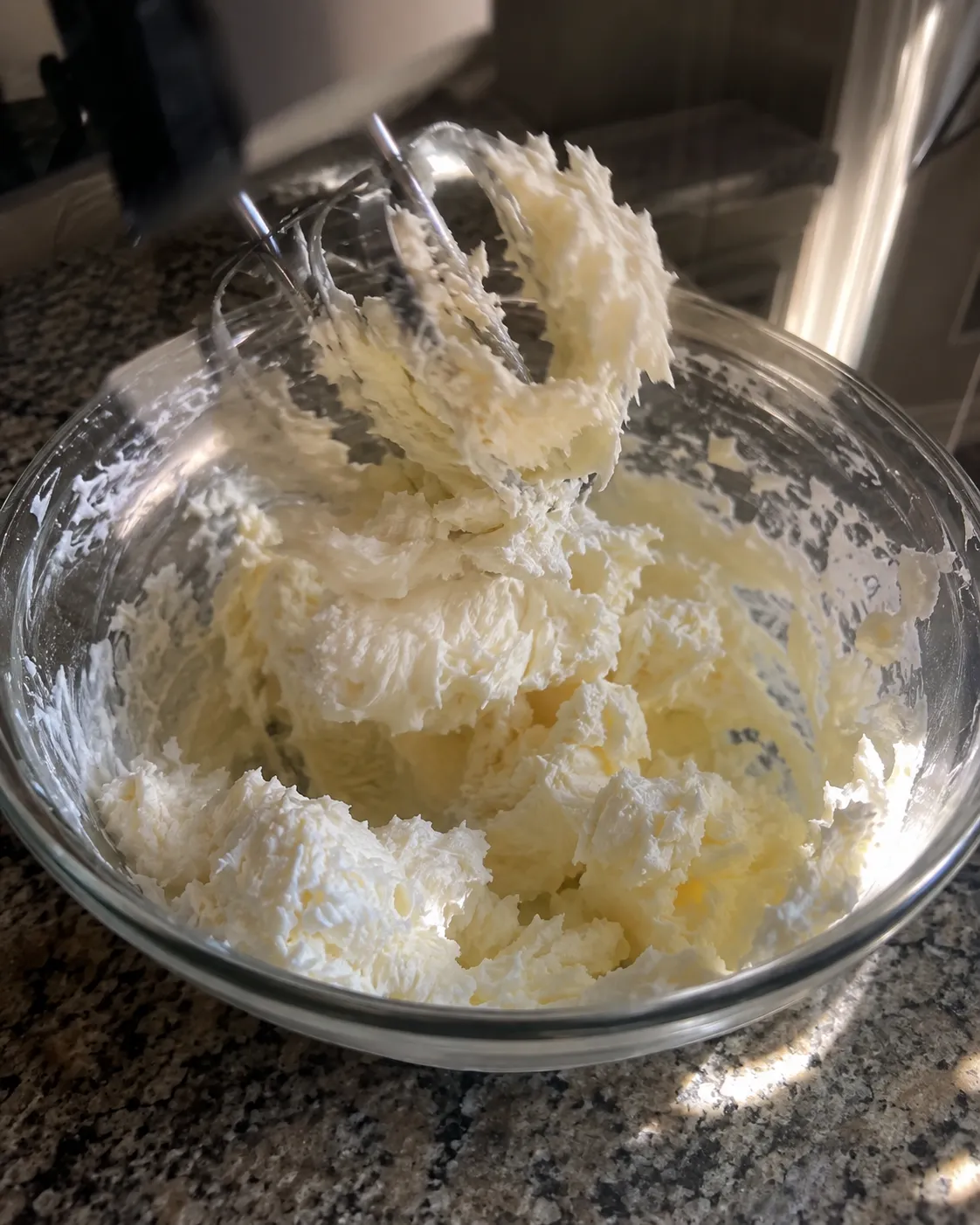
So: four full minutes on medium-high with a hand mixer, butter and sugar only, and set a timer because almost everyone stops early. You are looking for it to go visibly paler, close to off-white, and to roughly double in bulk. It should look like frosting rather than like butter. Our air fryer cupcakes page makes the same case at three minutes for a lighter batter, and here it is four because there is more butter and nothing else helping.
The eggs, and not breaking it
A pound cake batter is an emulsion holding a lot of fat with very little water. It is more fragile than a normal cake batter, and cold eggs are the usual thing that breaks it.
- Room temperature, genuinely. An hour on the counter, or sit them in warm water for five minutes if you forgot. Cold eggs hitting creamed butter seize the fat and knock the air straight back out.
- One at a time, letting each disappear completely before the next goes in. Three eggs, three additions.
- If it looks curdled, add a tablespoon of the flour and keep beating. It will come back. A broken batter still bakes, it just bakes denser and greasier.
I do put half a teaspoon of baking powder in, which a purist would object to. It is insurance rather than leavening: in a basket with a top that sets early, a small amount of chemical lift covers you if your creaming was slightly short. Leave it out if you want the strictly traditional version and give the creaming five minutes instead of four.
Protecting the outside for a 40 minute bake
Here is why a dry ring forms in the first place. Wet batter cannot get hotter than about 212°F, because every bit of heat arriving goes into boiling water off rather than raising the temperature. So the outer half inch is protected right up until the moment it runs out of water, and then nothing is holding it back and it climbs toward the air temperature. A soaked cake strip pushes that moment back, because evaporating water pulls a great deal of heat out of the pan wall. The general version of this is in how to avoid dry air fryer bakes.
The catch is that a cake strip only works while it is wet, which in fast moving air is roughly 25 to 30 minutes.
A pound cake bakes for 40. So a strip on its own is not enough here, and this is the one recipe on the site where you need to stack the protections.
| Minute | What is protecting the outside | What you do |
|---|---|---|
| 0 to 20 | The batter's own water, plus a soaked cake strip | Nothing. Leave it alone |
| 20 | Strip is roughly half spent, top is browning | Tent loosely with foil, pressed down over the rim |
| 20 to 30 | Strip plus the tent | Nothing |
| 30 onward | Tent only. The strip has dried out | Start checking the temperature at 35 |
This is also why the temperature is 300°F rather than the 310 or 320 we use for faster cakes. Once the surface is past the point where water protects it, the air temperature is what it climbs toward, and on a bake this long every degree compounds. Case hardening is the term for what you are avoiding.
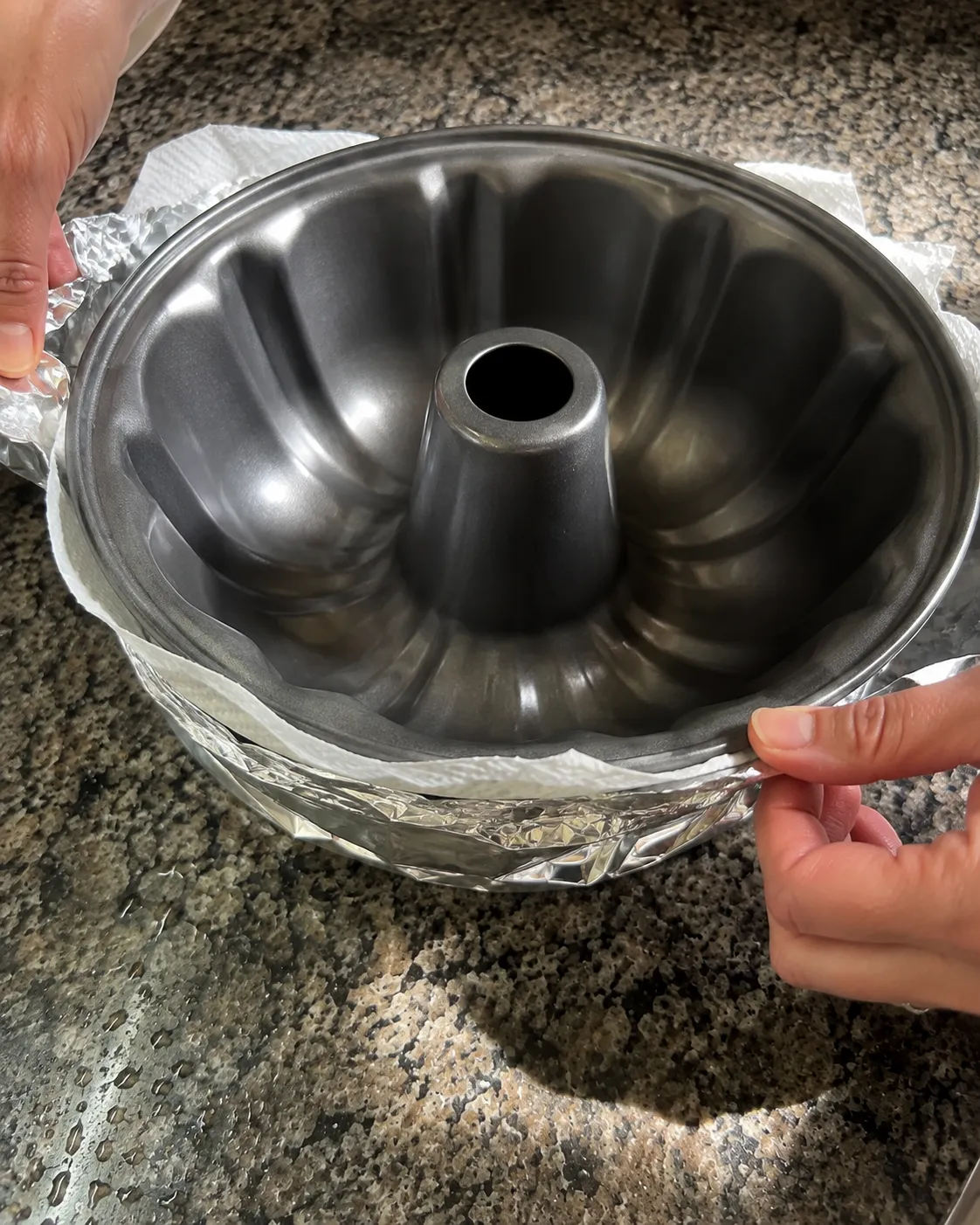
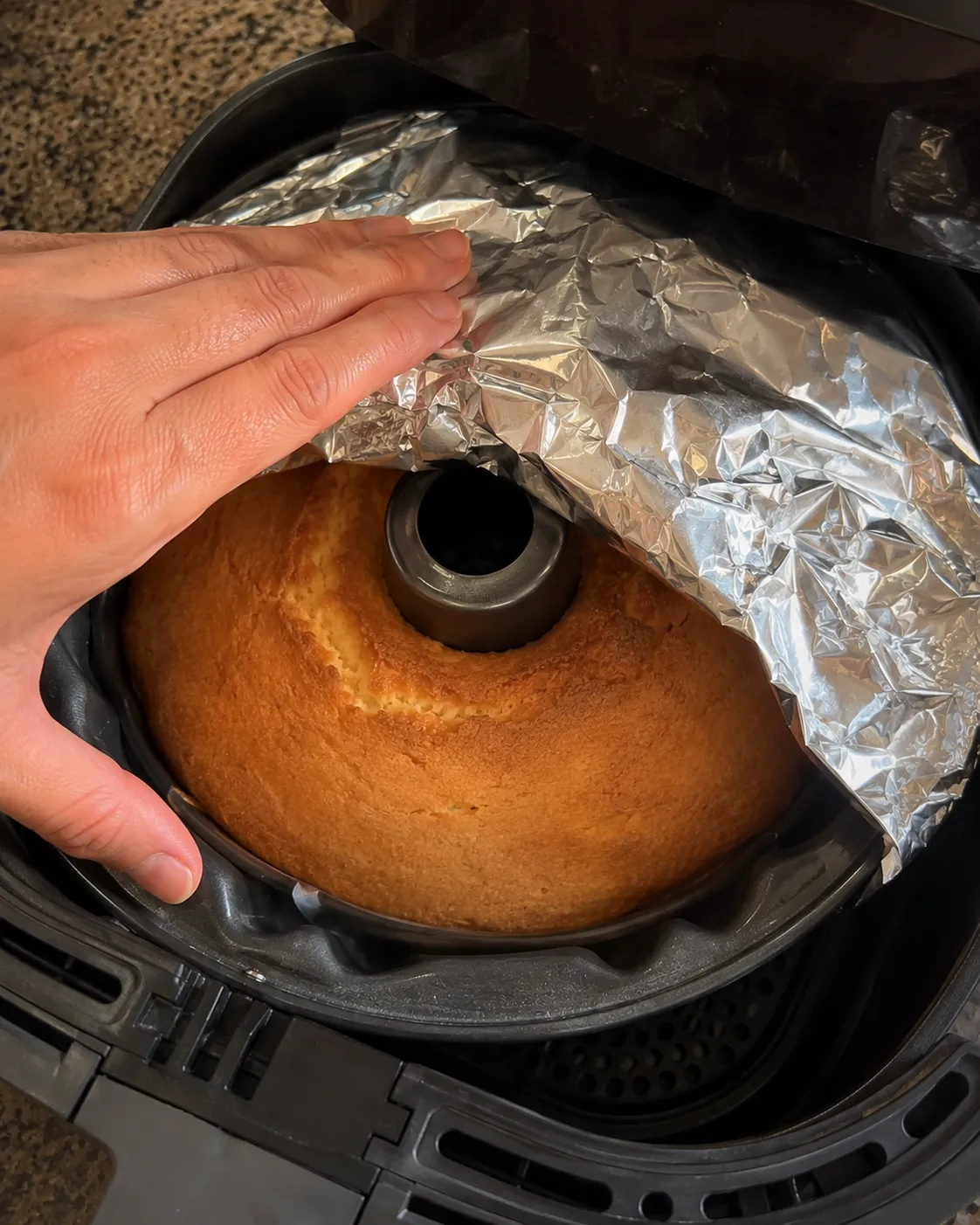
Wrap the strip tight and press the tent down. An air fryer fan moves air fast enough to lift a loose flap of foil into the heating element, where it scorches and can catch. A strip wrapped snugly around a pan is held by its own tension and is completely safe. A foil tent needs to be pressed down over the rim of the pan rather than draped, so there is no edge for the air to get under. Foil and parchment in an air fryer covers this properly, and it is the same rule as never leaving an empty paper liner in a basket.
Ingredients
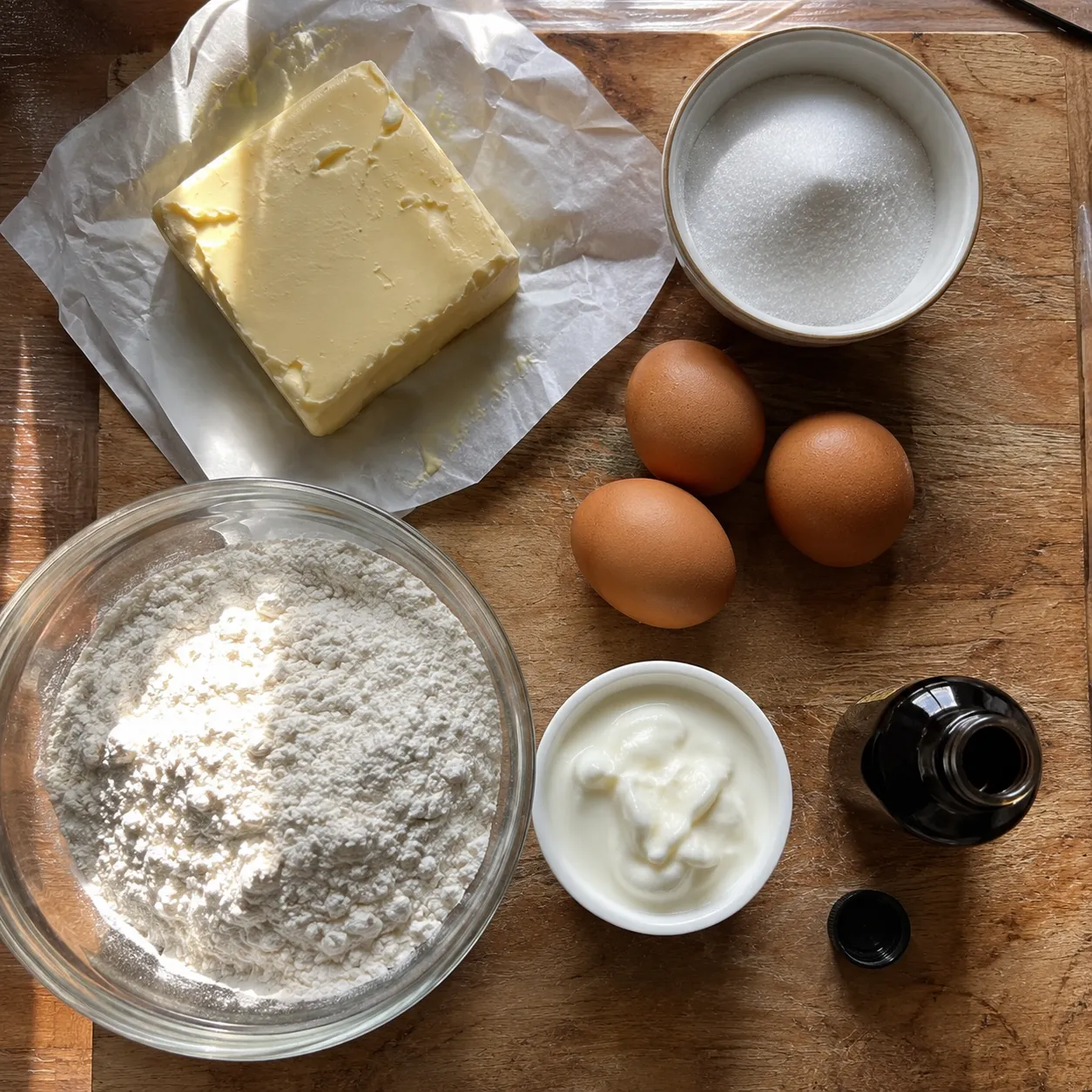
One 6-inch tube cake, ten slices. Everything at room temperature, and that is not a formality here.
- 3/4 cup (170g) unsalted butter, properly softened
- 3/4 cup plus 2 tablespoons (175g) granulated sugar
- 3 large eggs, room temperature
- 1 1/3 cups (170g) all-purpose flour
- 1/2 teaspoon baking powder, optional insurance
- 1/2 teaspoon salt
- 2 teaspoons vanilla extract
- 2 tablespoons (30g) sour cream, room temperature
That is very close to a true pound cake ratio: 170g of butter, sugar, eggs and flour each, give or take. The two tablespoons of sour cream are a modern addition and they earn their place, because the acid tenderizes the crumb slightly and the small amount of extra water buys the surface a little more protection early in the bake. Properly softened butter means it dents easily under a finger but still holds its shape. Greasy and half melted will not hold air.
How to make it
- Grease the tube pan thoroughly, including the center column and every groove if it is a bundt. Butter and then flour it, or use a baking spray with flour in it. A pound cake is heavy and it will stay in a badly greased pan.
- Make the cake strip. Fold a wet paper towel inside a four inch band of foil, wrap it snugly around the outside of the pan, and tuck the ends so nothing flaps. Genuinely wet, not damp.
- Preheat to 300°F (150°C) for 3 minutes. Whether you need to preheat covers why, and on a long bake it matters less than usual but still costs you nothing.
- Cream the butter and sugar for 4 full minutes on medium-high, until visibly paler and roughly doubled. Set a timer. This is the entire leavening of the cake and almost everyone stops early.
- Beat in the eggs one at a time, letting each fully disappear before the next. If it looks curdled, add a tablespoon of the flour and keep going.
- Beat in the vanilla and sour cream briefly.
- Whisk the flour, baking powder and salt together, then fold them in by hand in two additions with a spatula. Not with the mixer. Stop the moment the last streak of flour goes.
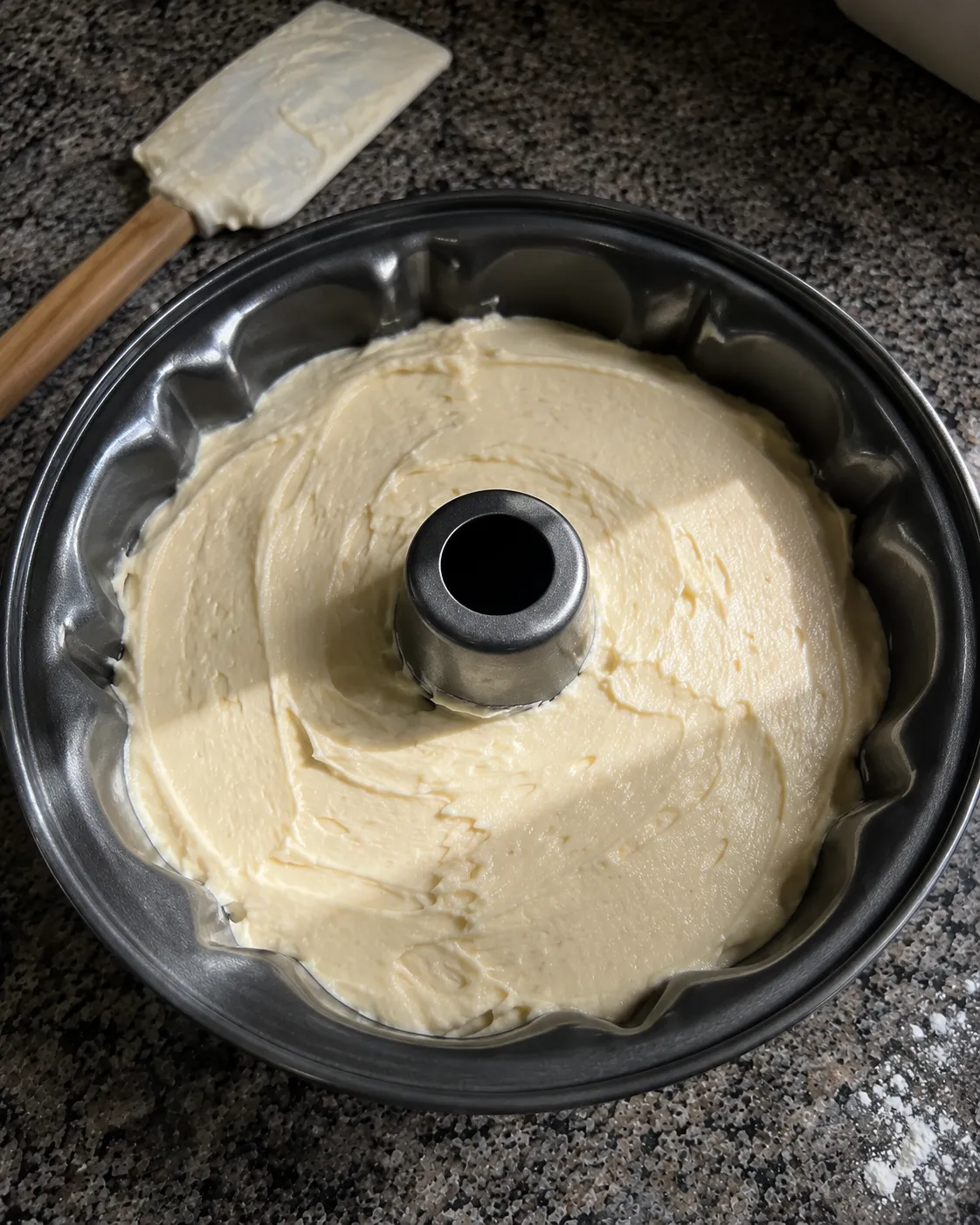
- Scrape into the pan and level the top. It should come no more than two thirds up. Rap the pan on the counter twice to settle it around the center column.
- Bake 35 to 42 minutes at 300°F. Do not open it for the first 20.
- Tent at 20 minutes. Lay foil over the top and press it down firmly over the rim so the fan cannot lift it. Then carry on.
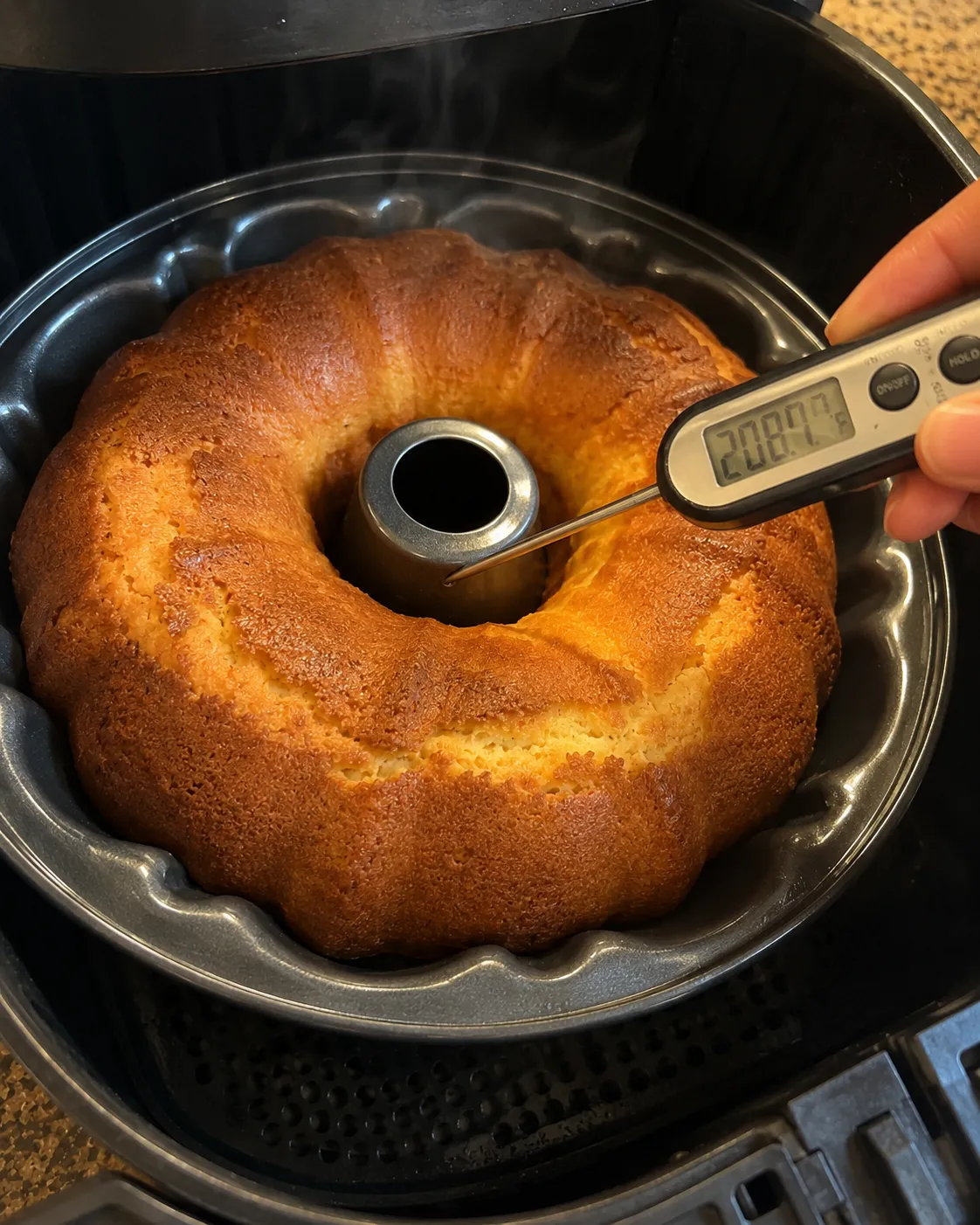
- Start checking at 35 minutes. Push an instant-read thermometer into the thickest part of the ring, halfway down, avoiding the center column. You want 205°F. Under 200, give it 4 more minutes.
- Cool in the pan 15 minutes, then turn it out onto a rack. Fifteen rather than ten, because a pound cake is heavy enough to tear itself if you turn it out too hot, and long enough in the pan that the edges dry.
- Cool completely before slicing. At least two hours. A pound cake genuinely improves overnight, wrapped, and this is not folklore.
Why 300°F, which is the lowest temperature on this site. Every other cake we bake runs at 310 to 320°F. This one goes lower for one reason: it is in there for forty minutes rather than twenty five, so the surface spends far longer exposed. The rule across all of this is that a longer bake needs a lower temperature, and a pound cake is the longest bake in a basket. Published recipes run 302 to 325°F, and the hot end is where the dark crusts and pale middles come from. Our full temperature reference is in the air fryer baking chart.
205°F, and where the toothpick lies hardest
Every recipe for this ends on a toothpick coming out clean. On a pound cake that is worse advice than usual, and for a reason specific to how dense the crumb is.
In a light, open cake the batter is fairly uniform, so a toothpick in the middle is a decent sample of the whole thing. A pound cake is tight and heavy and heat moves through it unevenly, so it is entirely possible for the spot your toothpick went into to be set while somewhere an inch away is still batter. Move the toothpick two inches and you get a different answer. That is not a hypothetical, it is how most of my early loaf-pan attempts went.
The second problem is the familiar one: a toothpick only comes out clean once the batter touching it has fully set, at around 208 to 212°F, so even a correct reading is telling you to stop late.
| Thickest part reads | What you have |
|---|---|
| 195°F | Not there. It will be gummy and will sink |
| 200°F | Close. Give it 4 more minutes |
| 205°F | Done. Dense, moist, holds a clean slice. Take it out |
| 210°F | Still acceptable, and where a clean toothpick would have left you |
| 215°F and up | Dry and crumbly. The buttery texture is gone |
Note this is 205°F rather than the 200°F we use for a light cake. A pound cake is denser and higher in fat, and underbaking one gives you a gummy layer near the base where the starch never fully gelatinized. People often mistake that for the cake being pleasantly dense. It is not, and once you have had a properly baked one the difference is obvious.
Probe the thickest part of the ring, halfway down, and stay away from the metal center column, which will read high and flatter you. If you are using a loaf pan instead, take two readings at opposite ends and trust the lower one.
Fixing what goes wrong
| What you got | Why | Fix |
|---|---|---|
| Raw or gummy in the middle | Loaf pan, or a time taken from a recipe that made far more batter. | Tube pan, and bake to 205°F rather than to a clock. |
| Dark crust, pale soft center | Temperature too high for a bake this long. | 300°F, cake strip, tent at 20 minutes. |
| Dense and heavy, barely rose | Undercreamed. This cake has no other source of lift. | Four full minutes, timed, until visibly pale. |
| Greasy, with a coarse crumb | The batter broke, usually cold eggs into creamed butter. | Room temperature eggs, one at a time. A spoon of flour rescues it. |
| Butter melted rather than creamed | Butter was too soft to start with. | It should dent under a finger but hold its shape. |
| Dry ring around the outside | No cake strip, or the strip dried out and nothing replaced it. | Soak it properly and tent at 20 minutes. |
| Sank in the middle | Pulled before the center set. | 205°F. More in why air fryer cakes sink. |
| Cracked along the top | Normal, and traditional. A pound cake is supposed to split. | Nothing. If it bothers you, drop 10°F. |
| Stuck in the bundt pan | Grooves not greased, or turned out too late. | Grease every groove and the column. Out at 15 minutes. |
| Tough and chewy | Flour beaten in with the mixer rather than folded. | Fold by hand, and stop when the flour disappears. |
| Dry and crumbly all through | Baked past 215°F chasing a clean toothpick. | Thermometer, 205°F. |
If dryness runs across your baking generally, how to avoid dry air fryer bakes is the wider version, and the troubleshooting guide covers the rest.
Variations
- Lemon. The zest of two lemons rubbed into the sugar before creaming, which releases far more oil than adding it later, plus a tablespoon of juice with the sour cream. Glaze with powdered sugar and lemon juice once cold.
- Almond. Swap a teaspoon of the vanilla for almond extract and fold in a quarter cup of ground almonds, taking the flour down by the same amount.
- Marble. Take out a third of the batter, stir in a tablespoon of cocoa and a teaspoon of milk, and spoon the two alternately into the pan. Drag a knife through once, not five times.
- Cream cheese pound cake. Replace 3 tablespoons of the butter with the same weight of full-fat block cream cheese. Softer, tangier, and it keeps noticeably longer.
- Brown butter. Brown the butter, cool it until it sets solid again, then cream as normal. Do not skip the resetting step or there is nothing to beat air into.
- Buttermilk. Swap the sour cream for the same amount of buttermilk and add a pinch of baking soda. Lighter and slightly more open.
- Two mini loaves instead. Split the batter and bake 30 to 36 minutes, still to 205°F, and strip both. Smaller loaves are the workaround if you have no tube pan.
For richer, faster things out of the same machine, air fryer brownies and air fryer carrot cake are both far more forgiving than this one, and what you can and cannot bake in an air fryer is the honest list of what is worth attempting in a basket at all.
Storage and freezing
- Room temperature: 4 days wrapped, and it is genuinely better on day two. The butter redistributes and the crumb settles, which is why pound cake is traditionally made the day before.
- Do not refrigerate it. This is the one bake where the fridge is actively bad. All that butter goes hard and the cake reads dry and waxy straight from cold.
- Frozen, whole or in slices: 3 months, well wrapped. Pound cake freezes better than almost any other cake because there is so little water in it to form ice crystals.
- Thawing: at room temperature, still wrapped, so the condensation forms on the wrapping rather than on the cake.
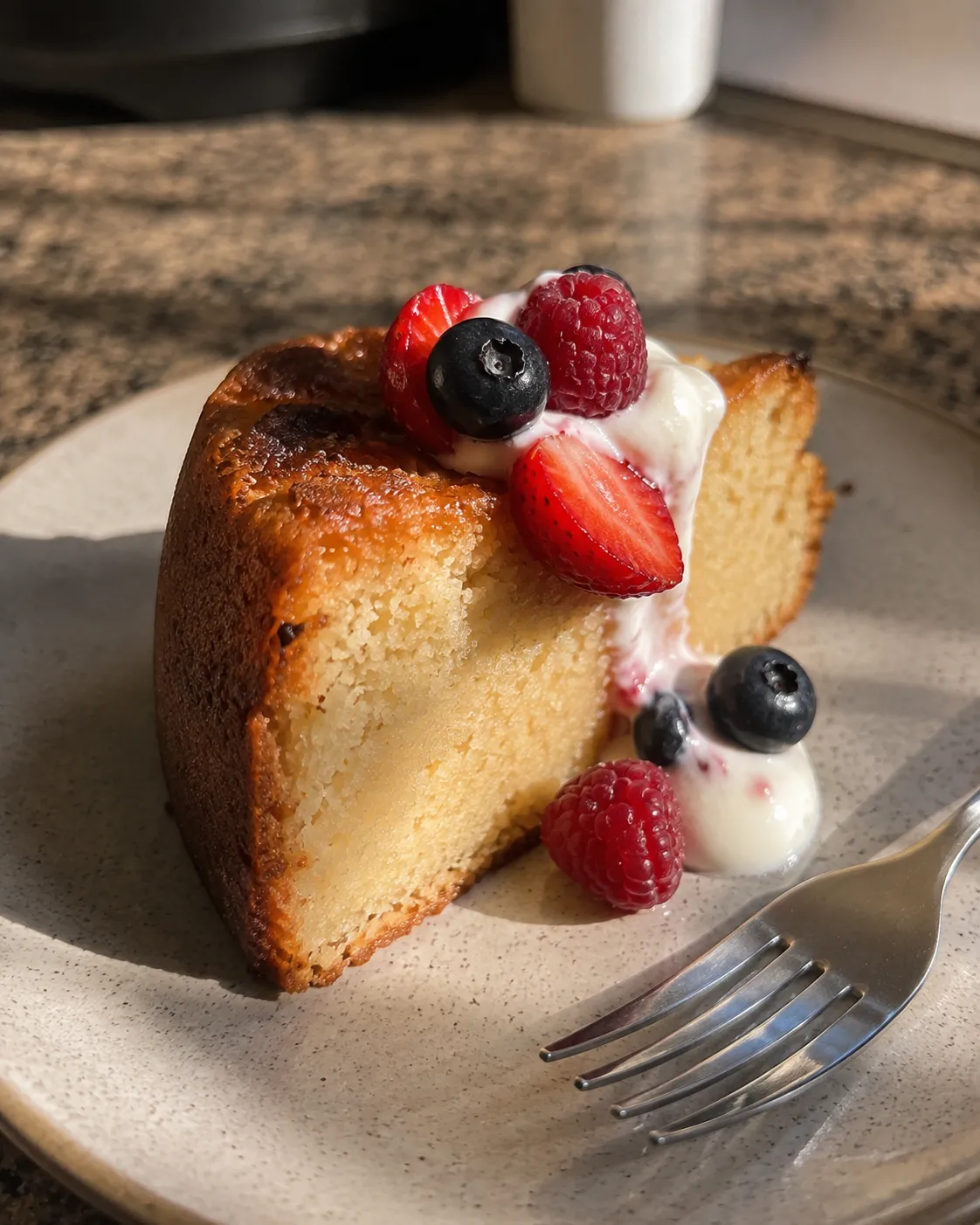
- Toasting a slice: this is the real reason to make one. Two minutes at 350°F in the air fryer gives you a crisp, caramelized surface on a slice of cold pound cake, which is better than the cake was fresh. With cream and berries it is a whole dessert.
Forty minutes in a basket against an hour and a quarter of a full oven is a meaningful saving on a cake this size, and if you want the actual figure for your electricity rate the running cost calculator will work it out. All four air fryer tools are in one place, and the full recipe index has everything else on the site.
Frequently asked questions
QWhy is my air fryer pound cake raw in the middle?
Almost always the pan shape, and second to that the time. Pound cake batter is dense and low in water, which are the two things that make heat travel through it slowly, so what matters is how far the deepest point sits from the nearest hot surface. A loaf pan is the worst shape in baking for that: the center of the block is a long way from the sides and a long way under the top. A 6-inch tube or bundt pan puts a hot metal column exactly where that deep center used to be, so nothing in the cake is more than about an inch from a surface. Switch pans, bake at 300F for 35 to 42 minutes, and check for 205F rather than trusting a clock.
QHow long does pound cake take in an air fryer?
35 to 42 minutes at 300F in a 6-inch tube pan, for about a pound and a half of batter. A 6-inch round takes 40 to 48 and a mini loaf takes 45 to 55. Published times run from 20 minutes to 50 for cakes that are nowhere near the same size, which is why time is such an unreliable instruction here. One widely shared recipe gives a genuinely traditional formula with 2 cups of butter and 3.5 cups of flour, serving 24, and tells you 20 to 25 minutes. That is roughly four and a half pounds of dense batter, which takes over an hour in a conventional oven. Bake to 205F internal instead and the pan and the quantity stop mattering.
QWhat pan should I use for pound cake in an air fryer?
A 6-inch tube or bundt pan, and it is worth buying one if you do not have it. The reason is geometry rather than size: the hole in the middle sits exactly where the slowest-cooking part of a pound cake would otherwise be, so the deep center simply does not exist and the middle finishes at the same time as the outside. A 6-inch round works reasonably well and is the next best thing. A mini loaf works but is where raw middles come from. A full-size loaf pan will not fit most baskets and would not bake through if it did. Whatever you use, leave about an inch and a half of clearance between the batter and the heating element.
QWhat temperature should pound cake be inside?
205F in the thickest part, which is slightly higher than the 200F we use for a light cake. A pound cake is denser and much higher in fat, and underbaking one leaves a gummy band near the base where the starch never fully gelatinized. People often mistake that for the cake being pleasantly dense, and it is not. Under 200F it will also sink as it cools. Past about 215F it goes dry and crumbly and the buttery texture is gone. Probe the thickest part of the ring, halfway down, and stay away from the metal center column, which reads high and will flatter you.
QWhy is the toothpick test unreliable for pound cake?
Two reasons, and the first is specific to how dense the crumb is. In a light open cake the batter is fairly uniform, so one toothpick is a decent sample of the whole thing. A pound cake is tight and heavy and heat moves through it unevenly, so the exact spot you tested can be perfectly set while somewhere an inch away is still batter. Move the toothpick two inches and you get a different answer. The second reason is the familiar one: a toothpick only comes out properly clean once the batter touching it has fully set, at around 208 to 212F, so even a correct reading tells you to stop several degrees late.
QHow long should I cream the butter and sugar?
Four full minutes on medium-high, and set a timer because almost everyone stops early. A traditional pound cake has no baking powder at all, so every bit of lift in it is air you beat in at this stage and the eggs then hold in place. Creaming is not one contributor among several here, it is the only one. There is also an air fryer specific reason it matters more: the element sits three inches above the cake, so the top sets within the first eight or ten minutes of a forty minute bake, and after that the cake cannot rise any further even if it wants to. Whatever air you beat in at the start is all the height you will get. Look for it to go close to off-white and roughly double in bulk.
QDoes pound cake need baking powder?
Traditionally no, and a purist would leave it out. This recipe includes half a teaspoon as insurance rather than as leavening. In a basket the top of the cake sets early, so there is no chance to make up for creaming that came up slightly short, and a small amount of chemical lift covers you. If you want the strictly traditional version, leave it out and give the creaming five minutes rather than four. Worth knowing that several popular air fryer pound cake recipes use both baking powder and baking soda, which produces a good cake but a noticeably lighter and more open one. That is closer to a quick bread than to a pound cake.
QWhy did my pound cake batter curdle?
Cold eggs, nine times out of ten. A pound cake batter is an emulsion holding a great deal of fat with very little water, which makes it more fragile than a normal cake batter. Cold eggs hitting creamed butter seize the fat and knock the air straight back out of it. Bring them to room temperature properly, an hour on the counter or five minutes sitting in warm water, and add them one at a time letting each disappear before the next goes in. If it does split, add a tablespoon of the flour and keep beating and it will come back together. A broken batter still bakes, it just bakes denser and greasier than it should.
QDo I need a cake strip, and when do I tent it?
Both, and this is the one recipe on the site where you need to stack them. A soaked cake strip holds the pan wall near 212F while the water in it evaporates, which stops the outer half inch drying out and overheating. The problem is that a strip only lasts while it is wet, roughly 25 to 30 minutes in fast moving air, and a pound cake bakes for 40. So the strip covers the first stretch and a foil tent from minute 20 covers the rest. Press the tent down firmly over the rim of the pan rather than draping it, because an air fryer fan will lift loose foil into the heating element, where it scorches and can catch.
QWhy is the top of my pound cake cracked?
That one is not a fault. A pound cake is supposed to split along the top, and a proper crack down the middle is the traditional sign of a good one. It happens because the outside sets before the inside has finished expanding, so the rising center pushes up through a surface that is already firm. In an air fryer it tends to be more pronounced than in an oven, since the close element sets the top even earlier. If you would rather it did not, drop the temperature by another 10F and add five minutes, but you are trading a signature feature for a smoother top.
QCan I use a regular loaf pan in the air fryer?
A full-size loaf pan will not fit most baskets, and if yours does fit, the cake still will not bake through evenly. A mini loaf pan of about 5.75 by 3 inches does work, and it is the sensible fallback if you have no tube pan. Give it 45 to 55 minutes at 300F, wrap it in a cake strip, tent at 20 minutes, and take two temperature readings at opposite ends rather than one in the middle, trusting the lower of the two. Splitting the batter between two mini loaves is better still, at 30 to 36 minutes. But the ring shape genuinely is the better answer, and a 6-inch bundt pan is cheap.
QIs pound cake better the next day?
Yes, and unusually for a baking claim this one is real rather than folklore. Pound cake is traditionally made the day before it is served, because the butter redistributes through the crumb as it rests and the texture settles from slightly crumbly into properly close and moist. Wrap it once it is completely cool and leave it at room temperature. Do not refrigerate it, which is the one thing that actively ruins it: with this much butter in the crumb, cold makes it hard and waxy and it reads dry. It also freezes better than almost any other cake, because there is so little water in it to form ice crystals.
Never overbake again
Get our one-page times & temps cheat sheet, plus a new tested recipe each week.
No spam · unsubscribe anytime