

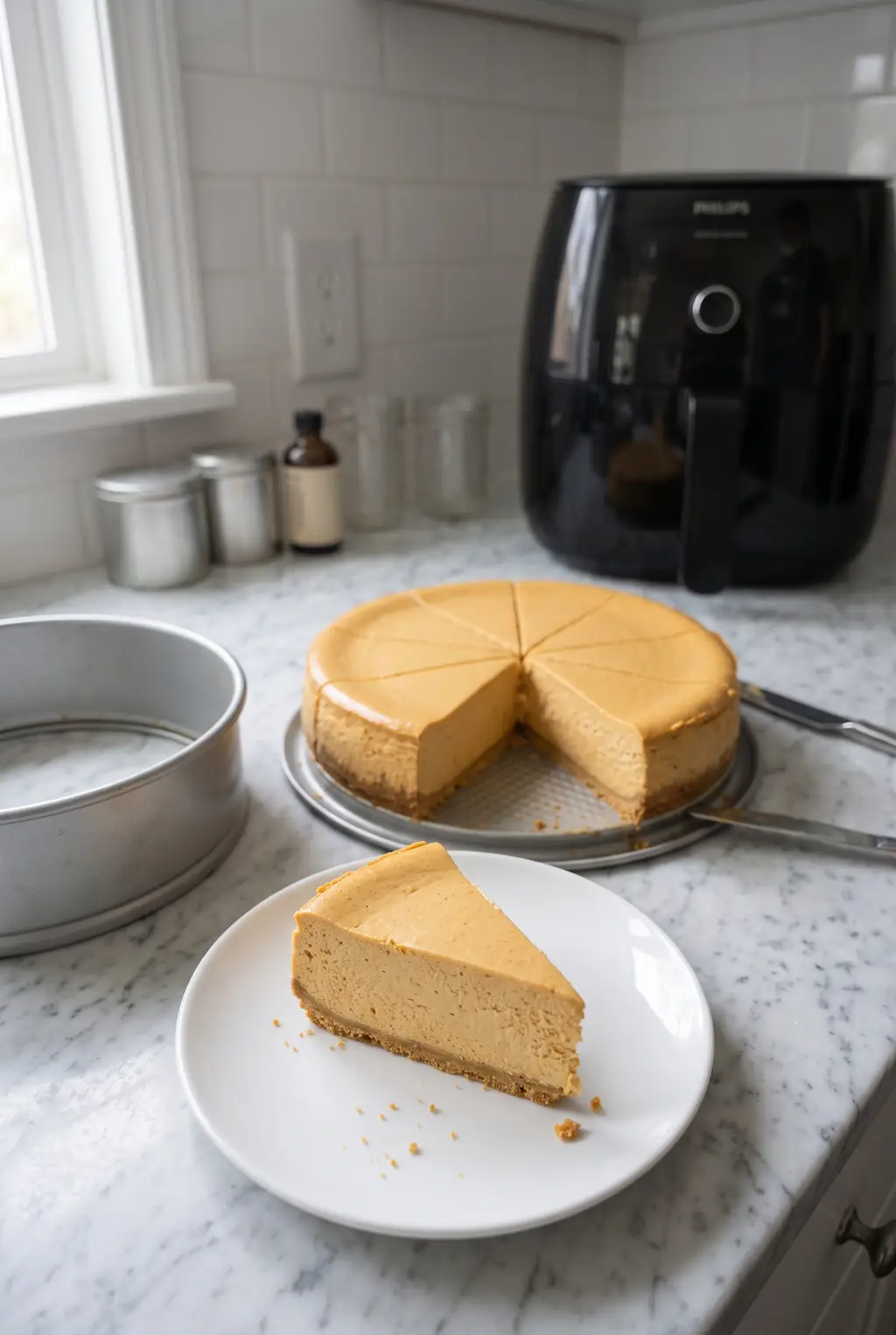
I will tell you exactly when this recipe got serious: the October I baked a pumpkin cheesecake in the oven with a proper foil-wrapped water bath, then tried the same batter in the air fryer without one, side by side. The oven cake was flawless. The basket cake had a canyon across the top by the time it cooled, deep enough to hold the sour cream I suddenly needed as a cover story. The lesson was not that the air fryer cannot make this dessert. It was that I had removed a load-bearing technique and replaced it with hope.
Because here is what a water bath actually does for a cheesecake, and especially for a pumpkin one. It moderates the heat, so the custard's edges cannot race ahead of its center. It humidifies the oven, so the surface stays supple instead of drying into a skin that splits when the filling settles. And it slows the cool-down, because a big pan of hot water keeps radiating gentle warmth after the heat clicks off. Three jobs. An air fryer, with its close element and drying wind, performs the opposite of all three by default, which is why this is the hardest bake the machine can attempt, and why every one of those three jobs gets rebuilt below by other means. None of the air fryer recipes ranking for this dessert even mention the problem. This page is the solution to it.
Quick answer: Beat 16 ounces of room temperature cream cheese with sugar on low, add blotted pumpkin puree, sour cream, spices, and cornstarch, then the eggs last and gently. Pour over a par-baked graham crust in a 7 inch springform pan. Bake at 300F for 12 minutes, then 270F for about 30 more, with a foil tent over the pan and a small ramekin of just-boiled water in the basket corner. Pull at 170F in the center, rest 30 minutes inside the switched-off machine, then chill at least 4 hours. No water bath, no crack.
Why this is the hardest bake in the basket
A cheesecake is a custard wearing a cake's name: eggs and dairy set softly by gentle heat, exactly like the filling in the pumpkin pie or the interior of the bread pudding. Custards are the diva family of this site's can-and-cannot-bake rankings: spectacular when respected, unforgiving when rushed, and allergic to the two things an air fryer does best, which are intense top heat and moving dry air. Overheat a custard and its egg proteins clench, squeeze out moisture, and turn the texture grainy; dry its surface early and the skin splits later as the center settles.
Pumpkin then makes everything harder, which no one selling you a fifteen minute version admits. Canned puree is mostly water wearing an orange coat. Stir three quarters of a cup into a cheesecake batter and you have added a flood the eggs must somehow set, lengthening the bake, softening the structure, and widening the window in which the top can dry and crack while the middle is still liquid. So the plan has two halves and needs both: rebuild the water bath the machine cannot hold, and take the extra water back out of the pumpkin before it ever enters the bowl.
The no water bath water bath
Here are the bath's three jobs, and this recipe's replacement for each.
- Job one: moderate the heat. An oven cheesecake bathes at 325F. The basket needs less, because the element is inches away and the chamber is small, so this recipe runs a two stage schedule: 300F for the first 12 minutes to set the rim, then down to 270F for the long middle of the bake. The same logic that makes the air fryer calculator discount every oven temperature applies double to custards, which want the gentlest version of the machine that still cooks. A loose foil tent rides on the pan the whole time, blocking the ceiling's radiant stare exactly the way the foil guide teaches for every deep bake.
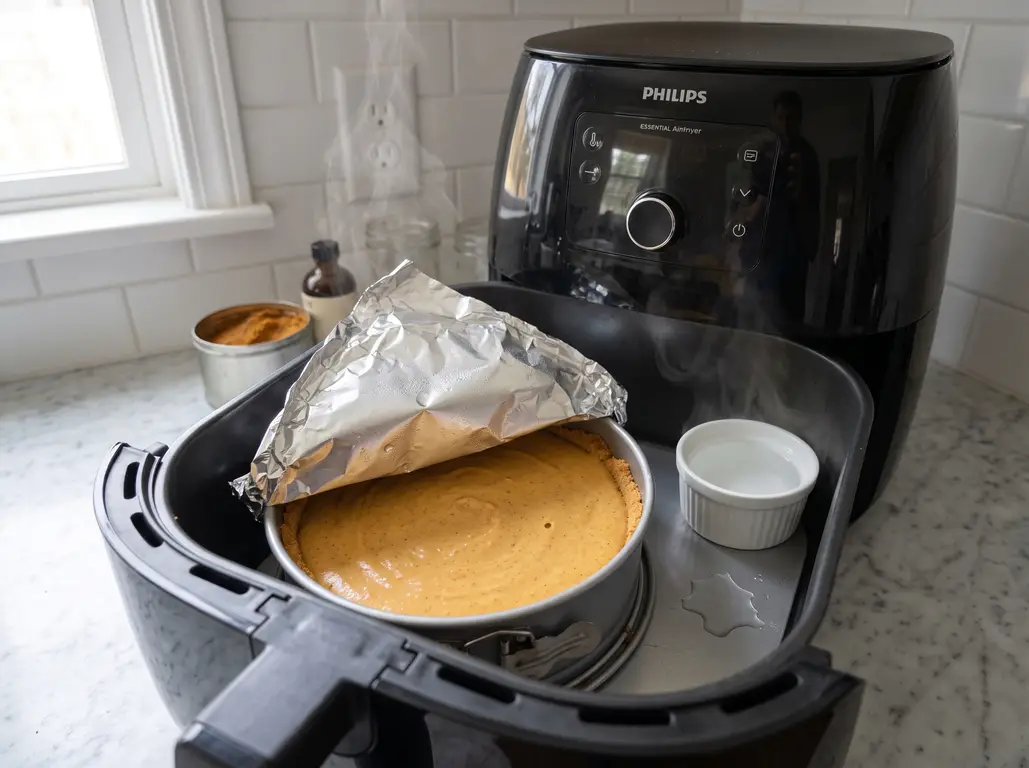
- Job two: humidify the air. This is the move that looks eccentric and works: a small ceramic ramekin or metal cup of just-boiled water sits in the corner of the basket beside the pan, steaming quietly for the whole bake. It cannot bathe the cheesecake, but it does not need to; it only needs to keep the chamber's air from being desert-dry, so the custard's surface stays flexible while the center catches up. Readers of this site have met this trick before wearing a different hat, as the mug of boiled water that turns a switched-off air fryer into a proof box for the cinnamon rolls. Same mug, new job.
- Job three: land slowly. Cheesecakes crack from change as much as from heat, and the cruelest change is the trip from a hot chamber to a cool counter. So the bake ends the way the proof box begins: machine off, basket shut, cheesecake resting inside for 30 minutes while the small chamber loses heat far more gently than the kitchen air would take it. Then the counter until barely warm, then the refrigerator. Every stage of that descent is carryover doing finishing work you would otherwise have paid for in overbaking.
The blot: fixing the pumpkin itself
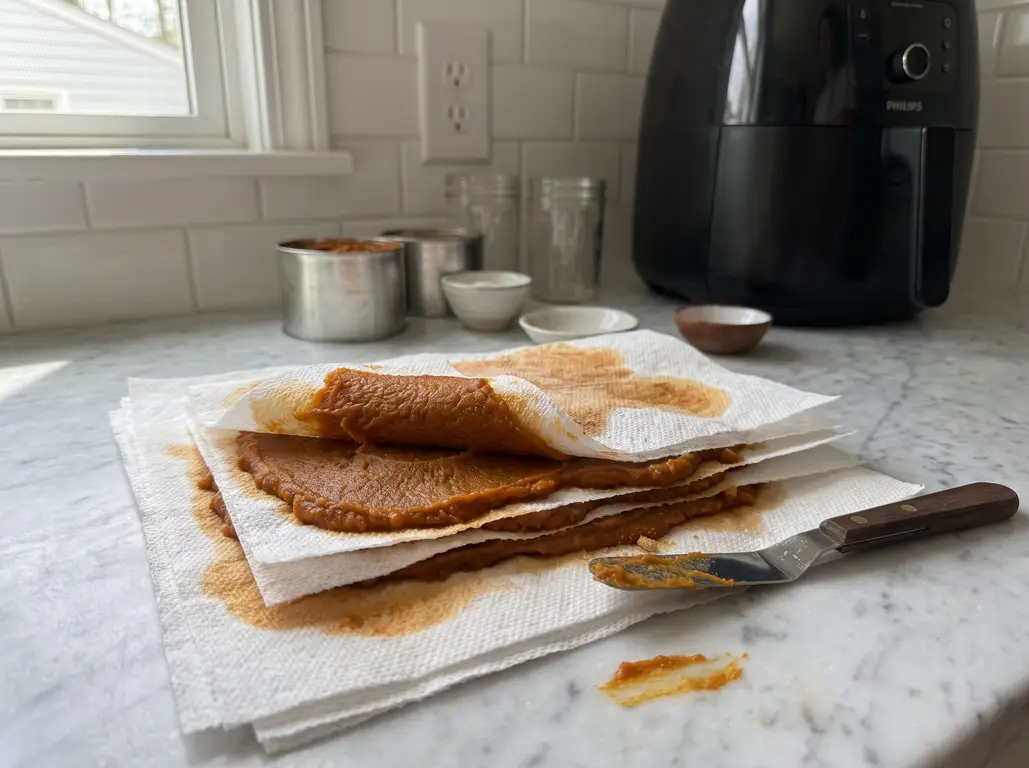
The second half of the plan takes ninety seconds and separates this cheesecake from every canned-pumpkin dessert that ever wept in a pan. Spread the measured puree about half an inch thick on a triple layer of paper towels, lay two more sheets on top, and press gently until the towels are soaked through. Peel, scrape, and weigh what remains if you like the numbers: you will have removed two to three tablespoons of water that were never going to become flavor, only bake time. The puree left behind is deeper in color, concentrated in taste, and dramatically better behaved in a custard. Use pure pumpkin puree for this, never pumpkin pie filling; the canned filling arrives pre-sweetened, pre-spiced, and pre-thinned, which surrenders every control this recipe just fought for. If your bakes in general run wet or weepy, the same blot-and-concentrate thinking runs through the moisture guide from the opposite direction.
Ingredient notes, only where they earn the space
Cream cheese, two full-fat bricks, genuinely at room temperature. Cold cream cheese beats into lumps, and lumps never leave; they just hide until slicing day. Two hours on the counter, and no, the microwave shortcut does not count. Eggs, also at room temperature, added last and mixed on the lowest speed just until the yolk streaks vanish. Air is the quiet enemy: a batter whipped fluffy rises in the bake and falls in the cooling, and that fall is a crack with a schedule. Brown sugar alongside white because pumpkin loves molasses the way it loves cinnamon. A tablespoon of cornstarch, the insurance policy: it buffers the egg proteins against clenching, buys you a wider doneness window, and costs nothing in texture. Sour cream for the tang a pumpkin cheesecake needs to avoid tasting like pie filling in a tuxedo. And pumpkin pie spice measured with restraint, because the custard is delicate and clove is not.
The pan is a 7 inch springform or push-bottom pan, which fits most baskets of 5 quarts and up; run yours through the pan size calculator before preheating anything, and remember the machine geometry matters too, since oven-style units run a shade gentler than baskets at the same setting. Metal, not glass, for the same weak-floor reasons every pan choice on this site follows: the basket floor is the mildest heat in the machine, and the crust needs all the conduction it can get.
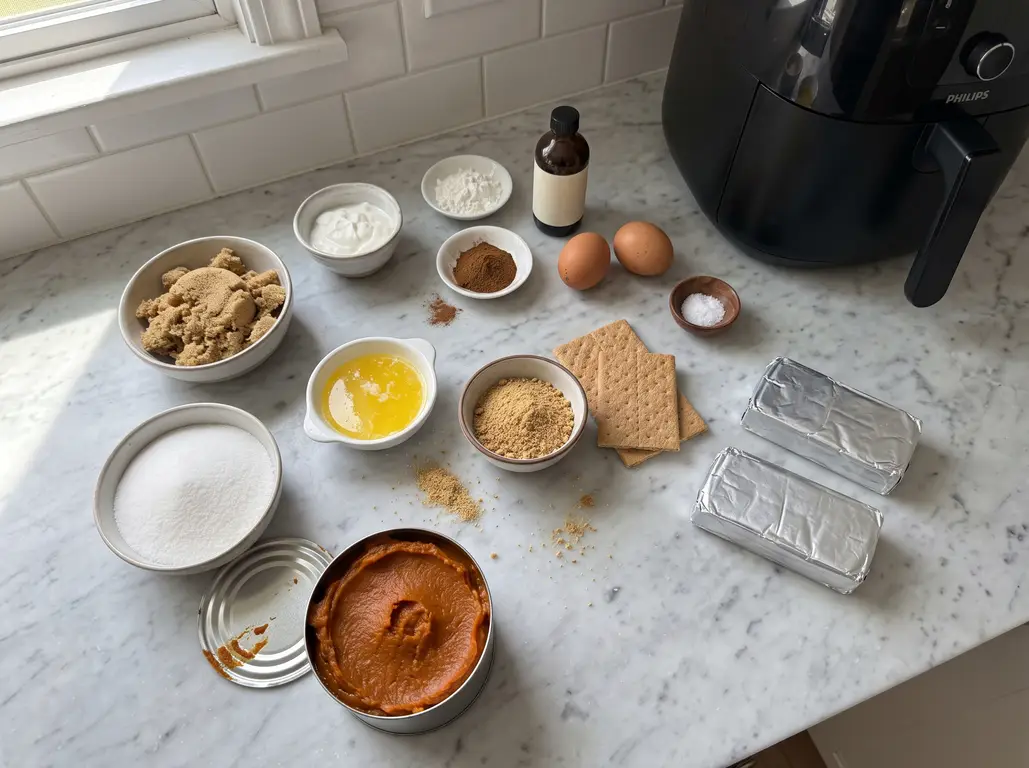
The method, walked through
Crust first, and par-baked. Graham crumbs, melted butter, sugar, salt, pressed firm across the bottom and a half inch up the sides, then 5 minutes alone at 300F. Those five minutes are the difference between a crust and a damp suggestion, because the floor heat is too weak to set butter-soaked crumbs under a flood of wet batter. This is the same par-bake logic the original cheesecake recipe on this site lives by, doubled in importance by pumpkin's extra water.
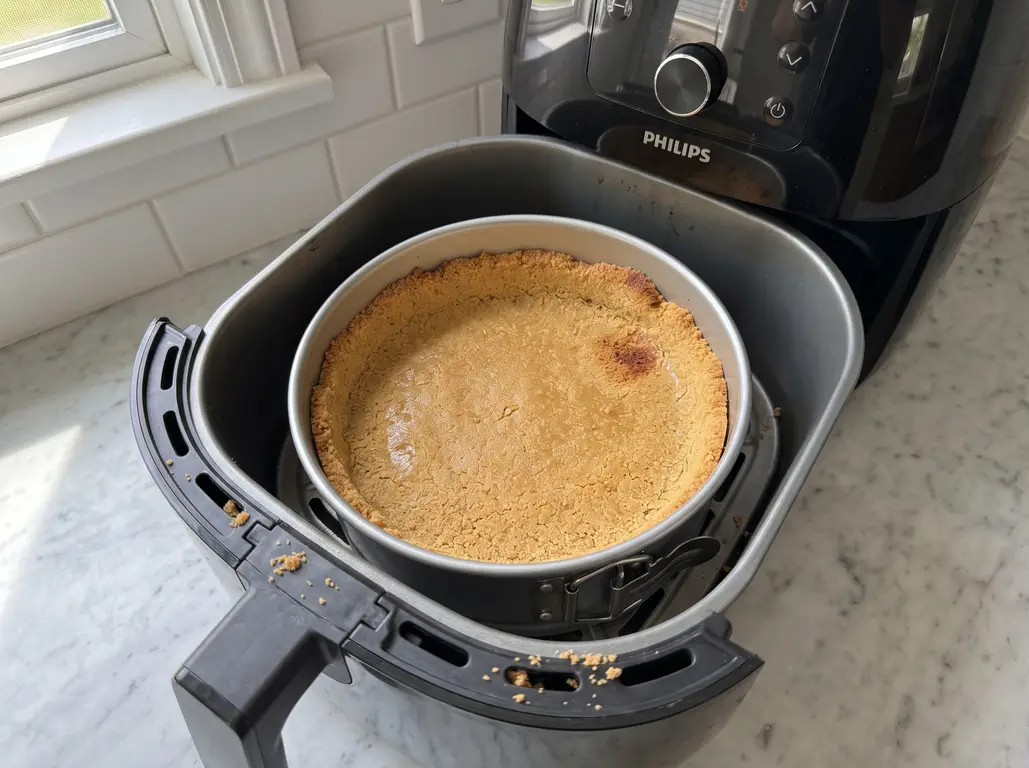
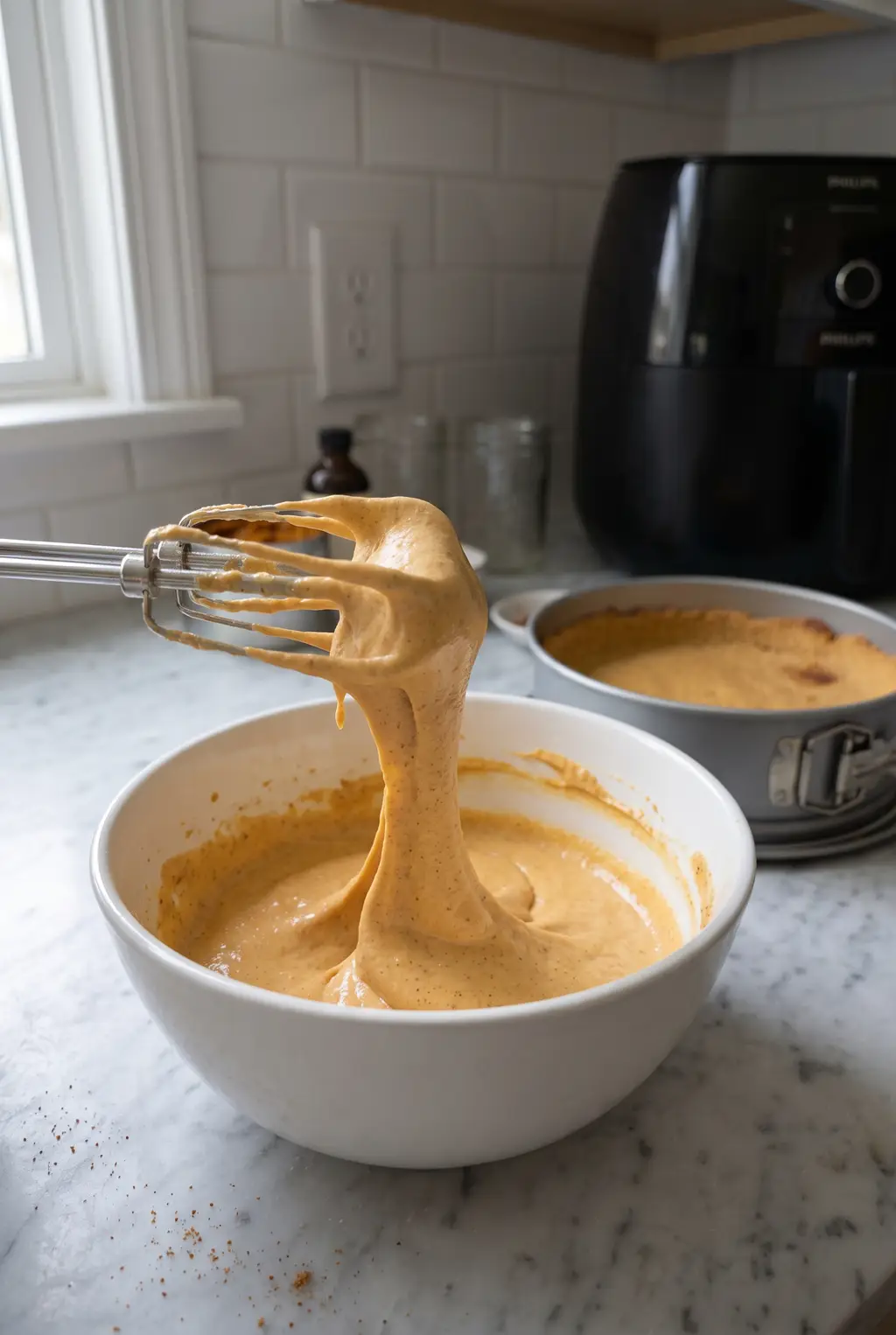
Batter on low, always. Cream cheese alone until smooth, sugars in, then the blotted pumpkin, sour cream, cornstarch, spice, vanilla, and salt. Scrape the bowl more than feels reasonable; the lumps hide at the bottom. Eggs last, lowest speed, stopping the moment the batter is uniform. Rap the filled pan on the counter a few times to surface the air you could not avoid.
Assemble the chamber. Pan on the basket floor, foil tent draped loosely over it with room to breathe, ramekin of just-boiled water in the corner. No preheat: a custard is the textbook case for the cold-start rule, because a gentle ramp is one more cracking defense working for free.
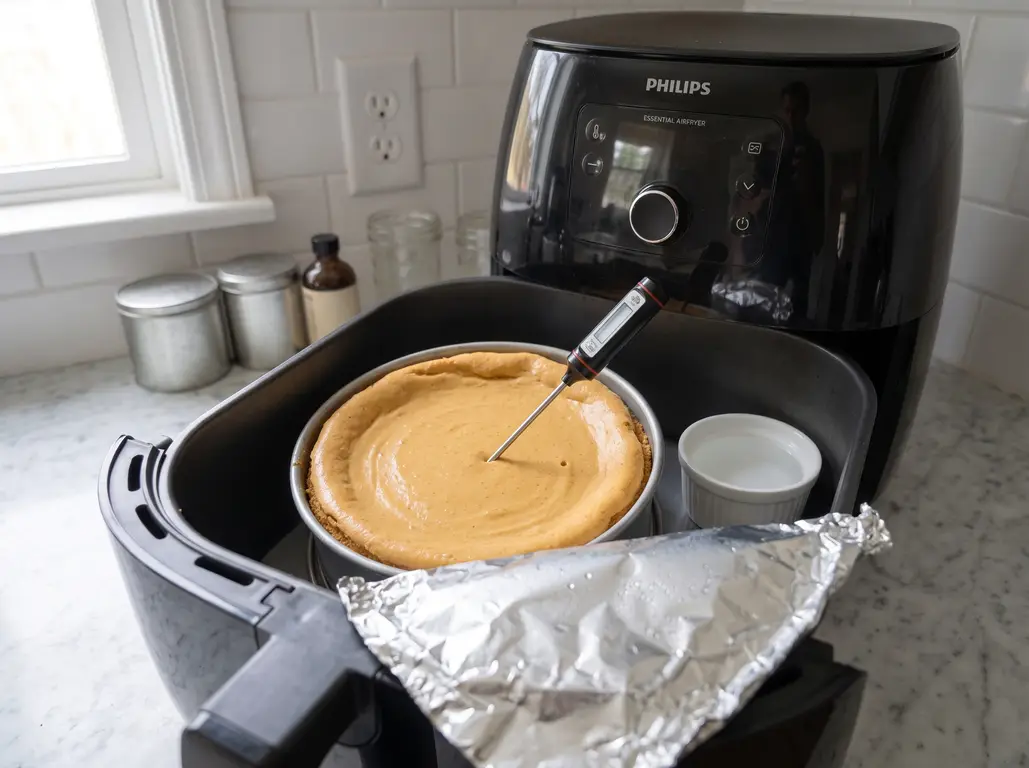
Bake 300F for 12 minutes, then 270F for 28 to 34. Do not open the drawer before the twenty minute mark; after it, check every 5 minutes with a thermometer through the center. You are landing at 170F, and the schedule below is the map, not the territory. Your machine's true personality, which corner runs hot, how fast it recovers, is exactly what the bread-slice audit in this site's how-it-works testing was invented to reveal, and the baking chart holds the tested settings for every other custard when you want the family reference.
Doneness: 170F and the wobble that is supposed to be there
A finished pumpkin cheesecake looks unfinished, which is the single hardest thing to trust the first time. The rim stands set and slightly puffed; a three inch circle in the center still wobbles like it has an opinion. The number underneath the look is 170F on an instant-read thermometer slipped into the center, the cheesecake rung of this site's custard ladder, below the 175F of the pumpkin pie because a cheesecake keeps cooking harder in its thick, heat-holding pan. At 170F the eggs are safely set and the carryover of the resting period finishes the middle to velvet. Bake to no-wobble-at-all, the advice half the internet still gives, and you have baked to grainy; the wobble is not a risk, it is the texture, six hours early. Color tells you nothing here, the same way it lies about every deep bake in this machine: the top should stay pale matte orange, and any real browning means the tent slipped or the temperature ran hot.
Crack insurance, and the rescue that outranks all of it
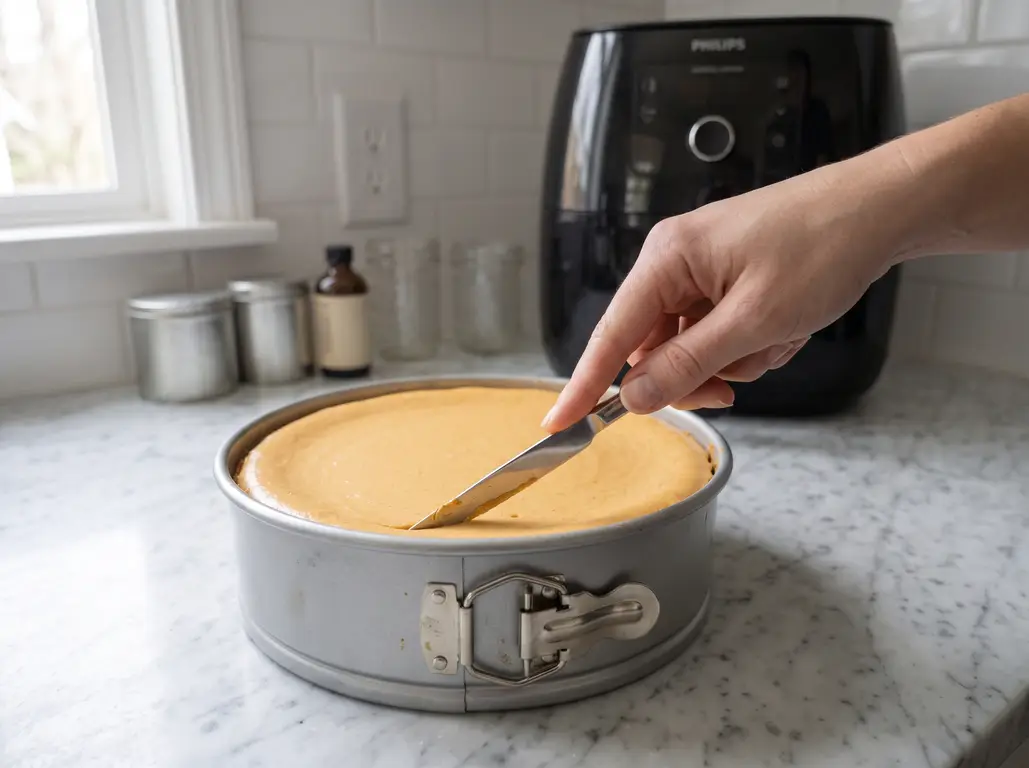
The defenses, in the order they earn their keep: room temperature everything, low speed mixing, the blot, the cornstarch, the tent, the ramekin, the two stage bake, the 170F exit, and the slow landing inside the switched-off machine. Run those and cracks become rare. Then run a knife around the rim as soon as the resting period ends, before the counter cool-down, because a cheesecake shrinks slightly as it cools and a filling still glued to the pan wall will tear at its own center rather than let go of the sides. That one knife-stroke prevents more late cracks than any ingredient can.
And if the surface splits anyway, because machines have moods, whisk a cup of sour cream with three tablespoons of powdered sugar and a half teaspoon of vanilla, spread it across the chilled top, and refrigerate one more hour. This is not merely a patch; it is the classic finish for pumpkin cheesecake in fine bakeries that never cracked anything, which makes it the rare rescue indistinguishable from a plan. Persistent, repeated cracking across different recipes is a machine running hot, and that diagnosis belongs to the troubleshooting guide and its thermometer tests.
Storage, make-ahead, and the day-two truth
Here is the schedule secret that makes this dessert the easiest holiday bake instead of the hardest: it demands to be made ahead. Wrapped in the refrigerator, the cheesecake is better on day two than day one, the spices bloomed and the texture settled into itself, and it holds beautifully through day four. That makes it the rare Thanksgiving dessert that wants your Tuesday instead of your Thursday, exactly the kind of scheduling this site preaches for every holiday custard. It also freezes with dignity: whole or in slices, wrapped twice, up to two months, thawed overnight in the refrigerator. Slices come cleanest from a cold cake and a hot dry knife, wiped between cuts. And if the fall baking mood survives the last slice, the same season on this site runs through the pumpkin bread, the carrot cake, and the baked apples.
Frequently asked questions
QCan you make pumpkin cheesecake in an air fryer?
Yes, and a 7 inch pan is genuinely the right size for the dessert, but only if the recipe replaces the water bath an oven version would use. That means a two stage low bake at 300F then 270F, a loose foil tent against the close ceiling element, a small ramekin of just-boiled water in the basket for humidity, and a 30 minute rest inside the switched-off machine. Skip those and the machine's dry moving heat cracks the top almost every time.
QWhy did my pumpkin cheesecake crack?
One of four reasons, usually stacked: the batter carried whipped-in air that rose and then collapsed, the heat ran too hot and clenched the eggs, the surface dried into a skin while the wet center kept settling, or the cooling happened too fast, including the silent crime of a filling still stuck to the pan wall as the cake shrank. The fixes are low speed mixing, the two stage bake, the water ramekin, pulling at 170F, a knife run around the rim after the rest, and a slow multi-stage cool.
QDo I need a water bath for cheesecake in an air fryer?
You cannot use one, and you do need what it provides, which is the honest version of the answer. A water bath moderates heat, humidifies the air, and slows the cool-down. In the basket those jobs transfer to a 270F core bake under a foil tent, a ramekin of boiled water steaming beside the pan, and a rest inside the machine after it switches off. The cheesecake never touches water at any point, and it behaves as if it bathed.
QWhat temperature is pumpkin cheesecake done?
Pull it at 170F measured with an instant-read thermometer in the very center. At that number the rim is fully set, the middle still wobbles deliberately, and the half hour of resting heat finishes the custard to a velvet set as it cools. Baking until the wobble disappears entirely means the center reached roughly 180F and the texture has already turned toward grainy. The thermometer costs a few dollars and replaces every anxious guess this dessert has ever caused.
QShould I use pumpkin puree or pumpkin pie filling?
Pure pumpkin puree, without exception. Pie filling arrives pre-sweetened, pre-spiced, and thinned, which wrecks the recipe's ratios three ways at once and surrenders control of the flavor to a can. Then improve the puree itself: press the measured amount between layers of paper towels to blot out two to three tablespoons of water. The blotted puree is more concentrated in flavor and dramatically better behaved in a custard that already fights extra moisture.
QWhat size pan fits in an air fryer for cheesecake?
A 7 inch springform or push-bottom pan is the standard: it fits most basket machines of about 5 quarts and larger while leaving the airflow gap the chamber needs, and it gives a properly tall cheesecake from a two brick batter. A 6 inch pan works in smaller machines with the same schedule and a few extra minutes, since the batter runs deeper. Measure your basket floor before shopping, and choose metal over glass because the machine's weak floor heat needs a conductive pan.
QHow long does pumpkin cheesecake need to chill?
Four hours in the refrigerator is the working minimum before slicing, and overnight is genuinely better, not just safer. Chilling finishes the set that the gentle bake deliberately left incomplete, and the flavor improves as the spices bloom into the dairy, which is why day two beats day one. Plan it as a make-ahead dessert: bake up to three days before serving, keep it wrapped and whole in the refrigerator, and add any topping within a few hours of the table.
QCan I make this cheesecake without a springform pan?
Yes, with an escape plan for the cake. A solid 7 inch cake pan works if you line the bottom with parchment and run a full sling of folded parchment up two sides, then chill completely before lifting, because a warm cheesecake will not survive the move. A push-bottom pan is the easiest non-springform answer. What does not work is silicone: the sides flex, the custard needs support while it sets, and the weak floor heat struggles through an insulating mold.
QWhy put a cup of water in the air fryer?
The ramekin of just-boiled water is the humidity half of the rebuilt water bath. An air fryer's moving air is aggressively dry, and a custard's surface that dries early forms a skin that splits later as the center settles. A small heatproof cup steaming in the basket corner keeps the chamber's air gently moist for the whole bake, protecting the top without touching the cake. Use ceramic or metal, place it before the bake starts, and leave it in until the rest ends.
Never overbake again
Get our one-page times & temps cheat sheet, plus a new tested recipe each week.
No spam · unsubscribe anytime