
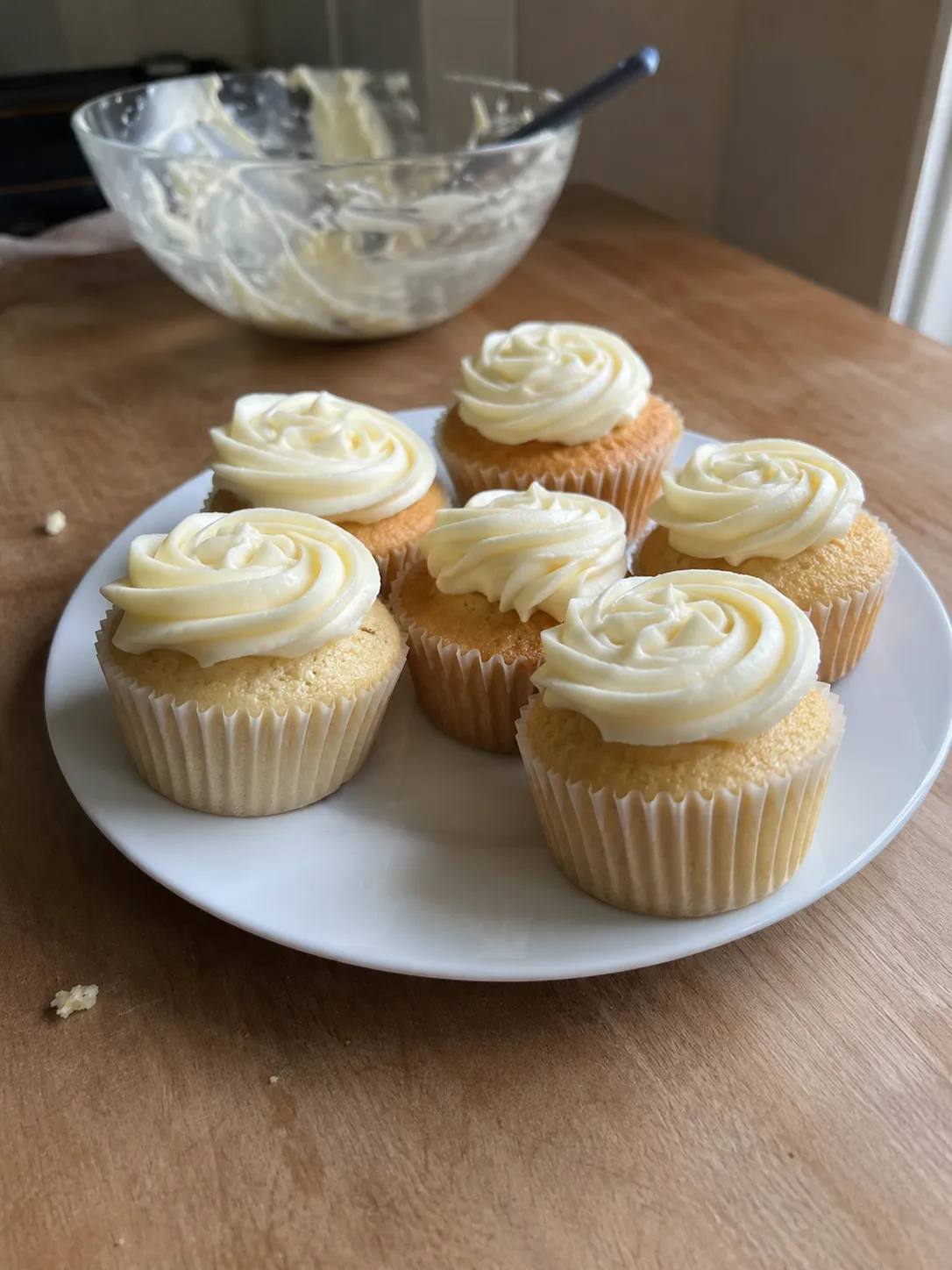
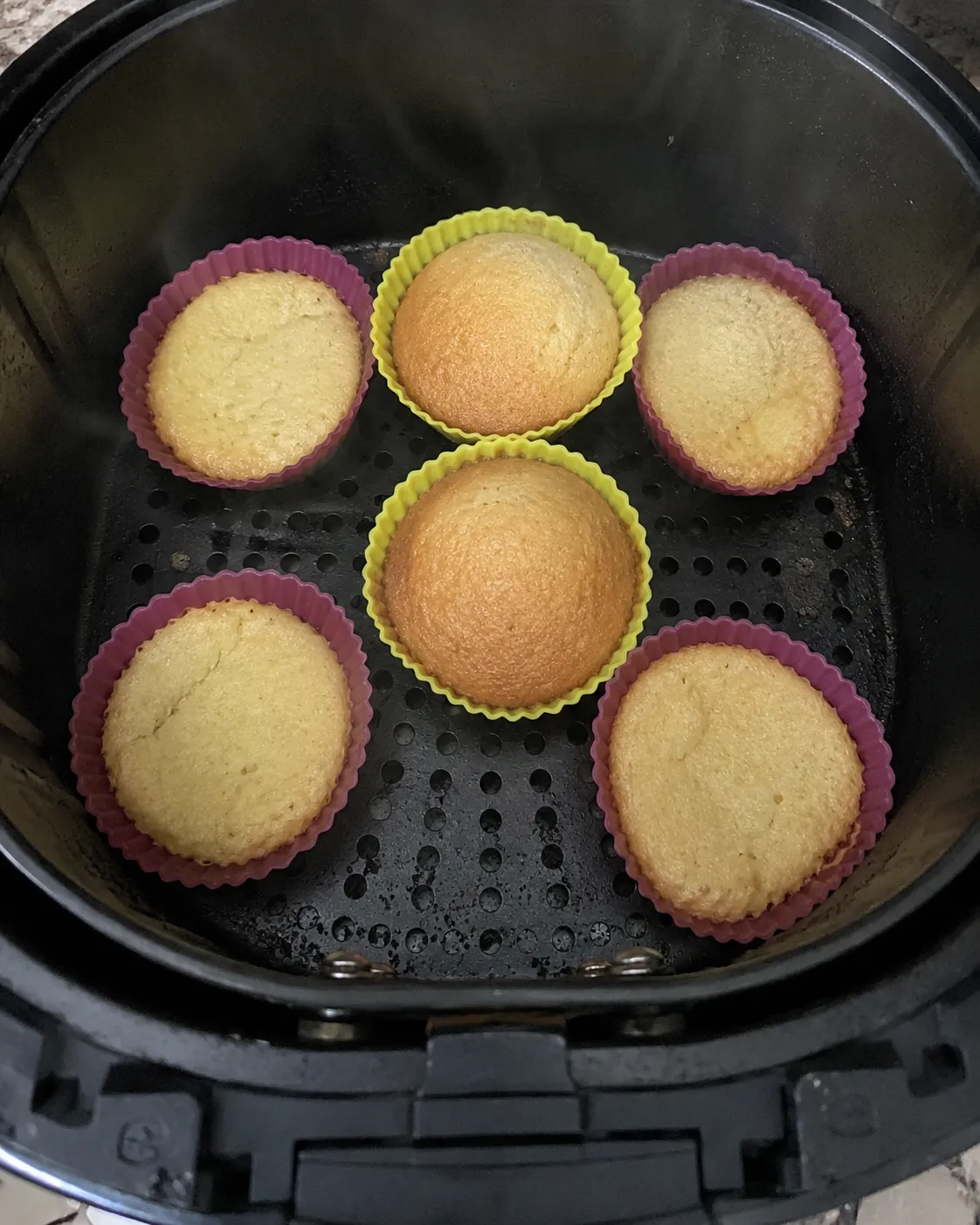
The first tray of cupcakes I made in an air fryer came out looking like a before and after photo. Two of them were domed and golden, two were pale and flat, and the two at the back had one dark side each. Same batter, same bowl, same six minutes apart in the same basket.
An oven does not do this to you. In an oven the whole cavity sits at one temperature, the tray holds every cupcake at the same height, and the heat arrives from all directions at once. A basket does none of that.
Quick answer: Bake at 320°F for 13 to 16 minutes in silicone cups, filled two thirds, spaced so they are not touching. Rotate their positions at the halfway mark, swapping the outside ones with the middle. Pull at 200°F internal. If you are doing a second batch, take 2 minutes off, because the machine is hotter than it was for the first one.
Three kinds of uneven
Every complaint about air fryer cupcakes is one of three problems, and they have different causes and different fixes. Almost every recipe I read treats them as one vague thing called air fryers vary.
Across the basket
The fan pushes air down in a particular pattern, so some positions get far more airflow than others. Two cupcakes six inches apart are in genuinely different ovens.
Between batches
The first batch goes into a machine that has only just reached temperature. The second goes into one that is thoroughly heat soaked and radiating from every surface.
Within one cupcake
The element sits a few inches above the tops. The top of each cupcake is much closer to the heat than the middle of it is, so it sets and colors early.
The three fixes are, in order: rotate their positions, shorten the second batch, and drop the temperature. That is the whole page, and the rest of it is why.
The hot spot, and rotating
An air fryer has a hot spot. Every one of them does. The fan sits above the element and drives air downward, and where that column of air lands is hotter and faster than the corners of the basket. On most basket models it is the middle. On some it is offset toward the back where the fan is mounted.
For chips and wings this does not matter, because you shake the basket and everything swaps places several times. You cannot shake cupcakes. So the position each one starts in is the position it stays in for the entire bake, which is why one comes out domed and golden and its neighbor comes out pale.
Find yours once, then stop thinking about it. Lay a single layer of plain white bread across the basket, cut to fit, and toast it at 350°F for about 4 minutes. Pull it out and look. The darkest patch is your hot spot. Mine is dead center and slightly toward the back, and I have never had to check again.
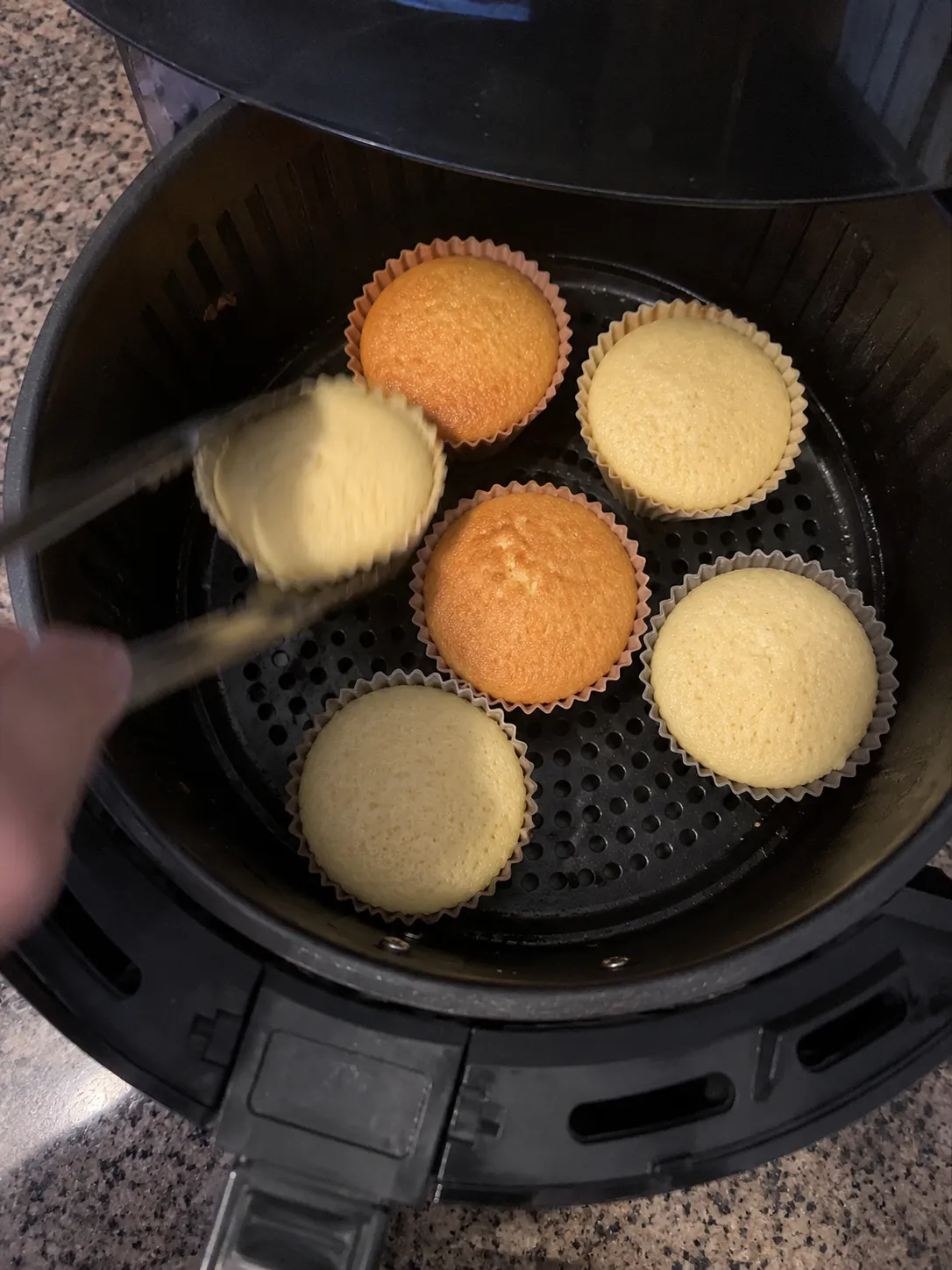
The fix is the oven-baking habit that translates directly: rotating. At the halfway mark, pull the basket and move each cupcake to a different position, swapping the ones on the outside with the ones in the middle. It takes about ten seconds with a pair of tongs.
Neither of the two most popular recipes for this mentions rotating at all. It is the single most effective thing you can do for even cupcakes, and it costs you nothing but the ten seconds.
Why batch two is faster
A couple of the better recipes do mention that a second batch bakes quicker. Neither says why, and neither tells you by how much, which leaves you guessing at exactly the moment you are least able to guess well.
Here is what is going on. When your air fryer beeps to say it has reached 320°F, only the air has reached 320°F. The metal basket, the crisper plate and the walls of the cavity are all still climbing, and they go on absorbing heat for another ten minutes or so. That is thermal mass, and while it is charging up it is quietly stealing energy that would otherwise be going into your cupcakes.
By the time batch one comes out, all of that metal is fully saturated and hot. It is no longer absorbing. It is radiating, from every surface around your food, on top of the air that was already there. Batch two is being baked in a meaningfully hotter environment than batch one was, even though the dial has not moved.
| Batch | Time at 320°F | Why |
|---|---|---|
| First | 13 to 16 min | Machine at temperature but the metal is still heating up |
| Second | 11 to 14 min | Everything is heat soaked and radiating back |
| Third and after | 11 to 13 min | Fully saturated. It stops getting faster after batch two. |
Two minutes on a fourteen minute bake is a lot, and it is the usual reason a second batch comes out with dry edges when the first was perfect. The glossary entry on batch baking covers the general case, which applies to cookies and muffins just as much.
There is one thing that partly cancels this out and is worth knowing: every time you open the basket, the temperature inside drops sharply and the machine has to claw it back. That is recovery time, and in a small cavity it is fast but not instant. If you are loading batch two into a basket that has been sitting open on the counter while you scooped batter, some of your head start has already gone. Have the second batch ready to go in before the first comes out.
Liners, and the one that flies
This is the part most recipes do cover, so I will be quick about the agreed bit and spend the time on what they leave out.
The agreed bit: silicone cups are better than paper in a basket, because they hold their own shape without a tin around them. Paper liners on their own will tilt, unfold and let the batter spread into a puddle. If paper is what you have, double them up, which is a real fix and works.
What almost nobody mentions is the actual hazard.
Never put an empty liner in the basket. A paper case with nothing in it weighs almost nothing, and an air fryer fan moves air fast enough to lift it. It will get pulled up against the heating element, where it scorches and can catch. If you are baking four cupcakes rather than six, take the two empty liners out. Do not leave them in to keep the set tidy.
The same applies to the parchment rounds people put in the base. Weighed down by food they are fine. Empty, they fly.
Two smaller things worth knowing:
- Silicone insulates. It conducts heat far worse than metal does, so a silicone cup slows the outside of the cupcake down slightly. That is mostly good here, because it protects the sides while the top gets the direct heat, but it means silicone runs a minute or two longer than a metal tin would. Using silicone molds in an air fryer goes through the adjustment.
- A 6-cup muffin tin works if it fits. If you have one that clears your basket with an inch of airflow around it, it holds everything at a fixed spacing and stops any liner moving. It also conducts better, so take 2 minutes off. Measure before you buy: the pan size calculator will tell you what your basket takes.
Ingredients
Makes 6 standard cupcakes, which is what fits most baskets in one go. Everything at room temperature.
- 3/4 cup (95g) all-purpose flour
- 1/2 cup (100g) granulated sugar
- 1 teaspoon baking powder
- 1/4 teaspoon salt
- 5 tablespoons (70g) unsalted butter, softened
- 1 large egg plus 1 yolk, room temperature
- 1/4 cup (60ml) milk, room temperature
- 1 teaspoon vanilla extract
Two notes
- The extra yolk. Six cupcakes from one egg is slightly under-bound and two whole eggs is too wet, since egg white is roughly 90 percent water. One egg plus a yolk lands between the two and gives a richer, more tender crumb. The same reasoning is behind the yolk in our air fryer vanilla cake.
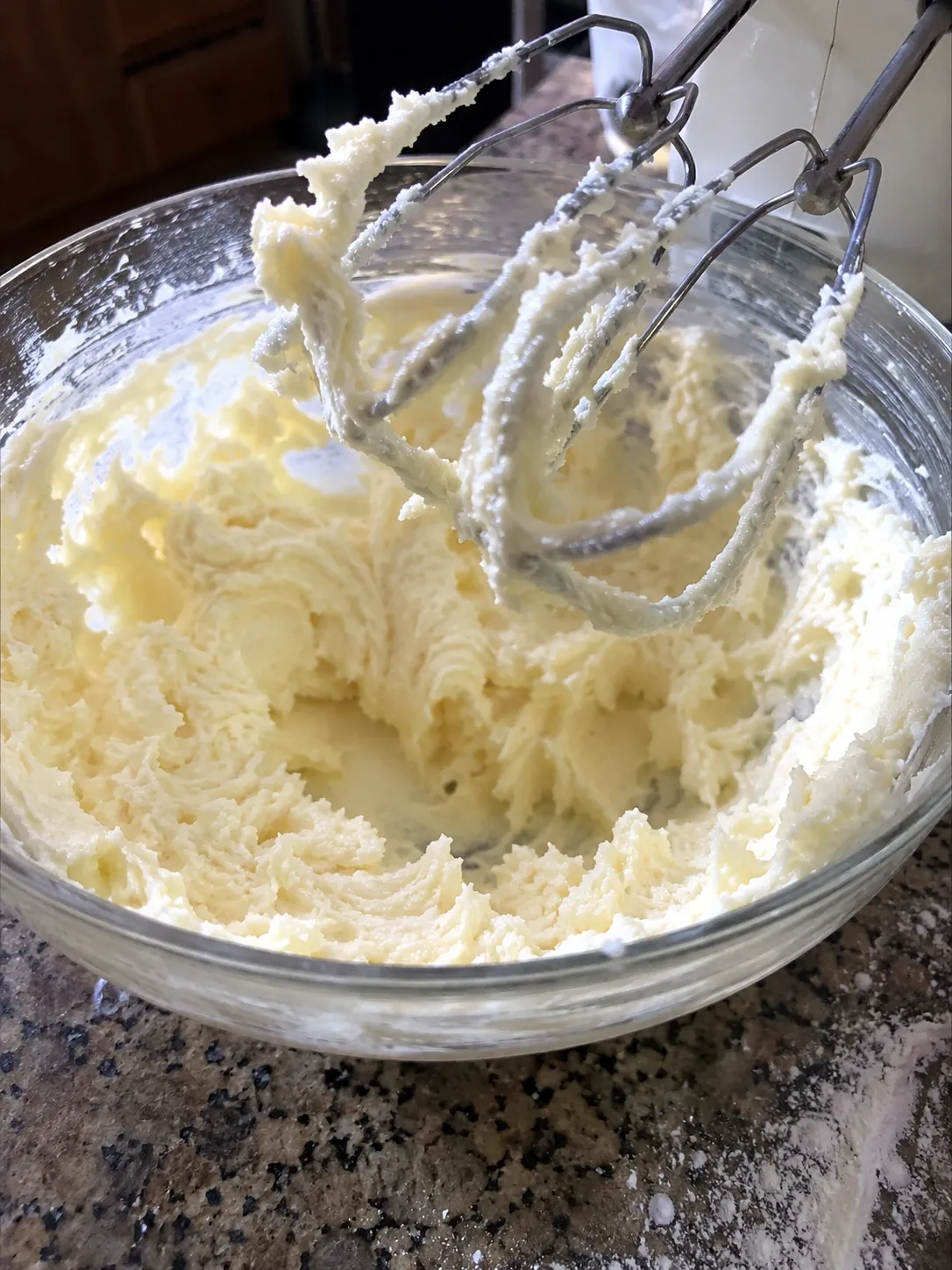
- Cream the butter and sugar properly. A full three minutes until it is visibly paler. This is a butter cake, so almost all the lift comes from air you beat in now, and the baking powder is only inflating pockets that already exist. Rushing this is the most common reason cupcakes come out dense, and no amount of extra baking powder fixes it.
How to make them
- Preheat to 320°F (160°C) for 3 minutes. Start it before you mix so the batter is not sitting around. Baking powder begins working the moment it meets liquid, and a batter that waits ten minutes loses some of its lift. Whether you need to preheat covers why leavened batters care about this most.
- Cream the butter and sugar for a full 3 minutes, until noticeably paler and lighter. Set a timer if you tend to stop early, because most people do.
- Beat in the egg, then the yolk, letting the first fully incorporate before the second goes in. If it looks like it is splitting, add a spoonful of the flour.
- Beat in the vanilla.
- Whisk the flour, baking powder and salt together, then add in two additions alternating with the milk, folding rather than beating.
- Stop as soon as the last streak of flour goes. Overmixing develops gluten and gives a tough, tight crumb.
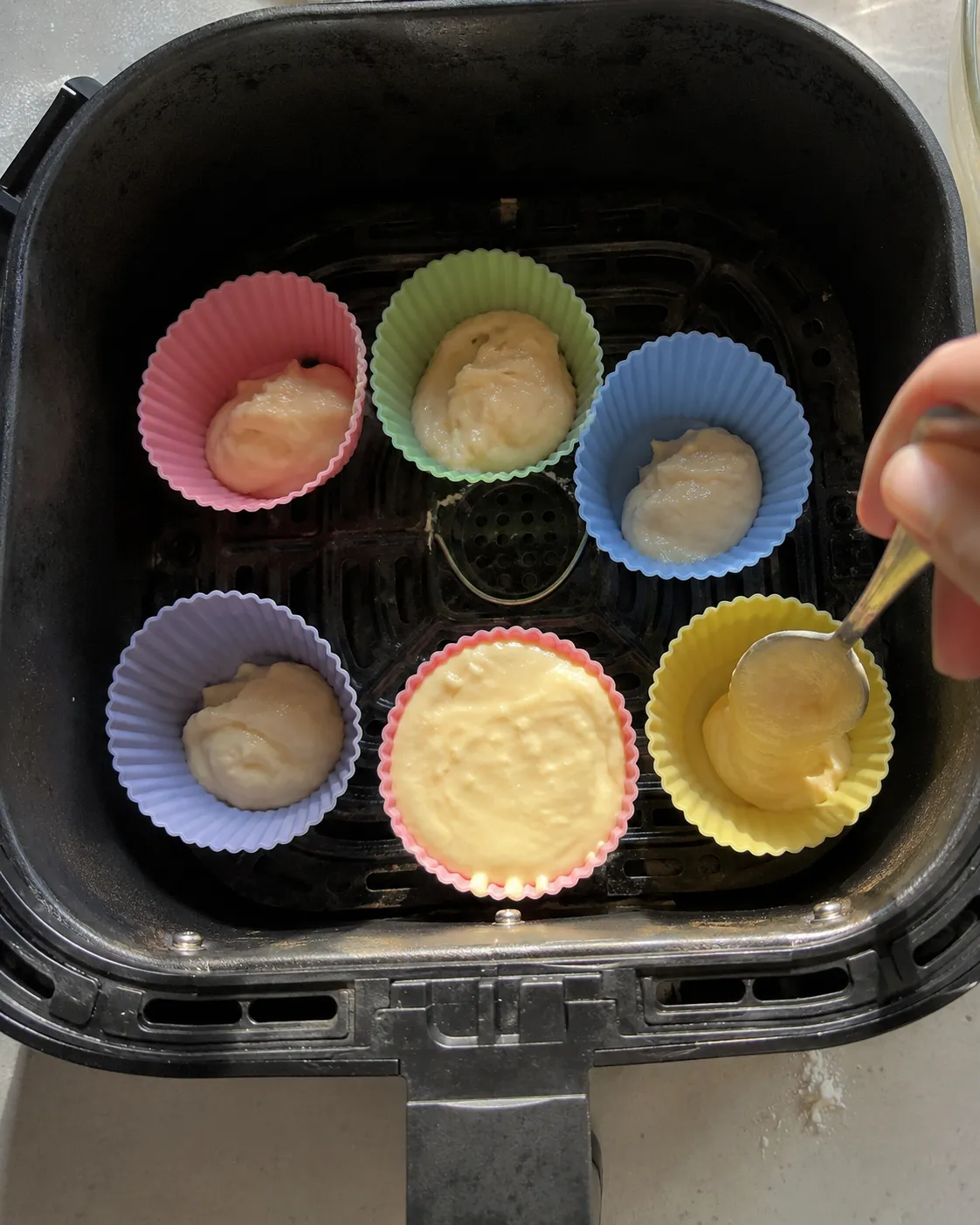
- Fill the cups two thirds full, not three quarters. An air fryer cupcake rises more than an oven one because the heat is closer and more direct, and a cup filled higher will mushroom over the side and set that way.
- Space them so none are touching and none are pushed into a corner. Take out any empty liners.
- Bake 13 to 16 minutes at 320°F. Second batch, 11 to 14.
- Rotate at the halfway mark. At 7 minutes, pull the basket and swap the outside cupcakes with the middle ones. Ten seconds, tongs, straight back in.
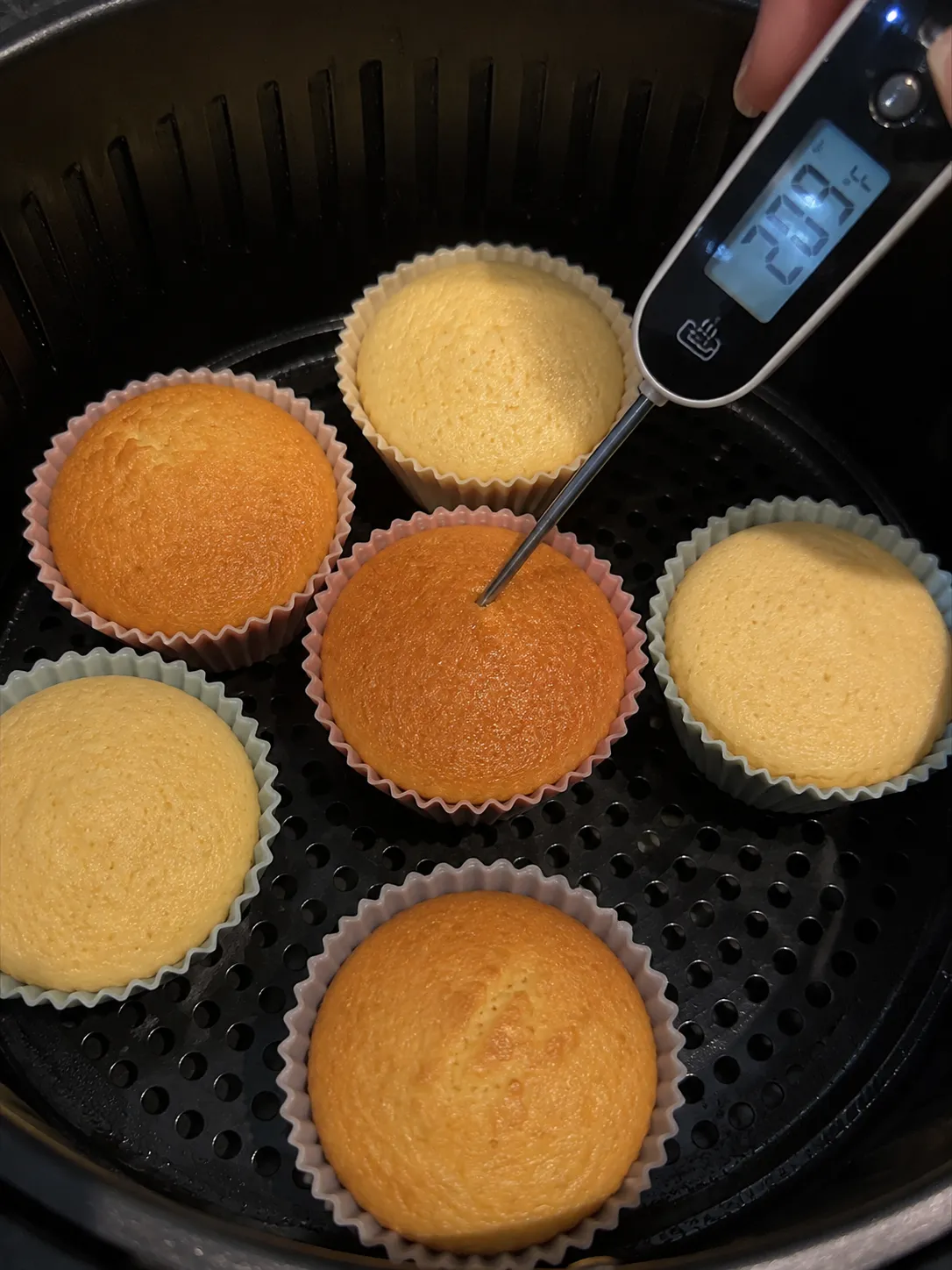
- Check at 13 minutes. Push an instant-read thermometer into the center of the one that looks least done. You want 200°F. Under 195, give it 2 more minutes.
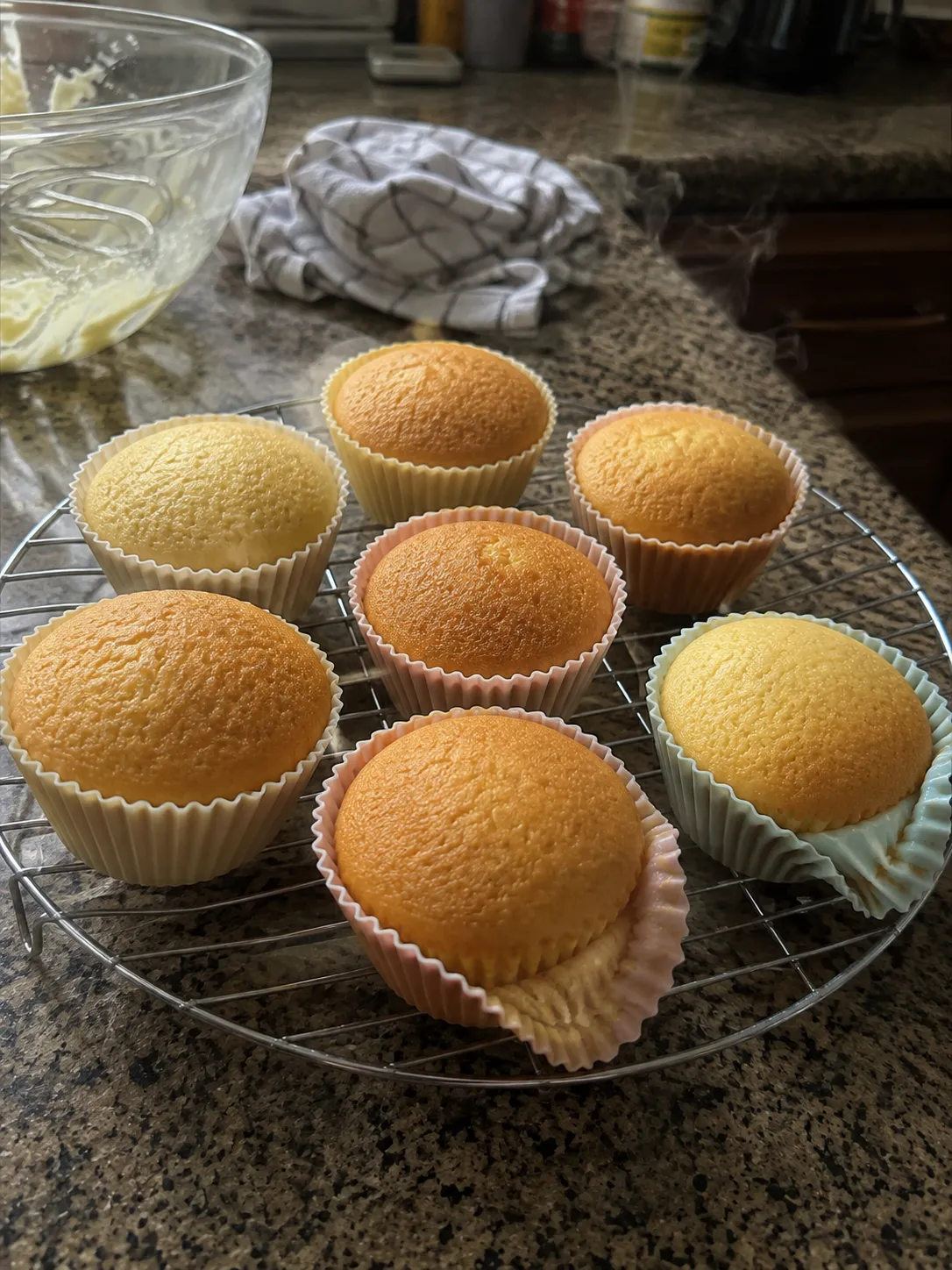
- Lift them out of the basket immediately onto a rack. Left in a hot silicone cup in a hot basket they keep cooking, and the bottoms go dry.
- Cool completely before frosting. Twenty minutes at least. Frosting a warm cupcake gives you a slide, not a swirl.
Why 320°F and not 350. Published recipes for this run from 320 to 350°F, and the higher ones are where the domed, cracked, dark-topped cupcakes come from. The element in a basket sits two to four inches above the top of a cupcake, which is far closer than the top element of an oven. At 350°F the top sets into a crust before the middle has any structure, and then the middle pushes up through it. 320°F gives the inside time to catch up. Our full temperature reference is in the air fryer baking chart.
200°F, and the cost of looking
Every recipe here ends on the toothpick test. On six cupcakes that are demonstrably not baking at the same rate, testing one of them tells you about one of them.
The number is 200°F in the center, which is where the starch has gelatinized and the egg protein has set. Test the cupcake that looks least done, not the one that looks best, because the least done one is the one that determines when the batch comes out.
There is a second reason a thermometer earns its place here that does not apply in an oven. In an oven you can open the door, look, and close it again with a modest heat loss from a large cavity. An air fryer basket is small, and pulling it out dumps essentially all of the hot air at once. The machine then has to rebuild it, which is recovery time, and while it does your cupcakes are cooling rather than baking.
| Checking method | Basket open for | Cost |
|---|---|---|
| Thermometer, one reading | About 5 seconds | Negligible, and you get a real answer |
| Rotating positions | About 10 seconds | Worth it. Build it into the plan rather than adding it on. |
| Toothpick, then look, then decide | 20 to 30 seconds | Adds a minute or so, and you still do not know |
| Opening it three or four times | A minute total | Adds several minutes and dries the edges |
The practical version: plan on opening the basket exactly twice, once to rotate at halfway and once to check the temperature near the end. Everything else is guessing with a penalty attached.
Fixing what goes wrong
| What you got | Why | Fix |
|---|---|---|
| Some golden, some pale | Position. The pale ones sat outside the airflow. | Rotate at the halfway mark. Find your hot spot with the bread test. |
| Second batch overdone | The machine was heat soaked and running hotter than for batch one. | Take 2 minutes off the second batch and check early. |
| Domed and cracked on top | Temperature too high for how close the element is. | 320°F, not 350. Fill two thirds, not three quarters. |
| Mushroomed over the sides | Overfilled. These rise more than oven cupcakes. | Two thirds full is the ceiling. See fill level. |
| Dense and heavy | Butter and sugar not creamed long enough, or the flour was beaten in. | Three full minutes creaming. Fold the flour, do not beat it. |
| Sank in the middle | Pulled before the center set. | 200°F. More in why air fryer cakes sink. |
| Dry bottoms | Left sitting in hot cups in a hot basket after the timer went. | Onto a rack immediately. |
| Paper liner unfolded into a puddle | Unsupported paper cannot hold its shape against the airflow. | Silicone cups, doubled paper, or a muffin tin. |
| A liner flew up and scorched | It was empty, or nearly empty, and light enough for the fan to lift. | Never leave empty liners in the basket. |
| Pale tops even when cooked | Short bake at a modest temperature. This is normal and not a fault. | If you want color, 2 minutes at 350°F at the very end, watching closely. |
If dryness is a pattern across your bakes rather than just here, how to avoid dry air fryer bakes covers the general causes, and the troubleshooting guide has the rest. Machine format matters for this one too, since an oven-style unit spreads a full tray at one height: our basket versus oven-style comparison goes through it.
Frosting and variations
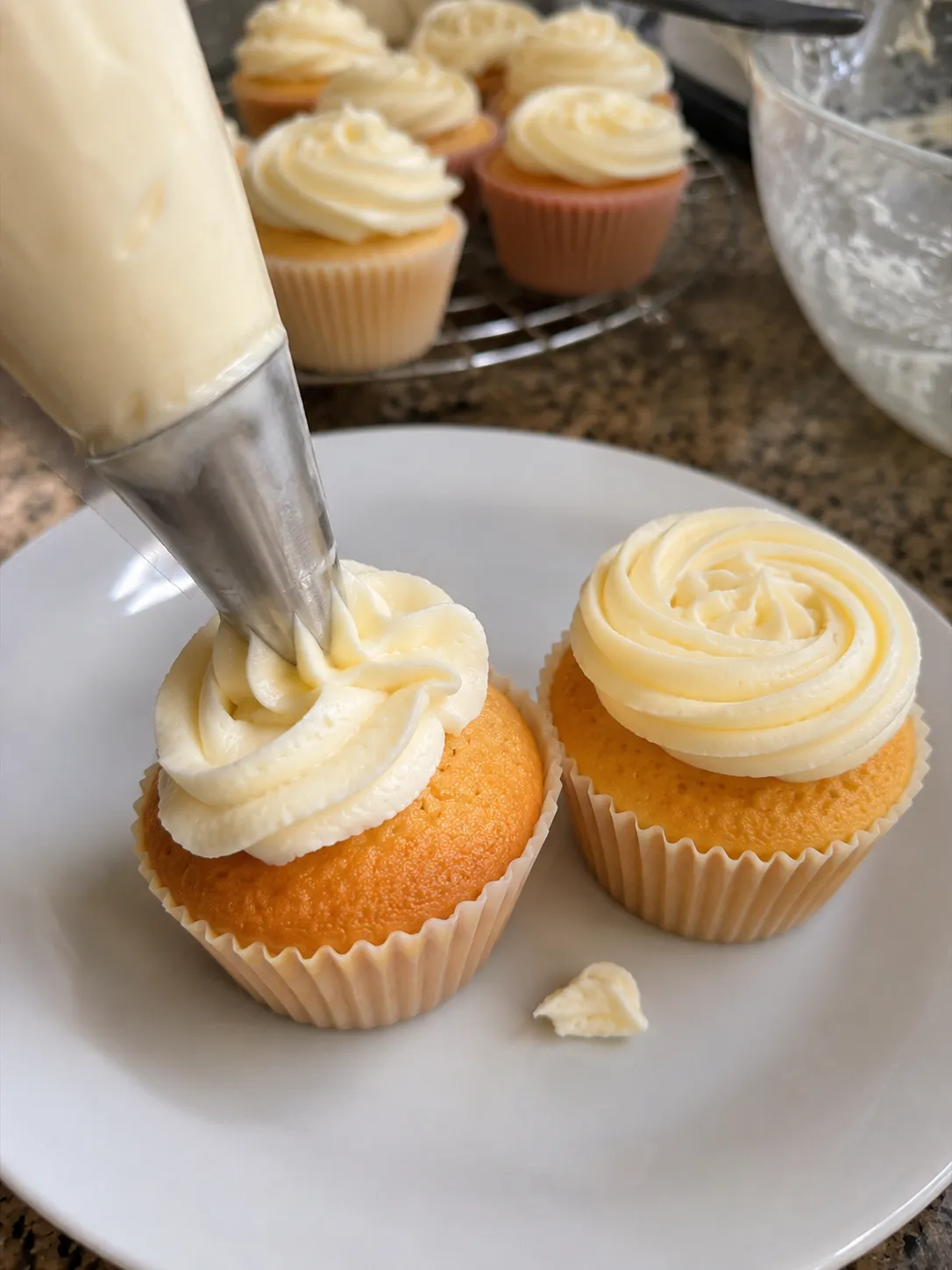
- Simple buttercream. 6 tablespoons soft butter beaten with 1 1/4 cups powdered sugar, a tablespoon of milk and half a teaspoon of vanilla. Enough for six with a generous swirl.
- Chocolate. Replace 2 tablespoons of the flour with cocoa powder and add an extra tablespoon of milk, since cocoa is thirsty. Check the temperature rather than the color, because a chocolate cupcake gives you nothing to look at.
- Lemon. The zest of a whole lemon in the batter, and lemon juice instead of milk in the buttercream.
- Funfetti. A heaped tablespoon of jimmies folded in at the very end. Use jimmies rather than round nonpareils, which dissolve and bleed.
- Cream cheese frosting. Better on a spiced cupcake than a plain one. If you go this way, add a teaspoon of cinnamon to the batter and it becomes a close cousin of our air fryer carrot muffins.
- Filled. Cut a cone out of the top with a small knife, spoon in jam or lemon curd, and replace the lid. Frost over it and nobody knows until they bite.
- Mini cupcakes. The same batter makes about 14 minis. Drop to 310°F and check at 8 minutes, still to 200°F. Scaling for other sizes is what the recipe scaler is for.
For the same batter treated as breakfast rather than dessert, air fryer banana muffins and carrot muffins use exactly this basket logic, including the rotating.
Storage and freezing
- Unfrosted, room temperature: 3 days in an airtight container, once completely cool. A warm cupcake in a sealed box steams itself and the tops go sticky.
- Frosted: 2 days at room temperature with buttercream, or 4 refrigerated with cream cheese frosting. Bring refrigerated ones back to room temperature before eating, because cold butter tastes of very little.
- Frozen, unfrosted: 3 months. Freeze them on a tray until firm, then bag them, so they do not stick together. Thaw at room temperature for an hour.
- Do not freeze them frosted. Buttercream survives it but the surface goes grainy and picks up freezer smells fast.
- Refreshing a day-old cupcake: 90 seconds at 300°F, unfrosted, brings it back surprisingly well.
Six cupcakes is a small enough job that heating a full oven for it is hard to justify, and if you want the actual number for your electricity rate the running cost calculator will work it out. Converting a conventional oven cupcake recipe? Run its numbers through the air fryer calculator, then drop another 10°F on top of what it gives you, because a cupcake sits much closer to the element here than to the top of an oven. All four air fryer tools are in one place, and the accessories guide covers silicone cups and tins worth owning.
Frequently asked questions
QWhy do my air fryer cupcakes bake unevenly?
Three separate reasons, and they need different fixes. First, position: every air fryer has a hot spot where the fan drives air down, so a cupcake in that column bakes faster than one in a corner, and unlike chips you cannot shake cupcakes to swap them. Rotate their positions at the halfway mark instead. Second, batch: the second batch goes into a fully heat-soaked machine and runs about 2 minutes faster than the first. Third, within each cupcake: the element sits only a few inches above the tops, so the top sets before the middle, which is why 320°F works better than 350°F.
QWhat temperature and how long for cupcakes in an air fryer?
320°F (160°C) for 13 to 16 minutes for standard cupcakes, or 11 to 14 for a second batch. Published recipes range from 320°F to 350°F and from 10 minutes to 25, which sounds like chaos but mostly comes down to cupcake size and whether it was the first batch. Mini cupcakes take 8 to 10 minutes at 310°F, jumbo ones 18 to 22. The internal target of 200°F does not change with any of it, which is why it is more useful than a time.
QWhy does my second batch cook faster?
Because when the machine beeps to say it is at temperature, only the air is. The basket, crisper plate and cavity walls carry on absorbing heat for another ten minutes, quietly taking energy that would otherwise go into your cupcakes. By the time batch one comes out, all that metal is saturated and radiating heat back rather than absorbing it, so batch two is baking in a hotter environment even though the dial has not moved. Take 2 minutes off and check early. It stops getting faster after the second batch.
QCan you use paper cupcake liners in an air fryer?
Only if they are supported or doubled. A single paper liner has nothing holding its shape without a muffin tin around it, so the airflow tips it, unfolds it, and the batter spreads into a puddle. Doubling them up genuinely works. Silicone cups are better because they hold their own shape. The important safety point that most recipes skip: never leave an empty liner in the basket, because a paper case with nothing in it is light enough for the fan to lift into the heating element, where it scorches and can catch.
QHow full should I fill air fryer cupcake liners?
Two thirds, which is less than the three quarters most recipes tell you. An air fryer cupcake rises more than an oven one because the heat is closer and more direct, so a cup filled to three quarters will mushroom over the side and set in that shape. Two thirds gives a domed top that stays inside its liner. This also leaves room for the batter to expand without touching the element, which matters more in a basket than it does in an oven.
QHow do I know when air fryer cupcakes are done?
200°F in the center on an instant-read thermometer, and test the cupcake that looks least done rather than the one that looks best, because the least done one decides when the batch comes out. The toothpick test is weaker here than in an oven for a specific reason: your six cupcakes are demonstrably not baking at the same rate, so testing one tells you about one. It is also worth minimizing how often you open the basket, since pulling it out dumps all the hot air at once and the machine has to rebuild it while your cupcakes cool.
QHow many cupcakes fit in an air fryer at once?
Six standard cupcakes in a 5 to 6 quart basket, four in a smaller 3 to 4 quart, and up to nine in a large or oven-style model. The limit is floor space rather than volume, because they have to sit in one layer without touching and with air able to move between them. This recipe makes exactly six for that reason. If you are cooking more, bake in batches rather than crowding, and remember to shorten every batch after the first.
QWhy are my air fryer cupcake tops pale?
Usually nothing is wrong. A cupcake baked at 320°F for fourteen minutes has not spent long enough at a high enough surface temperature to brown much, and it will still be perfectly cooked at 200°F inside. Air fryer cupcakes are generally paler than oven ones. If you want color, give them 2 minutes at 350°F right at the end and watch them the whole time, because at that temperature and that distance from the element they will go from pale to dark quickly. Frosting makes the question academic.
QWhy did my cupcakes come out dense?
Almost always the creaming, not the air fryer. This is a butter cake, so most of the lift comes from air you physically beat into the butter and sugar, and the baking powder only inflates pockets that already exist. Three full minutes until the mixture is visibly paler, and set a timer, because nearly everyone stops early. The other suspect is overmixing after the flour goes in, which develops gluten and tightens the crumb. Fold the flour in rather than beating it, and stop the moment the last streak disappears.
QCan I use a muffin tin in an air fryer?
Yes, if it fits with about an inch of airflow all the way around it. A 6-cup tin is ideal, and it has two advantages over loose cups: it fixes the spacing so nothing can move, and metal conducts heat much better than silicone, so the sides bake faster. Take about 2 minutes off the time if you use one. Measure your basket before buying, since the difference between a tin that fits and one that does not is usually half an inch.
QCan I use boxed cake mix?
Yes, and it behaves the same way in the basket. Mix it as the box says, fill the cups two thirds rather than three quarters, and bake at 320°F rather than whatever oven temperature the box gives, since box temperatures assume an element much further away. Start checking at 12 minutes and still go to 200°F inside. Everything on this page about rotating positions and shortening the second batch applies exactly the same, because those are properties of the machine rather than of the batter.
QDo I need to preheat for cupcakes?
Yes, three minutes at 320°F. Baking powder starts reacting the moment it meets liquid, so a batter that sits on the counter waiting for the machine has already spent some of its lift before it goes in. A cold start also means the first several minutes happen at a rising, unknown temperature, which makes your timing meaningless and the halfway rotation land in the wrong place. Preheat, then bake to 200°F internal and the starting conditions stop mattering.
Never overbake again
Get our one-page times & temps cheat sheet, plus a new tested recipe each week.
No spam · unsubscribe anytime