

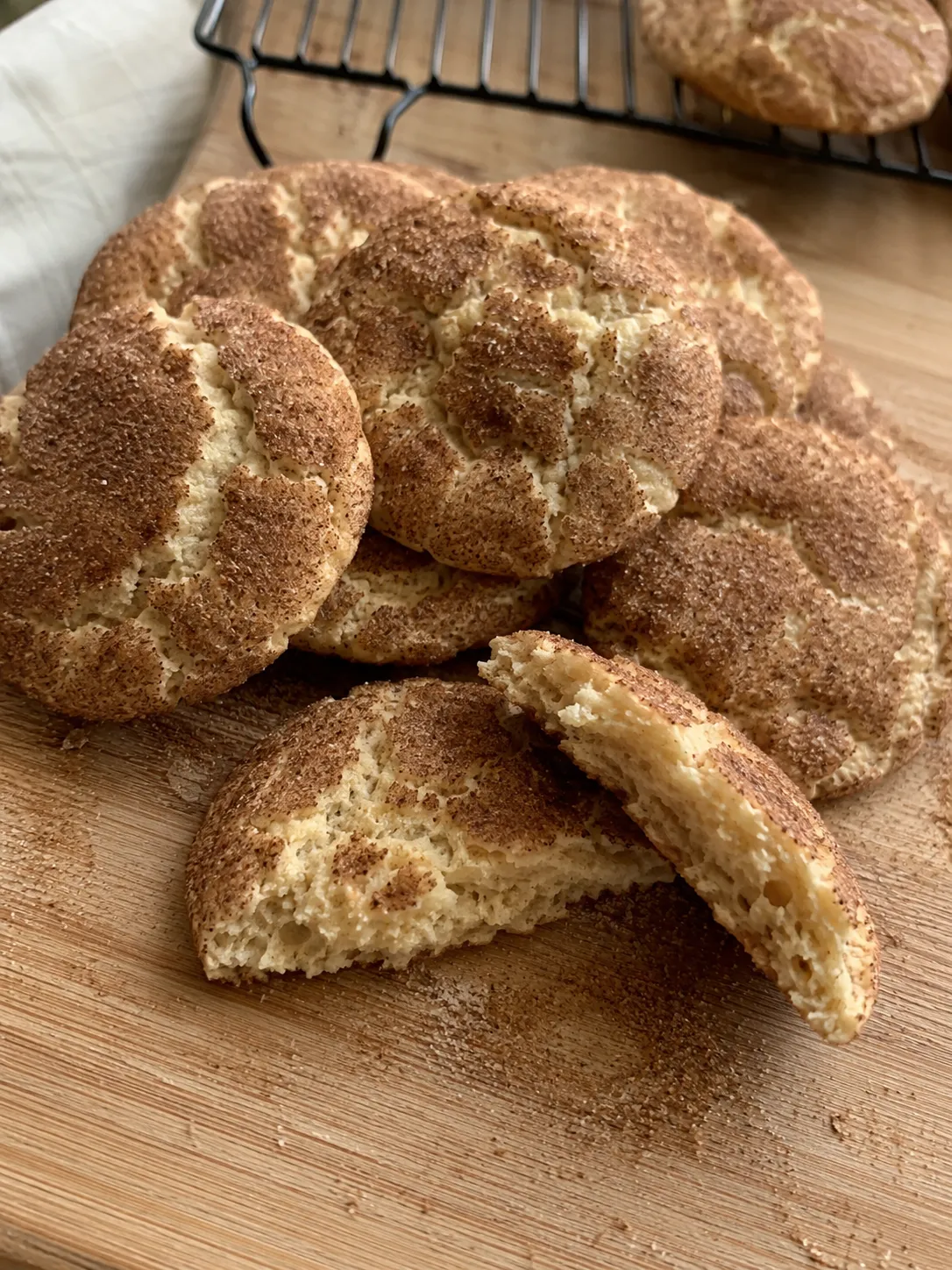
The recipes ranking for this cookie disagree the way air fryer recipes always seem to, 300°F to 340°F, four minutes to fourteen, which is mostly oven habits carried into a machine that runs hotter than its dial. But this keyword hides a stranger problem: one of the top-ranking air fryer snickerdoodle recipes contains no cream of tartar at all. Which is a bit like a margarita recipe that skips the lime. The result may be lovely. It is a different drink.
So before the numbers, the identity. What makes a snickerdoodle a snickerdoodle is one three dollar jar, and what makes the crackle is a chemical event you can schedule. The basket, it turns out, is unusually good at both.
Quick answer: A classic cream of tartar dough, rolled in cinnamon sugar mixed 3 to 1, baked at 325°F for 7 to 8 minutes in batches of five or six on parchment cut to the basket floor. Do not flatten the balls. Pull the cookies when they have puffed, fallen and cracked, while the centers still look underdone, and rest them 3 minutes in the basket. Chewy is 185°F in the middle if you want the number. Makes about 24 across four accelerating batches.
Cream of tartar is the snickerdoodle
Cream of tartar is tartaric acid, a byproduct of winemaking that has been standing in cookie doctrine since the 1800s, and in this cookie it is not a garnish ingredient. It is doing three jobs at once, and each one is a piece of the cookie's identity:
The flavor itself
That faint sourness behind the cinnamon, the thing that separates a snickerdoodle from a sugar cookie in one bite, is the acid, eaten directly. Nothing else supplies it.
The anti-crystal agent
Acid interferes with sugar recrystallizing as the cookie cools. Crystallized sugar sets crisp; interrupted sugar stays dense and bendy. The chew is chemistry, not underbaking.
Half of a fast leavening
Tartar plus baking soda is homemade single-acting baking powder: it fires immediately and completely, puffing the cookie early, and then it is spent. What goes up on a fast leavening comes down. That fall is the crinkle.
Which is why a snickerdoodle recipe without cream of tartar is publishing a cinnamon sugar cookie under a borrowed name. If your pantry genuinely has none, the emergency substitution is in the FAQs, along with an honest account of what it costs. Our sugar cookies are the no-tartar cookie done on purpose, and the comparison between the two pages is the whole lesson.
Where the crackle comes from, and why the basket is good at it
The cracked top is a sequence, and once you know it you can watch it happen through the basket window:
- Minutes 1 to 3: the puff. The fast leavening fires all at once and the ball rises into a dome, stretching its cinnamon sugar coat tight.
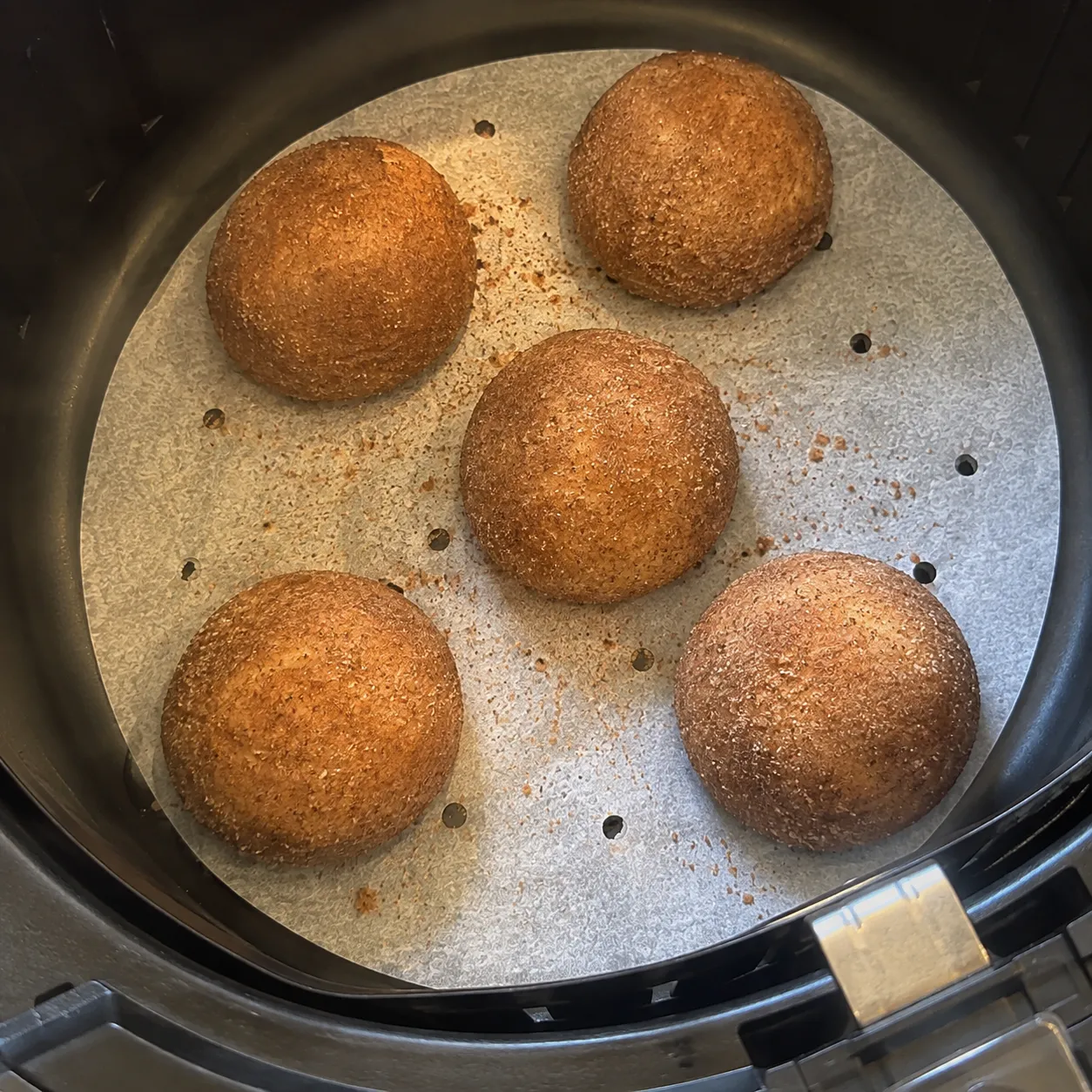
- Minutes 3 to 5: the shell sets. The coating is pure sugar and spice sitting right in the airflow, and it dries into a thin crust while the dough beneath is still moving. A basket does this faster than any oven, which is the machine's quiet advantage here: the earlier the shell sets, the more dramatically it must crack.
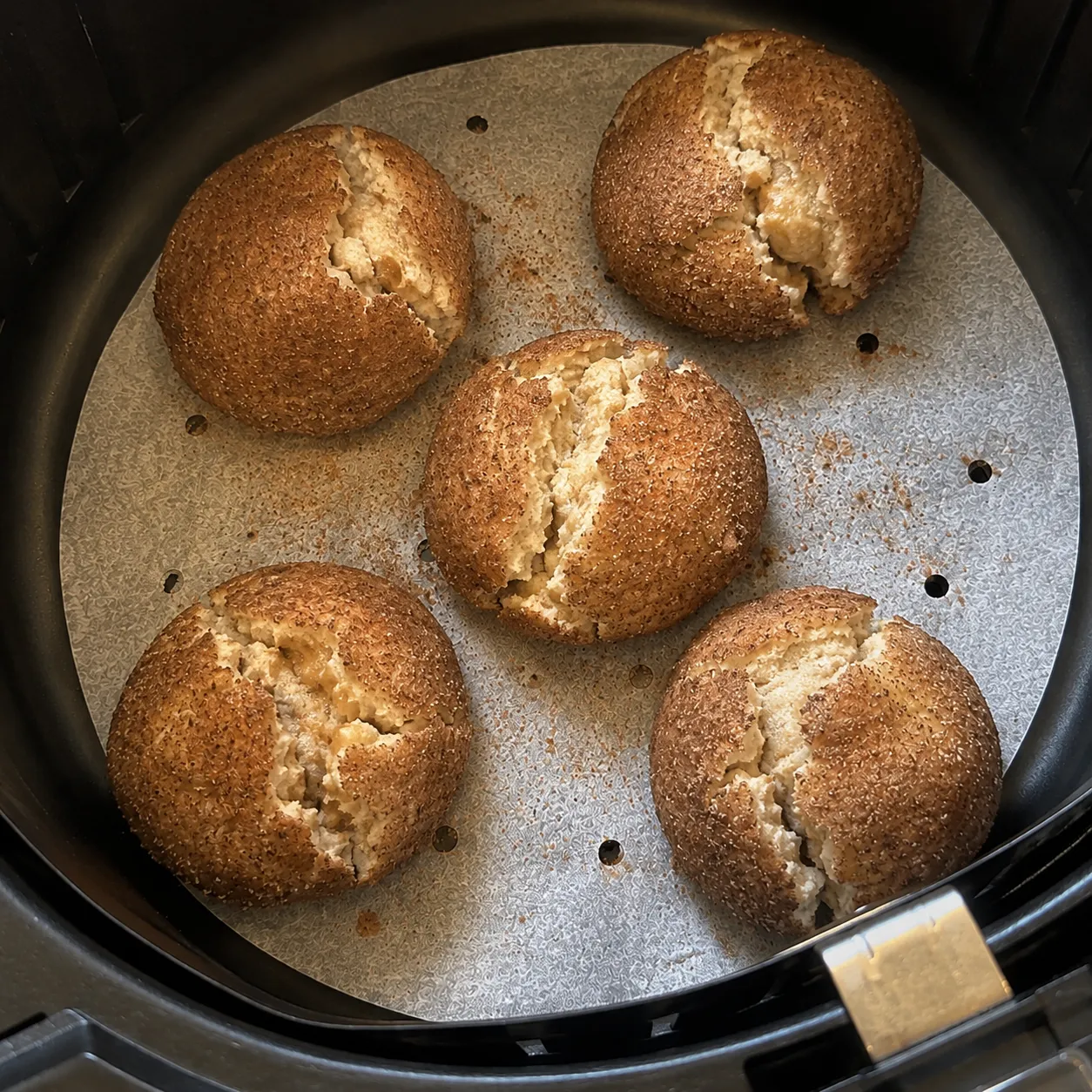
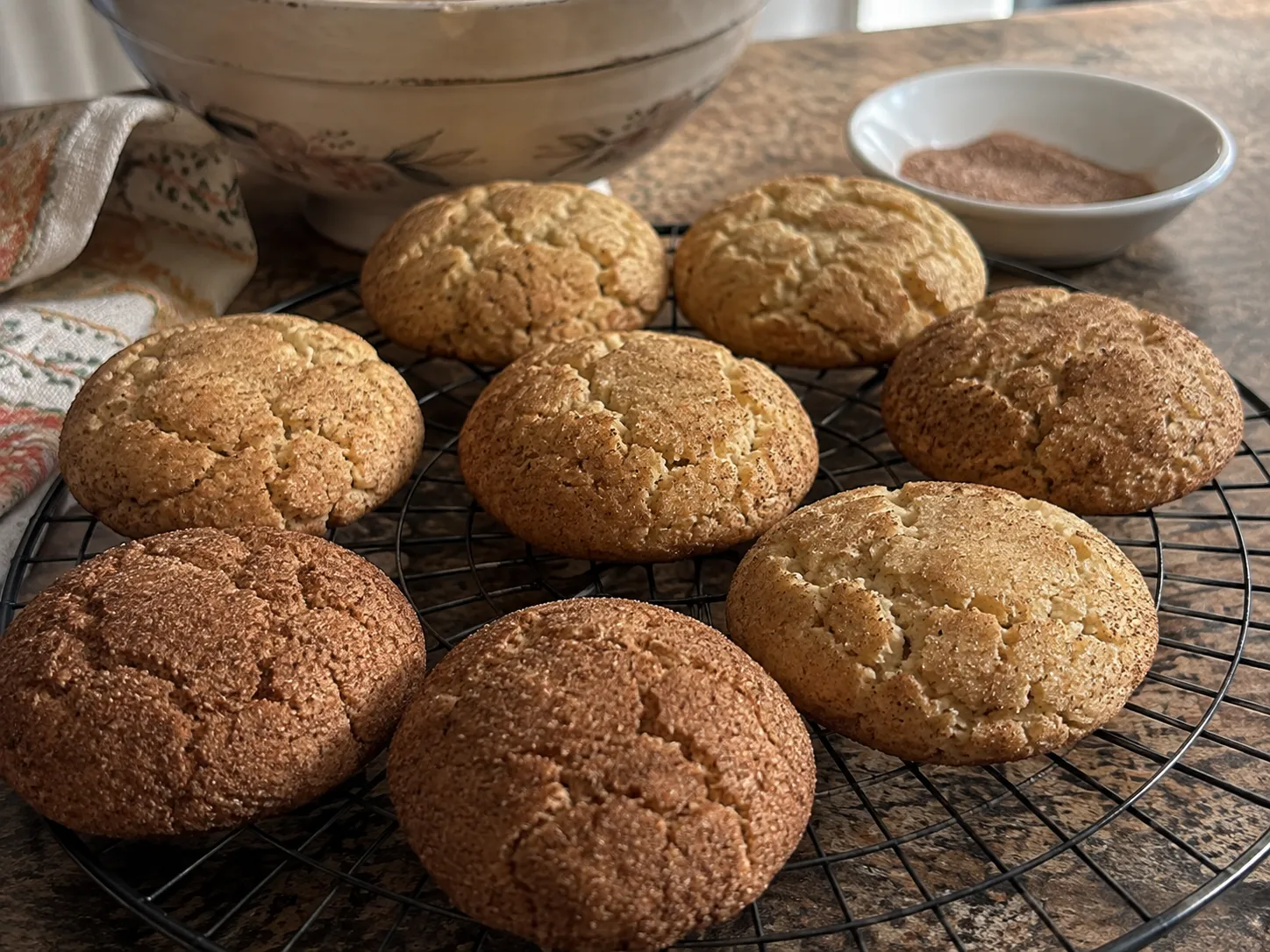
- Minutes 5 to 8: the fall. The single-acting leavening is spent, the gas cools, and the dome settles. The set shell cannot settle with it, so it fractures into the crinkle, and the pale dough shows through the cracks against the cinnamon. That contrast is the whole look.
This is also why you never flatten the balls before baking, whatever a smooth-cookie instinct says. Flattened dough has nowhere to fall from, and no fall means no crackle, just a smooth cinnamon disc. Roll, place, close the drawer, and let the chemistry do the theatrics.
Why 325°F, and the cinnamon warning
The published settings for this cookie run from 300°F for fourteen minutes to 340°F for four, which is by now a familiar shape of disagreement: oven habits carried into a machine that cooks 25 to 30 degrees harder at the same number. If you are converting any oven cookie of your own, the air fryer calculator applies that drop automatically. But this cookie adds a reason of its own to land at 325 rather than higher, and it is sitting right on the surface.
The coating is the most burnable thing in the basket. Ground cinnamon scorches into bitterness at temperatures the dough itself tolerates happily, and on this cookie the cinnamon is not folded safely inside, it is the outermost layer, closest to the element, dried by the fan. At 340°F the coat can turn dark and dusty-bitter before the centers finish. At 300°F the opposite failure: the shell never sets fast enough to crack properly, and you get a soft, cakey, timid cookie. 325°F sets the shell on schedule and leaves the cinnamon fragrant, and it is the same number our whole cookie shelf runs on, from chocolate chip to peanut butter.
Your machine's opinion counts. If the coating is visibly darkening at minute five, you own a hot machine: drop to 310°F and keep the same visual cues. A cinnamon coat is a built-in early warning system, which is more than most cookies give you. Recurring scorch across different bakes is its own guide.
The coat: 3 to 1, rolled generously
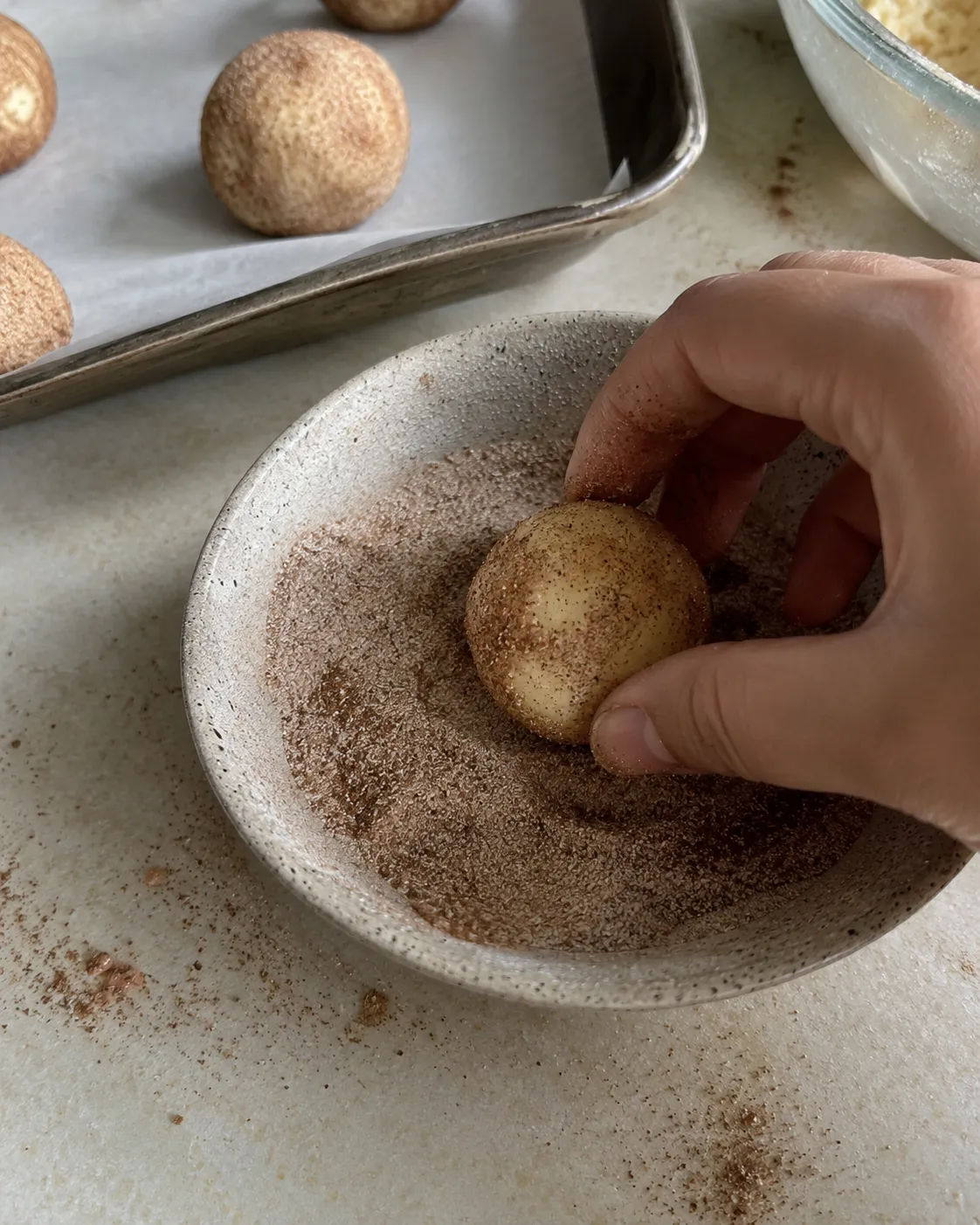
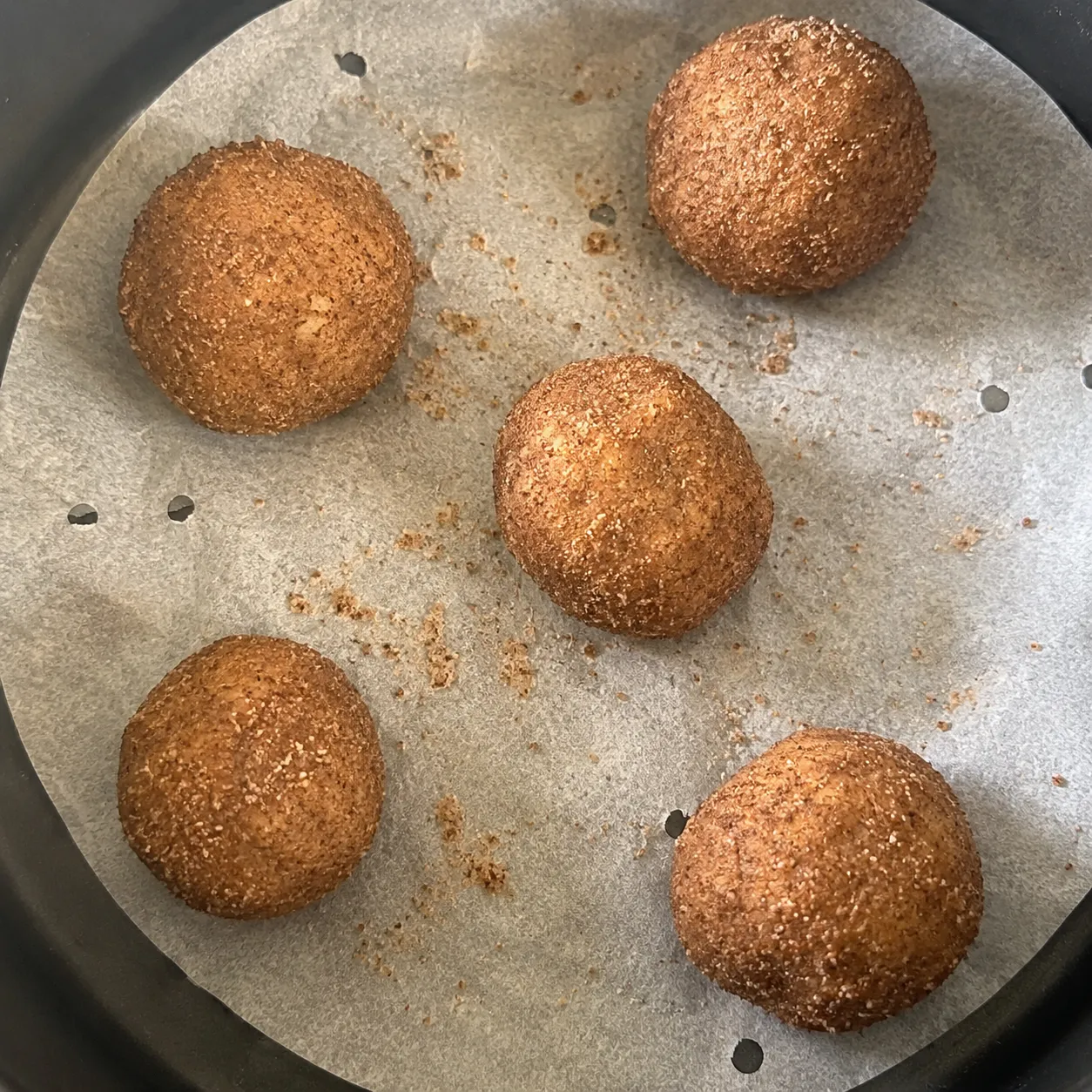
Three tablespoons of sugar to one of cinnamon, which is bolder than the 4 to 1 most recipes use, because the air fryer's dry heat mutes spices slightly and a timid coat disappears. Two techniques worth the sentence each: roll the balls generously, pressing lightly so the coat loads up rather than dusts, and if you love a heavy crust, roll once, rest the balls five minutes so the surface moistens, and roll again. The double coat cracks louder.
Leftover cinnamon sugar is not garbage, it is air fryer toast tomorrow morning, or the finishing dust on our vegan donuts.
Ingredients
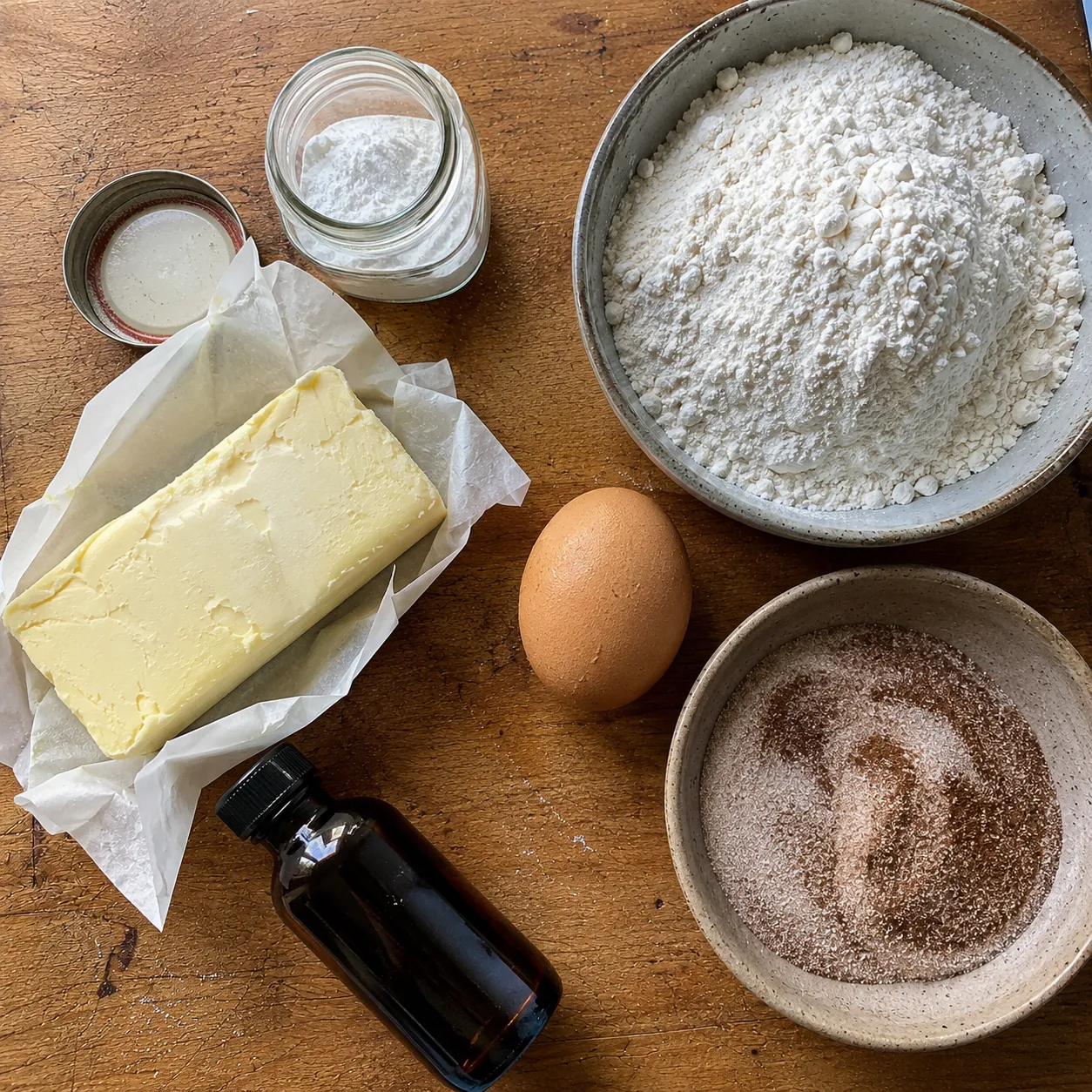
About 24 cookies. One bowl and a hand mixer, and the butter's state is the only thing worth double-checking before you start.
- 1 1/2 cups (188g) all-purpose flour
- 1 teaspoon cream of tartar
- 1/2 teaspoon baking soda
- 1/4 teaspoon salt
- 1/2 cup (113g) unsalted butter, softened but not melted
- 3/4 cup (150g) granulated sugar
- 1 large egg, room temperature
- 1 teaspoon vanilla extract
- Coating: 3 tablespoons granulated sugar
- Coating: 1 tablespoon ground cinnamon
Softened butter dents under a finger and holds the dent. If it shines or slumps, it has gone too far, and the cookies will spread flat; ten minutes in the fridge brings it back. The cream of tartar keeps for years in a dry cupboard, so the jar you buy for this recipe is a decade of snickerdoodles, plus it stabilizes whipped egg whites and makes homemade playdough, which is the most double-duty three dollars in baking.
How to make them
- Whisk the dry ingredients: flour, cream of tartar, baking soda and salt.
- Cream the butter and sugar for 2 minutes, until pale and fluffy. Softened means it dents under a finger but holds its shape; melted butter makes flat, greasy cookies.
- Beat in the egg and vanilla just until smooth.
- Add the dry ingredients on low, stopping the moment the last streak of flour disappears.
- Stir the coating together: 3 tablespoons sugar, 1 tablespoon cinnamon, in a shallow bowl.
- Roll 1.5 tablespoon balls in the coating until fully covered. If the dough is too soft to roll, chill it 15 minutes and carry on.
- Preheat to 325°F (165°C) for 3 minutes.
- Set 5 or 6 balls on parchment cut to the basket, two inches apart, and do not flatten them. The collapse that makes the crinkle needs the height.
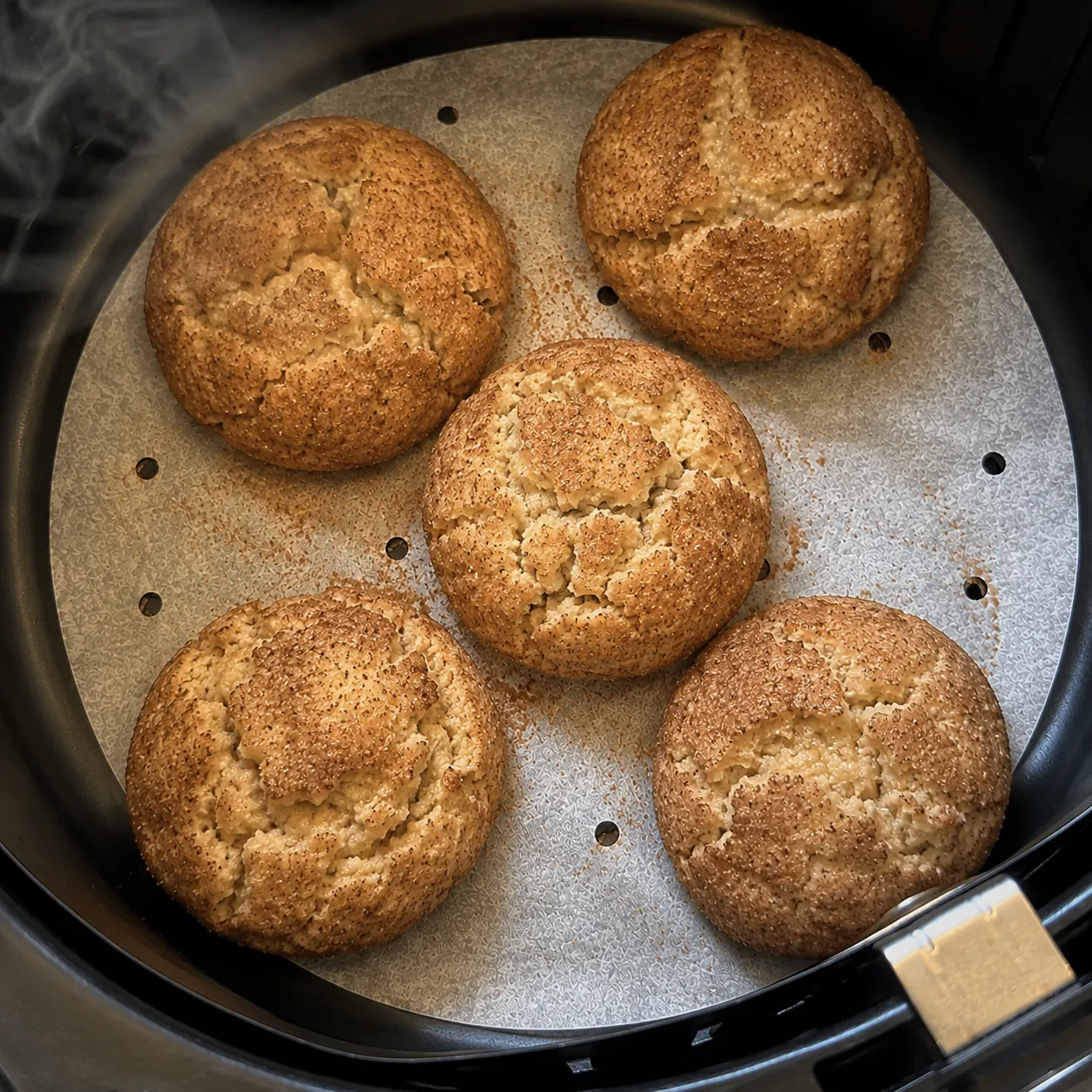
- Bake 7 to 8 minutes, checking at 6. They should puff, then fall and crack across the top, with set edges and soft-looking centers.
- Rest 3 minutes in the basket. They finish setting on residual heat, and moving them early folds them in half.
- Run the next batch a minute shorter. The machine is fully heat-soaked now, so later batches finish faster.
- Cool 10 minutes if you can manage it. The chew arrives as they cool.
The batch rhythm. Five or six cookies per round, four rounds for the full recipe, and the rounds speed up: the machine is fully heat-soaked after batch one, so each later batch finishes about a minute sooner, the property the glossary files under recovery time. No cooling the machine between rounds, no matter what you have read elsewhere. Re-lay the parchment when it looks sugary, keep the balls two inches apart, and if your machine has a known hot spot, give the parchment a half turn at the minute-six check.
Doneness: watch the shape, not the color
Most cookies are judged by browning. This one refuses: it is a deliberately blond cookie wearing a cinnamon coat, so color tells you almost nothing until it tells you that you have gone too far. The cookie communicates by shape instead, and it is unusually articulate about it.
| What you see | What it means |
|---|---|
| Domed, smooth coat | Mid-puff. Not yet, do not open more than a look. |
| Fallen, cracked, edges set, valleys still soft | Done. Out, and rest 3 minutes in the basket. |
| Cracks fully dry, top firm to a tap | Crisp cookie territory. Fine on purpose, late by accident. |
| Coat visibly darkening, bitter smell | The cinnamon is burning. Out now, and 10 degrees down next batch. |
The thermometer version, for the pantry that owns one: 185°F in the center for chewy, 200°F for crisp, the same split our whole cookie shelf uses, and the reason is carryover: cookies keep baking on the hot parchment after the air stops, so a cookie pulled looking perfect finishes past itself. Pull at underdone, arrive at right. The full set of internal targets lives in the baking chart.
Fixing what goes wrong
| What you got | Why | Fix |
|---|---|---|
| Flat, greasy discs | Butter was melted or nearly, so the creamed air collapsed. | Properly softened butter, and 15 minutes of chill for soft dough. |
| No crackle, smooth tops | Balls were flattened, leavening was stale, or dough sat too long after mixing. | Roll and bake promptly, never flatten, check the soda's age. |
| Cakey, bready crumb | Overbaked past 185°F, or flour packed into the cup. | Pull at underdone, spoon and level the flour. |
| Bitter, dark coating | Cinnamon scorched. Machine runs hot, or the setting crept up. | 310 to 325°F ceiling, and trust the shorter time. |
| No tang, tastes like sugar cookies | The cream of tartar was skipped or substituted. | It is not optional. That jar is the recipe. |
| Welded into one sheet | Crowding. They spread more than the balls suggest. | Five or six per batch, two inches apart, batches are fast. |
| Coat fell off in patches | Rolled too lightly, or the dough surface was dry. | Roll generously with light pressure; double-roll for a heavy crust. |
Failures that follow you across different bakes belong to the troubleshooting guide, which works symptom-first the way this table does.
Variations
- Brown butter snickerdoodles. Brown the butter, chill it back to softened, then cream it. Nutty against the tang, and worth the extra half hour exactly once a fall.
- Chai snickerdoodles. Add 1/4 teaspoon each of cardamom and ginger to the coating. The tang reads almost like yogurt against the spices, which is a compliment.
- Snickerdoodle bars. Press the dough into a parchment-lined 6-inch pan, scatter the cinnamon sugar on top, and bake at 320°F for about 18 minutes to the same 185°F center. Less crackle, more chew, zero rolling.
- Stuffed. A half teaspoon of thick caramel or a single chocolate square sealed inside each ball. Add a minute, and rest them 5 before biting, on the authority of a burned tongue.
- The cinnamon family tour: this cookie's warm-spice relatives on the site are the cinnamon rolls and the coffee cake's streusel, and the three together will perfume a kitchen for a week.
For the rest of the cookie shelf, chocolate chip and peanut butter run the same 325°F batch rhythm, air fried Oreos are the genre's court jester, and how to bake in an air fryer is the method underneath all of them. Doubling the recipe is just more batches, and the recipe scaler does the quantity math if you go the other way and halve it.
Storage and freezing
- Room temperature: 4 to 5 days airtight. The bread-slice trick genuinely works: one slice of sandwich bread in the container feeds its moisture to the cookies and keeps them bendy while it stiffens on their behalf.
- Do not refrigerate, which stales the crumb faster than the counter and dulls the cinnamon.
- Freeze the dough, not the cookies. Roll the balls in the coating first, freeze solid on a tray, and bag for 3 months. They bake from frozen at the same 325°F with 1 to 2 extra minutes, and spread slightly less, which reads as an upgrade. Re-roll month-old balls in fresh cinnamon sugar before baking.
- Reviving day three: 90 seconds at 300°F in the basket wakes the edges and the cinnamon back up. A microwave steams the crackle flat; the basket resurrects it.
Four batches of cookies for a few minutes of element time is exactly the arithmetic where the basket embarrasses the oven, and the running cost calculator will put your electricity rate on it. All four air fryer tools are in one place, and the full recipe index has everything else on the site.
Frequently asked questions
QCan you make snickerdoodles in an air fryer?
Yes, and the machine is genuinely suited to them: 325F for 7 to 8 minutes per batch of five or six, on parchment cut to the basket floor, with no oven preheat worth mentioning. The fast-moving air sets the cinnamon sugar shell quickly, which is exactly what produces the classic cracked top. The two rules that matter are the ones oven bakers also break: use real cream of tartar, because it is the flavor and the chew, and pull the cookies while the centers still look underdone.
QWhat do snickerdoodles taste like without cream of tartar?
Like cinnamon sugar cookies, which is a fine thing and a different thing. Cream of tartar is tartaric acid, and it does three jobs: it gives the signature faint tang that separates a snickerdoodle from a sugar cookie, it interferes with sugar crystallization so the cookie stays chewy instead of setting crisp, and paired with baking soda it forms a fast-acting leavening that puffs the cookie early and lets it collapse into the classic crinkle. Recipes that skip it, and a surprising number do, are publishing a different cookie under this name.
QWhat temperature is best for air fryer snickerdoodles?
325F. Published settings run from 300F to 340F, and the spread mostly reflects unconverted oven habits rather than tested preference. At 340F the exposed cinnamon coating is at genuine risk, because cinnamon scorches into bitterness before most doughs finish baking. At 300F the cookie bakes through gently but never gets the fast surface-set that cracks the shell, so you get a paler, cakier cookie with a timid crinkle. 325F sets the crust fast enough to crackle while the inside stays behind it, which is the whole cookie.
QHow do I know when snickerdoodles are done in the air fryer?
Watch the shape, not the color. A snickerdoodle announces itself: it puffs in the first minutes as the fast leavening fires, then falls and cracks across the top as the gas spends. When the crack has opened, the edges are set, and the centers still look soft and slightly wet in the valleys, they are done, usually at 7 to 8 minutes. A thermometer reads 185F in the center for chewy, 200F for crisp. Waiting for the tops to brown is how snickerdoodles die: this is a blond cookie wearing a cinnamon coat.
QWhy did my snickerdoodles come out flat?
Butter, almost every time. Softened means it dents under a finger and holds its shape; butter that has gone shiny and half-melted cannot hold the creamed air, and the cookies spread flat and greasy before the structure sets. The rescue is 15 minutes of chill for the shaped balls. Second causes: dough balls flattened before baking, which deletes the puff-and-collapse that builds the cookie's height, or a dead leavening, since cream of tartar and soda fire fast and a dough left sitting an hour has already spent its lift.
QWhy is my cinnamon coating bitter or dark?
Cinnamon burned. Ground cinnamon sits fully exposed on the outside of this cookie, closest to the element, and it scorches into bitterness at temperatures the dough itself would tolerate happily. This is the specific reason this recipe runs 325F when some air fryer versions say 340: the dough survives 340, the coat does not always. If your machine runs hot, the coating is your early warning: dark, dusty-smelling cinnamon at minute five means drop 10 to 15 degrees for the next batch, and trust the shorter times.
QDo I need to chill snickerdoodle dough?
Not by default, which is one of this cookie's virtues. The dough comes together stiff enough to roll straight away if the butter was properly softened rather than melted. Chill in two situations: the dough feels too soft to roll cleanly, usually a warm kitchen or warm butter, or you want a slightly thicker, chewier cookie, which 15 to 30 minutes of chill buys by slowing the spread. Past that, remember the leavening is fast-acting: a dough chilled overnight will have spent some of its lift and crinkles less.
QCan I use baking powder instead of cream of tartar and baking soda?
In an emergency, 2 teaspoons of baking powder replaces the 1 teaspoon of cream of tartar plus 1/2 teaspoon of soda, and the cookie will rise and crack acceptably. What it will not do is taste like a snickerdoodle, because the tang is the tartaric acid itself and baking powder's acids are chosen for neutrality. The texture also shifts slightly toward cakey. It is a decent cinnamon sugar cookie and an honest stopgap; buy the cream of tartar for next time, it costs three dollars and keeps for years.
QHow many snickerdoodles can I bake at once in an air fryer?
Five or six per batch in a standard 5 to 6 quart basket, two inches apart, because these spread and touching cookies weld and steam each other pale at the joins. A full recipe of about 24 runs four batches, and the batches accelerate: the machine is fully heat-soaked after the first, so each later batch finishes about a minute sooner. End to end that is still around half an hour for the full two dozen, roughly what one oven tray plus its fifteen minute preheat costs.
QCan I bake snickerdoodle dough from frozen?
Yes, and it is the best storage plan this cookie has. Roll the balls in cinnamon sugar first, freeze them solid on a tray, then bag them: the coating is already on, and frozen balls bake at the same 325F with 1 to 2 extra minutes. They spread a little less from frozen, which most people read as an upgrade. Give month-old frozen balls a fresh roll in cinnamon sugar before baking, since the coating fades in the freezer. Fresh-baked snickerdoodles on demand, ninety seconds of effort.
QWhy are my snickerdoodles cakey instead of chewy?
Either overbaked past the chewy window or over-leavened. The chewy target is 185F internal, pulled while the centers still look underdone, and every minute past that trades chew for crumb. If the texture is cakey even when pulled early, check the measurements: extra flour from a packed cup, or rounding the soda up, both push toward cake. And if you made the baking powder substitution, that is the likely cause, since powder's neutral acids build a lighter, cakier crumb than the tartar and soda pairing.
QHow should I store snickerdoodles?
Airtight at room temperature for 4 to 5 days, with a slice of sandwich bread in the container if you want them to stay soft; the cookies steal its moisture and the bread turns to cardboard on their behalf. Do not refrigerate, which stales them faster. Baked cookies freeze for 3 months, though frozen dough balls are the better use of the freezer, since they bake fresh in ten minutes. To revive a day-three cookie, 90 seconds at 300F in the basket brings the edges back and wakes the cinnamon up again.