
Air Fryer Cornbread: Crisp Edges, Tender Crumb
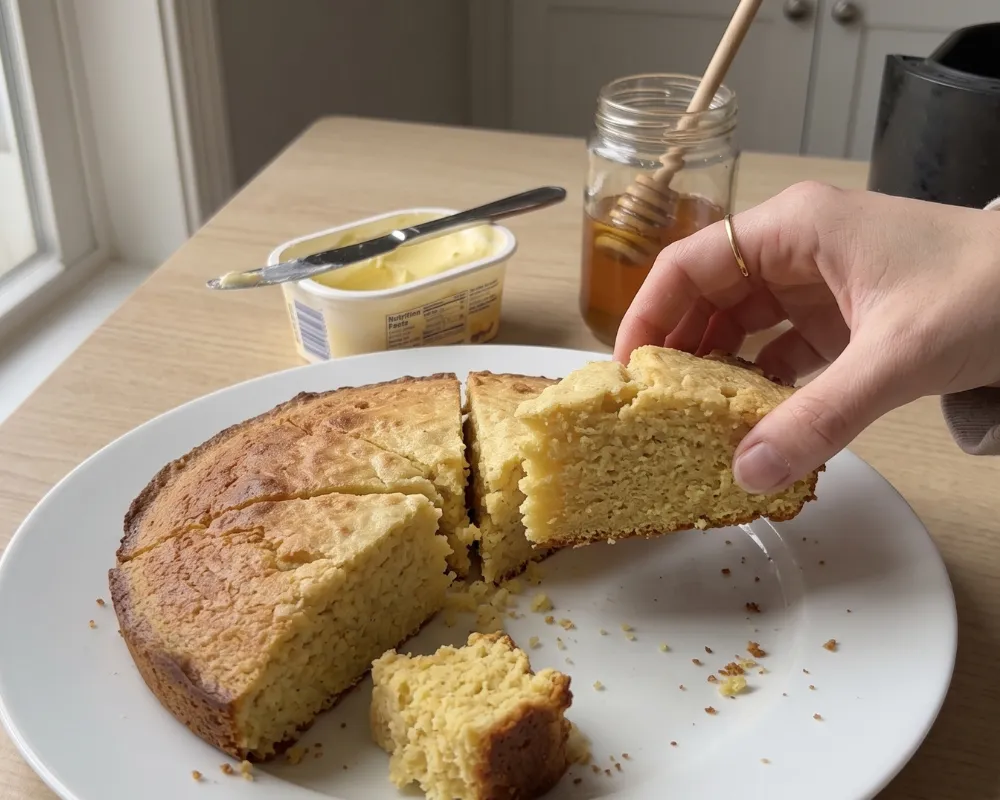
The crisp edge on a good cornbread is not a property of the recipe. It is a property of the pan, and specifically of pouring batter into a pan that is already hot enough to make it hiss. Skillet cooks have known this for a century, and it works even better in an air fryer, where the basket preheats a buttered pan in three minutes flat. This page bakes a corn-forward round at 320°F for 18 to 22 minutes, in a 7 inch pan that actually fits a basket, with the sizzle step nobody else bothers with and a 200°F doneness number instead of a guess.
What’s on this page
Why cornbread loves a basket
Cornbread is a quick bread, which means the whole job is done by baking powder and heat; no yeast, no rise time, no skill barrier. What it wants from the machine is fast, dry, even heat that sets the outside into a crust while the inside steams itself tender. That is a literal description of what an air fryer does. Of everything this site has baked, cornbread converts from the oven with the least fuss, and it beats the oven on the one thing cornbread people argue about most, the edge.
So why do so many air fryer cornbread recipes tell you to lay foil over the top halfway through? Because they run too hot. Recipes calling for 350°F brown the surface long before a thick round has set inside, then patch the mistake with foil. A rescue step written into the recipe is the recipe admitting its own temperature is wrong. Drop to 320°F and the timing works without a patch, the same slower-outside logic behind every thick bake on this site, from banana bread to pumpkin bread.
The pan question, answered honestly
The most popular cornbread recipes online call for an 8 by 8 inch pan, and here is what none of them mention: an 8 by 8 pan does not fit inside most basket air fryers. A standard 5 to 6 quart basket takes a 7 inch round, sometimes 8 with the handles removed, and nothing square with corners. If you have ever stood holding a pan over an open basket wondering if it goes in, our pan size calculator answers it for your exact machine before anything gets sticky.
This recipe is written for a 7 inch round metal cake pan, and the batter is sized for it. That is not a compromise. A 7 inch round holds the same depth of batter as a thin 8 by 8, the round shape has no corners to overbake, and metal matters here: the sizzle step below needs a pan that gets hot fast and holds it. Silicone works if it is all you have, but it preheats soft and slow and your edge will be tender rather than crisp. A 6 or 7 inch cast iron skillet, if it fits your basket, is the best pan of all for this and worth using.
The sizzle step
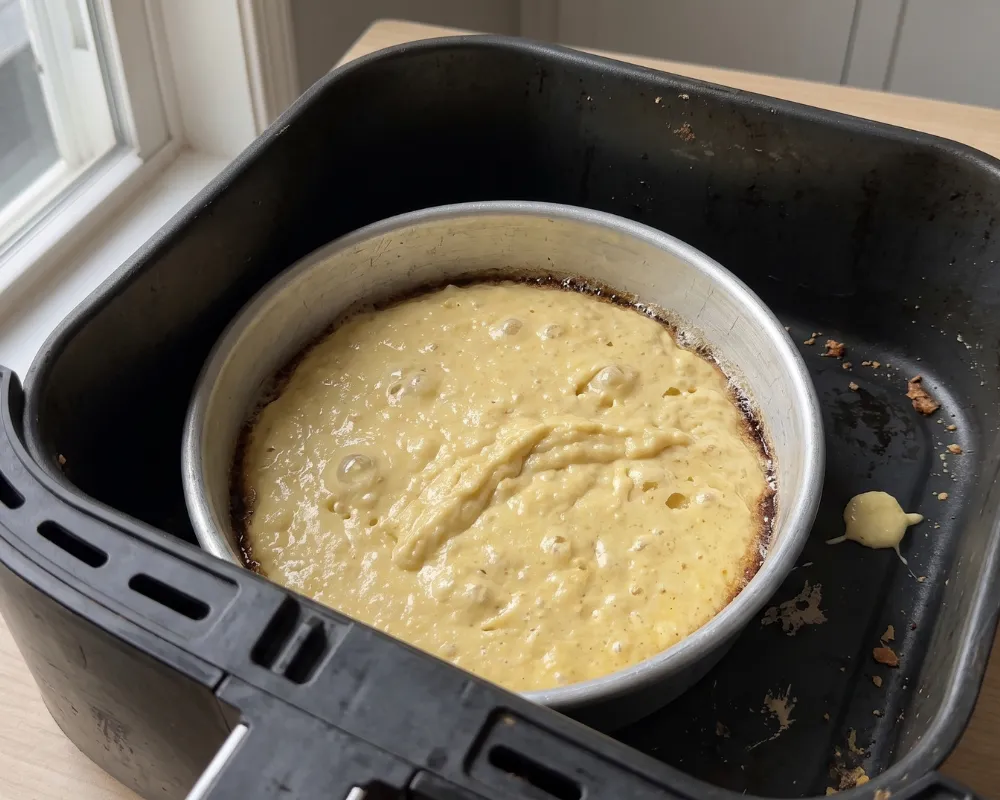
Southern cooks have a rule for skillet cornbread: the fat goes in the pan, the pan goes in the oven, and the batter does not get poured until the fat is sizzling. The batter hits hot metal and hot butter, the outside milliseconds of it fry before the bake even starts, and that is where the crackling brown edge wall comes from. It was never about the recipe. It is about the pour.
Air fryer recipes skipped this step, which is strange, because a basket does it faster than an oven ever could. Drop a tablespoon of butter into the empty pan, run the basket at 330°F for 3 minutes, and the butter is browned and spitting. Swirl it up the sides, pour, and listen: the batter should hiss at the rim. That sound is the edge forming. If your pour is silent, the pan was not hot enough, and the edge will be cake-soft instead of crisp.
The whole trick in one line: the preheat belongs to the pan, not just the machine. General preheating advice for everything else lives in do you need to preheat an air fryer for baking, but cornbread is the page where preheating stops being optional.
A corn-forward batter
Look closely at the highest-ranking recipe for this dish and you will find 1½ cups of flour to half a cup of cornmeal, plus half a cup of sugar. That is yellow cake wearing a cornbread costume. Nothing wrong with cake, but if corn is the third ingredient, the crumb tastes of nothing but sweet.
This batter flips the ratio: 1 cup cornmeal to ¾ cup flour, 2 tablespoons of sugar, and a spoon of honey you can leave out entirely. The flour is there for structure so the round slices instead of crumbling; the cornmeal is there to be tasted. Buttermilk does two jobs, flavor and lift, because its acid wakes up the baking soda for a taller, more tender crumb. No buttermilk in the house? Stir 1 tablespoon of vinegar or lemon juice into 1 cup of milk and give it 5 minutes.
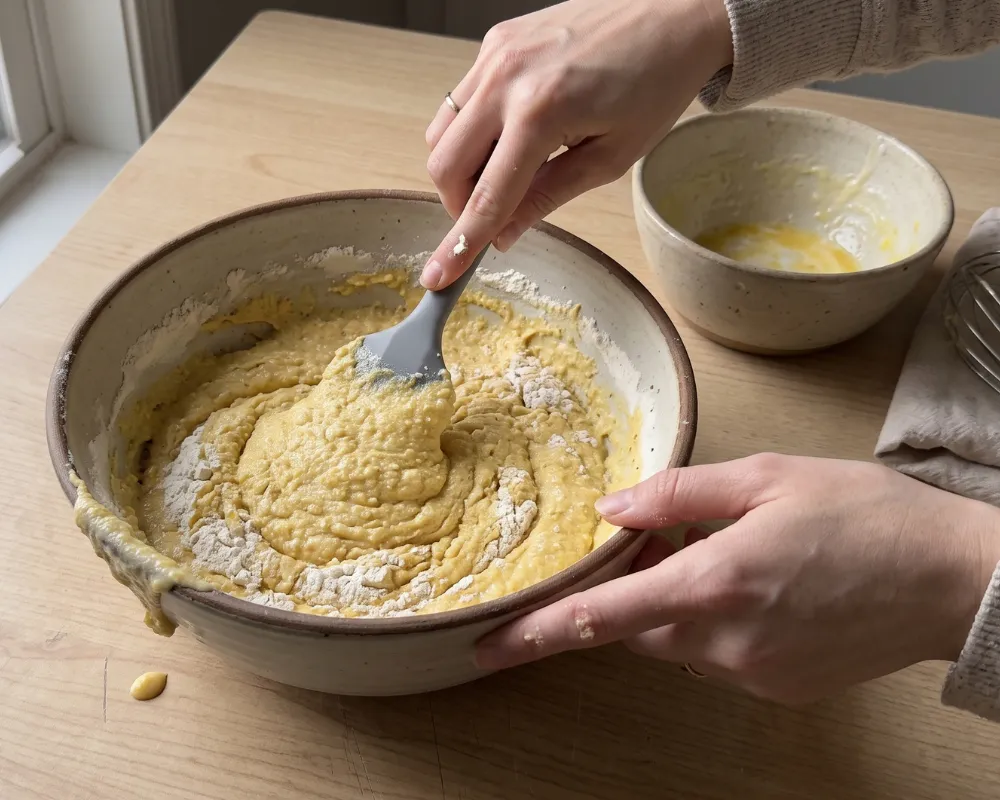
Two small habits make a visible difference. Mix until just combined and no further, because overworked batter bakes dense and tunneled. Then let the batter rest 5 minutes while the pan preheats: the cornmeal drinks up some liquid and softens, and the baking powder starts its work, so the batter goes into the pan already full of small bubbles.
Temperature and timing
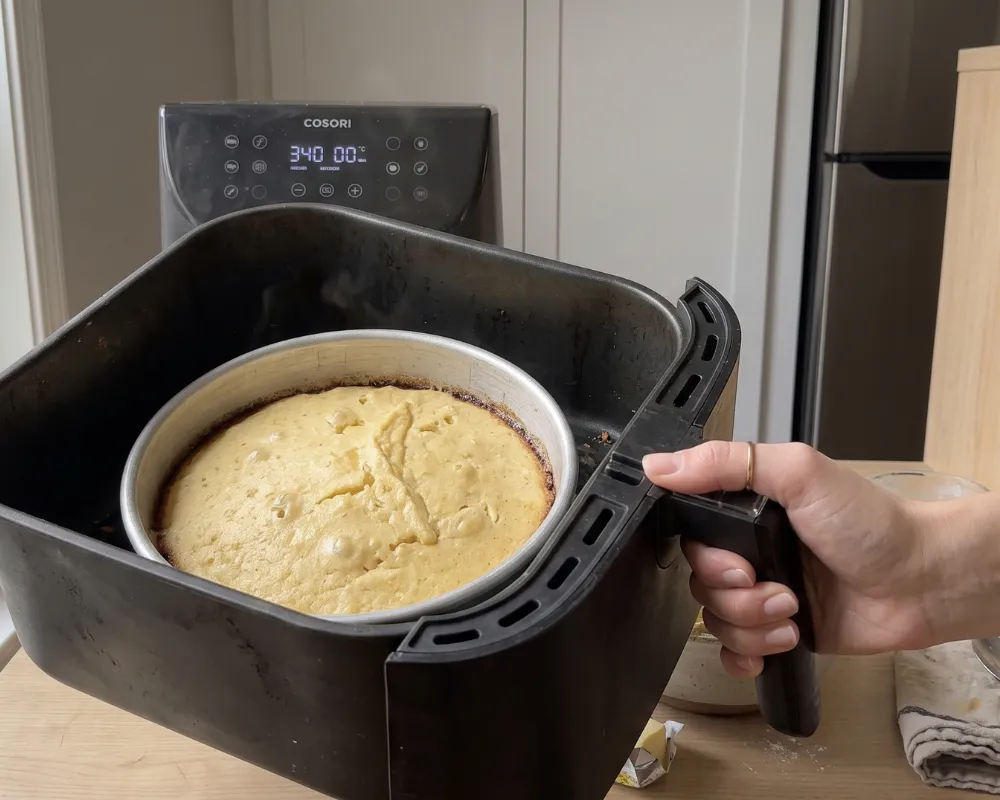
An oven cornbread bakes at 400°F for about 20 to 25 minutes. Run that through the oven-to-air-fryer calculator and you get roughly 375°F and 16 to 20 minutes, which is the right starting point for the thin, wide bakes the calculator sees most. A 7 inch round is deep, though, so we take it further down, to 320°F for 18 to 22 minutes, and let the hot pan handle the browning that the lower air temperature gives up. Edges from the pan, tender middle from the gentle air. Each part of the machine does one job.
Hands off
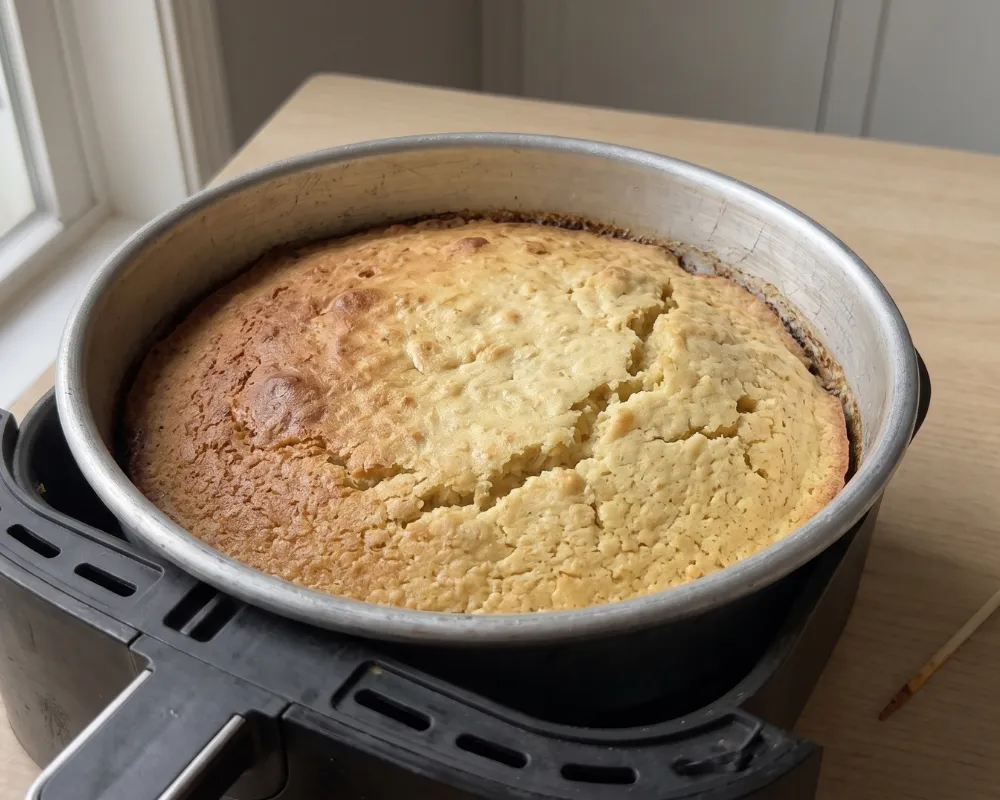
The round rises, the top films over, cracks start. Opening the basket now dumps the heat that is doing the lifting.
The color check
Top should be golden, not mahogany. Deep brown already? Lay a loose foil tent on and finish under it. Most machines will not need this at 320°F.
Prove it, then pull
Toothpick clean from the center, probe reading 200 to 205°F. Under 195°F, give it 2 more minutes and check again.
Settings for every other bake this site has tested are collected on the air fryer baking chart.
What done looks like
- Temperature. A probe in the center reads 200 to 205°F. Quick breads are fully set in that window; this is the same number that ends the raw-middle guessing on every loaf.
- The pull-away. A done round shrinks just enough to let go of the pan wall. If the edge is still welded to the pan, it is not finished.
- The toothpick. Clean or with dry crumbs from dead center. Wet batter on the pick means 2 more minutes, not a higher temperature.
Then the hard part: leave it in the pan for 10 minutes. A cornbread cut hot steams itself into crumbles at the knife. Ten minutes lets the crumb finish setting, and the residual pan heat keeps the edge crisp while it happens.
Ingredients
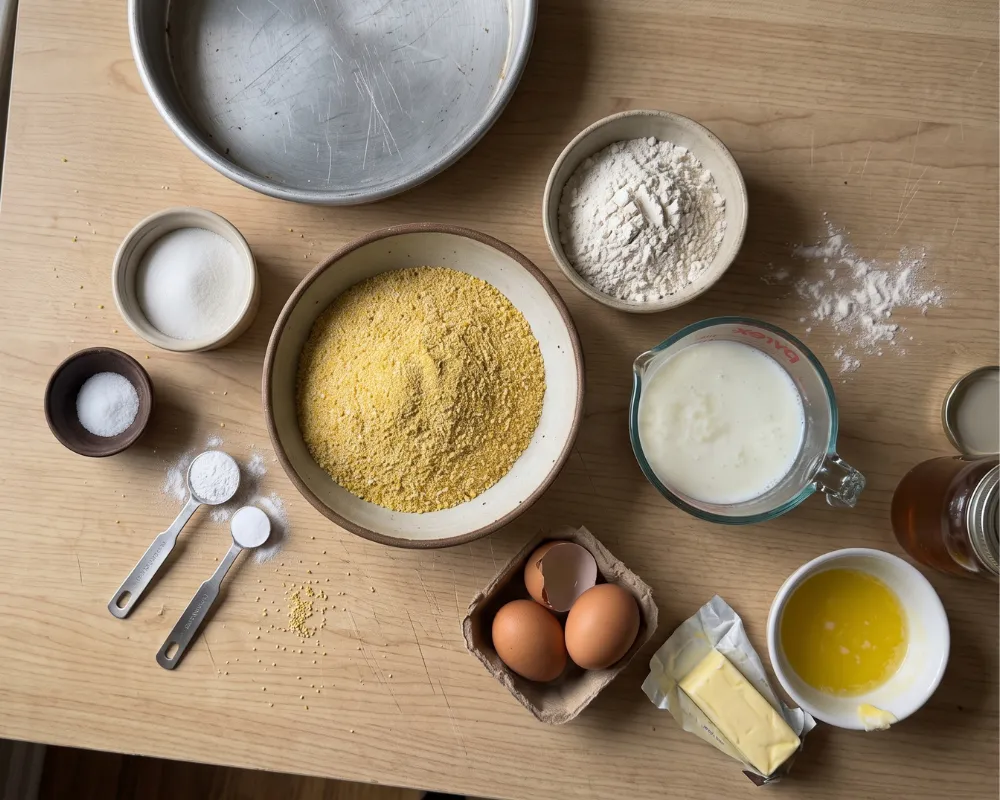
For one 7 inch round, 8 wedges
- 1 cup yellow cornmeal
- ¾ cup all-purpose flour
- 2 tablespoons sugar
- 1½ teaspoons baking powder
- ¼ teaspoon baking soda
- ½ teaspoon fine salt
- 1 cup buttermilk
- 2 large eggs
- 4 tablespoons unsalted butter, melted, plus 1 tablespoon for the pan
- 1 tablespoon honey, optional
Baking for a bigger table? The recipe scaler converts this to muffin batches; a dozen liners bake at the same 320°F in 11 to 13 minutes.
How to make it
- Whisk the cornmeal, flour, sugar, baking powder, baking soda, and salt in a large bowl.
- Whisk the buttermilk, eggs, melted butter, and honey in a second bowl, then fold into the dry mix until just combined. A few lumps are fine.
- Drop 1 tablespoon of butter into a 7 inch metal cake pan, set the pan in the basket, and run the air fryer at 330F for 3 minutes while the batter rests.
- Swirl the sizzling butter up the sides of the hot pan, then pour in the batter. It should hiss at the edges.
- Bake at 320F for 18 to 22 minutes, until the top is golden and cracked.
- Check the center: a toothpick should come out clean and a probe should read 200 to 205F. Give a wet center 2 more minutes.
- If the top turns deep brown before minute 15, lay a loose foil tent over the pan for the rest of the bake.
- Rest in the pan for 10 minutes so the crumb sets, then cut into wedges and serve warm.
Fixing what goes wrong
| Problem | Cause | Fix |
|---|---|---|
| Soft, pale edges | Batter went into a cold pan | Preheat the buttered pan 3 minutes at 330°F; the pour must hiss |
| Burnt top, wet middle | Temperature too high | 320°F, and trust the probe over the color |
| Sunken center | Underbaked, or the basket was opened early and often | Hands off for 10 minutes, pull at 200°F; the full diagnosis is in why bakes sink in the middle |
| Dense, tunneled crumb | Overmixed batter | Fold until just combined and stop; lumps bake out |
| Dry, crumbly next day | Cornbread stales fast, it is the nature of the thing | Store airtight, reheat with a damp-paper-towel wrap, and see avoiding dry air fryer bakes |
| Stuck to the pan | Skipped the butter, or silicone pan poured cold | The sizzle step is also the greasing step; it cannot stick to fat it fried in |
Serving, storage, leftovers
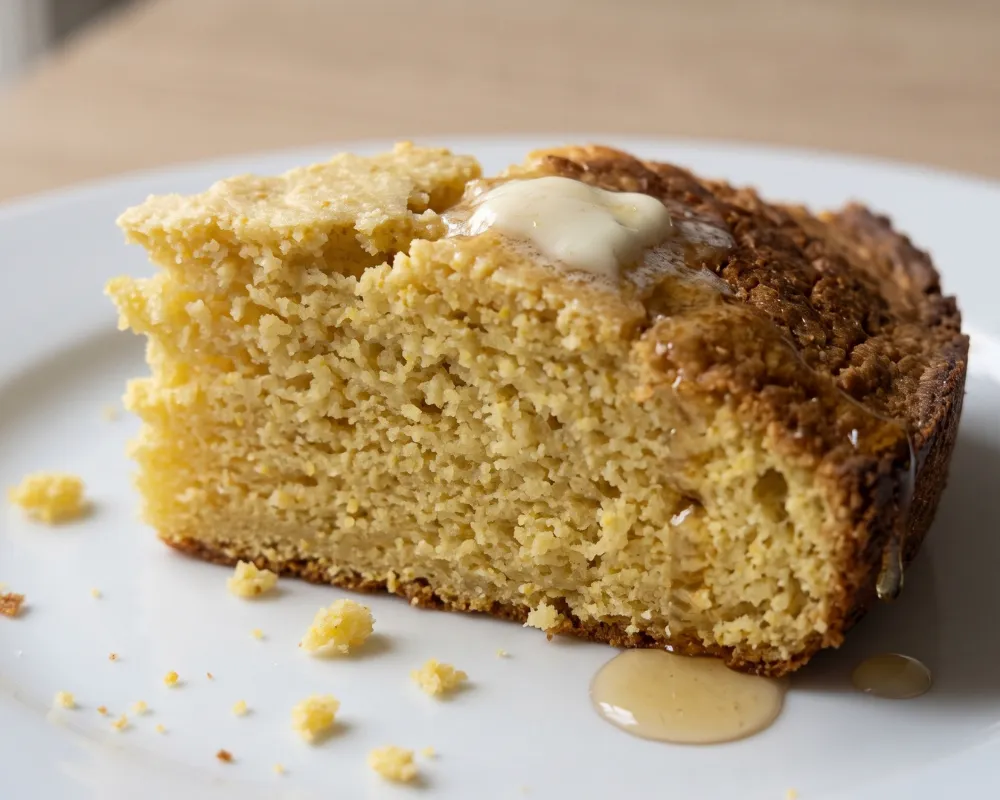
Chili is the marriage everyone knows, and it deserves its reputation, but cornbread earns weeknight status next to eggs, greens, barbecue, or a pile of air fryer corn on the cob in high summer when corn twice in one meal feels correct. Butter and honey on a warm wedge is a complete afternoon.
Storage: airtight at room temperature for 2 days; the refrigerator dries it out faster than the counter does. Freeze wedges wrapped individually up to 3 months. Reheat at 320°F for 3 to 4 minutes; frozen wedges take 5 to 6. A 10 second microwave-then-basket combination revives a truly stale wedge better than either machine alone.
Day-three cornbread is not a loss, it is an ingredient: crumble and toast it at 350°F for 5 minutes for a skillet-dressing base or a crunchy topping for soup, the same move that turns a stale loaf into air fryer croutons, cousin to the bread economy this site runs on.
Cornbread is the savory end of the quick bread shelf, and the rest of it runs on the same chemistry: no yeast, no rise time, baking powder doing every bit of the lifting. Banana bread and pumpkin bread are the sweet versions in a loaf pan, canned biscuits are the fastest bread the basket does, and soft pretzels and cinnamon rolls are what happens once you let yeast into it. The rest of the baking projects live in the recipe index, and every technique page is under guides.
Frequently asked questions
QCan I make this with Jiffy mix instead of from scratch?
Yes. Prepare one 8.5 oz box with 1 egg and 1/3 cup milk, use the same hot buttered 7 inch pan, and bake at 320F for 14 to 18 minutes, because a single box makes a shallower round than this scratch batter. The sizzle pour improves Jiffy exactly as much as it improves scratch cornbread; the box never says so because the box assumes a cold oven pan. Swap the milk for buttermilk and the mix tastes noticeably less like the box.
QWhy do I pour the batter into a hot pan?
The crisp edge is formed in the first seconds, not the last minutes. Batter meeting sizzling butter fries at the point of contact, building a browned crust wall before the bake proper begins. A cold pan skips that moment and no amount of extra bake time buys it back; you just dry the middle chasing an edge that never comes. Three minutes of preheating the buttered pan is the cheapest texture upgrade in quick-bread baking.
QWill an 8 by 8 pan fit in my air fryer?
In most basket models, no. A standard 5 to 6 quart basket takes a 7 inch round comfortably and an 8 inch round only if it has no handles; square corners are what fail to clear. Oven-style air fryers are roomier and often do take an 8 by 8. Measure once instead of guessing: the pan size calculator on this site tells you what fits your exact model, including the clearance the air needs around the pan to actually circulate.
QIs cornbread supposed to be sweet?
That depends on which state you ask, and this recipe deliberately sits between the camps: 2 tablespoons of sugar for tenderness and browning, plus an optional spoon of honey. Leave both out for a Southern-style savory round that wants butter and greens, or double the sugar for the Northern sweet style. The bake time does not change either way; only the browning speeds up slightly with more sugar, so watch the top from minute 12 if you go sweet.
QWhy did my cornbread sink in the middle?
A sunken center in a quick bread is almost always structure that set before it finished rising, and in an air fryer the usual causes are pulling it before the center hit 200F, or opening the basket repeatedly in the first 10 minutes and dumping the heat mid-rise. Overmixing contributes too, by building a batter that rises fast and collapses. Bake blind for the first 10 minutes, verify with a probe, and the dome holds.
QHow do I store and reheat cornbread?
Airtight at room temperature for 2 days; the refrigerator makes cornbread stale faster, so skip it. Freeze individually wrapped wedges up to 3 months. Reheat at 320F for 3 to 4 minutes from the counter or 5 to 6 from frozen, and if a wedge has gone properly dry, 10 seconds in the microwave first and then the basket brings back both the soft crumb and the crisp edge in one pass.
Made it? Rate it.
It helps more people find the hiss.
Air Fryer Cornbread
A corn-forward 7 inch round poured into sizzling butter. Crisp edges from the hot pan, tender crumb from the gentle 320°F air.
Ingredients
- 1 cup yellow cornmeal
- ¾ cup all-purpose flour
- 2 tablespoons sugar
- 1½ teaspoons baking powder
- ¼ teaspoon baking soda
- ½ teaspoon fine salt
- 1 cup buttermilk
- 2 large eggs
- 4 tablespoons unsalted butter, melted, plus 1 tablespoon for the pan
- 1 tablespoon honey, optional
Instructions
- Whisk the cornmeal, flour, sugar, baking powder, baking soda, and salt in a large bowl.
- Whisk the buttermilk, eggs, melted butter, and honey in a second bowl, then fold into the dry mix until just combined. A few lumps are fine.
- Drop 1 tablespoon of butter into a 7 inch metal cake pan, set the pan in the basket, and run the air fryer at 330F for 3 minutes while the batter rests.
- Swirl the sizzling butter up the sides of the hot pan, then pour in the batter. It should hiss at the edges.
- Bake at 320F for 18 to 22 minutes, until the top is golden and cracked.
- Check the center: a toothpick should come out clean and a probe should read 200 to 205F. Give a wet center 2 more minutes.
- If the top turns deep brown before minute 15, lay a loose foil tent over the pan for the rest of the bake.
- Rest in the pan for 10 minutes so the crumb sets, then cut into wedges and serve warm.

Sujata Thapa
Sujata bakes everything on this site in a 5.5 quart basket air fryer on a Kathmandu counter, then re-tests the keepers until the timings hold for anyone. The cornbread went through three pans before the 7 inch metal round and the sizzle pour won on the same afternoon.