

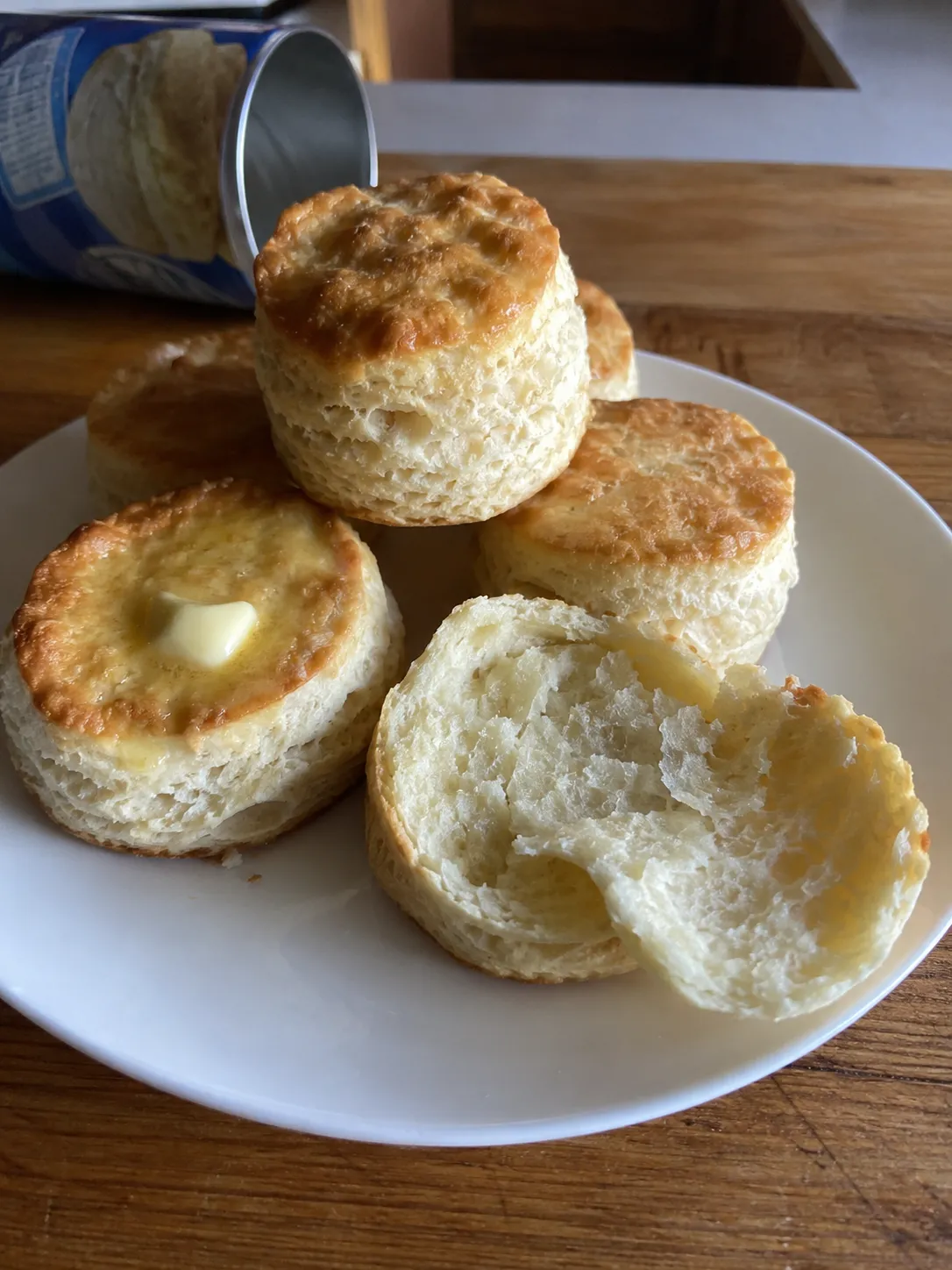
Canned biscuits in an air fryer is one of the most-searched shortcuts in the machine's whole repertoire, and the pages answering it mostly agree with each other: 330°F, flip halfway, golden brown. Fine advice, as far as it goes. What none of them explains is why those settings work, why the number on the can does not, or how to tell a done biscuit from one that is golden outside and clay inside, which is the actual failure everyone who searches this has already met.
This site bakes from scratch most days, but it keeps a real respect for the tube, the same respect behind our refrigerated cookie dough page: store dough is a solved problem that only needs settings written for the machine you own. So here is the canned biscuit, taken as seriously as if we had laminated the dough ourselves.
Quick answer: Biscuits straight from the can into a lightly oiled bare basket, in one layer with an inch between them. 330°F: regular biscuits 6 to 8 minutes, Grands 9 to 11, flipping once at the two-thirds mark, when the tops are golden. Done is 200 to 210°F on a thermometer pushed into the side, or a middle biscuit that pulls apart with no shine of raw dough. No parchment underneath, which traps steam against the bottom and costs the crunch. Ignore the oven temperature printed on the can entirely.
Why the can's directions fail in a basket
The can says 350°F, sometimes 375, for 13 to 17 minutes, and following it in an air fryer produces the signature failure of this entire food: mahogany tops over raw, gummy cores. The physics is the same one that shapes every recipe on this site, just cranked to its extreme by how small and dense a biscuit is:
- A basket cooks 25 to 30 degrees harder than its dial claims, because the element sits inches from the food and the fan strips off the boundary layer of cooler air that a still oven leaves as insulation. The can's 350°F is a real-world 375 to 380 in the machine.
- A biscuit is a dense cylinder, and its middle only hears about the heat by conduction. The surface responds in seconds; the center needs minutes. Run the surface hot and it finishes its entire browning arc while the middle is still cold dough.
- Canned dough is wetter than scratch biscuit dough, pressurized into the tube with extra hydration so it keeps for weeks. More water means more energy spent steaming before the crumb can set, which stretches the middle's schedule even further behind the surface's.
Drop to 330°F and the arithmetic reverses: the surface browns on roughly the same clock the center needs to cook through, and the two finish together. If you enjoy knowing the rule rather than memorizing its outputs, the air fryer calculator converts any package's oven directions automatically, and the conversion guide walks through why the drop is what it is.
The doughy middle, solved
Golden brown is a description of the outside, and the outside is not where canned biscuits fail. The test that actually settles it costs three seconds:
| Center reads | What you have |
|---|---|
| Under 195°F | Gummy core. Golden or not, it needs minutes more |
| 200 to 210°F | Done. Set crumb, steamy layers, no raw streak. Out |
| 215°F and climbing | Drying out. Still fine warm, sawdust by afternoon |
Push an instant-read thermometer horizontally into the side of the fattest biscuit, aiming for the middle. This is bread doneness, the same 200°F class of target our sandwich loaf bakes to, because a biscuit is bread wearing a uniform, and far above the 165 to 175°F where our fudgy bars come out. No thermometer? Pull the middle biscuit apart: the layers should look moist and steamy but matte. Any wet shine is raw. The full table of internal targets across the site is on the baking chart.
The flip, explained
Every canned biscuit page commands a flip and none of them says why, which makes it sound like ritual. It is not ritual. A biscuit in a basket cooks from two unequal directions: radiant heat and fast air from above, and slow conducted heat through the basket floor below. Left alone, the top crisps and browns while the bottom, sitting in its own trapped steam on solid metal, turns pale and faintly damp. The flip gives both faces their turn under the element, and it is why an air-fried biscuit ends up crisp on both sides in a way oven biscuits on a sheet pan never quite manage.
The timing matters more than the halfway convention suggests. Flip at the two-thirds mark, once the top is set and golden, not at the halfway point when the biscuit is still soft-topped and rising; an early flip presses the seam of a half-risen biscuit into the grate and it never recovers its height. For regular biscuits that means flipping around minute 5 of 7; for Grands, minute 7 of 10.
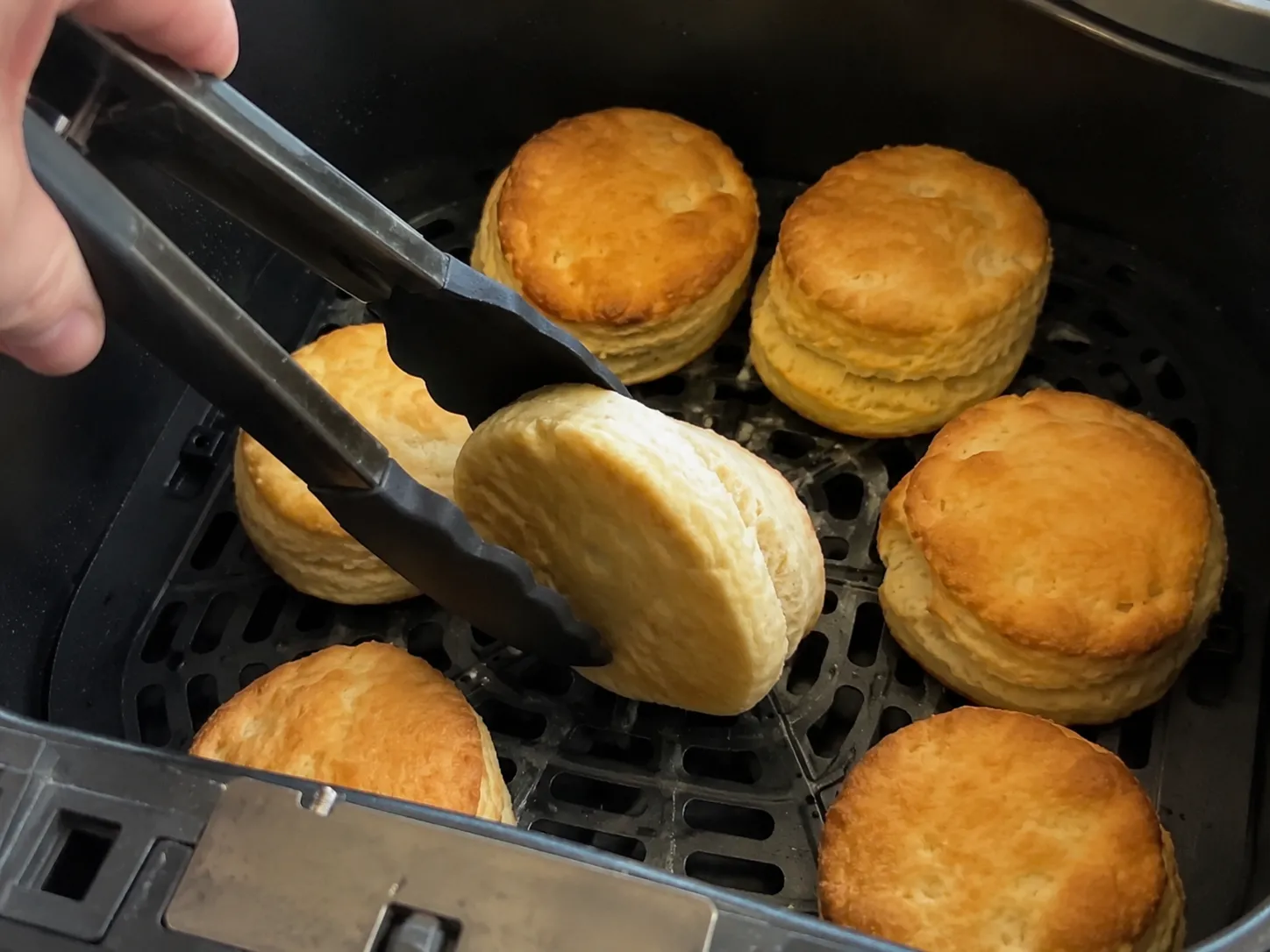
No parchment under biscuits. This is the rare bake where the liner hurts. A solid sheet blocks the airflow that crisps the bottom and pools steam under the dough, and the result is exactly the pale soggy base the flip exists to prevent. A lightly oiled bare basket releases cleanly. If your basket's coating is scratched and grabby, perforated parchment is the acceptable compromise, and the full liner rules live in foil or parchment in an air fryer.
Every can size: times that match yours
Most of the disagreement between the pages ranking for this recipe is not disagreement at all; they tested different cans. Biscuit dough comes in three real sizes plus a frozen format, and the time scales with the mass of the puck:
| What the can holds | At 330°F | Flip at | Notes |
|---|---|---|---|
| Regular biscuits (7.5 oz can, 10 count) | 6 to 8 min | Minute 5 | Small and quick; crowd the basket less than you want to |
| Jumbo / Flaky Layers (12 oz can, 8 count) | 8 to 10 min | Minute 6 | The sweet spot of the whole format |
| Grands (16 oz can, 8 count) | 9 to 11 min | Minute 7 | The size where the thermometer earns its keep |
| Frozen biscuits (bagged, unthawed) | 12 to 14 min | Minute 9 | Straight from the freezer, no thawing, add the extra minutes |
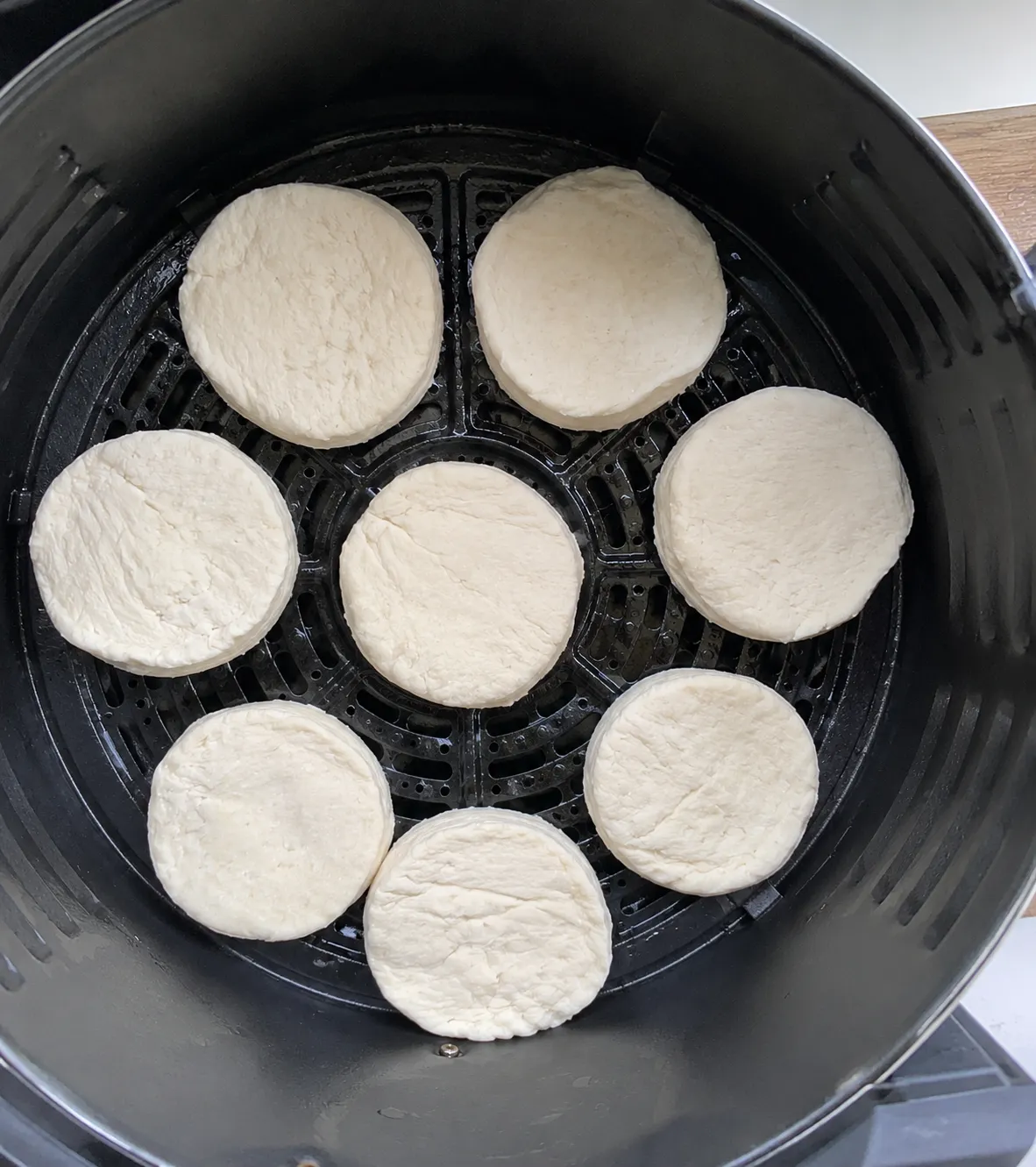
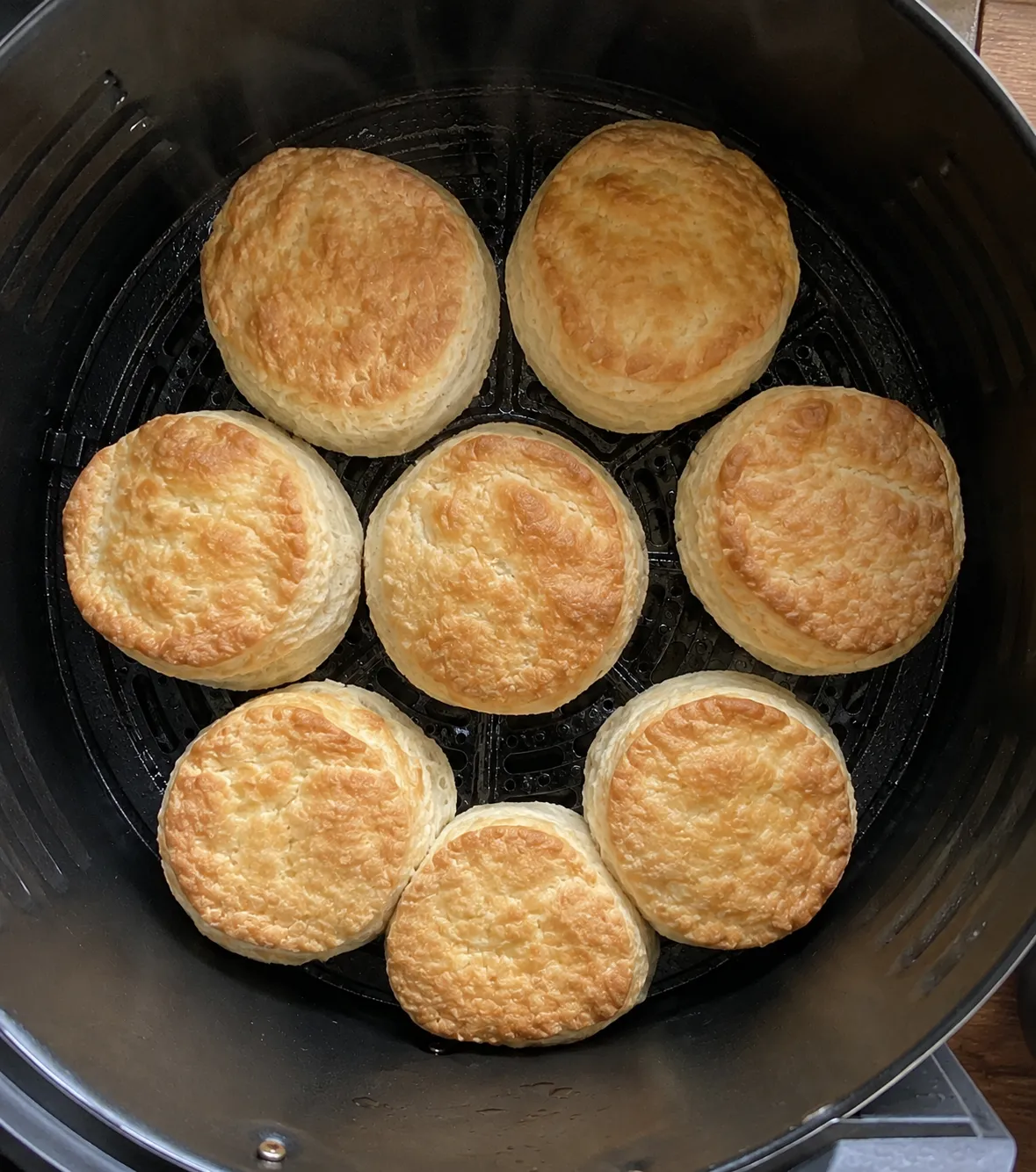
Counts per batch: a standard 6 quart basket takes 4 Grands or 5 regular biscuits in a true single layer with an inch of air between them. Crowding is the silent failure here, because biscuits double in footprint as they rise and a touching pair steams a pale stripe onto both. If you have never actually measured your basket, the pan size calculator settles its real dimensions in thirty seconds. Second batches run about a minute faster in the heat-soaked machine.
Ingredients
The shopping list is a refrigerator door and thirty seconds of honesty:
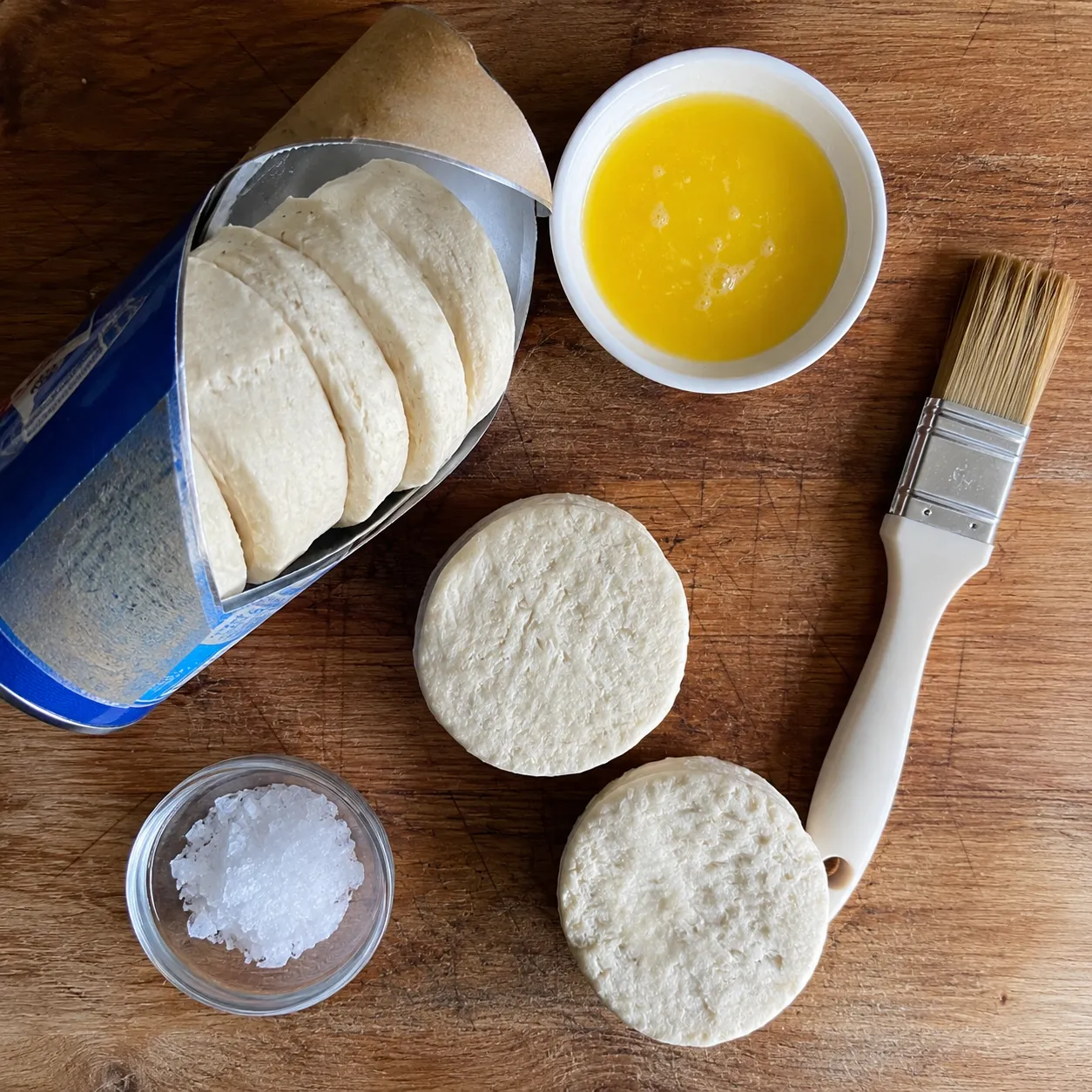
- 1 can refrigerated biscuits, any size (see the table for times)
- Neutral oil spray, for the basket
- Optional: 1 tablespoon melted butter, for brushing after
- Optional: flaky salt, honey, or jam for serving
Flaky Layers styles pull apart into shingled sheets and crisp the most dramatically; Southern Homestyle is a denser, cakier crumb that stays tender. Both take the same settings. Store brands run slightly smaller than their Pillsbury counterparts at each tier, so start checking a minute early. The butter brush at the end is optional the way good decisions are optional.
How to make them
- Preheat to 330°F (165°C) for 3 minutes. A cold basket floor is how bottoms end up pale, and three minutes is cheap insurance. The longer argument lives in the preheating guide.
- Open the can in the traditional manner: peel the label seam and press a spoon against it until the pop startles you anyway.
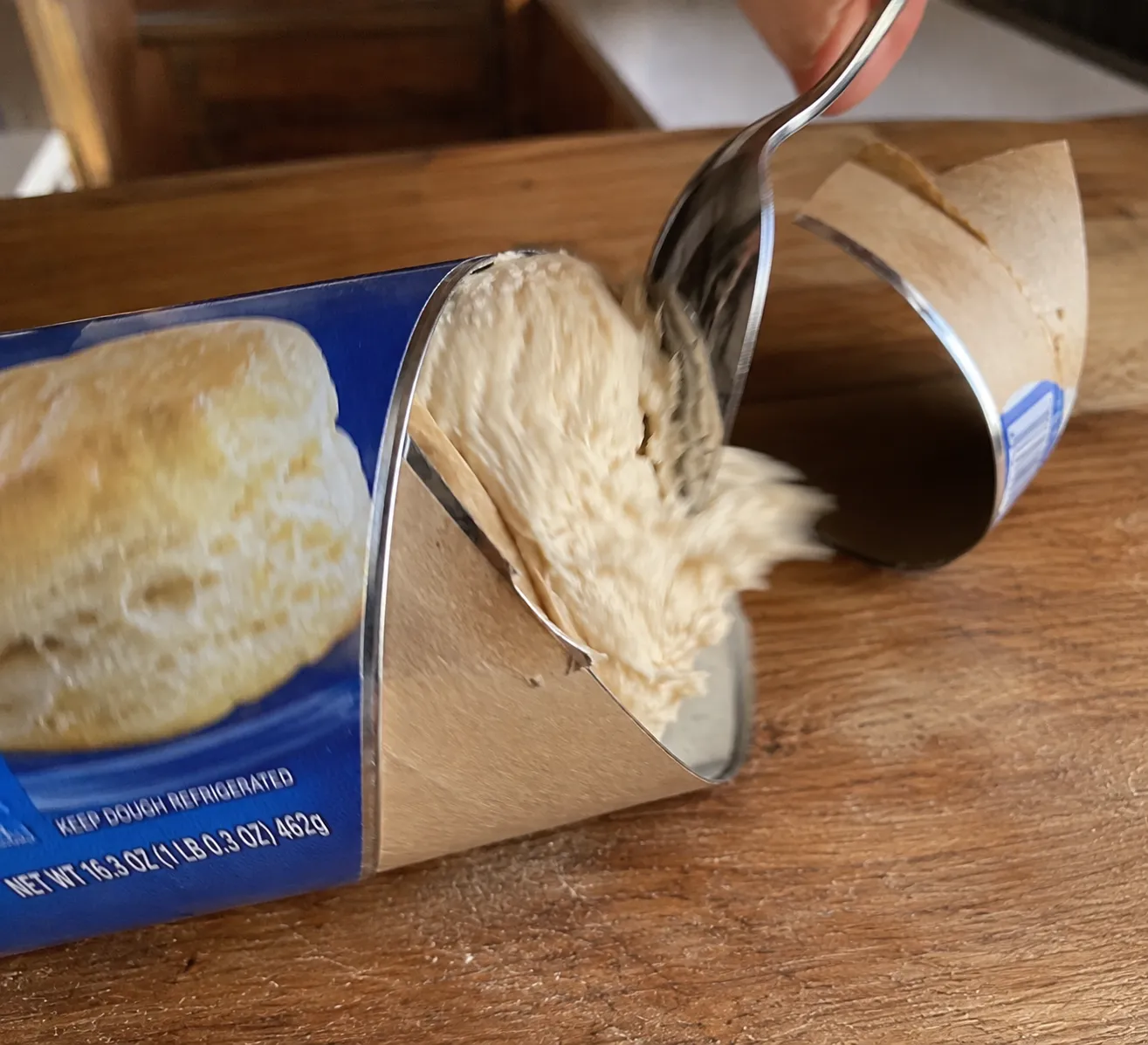
Press the spoon into the seam and let it go. The can does the rest, and it will still make you jump. - Lightly oil the basket floor. A quick spray or a wipe of oil. No parchment, no foil sheet under the dough.
- Arrange the biscuits in one layer, an inch apart. Four Grands or five regular biscuits per batch in a 6 quart. They will grow into the gaps.
- Cook the first leg: regular biscuits 5 minutes, jumbos 6, Grands 7. The tops should be risen and golden.
- Flip once with tongs and finish: 1 to 3 more minutes, until the second side is golden and the sides look dry and set, not doughy.
- Verify the fattest one: 200 to 210°F on a thermometer pushed into the side, or pull it apart and look for moist, matte layers with no wet shine.
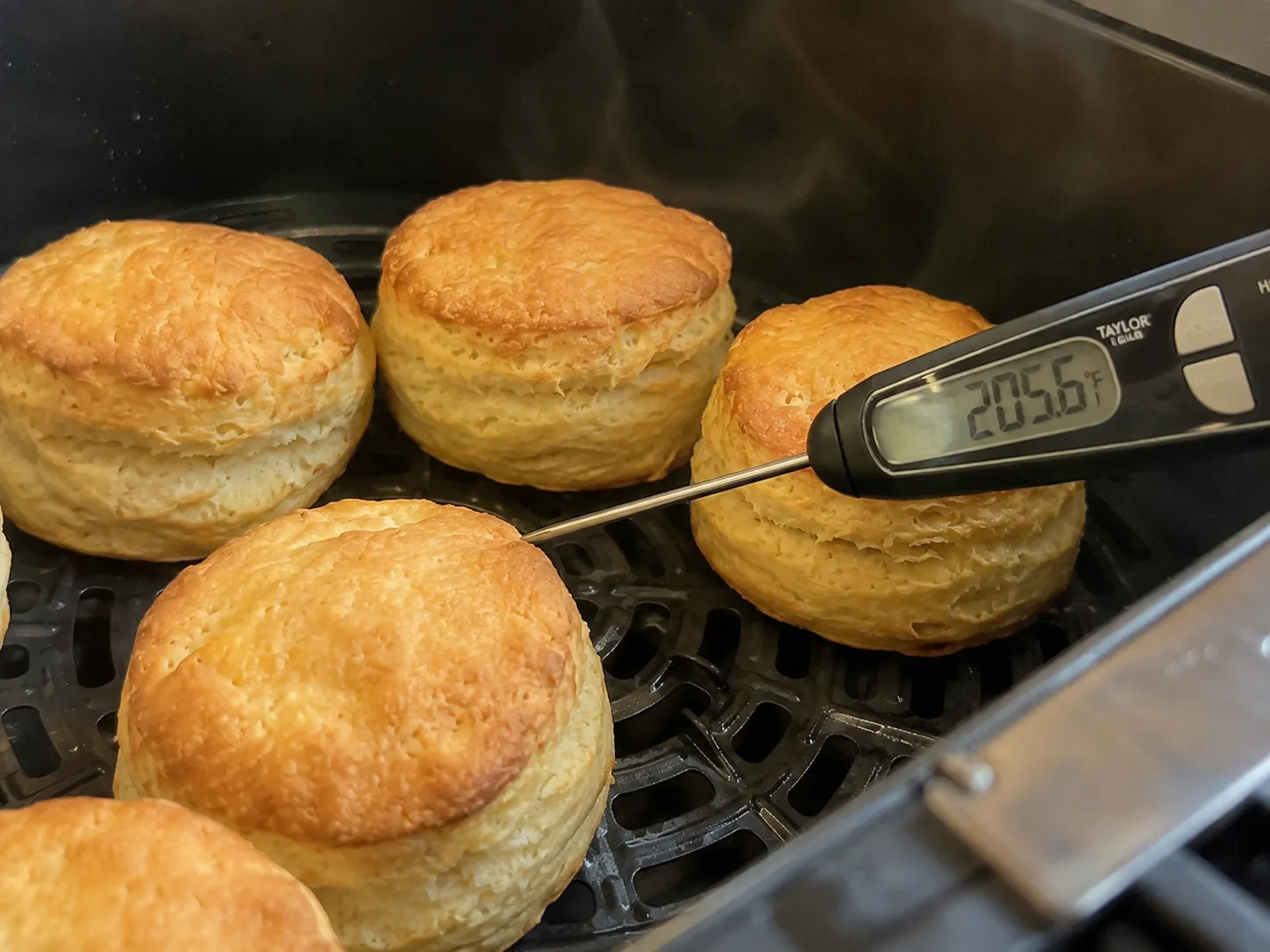
205.6F in the fattest one. Anywhere in the 200 to 210F band means the middle is bread, not dough. - Brush with melted butter the moment they come out, if you are doing the thing correctly, and eat within the hour; canned biscuits are a fresh-from-the-basket food first and a leftover second.
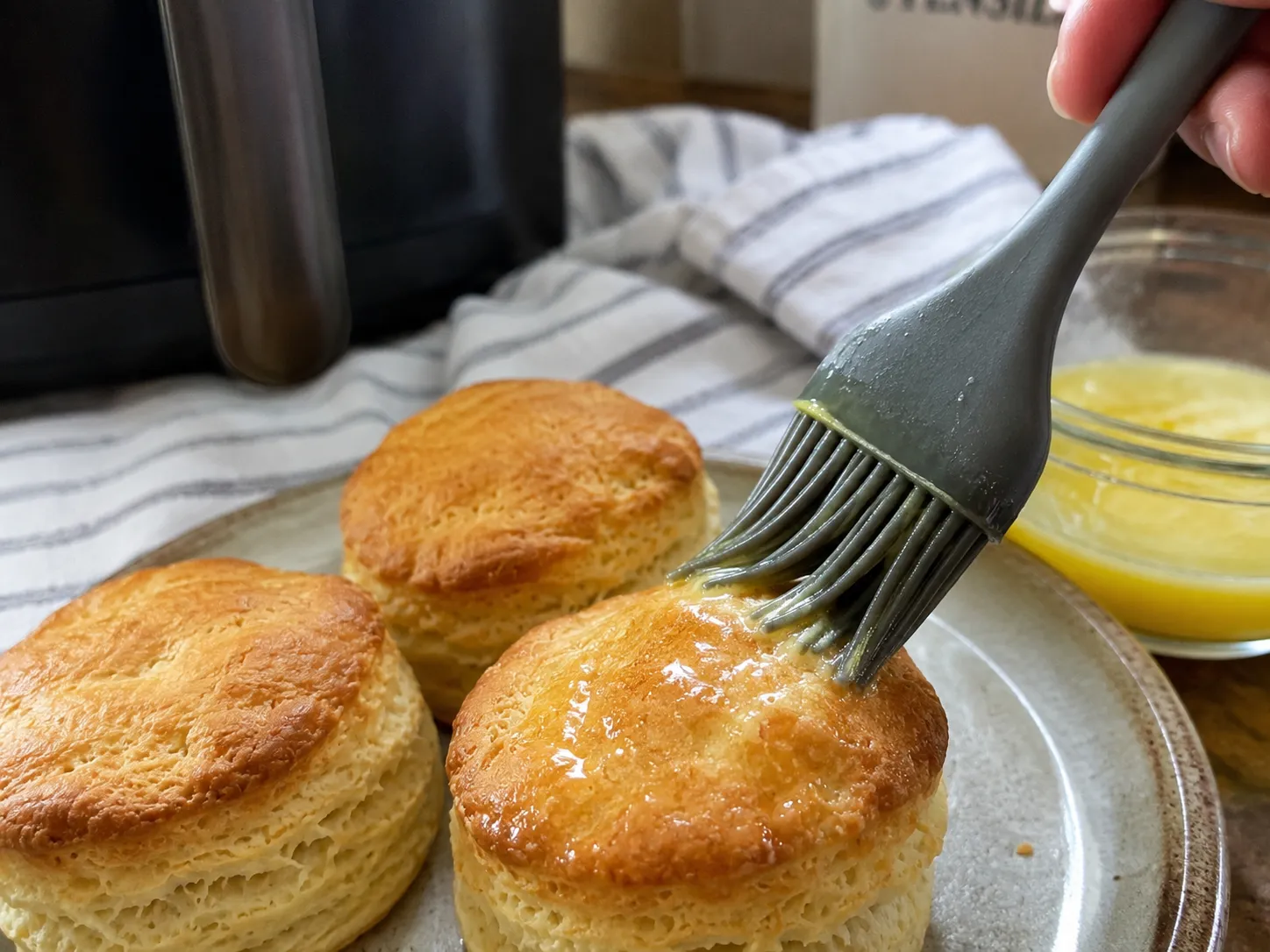
Butter goes on while they are hot enough to drink it. Thirty seconds later it just sits on the surface.
Why they come out flakier than the oven's
The headline is a claim, so here is the receipt. Canned biscuit dough is laminated: sheets of dough separated by films of fat, which is what those pull-apart layers are. Lift comes from those fat layers melting and their moisture flashing to steam, prying the sheets apart, and the height you keep depends on the crust setting while that steam is still pushing.
- In an oven, the crust sets lazily over several minutes, steam leaks out the sides as it forms, and some of the lift relaxes back before the structure fixes in place.
- In a basket, the moving heat sets the outer crust in the first two minutes, capping the biscuit while the interior is still at full steam. The pressure has nowhere to go but up, the layers stack taller, and the early crust crisps deeper by the end. Same dough, better architecture, and the flip then crisps the one face an oven never touches.
The one thing the basket does not forgive is the machine style. A basket model, with its close element and tight cavity, produces the effect at full strength; a roomy oven-style air fryer sits halfway to a regular oven and needs a minute or two longer. That split is worth understanding once, and basket vs oven-style air fryers for baking covers it properly.
Beyond butter: what a can can do
A can of biscuit dough is the great utility ingredient of the basket, and stopping at butter and jam undersells it:
- Biscuit donuts. The internet classic, and it earns the fame: cut the center from each regular biscuit with a bottle cap, 330°F for 4 to 5 minutes, flip once, then toss warm in cinnamon sugar or dip in glaze. The holes cook in 3 minutes and vanish faster. For the from-scratch version of the idea, our vegan donuts run the full playbook.
- Breakfast sandwiches. Split a Grands, add air fryer bacon and a fried egg, and the drive-through loses a customer. The whole spread, biscuits plus bacon and eggs, comes out of one machine in two rounds.
- Monkey bread bites. Quarter the biscuits, toss the pieces in cinnamon sugar, pile them loosely in a greased 6-inch pan, and bake at 320°F for 12 to 14 minutes. Drizzle with icing and accept the consequences. Savory instead? Roll and tie the same dough and you have garlic knots.
- Mini pizzas. Press each biscuit flat, top lightly, 330°F for 6 to 7 minutes, no flip. Kid dinner, solved weekly.
- Shortcut cinnamon roll energy: if the can you actually bought is the cinnamon roll one, our cinnamon rolls page covers that dough's own quirks, which are not quite the biscuit's.
Fixing what goes wrong
| What you got | Why | Fix |
|---|---|---|
| Golden outside, raw gummy middle | The can's oven temperature, used in a basket. | 330°F, and verify 200 to 210°F inside before anyone bites. |
| Pale, damp bottoms | No flip, or parchment blocking the airflow underneath. | Bare oiled basket, one flip at the two-thirds mark. |
| Burnt tops in under 5 minutes | Machine running hot, or 375°F ambitions. | Drop the dial, and see how to prevent burning if it follows you. |
| Pale stripes where biscuits touched | Crowding. Touching dough steams instead of browning. | An inch of air between biscuits, even if it means two batches. |
| Squat, dense biscuits | Flipped too early, mid-rise, and the seam got pressed flat. | Wait for a set golden top before the flip. |
| Stuck to the basket | Dry basket, sugary dough. | The oil spray is a step, not a suggestion. |
| Doughy every time, on everything | The machine itself may run cold or crowd air poorly. | The troubleshooting guide works symptom-first across bakes. |
Storage and reheating
- Fresh is the format. Canned biscuits peak in their first hour and fade faster than scratch biscuits, because the dough's conditioners trade aging grace for shelf life. Bake what will be eaten; the can's schedule is not your schedule.
- Room temperature: 2 days airtight, honestly diminished after the first.
- Unbaked dough does not keep once the can is open; the pressure seal was the preservation. Bake the whole can and reheat later instead.
- Reheat: 300°F for 3 minutes in the basket, which re-crisps the crust and steams the middle back to soft. A microwave produces a hot damp sponge; the basket produces a biscuit.
- Baked biscuits freeze well: 2 months wrapped, then 320°F for 4 to 5 minutes straight from frozen. They come back closer to fresh than day-old ones do, and the same reheat window revives cornbread wedges.
Eight minutes of basket time against 17 oven minutes plus a 10 minute preheat is this machine's whole argument in one breakfast, and the running cost calculator can put a number on the electricity too. All four air fryer tools live in one place. If the tube-dough genre is your speed, refrigerated cookie dough gets the same treatment, the from-scratch ladder starts at how to bake in an air fryer, and the full recipe index has everything else.
Canned biscuits are the fastest bread the basket does, and the shelf runs on from there. Cornbread covers the same 20 minute range in a pan rather than loose rounds, garlic knots and soft pretzels are what a tube of dough becomes once you shape it yourself, and bread is the long way round. The technique pages behind all of it are under guides.
Frequently asked questions
QCan you cook canned biscuits in an air fryer?
Yes, and the basket arguably suits them better than the oven the can was written for: 330F for 6 to 8 minutes for regular biscuits or 9 to 11 for Grands, flipped once at the two-thirds mark, in a lightly oiled bare basket with an inch between biscuits. They come out taller and crisper than oven-baked because the fast-moving heat sets the crust while the steam inside is still lifting the layers. The one rule that matters most: ignore the oven temperature printed on the can.
QWhat temperature and how long for canned biscuits in the air fryer?
330F across every size; only the minutes change with the mass of the biscuit. Regular biscuits from a 7.5 ounce can run 6 to 8 minutes, jumbo Flaky Layers 8 to 10, Grands 9 to 11, and frozen bagged biscuits 12 to 14 straight from the freezer. Flip once at roughly two-thirds of the time, when the top is set and golden. Second batches finish about a minute faster because the machine is heat-soaked. When in doubt, verify the center at 200 to 210F rather than trusting the color.
QWhy are my air fryer biscuits doughy in the middle?
Almost always the can's fault, or rather the can's oven directions used in a machine that cooks 25 to 30 degrees harder at the same dial. At 350 or 375F the surface finishes browning while the dense, extra-wet canned dough at the center is still raw, and the golden color reads as done. Drop to 330F so the surface and center finish together, give it the full time for your biscuit size, and confirm with a thermometer in the side of the fattest one: 200 to 210F means done, under 195F means minutes to go.
QDo I really need to flip them?
In a basket, yes. The biscuit cooks from two unequal directions: strong radiant heat and moving air above, weak conducted heat through the basket floor below, where the bottom sits in its own trapped steam. Unflipped, you get a crisp brown top over a pale damp base. One flip at the two-thirds mark, once the top is set and golden, gives both faces their turn under the element. Do not flip early: turning a still-rising biscuit presses it flat and it never recovers its height. In an oven-style air fryer with a rack, the flip matters less but still helps.
QShould I use parchment paper under biscuits?
No, and this is the rare bake where the liner actively hurts. A solid parchment sheet blocks the airflow that crisps the biscuit's underside and pools steam beneath the dough, producing exactly the soggy pale bottom the flip exists to prevent. A light spray or wipe of oil on the bare basket releases cleanly. If your basket's coating is scratched and things genuinely stick, perforated parchment is the acceptable compromise, since the holes preserve most of the airflow. Never put a loose liner in during preheat with nothing to hold it down.
QHow do I know when canned biscuits are done?
Color tells you about the outside; the inside is where these fail. The reliable test is an instant-read thermometer pushed horizontally into the side of the fattest biscuit: 200 to 210F is done, the same bread-doneness class as a sandwich loaf, because a biscuit is bread in a smaller uniform. Under 195F, back in for 2 minutes regardless of how golden it looks. Without a thermometer, sacrifice the middle biscuit of the batch: pulled apart, the layers should be moist and matte with no wet, shiny streak of raw dough.
QCan I cook frozen biscuits in the air fryer?
Yes, straight from the freezer with no thawing, and they are arguably the format the basket handles best. Same 330F, 12 to 14 minutes, flipped around minute 9, and the same 200 to 210F verification, which matters even more here because the frozen core lags further behind the surface than refrigerated dough does. Do not thaw first; half-thawed dough turns sticky, loses its shape, and bakes unevenly. Frozen biscuits also brown a shade slower, so trust the thermometer over the color on these more than any other version.
QWhy do air fryer biscuits come out flakier than oven ones?
Canned dough is laminated, sheets of dough separated by fat, and its rise comes from that fat's moisture flashing to steam and prying the layers apart. Height depends on the crust setting while the steam is still pushing. An oven sets the crust slowly, letting steam leak out as it forms, and some lift relaxes before the structure fixes. A basket's fast-moving heat caps the biscuit in the first two minutes, trapping the steam at full pressure with nowhere to go but up, so the layers stack taller and the early-set crust crisps deeper. The flip then browns the face an oven never touches.
QHow many biscuits fit in one batch?
Fewer than the can holds, and respecting that is most of the recipe. A standard 6 quart basket takes 4 Grands or 5 regular biscuits in a true single layer with an inch of air between them; biscuits nearly double in footprint as they rise, and any two that touch will steam pale stripes onto each other instead of browning. Run the can in two batches, with the second finishing about a minute faster in the heat-soaked machine. Never stack or lean biscuits; the top one blocks the airflow that cooks the bottom one.
QCan I make donuts from canned biscuits?
Yes, and it is the best trick in the tube. Use regular-size biscuits, cut the center out of each with a bottle cap or small cutter, and air fry at 330F for 4 to 5 minutes, flipping once, until golden and puffed. Toss them warm in cinnamon sugar, or dip in a glaze of powdered sugar thinned with milk. The cut-out holes cook in about 3 minutes and disappear before the donuts do. Grands work but bake up more bready than donut-like, so the small biscuits are the right raw material here.
QFlaky Layers or Homestyle, and does the brand matter?
Same settings, different personalities. Flaky Layers styles are the laminated ones that pull apart into shingled sheets, and they show off the air fryer's crust-setting advantage most dramatically. Southern Homestyle is a denser drop-biscuit crumb, tender rather than flaky, and slightly more forgiving of overbaking. Buttermilk versions of either taste tangier but bake identically. Store brands mirror the tiers at slightly smaller sizes, so start checking a minute early. The settings on this page assume the can size, not the logo.
QHow should I store and reheat leftover biscuits?
Airtight at room temperature for 2 days, with honesty about the decline: canned biscuits peak in their first hour and fade faster than scratch ones. The revival is the basket itself, 300F for 3 minutes, which re-crisps the crust and steams the crumb soft again; a microwave just makes a hot damp sponge. Baked biscuits freeze well for 2 months and reheat straight from frozen at 320F for 4 to 5 minutes, coming back closer to fresh than day-old ones manage. Opened, unbaked dough does not keep; bake the whole can and reheat later.