

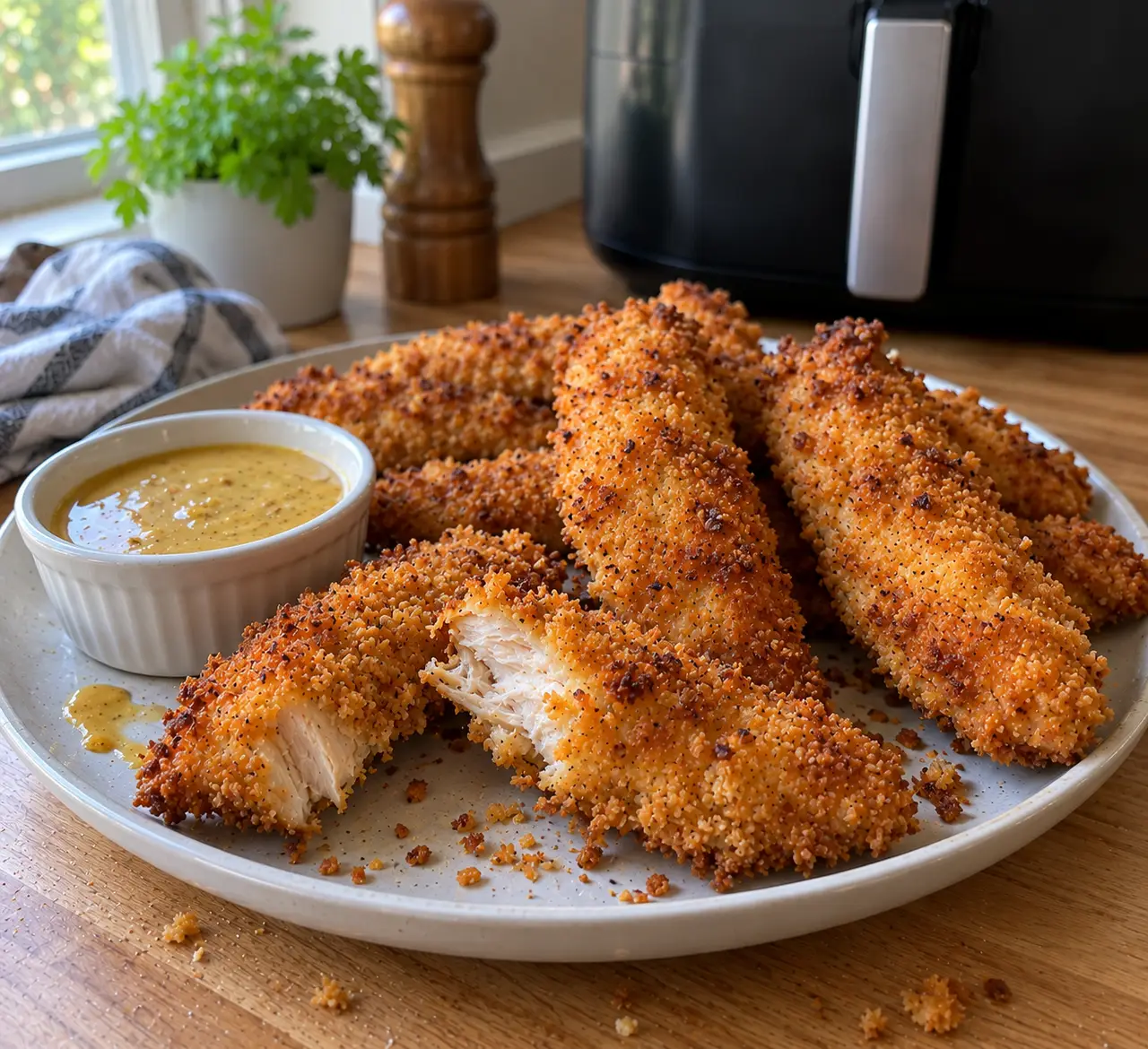
Chicken strips are the food most responsible for air fryer purchases and, quietly, for air fryer disappointment. The machine was practically invented for them, and yet the first homemade batch usually comes out wearing that telltale jacket: browned on the ridges, chalk-white in the valleys, crunchy in some bites and dusty in others. Everyone blames their machine. The machine is innocent. The crumbs were raw when they went in, and ten minutes of moving air cannot brown what oil never touched.
The fix on every other recipe is to chase the pale spots with oil spray, which works about as well as chasing anything works. The fix on this page is to stop needing the chase: the crumbs get toasted golden in the machine before they ever touch chicken, which changes not just the color but the entire schedule of the cook, and the schedule is where juicy comes from.
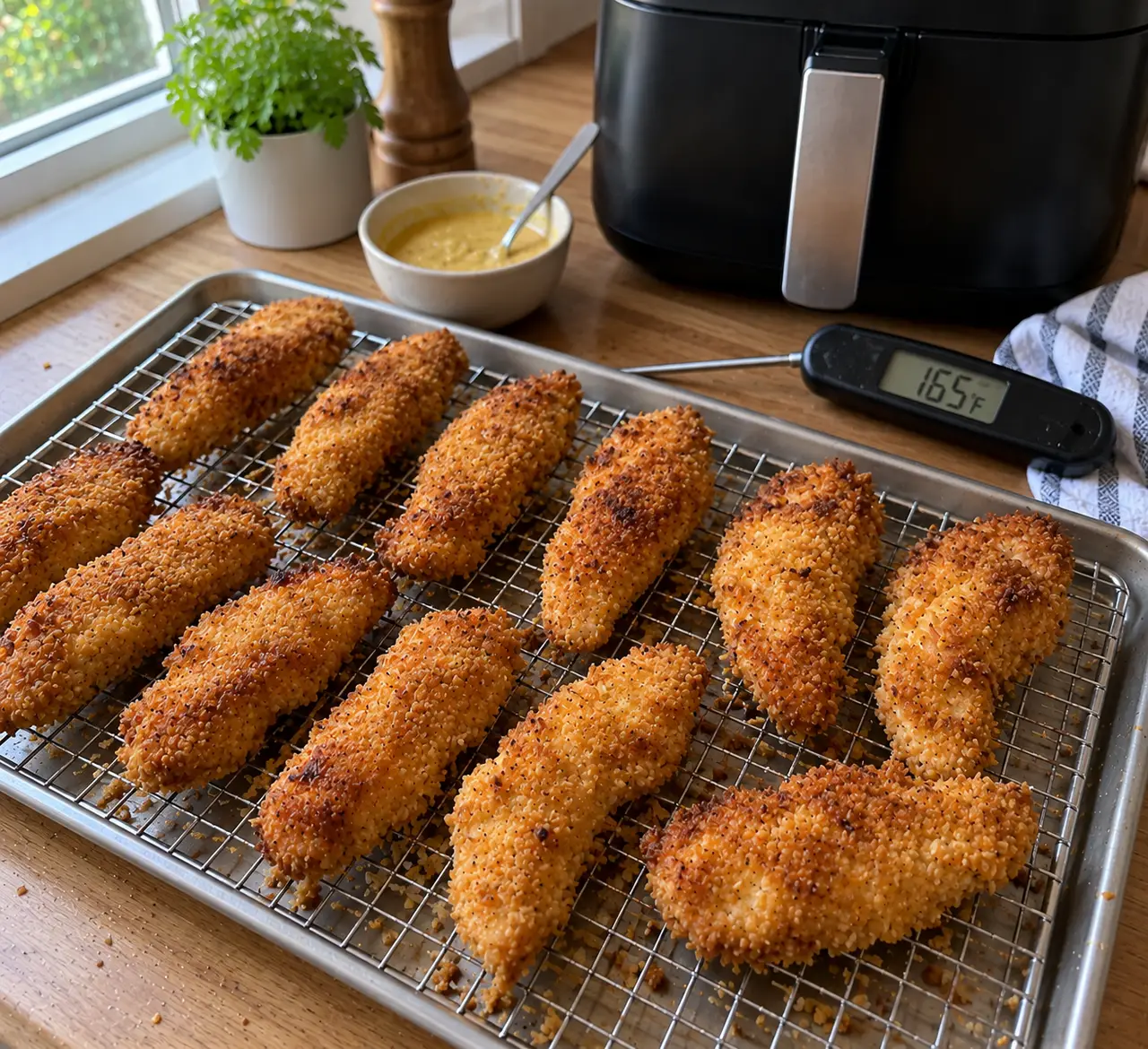
Quick answer: Toast the panko first, tossed with a spoonful of oil, 3 to 4 minutes in the machine until golden. Then run the classic dredge, flour, egg beaten with a spoonful of mayo, toasted crumbs pressed on hard, and cook at 375°F for 9 to 11 minutes with one tong-flip, pulling at exactly 165°F. Because the jacket went on pre-browned, the gentler dial protects the lean meat instead of racing the crumbs, and the pale spot problem never happens at all.
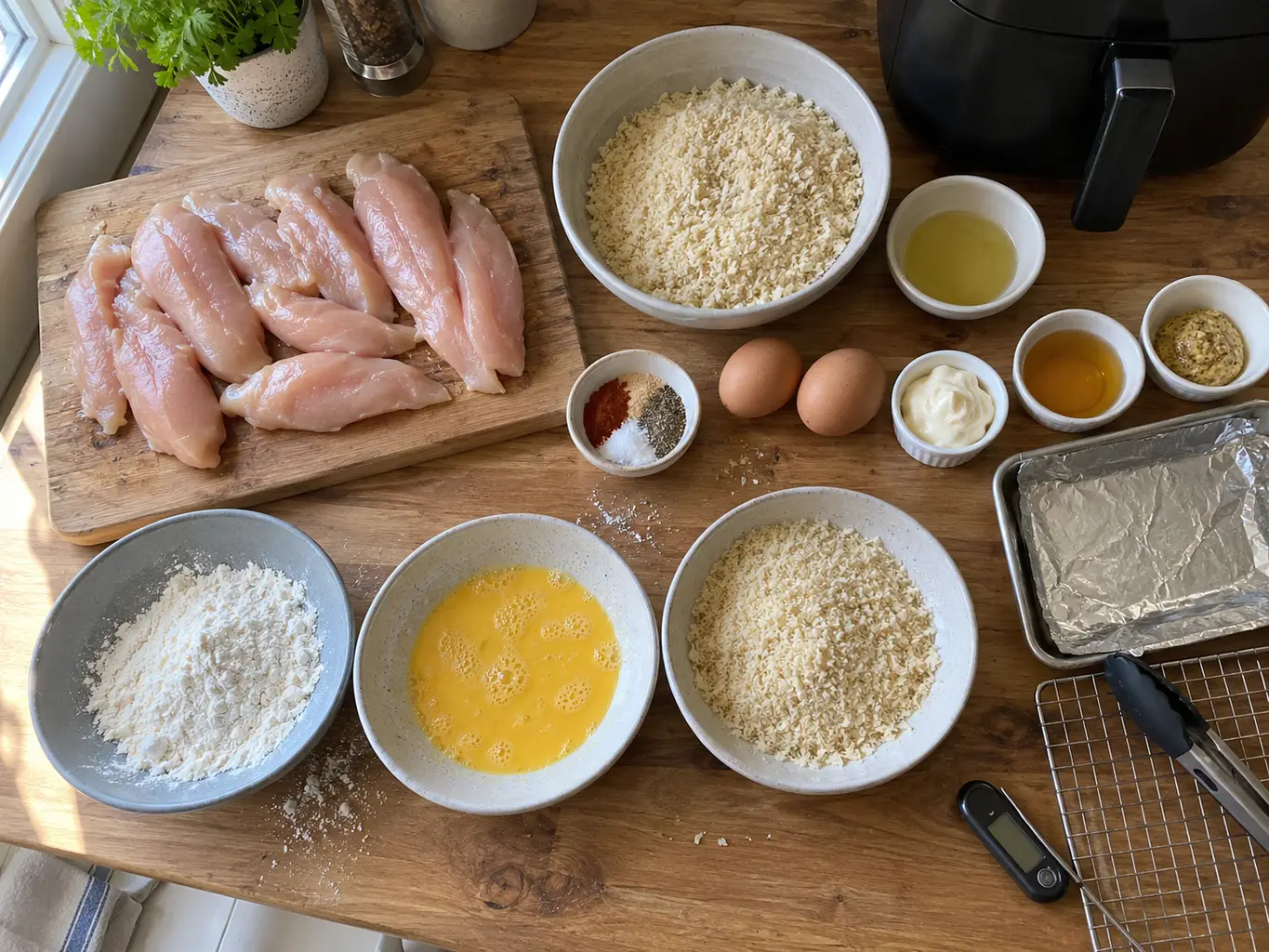
Why breaded chicken comes out pale
- Browning needs fat, and a basket barely has any. A deep fryer browns breading by soaking it in hot oil; an air fryer offers hot air and whatever oil you remembered to mist. Crumbs that caught spray brown; crumbs that hid in a crevice stay raw white flour-dust forever.
- The clock is too short. Lean strips finish inside at 9 to 11 minutes, which is less time than raw panko needs to fully color in moving air. Run hotter to force the browning and you overshoot the meat; the coating and the chicken are on different clocks, and the chicken's clock wins.
- Loose flour is the worst offender. Any flour that never got egg over it bakes into pale dust and falls off in the bag. The dredge discipline below exists to leave no flour uncovered.
- This is the Maillard reaction being rationed, and the pre-toast is simply paying the browning bill in advance, when nothing else is on the clock.
The pre-toast: brown the jacket first
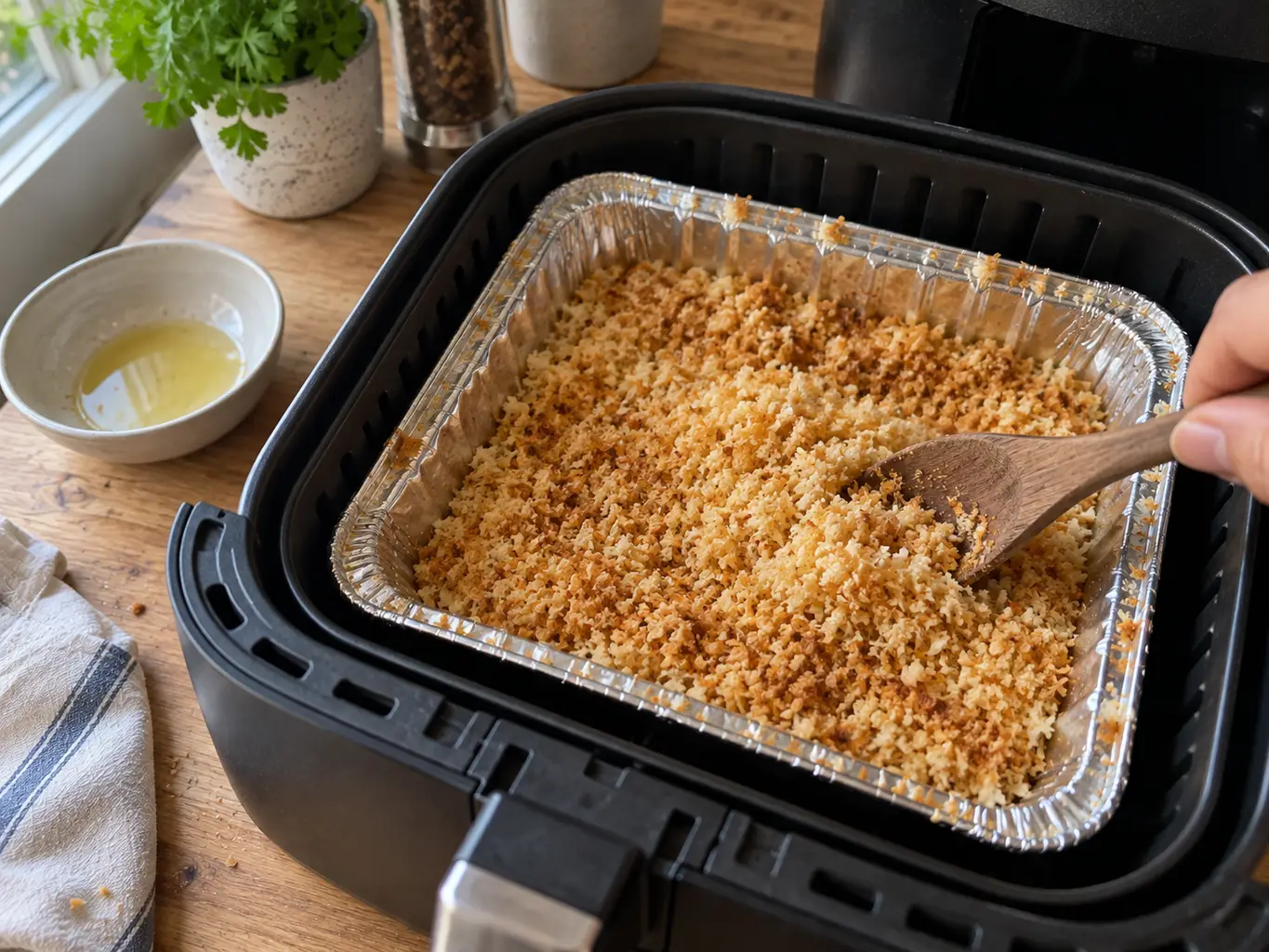
The move that reorganizes this whole recipe: toss 2 cups of panko with 1 tablespoon of oil and toast it in the air fryer, 350°F for 3 to 4 minutes in a small pan or foil tray, stirring once, until evenly golden. Cool it 5 minutes so it does not cook the egg wash on contact, then bread as usual. Some internet versions microwave the panko; the machine that is already on the counter does it better and browns more evenly. The payoffs stack:
No pale spots, structurally
Every crumb is golden before it touches chicken, including the ones that will spend the cook hiding in a crevice the spray can never find.
The clocks decouple
With color already banked, the cook only has to cook. So the dial drops to 375°F, gentler on lean meat, and the strips come out at exactly 165°F wearing a jacket that finished getting dressed yesterday.
Deeper flavor, less oil
One tablespoon of oil toasts two cups of crumbs evenly, less than most recipes spray on unevenly, and toasted crumbs taste nuttier than sprayed-raw ones ever manage.
The tray matters: crumbs ride in a small pan or a folded foil tray, never loose in the basket, where the fan would redecorate the kitchen with them. The container rules live in the foil and parchment guide. Toast a double batch while you are there; toasted crumbs keep 2 weeks in a jar and turn future breading nights into assembly. It is the same trick as air fryer croutons, run one step earlier.
Strips, tenderloins, and the tendon
- Strips cut from breast are the default: slice a breast on a slight diagonal into 1 inch wide, 3/4 inch thick strips, and cut them all the same size, because the batch cooks to the slowest member's clock.
- Tenderloins, the little muscle sold as tenders, work beautifully with one chore: the white tendon running through each. Grip the tendon's tip through a paper towel, pin the meat down with a fork's tines around it, and pull; the tendon slides out whole. Left in, it cooks into a chewy pull-string nobody enjoys.
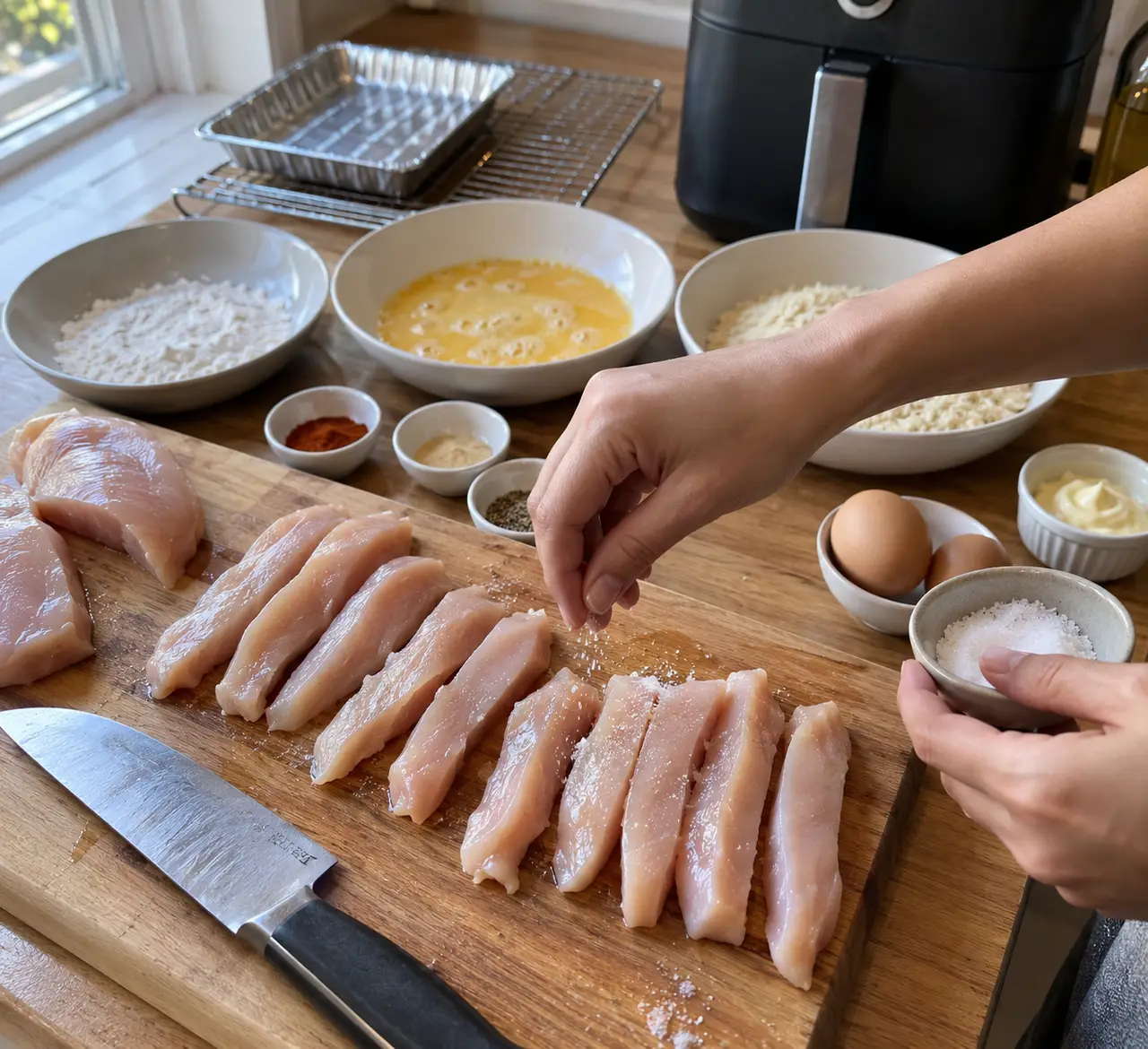
- The 15 minute salt head start: season the cut strips with the salt from the recipe and let them sit while you toast crumbs and set up the dredge. A short dry brine seasons the meat itself, not just the jacket, and lean white meat needs every advantage; it is the same zero-margin logic as the turkey burgers, wearing breadcrumbs.
The dredge, run like a professional
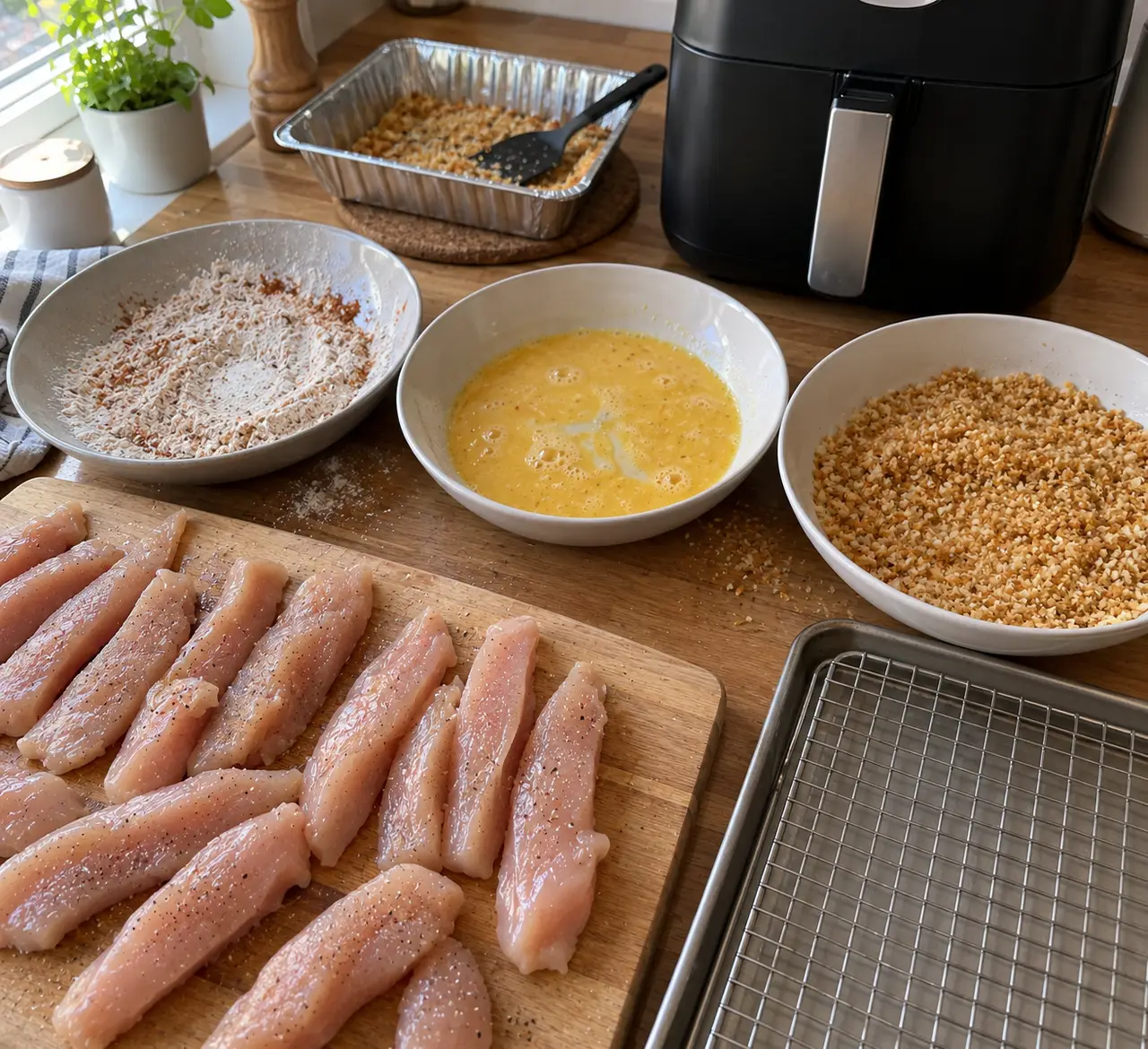
- Three shallow dishes, in order: flour seasoned with the paprika and garlic powder; eggs beaten with a spoonful of mayo, which thickens the wash so it clings and adds browning fat exactly where the jacket needs it; and the cooled toasted panko.
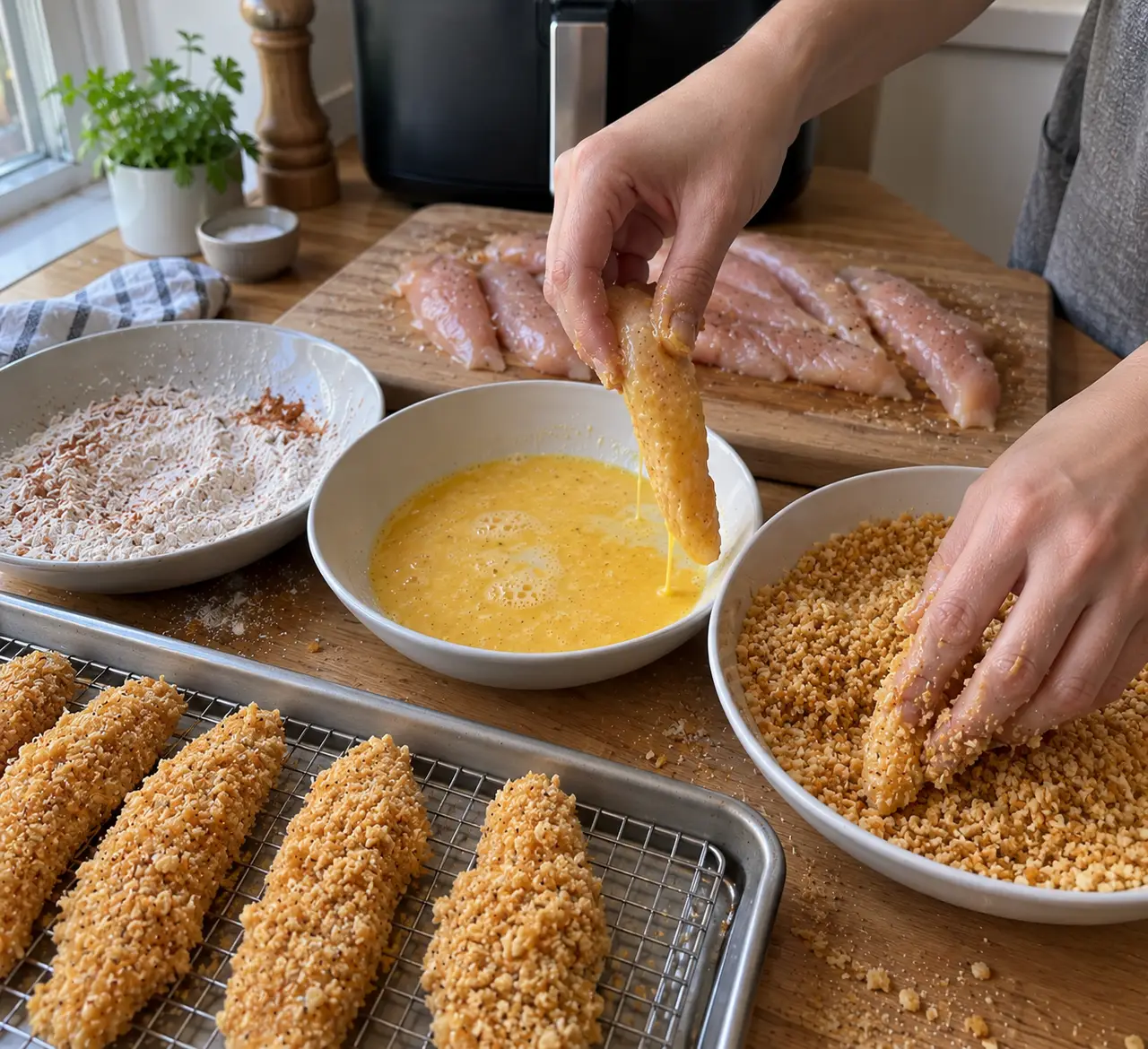
- One wet hand, one dry hand, the rule that keeps you from breading your own fingers: the dry hand works the flour and crumbs, the wet hand handles the egg dish, and they never trade jobs.
- Flour is primer, not paint. The thinnest possible coat, shaken hard; its only job is giving the egg something to grip. Extra flour is future pale dust.
- Press the crumbs on with intent, both sides, until no damp or bald patch shows. Pressed crumbs stay aboard through the flip; sprinkled crumbs stay aboard until the flip.
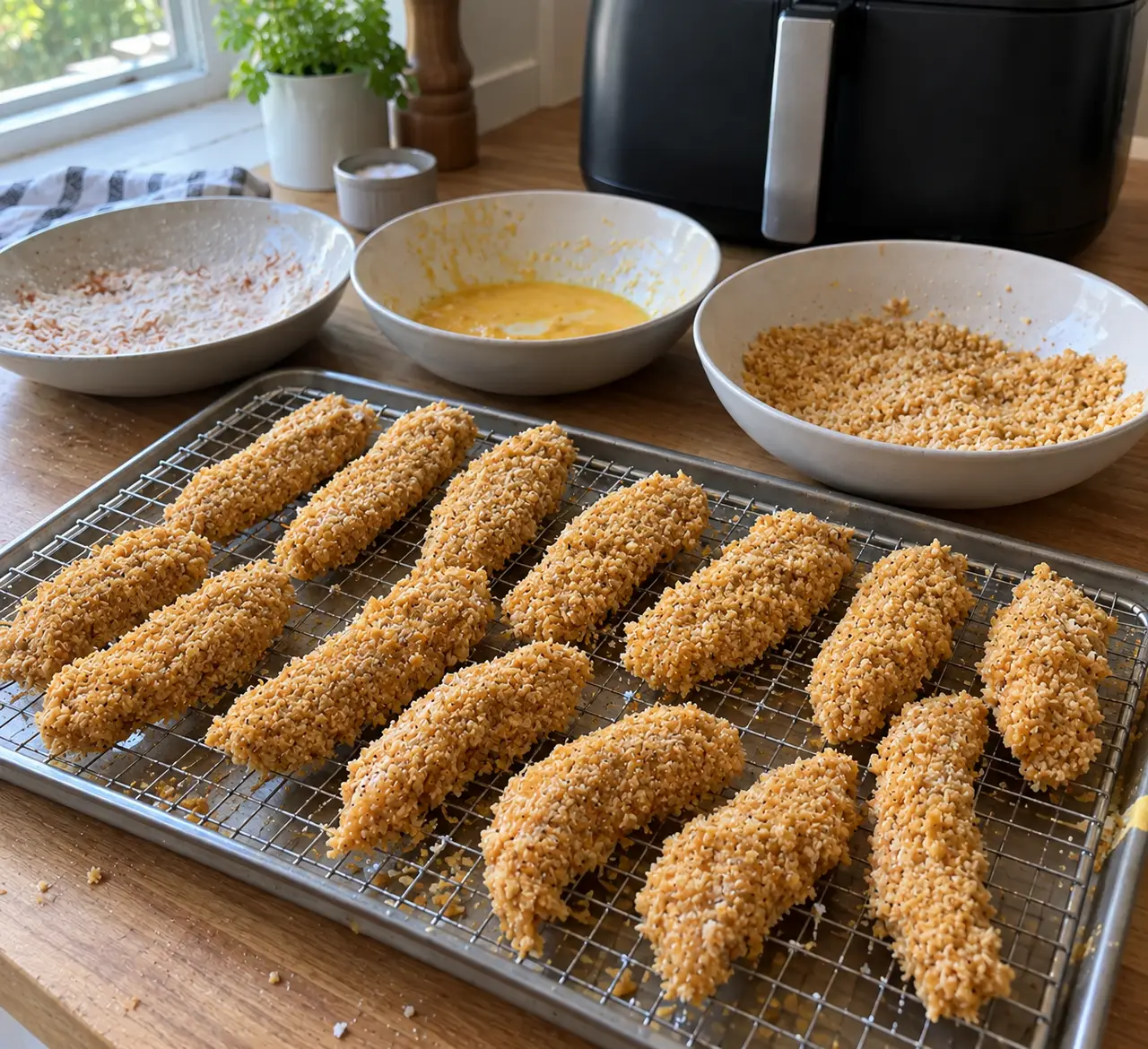
- Rest the breaded strips 5 minutes on a rack before cooking. The coating hydrates and glues itself down, the same brief set that keeps the breading on the zucchini fries attached to the zucchini.
How to make them
- Toast the panko: 2 cups tossed with 1 tablespoon oil, 350°F for 3 to 4 minutes in a tray, stirred once, to golden. Cool.
- Cut and salt the chicken: 1.5 pounds of breast into even strips, salted, resting 15 minutes.
- Run the dredge as above, pressing hard, resting the breaded strips 5 minutes.
- Cook at 375°F for 5 minutes, strips in a single layer with space between, on the lightly greased basket, no preheat, per the preheat guide.
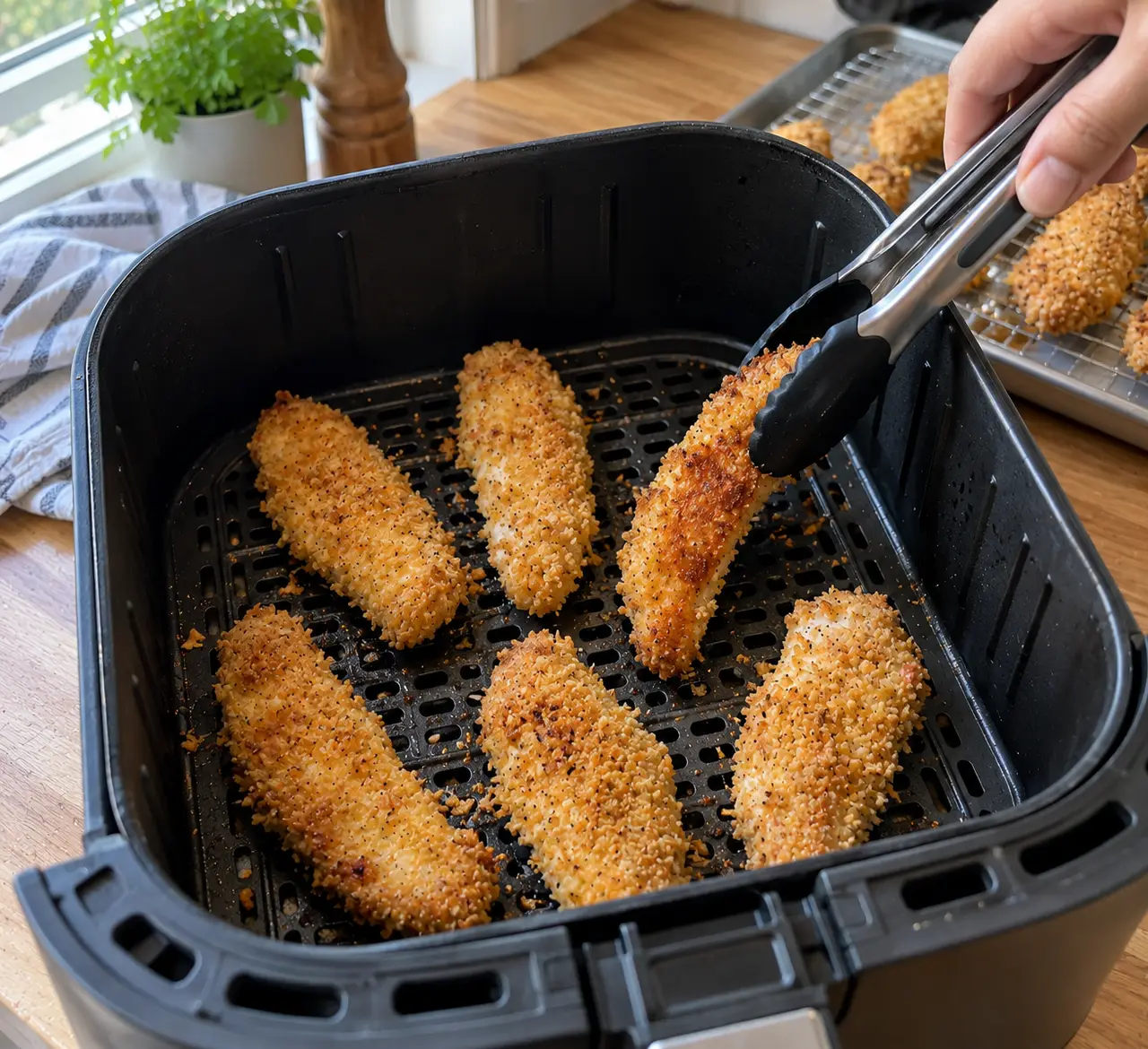
- Flip with tongs, never a spatula, which scrapes jackets off; tongs lift and lay. A strip has two plain faces, so the flip is legal and evens the basket side against the fan side.
- Cook 4 to 6 minutes more, probing the thickest strip at minute 9: pull at 165°F exactly. The jacket was golden before the machine ever turned on; the number is the only thing left to wait for.
- Rest 3 minutes on a rack, not a plate, so the bottoms stay crisp, while the sauce gets stirred.
Oven breaded-chicken recipes run 425°F, and the air fryer calculator converts that honestly to about 400°F, which is the right number for raw crumbs racing a clock. The pre-toast is what buys this page its gentler 375°F: color paid up front means the cook can favor the meat, the same below-the-conversion judgment the whole dinner shelf runs. Every setting lives in the air fryer baking chart.
165 sharp: the lean meat clock
The dinner shelf's temperature doctrine now has three chapters, and this is the third. The drumsticks overshoot to 185°F on purpose, because dark meat's collagen rewards it. The turkey burgers stop at 165°F sharp, because lean ground meat has no reserves. Chicken breast strips are the turkey burger's whole-muscle cousin: 165°F is the finish line and the cliff edge in the same place, and every degree past it is squeak and string. Probe the thickest strip through its end with the instant-read thermometer, trust carryover to spend the rest wisely, and never cook strips by color, because this page's whole point is that the color was decided before the chicken went in.
The frozen tender lane
- Store-bought frozen breaded tenders are the corn dog story again: factory par-fried, so the machine revives rather than cooks, exactly like frozen wings. Straight from the bag, no thawing per the frozen shelf's law, 380°F for 10 to 12 minutes with one flip, to 165°F inside. No spray; the factory oil is aboard already.
- Frozen raw breaded tenders (the bagged uncooked kind) run 375°F for 14 to 16, same finish number, and the box's oven instructions can be retired without ceremony.
- Your own strips freeze at the breaded-raw stage: bread, freeze flat on a tray, bag for 2 months, and cook from frozen at 375°F for 13 to 15 minutes. The pre-toasted jacket survives the freezer with its color intact, which is one more thing spray can never promise.
Troubleshooting
| What you got | Why | Fix |
|---|---|---|
| Pale, dusty patches | Raw crumbs and unloved flour. | The pre-toast, and flour as primer. The page in one row. |
| Breading fell off | Skipped press, skipped rest, or a spatula flip. | Press hard, rest 5 minutes, tongs only. |
| Dry, stringy chicken | Cooked past 165°F chasing color that was never coming from the meat's clock. | 165°F sharp, and let the pre-toast own the color. |
| Soggy bottoms | A crowded basket, or rested on a plate. | Space between strips, batches if needed, rack after. |
| Chewy pull-string in tenders | The tendon stayed home. | The paper towel and fork pull, ten seconds per tenderloin. |
| Crumbs all over the machine | Panko toasted loose in the basket. | Always in a tray. The fan is not a mixing bowl. |
| Uneven batch, some done some not | Strips cut freehand into a size lottery. | Uniform 1 inch strips; the batch cooks to its slowest member. |
| One side of the basket browner | A machine hot spot. | Rotate positions at the flip; chronic scorchers live in the burning guide. |
Recurring cross-recipe mysteries belong to the troubleshooting guide.
Sauces and the strip dinner
- Two-ingredient honey mustard, equal parts, is the house default and takes longer to name than to make. A mayo-sriracha, plain ketchup for the under-tens, and ranch for the majority party.
- The strip-night table, one machine in shifts: baked potato wedges first because they hold, or frozen fries and tater tots when the vote goes that way, strips second, and garlic bread in the rest window. The kids' ballot splits these against the corn dogs and the popcorn shrimp weekly, which is healthy democracy.
- The grown-up second life: sliced strips over a salad, or in a wrap with the honey mustard doing dressing duty.
- Scaling up: the recipe scaler resizes the dredge math, and the toasted-crumb jar means round two breads in minutes; the basket holds about 6 strips a round, so a crowd runs in relays with round one resting on the rack.
Storage and reheating
- Fridge, 4 days, airtight once fully cool, with a paper towel under them so the jackets do not sit in their own condensation.
- Reheat at 370°F for 4 to 5 minutes, which returns the pre-toasted jacket to genuinely crisp, the same rescue the reheat fried chicken guide runs at full size; the microwave returns it to the pale softness this page was written to abolish.
- Cooked strips freeze 3 months and reheat from frozen at 370°F for 8 to 10 minutes, but the breaded-raw freezer stash cooks fresher than any reheat, and takes the same ten minutes.
- The toasted crumb jar keeps 2 weeks at room temperature, and its existence is why this recipe happens on weeknights at all.
Frequently asked questions
QHow long do chicken strips take in an air fryer?
9 to 11 minutes at 375°F for fresh breaded strips, flipped once with tongs at minute 5, pulled at exactly 165°F in the thickest strip. Store-bought frozen breaded tenders run 10 to 12 minutes at 380°F, and home-breaded strips cooked from frozen take 13 to 15. Add the 3 minute rack rest, and the whole fresh project runs about 35 minutes including toasting the crumbs and running the dredge.
QWhy is my breaded chicken pale and not crispy in the air fryer?
Because browning needs fat, and crumbs that never met oil bake into pale dust no matter how long the fan blows. The usual fix is chasing white spots with spray; the better fix is toasting the panko golden before breading, one tablespoon of oil, 3 to 4 minutes at 350°F in a tray, so every crumb is browned before it touches chicken. The jacket goes on finished, and pale spots become structurally impossible.
QHow do you keep breading from falling off in an air fryer?
Four disciplines. Flour as the thinnest primer coat, because loose flour is where peeling starts. An egg wash thickened with a spoonful of mayo, which clings instead of dripping. Crumbs pressed on hard until no bald or damp spot shows, then a 5 minute rest so the coating glues itself down. And at the flip, tongs that lift rather than a spatula that scrapes. Breading that survives the flip survives the meal.
QWhat temperature is chicken strips done at?
165°F at the center of the thickest strip, and not a degree more. Chicken breast is lean white meat with no fat reserve, so it dries on the same zero-margin clock as a turkey burger: safe and ruined are only a few degrees apart. Probe through the end of the strip, pull at the number, and never judge by jacket color, especially with pre-toasted crumbs, which look finished from minute one because they are.
QDo you have to remove the tendon from chicken tenderloins?
You do not have to, but you will wish you had: the white tendon cooks into a chewy pull-string that drags half the bite with it. Removal takes ten seconds per tenderloin: grip the tendon's exposed tip through a paper towel for traction, press a fork's tines down around it, and pull steadily; the tendon slides out whole and the tenderloin stays intact. Strips cut from breast skip the question entirely.
QCan you cook frozen chicken tenders in an air fryer?
Yes, and it is the format the machine loves most: factory tenders are par-fried before freezing, so the air fryer is reviving a fried coating, not creating one. Straight from the bag with no thawing, 380°F for 10 to 12 minutes with one flip, to 165°F inside, and no spray, since the factory oil is already aboard. Frozen raw breaded tenders run 375°F for 14 to 16 minutes to the same number.
QCan I bread chicken without eggs?
Yes: brush each floured strip with a thin coat of plain mayonnaise and press the toasted crumbs into that. Mayo is emulsified egg and oil already, so it glues crumbs and feeds browning in one step, and the finished strip tastes of chicken, not of mayo. Buttermilk also works as the wet layer for a tangier jacket. Either way the press-and-rest rules hold, because adhesion is about technique more than glue.
QWhy toast panko before breading?
Because it separates two jobs the air fryer otherwise forces onto one clock. Raw panko needs more browning time than lean strips can afford; run hot enough to color the crumbs and the meat overshoots 165°F. Toasting first banks the color, so the cook itself runs gentler at 375°F and stops precisely when the meat is done. Bonus: one tablespoon of oil toasts two cups of crumbs more evenly than any amount of spray, and the jar keeps 2 weeks.
QHow do you reheat chicken strips so they stay crispy?
370°F for 4 to 5 minutes straight from the fridge, on the basket, not stacked, and the toasted jacket comes back genuinely crisp. From frozen cooked strips, 8 to 10 minutes. Skip the microwave, which softens breading by design. The superior plan is freezing strips breaded-raw and cooking them fresh from frozen in 13 to 15 minutes, which beats any reheat and costs the same effort at dinner time.
Never overbake again
Get our one-page times & temps cheat sheet, plus a new tested recipe each week.
No spam · unsubscribe anytime