

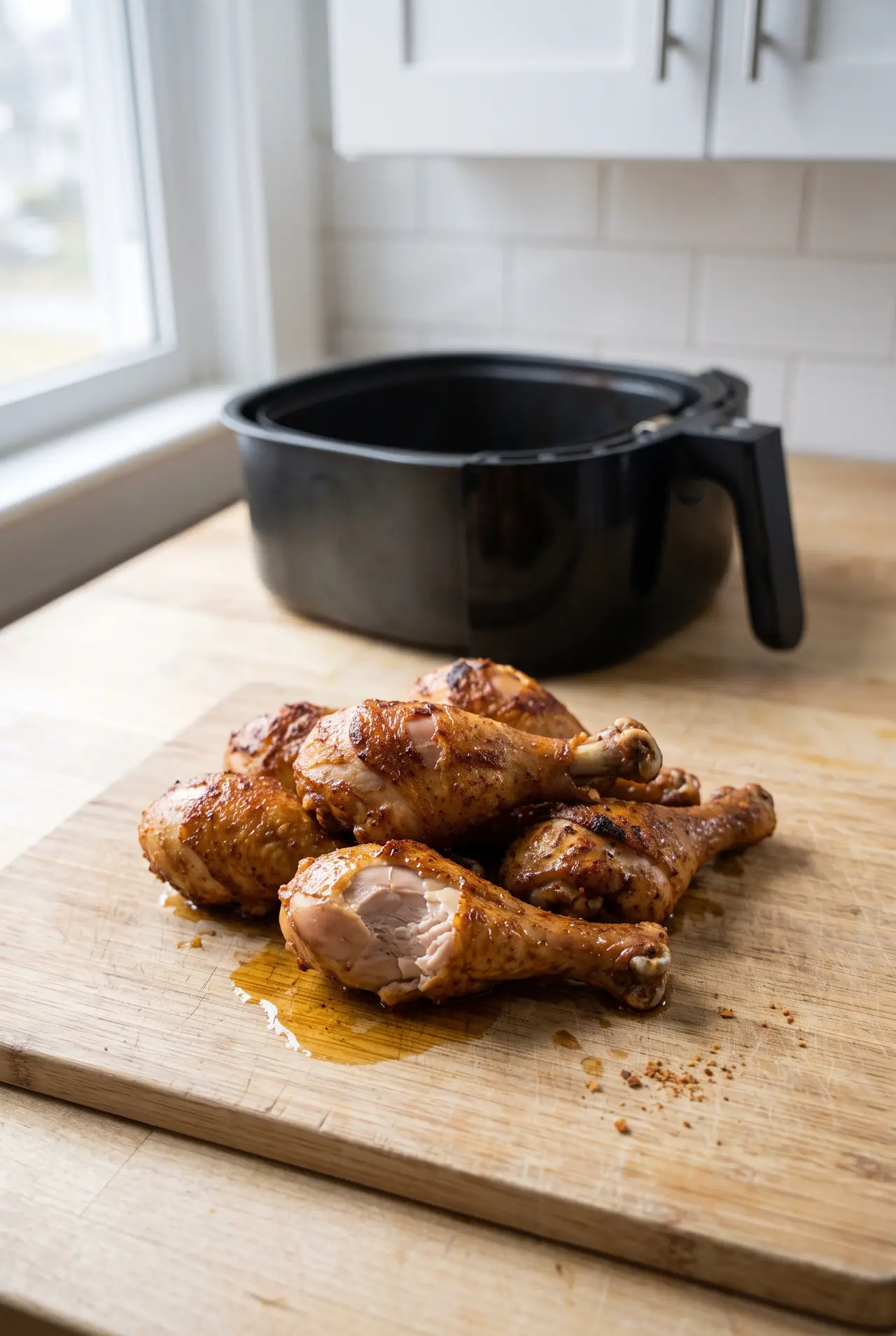
Yes, this is a baking site, and yes, this is chicken. The machine that bakes the bread also makes dinner, and the drumstick is the dinner it makes best: cheap enough to feed four for pocket change, forgiving enough to survive a distracted cook, and built with its own handle. My kids have eaten drumsticks roughly weekly for years, and the recipe below is what all those Tuesdays distilled down to.
It also fixed the thing that quietly ruins most drumsticks, which is that people cook them to the number printed on every food safety poster and then wonder why the meat is chewy, why it clings to the bone, and why the inside looks vaguely underdone even though the thermometer swears otherwise. The poster is not wrong. It is just answering a different question than the one dinner is asking.
Quick answer: Pat the drumsticks aggressively dry, toss with oil and a rub that includes a teaspoon of baking powder, and cook at 380°F for 18 to 22 minutes, flipping once at minute 10, in a single spaced layer. Pull at 185 to 195°F at the thickest part, probe parallel to the bone, not the 165°F minimum, because dark meat needs the extra degrees to melt its collagen and come away from the bone. Rest 5 minutes, sauce after if saucing, and stop apologizing for the pink tinge near the bone, which gets its own section.
Safe is 165. Good is 185.
Here is the distinction that separates this page from the poster. 165°F is the food-safety line for all chicken: at that temperature, held even briefly, the meat is safe to eat, full stop. But safe and pleasant are different finish lines, and for dark meat they are twenty degrees apart:
- Dark meat is working meat. Legs walk, so drumsticks are threaded with collagen and connective tissue that breast meat barely has. At 165°F that collagen is intact, which eats as rubbery, clingy, and squeaky against the bone.
- Between 175 and 195°F, the collagen melts into gelatin. This is the same transformation that makes braised short ribs luxurious, running on a faster clock. The meat loosens, turns silky, and pulls from the bone in clean bites instead of strings.
- Dark meat is juicy at temperatures that would wreck a breast because its fat and gelatin carry moisture that white meat never had. You are not overcooking the drumstick at 190°F; you are finishing it.
- So the target is 185 to 195°F, and inside that window, later is better. The drumstick is the rare meat where the nervous cook's instinct to keep going is actually correct.
The dry skin law, and the baking powder pinch
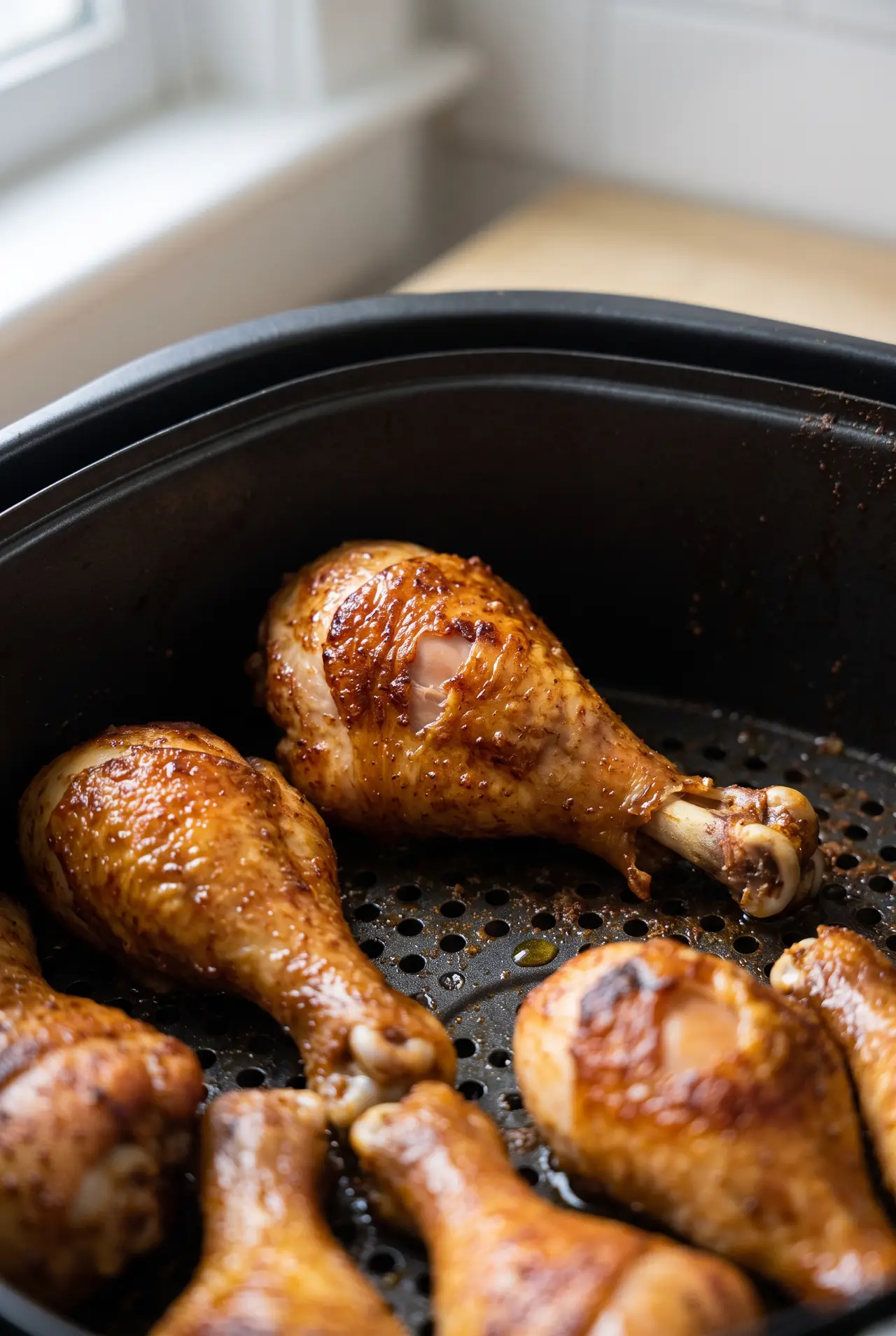
Crispy skin is a moisture problem before it is a heat problem. Skin crisps only after its water boils off, and every minute the machine spends steaming away surface moisture is a minute it is not crisping, so the skin's fate is decided at the counter:
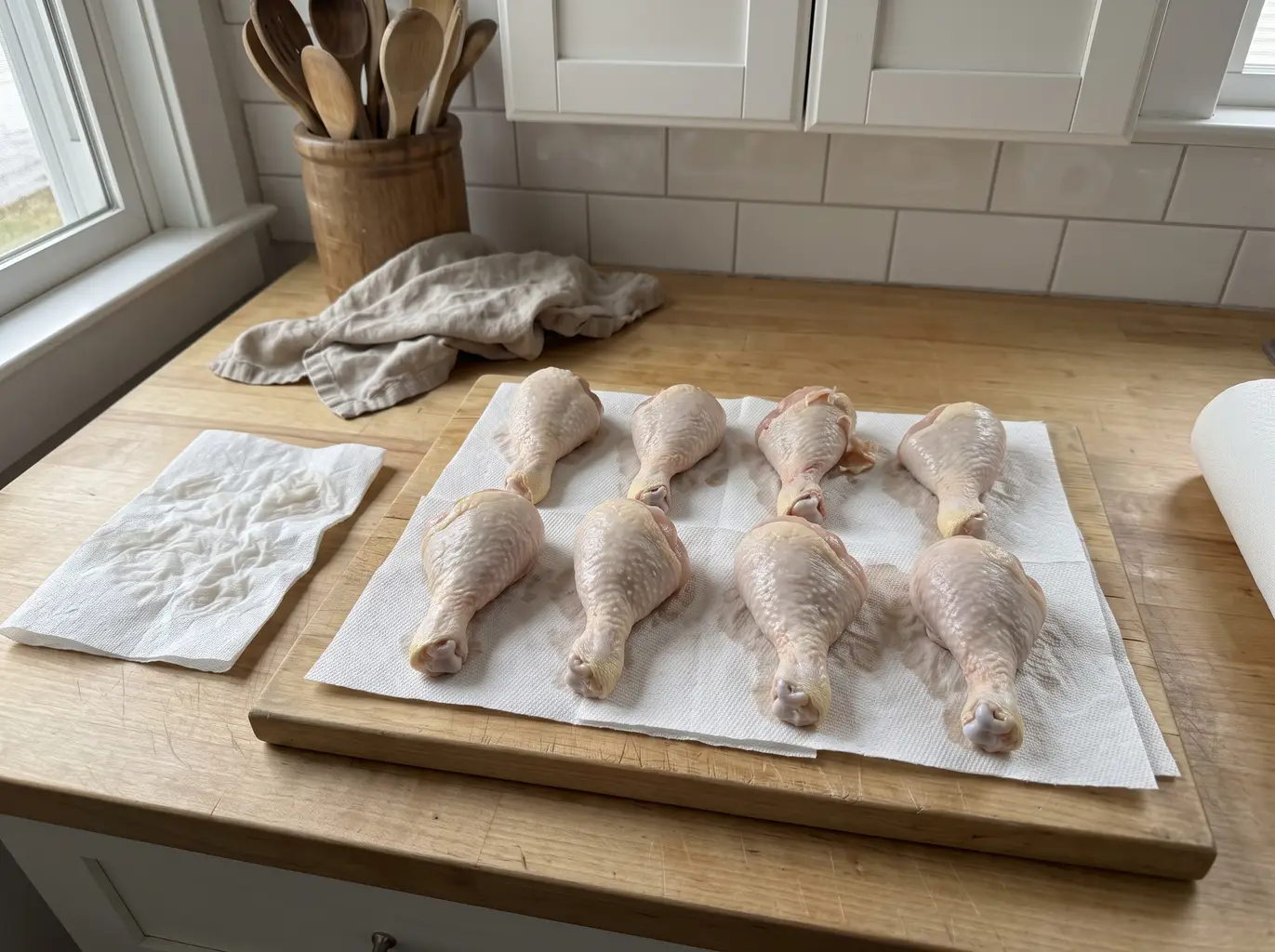
Pat aggressively dry
Paper towels, every drumstick, both ends, with intent. Packaged chicken arrives wet, and wet skin bakes to chewy leather. If dinner is hours away, an hour uncovered on a rack in the fridge dries the skin further and costs nothing.
The baking powder pinch
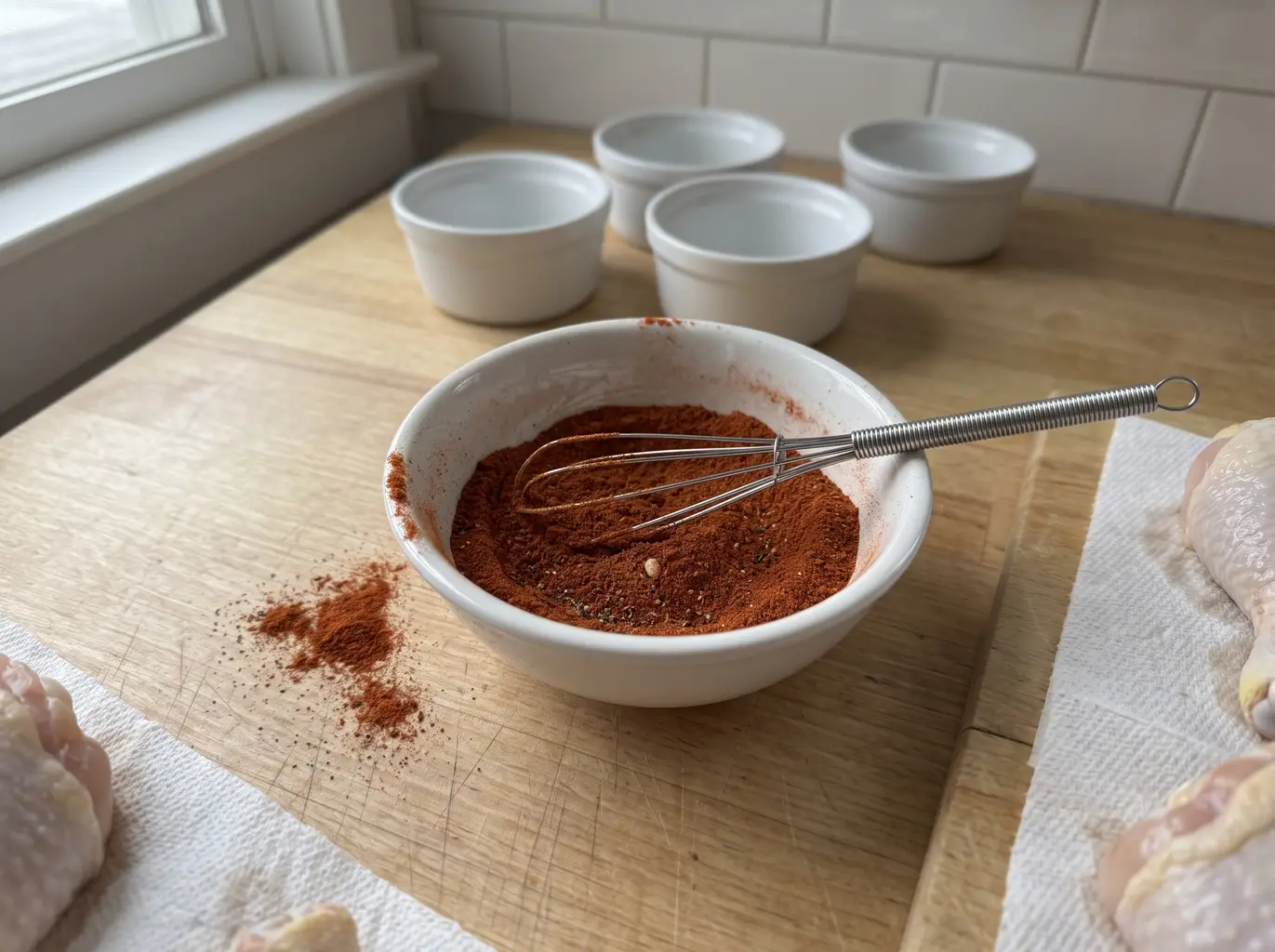
One teaspoon of aluminum-free baking powder whisked into the spice rub. It nudges the skin's pH upward so it browns faster, and its micro-bubbling roughens the surface into extra crisp edges. Powder, never soda; soda in this quantity tastes like regret.
Oil after, thin
One tablespoon for the whole batch, tossed to a sheen, not a slick. The oil carries the rub and conducts the first heat; more of it just drips into the smoke section below.
The browning being chased here is the same Maillard reaction that colors every crust on this site, and skin is the best canvas it gets: fat, protein, and dryness all in one wrapper.
How to probe a drumstick without lying to yourself
Drumsticks are the easiest meat in the house to misread, because the bone runs straight through the middle and bone conducts heat differently than muscle. The technique: slide the instant-read thermometer into the thickest part of the drum, parallel to the bone, not toward it, and stop in meat. Touch the bone and the reading jumps or sinks and either way it is fiction. Probe the biggest drumstick in the batch; when the fattest one clears 185°F, the batch is done, and carryover during the rest adds a final few degrees to everyone.
How to make them
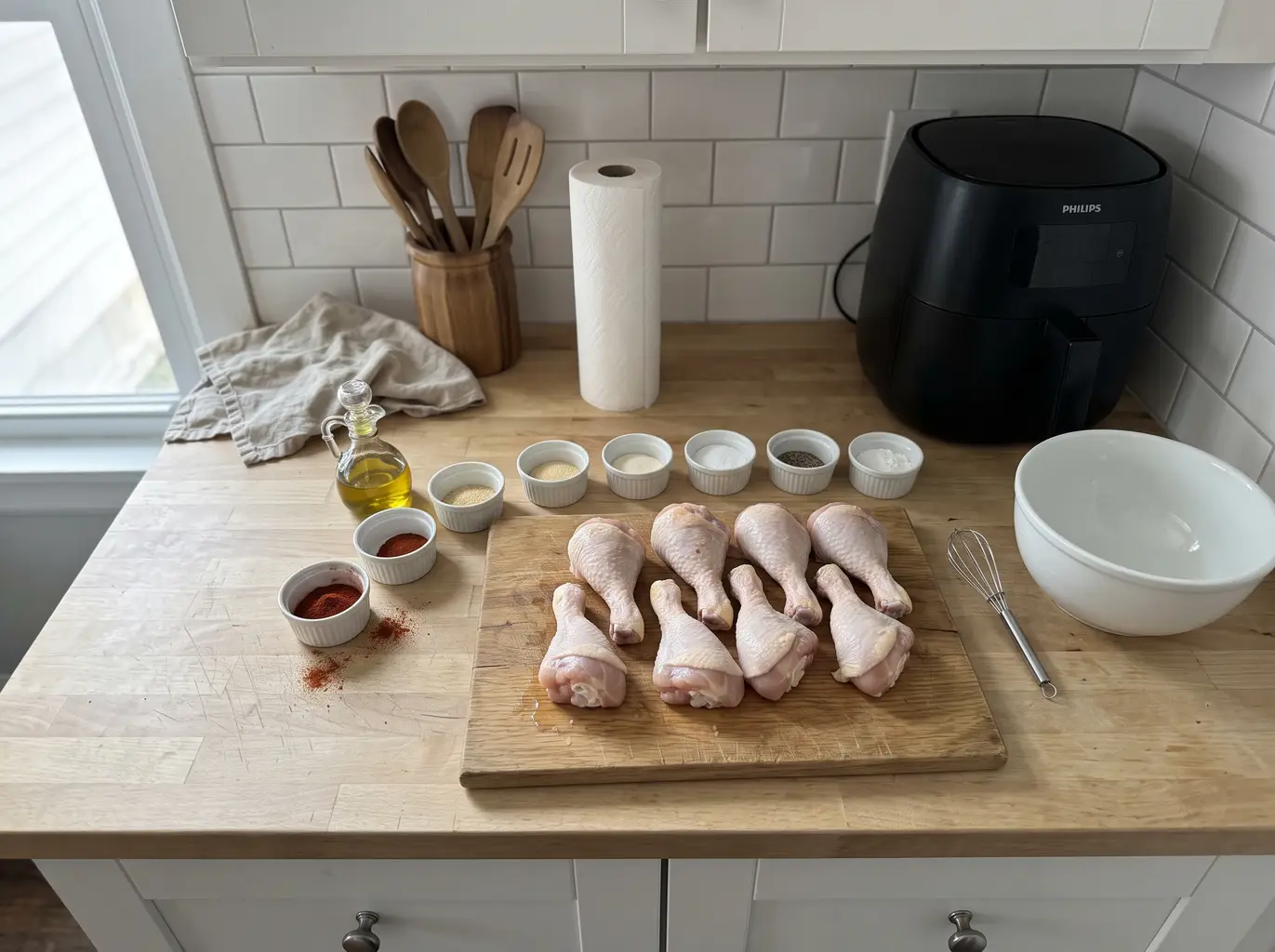
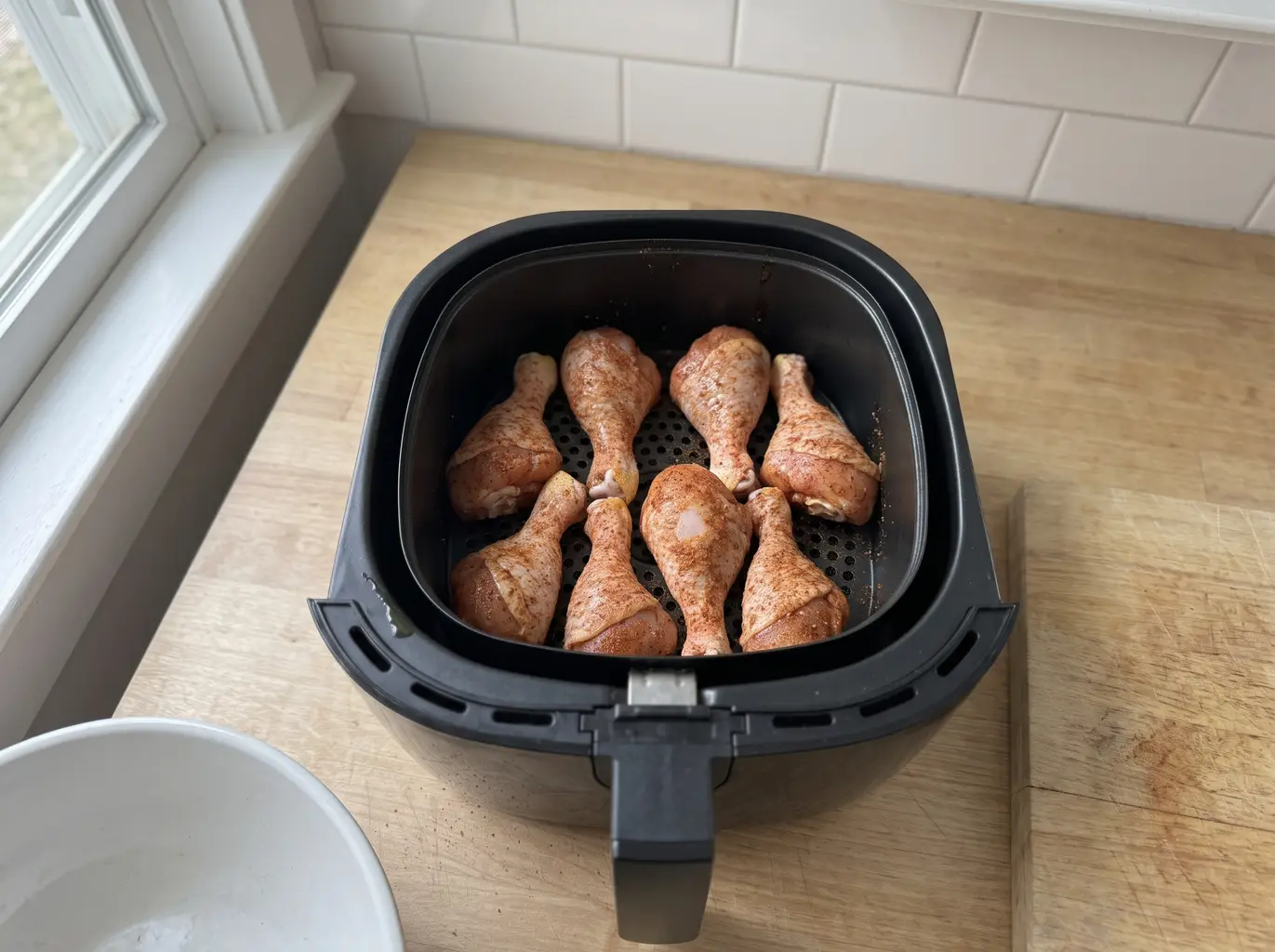
- Dry the drumsticks with paper towels, seriously and completely. Eight drumsticks, about 2.5 pounds, is a full single layer in a 5 to 6 quart basket.
- Mix the rub: 2 teaspoons smoked paprika, 2 teaspoons garlic powder, 1 teaspoon onion powder, 1 1/4 teaspoons fine salt, 1/2 teaspoon black pepper, and 1 teaspoon aluminum-free baking powder.
- Toss the drumsticks with 1 tablespoon of oil, then the rub, in a big bowl, until every drum is coated and faintly gritty with spice.
- Arrange in a single layer with air between them, alternating thick end and thin end so they pack like puzzle pieces without touching. Crowded drumsticks steam each other's skin soft.
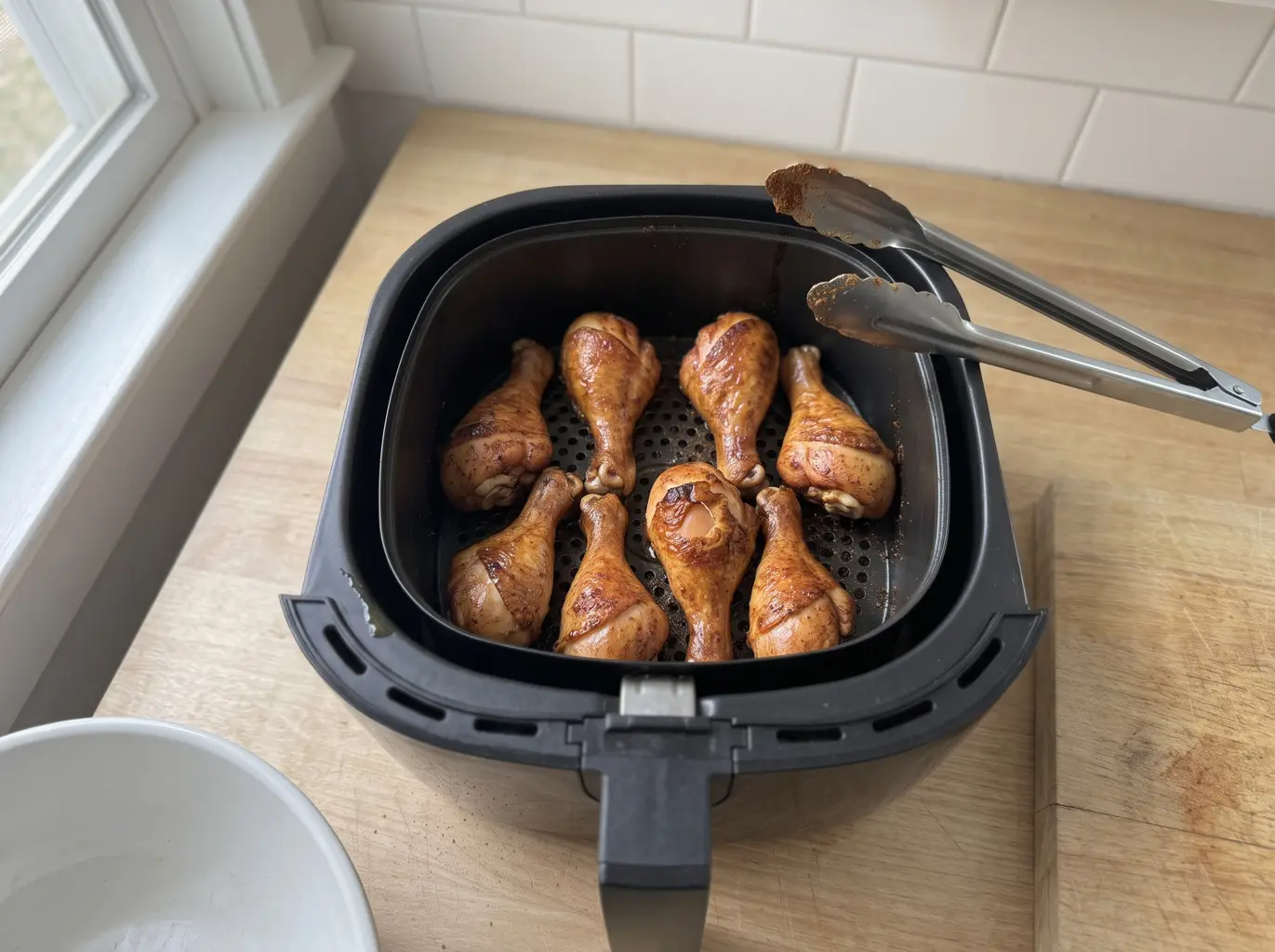
- Cook at 380°F for 10 minutes, flip, then 8 to 12 minutes more. No preheat needed, per the preheat guide. A drumstick has skin on all sides and no precious face, so the flip is legal and useful, and one flip is plenty.
- Probe the biggest drum at minute 18, parallel to the bone: 185°F minimum, 190 to 195°F if you like the meat falling-loose. Short? Three minute rounds.
- Rest 5 minutes on the cutting board. The juices settle, carryover finishes the math, and the skin stays crisp because nothing is trapping steam against it.
- Sauce now if saucing, per the timing law below, and serve with more napkins than seems reasonable.
On temperature: oven drumstick recipes run 425°F, and the air fryer calculator converts that honestly to about 400°F, which works and browns fast. This page runs 380°F on purpose: the longer clock gives the fat layer under the skin time to render out instead of arriving crisp-surfaced but flabby underneath, and it widens the window between skin-done and meat-done so both land together. Every setting on the site lives in the air fryer baking chart.
Managing the fat, and the smoke it wants to become
Drumsticks render real fat, and rendered fat dripping onto a hot drawer floor is where air fryer smoke comes from. The regulars here know this physics from the bacon page, which is this site's full course on fat management, and the drumstick version is two moves: a slice of bread or a couple tablespoons of water in the drawer beneath the basket before cooking, either one catching the drips and keeping them below their smoke point, and a quick drawer wipe between back-to-back batches, because yesterday's fat smokes first. If your machine smokes anyway, the burning guide covers the chronic cases.
Sauce timing: the after law, savory edition
This site has one law for finishes, from cinnamon sugar to glaze: they go on when the machine is mostly done, never at the start. Barbecue sauce is that law wearing dinner clothes. Sauce is sugar, and sugar painted on at minute one is charcoal by minute fifteen.
| You want | Do this |
|---|---|
| Lacquered, sticky, grill-style | Brush sauce on at minute 17, both sides, and give it 3 final minutes. The sauce sets and caramelizes at the edges without burning |
| Wet-sauced, wing-style | Toss the finished, rested drumsticks in warmed sauce in a big bowl. Full coverage, zero burn risk |
| Dry and crackling | No sauce at all; the rub is complete on its own, and the skin stays loudest this way |
About that pink near the bone
The question every drumstick cook eventually whispers to a search engine: it hit temperature, so why is the meat near the bone pink, and why does the bone look bloody? The answer is reassuring and worth knowing cold. The dark stain is myoglobin and marrow pigment seeping from the bone, common in young supermarket chickens whose bones are still porous, and it is not blood and not a doneness signal. Meat verified at 185°F by a properly placed probe is thoroughly cooked no matter what the bone-adjacent tint says. The higher pull temperature of this recipe actually minimizes the effect, one more argument for 185 over 165, but a faint pink blush at the bone of a temperature-verified drumstick is cosmetic, and dinner should proceed with confidence.
Troubleshooting
| What you got | Why | Fix |
|---|---|---|
| Rubbery meat clinging to the bone | Pulled at 165°F, the poster number. | 185 to 195°F. The whole page in one row. |
| Flabby, leathery skin | Wet chicken, crowded basket, or oven-hot-and-fast settings. | Aggressive drying, air between drums, 380°F for the full clock. |
| Smoke mid-cook | Rendered fat on a hot drawer floor. | Bread slice or water in the drawer, and a wipe between batches. |
| Burnt, bitter sauce | Sauced at the start. | Minute 17, or toss after. Sugar cannot survive the full ride. |
| Thermometer says done, teeth disagree | Probe touched bone and reported fiction. | Parallel to the bone, thickest part, biggest drum. |
| Pale on one side | No flip, or a machine hot spot. | Flip at 10, and rotate positions on machines with a known bias. |
| Batch two browner than batch one | Warmed basket head start. | Minus 2 minutes on later rounds, the standing rule scaled for meat. |
| Spice rub scorched dark | Paprika and garlic can darken at 400°F plus. | 380°F is chosen partly for the rub's sake; if your machine runs hot, the burning guide has the diagnosis. |
Recurring cross-recipe mysteries live in the troubleshooting guide.
Rubs, sauces, and the dinner table
- Lemon pepper: swap the paprika for 2 teaspoons of lemon pepper and finish with a squeeze of fresh lemon over the rested drums.
- Cajun: 2 teaspoons Cajun seasoning in place of the paprika and onion powder, salt reduced by half since the blend carries its own.
- Honey garlic lacquer: equal parts honey and soy with a grated clove, brushed at minute 17. The grated-garlic law from the garlic bread holds at dinner too: paste, never mince, nothing raw on the surface early.
- The full Tuesday table, one machine in shifts: baked potatoes first, since they hold heat like grudges, drumsticks second, and garlic bread in the four minutes the drums rest. The corn muffins upgrade it to a Sunday.
- More from the dinner shelf: the same basket handles chicken strips, frozen wings and chicken sausage on weeknights, with asparagus or corn on the cob alongside and dinner rolls to round it out.
- Scaling for a crowd: the recipe scaler resizes the rub math; the basket caps each round at 8 drums, so a party runs in relays with the early rounds resting under loose foil.
Storage and reheating
- Fridge, 4 days, airtight once cooled. Drumsticks are among the best leftovers the machine makes.
- Reheat at 370°F for 6 to 8 minutes, straight from the fridge, and the skin genuinely re-crisps; this is the reheat the microwave has nightmares about.
- Freeze cooked drumsticks 3 months, and reheat from frozen at 360°F for 12 to 15 minutes, back to 165°F this time, since reheating is a safety event, not a collagen event.
- Cold drumstick over the sink at 10 pm is a serving suggestion with a long and honorable history, and this site does not judge.
Frequently asked questions
QHow long do chicken drumsticks take in an air fryer?
18 to 22 minutes at 380°F for standard drumsticks, flipped once at minute 10, in a single spaced layer of up to 8. The finish line is temperature, not time: 185 to 195°F at the thickest part of the biggest drum, probed parallel to the bone. Small drumsticks can land at 17 minutes and jumbo ones need 25; the probe, not the clock, makes the call, followed by a 5 minute rest.
QWhat temperature should chicken drumsticks be cooked to?
165°F makes them safe; 185 to 195°F makes them good, and the difference is the whole eating experience. Drumsticks are working dark meat, threaded with collagen that stays rubbery at 165°F and melts into silky gelatin through the 180s, which is when the meat loosens from the bone. Dark meat carries enough fat and gelatin to stay juicy at temperatures that would ruin a chicken breast, so inside that window, later is better.
QHow do you get crispy skin on air fryer drumsticks?
Dry the skin like you mean it, because skin cannot crisp until its surface water is gone: paper towels aggressively, or an hour uncovered on a rack in the fridge if there is time. Then a teaspoon of aluminum-free baking powder in the spice rub, which raises the skin's pH for faster browning and roughens it for crunch, a thin coat of oil, space between drumsticks so they roast instead of steam, and the full 380°F clock so the fat under the skin renders out.
QDo you flip drumsticks in the air fryer?
Once, at minute 10. A drumstick wears skin on every side and has no precious face to protect, so the flip is legal under this site's flip rule and worth doing: the side against the basket sits in rendered fat and browns differently than the side in the airflow, and one exchange evens the two. More flipping than that just costs heat and knuckles. Rotate positions too if your machine browns one corner faster.
QWhy is my chicken pink near the bone?
Almost always myoglobin and marrow pigment seeping from the porous bones of young supermarket chickens, not undercooking and not blood. If a properly placed thermometer, parallel to the bone in the thickest meat, read 185°F, the drumstick is thoroughly cooked regardless of the tint near the bone. Cooking to this page's higher target actually reduces the effect compared to pulling at 165°F, but a faint blush on temperature-verified meat is cosmetic.
QWhen do you put BBQ sauce on air fryer chicken?
In the last 3 minutes, or after cooking entirely. Barbecue sauce is mostly sugar, and sugar applied at the start burns bitter long before the meat is done. For the lacquered grill-style finish, brush both sides at minute 17 and let the final minutes set and caramelize it. For wing-style full coverage, toss the rested, finished drumsticks in warmed sauce in a bowl. Either way the rule is the site's standing one: finishes go on when the machine is nearly done.
QCan you cook frozen drumsticks in the air fryer?
Yes. Run frozen drumsticks at 380°F for about 5 minutes until the surfaces thaw and separate, then pull the basket, pat them dry, oil and season, and continue for 20 to 25 more minutes, flipping halfway, to the same 185°F finish. Total time lands around 28 minutes. The mid-cook seasoning stop matters because rub thrown on frozen chicken slides off with the melt water, taking your flavor to the drawer floor.
QHow many drumsticks fit in an air fryer?
Eight standard drumsticks in a 5 to 6 quart basket, arranged in a single layer with air between them, thick ends alternating with thin ends so they nest without touching. Piling a second layer on costs more than it saves: stacked drumsticks steam each other's skin soft and cook unevenly enough that some hit 195°F while others idle at 160°F. A big family dinner runs in two relays, with round one resting under loose foil.
QHow do you reheat drumsticks so the skin stays crispy?
370°F for 6 to 8 minutes straight from the fridge, which re-renders the surface and returns the skin to genuinely crisp, a resurrection the microwave cannot perform. From frozen, 360°F for 12 to 15 minutes. Reheating targets 165°F at the center, the safety number, since the collagen work was finished on day one and does not need doing twice. Cooked drumsticks keep 4 days in the fridge and 3 months frozen.
Never overbake again
Get our one-page times & temps cheat sheet, plus a new tested recipe each week.
No spam · unsubscribe anytime