

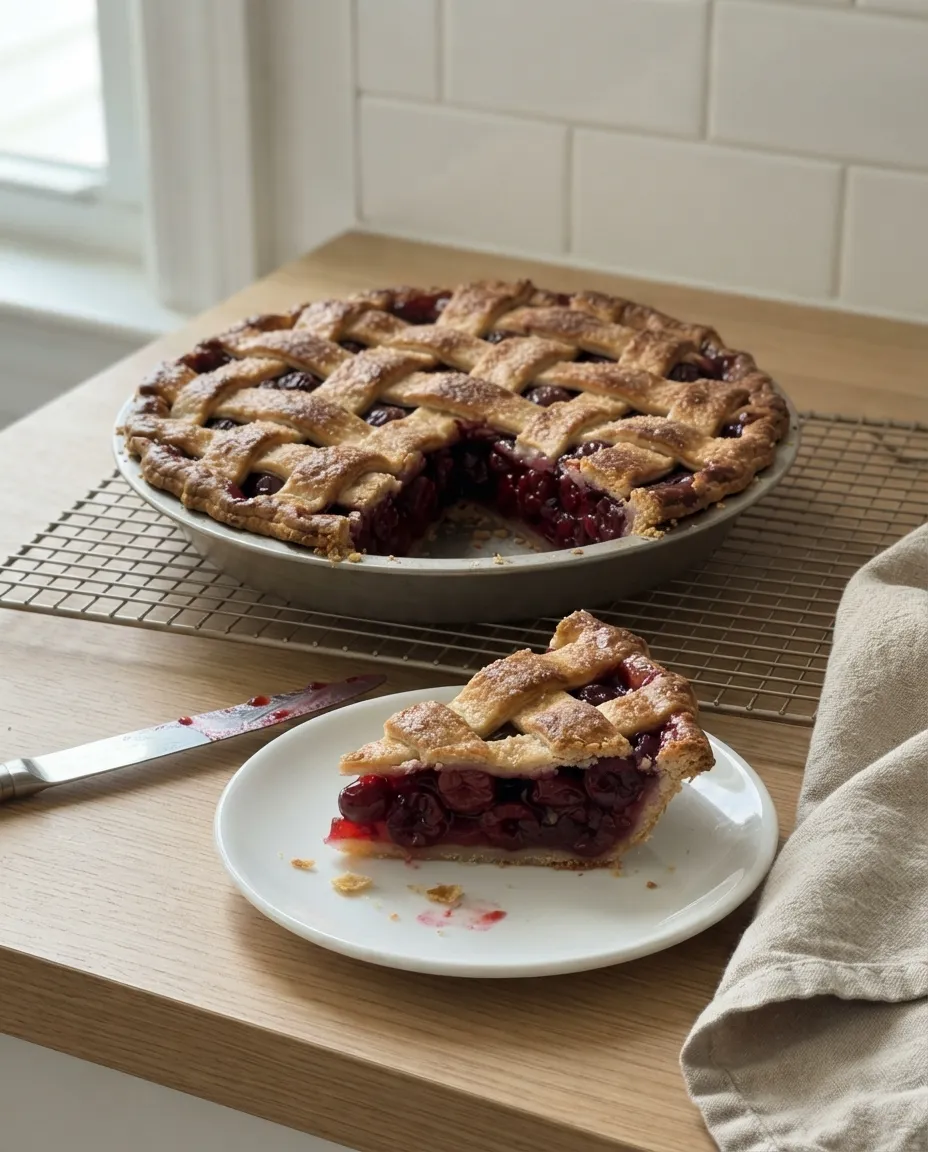
Cherry pie people divide into two camps that pretend not to respect each other. The fresh camp pits three cups of cherries by hand and considers it a small act of devotion. The canned camp opens a can of filling on a Tuesday because pie on a Tuesday is the entire point. I have baked in both camps for years, and here is my testimony: the air fryer does not care. Both fillings walk through the same door in this recipe, because of one decision that fixes nearly everything about fruit pie in this machine.
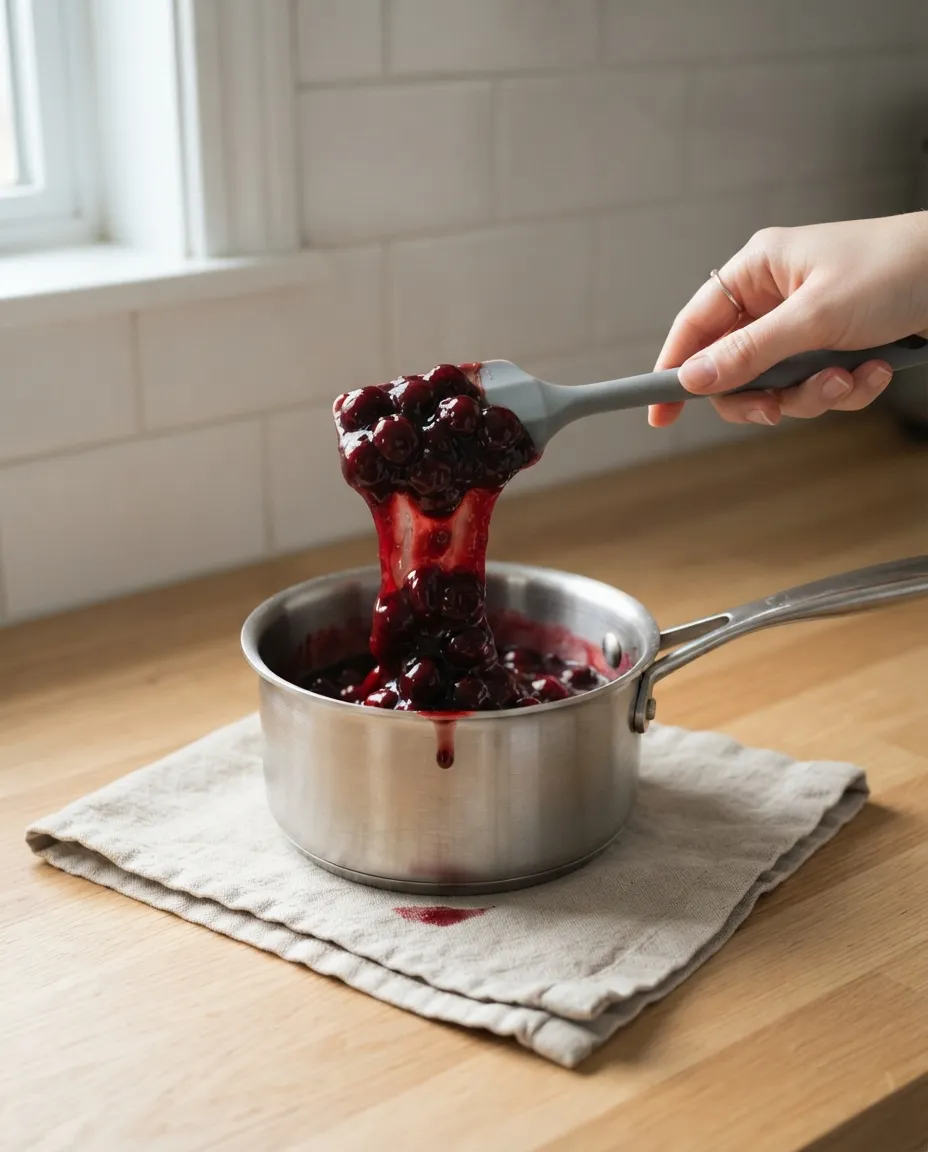
The decision: the filling gets fully cooked before it ever touches the crust. Canned filling arrives that way from the factory. Fresh cherries get five minutes in a saucepan with sugar and cornstarch until they go glossy and thick. Either way, by the time the pie is assembled, there is nothing left inside it that actually needs to cook, and the bake stops being a negotiation between raw fruit and raw dough. It becomes a pastry-only project, and pastry is the thing an air fryer browns better than almost any oven.
Quick answer: Cook the filling first, on the stove for fresh cherries or straight from a doctored can, and pour it warm into an unbaked shell in a 7 inch metal pan. Weave the lattice on parchment and freeze it 15 minutes, then slide it on stiff, seal the strip ends to the rim, egg wash, and bake at 340°F for 22 to 28 minutes with a foil ring on the rim. Done when the lattice is chestnut gold, the gaps bubble thick and slow, and the filling reads 200°F. Cool 2 hours if you want slices instead of spoonfuls.
The pastry-only bake
Watch what an uncooked fruit pie asks of an oven: heat the fruit until its juices boil, hold that boil long enough for the thickener to activate, and somehow brown the pastry above and below without burning either, all at the same time. Ovens barely manage it; that is why fruit pies bake for an hour. An air fryer, with its fierce top heat and gentle bottom, manages it worse.
Pre-cooking the filling deletes the entire first half of the job:
The starch is already set
Cornstarch activates in the saucepan, where you can see it happen, instead of somewhere under a lattice where you are guessing. No raw-starch gamble, no watery slices from a thickener that never reached a boil.
The bake gets short
The machine only needs to bake pastry and reheat filling, which takes 22 to 28 minutes instead of an hour. Less time in the heat is itself a defense for the crust rim and the lattice.
Doneness becomes visible
You are no longer wondering whether invisible fruit cooked through. You are watching pastry color and confirming one number, and both of those are easy calls.
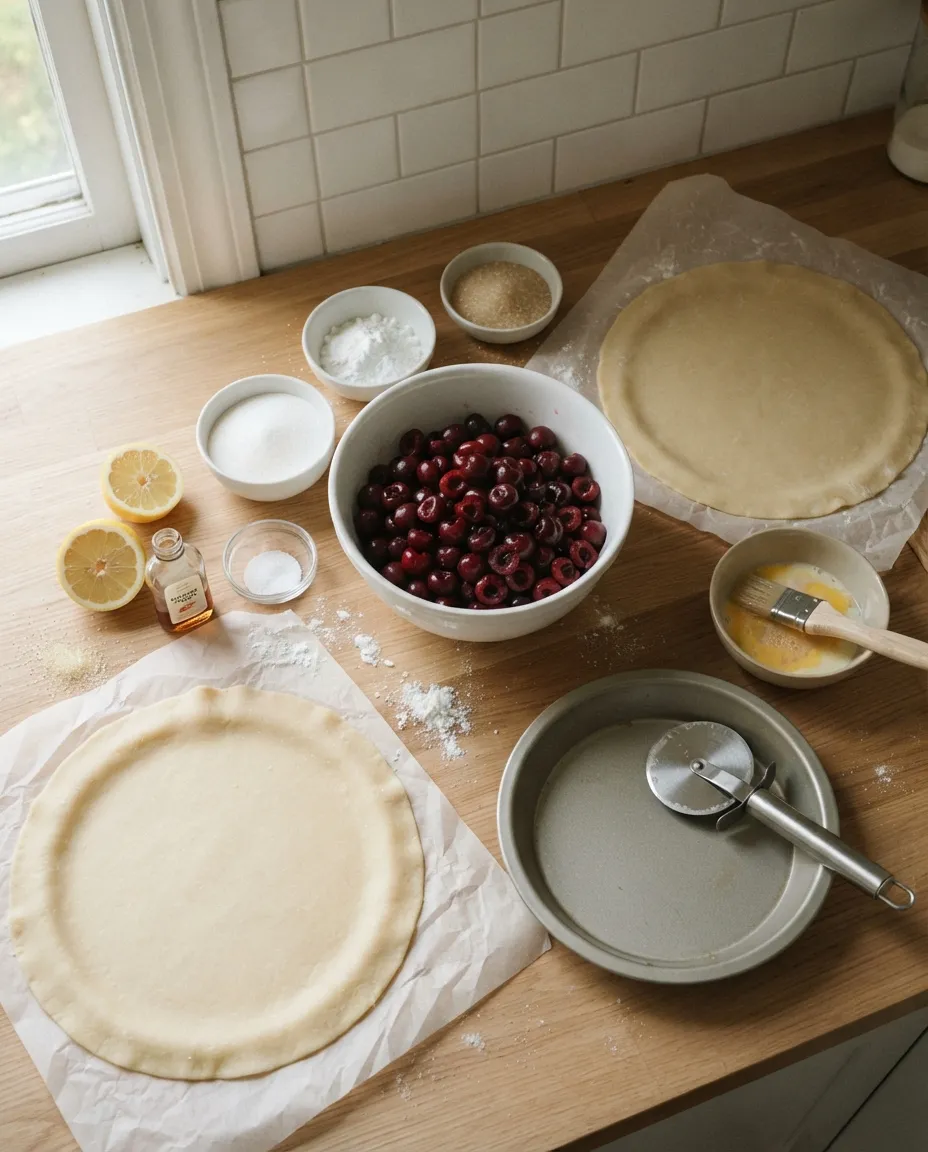
Fresh, frozen or canned: one door
Because everything arrives at the shell cooked, the three filling sources become the same recipe with different starting points:
| Starting from | Do this | Worth knowing |
|---|---|---|
| Fresh sour cherries | 3 cups pitted, 2/3 cup sugar, 3 tablespoons cornstarch, pinch of salt; simmer until glossy and thick, about 5 minutes, then 1 tablespoon lemon juice off heat | The classic pie cherry, worth grabbing in their two-week July window and worth pitting every one |
| Fresh or frozen sweet cherries | Same method, sugar down to 1/3 cup, lemon up to 2 tablespoons | Frozen work straight from the bag with 2 extra minutes of simmering; the lemon is doing the sour cherry impression |
| One 21 oz can of filling | Stir in 1 teaspoon lemon juice, 1/4 teaspoon almond extract and a pinch of salt | The thirty-second doctor that makes canned taste homemade; nobody at the table has ever caught it |
The almond extract trick works because cherries and almonds are botanical cousins; the extract amplifies a flavor the fruit already whispers. It improves the fresh versions too, same 1/4 teaspoon, stirred in off the heat.
Whichever door you came through, the filling should be warm, not scalding, when it goes into the shell: cooked on the stove, then parked 10 minutes while you deal with the lattice.
The lattice and the fan
Here is the air fryer problem nobody who says "add a lattice if you like" has apparently tested: an air fryer is a wind machine, and a lattice is a set of loose pastry flaps. Weave one directly on the pie the traditional way, soft strips over slippery filling, and two things go wrong. The weaving itself turns into wrestling, because room-temperature dough stretches and tears the moment it touches warm cherries. Then the fan finds every strip end you did not anchor and lifts it like a shingle in a storm, and it bakes standing up, scorched, somewhere across the pie.
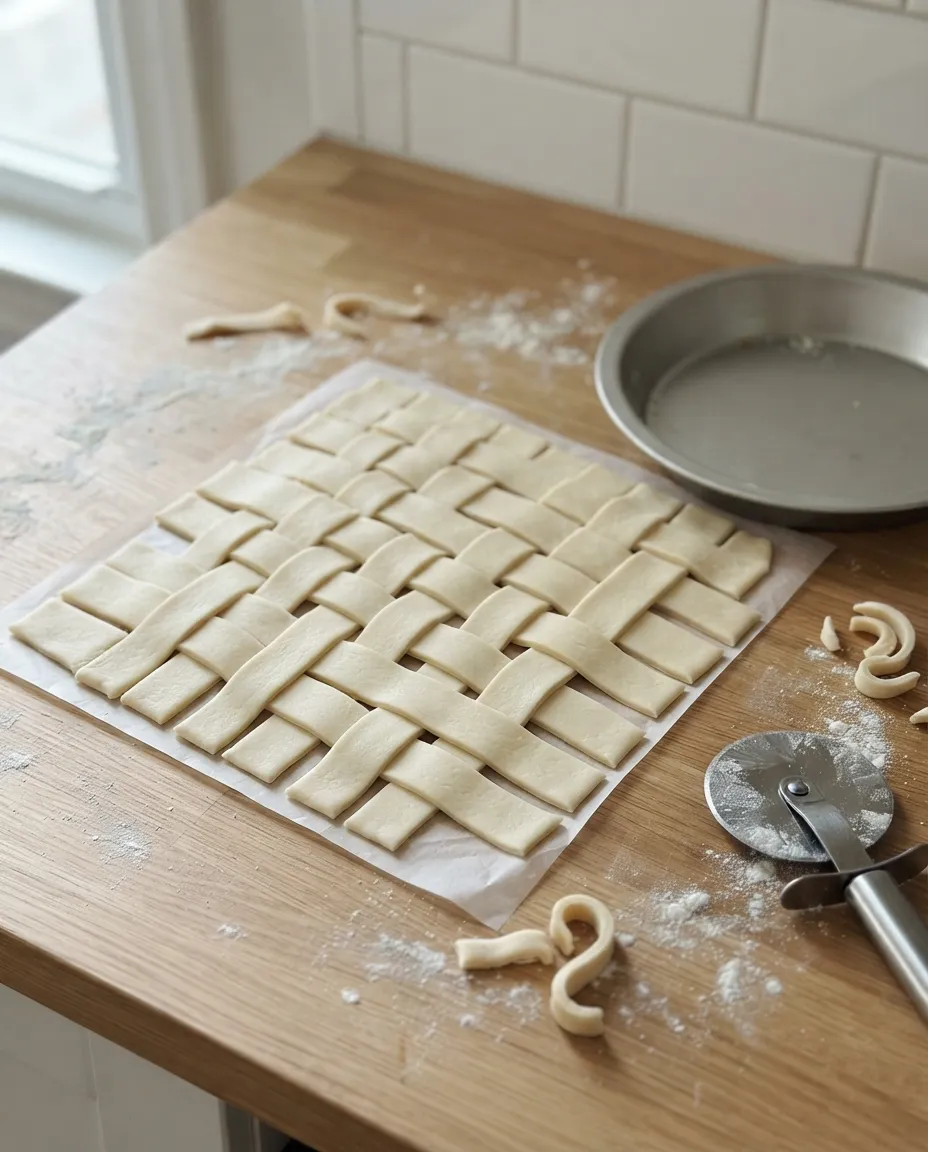
Both problems have one fix, and it is the best trick on this page: build the lattice somewhere else and freeze it.
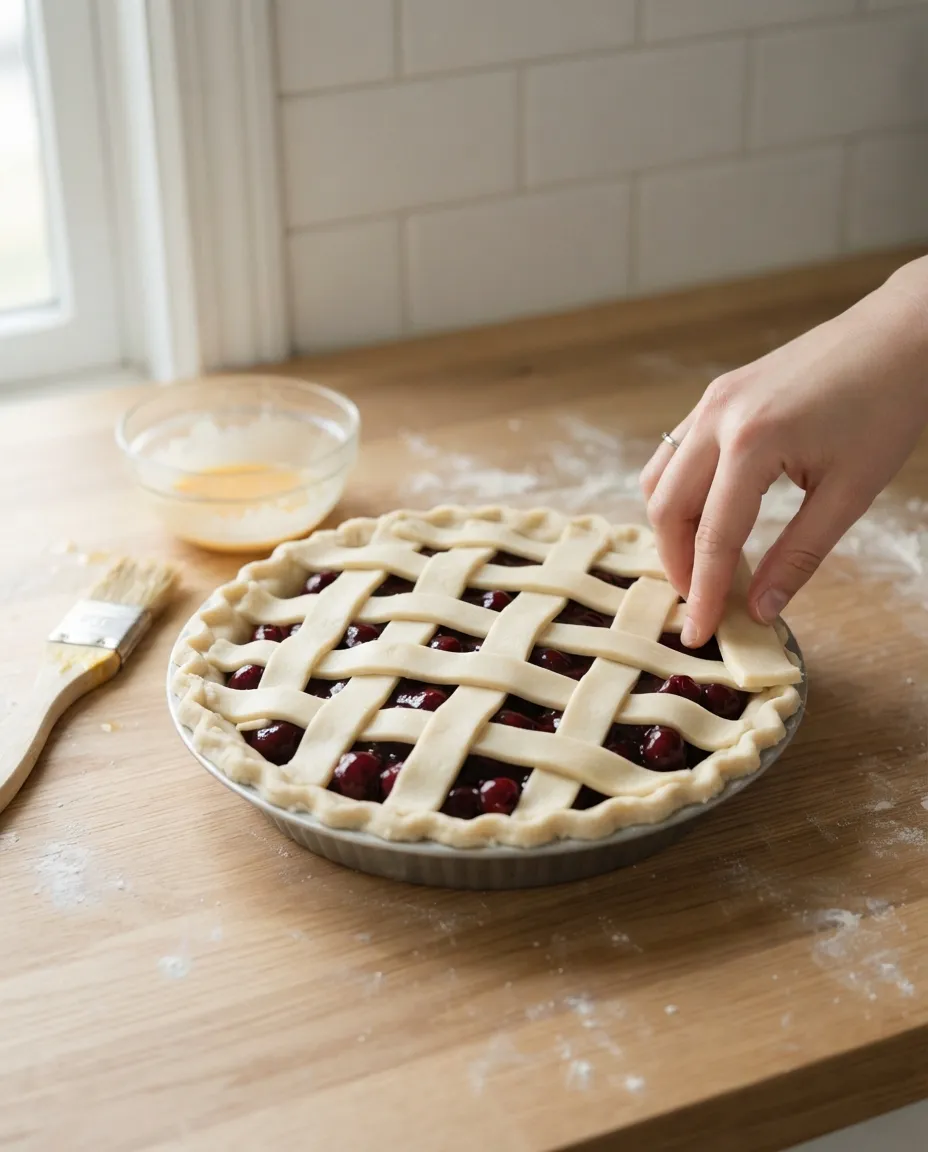
- Weave on parchment: roll the second crust, cut 1 inch strips with a pizza wheel, and weave them on a parchment square into a lattice slightly wider than the pan. On a flat, dry surface, weaving takes three minutes and the strips stay put.
- Freeze 15 minutes, parchment and all, until the weave is stiff as cardboard. Now it is not twelve loose strips; it is one solid lid.
- Slide it on in one motion, flip-and-peel, over the filled pie. Frozen pastry does not stretch, does not tear and does not care how slippery the cherries are.
- Anchor every strip end: press the ends into the bottom crust's rim with a dab of egg wash underneath, trim flush, and crimp the border over them. An anchored lattice gives the fan nothing to grab; this is the step that makes lattice and air fryer compatible at all.
- Then the finish: egg wash over the whole weave, coarse sugar if you are feeling like a bakery. The wash is not optional decoration here; the gaps expose filling, and the washed pastry browns on pace with the bubbling instead of behind it.
The bottom crust, defended
Regular readers will expect this page to order a blind bake, since the par-baked shell carries the pumpkin pie and the pecan pie. But the blind baking guide's own table rules double-crust fruit pies out: crust and filling bake together, and a pre-baked base under a lattice pie just overbakes into a cracker floor. The ruling stands here. This pie defends its bottom three other ways:
- A metal pan, always. Metal conducts the basket's modest floor heat into the pastry; glass and ceramic hoard it. A 7 inch metal pie pan is the format, and the pan size calculator confirms the fit before dough gets committed.
- Warm filling on cold dough. The shell goes into the freezer for 15 minutes while the filling cools from scalding to warm, then warm filling meets cold pastry. The filling starts baking the floor from above while the pan heats it from below, and because the filling is thickened, it sits on the dough instead of soaking in. This, not a blind bake, is what a cooked filling buys the bottom crust.
- A hot start. Three minutes of preheat at 340°F, one of the few bakes on this site that gets one, because raw pastry under a wet load wants floor heat from minute one; the preheat guide keeps the roster of who warms up and who does not.
Why 340 and not 375
Oven cherry pie bakes at 400°F, and the air fryer calculator converts that honestly to about 375°F. With an uncooked filling, you would need it: raw fruit demands a long, hot bake to reach its boil. But this pie's filling arrives cooked, so 375°F would just torch the lattice while accomplishing nothing the stove has not already done. 340°F is where the pastry browns handsomely in the same window the filling takes to reheat and bubble, and it is no coincidence that the frozen pie page, the other pie that arrives with its filling pre-cooked, landed on the same number from the opposite direction. The calculator translates heat truthfully; it cannot know the filling already did its cooking elsewhere. That judgment stays with the baker, and the site's full ledger of numbers lives in the air fryer baking chart.
How to make it
- Cook the filling: cherries, sugar and cornstarch per the table above, simmered glossy, or the doctored can. Let it cool toward warm, 10 minutes.
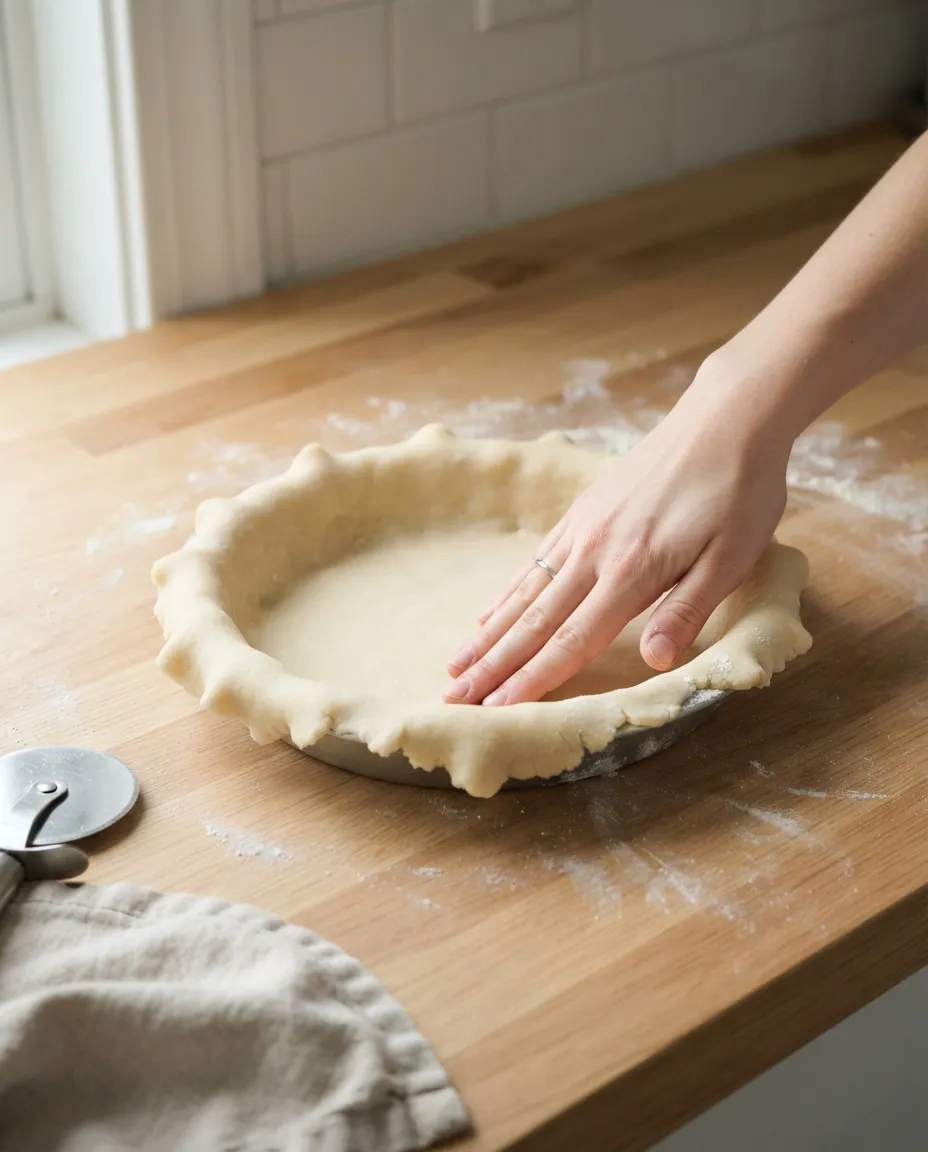
- Fit the bottom crust into the 7 inch metal pan with a little overhang, and freeze the lined pan 15 minutes. Cold pastry holds its shape against a warm filling.
- Weave the lattice on parchment: 1 inch strips, over-under, slightly wider than the pan. Freeze it 15 minutes alongside.
- Preheat 3 minutes at 340°F while everything chills.
- Pour the warm filling into the cold shell, level it, and stop a quarter inch below the rim; extra filling is for the hand pies, not the basket floor.
- Slide the frozen lattice on, press every strip end into the rim with a dab of egg wash, trim flush, and crimp the overhang up and over the ends.
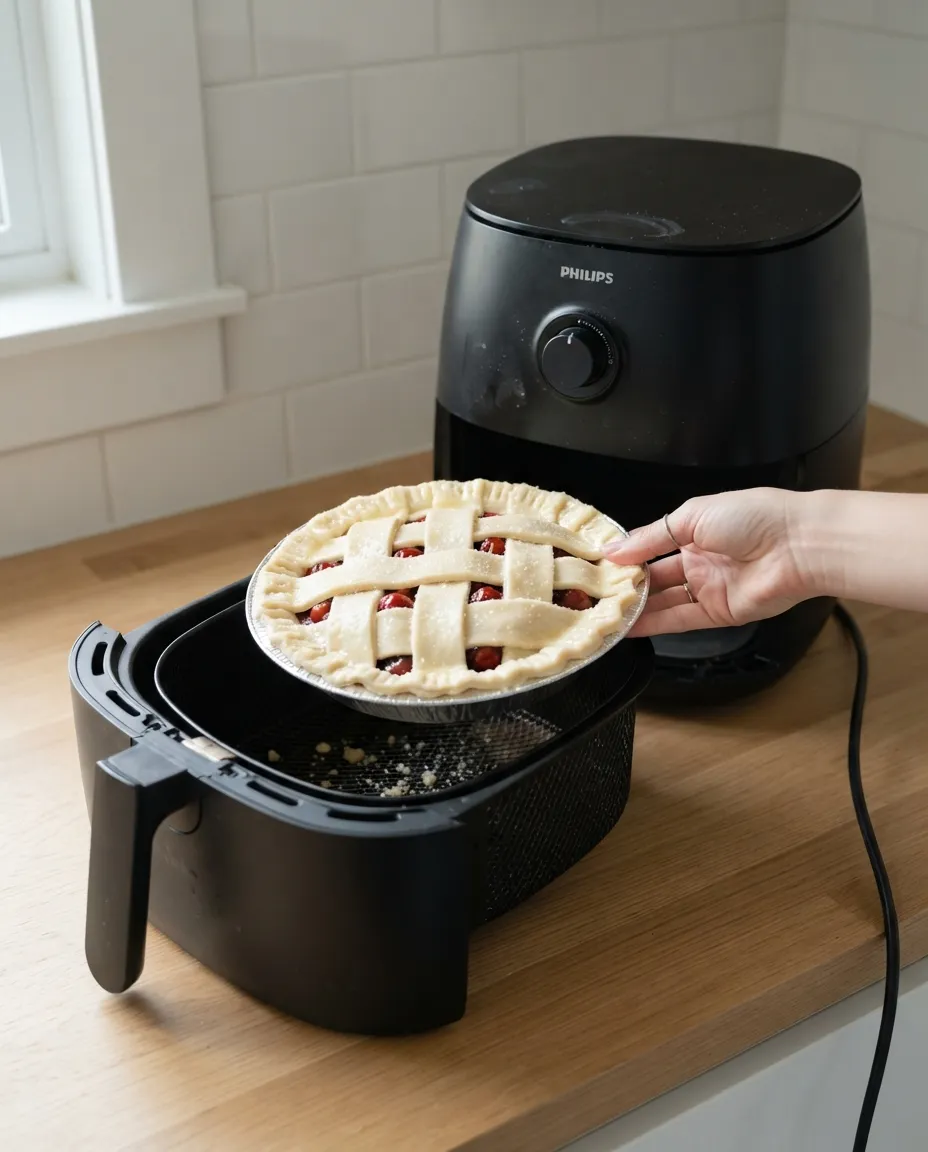
- Egg wash the weave, sugar if you like, foil ring on the rim, and bake at 340°F for 22 to 28 minutes.
- If the lattice hits deep gold before minute 18, lay a flat foil shield loosely on top, the same parasol the pecan pie uses, and let the bubbling catch up. The physics of loose foil in a basket live in the foil and parchment guide.
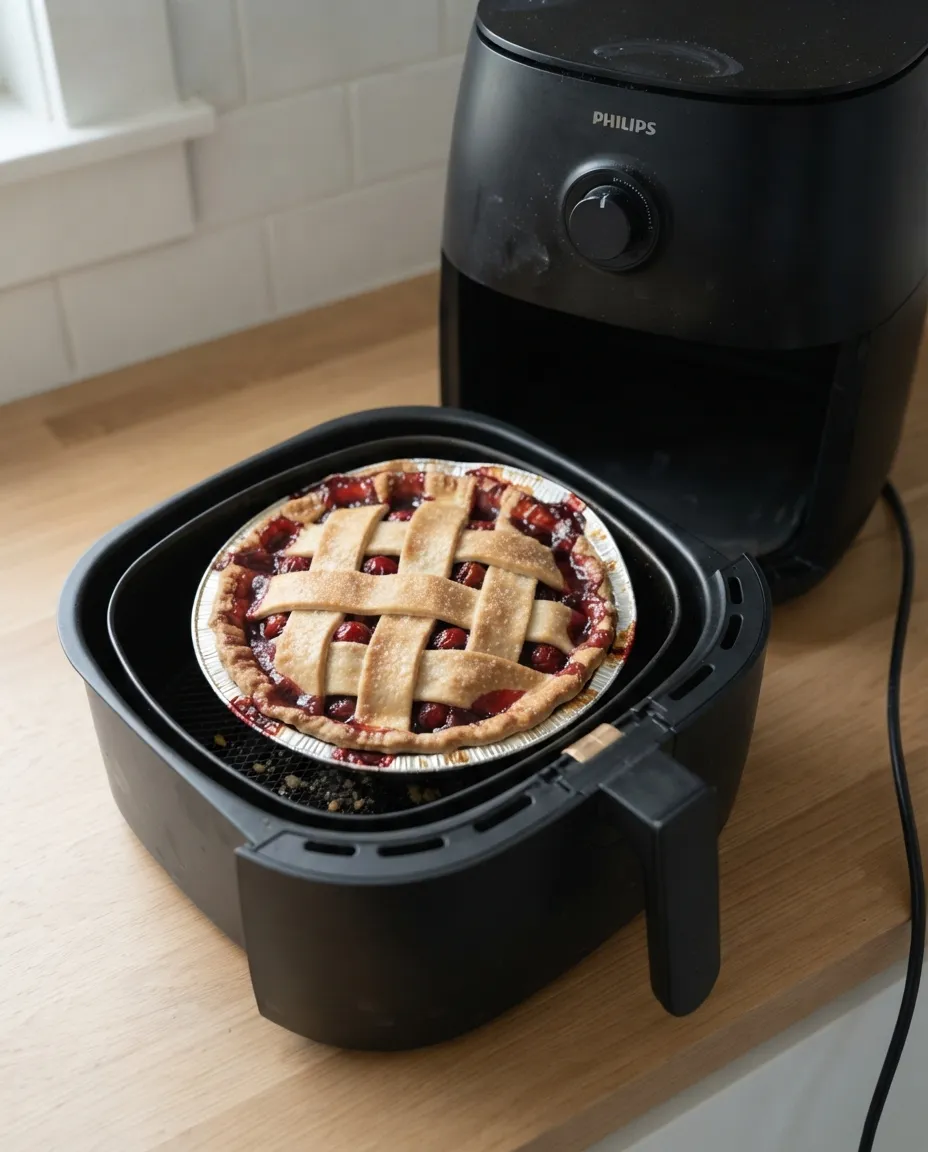
- Pull when the gaps bubble thick and slow and the filling reads 200°F through a gap. Cool on a rack: 45 minutes for warm, structurally casual pie with ice cream, 2 hours for slices with corners.
Bubbles first, then the number
Fruit pie doneness is the most misdiagnosed call in home baking, because everyone reads the crust, and the crust always finishes first. Golden pastry over a filling that never bubbled means the thickener never re-reached its set point, and the first slice pours. So read the pie in this order:
- The bubbles, through the gaps. Fast, watery bubbling means keep going. You want slow, thick, lava-lamp bubbles that hold their shape for a beat, the visible signature of fully activated cornstarch. The lattice's gaps are not just pretty; they are the only doneness window a double-crust pie offers, and the covered version of this pie has to be baked on faith plus a thermometer.
- Then 200°F, probed through a gap to the center with an instant-read thermometer. It is the same fruit-filling number the frozen pie page runs, and it confirms the middle rebubbled, not just the edges you can see.
- Then patience. A cornstarch gel is loose at 200°F and sets as it cools, the same physics that makes a warm slice of any fruit pie a puddle. Two hours on a rack gives you slices; cutting at 45 minutes is allowed but it is a decision to serve spoonfuls, best made openly and with vanilla ice cream.
Troubleshooting
| What you got | Why | Fix |
|---|---|---|
| Lattice strips lifted or flew | Soft strips with loose ends met a fan. | Freeze the woven lattice stiff and anchor every end under the crimp. The fan cannot lift what it cannot get under. |
| Runny slices | Cut warm, or the filling never rebubbled in the middle. | Thick bubbles in the gaps, 200°F at the center, then the 2 hour rack. The set happens on the counter. |
| Pale, doughy bottom | Glass or ceramic pan, or a cold machine at launch. | Metal pan, 3 minute preheat, warm filling. All three defenses, not one. |
| Lattice dark at minute 15, gaps quiet | Top element outpacing the reheat. | The flat foil shield, laid on loose, and let the filling finish underneath. |
| Filling boiled over the rim | Overfilled; the bubble phase needs headroom. | Quarter inch short of the rim, always. Overflow caramelizes onto the pan and the basket, and neither forgives easily. |
| Rim burnt, weave perfect | The crimped border is the pie's thinnest, most exposed pastry. | Foil ring from minute zero, and the burning guide for the machine-specific quirks. |
| Gummy stripe under the filling | Filling went in scalding and half-poached the floor. | Warm filling into a freezer-cold shell. The 10 minute cooldown is load-bearing. |
| One quadrant browner | A machine hot spot. | Half turn when the shield goes on, or at minute 15 if it never does. |
Failures that recur across recipes belong to the troubleshooting guide.
Variations
- Cherry almond: double the almond extract and scatter sliced almonds over the egg wash at minute 15, when they can toast without burning.
- Cherry berry: swap a cup of cherries for blueberries or raspberries, same cook, same cornstarch. Raspberries dissolve into sauce; count them as liquid, not fruit.
- Full top crust instead of lattice: entirely legal, vent it with four generous slits, and lean harder on the thermometer since you lost the bubble window.
- No pan at all: for the same cherries with less crust engineering, free-form them into a galette, which sits right on the basket floor and sidesteps the weak-bottom problem entirely.
- Streusel top: the crumb topping bakes faster than a lattice; shield at minute 12 and enjoy a pie with no weaving in its life story.
- Leftover filling: the best fate for the extra half cup is a spoonful in the hand pies, or dolloped onto a cheese danish where cherry filling has always secretly belonged.
- Two pies for the holiday: the recipe scaler doubles the filling honestly; the lattices freeze in a stack; the pies still bake one at a time.
Pie shelf role call, updated: cherry is the showpiece fruit bake, judged through its own lattice gaps. The apple pie is the deep, covered fruit bake, the pumpkin and pecan pies are the custards with their 175 and 200 pulls, and the frozen pie is the year the schedule won. One machine covers the entire holiday table, and the oven never has to know.
Storage and reheating
- Counter, loosely covered, 2 days. Fruit pies hold at room temperature better than custard pies; sugar and acid are doing quiet preservation work.
- Fridge to day 4, though the crust dulls; see the next line.
- The resurrection: 4 minutes at 330°F brings a slice back shatter-crisp, better than day one microwaved could ever be. Straight from the fridge is fine.
- Freeze baked and cooled, 3 months, whole or in wrapped slices. Reheat slices from frozen, 6 to 8 minutes at 330°F. An unbaked assembled pie also freezes beautifully, lattice and all; bake from frozen at 340°F, adding about 10 minutes and trusting the thermometer over the clock.
Frequently asked questions
QHow long does a cherry pie take in an air fryer?
22 to 28 minutes at 340°F for a 7 inch pie, after a 3 minute preheat, because the filling goes in already cooked and the machine only has to bake pastry and reheat cherries. Add about 15 minutes of stovetop and chilling time up front, and 45 minutes to 2 hours of cooling depending on whether you want spoonfuls or slices. Hand pie versions run far shorter, but they are a different page.
QCan I use canned cherry pie filling in an air fryer pie?
Yes, and this recipe treats it as a fully legitimate door, not a compromise. Doctor the can first: 1 teaspoon lemon juice, 1/4 teaspoon almond extract and a pinch of salt per 21 oz can. The lemon wakes up the fruit, the almond deepens the cherry flavor, and the salt makes it taste cooked rather than canned. Thirty seconds of stirring, and nobody has ever caught it at my table.
QHow do I make fresh cherry filling for pie?
Simmer 3 cups pitted cherries with sugar, 3 tablespoons cornstarch and a pinch of salt until glossy and thick, about 5 minutes, then stir in lemon juice off the heat. Use 2/3 cup sugar with 1 tablespoon lemon for sour cherries, or 1/3 cup sugar with 2 tablespoons lemon for sweet cherries, where the lemon plays the sourness the fruit lacks. Frozen cherries work straight from the bag with 2 extra minutes of simmering.
QWhy did my lattice strips blow around in the air fryer?
The fan. An air fryer moves air hard enough to lift soft pastry, and a lattice woven directly on the pie always has slack strips and loose ends for it to catch. Weave the lattice on parchment instead, freeze it 15 minutes into one stiff piece, slide it onto the pie, and press every strip end into the rim under the crimp with a dab of egg wash. An anchored, frozen lattice gives the fan no edge to lift.
QDo I need to blind bake the bottom crust for cherry pie?
No, and this is the pie where blind baking backfires: a pre-baked floor under a short lattice bake overcooks into a cracker. The bottom is defended differently here: a metal pan that conducts the basket's floor heat, a freezer-chilled shell receiving warm, fully thickened filling that sits on the dough instead of soaking in, and a 3 minute preheat so the pastry meets real heat at minute one.
QWhat temperature do you cook cherry pie in an air fryer?
340°F. Oven cherry pie bakes at 400°F, which converts to about 375°F in an air fryer, but that conversion assumes raw fruit that needs a long boil. This filling is cooked on the stove first, so the bake only has to brown pastry and reheat cherries, and 340°F does both in the same 22 to 28 minute window without torching the lattice.
QHow do I know when cherry pie is done?
Read it in order: the lattice turns chestnut gold, the filling in the gaps bubbles thick and slow rather than fast and watery, and a thermometer through a gap reads 200°F at the center. The bubbles matter most; golden crust over a filling that never bubbled means the thickener never reset, and the slices will pour. Then let it cool 2 hours if you want clean wedges.
QWhy is my cherry pie runny when I cut it?
Either it was cut warm, or the center never rebubbled. A cornstarch gel is loose at 200°F and firms as it cools, so even a perfectly baked pie pours at minute 30; slices need about 2 hours on a rack. If it poured after a full cooldown, the middle never reached its bubble, which is exactly what the thermometer check through the lattice gap exists to catch next time.
QCan I bake a frozen cherry pie in the air fryer?
Yes, two ways. A store-bought frozen pie follows the frozen pie page's protocol: 340°F, straight from the freezer, foil ring, pulled at 200°F in the center. A pie you assembled and froze yourself, lattice and all, bakes the same way with about 10 minutes added to this recipe's time. In both cases trust the thermometer over the box or the clock; frozen centers lag far behind golden tops.
Never overbake again
Get our one-page times & temps cheat sheet, plus a new tested recipe each week.
No spam · unsubscribe anytime