

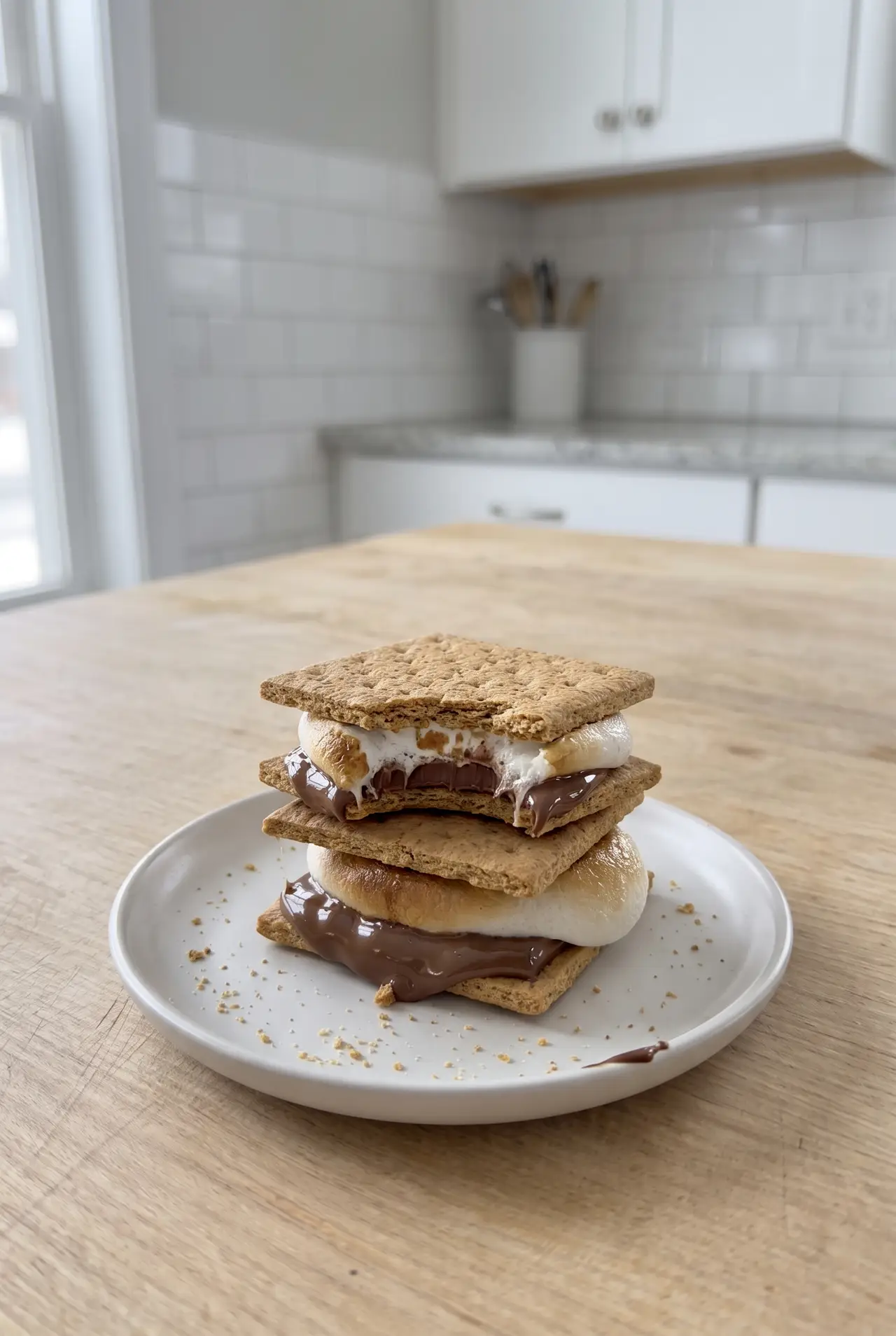
Say something honest about campfire s'mores and half the internet reaches for a stick to defend them with: the marshmallow chars on one face while its middle stays cool and springy, the chocolate is a cold slab that cracks out the sides of the first bite, and the graham crackers are furniture. We eat them anyway because the fire is doing the real work, atmospherically speaking. The dessert itself has always been a rough draft.
The air fryer finishes the draft. Slower, all-around heat melts the marshmallow to its center instead of blistering one side, and it softens the chocolate at the same time, which no campfire has ever once managed. The machine's only objection is mechanical: a marshmallow weighs nothing, and a fan is a fan. Solve that with one scissor cut, and this becomes the best five-minute dessert this site knows.
Quick answer: Graham square, half a chocolate bar, then a marshmallow cut in half with both sticky faces pressed down onto the chocolate. Air fry at 340°F for 4 to 5 minutes, no preheat, until the domes are deep golden. Cap with the second cracker, press gently, rest 1 minute. Six per basket, and the chocolate comes out melted because it rode underneath the whole time.
The marshmallow vs the fan
Every air fryer s'mores failure story is the same story: the marshmallow lifted off, rolled to a corner, and cooked onto the element, or the top cracker went in for the ride and became a projectile. Nothing is wrong with the machine. A regular marshmallow weighs about 7 grams and sits on a dry, cornstarch-dusted base, which makes it a hovercraft in front of a fan that moves air hard enough to crisp a potato.
So the assembly rules are really anti-flight rules: nothing loose, nothing light, nothing on top. The top cracker never bakes; it arrives after. The marshmallow gets glued down, next section. And mini marshmallows, the lightest objects in any kitchen, are banned from the open basket entirely; they get their own walled format at the end of this page.
The cut-side anchor
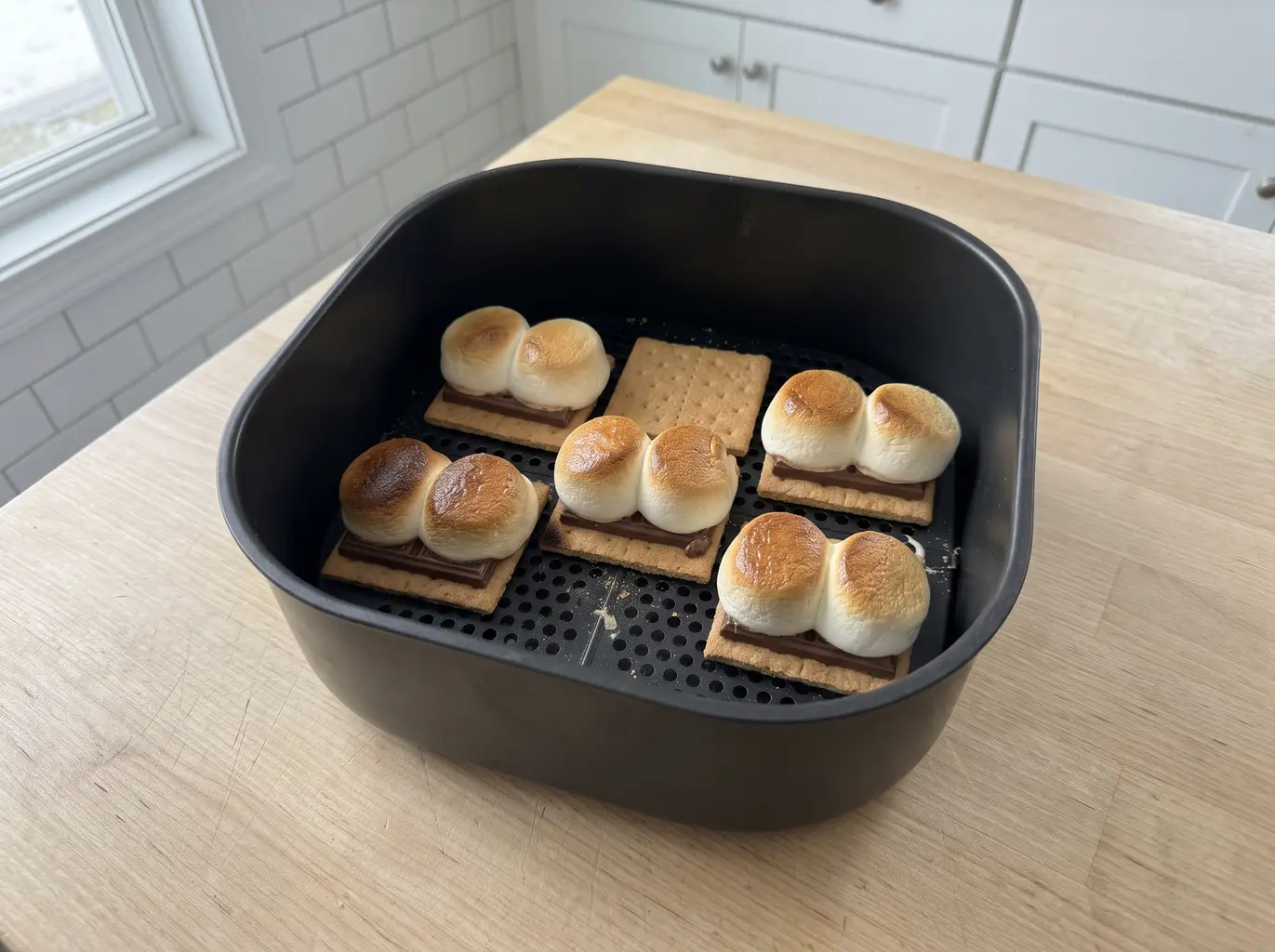
Cut each marshmallow in half crosswise and you expose the interior, which is aggressively sticky in a way the powdery outside is not. Press both halves cut side down onto the chocolate and they weld themselves to the stack within seconds. The fan can now do its worst; the marshmallow is a structural member. Two halves also cover the cracker better than one standing cylinder, melt through faster, and slump into that edge-to-edge layer a good s'more needs.
Machines with a truly violent fan, usually the oven-style ones with the food close to the top element, get the backup: a toothpick down through each half into the stack, pulled at capping time. Between the cut faces and the picks, nothing on this page has taken flight in this kitchen since the first test batch, which is more than the first test batch can say.
Why the chocolate goes underneath
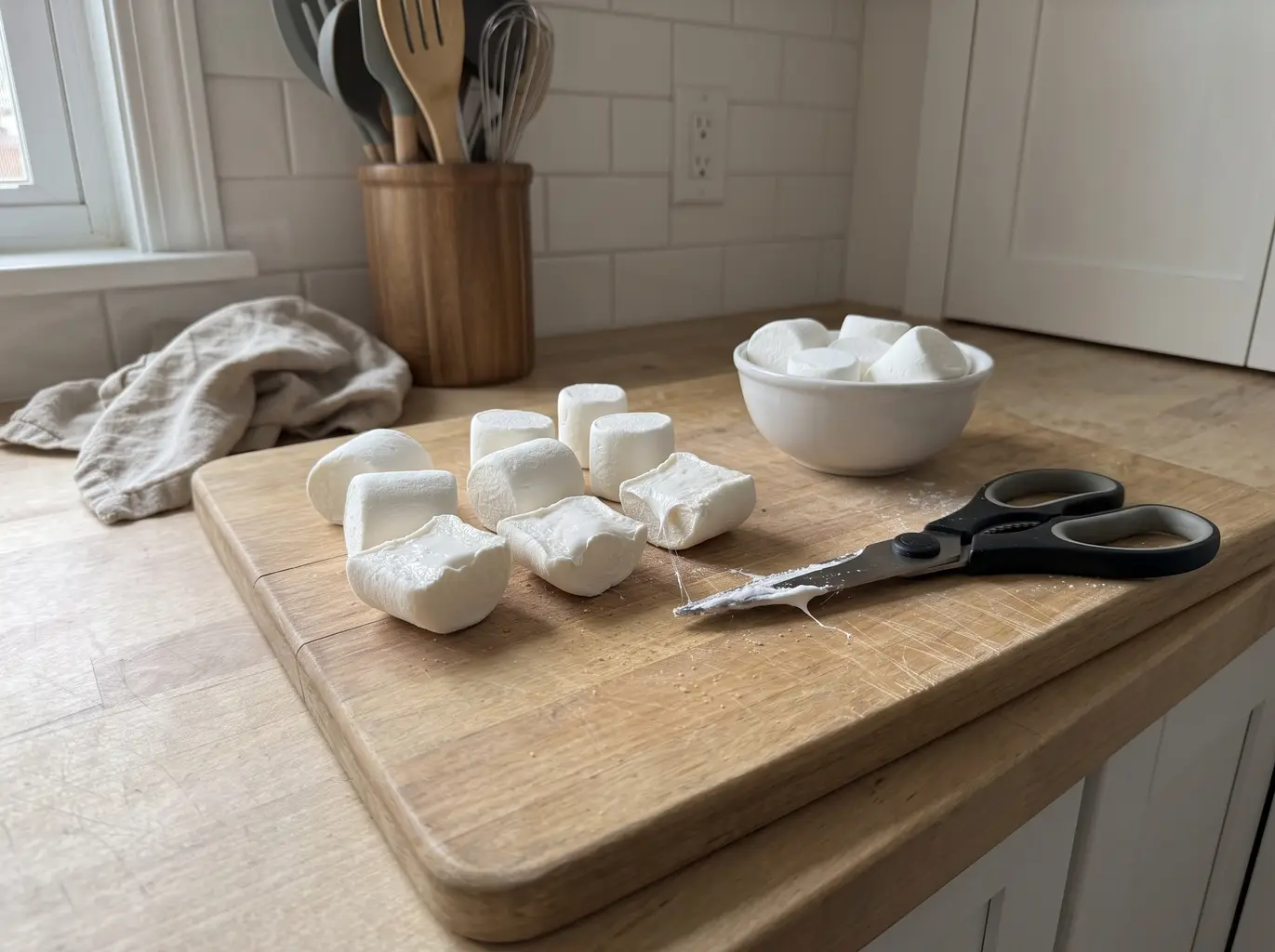
Half the recipes online toast the marshmallow alone and add chocolate at the end, on the theory that the residual heat will melt it. It half does, which is the campfire problem again wearing an apron. Build the stack chocolate-first instead: cracker, chocolate, marshmallow on top. The marshmallow is a heat shield, so the chocolate never faces the element, and it spends the whole bake in contact with hot sugar. By capping time it is fully soft, edge to edge, and the press squeezes marshmallow and chocolate into each other instead of stacking a hot thing on a cold one.
If molten chocolate is the whole reason you came, the basket has a purpose-built answer one shelf over: the lava cake is seven minutes of it.
Why 340 and not 390
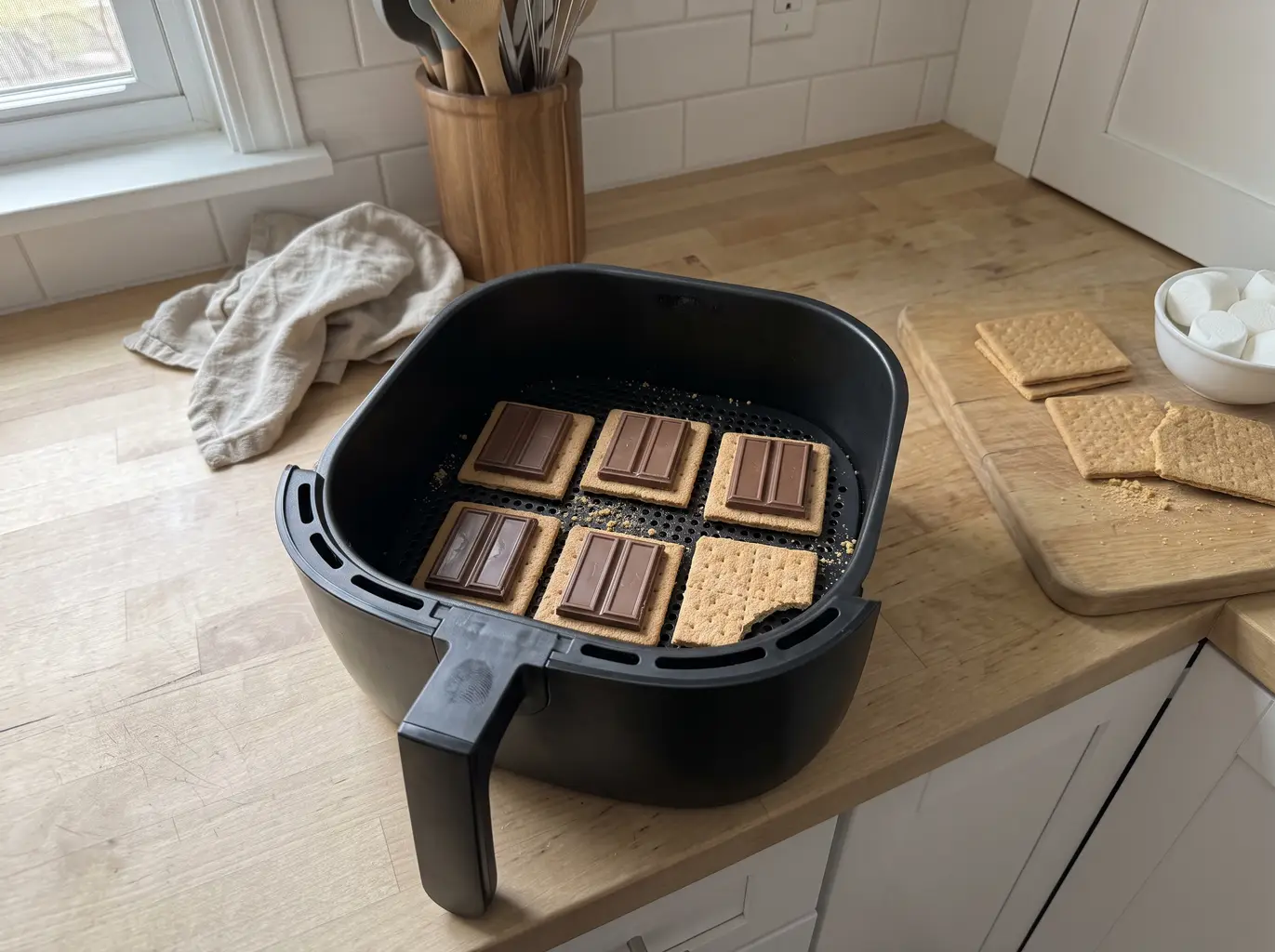
The popular setting for s'mores is 390°F, and it produces exactly what a campfire produces: a bronzed, occasionally blackened skin over a center that never got the memo. A marshmallow is sugar foam; its surface takes color fast under a close element, and every extra degree goes into the skin, not the middle. At 340°F the surface bronzes on the same schedule the center takes to go molten, about 4 to 5 minutes, which is the entire argument. This is the same sugar-near-the-element correction that sets half the numbers on the baking chart, applied to the purest sugar in the pantry.
For the conversion-minded: broiler s'mores recipes run 500°F-plus for 60 seconds, and even the honest math of the air fryer calculator cannot rescue a broiler number, because broiling is the char-over-cool-core method by design. This page is not converting that recipe; it is replacing it.
Ingredients
Makes 6
- 6 graham cracker sheets, snapped into 12 squares
- 3 chocolate bars (1.55 oz), broken in half
- 6 large marshmallows
- Optional: peanut butter cups, caramel squares, dark chocolate
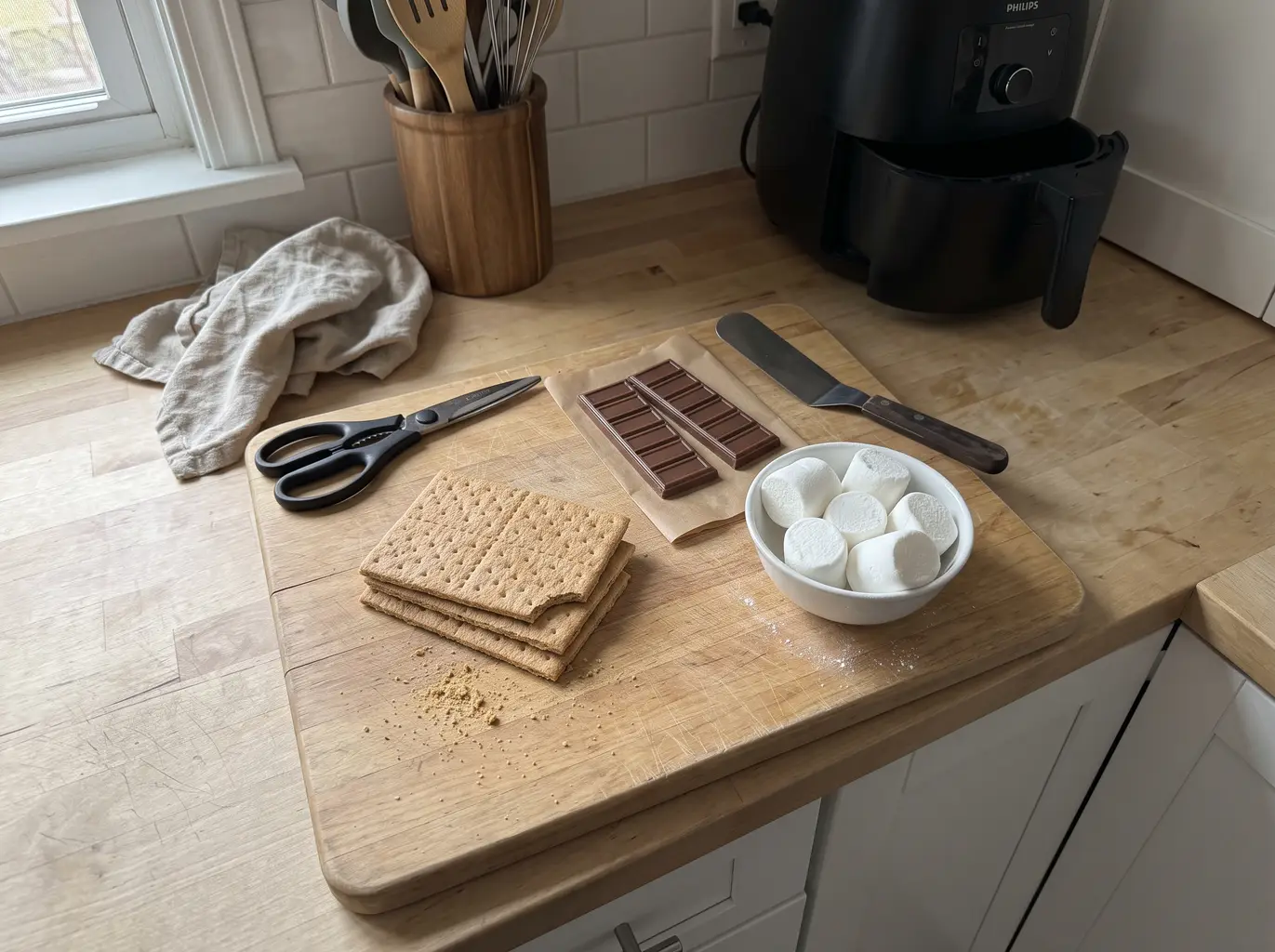
Standard milk chocolate is traditional; dark chocolate melts a touch slower and tastes like an adult made dessert. The marshmallows should be fresh and squishy; a stale, firm marshmallow toasts before it melts, at any temperature, and no setting fixes a pantry problem.
How to make them
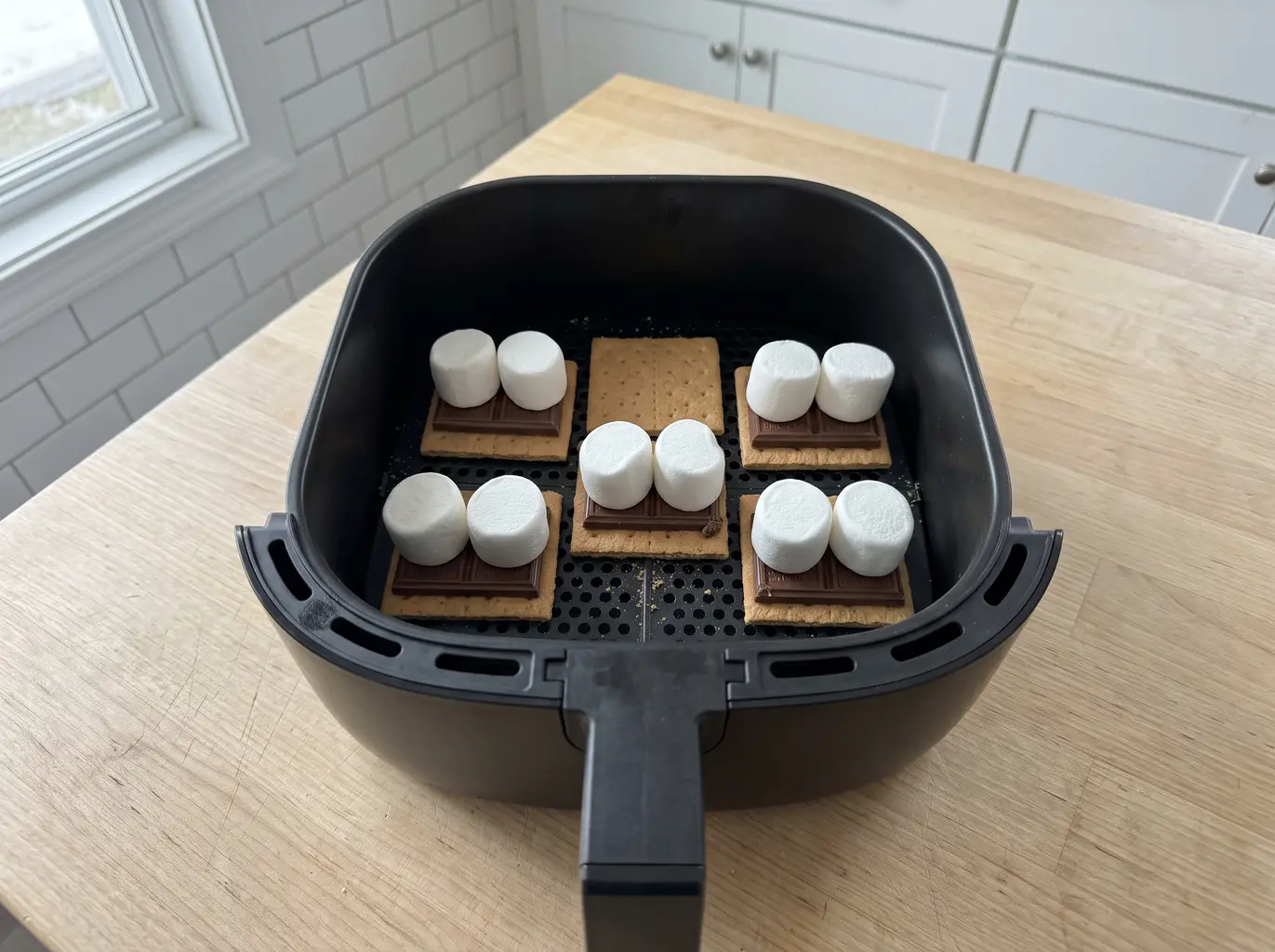
- Lay 6 graham squares in the basket, single layer, toward the center if your machine has cranky corners. No liner: crumbs shake out, and bare crackers sit heavier than papered ones.
- Half a chocolate bar on each.
- Halve each marshmallow crosswise with scissors or a knife, and press both halves cut side down onto the chocolate until they grip.
- 340°F for 4 to 5 minutes, no preheat. A cold start gives the chocolate a gentler ramp; the standing rules are in the preheat guide.
- Watch the last minute. The domes go golden, then deep bronze, quickly; pull at the color you would brag about.
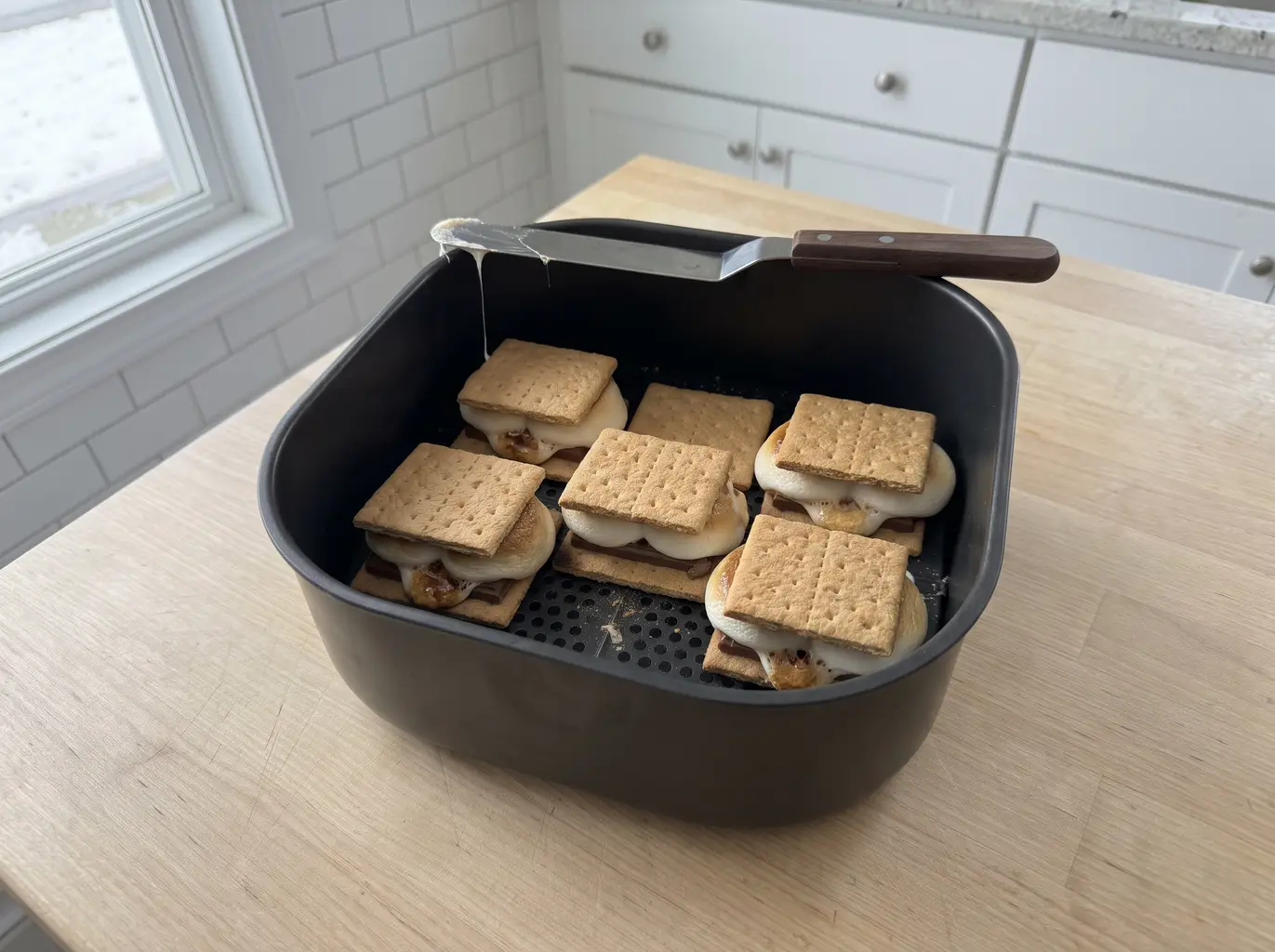
- Cap and press: second square on top, a few seconds of gentle spatula pressure per s'more, until marshmallow reaches the edges.
- Rest 1 minute. Molten marshmallow is lava with a marketing team; give it the minute.
- Round two runs 30 seconds faster in the warm machine. Assembled bases hold a couple of hours at room temperature, so build them all and bake in waves as the table demands.
Doneness
| The signal | What it means |
|---|---|
| Puffed, pale gold domes | Melted inside but no toast flavor yet. Legal, timid. One more minute |
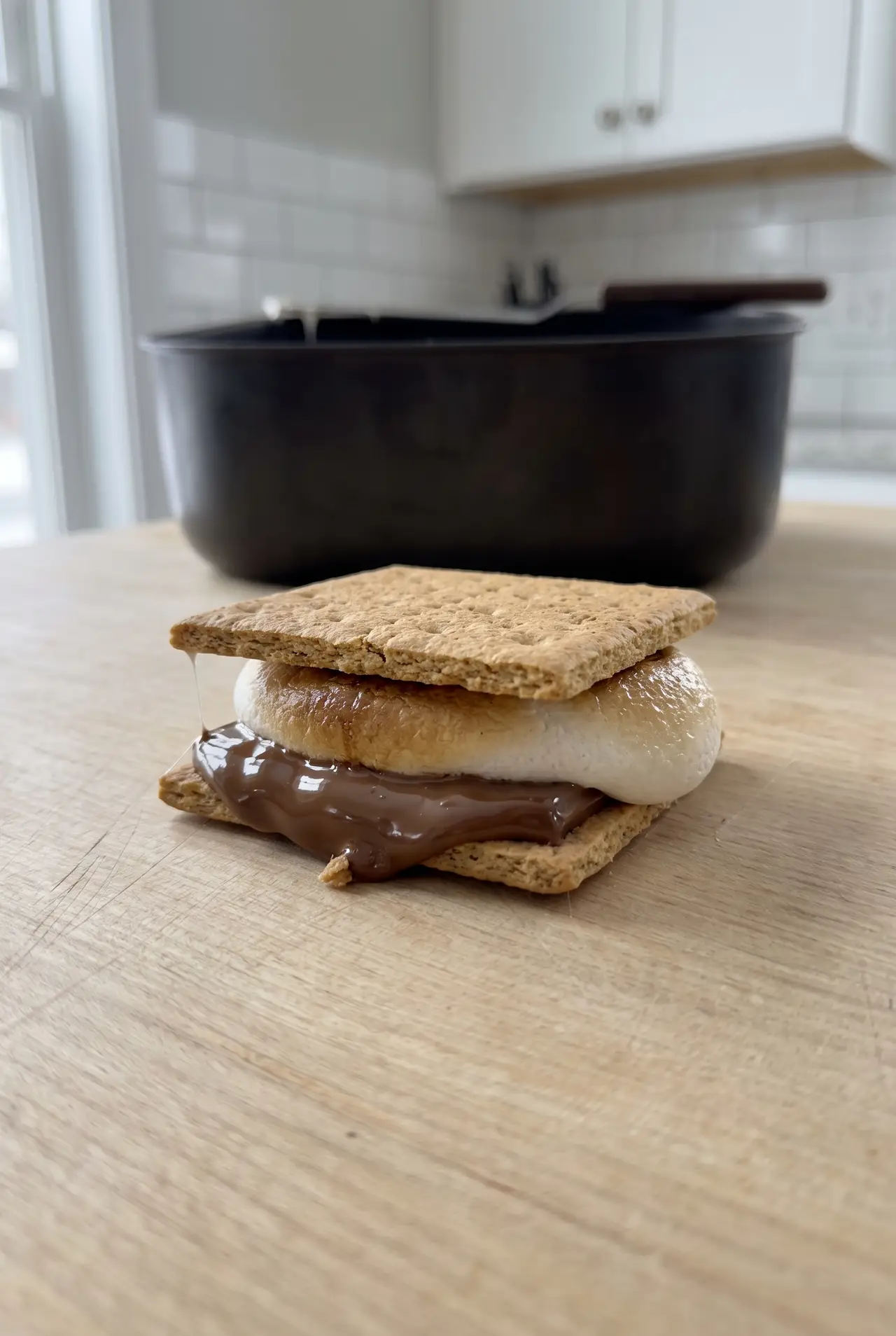
| Deep golden bronze, halves slumped together | Done. Cap, press, rest 1 minute |
| Dark brown racing to black at the edges | 30 seconds past. Still eats fine; note your machine runs hot and start checking at 3:30 next time |
No thermometer for this one; a marshmallow's doneness is its color, and the slump of the two halves into each other is the tell that the middle has let go. The press test settles any doubt: a done s'more squashes to the edges without resistance.
Troubleshooting
| What you got | Why | Fix |
|---|---|---|
| Marshmallow on the element | Whole marshmallow, powdery base down. | Halve it; cut faces down onto the chocolate. The anchor is the recipe |
| Top cracker took flight | It was aboard during the bake. | The cap never bakes. It arrives at press time |
| Bronzed outside, springy middle | 390°F culture. | 340°F for the full 4 to 5; the skin and the center need the same clock |
| Chocolate still hard | Added after the bake. | Under the marshmallow from minute one, shielded and melting the whole time |
| Burnt cracker corners | Machine hot spot, or round two at round one's clock. | Center the s'mores, check 30 seconds early after the first batch; chronic scorch lives in the burning guide |
| Marshmallow toasted but never melted | Stale marshmallows. | Fresh bag. Foam that has dried out browns without flowing |
| Basket floor is now caramel | An escaped marshmallow, past tense. | Soak warm; sugar loses to hot water. Then adopt the anchor |
Mysteries that follow you across recipes are machine questions for the troubleshooting guide, and the machine's ground rules live at how to bake in an air fryer.
Upgrades and the dip
- The peanut butter cup s'more is the best thing this page knows: one cup pressed under each marshmallow half, everything else as written.
- Cookie s'mores: two thin chocolate chip cookies in place of the crackers, and the result should probably require a license.
- The graham-crumb family reunion: if the box of crackers is out anyway, the magic bars are where the rest of the sleeve wants to go.
- S'mores dip, the crowd format: chocolate in an oven-safe ramekin, mini marshmallows shingled on top, 340°F for 4 to 5 minutes until bronzed, crackers as spoons. The ramekin's walls are what make minis legal, and it feeds a movie night without assembly.
- The marshmallow shelf's other trick: melted the opposite direction, into rice krispie treats, no stove involved there either.
Make-ahead, honestly
A s'more has a ten minute lifespan and no afterlife: the marshmallow re-sets, the cracker softens, and the fridge accelerates both. So this is the rare page on this site with no storage section worth writing. What preps beautifully is the assembly line: bases built through the anchor step hold for a couple of hours on the counter, covered, so dessert stands 5 minutes from the table all evening. Make exactly as many as get eaten, which, fair warning, is more than you budgeted. The same ten-minute-window honesty applies to the air fried Oreos one shelf over, and nobody has ever complained about either deadline.
If five-minute desserts are the genre you are shopping, the s'more is the fastest entry in the whole last-minute air fryer desserts lineup, a shelf it shares with churros, donut holes and a chocolate mug cake, and it earns its place on the Halloween treats table every October.
Frequently asked questions
QHow long do s'mores take in an air fryer?
4 to 5 minutes at 340°F, with no preheat, until the marshmallow tops are deep golden and slumped. Add a few seconds of pressing once the top crackers go on and a 1 minute rest, and the whole project is under 10 minutes for a full basket of six. Recipes running 390°F finish faster on top, which is exactly the problem: the dome bronzes before the middle melts.
QHow do you keep marshmallows from flying around an air fryer?
Give the fan nothing loose to grab. Cut each marshmallow in half crosswise and press the sticky cut faces down onto the chocolate; the exposed interior glues the stack together better than any toothpick. A whole marshmallow sits on its dry, powdery base and skates. If your machine's fan is unusually fierce, add a toothpick through each half as insurance and pull it before capping.
QDo you put the chocolate in the air fryer or add it after?
In from the start, underneath the marshmallow. The marshmallow sits on top of it like a heat shield, so the chocolate never faces the element directly, and by the time the dome is bronzed the bar underneath is fully soft. That is the fix for the oldest s'mores complaint there is: a cold slab of chocolate that cracks out the sides of the first bite.
QWhat temperature is best for s'mores in an air fryer?
340°F. A marshmallow is nearly pure sugar and air, and the element sits inches above it, so the popular 390°F setting scorches the skin in about 2 minutes while the center is still cool and springy. At 340°F the surface bronzes on the same clock the inside takes to go molten, which is the entire point of making these indoors.
QAre air fryer s'mores better than campfire s'mores?
Texturally, yes, and it is not close. A campfire toasts a marshmallow from one side in seconds, so you get char over a cool core, on cold chocolate. The basket's slower, all-around heat melts the marshmallow to its middle and softens the chocolate underneath at the same time, so the first bite pulls instead of shattering. What the campfire has is the campfire. The dessert itself loses.
QCan you use mini marshmallows for air fryer s'mores?
Not loose on a cracker; they are the lightest objects in the kitchen and the fan owns every one of them. Minis belong in the ramekin version: a layer of chocolate in an oven-safe ramekin, minis shingled on top, 340°F for 4 to 5 minutes until bronzed, and graham crackers as the spoons. A ramekin's walls beat the fan, and the dip serves a crowd faster than stacking ever will.
QWhy did my graham crackers burn in the air fryer?
Bare cracker edges toast fast at the corners of a hot machine, especially round two, when the basket is already at temperature. Keep the s'mores toward the center, check 30 seconds early on every batch after the first, and drop to 330°F if your machine runs loud and hot. A shade of extra toast on the cracker is honestly a feature; black corners are the fan's hint about your hot spot.
QWhat else works besides chocolate bars?
Anything that melts flat: a peanut butter cup pressed under each marshmallow half is the best upgrade this recipe knows, caramel-filled squares run a close second, and dark chocolate keeps the sweetness in check for the grown-up round. Cookies also stand in for crackers; two thin chocolate chip cookies make a s'more that has no business being legal.
QCan you make s'mores ahead of time?
No, and it is worth saying plainly: a s'more exists for about ten minutes and then the marshmallow sets, the cracker softens, and refrigeration makes all of it worse. What you can do is stage the assembly line: bases built with chocolate and anchored marshmallows hold at room temperature for a couple of hours, so the machine is 5 minutes from dessert whenever the table votes.
Never overbake again
Get our one-page times & temps cheat sheet, plus a new tested recipe each week.
No spam · unsubscribe anytime