

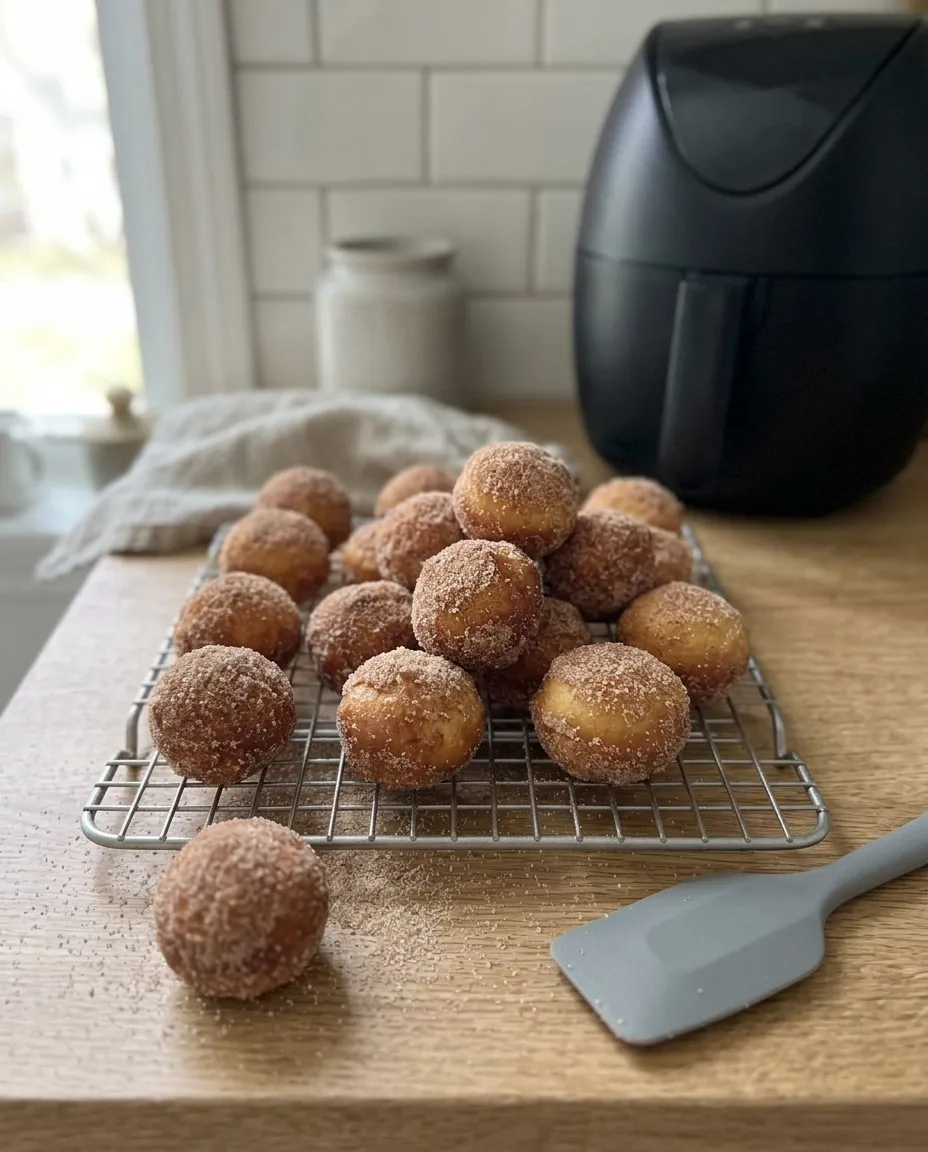
Donut holes disappear at a rate no other bake on this site can match. I once set a bowl of two dozen on the counter to photograph and returned from finding my phone to a bowl of nine and a kitchen of people who had seen nothing. That is the format's superpower: bite-sized removes the commitment of a whole donut, which somehow results in everyone eating three donuts' worth.
It is also the format's trap. A ball of dough has the largest possible middle for its surface, which is exactly backwards for a machine that cooks from the outside in, and the popular shortcut, canned biscuit quarters blasted at 375°F for three minutes, produces the classic result: gorgeous mahogany outside, squishy raw seam at the center. The people eating them fast enough rarely notice. You will. This page fixes the geometry first and then upgrades the dough.
Quick answer: Roll the dough into even 20g balls and bake at 330°F for 7 to 9 minutes, gentler and longer than the canned-biscuit instructions, shaking the basket freely at halfway. Confirm the batch with the sacrifice hole: tear one open, or probe for 195°F. Then melted butter first, cinnamon sugar second, because sugar will not hold onto a dry crust. A real yeast dough makes them taste like the donut shop; biscuit and yogurt doughs are the honest fast lanes.
The sphere problem
Every shape on this site has a heat story, and the sphere's is the worst one. A breadstick is thin everywhere; a scone wedge tapers; a donut, crucially, has a hole in the middle for heat to reach through, which is the actual reason donuts are ring-shaped. A donut hole is the piece without that advantage: solid to the core, all middle.
- High heat loses. At 375°F, the surface finishes browning in 3 minutes while the core needs 7 to cook. The recipes built on canned-biscuit can instructions inherit this math, and their centers pay for it.
- 330°F wins. Gentle heat slows the browning until it crosses the finish line together with the center. The holes take a few minutes longer and stop being a gamble.
- Uniformity is half the bake. One oversized hole in a batch is the one that comes out raw. Weigh the dough, 20g per ball, or trust the quartered-biscuit rule below, and every hole finishes on the same clock.
- Small and spaced: single layer, a finger's width apart. A crowded basket steams, and steamed donut holes are dinner rolls with sugar on them.
Three doughs, honestly ranked
| Dough | Time | Verdict |
|---|---|---|
| Real yeast dough (this page's recipe) | ~1.5 hours, mostly rising | The only one that tastes like a donut shop: light, faintly sweet, tender-chewy. Worth the rise, and the rise is unattended |
| Canned biscuit quarters | 15 minutes | Good, biscuity, dense-crumbed. Cut each biscuit in 4, roll the quarters into balls so there are no raw seams, bake 330°F 7 to 8 minutes. The full canned-dough handling rules live with the canned biscuits, and the same quarters piled into a pan become monkey bread |
| Two-ingredient yogurt dough | 20 minutes | 1 cup self-rising flour, 3/4 cup Greek yogurt, rolled into balls. Denser, faintly tangy, no cans and no yeast. The pantry fallback |
All three bake at the same 330°F and follow the same coating law. The yeast dough is the dinner-roll family wearing sugar: if you have made the dinner rolls, your hands already know this dough, just sweeter and with an egg. It is the same enriched family as the ring-shaped glazed donuts, which pull at the same 195°F.
Shake freely: the one bake with no wrong face
Regulars here know the flip rule: flip breads with two plain faces, never breads with one precious face. Donut holes are the rule's happiest edge case, because a sphere has no faces at all, no top to protect, no bottom to favor, no glaze aboard. So the basket shake, banned or fretted over everywhere else, is fully legal here: at the halfway mark, pull the drawer and give it a confident rattle so every hole re-lands on a new side. The shake evens the browning better than tongs ever could, takes four seconds, and is, frankly, the fun part. The tiny centers cut from our biscuit donuts get the same shake for the same reason: a sphere has no face to protect.
The sacrifice hole
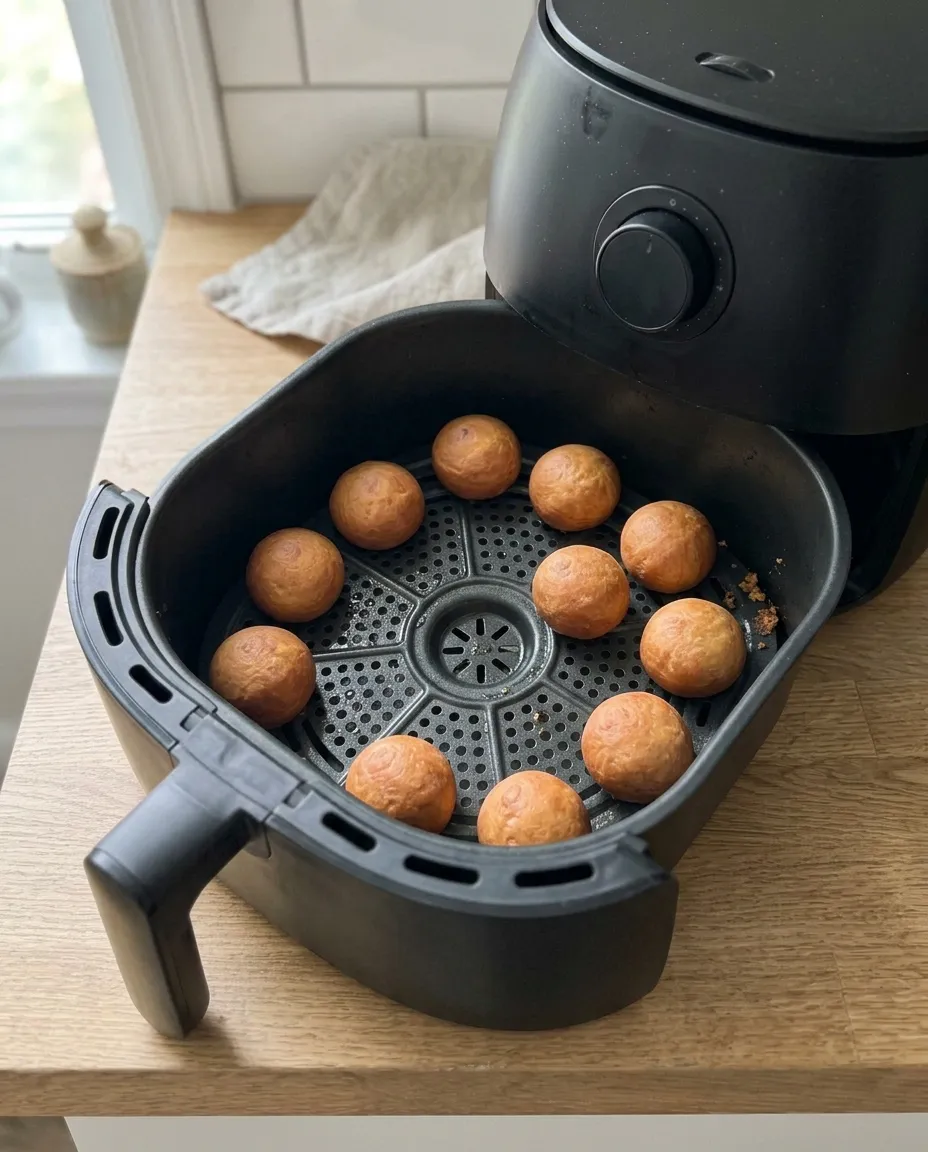
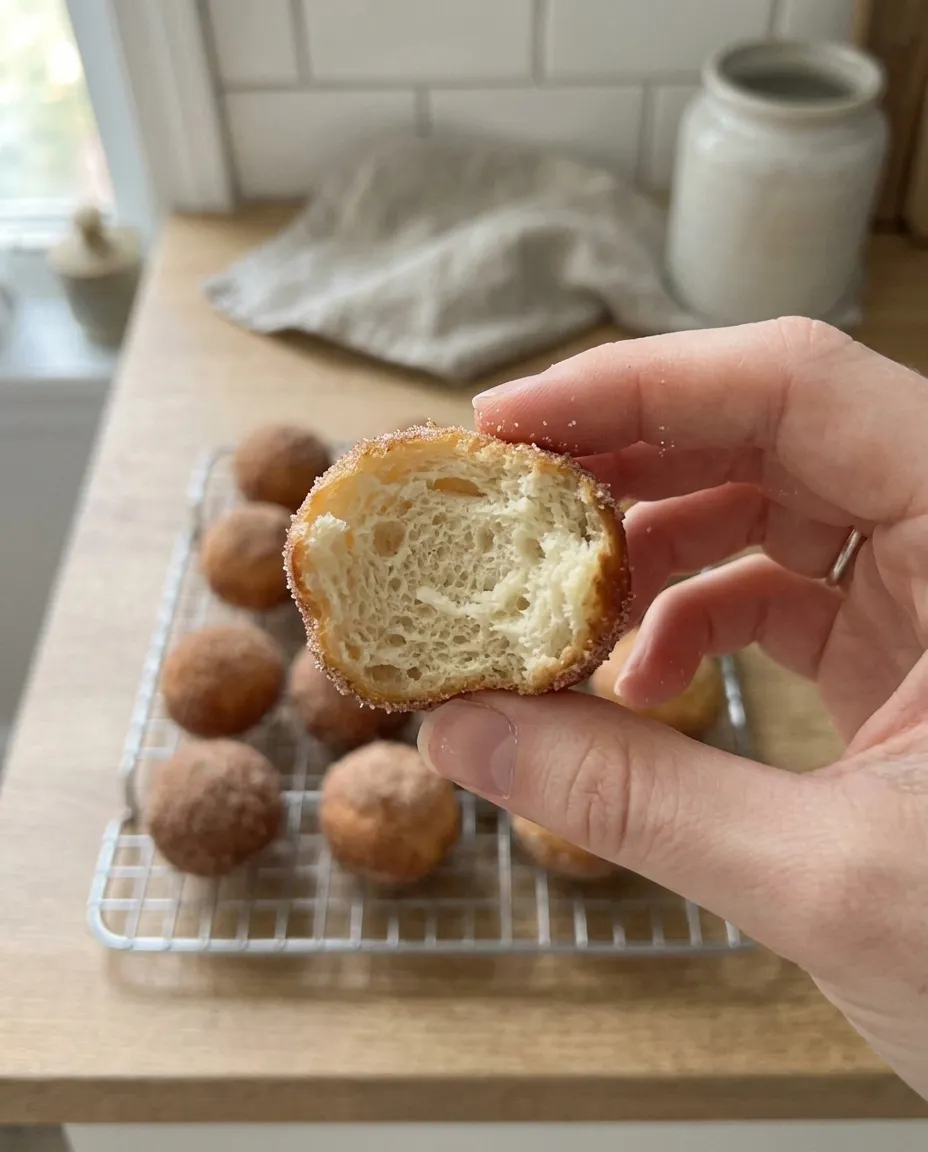
Doneness on a two-bite sphere is awkward for a thermometer, workable but fiddly, so this recipe institutionalizes the better test: every batch includes one hole baked for science. When the batch looks done, deep gold all around, take the biggest hole, tear it in half, and read the center. Moist, set, bready: the batch is done. A gluey, shiny seam at the core: two more minutes for everyone. The cook eats the evidence, which is the fee for quality control, and an instant-read thermometer reading 195°F in the fattest hole settles any appeal, the same soft-bread number as the rolls it descends from.
How to make them
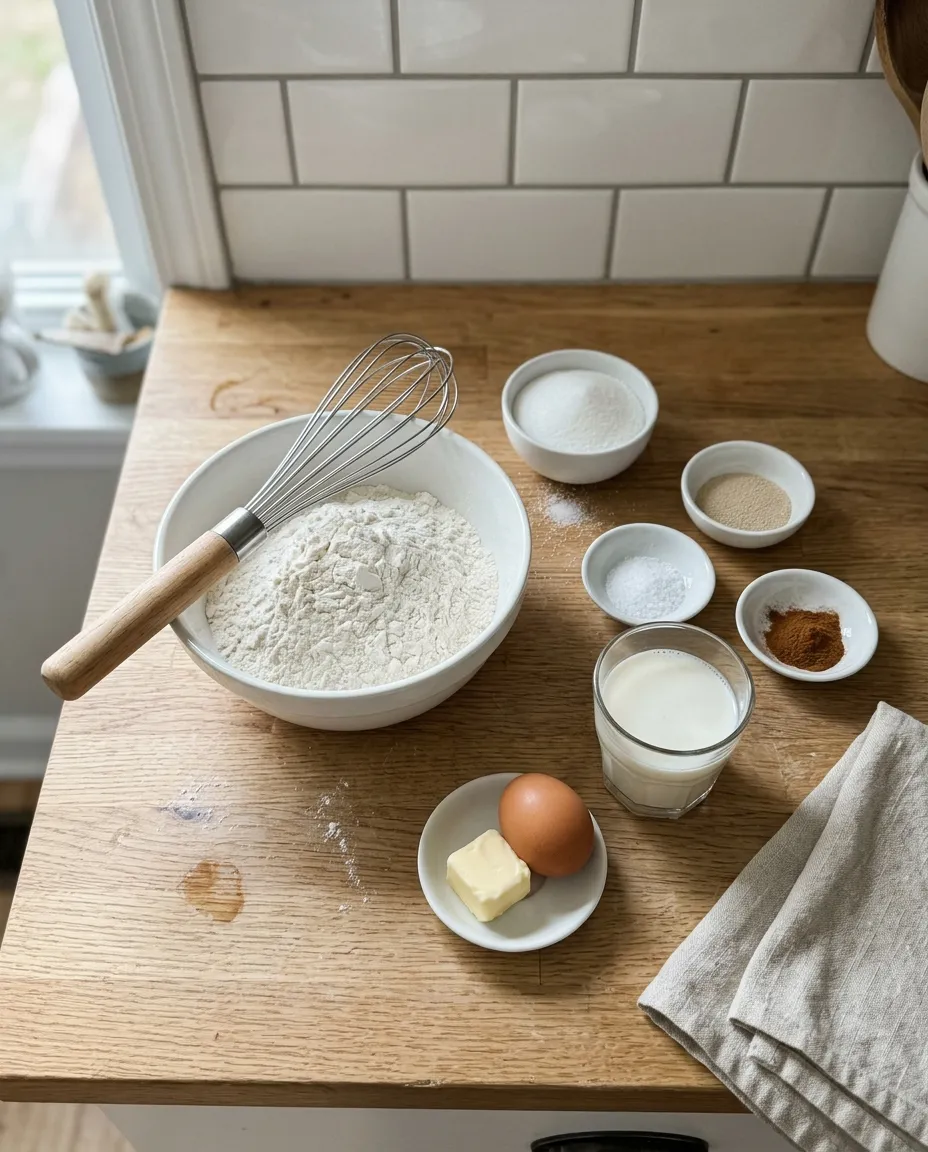
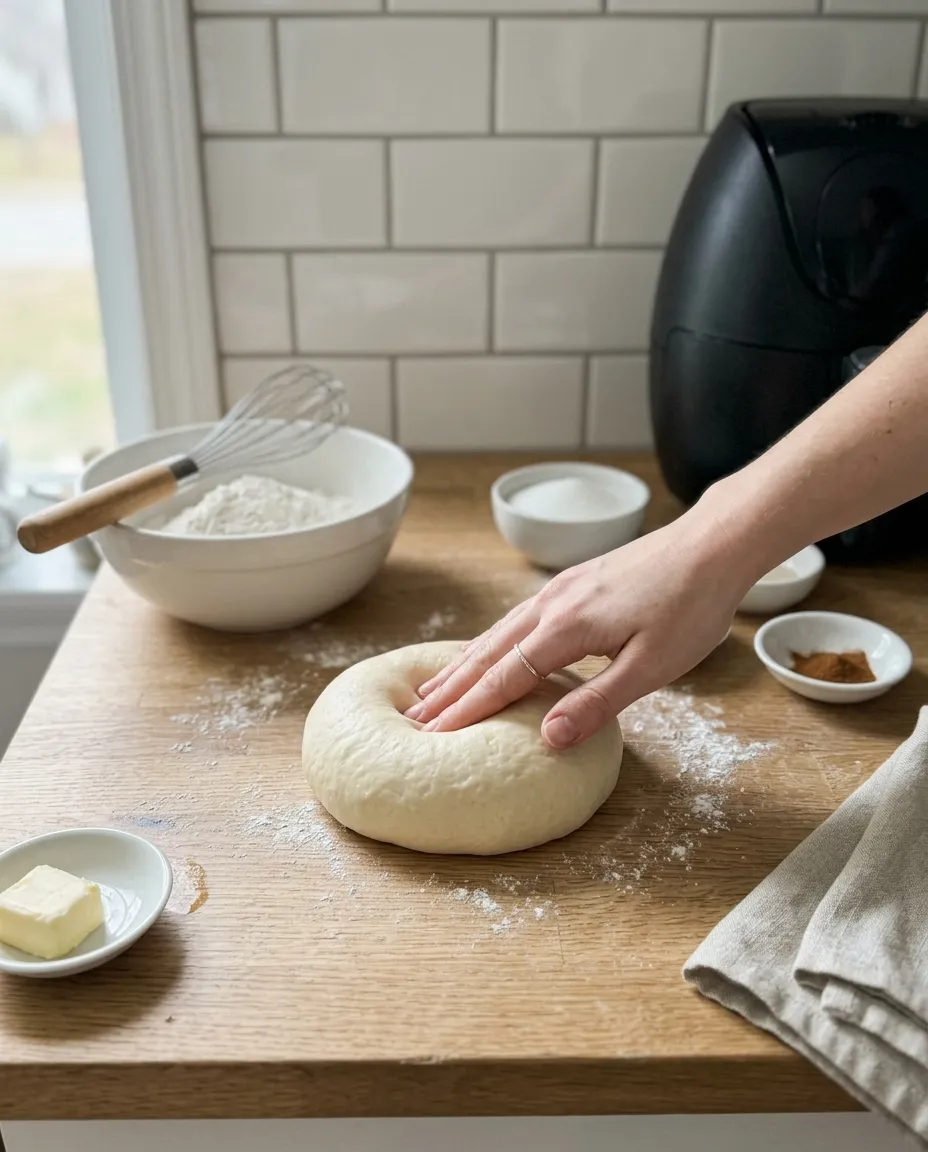
- Make the dough: stir 2 cups flour, 1 teaspoon instant yeast, 3 tablespoons sugar and 1/2 teaspoon salt. Add 1/2 cup warm milk, 1 egg and 2 tablespoons soft butter, and knead 8 minutes to smooth and slightly tacky.
- Rise 1 hour covered, or about 40 minutes in the switched-off air fryer beside a mug of just-boiled water, the standing proof box.
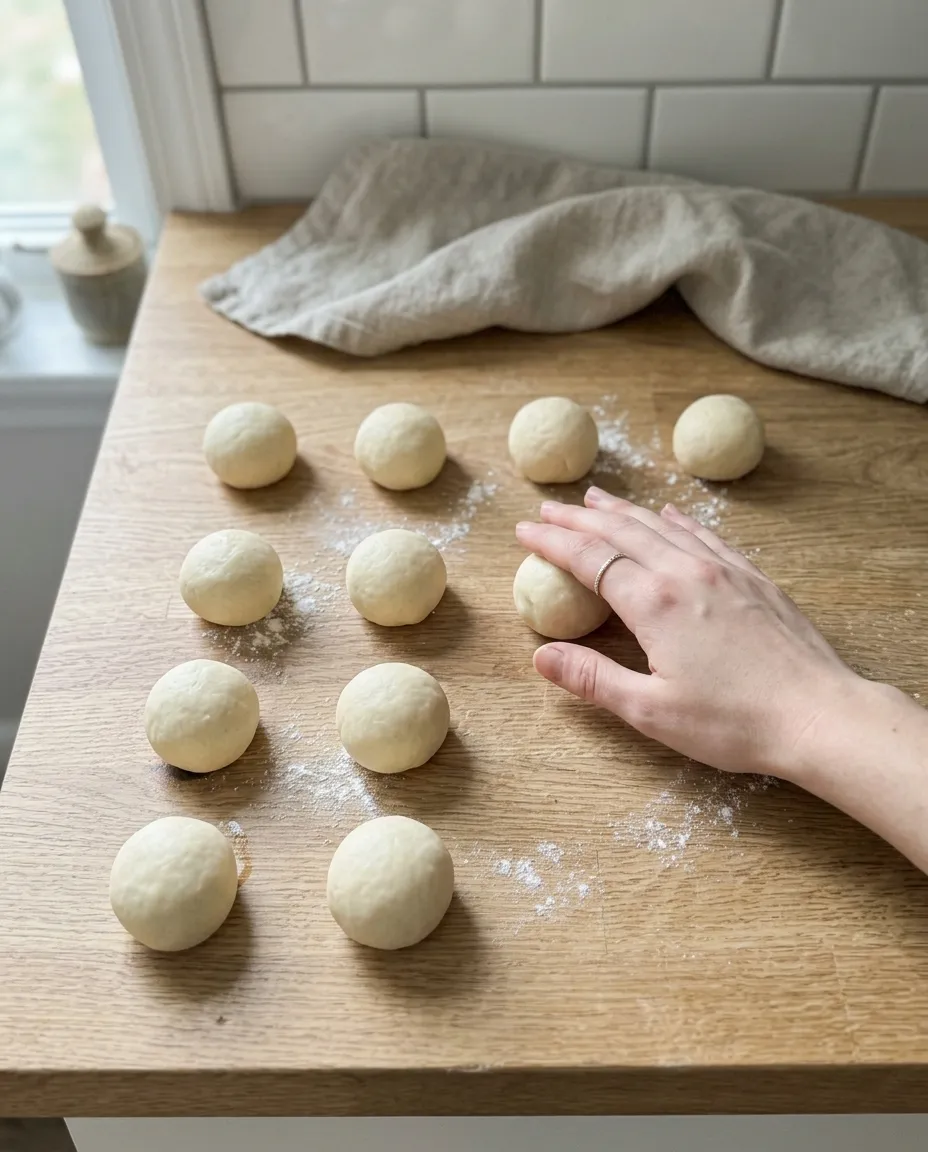
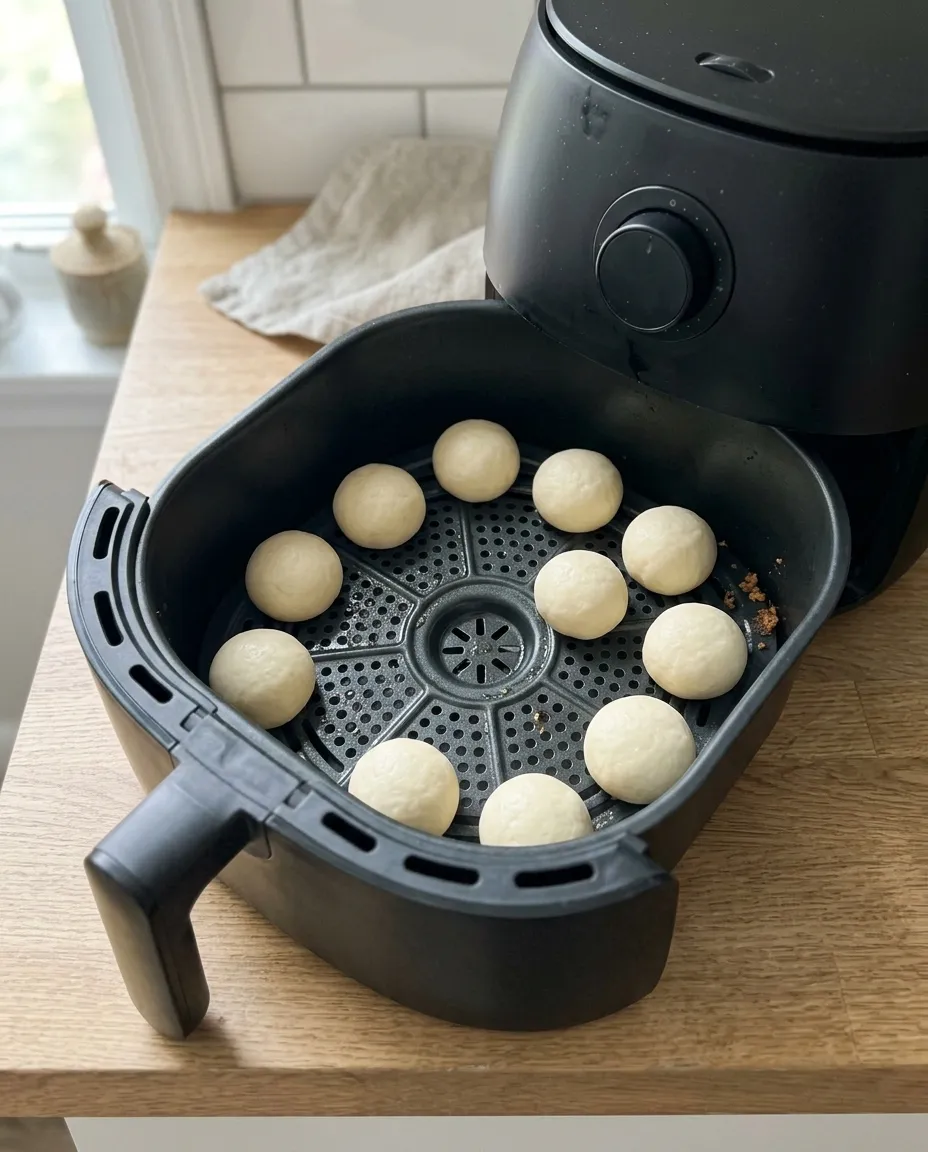
- Divide and roll 24 balls, about 20g each. Roll each in a cupped palm against the counter until seamless; a visible seam is a fault line that opens in the heat.
- Rest 20 minutes under a towel until slightly puffed.
- Bake at 330°F for 7 to 9 minutes, 12 at a time, single layer, a finger's width apart, on the lightly greased basket, no preheat. Shake hard at halfway.
- Run the sacrifice: tear the biggest one open at the golden mark, or probe 195°F.
- Coat while hot: melted butter first, cinnamon sugar second, per the law below.
- Bake round two a minute shorter, and guard the bowl. The counting starts immediately.
Butter first, sugar second
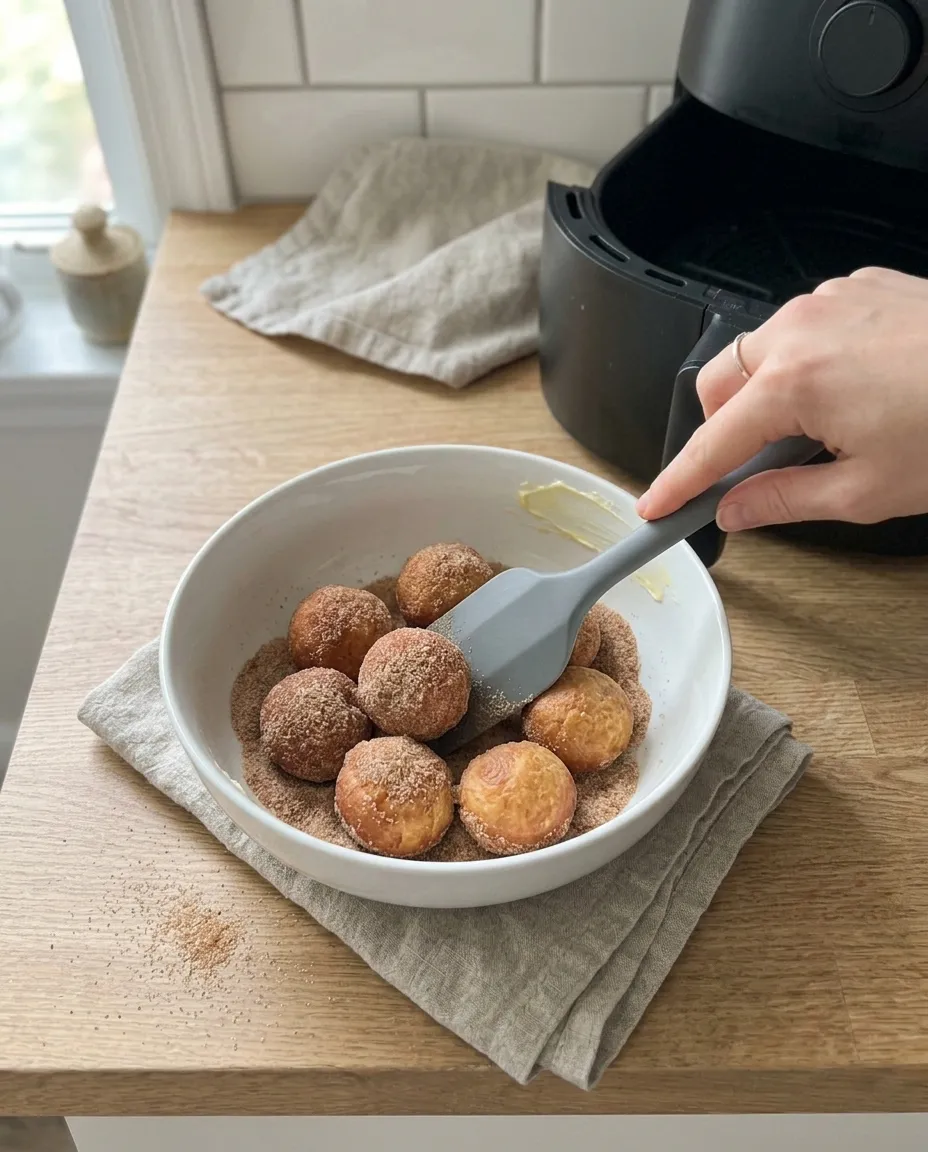
The coating law comes straight from the churros next door, and it exists because air-fried surfaces are dry: without the fryer's oil film, cinnamon sugar has nothing to grip and slides off in the bowl. The sequence:
Butter, thin and hot
Toss the hot holes with 3 tablespoons melted butter in a big bowl, rolling until every sphere gleams. The bowl-toss beats brushing here; spheres self-coat when rolled.
Sugar, immediately
Transfer straight into the cinnamon sugar, 1/2 cup sugar to 2 teaspoons cinnamon, and roll again. Liquid butter means full, even coverage; wait five minutes and it patches.
Rack, two minutes
Coated holes rest on a rack, not a plate, so the bottoms keep their delicate crunch instead of steaming against porcelain.
Powdered sugar people: skip the butter and shake the fully cooled holes in a bag of it instead; powdered sugar on hot butter dissolves into glue. Glaze people: dip the cooled holes halfway in the lemon bread's glaze thinned by a teaspoon of milk, and let them set on the rack. Cold surface for those two, hot for cinnamon sugar; the coating decides the temperature.
Filling them
A filled donut hole is a jelly donut that respects portion sizes, and filling happens after baking, never before, because sealed fillings erupt in a fan's heat. The tooling is simple: a piping bag with a small round tip, or a squeeze bottle with a sturdy nozzle.
- Jelly: whisk seedless raspberry or strawberry jam smooth, poke the tip into the side of each cooled-slightly hole, and squeeze until the hole feels heavier. About a teaspoon fits.
- Chocolate hazelnut or pastry cream work identically; thin stiff spreads with a spoon of warm cream first.
- Fill, then coat, so the entry hole hides under the sugar. A filled, coated, still-warm donut hole is the single highest-theft item this kitchen produces.
Troubleshooting
| What you got | Why | Fix |
|---|---|---|
| Doughy centers | The sphere problem: too hot, too fast, or one oversized hole. | 330°F, 7 to 9 minutes, even 20g balls, and the sacrifice hole before serving. |
| Pale, steamed holes | Crowded basket. | Single layer, a finger's width apart, two rounds of twelve. |
| Holes split open at a seam | Balls rolled loosely with visible seams. | Roll each ball seamless in a cupped palm; the surface should be taut. |
| Sugar fell off in the bowl | Coated dry, or the butter cooled first. | Butter then sugar, back to back, while hot. |
| Dense, heavy crumb (yeast version) | Shorted rises. | Doubled in the bowl, puffed on the tray. The 20 minute rest is load-bearing. |
| One side dark on every hole | No halfway shake, or a machine hot spot. | Shake with conviction at halfway; spheres are the one shape that cannot be shaken wrong. |
| Filling erupted everywhere | Filled before baking. | Bake naked, fill after. The fan does not respect sealed pockets. |
| Second batch darker | Warmed basket head start. | Minus one minute per round, the standing rule. The burning guide handles chronic scorchers. |
Cross-recipe mysteries live in the troubleshooting guide. No preheat here, per the preheat guide, and if you are adapting a family oven donut recipe, the air fryer calculator converts it honestly; a deep-fried donut recipe, though, cannot be converted by arithmetic at all, for the oil-versus-air reasons the churros page explains in full. Every setting on the site lives in the air fryer baking chart.
Variations
- Pumpkin spice: swap the cinnamon in the coating for pumpkin pie spice, and add 1/2 teaspoon to the dough. October's version.
- Chocolate glazed: cooled holes dipped in the churros page's 5 minute chocolate dip and set on a rack. Somewhere between donut hole and truffle.
- Apple cider adjacent: add 1/2 teaspoon cinnamon and a pinch of nutmeg to the dough, coat as written, and serve beside warm cider. For the real thing, the apple cider donuts reduce actual cider into the batter, and the apple pie makes the full fall spread of it.
- Cinnamon roll shortcut in reverse: leftover cream cheese frosting from the cinnamon rolls, loosened with milk, is the correct dip and the house's worst-kept secret.
- Doubling for a crowd: the recipe scaler resizes the dough; bake in relays of twelve and coat each round as it lands, because donut holes wait for no batch.
Storage and make-ahead
- Donut holes are a two-hour food. The coating starts drinking the surface moisture on schedule, and by evening they are good instead of great. Bake for the crowd present, which, given the theft rate, is self-correcting.
- Day-old holes revive at 320°F for 2 minutes plus a fresh roll in sugar, and land surprisingly close to fresh.
- Make-ahead, the right way: the rolled balls freeze raw on a tray after shaping, then bag for 2 months. Thaw 30 minutes on the counter until puffy-ish and bake as written plus 1 minute. Weekend donut holes with weekday effort.
- The dough holds overnight in the fridge after its first rise; cold dough rolls the most seamless balls of all, and the morning bake takes 30 minutes start to sugar.
Frequently asked questions
QHow long do donut holes take in an air fryer?
7 to 9 minutes at 330°F for 20g balls, baked twelve at a time in a single spaced layer with a hard basket shake at halfway, done at deep gold and 195°F inside. Canned biscuit quarters run the same 330°F for 7 to 8 minutes. The gentler-and-longer setting matters: at the 375°F many shortcuts use, the outside finishes minutes before the middle does.
QWhy are my donut holes doughy in the middle?
Geometry. A ball is all middle and little surface, the exact opposite of what an air fryer likes, so high-heat short-time instructions brown the shell and leave the core raw. Bake at 330°F for the longer 7 to 9 minutes, keep the balls a uniform 20 grams so no oversized straggler hides raw, and tear one open before serving; that sacrifice hole is the batch's quality control, and the cook eats the evidence.
QCan I make donut holes from canned biscuits?
Yes, and it is the 15 minute version: cut each biscuit into 4 and roll every quarter into a seamless ball, which erases the raw seams that plain-cut quarters bake into. Then 330°F for 7 to 8 minutes with the halfway shake, butter, and cinnamon sugar. The texture is denser and more biscuit-like than yeast dough, which is not a flaw, just a different and faster animal.
QDo you flip donut holes in the air fryer?
You shake, which is better. The flip rule protects bakes with a precious face, and a sphere has no faces at all, so donut holes are the one bake where rattling the basket is not just allowed but ideal: every hole re-lands on a new side and browns evenly all around. One confident shake at the halfway mark does more than any careful tong work, in a quarter of the time.
QWhy won't the cinnamon sugar stick to my donut holes?
They were coated dry. Air-fried surfaces come out without the oil film that deep-fried donuts wear, so sugar has nothing to hold. Toss the hot holes in melted butter first, then roll them in the cinnamon sugar immediately, while the butter is still liquid. Powdered sugar is the exception: it goes onto fully cooled, unbuttered holes, because it dissolves into glue on hot butter.
QCan you fill donut holes?
Yes, after baking, never before, because sealed fillings burst in the fan's heat. Fit a piping bag with a small round tip, poke it into the side of a slightly cooled hole, and squeeze in about a teaspoon of smooth jam, chocolate hazelnut spread, or pastry cream until the hole feels heavier. Fill first, then coat, so the entry point disappears under the cinnamon sugar.
QDo air fryer donut holes taste like fried ones?
With the yeast dough, remarkably close: light, tender, sweet, and warm, with the butter-and-sugar coat supplying most of the richness frying used to. What is missing is the thin fried shell and its faint oil flavor, a real but small gap. Against it, no quart of oil, no splatter, no disposal, and a version light enough that eating five is a choice rather than a regret. The biscuit version tastes like an excellent biscuit wearing sugar, which is its own pleasure.
QCan I make the dough ahead of time?
Two ways. The dough holds overnight in the fridge after its first rise, and cold dough rolls the most seamless balls. Or shape the balls and freeze them raw on a tray, bag for up to 2 months, then thaw 30 minutes on the counter and bake as written plus a minute. Both routes put warm donut holes on a weekend table for about 30 minutes of morning effort.
QHow do you store leftover donut holes?
Airtight at room temperature for a day, with the understanding that they peak in the first two hours as the coating slowly drinks the surface moisture. Revive day-old holes at 320°F for 2 minutes and re-roll them in fresh cinnamon sugar, which recovers most of the magic. Freezing baked holes works in a pinch, but freezing the raw shaped balls and baking fresh beats it in every dimension.
Never overbake again
Get our one-page times & temps cheat sheet, plus a new tested recipe each week.
No spam · unsubscribe anytime