
My first air fryer arrived with a manual that explained the buttons and nothing else, and for a month I treated it like a small angry oven that burned things for private reasons. Then I actually looked inside one, and the reasons stopped being private. Everything the machine does, the speed, the crusts, the scorched streusel and the pale cake bottoms, follows from one short mechanical sentence, and once you can say the sentence, you can predict the machine instead of apologizing to it.
Here is what this page is not: another what-is-an-air-fryer explainer written by an appliance brand with a machine to sell you. The mechanism takes one paragraph, and the science outlets cover it well. What nobody writes is the second half, the consequences, which is where a mechanism becomes a method. This site has spent a hundred recipes deriving rules from this machine's behavior; this page is where all of those rules trace back to their source.
Quick answer: An air fryer is a compact convection oven: a heating element on the ceiling glows, a fan directly behind it drives that heat down and around a small sealed chamber, and the moving air sweeps over every exposed surface of the food far faster than the still air of an oven ever could. Moving air transfers heat dramatically better than still air, and it strips away surface moisture as it goes, so food browns and crisps sooner. It does not fry anything; it dehydrates and browns with wind. Everything else, good and bad, follows from that.
The machine in one paragraph
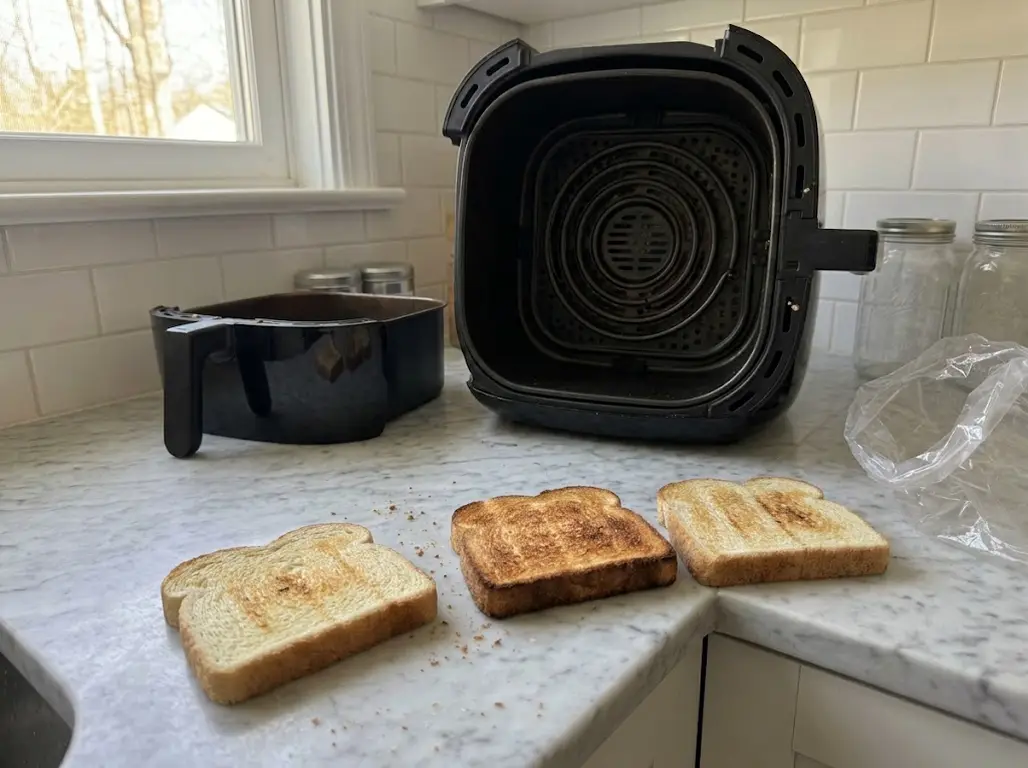
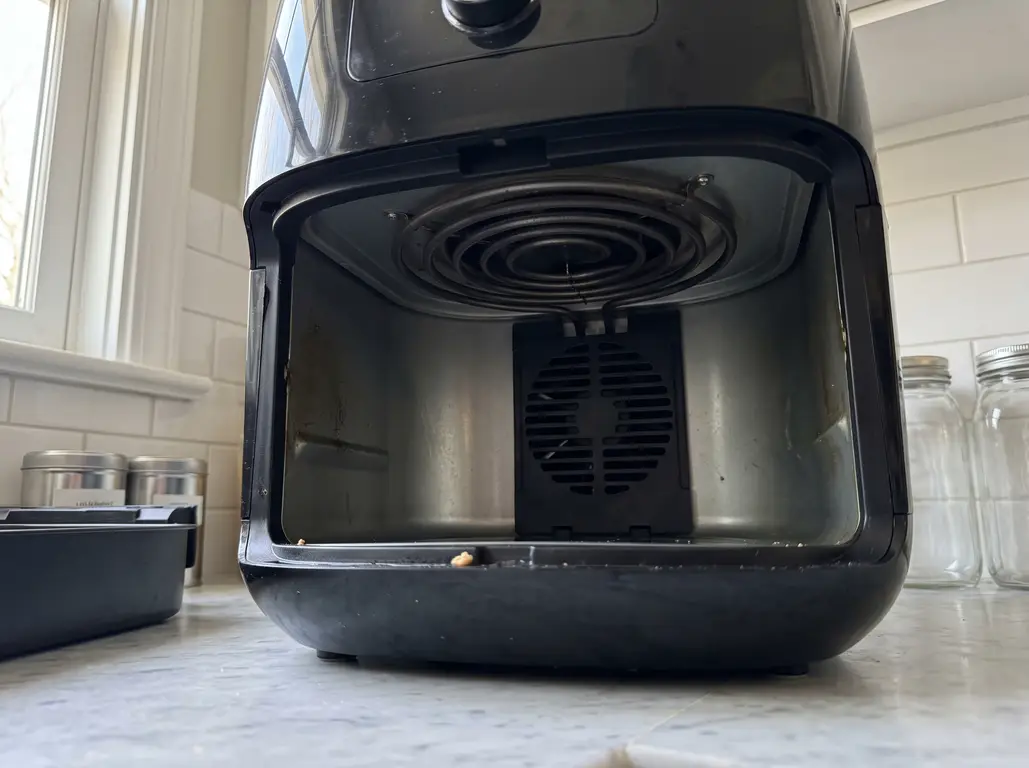
Open the drawer and look up: a coiled heating element, like an electric stove burner bent into a spiral, sits in the ceiling with a fan behind it. The element makes heat; the fan grabs that heat and throws it downward, where the chamber's curved walls turn it into a cyclone that wraps the food and returns up the sides to be reheated and thrown again, several times a second. The basket floor is perforated so air can pass under the food, and the whole theater is the size of a breadbox, which is the quiet secret: a small chamber means the air reheats almost instantly, holds its temperature against the food, and reaches cooking speed in about three minutes. Physicists measure heat delivery as flux, and the practical version of their finding is simple: air moving this fast over food delivers heat many times faster than the gentle drift inside a conventional oven at the same temperature setting. Same degrees on the dial, much harder push.
Why it is not actually frying
Frying is cooking by immersion in hot fat, and no fat is immersed here, so the name is marketing with a fan behind it. What the machine actually does is run two surface processes at frying-like speed. First, the moving air strips away the humid boundary layer that clings to food, the way wind dries laundry, so the surface dehydrates quickly, and dry surfaces are what crisp. Second, once the surface is dry it can climb past the boiling point of water, and that is where the Maillard reaction and caramelization live, the browning chemistry that makes crusts taste like crusts. A thin coat of oil helps not because it fries but because it conducts heat into the surface's crevices and carries flavor; the oils guide covers which ones stand the heat. So: dehydration plus browning, delivered by wind. Fried-adjacent results, fryer-free physics.
Seven consequences, seven rules
Now the useful part. Each consequence below is pure mechanism, and each rule beside it runs somewhere on this site every single day.
- 1. The heat lives in the ceiling, so tops finish first. The element is inches above the food and radiating as well as blowing, while the floor gets only secondhand wind. This is why this site tents cakes, shields the pecan pie mid-bake and rings pie rims with foil, the whole protective wardrobe of the foil and parchment guide, and why every deep bake here watches its top and probes its middle.
- 2. Moving air sets surfaces before centers. The wind that crisps fries also skins batters, sealing a crust over cake and quick bread interiors that are nowhere near done. The cure is the standing discount: convert oven temperatures down and then bake gentler still for wet, fragile batters, which is exactly the arithmetic the air fryer calculator performs and the conversion guide explains in full.
- 3. A small chamber heats fast and recovers fast. Three minutes to temperature means preheating is optional for most bakes and mandatory for a few, a roster the preheat guide keeps; it also means back-to-back batches run about a minute hot, and a switched-off machine holds gentle warmth long enough to double as this site's beloved proof box, the way the dinner rolls rise.
- 4. The fan is a wind, and light things fly. Loose parchment becomes a sail, sandy streusel scatters, lattice strips lift, paper liners slump sideways. Hence the laws: parchment always weighted and trimmed, crumble toppings squeezed into clumps, lattices frozen stiff before they meet the basket, as on the cherry pie, and cups chosen by the silicone molds guide's stand-up-to-a-fan standard.
- 5. The floor is the weakest heat in the machine. Secondhand air through perforations is no match for an oven's bottom element, which is why soggy bottoms are this machine's signature crime: hence metal pans over glass, blind baking under custards, cooked fillings over raw, and the happy exception of pan-free bakes like the galette, which sit close enough to the floor to borrow what heat there is.
- 6. Small chambers magnify crowding and hot spots. Two inches of clearance is the difference between roasting and steaming, and a quirk in the airflow shows up as one dark corner every single time, the hot spot the glossary names and every recipe here rotates against. Single layers, honest spacing, and the pan size calculator's true floor dimensions are the defense; the common mistakes guide ranks crowding as error number one for a reason.
- 7. Faster surfaces do not mean faster centers. The wind works on the outside; the inside still cooks by slow conduction, so color races ahead of doneness and the eye becomes a liar. This is the root of the site's deepest doctrine: golden is a checkpoint, the toothpick is unreliable, and the instant-read thermometer ends every argument, 195°F for soft breads, 175°F for custards, 205°F for cakes and crusty loaves, with carryover finishing what the machine starts.
Air fryer vs convection oven vs oven
| Machine | What it is | What that means |
|---|---|---|
| Conventional oven | Still air, heated from below and above, drifting by natural convection | Gentle, even, slow; surfaces and centers finish closer together; preheat is a real 15 minute tax |
| Convection oven | The same cavity with a fan stirring it | Faster and browner than still air, usually rated at about a 25 degree advantage; the fan is a breeze, not a wind |
| Air fryer | A far smaller cavity, a closer element, a much faster fan | The convection idea at full intensity: quicker preheat, harder browning, stronger top bias, and every consequence above turned up |
Same physics, different volume knob, which is why oven recipes convert rather than fail: about 25 degrees down and a shorter clock, the exact translation the calculator automates, with the machine-by-machine nuances in the oven comparison and the basket versus oven-style guide. Every setting this site has ever tested is logged in the air fryer baking chart.
Five myths, retired
- "It uses radiation like a microwave." It radiates the way a glowing stove coil does, plain heat, and cooks mostly by moving air. A microwave excites water molecules from the inside; this machine dries and browns from the outside. Opposite philosophies.
- "No oil, ever." Less oil, chosen oil. Bare vegetables leathery-dry and breaded things pale prove the point; a teaspoon where the recipe says so is not cheating, it is conduction.
- "It is automatically healthier." It is automatically less oily than deep frying, which is not the same sentence. A basket of pastry is still pastry, as the dessert half of this site cheerfully demonstrates.
- "Higher wattage means a better machine." Wattage past a point just means faster recovery; airflow design, chamber shape and honest thermostats matter more, which is why the buying guide reads like it does and why the audit below matters more than the box.
- "Smoke means it is broken." Smoke almost always means fat meeting the element or sugar meeting the floor, both preventable, both explained in the smoking guide.
Symptom, physics, fix
| What you see | Which consequence | Where the fix lives |
|---|---|---|
| Burnt top, raw middle | Ceiling heat plus surface-first wind (1 and 2) | Tents and shields, the temperature discount, and the burning guide |
| Pale, damp bottom crust | The weak floor (5) | Metal pans, par-baked shells, cooked fillings, bare-floor bakes |
| Toppings scattered, paper flying | The fan is a wind (4) | Weighted parchment, clumped crumbs, frozen lattices |
| Golden outside, doughy inside | Surfaces outrun centers (7) | The thermometer ladder, and patience in 2 minute rounds |
| One corner always darker | Hot spots in a small chamber (6) | The half-turn habit, and a bread-slice map from the audit below |
| Steamed, soggy, never crisped | Crowding killed the airflow (6) | Single layers, batches, and the crispness guide |
| Bakes drying out | Dehydration is the machine's day job (2) | The dry bakes guide's moisture playbook |
| Second batch darker than the first | Fast recovery in a small chamber (3) | A minute off every batch after the first, everywhere on this site |
Recurring mysteries with no obvious symptom belong to the troubleshooting guide, and the honest list of what this machine cannot do at any setting lives at what you can and cannot bake.
Frequently asked questions
QHow does an air fryer actually work?
A heating element in the ceiling makes heat, a fan directly behind it drives that heat down and around a small sealed chamber, and the food sits in a perforated basket in the middle of the resulting cyclone. Moving air transfers heat far faster than still air and strips moisture off surfaces as it goes, so food browns and crisps sooner than in an oven set to the same temperature. It is a compact, intensified convection oven, not a fryer.
QDoes an air fryer really fry food?
No. Frying means immersion in hot fat, and nothing is immersed here. The machine produces fried-adjacent results through two surface effects: fast-moving air dries the food's exterior, and dry surfaces then brown through the Maillard reaction and caramelization, the same chemistry that makes fried crusts taste good. A light coat of oil helps conduct heat and carry flavor, but it is seasoning the process, not performing it.
QWhy does food cook faster in an air fryer?
Three stacked reasons: moving air delivers heat to surfaces many times faster than the still air of an oven, the chamber is small enough to reheat almost instantly and hold its temperature against the food, and the element sits close enough to add direct radiant heat from above. The caution inside the speed: only surfaces cook faster. Centers still cook by slow conduction, which is why color arrives before doneness and thermometers outrank clocks.
QIs an air fryer just a convection oven?
Mechanically yes, and honestly so: element plus fan plus enclosed box is the definition of convection cooking. The difference is intensity. An air fryer's chamber is a fraction of the size, its fan moves air much faster, and its element sits inches from the food, so every convection effect, quicker browning, faster cooking, stronger top-down bias, is amplified. Same physics, turned up far enough to deserve its own rulebook.
QWhy do my bakes burn on top and stay raw inside?
Because both halves of the mechanism are working against a deep, wet batter: the ceiling element browns the exposed top while the fan sets a skin, and the insulated center, cooking by slow conduction, falls behind. The fixes are structural, not luck: convert temperatures down about 25 degrees and further for fragile batters, tent with foil for the first stretch, and pull by internal temperature rather than by the color of a surface that finished early.
QWhy is the bottom of my baking always pale or soggy?
The machine's floor heat is secondhand: air that has already spent itself on the top and sides filters through the basket perforations with little energy left. An oven's bottom element has no equivalent here. The defenses are choosing metal pans that conduct what heat exists, blind baking shells before wet fillings, cooking fruit fillings before assembly, and baking flat pastries directly on the basket floor where contact does the work.
QDo air fryers use radiation?
Only in the ordinary, glowing-coil sense: the hot element radiates heat the way any electric burner or toaster wire does, and that radiant share is part of why tops brown so assertively. There is no microwave-style radiation and nothing exotic; a microwave excites water molecules throughout the food, while an air fryer works from the outside in with hot moving air. They are close to opposite approaches to the same dinner.
QDoes a more powerful air fryer cook better?
Past a reasonable floor, wattage mostly buys recovery speed, how fast the chamber rebounds when the drawer opens, rather than better cooking. Airflow design, chamber shape, an honest thermostat and a floor that fits your pans matter more, and two same-wattage machines can bake a shade differently. That is why the fifteen minute audit on this page is worth more than any spec sheet: it measures your machine, not the category.
QHow do I find my air fryer's hot spot?
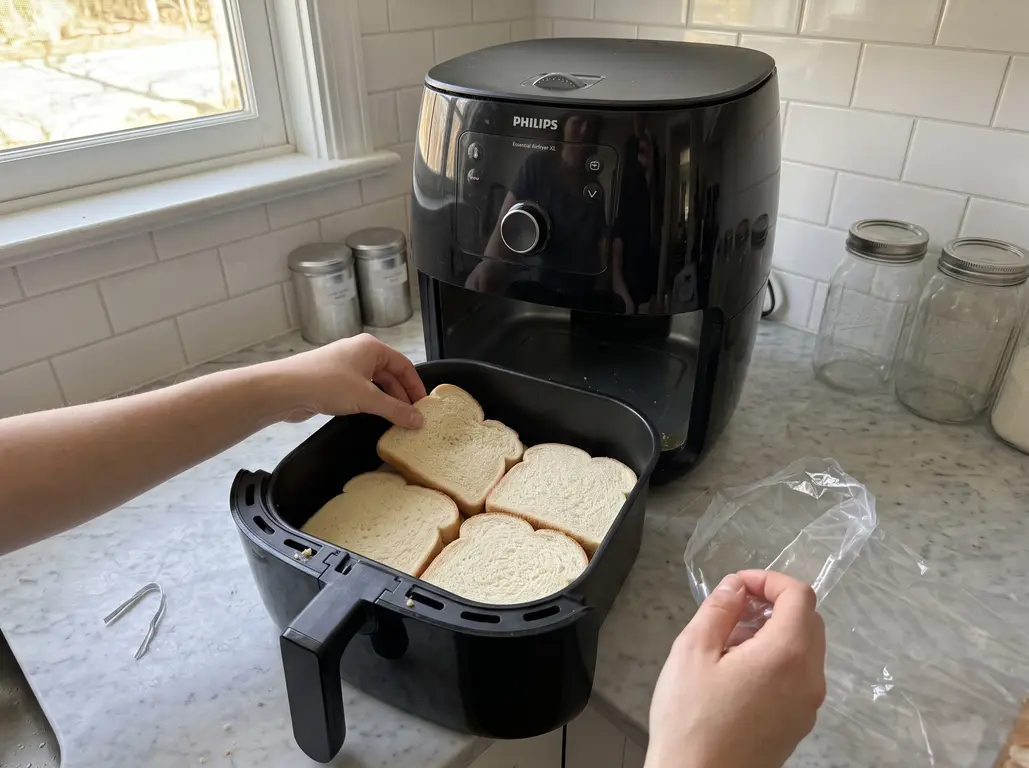
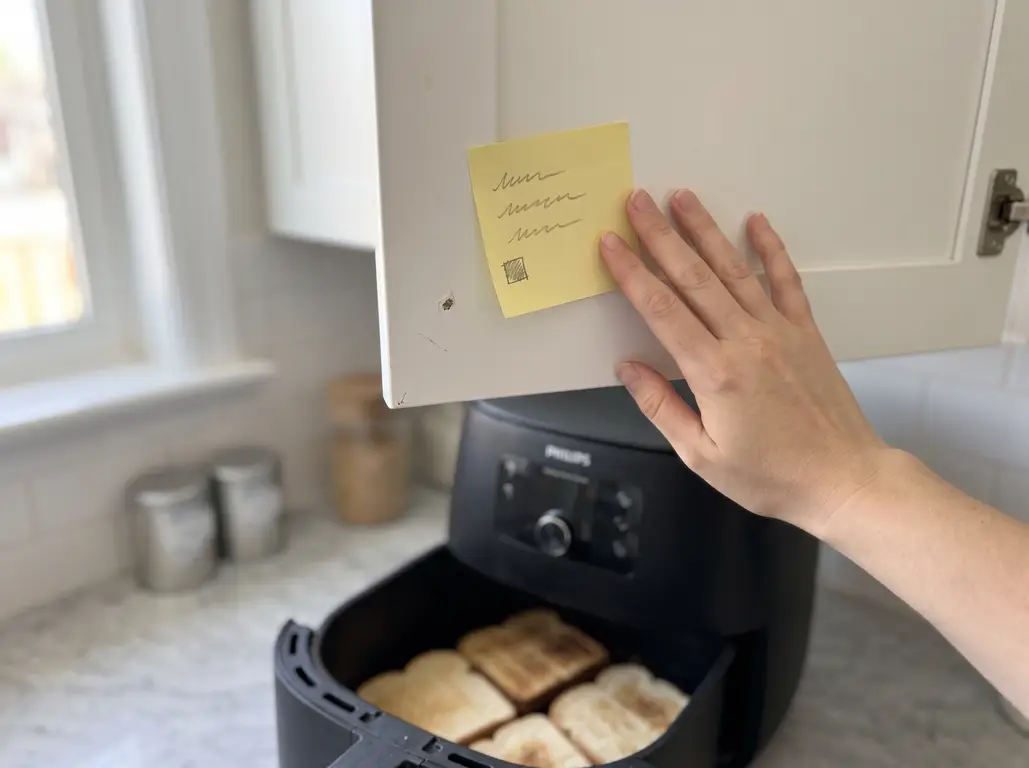
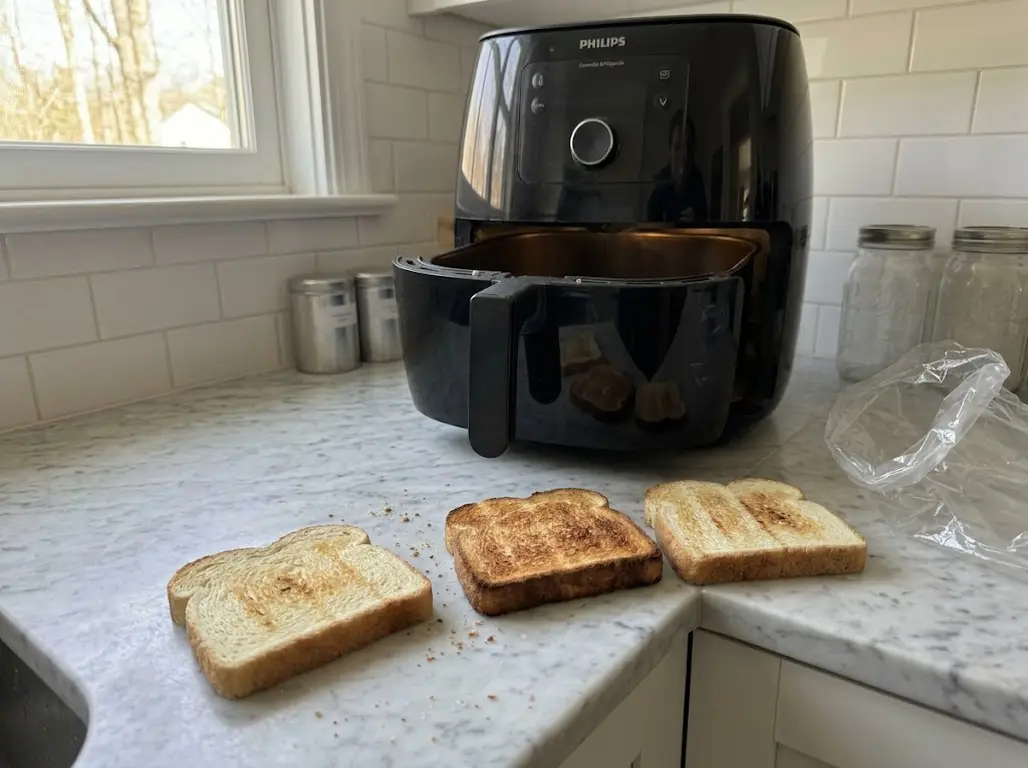
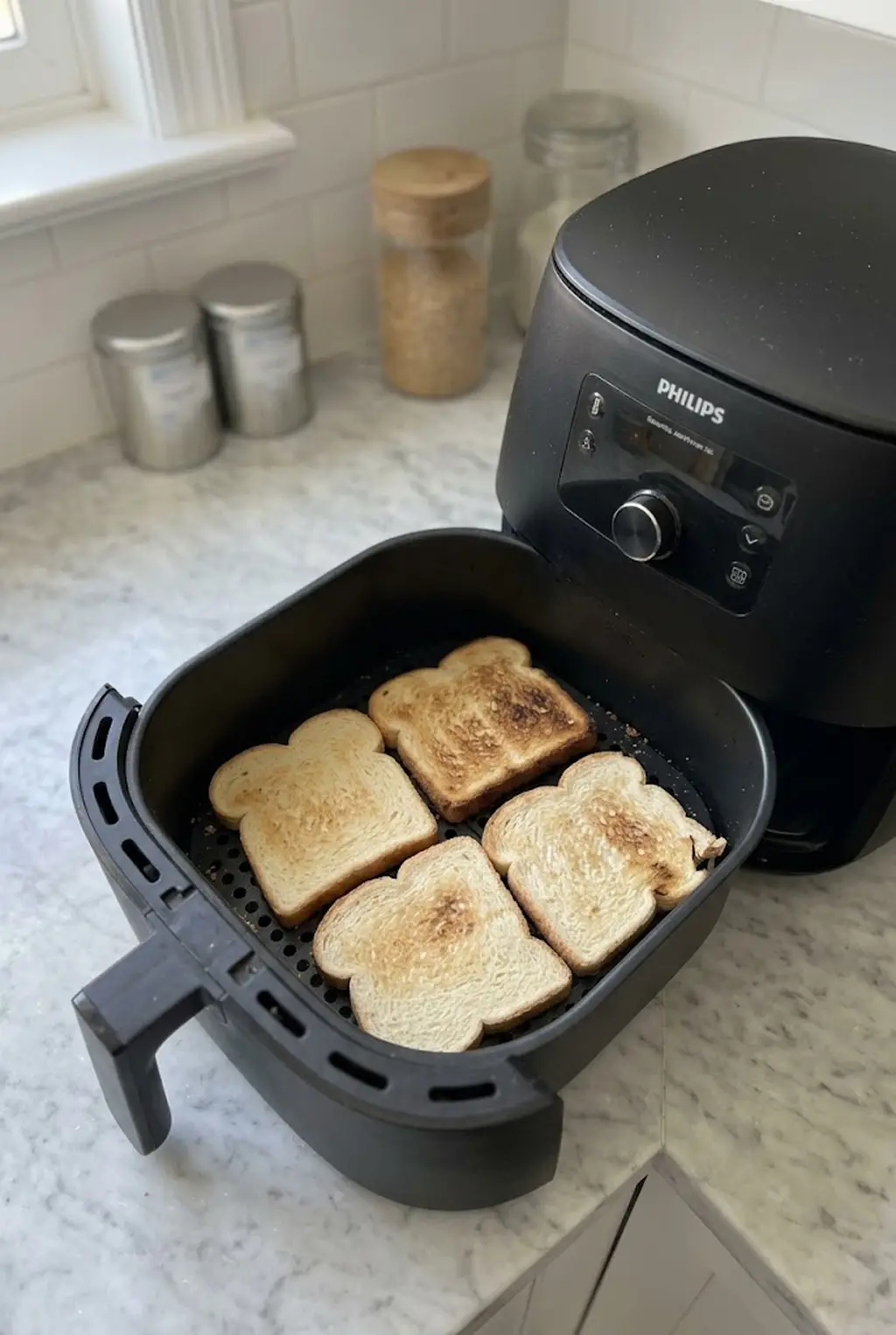
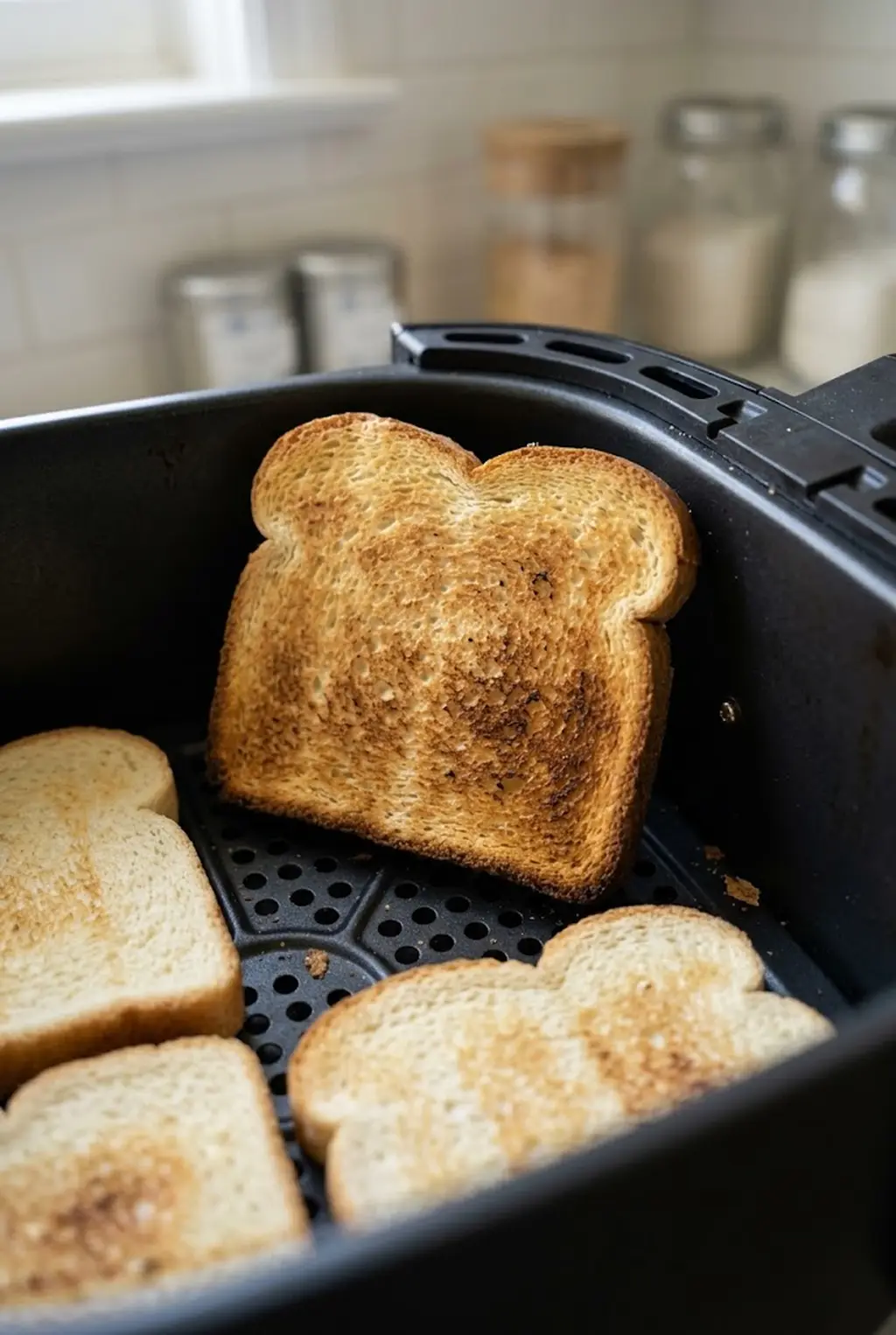
Run the bread map from the audit below: cover the basket floor with a single layer of plain white bread slices and run 350F for 3 to 4 minutes. The slices toast into a literal heat map of your chamber, and the darkest corner is the hot spot your machine will apply to everything it ever cooks. Photograph it, remember it, and rotate against it at the halfway mark of any bake that cannot be shaken.
Never overbake again
Get our one-page times & temps cheat sheet, plus a new tested recipe each week.
No spam · unsubscribe anytime