

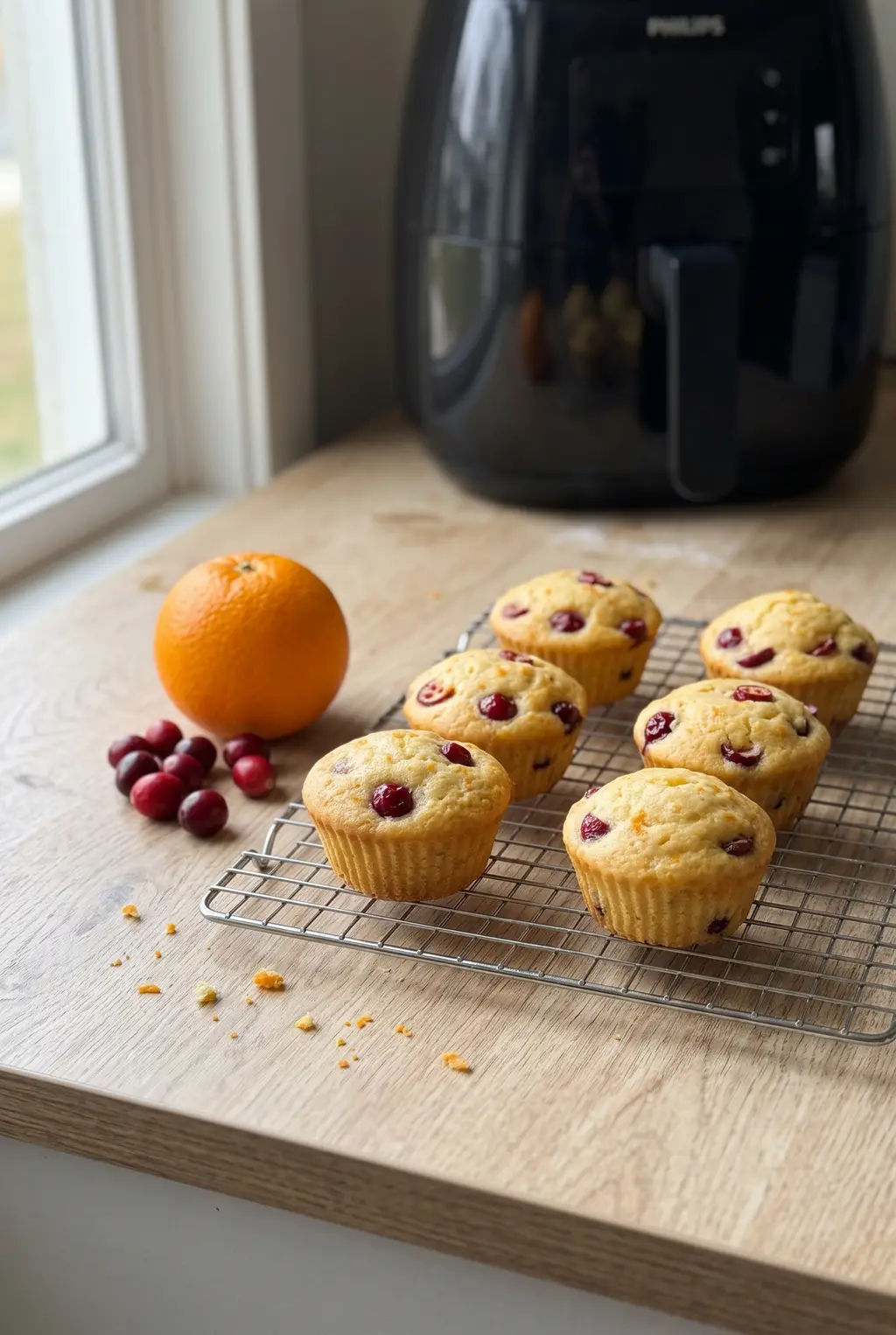
The orange lives in the zest, not the juice
Squeeze an orange into a glass and taste it: sweet, wet, faintly acidic, and nothing you would call intense. That is the whole problem with most cranberry orange muffins, because juice is mostly water and sugar, and batter built on it tastes vaguely sweet instead of like orange. The flavor is in the peel, where the citrus oils live, and the way to get it into every bite is the move our lemon poppy seed muffins run with two lemons: zest the orange directly into the granulated sugar and rub them together with your fingertips until the sugar turns into damp, fragrant orange sand. The rubbing tears open the oil pockets and coats every crystal, and the sugar carries the orange through the whole crumb instead of leaving it in lucky flecks.
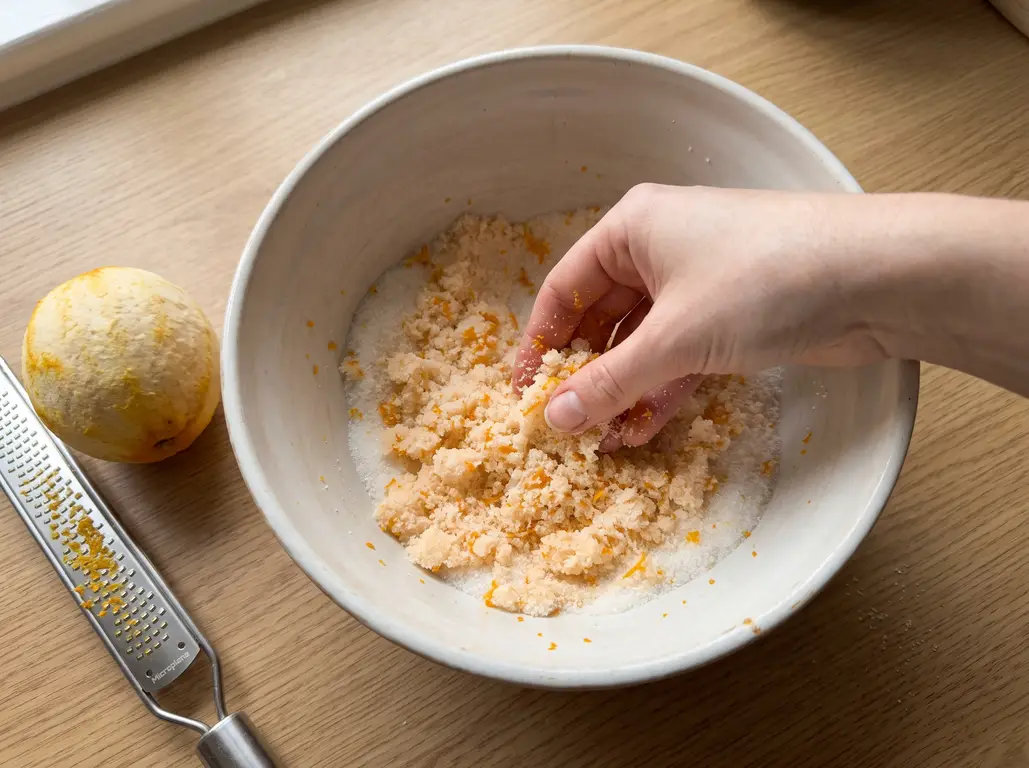
The juice still works here, just in the right-sized role: 3 tablespoons in the batter, where its acid wakes up the baking soda and tenderizes the crumb, and the rest of the orange squeezed into the glaze. One large navel orange runs the entire recipe, zest, batter and glaze, which is tidier than the ranking pages that call for bottled juice and skip the zest, and far tidier than the one that swaps in half a cup of lemon juice and no orange juice at all.
Halve the cranberries, then season the cut sides
A cranberry is not a blueberry. It is a tough-skinned, hollow-chambered berry that is genuinely, medicinally sour raw, and dropped whole into muffin batter it does one of two bad things: it bursts in the heat into a hot sour steam pocket, or it survives the bake intact and waits as a bitter water balloon in the middle of a sweet crumb. Every third bite becomes an ambush, which is why so many reviews of whole-berry recipes read "too tart" under a five star average.
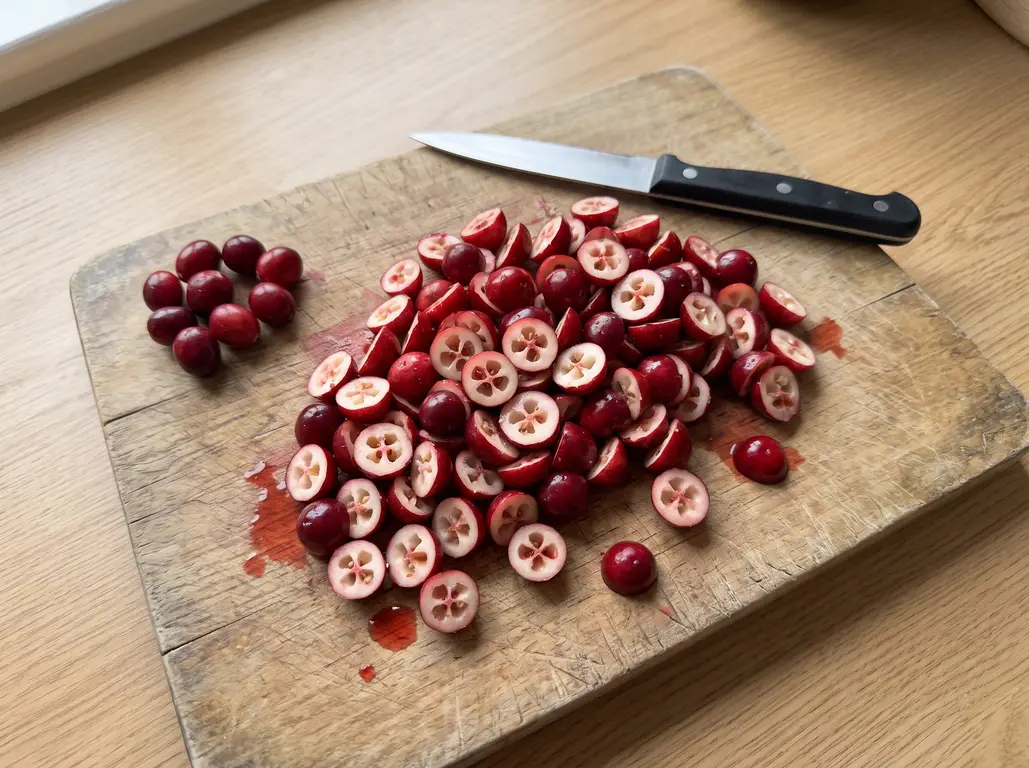
The fix is a knife. Halve the cranberries, and three things improve at once: the pieces spread twice as far so every bite gets fruit at half the intensity, the burst steam pockets disappear because a halved berry has already vented, and the cut sides give the sugar somewhere to land. That last one is the quiet trick of this recipe: toss the halved berries with a reserved tablespoon of the orange sugar plus a tablespoon of flour, so each piece arrives pre-seasoned and the flour coat keeps the fruit from sinking to the bottom of the cups. Ten minutes of knife work is the entire cost, and it is the difference between tart-bright and sour-broken. Fresh berries are an October to December item; frozen work all year straight from the freezer, and the dried-cranberry version gets its own honest math in the FAQs.
A sour cream batter that plans for tart
Tart fruit needs a richer, slightly sweeter crumb than sweet fruit, or the whole muffin reads sour. This batter plans for it three ways. Sour cream brings moisture and a soft, close crumb with enough structure to hold suspended fruit, the same dairy our chocolate chip muffins lean on. Oil rather than butter keeps that crumb soft into day two and three, which matters on a muffin that genuinely improves overnight. And the sugar runs 3/4 cup, a couple of tablespoons more than a sweet-fruit batter would carry, because the berries pay the difference back with interest. The eggs, the 3 tablespoons of orange juice and a teaspoon of vanilla round it out; vanilla and orange is an old bakery pairing for a reason.
Cups, the fold, and the rest
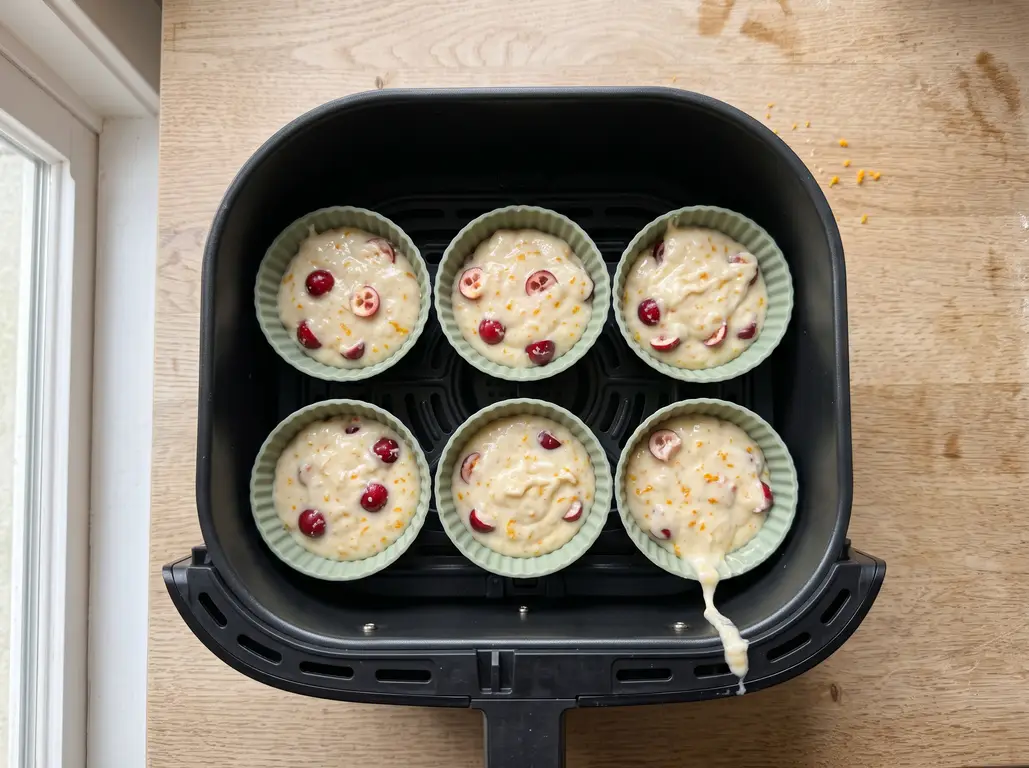
The mechanics are the house muffin method, unchanged. Freestanding silicone cups, six at a time, directly on the basket floor; paper cases alone slump sideways under a fruit-heavy batter in the fan, and a metal muffin tin blocks the under-basket airflow the machine cooks with, physics spelled out in the silicone molds guide. Fold the dry into the wet to the last streak of flour and stop, add the berries with the final three or four strokes so their juice never streaks the batter, and then rest the batter 15 minutes while the machine preheats. The rest hydrates the flour and visibly thickens the batter, which is dome fuel, the same rest our blueberry muffins built their domed tops on. Fill three-quarters and no further; the batter needs rim to climb against.
320°F to a 200°F center
The ranking recipes bake this muffin anywhere from 300°F to 350°F, and both ends lose. At 300°F the muffin sets pale and dense, with a top that never earns any color. At 350°F, a number inherited from oven recipes, the basket's close heat browns the sugared tops minutes before the crumb around the wet berries sets, and the center gets called raw while the edges dry out. The lane is 320°F for 14 to 16 minutes: an oven recipe at 375°F converts to about 350°F through the air fryer calculator, and the last step down is the wet-batter tax every fruit muffin on this shelf pays, recorded across the baking chart.
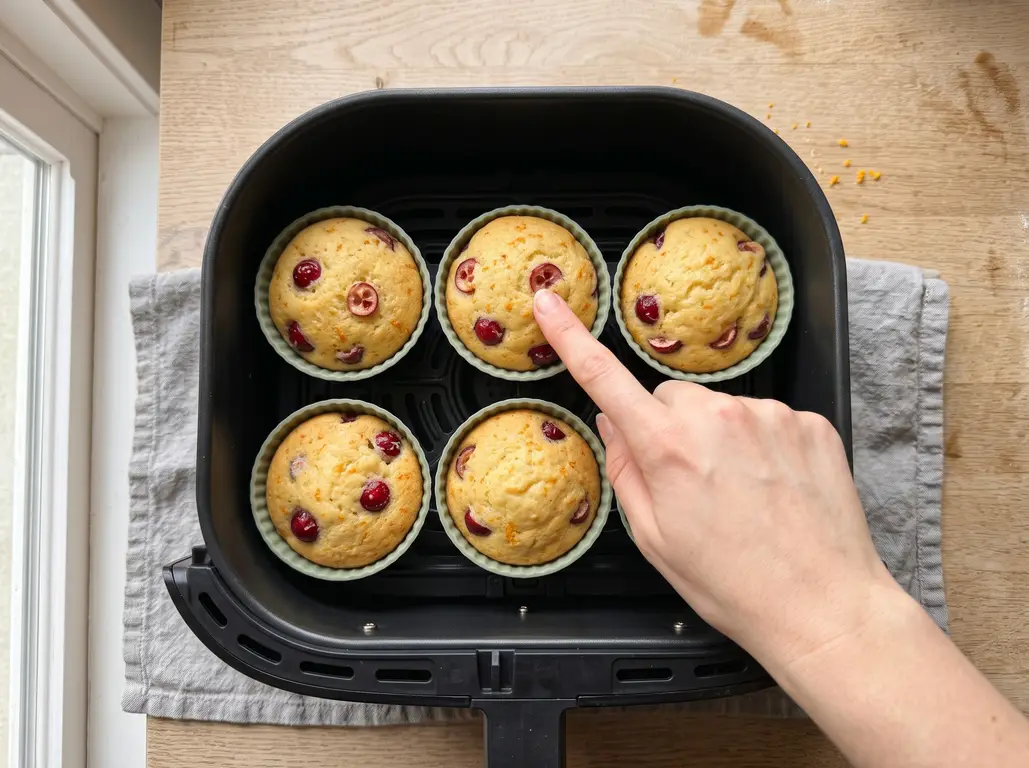
Doneness is a number, not a toothpick. A pick pushed into this muffin will eventually hit a cranberry half and come out wet on a fully baked crumb, so the reliable verdict is 200 to 205°F on a thermometer in the center of the middle muffin, the same figure the banana muffins and the rest of the wet-batter shelf finish at. Corroborate with the spring test, a dome that refills after a gentle press, and expect the second batch to run about a minute faster in the already-warm machine.
Ingredients
For 12 muffins
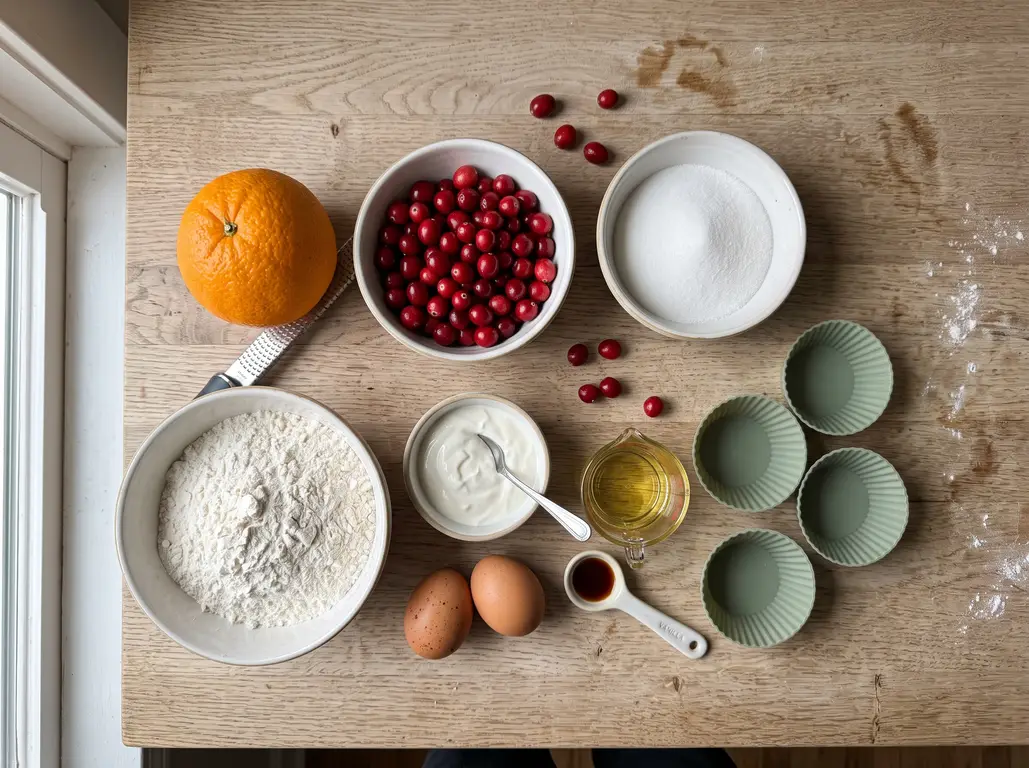
- 3/4 cup (150g) granulated sugar and the zest of 1 large navel orange, about 1 tablespoon
- 2 cups (250g) all-purpose flour, plus 1 tablespoon for the berries
- 2 teaspoons baking powder and 1/4 teaspoon baking soda
- 1/2 teaspoon fine salt
- 2 large eggs
- 3/4 cup (180g) sour cream, full fat
- 1/3 cup (80ml) neutral oil
- 3 tablespoons fresh orange juice, squeezed from the zested orange
- 1 teaspoon vanilla extract
- 1 1/2 cups (150g) fresh or frozen cranberries, halved
- Optional glaze: 3/4 cup powdered sugar, 4 to 5 teaspoons orange juice, a pinch of reserved zest
- 12 silicone baking cups
One large navel orange covers the zest, the batter juice and the glaze. If your orange runs small or stingy, a splash of bottled juice can top up the glaze, but the zest must come off a real orange; that is where the recipe lives.
How to make them
- Zest the orange straight into the sugar in a large bowl and rub them together with your fingertips until the sugar looks and smells like damp orange sand. Set aside 1 tablespoon of this orange sugar for the berries.
- Whisk the flour, baking powder, baking soda and salt in a second bowl.
- Whisk the eggs, sour cream, oil, 3 tablespoons of orange juice and the vanilla into the orange sugar until smooth and glossy.
- Halve the cranberries, then toss them with the reserved tablespoon of orange sugar and 1 tablespoon of flour until the cut sides are coated.
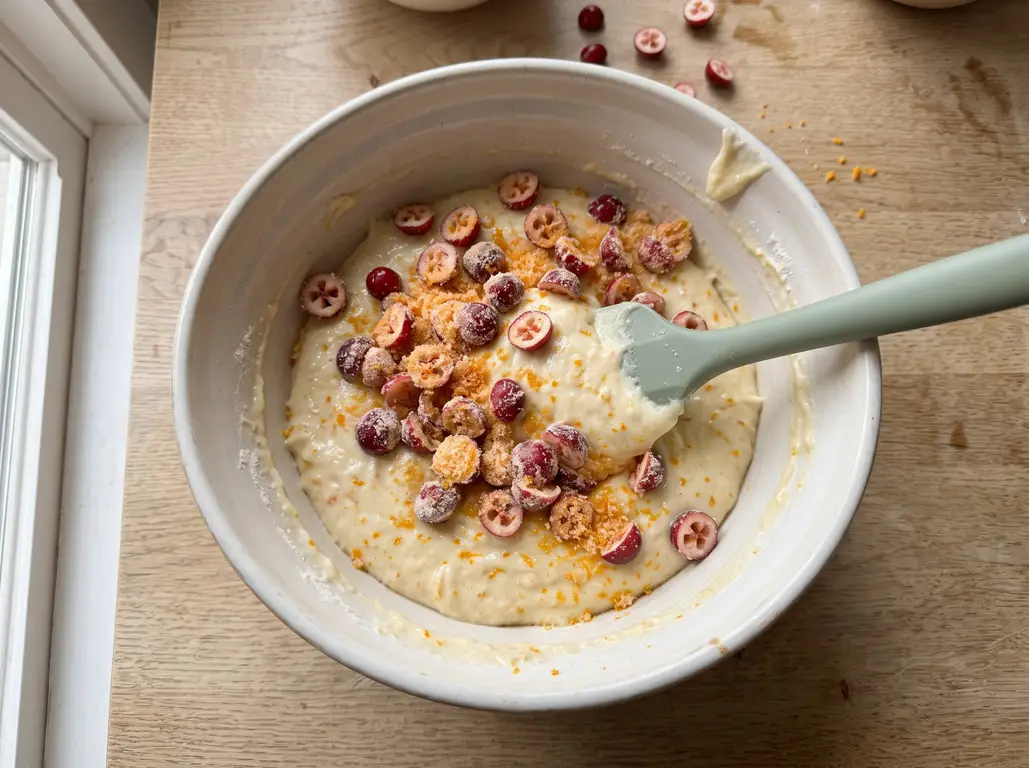
- Fold the dry into the wet just until the last streak of flour disappears, scatter the berries over the top, and fold three or four strokes more. Rest the batter 15 minutes while the air fryer preheats at 320F for 3 minutes.
- Fill 6 silicone cups three-quarters full, set them on the basket floor with air between them, and air fry at 320F for 14 to 16 minutes, until the domes are golden and spring back from a gentle press.
- Confirm 200 to 205F on a thermometer in the center of the middle muffin; a toothpick that hits a berry pocket will read wet on a fully baked muffin.
- Cool the cups 5 minutes, push the muffins out from underneath, and bake the second batch about a minute shorter. If glazing, wait until the muffins are fully cool, whisk the glaze smooth, and spoon it over.
The glaze, and when to skip it
The glaze is the rest of the zested orange doing its second job: 3/4 cup powdered sugar whisked with 4 to 5 teaspoons of its juice and a pinch of reserved zest, thick enough to coat a spoon and drip slowly. It reads dessert, and it is genuinely good against the tart berries. Two rules. First, glaze only a fully cooled muffin; on a warm one the glaze thins, slides off the dome and soaks in as a soggy ring. Second, know when to skip it: glazed muffins are a coffee-table bake, unglazed ones are breakfast, and if you want a finish without the sweetness, a pinch of coarse sugar on each raw top before baking gives you crunch instead. For a crowd around the holidays, glaze half the batch and let the table vote.
Variations
- White chocolate: 3/4 cup of chopped white chocolate folded in with the berries. Cranberry and white chocolate is the pairing every December bakery case agrees on, and the sweetness argues nicely with the tart halves.
- Cranberry walnut: 1/2 cup of toasted walnuts or pecans, chopped, folded in with the fruit.
- Cranberry sauce swirl: the leftover-sauce version several ranking pages build the whole recipe on works better as an accent: drop the berries to 1 cup and swirl a scant teaspoon of whole-berry sauce onto each filled cup before baking.
- Orange streusel: swap the glaze for a rubbed crumb of 3 tablespoons each flour and sugar, 1 1/2 tablespoons cold butter and a pinch of zest, pressed onto the raw tops. At 320°F it toasts instead of scorching.
- Mini muffins: 310°F for 7 to 9 minutes, per the size rules in mini vs jumbo muffins.
- Doubling for a holiday morning: the recipe scaler handles the math; the baking still happens six cups at a time, and batch two runs a minute shorter.
Fixing what goes wrong
| Problem | Cause | Fix |
|---|---|---|
| Sour, wet pockets in the crumb | Whole cranberries | Halve them and toss with the reserved orange sugar; a halved berry has already vented |
| All the fruit at the bottom | Slick whole berries in a thin batter | The flour toss plus the 15 minute rest; thick batter holds fruit where the fold left it |
| Purple-gray streaked batter | Thawed frozen berries stirred too long | Halve them still frosty and fold in with the last three strokes |
| Bitter aftertaste | Zest taken past the orange skin into the white pith | Light hand on the zester; color only, stop at the white |
| Brown tops, wet centers | 350°F carried over from an oven recipe | 320°F to a 200°F center; hot-running machines are covered in the burning guide |
| Flat tops | Skipped the rest, or overmixed the fold | Fold to the last streak, rest 15 minutes; both are dome fuel |
| Glaze vanished into the muffin | Glazed warm | Fully cool first; deeper mysteries live in the troubleshooting guide |
Storage and freezing
Airtight at room temperature for 3 days with a paper towel under and over the muffins, because the berry pockets keep releasing moisture as they sit; glazed ones are best inside 2 days, before the glaze starts to weep. These are honestly better on day two, once the orange settles into the crumb. For the freezer, leave them unglazed, wrap individually, and they hold 3 months; revive at 300°F for 3 to 4 minutes in the basket and glaze after reviving, never before. If your bakes trend dry no matter the recipe, the machine-side suspects are in how to avoid dry air fryer bakes, and when the cranberry bag is empty the muffin shelf keeps going: the morning glory muffins for a loaded breakfast, the lemon bread for the citrus loaf version, and a batch of these alongside the Christmas cookies earns its place on any holiday morning, with the full lineup on the pastries and morning bakes page.
Frequently asked questions
QWhat temperature do you bake cranberry orange muffins in an air fryer?
320°F for 14 to 16 minutes, six silicone cups at a time in a basket preheated 3 minutes, until a thermometer reads 200 to 205°F in the center muffin. The pages ranking for this recipe disagree by fifty degrees, and both ends lose: 300°F bakes a pale, dense muffin, and 350°F browns the tops minutes before the crumb around the wet berries sets. 320°F is the lane every wet-fruit batter on this site's muffin shelf drives in, and the second batch runs about a minute faster in the warm machine.
QCan I use frozen cranberries?
Yes, and for most of the year they are the only option, because fresh cranberries are an October to December produce item. Let them sit 5 minutes on the counter so a knife goes through, halve them, toss them frozen with the orange sugar and flour, and fold them in with the last few strokes; a fully thawed cranberry bleeds and streaks the batter a dusty purple-gray. Frozen berries add about a minute to the bake, so lean on the 200°F reading rather than the clock.
QCan I use dried cranberries instead of fresh?
Yes, but it becomes a different, sweeter muffin, closer to a bakery raisin muffin than the tart-bright original. Use 3/4 cup of dried cranberries, soak them 10 minutes in hot orange juice so they do not pull moisture out of the crumb, drain, and cut the sugar in the batter by 2 tablespoons, because dried cranberries are candied before they are dried. No halving, no flour toss, and no sour pockets, which is exactly what you give up: the tartness is the point of this muffin.
QWhy do you rub the orange zest into the sugar?
Because the orange flavor lives in the zest oils, not the juice. Orange juice is mostly water, sugar and mild acid, which is why muffins that rely on it taste vaguely sweet instead of like orange. Rubbing the zest into the granulated sugar tears open the oil pockets and coats every crystal, so the flavor travels through the whole crumb instead of sitting in occasional flecks. The juice still earns its seat, 3 tablespoons in the batter for acidity and the rest in the glaze, but the zest does the talking.
QWhy halve the cranberries?
A whole raw cranberry is a tough-skinned, genuinely sour berry that does one of two bad things in a muffin: it bursts into a hot sour steam pocket, or it survives intact as a bitter water balloon in the middle of a sweet crumb. Halving fixes both. The berry pieces distribute twice as widely at half the ambush per bite, the cut sides take on the reserved orange sugar so each piece arrives pre-seasoned, and the flour toss keeps them from sinking to the bottom of the cups.
QCan I bake these in a muffin tin in the air fryer?
Skip the tin even if one fits. A basket air fryer cooks with air circulating under and around the food, and a solid metal tin blocks that airflow, which bakes the tops on schedule and leaves the bottoms behind. Freestanding silicone cups, six at a time directly on the basket floor, let the air do its job and release the muffins with one push from underneath. Paper cases alone slump sideways under this batter; if you want the bakery look, drop a paper liner inside each silicone cup.
QHow do you store cranberry orange muffins, and do they freeze?
Airtight at room temperature for 3 days, with a paper towel under and over them to catch the moisture the berries keep releasing; glazed muffins are best eaten within 2 days before the glaze starts to weep. For the freezer, leave them unglazed, wrap individually, and they keep 3 months; revive at 300°F for 3 to 4 minutes in the basket and glaze after, never before. Day two is this muffin's best day, once the orange has settled into the crumb.
Made it? Rate it.
Never overbake again
Get our one-page times & temps cheat sheet, plus a new tested recipe each week.
No spam · unsubscribe anytime