


There is a specific slice of lemon loaf that people mean when they say lemon bread: pale gold, dense enough to hold in one hand with coffee in the other, wearing a white glaze that cracks quietly when the fork goes through. The coffee chain version costs four dollars a slice and comes off a truck. The homemade version costs pennies, bakes in half an hour on the counter, and fails in exactly one predictable place, which is the glaze.
I know because I failed there repeatedly. My early loaves were good bread wearing bad glaze: sometimes it vanished into the crumb like rain into soil, sometimes it slid off the crown and puddled on the rack. The batter was never the problem. The clock was. Glaze has one law, and everything else on this page is easier than the discipline of obeying it.
Quick answer: Bake a sour cream lemon batter in two mini loaf pans at 310°F, tented with foil for 22 minutes, then uncovered 8 to 12 minutes, until the center reads 205°F. Cool the loaves completely, at least 90 minutes, then pour on a thick glaze of 1 cup powdered sugar to 2 tablespoons fresh lemon juice and let it set 20 minutes into a shell. Glaze on a warm loaf melts and disappears; glaze on a cold loaf sets and snaps. That is the entire secret.
One fruit, three pages: bread, cake, bars
This site now has three lemon desserts, and they are not rivals; they are three different answers to three different cravings:
This page
A loaf you slice, with a set white glaze on top. Breakfast and coffee-break food, sturdy enough for a napkin, at its best on day two.
The soaked round
The lemon cake is a round, fork-and-plate dessert soaked with warm lemon syrup while it is hot, the opposite moment from this page's glaze, and the page that explains the full put-the-lemon-in-three-times doctrine.
Shortbread and curd
The lemon bars are pure dessert: a crisp shortbread floor under soft lemon curd. Maximum lemon per square inch, zero pretense of being breakfast.
The syrup-versus-glaze distinction is worth one more sentence, because it decides everything: syrup goes on hot cake so it soaks in; glaze goes on cold bread so it stays out. Same two ingredients, opposite timing, opposite result. Warm loaf plus glaze gives you neither.
Glaze physics: the cold loaf law
A powdered sugar glaze is sugar dissolved in just enough liquid to pour. It sets by drying: the water leaves, the sugar crystallizes into a thin shell. Everything that goes wrong with it is temperature:
- On a hot loaf, the glaze's sugar melts, thins, and soaks into the open crumb. You have accidentally made a weak syrup soak and an invisible glaze.
- On a warm loaf, it half-melts and slides, pooling at the base. The crown ends up naked with a white skirt around the bottom.
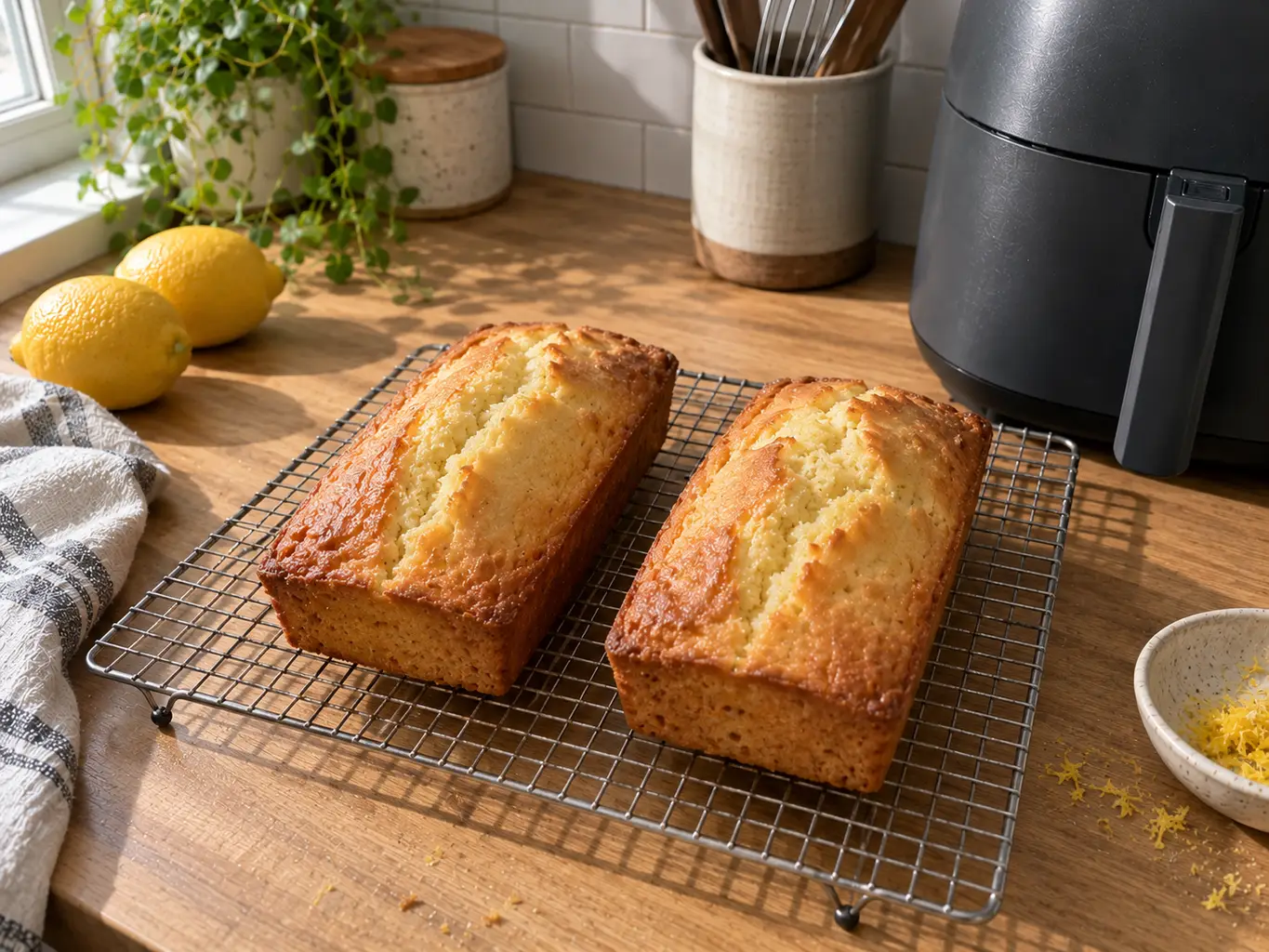
- On a fully cool loaf, at least 90 minutes out of the machine, it stays where you poured it, dries in about 20 minutes, and cuts with the quiet crack that is the whole point, the same set-then-shatter behavior the glazed donuts live on.
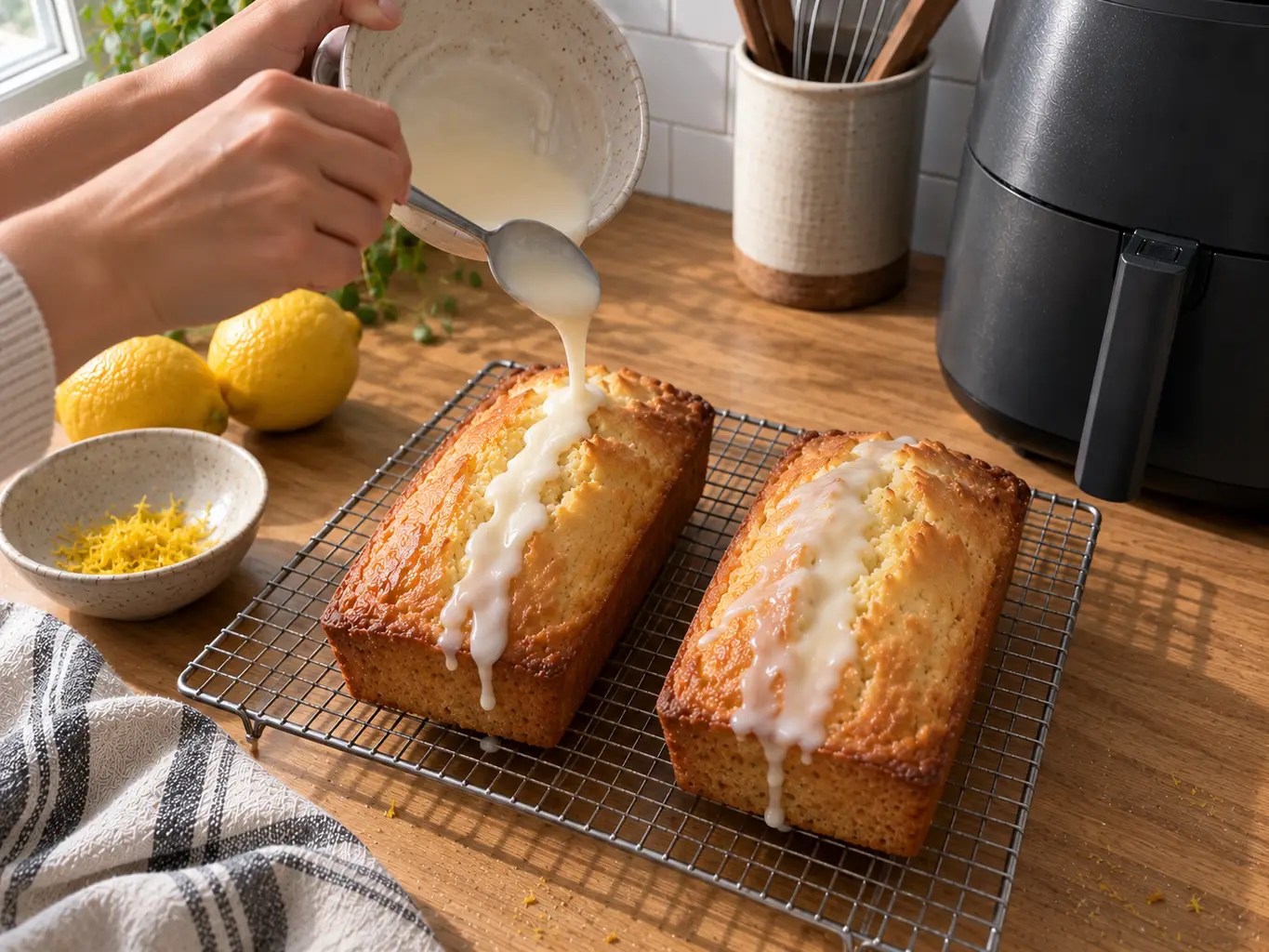
- Thickness matters as much as timing: 1 cup powdered sugar to 2 tablespoons juice pours like cold honey and holds a ribbon on the surface for a second before leveling. Runnier than that slides off even a cold loaf; stiffer spreads like frosting and loses the poured look.
- The crown crack is a feature. Quick bread loaves split down the middle as they rise. Pour the glaze along that crack and let it flow outward; the split becomes a glaze reservoir, and every slice gets a thick seam of it.
What makes the glaze bright
Bright is not sweetness; bright is acid. The difference between a flat white icing and a glaze that makes the loaf taste more of lemon is what the liquid is:
| Glaze liquid | Result |
|---|---|
| Fresh lemon juice, all of it | The bright one. The acid cuts the sugar so the shell tastes of lemon, not frosting. This page's default |
| Milk or water | Sweet, blank, coffee-shop-adjacent but duller. Use only if the lemons ran out |
| Juice plus a pinch of salt and a little zest | The upgrade: salt sharpens the acid, and a quarter teaspoon of zest flecks the shell. Add the zest sparingly; too much makes the glaze bitter overnight |
Bottled lemon juice is fine in batter, where it mostly works as acid, but the glaze is raw and unbaked, and bottled juice's cooked flavor shows. The glaze is where the fresh lemon goes.
The tender crumb: sour cream and a light hand
Tender in a loaf that also has to stand up to slicing comes from two decisions:
- Sour cream, half a cup. Its fat shortens gluten strands and its acid tenderizes them, which is why the coffee shop loaf has that almost-pound cake plushness. Full-fat yogurt substitutes one for one.
- Oil, not butter. Butter flavor loses to lemon anyway, and oil keeps the crumb soft on day two and three, which matters for a loaf whose destiny is to be sliced across several mornings.
- Fold, do not beat. Same quick bread law as the zucchini bread next door: stir until the flour disappears and stop. Overmixed loaves turn rubbery and tunnel.
- Two eggs, which push this crumb slightly toward pound cake territory. That is deliberate; a one-egg lemon loaf is too fragile to carry a set glaze without shedding crumbs into it.
Where the lemon flavor actually lives
The short version of a truth the lemon cake page covers in full: the flavor is in the zest, not the juice. Lemon oil lives in the yellow skin, and juice in a batter mostly contributes acid that bakes out. So this loaf front-loads the zest where it works hardest:
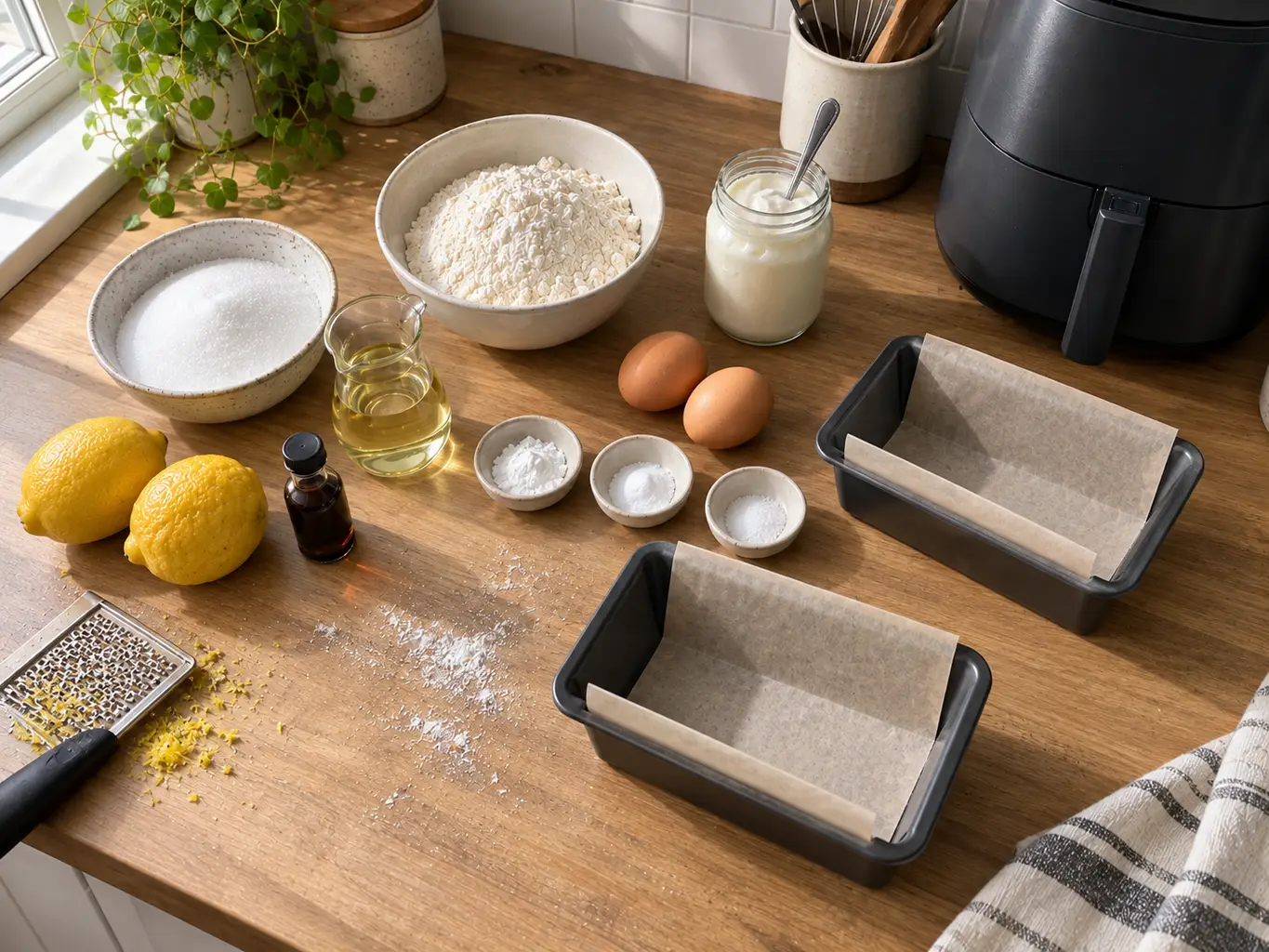
- Rub the zest of two lemons into the sugar with your fingertips before anything else touches the bowl, until the sugar is pale yellow and smells like a grove. The abrasion releases the oils into the fat-loving sugar instead of the air.
- Zest first, juice second, always, because a juiced lemon half is impossible to zest.
- Only the yellow. The white pith underneath is bitter, and a light hand on the grater is the difference.
- The 2 tablespoons of juice in the batter are there for the baking soda to react with, brightness insurance rather than the main event. The main event is the sugar rub below and the glaze above.
How to make it
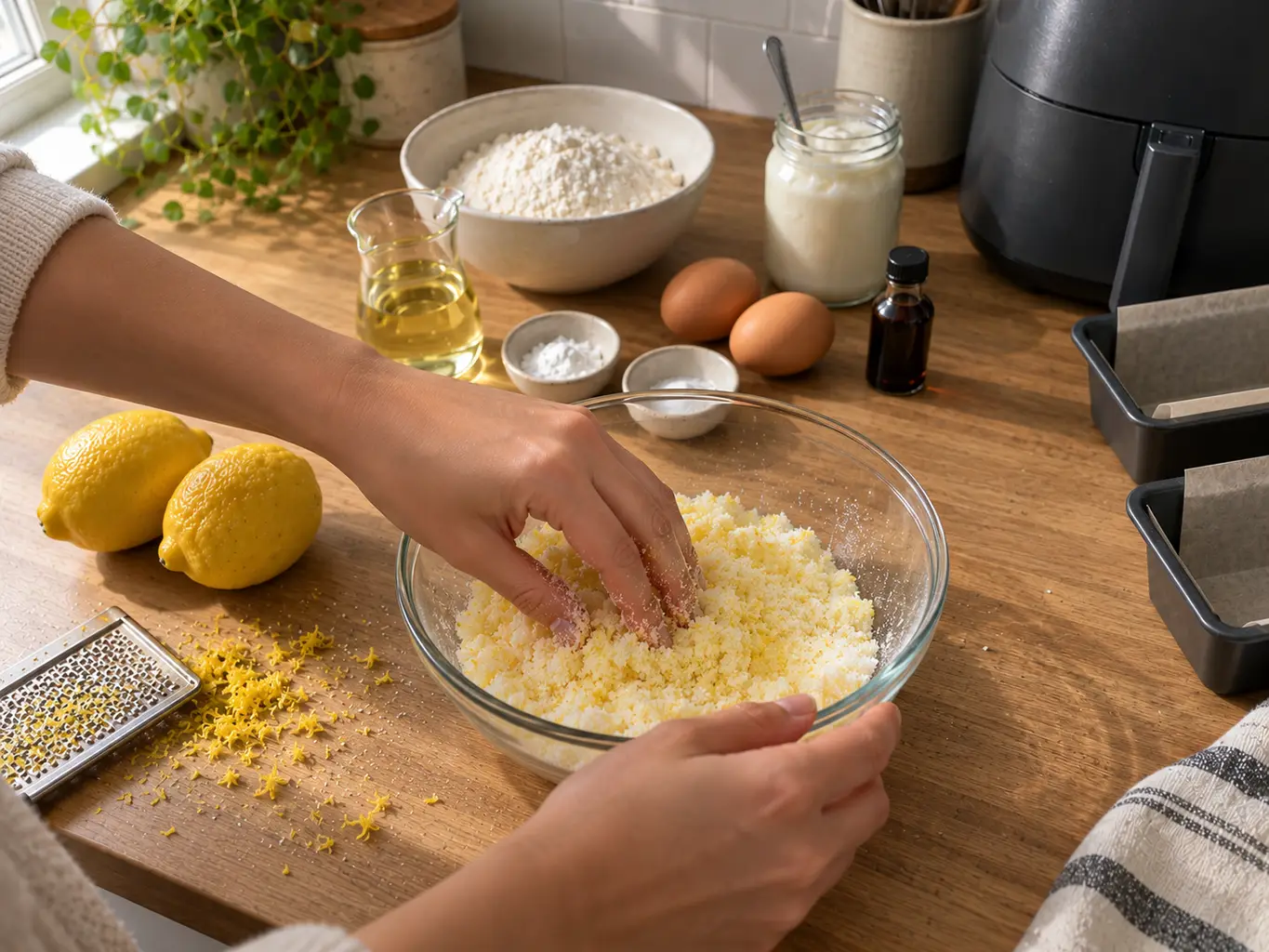
- Rub the zest into the sugar: 3/4 cup sugar, zest of 2 lemons, fingertips, one fragrant minute.
- Whisk the dry: 1.5 cups flour, 1 teaspoon baking powder, 1/4 teaspoon baking soda, 1/2 teaspoon salt.
- Whisk the wet: the lemon sugar, 2 eggs, 1/2 cup sour cream, 1/3 cup oil, 2 tablespoons lemon juice, 1 teaspoon vanilla, until smooth and glossy.
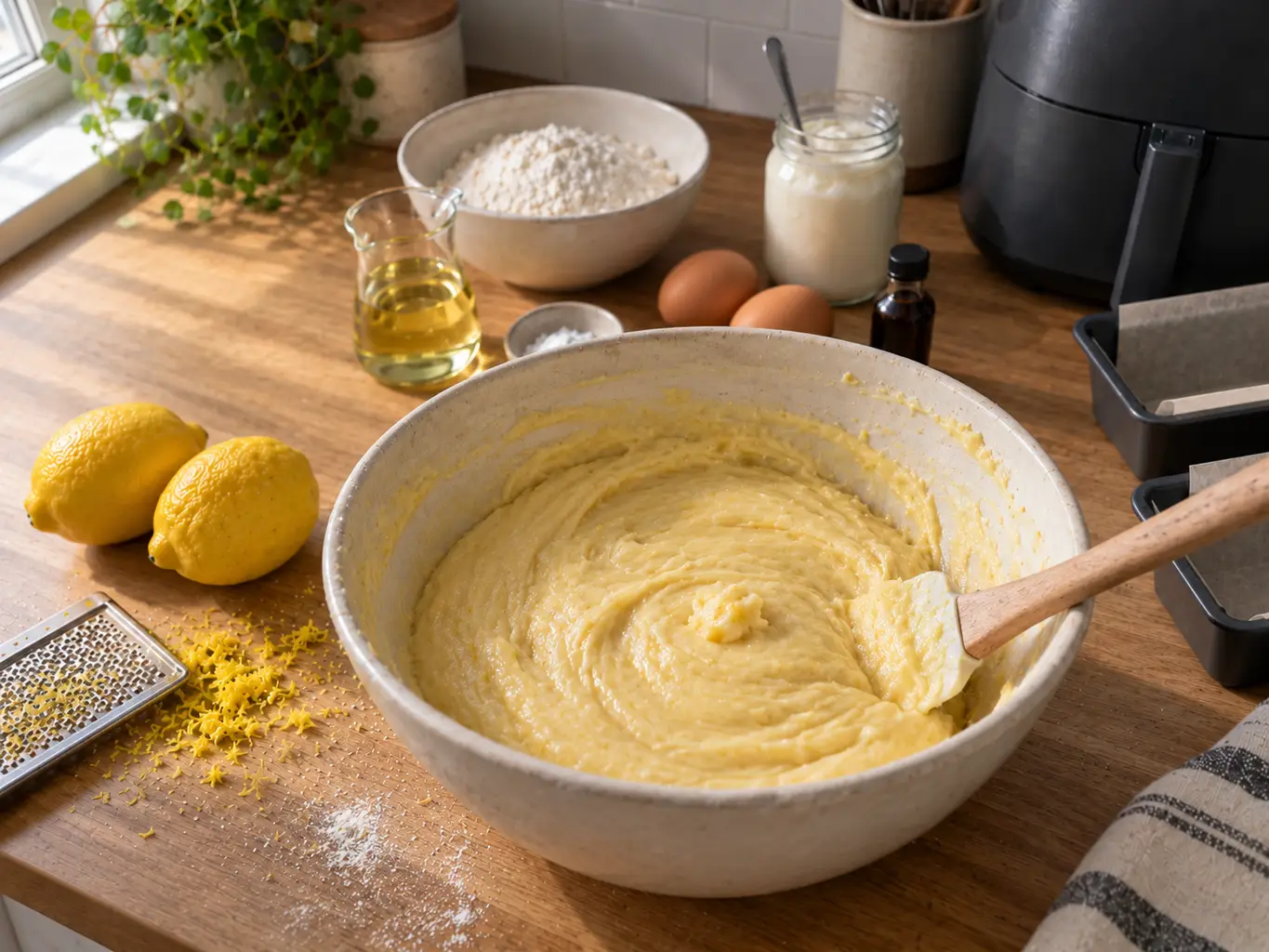
- Fold wet into dry just until the flour disappears. Lumps forgiven; enthusiasm punished.
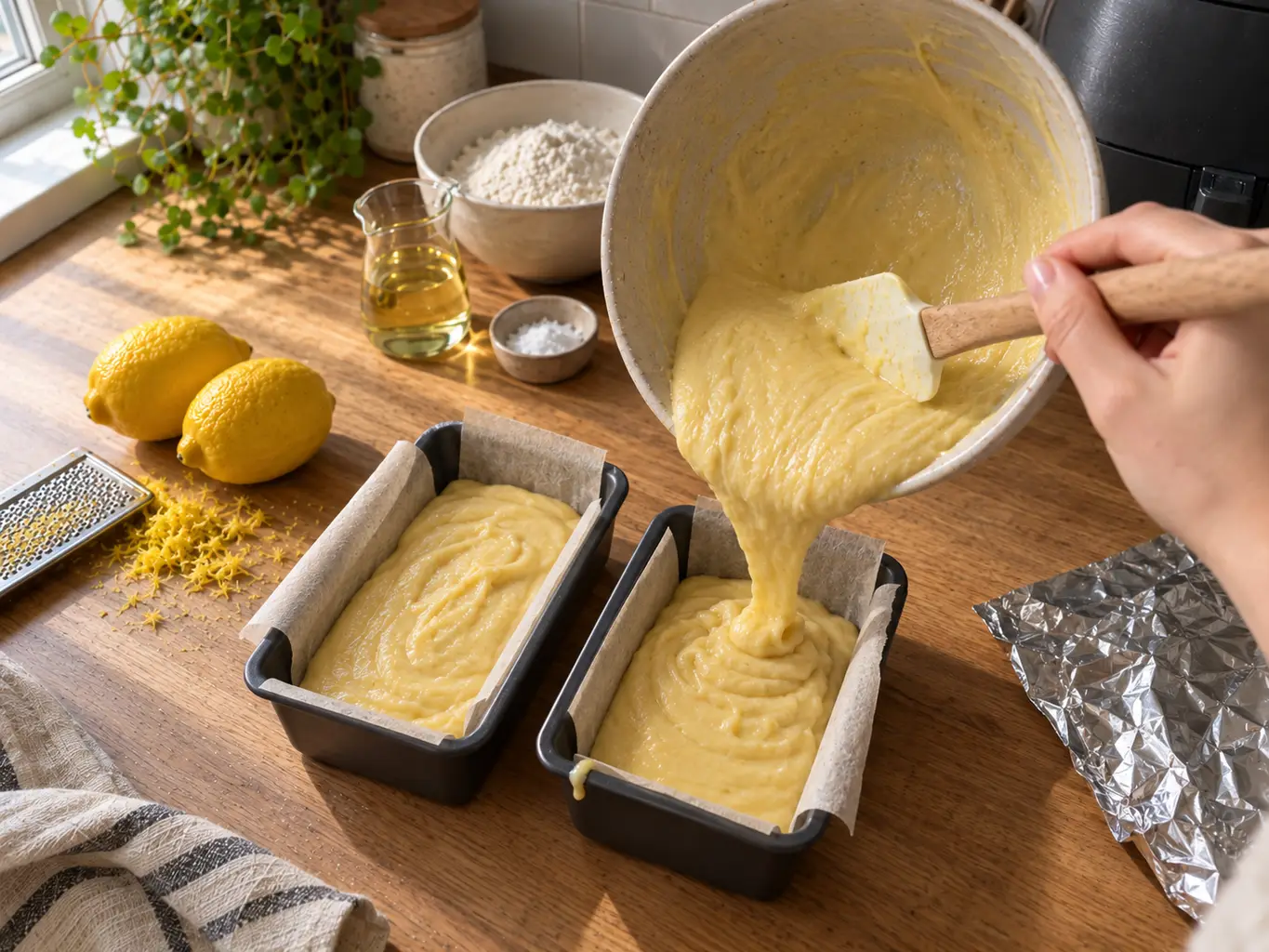
- Divide between two greased, parchment-slinged mini loaf pans, two-thirds full at most.
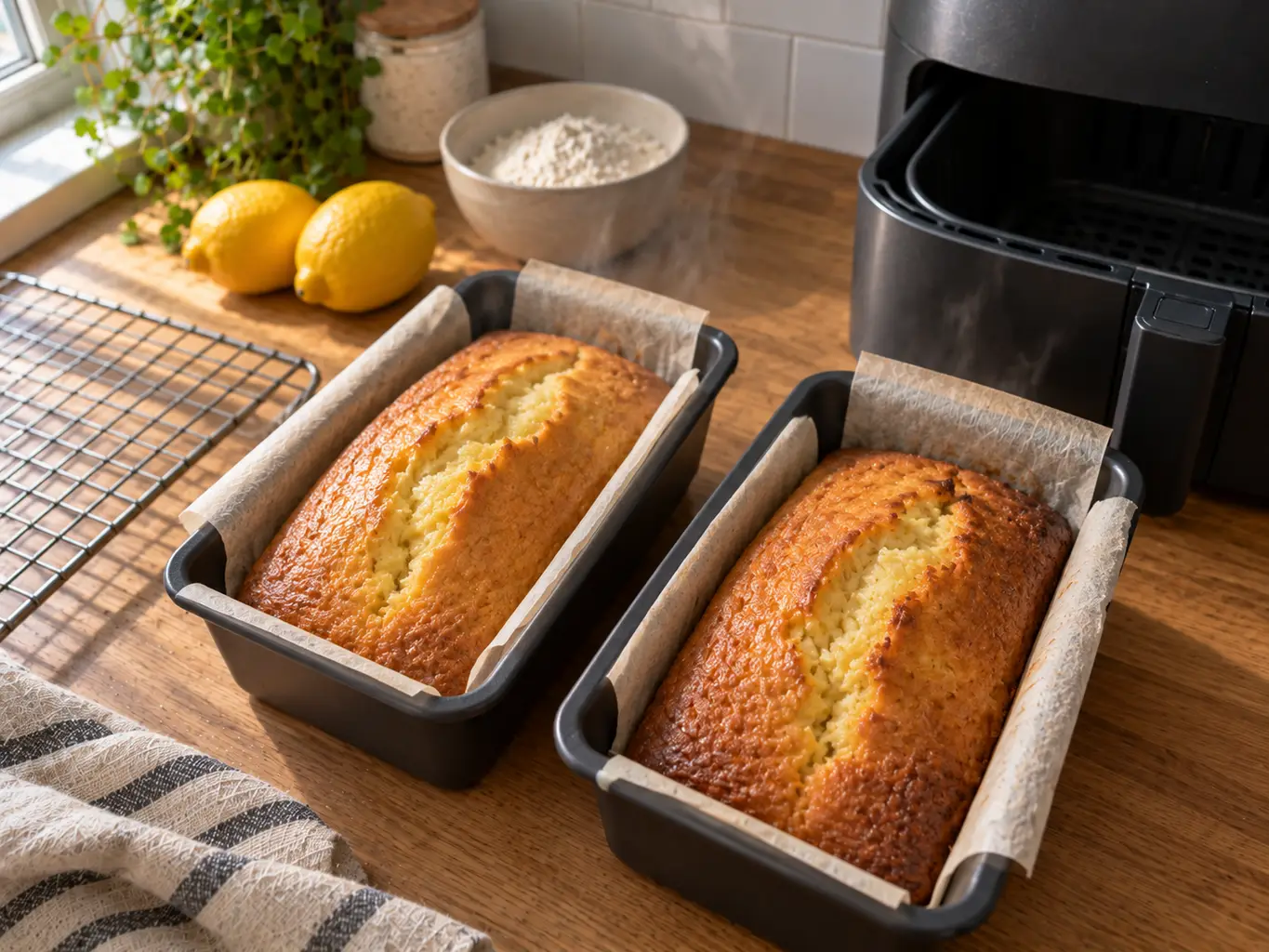
- Bake at 310°F, tented loosely with foil, 22 minutes, no preheat. Untent, swap pan positions, and bake 8 to 12 minutes more until deep gold and cracked down the middle.
- Pull at 205°F in the center on an instant-read thermometer. The toothpick is as unreliable on this moist crumb as it is on every dense bake here.
- Cool 10 minutes in the pans, then on a rack until completely cold, at least 90 minutes. This is the hard part and the whole trick. Meanwhile, whisk 1 cup powdered sugar with 2 tablespoons fresh lemon juice and a pinch of salt to a slow ribbon.
- Pour the glaze along the crown crack and nudge it to the edges, letting a few drips commit to the sides. Leave it 20 minutes to set into a shell before slicing.
Pans, tents, and temperature
This loaf follows the quick bread doctrine established on the zucchini page, so here it is in brief rather than again in full. Two mini loaf pans beat one big one, because a deep loaf's center cannot set before its top overbakes under a top element; check any pan against your basket with the pan size calculator before batter meets bowl. The loose foil tent protects the crown for the first 22 minutes, then comes off for color; the foil and parchment guide has the crimping details that keep the fan from stealing it.
On temperature: oven lemon loaf recipes run 350°F, and the air fryer calculator honestly converts that to about 325°F. This page bakes 15 degrees below the conversion, at 310°F, for the same reason the zucchini bread does: dense, wet quick bread batter under a close top element rewards extra gentleness the conversion math cannot know about. No preheat, per the preheat guide; a cold start rises a quick bread more evenly. The whole site's settings live in the air fryer baking chart.
Troubleshooting
| What you got | Why | Fix |
|---|---|---|
| Glaze vanished into the loaf | It went on hot and became syrup. | The cold loaf law: 90 minutes on the rack, no exceptions, no touching-it-to-check-if-it-feels-cool-enough optimism. |
| Glaze slid off and pooled | Warm loaf, or glaze too thin. | Fully cold, and the ribbon test: 1 cup powdered sugar to 2 tablespoons juice, thick as cold honey. |
| Glaze turned transparent overnight | Stored airtight while the shell was still damp underneath. | Let the glaze set a full hour before the container lid goes on. |
| Flat lemon flavor | Zest skipped or scattered on top instead of rubbed into sugar. | The sugar rub, and fresh juice in the glaze. Juice alone cannot carry a loaf. |
| Bitter edge | Pith grated in with the zest, or too much zest in the glaze. | Yellow only on the grater; a quarter teaspoon maximum in the glaze. |
| Gummy bottom stripe | The quick bread classic: underbake plus steam. | 205°F center, 10 minute pan exit to the rack. The full inquest lives on the zucchini bread page. |
| Sunken middle | Underbaked structure or an overfilled pan. | Two-thirds fill, the thermometer, and the sunken middle guide for the complete taxonomy. |
| Dark crown, pale sides | Tent off too early, or a machine hot spot. | Full 22 tented minutes, swap pan positions at the untenting. The burning guide covers chronic offenders. |
Anything that follows you across recipes belongs to the troubleshooting guide.
Variations
- Lemon poppy seed: 2 tablespoons of poppy seeds folded in at the end. The classic coffee shop sibling, zero other changes.
- Lemon blueberry: 3/4 cup blueberries tossed in a tablespoon of the measured flour, the same anti-sinking trick the blueberry muffins run so they hang in the crumb instead of sinking to the bottom stripe zone. Frozen berries go in frozen, unthawed.
- Iced lemon loaf, coffee chain style: this recipe already is one; for the full effect, do two coats. A thin first glaze absorbed slightly into the cold crumb, 10 minutes, then the thick coat over it. The double layer is the store-bought look.
- Lemon almond: 1/2 teaspoon almond extract alongside the vanilla, and sliced almonds pressed into the wet glaze before it sets.
- Doubling: the recipe scaler does the batter math for four loaves; bake two pans at a time, because a crowded basket bakes nobody's loaf well.
In the quick bread family portrait, this is the polished sibling: the banana bread rescues fruit, the zucchini bread rescues August, the pumpkin bread rescues the leftover half can, and the lemon bread rescues nothing at all. It exists purely because it is delicious, which is its own kind of honesty.
Storage and freezing
- Room temperature: 4 days, in a container once the glaze has fully set. The sour cream crumb actually improves on day two as the lemon settles in.
- Skip the fridge, which staled every test loaf faster than the counter did.
- Freeze unglazed, 3 months, double-wrapped. Glaze shells weep when they thaw, so thaw the naked loaf overnight on the counter and glaze it cold the next morning; it will look and snap like new.
- Toast the last slices: 2 minutes at 320°F, glaze and all. The glaze caramelizes slightly at the edges, and the last slice becomes the best one.
Frequently asked questions
QHow long does lemon bread take in an air fryer?
30 to 34 minutes at 310°F for mini loaves: 22 minutes under a loose foil tent, then 8 to 12 uncovered for color, pulled when the center reads 205°F. Add 90 minutes of cooling before the glaze goes on and 20 minutes for the glaze to set. The bake is half the oven's time; the cooling is not negotiable either way.
QWhy did my lemon glaze disappear into the bread?
The loaf was warm. On warm bread, powdered sugar glaze melts into a thin syrup and soaks into the open crumb, leaving a sticky top and no white shell. Glaze only sets on a completely cool loaf, at least 90 minutes out of the machine. The reverse is also true and also useful: warm cake plus lemon syrup is a deliberate technique, but it belongs to lemon drizzle cake, not to an iced loaf.
QWhat is the right glaze consistency for lemon bread?
One cup of powdered sugar to 2 tablespoons of fresh lemon juice, whisked smooth: it should pour like cold honey and hold a ribbon on the surface for a moment before leveling. Thinner glaze slides off even a cold loaf and pools at the base; thicker glaze spreads like frosting and loses the poured, coffee-shop look. Adjust by the half teaspoon of juice at a time.
QIs this like the Starbucks iced lemon loaf?
Same genre, same anatomy: a dense, tender lemon pound-style crumb under a set white glaze. The homemade advantages are fresh lemon juice in the glaze instead of a blank sweet icing, zest rubbed into the sugar so the crumb actually tastes of lemon, and about four dollars saved per slice. For the full store-bought look, apply the glaze in two coats on the cold loaf, a thin one first, then the thick finish.
QDoes the lemon flavor come from juice or zest?
Zest, overwhelmingly. Lemon oil lives in the yellow skin, and rubbing the zest of two lemons into the sugar before mixing releases it into the batter where it survives the bake. Juice is mostly acid, which largely bakes out; its real job here is reacting with the baking soda in the batter and carrying brightness in the raw glaze, which is the one place fresh-squeezed juice is non-negotiable.
QCan I make lemon poppy seed or lemon blueberry bread with this recipe?
Yes, both, with one fold each. Poppy seed: 2 tablespoons of seeds stirred in last, nothing else changed. Blueberry: 3/4 cup berries tossed in a spoonful of the measured flour first so they stay suspended instead of sinking to the bottom of the loaf, and frozen berries go in still frozen. Times and temperatures hold for both versions.
QHow do I know when lemon bread is done?
205°F on an instant-read thermometer pushed to the center of the loaf. The toothpick test misleads on this moist, dense crumb the same way it does on zucchini bread: clean picks come out of underdone loaves and smeared picks come out of finished ones. The visual cues that support the number are a deep gold crown, a crack down the middle, and edges pulling slightly from the pan.
QWhy is my lemon bread dense or gummy?
Overmixing or underbaking, and sometimes both in one loaf. Quick bread batter is folded just until the flour disappears; beating it develops gluten and makes rubber. And a loaf pulled by the clock instead of the thermometer can read done on top while the bottom center never set, which eats as a gummy stripe. Gentle mixing, 205°F, and out of the pan at 10 minutes.
QCan you freeze glazed lemon bread?
Freeze the loaf, not the glaze. A set glaze shell turns weepy and transparent as it thaws. Freeze naked loaves double-wrapped for up to 3 months, thaw overnight on the counter, and glaze the cold loaf fresh in the morning, which takes five minutes and restores the full snap. The batter also bakes well from a next-day start if the pans wait covered in the fridge.
Never overbake again
Get our one-page times & temps cheat sheet, plus a new tested recipe each week.
No spam · unsubscribe anytime