

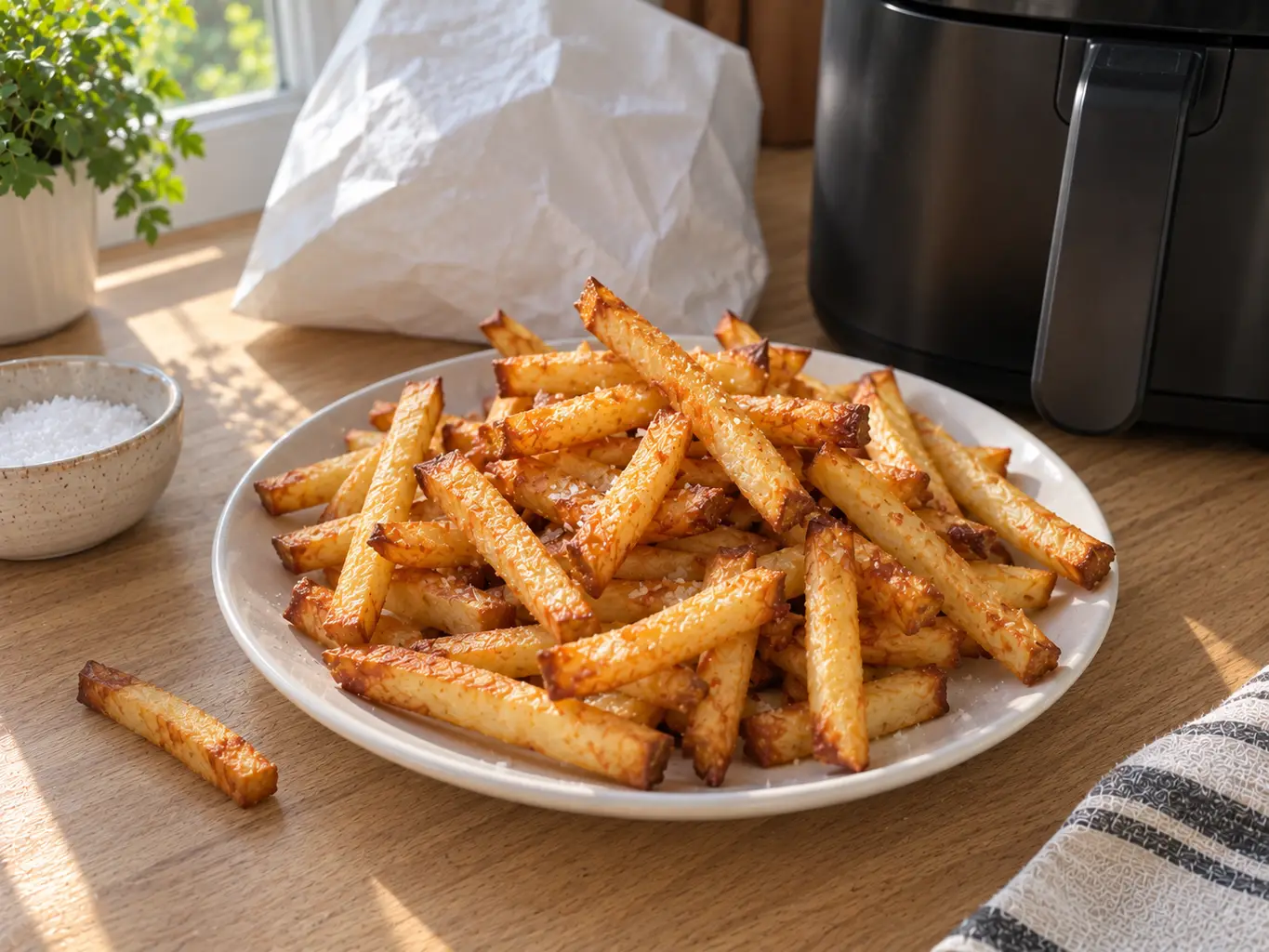
I remember standing over my first air fryer with a bag of frozen fries, no idea what temperature to pick, and a manual that spent more pages on warranty terms than on cooking. The fries came out fine anyway, which is the secret about these machines: they are hard to mess up badly. But there is a real difference between fine and great, and the gap is about six habits.
Most beginner guides online are written by appliance brands, and it shows. They explain the warranty card better than the food. This one comes from years of cooking in mine daily, including every mistake a beginner can make, because I made all of them. If you have not bought a machine yet and are still wondering what these things even are, start with what an air fryer actually is and come back.
The whole guide in one paragraph: wash the basket, run the empty machine at 400°F for 10 minutes to burn off the factory smell, then cook everything in a single layer with a teaspoon or two of oil, shake halfway, and set the temperature about 25 degrees lower than an oven recipe says. Start with frozen fries, because they are nearly impossible to ruin. That is genuinely most of it.
Day one: before you cook anything
Three things before the first meal, and the second one matters more than people think:
Wash the removable parts
Basket, crisper plate, drawer: warm soapy water, soft sponge, dry fully. They ship with machine oil residue and packing dust you do not want on food.
Do the burn-off run
Run the empty machine at 400°F for 10 minutes, ideally with a window open. New units give off a plastic smell as protective coatings on the heating element cure. One or two empty runs and it is gone for good.
Pick the right spot
A heat-safe counter with about 5 inches of clearance behind and above. The exhaust vents hot air out the back, so not shoved against the wall and not directly under low cabinets.
That burn-off smell alarms almost every new owner, and it is normal. It is the same break-in smell a new oven or toaster makes. If it lingers past the first few uses, that is worth a closer look, but day one? Expected.
What the buttons actually mean
Every brand invents its own icons, but under the drawings there are only four controls that matter:
- Temperature. Usually 170°F to 400°F. This and time are the only two settings you truly need. 375°F is the workhorse number for most savory food; baking runs cooler, usually 300°F to 325°F.
- Time. Most machines shut off when it hits zero. Set less than you think and add more; you can always keep cooking, but you cannot un-burn.
- The preset icons (fries, drumstick, fish, shrimp) are just saved time and temperature pairs the manufacturer guessed at. They do not know how thick your chicken is. Use them as starting hints at most; manual settings will beat them within a week.
- Preheat and shake reminders. Nice to have, not essential. A 3 minute preheat helps crisping; the preheating guide covers when it actually matters and when you can skip it.
If your control panel looks like airport signage and you want every icon decoded, I wrote a full settings and symbols guide that goes symbol by symbol.
The 5 rules that do 90 percent of the work
Everything else in this guide is detail. These five are the difference between soggy and crispy:
- 1. Single layer, always. The machine works by moving hot air across food surfaces. Pile food up and the middle pieces steam instead of crisp. If it does not fit in one layer with a little space between pieces, cook two batches. Two good batches beat one bad pile every time.
- 2. Shake or flip halfway. Fries and nuggets get a basket shake; chicken pieces and anything breaded get flipped with tongs. This one habit evens out browning more than any accessory you can buy.
- 3. A little oil, not none, not lots. One to two teaspoons tossed or brushed on fresh food makes it brown instead of dry out. Frozen pre-fried food needs none, it already carries oil. Use oils that can take the heat; the best oils guide ranks them.
- 4. Go 25 degrees below oven recipes. The fan makes heat hit harder, so an oven recipe's temperature overshoots in a basket. Drop it about 25°F and start checking early. This rule alone rescues most "my air fryer burns everything" complaints.
- 5. Trust checks, not the clock. Machines vary a lot between brands and wattages. The first time you cook anything, check it two thirds of the way through the expected time. A cheap instant-read thermometer settles chicken forever: 165°F inside and you are done.
One real safety rule: never run aerosol cooking sprays like Pam onto a nonstick basket. The propellants break down the coating over time. A pump sprayer with plain oil, or tossing food with oil in a bowl, does the same job without eating your basket.
What to cook first (in this order)
Learn the machine on food that forgives. This ladder takes you from zero to confident in about a week:
| Cook this | Settings | What it teaches |
|---|---|---|
| 1. Frozen french fries | 400°F, 12-15 min | The shake habit; nearly impossible to ruin, so frozen fries is the classic first cook |
| 2. Toast | 380°F, 3-4 min | How fast the top element browns; the toast guide shows the flip |
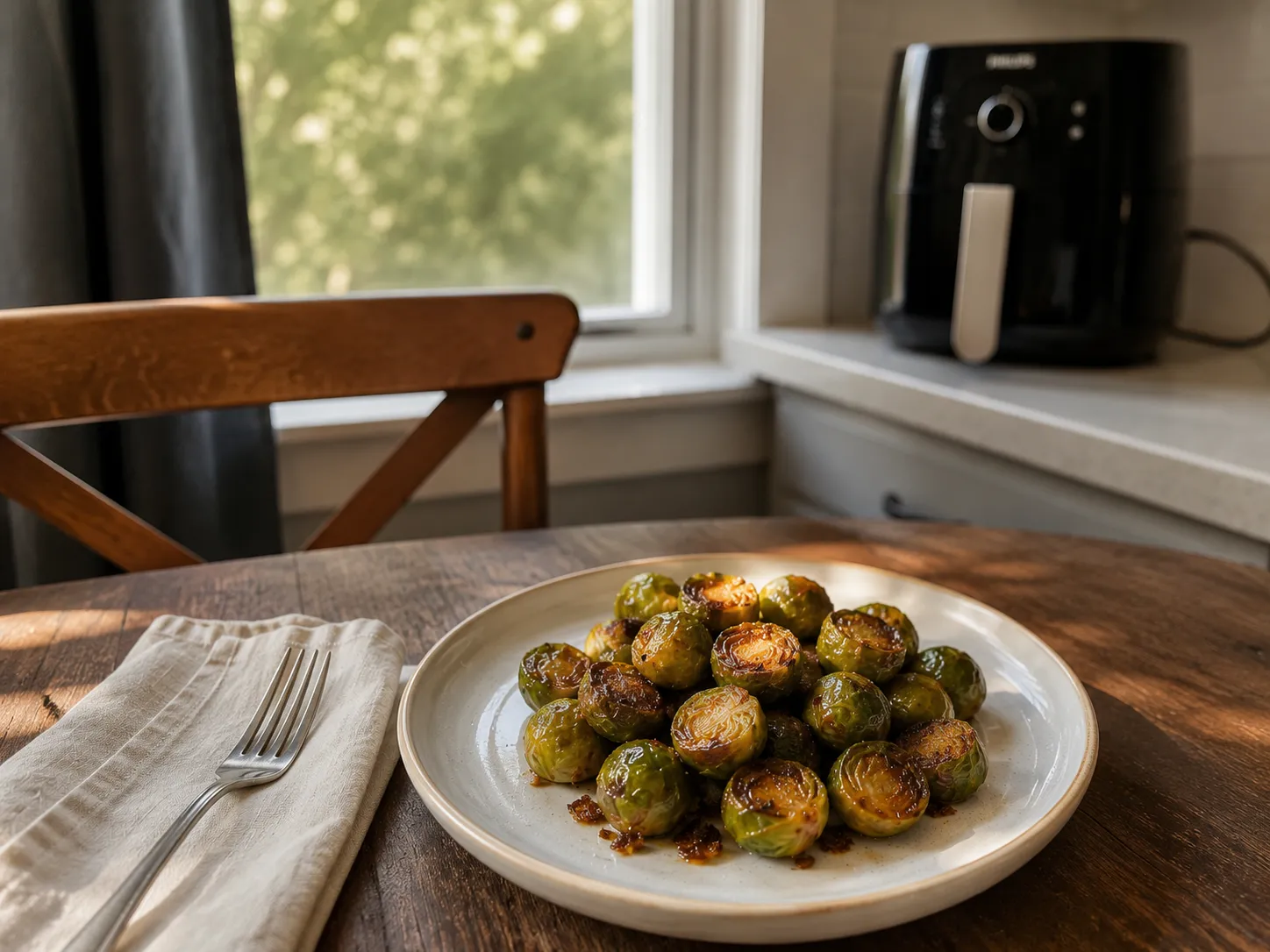
| 3. Roasted vegetables | 380°F, 10-14 min | The oil toss; frozen Brussels sprouts prove frozen veg works too |
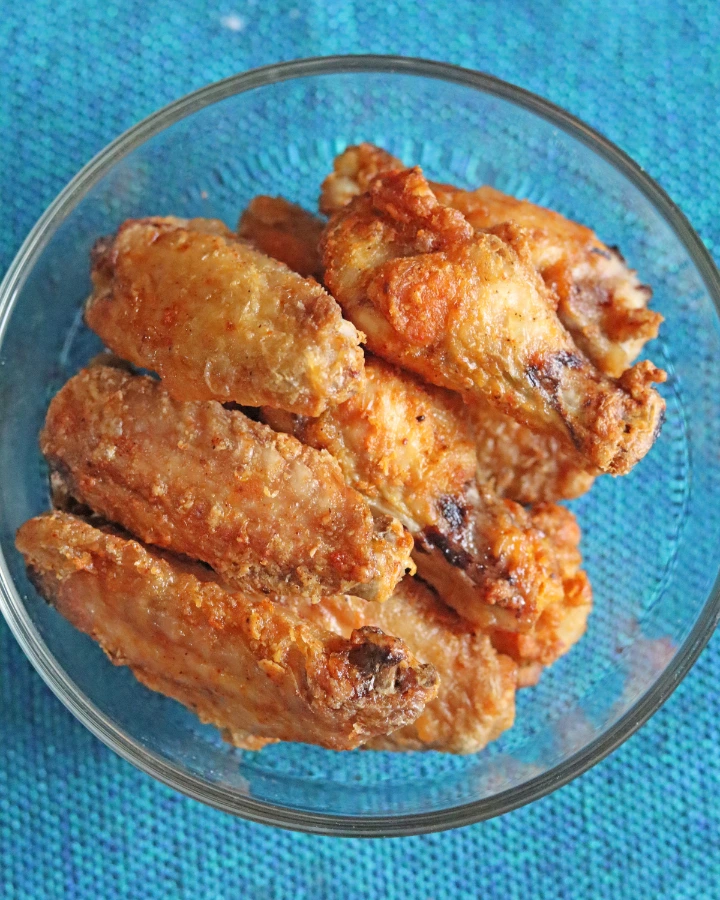
| 4. Frozen wings | 400°F, 20-24 min | Flipping and the thermometer; the frozen wings recipe has the timings |
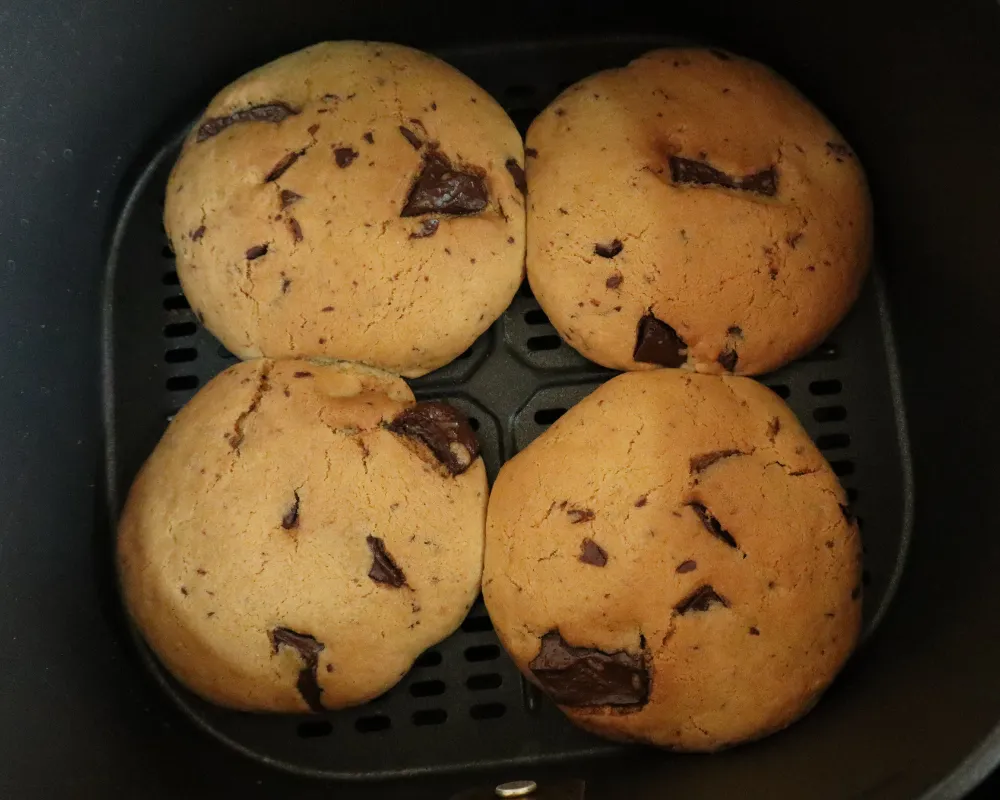
| 5. Chocolate chip cookies | 300°F, 8-10 min | Your first bake, and that baking runs cooler; this recipe walks it through |
After the cookies, you are not a beginner anymore. The whole baking side of the machine, which is this site's specialty, opens up from how to bake in an air fryer.
Using regular oven recipes
You do not need special air fryer recipes forever. Any oven recipe converts with two adjustments: temperature down about 25°F, and start checking at around 75 to 80 percent of the stated time. A casserole that bakes at 375°F for 40 minutes becomes 350°F with a first check at 30.
Rather than doing that arithmetic at the counter, the air fryer calculator does it for you: type the oven temperature and time, get the air fryer settings. It is the most used page on this site. For specific foods, the baking chart lists every tested time and temperature from this kitchen, and the recipe scaler covers the recipes that need a smaller pan than the one you own.
Beginner mistakes I made so you don't have to
- Overcrowding. Covered above, but it is mistake number one by a mile, so it earns a second mention.
- Loose parchment during preheat. A sheet of parchment with nothing holding it down gets sucked into the heating element. Parchment goes in with food on top of it, never alone. The full rules are in the foil and parchment guide.
- Panicking at white smoke. Usually it is grease from a previous cook burning off, not your food. the smoke guide explains each smoke type and its fix.
- Washing the basket with steel wool. Scratched nonstick sticks forever after. Soft sponge only.
- Treating the presets as recipes. The fries button does not know if your fries are shoestring or steak cut. Time and temperature knobs are your friends.
- Skipping the drip drawer. Fat from wings and chops collects underneath. Leave it two cooks and it smokes on the third.
There is a longer confession list in common air fryer mistakes if you want to feel better about your own first month.
Cleaning: the 5 minute habit
The machine that gets cleaned after each use lasts years and never smokes. The routine: let the basket cool 10 minutes, wash basket and plate in warm soapy water, wipe the drawer, done. Once a month, wipe the inside of the chamber and check the heating element for splatter. That is the whole maintenance schedule, and the cleaning guide covers the deep-clean version for when life got busy and the basket got crusty.
Accessories worth buying (and skipping)
- Worth it: an instant-read thermometer. Under $15, ends all guessing on meat and the baking guide explains why I trust it over toothpicks for cakes too.
- Worth it: perforated parchment liners. The holes keep air flowing while saving cleanup on sticky food.
- Worth it: a 7 inch cake pan and silicone molds. They unlock baking; the pan size calculator shows what fits which machine, and the silicone molds guide covers the molds.
- Worth it: a pump oil sprayer. Fine mist, no propellants.
- Skip: most branded accessory bundles. Racks, skewers and egg molds you will use once. Buy pieces when a recipe demands them, not before.
Troubleshooting chart
| Problem | Usual cause | Fix |
|---|---|---|
| Food comes out soggy | Overcrowded basket or zero oil | Single layer, 1-2 tsp oil, pat wet food dry first |
| Outside burnt, inside raw | Temperature too high | Drop 25°F, cook longer; the fan punishes oven temps |
| Uneven browning | No shake or flip | Move food at the halfway mark, every time |
| White smoke | Grease burning off | Water in the drawer under fatty foods; clean after each cook |
| Cakes dry or cracked | Fan drying the batter | Lower temp, foil tent; the fixes live in the dry bakes guide |
| Basket smells | Grease film buildup | Deep clean; baking soda paste on stubborn spots |
For baking-specific failures, from sunken middles to pale tops, the troubleshooting guide diagnoses them one by one.
Frequently asked questions
QDo I need to preheat an air fryer?
For crispy food, a 3 minute preheat helps: fries, wings and anything breaded brown better hitting a hot basket. For baking, it depends on the recipe, and skipping it is often fine for longer cooks. It is a 3 minute decision either way, nothing like an oven's 15 minutes. When a recipe on this site needs a preheat, it says so.
QWhat can you not put in an air fryer?
Wet batter is the big one: tempura or beer batter drips through the basket and burns before it sets. Loose parchment with nothing on it flies into the element. Cheese alone melts into a puddle. Very light foods like single leafy greens blow around. And overfilled anything fails, not because the food is wrong but because the pile blocks the air.
QDo you have to use oil in an air fryer?
No, the machine works without any. But 1 to 2 teaspoons on fresh food is the difference between browned and merely dried. Frozen pre-fried foods like fries and nuggets already contain oil and need none added. The machine air fries either way; the teaspoon is for flavor and color, not function.
QCan you use foil or parchment paper in an air fryer?
Yes, both, with one rule: they must be weighed down by food and must not block the airflow holes. Perforated parchment liners are the tidy version. Foil should never cover the whole basket floor or touch the heating element. Acidic foods like tomatoes can react with foil, so parchment wins there.
QWhy does my new air fryer smell like plastic?
Protective coatings on the heating element and housing cure during the first few heat cycles, and that is the smell. Run the empty machine at 400 degrees F for 10 minutes once or twice with a window open and it disappears. It is the same break-in smell new ovens make. If a strong smell persists after several cooks, contact the manufacturer.
QHow full can I fill the basket?
One layer with a little space between pieces, which usually means half to two thirds of what physically fits. Fries tolerate a loose double layer if you shake twice. Breaded food, chicken pieces and anything you want uniformly crisp need the honest single layer. When in doubt, split into two batches; the second batch cooks faster in the already-hot machine.
QDo I need to flip food in an air fryer?
Most food, yes, once at the halfway mark. The top element browns the up-facing side faster, so flipping evens it out. Fries and small pieces just need a basket shake instead. The exceptions are baked goods: cakes, muffins and cookies stay put, which is why they cook at lower temperatures where one-sided heat matters less.
QWhat temperature should a beginner start with?
375 degrees F for most savory cooking, 400 degrees F for frozen fried food, and 300 to 325 degrees F for baking. Those three numbers cover the first month. The deeper rule: take any oven recipe and subtract about 25 degrees, which the air fryer calculator on this site does automatically along with the time adjustment.
QCan you open the air fryer while it's cooking?
Yes, anytime, and you should. Pulling the basket pauses most machines, and unlike an oven, the tiny chamber reheats in seconds, so peeking costs nothing. Checking early and often is exactly how you learn your machine's personality in the first week.
QIs an air fryer worth it for one person?
One to three people is where the machine shines brightest. Single portions cook in minutes without heating a whole oven, it reheats leftovers better than a microwave, and a small 2 to 4 quart model costs little and fits a small kitchen. Big families feel its batch-size limit; solo cooks almost never do.
Never overbake again
Get our one-page times & temps cheat sheet, plus a new tested recipe each week.
No spam · unsubscribe anytime
That is everything I know that fits on one page. The natural next reads: what is an air fryer if you are still deciding what these machines really do, are air fryers healthy for the honest health answer, and how much electricity it uses when the electric bill curiosity hits. When you are ready to cook, the recipe index has every tested recipe from this kitchen, and the tools page collects the calculators in one place.
You can also follow me on Instagram and Pinterest for more easy air fryer recipes.