

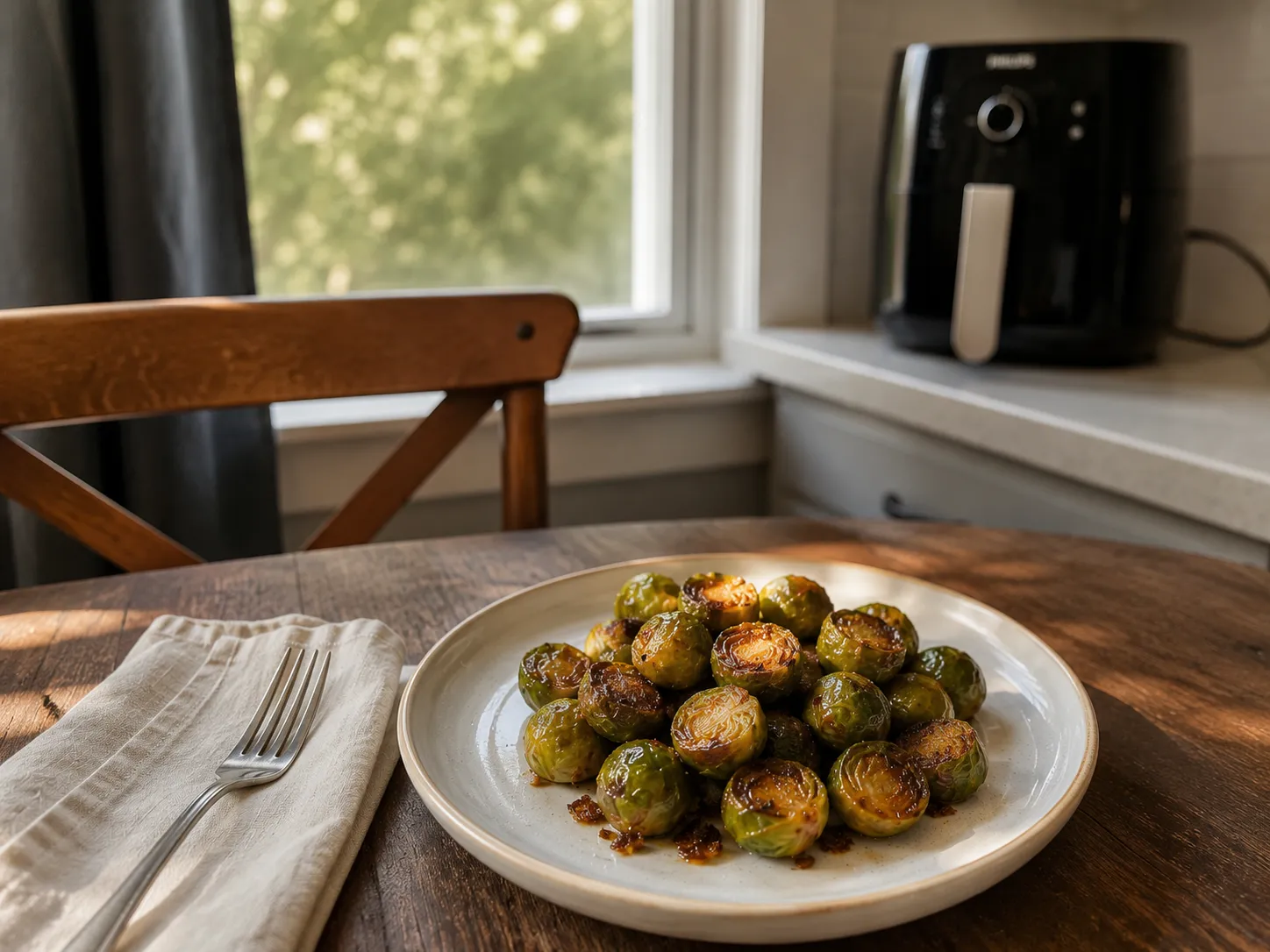
Every family gathering, someone asks me some version of this question, usually while eating the wings I just air fried. Is that thing safe? Does it nuke the food? Didn't they say it causes cancer? The questions deserve real answers, not the two extremes the internet offers: the appliance ads promising guilt-free everything, and the wellness posts warning your basket is poisoning you.
So here is the whole picture in one place: the oil numbers, the radiation myth, the acrylamide research, the nonstick coating question the big health sites keep skipping, and the honest fine print. I cook in these machines every day and I would not if I thought any of the scary versions were true. But "healthy" needs unpacking, so let's unpack it.
The short answer: an air fryer is a small convection oven, nothing more exotic. It is meaningfully healthier than deep frying because it cuts added oil by roughly 80 percent or more. It uses no microwaves and emits nothing but heat. Browned-not-burnt food keeps acrylamide in check. The machine will not make processed food healthy, and it will not make whole food unhealthy. It is a tool. The groceries still decide.
The oil math that started it all
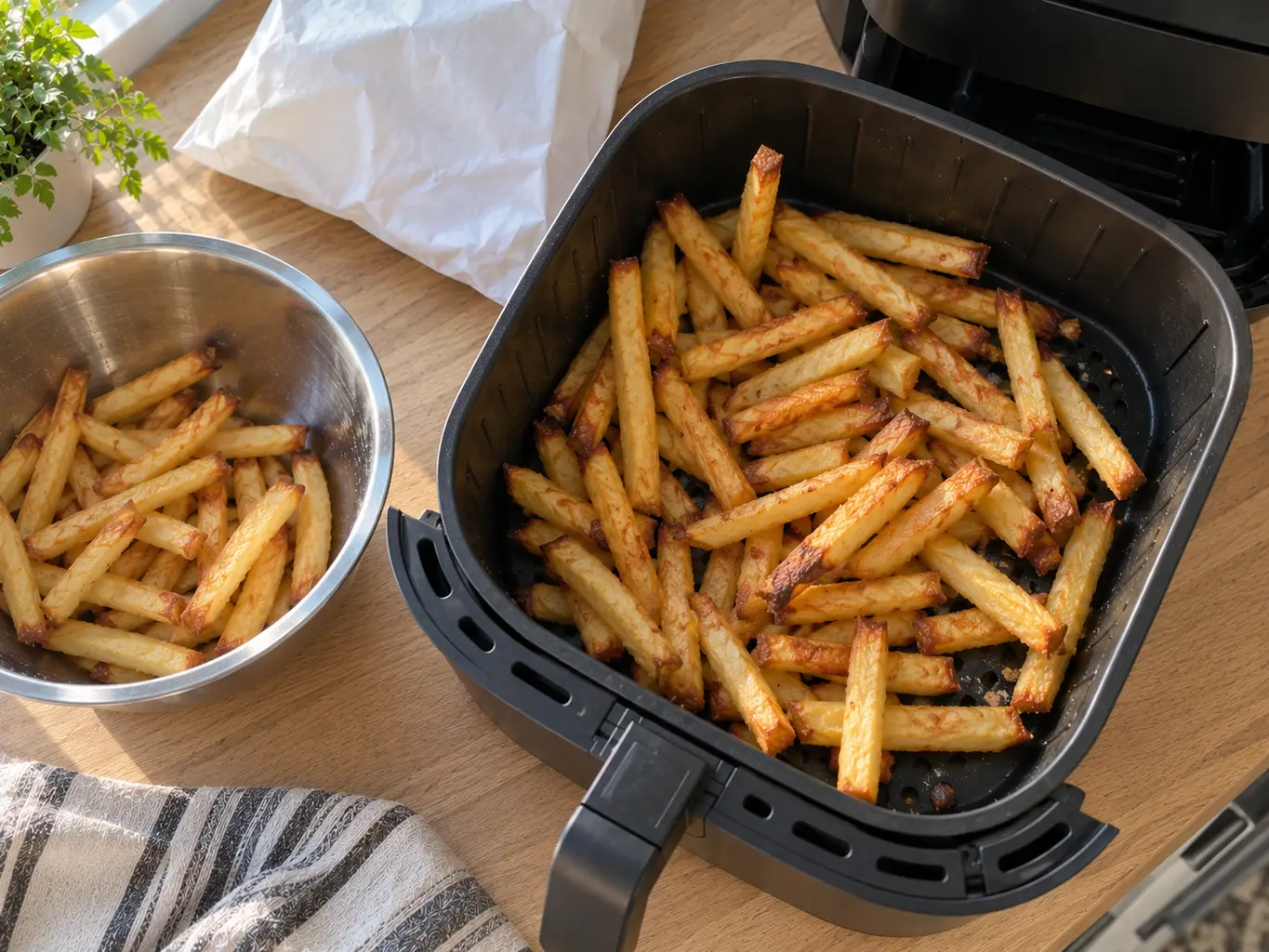
The entire health reputation rests on one substitution. Deep frying immerses food in oil, and food takes some of that bath with it: research on fried foods generally finds they absorb a meaningful share of their weight in oil. Air frying replaces the bath with a light coating, 1 to 2 teaspoons for a whole basket, and dietitian estimates put the reduction in added oil around 70 to 80 percent, often more.
Put numbers on that: a tablespoon of oil carries about 120 calories. If a basket of homemade fries uses 2 teaspoons where a deep fried batch would soak up several tablespoons, you are trimming 200 to 400 calories and a matching load of fat from the same plate, before anyone has practiced any willpower. That is the honest win: not magic, just subtraction. It also matters which oil you use at high heat, and the best oils guide sorts the good actors from the smoke machines.
One more underrated detail of the design: the basket drains. Fat that renders out of wings, chops or bacon drips into the drawer below instead of re-soaking into the crust. A deep fryer cannot say that, and neither can a skillet.
The radiation question, settled
This one has a clean, complete answer. An air fryer contains a heating element and a fan. That is the entire heat-generating hardware, the same parts as a toaster and a hair dryer. There is no magnetron, no microwave emitter, no ionizing anything. It cannot produce microwave radiation because nothing inside it is built to.
Where does the rumor come from? Two places. First, people lump countertop machines together, and microwaves genuinely do use electromagnetic radiation (safely, but that is another article). Second, the word radiation itself: technically, every warm object radiates heat, including your coffee and your dog. In that physics-class sense an air fryer radiates exactly the way a campfire does. In the sense people worry about, X-rays and microwaves, it emits nothing. If you are comfortable standing near a toaster, you are comfortable near an air fryer; if you want the full tour of what is actually inside the machine, what is an air fryer opens it up.
Acrylamide, explained calmly
Acrylamide is the substance behind most air fryer cancer headlines, so here is what it actually is. When starchy foods cook above roughly 250°F, sugars and an amino acid called asparagine react and form acrylamide, concentrated in the browned parts. This happens in every high-heat method: baking, roasting, toasting, deep frying and yes, air frying. Your morning toast makes it. It is classified as a probable human carcinogen based mostly on high-dose animal studies, and health agencies recommend reducing it where practical, not panicking about it.
Now the part the headlines skip: studies comparing methods have found air frying can produce substantially less acrylamide than deep frying the same food, with reductions up to about 90 percent reported for fries. And the biggest factor is under your control: color. Acrylamide climbs steeply as food goes from golden to brown to burnt.
The one rule worth keeping: cook to golden, not to charcoal. Aim for golden-yellow fries and toast, trim the burnt bits, and do not routinely blast starchy food to the darkest possible crunch. That single habit addresses the acrylamide question more effectively than any appliance choice.
Nonstick coatings and PFAS
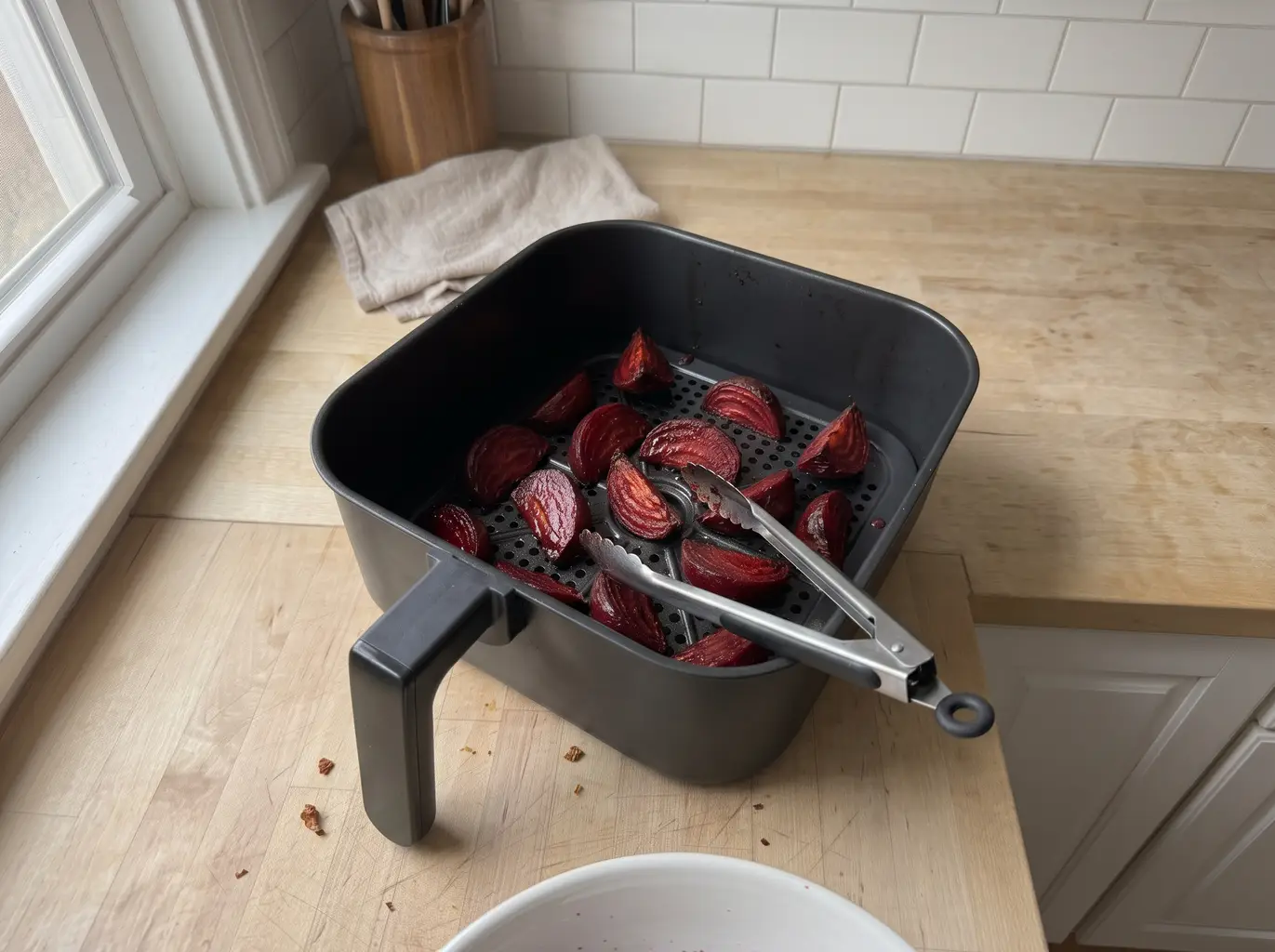
Here is the topic the big health articles keep leaving out, and the one I actually get asked about most. Most air fryer baskets wear a PTFE nonstick coating, the Teflon family. The current understanding, in plain terms: intact PTFE is inert and stable at every temperature an air fryer can reach. Problems start above roughly 500°F, where the coating can begin to break down and release fumes; air fryers top out at 400 to 450°F, and food keeps surfaces cooler still. The historical villain chemical, PFOA, was phased out of manufacturing years ago.
So the coating is not scary, but it earns four care rules:
- Never run the machine empty at max heat for long stretches beyond the one-time burn-off run; an empty basket gets hotter than a full one.
- No metal utensils, no steel wool. Scratches are how coatings start shedding into food. Silicone and wood only.
- No aerosol cooking sprays. Propellants in cans like Pam degrade nonstick surfaces; use a pump sprayer or toss food with oil in a bowl.
- Replace a flaking basket. Swallowed flakes pass through you inertly, but a shedding coating also sticks and burns. Baskets are cheap; peace of mind is cheaper.
If you would rather skip the topic entirely, ceramic-coated and stainless steel basket models exist, and glass or ceramic bakeware inside the basket does the same for baking; the silicone molds guide covers the inserts I use.
That new machine plastic smell
Every new air fryer smells like a hardware store for its first few runs, and every new owner googles whether it is poisoning them. It is protective manufacturing coatings curing on the element and housing, the same break-in smell new ovens make. The fix is to run the empty machine at 400°F for 10 minutes once or twice, window open, before cooking food. The full day-one routine is in the beginner guide. A smell that persists after several cooks is a warranty conversation, not a health crisis.
The honest fine print
A truthful health page owes you the caveats, so here they are without drama:
- High-heat cooking of animal foods creates some unwanted compounds in every method. Research has flagged cholesterol oxidation products in air fried fish, and browning meat hard creates the same compounds grilling does. The moderating moves: moderate temperatures for fatty fish and meats, and pairing with herbs and marinades, which measurably reduce these compounds.
- Air fried junk food is still junk food. The machine removes the deep fryer's oil, not the sodium, refined starch or processing from a frozen snack. Mozzarella sticks do not become a vegetable at 400°F.
- The halo effect is real. The riskiest thing about an air fryer is the phrase "it's healthy, so I'll have more." Portion size survives every cooking technology.
- Crispy is not a food group. If a machine gets you eating more vegetables because they finally taste good, wonderful, that is my story with beets. If it gets you eating fries nightly, the fries are still fries.
7 habits that make it genuinely healthier
- 1. Use the teaspoon, not the bottle. A light toss of oil browns food beautifully; more just adds calories the drawer will catch anyway.
- 2. Pick heat-stable oils. Avocado, light olive and other high smoke point oils handle 400°F without breaking down; the best oils guide ranks them all.
- 3. Golden, not brown. The acrylamide rule, worth repeating once.
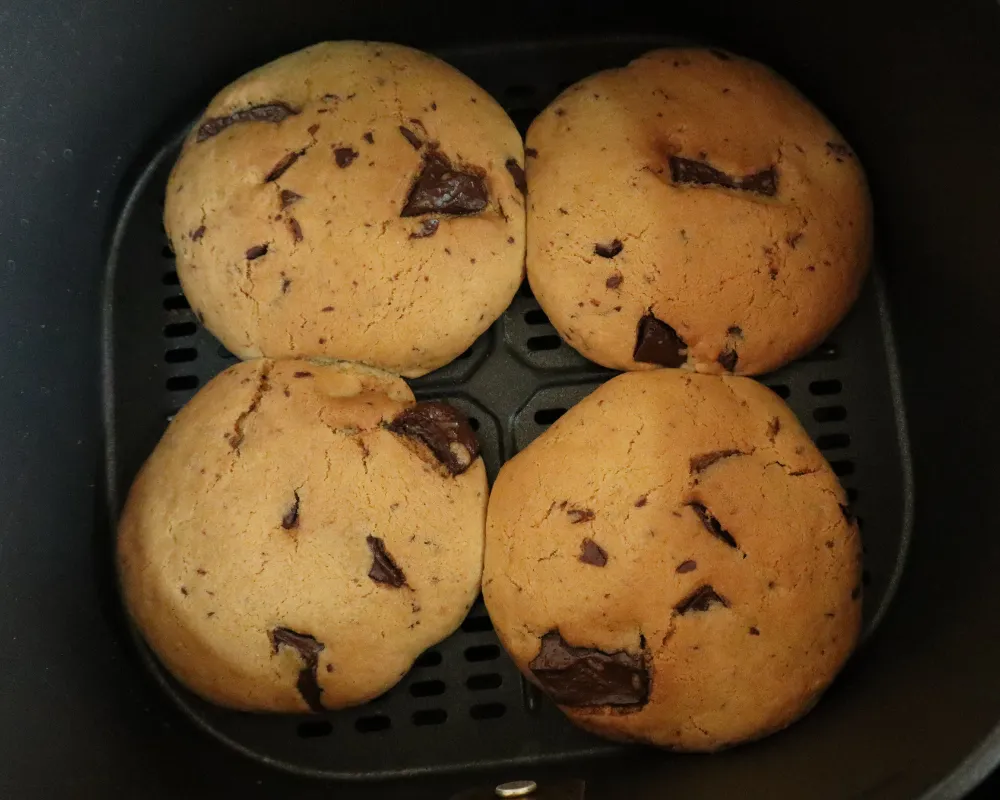
- 4. Vegetables at least as often as fries. Brussels sprouts, beets, broccoli and carrots all come out caramelized and actually crave-worthy.
- 5. Moderate heat for fatty fish and meats. 350 to 375°F instead of maxed out; the crust is nearly identical and the chemistry is calmer.
- 6. Keep it clean. Old grease films smoke and season everything with burnt flavors; the 5 minute routine in the cleaning guide prevents it, and the smoke guide explains the smoke you see when you skip it.
- 7. Cook real food in it. The machine's actual superpower is making whole ingredients, chicken, potatoes, vegetables, even banana bread, taste as good as takeout. Use it for that and the health question mostly answers itself.
Frequently asked questions
QAre air fryers healthy or unhealthy?
Healthier than deep frying by a wide margin, since they cut added oil by roughly 80 percent, and about equal to oven roasting. The machine itself is neutral: it is a small convection oven. Whether meals from it are healthy depends on what goes in the basket. Chicken and vegetables, very. Nightly frozen mozzarella sticks, no machine can fix that.
QDo air fryers cause cancer?
No study has linked air fryer use to cancer in humans. The concern people half-remember is acrylamide, which forms in starchy food browned at high heat in every cooking method, including regular ovens and toasters. Air frying has been shown to produce less acrylamide than deep frying, and keeping food golden rather than burnt keeps levels low. Trim burnt bits and vary your cooking methods, and this concern is managed.
QDo air fryers use radiation?
Not in the sense people mean. There is no microwave emitter inside, just a heating element and a fan, the same hardware as a toaster. The only radiation present is ordinary heat, which every warm object gives off, including your oven and your coffee. It is physically incapable of microwaving food.
QAre nonstick air fryer baskets safe?
Yes, with basic care. PTFE nonstick is inert at air fryer temperatures; it only begins breaking down above roughly 500 degrees F, beyond what the machine can reach. The old chemical of concern, PFOA, was phased out of production years ago. Protect the coating: no metal utensils, no steel wool, no aerosol sprays, and replace a basket that flakes. Ceramic and stainless models exist if you prefer to skip the topic.
QIs air frying healthier than baking in the oven?
They are nutritionally equivalent, since both are dry convection heat and neither requires much oil. The air fryer's practical edge is that it makes low-oil food taste closer to fried, so people actually stick with it, and it often needs slightly less oil to get the same browning. Choose by convenience, not health; the food does not know which box it is in.
QWhat is the healthiest oil for an air fryer?
High smoke point oils that stay stable at 400 degrees F: avocado oil leads, with light or refined olive oil, and expeller-pressed canola close behind. Extra virgin olive oil is fine at 350 degrees F and below. Butter burns fast, and aerosol spray cans damage nonstick coatings regardless of the oil inside. A teaspoon or two per basket is the whole dose.
QAre frozen foods cooked in an air fryer healthy?
Healthier than deep frying the same item, because no new oil is added, but the food itself is unchanged: the sodium and processing in a frozen snack survive any cooking method. As an occasional convenience, no problem. The upgrade path is using the machine for fresh potatoes, chicken and vegetables, which it handles just as easily.
QDoes air frying destroy nutrients in food?
All cooking changes nutrients, and air frying sits on the gentle end for a high-heat method because cook times are short and nothing leaches into water or oil. Heat-sensitive vitamins like vitamin C decline in any hot method, while short cooking preserves more of most others. Compared with boiling, air fried vegetables often keep more of their nutrients, not fewer.
QIs the plastic smell from a new air fryer dangerous?
It is the normal curing of protective coatings during the first heat cycles, the same break-in smell as a new oven, and it fades after a few runs. Do one or two empty runs at 400 degrees F for 10 minutes with a window open before cooking food. A strong smell that persists past the first week is a reason to contact the manufacturer, not a known health hazard.
QCan I use an air fryer every day?
Yes. Daily use is no different from daily oven use; the machine is a small convection oven cycling a heating element. Keep the basket clean so old grease does not smoke, cook food to golden rather than burnt, and rotate real ingredients through it. Mine runs at least once a day and has for years.
Never overbake again
Get our one-page times & temps cheat sheet, plus a new tested recipe each week.
No spam · unsubscribe anytime
So: enjoy the machine, skip the fear, and let the groceries do the deciding. If you are new to all this, what is an air fryer covers the machine itself and the beginner guide gets you from unboxing to first bake. The oil dose for any recipe converts along with time and temperature in the air fryer calculator, and every tested recipe from this kitchen, vegetables very much included, lives in the recipe index.
You can also follow me on Instagram and Pinterest for more easy air fryer recipes.