

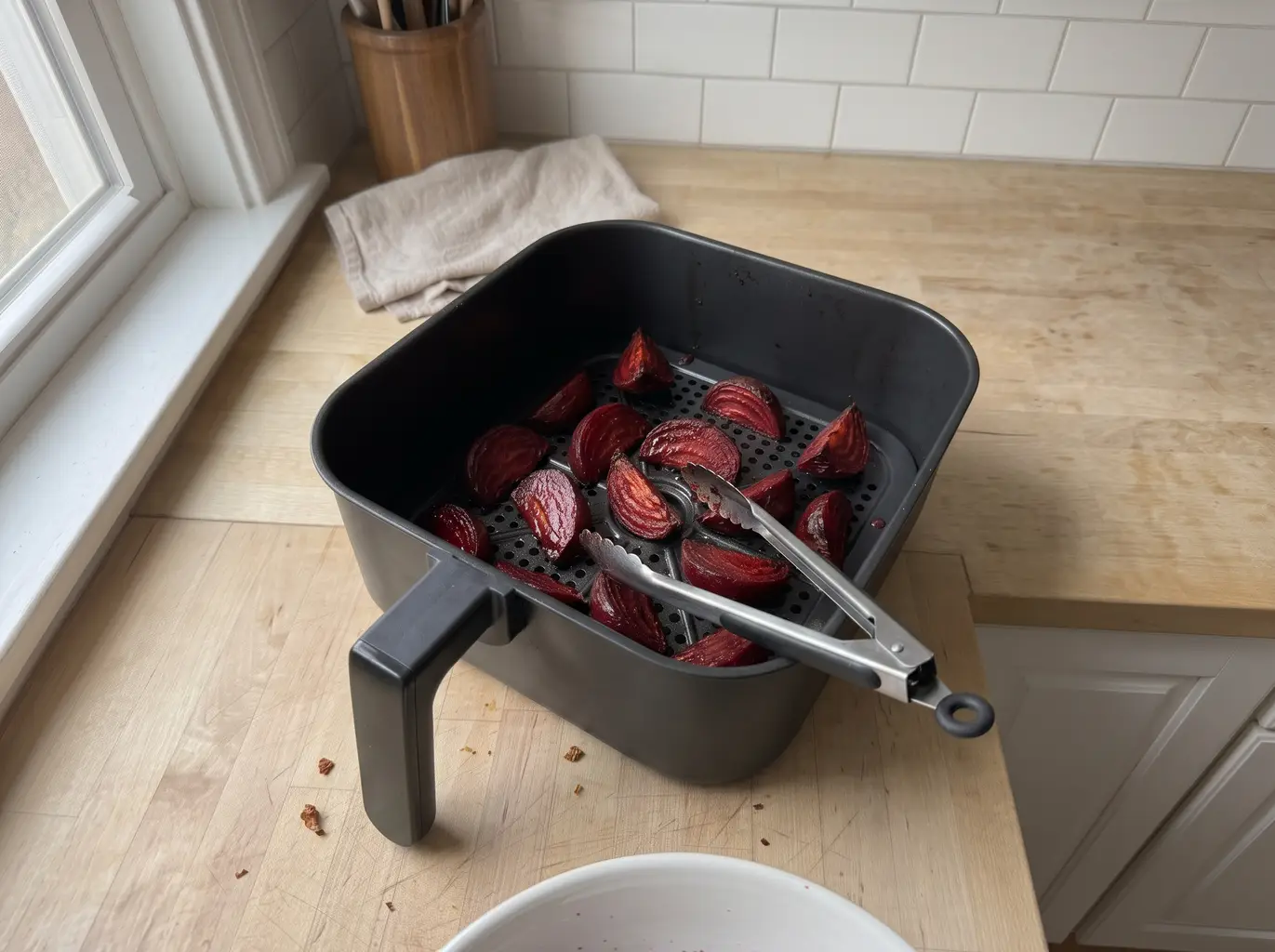
I did not grow up liking beets, because I grew up eating them boiled, and a boiled beet tastes like a wet basement smells. The vegetable that converted me came off a sheet pan, roasted until its sugars woke up, and the air fryer version of that beet is better still, in a third of the time. Beets are nearly ten percent sugar, higher than most fruit you would put in a pie, and roasting is just the paperwork that gets that sugar recognized.
But dig through the recipes ranking for this vegetable and you will notice something odd: they disagree about everything. Peel first, never peel. Cube them, keep them whole. Fifteen minutes, fifty minutes. Foil is essential, foil is never mentioned. The confusion clears the moment you see that there are two legitimate methods hiding under one name, producing two different results, and the recipe you should follow depends entirely on which beet you actually want tonight.
Quick answer: For roast-flavored beets with caramelized edges, peel, cut into 1 inch wedges, toss with 1 tablespoon of oil per pound, and air fry at 375°F for 16 to 19 minutes, shaking twice. For sweet, jammy, salad-ready beets, wrap them whole and unpeeled in foil parcels and run 35 to 45 minutes at the same 375°F, until a knife meets no resistance; the skins then slip off under your thumb. Same machine, two honest roads.
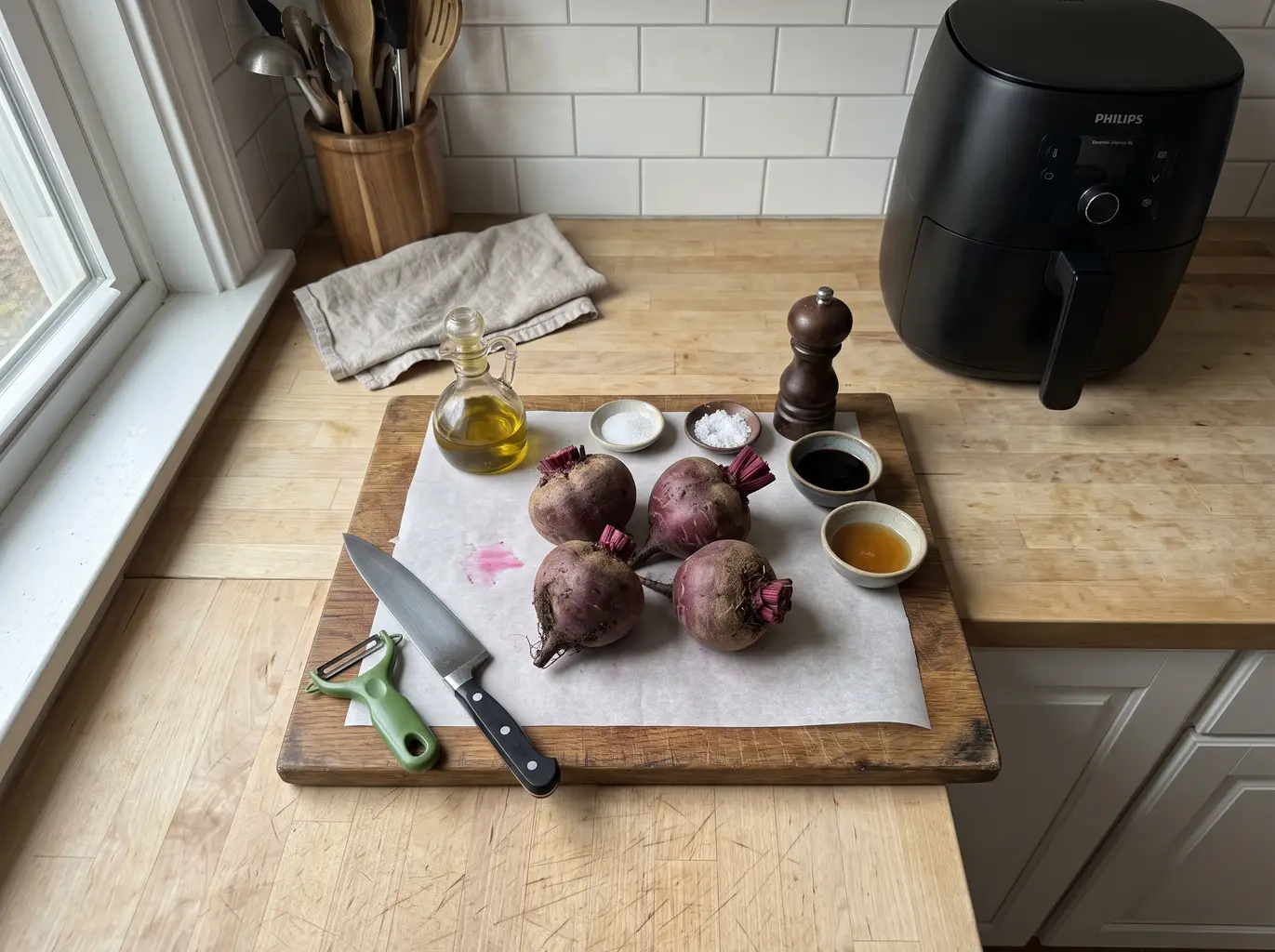
Two beets, one vegetable
The wedge road
Peeled, cut, oiled, exposed to the fan. Browned edges, concentrated roast flavor, a little chew at the corners. The beet as a side dish with attitude, done inside 20 minutes.
The parcel road
Whole, unpeeled, sealed in foil. The beet steams in its own moisture, stays plump and juicy, tastes noticeably sweeter, and peels itself afterward. The beet for salads, meal prep and people who hate peeling raw beets, which is everyone.
The wrong road
Cut beets, no peel, not enough oil, full fan exposure. This is where dry, wrinkly, leathery beets come from, and it is the exact failure the quick recipes produce when they trim the oil.
Pick by the clock and the destination: wedges when dinner is soon and the beets are the side, parcels when the beets are headed for salads, grain bowls or the meal prep shelf and the machine can run unattended. Both roads run at 375°F, and for once that number is the air fryer calculator's conversion of the oven's 400°F taken straight, with no courtesy discount, because a beet is a fist of dense, wet sugar that needs every honest degree and cannot scorch the way a pastry can. The site's full ledger lives in the air fryer baking chart.
The wedge road
- Peel raw, and only on this road. A cut beet's skin turns to leather under the fan, and peeling cooked wedges later is misery. A Y-peeler takes a raw beet down in under a minute.
- One inch wedges, kept uniform. Smaller dries out before the center softens; bigger steals time from the caramelization. Uniformity matters more than the exact inch, because the smallest piece sets the alarm and the biggest sets the finish.
- The oil floor is 1 tablespoon per pound, and it is a floor, not a suggestion. Beets have no fat of their own and a long bake ahead; shorted oil is the single biggest cause of wrinkled, leathery wedges. A high smoke point oil holds up better at this temperature, and the oils guide ranks the candidates.
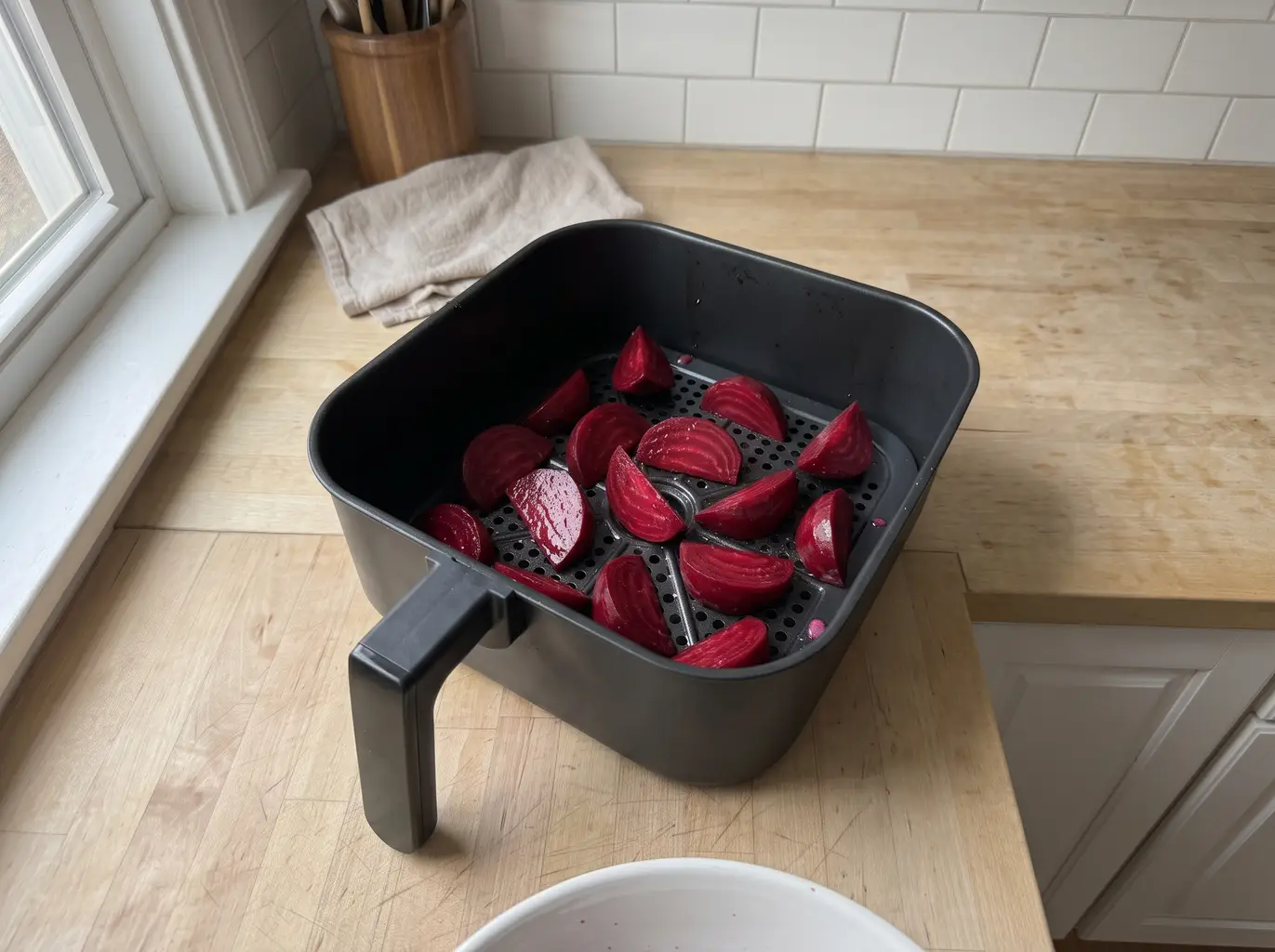
- Single layer, shaken twice. Beets steam each other in a pile and caramelize in a layer. If the batch will not sit in one layer, run two batches; crowding is the first sin in the common mistakes guide, and beets punish it with rubber.
- Salt before, glaze after. Balsamic and honey belong in the last 2 minutes or after the basket, not in the opening toss; their sugars burn long before the beet inside is done.
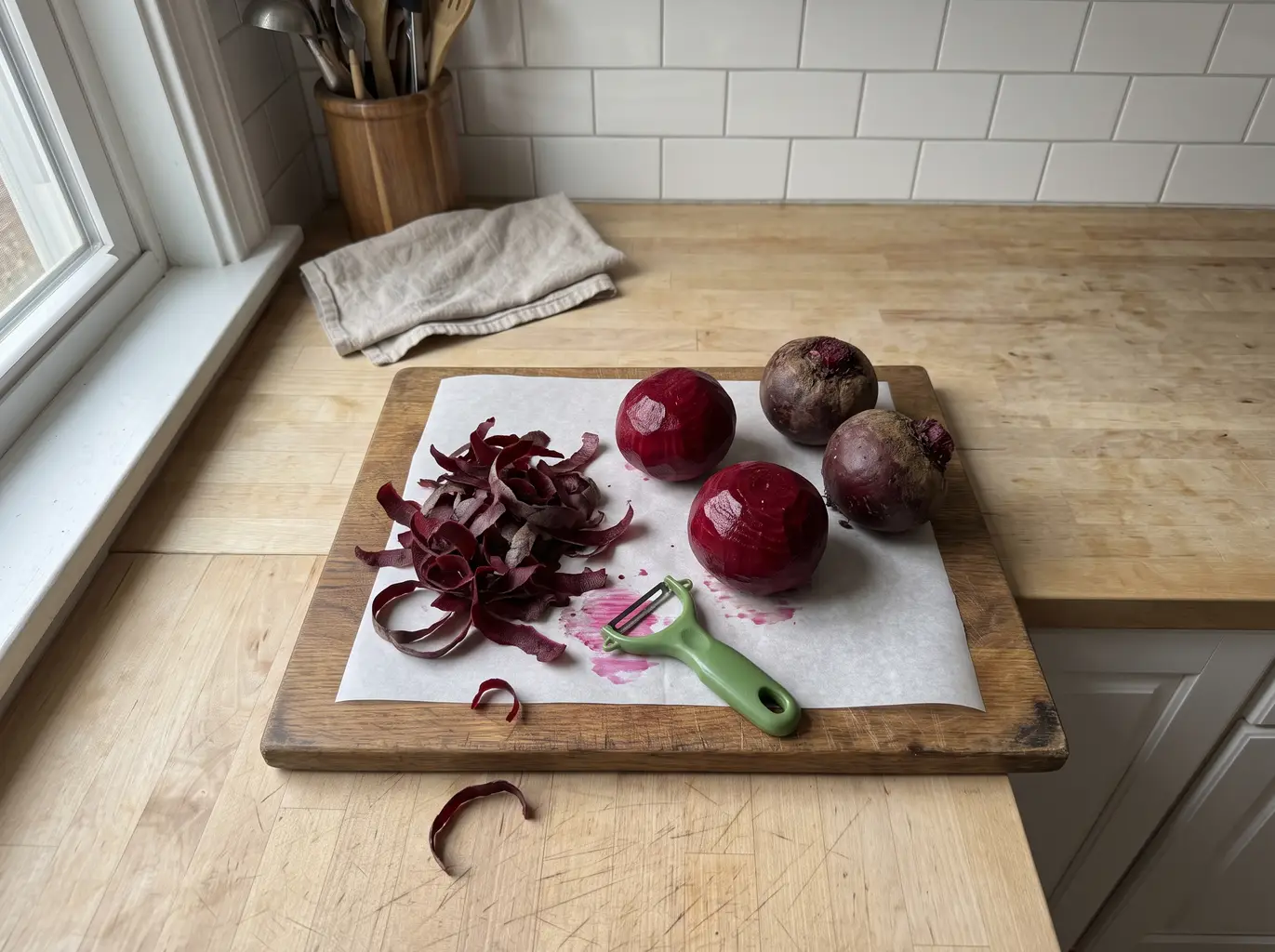
The parcel road
The parcel road is the old oven technique that the air fryer quietly does better, because the machine preheats in three minutes and the oven takes fifteen. Wrap each beet, or pairs of small ones, in a tight foil parcel with a half teaspoon of oil and a pinch of salt rubbed on the skin. No water needed; a beet is its own water supply, and the sealed foil turns it into a tiny steam oven. The fan howls outside the parcel and the beet neither knows nor cares, which is also why this is the rare bake where foil is not just allowed but the whole point; the rules live in the foil and parchment guide.
- No peeling, no cutting, no purple cutting board. Trim the tail and the stem stub, scrub, wrap. The prep is ninety seconds and your hands stay clean.
- One color per parcel. Red beets dye everything they touch; golden and striped Chioggia beets keep their looks only in their own foil.
- 35 to 45 minutes at 375°F, by size, per the ledger below. No flipping, no shaking, no attention. This is the set-a-timer-and-leave vegetable.
- The payoff is the slip: once a knife slides in clean, let the parcel rest 5 minutes, then rub the beet under your thumbs and the skin slips off whole, taking the trimmed ends with it. It is the single most satisfying maneuver in vegetable cookery, and it is the reason parcel beets never need a peeler.
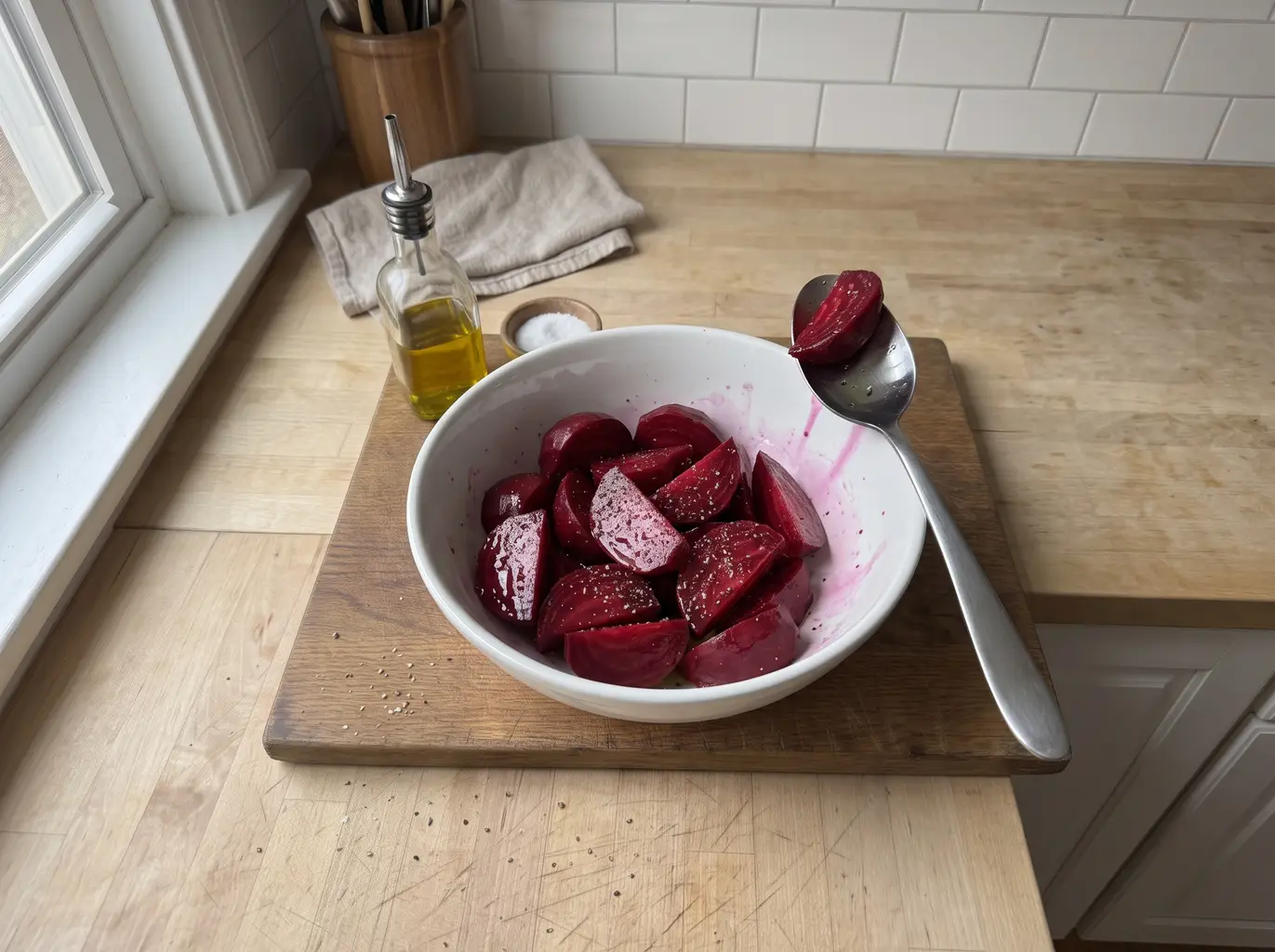
The size ledger
| Beet size | Wedge road, 375°F | Parcel road, 375°F |
|---|---|---|
| Golf ball (the bunched ones with greens) | Halve or quarter, 13 to 15 min | 2 to 3 per parcel, 30 to 35 min |
| Tennis ball (the grocery standard) | 1 inch wedges, 16 to 19 min | One per parcel, 35 to 45 min |
| Softball and beyond (the farmers market flex) | 1 inch wedges, 18 to 21 min | Quarter it and take the wedge road; a monster steams unevenly whole |
Times assume beets in a single layer or parcels with air space around them. A stuffed basket adds minutes and subtracts quality; how much floor you actually have is exactly what the pan size calculator knows about your machine.
The crime scene protocol
Betalain, the pigment that makes beets worth eating, is also a dye that laughs at soap. Rather than one sheepish tip at the bottom of a recipe, here is the whole protocol, learned one ruined dish towel at a time:
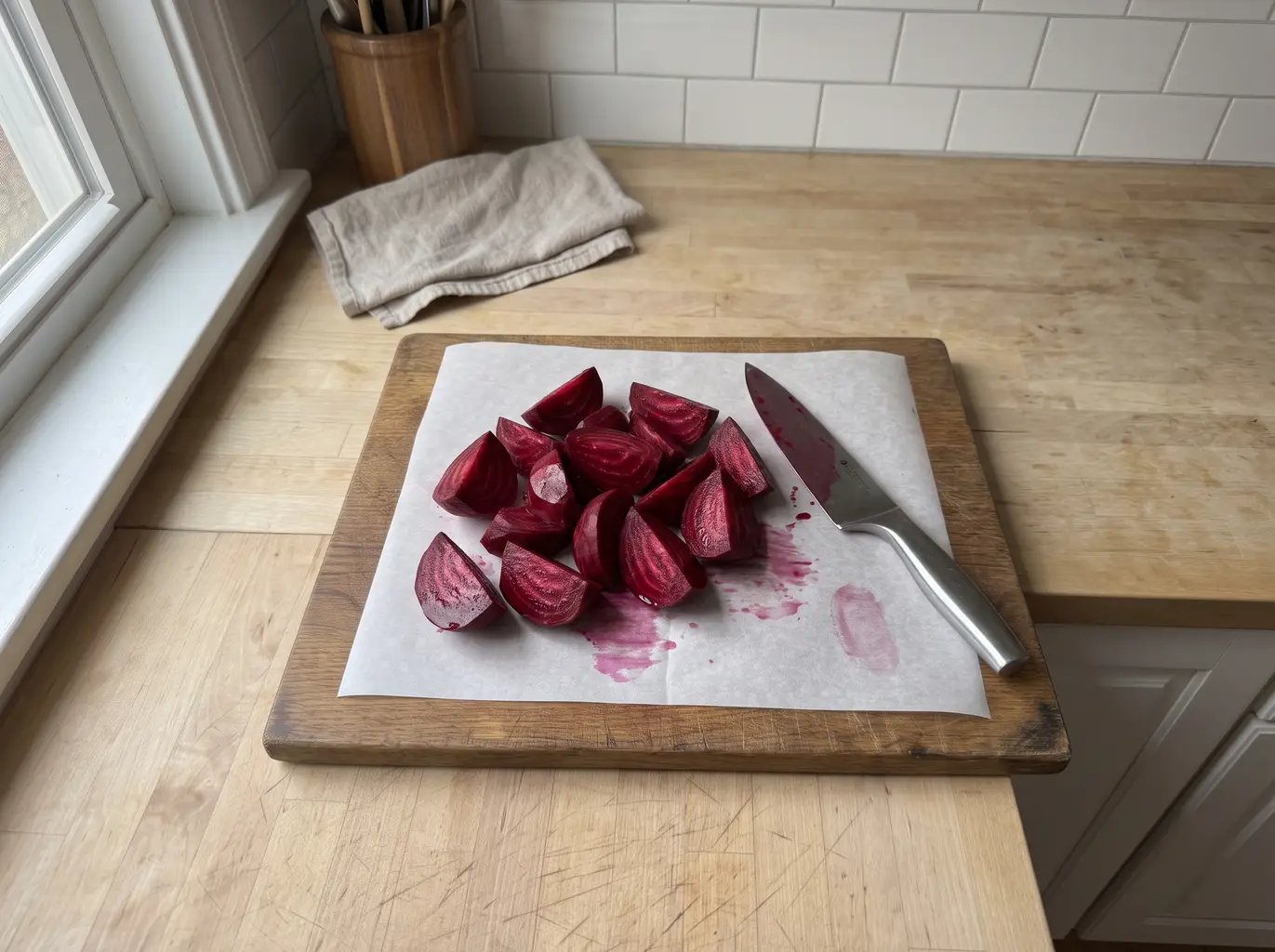
- Cut on parchment or a rimmed plate, never directly on a wooden board or the good white cutting mat. The parchment folds up and takes the evidence with it.
- Hands: oil first, or gloves. A thin rub of oil before handling keeps the dye from bonding; afterward, a paste of baking soda and water scrubs off what soap will not. Lemon juice finishes the stubborn crescents under the nails.
- The basket wipes clean if you let it soak warm and soapy for ten minutes; dried beet juice at 375°F is lacquer. Parcel road users skip this problem entirely, which is quietly one of its best arguments.
- Aprons are not cowardice. Red beet juice on a shirt is a permanent design decision.
- Or dodge the whole scene: golden beets taste like their red siblings with the drama turned down, and they stain nothing.
How to make them
- Choose your road by clock and destination: wedges for tonight's side, parcels for salads and the week ahead.
- Prep, wedge road: trim, peel raw with a Y-peeler over parchment, cut 1 inch wedges, toss with 1 tablespoon oil per pound, 1/2 teaspoon salt, pepper.
- Prep, parcel road: trim tail and stem stub, scrub, rub with a little oil and salt, wrap tight in foil, one color per parcel.
- Preheat 3 minutes at 375°F; dense roots want real heat from minute one, per the preheat guide.
- Wedges: 16 to 19 minutes, single layer, shaken at minutes 6 and 12.
- Parcels: 35 to 45 minutes, seam side up, no attention required.
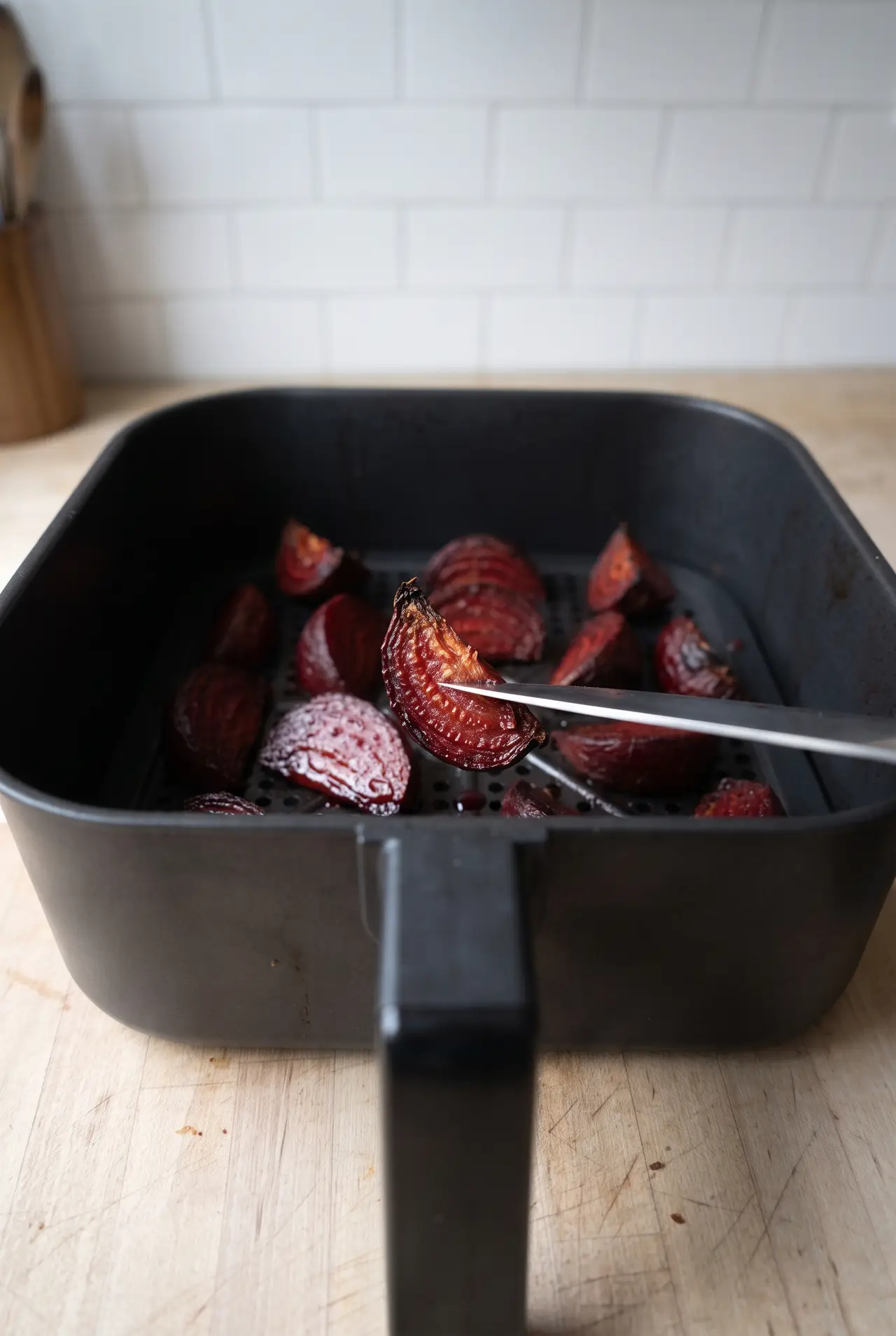
- Test: a knife into the thickest piece or straight through the foil into the fattest beet. No resistance at the center is the only passing grade; beets punish al dente ambitions with squeak.
- Finish: wedges get their balsamic or honey now, in the residual heat, plus flaky salt. Parcels rest 5 minutes, slip their skins, and go wherever cool, sweet beets are wanted.
Doneness and the slip test
- The knife owns the verdict on both roads: it should slide to the center of the biggest piece with no resistance at all. A beet that is almost done eats like a raw one wearing cologne; when in doubt, 3 more minutes, and the window is wide because a beet holds moisture the way pastry never can.
- Wedge road corroboration: edges browned and slightly shriveled, faces glossy, a corner piece sacrificed to the cook tasting sweet all the way through, not earthy-crunchy at the middle.
- Parcel road corroboration: the slip. If the skin slips clean under your thumbs, the beet was done; if it clings in patches, it needed 5 more minutes, and back into the machine the rewrapped parcel goes. The skin is the built-in thermometer, which is why this road never needed one.
Troubleshooting
| What you got | Why | Fix |
|---|---|---|
| Dry, wrinkled, leathery wedges | Oil below the floor, pieces too small, or a crowd steaming then drying. | The full tablespoon per pound, honest 1 inch wedges, single layer. |
| Squeaky, earthy centers | Pulled at fork-maybe instead of knife-certain. | No resistance at the center of the biggest piece. Beets do not do al dente. |
| Skins will not slip | Parcel opened early; the beet was underdone. | Rewrap, 5 more minutes, retest. The slip is the doneness test, not a bonus. |
| Glaze burned black | Balsamic or honey in the opening toss. | Sugars join in the last 2 minutes or after the basket. Salt starts; sweet finishes. |
| Golden beets turned pink | Shared a parcel or a layer with red ones. | One color per parcel, reds in their own batch. Betalain shares aggressively. |
| Everything you own is magenta | The protocol was read after the massacre. | Parchment under the knife, oiled or gloved hands, baking soda scrub, apron. Or golden beets. |
| Uneven batch, some raw | Mixed sizes cut to mixed pieces. | Uniform wedges; odd-size beets sort into separate parcels by the ledger. |
| One side of the basket browner | A machine hot spot. | The two scheduled shakes handle it for wedges; rotate parcels once for the long road. |
Recurring mysteries across recipes belong to the troubleshooting guide.
Variations and the greens
- Rosemary garlic: chopped rosemary in the opening toss, grated garlic stirred through in the last 2 minutes, since burnt garlic forgives nothing.
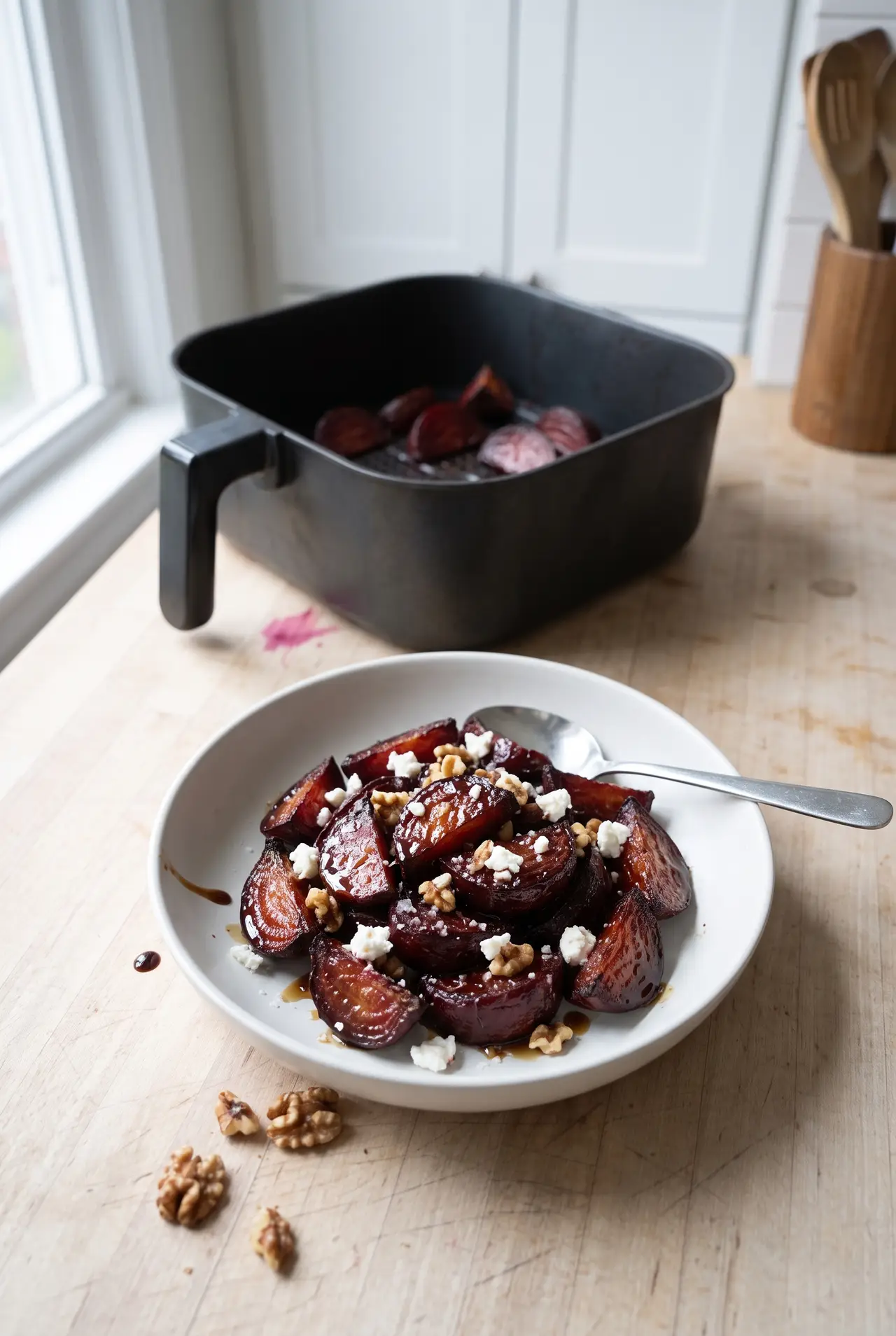
- Honey balsamic: a tablespoon of each, tossed through hot finished wedges. It tightens into a glaze on contact and never sees the element.
- The goat cheese ending: warm wedges or slipped parcel beets over greens with goat cheese, walnuts and the honey balsamic. This is the salad that converts beet skeptics, tested on three separate households.
- Golden and Chioggia: identical times, milder flavor, zero crime scene. Chioggia's candy stripes fade when cooked, so save them for quick wedges where some pattern survives.
- The greens are a second vegetable: if your beets came bunched with perky tops, wash them, toss with a whisper of oil and salt, and give them 3 to 4 minutes at 300°F for chips that shatter like autumn leaves. Two vegetables, one bunch, nothing wasted.
- The savory shelf: beets slot into the same weeknight rotation as the sweet potatoes, the baby potatoes and the asparagus, and the whole rotation lives on the healthy recipes shelf.
Storage and meal prep
- Fridge, 5 days, in glass, because plastic containers join the crime scene permanently. Parcel beets stored whole and unpeeled keep their moisture best; slip the skins as you use them.
- The meal prep move: a full basket of parcels on Sunday, 45 unattended minutes, and the week gets salads, grain bowls and snacking beets on demand. The recipe scaler does the math when the household or the beet bag changes size.
- Reheat wedges 4 minutes at 375°F to bring the edges back; parcel beets are honestly best cold or room temperature, which is the point of having them waiting.
- Freeze cooked wedges 3 months flash-frozen on parchment first. Thawed beets lose their bounce, so aim frozen ones at soups and hummus rather than salads.
Everything else the basket makes is indexed at the recipe index, and all four air fryer tools live in one place.
Frequently asked questions
QHow long do beets take in the air fryer?
Two answers for two methods, both at 375°F: peeled 1 inch wedges take 16 to 19 minutes with a couple of shakes, and whole beets wrapped in foil parcels take 35 to 45 minutes depending on size. Golf ball beets run a few minutes faster on both roads; softball giants should be wedged, not wrapped. Done means a knife slides to the center with no resistance.
QDo you peel beets before or after air frying?
It depends entirely on the method, which is why the internet disagrees. Cut wedges get peeled before, raw, because exposed skin turns leathery under the fan. Whole foil-wrapped beets are never peeled before: after cooking, the skins slip off under your thumbs in seconds, taking all the mess with them. If you hate peeling raw beets, that is not a character flaw, it is an argument for the parcel road.
QDo I have to use foil for air fryer beets?
Only on the whole-beet road, where the foil is doing the cooking: it seals the beet's own moisture into a tiny steam oven, keeping it plump and sweet through a 40 minute bake that would otherwise mummify it. Wedges need no foil at all; they want the opposite, full fan exposure for caramelized edges. A beet-weighted parcel is also the textbook safe use of foil in a basket.
QWhy did my beets come out dry and wrinkled?
Cut beets met the fan without enough protection. The fixes, in order of likelihood: oil up to the full tablespoon per pound, since beets have no fat of their own; pieces up to a true 1 inch, since small dice dries before it softens; and a single layer, since a crowded basket steams first and leathers second. If you want zero drying risk, the foil parcel road cannot produce a wrinkled beet.
QDo beets need to be boiled before air frying?
No, and please do not; boiling is how beets got their bad reputation, leaching flavor and sugar into water you then pour away. Raw beets go straight into the machine on either road. If you want the tender, no-caramelization texture that boiling gives, the foil parcel delivers it while keeping every bit of sweetness inside the beet, where it was always supposed to stay.
QDo golden beets cook the same as red beets?
Identical times and temperatures on both roads, with two differences in their favor: the flavor is milder and less earthy, which converts beet skeptics, and they stain nothing, which retires the entire cleanup protocol. Keep them in their own parcel or batch though, because red beets sharing space will dye them pink within minutes.
QWill beets stain my air fryer?
Wedge juice that bakes onto the basket at 375°F turns to lacquer if ignored, but a ten minute warm soapy soak takes it off completely; do it the same evening. Foil parcels leave the machine spotless, which is one of their quiet advantages. Your cutting board and hands are in more danger than the basket: parchment under the knife, oiled or gloved hands, and a baking soda scrub afterward handle all of it.
QCan I air fry pre-cooked or vacuum-packed beets?
Yes, and it is a genuine upgrade: the vacuum-packed beets from the produce aisle are already tender, so 6 to 8 minutes at 375°F with a little oil gives them the caramelized edges the package never could. It is the fastest route on this whole page to a warm beet side. Canned beets work too, patted very dry first, though they run softer and sweeter than fresh.
QAre air fryer beets healthy?
About as strong as a side dish gets: roughly 110 calories per serving with the oil, plus fiber, folate, potassium and the nitrates athletes chase in beet juice. The air fryer needs a fraction of the oil an oven roast uses, and the parcel road needs barely any. They earn their spot on the healthy shelf without the word salad; they just taste like candy that grew underground.
Never overbake again
Get our one-page times & temps cheat sheet, plus a new tested recipe each week.
No spam · unsubscribe anytime