

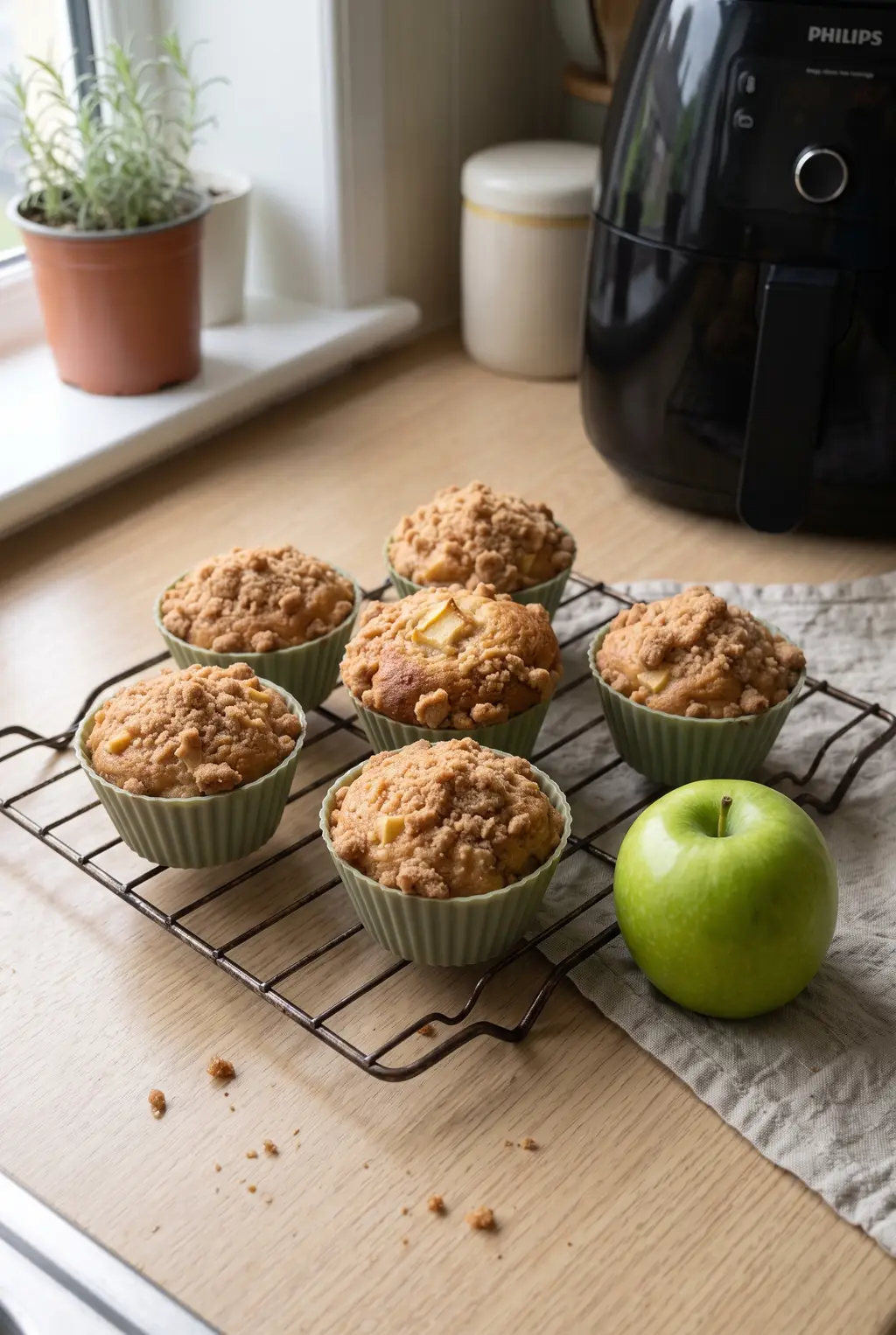
My first air fryer apple muffins committed both classic crimes at once. Every chunk of apple was huddled in the bottom quarter inch like sediment, and the crumb above them had the density of a paperweight with cinnamon in it. The recipe I had used was not wrong, exactly. It was an oven recipe someone had retyped with the word basket in it, and the muffin does not survive that translation without help, because the basket changes the pan, the pan changes the heat, and the heat changes everything downstream.
So this recipe starts over from the machine's actual conditions: silicone cups instead of a metal tin, a close overhead element instead of surrounding warmth, and a fan where an oven has stillness. Each of those gets an answer below. But the heart of the recipe is older than the machine, borrowed from the best oven bakers and absent from every air fryer version I can find, and it fits in a sentence: one apple, two jobs. Grate half, dice half, and the same fruit that used to sabotage your muffins starts working double shifts for them.
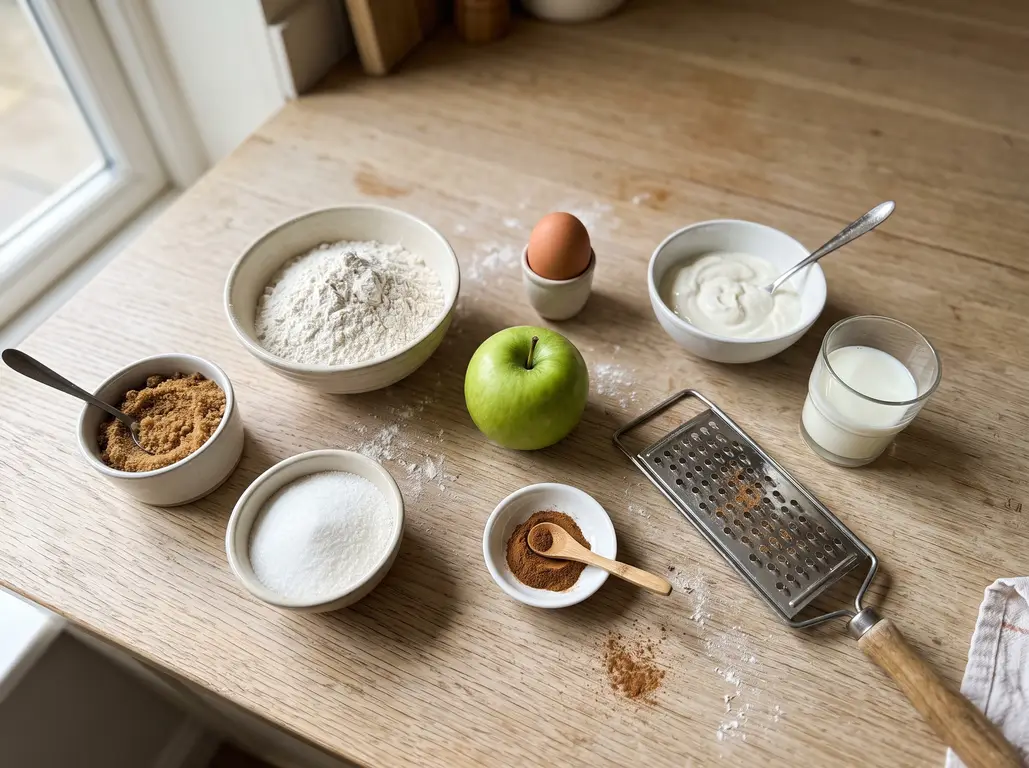
Quick answer: Grate half your apple straight into the wet ingredients, where it disappears into the crumb as moisture; dice the other half small and toss it in a spoonful of the dry mix so it stays suspended instead of sinking. Rest the mixed batter 15 minutes, fill rigid silicone cups three-quarters full, top with streusel squeezed into firm clumps, and bake at 320F for 13 to 15 minutes to a 205F center. For bakery-brown sides, pop the muffins out of their cups for a final 2 minutes in the basket.
The double apple move, and why it beats every one-apple recipe
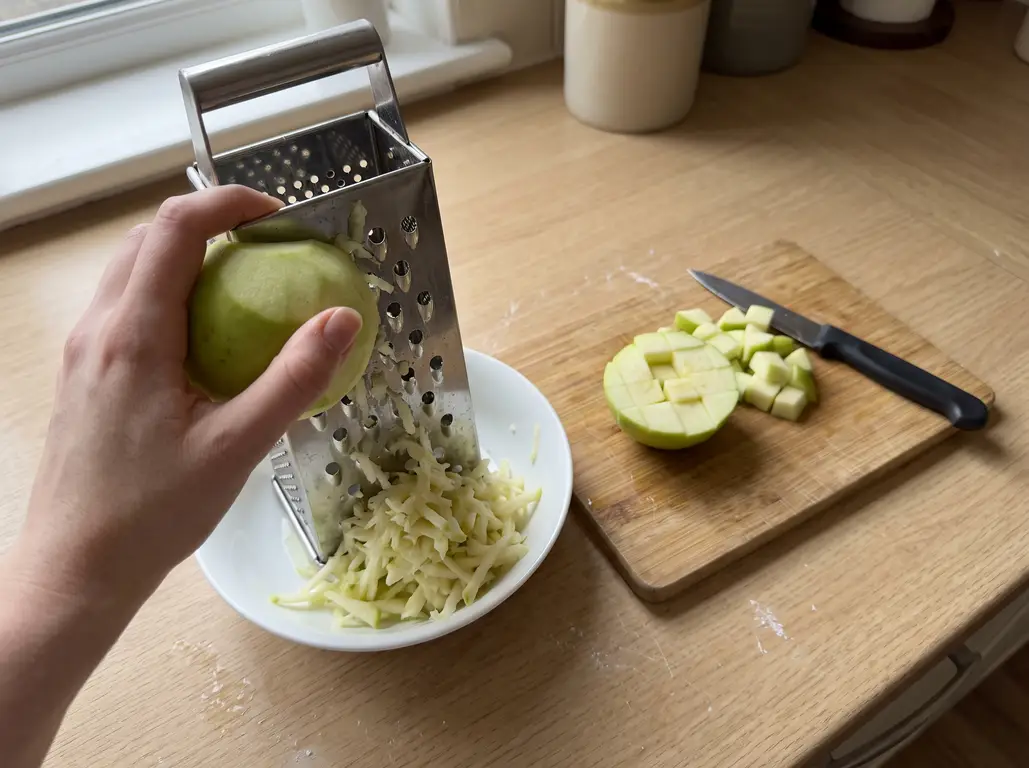
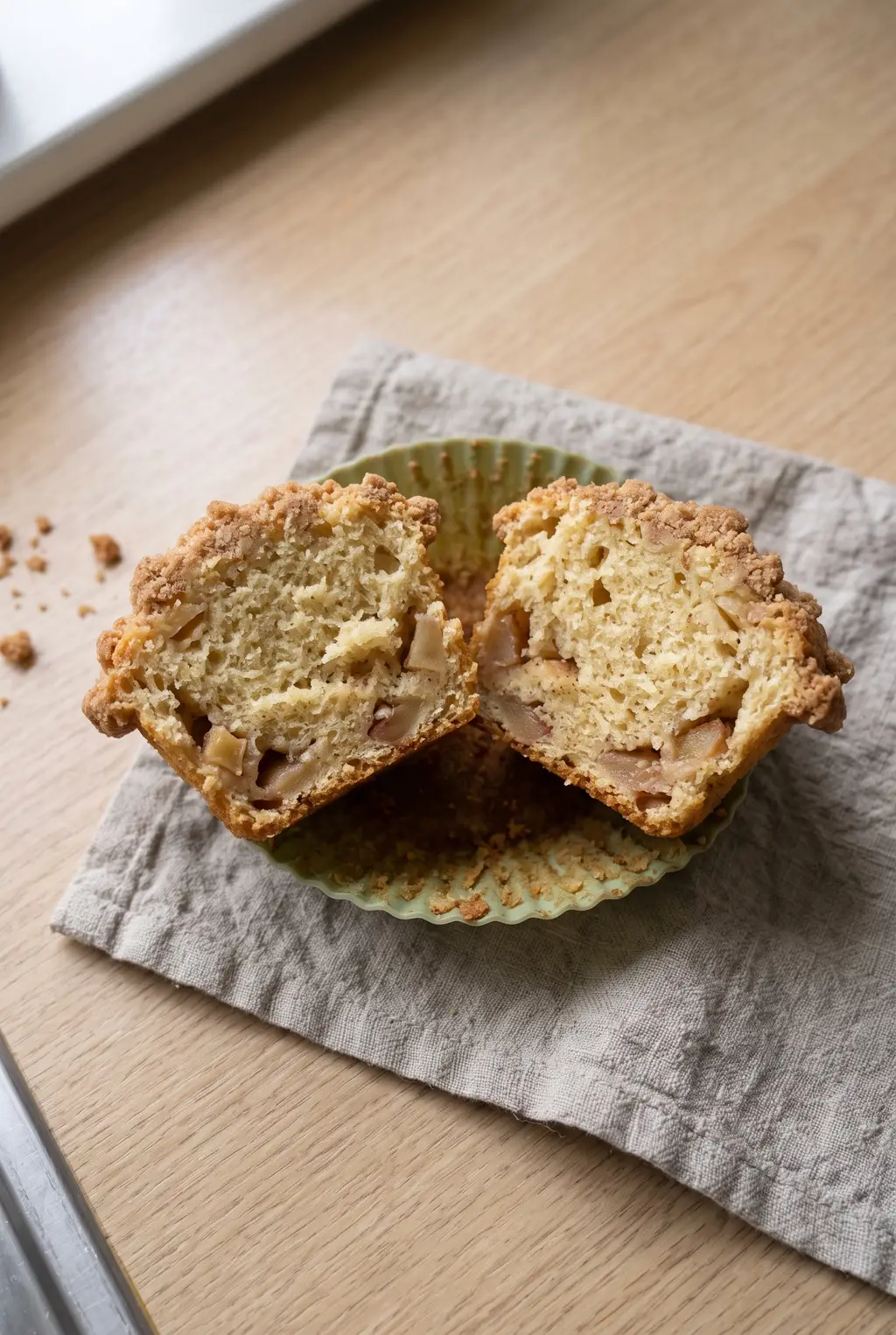
Every apple muffin recipe makes one decision about the apple, and every choice loses something. All diced, and the apple contributes pockets but no crumb moisture, so the muffin around the pockets bakes dry by Thursday. All grated or sauced, and the crumb is moist but the muffin has no apple to bite, just a rumor of fruit. The move that wins both, standard in serious oven baking and missing from this keyword's entire first page, is the split: half the apple grated on the coarse holes, squeezed gently but not wrung dry, whisked into the wet ingredients where its flesh melts into the crumb as distributed moisture; the other half in a small quarter-inch dice for pockets that announce themselves. One apple, both textures, and the grated half doubles as insurance against the drying wind this machine points at everything, the same moisture problem the dry bakes guide fights on every front.
Why apple chunks sink, and the two-part fix
Chunks sink when the batter around them is too loose to hold them and the pieces are too heavy to hold themselves. So the fix has two parts, and they cost nothing. First, the dice stays small and uniform, a quarter inch, because a big chunk is a boulder and no batter holds boulders. Second, the flour toss: shake the dice in a tablespoon borrowed from the dry mix until every face is dusted. The starch coat gives the batter something to grip and thickens the immediate neighborhood of each piece as it bakes. Between the toss, the small dice, and a batter kept deliberately thick, the pockets stay distributed from crown to floor, and the bottom of the muffin goes back to being muffin.
The 15 minute rest that builds the crown
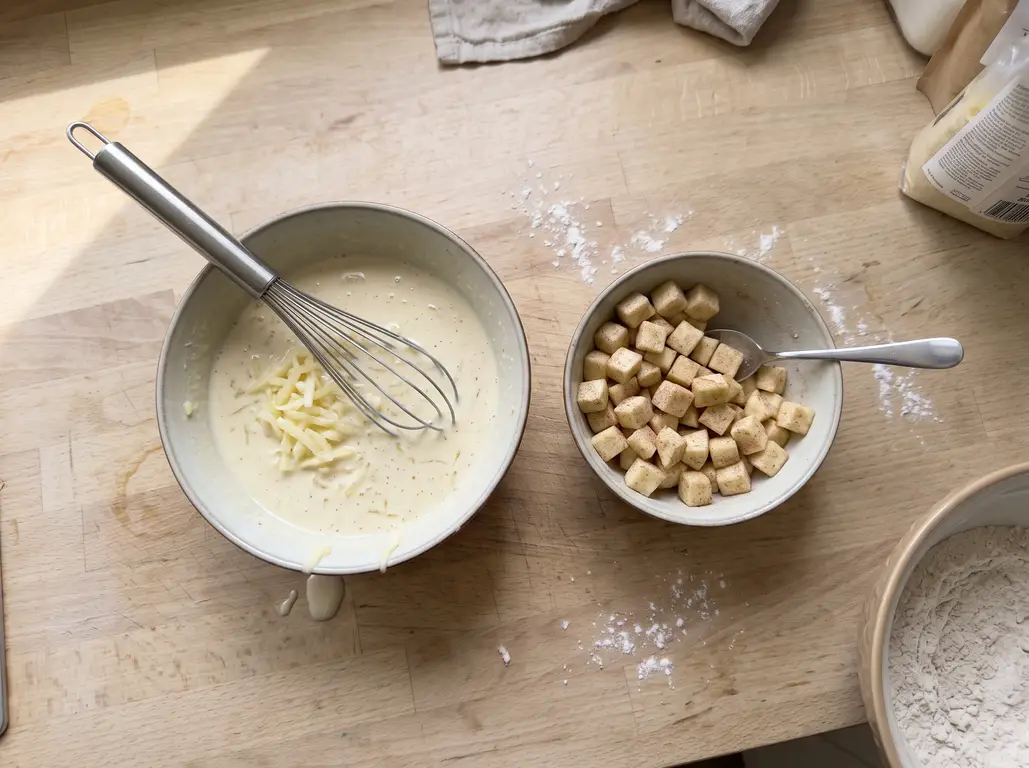
Here is the free upgrade nobody using a 15-minutes-total recipe will ever meet: after mixing, the batter sits on the counter for 15 minutes before it touches a cup. In that time the flour finishes hydrating, the batter thickens enough to hold the dice and the dome, and the leavening begins its slow first work, all of which cashes out as taller crowns and a lighter crumb from the identical ingredients. Oven bakers rest batter for the same reason; in the basket it matters more, because a thicker rested batter also resists the fan's habit of leveling soft peaks. The rest costs nothing in schedule either: it is exactly the time it takes to prep the cups, squeeze the streusel, and wipe the counter. Overmixing remains the other half of the density story, and the rule is unchanged from every quick bread on this site: stir until the last flour streak disappears, then put the spoon down and walk away with your muffins' future intact.
Silicone cup doctrine, and the decup finish
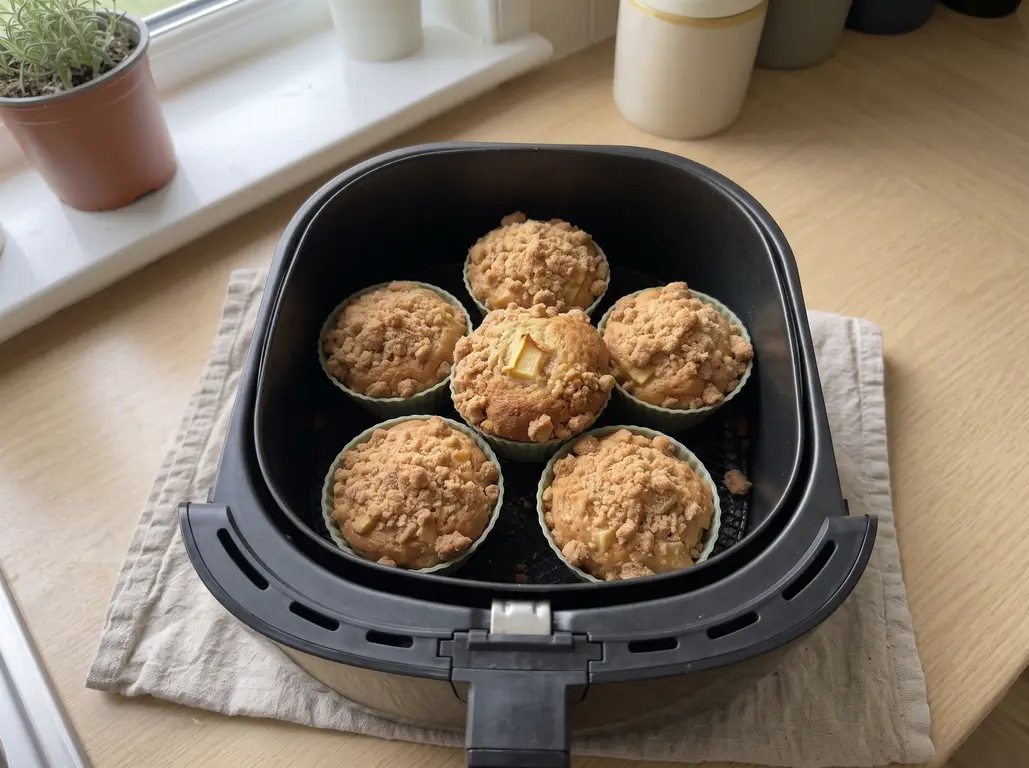
Muffins in a basket mean silicone cups, because a rigid twelve-well tin does not fit, and silicone changes two things the oven recipes never mention. It flexes, so soft floppy cups bulge into squat muffins; buy the rigid, reinforced kind, the standard the silicone molds guide shops by. And it insulates, so muffin bottoms and sides bake through but stay pale, which is cosmetic until you notice every bakery muffin you have ever admired had bronze walls. The fix is this page's favorite trick, the decup finish: when the muffins probe done, tip each one out of its cup and return the naked muffins to the basket for 2 minutes at 340F. The exposed sides and bottoms brown in the direct heat, the crowns deepen a shade, and the muffins come out looking tin-baked. It is optional, it costs 2 minutes, and after one round of before-and-after you will not skip it again.
Streusel that survives the fan
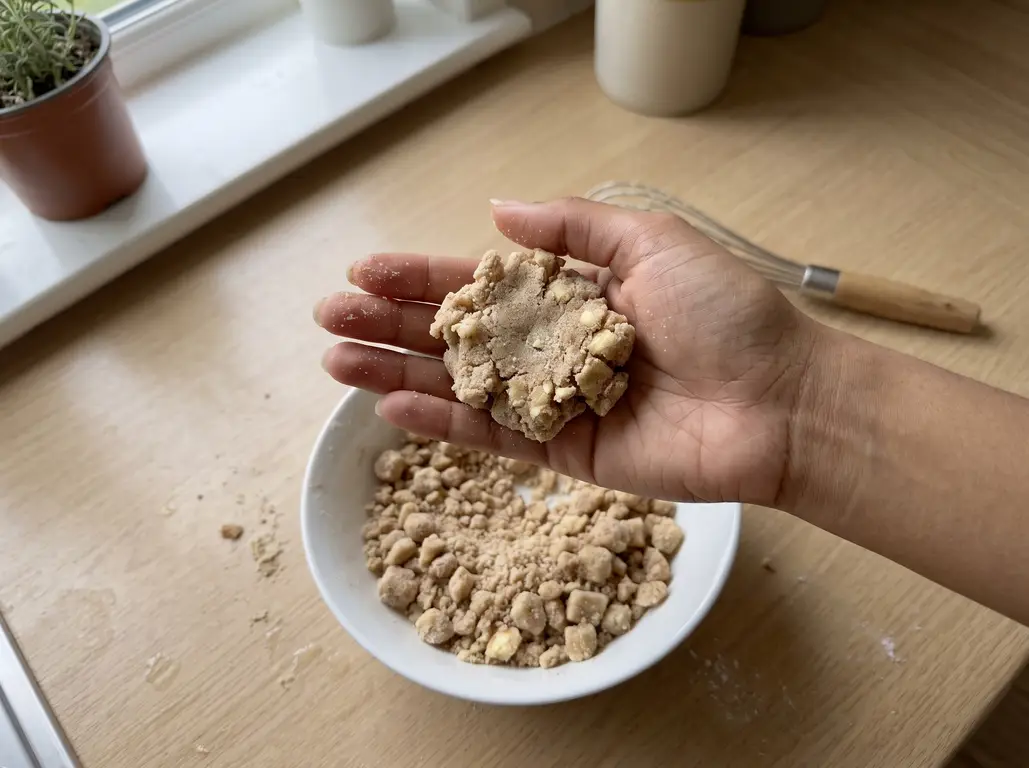
A classic streusel is butter, flour, sugar, and cinnamon rubbed to loose sand, and loose sand is exactly what a fan strips off a muffin crown, which is why air fryer streusel recipes so often deliver bald muffins with suspiciously fragrant drawers. The house rule, the same clump law that guards the crumble, applies with no modifications: after rubbing the butter in, squeeze fistfuls of the streusel into firm masses, then break those into pebbles the size of peas and chickpeas, never dust. Pebbles have the weight to hold their seats, they bake into crisp knuckles of topping, and the drawer stays clean. Press them gently into the batter's surface so they anchor as the crown rises around them.
The method and the schedule
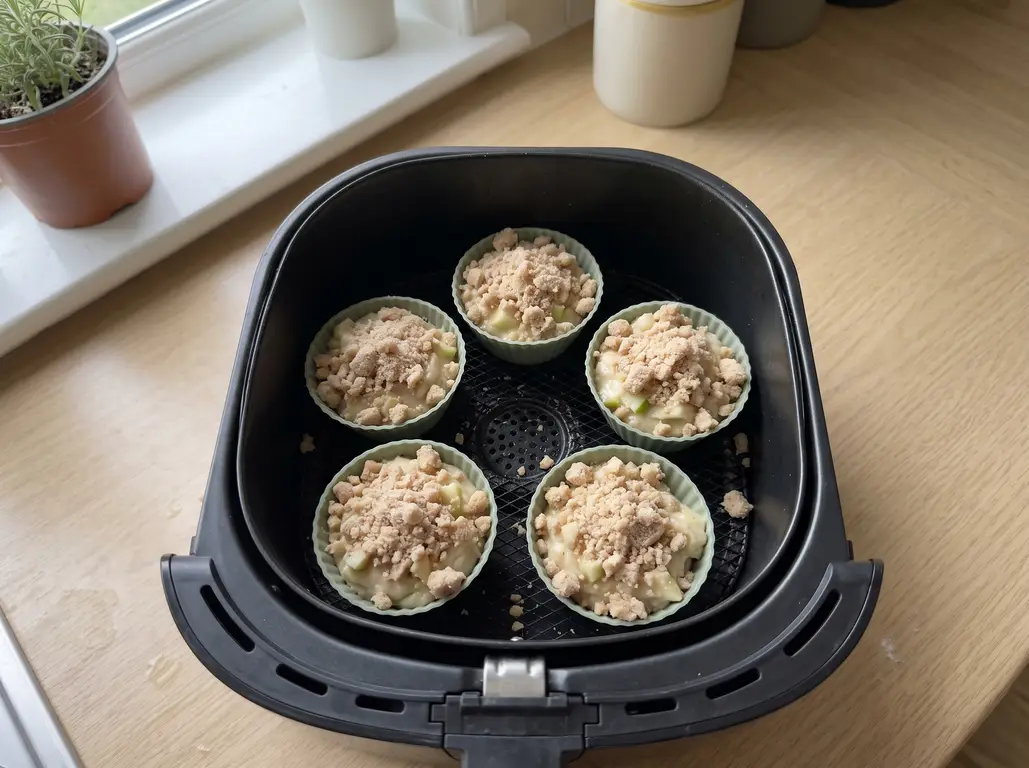
The assembly is standard muffin method, wet into dry, with the apples entering by their two doors, and the schedule is where the machine's personality gets managed. 320F, not the oven's 350F or the hot-start 425F some tin recipes love, because the element is close and crowns scorch before centers set at anything hotter, the exact discount arithmetic the air fryer calculator applies to any oven muffin recipe you want to bring over. Four or five cups per batch with air between them, a half-turn rotation of the cups at minute 8 if your machine's bread-slice map ever showed a hot corner, and 13 to 15 minutes to the only doneness that counts: 205F on an instant-read probe in the center of the middle muffin, the standing quick-bread number this site pulls every crumb at, because a golden crown is the machine's favorite lie and carryover finishes the last degrees on the rack. The second batch runs about a minute quicker, standard small-chamber tax, and the full tested lineup for every other quick bread lives in the baking chart.
Variations, and the rest of the muffin shelf
Within this recipe: swap half the cinnamon for cardamom and the muffins turn quietly Scandinavian; add a handful of toasted walnuts to the streusel; fold a third of a cup of raisins in with the diced apple if your household is pro-raisin, a question I do not adjudicate. The apple itself follows the family rule from the rest of the orchard pages: firm, tart-leaning fruit, Granny Smith or Honeycrisp, because soft varieties surrender their dice to the crumb and you are back to a one-apple muffin. Beyond this recipe, the muffin shelf runs deep: the blueberry muffins handle the berry version of the sinking problem, the cinnamon muffins and the banana muffins take the spiced and the soft-fruit lanes, the carrot muffins run the same grated-produce trick with a vegetable, the chocolate chip muffins round out the sweet bench, the corn muffins hold the savory end, and bakers baking for one or two should meet the small batch guide, whose freeze-the-labor philosophy applies here perfectly: this batter portions into cups and freezes, baking off two muffins at a time from frozen with 3 extra minutes, which turns one mixing bowl into three weeks of warm breakfasts.
Frequently asked questions
QCan you bake muffins in an air fryer?
Yes, in rigid silicone cups, four or five per batch, and the results match a tin once three adjustments land: bake at 320F rather than the oven's 350F because the heating element sits close overhead, verify doneness at 205F in the center with a probe rather than trusting the crown's color, and expect pale sides from the insulating silicone, fixable by tipping the finished muffins out of their cups for a final 2 minutes of direct heat in the basket.
QWhy do my apple pieces sink to the bottom of muffins?
Because the pieces are too big and the batter is too loose to hold them. Cut the dice small and uniform, about a quarter inch, and toss it in a spoonful of the recipe's dry mix before folding it in; the flour coat gives the batter grip on every piece. A rested batter helps too, since 15 minutes of hydration thickens it noticeably. Between the small dice, the flour toss, and the rest, the apple stays distributed from the crown to the floor of every muffin.
QShould I grate or dice apples for muffins?
Both, and the split is the best trick in apple muffin baking. Grated apple melts invisibly into the crumb during the bake, delivering moisture everywhere without wet pockets; diced apple survives as distinct fruit you can taste. Use one apple for both jobs: grate half coarsely into the wet ingredients, squeeze it gently first, and cut the other half into a small flour-tossed dice. All-diced muffins bake drier, and all-grated muffins lose the apple bite entirely.
QWhy are my muffins dense instead of fluffy?
Two culprits cover nearly every case: overmixing, which develops gluten and toughens the crumb, and unrested batter, which bakes before the flour fully hydrates. Stir only until the last streak of flour disappears, then let the batter sit 15 minutes before filling the cups; it thickens, hydrates, and rises taller from identical ingredients. Check your baking powder's date too, since a leavener past its year reads as density no technique can rescue.
QWhat temperature do you bake muffins in an air fryer?
320F, for 13 to 15 minutes in standard silicone cups. Oven muffin recipes run 350F and up, with some using a 425F hot start for domes, but the air fryer's element sits inches from the crowns and those settings scorch tops before centers set. At 320F the crown, walls, and center finish together, with the dome built by a rested, thick batter instead of blast heat. Converting any oven muffin recipe follows the same logic: drop about 25 to 30 degrees and check early.
QHow do you know when muffins are done?
An instant-read thermometer in the center of the middle muffin reading 205F. The toothpick test half-works, but in an air fryer the crowns brown early, which tempts you to pull dense, wet-centered muffins on looks. The probe removes the guesswork: at 205F the crumb is set and moist, and the couple of degrees of carryover on the cooling rack finish the job. Probe the middle muffin of the batch, since the edge positions in most baskets run slightly ahead.
QWhy is my streusel blowing off in the air fryer?
Because sandy streusel is lighter than the fan is strong. The fix is compaction: after rubbing the cold butter into the flour and sugar, squeeze the mixture in your fists into firm masses, then break those into pea-to-chickpea pebbles and press them gently into the batter's surface. Pebbles have enough mass to keep their seats and bake into crisp clusters, while loose crumbs end up scorched in the drawer. Weight is the entire answer; the ingredients never change.
QCan I use paper liners instead of silicone cups?
Not on their own. A paper liner without a tin around it has no structure, so the batter splays it into a low, wide puddle, and an empty liner is light enough for the fan to relocate mid-bake. Rigid silicone cups are the basket's muffin tin: they hold the round shape, they release cleanly, and they last years. If you like the look of papers, drop a paper liner inside each silicone cup and get both the presentation and the structure at once.
QHow do you store apple muffins?
Airtight at room temperature for 3 days, with a paper towel under and over them to catch the moisture the grated apple keeps releasing; the refrigerator dries crumb faster and is not an upgrade. For longer keeping, freeze baked muffins for 2 months and revive at 320F for 3 to 4 minutes, or freeze the batter portioned in its silicone cups and bake from frozen with about 3 extra minutes, which delivers genuinely fresh muffins on a random Wednesday for zero additional dishes.
Never overbake again
Get our one-page times & temps cheat sheet, plus a new tested recipe each week.
No spam · unsubscribe anytime