

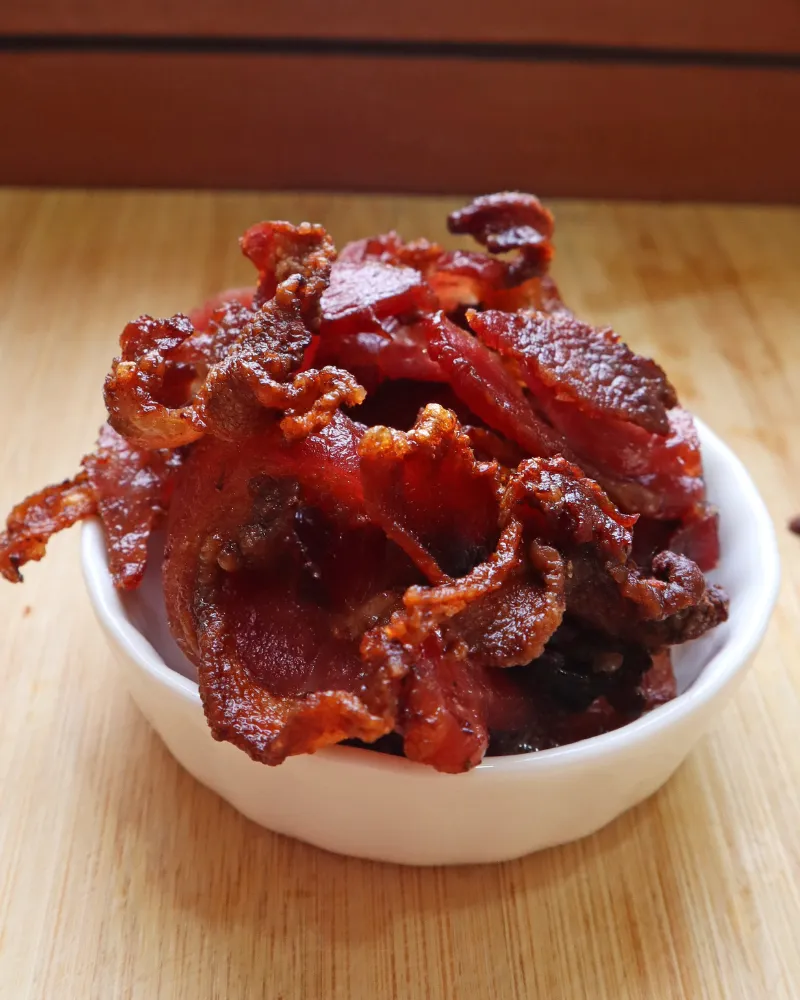
The first time I cooked bacon in my air fryer I set it to 400°F because that is what the recipe said. Four minutes later my smoke alarm went off, my husband opened every window in the house, and I stood there fanning a tea towel at the ceiling.
The bacon was fine. The kitchen smelled like a barbecue for two days.
What nobody told me, and what the most popular bacon recipes still get wrong, is that bacon fat starts smoking well below 400°F. Once you understand that one number, air fryer bacon becomes the easiest breakfast you can make.
Quick answer: Cook bacon in the air fryer at 350°F. Regular cut needs 8 to 10 minutes, thick cut needs 12 to 14 minutes. Lay the strips in a single layer, do not overlap them, and do not preheat. No flipping required. Pull the bacon when it looks slightly less crisp than you want, because it firms up as it cools.
Why 350°F and not 400°F
Search for air fryer bacon and you will get told 350°F, 360°F, 375°F and 400°F, all with total confidence and none with a reason. Here is the reason.
Rendered bacon fat has a smoke point somewhere between 325°F and 375°F. The exact number depends on the bacon, because drippings are not pure fat. They carry water, salt, sugar from the cure, and residual protein solids, and all of those lower the point at which the fat starts to break down and smoke. You will find pages claiming the smoke point is 400°F. It is not, and that single wrong number is why so many people set their machine to 400 and end up fanning a smoke alarm.
So when you run an air fryer at 400°F, the fat dripping into the drawer underneath is sitting well past its smoke point on a hot metal surface. It smokes. At 350°F you are under the line for most bacon, which is why that temperature shows up again and again in the recipes that actually work.
There is a tradeoff, and it favors you. Lower heat gives the fat more time to render out before the outside sets, which means an evenly crisp strip instead of one scorched at the edges and rubbery in the middle. Higher heat is faster but the exterior hardens before the interior fat has melted. For thick cut especially, slower wins. If you have ever had bacon go from underdone to burnt in the space of a minute, that is what was happening.
Time and temperature by cut
| Bacon | Temperature | Chewy | Crispy |
|---|---|---|---|
| Regular cut | 350°F | 7 to 8 min | 9 to 10 min |
| Thick cut | 350°F | 10 to 11 min | 12 to 14 min |
| Center cut (leaner) | 350°F | 6 to 7 min | 8 to 9 min |
| Turkey bacon | 350°F | 5 to 6 min | 7 to 8 min |
| Streaky or pancetta | 330°F | 5 min | 6 to 7 min |
Turkey bacon has almost no fat to render, so it goes from done to leather quickly. Start checking at 5 minutes.
If you are working from an oven recipe you already like, run the numbers through the air fryer calculator rather than guessing. It handles the temperature drop and the time trim for you. The air fryer baking chart is the quick reference if you would rather just look something up, and the baking conversion guide explains why the adjustments work the way they do.
How to cook it
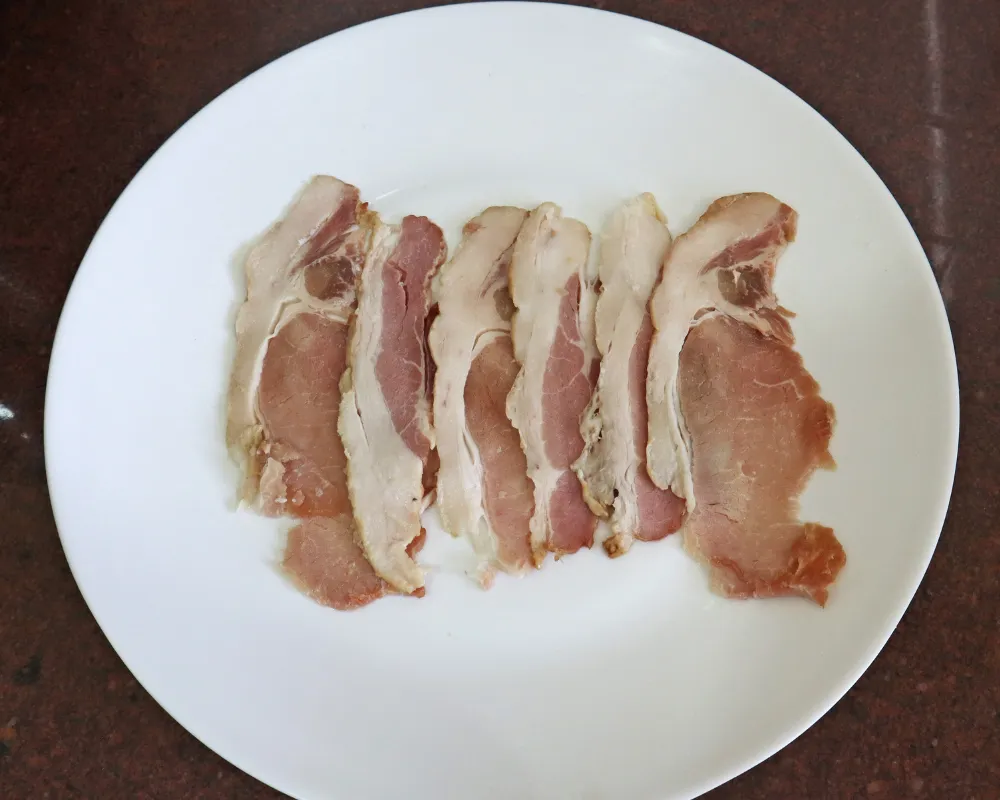
You need bacon, an air fryer, tongs, and a plate lined with paper towels. No oil, no spray, no seasoning. Bacon brings its own fat and its own salt, and adding oil to a basket full of bacon is how you get more smoke, not more crisp.
- Do not preheat. This is the opposite of most air fryer advice and it is deliberate. Starting cold gives the fat a head start on rendering before the surface sets, and it means the drawer underneath is not already hot when the first drips land, which cuts down on smoke.
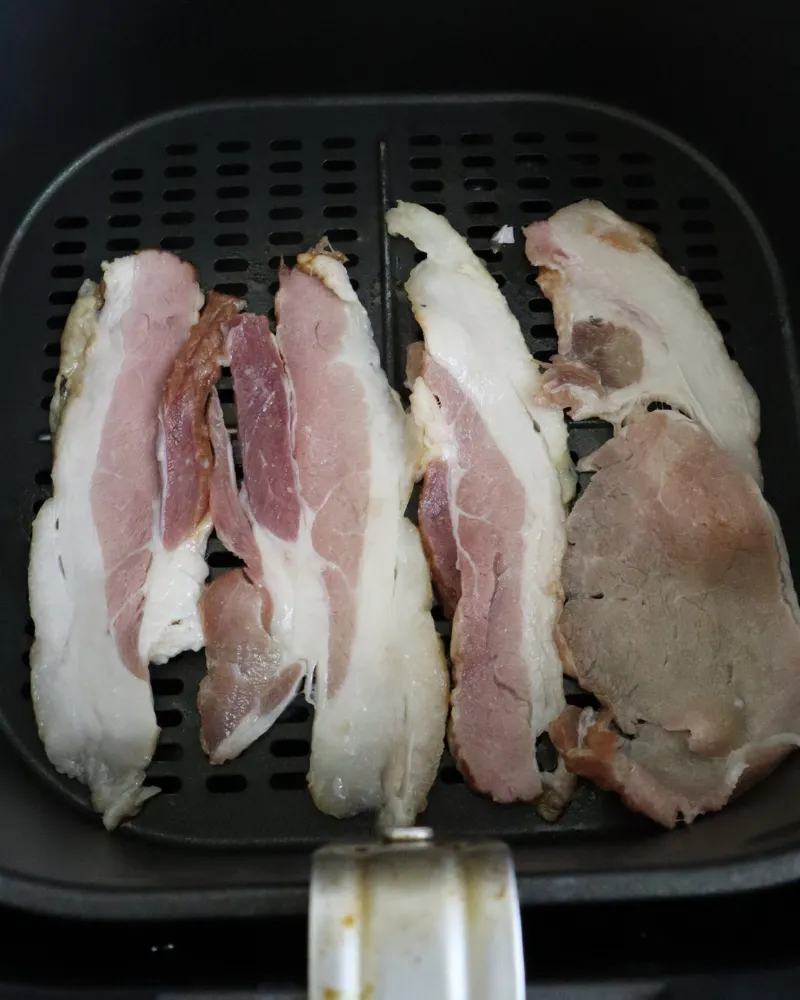
- Lay the strips in a single layer. They can touch at the edges but they cannot overlap. Anywhere two strips sit on top of each other you get a pale, floppy patch. If a strip is too long, cut it in half or fold it into an S shape and let it crisp in the curve.
- Set the air fryer to 350°F. Start the timer at 8 minutes for regular cut, 12 for thick cut.
- Check at the halfway mark. Pull the basket out and look. You are not flipping, you are checking for hot spots. Most air fryers cook more aggressively at the back, so if the back strips are running ahead, swap them with the front ones.
- Start checking properly two minutes before the timer ends. Bacon moves fast at the end. Pull the basket, lift a strip with tongs, and look at how much it bends.
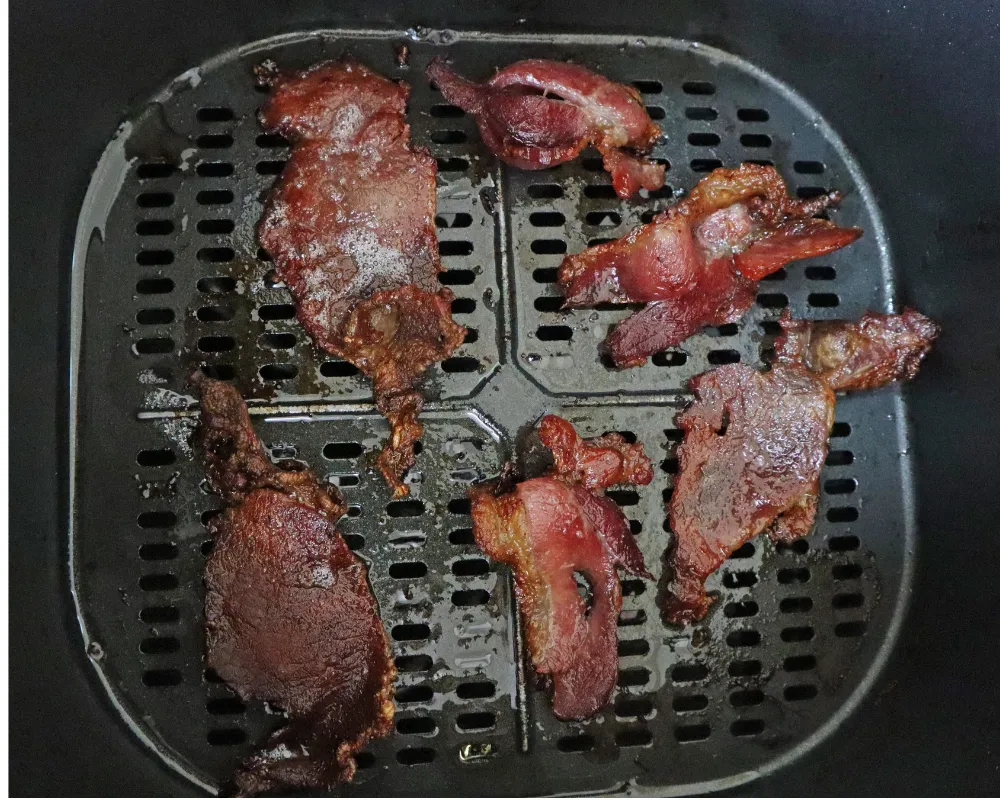
- Rest on paper towels for 2 minutes. Bacon is noticeably softer straight out of the basket than it is ninety seconds later. If you cook it until it looks perfectly crisp in the machine, it will be overdone by the time it hits the plate.
How to stop the smoking
If your kitchen is filling with smoke, one of these five things is happening, in order of how often it is the culprit.
Drop to 350°F
The temperature was too high and the drippings are past their smoke point. This alone fixes it most of the time.
Wipe the drawer
Fat from your last cook is sitting on the hot base, and reheated fat has a lower smoke point than fresh because each heating cycle breaks it down further. Wipe between batches, not just at the end.
Bread or water below
A slice of plain bread in the drawer under the basket soaks up the fat before it can pool and smoke. A tablespoon or two of water does the same job. Not both.
Smaller batches
More bacon means more fat hitting the base at once. Two smaller batches smoke less than one crowded one.
Stop lining the basket
Foil or parchment under the bacon traps grease against the strips and steams them, and a loose sheet can lift into the element. Line the drawer below if you want easier cleanup, never the basket.
The rules for what is safe are in can you use foil or parchment paper in an air fryer. For smoke that will not stop no matter what you do, how to prevent burning in an air fryer covers the mechanical causes.
How much actually fits
This is the question nobody answers, and it is the one that decides whether this method saves you time.
| Air fryer | Regular strips per batch |
|---|---|
| 2 to 4 quart basket | 3 to 4 |
| 5 to 6 quart basket | 5 to 6 |
| 8 quart basket | 7 to 8 |
| Dual basket (per drawer) | 4 to 5 |
| Oven style, per rack | 8 to 10 |
If you are cooking for more than two people, a basket air fryer is not faster than a sheet pan in the oven. It is cleaner and it does not heat the house, which is why I still use it in summer, but be honest with yourself about the batch math on a Sunday morning.
Oven style air fryers with two or three racks change this completely. You can run 20 strips at once, rotating the racks halfway because the top rack always runs hottest. The differences between the two formats are covered in basket versus oven-style air fryers.
How to tell when it is done
Forget the timer for a second and use the bend test.
| Stage | What the strip does |
|---|---|
| Chewy | Droops when you lift it from one end |
| Just right | Holds a slight curve and bends without folding |
| Crispy | Stays almost straight, fat gone from white to translucent gold |
| Overdone | Snaps, and the lean parts have gone dark brown |
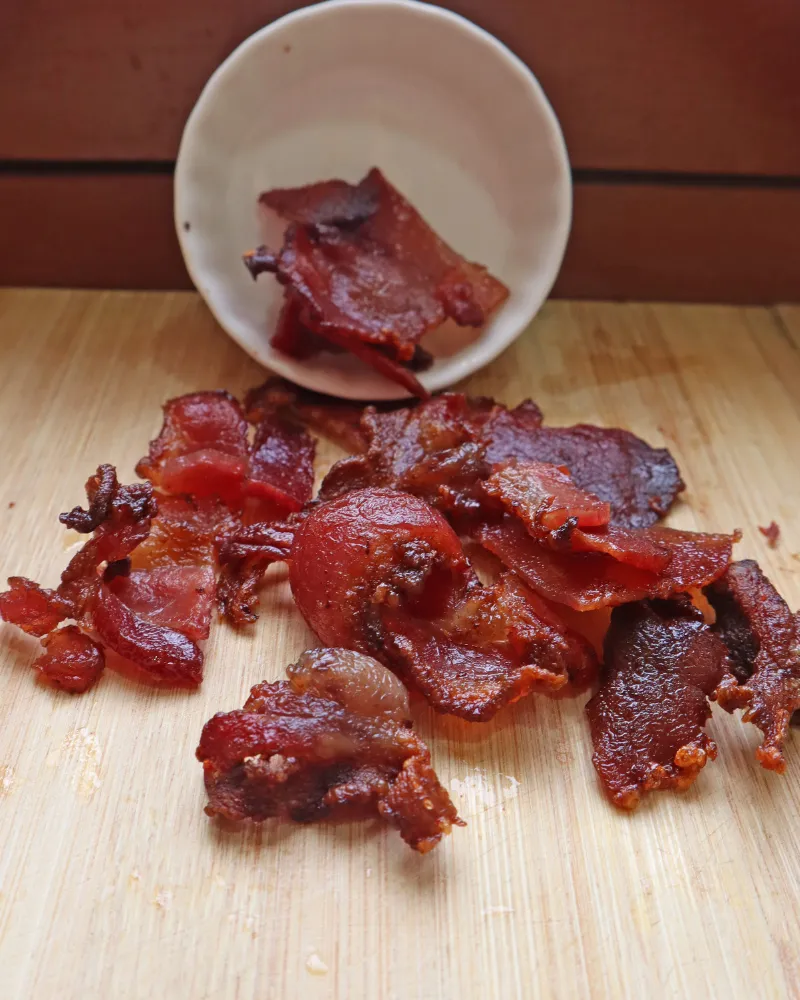
The fat is the tell. White, opaque fat means it has not rendered yet and the bacon will be floppy. When the fat turns clear and golden, you are there.
Troubleshooting
| What you got | Why | Fix |
|---|---|---|
| Floppy and pale | Strips were overlapping, or pulled too early. | Two more minutes, and check the fat for that translucent look. |
| Some burnt, some raw | Uneven thickness, or hot spots in the machine. | Sort strips by thickness and put the thicker ones toward the back. |
| Edges burned first | Temperature too high, or a sugary cure. Maple and brown sugar bacon browns faster than the meat cooks. | Drop to 340°F and add 2 minutes. |
| Shrank to nothing | Bacon loses roughly a third of its weight normally. Extreme shrinkage means a water-added pack. | Check the label for anything above about 12 percent added ingredients. |
| Stuck to the basket | The basket was too clean and too dry, oddly enough. A seasoned basket releases better. | Never scrape with metal. The bakeware cleaning guide covers degreasing without stripping the coating. |
| Tastes of last week's dinner | Grease residue in the drawer and on the element. Bacon picks up old smells. | The full cleaning routine is in air fryer baking troubleshooting. |
Save the grease
Do not pour it down the sink. It will solidify in your pipes, and it is genuinely useful.
Let the drawer cool for about ten minutes so the fat is warm but not hot, then pour it through a fine sieve into a small jar. Keep it in the fridge and it will last three months. Bring it out for roasting potatoes, frying eggs, greasing a cornbread skillet, or starting a pot of greens. One batch of bacon gives you roughly two to three tablespoons. It is worth the jar.
Storage and reheating
- Fridge: cooked bacon keeps 4 to 5 days in a sealed container with a paper towel underneath.
- Freezer: freeze flat on a tray first, then bag it. Up to 3 months.
- Reheating: 300°F for 2 to 3 minutes. Straight from frozen, give it 4 minutes. Do not go higher, the fat is already rendered and high heat just burns the lean.
- Batch cooking: cook a full pack on Sunday, refrigerate, and reheat two strips at a time during the week. It takes less time than making it fresh.
The same low and slow reheating logic applies to most cooked proteins, which is covered in how to reheat fried chicken in the air fryer.
What to do with it
The obvious ones first. Bacon goes on air fryer avocado toast, next to air fryer egg toast, and alongside air fryer hash browns for a full breakfast plate. For bacon and eggs cooked together in one basket, the staggered timing is its own recipe: air fryer bacon and eggs. If you want a second breakfast meat going, air fryer chicken sausage cooks at a similar temperature.
Crumble it over air fryer brussels sprouts, which is the combination that converted two people in my family who claimed to hate sprouts. Scatter it on a salad with air fryer croutons. Build a BLT on homemade air fryer bread.
Since this is a baking site, the ones I actually get excited about are the bakes:
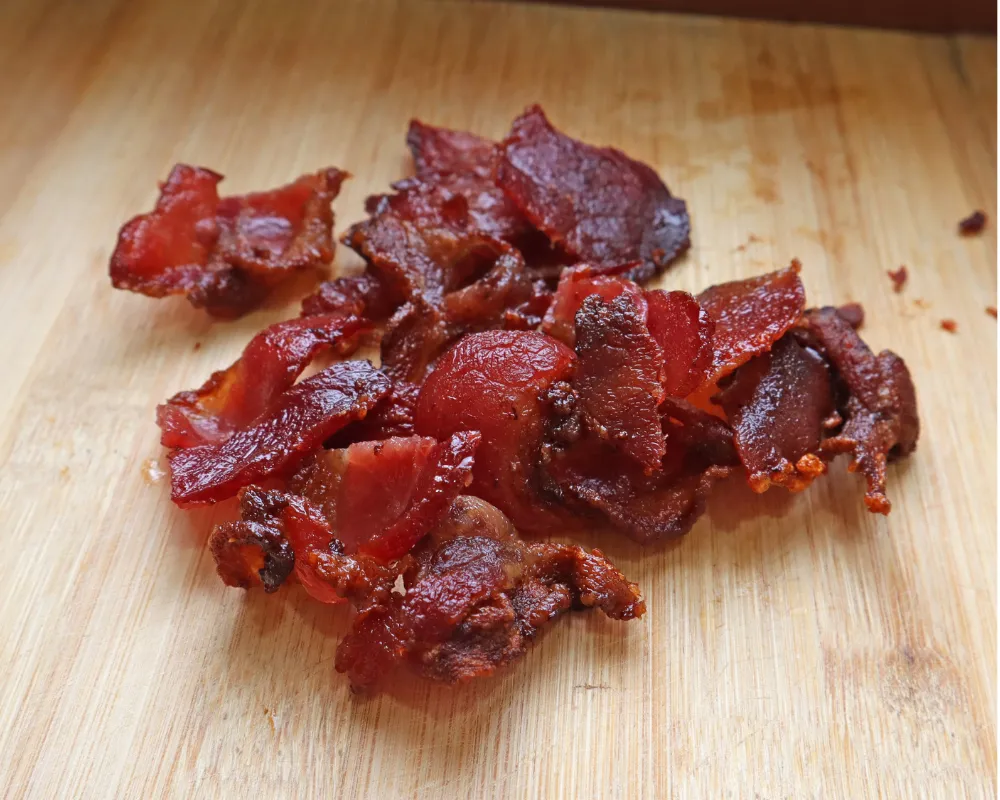
- Candied bacon. Press brown sugar onto the strips before cooking and drop the temperature to 325°F, because sugar burns fast. It comes out like a savory version of air fryer candied walnuts.
- Maple bacon cinnamon rolls. Crumble crisp bacon into the cream cheese icing on air fryer cinnamon rolls. Salt against sweet, and it works.
- Bacon banana bread. Half a cup of crumbled bacon folded into air fryer banana bread batter. Sounds strange, tastes like a diner breakfast.
Frequently asked questions
QHow long do you cook bacon in an air fryer?
Regular cut bacon takes 8 to 10 minutes at 350°F. Thick cut takes 12 to 14 minutes at the same temperature. Cook in a single layer without overlapping, and let the bacon rest for 2 minutes on paper towels before eating, because it crisps further as it cools. Pull it when it looks slightly softer than you want it to end up.
QWhy does my air fryer smoke when I cook bacon?
Because bacon fat smokes between 325°F and 375°F, so cooking at 400°F pushes the dripping fat past its smoke point on the hot drawer base. Drop to 350°F, wipe old grease out of the drawer between batches, and put a slice of plain bread or a tablespoon of water underneath the basket to catch the drips before they can pool and burn.
QDo you need to flip bacon in an air fryer?
No. Hot air circulates around both sides of each strip, so bacon crisps evenly without flipping. Check at the halfway point anyway, not to flip but to look for hot spots, and swap front and back strips if one end of the basket is running ahead of the other.
QDo you preheat the air fryer for bacon?
No. Starting cold lets the fat render before the outside sets, which gives you more evenly cooked bacon, and it means there is no hot metal in the drawer when the first drips land, which cuts down on smoke. This is one of the few recipes where skipping the preheat is genuinely better rather than just acceptable.
QCan you put raw bacon in an air fryer?
Yes. Raw bacon goes straight into the basket with no oil and no preparation. It is one of the few things that needs nothing done to it first, because it brings its own fat and its own seasoning.
QCan you cook frozen bacon in an air fryer?
Yes, but not straight to the normal timing. Cook the frozen block at 350°F for 3 to 4 minutes first, then pull it out and separate the strips with tongs. Lay them flat and cook for the normal time from there. Trying to separate frozen strips before cooking will tear them.
QShould I use foil or parchment in the basket?
No. Lining the basket traps grease against the bacon and steams it soft instead of letting it crisp, and a loose sheet can lift into the heating element. If you want to make cleanup easier, line the drawer underneath the basket instead, where the liner catches drips without touching the food.
QIs air fryer bacon healthier?
It renders out more fat than pan frying because the grease drips away into the drawer instead of sitting in the pan with the bacon, so a cooked strip carries slightly less fat. It is still bacon, and the difference is modest rather than transformative.
QCan I cook bacon and eggs at the same time?
Yes, but stagger them. Bacon needs about 10 minutes and eggs need about 6, so start the bacon first and add the eggs in a greased ramekin at the 4 minute mark, keeping the eggs at the front of the basket so they do not catch the grease. The full timing chart is in air fryer bacon and eggs.
Never overbake again
Get our one-page times & temps cheat sheet, plus a new tested recipe each week.
No spam · unsubscribe anytime