

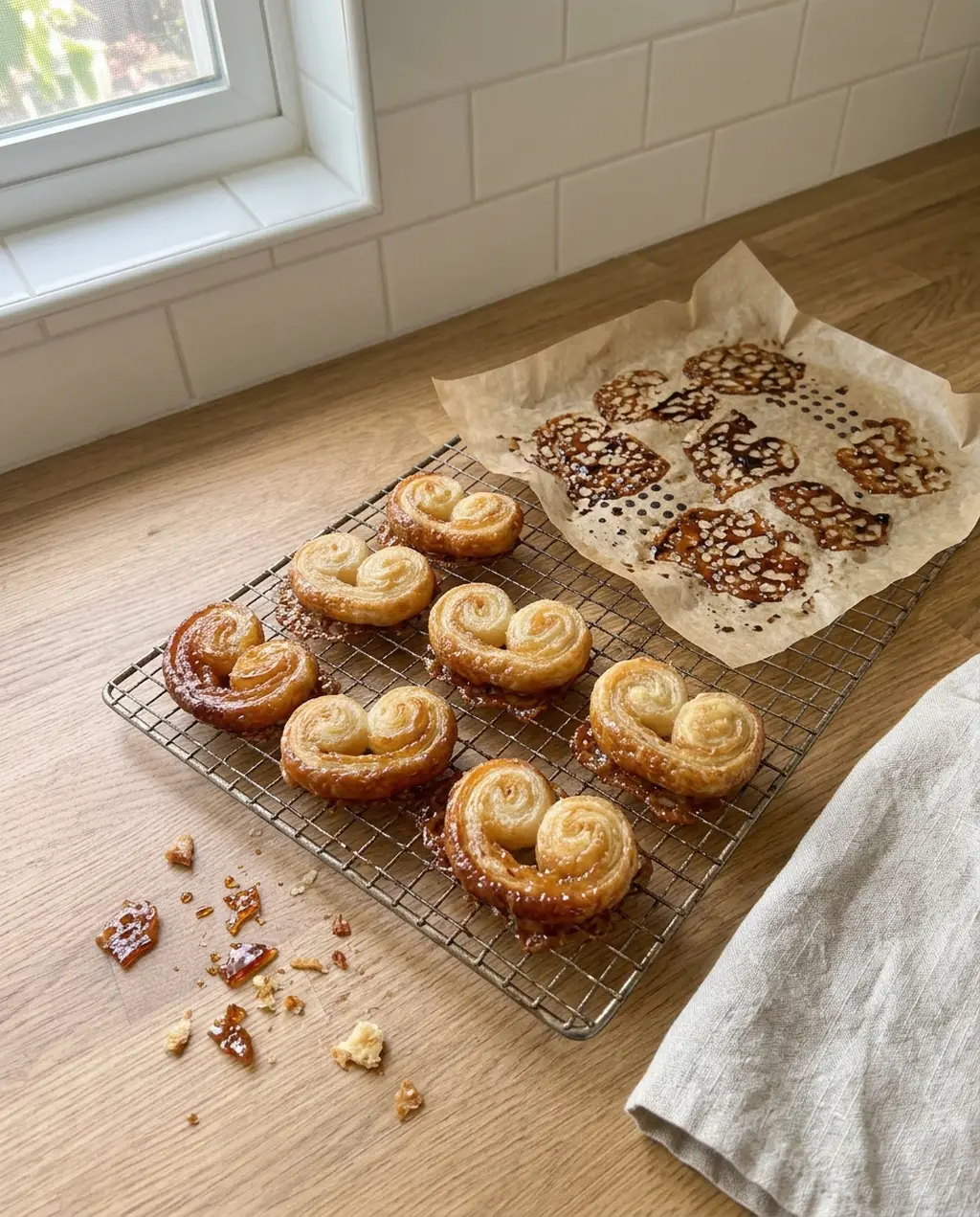
Palmiers were the first thing I ever baked that made someone assume I had training. They are also, and I say this with love for everyone I have fooled, the least skilled bake in my rotation: store puff pastry, granulated sugar, a fold a child can do, and heat. The pastry does the puffing, the sugar does the caramelizing, and the baker does the taking of credit.
Moving them into the air fryer needed actual problem-solving, though, because a palmier in the oven bakes lying in its own melting sugar on a solid sheet pan, and a basket is neither solid nor gentle. Sugar that drips meets the element and becomes smoke; slices that go in soft meet the fan and unroll their hearts into ribbons. Both problems have clean fixes, and with them the machine turns out palmiers with edges like stained glass in under fifteen minutes a batch.
Quick answer: Roll a thawed-but-cold sheet of puff pastry out in sugar instead of flour, fold both sides to the middle twice, close it like a book, and slice. Freeze the slices 15 minutes, then bake them on a parchment square at 350°F for 8 minutes, flip, and finish 3 to 5 minutes until deep amber. The parchment is mandatory, melting sugar must never reach the element, and the last two minutes are attendance-required, because amber becomes burnt in about sixty seconds.
Two ingredients, one of them structural
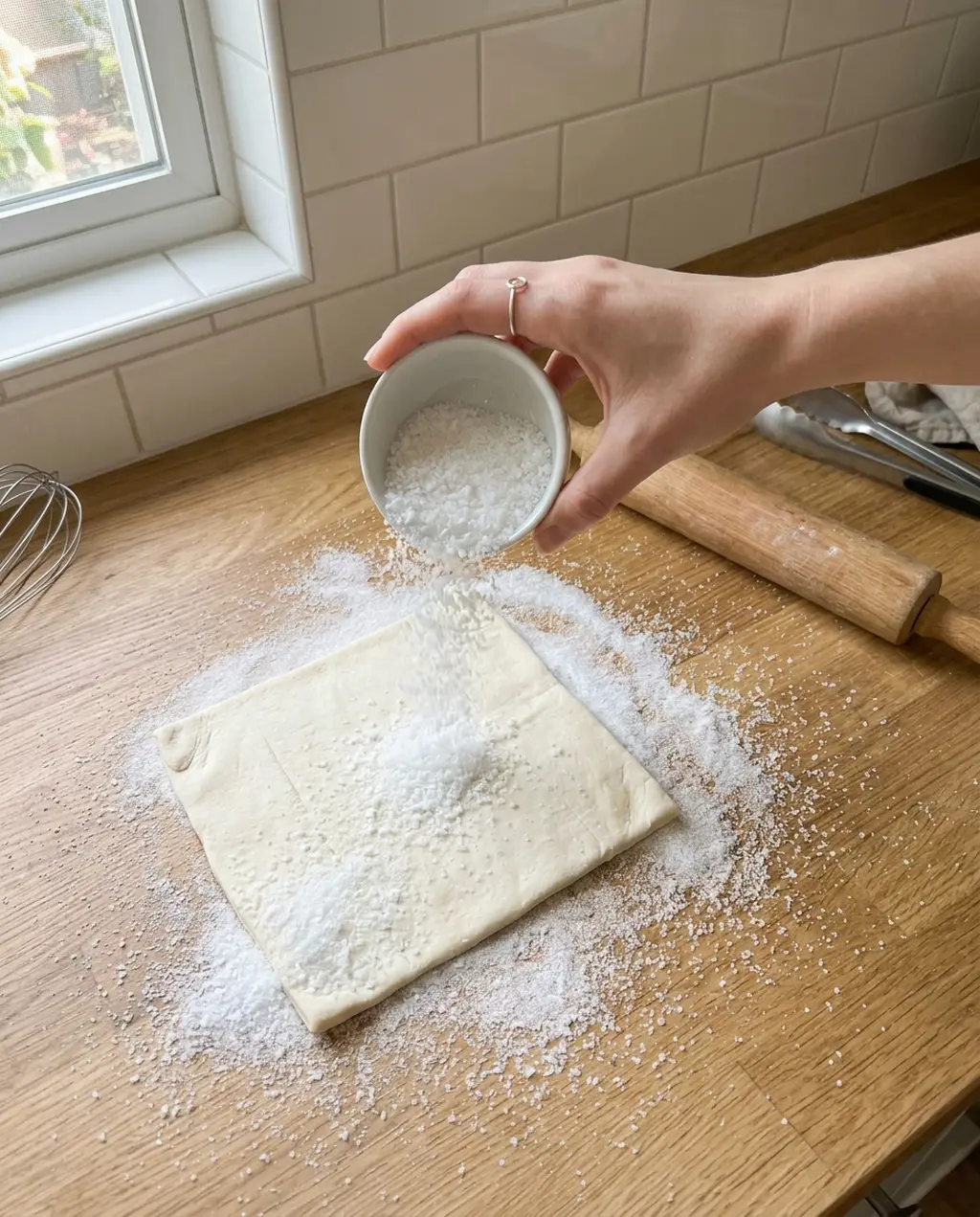
The recipe list is puff pastry and sugar, and the trick is understanding that the sugar is not a topping. It replaces flour entirely as the rolling surface: you pour it on the counter, roll the pastry out on top of it, and press more into the top face, so sugar gets laminated into the outside layers on both sides. In the heat it melts, then caramelizes, and the pastry effectively fries its outer layers in liquid caramel, which is where the glassy amber shell and the deep, almost burnt-sugar flavor come from.
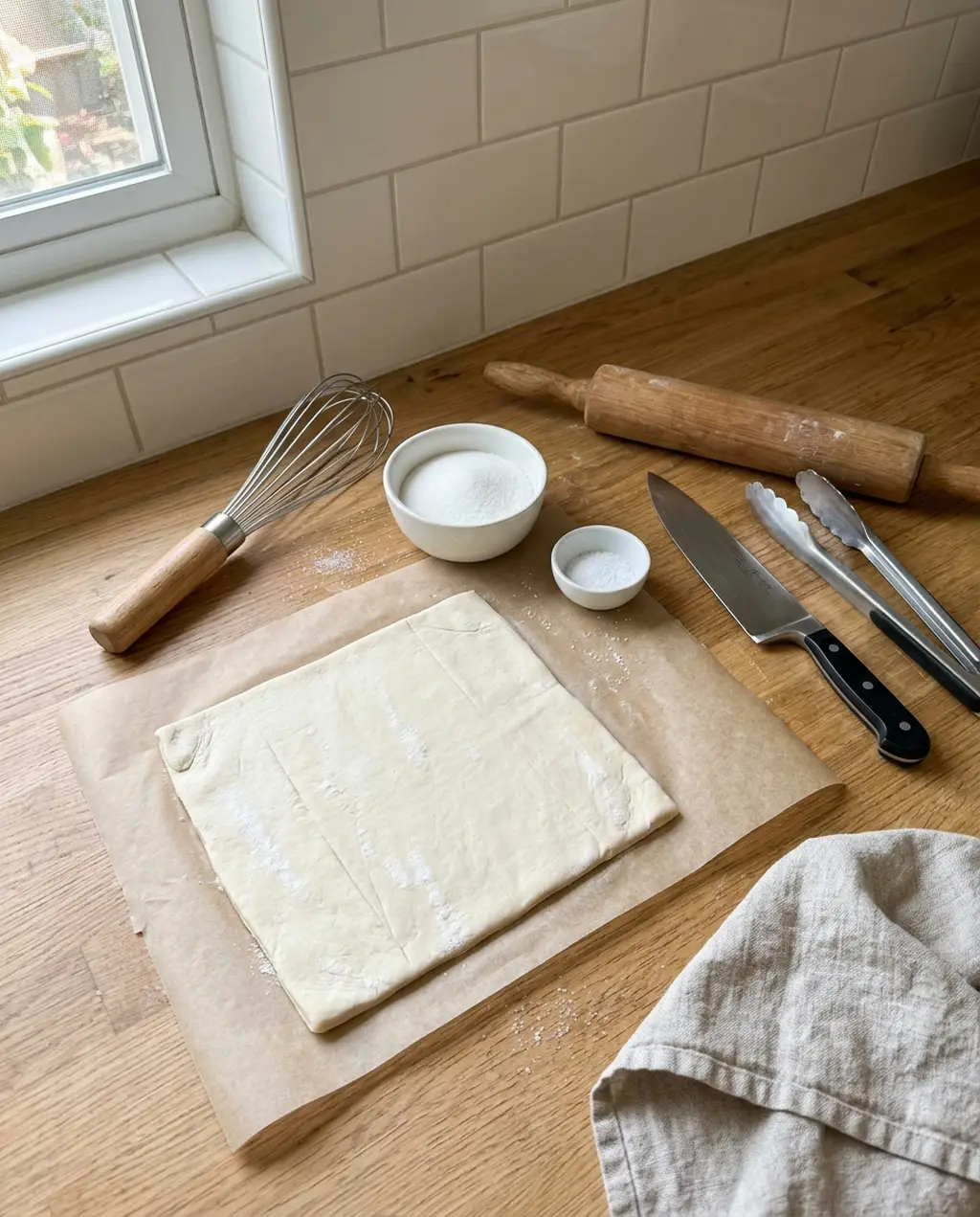
- About 1 cup of sugar per sheet, and whatever stays on the counter was the workspace, not waste.
- A quarter teaspoon of fine salt whisked into the sugar is the single upgrade worth insisting on: caramel without salt is sweet, caramel with salt is interesting.
- Plain granulated only. Powdered sugar dissolves and vanishes; coarse sugar stays crunchy instead of melting into glass. The cheap stuff is the correct stuff.
The pastry: what to buy, how to thaw
- All-butter puff pastry if the store has it, because with two ingredients the pastry is half the flavor. New to the sheet itself? How to bake puff pastry in an air fryer is the beginner run on the same box. The standard supermarket sheets work honestly well too; they just lean crisp over flaky.
- Thaw overnight in the fridge, or about 40 minutes on the counter, to cold-but-bendable. Pastry that cracks when unfolded is too cold; pastry that droops is too warm and its butter layers are dying. Cold butter layers are the puff, the same physics as the scones' frozen shreds at laminated scale.
- Work fast and touch little. Every warm minute costs layers. If the kitchen is hot or the phone rings, the folded log goes back in the fridge without apology.
The fold that makes the heart
The palmier fold sounds complicated in prose and takes eleven seconds in practice. With the sugared pastry rolled to roughly a 12 inch square, longest side toward you:
- Fold the left and right edges in to meet at the center line, like double doors closing.
- Fold each doubled side in again, so the two thick halves meet at the same center line. The pastry is now a narrow six-layer strap.
- Close it like a book along the center line. That is the whole trick: a log with a natural seam down the middle.
- Slice crosswise, 3/8 inch thick, with your sharpest knife in single confident strokes. Each slice is a squat little scroll that will bloom into the heart as the layers unfurl in the heat; sawing smears the layers shut.
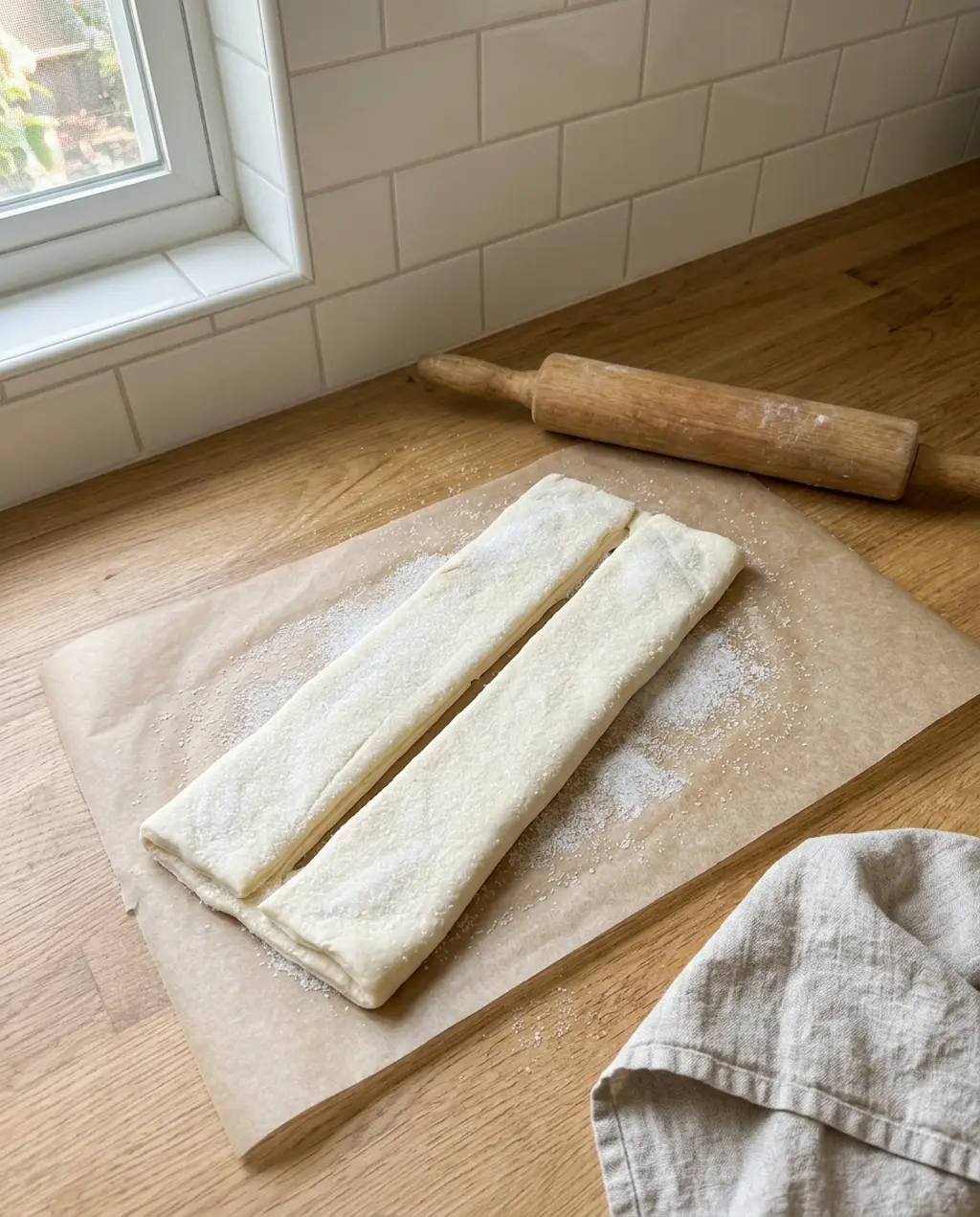
For a more open, definite heart, leave a pencil-width gap at the center line during step 2 instead of butting the folds tight; the bake spreads the lobes apart along that gap. Cosmetic, optional, and the kind of detail that gets you accused of training.
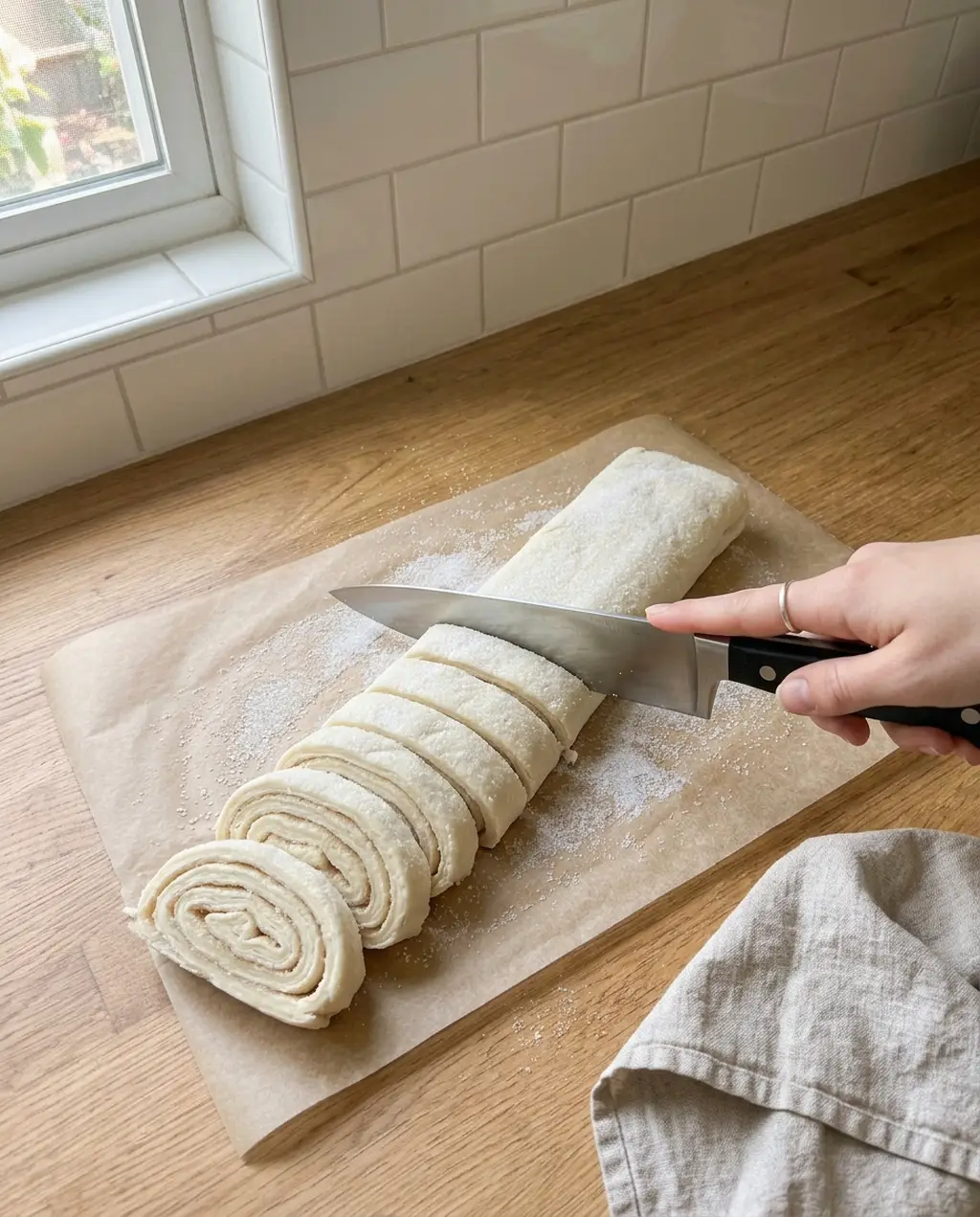
The freezer set, again and always
Regulars will recognize the move from the churros and the scones: when a shaped thing must survive moving air, cold is the shape insurance. A room-temperature palmier slice is soft laminated dough held in a spiral by nothing but manners, and the fan's first blast can lift and unroll its outer layer before the pastry sets. Fifteen minutes in the freezer, slices flat on a plate, turns each scroll rigid, and rigid scrolls bake exactly as wound. The freezer time also re-chills the butter layers, which buys taller puff. There is no version of this recipe where skipping the freeze goes well.
Basket rules: parchment is law here
- Every batch bakes on a parchment square, no exceptions. This is not the usual sticking question: a palmier sheds melting sugar as it bakes, and sugar that drips through basket holes lands on the element as smoke and a cleaning job that outlasts the cookies. The parchment is a drip tray. It goes in weighted by the frozen slices, never empty, per the foil and parchment guide.
- Six or seven slices per round, an inch apart. They spread as the lobes open, and touching palmiers weld together in caramel.
- The flip is legal and required: a palmier is sugared on both faces, two plain faces by this site's flip rule, and both need their turn against the heat to caramelize. Flip at minute 8 with tongs, gently; the underside should already be glossy amber.
- Oven palmiers bake at 400°F and up, and the air fryer calculator would convert that to about 375°F. This page bakes at 350°F anyway, the same setting as every puff pastry bake on this site, from the apple turnovers to the cheese danish: sugar sitting close to a top element caramelizes plenty fast, and the extra margin widens the amber window from frantic to merely brisk. The whole dial lives in the air fryer baking chart.
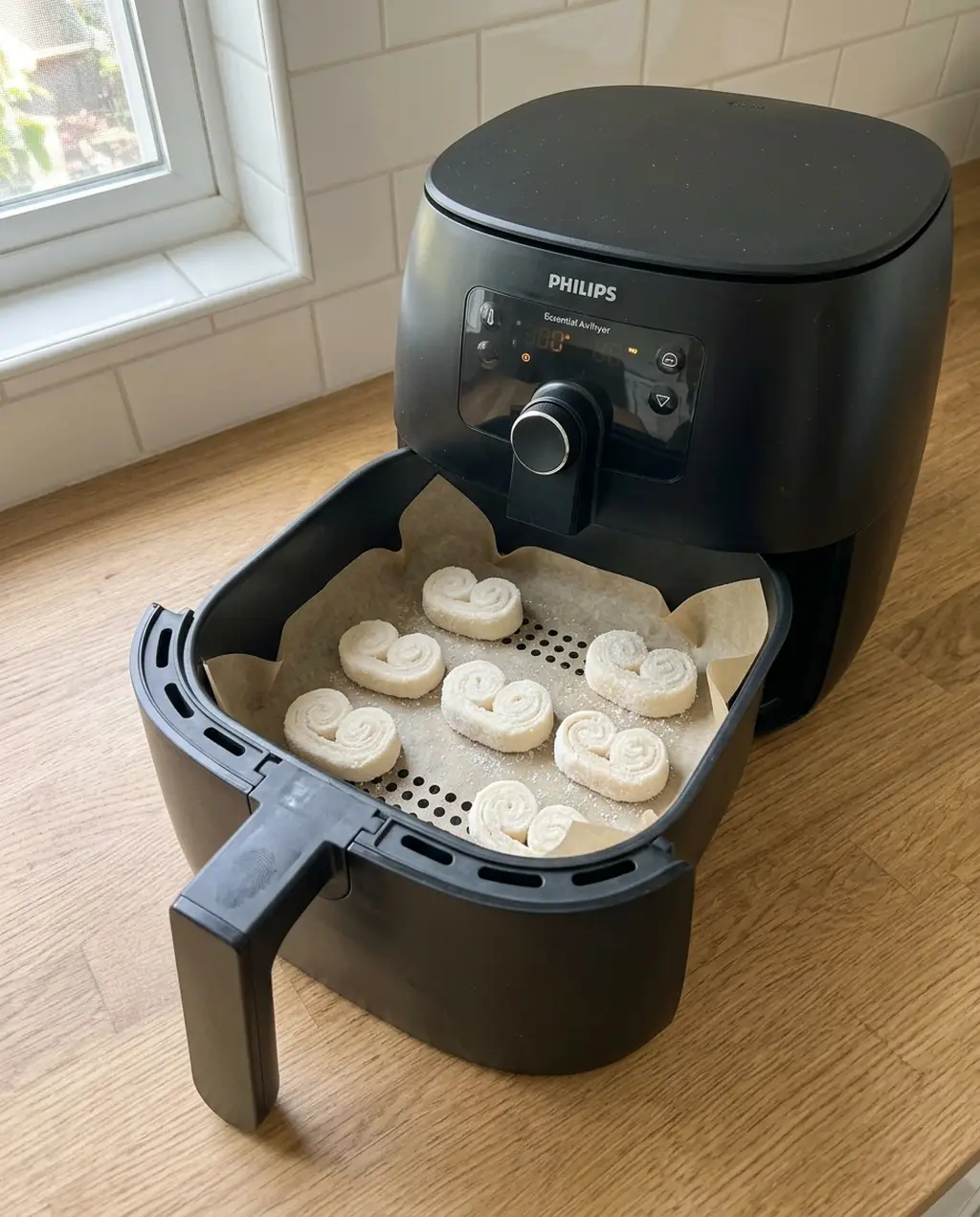
How to make them
- Whisk 1 cup sugar with 1/4 teaspoon salt. Pour half onto the counter in a pastry-sized bed.
- Unfold the cold sheet onto the sugar, pour the rest on top, and roll to a rough 12 inch square, pressing sugar into both faces as you go.
- Fold: edges to center, again to center, close the book. Slice 3/8 inch thick, about 20 slices.
- Freeze the slices 15 minutes, flat, while the counter gets its sugar swept.
- Bake at 350°F on a parchment square, 6 or 7 at a time, for 8 minutes, no preheat.
- Flip with tongs and bake 3 to 5 more minutes, staying within arm's reach, until both faces are deep amber and glossy.
- Lift the parchment out by its corners and slide the palmiers onto a rack. They land pliable and crisp within 2 minutes as the caramel hardens; do not touch the molten sugar edges before then, a lesson each household apparently must learn once.
- Repeat with a fresh parchment square per batch, a minute shorter on round two.
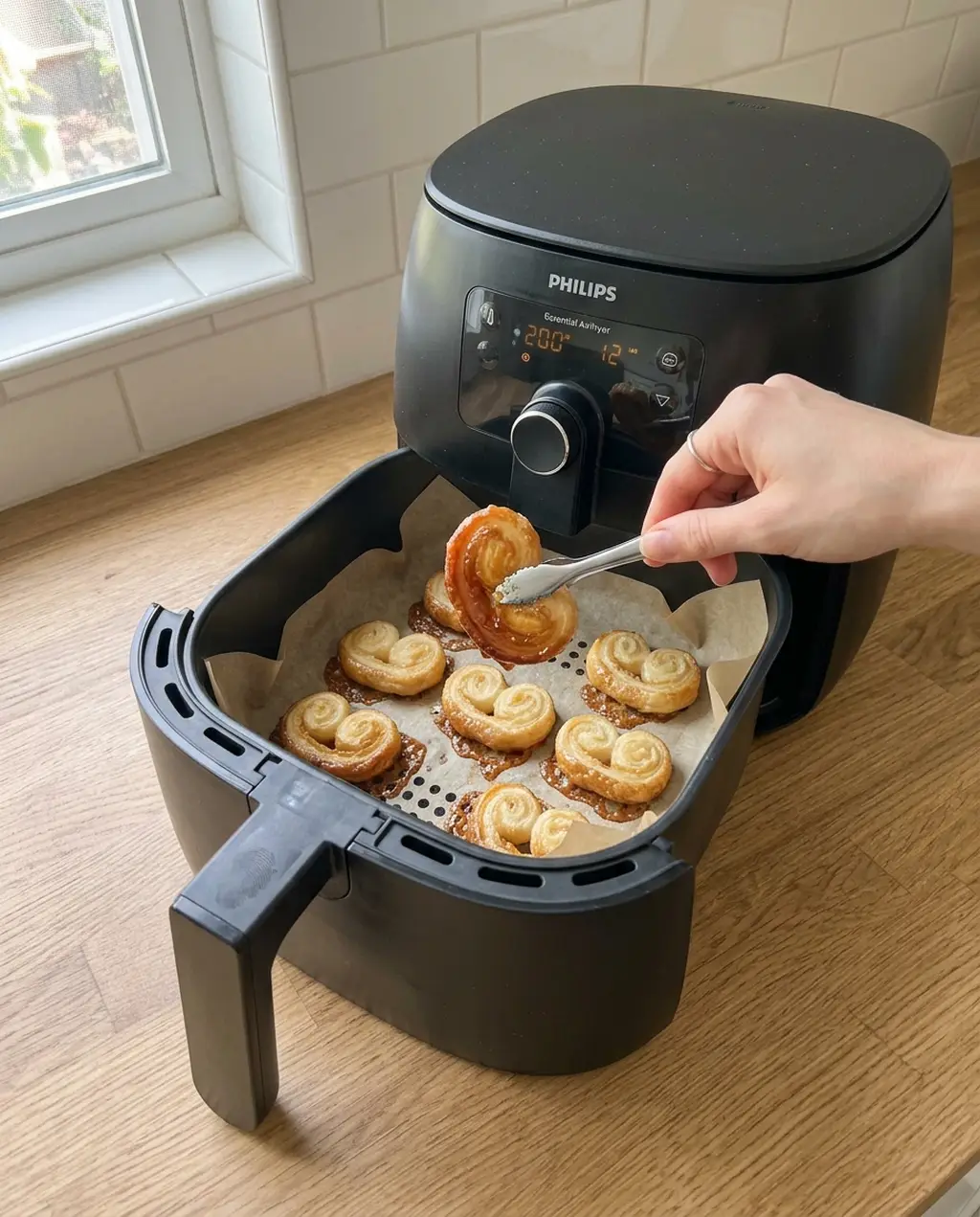
The amber window
Every bake on this site gets a doneness number, and this is the one honest exception: a palmier is done by color, because the event being timed is caramelization itself, and sugar does not negotiate. The stages run pale, gold, amber, deep amber, burnt, and the last two are about sixty seconds apart. Pull at deep amber, darker than instinct suggests, because pale palmiers taste of sweet nothing and the flavor lives in the final shade. The practical rule: after the flip, stay in the kitchen, and from minute 11 stand where you can see the basket. The thermometer keeps the drawer; your eyes are the instrument today, and a known hot spot means rotating the parchment when you flip.
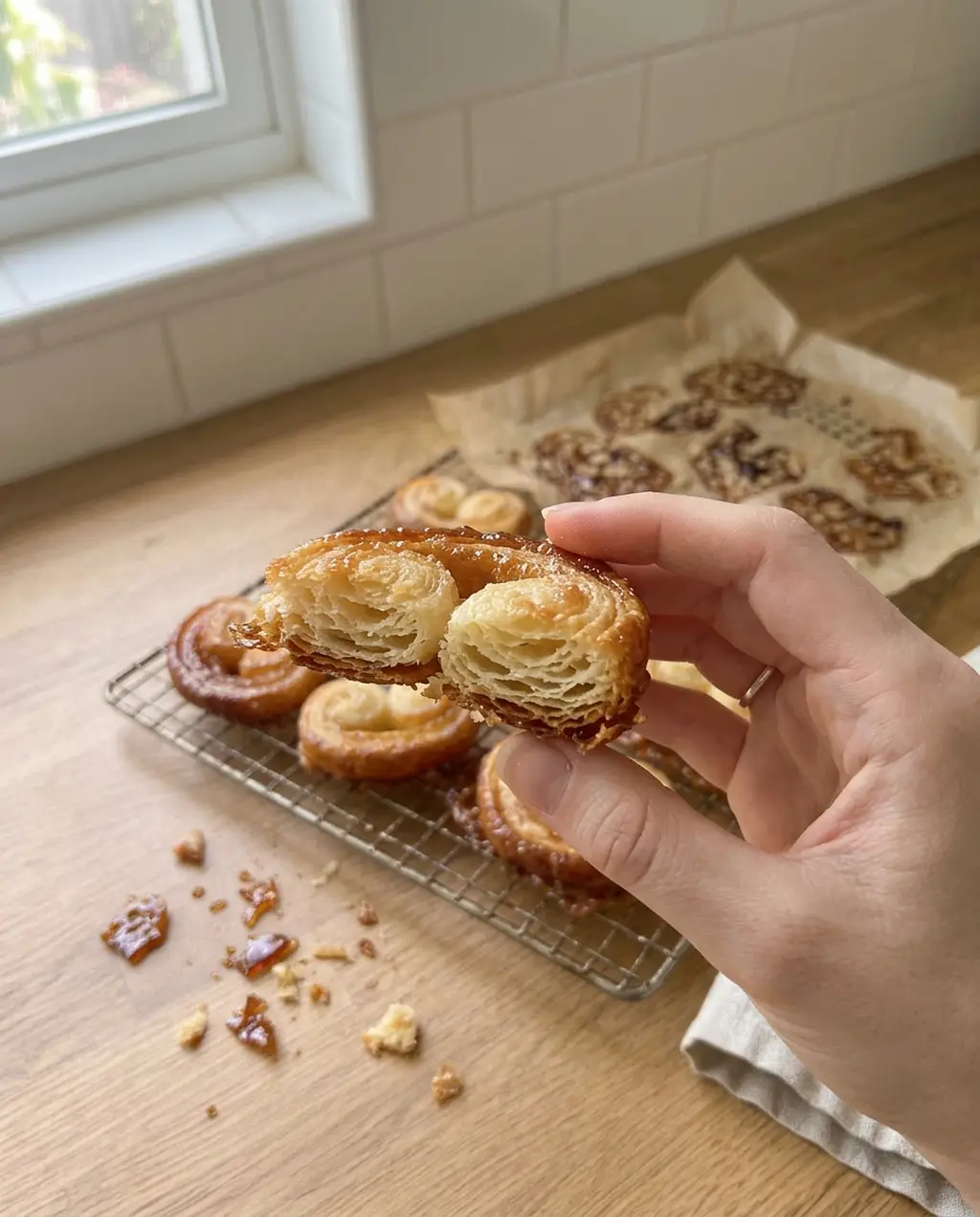
Troubleshooting
| What you got | Why | Fix |
|---|---|---|
| Hearts unrolled into ribbons | Slices went in soft. | The 15 minute freeze, every batch, no appeals. |
| Smoke from the drawer | Sugar dripped to the element. | Parchment under every batch, replaced each round once it wears its caramel lace. |
| Burnt edges, sudden and total | The amber window closed unattended. | Deep amber is a 60 second stop; the last minutes are watched minutes. The burning guide covers machines that run hot. |
| Pale, merely sweet palmiers | Pulled at gold out of caution. | The flavor is in the last shade. Go to deep amber. |
| Flat, dense, no puff | Warm pastry with melted butter layers, or heavy rolling. | Cold-but-bendable pastry, brisk work, and the fridge whenever anything softens. |
| Sugar fell off, thin caramel | Sugar sprinkled on top instead of rolled in. | Roll the pastry out on a bed of sugar so it laminates into the surface. The sugar is the flour. |
| Welded pairs | Spaced too close; the lobes spread. | An inch apart, 6 or 7 per round. Welded pairs are, admittedly, the baker's snack. |
| Smeared, sealed layers at the cut | A dull knife or a sawing cut. | Sharpest knife, single stroke down, and chill the log 10 more minutes if it squishes. |
No preheat, per the preheat guide, and recurring cross-recipe mysteries live in the troubleshooting guide.
Variations, sweet and savory
- Cinnamon: 2 teaspoons into the salted sugar, and the house smells like a bakery with a French name.
- Vanilla bean: the seeds of half a pod rubbed into the sugar before rolling, for palmiers that taste expensive at two ingredients plus a flourish.
- Cardamom-orange: 1/2 teaspoon cardamom and a teaspoon of orange zest in the sugar, the direction the fancier bakeries take it.
- Parmesan palmiers, the aperitif move: skip the sugar entirely, roll the pastry over 3/4 cup finely grated parmesan and a crack of black pepper, same fold, same freeze, 340°F for 9 to 11 minutes. Savory, shattering, and gone before the drinks are poured.
- Everything-spice palmiers: the savory version with everything bagel seasoning standing in for the parmesan. Brunch's answer.
- The dessert-board play: a stack of these beside the apple pie covers the fork people and the hand people in one afternoon of baking, and the palmiers are the ones that vanish first.
Storage and make-ahead
- Airtight, room temperature, 3 days, with a caveat: caramel is hygroscopic, and humid kitchens soften the glass by day two. A 3 minute refresh at 320°F re-crisps them convincingly.
- Never the fridge, where the caramel weeps in a day.
- The log is the real make-ahead: the folded, unsliced log wraps and freezes for a month. Slice it frozen with a heavy knife, or after 20 minutes of thawing, and bake straight from the freezer as written plus 1 minute. Fresh palmiers for surprise guests in 15 minutes is a quiet superpower.
- Sliced and frozen flat, the individual scrolls bag for a month and bake from frozen the same way, the same raw-inventory trick the churros, the scones and the shortbread use: the freezer is this site's pantry.
Frequently asked questions
QWhat are palmiers?
French puff pastry cookies, also called elephant ears or palm leaves, made from exactly two ingredients: puff pastry rolled out in sugar, folded from both sides into a log, sliced, and baked until the sugar caramelizes into a glassy amber shell around shattering flaky layers. The heart shape happens on its own as the folded spiral unfurls in the heat. They are dramatically easier than they look, which is most of their charm.
QHow long do palmiers take in an air fryer?
11 to 13 minutes at 350°F: 8 minutes on the first face, a flip, then 3 to 5 watched minutes to deep amber, baked 6 or 7 at a time on a parchment square after a 15 minute freeze. The whole project, box to cookie, runs about 45 minutes plus thawing the pastry. Later batches finish about a minute faster on warmed metal.
QWhy do palmiers need parchment in an air fryer?
Because a baking palmier sheds melting sugar, and in a basket that syrup drips through the holes onto the heating element, where it burns instantly into smoke and a scorched mess. The parchment square is a drip tray more than a liner: it catches the caramel, bakes it into the lacy edges that make palmiers look professional, and gets replaced each round. It goes in weighted by the frozen slices, never empty.
QWhy did my palmiers lose their shape?
They went in soft. A room-temperature slice is a loose spiral of pliable dough, and the fan's first blast can lift and unroll its outer layers before the pastry sets, turning hearts into ribbons. Freeze the slices flat for 15 minutes so each scroll goes in rigid; rigid scrolls bake exactly as wound. The freeze also re-hardens the butter layers, which is why frozen slices puff taller too.
QHow do you fold palmiers?
Roll the sugared pastry to a rough 12 inch square. Fold the left and right edges in to meet at the center like double doors, fold each side in again to the same center line, then close the whole thing like a book. Slice the log crosswise 3/8 inch thick with a sharp knife in single strokes. For a more open heart, leave a small gap at the center on the second fold and the lobes spread apart along it in the bake.
QHow do you know when palmiers are done?
By color, deep amber on both faces, and this is the rare bake where color outranks any thermometer, because the event being judged is the sugar caramelizing. The stages run gold, amber, deep amber, burnt, with about sixty seconds between the last two, so the final minutes after the flip are watched minutes. Pull darker than instinct suggests: pale palmiers taste of nothing, and the flavor lives in the last shade.
QWhat is the best puff pastry for palmiers?
All-butter puff pastry if your store carries it, because in a two ingredient cookie the pastry is half the flavor, and butter is the half worth upgrading. Standard supermarket sheets work honestly well and bake a little crisper and less flaky. Either way, thaw overnight in the fridge or about 40 minutes on the counter to cold-but-bendable, and keep it cold while you work; warm pastry means melted butter layers and no puff.
QCan you make savory palmiers?
Yes, and they are the fastest appetizer this machine makes. Swap the sugar bed for 3/4 cup finely grated parmesan with black pepper, or everything bagel seasoning, and keep the fold, the freeze, and the parchment identical. Bake at 340°F for 9 to 11 minutes; cheese browns a little sooner than caramel. Serve warm with drinks and make more than the math suggests.
QHow do you store palmiers and keep them crisp?
Airtight at room temperature for 3 days, never the fridge, where the caramel absorbs moisture and weeps. Humidity is the enemy; a softened batch re-crisps at 320°F in 3 minutes. The better strategy is storing them unbaked: the folded log or the cut slices freeze for a month and bake straight from frozen with one extra minute, which means fresh palmiers on fifteen minutes' notice indefinitely.
Never overbake again
Get our one-page times & temps cheat sheet, plus a new tested recipe each week.
No spam · unsubscribe anytime