
Air Fryer Apple Turnovers: Puff Pastry Without the Soggy Bottom
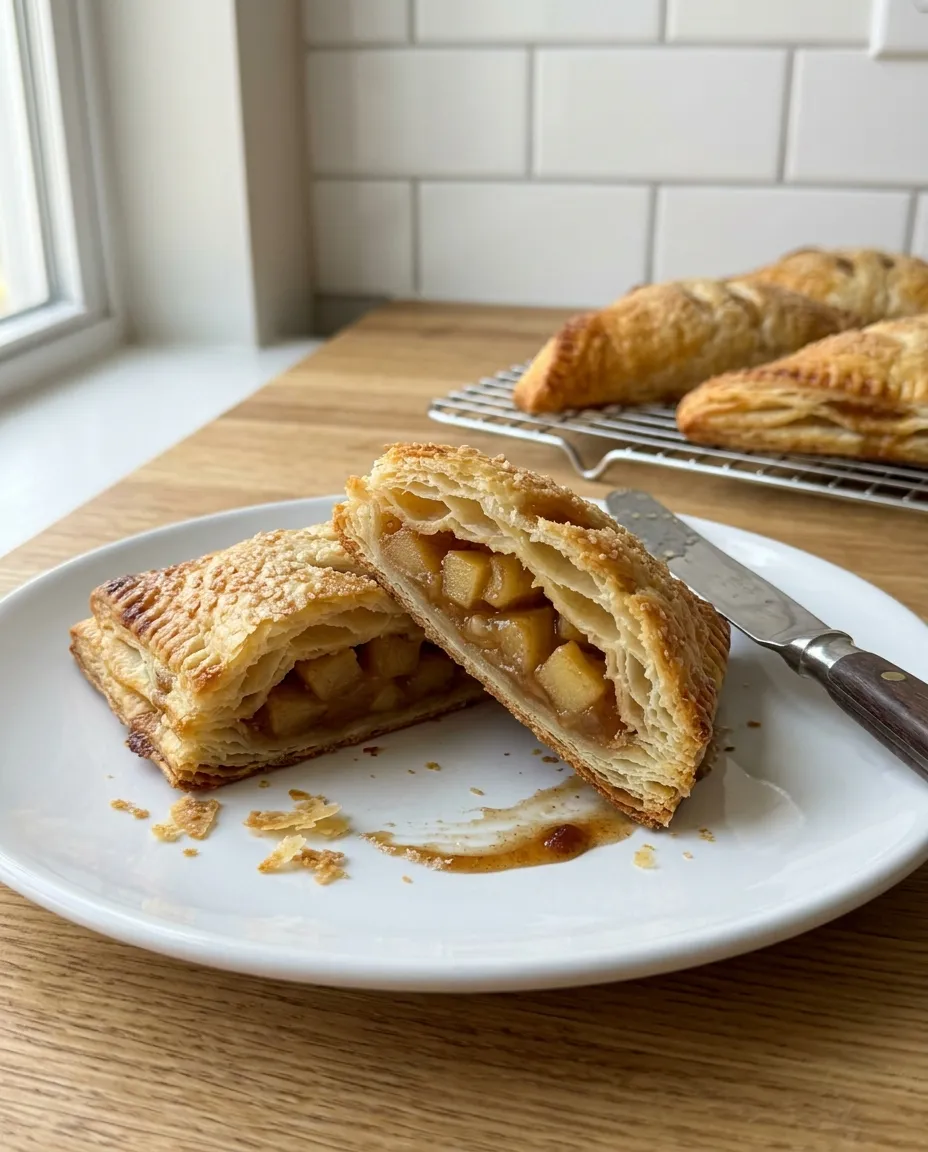
Every recipe that ranks for apple turnovers gives you the same two tips against sogginess: seal the edges well and do not overfill. Both are true and neither is the reason your last batch had a bottom like wet cardboard. A turnover goes soggy from the inside, from raw apples releasing their juice mid-bake with nowhere for the steam to go but down. This page fixes the actual mechanism: a filling cooked before it ever touches the pastry, two vent slits that give steam an exit on top, and a preheated basket whose perforated floor does something a sheet pan in your oven never could. Four turnovers from one sheet, 350°F, and a base that snaps.
What’s on this page
Where soggy bottoms actually come from
Water reaches the bottom of a turnover three ways, and only one of them has anything to do with how well you crimped. First, raw apples: an apple is 85 percent water, and diced raw apple tossed with sugar starts weeping the moment the sugar touches it, then keeps releasing juice through the whole bake. Twelve minutes is long enough to brown puff pastry and nowhere near long enough to cook that juice off, so it pools in the lowest point of the parcel, which is the bottom, and steams the pastry from the inside. Second, trapped steam: a sealed turnover is a pressure vessel, and steam that cannot escape upward forces its way out through the weakest point, the crimped seam at the base, soaking the edge on its way. Third, condensation: a hot turnover set on a plate fogs its own underside within a minute, the way glasses fog walking into a warm kitchen.
The ranking recipes attack none of these. They say seal harder and fill lighter, which treats the leak and ignores the water. This page cooks the filling before assembly so there is no free juice left to weep, cuts two vent slits so steam leaves through the roof instead of the floor, and cools the finished turnovers on a rack. And here the air fryer holds a quiet advantage over your oven: a sheet pan is a solid plate that traps escaping moisture under the pastry, while the basket floor is perforated, with hot air moving under the turnover for the entire bake. The machine is structurally better at crisp bottoms than an oven. It just needs you to stop re-creating the sheet pan inside it, which is exactly what a liner does; the full argument is in foil or parchment paper in an air fryer, and the short version here is bare basket, lightly oiled.
The pastry: cold, from a box, no apologies
Frozen puff pastry is one of the best things in the freezer aisle, and nobody who makes it from scratch on a weekday is telling the truth. Everything it does in a basket, and every way it can be made to misbehave, is collected in the puff pastry guide. Thaw the sheet overnight in the refrigerator, not on the counter: puff pastry is hundreds of alternating layers of dough and butter, and those layers only lift if the butter is cold and solid going into the heat. Warm butter soaks into the dough before the steam can shove the layers apart, and you get something greasy and flat instead of something shattering.
Work with it cold, and work fast. Unfold the sheet, cut it into 4 squares with a sharp knife or a pizza wheel, and if the kitchen is warm or the dough starts feeling soft and sticky, put the squares back in the refrigerator while the filling cools. Roll only enough to even out the fold creases; every pass of the rolling pin thins the layers you paid for. Cold pastry meeting a preheated basket is half of what makes the puff happen, and it costs nothing but patience.
Cook the filling first
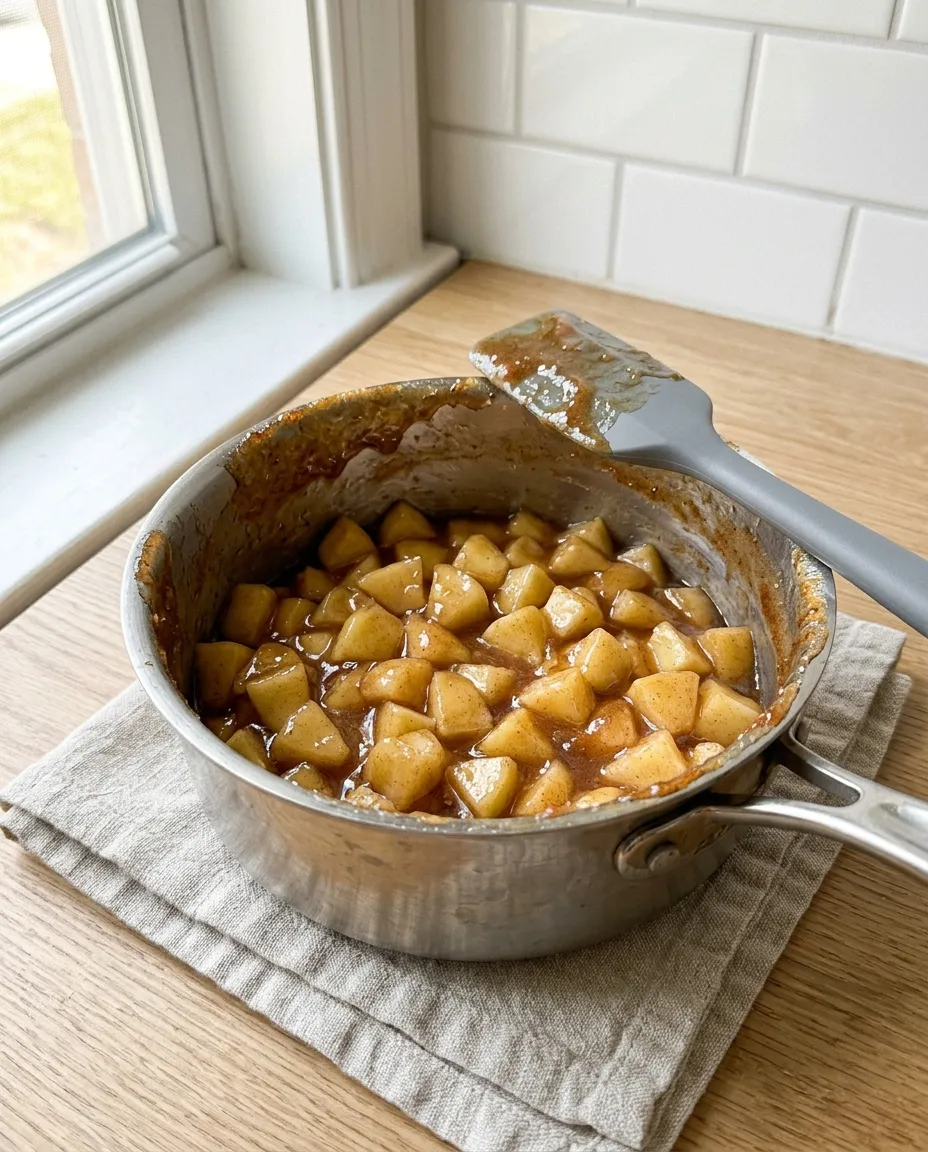
This is the same rule that runs our air fryer apple pie, where it is literally the title, and it matters even more here because a turnover bakes in half the time. Butter in a small pan, diced apples, brown sugar, cinnamon, a scrape of nutmeg and a pinch of salt, 6 to 8 minutes until the pieces are tender at the edges but still holding a corner. Then the finish that makes the filling behave: cornstarch stirred into cold water and lemon juice, poured in, and cooked one more minute until the liquid turns glossy and clings. Nothing left in that pan is free-running juice. Nothing can weep into the pastry, because the weeping already happened in the pan where it belongs.
The apples: one Granny Smith for structure and acidity, one Honeycrisp for perfume and sweetness, the same two-apple logic the pie page argues at length. Dice them a quarter inch; big chunks punch through pastry and small ones turn to sauce. And then the step people skip because it is boring: cool the filling completely, spread on a plate so it gets there in 15 minutes instead of 45. Warm filling melts the butter layers in the pastry on contact, and you lose the puff before the machine ever sees it. There will be about a spoonful more filling than four turnovers need; the cook eats that on toast, which is a form of quality control.
Fold, seal, vent
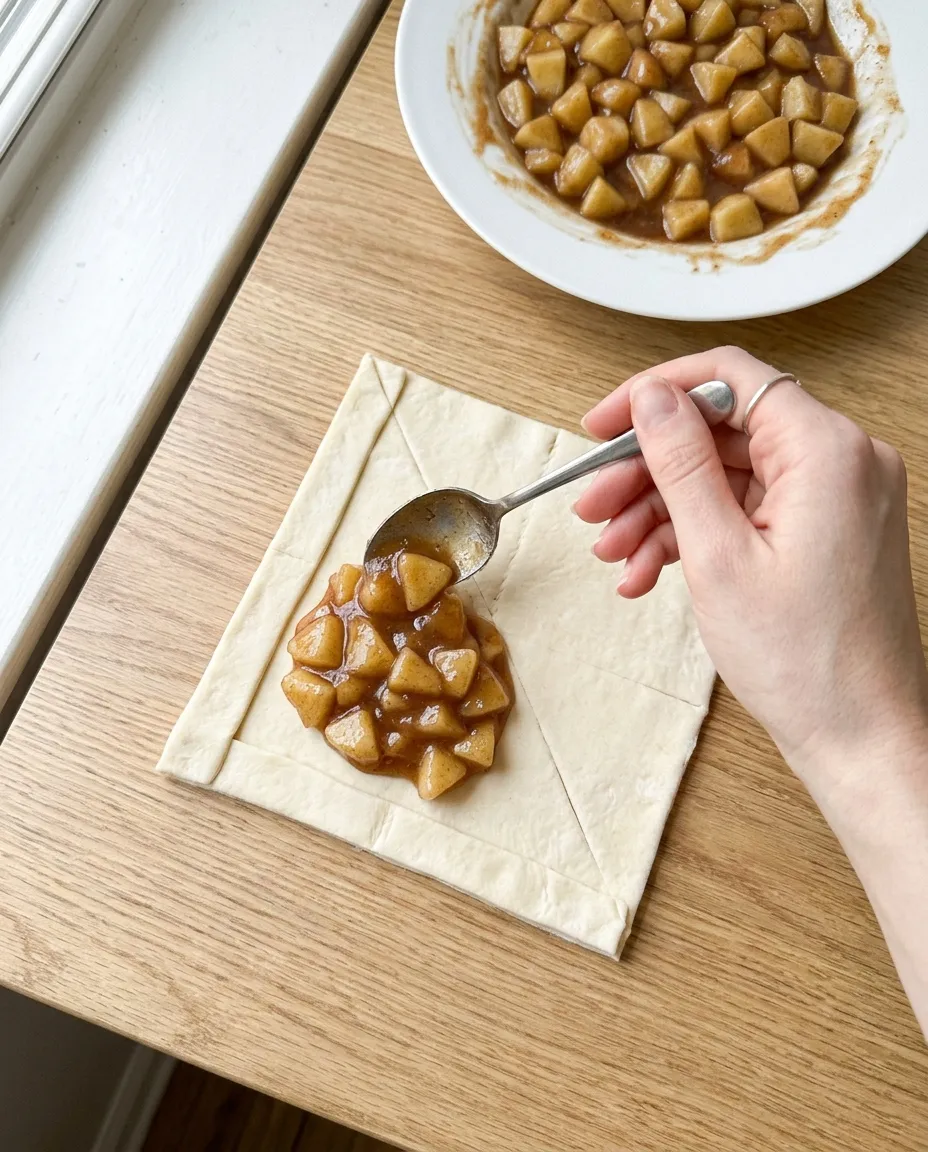
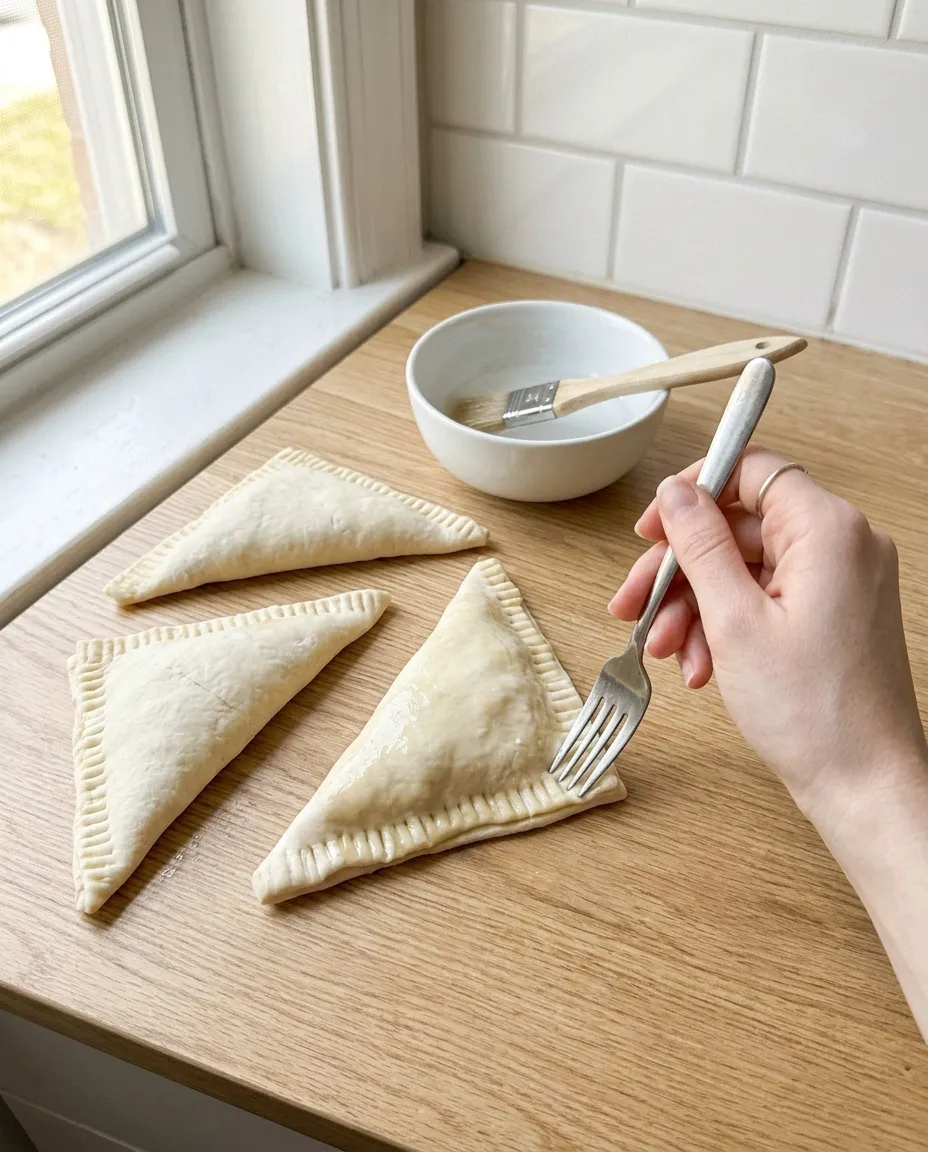
Spoon 3 tablespoons of cooled filling onto one half of each square, set on the diagonal, leaving a clean three-quarter inch border. The border is not decoration; it is the gasket. Brush the border with water, fold the empty half over to make a triangle, press the edges closed with your fingers, then crimp them again with a fork, and press like you mean it both times.
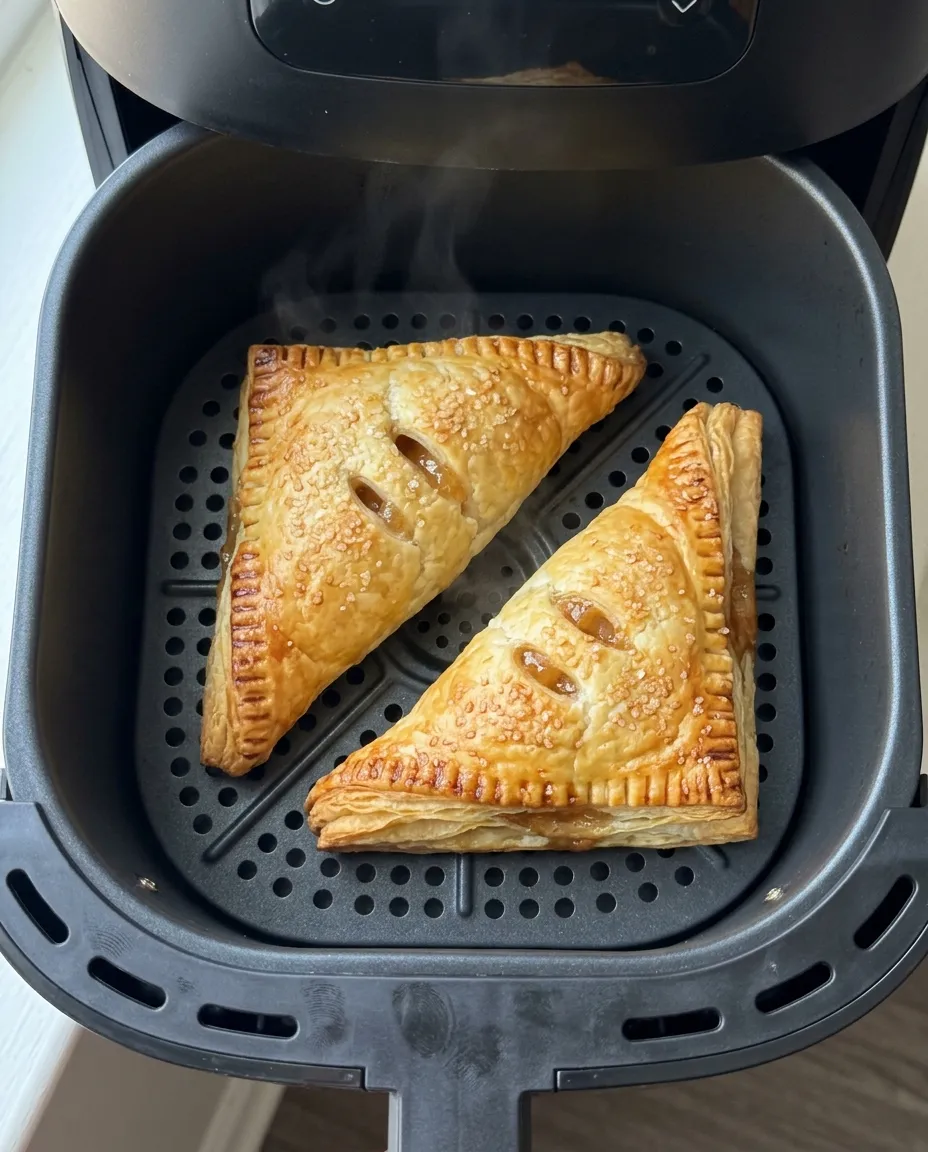
Now the move the entire ranking page one through ten skips: cut two small slits in the top of each turnover, half an inch each, through the top layer of pastry only. Bakeries vent every turnover they sell, and they are not doing it for looks. The slits give steam a chimney, so pressure never builds inside the parcel and never goes hunting for a way out through the bottom seam. Two slits are the difference between a turnover that sighs steam politely out the top and one that bursts a seam and poaches itself in its own leak.
Egg wash the tops for color and shine, and keep the brush away from the cut edges of the pastry: egg on the layered edge glues the lamination shut, and glued layers cannot rise. A sprinkle of coarse sugar over the wash bakes into a crackly lid. If the assembled turnovers have gone soft while you worked, 10 minutes in the refrigerator before baking buys the lift back.
Temperature and timing
350°F for 12 to 14 minutes, no flip. Turnover boxes and oven recipes call for 400°F, and dropping that for a basket is the standard oven-to-air-fryer conversion our calculator makes for any recipe; land there yourself and the sugar in the egg wash and the coarse sugar topping will still take the pastry to deep gold before the layers finish. One ranking recipe flips halfway, which tells you its bottoms were not browning, which tells you there was a liner in the basket. On a bare floor the underside browns on its own, and a flip only risks cracking a half-set parcel and spilling the filling you carefully thickened.
This is also the rare bake on this site that gets a mandatory preheat: 3 minutes at 350°F before anything goes in. Our canned-dough recipes skip preheating on purpose, but puff pastry is a different machine. Its rise is steam from cold butter flashing off in the first two minutes, and a cold start melts the butter gently instead of flashing it, which is how you get flat, greasy pastry from a good sheet. The reasoning for when preheating matters and when it is theater lives in do you need to preheat an air fryer for baking. Bake 2 or 3 at a time with a finger of space between them, turnovers waiting in the refrigerator between batches, and expect batch two to run about a minute faster. Doubling for a crowd? The recipe scaler resizes the filling honestly, though the batches stay small either way. Every number on this site is collected on the baking chart.
What done looks like
- Color: deep, even gold across the top, a shade darker along the fork crimp where the egg wash pooled.
- Edges: the cut sides should show visibly separated layers, fanned open like pages. Fused, smooth edges mean the egg wash wandered or the pastry went in warm.
- The lift test: slide a spatula under one and look. The base should be golden and rigid, and it should tap, not flex. This is the whole promise of the page, so check it.
- The vents: thick filling bubbling lazily at the slits, not thin liquid rushing out. The filling was cooked before it went in, so there is nothing raw to wait for; when the pastry is done, the turnover is done, no thermometer required.
Ingredients
For 4 turnovers
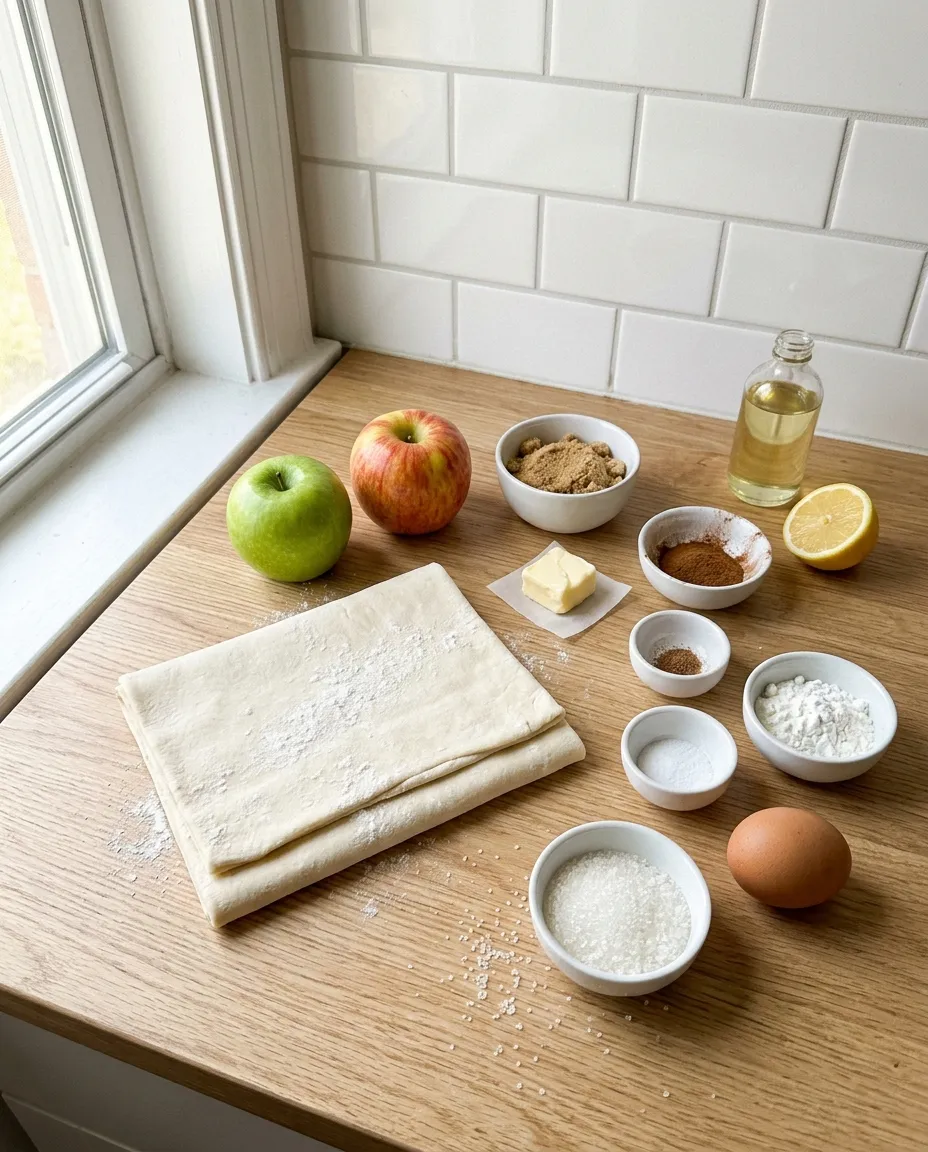
- 1 sheet frozen puff pastry (about 8.6 oz), thawed overnight in the refrigerator
- 2 medium apples, 1 Granny Smith and 1 Honeycrisp, peeled and diced small
- 1 tablespoon butter
- 3 tablespoons light brown sugar
- ¾ teaspoon ground cinnamon
- Pinch of nutmeg and a pinch of fine salt
- 2 teaspoons cornstarch stirred into 1 tablespoon cold water and 1 teaspoon lemon juice
- 1 egg beaten with 1 teaspoon water, for the wash
- Coarse sugar for the tops, optional but worth it
- Neutral oil for the basket floor
Puff pastry sheets run 8 to 10 ounces depending on the brand and all of them work here. What matters is the temperature of the sheet, not the label on it.
How to make them
- Peel the apples and dice them into quarter inch pieces.
- Melt the butter in a small pan over medium heat, add the apples, brown sugar, cinnamon, nutmeg and salt, and cook 6 to 8 minutes, until the pieces are tender at the edges but still holding their shape.
- Stir the cornstarch mixture and pour it in, then cook 1 more minute until the liquid turns glossy and clings to the apples. Spread the filling on a plate and cool it completely, about 15 minutes.
- Cut the cold puff pastry sheet into 4 squares, and refrigerate them if the dough starts to feel soft.
- Spoon 3 tablespoons of filling onto one half of each square on the diagonal, leaving a three-quarter inch border.
- Brush the border with water, fold each square into a triangle, press the edges closed, then crimp them firmly with a fork.
- Cut two small vent slits in the top of each turnover, brush the tops with egg wash, keeping it off the cut edges, and sprinkle with coarse sugar.
- Preheat the air fryer at 350F for 3 minutes while the turnovers wait in the refrigerator, and lightly oil the basket floor.
- Air fry 2 or 3 at a time at 350F for 12 to 14 minutes, no flip, until the tops are deep gold and the cut edges show separated layers.
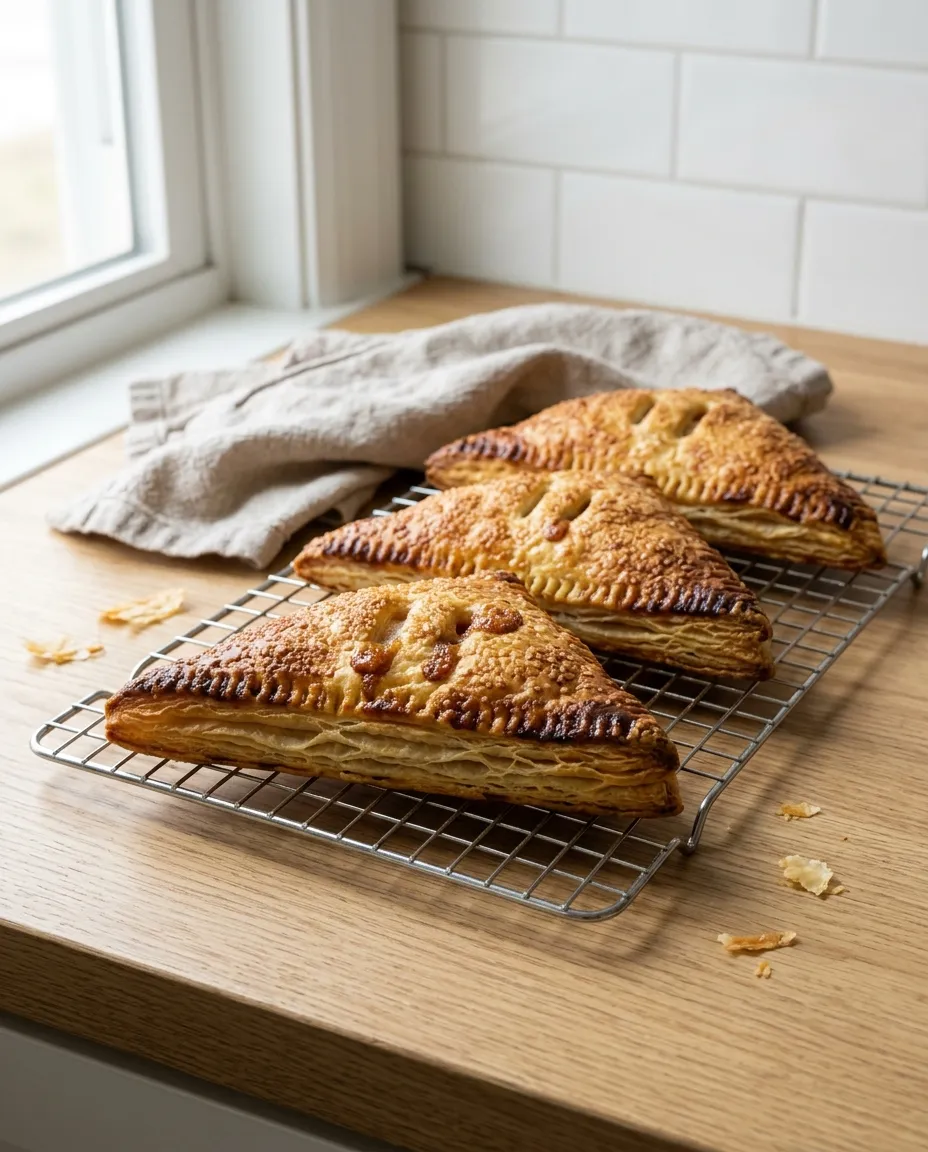
- Cool on a rack for 10 minutes; the pastry cools fast, and the filling stays lava long after it.
Frozen box turnovers
The frozen turnovers from the freezer aisle, the folded squares that come four to a box, take to the basket well: 350°F for 14 to 16 minutes, straight from frozen, no thawing, in a preheated machine. The box will say around 400°F for 20-some minutes in an oven, and the same conversion that set this page's temperature sets that one. They arrive already vented and sealed by the factory, so your only jobs are spacing and patience, and the same is true of the toaster strudel in the next freezer door over. If the box includes a glaze packet, the donut rule applies: warm turnover, never hot, or the glaze slides straight off the pastry and onto the rack.
Fixing what goes wrong
| Problem | Cause | Fix |
|---|---|---|
| Soggy bottom | Raw filling, a liner under the pastry, or cooling on a plate | Cook and cool the filling, bare oiled basket, rack to cool. All three matter |
| Seam burst and leaked | No vents, so steam left through the crimp | Two slits in the top of every turnover, cut before the egg wash |
| Flat, greasy pastry | Warm dough, or no preheat | Cold sheet, cold filling, 10 minute chill if in doubt, into a hot basket |
| Edges will not puff | Egg wash ran down the cut sides | Wash the tops only, with a nearly dry brush at the borders |
| Top browned before 12 minutes | Machine runs hot, or heavy sugar coat | Drop to 340°F and add a minute or two; the fixes for early browning are in the burning guide |
| Filling crunchy | Apples went in raw or diced too large | Quarter inch dice, cooked 6 to 8 minutes before assembly, every time |
Serving, storing, reheating
Give them 10 minutes on the rack before anyone bites. Puff pastry cools quickly but cooked apple filling holds heat like it has a grudge, and the gap between the two is how mouths get burned. Warm, with the coarse sugar lid and a crisp base, they need nothing; if you want more, a scoop of vanilla ice cream against a warm turnover is the correct excess. They sit on this site's apple shelf next to the full apple pie for when four parcels is not the occasion, baked apples for when you want the fruit without the pastry, apple fries for the county fair mood, apple cake for a crowd, and apple chips for the leftover apple on the counter. The same handheld idea in pie dough rather than puff lives at hand pies, and the rest of the puff pastry bench runs from palmiers to cheese danish. The breakfast-pastry ambitions continue at cinnamon rolls, and everything tested here lives in the recipe index with the technique pages under guides.
Storage is honest but limited: airtight at room temperature for 2 days, and the pastry will soften against its own filling. Revive at 330°F for 3 to 4 minutes in the basket, which brings the shatter back; a microwave takes the sogginess you worked to prevent and installs it in 30 seconds. The better make-ahead is upstream: assemble, vent, and freeze the turnovers unbaked on a tray, bag them once solid, and bake from frozen at 350°F, adding about 3 minutes. Fresh pastry on demand, one batch of effort.
Frequently asked questions
QWhat temperature do you cook apple turnovers in an air fryer?
350F for 12 to 14 minutes, with a 3 minute preheat and no flip. Oven recipes and box instructions run around 400F, and 350F is that number passed through the standard oven-to-basket conversion. Puff pastry needs the hot start, since its rise comes from cold butter flashing to steam in the first minutes, but it does not need oven-level heat in a basket, where the sugar in the egg wash would darken before the layers cooked through. Frozen boxed turnovers take 14 to 16 minutes at the same temperature.
QWhy do my apple turnovers get soggy on the bottom?
Three reasons, usually stacked. Raw apple filling releases juice through the whole bake, and it pools against the bottom pastry. Steam trapped in a sealed turnover escapes through the bottom seam and soaks it on the way out. And a liner or a plate under the pastry traps moisture against the base. The fixes are one each: cook and thicken the filling before assembly so there is no free juice, cut two vent slits in the top so steam leaves upward, and bake on the bare oiled basket floor, then cool on a rack.
QDo I have to cook the apple filling first?
For a crisp turnover, yes. An apple is about 85 percent water, and a 12 minute bake browns pastry far faster than it cooks fruit, so raw filling comes out crunchy while its juice soaks the base. Eight minutes in a pan with butter and brown sugar, finished with a cornstarch slurry until glossy, means the filling arrives with its juice already cooked into a sauce that clings. Then cool it completely before it touches the pastry; warm filling melts the butter layers and costs you the puff.
QCan I use canned apple pie filling for turnovers?
Yes, with two adjustments. Canned filling is wetter and sweeter than the cooked filling here, so drain off the loose syrup and chop the apple pieces smaller, since canned slices are cut for a pie, not a palm-sized parcel. Use the same 3 tablespoons per turnover and do not skip the vent slits; the extra sugar in canned filling turns to aggressive steam. It will taste sweeter and softer than the from-scratch pan filling, and on a weeknight that trade can be worth it.
QCan I cook frozen apple turnovers in the air fryer?
Yes, and straight from frozen, no thawing. Boxed frozen turnovers take 350F for 14 to 16 minutes in a preheated basket, spaced so they never touch, versus the 20 plus minutes at around 400F their box asks of an oven. They come sealed and vented from the factory, so there is nothing to prep. If yours include a glaze packet, wait until the turnovers are warm rather than hot before drizzling, or the glaze melts and slides off instead of setting.
QHow do I store and reheat apple turnovers?
Airtight at room temperature for up to 2 days, accepting that the pastry softens against its own filling as it sits. Reheat in the air fryer at 330F for 3 to 4 minutes to bring the crispness back, and never in a microwave, which steams the pastry soft in seconds. The best storage happens before baking: freeze assembled, vented, unbaked turnovers solid on a tray, bag them, and bake from frozen at 350F with about 3 extra minutes for pastry that tastes baked today, because it was.
Made it? Rate it.
It helps more people find the turnover whose bottom actually snaps.
Air Fryer Apple Turnovers
Four puff pastry turnovers with a cooked apple filling, sealed, vented and baked at 350°F for 12 to 14 minutes on a bare basket floor for a base that stays crisp.
Ingredients
- 1 sheet frozen puff pastry (about 8.6 oz), thawed overnight in the refrigerator
- 2 medium apples, 1 Granny Smith and 1 Honeycrisp, peeled and diced small
- 1 tablespoon butter
- 3 tablespoons light brown sugar
- ¾ teaspoon ground cinnamon
- Pinch of nutmeg and a pinch of fine salt
- 2 teaspoons cornstarch stirred into 1 tablespoon cold water and 1 teaspoon lemon juice
- 1 egg beaten with 1 teaspoon water, for the wash
- Coarse sugar for the tops, optional but worth it
- Neutral oil for the basket floor
Instructions
- Peel the apples and dice them into quarter inch pieces.
- Melt the butter in a small pan over medium heat, add the apples, brown sugar, cinnamon, nutmeg and salt, and cook 6 to 8 minutes, until the pieces are tender at the edges but still holding their shape.
- Stir the cornstarch mixture and pour it in, then cook 1 more minute until the liquid turns glossy and clings to the apples. Spread the filling on a plate and cool it completely, about 15 minutes.
- Cut the cold puff pastry sheet into 4 squares, and refrigerate them if the dough starts to feel soft.
- Spoon 3 tablespoons of filling onto one half of each square on the diagonal, leaving a three-quarter inch border.
- Brush the border with water, fold each square into a triangle, press the edges closed, then crimp them firmly with a fork.
- Cut two small vent slits in the top of each turnover, brush the tops with egg wash, keeping it off the cut edges, and sprinkle with coarse sugar.
- Preheat the air fryer at 350F for 3 minutes while the turnovers wait in the refrigerator, and lightly oil the basket floor.
- Air fry 2 or 3 at a time at 350F for 12 to 14 minutes, no flip, until the tops are deep gold and the cut edges show separated layers.
- Cool on a rack for 10 minutes; the pastry cools fast, and the filling stays lava long after it.

Sujata Thapa
Sujata bakes everything on this site in a 5.5 quart basket air fryer on a Kathmandu counter, then re-tests the keepers until the timings hold for anyone. The vent slits earned their bold type after one unvented batch blew a seam and mopped its own bottom with the leak.