

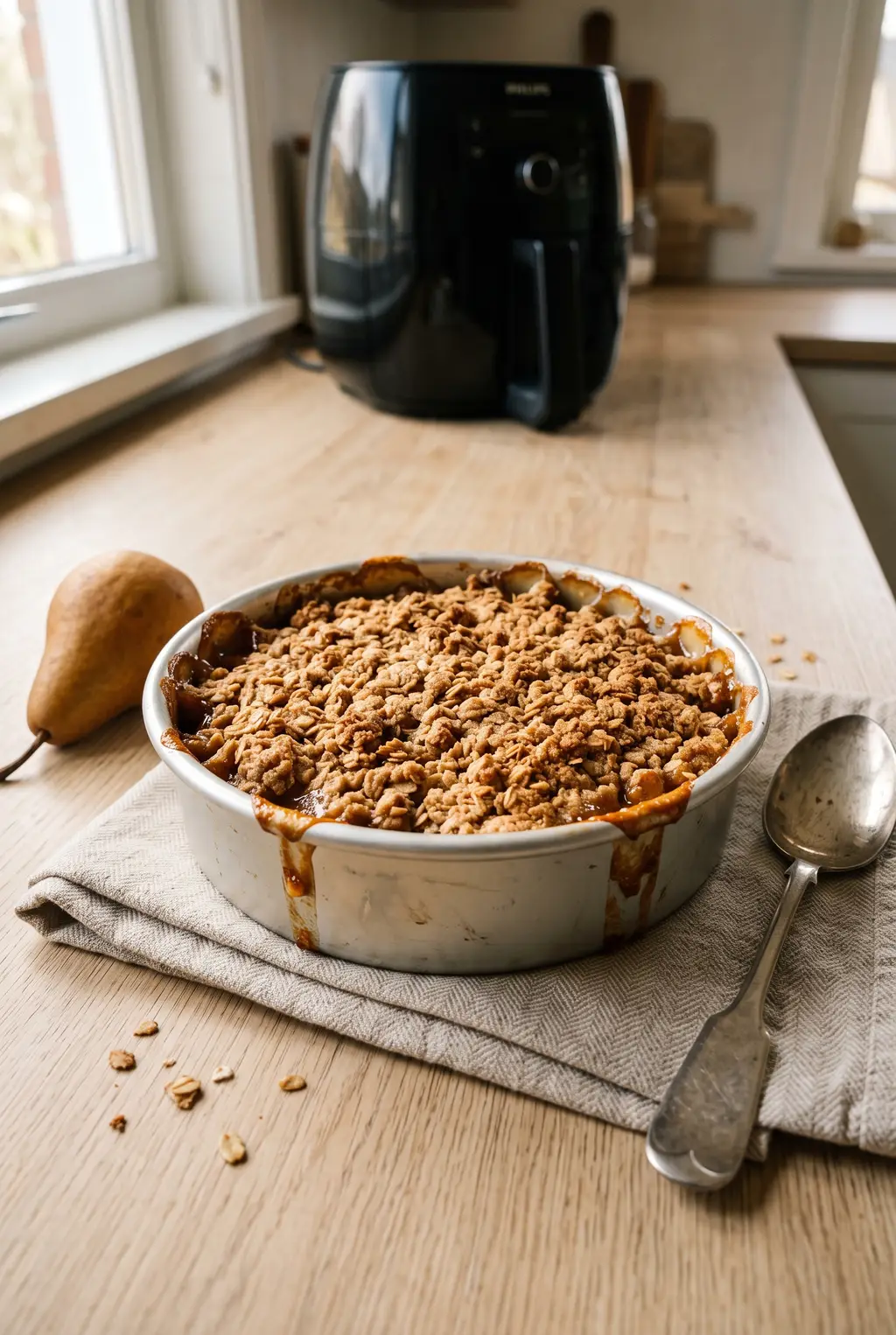
Bosc first, and check the neck
Every apple recipe starts with a variety argument, and pear recipes deserve the same one, because the spread between pear varieties is wider than most bakers expect. Bosc is the crisp pear: dense, grainy-sweet, russet-skinned, and it holds its chunk shape through a bake the way a Honeycrisp does, which is exactly why our baked pears put Bosc and Anjou at the top of their list. Firm Anjou is the reliable second. Bartlett, the softest and juiciest pear at the store, slides toward sauce in a crisp; usable firm-ripe with 3 minutes shaved off the first bake, but know what you are signing up for. Canned pears are a no for the real recipe, with the honest emergency workaround parked in the FAQs.
Ripeness matters as much as variety, and pears are sneaky about it because they ripen from the inside out; a pear that yields at the belly is already overripe at the core. So check the neck: press a thumb just below the stem, where ripening reports first. A slight give at the neck on a still-firm body is the crisp-ready pear. Rock-hard fruit still works tonight, the way it does on the baked pears page, it just pays 3 extra minutes in the first bake. And yes, peel them; pear skin turns papery in a crisp and separates from the softening fruit into little parchment flakes nobody wants on a spoon.
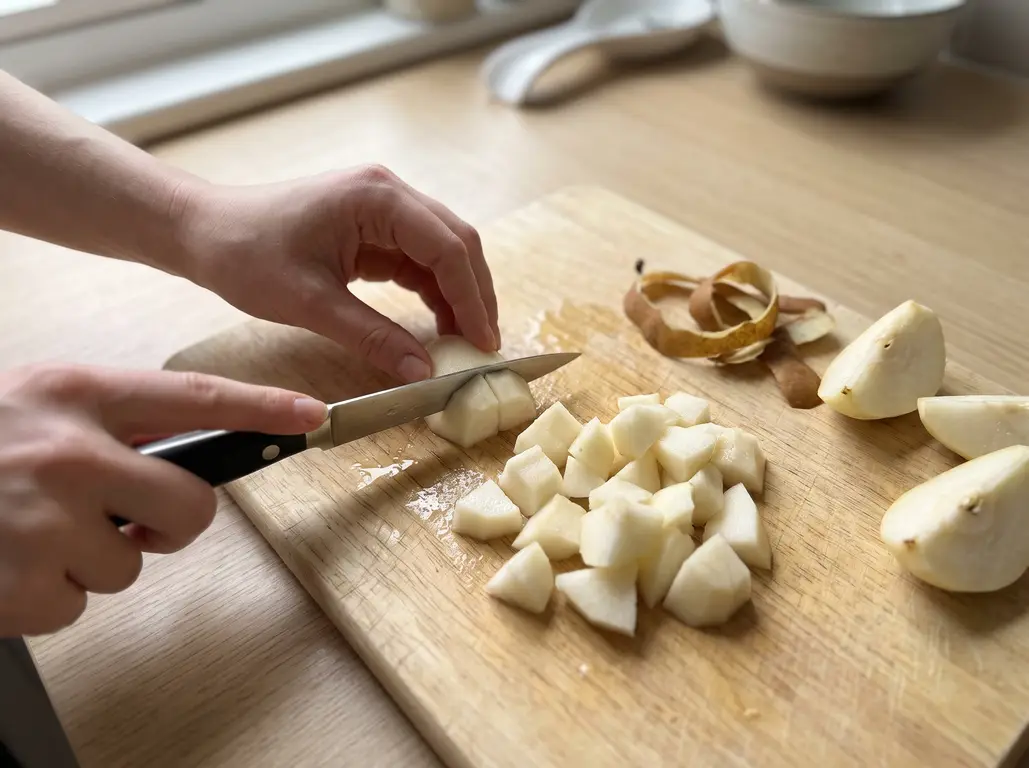
Pears are a juice problem
A ripe pear is about 84 percent water, holds it in weaker cell walls than an apple, and lets it go the moment heat arrives. That is the whole reason pear crisps fail differently than apple crisps: the topping browns on schedule while the fruit under it floods the pan, and the slice pours instead of holding. The recipes ranking for this keyword either ignore the flood, tossing four pears with a single teaspoon of cornstarch, or dodge it by shrinking the whole dessert into two ramekins where there is less juice to notice.
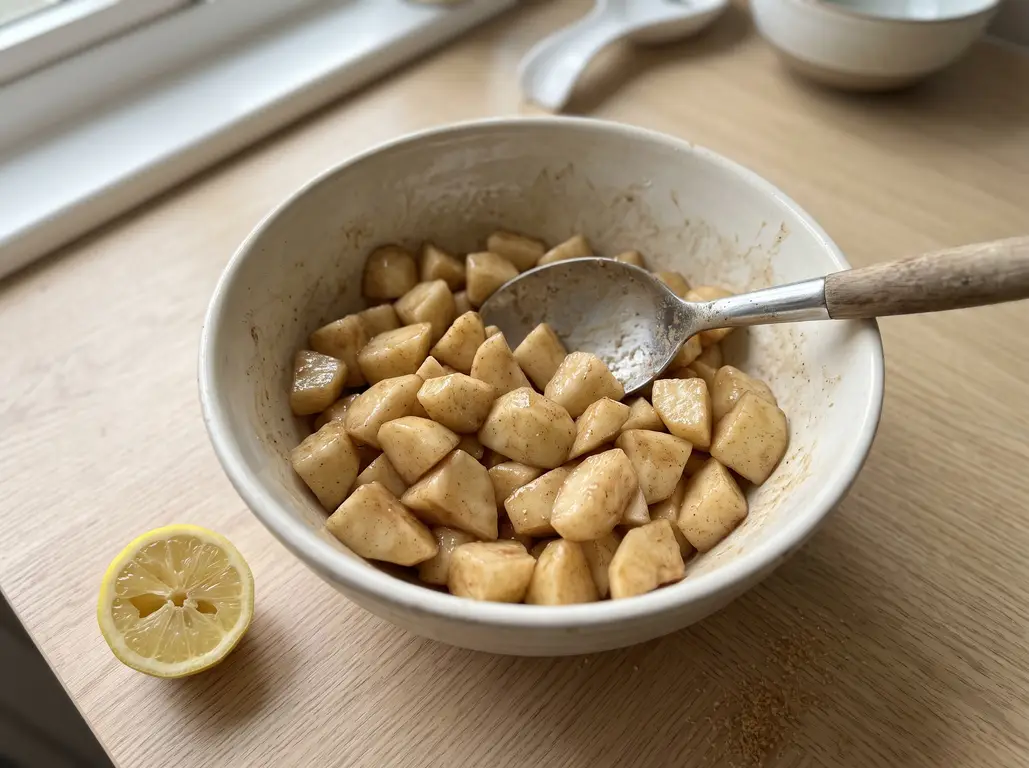
This recipe manages the water twice, the same way every wet bake on this site does. First, a full tablespoon of cornstarch in the toss, with no added liquid beyond 2 teaspoons of lemon juice; the pears will supply plenty. Second, and this is the pear-specific move: the fruit bakes alone for 12 minutes, uncovered. Our apple crisp runs its first stage under foil, because dense apples need trapped steam to soften. Pears have the opposite problem, they arrive pre-softened and over-watered, so the foil stays in the drawer and the fan spends 12 minutes doing what fans do best, boiling the loose juice down into the syrup the cornstarch can grab. Same two-stage architecture as the apple crumble, opposite lid policy, and the reason is the fruit.
Clumps the fan cannot scatter
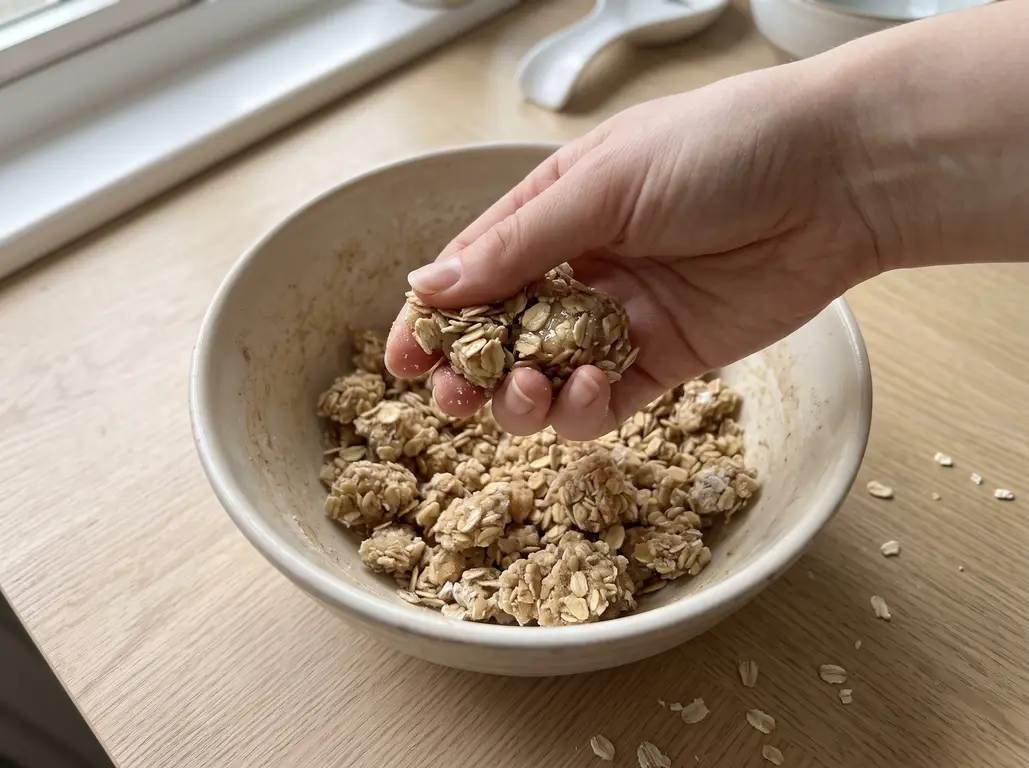
An oven crisp topping is rubbed to loose sandy crumbs and left to fend for itself, and in a basket that is how oats end up glued to the heating element. The house rule for every crisp and crumble here: stir the dry mix into melted butter, then squeeze handfuls into clumps, pea-size to marble-size. Clumps have the weight to sit still in the fan and bake into the cobbled, crackly lid the dessert is named for, no chilling required when the butter is fully mixed through. Use old fashioned rolled oats, the flat whole flakes; quick oats are pre-chopped dust that drinks the butter and bakes into cardboard. Scatter the clumps edge to edge so no open juice is left exposed to boil over, and resist pressing them flat; the gaps between clumps are where the steam escapes and the crunch survives.
Done is a 2 minute bubble
Golden brown is a description of the topping, not a verdict on the crisp, and it shows up minutes before the filling is ready. The verdict lives at the pan edge: the juice should bubble thick, like slow jam, for 2 full minutes before the pan comes out, the same finish-line rule the apple crisp runs, because cornstarch only thickens what has actually boiled. Thin, watery bubbles mean 2 more minutes, however handsome the top looks. The 330°F lane is not arbitrary either: oven pear crisps run 375°F, which the air fryer calculator converts to about 350°F, and the last 20 degrees is the step down a brown-sugar topping demands from a heat source this close, the same sugared-topping tax recorded across the baking chart. Then the step everyone skips: 10 minutes of rest in the pan. Cornstarch finishes setting as it cools, and the difference between minute zero and minute ten is the difference between a ladle and a spatula.
Ingredients
For one 7 inch crisp, serves 6
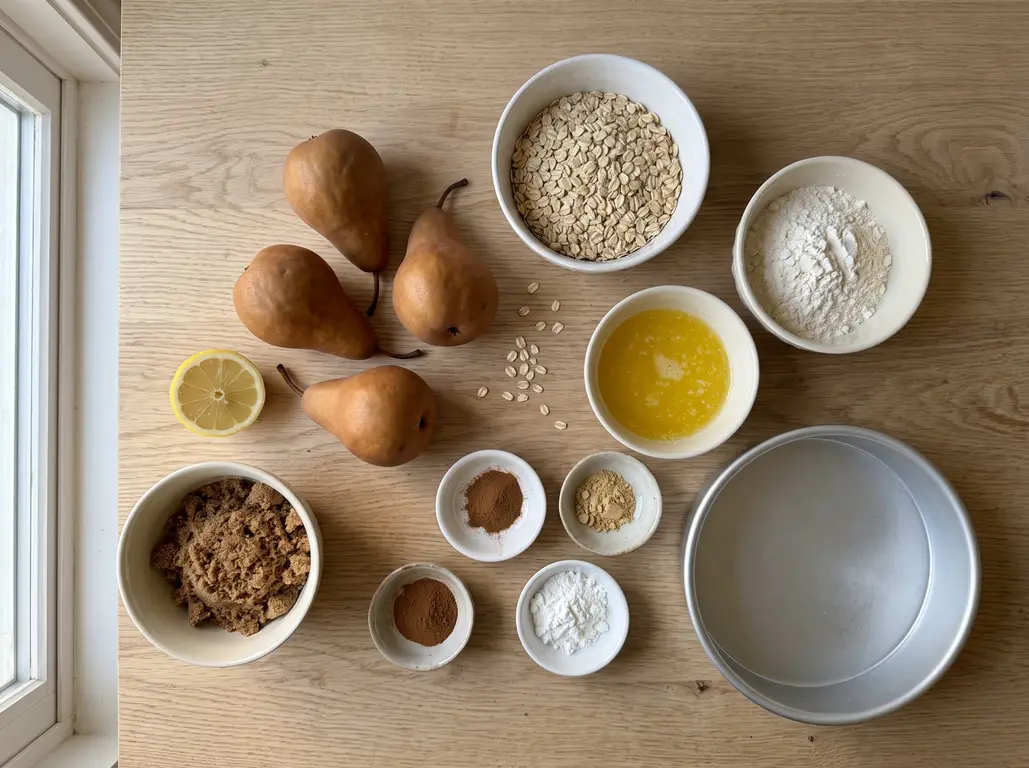
- 4 firm-ripe Bosc or Anjou pears, about 2 pounds, peeled and cut into 3/4 inch chunks
- 3 tablespoons packed brown sugar (filling)
- 1 tablespoon cornstarch
- 2 teaspoons lemon juice
- 1/2 teaspoon cinnamon, 1/4 teaspoon ground ginger and a pinch of fine salt (filling)
- 2/3 cup (60g) old fashioned rolled oats, not quick oats
- 1/2 cup (63g) all-purpose flour
- 1/3 cup (67g) packed brown sugar (topping)
- 1/2 teaspoon cinnamon and 1/4 teaspoon fine salt (topping)
- 6 tablespoons (85g) butter, melted
- Butter for the pan, plus one 7 inch cake pan or baking dish
Four pears at about half a pound each is 2 pounds of fruit; weight matters more than count, because supermarket pears run from tennis ball to softball. The 7 inch cake pan is the same one the whole fruit-dessert shelf here bakes in; the pan size calculator confirms it fits your basket.
How to make it
- Peel, quarter and core the pears, then cut them into 3/4 inch chunks. Press a thumb at the neck first: fruit that just barely gives there is what you want, and rock-hard pears will need 3 extra minutes in step 3.
- Toss the pears with 3 tablespoons brown sugar, the cornstarch, lemon juice, 1/2 teaspoon cinnamon, the ginger and a pinch of salt until every chunk is glossy and no dry white streaks remain.
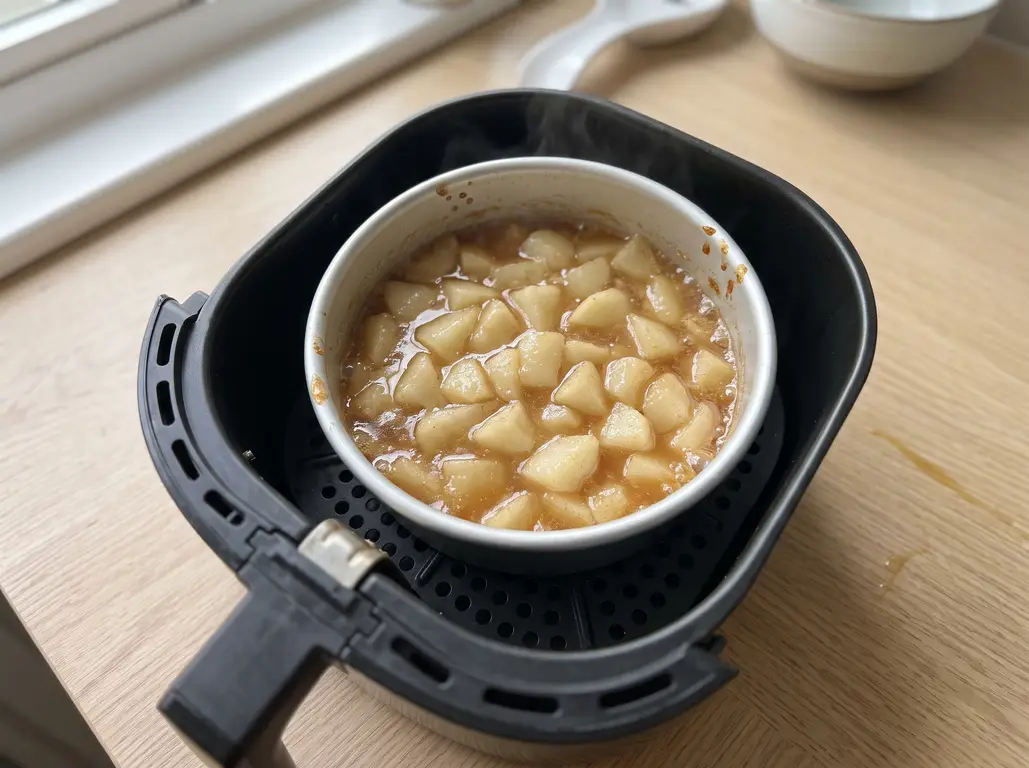
- Spread the filling in a buttered 7 inch pan and air fry uncovered at 330F for 12 minutes, stirring once at the 6 minute mark, until the juice is bubbling and a knife tip slides into a chunk with light resistance.
- While the fruit bakes, whisk the oats, flour, 1/3 cup brown sugar, 1/2 teaspoon cinnamon and 1/4 teaspoon salt, then stir in the melted butter and squeeze handfuls into clumps, pea-size to marble-size.
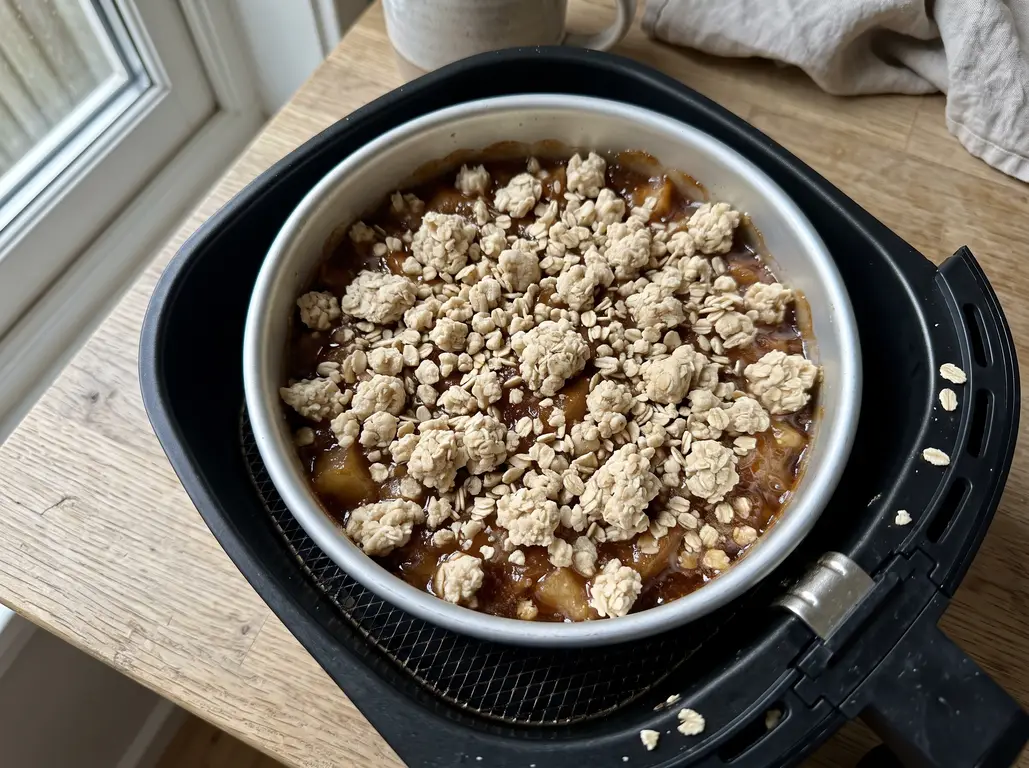
- Scatter the clumps over the hot fruit all the way to the pan wall, so no bare juice is left open to boil over.
- Return the pan and air fry at 330F for 8 to 10 minutes, until the topping is deep golden brown and the filling has bubbled thick at the edges for 2 full minutes.
- The bubble at the pan edge should look like slow jam, not broth, and a knife through a center chunk should meet no resistance. Pale, watery bubbles earn 2 more minutes.
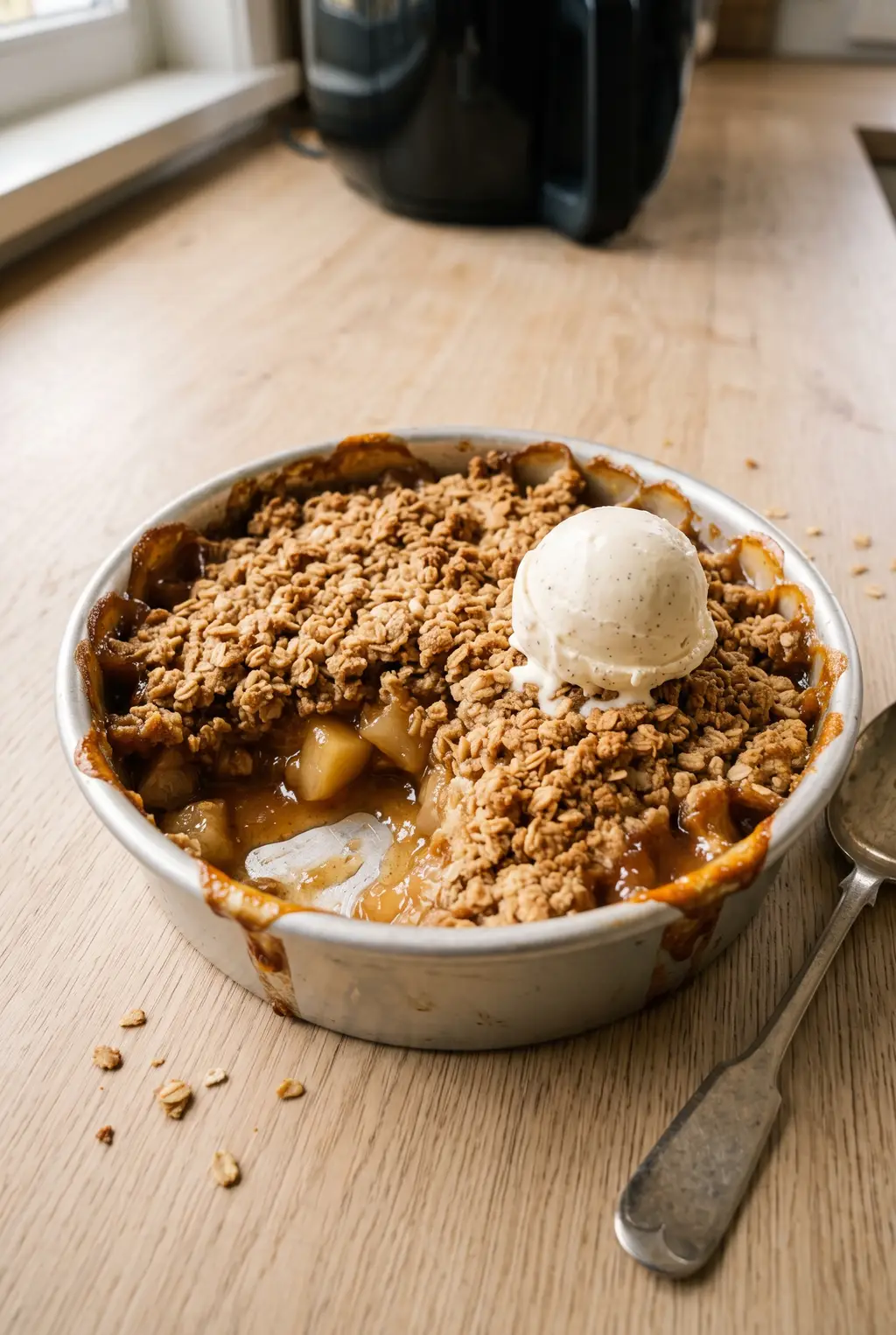
- Rest the crisp in the pan for 10 minutes; the cornstarch finishes thickening as it cools from a boil. Serve warm, with cold vanilla ice cream doing what it does.
The ramekin version for two
Most of the ranking recipes are built in ramekins, and it is a legitimate format, just an undersized default for a dessert people make for a table. Scaled honestly: two 7 or 8 ounce ramekins take 2 pears and half the topping, first bake at 330°F for 8 minutes uncovered, then 6 to 8 minutes topped, to the same thick-bubble finish. Ramekins run shallower juice, so they forgive Bartletts and impatience better than the pan does. Set them directly on the basket floor with a finger of space between, and remember the ceramic holds heat; the 10 minute rest is not optional when the dish itself is the plate. For the opposite direction, feeding more than six, the recipe scaler does the multiplication and the second pan simply bakes after the first.
Variations
- Apple pear crisp: half apples, half pears, the mix the manufacturer blogs rank with. Keep the apple chunks a shade smaller than the pear chunks so both finish together, and keep the full first bake.
- Ginger pear crisp: double the ground ginger and add a teaspoon of grated fresh ginger to the toss, the pear-forward version the crumble page has been promising in its variations list.
- Cardamom and vanilla: swap the cinnamon in the filling for 1/4 teaspoon cardamom and a teaspoon of vanilla. Quietly the best version for company.
- Pecan or walnut topping: replace 1/4 cup of the oats with chopped toasted nuts; they join the clumps and toast in place.
- Maple pear crisp: swap the filling's brown sugar for 3 tablespoons of maple syrup and raise the cornstarch to 4 teaspoons to cover the extra liquid.
- Gluten-free and vegan: a 1:1 gluten-free flour blend works in the topping, and melted coconut oil or plant butter clumps just as well. Certified GF oats if it matters at your table.
- Pear crumble: leave out the oats, add 2 tablespoons of flour, same schedule; the crisp-vs-crumble distinction gets its own honest answer in the FAQs.
Fixing what goes wrong
| Problem | Cause | Fix |
|---|---|---|
| Watery filling that pours | Teaspoon-scale cornstarch, one-shot bake, no rest | The full tablespoon, the 12 minute solo bake, the 10 minute rest |
| Fruit collapsed to sauce | Overripe or Bartlett pears, or a fine dice | Firm-ripe Bosc or Anjou in 3/4 inch chunks; check the neck, not the belly |
| Topping browned, pears still firm | Everything baked together from cold | The fruit bakes first; rock-hard pears take 3 extra minutes up front |
| Oats scattered and burned on the element | Loose dry crumbs in a fan | Melted butter, squeezed clumps, pea to marble size |
| Topping dark at 6 minutes | Hot-running machine or a dark pan close to the coil | Drop to 320°F and check your machine against the burning guide |
| Juice boiled over the pan wall | Bare juice left open at the edges, or an overfilled pan | Clumps edge to edge, and fruit no higher than an inch below the rim |
| Soggy topping the next morning | Sealed airtight while warm | Cool fully, cover loosely, revive at 330°F for 4 to 5 minutes; deeper mysteries live in the troubleshooting guide |
Serving, storage and make-ahead
Serve it warm, 15 to 20 minutes out of the basket, when the filling has set but the topping still snaps, and let cold vanilla ice cream argue with the warm ginger; salted caramel is the other correct answer. Leftovers keep covered loosely at room temperature for a day or refrigerated for 3, and portions revive in the basket at 330°F for 4 to 5 minutes with the topping's crunch nearly intact, a resurrection the microwave cannot perform. For make-ahead, work in components: the butter clumps freeze raw for 2 months and top the fruit straight from frozen with a minute added, and the pears can wait tossed in everything but the cornstarch for a few hours, starch added at the last minute because it starts drinking immediately. When pear season peaks and the fruit bowl is still full, the shelf continues: baked pear halves for the 15 minute weeknight version, the apple crisp when the argument swings back to apples, and the peach cobbler and berry cobbler for the biscuit-topped branch of the family.
Frequently asked questions
QHow long does pear crisp take in an air fryer?
About 22 minutes at 330°F, split into two stages on purpose: 12 minutes for the cornstarch-tossed pears alone, uncovered, then 8 to 10 more once the oat topping goes on, until the edges have bubbled thick for 2 full minutes. Baked in one shot, the sugary topping browns in 10 minutes while the fruit under it is barely warm, which is how air fryer crisps end up golden on top and crunchy-raw or soupy underneath. Add a 10 minute rest at the end; the filling thickens as it cools.
QWhat pears are best for pear crisp?
Bosc first, firm Anjou second. Bosc is dense and grainy-sweet and holds its shape through a bake the way a Honeycrisp does, and Anjou follows close behind. Bartlett is the juiciest and softest of the supermarket pears, and in a crisp it slides toward sauce; if Bartlett is what you have, use it firm-ripe, cut the first bake by 3 minutes, and expect a softer, spoonable filling. Whatever the variety, buy firm-ripe: a slight give at the neck, a firm body.
QCan I use canned pears for air fryer pear crisp?
Not for the real thing. Canned pears are already cooked soft and packed in syrup, so they bring maximum water and zero structure, and no amount of cornstarch bakes that back. If canned is genuinely the only option, drain the halves very well, pat them dry, chunk them, skip the first bake entirely, and run just the topped stage at 330°F for 8 to 10 minutes. It makes a sweet, soft dessert that people will eat, but fresh firm-ripe pears are the recipe.
QWhy is my pear crisp watery?
Because pears are the juiciest fruit that gets crisped, wetter than any apple, and most recipes treat them like apples anyway. Four fixes are built into this one: a full tablespoon of cornstarch in the toss, a first bake with no topping and no foil so the fan can boil juice off, chunks at 3/4 inch rather than a fine dice that bleeds everywhere, and a 10 minute rest at the end, because cornstarch sets as it cools. Pull the pan before the edges have bubbled thick for 2 full minutes and no fix can save you.
QWhy did my crisp topping blow around in the air fryer?
Loose, dry crumbs and a fan are natural enemies. A topping rubbed to fine sandy crumbs, oven style, gets picked up and thrown against the heating element, which is why some air fryer crisps smell like burnt oats. The fix is the clump rule this site's crisps and crumbles all follow: stir the dry mix into melted butter, then squeeze handfuls into pea-size to marble-size clumps. Clumps have the weight to stay put, and they bake into the cobbled, crunchy lid a crisp is named for.
QWhat is the difference between a pear crisp and a pear crumble?
Oats. A crisp's topping carries rolled oats, which bake into the craggy, crunchy texture the name promises; a crumble's topping is flour, sugar and butter only, closer to streusel, and bakes tender rather than crackly. The two are cousins and the method here is identical either way: leave the oats out and add 2 extra tablespoons of flour, and this recipe becomes a pear crumble. Our separate apple crumble page runs the same two-stage logic if you want the full oat-free treatment.
QHow do you store pear crisp, and can you make it ahead?
Cool it fully, then cover loosely and keep it at room temperature for a day or in the refrigerator up to 3 days; sealed warm, the topping steams itself soft overnight. Revive portions in the basket at 330°F for 4 to 5 minutes and the topping re-crisps almost completely. For make-ahead, do the components: the raw butter clumps freeze for 2 months and go on straight from frozen with a minute added, and the pears can be tossed with everything except the cornstarch a few hours out, with the starch added just before baking.
Made it? Rate it.
Never overbake again
Get our one-page times & temps cheat sheet, plus a new tested recipe each week.
No spam · unsubscribe anytime