

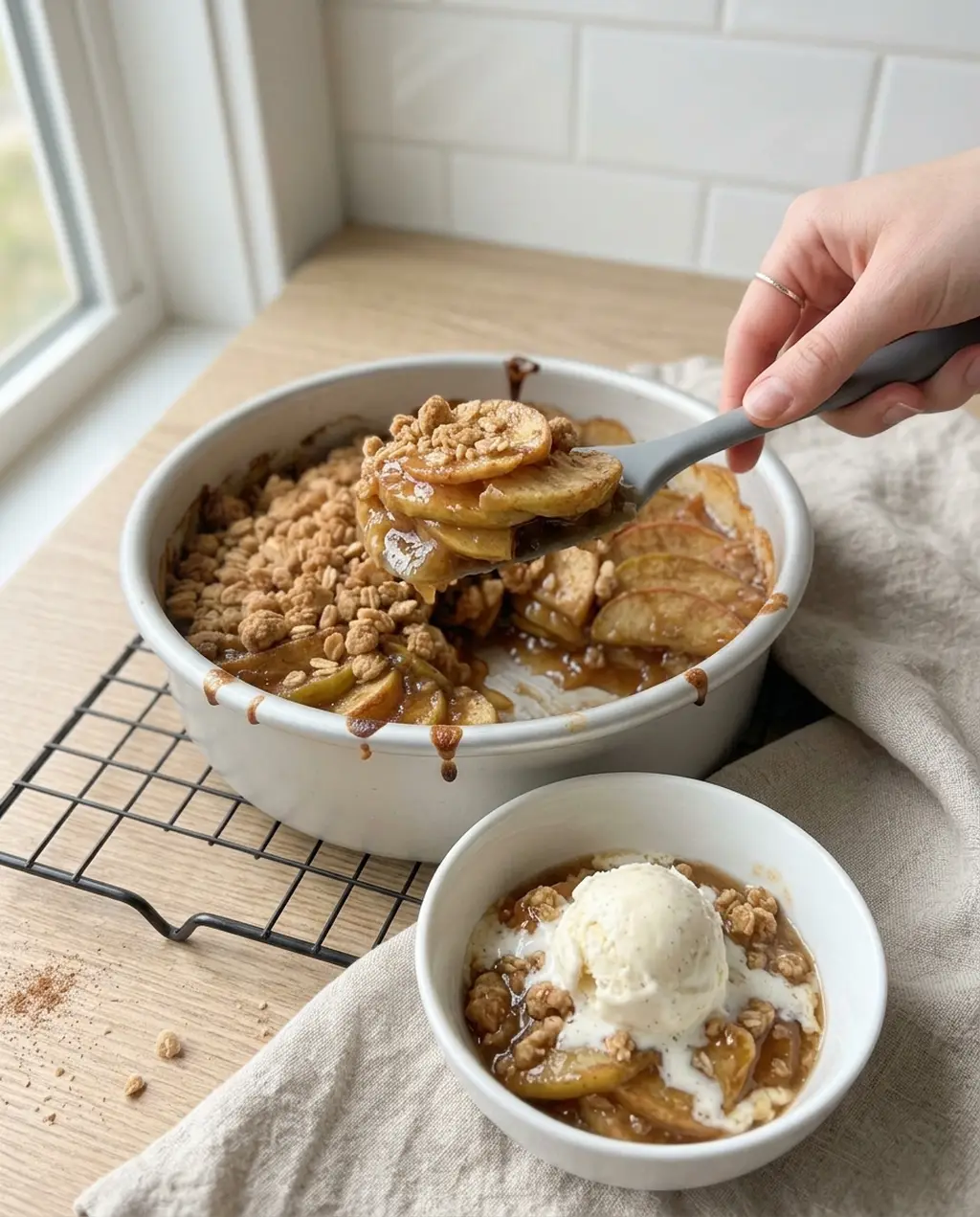
Apple crisp is the dessert you make when apple pie sounds like a commitment. No dough, no chilling, no crimping anxiety, just fruit under a rubble of oats and butter, and it forgives nearly everything. Which makes it all the stranger that the air fryer versions of it fail so consistently, and always in one of the same two ways: a topping the color of mahogany over apples that still snap, or a fan-scattered layer of oats redecorating the inside of the machine.
Both failures have the same root. A crisp is two recipes stacked on top of each other, and in a basket they stop agreeing on the schedule. Fix the schedule and the machine turns out to be excellent at this dessert, better than the oven at the reheat, and fast enough that a real crisp on a weeknight stops being aspirational.
Quick answer: Toss sliced apples with brown sugar, spices and 1 tablespoon of cornstarch, and bake them alone in a foil-covered 7 inch pan at 330°F for 10 minutes. Squeeze the oat topping into pea-and-marble pebbles, scatter them on, and bake uncovered 10 to 12 minutes more, until deep golden and the edges bubble thick. Let it bubble a full 2 minutes before pulling, rest 10, and serve warm. Ramekins for two: 8 minutes covered, 8 to 10 topped.
Two layers, two clocks
Sliced apples need 18 to 22 minutes of heat before they give up their crunch, and they spend that time doing nothing visible. The topping is the opposite: half sugar and butter by weight, it takes color fast and has nowhere to hide from an element that sits a few inches above it. Start them together, the way oven recipes do, and the topping finishes its whole career while the apples are still warming up. The oven gets away with it because its heat is distant and gentle; a basket is neither.
So this recipe refuses to start them together. The apples bake alone first, covered in foil so they steam soft instead of drying at the edges, and the topping only enters once the fruit is halfway home. It is the same late-arrival rule this site uses for streusel on coffee cake, for the same reason: in a basket, delicate toppings ride the second half of the bake or they do not survive it.
Pebbles, not dust
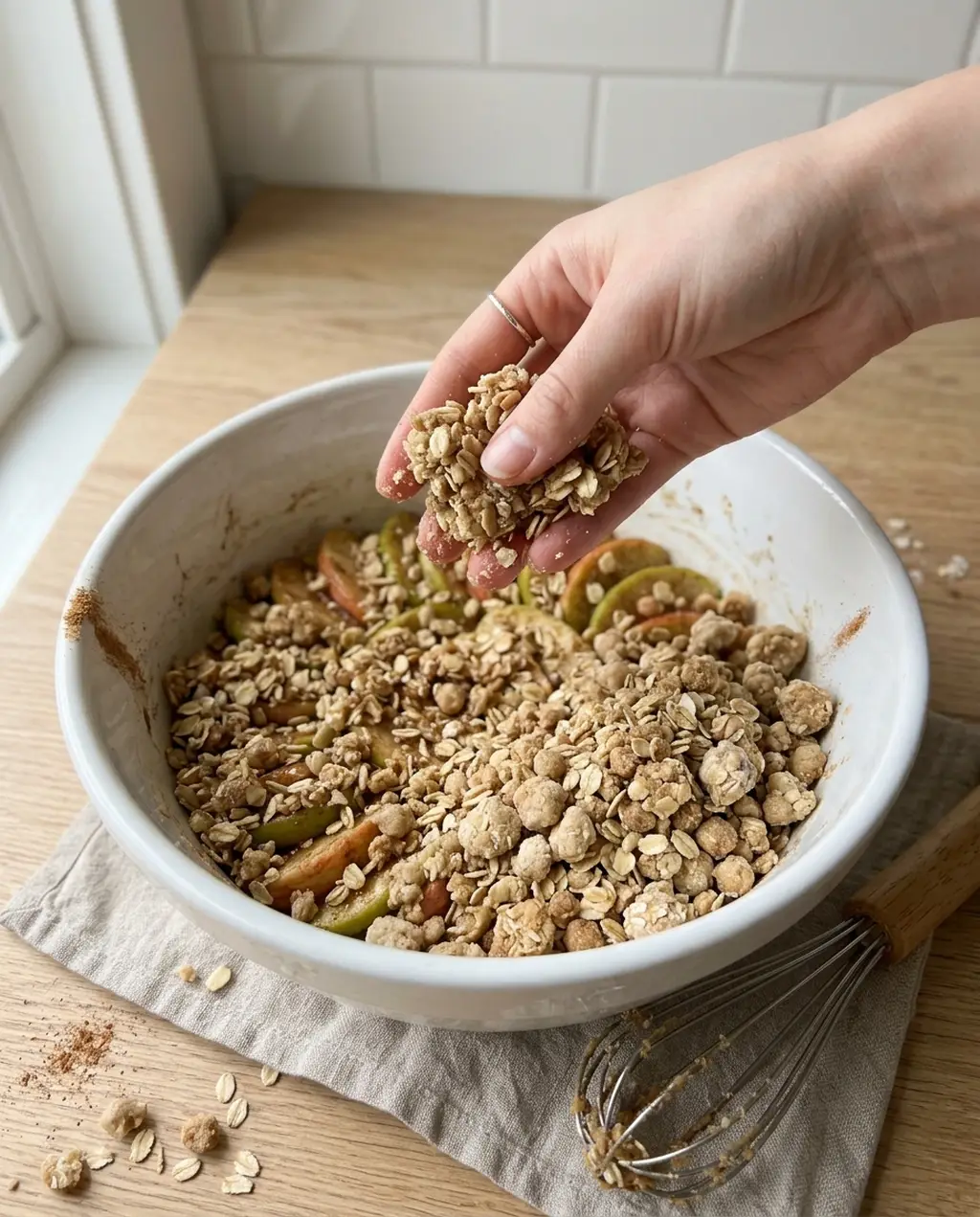
The second air fryer problem is mechanical. A classic crisp topping is rubbed to loose crumbs, and loose crumbs weigh nothing, and things that weigh nothing do not stay put in front of a fan. The fix costs one gesture: after stirring the topping into the melted butter, squeeze handfuls of it into clumps, pea-sized to marble-sized, and scatter those. Pebbles have the mass to hold their ground, they bake into the craggy bakery texture people photograph, and pressed lightly into the fruit they give the fan no loose edge to pick at.
Old-fashioned rolled oats only. Quick oats drink the butter into paste and bake as one soft slab, which is a cobbler wearing a crisp's name tag. The topping here is essentially an oatmeal cookie that never got organized, and it wants the same sturdy flake that recipe does.
The apples and the cornstarch
- Half Granny Smith, half Honeycrisp. Granny brings the acid and holds its slice shape; Honeycrisp brings juice and perfume. All of one kind works, but the blend tastes like you thought about it, because you did. Braeburn and Jonagold sub cleanly.
- Half-inch slices, not dice. Slices soften evenly and stack into layers a spoon can cut. Diced apples cook into loose applesauce corners; the whole-fruit route is a different dessert and lives at baked apples.
- The cornstarch is the sauce. One tablespoon, tossed with the sugar so it cannot clump. Apples release real liquid as they cook, and without a thickener that liquid stays a puddle. With it, the juices turn glossy the moment they boil, which is exactly what the bubble at the end is telling you.
- Lemon juice and vanilla are the seasoning nobody notices and everybody misses when skipped: the lemon keeps four cups of sugar-coated fruit tasting like fruit.
Pan, ramekins and foil
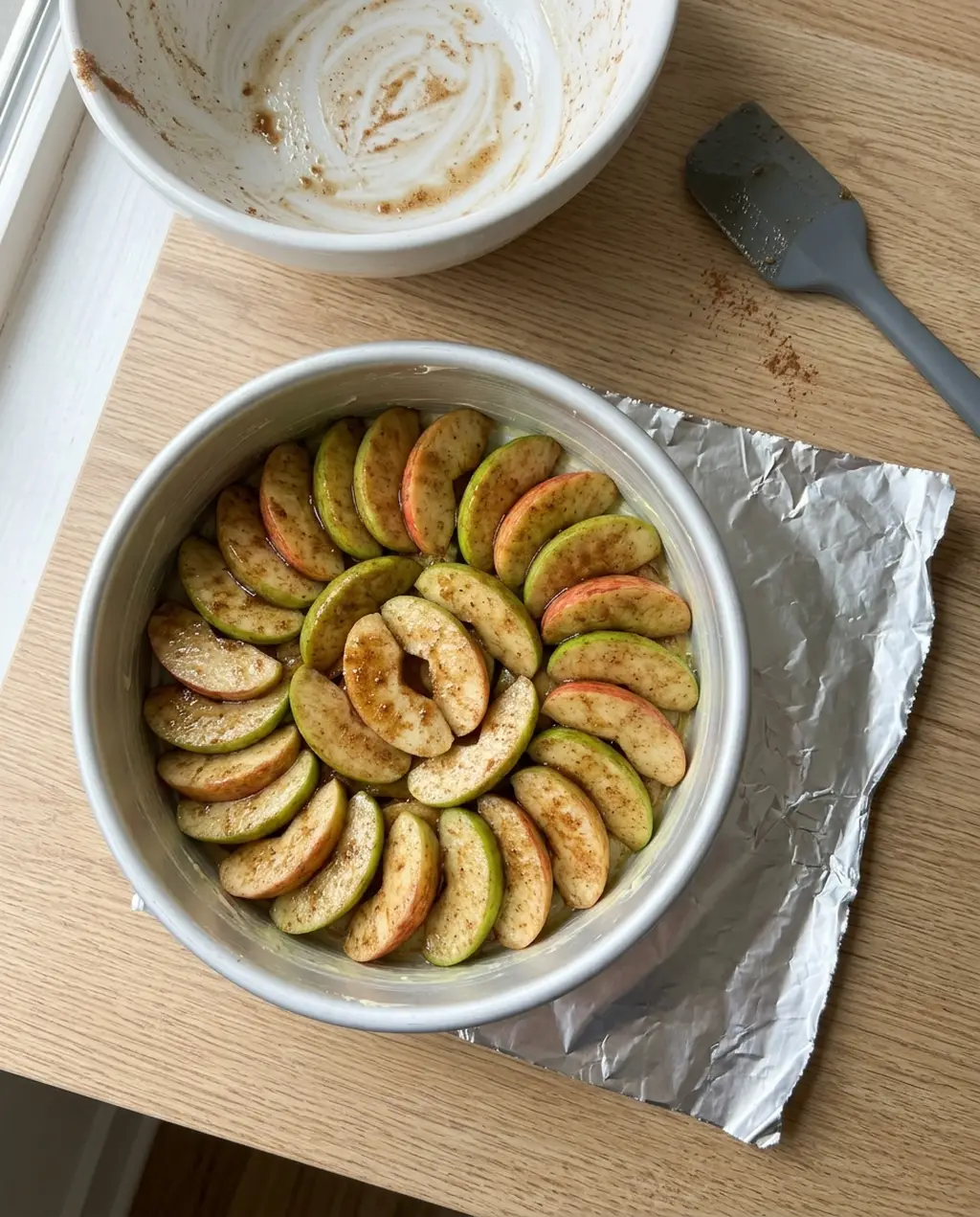
- A 7 inch cake pan is the family size, serves 6, and fits most 5 to 6 quart baskets. Not sure what your machine takes? The pan size calculator answers it before you have a full pan and no home for it.
- Two 8 ounce ramekins are the for-two lane, and they ride side by side in one basket. Individual crisps also solve the serving problem: no first scoop wrecks the topping for everyone after.
- The foil cover is legal and load-bearing. Wrapped tight over a weighted pan, foil is fine in a basket; it is loose, unweighted foil that becomes a projectile. The full rules live in the foil and parchment guide. Covered for phase one, always uncovered for phase two.
- Butter the pan. Bubbled-over apple syrup is caramel glue by cleanup time.
Ingredients
The filling
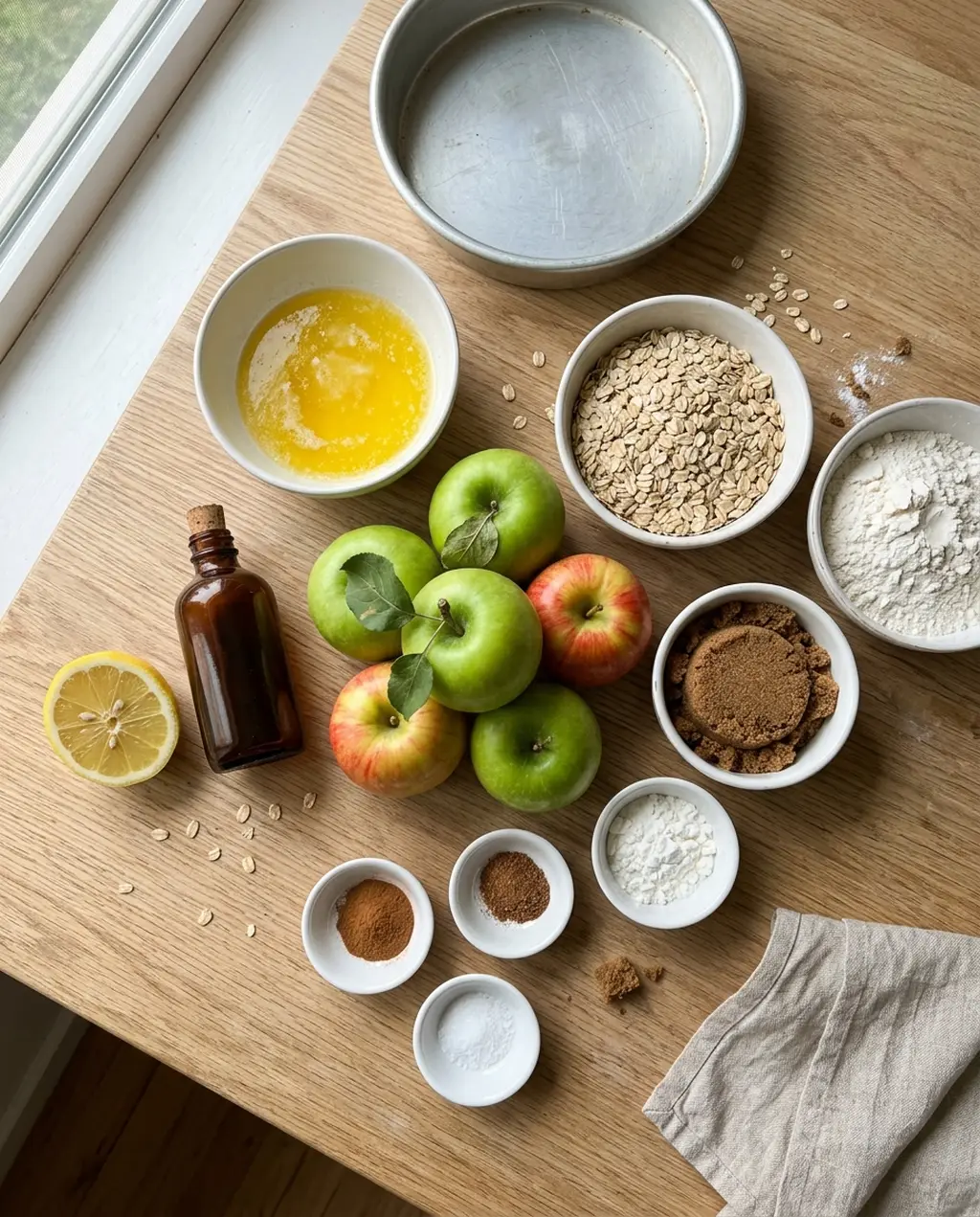
- 4 cups sliced apples, about 3 large, half Granny Smith and half Honeycrisp
- 1/4 cup (50g) packed brown sugar
- 1 tablespoon cornstarch
- 1 teaspoon cinnamon, 1/4 teaspoon nutmeg, pinch of salt
- 1 tablespoon lemon juice, 1 teaspoon vanilla
The topping
- 3/4 cup (68g) old-fashioned rolled oats
- 1/2 cup (63g) all-purpose flour
- 1/2 cup (100g) packed brown sugar
- 1/2 teaspoon cinnamon, 1/4 teaspoon fine salt
- 6 tablespoons (85g) butter, melted
Additions that earn their place: a handful of chopped pecans or walnuts squeezed into the pebbles, or a half teaspoon of cardamom alongside the cinnamon. Gluten-free: swap the flour for oat flour one-for-one; the topping gets slightly more tender and nobody complains.
How to make it
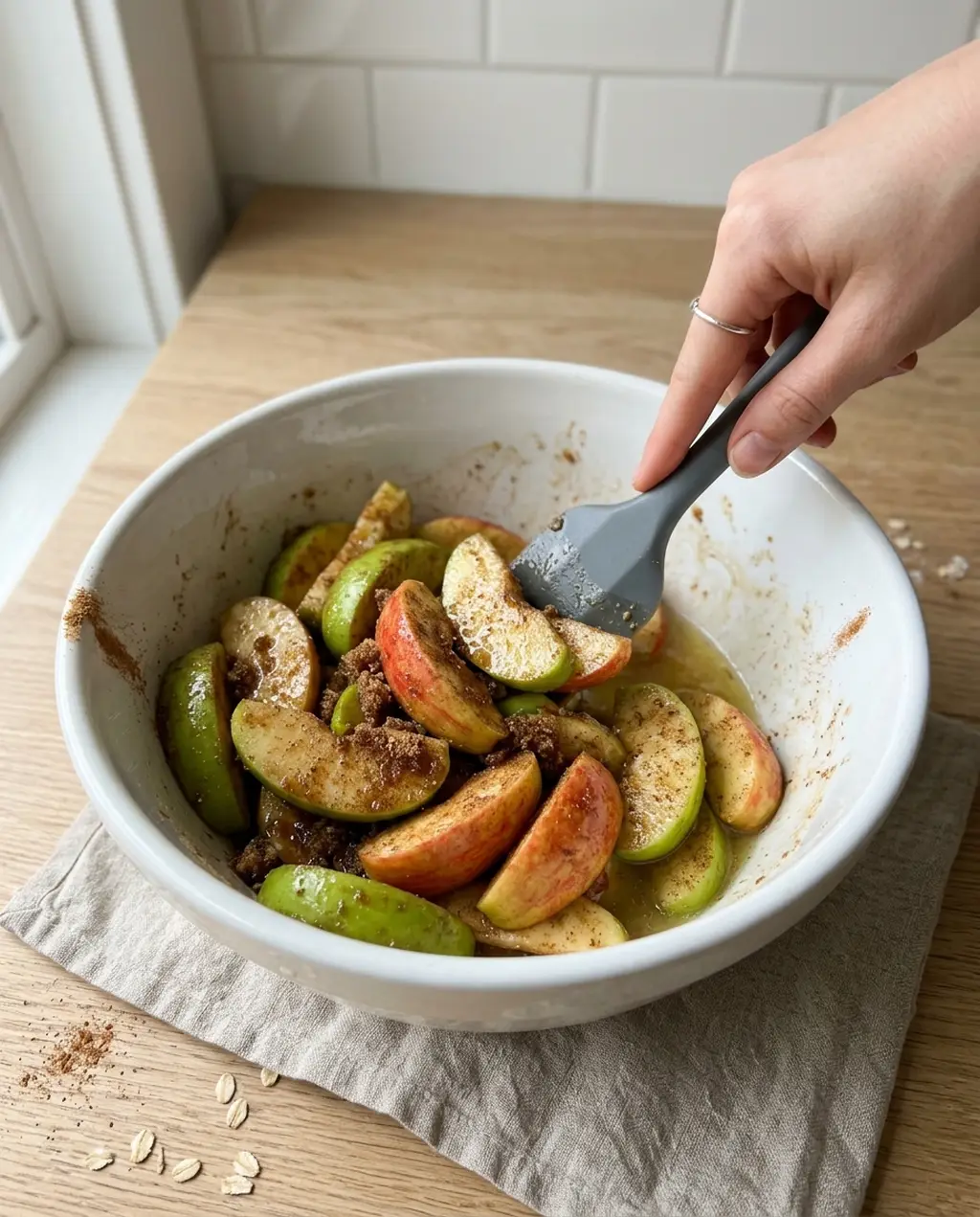
- Toss the filling with the sugar and cornstarch mixed together first, then the spices, lemon and vanilla, and spread it in the buttered pan. No preheat needed; a covered filling and a cold start suit each other, per the preheat guide.
- Cover tight with foil and bake at 330°F for 10 minutes. The apples steam themselves tender while the topping waits safely on the counter.
- Make the pebbles while that runs: dry topping ingredients into the melted butter, stirred to damp, then squeezed by the handful into clumps.
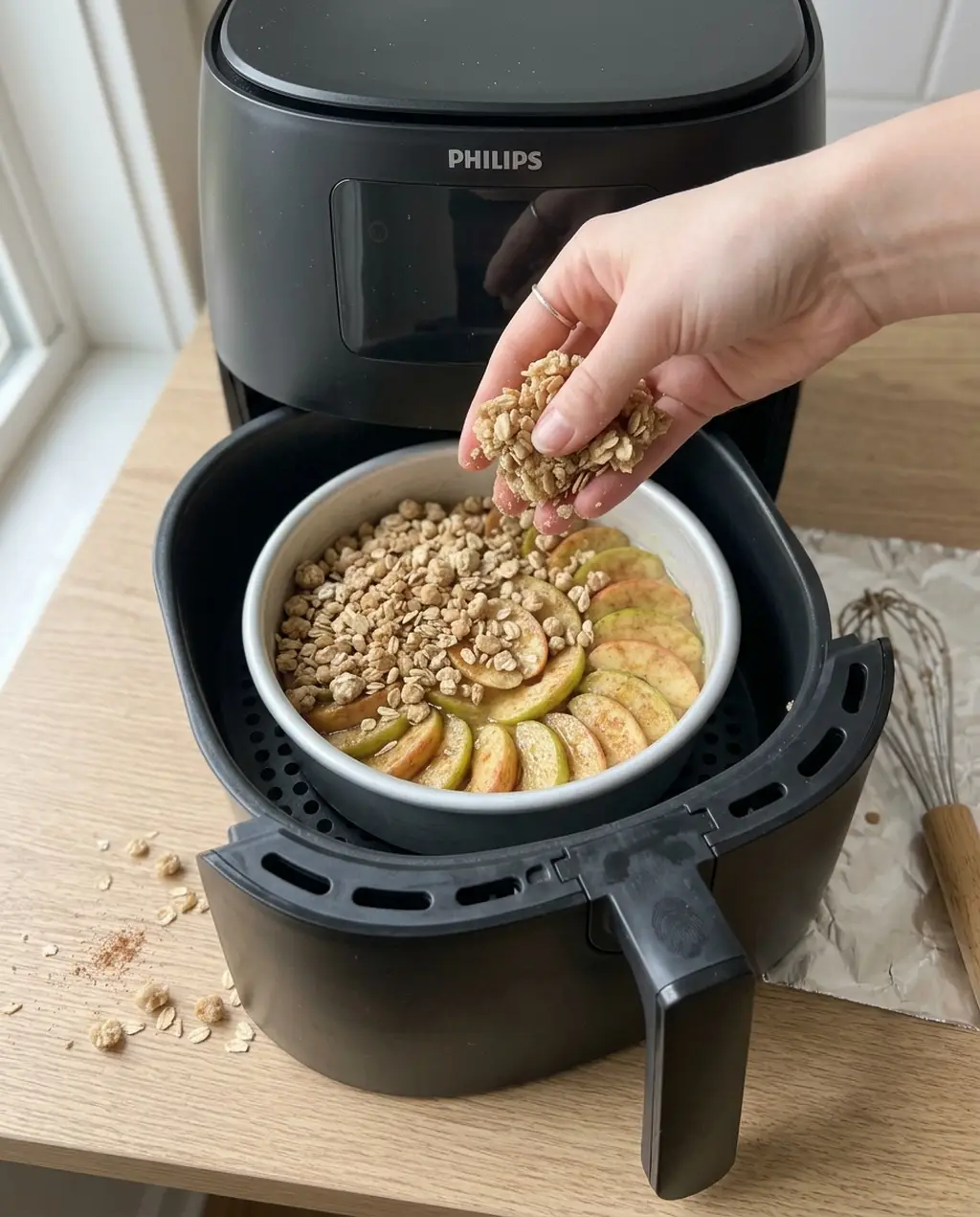
- Uncover, scatter, press lightly. Edge to edge coverage, pebbles pressed just enough to grip the fruit.
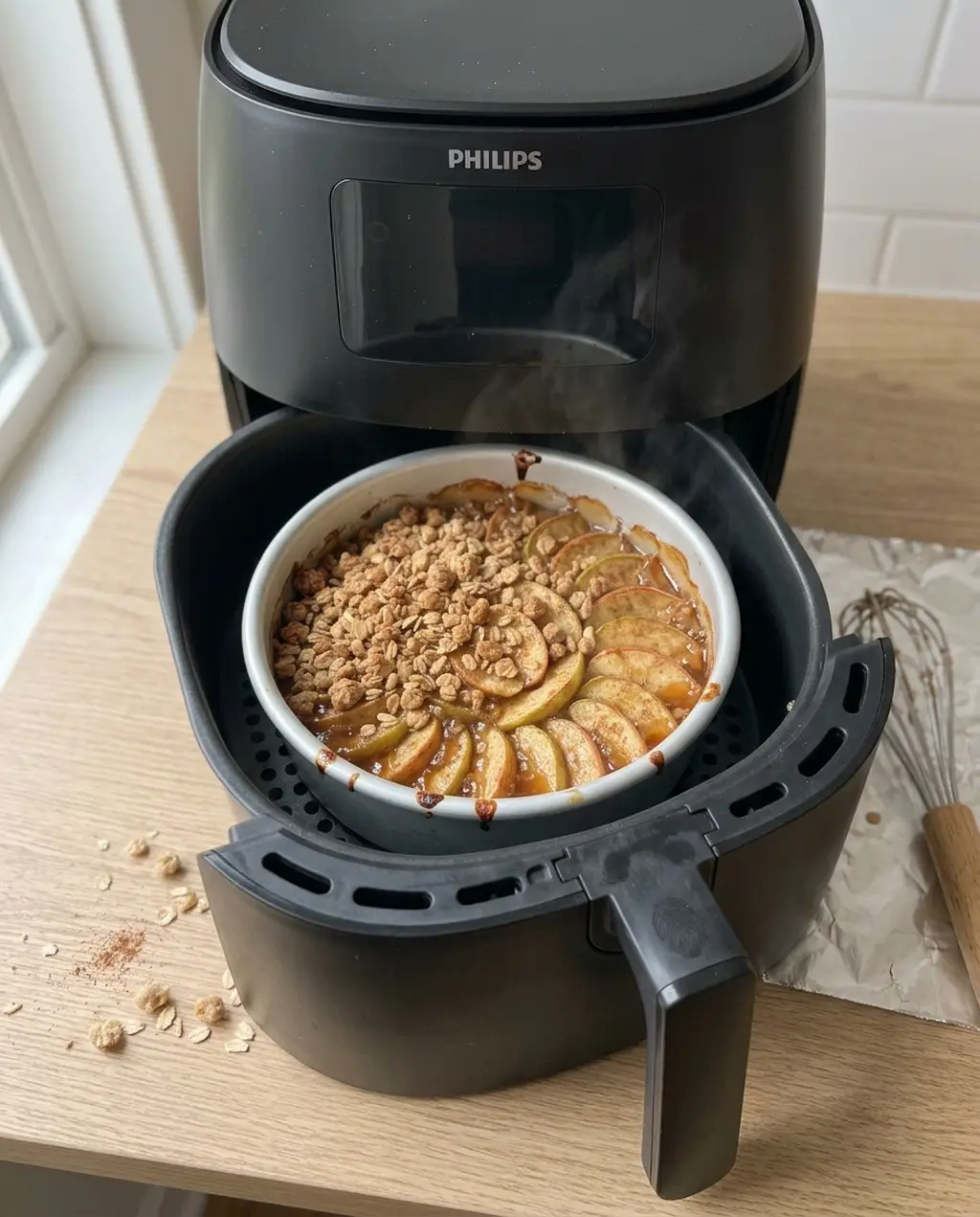
- Bake uncovered at 330°F for 10 to 12 minutes, until deep golden with thick bubbles climbing the pan walls.
- Give the bubble its 2 minutes. The starch thickens only at a boil, so the bubbling is not a finish line you race past; it is a stage the crisp needs to sit in.
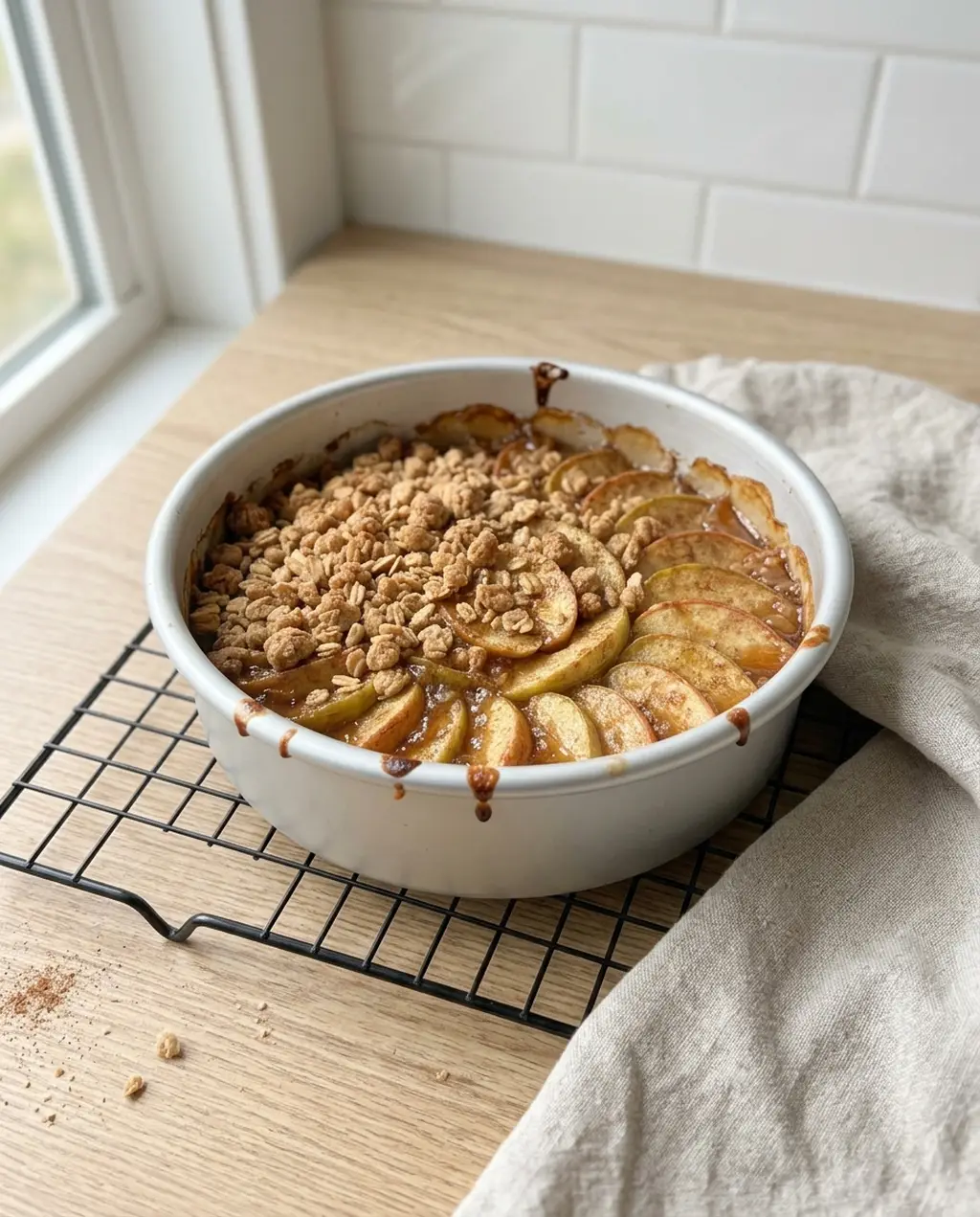
- Rest 10 minutes on a rack. The lava-hot juices set into sauce, and the first scoop holds together instead of flooding the bowl. That climb-down is the fruit version of carryover, still cooking as it settles.
- For two instead of six: the ramekin lane in the card below, or run any size through the recipe scaler and keep the clock the same; time follows depth, not batch size.
Converting a family oven recipe instead? A 350°F, 40 minute oven crisp translates through the air fryer calculator to about 325°F, which is the neighborhood this page bakes in; the part no converter supplies is the two-phase schedule, and that part is the whole trick. Every tested setting on this site lives in the baking chart.
The bubble: doneness
| The signal | What it means |
|---|---|
| Topping golden, edges quiet | Not done, whatever the color says. The starch has not boiled; the filling will pour, not spoon |
| Thick, slow bubbles at the edges for 2 full minutes, topping deep golden | Done. Rest 10 minutes and the juices set glossy |
| Hard boil across the whole surface, topping darkening fast | 2 minutes past. Pull it; the rest will still save the filling, and note 1 minute less next time |
A fork into the center at minute 18 settles any doubt about the fruit: it should slide into a slice with no crunch left. Color on top tells you about sugar; only the bubble tells you about the sauce.
Troubleshooting
| What you got | Why | Fix |
|---|---|---|
| Burnt topping, crunchy apples | Both layers started together. | Filling first under foil, topping at minute 10. This row is the recipe |
| Oats scattered around the basket | Loose crumbs met the fan. | Squeeze the topping into pebbles and press them on. Dust flies; pebbles stay |
| Watery filling | No cornstarch, or pulled at the first bubble. | 1 tablespoon cornstarch, and 2 full minutes of bubbling before the pull |
| Mushy, sauce-like apples | Soft varieties, or diced small. | Granny Smith in the mix, half-inch slices. McIntosh and Red Delicious dissolve on purpose |
| Pale, sandy topping | Baked at 300°F, or the butter was skimped. | 330°F and the full 6 tablespoons; butter is the browning agent |
| Topping soft by evening | Steam rising off stored warm crisp. | Cool fully before covering, and re-crisp at 300°F for 3 to 4 minutes |
| One edge dark, one pale | A machine hot spot. | Rotate the pan a half turn when the topping goes on; chronic scorching lives in the burning guide |
| Syrup welded to the pan | Unbuttered pan, bubbled-over juices. | Butter the pan, and soak it warm; sugar glue loses politely to hot water |
Failures that repeat across desserts are machine questions, and the troubleshooting guide handles those.
Serving it
- Warm, with cold vanilla ice cream, which is not optional in this house. Out of apples? The baked peaches make the same sauce in their pit cavities in about 12 minutes. The 10 minute rest brings the filling from molten to merely hot, which is exactly where the ice cream contrast lives.
- The fall lineup: this page is the low-effort end of the apple shelf. When you want pastry around the fruit, that is the apple pie; handheld, the turnovers; and the cider donuts close out an orchard weekend properly.
- The rest of the fruit shelf: apple crumble is this dessert with the oats swapped out, the same two-stage bake at 320°F. The peach cobbler and berry cobbler use the same fruit-first idea with buttermilk biscuits on top, and the galette is the easiest way to get pastry around fruit without a pie plate.
- Breakfast defense: fruit, oats and butter. Leftover crisp is also the best topping I know for bread pudding, spooned on warm. Reheated crisp over plain yogurt is oatmeal with ambition, and nobody needs to know it was dessert first.
Storage and reheating
- Counter, day of: loosely covered once cool. The topping stays crisp for hours, not days.
- Fridge: 4 days covered. The topping will soften; that is recoverable, below.
- The reheat is a superpower: 300°F for 3 to 4 minutes uncovered, in the pan or by the ramekin, and the topping returns to day-one crunch. The microwave warms it soggy; use it only when the goal is speed over texture.
- Make-ahead: the pebbled topping keeps 1 week refrigerated or 2 months frozen and bakes from cold; the seasoned filling holds a day in its pan. Assembling from parts takes 3 minutes on the night.
- Freezing baked crisp works at a cost: the topping never fully returns. Freeze the parts, not the finished thing, and it never has to.
Frequently asked questions
QHow long does apple crisp take in an air fryer?
20 to 24 minutes at 330°F for a 7 inch pan: 10 minutes covered with foil so the apples soften, then 10 to 12 minutes uncovered once the topping goes on, until the top is deep golden and the edges bubble thick. Two 8 ounce ramekins run 8 minutes covered plus 8 to 10 topped. Add the 10 minute rest, and dessert is under 40 minutes without an oven involved.
QWhat temperature do you cook apple crisp in an air fryer?
330°F for both phases. Published versions run anywhere from 300 to 400°F, which is the usual air fryer scatter, but this topping is half sugar and butter, and the heating element sits inches above it. At 350°F and up the streusel browns before the apples underneath finish; at 300°F the topping bakes pale and sandy. 330°F lets both layers finish together.
QWhy did my crisp topping burn before the apples were done?
Because both layers started at minute one, and they do not want the same amount of time. Raw apples need close to 20 minutes to soften; a sugary oat topping is golden in about 10. Bake the filling alone under foil for the first 10 minutes, then add the topping for the second half. Each layer gets the clock it needs and neither pays for the other's.
QWhy is my apple crisp filling watery?
Two reasons, usually together. No cornstarch, so the apple juices had nothing to thicken with, and pulled too early, because cornstarch only thickens once it reaches a boil. One tablespoon of cornstarch in the filling and a full 2 minutes of visible bubbling at the edges fix it. The bubble is not a warning sign; it is the doneness cue, the moment the sauce is actually becoming sauce.
QCan you put foil in an air fryer for apple crisp?
Yes, and this recipe depends on it: the pan is covered tightly with foil for the first 10 minutes so the apples steam soft without the exposed edges drying out. Foil is safe in a basket when it is wrapped snugly around a weighted pan; what is never safe is loose foil riding alone, which the fan will lift into the element. The topping phase runs uncovered, or nothing crisps.
QWhat size pan do you use for apple crisp in an air fryer?
A 7 inch round cake pan fits most 5 to 6 quart baskets and serves 6. Smaller machines: two 8 ounce ramekins in the basket at once, which is also the right move for a for-two dessert. Skip anything glass unless it is marked airfryer or oven safe. If you are not sure what your basket takes, check your machine before pouring, not after.
QDo you use quick oats or old-fashioned oats for crisp topping?
Old-fashioned rolled oats, every time. Their big flakes stay distinct and bake into the crunch that gives the dessert its name. Quick oats are cut fine and drink the butter into a paste, so the topping bakes as one soft slab, and instant oat packets add sugar and softness you did not ask for. If rolled oats are truly not in the house, cut the quick oats to a half cup.
QCan you make apple crisp ahead of time?
In pieces, yes. The pebbled topping keeps a week in the fridge or 2 months frozen, and it goes on straight from cold. The sliced, seasoned filling can sit covered in its pan in the fridge for a day; the lemon juice keeps the apples from browning. Assembled-and-baked ahead works too, but the topping softens overnight, so plan on the reheat below to bring it back.
QHow do you reheat apple crisp so the topping stays crispy?
The air fryer is the best reheat this dessert will ever get: 300°F for 3 to 4 minutes uncovered, straight in the pan or ramekin, and the topping re-crisps while the filling warms. The microwave warms it fine and returns the topping soggy, which undoes the half of the dessert you worked for. Leftovers keep covered in the fridge for 4 days.
Never overbake again
Get our one-page times & temps cheat sheet, plus a new tested recipe each week.
No spam · unsubscribe anytime