

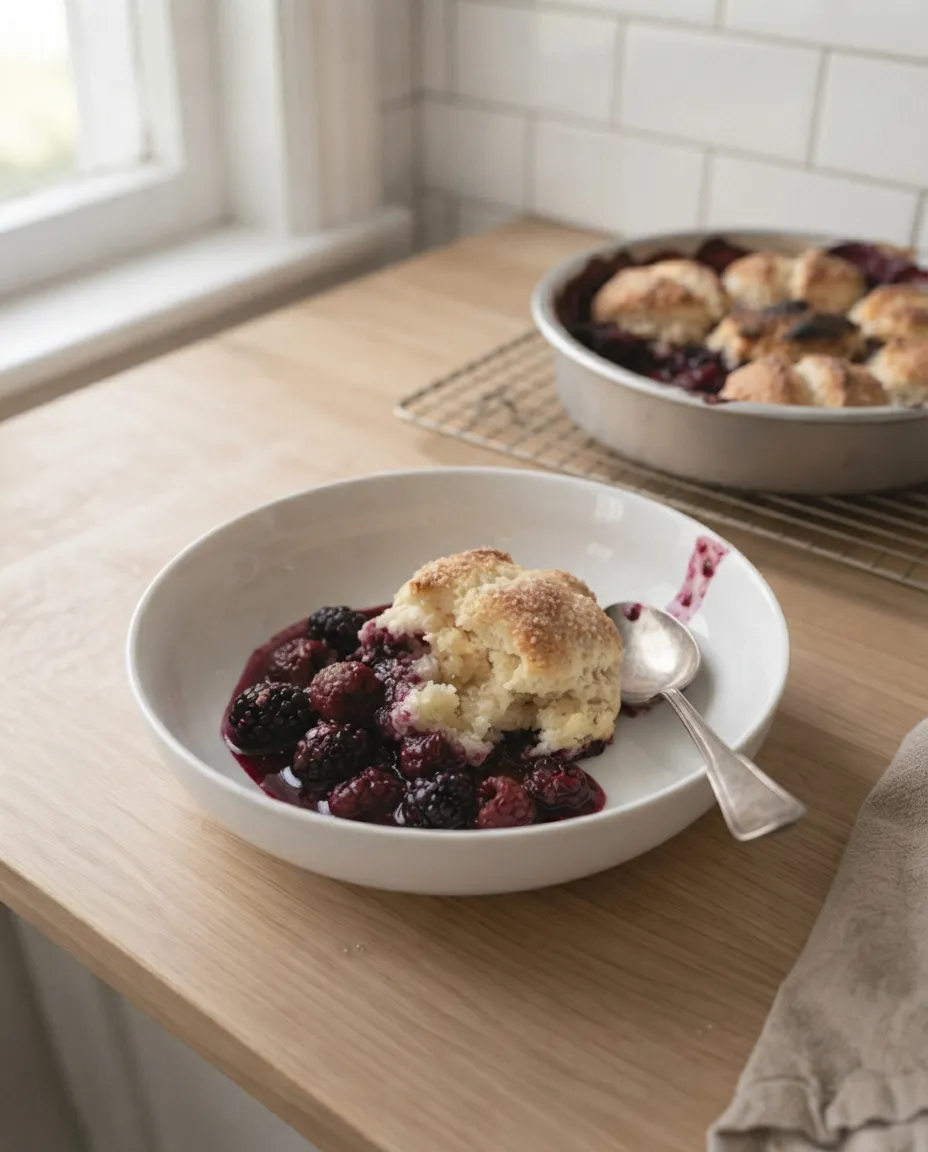
Nobody buys berries with a recipe in mind. Berries happen to you: a sale on blackberries, a carton of strawberries going soft faster than the household is eating them, a freezer bag labeled mixed that is mostly whichever berry is cheapest that year. Cobbler is the correct response to all of it, which makes it strange that the recipes are filed by species, a blueberry version on one page and a blackberry version on another, as if the method changed underneath them.
It does not. What changes from berry to berry is water and thickening power, and that is a two-column problem you can put in a small table. Learn the table once and every berry situation for the rest of your life is the same twenty-five minutes of work.
Quick answer: Toss 4 cups of any berries with their row's sugar and cornstarch, and bake the fruit alone, uncovered, at 330°F until it bubbles thick: 6 to 8 minutes fresh, 12 to 14 straight from frozen. Drop six 2-tablespoon buttermilk biscuits onto the hot filling and bake 12 to 14 minutes more, until deep golden and 200°F inside a biscuit. Rest 10 minutes so the juice finishes becoming sauce. A 7 inch pan serves 6.
A berry is water in a skin
A peach slice or an apple wedge has architecture; it softens but it stays a piece of fruit. A berry is a balloon. Heat it and the skin gives way, the water dumps out all at once, and your filling is suddenly a pan of hot juice with fruit ghosts floating in it. That is not a failure, it is what a berry filling is, and it means the thickener is not a supporting ingredient here. It is half the recipe.
It also means the berries differ from each other more than tree fruits do. Blueberries and blackberries carry natural pectin and thicken their own juices generously. Raspberries collapse on contact but at least collapse into flavor. Strawberries are the problem child: the most water, the least pectin, and a texture that cooks to nothing, which is why a strawberry-heavy cobbler made from a blueberry recipe comes out as soup. The table below is those differences, priced in.
The berry table
| Berries (4 cups) | Prep | Sugar | Cornstarch | Worth knowing |
|---|---|---|---|---|
| Blueberries | None. Rinse and go | 1/3 cup | 1 tbsp | Pop late into the classic syrup; need the lemon most of any berry |
| Blackberries | None | 1/3 cup | 1 tbsp | Hold their shape best; the sturdiest cobbler on this table |
| Raspberries | None, and handle gently | 1/4 cup | 2 tsp | Dissolve into seedy sauce; better as a mixer than a solo act |
| Strawberries | Hull and quarter | 1/4 cup | 4 tsp | Wettest and weakest thickener; best blended with sturdier berries |
| Mixed bag | As they come | 1/3 cup | 1 tbsp + 1 tsp | The best cobbler of the lot, and the cheapest |
Frozen anything: same sugar, add 2 teaspoons of cornstarch to the row, and give the fruit phase the long end. Sweetness varies by carton, so taste one berry first; a tart batch can carry an extra tablespoon of sugar, a candy-sweet one can drop one.
Frozen berries, no apology
Frozen berries are not the compromise option here; from about October to June they are the better option, picked riper than the fresh ones that traveled to the store. The one rule is never thaw them first. Thawed berries collapse in the bag and arrive as mush in a puddle of juice the cornstarch never got to meet. From frozen, they go into the pan whole, release their water in the pan where the starch is waiting, and the longer fruit phase, 12 to 14 minutes, boils the surplus away before any dough is at risk above it.
This is the same no-thaw law the rest of the frozen shelf runs on, and for the same reason: the freezer did structural damage on the way in, and a slow thaw just gives the water a head start on escaping without heat there to manage it.
Biscuit rules
- Cold butter, cut in coarse. Pea-sized bits steam into flaky layers, the same physics that runs the scones. Melted butter makes a denser drop cookie of a topping; it works, but it is not the goal.
- Ten strokes after the buttermilk, then hands off. Shaggy is correct. Smooth is bread.
- Six 2-tablespoon mounds, gaps between. Small biscuits bake through; the gaps are where you watch the filling bubble, and where the fan crisps edges instead of steaming a lid. Bigger doughs on a wetter base is how a canned biscuit shortcut version goes doughy, so if you use the can, halve each biscuit and expect a minute or two more.
- Buttermilk brush, coarse sugar, maybe lemon zest rubbed into that sugar first if blueberries are aboard; the pairing is the whole reason the lemon cake keeps berries on its plate.
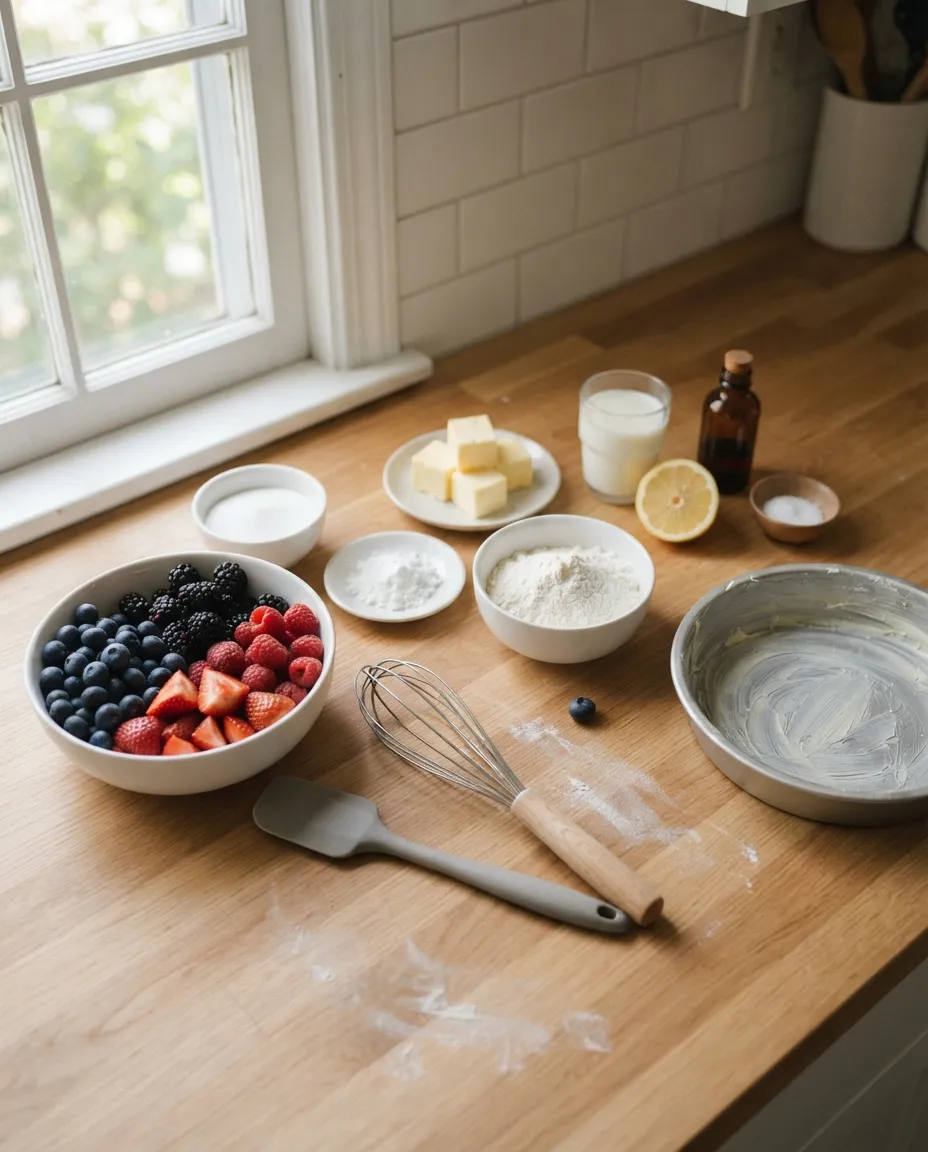
Ingredients
The fruit
- 4 cups berries, any row of the table, fresh or frozen
- Sugar and cornstarch per your berry row
- 1 tablespoon lemon juice, 1 teaspoon vanilla
- Pinch of salt
The biscuits
- 1 cup (125g) all-purpose flour
- 3 tablespoons (38g) sugar
- 1 1/2 teaspoons baking powder, 1/4 teaspoon fine salt
- 4 tablespoons (57g) cold butter, cubed
- 1/2 cup (120ml) buttermilk, plus more for brushing
- Coarse sugar for the tops
No buttermilk? A tablespoon of lemon juice in a half cup of milk, rested 5 minutes. Canned berry pie filling also works as the entire fruit layer: no added sugar or starch, 5 minutes alone to heat through, then biscuits as written.
How to make it
- Season the berries: sugar and cornstarch tossed together first so the starch cannot clump, then berries, lemon, vanilla and salt, into the buttered 7 inch pan. Basket size in doubt? The pan size calculator knows what fits before the fruit is committed.
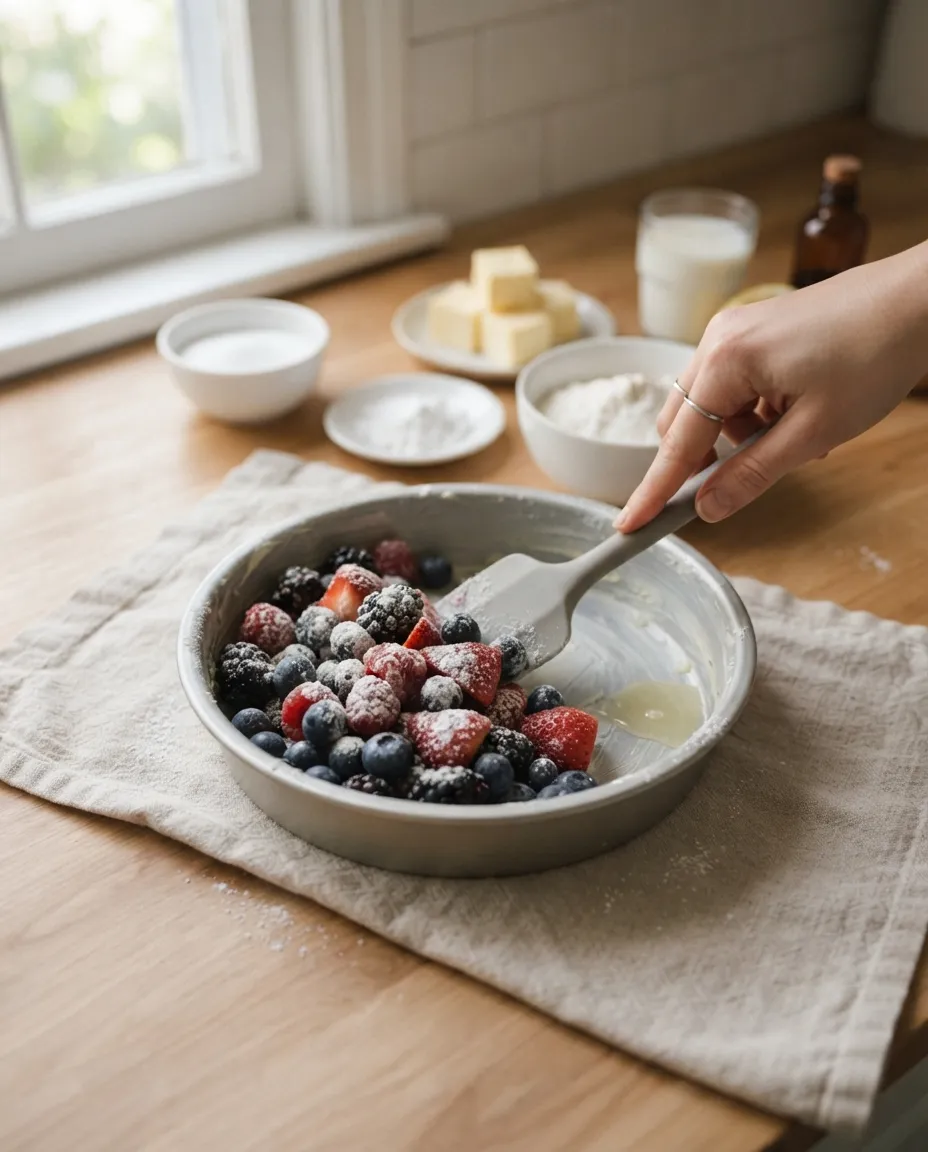
The mixed-bag row: berries tossed with the sugar and cornstarch right in the buttered pan. - Bake the fruit alone, uncovered, at 330°F until it bubbles thick: 6 to 8 minutes fresh, 12 to 14 from frozen. No preheat, per the preheat guide; the berries warm up with the machine. Uncovered is deliberate: a berry filling's problem is surplus water, and an open pan lets it boil off instead of pooling.
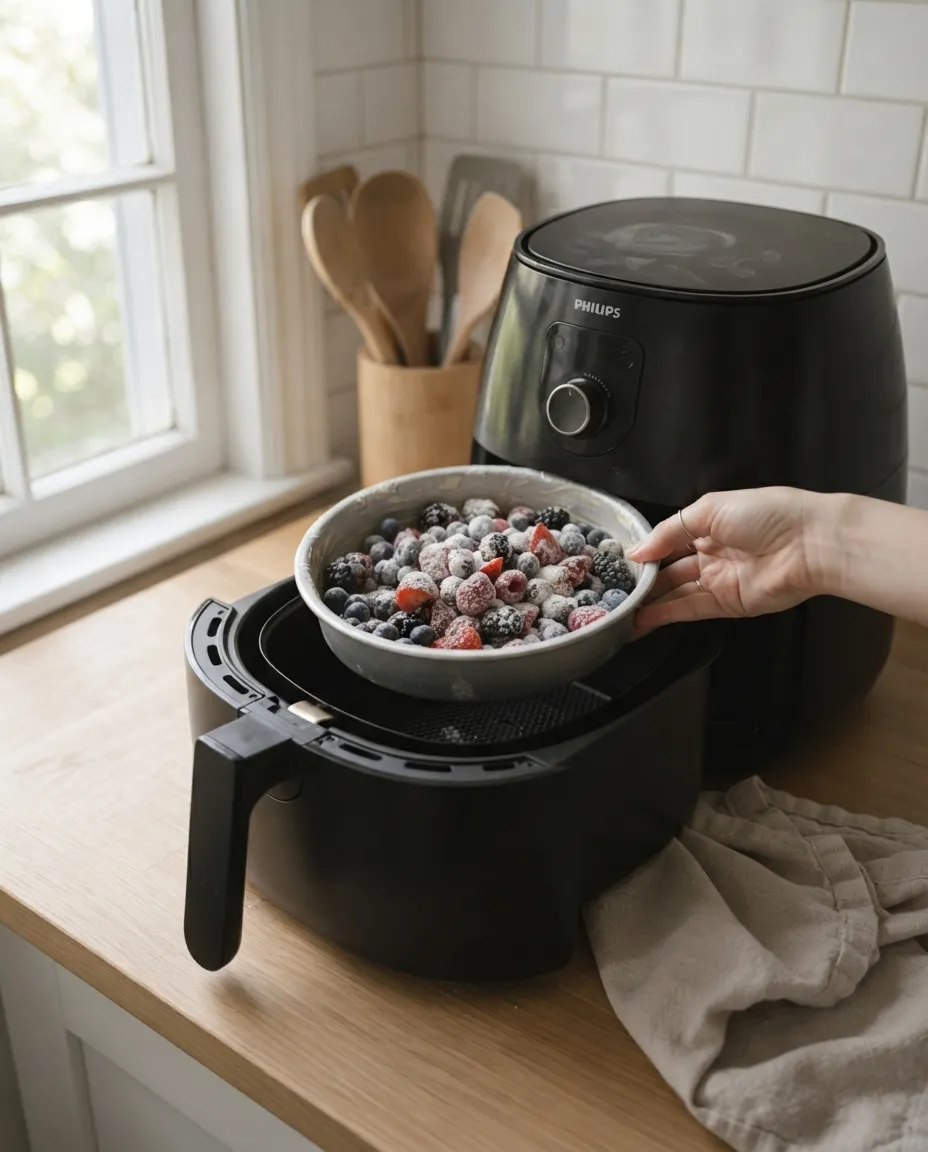
The fruit goes in alone and uncovered, no preheat. The biscuits wait until it bubbles. - Make the dough while that runs: dry whisked, cold butter cut to peas, buttermilk stirred to shaggy.
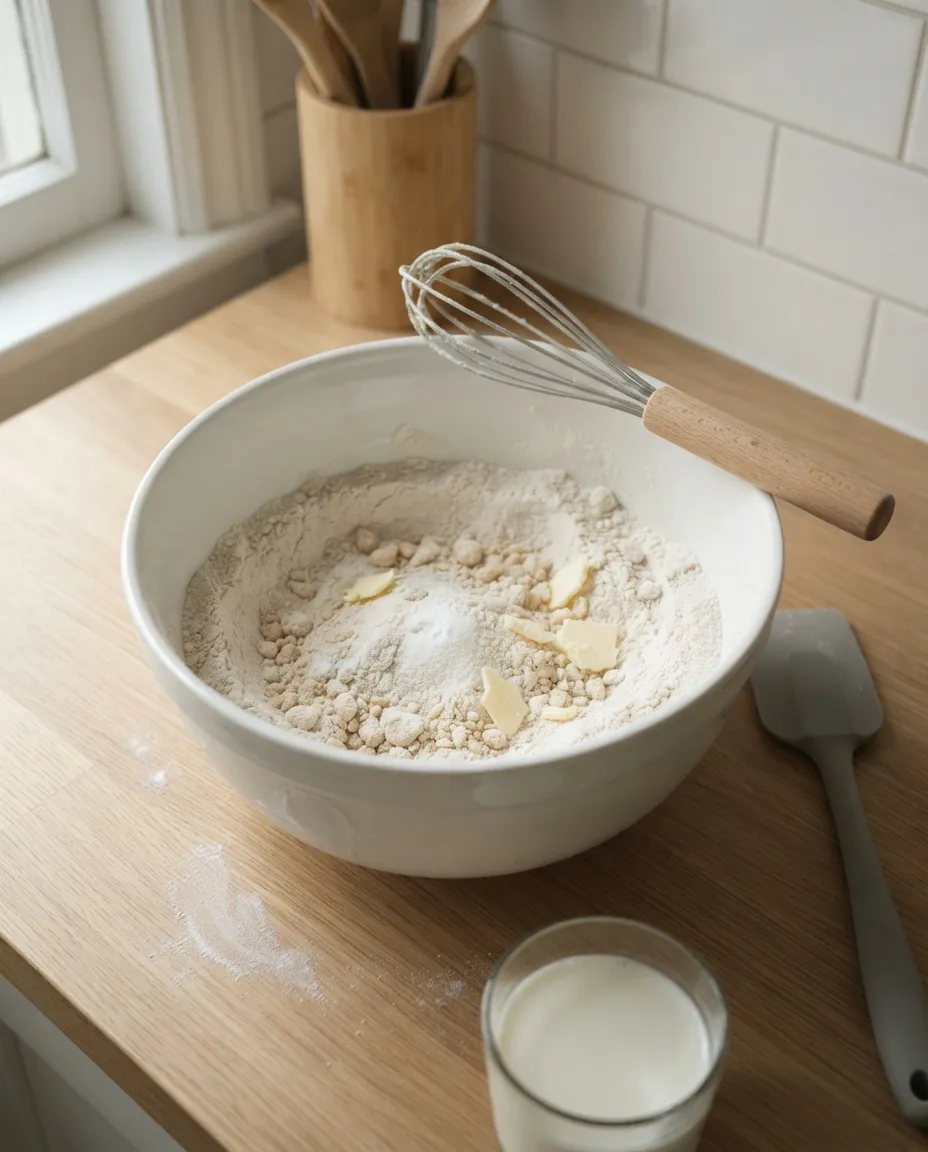
Cold butter cut into the dry mix until the biggest pieces are about the size of peas. 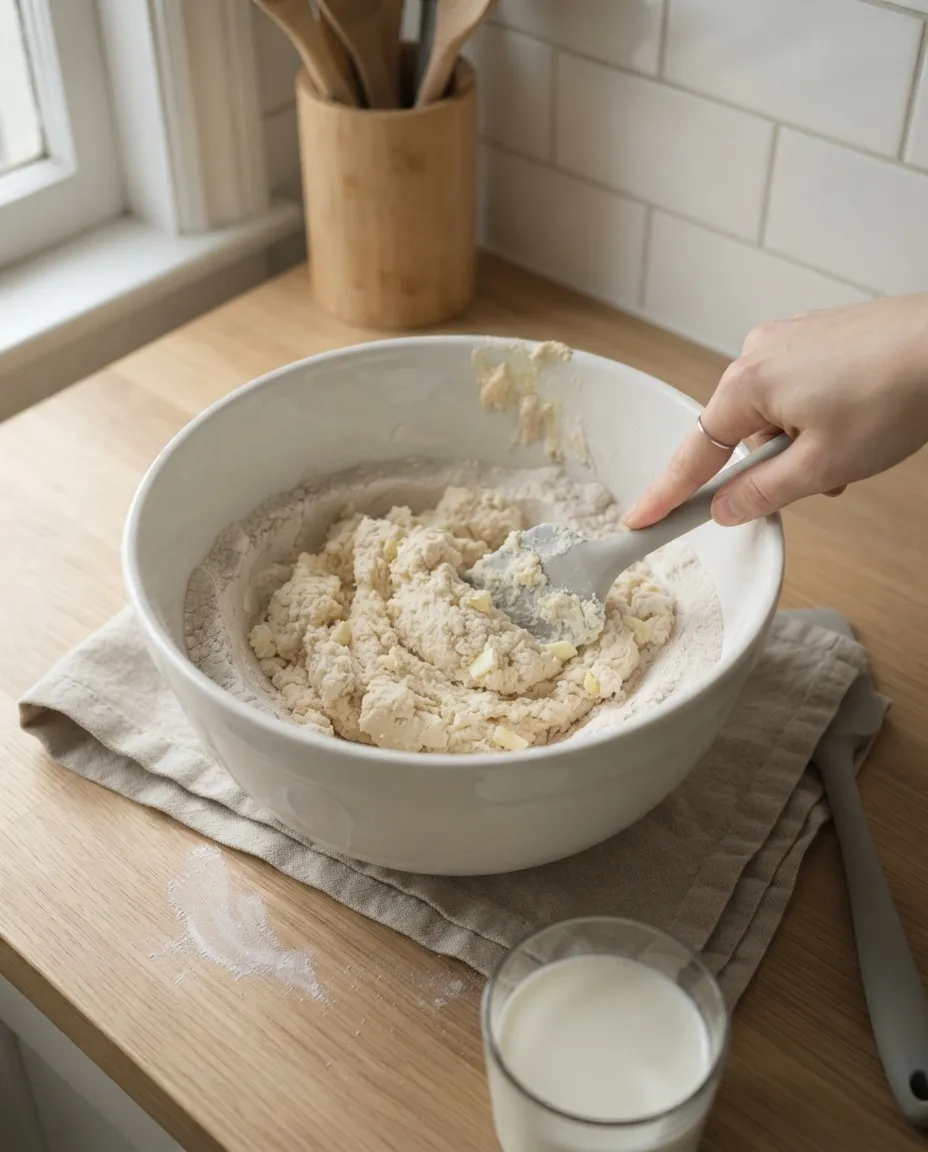
About ten strokes after the buttermilk: shaggy, with dry bits still showing. That is where you stop. - Drop six mounds onto the bubbling fruit, gaps between, brush, sprinkle.
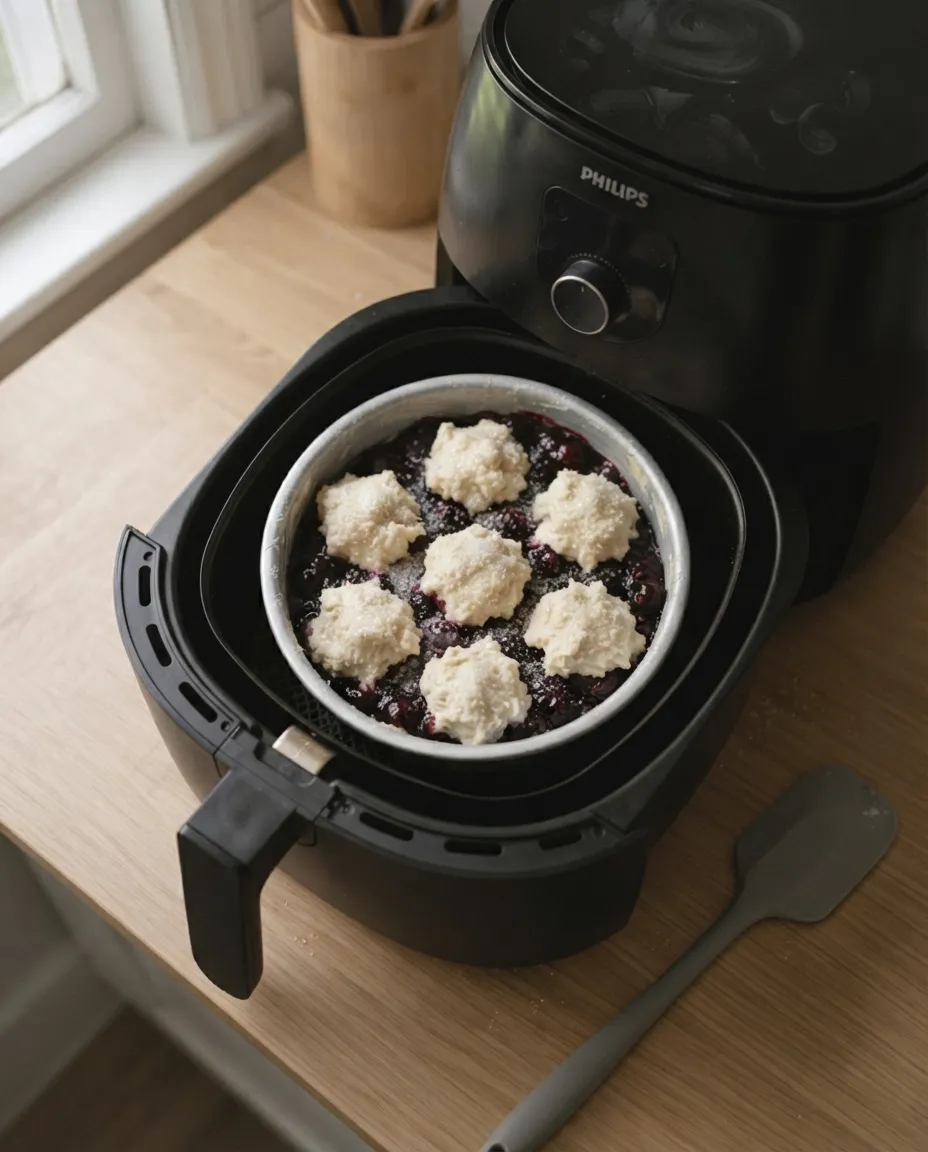
Mounds dropped onto the hot, bubbling fruit with gaps between them, so the filling can keep boiling and the fan can reach the edges. - Bake at 330°F for 12 to 14 minutes, to deep golden with thick bubbles in the gaps.
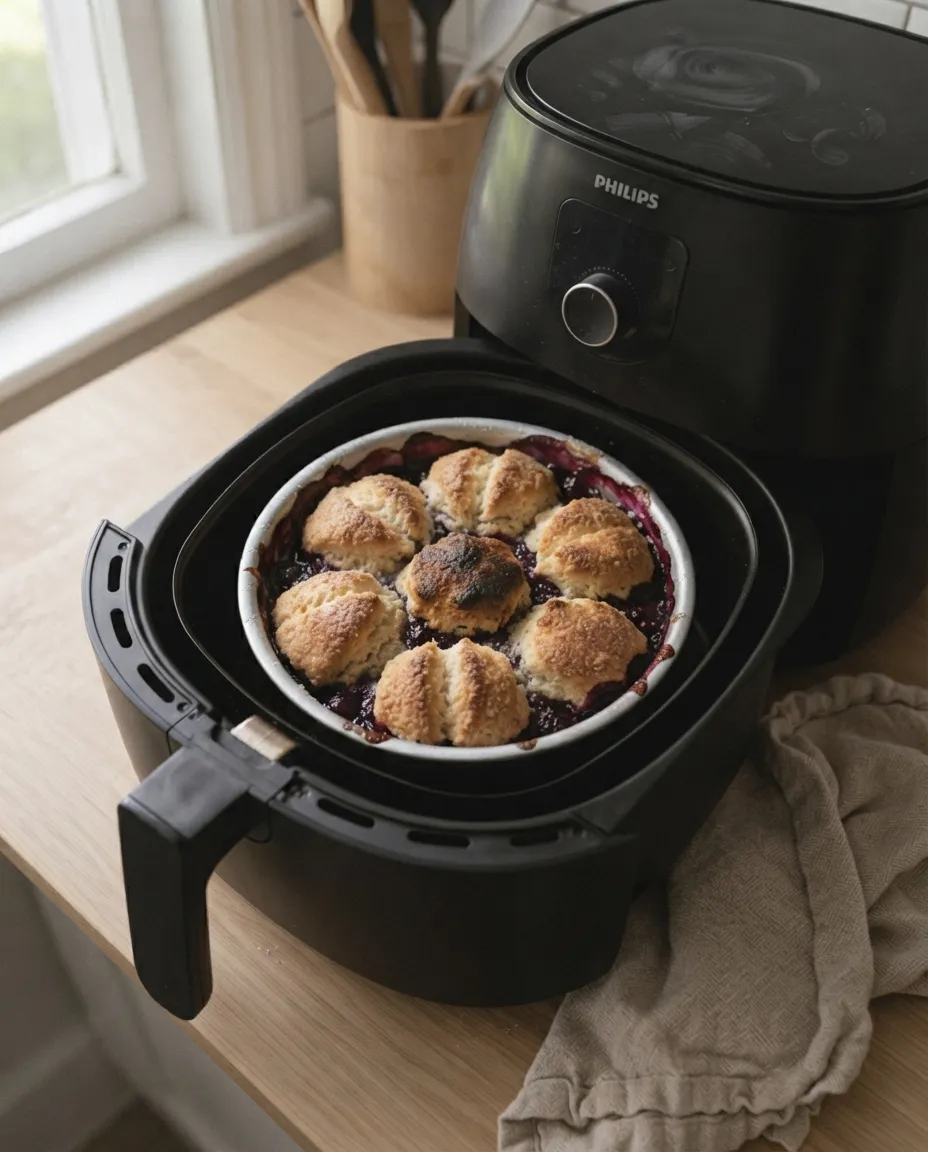
Deep golden, with the filling bubbling thick between them. The center biscuit sat closest to the element and went darkest; that is when the loose foil sheet in the next step earns its place. - Probe the biggest biscuit: 200°F at the center on an instant-read thermometer. Tops racing ahead of the number? A loose foil sheet for the last minutes is legal on a weighted pan, per the foil rules.
- Rest 10 minutes. The bubbling stops, the starch sets, and carryover finishes the biscuit bottoms against the hot fruit.
- Different batch size? The ramekin lane is in the card, and the recipe scaler resizes both layers; the clock stays put, because biscuits time by their size, not the batch.
Converting a family oven cobbler? Its 375°F runs through the air fryer calculator to about 350°F, and this page walks it down another 20 for the sugared-topping-near-the-element problem, the standing two-step for every sweet-topped bake on the baking chart.
Doneness: two checks
| Layer | The check | Why |
|---|---|---|
| Filling | Thick, slow bubbles in the gaps for 2 full minutes | Cornstarch thickens only at a boil; berry juice unboiled is berry water |
| Biscuits | Deep golden and 200°F in the center of the biggest one | Tops brown over wet fruit minutes before the middles finish |
Both, always. A gorgeous top over unboiled filling pours into the bowl; boiled filling under a pale doughy biscuit is jam with regrets. The two checks pass together or the basket stays shut.
Troubleshooting
| What you got | Why | Fix |
|---|---|---|
| Berry soup | Wrong cornstarch row, or the bubble never got its 2 minutes. | Match the table, bake fruit alone to a real boil, and rest the full 10 |
| Doughy biscuit middles | Mounds too big, or dropped on cold fruit. | 2 tablespoons each, onto bubbling filling, 200°F check. The cobbler law |
| Strawberry batch went to mush | Solo strawberries, standard starch. | Quarter them, 4 teaspoons cornstarch, or blend with blackberries for spine |
| Purple, gluey filling | Thawed frozen berries went in as mush. | Straight from frozen, always, with the longer fruit phase |
| Flat dense biscuits | Warm butter or overworked dough. | Cold cubes, coarse crumbs, ten strokes, shaggy |
| Tops dark before 200°F | Machine runs hot on top. | Loose foil for the last minutes, or 320°F next time; repeat offenders live in the burning guide |
| One side baked harder | A machine hot spot. | Rotate the pan a half turn when the biscuits go on |
| Pan glued shut with syrup | Unbuttered pan meets boiled berry sugar. | Butter first, soak warm after |
Recurring mysteries across desserts are machine questions for the troubleshooting guide, and the ground floor, if the basket is new to you, is how to bake in an air fryer.
Serving it
- Warm, with vanilla ice cream melting into the gaps between biscuits, which is where the gaps reveal their second job.
- The leftover filling has a career of its own: spooned warm over the cheesecake it is a topping nobody audits, and over plain yogurt at breakfast it retires the jar of jam.
- The fruit-dessert shelf, other moods: pastry-wrapped is the apple pie, free-form is the galette, whole-fruit is baked apples, the same biscuit lid over stone fruit is the peach cobbler, a crumble lid is the apple crisp, and this page is the one that asks the least of you per spoonful delivered.
Storage and reheating
- Counter, day of: loosely covered once cool; the biscuits are proudest on day one.
- Fridge: 3 days covered. Berry fillings hold their set better than stone fruit; the biscuits soften and the reheat brings them most of the way back.
- Reheat: 300°F uncovered, 3 to 4 minutes a portion, 5 to 6 for the pan. Microwave for speed, at the usual cost of the tops.
- Parts-ahead: seasoned fresh berries hold a day in the pan; frozen ones wait indefinitely by definition; portioned dough mounds hold 2 days chilled or a month frozen and bake from cold with an extra minute or two.
- Skip freezing the baked cobbler. Thawed biscuit on thawed berries is pudding by accident. The parts freeze; the whole should not.
Frequently asked questions
QHow long does berry cobbler take in an air fryer?
About 20 to 28 minutes of baking at 330°F: the berries go in alone first, 6 to 8 minutes fresh or 12 to 14 from frozen, until their juices bubble thick, and then the biscuit topping bakes on the hot fruit for 12 to 14 more. With the 10 minute rest, dessert lands in about 40 minutes, no oven and no hour under foil.
QCan you use frozen berries in an air fryer cobbler without thawing?
Yes, and you should: thawed berries arrive as mush in a puddle, while frozen ones go into the pan whole and release their water where the cornstarch can catch it. Two adjustments: add 2 teaspoons of cornstarch beyond your berry's row, and stretch the fruit-only phase to 12 to 14 minutes so the extra water boils off before any dough lands.
QWhich berries work best for cobbler?
All of them, differently. Blackberries hold their shape best and blueberries pop into the classic syrupy filling, so those two are the backbone berries. Raspberries dissolve into seedy sauce, lovely as a supporting player. Strawberries are the wettest and weakest thickeners, so quarter them, double their cornstarch, and ideally blend them with sturdier berries. A mixed bag is honestly the best cobbler of the lot.
QWhy is my berry cobbler watery?
Berries are mostly water in a thin skin, and three things let that water win: too little cornstarch for the berry, a topping dropped on cold fruit so the filling never reached a boil, and pulling at the first bubble. Cornstarch only thickens once it boils. Match the table's amounts, bake the fruit alone until it bubbles, and give the finished cobbler 2 full minutes of visible bubbling before it comes out.
QCan you use canned pie filling for air fryer cobbler?
Yes, and it is the fastest version of this dessert: the filling is pre-thickened and pre-sweetened, so skip the sugar and cornstarch entirely, spread it in the pan, and give it just 5 minutes alone at 330°F to heat through before the biscuits go on. It bakes sweeter and softer than a from-scratch filling, which is either the flaw or the point, depending on the audience.
QWhy are my cobbler biscuits doughy in the middle?
Two stacked causes: biscuits bigger than about 2 tablespoons cannot bake through before their tops brown, and dough dropped onto cold filling steams from below instead of baking. Small mounds onto already-bubbling fruit, then a check of 200°F in the center of the biggest biscuit with an instant-read thermometer, retires the problem for good.
QWhat temperature do you bake cobbler in an air fryer?
330°F for both phases. The biscuit topping carries sugar and butter under an element that sits inches away, so oven-style settings of 350°F and up brown the tops well before the centers bake; cooler than 320°F and the biscuits go pale and dense. At 330°F the biscuits reach deep golden and 200°F inside on the same clock, which is the entire reason for the number.
QCan you make berry cobbler ahead of time?
In parts, which beats baked-ahead every time. The seasoned berries hold a day covered in their pan in the fridge; frozen berries can wait in the freezer until the minute you start. The biscuit dough holds 2 days refrigerated, or freezes for a month as portioned mounds that bake from cold with an extra minute or two. Assembling from parts takes 3 minutes on the night.
QHow do you reheat berry cobbler?
In the basket, uncovered, 300°F for 3 to 4 minutes a portion or 5 to 6 for the pan; the biscuit tops re-crisp while the filling loosens back to sauce. The microwave is faster and softer, a fair trade some nights. Leftovers keep covered in the fridge for 3 days, and the filling spooned warm over cheesecake is a second dessert hiding in the first.
Never overbake again
Get our one-page times & temps cheat sheet, plus a new tested recipe each week.
No spam · unsubscribe anytime