

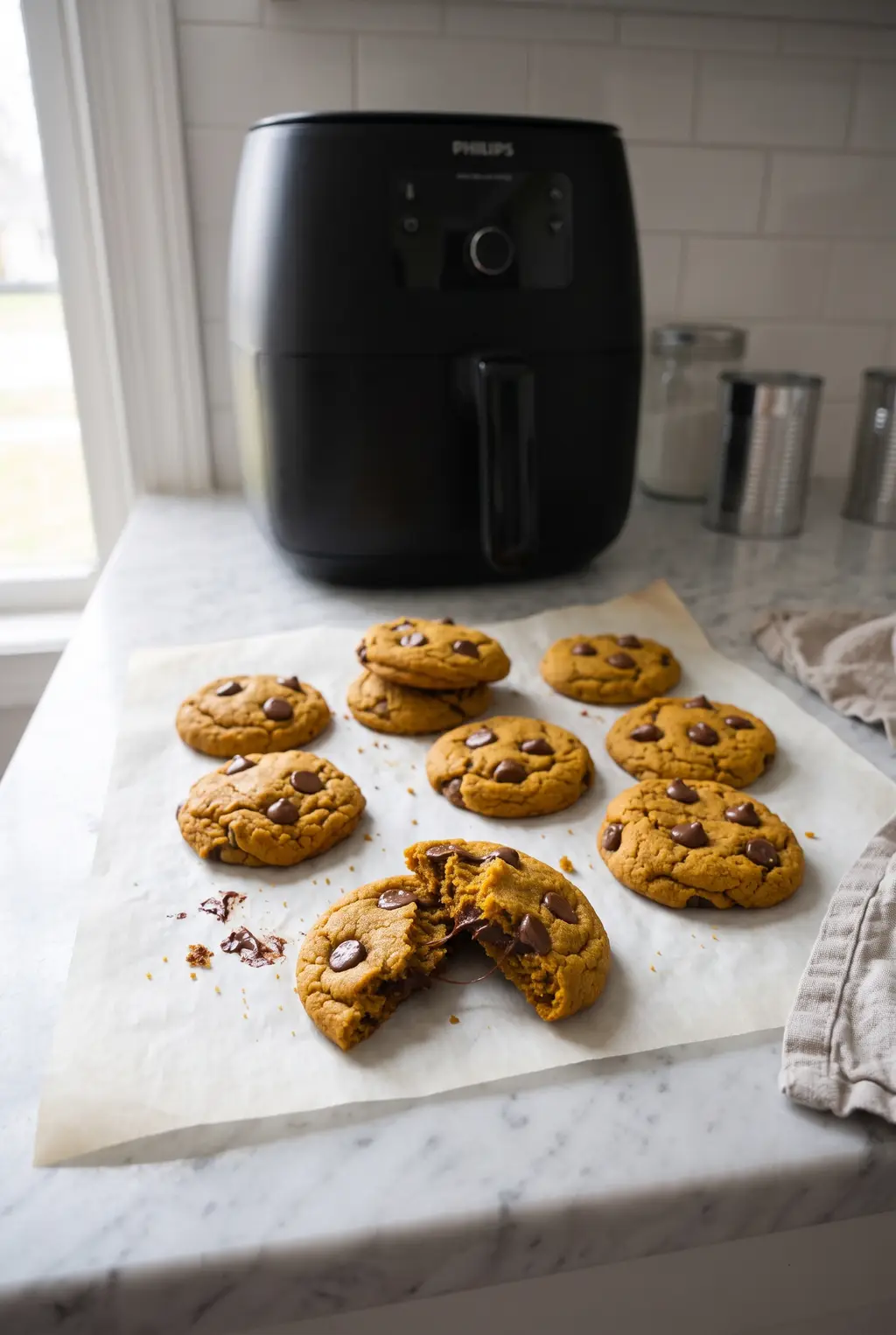
The first pumpkin chocolate chip cookies I ever baked were, in every technical sense, muffin tops. Pretty ones. Orange, domed, soft as a couch cushion, and about as chewy. I blamed the recipe, tried another, got couch cushions again, and eventually learned the truth every serious cookie site knows and no air fryer site bothers to repeat: it was never the recipe's spice mix or its mixing method. It was the water.
Canned pumpkin is roughly 90 percent water. Add half a cup of it to a cookie dough and you have poured in a small glass of water, and water in a cookie dough does one thing when it hits heat: it becomes steam, and steam puffs. Puff is the whole difference between cake and cookie. So every path to a chewy pumpkin cookie runs through the same gate, which is getting the water out while keeping the pumpkin in, and this page walks that gate twice: once on the counter with paper towels, and once in the machine, whose dry moving heat happens to be the best cookie-drying instrument in your kitchen. The ranking recipes do neither, which is why they are orange sponges. This one does both.
Quick answer: Blot half a cup of pumpkin puree between paper towels until it reduces to about a quarter cup, then build the dough on browned butter, one egg yolk and no white, and twice as much brown sugar as white. Scoop, chill 30 minutes, and bake at 320F for 8 to 9 minutes on weighted parchment, pulling while the centers still look glossy and underdone. Five minutes of carryover on the hot parchment finishes them into cookies that bend and chew instead of puffing into little cakes.
Why pumpkin cookies bake cakey, stated once and properly
A chewy cookie is a low-moisture, high-sugar dough that spreads and sets before steam can inflate it. Pumpkin sabotages all three clauses at once: its water thins the dough, dilutes the sugar concentration, and produces steam on schedule. Worse, the standard recipe stacks a whole egg on top, and an egg white is itself mostly water with a talent for setting into airy structure, which is why so many recipes accidentally build a self-rising sponge and then act surprised. None of this is the machine's fault, and none of it is fixable with spice. It is a plumbing problem, and the fix is plumbing: remove water before the bake, and choose ingredients that carry richness without carrying more of it.
The machine as ally, for the first time in the fall lineup
Regular readers will find this section funny, because this site spends most of its custard season defending delicate bakes from the air fryer's drying wind: tents for the pumpkin pie, covered pans and water tricks for anything with eggs and cream, a whole doctrine of protection. A cookie flips the alliance. The wind that skins a custard is, for a water-heavy dough, free dehydration exactly where you want it: at the surface, early, setting a thin dry shell that helps the cookie hold its footprint instead of ballooning. The small chamber's intensity, which the oven comparison measures against a real oven, works the same shift. The one thing the machine still owes you is restraint on temperature, because its close ceiling browns fast: 320F, a notch under the oven-standard 350F, is the setting where the drying help arrives without the scorched shoulders, the same discount arithmetic the air fryer calculator applies to any oven cookie recipe you want to bring over.
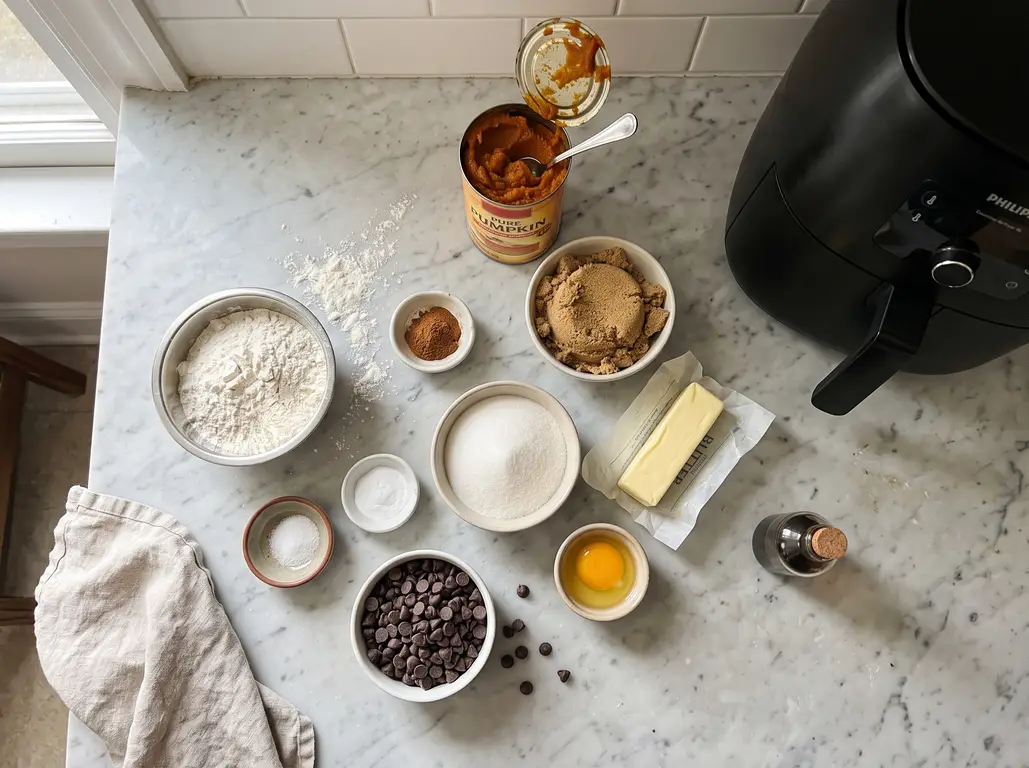
The blot, by the numbers this time
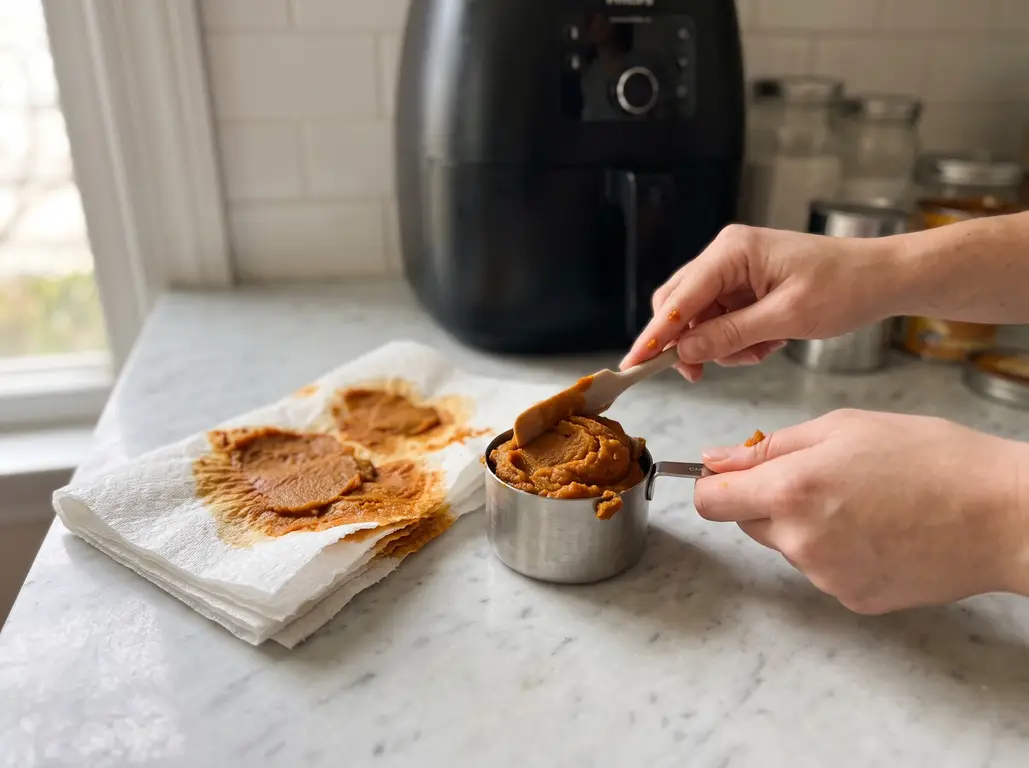
The counter half of the fix: measure a full half cup of pure pumpkin puree, spread it half an inch thick between triple layers of paper towels, press until soaked through, swap towels, and press once more. You are aiming for a visible result, not a vibe: the puree should reduce to about a quarter cup and hold together like soft clay, dense enough to roll into a ball that keeps its shape. That is roughly half its water surrendered on the counter instead of inside your cookie, the same blot that keeps the pumpkin cheesecake from weeping. Use pure puree, never pie filling, which arrives pre-thinned and pre-sweetened and cannot be blotted into obedience. The concentrated paste that remains carries twice the pumpkin flavor per spoonful, which is the pleasant surprise of the technique: the cookies taste more like pumpkin with less pumpkin in them.
The chew trio: yolk, brown sugar, browned butter
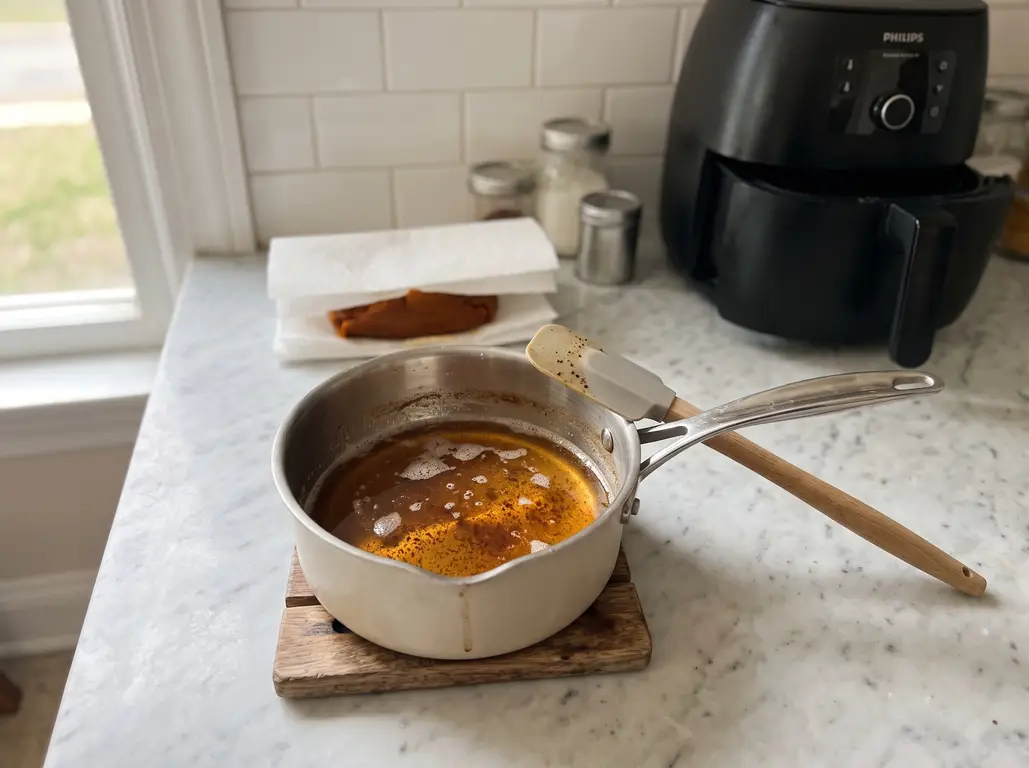
With the water handled, three ingredient decisions build the chew, and each earns its line. One yolk, no white. The yolk brings fat, emulsifiers, and richness; the white would bring water and airy structure, the two things this dough just fought to expel. Save the white for the macaroons, which are made of almost nothing else. Brown sugar at double the white sugar. Brown sugar is acidic, hygroscopic, and molasses-deep: it keeps the crumb moist and bendy for days, plays perfectly against the pumpkin, and gives the soda something to react with. Browned butter, cooled. Melted butter already favors dense over fluffy, since creaming solid butter is how air gets whipped into dough; browning it on the way removes the butter's own water too and pays the toasted-nut flavor tax back with interest. Baking soda rather than powder finishes the argument, encouraging spread and browning instead of lift. Every one of these choices is standard doctrine at the serious oven cookie sites; the entire trick of this page is that nobody had connected them to the machine best equipped to reward them.
The method, walked through
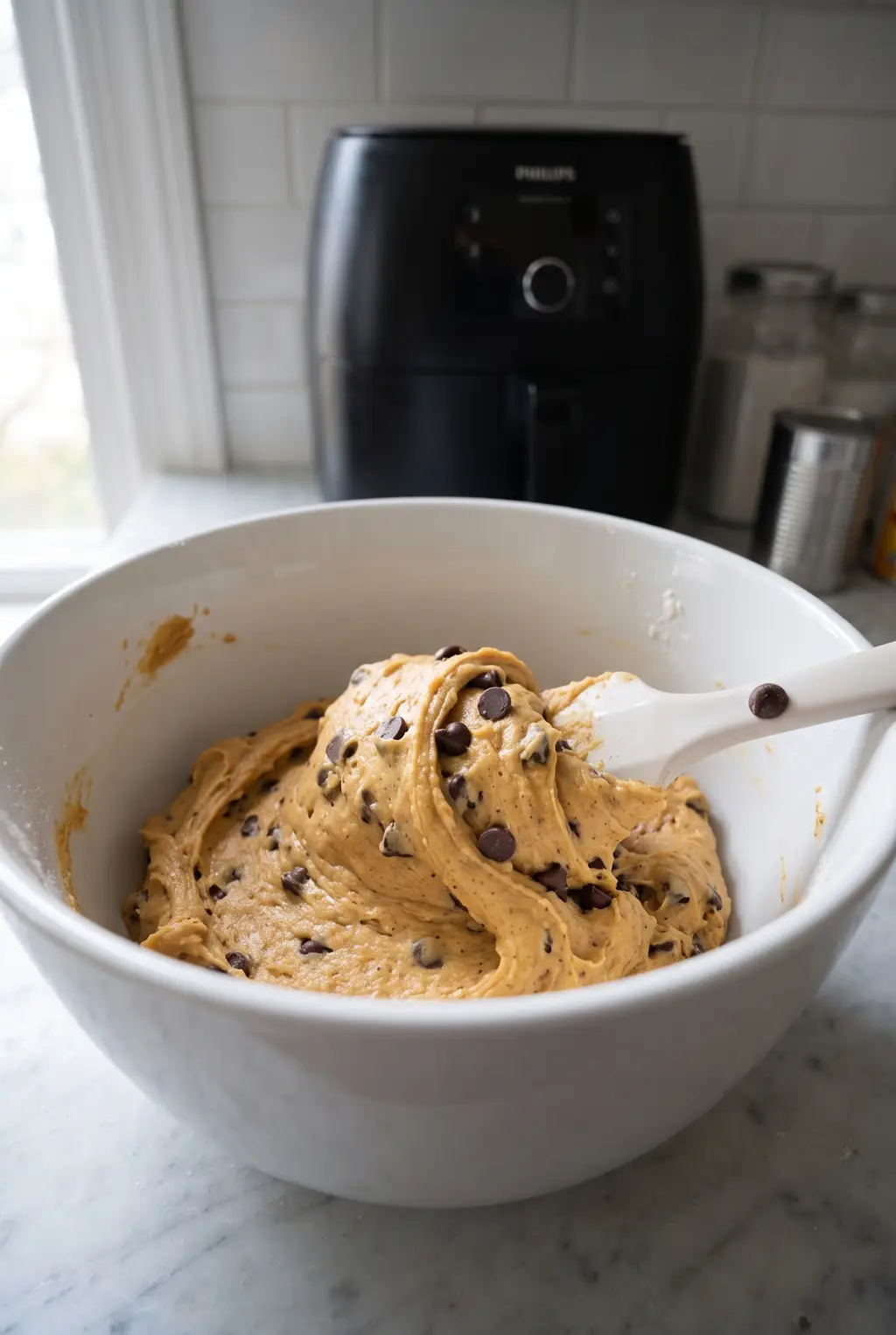
Brown the butter first and let it cool ten minutes while you blot the pumpkin; warm butter would melt the sugars into grease. Whisk the cooled butter with both sugars, then the yolk, vanilla, and the pumpkin paste. Fold in the flour, soda, spice, and salt just to combined, then the chocolate chips, and notice the dough: soft but scoopable, closer to a standard cookie dough than the batter the ranking recipes produce, which is your evidence the blot worked. Chill the scooped balls for 30 minutes. The chill matters double here: melted-butter doughs spread aggressively when warm, and a cold ball gives the surface-drying wind a head start before spreading begins.
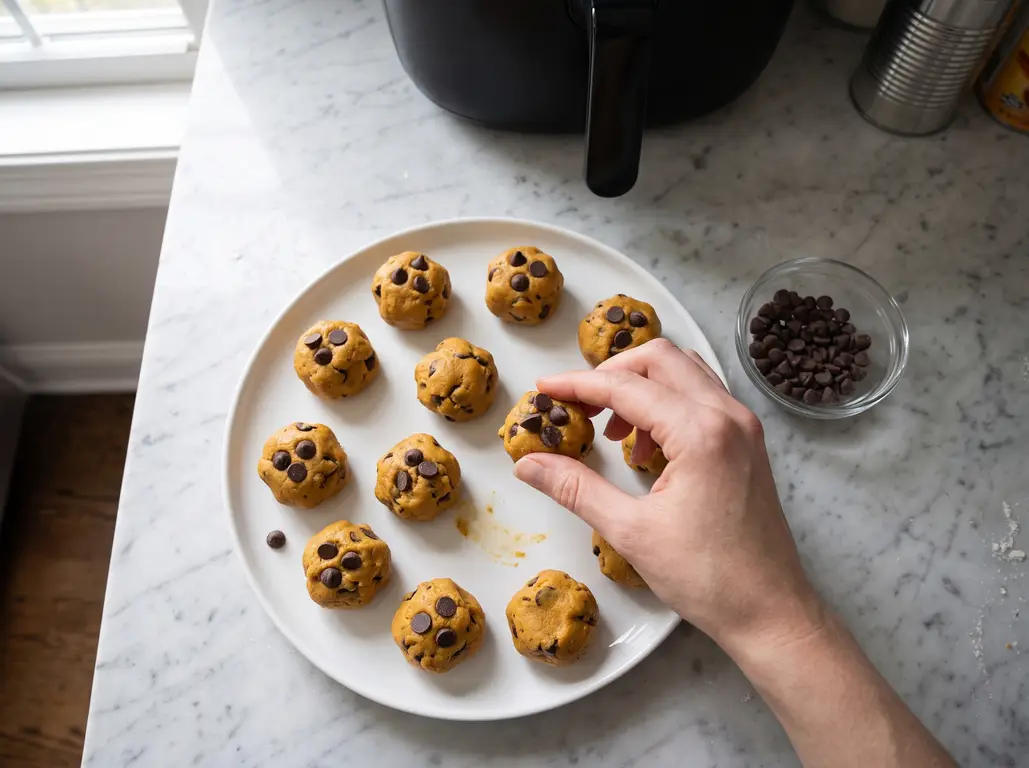
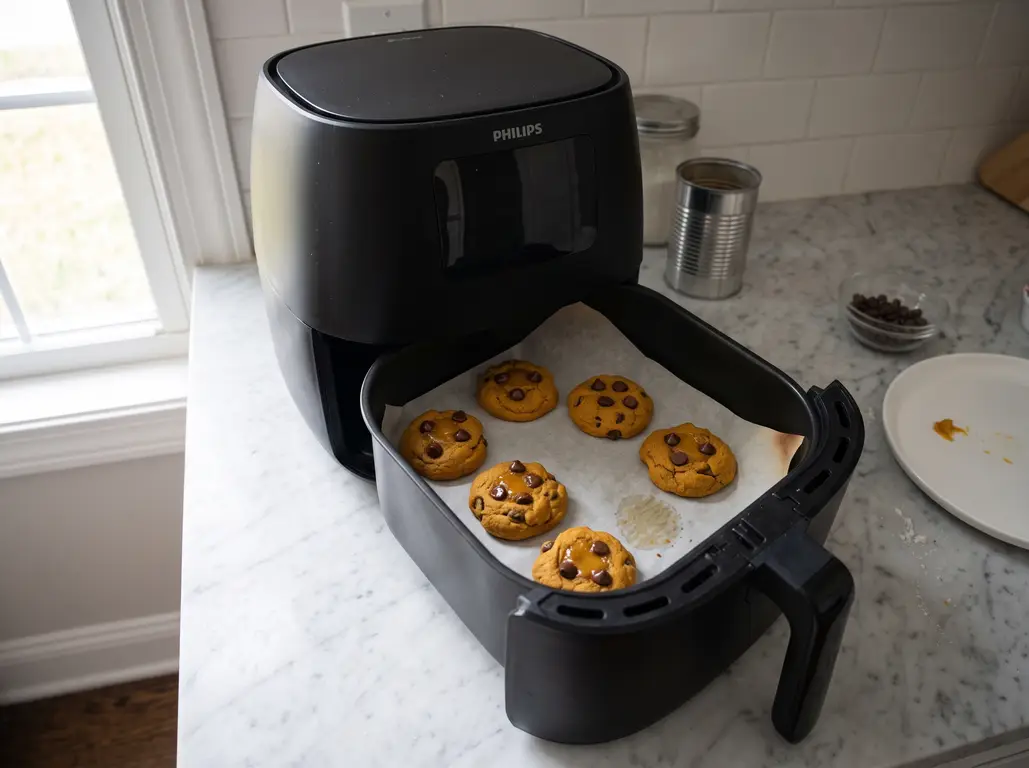
Bake on parchment cut to fit and weighted by the dough itself, five or six balls per batch with honest spacing, at 320F for 8 to 9 minutes with no preheat. Do not stack, do not crowd, and expect the second batch to run a minute quick, the standard small-chamber tax. Cookie logistics in the basket, from parchment law to batch drift, are the same ones the master cookie guide and the chocolate chip recipe run on, and if a first batch ever comes out pale on the bottom, the foil and parchment guide explains the floor physics behind it.
Doneness: the glossy center rule
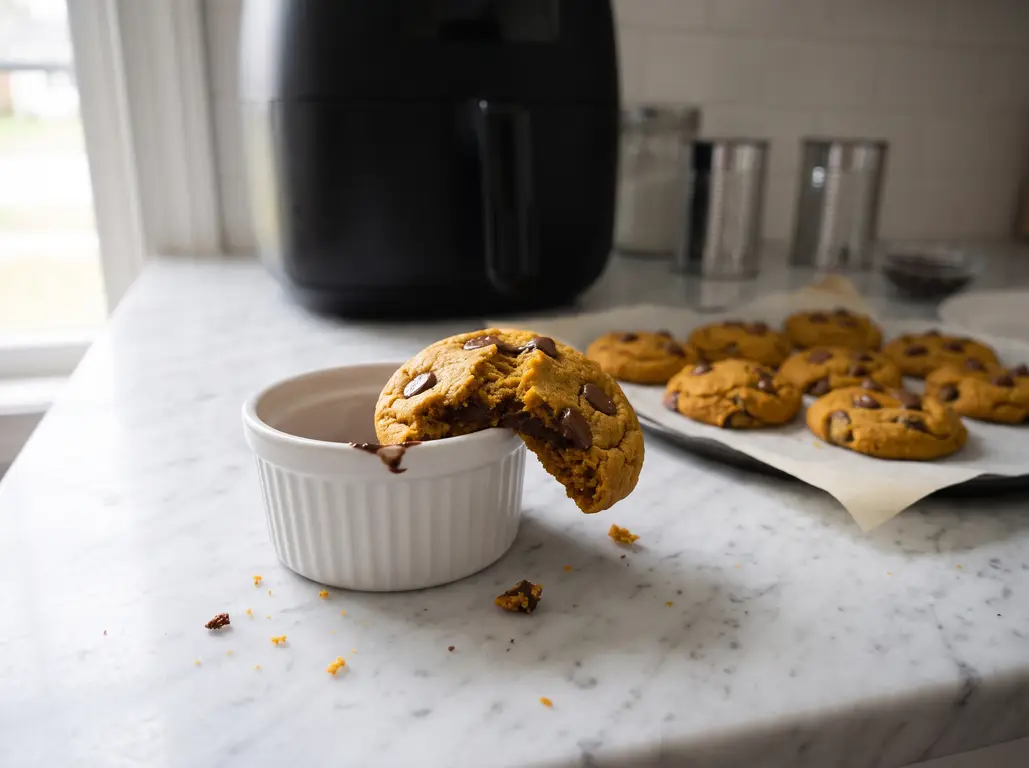
Cookies are the one family on this site that gets pulled by eye rather than by probe, and the eye needs the right instruction: pull when the edges are set and matte but a nickel-sized circle in the center still looks glossy and slightly underdone. That gloss is the last of the moisture finishing its exit, and the five minute rest on the hot parchment completes the bake by carryover, the same free heat every bake on this site budgets for. Wait for the centers to look done in the machine and they will be cakey-dry on the plate, which after all this plumbing would be a tragedy with chocolate chips in it. Move the cookies off the parchment only after the rest, and they will bend before they break for three days running.
Variations that survive the physics
Any change that adds water must pay the water back, which sorts the variation ideas quickly. Chocolate chunks, toasted pecans, white chocolate with dried cranberries, a snickerdoodle-style roll through cinnamon sugar before baking: all dry, all welcome, and the cinnamon-sugar version gives you the pumpkin snickerdoodle the SERP keeps attempting, minus the sponge. A cream cheese frosting works if the cookies are fully cool and you accept losing the fresh-baked chew to the refrigerator afterward. What does not survive: fresh fruit, extra puree for pumpkin-ness (blot harder instead, or add a quarter teaspoon more spice), or maple syrup swapped for sugar, which is water wearing a flannel shirt. The rest of the fall shelf covers those cravings better: the pumpkin bread for the cakey texture done on purpose, the oatmeal cookies for chew with texture, and the gingerbread when the spice drawer wants a louder holiday. Bakers cooking for one or two should note the dough freezes beautifully as scooped balls, bakeable three at a time straight from frozen with a minute added, which is the whole philosophy of the small batch guide in a single sentence.
Frequently asked questions
QCan you bake pumpkin cookies in an air fryer?
Yes, and the machine is unusually well suited to them, because pumpkin cookies fail by holding too much water and an air fryer's dry moving heat removes surface moisture faster than an oven can. Bake at 320F for 8 to 9 minutes on parchment weighted by the dough, five or six cookies per batch, and pull while the centers still look glossy. The essential partner step happens before baking: blotting the puree, which no basket can do for you.
QWhy are my pumpkin cookies cakey instead of chewy?
Water, arriving from two directions. Pumpkin puree is about 90 percent water, and most recipes add a whole egg whose white is mostly water as well; in the heat all of it becomes steam, and steam puffs dough into cake. The chewy fix is subtraction: press the puree between paper towels until it loses about half its volume, use one yolk and no white, lean on brown sugar over white, and use melted or browned butter so no extra air gets creamed in.
QHow do you blot pumpkin puree for cookies?
Spread the measured puree about half an inch thick between triple layers of paper towels, press firmly until the towels soak through, then swap for fresh towels and press again. You are done when a half cup has reduced to roughly a quarter cup and the paste is dense enough to roll into a ball that holds its shape, like soft clay. That single step removes the water that would have puffed the cookies and concentrates the pumpkin flavor at the same time.
QWhat temperature do you air fry cookies?
320F is the sweet spot for this dough, a notch below the oven-standard 350F, because the air fryer's heating element sits close overhead and its moving air delivers heat harder than still oven air at the same number. At 320F the tops brown in step with the centers setting; at 350F in a basket the shoulders scorch while the middles lag. The same roughly 25 degree discount applies when converting any oven cookie recipe to the machine.
QWhy one egg yolk instead of a whole egg?
Because the two halves of an egg pull a cookie in opposite directions. The yolk is fat, emulsifiers, and richness, everything a chewy, fudgy crumb wants. The white is almost entirely water and sets into light, airy structure, which is the exact machinery of cakiness this recipe spends every other step dismantling. In a dough already carrying pumpkin's moisture, the white is the easiest water to leave out, and the yolk alone binds the dough perfectly well.
QWhen are air fryer cookies done?
Pull them when the edges are set and matte but a small circle in the center still looks glossy and slightly wet. Cookies are baked by their carryover: five minutes resting on the hot parchment finishes the centers with heat already inside them, landing exactly at chewy. If the centers look fully done inside the machine, they are already overbaked for chew and will cool dry and cakey. Bake the first batch as the test batch and trust the gloss thereafter.
QCan I use pumpkin pie filling in cookies?
No, and this recipe is the worst possible place for it. Pie filling is puree thinned with liquid and loaded with sugar and spices, so it cannot be blotted into the dense paste this dough depends on, and its added sugar wrecks the brown-to-white ratio that builds the chew. Pure pumpkin puree is the only version of the ingredient that cooperates. If pie filling is what you have, it belongs in a custard where its looseness is welcome, not in a cookie fighting for its texture.
QHow do you store pumpkin cookies?
Airtight at room temperature for 3 days, where the brown sugar keeps them bendy; the refrigerator stales them faster and is only required once frosting enters the picture. For longer storage, freeze the scooped raw dough balls on a tray, bag them, and bake three or four at a time straight from frozen at 320F with about a minute added. Freshly baked cookies on demand in under ten minutes is the single best argument the freezer has ever made.
QWhy did my cookies not spread in the air fryer?
Usually one of three reasons: the dough went in over-chilled and rock hard, the flour got packed into the cup and overloaded the dough, or the puree was not blotted and the recipe compensated with extra flour somewhere. Cold dough helps this recipe at 30 minutes of chill, but hours more than that needs 10 minutes of counter time before baking. Spoon flour into the measuring cup and level it, blot the pumpkin to spec, and the spread returns to normal.
Never overbake again
Get our one-page times & temps cheat sheet, plus a new tested recipe each week.
No spam · unsubscribe anytime