

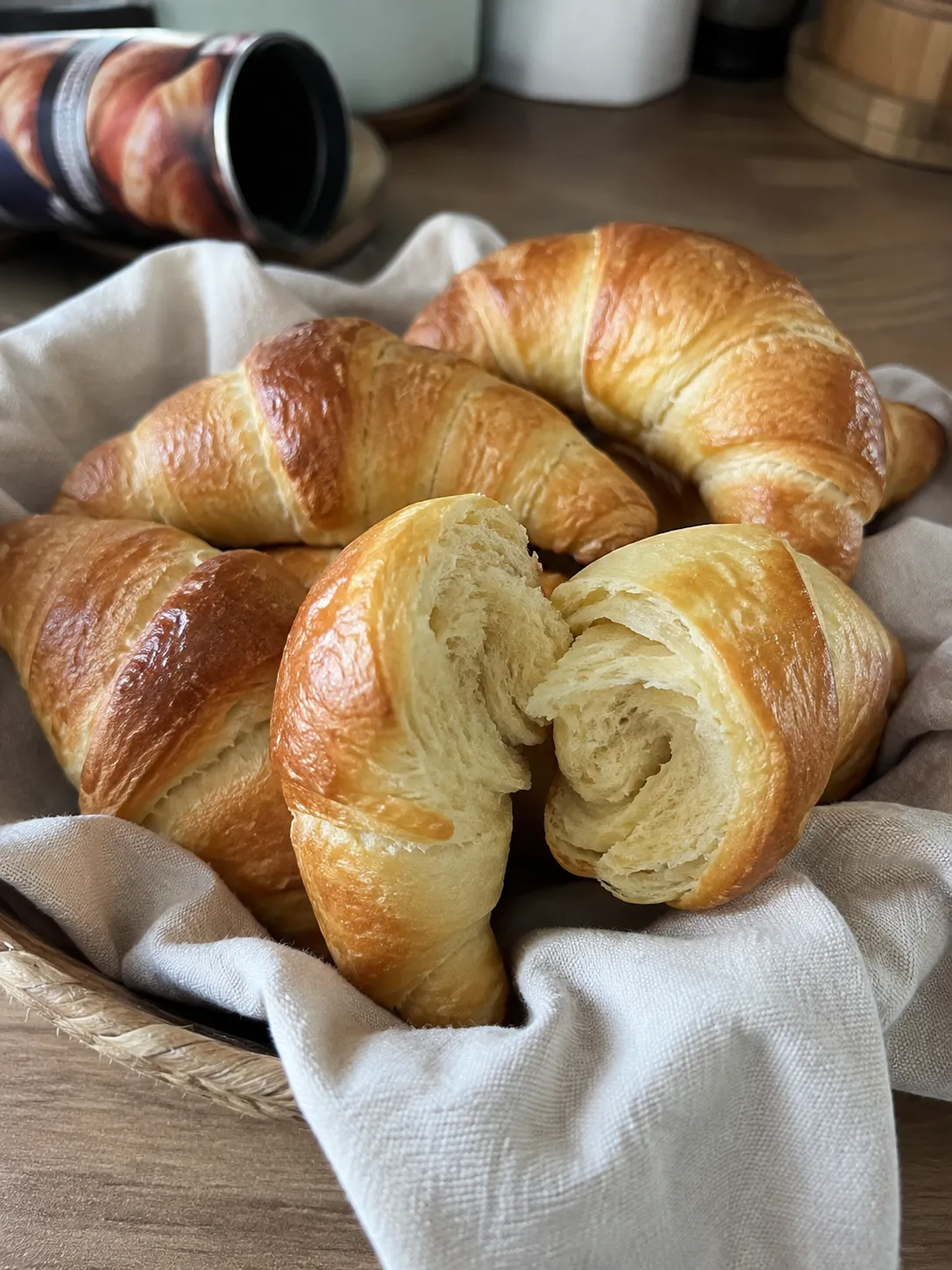
The can still startles me every time. Thirty years of baking and I have never once peeled the paper seam calmly, and the pop is half the reason my kids volunteer to help with crescent rolls.
What took me longer to learn is that the pop is also a warning. That pressurized can is full of cold, gas-leavened dough with fat sheeted through it, and everything good about the finished roll, the puff, the pull-apart layers, the flaky shatter at the point, depends on that dough staying cold and lightly handled between the pop and the heat. The air fryer rewards this better than the oven does, and punishes carelessness faster, because the fan browns the outside on its own schedule whether the middle is ready or not.
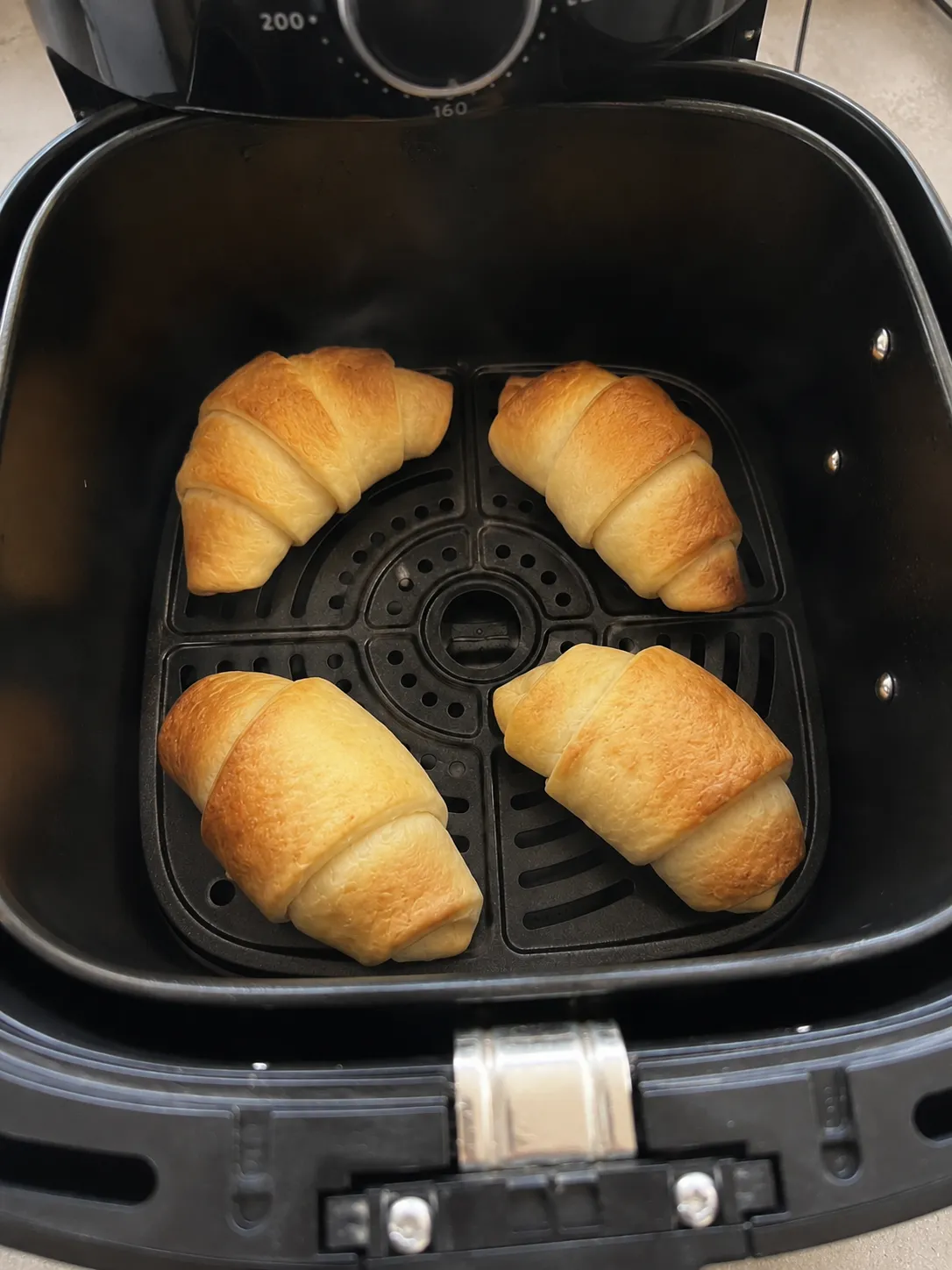
Quick answer: Keep the can refrigerated until the moment you roll. Roll the triangles loosely from the wide end, tuck the point underneath, and bake 4 or 5 at a time at 330°F for 6 to 8 minutes, no preheat, spaced so they never touch. Done when the tops are deep golden and the undersides have color too. Brush with melted butter the moment they come out.
Why the middle stays doughy
The classic air fryer crescent failure is a roll that looks bakery-perfect and eats like warm raw dough at the center. It is not bad dough and it is not your machine. It is geometry again: a crescent is a spiral, and a spiral has a dense core.
The outside of the roll is one layer of dough in open air, and it browns fast under the element. The center is five or six layers wound tight around each other, and heat has to conduct through every wrap to reach it. At 350°F and above, the surface finishes its browning budget in five minutes and the core is still two minutes behind. Pull them by color and you eat dough. Leave them for the core and the tops overshoot.
Two settings close the gap:
- 330°F, not 350°F. Published temperatures for this run from 300°F to 350°F, and the low-middle is right for exactly this reason: the surface browns slower while the spiral catches up, and both finish together around minute seven.
- A loose roll. The tighter you wind the triangle, the denser the core and the longer heat takes to reach it. Rolling loose leaves air between the wraps, and air is the whole mechanism: steam puffs the layers apart and heat rides in with it. The next section is entirely about this.
The cold dough rule
Crescent dough puffs the same way biscuits and pastry do: solid fat sheeted between dough layers melts in the heat and releases steam, and the steam jacks the layers apart. That only works if the fat is still solid when the heat arrives.
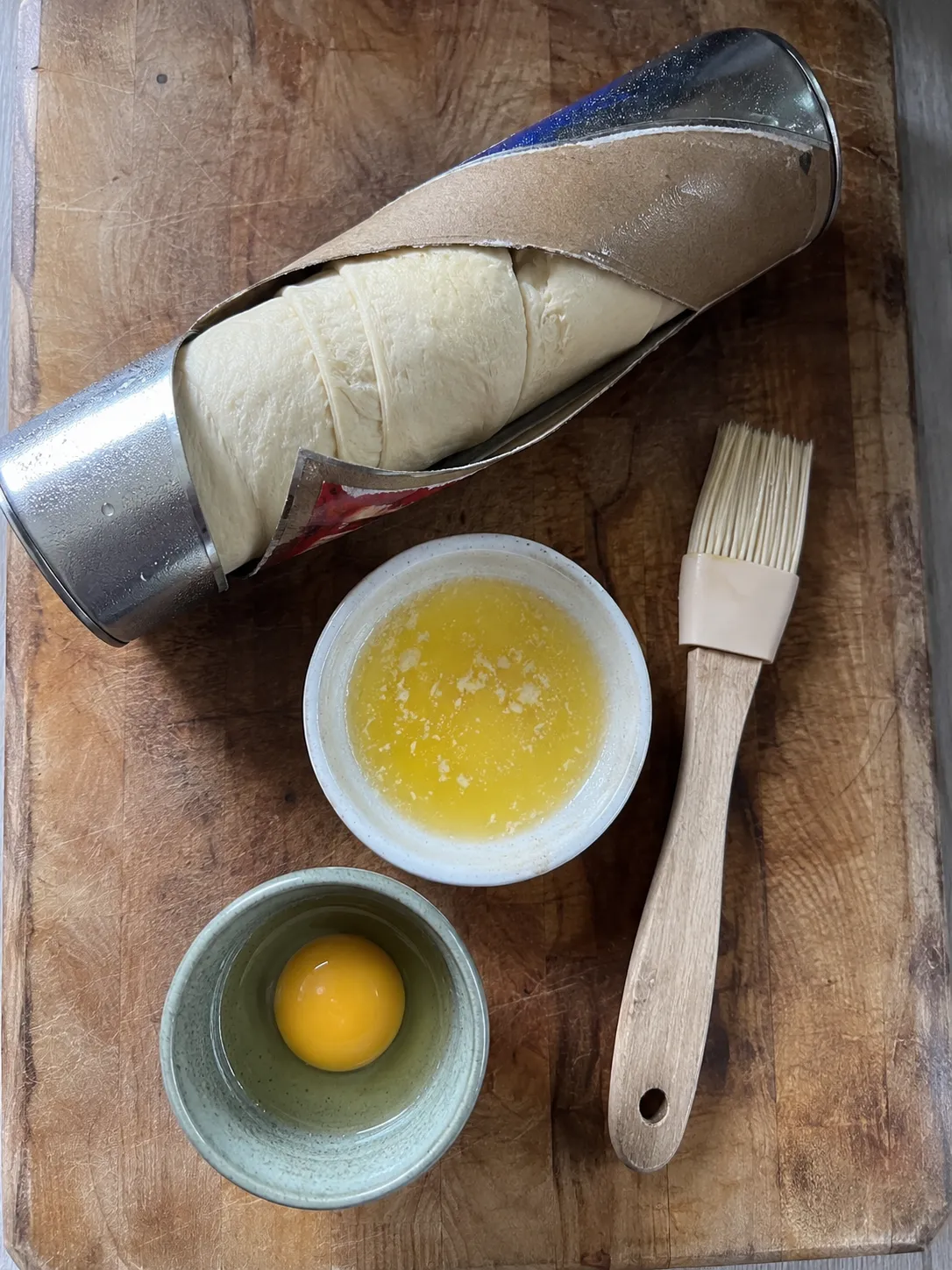
A can that sat on the counter through dinner prep has soft fat smearing into the dough around it, and smeared fat cannot make steam pockets. The rolls still bake, but they bake bready instead of flaky, one uniform crumb instead of layers. This is the single quietest reason two identical cans produce different rolls.
So the rule is boring and absolute: the can stays in the fridge until everything else is ready. Basket cleared, workspace wiped, then pop, roll, tuck, and into the machine inside five minutes. If the kitchen is hot or the phone rings mid-roll, the shaped rolls can wait in the fridge, never on the counter. Cold dough into heat is where the layers come from, and it costs nothing but sequencing.
Roll loose, tuck the tip
Wide end first, no stretching
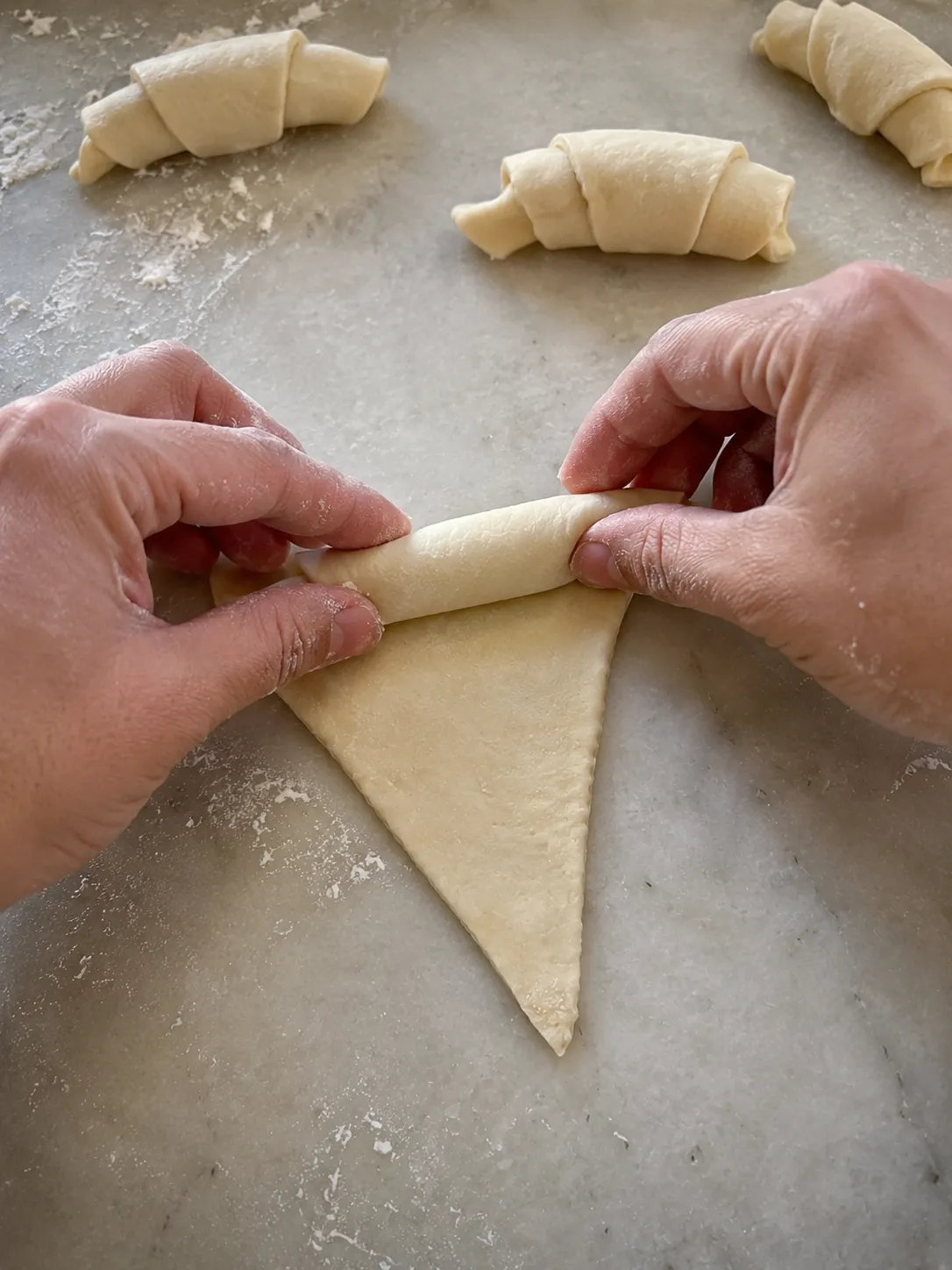
Unroll the triangles and roll each one up from the wide end without pulling the dough taut. Stretching thins the layers and tightens the spiral, which is the doughy-core recipe. The lazy roll is the correct roll.
Point underneath, always
The little tip at the end of the spiral is a flag, and the fan is wind. Left on top, it lifts, unfurls the roll, and burns crisp while the rest is still baking. Set every roll point-side down so its own weight pins the seam.
An inch apart, never touching
They grow by half as they bake. Rolls that touch weld into a pale seam and steam each other's sides soft. Four or five per basket is the honest capacity, so a can of eight is two rounds.
Straight on the basket is fine, the dough is rich enough not to stick. If you prefer parchment, cut it smaller than the basket floor and anchor it with the rolls before the fan starts, because a loose sheet under featherweight pastry is a kite. The rules live in can you use foil or parchment paper in an air fryer.
Egg wash or butter: the bakery finish
The difference between a canned crescent and a bakery one is mostly the finish, and there are two schools:
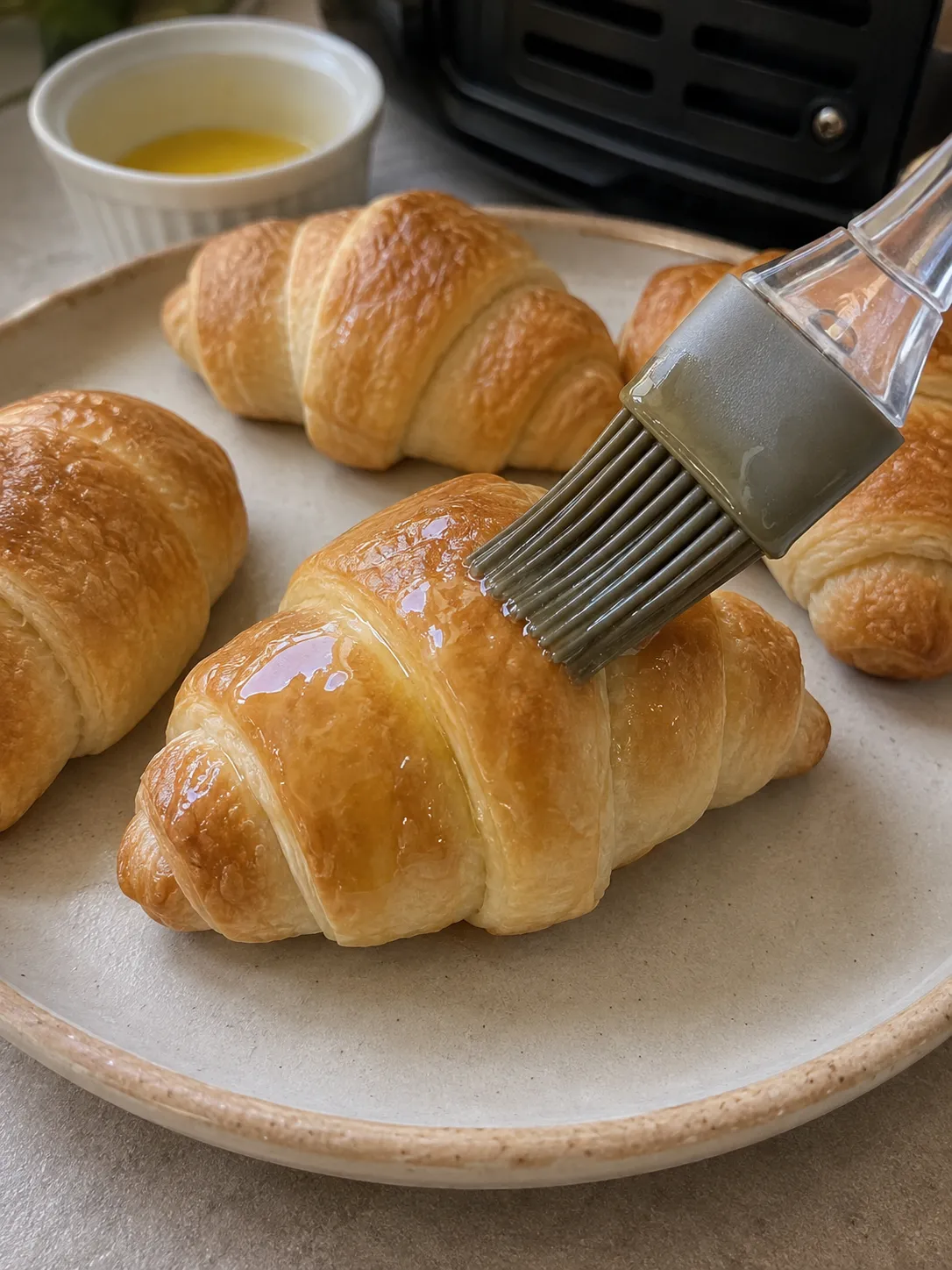
- Egg wash before baking gives the deep, glossy, mahogany top of a bakery case. One yolk beaten with a teaspoon of water, brushed thin on the shaped rolls. This is the look upgrade, and it also glues seeds or everything seasoning in place.
- Melted butter after baking gives a soft, rich sheen and the smell that empties bedrooms. Brush the moment they leave the basket so it soaks rather than sits.
- Both is not too much. Egg wash in, butter out, a pinch of flaky salt on top, and no one will believe the can.
Do not butter before baking. Pre-buttered tops brown too fast under the element and the excess drips through the basket to smoke in the drawer, the same physics as every buttered thing in this machine.
How to make them
- Clear the stage first. Basket ready, brush ready, seasoning open. The can comes out of the fridge last.
- Pop the can and unroll the dough on the counter. Separate the triangles along the perforations.
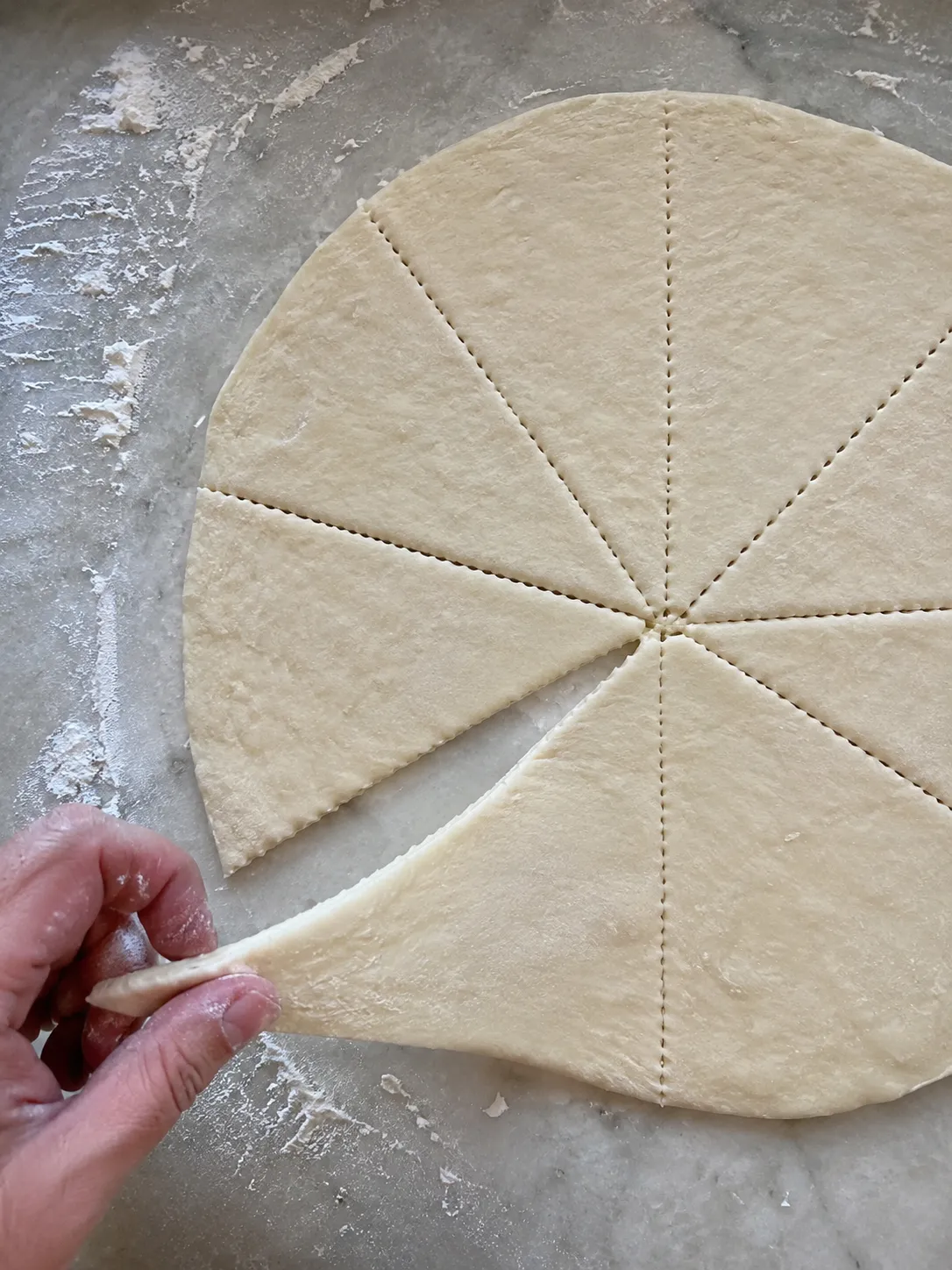
The perforations do the cutting for you. Peel, do not tear, and the wide edge stays square. - Roll each triangle loosely from the wide end, no stretching, and curve the ends slightly into the crescent shape.
- Egg wash now if using, thin and even, plus any seeds or salt.
- Place 4 or 5 in the basket, point-side down, an inch apart. No preheat: the cold start buys the cold dough another minute of solid fat while the machine warms, which is a small, free improvement to the layers.
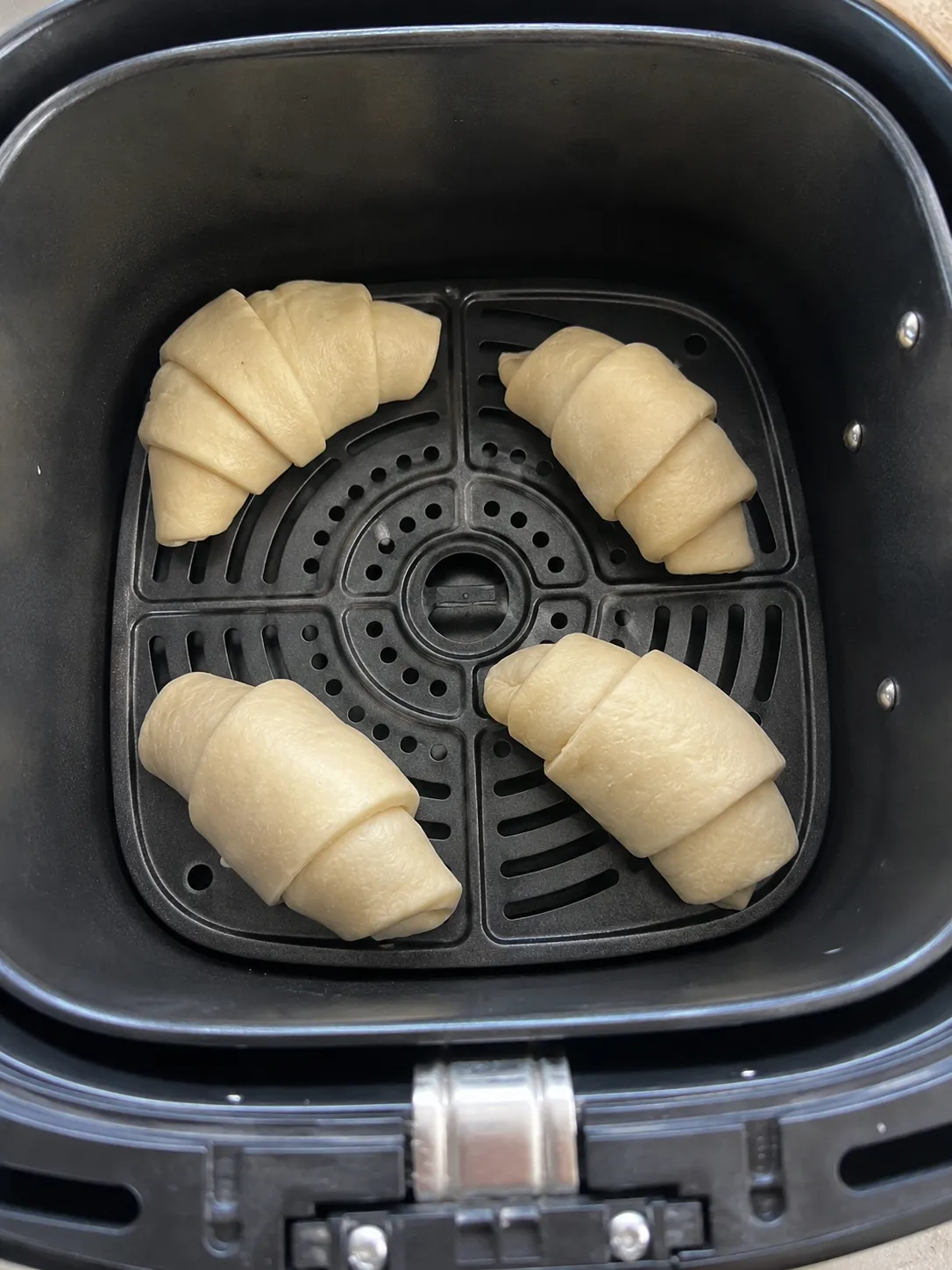
Four to a basket, an inch apart, points underneath. They nearly double, so the gaps are not optional. - Bake at 330°F for 6 to 8 minutes. Check at 6: you want deep golden tops. Lift one roll with tongs and check its underside, which should show real color too. A pale bottom means a doughy spiral, so give them 1 to 2 more minutes. No flipping needed at this temperature, the convection handles the underside.
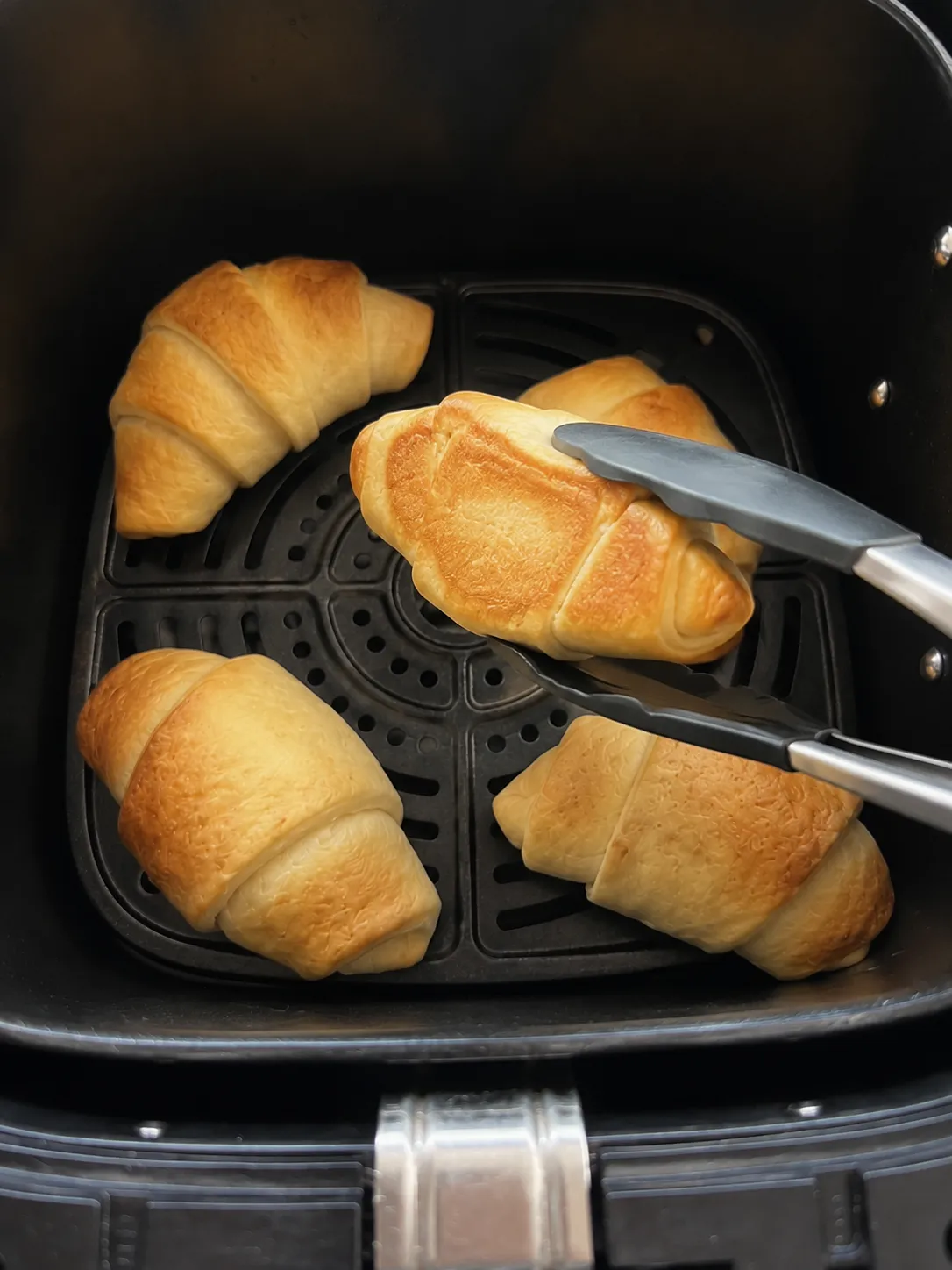
The only doneness test that matters: lift one and look underneath. A pale base means two more minutes. - Brush with melted butter straight out of the basket, and repeat with round two. Knock 1 minute off the second batch, the basket is already hot.
Grands, big and flaky, and other cans
| Can | Temp | Time | Per batch |
|---|---|---|---|
| Regular crescent rolls (8 oz can) | 330°F | 6 to 8 min | 4 to 5 |
| Grands or big and flaky | 330°F | 8 to 10 min | 3 to 4 |
| Reduced fat | 330°F | 5 to 7 min | 4 to 5 |
| Crescent dough sheet, cut and rolled | 330°F | 6 to 8 min | Depends on your cuts |
| Store brand cans | 330°F | 6 to 8 min | Watch the first batch, doughs vary |
Bigger rolls mean denser spirals, so grands get the same temperature and more time, never a hotter dial. The can's own directions say around 375°F because they were written for an oven, and the conversion logic, drop the temperature, trim the time, is the standing job of the air fryer calculator. Every setting on this site is collected in the air fryer baking chart.
Troubleshooting
| What you got | Why | Fix |
|---|---|---|
| Golden outside, doughy center | Rolled too tight, or baked too hot for the spiral. | Loose roll, 330°F, and check the undersides for color before pulling. |
| Rolls unrolled into snakes | The point was on top, and the fan unfurled it. | Point-side down, its own weight is the seal. |
| Bready, no flaky layers | The can sat warm and the sheeted fat smeared. | Fridge until the last five minutes, always. |
| Welded together with pale seams | Crowded basket. | An inch apart, 4 or 5 per round. The can is two batches. |
| Tops burnt at minute 5 | 350°F or above, or pre-buttered tops. | 330°F, butter after baking, egg wash is the only thing that goes on before. |
| Parchment blew into the element | Loose sheet under light pastry. | Bare basket, or parchment cut small and anchored by the rolls. |
| Second batch darker than the first | Hot basket head start. | Knock a minute off every round after the first. |
| One side browner every time | A hot spot. | Rotate the rolls front to back at minute 4. Chronic scorching is machine-level, covered in how to prevent burning in an air fryer. |
If bakes misbehave across recipes, not just this can, run the checklist in the air fryer baking troubleshooting guide.
Variations
- Cheesy garlic crescents. A teaspoon of the garlic butter from the air fryer garlic bread spread on each triangle before rolling, a pinch of mozzarella at the wide end. Seal the long edges or the cheese escapes, and add 1 minute.
- Pigs in blankets. Half a hot dog or a cocktail sausage at the wide end, rolled and tucked. Same 330°F, 7 to 9 minutes. The game day standard.
- Chocolate crescents. A tablespoon of chocolate chips at the wide end, rolled, sealed, dusted after with powdered sugar. Breakfast pastry economics: forty cents each.
- Ham and swiss. A folded slice of each at the wide end, egg wash, everything seasoning. Lunch from a can.
- Apple dumpling shortcut. A spoonful of the filling from the air fryer baked apples rolled inside, sealed well, cinnamon sugar after. Add 2 minutes and let them cool before biting, the filling is lava.
- Cinnamon sugar twists. Brush the dough sheet with butter, cinnamon sugar, fold, cut strips, twist, and bake 5 to 6 minutes. The gateway to the air fryer cinnamon rolls, which are the same canned-dough magic one shelf over, and the canned biscuits that share this dough's temperature and its impatience.
Canned dough is the fast lane, and the scenic route is on the site too: the air fryer bread for a real loaf, and the soft pretzels when shaping dough is the point of the afternoon rather than the obstacle.
For the same warm bread with a longer afternoon attached, the dinner rolls are this recipe's from-scratch counterpart, and every technique page on the site is filed under guides.
Storage and reheating
- Room temperature: 2 days in an airtight container, though crescents are a warm food and they know it.
- Reheat: 300°F for 2 minutes in the basket. The layers re-crisp and the middle softens, close to fresh. The microwave turns them to damp cotton.
- Freeze baked: 2 months, thawed at room temperature and refreshed 2 minutes at 300°F.
- Do not pop the can ahead. Opened dough dries and the perforations fuse. The can is the storage, right up until showtime.
- Half a can is fine: roll what you need, and the rest of the dough keeps 24 hours in the fridge wrapped tight in plastic. It will bake slightly less puffed, and still happily.
Frequently asked questions
QHow long do crescent rolls take in an air fryer?
6 to 8 minutes at 330°F for a regular can, 4 or 5 rolls per batch, no preheat. Grands and big flaky sizes take 8 to 10 minutes at the same temperature. Check at minute 6 for deep golden tops, then lift one roll and confirm the underside has color too, because a pale bottom means the spiral center is still doughy.
QWhy are my air fryer crescent rolls doughy in the middle?
A crescent is a spiral, and the tightly wound core takes minutes longer to cook than the single-layer surface. At 350°F and above, the top looks finished while the center is still raw. Bake at 330°F so the two finish together, roll the triangles loosely so heat can penetrate the wraps, and use the underside color check rather than the top as your doneness signal.
QDo you flip crescent rolls in the air fryer?
Not at 330°F. The convection browns the underside through the basket on its own, and flipping risks tearing soft mid-bake dough off the tines. Recipes that flip are usually running 350°F or hotter, where the top races ahead and the flip is damage control. If your machine browns unevenly front to back, rotate the rolls without turning them over.
QWhy did my crescent rolls unroll while cooking?
The pointed tip of the triangle ended up on top or on the side, and the fan lifted it like a flag, unwinding the roll as the dough softened. Place every roll point-side down so the weight of the roll pins its own seam. It is a two-second habit and it ends the problem completely.
QCan you cook a whole can of crescent rolls at once in an air fryer?
Not in a basket machine. Eight rolls need two rounds of 4, because they expand by half and any two that touch weld into a pale, steamed seam. Run two batches and knock a minute off the second, since the basket starts hot. An oven-style air fryer with a full tray can do all eight on one rack.
QShould crescent roll dough be cold before air frying?
Yes, and it matters more than any other handling rule. The dough puffs because solid sheeted fat melts into steam between the layers, and fat that softened on the counter smears into the dough and puffs nothing. Keep the can refrigerated until everything else is ready, shape within five minutes, and park shaped rolls in the fridge if anything delays you.
QEgg wash or butter for crescent rolls?
Egg wash before baking for the glossy mahogany bakery top, melted butter after baking for the soft sheen and the smell. They are not competitors: wash going in, butter coming out, flaky salt on top is the full bakery treatment. The one wrong answer is butter before baking, which over-browns the tops and drips into the drawer.
QCan you air fry stuffed crescent rolls?
Yes, and the machine is excellent at them: cheese, sausages, ham, chocolate, or apple filling at the wide end before rolling. Seal the long edges by pinching, keep the fill to a spoonful, and add 1 to 2 minutes to the base time. Escaped cheese on the basket is a soak-not-scrape cleanup, so sealing is worth the ten seconds.
QHow do you reheat crescent rolls in an air fryer?
300°F for 2 minutes, straight in the basket. The layers re-crisp and the center warms without drying, which is as close to fresh-baked as day-old pastry gets. The microwave softens them into damp cotton in the same thirty seconds.
Never overbake again
Get our one-page times & temps cheat sheet, plus a new tested recipe each week.
No spam · unsubscribe anytime