
Air Fryer Monkey Bread: Pull-Apart Cinnamon Sugar From a Can
Monkey bread is a pile of biscuit pieces rolled in cinnamon sugar, drowned in butter and brown sugar, and baked until the whole thing fuses into one sticky, pull-apart mass. It is also, structurally, the hardest thing you can ask a basket air fryer to cook through: the middle of a pile is insulated by the pile. The recipes that rank for this either bake it for 35 minutes under foil or give up on the pile entirely and cook loose bites. This page does neither. One 16 ounce can, a 6 inch pan, a shallower pile on purpose, 320°F for 20 to 24 minutes, and a probe that ends the raw-center guessing for good.

What’s on this page
The pile is the problem
Every failed monkey bread fails the same way: a lacquered, deep-brown top, a caramel that smells one minute from burnt, and a center piece that is still raw dough in a sugar coat. The reason is not your air fryer. It is geometry. Monkey bread is the only bake on this site where the food insulates itself: every piece in the middle of the pile is wrapped in a blanket of other pieces, and heat has to fight through all of them to reach it.
An oven fights that with time, 30 to 35 minutes at 350°F. An air fryer cannot spend that long, because its element sits inches above a surface coated in sugar, and sugar at close range goes from golden to bitter while the core is still catching up. The top recipe for this keyword runs 30 to 35 minutes anyway and writes a foil tent into the instructions at the halfway mark. As with the foil-tented cornbread recipes this site has argued with before, a rescue step printed in the method is the method admitting its shape is wrong.
The fix is to change the shape, not patch the top. One 16 ounce can in a 6 inch pan makes a pile two pieces deep instead of three, and a two-deep pile cooks through in the window an air fryer can actually offer. The urge to double the recipe in the same pan is the single most common way this dish fails, and it fails for the same reason twice the batter fails in a cornbread pan: depth grows, and cooking time grows faster than depth.
Pull-apart, bites, or loose pieces
There are three honest ways to make this in an air fryer, and the pages that rank for it each pick one without telling you the others exist.
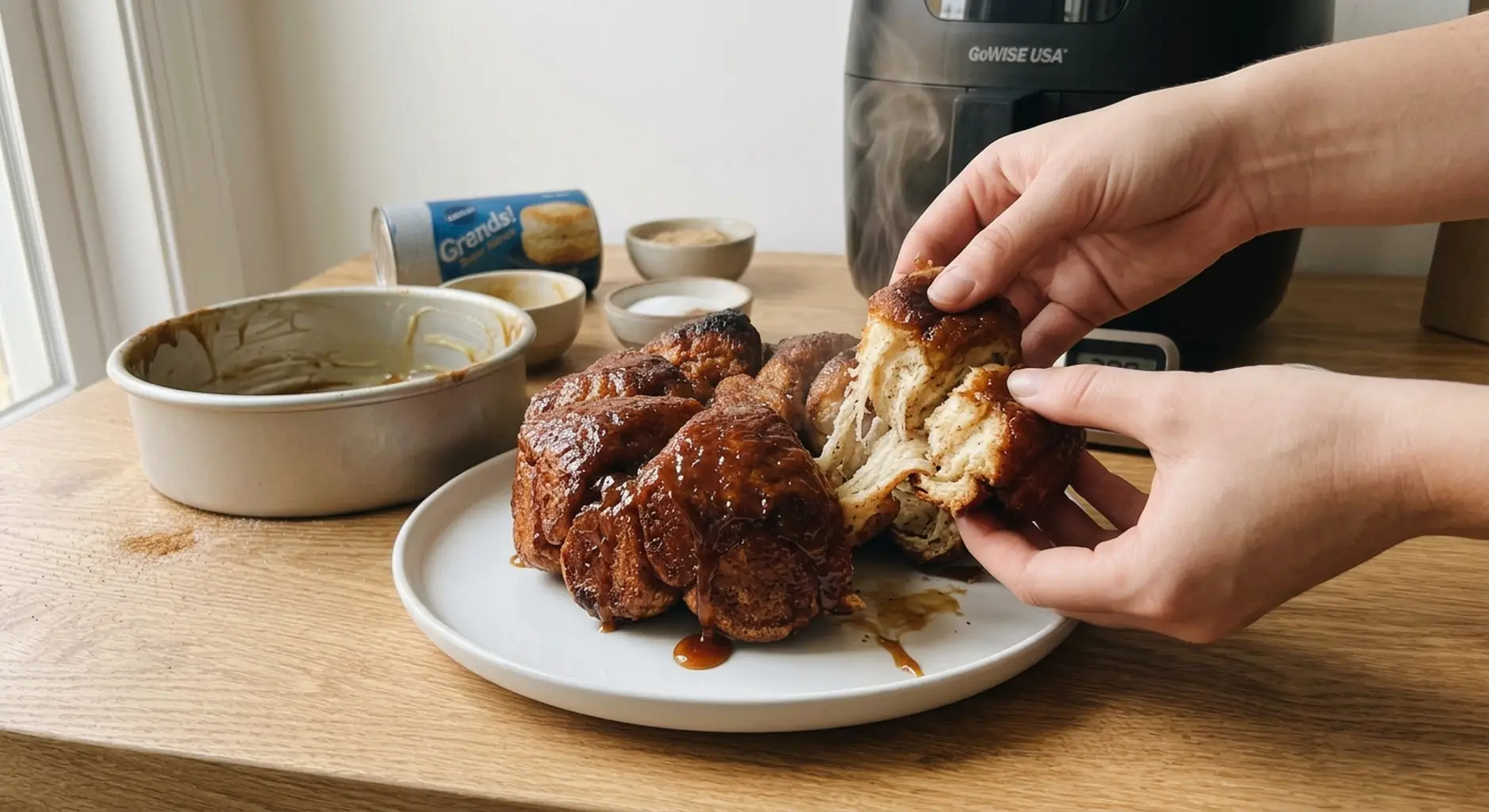
The pan pull-apart is the real thing: pieces fused into one mass, shared walls steamed soft, caramel soaked into every seam, inverted onto a plate and torn at the table. It takes 20 to 24 minutes and it is what this page builds.
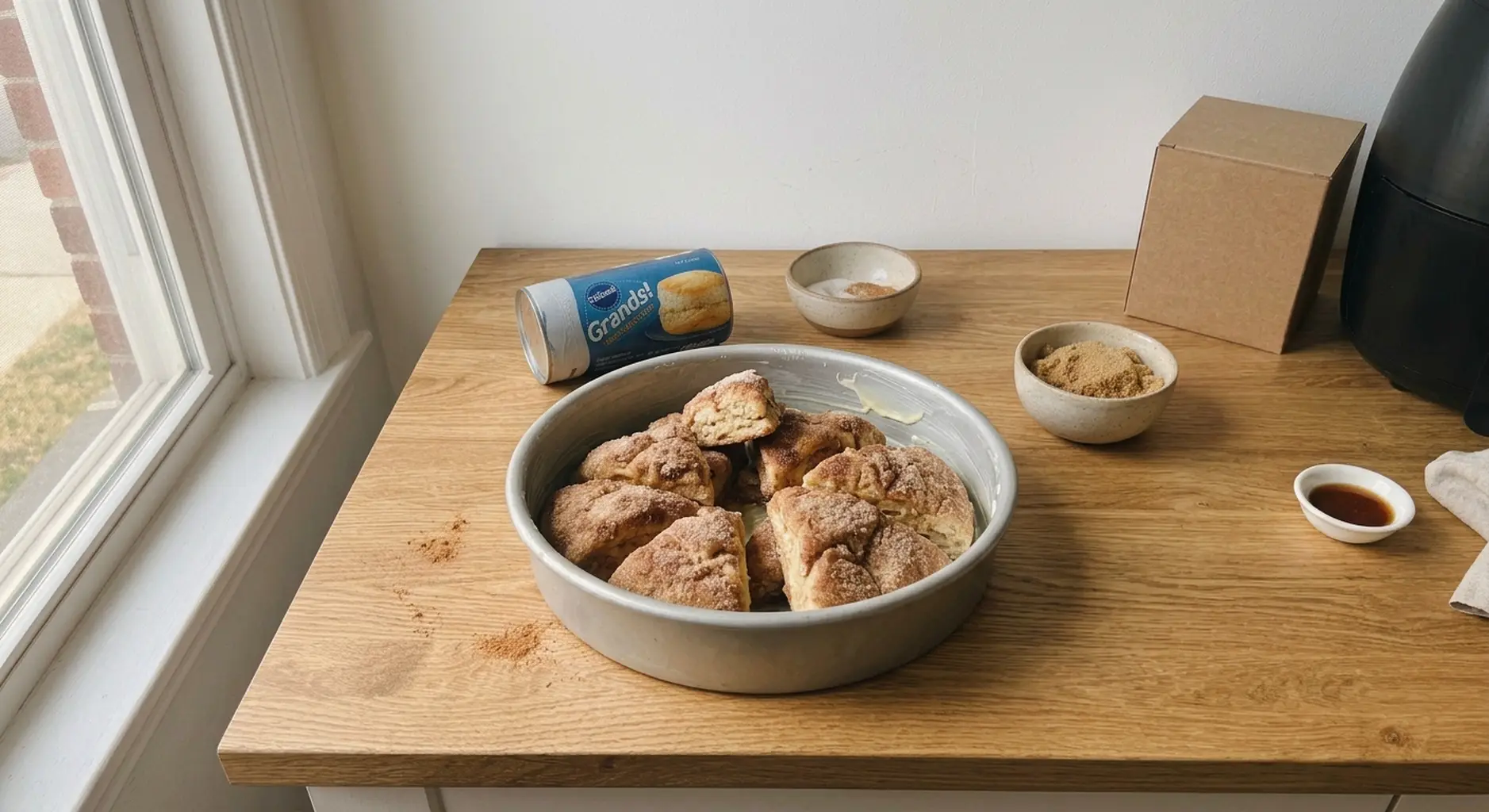
The quick bites are the halfway house: the same quartered, sugared pieces piled loosely in the same pan, but with no caramel poured over, baked in 12 to 14 minutes and finished with a drizzle of icing. Lighter, faster, and already on this site as the monkey bread bites variation on our canned biscuits page, with the rest of what a can of dough can do. The caramel is what stretches the bake to 20 minutes here, because a wet sugar layer has to cook down before anything under it can brown.
The loose pieces, cooked with no pan at all, are the fastest of the three: 8 to 10 minutes, crisp on every side, glaze tossed on after. Genuinely good, and not monkey bread, because nothing fuses; it is cinnamon sugar popcorn chicken wearing the name. When speed is the point, make the bites. When the point is a bread everyone tears at together, use the pan and the caramel.
The caramel is upside down on purpose
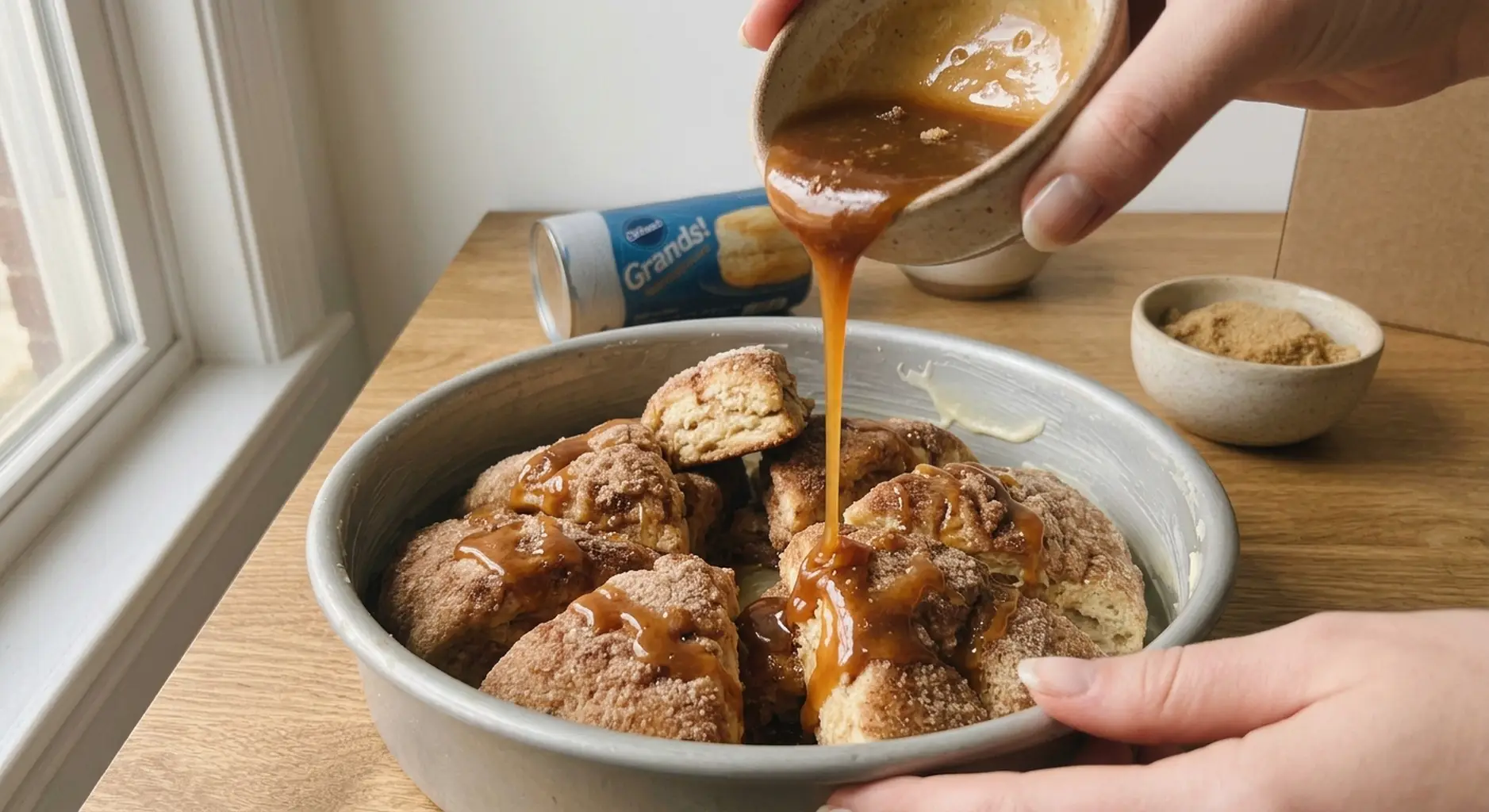
The butter and brown sugar do not get mixed into the pile. They get poured over the top of it, and then something quietly clever happens: gravity pulls the mixture down through every gap while the bake sets the dough around it, and the deepest pooling ends up at the pan floor. When you invert the finished bread onto a plate, that pan floor becomes the crown, glossed in the thickest caramel, and every piece below it is basted in the trail it left on the way down.
This is why monkey bread is always flipped out of its pan and why the recipes that skip the inversion, and several ranking pages never mention it, serve the dish upside down without knowing it: caramel hidden at the bottom, plain biscuit on top. The pour goes over, the caramel travels down, the flip brings it home. Timing the flip matters, and it gets its own section below.
Temperature and timing
Oven monkey bread runs 350°F for 30 to 35 minutes. Our oven-to-air-fryer calculator converts that to about 325°F and 24 to 28 minutes, and this recipe undercuts even that slightly, to 320°F for 20 to 24 minutes, for two stacked reasons: the surface is coated in sugar, which browns faster than plain dough, and the shallower two-deep pile needs less time than the oven's three-deep one. Biscuit dough itself is happiest in the low 300s in a basket, which is a rule this site has tested from every direction on the biscuits themselves.
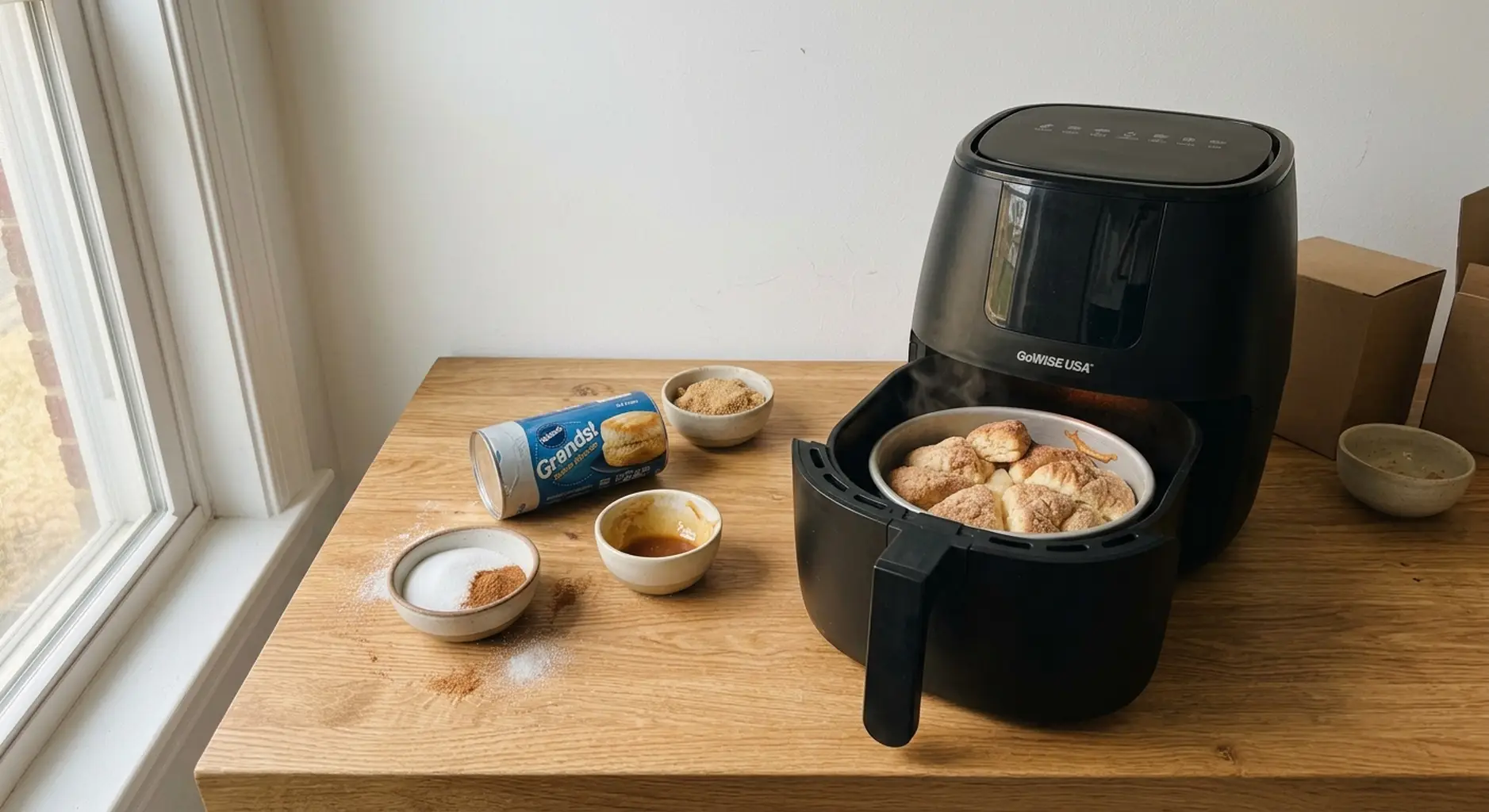
Foil is a contingency here, not a step. If the top is past deep golden at minute 15, lay a loose tent on for the remainder; most machines at 320°F will not need it. The difference between tenting by plan and tenting by observation is the difference between hiding a problem and handling one, and the liner rules are in the foil and parchment guide. A 3 minute preheat matters more than usual, because a cold start stretches the bake and the sugar spends the added minutes darkening; the general preheating rules are in do you need to preheat an air fryer for baking.
Pan size decides everything here. A 6 inch round cake pan is the recipe as written and fits every 5 quart basket. A small tube or bundt pan is genuinely better if you own one that fits, because a tube pan has no center, and no center means no raw center; check yours against the pan size calculator before you butter anything. What you cannot do is double the can in the same pan. Two cans is two bakes, and the recipe scaler will resize the coating and caramel for whatever pan you do run.
What done looks like
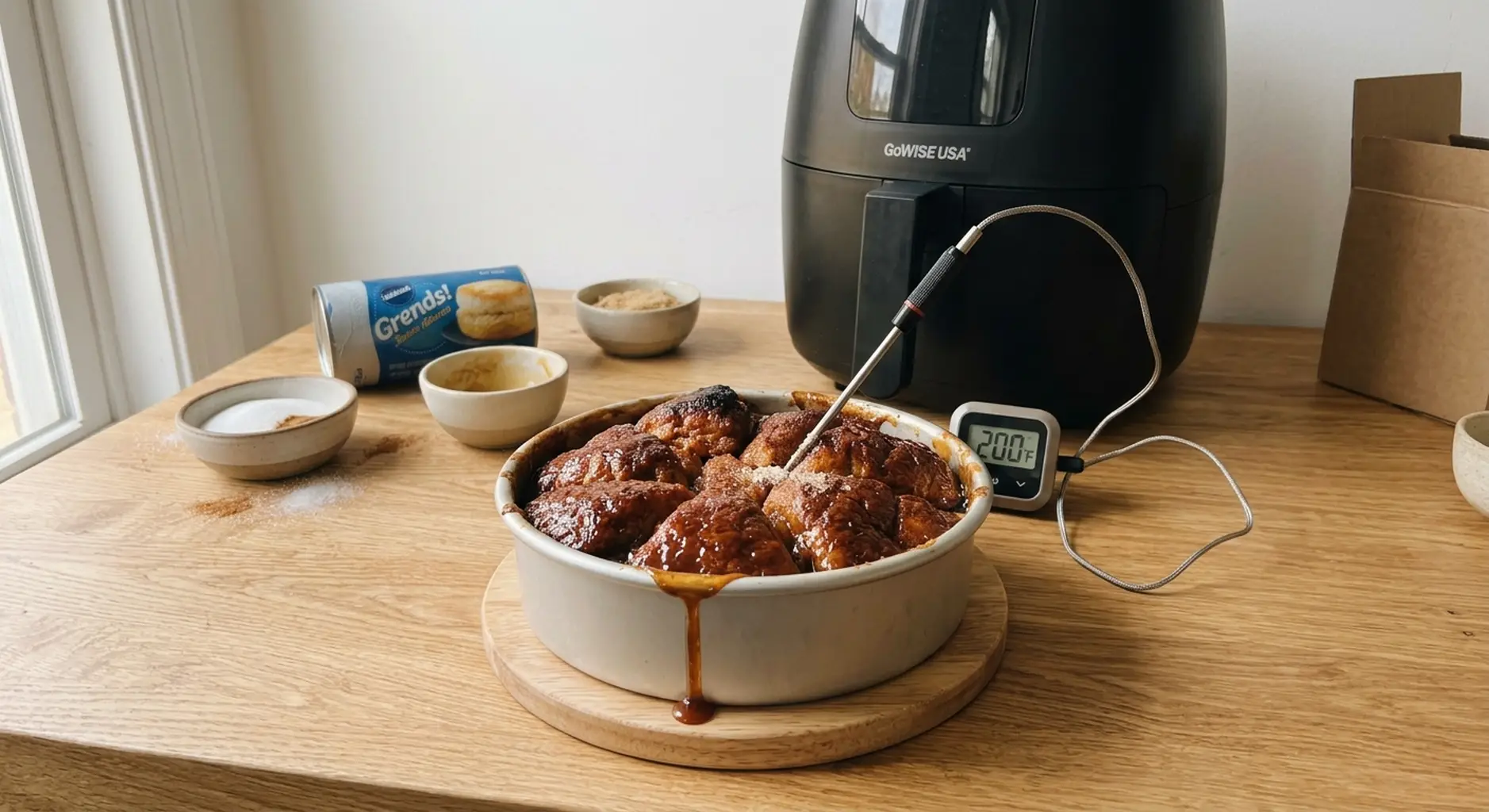
- The top is deep glossy brown with caramel bubbling up between the pieces at the edges of the pan.
- The center of the pile reads 200°F on an instant-read thermometer pushed into the middle of the mass, not into a single piece. This is the number no ranking page gives you, and it is the entire difference between done and doughy in a dish where looking tells you nothing.
- The toothpick, if you have no probe: into a gap between center pieces, out with sticky caramel but no wet dough clinging.
The top will look done at minute 12. It is lying, for the same reason the pile exists: color happens at the surface, cooking happens in the core, and in this dish they are farther apart than in anything else you will bake. Trust the number, the way the whole chart is built on trusting numbers.
Ingredients
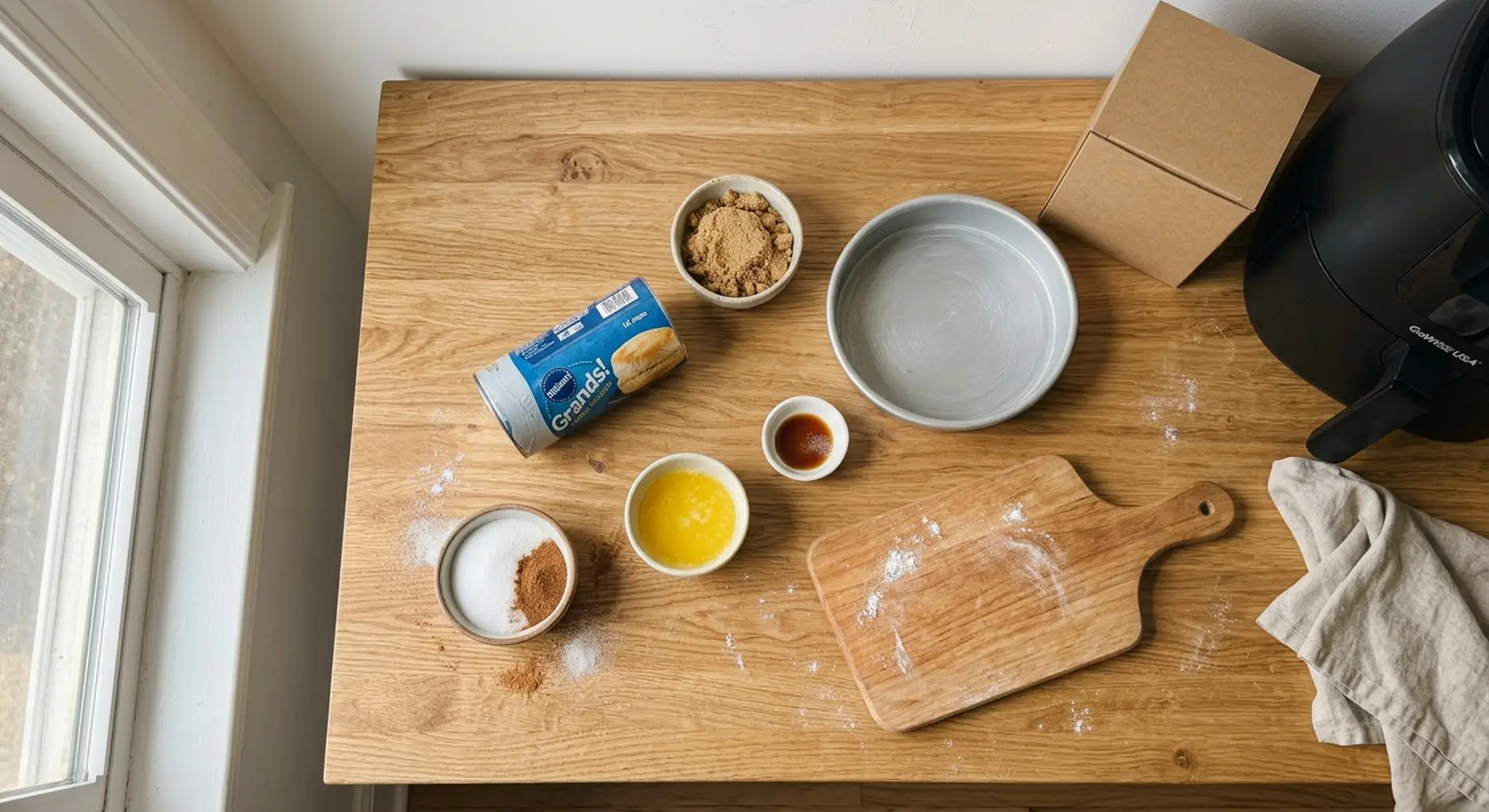
For one 6 inch monkey bread, 6 servings
- 1 can (16 oz, 8 count) refrigerated jumbo biscuits
- ⅓ cup granulated sugar
- 2 teaspoons ground cinnamon
- 4 tablespoons unsalted butter, melted
- ⅓ cup packed light brown sugar
- ½ teaspoon vanilla extract
- Pinch of fine salt
- Optional: ¼ cup chopped pecans
Any 16 ounce can of plain biscuits works; Grands and store brands behave identically once quartered. Frozen biscuit dough is the one kind that does not work here, since it has to bake as whole rounds rather than quarters; that lane is on the frozen biscuits page. Flaky-layers styles shed a few leaves as you cut them, which is fine. Cinnamon roll dough also works and is covered in the FAQ, with one adjustment.
How to make it
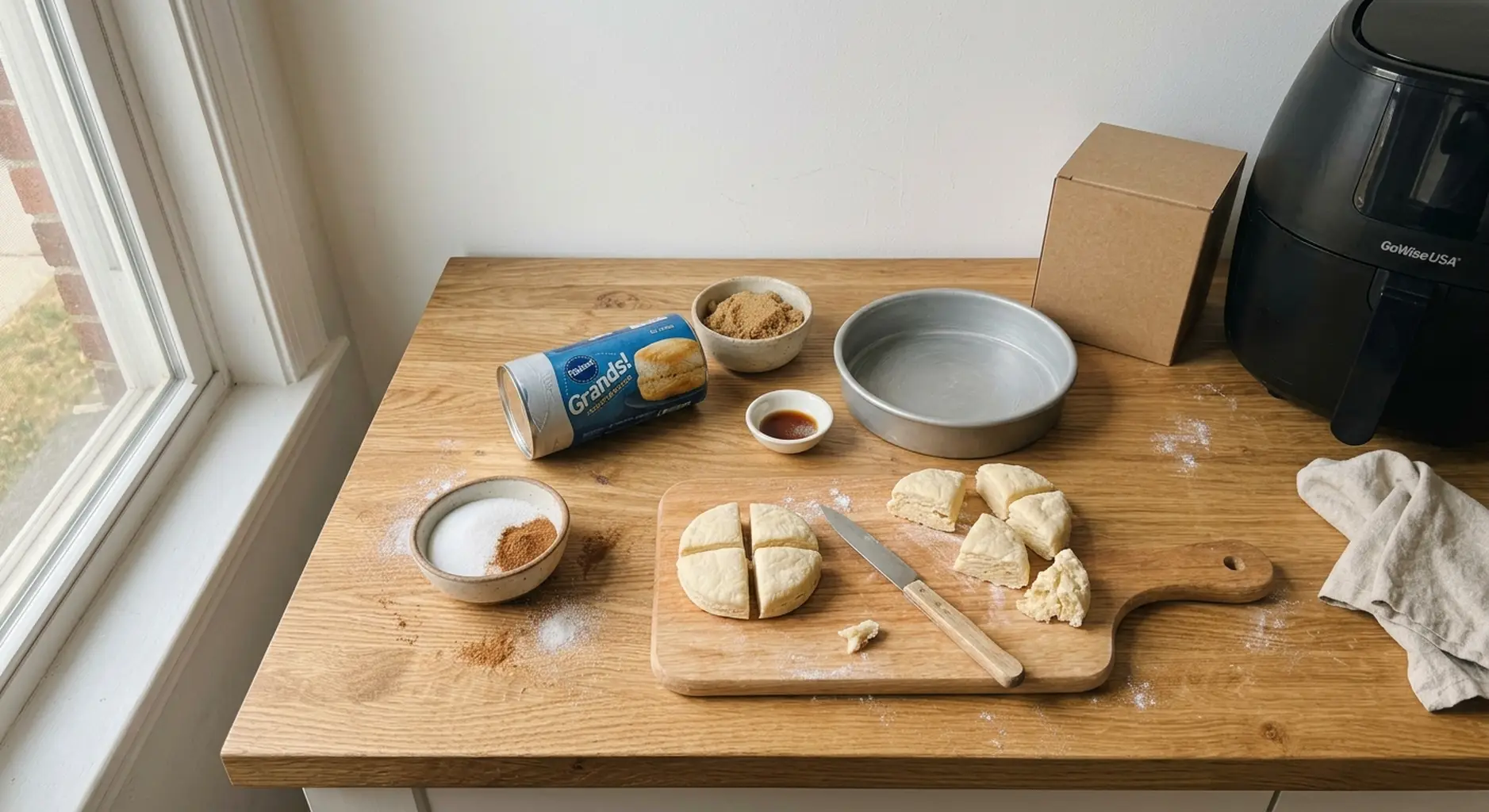
- Butter a 6 inch round cake pan well, base and sides, and preheat the air fryer at 320F for 3 minutes.
- Cut each biscuit into quarters. No rolling into balls; the cut edges drink more caramel.
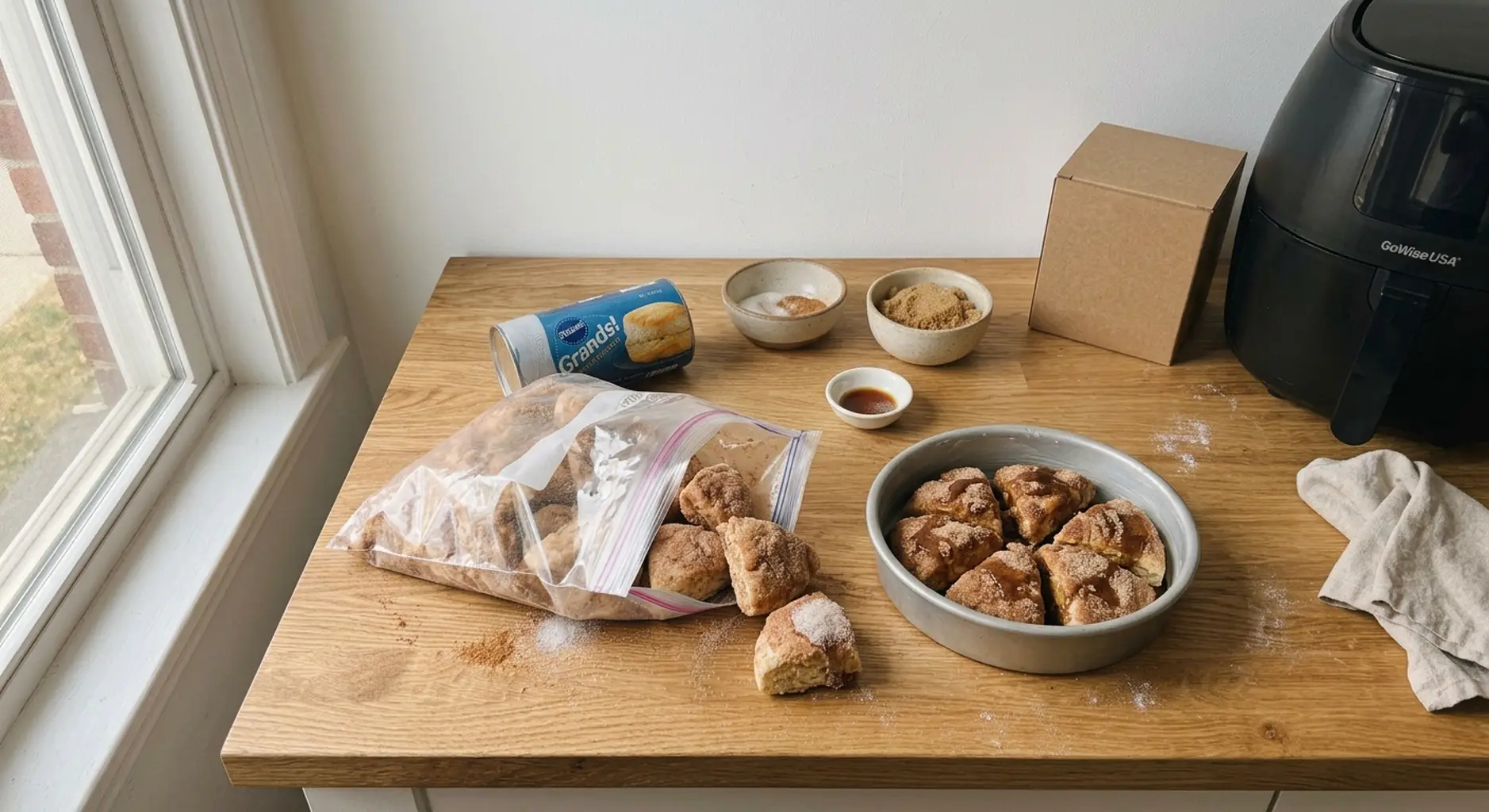
- Shake the quarters with the granulated sugar and cinnamon in a zip bag, half the pieces at a time, until every piece is coated.
- Pile the pieces into the pan loosely, scattering the pecans between layers if using. Do not press anything down; the gaps are where the caramel goes.
- Stir the melted butter, brown sugar, vanilla, and salt into a wet sand and spoon it evenly over the pile.
- Air fry at 320F for 20 to 24 minutes. If the top is past deep golden at minute 15, lay a loose foil tent on for the rest.
- Verify the center: a probe in the middle of the pile reads 200F, or a toothpick between center pieces comes out with caramel but no wet dough.
- Rest 5 minutes in the pan, no longer, then run a knife around the edge and invert onto a plate in one confident motion.
- Serve warm and pull, do not cut.
The invert, and when
Five minutes is the window. Sooner, and the caramel is still fully liquid: it sheets off the top and pools on the plate instead of clinging. Later than about ten minutes, and the sugar at the pan floor cools past sticky into glue, and the crown of your monkey bread stays welded in the pan while the rest of it comes away.
At five minutes the caramel is thick enough to cling and loose enough to release. Knife around the edge, plate over the pan, one committed flip. If a piece or two stays behind, scrape them out and press them into the top; monkey bread is the one bake where visible repairs read as character. The five minute rest also matters for a plainer reason: the caramel straight out of the machine is molten sugar, and molten sugar against a knuckle is a lesson nobody needs twice. The same flip on the same five minute clock runs the pineapple upside down cake, this site’s other bake that arrives at the table wearing its own bottom.
Fixing what goes wrong
| Problem | Cause | Fix |
|---|---|---|
| Raw dough in the center | Pile too deep, or pulled on color instead of temperature | One can in a 6 inch pan, never doubled, and 200°F on the probe before it comes out |
| Top dark at minute 12 | Sugar browning early, or machine running hot | Loose foil tent from minute 15; the bake continues underneath it |
| Caramel burnt and bitter at the edges | Temperature above 330°F | 320°F is the ceiling for a sugar-coated surface this close to the element; see how to prevent burning for the mechanism |
| Half the bread stayed in the pan | Inverted too late, or pan under-buttered | Butter the pan like you mean it and flip at 5 minutes, not 15 |
| Caramel ran off onto the plate | Inverted too soon | Give it the full 5 minutes; the caramel needs to thicken from molten to clinging |
| Pieces baked into a dense brick | Pile pressed down before baking | Drop the pieces in loosely and leave them; the gaps are structural |
Trouble that follows you from bake to bake, rather than belonging to this one, lives in the troubleshooting guide.
Variations
- Maple pecan. Swap 2 tablespoons of the brown sugar for maple syrup and double the pecans. The syrup loosens the caramel slightly, so err toward 24 minutes.
- Savory garlic herb. Skip both sugars entirely: toss the quarters in 3 tablespoons melted butter, 1 teaspoon garlic powder, and Italian seasoning, and pour 1 more tablespoon of butter over the pile. Fifteen minutes, no tent, and you have pull-apart garlic bread, first cousin to our garlic knots with none of the tying.
- Apple pie. A small apple, diced fine, scattered between the layers. The fruit steams the pile from inside, so add 2 minutes and trust the probe over the clock.
- Cream cheese glaze. Two ounces of softened cream cheese whisked with 2 tablespoons powdered sugar and a splash of milk, drizzled after the invert, while the top is warm enough to take it.
- Orange cardamom. A teaspoon of orange zest in the cinnamon sugar and a pinch of cardamom in the caramel. The version for people who claim monkey bread is too sweet, who are wrong but welcome.
Serving, storage, leftovers
Monkey bread is served warm, centered on the table, with no cutlery and no plan. It does not plate elegantly and it is not supposed to; the dish is the crowd around it. Coffee is the classic partner, and a batch alongside a round of cinnamon rolls covers a holiday morning out of one machine in two rounds. Monkey bread is really the sweet cousin of the pull-apart dinner rolls, built on the same idea that bread tastes better when everyone tears at it.
Storage: airtight at room temperature for 2 days, though the caramel migrates and day two is stickier than day one, which some people consider an upgrade. Reheat pieces at 300°F for 2 to 3 minutes, which re-melts the caramel and wakes the crust back up; the microwave turns the coating to syrup. Freeze baked pieces for up to 2 months and reheat from frozen at 320°F for 4 to 5 minutes.
The can this recipe starts from is the most versatile thing in the refrigerator aisle, and this site keeps finding new work for it: straight biscuits, which also carry the biscuit donut trick, the from-scratch vegan donuts that trick imitates, and the dessert end of the shelf in refrigerated cookie dough. Everything tested here is in the recipe index, and the technique pages are under guides.
Frequently asked questions
QCan I use a bundt pan for monkey bread in the air fryer?
If it fits your basket, a small tube or bundt pan is the best pan for this dish, full stop. The center post removes the exact spot that stays raw in a solid pan, so the pile cooks from the middle and the outside at once. The catch is size: a standard bundt is far too big for any basket, so you are looking for a 3 to 4 cup mini bundt about 7 inches across. Measure before you commit, and shave 2 to 3 minutes off the bake, since nothing in the pan is more than two pieces from a hot surface.
QWhy is the middle of my monkey bread still raw?
Because the middle of a pile is insulated by the pile, and the top looking done says nothing about the core. Three fixes cover nearly every case: keep the pile shallow by using one 16 ounce can in a 6 inch pan and never doubling it, bake the full 20 to 24 minutes even when the color says stop, and verify with a probe in the center of the mass reading 200F before the pan comes out. If a finished bread still turns out raw at the heart, your machine runs cool; add time in 2 minute steps and keep the tent on.
QCan I make monkey bread without a pan, straight in the basket?
You can cook the coated pieces loose in the basket in 8 to 10 minutes, and the result is genuinely good: crisp on every side, glazed after, gone in minutes. It just is not monkey bread, because nothing fuses; the shared soft walls and the pull are the dish. There is also a middle path, the monkey bread bites on our canned biscuits page: same pan, no caramel, done in 12 to 14 minutes. Make one of the quick versions when speed matters, and the pan-and-caramel version when the point is a bread everyone tears at together.
QCan I use cinnamon roll dough instead of biscuits?
Yes, with one adjustment. Cinnamon roll dough carries its own sugar, so skip the granulated sugar coating and toss the quartered pieces in cinnamon only, or the finished bread crosses from sweet into syrupy. Drop to 310F, because the added sugar in the dough browns faster, and save the icing packet from the can to drizzle after the invert. It makes a softer, sweeter, less textured monkey bread; biscuits stay the better base because they bring structure and let the caramel do the sweetening.
QDo I have to flip monkey bread out of the pan?
Yes, and not for looks. The caramel poured over the top travels downward during the bake and pools against the pan floor, so an un-flipped monkey bread is served upside down: plain pieces up, all the caramel hidden underneath. The invert puts the caramel crown on top where it belongs. The timing is a 5 minute rest, long enough for the caramel to thicken from molten to clinging, short enough that it has not cooled into glue that holds the bread hostage in the pan.
QHow do I store and reheat monkey bread?
Airtight at room temperature for 2 days. The caramel keeps migrating after baking, so day two is stickier and slightly better, an opinion this house holds firmly. Reheat pieces at 300F for 2 to 3 minutes in the basket, which re-melts the caramel and re-crisps the exposed edges; the microwave makes everything wet. Baked pieces freeze for 2 months well wrapped and go straight from freezer to basket at 320F for 4 to 5 minutes.
Made it? Rate it.
It helps more people find the version with no raw middle.
Air Fryer Monkey Bread
One 16 ounce can of biscuits, quartered, rolled in cinnamon sugar, and baked under a brown sugar caramel in a 6 inch pan at 320°F. Inverted warm so the caramel lands on top.
Ingredients
- 1 can (16 oz, 8 count) refrigerated jumbo biscuits
- ⅓ cup granulated sugar
- 2 teaspoons ground cinnamon
- 4 tablespoons unsalted butter, melted
- ⅓ cup packed light brown sugar
- ½ teaspoon vanilla extract
- Pinch of fine salt
- Optional: ¼ cup chopped pecans
Instructions
- Butter a 6 inch round cake pan well, base and sides, and preheat the air fryer at 320F for 3 minutes.
- Cut each biscuit into quarters. No rolling into balls; the cut edges drink more caramel.
- Shake the quarters with the granulated sugar and cinnamon in a zip bag, half the pieces at a time, until every piece is coated.
- Pile the pieces into the pan loosely, scattering the pecans between layers if using. Do not press anything down; the gaps are where the caramel goes.
- Stir the melted butter, brown sugar, vanilla, and salt into a wet sand and spoon it evenly over the pile.
- Air fry at 320F for 20 to 24 minutes. If the top is past deep golden at minute 15, lay a loose foil tent on for the rest.
- Verify the center: a probe in the middle of the pile reads 200F, or a toothpick between center pieces comes out with caramel but no wet dough.
- Rest 5 minutes in the pan, no longer, then run a knife around the edge and invert onto a plate in one confident motion.
- Serve warm and pull, do not cut.