

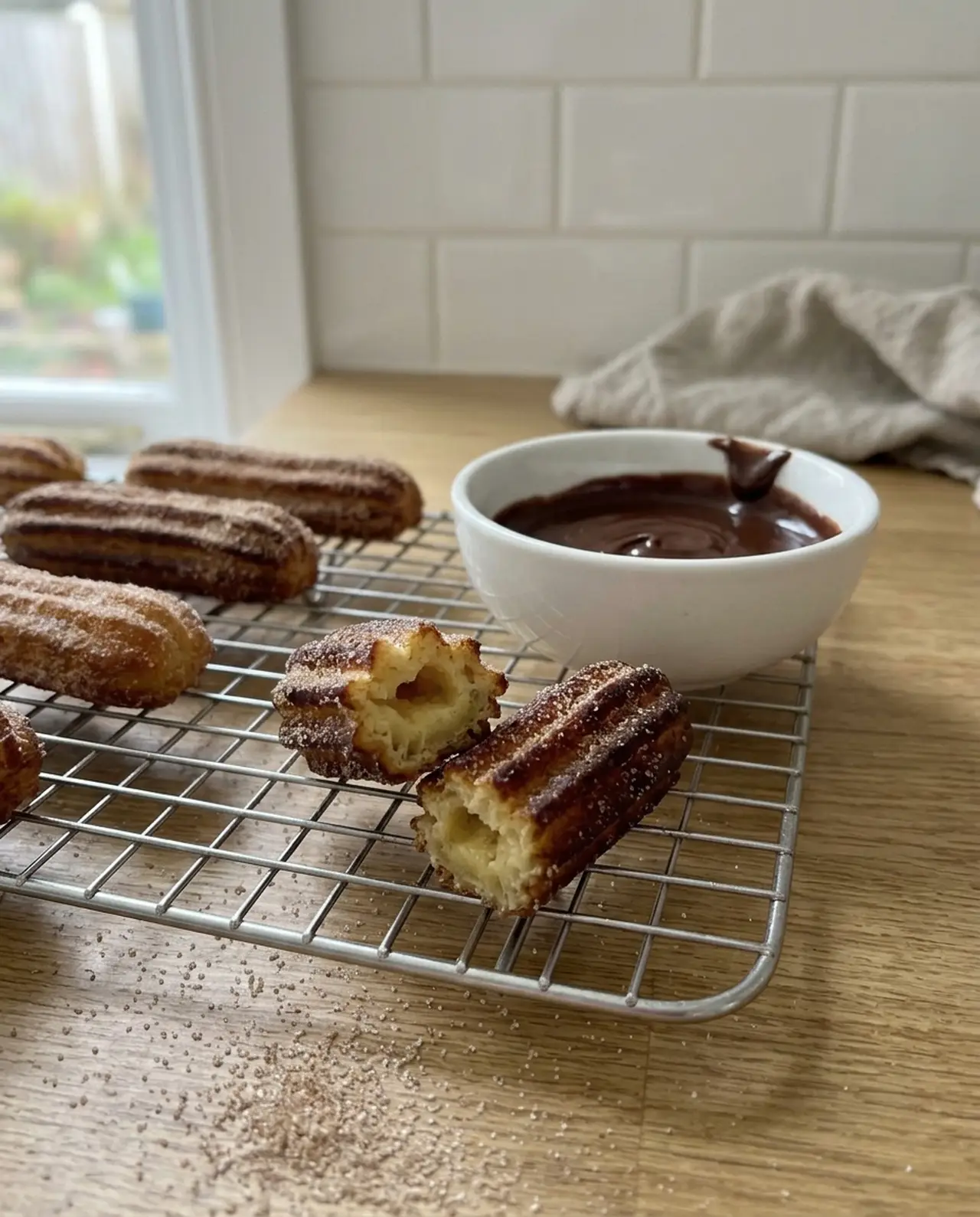
The churro cart at our county fair fries theirs in a vat old enough to vote, and I say that with respect, because those churros are excellent and I was not about to recreate the vat in my kitchen. Deep frying at home means a quart of oil, a splatter zone, a lingering smell, and the question of what to do with the oil afterward, all for a dessert that takes four minutes to eat.
The air fryer version is not a compromise I settled for. It took me a while to believe this myself, but churro dough is steam-leavened pastry, the same choux family as eclairs and cream puffs, and a close relative of the beignets that face the same no-fryer problem, and choux does not actually need oil. It needs fast heat around a ridged shape. What it does need, when the oil leaves, are three adjustments nobody's deep-fry instincts supply, and those three adjustments are this page.
Quick answer: Make a quick stovetop choux, beat in the eggs to the V test, and pipe 4 inch sticks through a large open star tip onto parchment. Freeze the piped sticks 30 minutes, then lift them off the parchment straight onto the lightly greased basket and bake at 360°F for 9 to 11 minutes, no flipping, until the ridge tips are mahogany. Brush with melted butter, roll in cinnamon sugar, and eat within the hour, which will not be difficult.
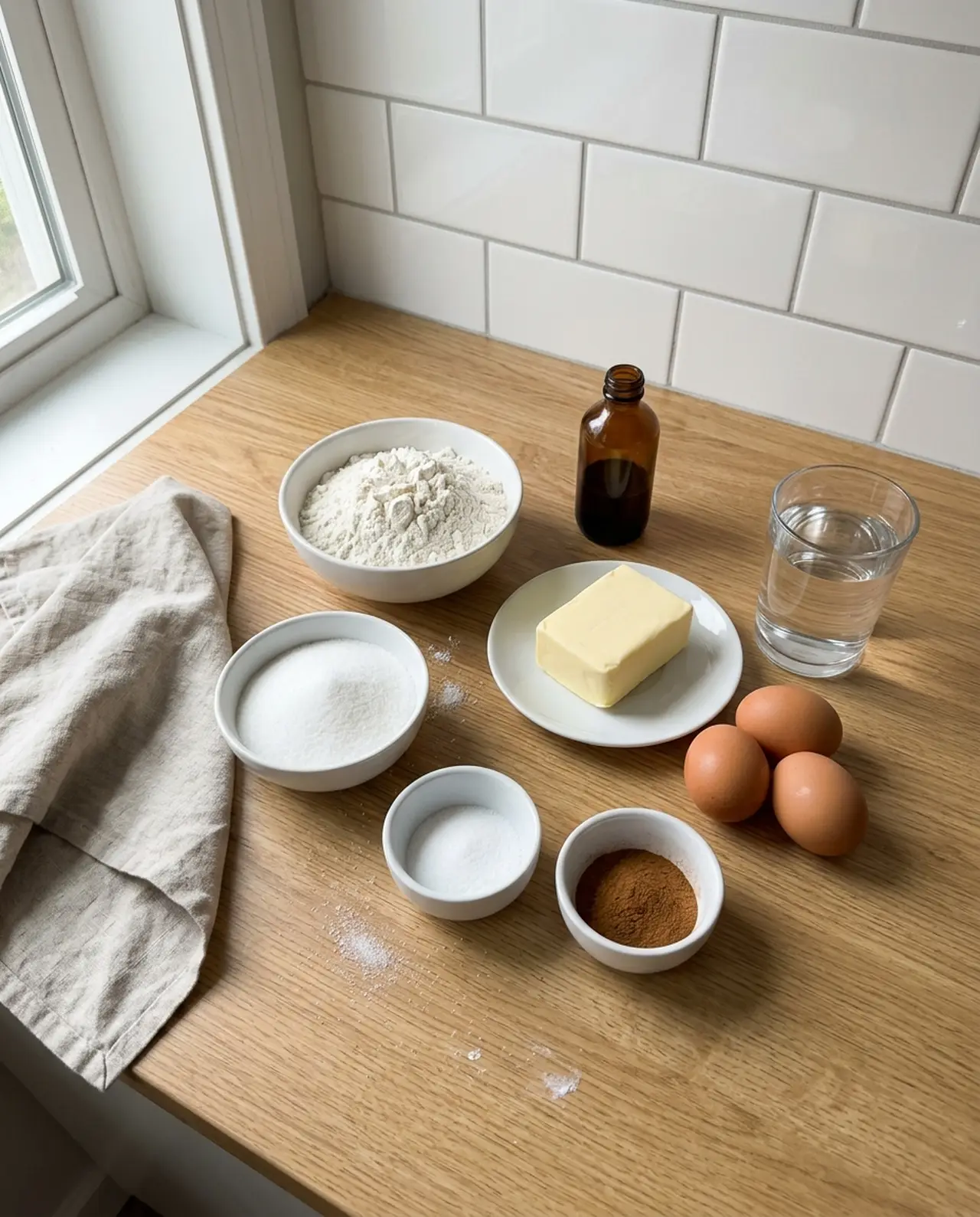
Why oil minutes do not convert to air minutes
A note before the numbers, because this is the one recipe where people try to import deep-fryer settings directly. Oil at 375°F and air at 375°F are not the same weather: oil transfers heat many times faster than air, which is why a churro fries in 2 to 3 minutes but bakes in 9 to 11. The air fryer calculator converts oven recipes, where air is talking to air, and it does that honestly; no calculator anywhere converts oil to air, because the physics changes, not just the numbers. So treat this page as the conversion chart for churros specifically: 360°F, 9 to 11 minutes, and the extra minutes are not a penalty, they are the same total heat delivered by a gentler messenger. Everything else on the site's dial lives in the air fryer baking chart.
The dough is choux, and choux loves this machine
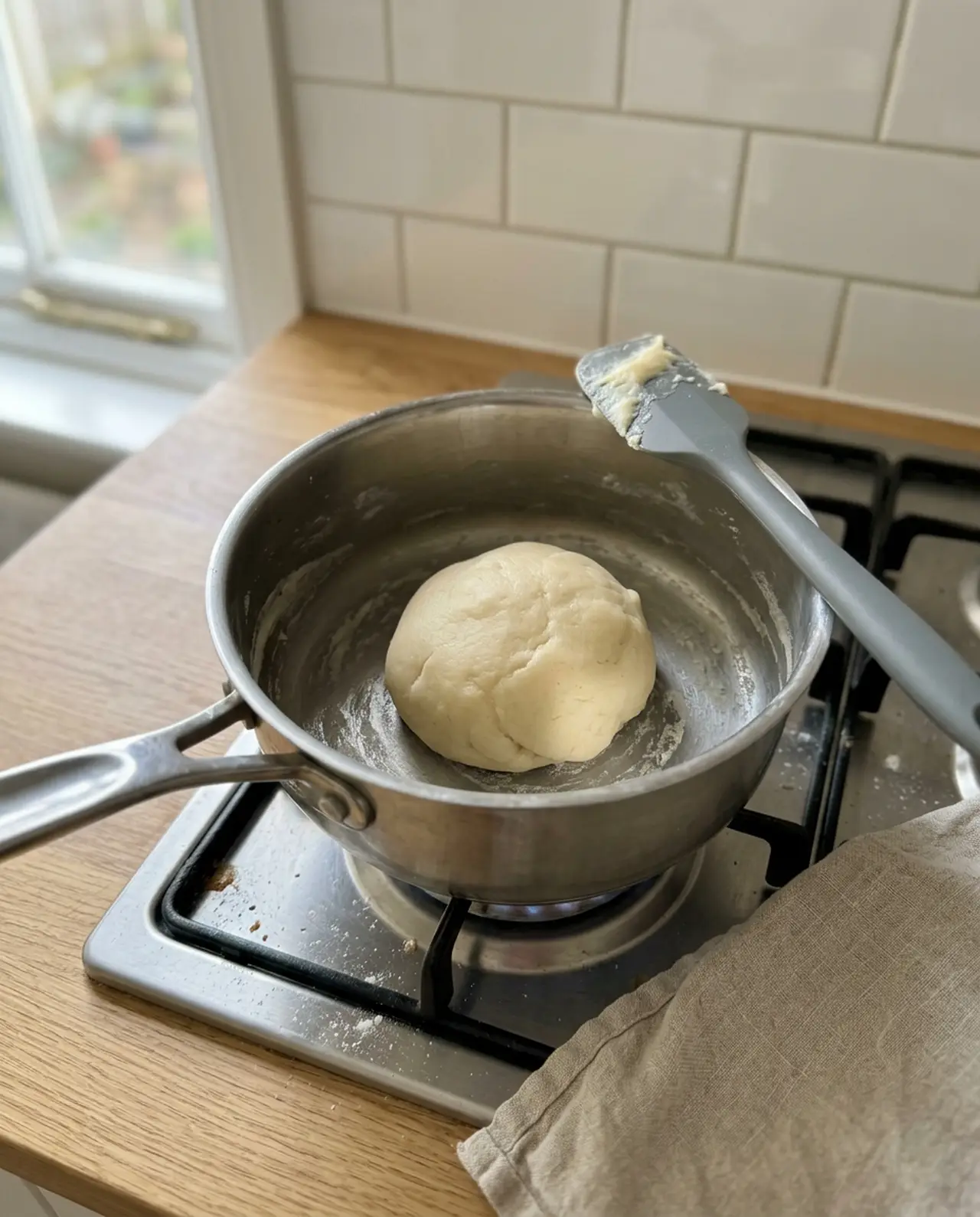
Churro dough is a cooked paste: water and butter boiled, flour stirred in over heat until it forms a ball and films the pan floor, then eggs beaten in off the heat. That pre-cooking gelatinizes the starch so the paste can hold a lot of egg, and the egg water is the engine. In the heat, it flashes to steam, the pastry puffs, and the outside sets around the puff. Steam leavening needs no oil, only fast surrounding heat, which is the one thing an air fryer has in surplus.
- Cook the flour a full minute after the ball forms. The thin film on the pan bottom is the sign the starch is ready. An undercooked paste holds less egg and puffs less.
- Cool the paste 5 minutes with occasional stirring, no longer. Recipes telling you to wait 25 or 30 minutes are guarding against scrambled eggs with a sledgehammer; the paste only needs to drop below egg-cooking temperature, about warm-not-hot to a clean finger, and five stirred minutes gets it there. Half an hour just makes stiff paste that fights the piping bag.
- Eggs one at a time, each fully beaten in before the next, because the slippery-then-smooth cycle is how choux absorbs them.
The V test: getting the eggs right
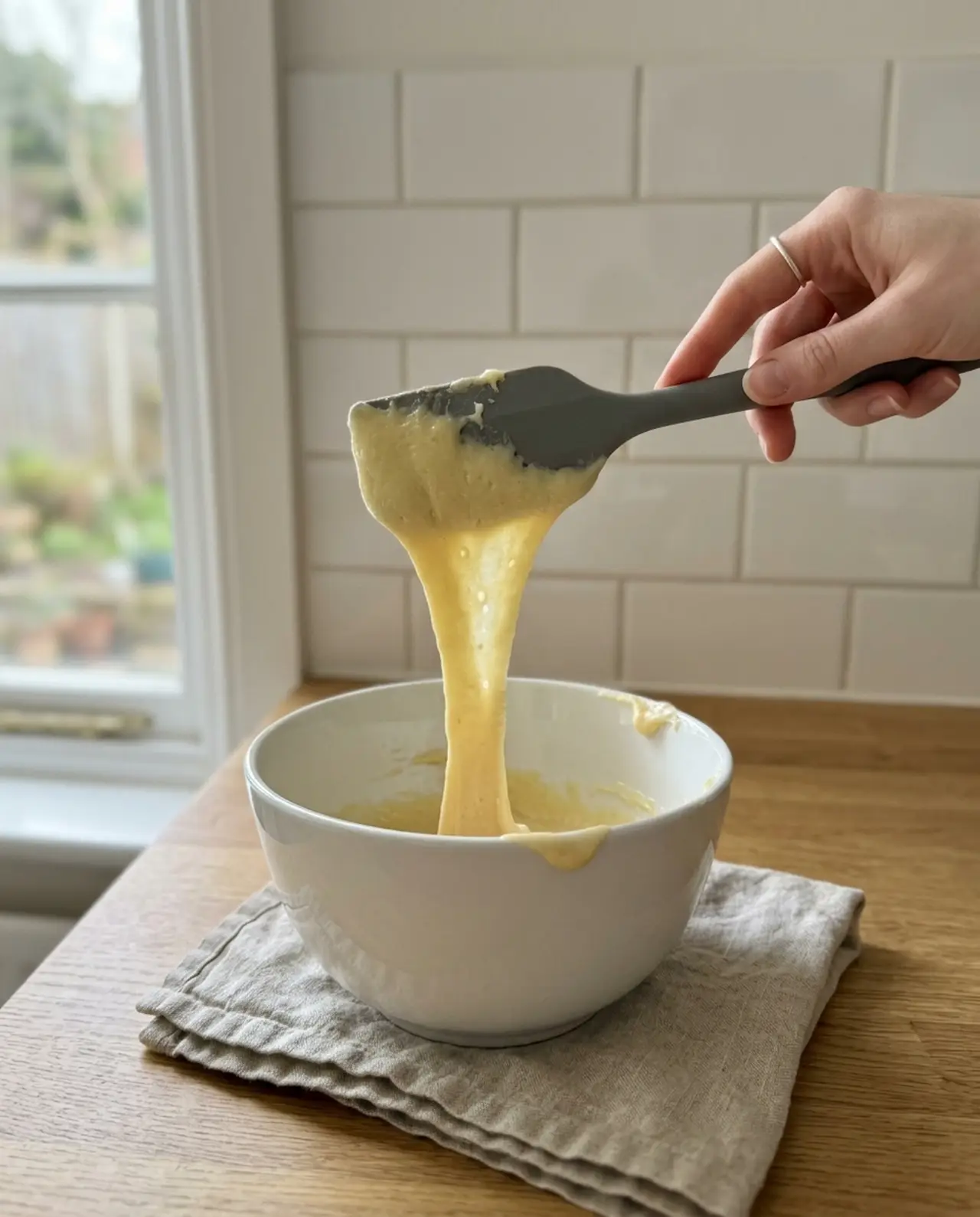
Egg quantity is the one place choux punishes obedience, because eggs vary and paste dryness varies, so the recipe's "2 eggs" is a strong suggestion and your eyes make the final call. The test is old, reliable, and strangely absent from every churro page I have read: lift the spoon and watch the paste fall. It should tear off in a thick ribbon that leaves a V hanging from the spoon.
- No V, paste clings in a lump: too dry. Beat one egg in a cup and add it a tablespoon at a time until the V appears.
- Paste streams off like batter: too wet, and there is no undo. This is why the second egg goes in gradually if the paste already looks close.
- Why it matters here specifically: a too-dry paste pipes dense pencils that bake heavy; a too-wet one slumps its ridges flat even after freezing. The V is the exact middle: stiff enough to hold ridges, wet enough to steam-puff.
The star tip is structural
The ridges on a churro are not branding. They are engineering, and the tip that makes them is the most important piece of equipment on this page:
Ridges are crunch
The points of the star run ahead of the valleys in browning, so every bite carries crisp ridge tips over a tender base. A round-tip churro is a doughnut stick: one uniform surface, one uniform softness, no shatter.
Ridges are steam vents
The grooves give expanding steam somewhere to flex, which is why star-piped churros bake evenly while smooth ones tend to burst a seam along one side.
Size matters more than brand
A large open star, about a half inch across, is correct. Small decorating stars extrude skinny ropes that bake through before the ridges brown, all crunch and no custard.
No tip in the drawer? Snip a half inch off a sturdy zip bag's corner and you get smooth churros that taste right and crunch less; honest, but once you have eaten a ridged one, you will buy the tip.
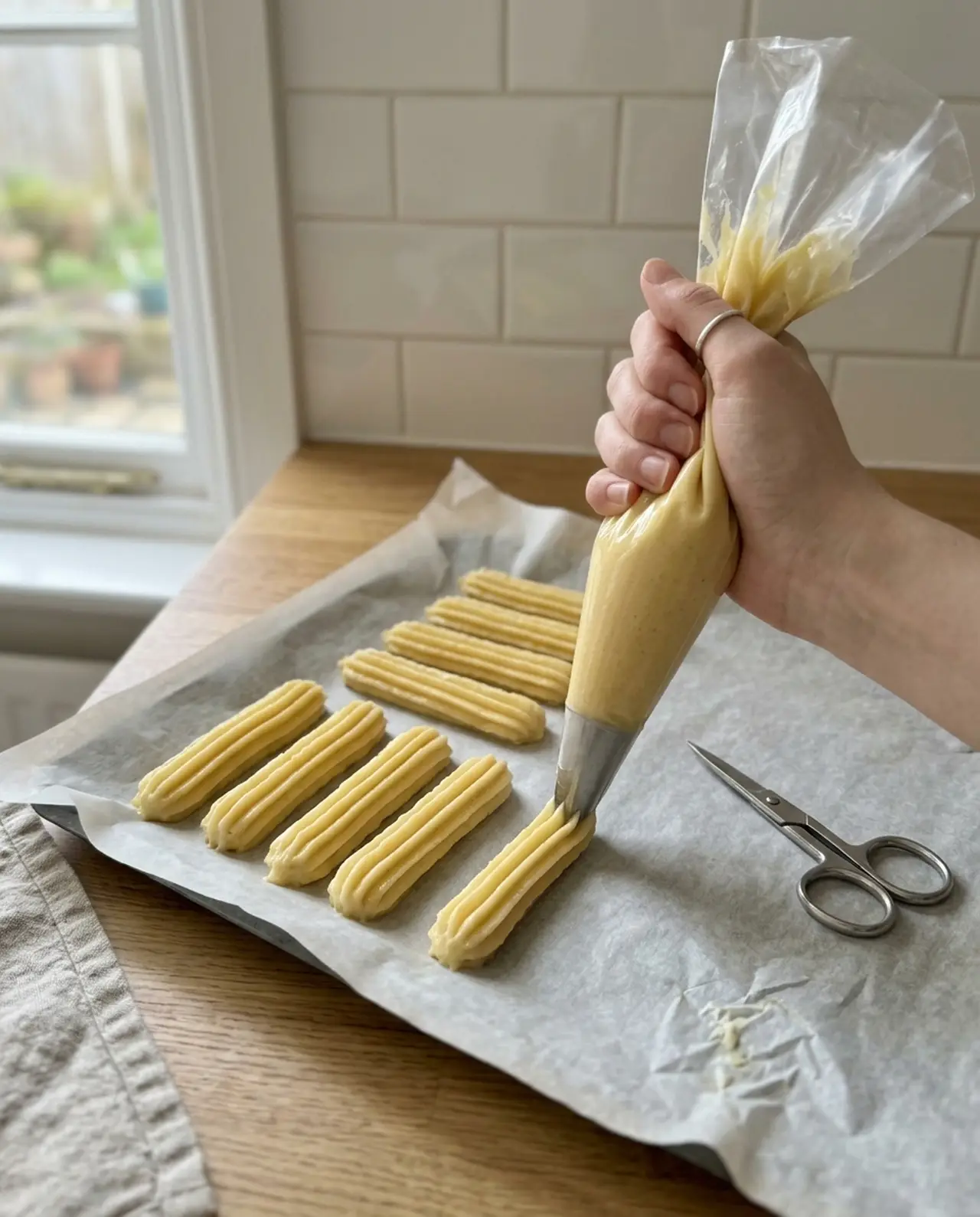
The freezer set
Here is the adjustment the deep fryer never asked for. In oil, a piped churro's surface sets in the first second. In an air fryer, warm soft choux sits in a warming basket while the element climbs, and its beautiful ridges relax and slump before the heat can set them. The fix costs nothing but patience:
- Pipe the sticks onto a parchment-lined tray, 4 inches each, cutting the paste off the tip with scissors, and freeze them 30 minutes. An hour is better; the ridges set firmer and the sticks handle like chalk.
- Frozen sticks transfer like pencils: straight off the parchment onto the lightly greased basket, an inch apart. The parchment stays behind; a bare basket browns the underside, and a rigid frozen stick needs no paper support. The liner rules live in the foil and parchment guide.
- No flipping, for the reason the breadsticks established: a ridged cylinder is a shape the fan wraps completely. The churros bake evenly on all faces untouched.
- Space them. Crowded churros steam each other's ridges soft. Two batches of seven beats one damp batch of fourteen, and the second batch runs about a minute faster on warm metal.
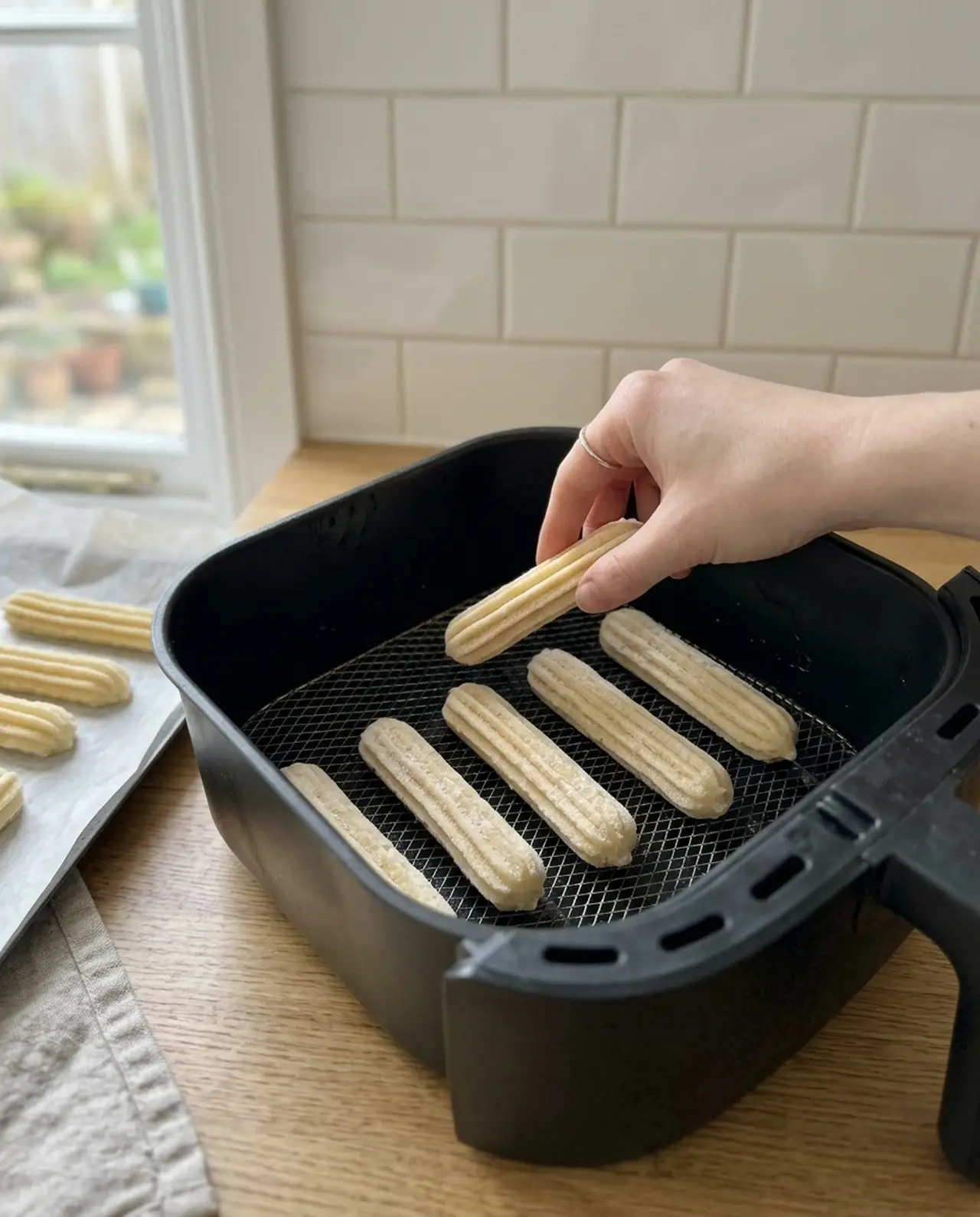
How to make them
- Boil the base: 1 cup water, 6 tablespoons butter, 2 tablespoons sugar, 1/4 teaspoon salt, to a full rolling boil.
- Add 1 cup flour all at once, off the heat, stirring hard, then return to low heat and stir 1 minute until the paste balls up and films the pan floor.
- Cool 5 minutes, stirring occasionally, to warm-not-hot.
- Beat in 2 eggs one at a time plus 1 teaspoon vanilla, through the slippery stage to smooth and glossy, checking the V test before deciding whether the paste wants the last splash of egg.
- Pipe 4 inch sticks through a large open star tip onto a parchment-lined tray, snipping each off with scissors. Freeze 30 to 60 minutes.
- Bake at 360°F, 9 to 11 minutes, frozen sticks straight on the lightly greased basket, an inch apart, no preheat and no flipping, until the ridge tips are deep mahogany and the valleys gold.
- Brush the hot churros with melted butter and roll immediately in cinnamon sugar, the order explained below.
- Serve within the hour, with a dip from the next section, while the outside still shatters.
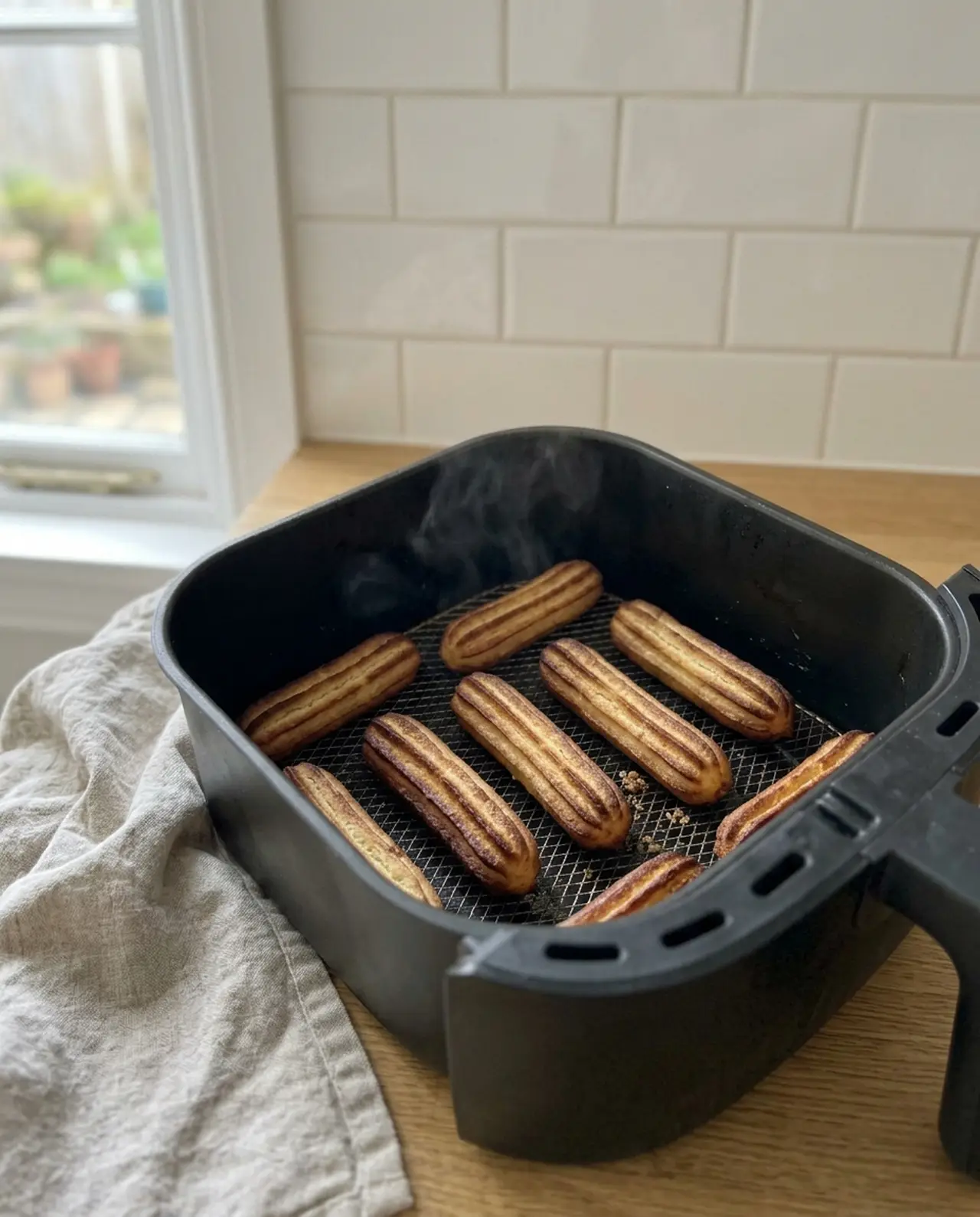
The coating, in the right order
A deep-fried churro exits the oil wearing a film of fat, and cinnamon sugar sticks to it on contact. An air-fried churro comes out dry-surfaced, and sugar rolled onto a dry churro falls off in the bag. The butter brush is not a flourish; it is the replacement for the missing oil film:
| Step | Detail | Why |
|---|---|---|
| 1. Brush hot | 2 tablespoons melted butter, thin coat, straight from the basket | Recreates the fat film the fryer used to provide, and adds the fried-adjacent richness |
| 2. Roll immediately | 1/2 cup sugar + 2 teaspoons cinnamon in a shallow dish, roll to coat | Butter still liquid means full coverage in the grooves, not just the ridge tips |
| 3. Rest 2 minutes on a rack | Not on a plate | The coating sets and the bottoms keep their crunch instead of steaming |
This is the same butter-then-coating sequence the cinnamon sugar soft pretzel variation uses, the same law the donut holes are built on, and the same after-not-before rule every finish on this site obeys: butter and sugar meet the pastry once the machine is done with it.
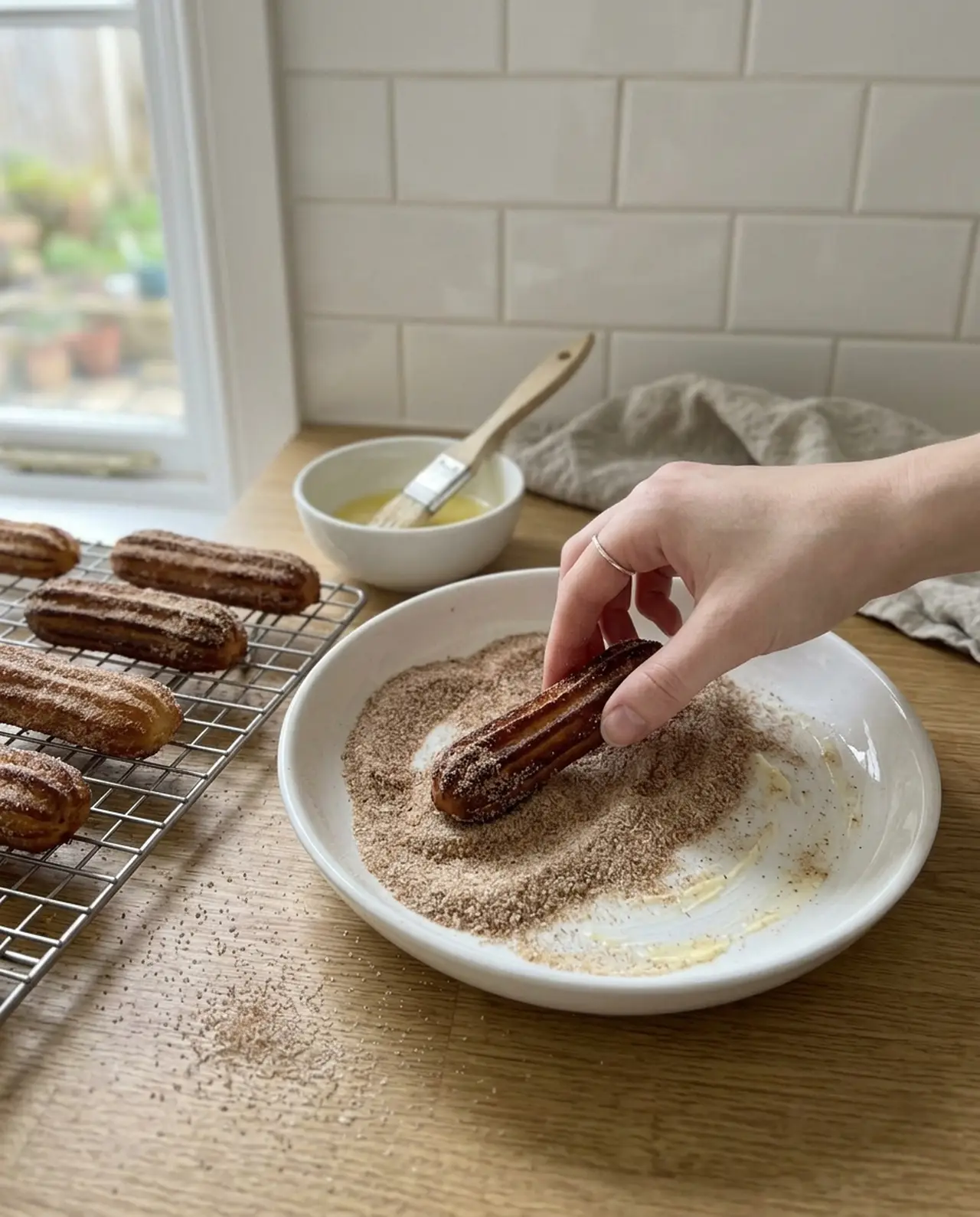
Two dips worth the name
- Mexican-style chocolate, 5 minutes: heat 1/2 cup heavy cream to steaming, pour over 3/4 cup chopped dark chocolate, wait 2 minutes, stir smooth with a pinch of cinnamon and a smaller pinch of cayenne. Thick, glossy, faintly warm in both senses.
- Cheater's dulce de leche: a can of dulce from the Latin aisle, warmed with a spoonful of cream to a dipping loose. Zero shame, total success.
- The house move: leftover cream cheese frosting from the cinnamon rolls, loosened with a splash of milk. Churros and cinnamon rolls are cousins by marriage anyway, and the whole fairground branch of the family meets at the funnel cake.
Store-bought frozen churros
| Product | Temp | Time | Note |
|---|---|---|---|
| Frozen pre-fried churros | 375°F | 5 to 6 min | Straight from the bag, never thawed, per the standing no-thaw law. They re-crisp shockingly well |
| Frozen filled churros | 350°F | 6 to 8 min | Cooler dial protects the filling from erupting; check one at 6 |
| Your own frozen raw sticks | 360°F | 10 to 12 min | The make-ahead jackpot below: this recipe, piped and frozen solid, bakes on demand |
Bagged frozen churros still want the butter brush and fresh cinnamon sugar after baking; the factory coating is always sparse. Two minutes of effort moves them from vending machine to fair cart.
Troubleshooting
| What you got | Why | Fix |
|---|---|---|
| Ridges slumped smooth | Piped sticks went in soft, or the paste was too wet. | The full 30 minute freeze, and the V test before piping. |
| Soggy, pale churros | Overcrowding; they steamed each other. | An inch apart, two batches, and patience. |
| Dense, heavy centers | Paste too dry, or a small tip extruding dense ropes. | Egg to the V, and a half inch open star. |
| Hollow, dry sticks | Overbaked past mahogany into the eclair zone. | Pull when ridge tips are mahogany and valleys gold; the custard center is the prize. |
| Burst seam down one side | Smooth-piped or round-tip churros with no ridge vents. | The star tip, which is structural, not pretty. |
| Sugar fell off in the bag | Rolled dry, no butter film. | Brush hot, roll immediately, rest on a rack. |
| Scrambled egg flecks in the paste | Eggs into hot paste. | Five stirred minutes of cooling first; warm, not hot, to a finger. |
| One batch darker than the next | Warm basket head start, or a hot spot. | Minus one minute per later batch, rotate positions at minute 5 if your machine needs it. The burning guide covers chronic cases. |
Failures that stalk you across recipes live in the troubleshooting guide, and this bake skips the preheat like most on the site; the preheat guide holds the roster.
Storage and reheating
- Churros are a first-hour food. The custard center migrates moisture outward from minute one, and by hour three the shatter is a memory. Plan quantities for the crowd in the room.
- Reheat stragglers at 350°F for 3 minutes, which brings back most of the crunch; re-roll in sugar if they will hold still for it.
- The real storage move is raw: piped sticks freeze solid on their tray, then keep 2 months in a zip bag, and bake from frozen at 360°F for 10 to 12 minutes whenever the craving files a request. Fresh churros in twelve minutes, forever, is the best argument this page makes.
- Doubling for a crowd: the recipe scaler resizes the paste honestly, but pipe and freeze the extra rather than baking it; a crowded basket steams churros instead of crisping them.
- The paste itself holds a day in the fridge in the piping bag; let it lose its chill 20 minutes before piping, or pipe cold with strong opinions and stronger hands.
Frequently asked questions
QHow long do churros take in an air fryer?
9 to 11 minutes at 360°F for homemade choux churros baked from their 30 minute freeze, no flipping, done when the ridge tips are deep mahogany and the valleys gold. Store-bought frozen churros run 5 to 6 minutes at 375°F straight from the bag. Total project time for homemade is about an hour and a quarter, most of it the freezer doing its part.
QWhy do you freeze churros before air frying?
Because the air fryer lacks the deep fryer's instant set. In oil, a churro's surface firms in the first second; in a basket, soft piped choux sits in warming air and its ridges slump before the heat can fix them. Thirty frozen minutes turns each stick rigid, so the ridges survive to bake sharp, and the frozen sticks transfer from parchment to basket like pencils instead of like toothpaste.
QWhat dough are churros made of?
Choux pastry, the same steam-leavened family as eclairs and cream puffs: water and butter boiled, flour cooked in until the paste balls up, then eggs beaten in off the heat. The egg water flashes to steam in the machine and puffs the pastry from inside while the surface sets around it. That is why churros need no oil to rise, only fast surrounding heat, which is the air fryer's whole personality.
QDo air fryer churros taste like deep-fried ones?
Honest answer: 9 out of 10, and the missing point is the faint fried-oil flavor, which the post-bake butter brush mostly replaces. The crunch, the custardy interior, and the cinnamon sugar are all fully present. Against that missing point, you skip a quart of oil, the splatter, the smell, and the disposal question, and you can bake a batch from frozen in twelve minutes on a Tuesday, which the vat cannot offer.
QWhy did my churros come out flat or smooth?
Either the ridges slumped because the sticks went in unfrozen or the paste was too wet, or there were never ridges to lose because the tip was round or too small. Check the paste against the V test, use a large open star about a half inch across, and give the piped sticks their full 30 minutes in the freezer. The ridges are structural: they carry the crunch and vent the steam.
QWhy isn't my cinnamon sugar sticking?
The churros were rolled dry. A deep-fried churro wears a film of oil that glues the sugar on; an air-fried one comes out with a dry surface. Brush the hot churros with melted butter the moment they leave the basket, roll them in cinnamon sugar while the butter is still liquid so the coating reaches into the grooves, then rest them 2 minutes on a rack to set.
QCan you make churros ahead of time?
Yes, at the raw stage, which is also the best version of this recipe. Pipe the sticks, freeze them solid on their tray, and bag them for up to 2 months. They bake from frozen at 360°F in 10 to 12 minutes with no thawing, then take the butter and sugar as usual. Baked churros do not hold; they are a first-hour food, so the freezer full of raw sticks is the real make-ahead.
QWhy are my churros hollow and dry inside?
Overbaked. Choux keeps steaming as it bakes, and past the right moment the custardy interior finishes drying into an eclair-style hollow. A churro wants to stop earlier than an eclair would: pull when the ridge tips reach deep mahogany while the valleys are gold. The center should read as soft, eggy custard, which is the texture difference between a churro and a breadstick in costume.
QHow do you cook frozen store-bought churros in an air fryer?
375°F for 5 to 6 minutes straight from the bag, never thawed, in a single spaced layer with no flipping. Filled varieties drop to 350°F for 6 to 8 minutes so the centers warm without erupting. Then give them the homemade finish, melted butter brushed on hot and a fresh roll in cinnamon sugar, because the factory coating is always thinner than it should be.
Never overbake again
Get our one-page times & temps cheat sheet, plus a new tested recipe each week.
No spam · unsubscribe anytime