
Air Fryer Beignets: New Orleans Flavor, No Vat of Oil
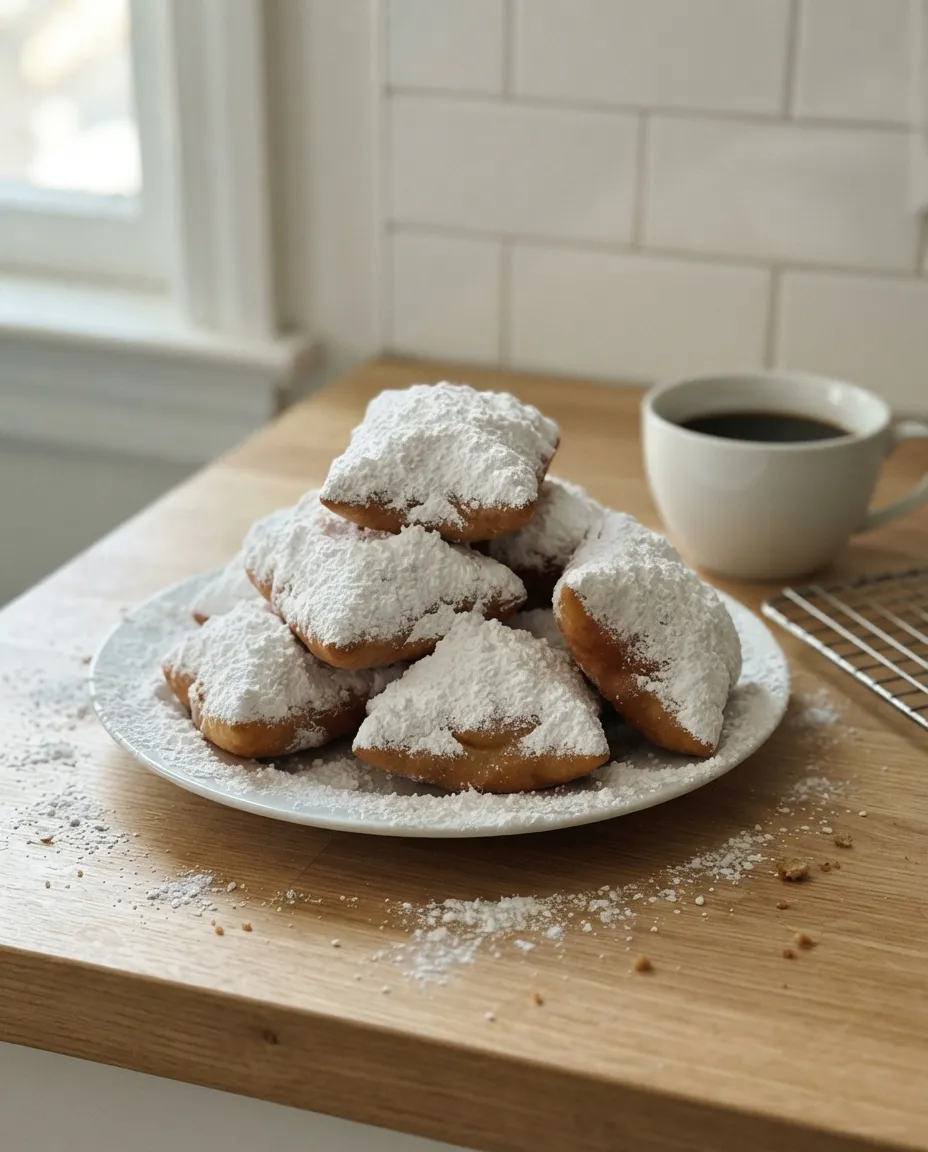
Let us settle the argument before the flour comes out: a beignet that never touched hot oil is not identical to one from a French Quarter cafe, and any recipe promising otherwise is selling you something. What the basket does deliver is nearly everything you actually remember about a beignet: the warm, eggy, faintly sweet pillow, the crisp-edged squares, the snowfall of powdered sugar that ends up on your shirt as evidence, and the coffee that suddenly tastes like a vacation. It skips the quart of 370 degree oil, the splatter, and the smell that outstays the weekend. This page makes the real yeasted dough, solves the one problem air fryer beignets genuinely have, sugar that will not stick to a dry surface, and offers the canned biscuit shortcut with its dignity intact.
What’s on this page
- What survives without the oil
- The dough: soft, eggy, overnight-friendly
- The sugar rule: butter is the glue
- Roll, cut, rest
- Temperature and timing
- What done looks like
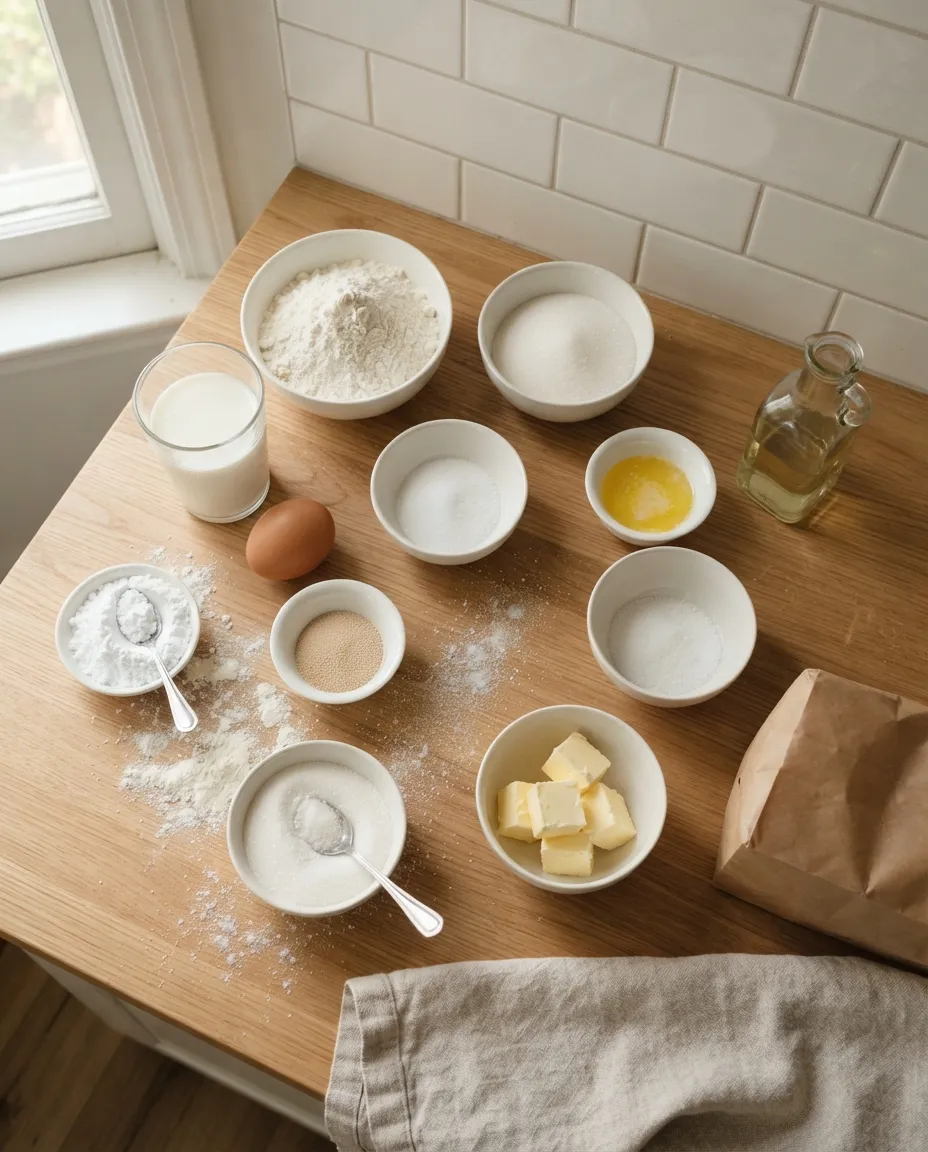
- Ingredients
- How to make them
- The canned biscuit shortcut
- Serving, coffee, the second morning
- Fixing what goes wrong
- Frequently asked questions
What survives without the oil
A fried beignet puffs into a hollow pillow because hot oil hits all sides at once and flashes the dough's moisture to steam faster than the crumb can set around it; the middle inflates and sometimes stays airy to the point of empty. Dry heat cannot fully reproduce that violence, so an air fryer beignet bakes up as a soft, light, slightly breadier square, closer to the world's most tender dinner roll wearing dessert clothes. That is the whole honest difference, and here is what it does not touch: the flavor of an enriched yeast dough, eggy and faintly sweet, is identical, because flavor lives in the dough, not the oil. The crisp edges survive. The sugar ritual survives. The pairing with dark coffee survives completely.
This site has run the no-fryer play with open eyes before, on funnel cake and air fried Oreos, and the verdict is the same here: judged as itself, the air fryer beignet is a genuinely lovely thing, and judged against a vat of oil in your kitchen on a Tuesday, it wins on points before the bake even starts.
The dough: soft, eggy, overnight-friendly
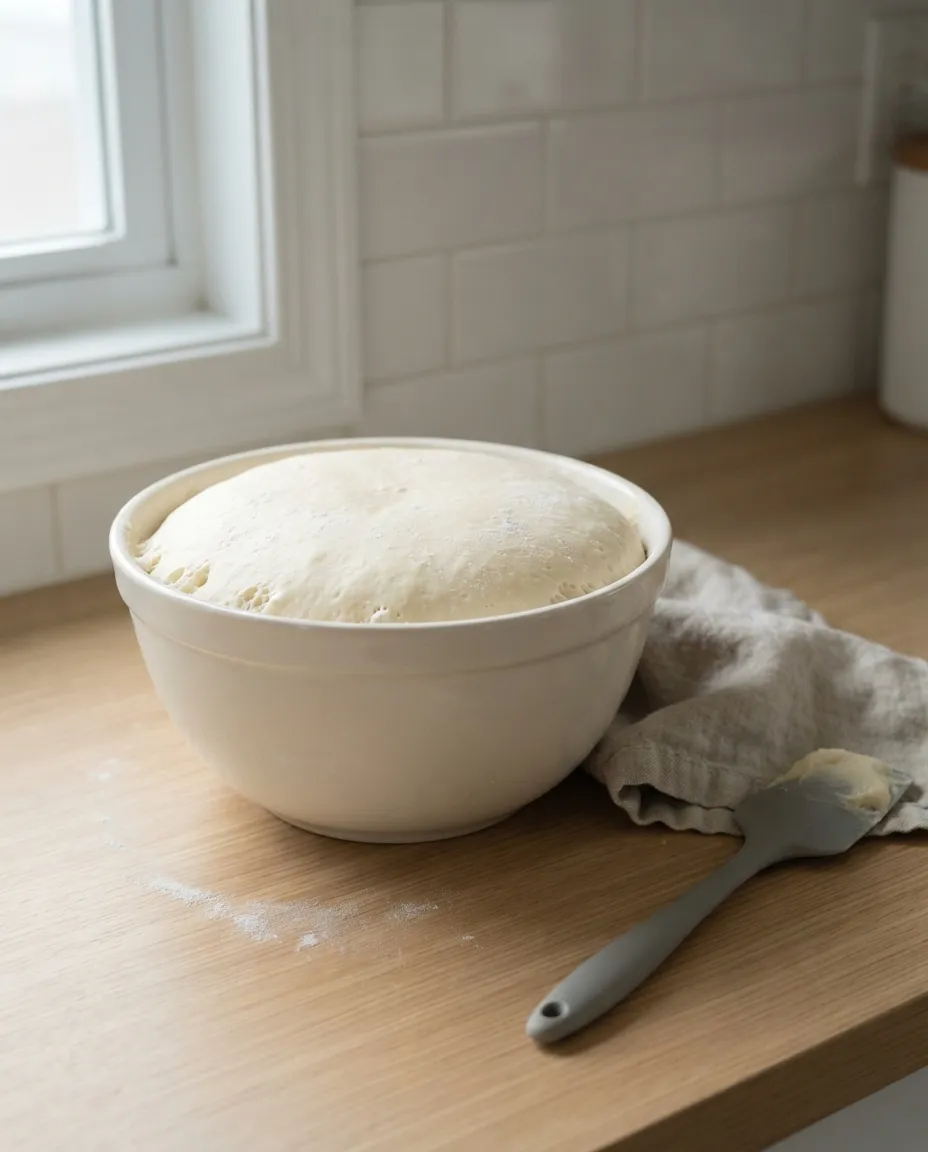
Real beignet dough is an enriched yeast dough, milk and egg and butter and a little sugar, mixed soft and left slightly sticky, and no shortcut dough tastes like it. It is the same soft, milky family as this site's kolaches and glazed donuts. The good news is it asks for no machine and no technique: stir it together in one bowl, knead it in the bowl for two lazy minutes with a floured hand, and let time do the rest. One hour on the counter doubles it and makes afternoon beignets; better, the bowl goes into the refrigerator overnight, where the slow cold proof deepens the flavor and firms the sticky dough into something that rolls like a dream straight from the fridge. Cold dough is easy dough, and morning beignets that only cost you ten minutes of the morning are the strongest argument this page owns.
Keep the dough on the soft side even when it tempts you to add flour: softness is where the pillow comes from, and an enriched dough that gets over-floured bakes tight and dry. If your bakes trend dry in general, the machine-side fixes live in how to avoid dry air fryer bakes; the dough-side fix is simply restraint at the flour jar.
The sugar rule: butter is the glue
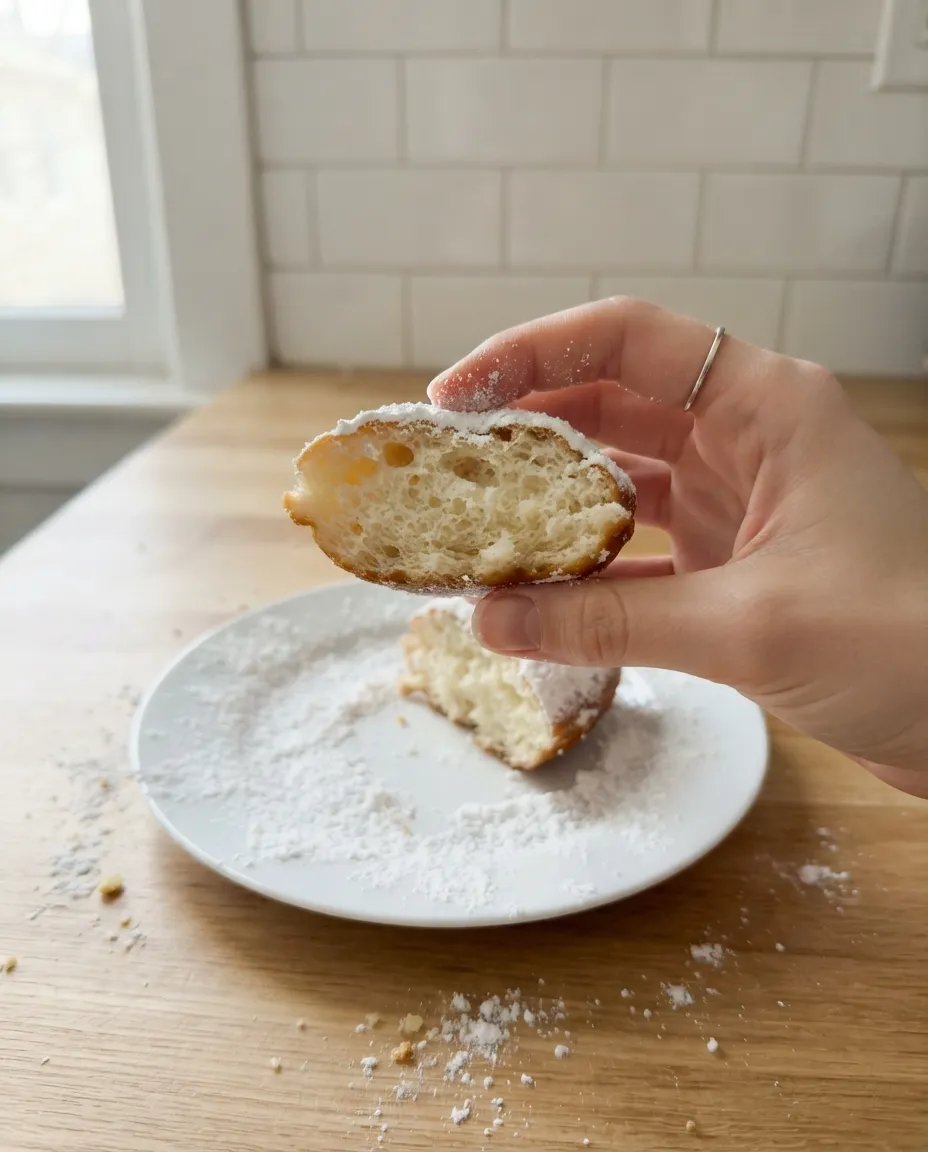
Here is the problem no ranking recipe names, and the one that actually decides whether your beignets read as beignets. Powdered sugar sticks to a fried beignet because its surface is wet with oil. An air-fried surface is dry, and sugar poured over dry bread slides off, leaving a sad dusting where a snowdrift belongs. The fix is to give the sugar its glue back on your own terms: brush the beignets with melted butter the moment they leave the basket, both sides, then sugar them within the minute, generously enough to feel irresponsible. The butter does what the fry oil did, holding a thick coat, and it tastes better doing it.
The timing matters at both ends. Sugar on a scorching surface half-melts into gray paste; sugar on a cold one falls off no matter what you brushed. Butter out of the basket, one minute of patience, then the snowfall, ideally executed inside a paper bag: half the powdered sugar, six beignets, fold the top and shake like you mean it. It is the traditional move, it coats every face at once, and it is the most fun step on this website.
Roll, cut, rest
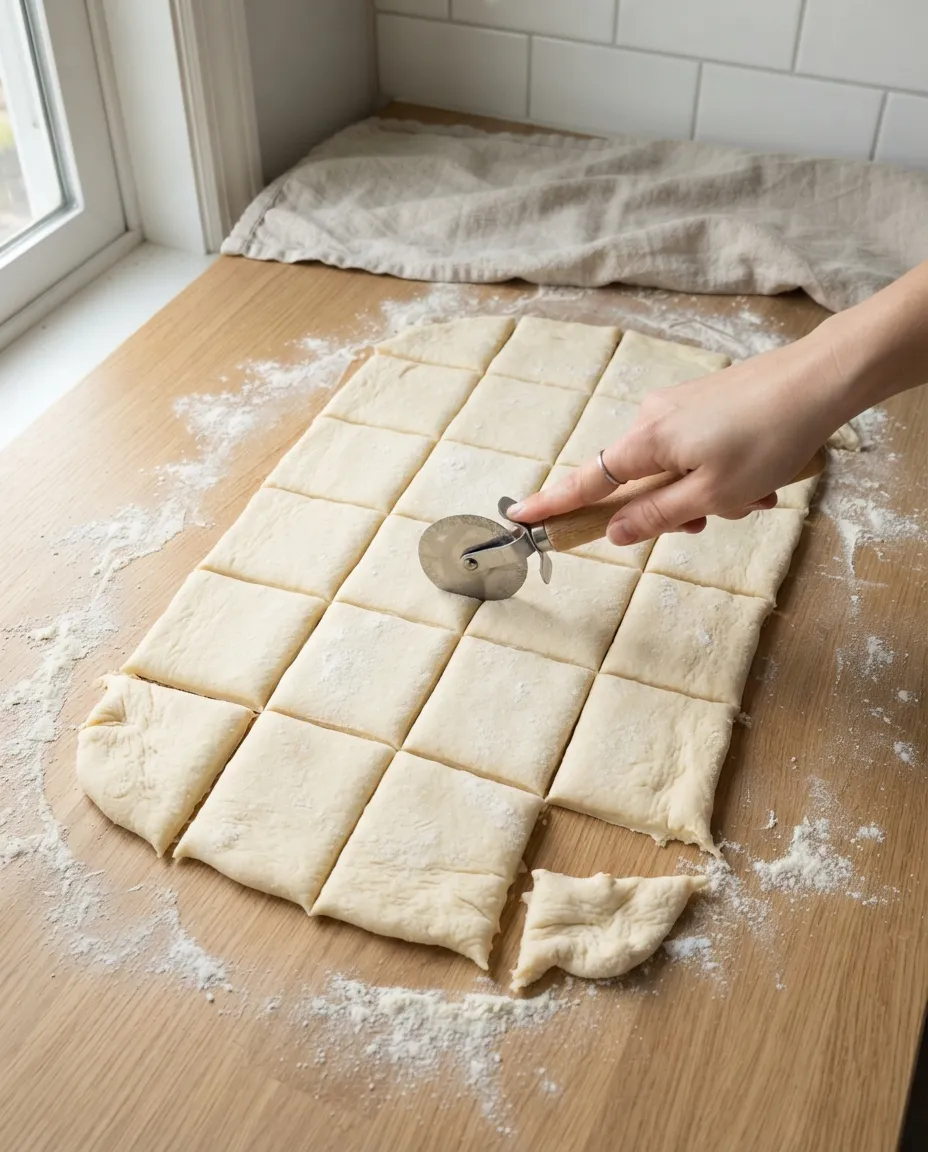
Roll the dough on a floured counter into a rectangle about a third of an inch thick, roughly 10 by 15, and cut it into 24 squares with a pizza wheel. No rerolling, no rounding, no fussing over ragged edges: crooked squares are the authentic ones, and the scraps at the ends are the cook's wages. Then the step that separates puffy from flat: let the cut squares rest 15 minutes, loosely covered, while the air fryer preheats. The cutting knocked gas out of the dough, and this short bench rest lets the yeast re-inflate the squares so they go into the heat already rising. Skip it and the beignets bake up dense and apologetic.
Temperature and timing
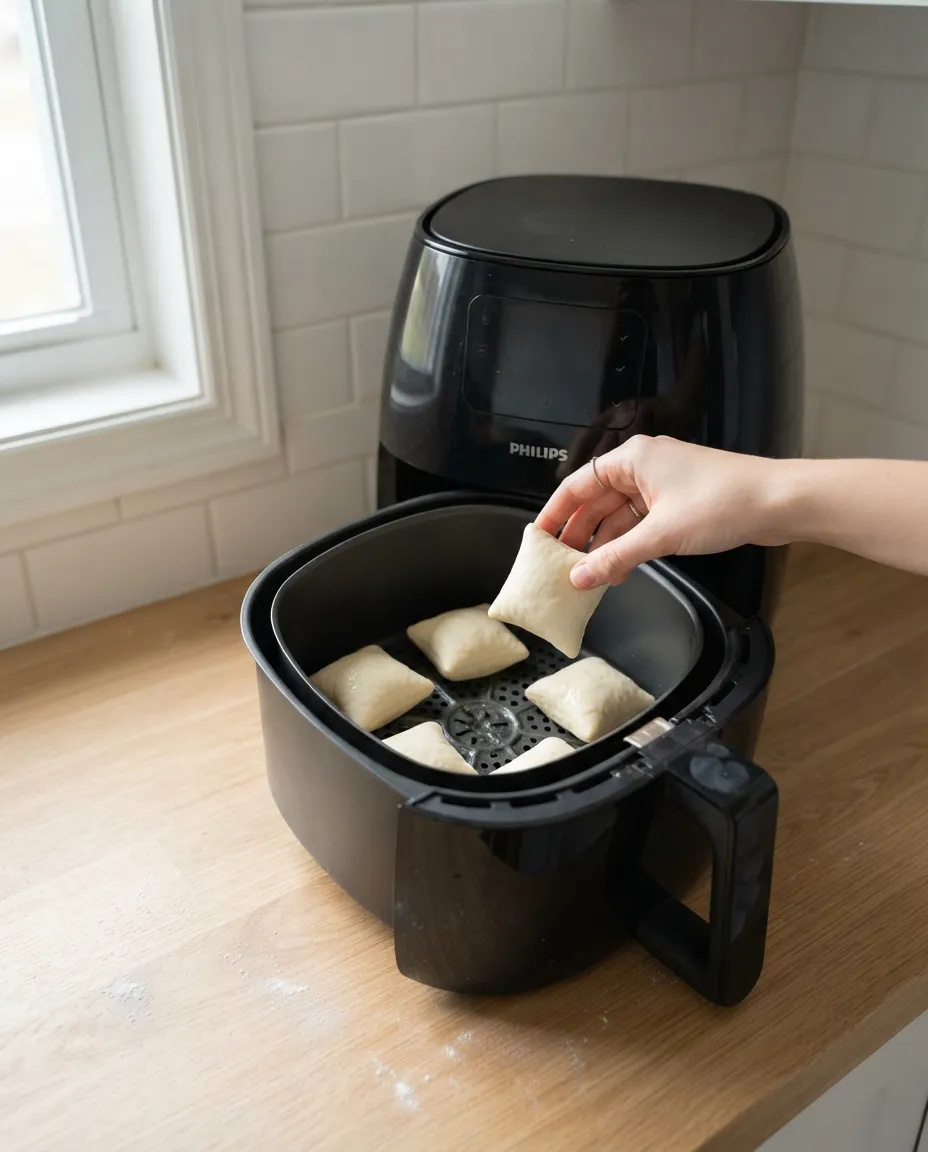
330°F for 6 to 8 minutes, flipped once at minute 4, in a preheated basket. The ranking recipes run 350 to 375, and enriched dough is exactly the wrong dough for it: milk, egg, butter and sugar all brown aggressively, and at 375 the squares hit mahogany outside while the centers are still gummy. At 330°F, the same setting this site's enriched yeast donut holes use, the color and the crumb finish together. The flip earns its place here, unlike on this site's pastry pages: a proofed dough square is sturdy, both faces want direct color, and one confident turn at minute 4 is nothing like rattling a sealed pastry.
Six to eight squares per batch with space between, bare oiled floor, no parchment, and brush the tops with melted butter going in for browning insurance. Batch two runs a minute faster. The 3 minute preheat matters because a proofed square wants its spring immediately; the general argument is in do you need to preheat an air fryer for baking. Fried beignets cook in 370°F oil, oven versions bake at 375, and our air fryer calculator would drop that to 350 for a basket; the last step down to 330 is the enrichment tax, the same one every eggy, sugary dough on the baking chart pays.
What done looks like
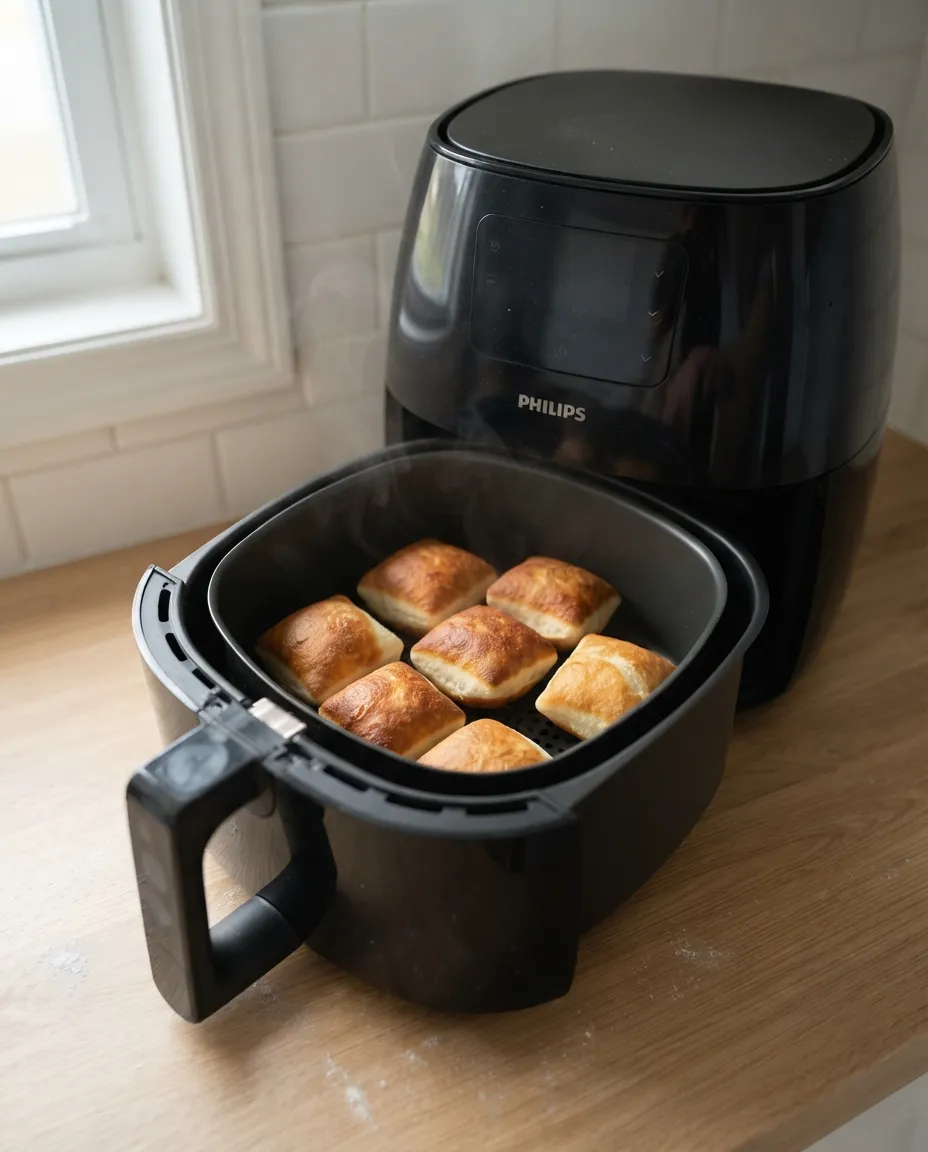
- Puff: visibly pillowed, roughly doubled in height, with seams stretching pale at the sides like a well-fed cushion.
- Color: deep gold on both faces from the flip and the butter, lighter at the waistline. Fried-beignet bronze is not the target; that last shade was always the oil's signature.
- Spring: a gentle press on the side springs back fully. A lingering dent means 1 more minute.
- Inside, if you must: sacrifice a corner square; the crumb should be soft, moist and set, around 190°F on a probe, with no gummy stripe at the center.
Ingredients
For 24 beignets
- 1 cup whole milk, warm to the touch, not hot
- 2 1/4 teaspoons instant yeast (one packet)
- 1/4 cup granulated sugar
- 1 large egg
- 2 tablespoons butter, softened, plus 4 tablespoons melted for brushing
- 1/2 teaspoon fine salt
- 3 to 3 1/4 cups all-purpose flour, and restraint with the upper end
- 1 1/2 cups powdered sugar, which sounds like too much and is not
- Neutral oil for the basket floor, and a paper bag for the sugar shake
Milk hot enough to sting your wrist is hot enough to kill yeast. Warm like a bath, no further, and check the yeast's date before it costs you a morning.
How to make them
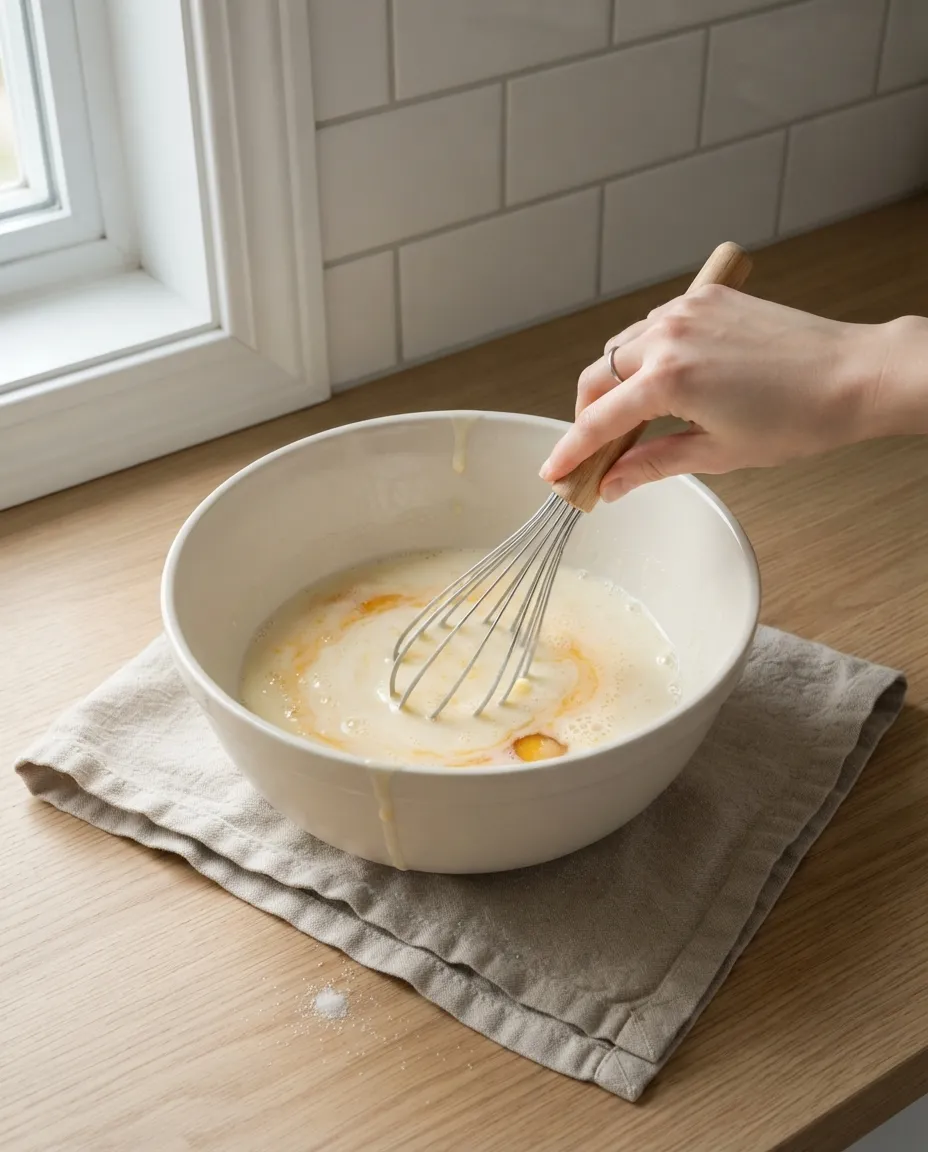
- Whisk the warm milk, yeast, sugar and egg in a large bowl, then stir in the softened butter, salt and 3 cups of flour until a soft, slightly sticky dough forms, adding the last quarter cup only if it will not hold together.
- Knead the dough in the bowl for 2 minutes with a floured hand, then cover and let it rise 1 to 1 1/2 hours until doubled, or refrigerate it overnight.
- Roll the dough on a floured counter into a rectangle about a third of an inch thick, roughly 10 by 15 inches.
- Cut 24 squares with a pizza wheel, no rerolling, and let them rest loosely covered for 15 minutes while the air fryer preheats at 330F for 3 minutes.
- Lightly oil the basket floor, lay in 6 to 8 squares with space between, and brush their tops with melted butter.
- Air fry at 330F for 6 to 8 minutes, flipping once at minute 4, until puffed and deep gold on both faces.
- Brush the hot beignets with melted butter on both sides the moment they come out.
- Wait one minute, then shake them, six at a time, in a paper bag with half the powdered sugar until snowed under.
- Repeat with the remaining batches, running each about a minute shorter, and serve warm with more sugar on top because there is no such thing as enough.
The canned biscuit shortcut
The internet's favorite beignet hack is a can of biscuits cut into quarters, and this site will not pretend otherwise or pretend it equals the yeast dough. It makes something real: crisp-edged, fluffy, sugar-coated dough bites, ready in 15 minutes flat, and children regard them as a miracle. Quarter regular canned biscuits, roll each piece gently toward round, and run them at 330°F for 4 to 5 minutes, turned once, the same dough family and numbers as everything on the canned biscuits page, and the same can this site turns into biscuit donuts and quarters for monkey bread. Then the identical finish: butter, minute of patience, paper bag, snowfall. Call them beignet bites and nobody at the table files a complaint. The yeasted version is for when the morning deserves ceremony; the can is for when it deserves rescue.
Serving, coffee, the second morning
Beignets are a first-hour food: the pillow is softest and the sugar thickest in the 20 minutes after the bag shake, so bake in batches while people eat rather than stacking a pyramid that goes stale for a photo. Dark coffee is not optional equipment, and if you can find chicory coffee, the pairing explains itself in one sip. A saucer of warm chocolate sauce or honey for dipping is off-script for New Orleans and on-script for a good time. For the mornings that want the same warm-yeast comfort with less flour on the floor, the cinnamon rolls hold the neighboring seat, churros are the other fried classic this basket does without a pot of oil, and the whole catalog lives at the recipe index with the technique pages under guides.
Second-morning plans, in order of quality: refrigerate the overnight dough and bake fresh, which is the whole point of the cold proof; keep baked, unsugared beignets airtight for a day and revive them at 300°F for 2 minutes, then butter and sugar as new; and never store a sugared beignet, which weeps into its own coat by noon. Sugar is a moment, not a state.
Fixing what goes wrong
| Problem | Cause | Fix |
|---|---|---|
| Dense, flat squares | Skipped the 15 minute bench rest, or dead yeast | Rest the cut squares while the machine preheats, and proof yeast you doubt in warm milk first |
| Dark outside, gummy middle | 350°F and up on an enriched dough | 330°F, the flip at minute 4, and the full 8 minutes when in doubt |
| Sugar slid off | Sugared a dry or cold surface | Butter both sides out of the basket, one minute, then the bag shake |
| Sugar turned to gray paste | Sugared while scorching hot | The one minute wait is the whole trick; hot melts, warm holds |
| Dry, bready crumb | Too much flour, or overbaked | Stop at a soft, tacky dough, pull at deep gold, and see the dry-bakes guide if it persists |
| Tops browned before the flip | Machine runs hot | Drop to 320°F and check at minute 3; the rest of the rescue kit is in the burning guide |
Frequently asked questions
QWhat temperature do you cook beignets in an air fryer?
330F for 6 to 8 minutes, flipped once at minute 4, in a basket preheated 3 minutes. Most recipes run 350F to 375F, but beignet dough is enriched with milk, egg, butter and sugar, all of which brown aggressively, and at those settings the outside goes mahogany while the center stays gummy. At 330F both faces take deep gold from the flip and the butter brush while the crumb sets through. The canned biscuit shortcut version runs the same 330F for 4 to 5 minutes, turned once.
QAre air fryer beignets as good as fried ones?
They are different, and honestly close. Frying flashes the dough's moisture to steam so fast that the beignet inflates into a part-hollow pillow; dry heat bakes the same dough into a soft, light, slightly breadier square. The flavor is identical, because it comes from the enriched yeast dough, not the oil, and the crisp edges and powdered sugar ritual survive intact. What you trade is the hollow puff; what you get back is no quart of oil, no splatter, no lingering smell, and a beignet you will actually make on a weekday.
QWhy will the powdered sugar not stick to my beignets?
Because the surface is dry. Sugar clings to fried beignets by way of the oil film on their surface, and an air-fried beignet has no such film, so sugar poured over it slides straight off. Restore the glue deliberately: brush the beignets with melted butter on both sides the moment they leave the basket, wait one minute so the surface is warm rather than scorching, then shake them in a paper bag with powdered sugar. Butter holds a thick coat exactly the way the fry oil did, and the bag coats every face at once.
QCan I make beignets with canned biscuit dough?
Yes, as long as everyone agrees on what they are: crisp, fluffy, sugar-drenched dough bites rather than true yeasted beignets, ready in 15 minutes instead of two hours. Quarter regular canned biscuits, round the pieces gently, and air fry at 330F for 4 to 5 minutes, turning once, then finish exactly like the real thing: melted butter both sides, one minute of patience, and a paper bag shake with powdered sugar. The yeast dough wins on flavor and pillow; the can wins every argument that involves the word now.
QCan I make the beignet dough the night before?
Yes, and you should even when you do not have to. After mixing and the short knead, cover the bowl and refrigerate it up to 24 hours; the slow, cold rise deepens the dough's flavor noticeably and firms the sticky dough so it rolls cleanly straight from the refrigerator. In the morning, roll, cut, and give the squares their 15 minute rest while the air fryer preheats, which also takes the refrigerator chill off. From fridge to sugared beignets is about 25 minutes, which is how a Tuesday gets a French Quarter breakfast.
QWhy did my beignets come out dense instead of puffy?
Usually one of three culprits. The cut squares went straight into the heat, skipping the 15 minute bench rest that lets the yeast re-inflate what the rolling and cutting knocked flat. The dough took too much flour and stiffened, since a beignet dough should stay soft and slightly tacky at the cost of floured hands. Or the yeast itself was dead on arrival, from age or from milk hot enough to kill it; warm means comfortable on your wrist, never steaming. Soft dough, live yeast, rested squares, and the puff shows up.
Made it? Rate it.
It helps more people find the snowfall without the oil vat.
Air Fryer Beignets
Two dozen soft yeasted beignets at 330°F for 6 to 8 minutes with one flip, butter-brushed out of the basket so the powdered sugar snowfall actually sticks.
Ingredients
- 1 cup whole milk, warm to the touch, not hot
- 2 1/4 teaspoons instant yeast (one packet)
- 1/4 cup granulated sugar
- 1 large egg
- 2 tablespoons butter, softened, plus 4 tablespoons melted for brushing
- 1/2 teaspoon fine salt
- 3 to 3 1/4 cups all-purpose flour, and restraint with the upper end
- 1 1/2 cups powdered sugar, which sounds like too much and is not
- Neutral oil for the basket floor, and a paper bag for the sugar shake
Instructions
- Whisk the warm milk, yeast, sugar and egg in a large bowl, then stir in the softened butter, salt and 3 cups of flour until a soft, slightly sticky dough forms, adding the last quarter cup only if it will not hold together.
- Knead the dough in the bowl for 2 minutes with a floured hand, then cover and let it rise 1 to 1 1/2 hours until doubled, or refrigerate it overnight.
- Roll the dough on a floured counter into a rectangle about a third of an inch thick, roughly 10 by 15 inches.
- Cut 24 squares with a pizza wheel, no rerolling, and let them rest loosely covered for 15 minutes while the air fryer preheats at 330F for 3 minutes.
- Lightly oil the basket floor, lay in 6 to 8 squares with space between, and brush their tops with melted butter.
- Air fry at 330F for 6 to 8 minutes, flipping once at minute 4, until puffed and deep gold on both faces.
- Brush the hot beignets with melted butter on both sides the moment they come out.
- Wait one minute, then shake them, six at a time, in a paper bag with half the powdered sugar until snowed under.
- Repeat with the remaining batches, running each about a minute shorter, and serve warm with more sugar on top because there is no such thing as enough.

Sujata Thapa
Sujata bakes everything on this site in a 5.5 quart basket air fryer on a Kathmandu counter, then re-tests the keepers until the timings hold for anyone. The butter-is-the-glue rule exists because her first batch shrugged off its sugar like rain off a window, and a beignet without its snow is just warm bread with ambitions.