
How to Bake Puff Pastry in an Air Fryer: A Beginner's Guide
Look up this question and the internet will tell you 350°F, 375°F and 400°F, sometimes on the same website, sometimes in the same article. It will tell you to flip the pastry, to line the basket with parchment, and to thaw the sheet on the counter until it is just barely workable. Every one of those is either wrong or the long way around. Puff pastry is the single best thing a basket air fryer bakes, better than your oven does it, and it runs on one temperature, a short list of rules that all trace back to cold butter, and a timing table you can keep on the refrigerator. This is that guide, written for the person holding their first thawed sheet and wondering how badly this can go. It cannot go badly at all if the butter stays cold and the thermostat stays put.
What’s on this page
- What puff pastry actually is
- Why the basket beats the oven here
- The five rules, all about butter
- The three formats
- One temperature, different clocks
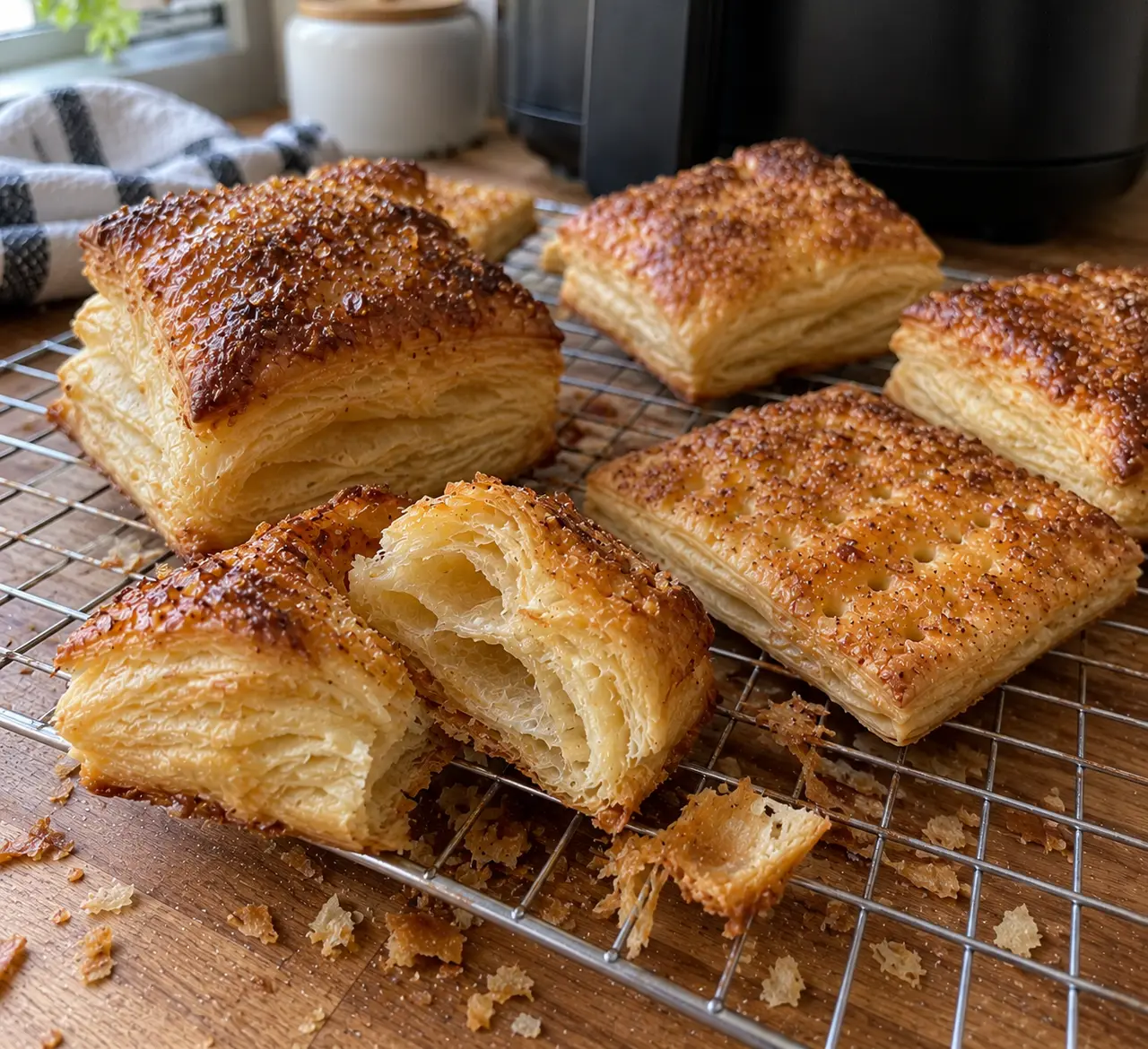
- What done looks like
- Ingredients
- Your first bake: plain squares
- To dock or not to dock
- What the basket cannot do
- Fixing what goes wrong
- Frequently asked questions
What puff pastry actually is
A sheet of puff pastry is a stack of several hundred alternating layers of flour dough and butter, folded over itself again and again at a factory so you do not have to spend an afternoon doing it with a rolling pin. There is no yeast, no baking powder, no leavening of any kind on the label, and yet it rises to eight times its thickness. The engine is water. Butter is about 15 percent water, and when a cold butter layer meets hot air, that water flashes to steam, and the steam shoves the dough layers apart before it escapes. Each layer then fries crisp in the butterfat left behind. That is the entire trick: hundreds of small steam engines firing at once.
Every rule in this guide follows from that one mechanism. The butter has to be cold and solid when the heat arrives, because butter that has softened into the dough has no layer left to steam apart. The heat has to arrive fast, which is what the preheat is for. And the layers have to stay open at the edges, which is why egg wash in the wrong place is sabotage. Understand the steam engine and you can improvise everything else.
Why the basket beats the oven here
Puff pastry is the rare bake where a basket air fryer is not a compromise but an upgrade. Three reasons. The chamber is small and preheats in 3 minutes, so cold pastry meets full heat instead of warming up gently while a big oven finishes yawning. The fan drives hot air across the surface constantly, which is exactly what fast, even browning wants. And the basket floor is perforated, so hot air reaches the underside for the whole bake; a solid oven sheet pan shields the bottom and traps escaping moisture under it, which is where oven pastry's pale, sad undersides come from. The one oven advantage is size, and we will be honest about that in the limits section. For anything that fits, the basket wins, and this guide is the parent page for everything laminated this site bakes, from the general rules in how to bake in an air fryer on down.
The five rules, all about butter
- 1. Thaw cold, work cold. Overnight in the refrigerator, still wrapped. Counter-thawing takes the sheet past workable into soft, and soft means the butter is merging with the dough. This is the opposite of bake-from-frozen products like frozen biscuits, which are engineered to skip the thaw; a folded sheet is not. If the dough ever feels drapey and sticky instead of stiff and cooperative, it goes back in the refrigerator for 10 minutes, no exceptions and no shame.
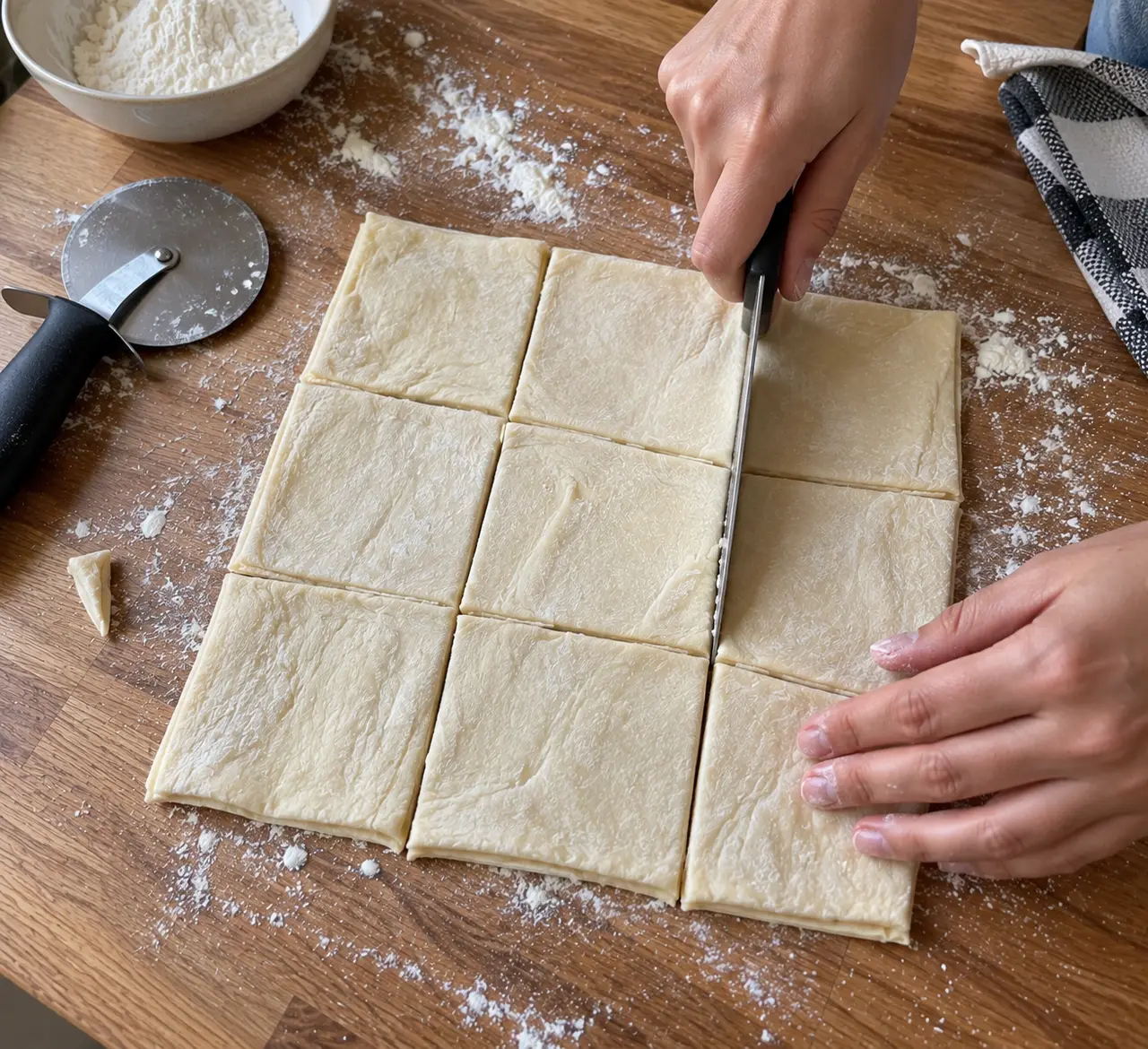
- 2. Cut, never saw. A sharp knife or pizza wheel pressed straight down leaves the layer edges open, like a fresh deck of cards. Sawing drags the layers into each other and smears them shut, and a smeared edge cannot rise.
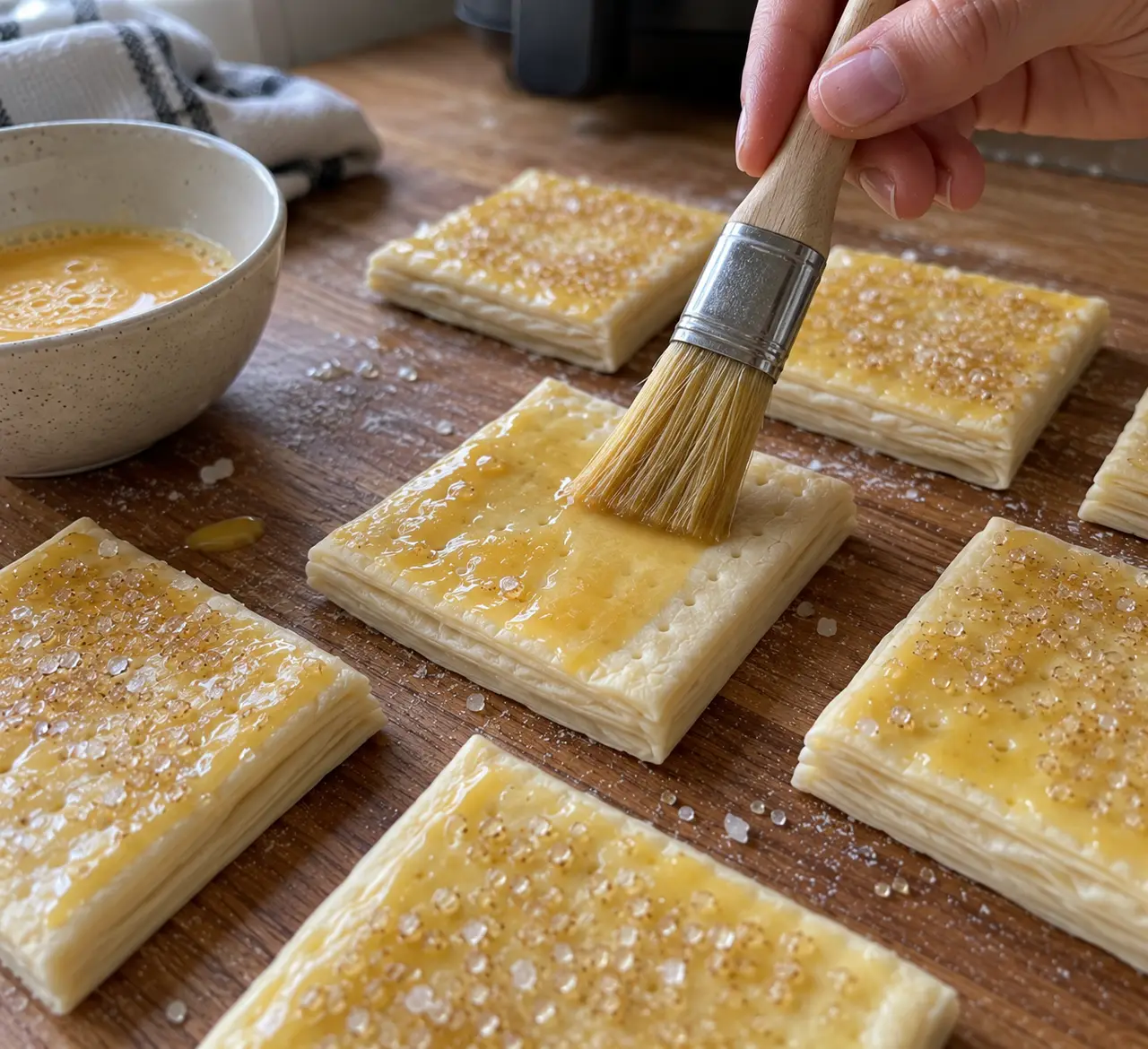
- 3. Egg wash the tops only. Egg is glue. On the top surface it bakes to gloss and deep color; run it down a cut edge and it welds the layers together, and that side of your pastry stays stubbornly flat.
- 4. Preheat, always. 350°F for 3 minutes. This site skips preheating for canned biscuit dough on purpose, and puff pastry is the standing exception: the steam engines need a hot start or the butter melts before it can lift. The full when-it-matters argument is in do you need to preheat an air fryer for baking.
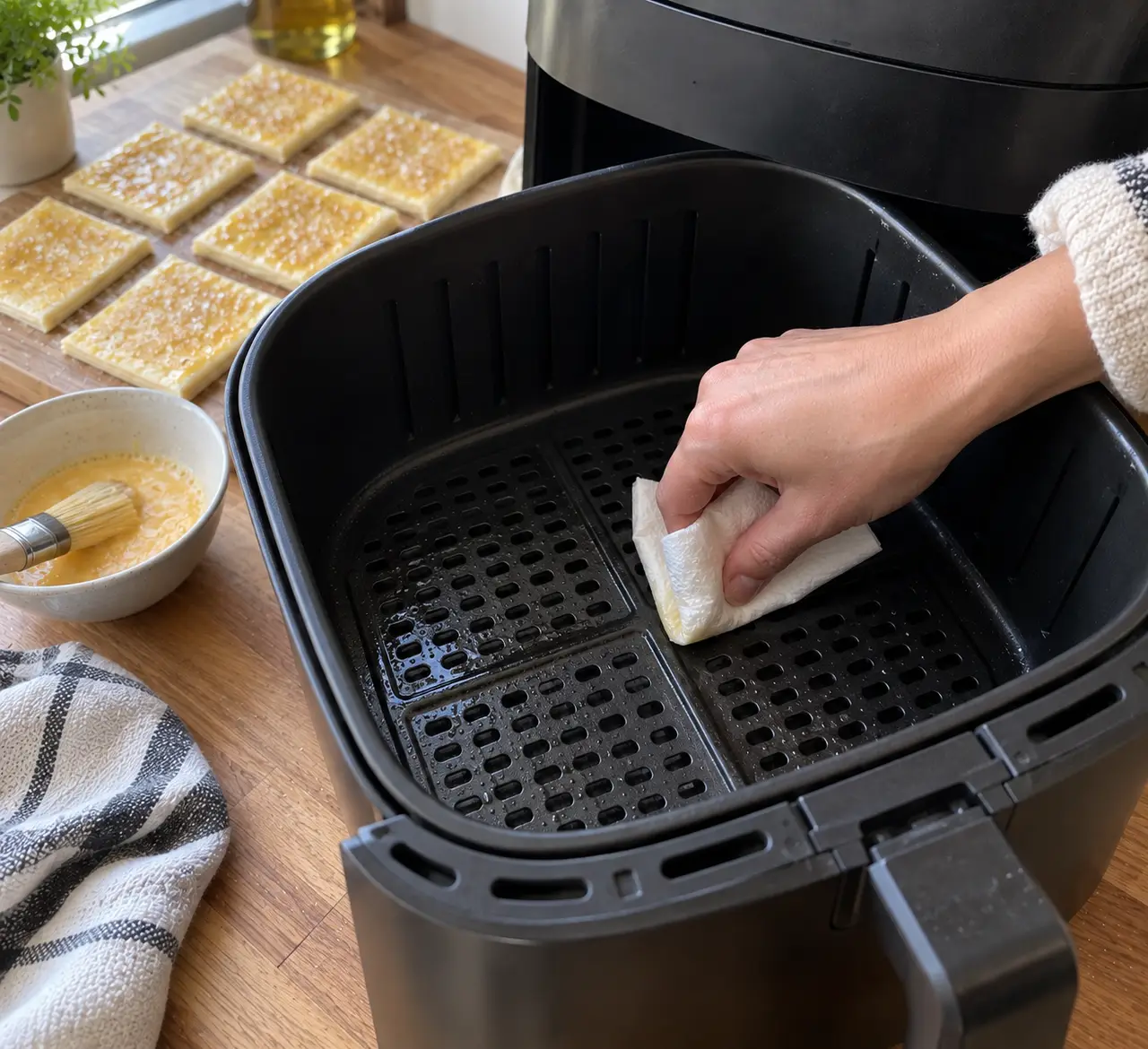
- 5. Bare basket floor, lightly oiled. No parchment under puff pastry. A liner rebuilds the oven sheet pan inside the machine and costs you the crisp bottom that was the whole point; the complete case, including the rare times a liner earns its place, is in foil or parchment paper in an air fryer.
The three formats
Everything you will ever make from a sheet of puff pastry is one of three shapes, and each has one extra move.
- Plain pieces. Squares, strips, twists: cut, wash, bake. Sugar or cinnamon sugar before baking makes instant dessert crisps for stacking with cream and fruit; grated parmesan and a twist makes cheese straws. Fold a sugared sheet instead of cutting it and the same format becomes palmiers. This is the beginner bake in the recipe card below, and it teaches your machine's true temperament in 10 minutes.
- Open-faced with a frame. Score a half-inch border partway through the dough, prick the center with a fork, and the border rises into walls while the docked middle stays flat to carry cheese, jam, or vegetables. This is the danish and tart format, and the frame is what keeps toppings from tobogganing off a puffing base.
- Sealed parcels. Filling on one half, fold, crimp with a fork, and always cut vent slits in the top so steam exits through the roof instead of bursting the seam. Turnovers and hand pies live here, the handheld cousins of a full apple pie, with two provisos: fillings go in cooked and cooled, never raw and wet, and parcels take the longest clock of the three because the heat has to reach the middle through two layers and a filling.
One temperature, different clocks
350°F for everything, and only the time changes. The pages recommending 400°F are copying oven numbers into a machine that does not need them: an oven's 400 exists partly to overcome the sheet pan and the slow recovery of a big box, and in a basket that same setting burns the surface butter while the inside is still raw. The oven-to-basket drop is the standard conversion our air fryer calculator applies to any recipe, and laminated dough earns one step more because its butter sits right at the surface and browns ahead of lean doughs. That lands on 350°F, it produces full rise and mahogany color on every format, and it removes the flipping and mid-bake temperature changes other recipes use as apologies.
| Format | The extra move | Temp | Time |
|---|---|---|---|
| Plain squares, strips, twists | None, or dock for flat crisps | 350°F | 8 to 10 min |
| Open-faced with a frame | Score the border, dock the center | 350°F | 10 to 12 min |
| Sealed parcels | Crimp the seam, vent the top | 350°F | 12 to 14 min |
| Reheating baked puff pastry | Straight in the basket, no foil | 320 to 330°F | 3 to 4 min |
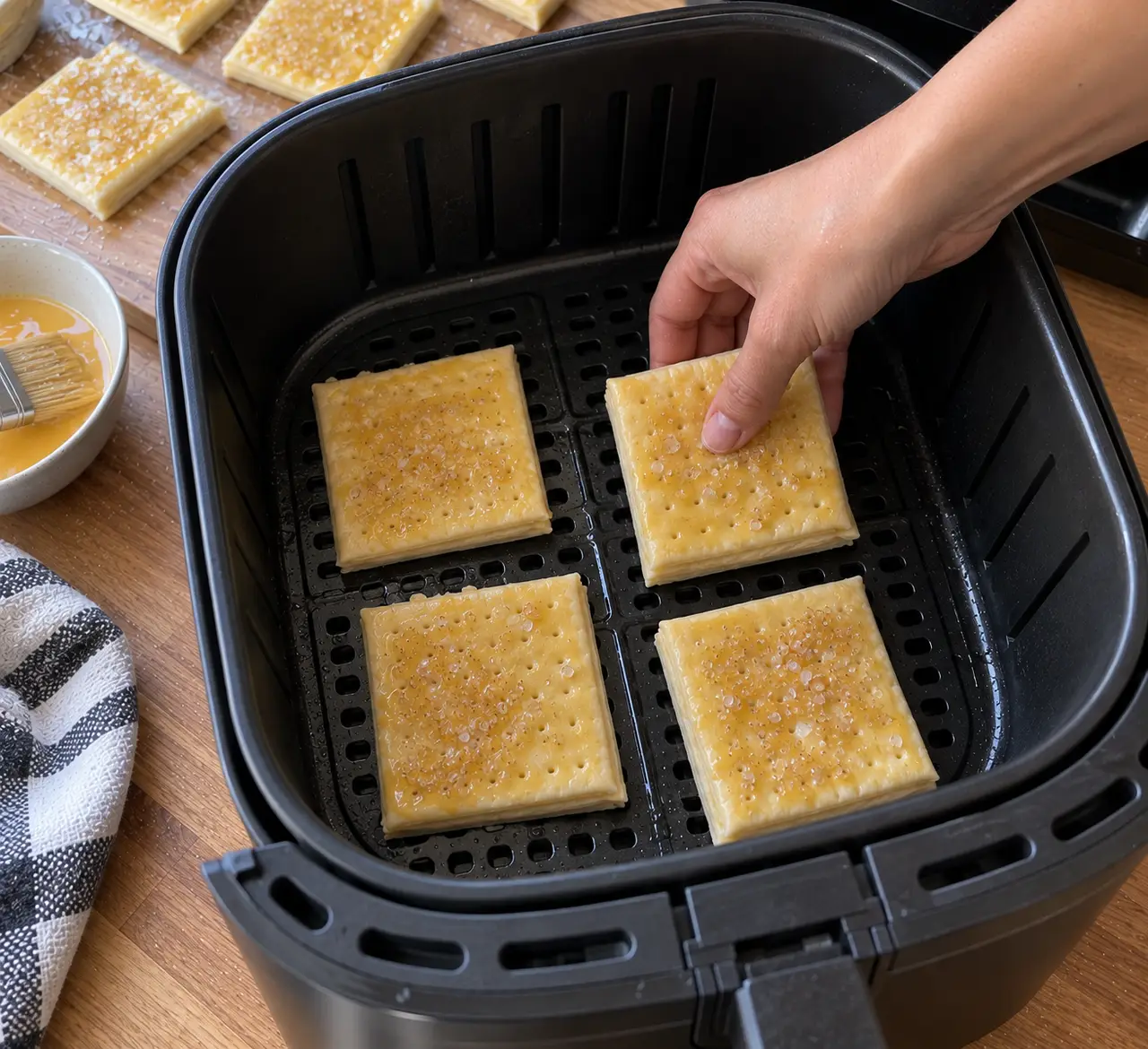
No flipping on any line. A flip presses the risen layers into the basket floor and undoes the lift you preheated for, and the perforated floor browns the underside without help. Space the pieces a finger apart, bake in batches rather than crowding, and run the second batch about a minute shorter in the already-hot machine. These numbers live alongside every other tested setting on the baking chart.
What done looks like
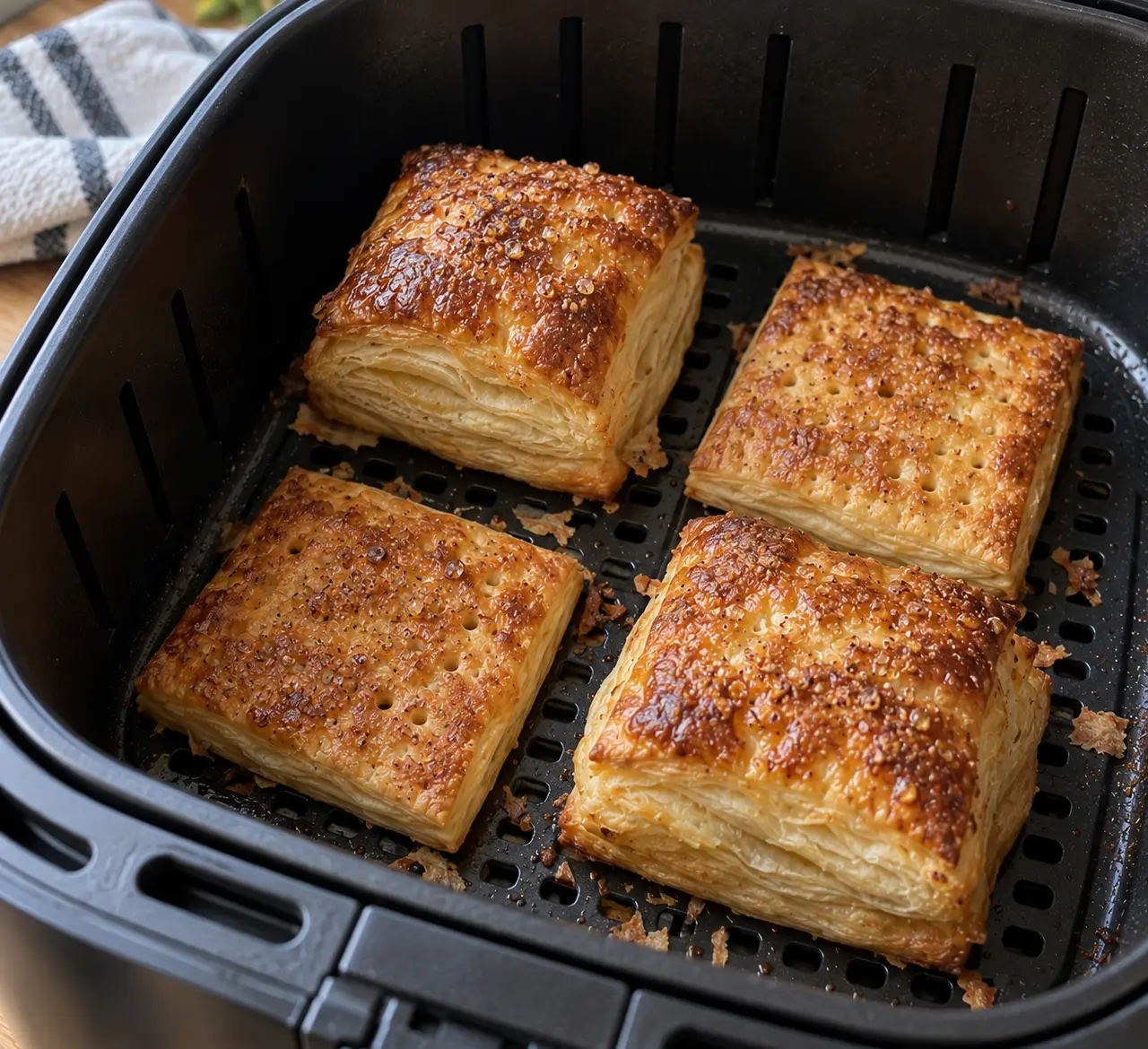
- Color: deep gold into bronze, a shade past where nerves usually pull it. Pale puff pastry tastes like flour and regret; the flavor is in the browned butter at the surface. That browning is the Maillard reaction working on the one layer you actually taste first.
- Sides: visible open layers at every cut edge, fanned like book pages. This is the proof the butter stayed cold and the knife stayed sharp.
- The lift: a done piece feels almost weightless and rigid. Bend a plain square gently and it should crack, not fold.
- The bottom: golden and dry when you tip a piece with tongs. A greasy pale base means the machine ran too hot and browned the top before the bottom set, so drop 10 degrees next batch; the other browning rescues are in the burning guide.
Ingredients
For your first bake: 9 plain squares
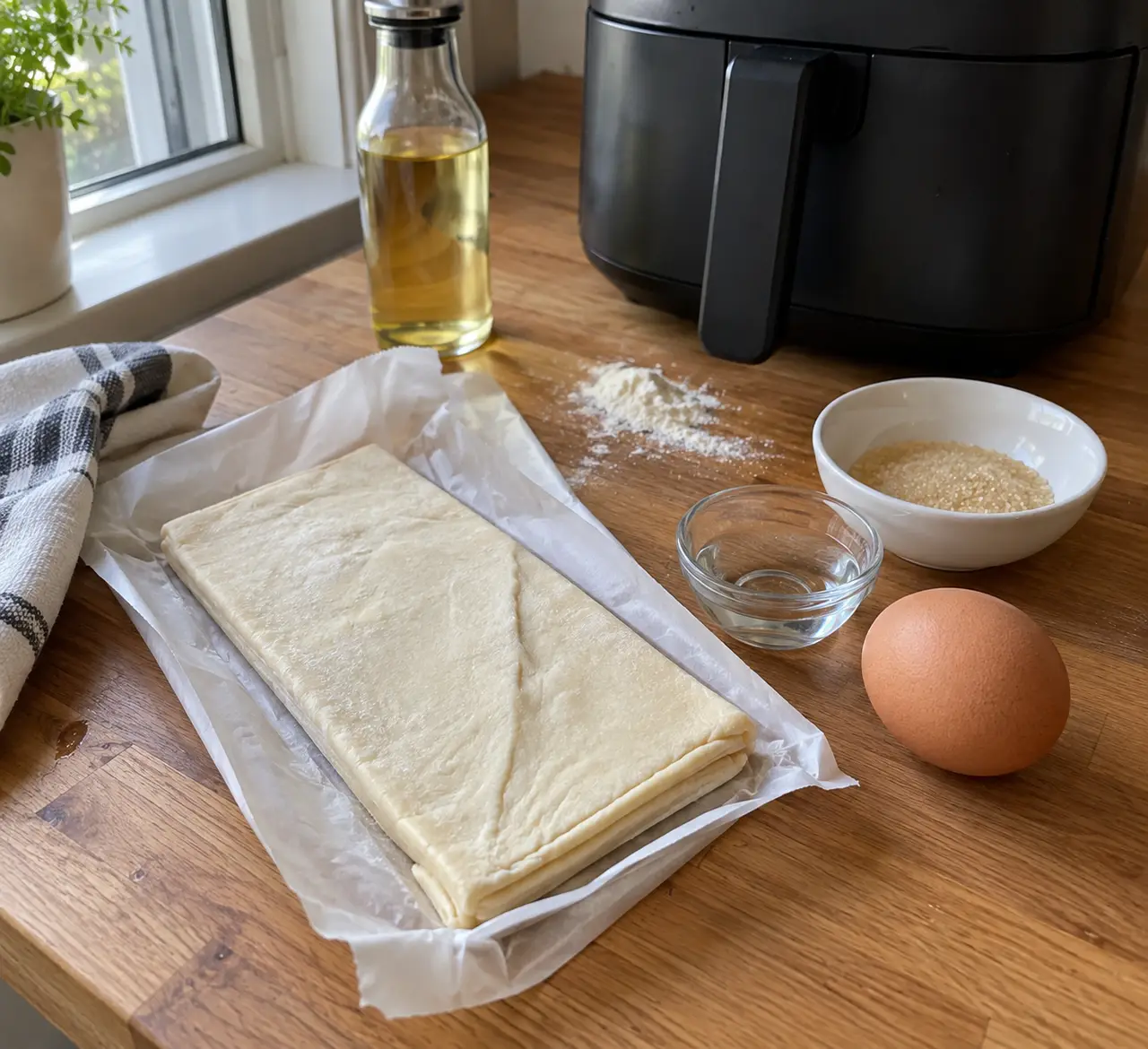
- 1 sheet frozen puff pastry (about 8.6 oz), thawed overnight in the refrigerator
- 1 egg beaten with 1 teaspoon water, for the wash
- Coarse sugar or cinnamon sugar for sweet, grated parmesan and flaky salt for savory
- Flour for the counter
- Neutral oil for the basket floor
All-butter puff pastry tastes noticeably better than the shortening kind and bakes identically with these settings. Buy whichever the budget likes; the technique does not change.
Your first bake: plain squares
- Thaw the frozen sheet overnight in the refrigerator, still in its wrapper.
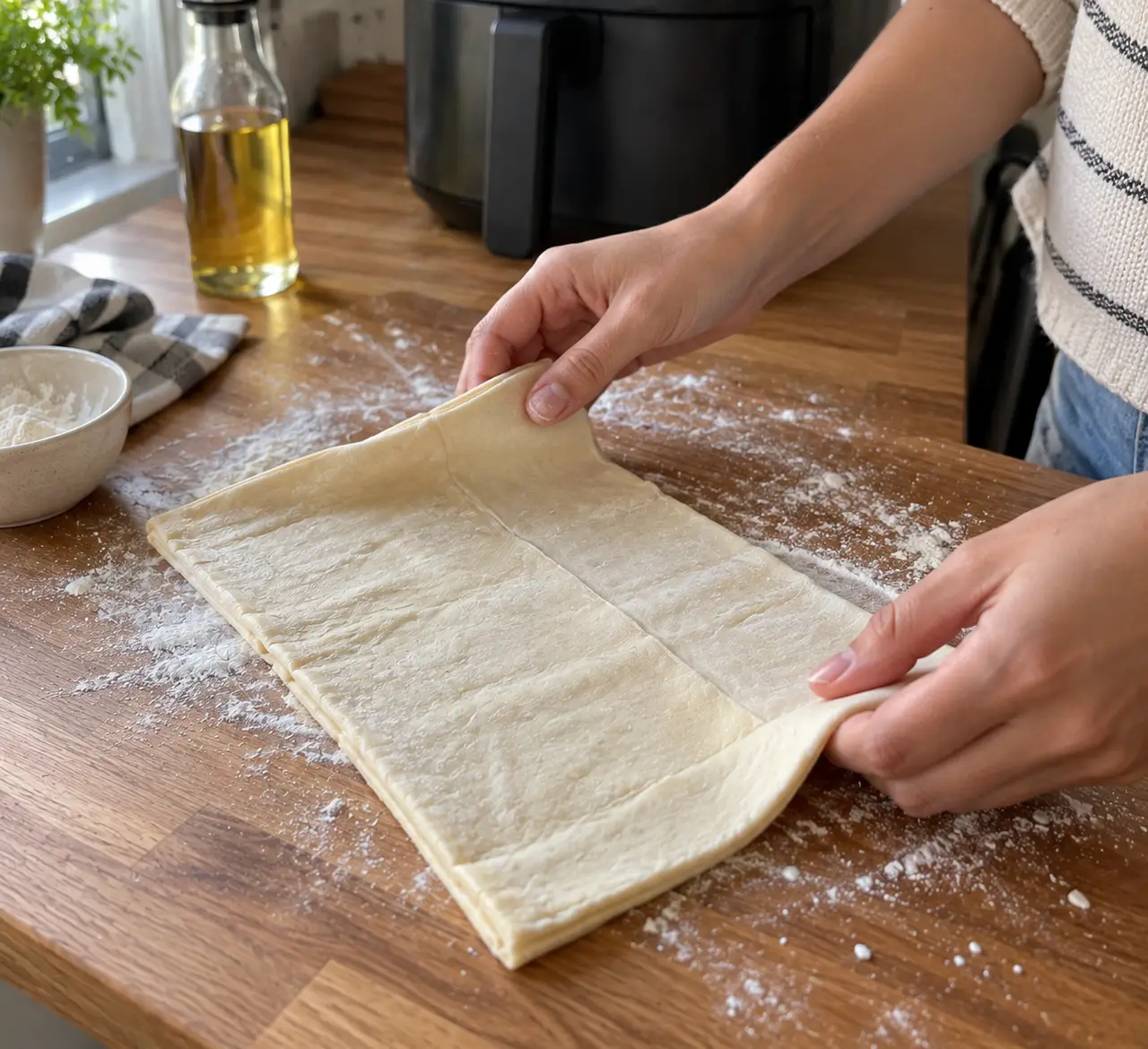
- Unfold the cold sheet on a lightly floured counter and cut it into 9 squares with a sharp knife or pizza wheel, pressing straight down rather than sawing.
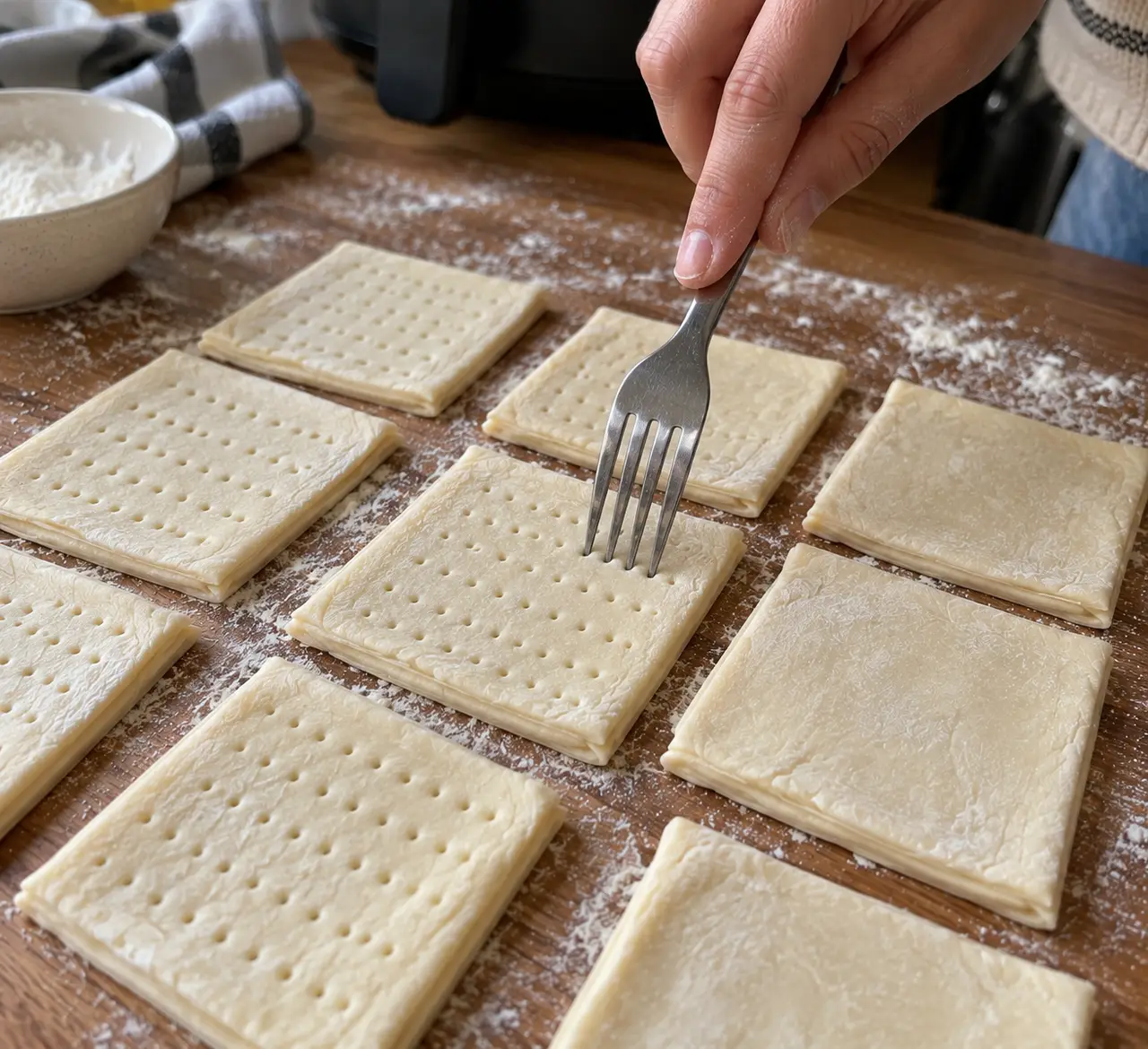
- Dock half the squares all over with a fork and leave the rest untouched, so this first batch teaches you both textures.
- Brush the tops with egg wash, keeping it off the cut edges, and top with coarse sugar or parmesan.
- Preheat the air fryer at 350F for 3 minutes and lightly oil the bare basket floor.
- Lay in the squares with a finger of space between them and air fry at 350F for 8 to 10 minutes, without flipping, until deep gold with open layers at the edges.
- Cool on a rack for 5 minutes; the layers set as the steam finishes leaving.
- Compare a docked square to an undocked one, and you now know more about puff pastry than most of the recipes you will ever read.
To dock or not to dock
Docking, pricking the dough all over with a fork, is the volume knob on the rise. An undocked square inflates into a puffed pillow; a docked one stays low and bakes into a flat, shattering crisp, because every fork hole is a steam vent that bleeds off the lift. Neither is right, they are different tools. Full puff for pieces that stand alone or top a pot pie. Docked and flat for layering with whipped cream and berries into a ten-minute mille-feuille, for bases that must carry weight, and for the centers of framed pastries where a rising middle would dump the topping. It is the same reasoning that docks a pie shell before blind baking, where fork holes stop the floor ballooning under its own steam. The frame trick from the formats section is just selective docking: vent the middle, spare the border, and the pastry rises exactly where you told it to. Very few skills in baking offer this much control for the price of owning a fork.
What the basket cannot do
Honesty corner. A basket bakes pieces, not sheets: anything wider than the floor, a full-size tart, a beef Wellington, a slab pie, belongs in the oven, and cutting it into portions is usually the better answer anyway. Very tall constructions, vol-au-vent towers and high twists, can climb close enough to the heating element to scorch, so keep builds under a couple of inches. And wet is the enemy: raw fruit heaped on an open square, sauces, or uncooked meat fillings release liquid faster than the pastry can crisp, which is why parcels on this site take cooked, cooled, thickened fillings only. Store-bought frozen pastry, which arrives with its filling already sorted out, follows the rules on the frozen pie page. The broader map of what transfers to a basket and what does not is in what you can and cannot bake in an air fryer. Inside those fences, which are wide, the basket is the best pastry oven in the house, and everything it has proven itself on is indexed at the recipe index.
Fixing what goes wrong
| Problem | Cause | Fix |
|---|---|---|
| Barely rose, dense and greasy | Warm dough, or no preheat | Refrigerator thaw, chill anytime it softens, 3 minute preheat, cold into hot |
| Rose everywhere except one edge | Egg wash ran down the cut side, or a sawed cut | Wash tops only with a nearly dry brush; press cuts straight down |
| Soggy, pale bottom | Parchment under the pastry, or cooled on a plate | Bare oiled floor, rack to cool; the perforations are the feature |
| Top bronze at minute 6, middle raw | Temperature above 350°F | 350°F flat; hotter is not faster, it is just darker |
| Lopsided, blown-over pieces | Crowded basket steering the airflow | A finger of space minimum; batches over crowding, every time |
| Burst seam on a parcel | No vent slits | Two small slits in every sealed top; steam always finds a door, so give it one |
If a bake fails in some way this table does not cover, the site-wide diagnostic lives at troubleshooting air fryer baking.
Frequently asked questions
QWhat temperature do you cook puff pastry in an air fryer?
350F for every format, with a 3 minute preheat, and only the time changes: 8 to 10 minutes for plain squares and twists, 10 to 12 for open-faced framed pastries, 12 to 14 for sealed parcels like turnovers. The 400F advice floating around is an oven number copied into a small machine; in a basket it browns the surface butter while the inside stays raw, which is why those recipes end up flipping pastry and changing temperatures midway. At 350F the rise, the color and the center finish together, untouched.
QDo you need to preheat an air fryer for puff pastry?
Yes, and puff pastry is the clearest yes in baking. Its entire rise comes from the water in cold butter flashing to steam and shoving the dough layers apart, which only happens if the heat arrives fast. In a cold-start machine the butter melts gently into the dough during the warm-up, and the pastry bakes flat and greasy because its steam engines were dismantled before ignition. Three minutes at 350F is all the preheat a small chamber needs, and the built pastries can wait in the refrigerator while it runs.
QWhy did my puff pastry not rise in the air fryer?
In order of likelihood: the dough was too warm, from a counter thaw or a slow assembly, so the butter merged into the dough and had no layers left to steam apart; the machine was not preheated, which melts the butter the same way, only during the bake; egg wash ran down the cut edges and glued the layers shut, which flattens whichever side it touched; or the cuts were sawed instead of pressed, smearing the layers closed. Cold sheet, sharp knife, wash on top only, hot machine, and it rises every time.
QShould I put parchment paper under puff pastry in an air fryer?
No. The perforated basket floor is the air fryer's biggest advantage for pastry, letting hot air reach the underside for the entire bake, and a parchment liner rebuilds the solid oven sheet pan that gives pastry its pale, soggy bottom in the first place. A light wipe of oil on the bare floor handles sticking. The exception is a filling you expect to leak badly, where a liner trades some bottom crispness for easier cleanup; a better fix is a filling that does not leak, cooked, cooled and thickened before it goes in.
QCan you cook puff pastry from frozen in the air fryer?
Not a folded sheet. It has to thaw before you can unfold and cut it, and the right way is overnight in the refrigerator, which keeps the butter solid; a rushed counter thaw softens the sheet unevenly and cracks the folds. This makes puff pastry different from the freezer products designed to bake frozen, like frozen biscuits, which go straight from bag to basket. Individual pre-shaped puff items sold as bake-from-frozen follow their own box logic, converted down for the basket. A sheet, though, is a plan-ahead ingredient: tonight's refrigerator is tomorrow's pastry.
QHow do you reheat puff pastry in an air fryer?
320 to 330F for 3 to 4 minutes, straight on the bare basket floor, using the lower end for pastries with exposed cheese or sugar that could catch. The dry moving heat re-crisps the layers while the inside warms, and day-old pastry comes back remarkably close to fresh. The microwave is banned: it steams the lamination soft in seconds and the texture never returns. Filled pastries want a rack rest after reheating too, since their fillings hold heat much longer than the pastry around them.
Made it? Rate it.
It helps more people find the guide before their first sheet, not after.
Basic Air Fryer Puff Pastry
The beginner's first bake: one sheet cut into 9 squares, washed and topped, baked at 350°F for 8 to 10 minutes on a bare basket floor. Half docked, half not, so one batch teaches both textures.
Ingredients
- 1 sheet frozen puff pastry (about 8.6 oz), thawed overnight in the refrigerator
- 1 egg beaten with 1 teaspoon water, for the wash
- Coarse sugar or cinnamon sugar for sweet, grated parmesan and flaky salt for savory
- Flour for the counter
- Neutral oil for the basket floor
Instructions
- Thaw the frozen sheet overnight in the refrigerator, still in its wrapper.
- Unfold the cold sheet on a lightly floured counter and cut it into 9 squares with a sharp knife or pizza wheel, pressing straight down rather than sawing.
- Dock half the squares all over with a fork and leave the rest untouched, so this first batch teaches you both textures.
- Brush the tops with egg wash, keeping it off the cut edges, and top with coarse sugar or parmesan.
- Preheat the air fryer at 350F for 3 minutes and lightly oil the bare basket floor.
- Lay in the squares with a finger of space between them and air fry at 350F for 8 to 10 minutes, without flipping, until deep gold with open layers at the edges.
- Cool on a rack for 5 minutes; the layers set as the steam finishes leaving.
- Compare a docked square to an undocked one, and you now know more about puff pastry than most of the recipes you will ever read.

Sujata Thapa
Sujata bakes everything on this site in a 5.5 quart basket air fryer on a Kathmandu counter, then re-tests the keepers until the timings hold for anyone. The tops-only egg wash rule comes from a batch with one welded edge apiece, each pastry rising like a drawbridge stuck halfway.